

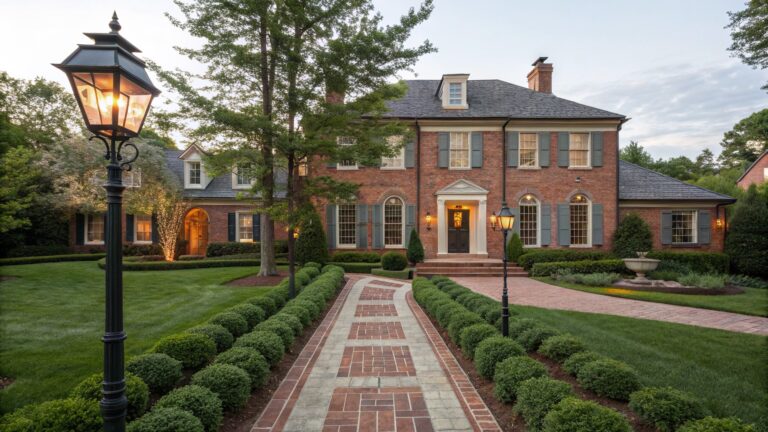
When you pull up to a traditional home, the front yard’s layout hits you first, guiding your eye with clean pathways and structured plantings that echo the house’s lines.
I’ve noticed over years of poking around older neighborhoods that yards with repeating evergreen anchors along the edges feel solid right away, even if they’re still maturing.
Perennials tucked into borders add that lived-in softness without letting things sprawl onto the lawn or sidewalk.
Scale matters too.
A handful here have me eyeing my own strip of grass, thinking how swapping in boxwoods could steady the whole setup over a couple seasons.
Brick Walkway with Boxwood Edges
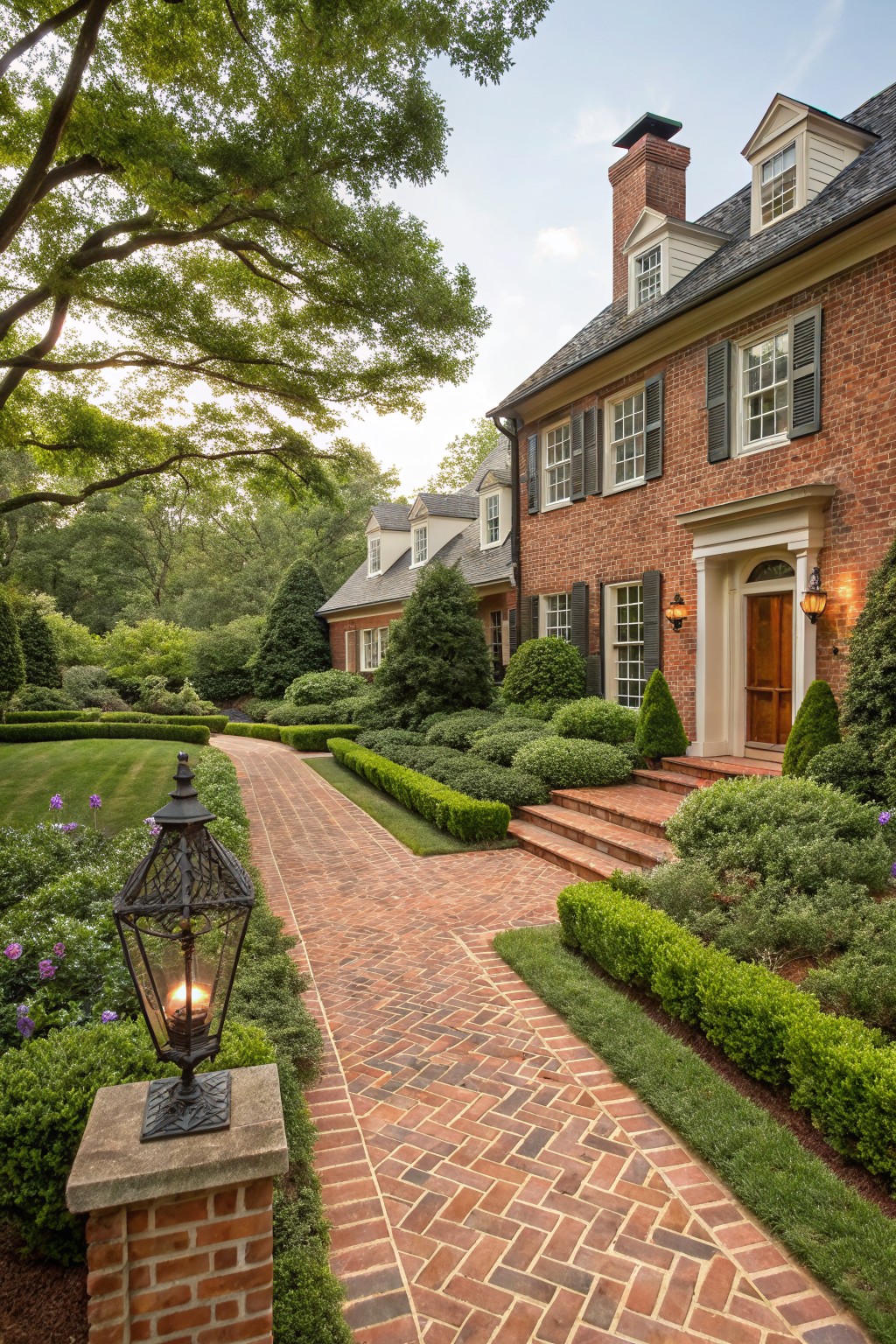
A simple brick walkway like this one draws the eye straight to the front door. Neat rows of boxwood hedges run along both sides, keeping things tidy and formal. That black iron lantern at the start sets a welcoming tone without much fuss.
This works great for traditional homes with brick facades. Lay the path in a gentle curve if your yard allows, and plant low boxwoods that won’t block the house. Trim them a couple times a year to hold the shape. It adds curb appeal on a budget.
Winding Stone Path Through Flower Beds
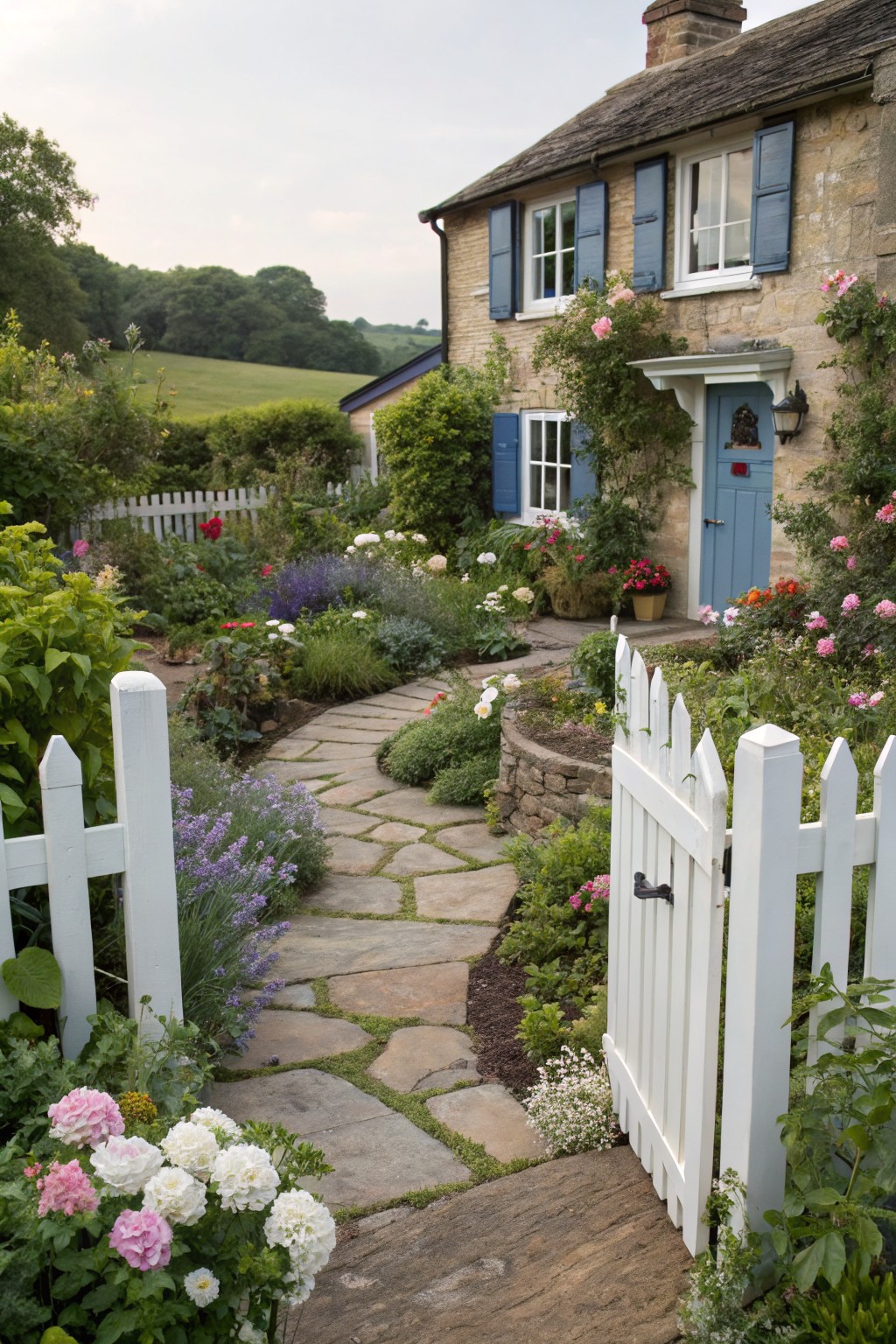
A simple winding path made from natural stone slabs does a lot for a traditional front yard. It guides visitors right through the prettiest parts of the garden, past layers of roses, lavender, and peonies blooming along the edges. That gentle curve, edged by a low white picket fence, feels welcoming and cottage-like without being fussy.
Try this on lots under an acre, especially with a house that has some age to it. Lay the stones loose in sand or mortar for easy drainage, then fill beds with repeat bloomers for color all season. Skip straight lines, they rush things too much. Works best where you have sun for flowers but some shade from trees nearby.
Stone Pathway Lined with Barrel Planters
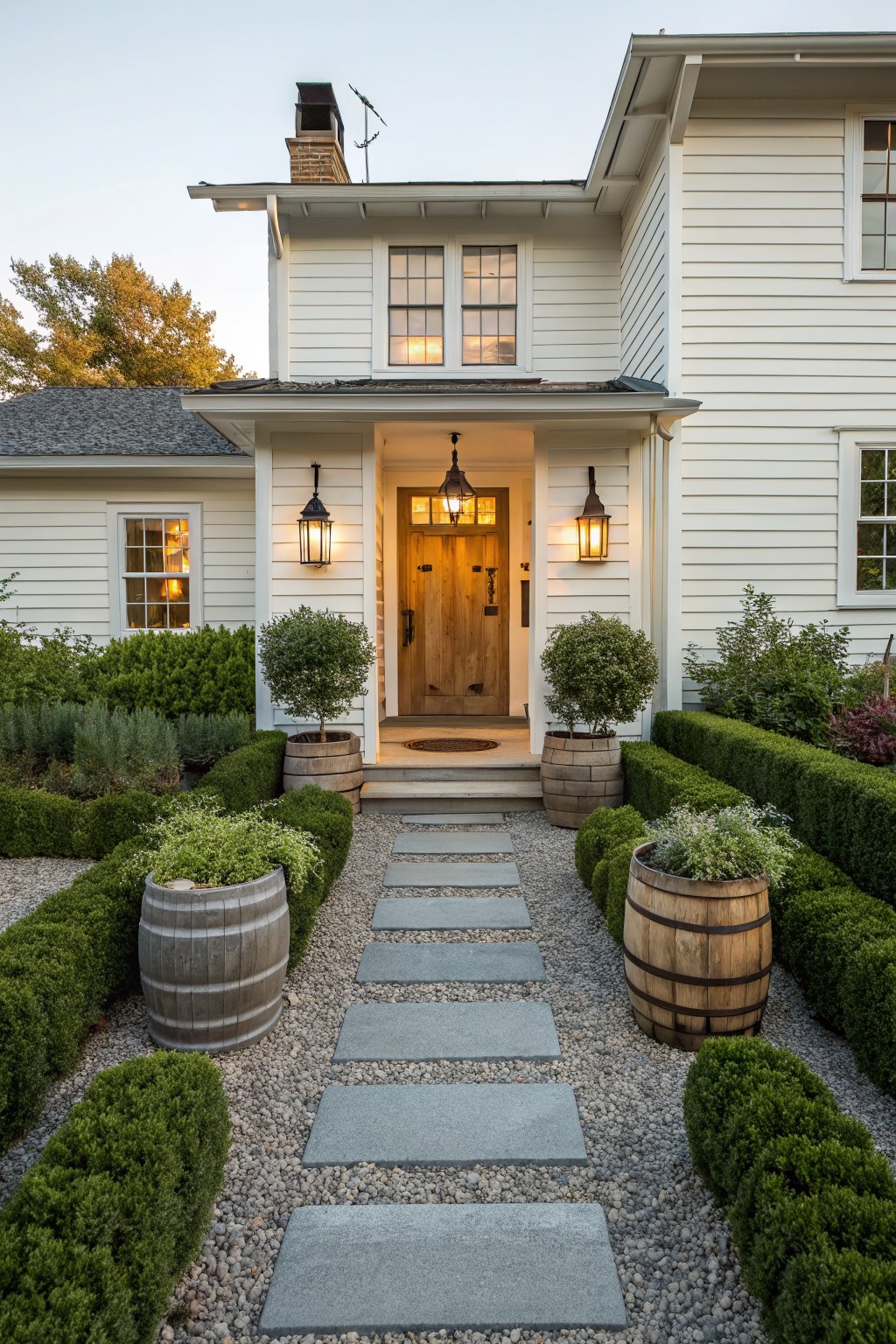
One straightforward way to guide folks right to your front door is a simple stone path edged with old whiskey barrels turned into planters. They add some height and shape without much fuss, and paired with low boxwood hedges, it keeps things neat and welcoming. That mix of rough wood and clipped green feels right at home on traditional houses, especially when the path leads up to a classic porch like this one.
You can pull this off in smaller front yards too, just space the barrels every few steps along the path and fill them with trailing plants or herbs. It works best where you want low upkeep but still some personality. Stick to gravel or mulch around the edges to let it breathe, and avoid overcrowding so the path stays the star.
Lavender-Lined Gravel Path
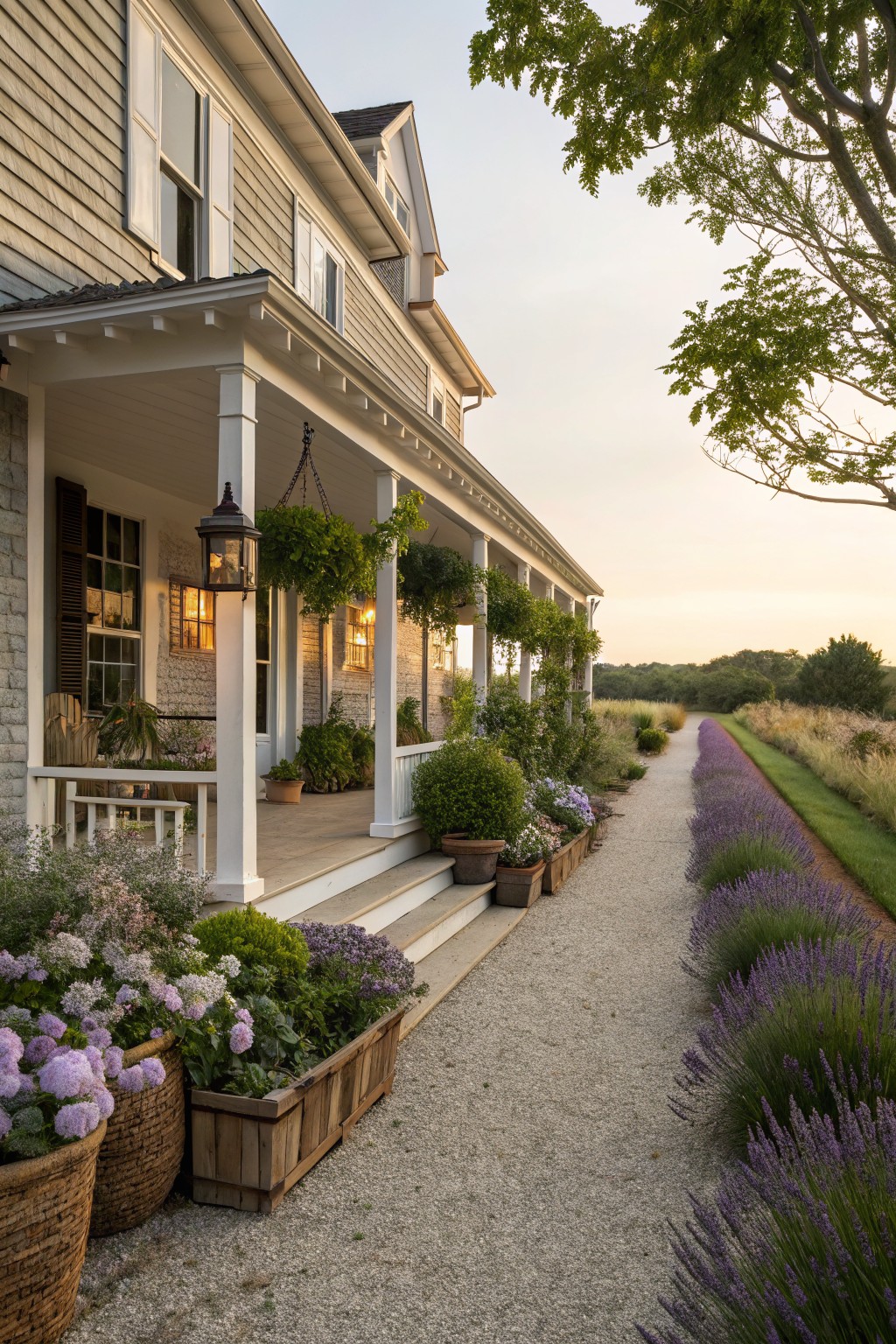
A simple gravel path edged with rows of lavender makes a clean, classic walkway from your front porch right into the yard. It pulls the eye along without much fuss, and that repeating purple bloom gives a soft, old-world feel that fits traditional homes perfectly. The gravel keeps things low-key and easy to walk on, while the lavender adds just enough color and scent.
Try this in a front yard where you want a straight shot to the driveway or garden gate. It works best on homes with porches or steps like this one, since the path picks up right there. Go for taller lavender varieties along one side to frame it nicely, and keep the gravel loose for that casual crunch underfoot. Skip it if your yard floods a lot, though, gravel can shift.
Curved Brick Paths Through Flower Beds
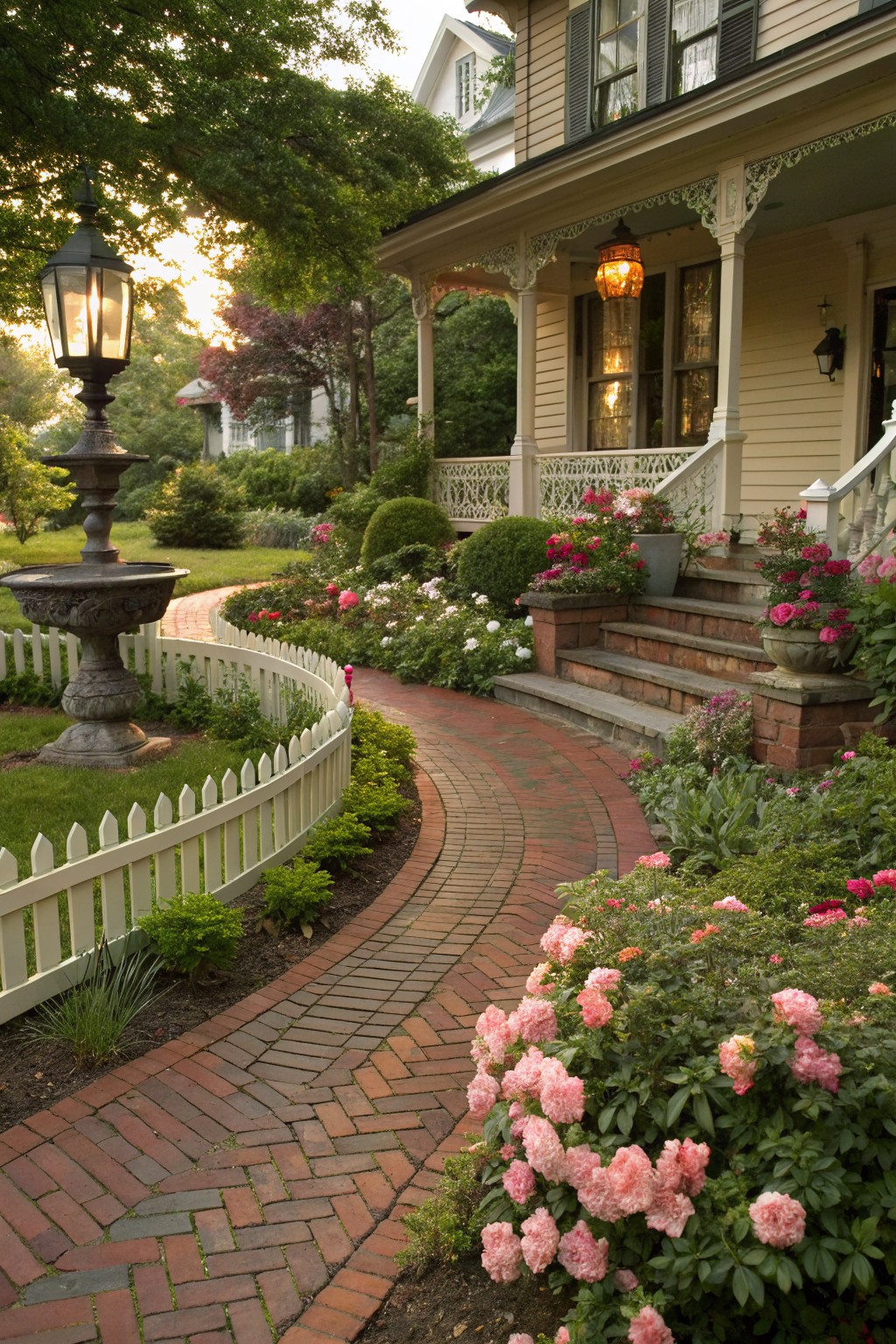
A curved brick path like this makes the walk to your front door feel special. It winds gently past roses and shrubs instead of going straight ahead. That little bend slows people down. They notice the garden more. On a traditional home it fits right in with the porch and picket fence.
Try this on lots under an acre where you have room for beds on both sides. Lay bricks in a herringbone pattern for interest. Plant low bushes and flowers that bloom a long time… roses work well here. Just keep the curve smooth so wheelchairs can manage it.
Stone Path Edged with Boxwood Balls
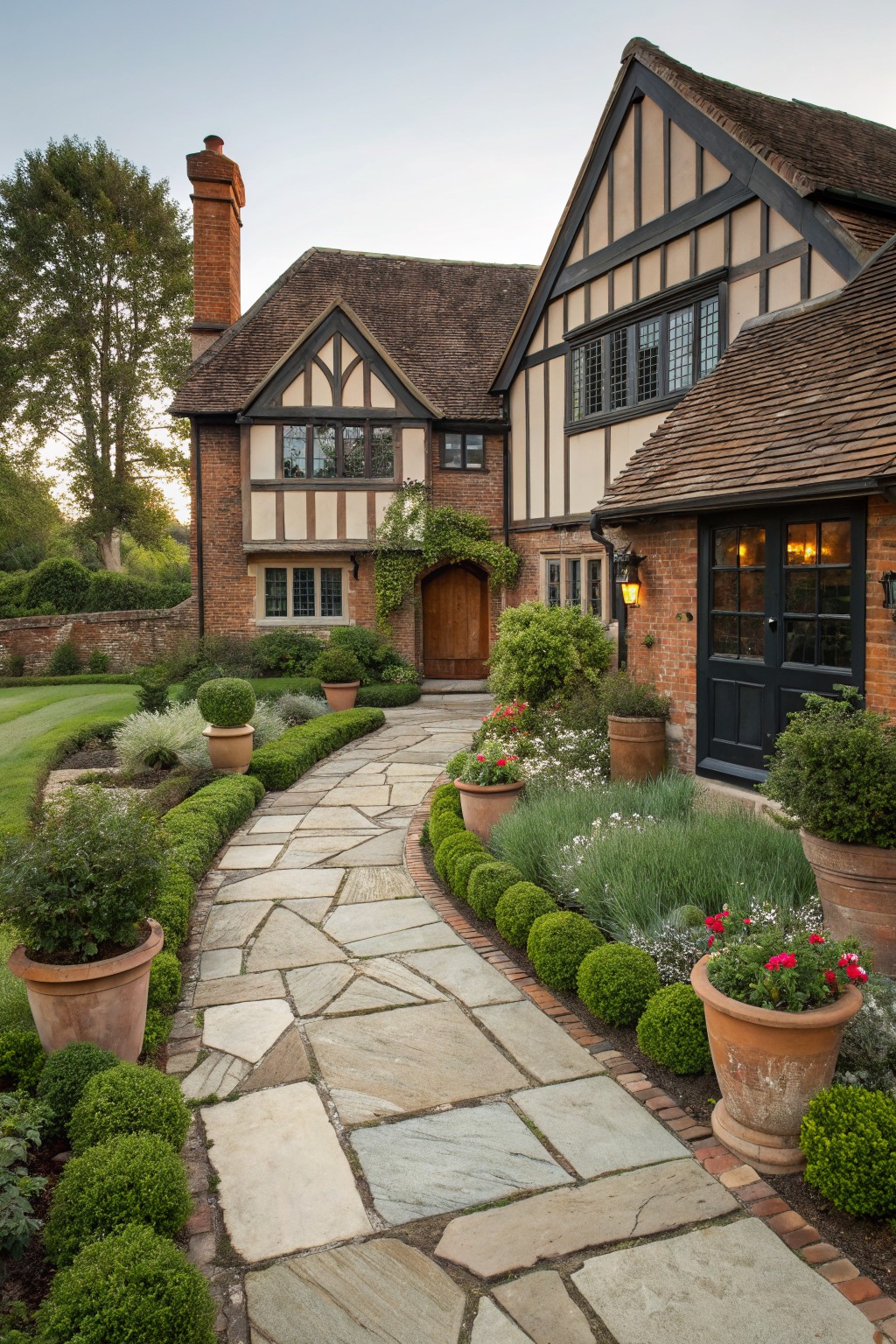
A simple winding path like this makes the front yard feel put together without much fuss. The irregular flagstone pieces fit right into a traditional home’s look, and those round boxwood balls along the edges give it that neat English garden shape. It pulls your eye straight to the door too.
You can pull this off in most any front yard with decent sun for the boxwoods. Keep the path wide enough to walk two abreast, and mix in a few terracotta pots with flowers for color. Works best on homes with some age or character. Just trim the boxwoods a couple times a year to hold the shape.
Walkways Lined with Hydrangeas
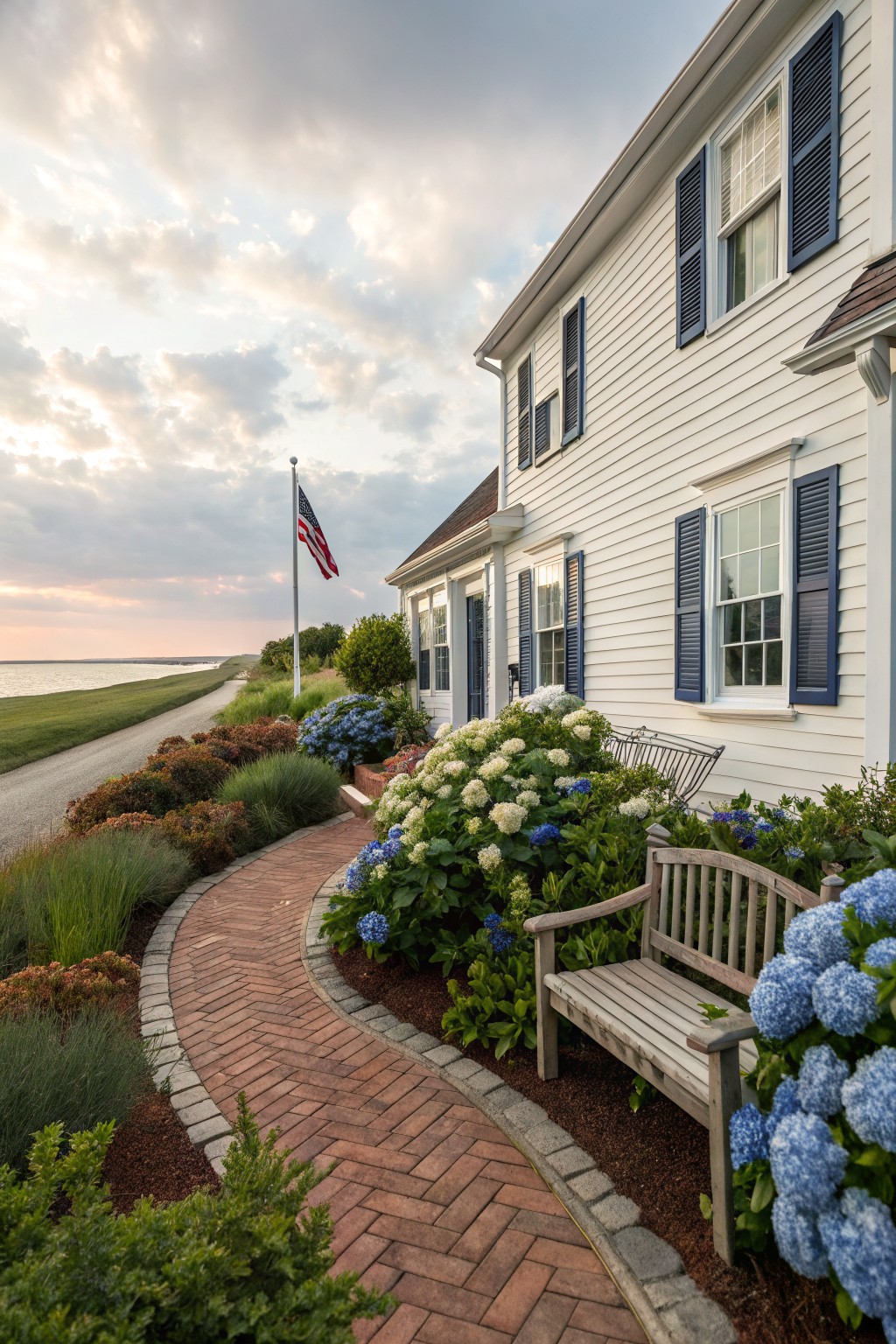
A simple brick path like this one gets its charm from thick plantings of hydrangeas right along the edges. The big blue and white blooms fill out the borders nicely, making the walk to the front door feel easy and pleasant. It ties the yard to the house without much fuss.
This works best on traditional homes with clean white siding. Curve the path a bit for flow, then plant hydrangeas in groups so they look full even when not blooming. Add a wooden bench halfway for a spot to sit. It’s low-key maintenance once established, and it suits coastal spots or everyday front yards.
Boxwood Hedges Along the Entry Path
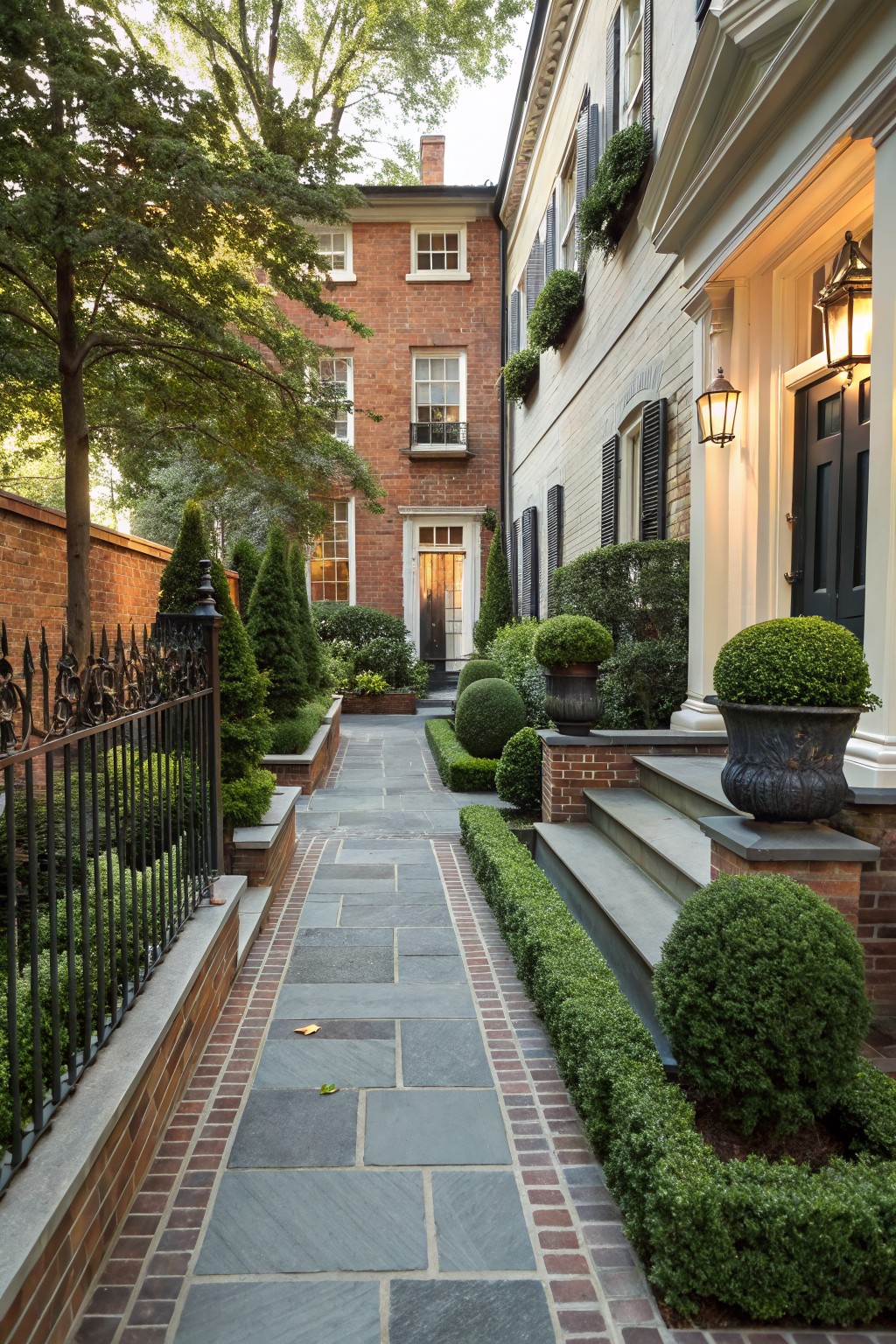
A simple row of boxwoods lines both sides of this front walkway. Paired with a few round topiaries, it sets up a clean, formal feel that points right to the door. That structure makes the yard look put-together, especially on traditional homes with brick and white trim.
You can pull this off on most front yards with a straight path. Plant low boxwoods close to the edges, trim them a couple times a year. They hold their shape well and fill in quick. Best for smaller spaces where you want low upkeep… skip it if your lot slopes a lot.
Boxwood Parterre Gardens
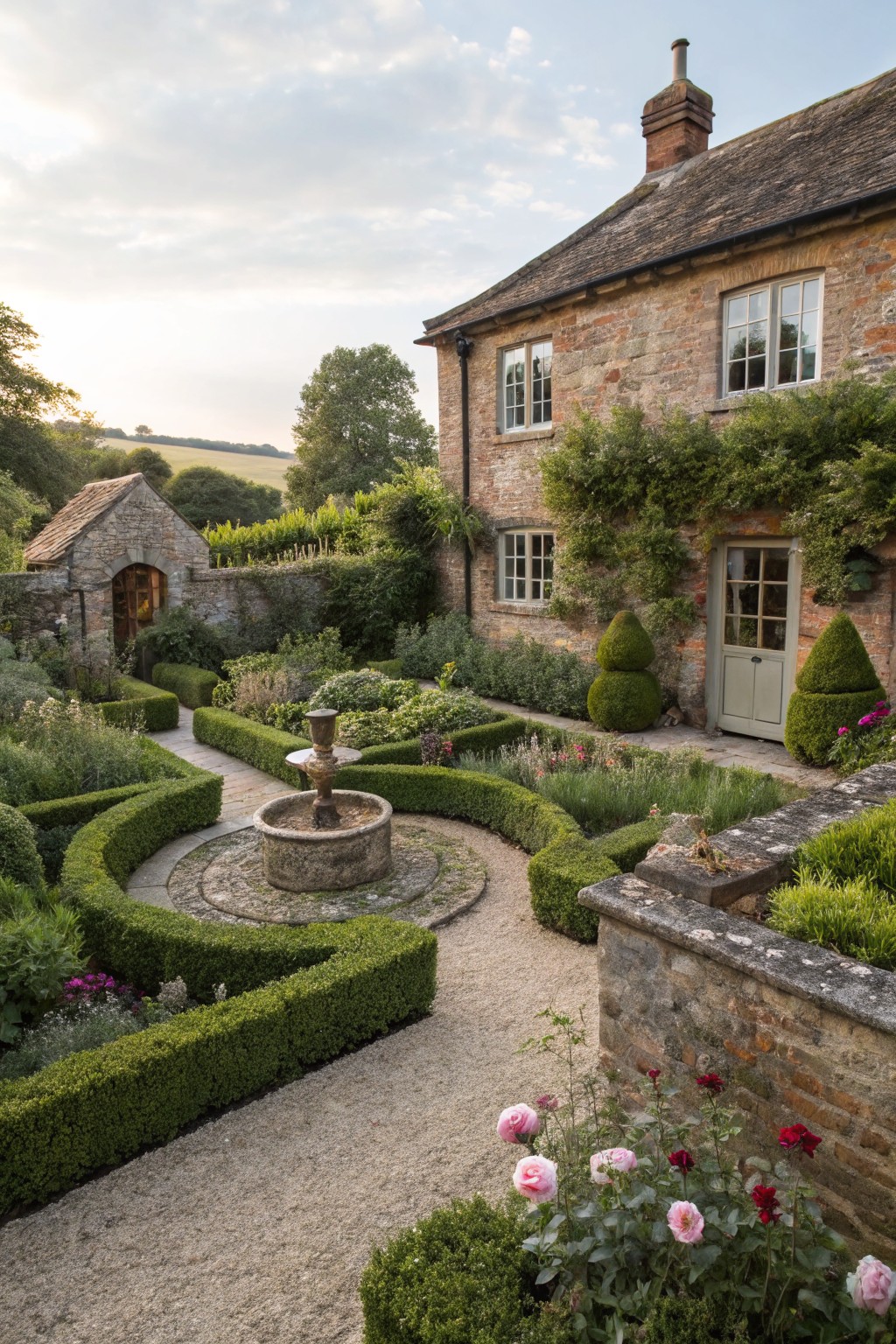
A boxwood parterre lays out neat geometric beds with clipped hedges that frame flower plantings and lead to a simple stone fountain at the center. Gravel paths wind through it all, keeping things practical for walking. This setup fits right up against the house, making the front yard feel put-together and timeless, like an old country garden.
Try it on smaller front yards around traditional stone or brick homes. Keep the boxwoods under four feet tall so they don’t block the entry, and add a few roses or herbs in the beds for color. One thing to watch. Hedges need regular trimming, but that’s what keeps the look sharp.
Winding Flagstone Path to Guide Guests
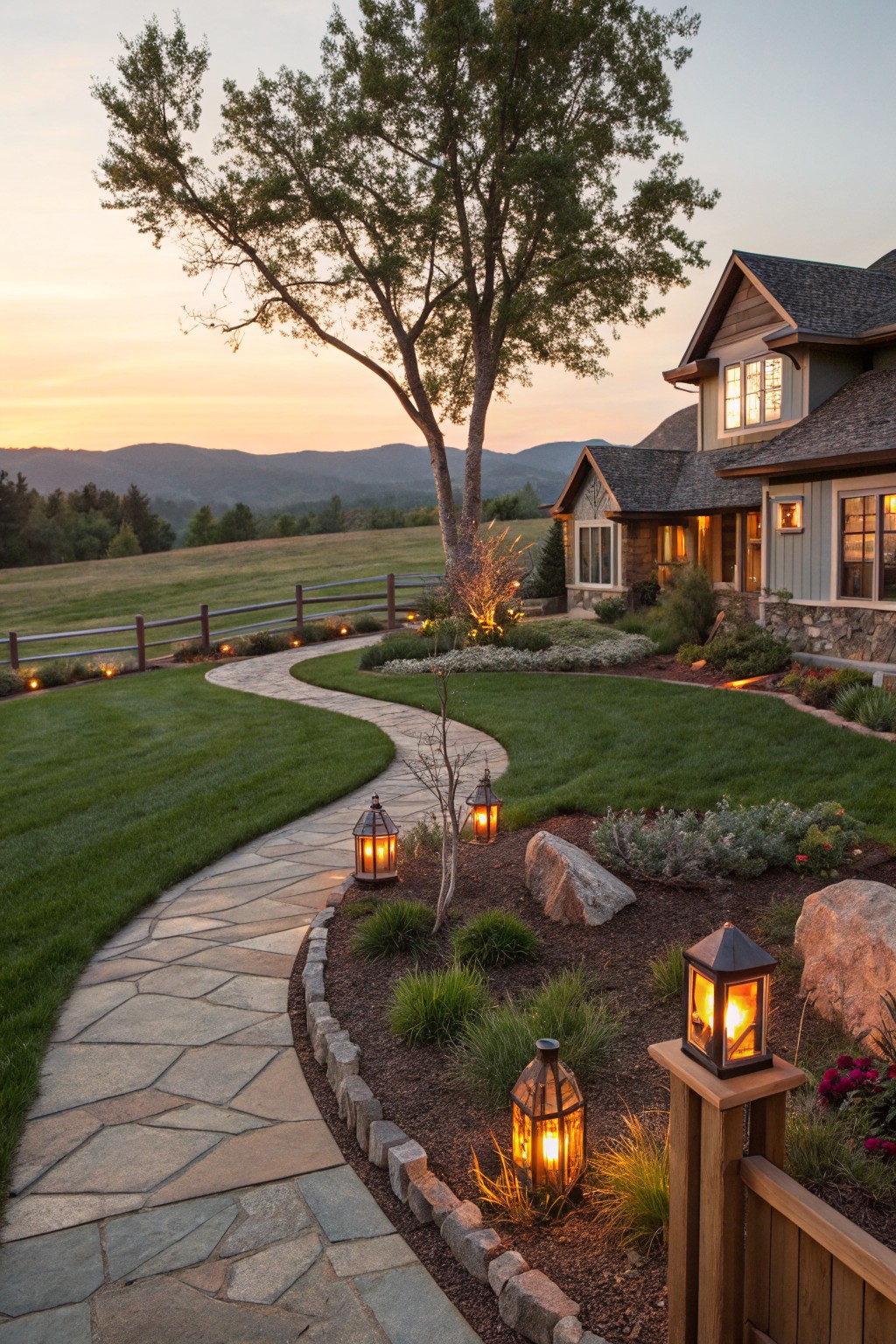
A simple curved path made from natural flagstone works wonders in a front yard. It pulls the eye right to the door without feeling too straight or formal. Those lanterns along the edge light it up nicely at dusk, and the low plants and rocks keep everything tucked in neat.
This setup fits traditional homes with a good-sized lawn. Lay the stones in a gentle curve to match the yard’s shape, add mulch beds on both sides, and space out lanterns every few feet. Skip anything too fussy… it stays low-maintenance and welcoming year-round.
Curved Cobblestone Paths in Front Gardens
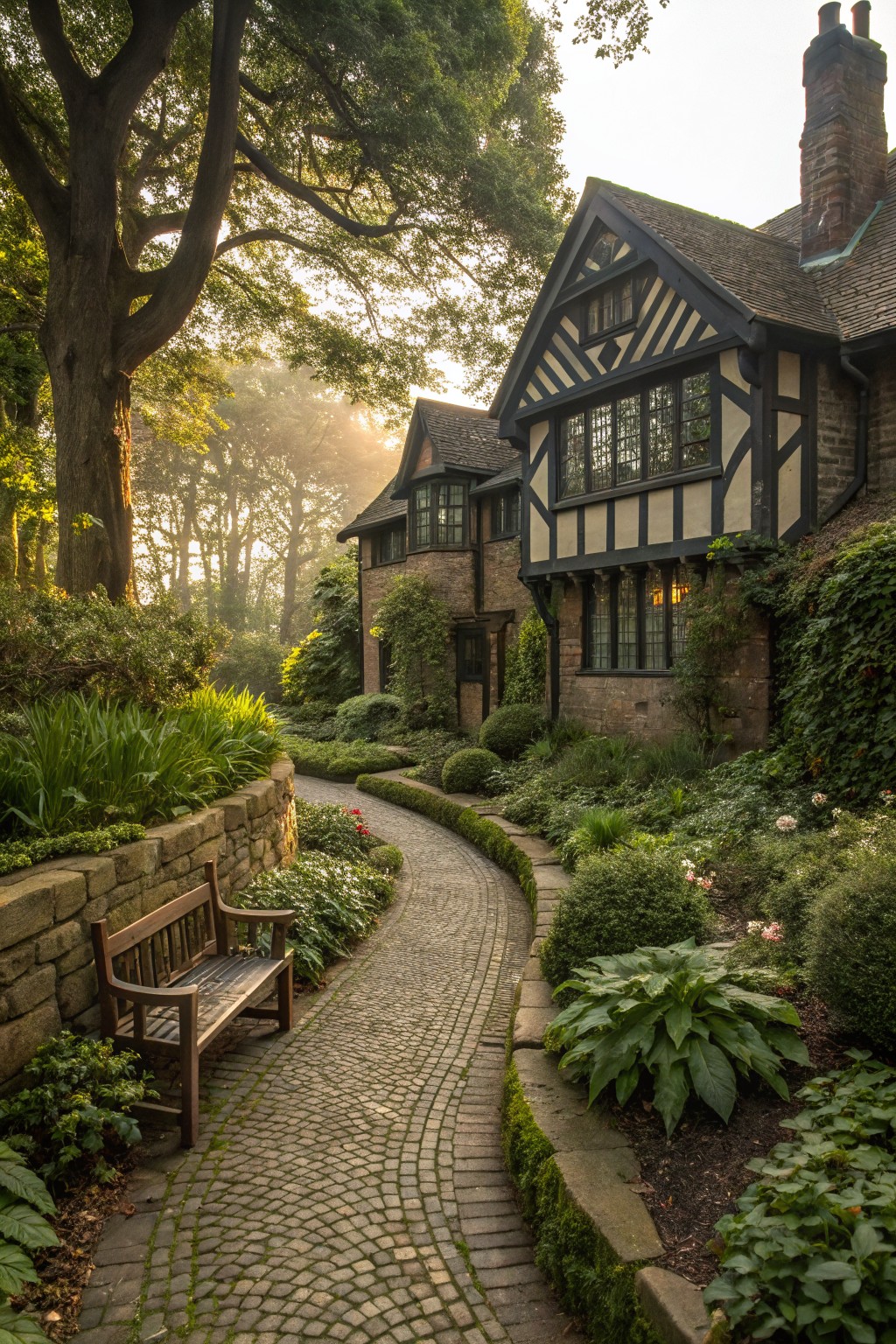
A curving cobblestone path like this one pulls you right through the garden toward the house door. It softens the walk up to a traditional home, especially one with Tudor details. The gentle bends and mossy stones mix with low plants along the edges. That makes the whole front yard feel settled and old-world.
Use this on any classic house where you want a slower approach. Edge the path with a low stone wall and boxwoods or hostas. Drop in a wooden bench halfway for sitting. It suits sloped lots best. Just keep the stones even so no one trips.
Winding Gravel Paths with Stepping Stones

A gravel path with large, irregular stepping stones makes for an easy front yard walkway that doesn’t feel stiff or overdone. It curves gently through plantings of tall grasses and late-summer flowers like black-eyed Susans. Folks like this because it pulls your eye toward the house without overpowering the garden.
You can set this up in most yards with decent sun. Pick flat stones in natural shapes, lay them over a gravel base for drainage, and fill borders with perennials that come back each year. It suits traditional homes best, especially if you add a picket fence nearby. Just keep plants from spilling onto the path too much.
Symmetrical Hedge-Lined Entry Path
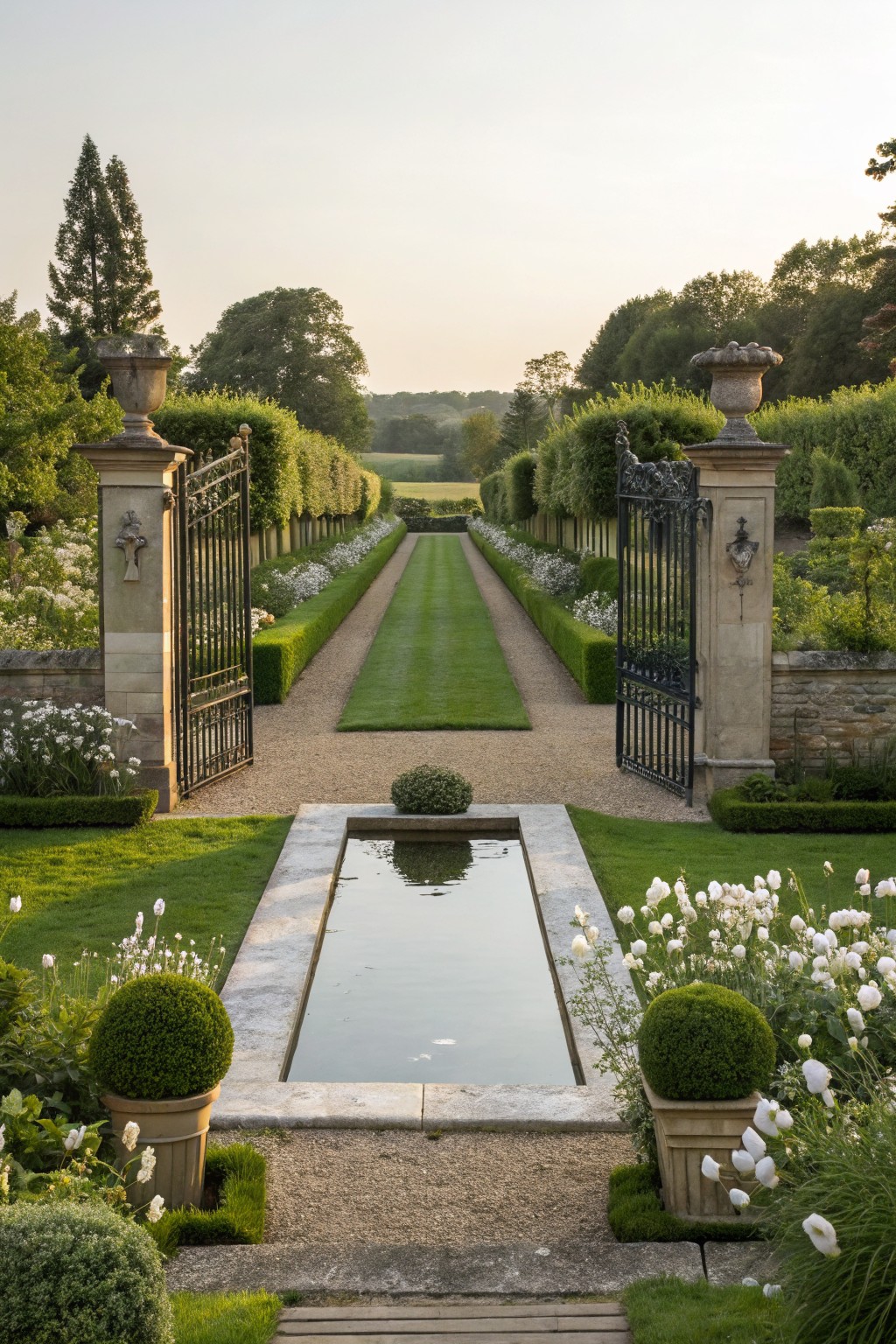
A straight central path lined with tall boxwood hedges creates that classic formal look right at the front gate. Here, ornate iron gates open onto a gravel walkway flanked by those neat green walls of clipped shrubs, pulling your eye back to the open lawn beyond. It gives the whole front yard a sense of order and depth without much fuss.
This works best on lots with some length, where you can let the path run toward trees or fields. Lay gravel or pavers for easy walking, plant matching evergreen hedges on both sides, and keep them trimmed once a year. Add a simple rectangular pool out front if you want reflection and a bit of calm… suits older traditional homes perfectly. Just avoid overcrowding the sides.
Curving Flagstone Path to the Front Door
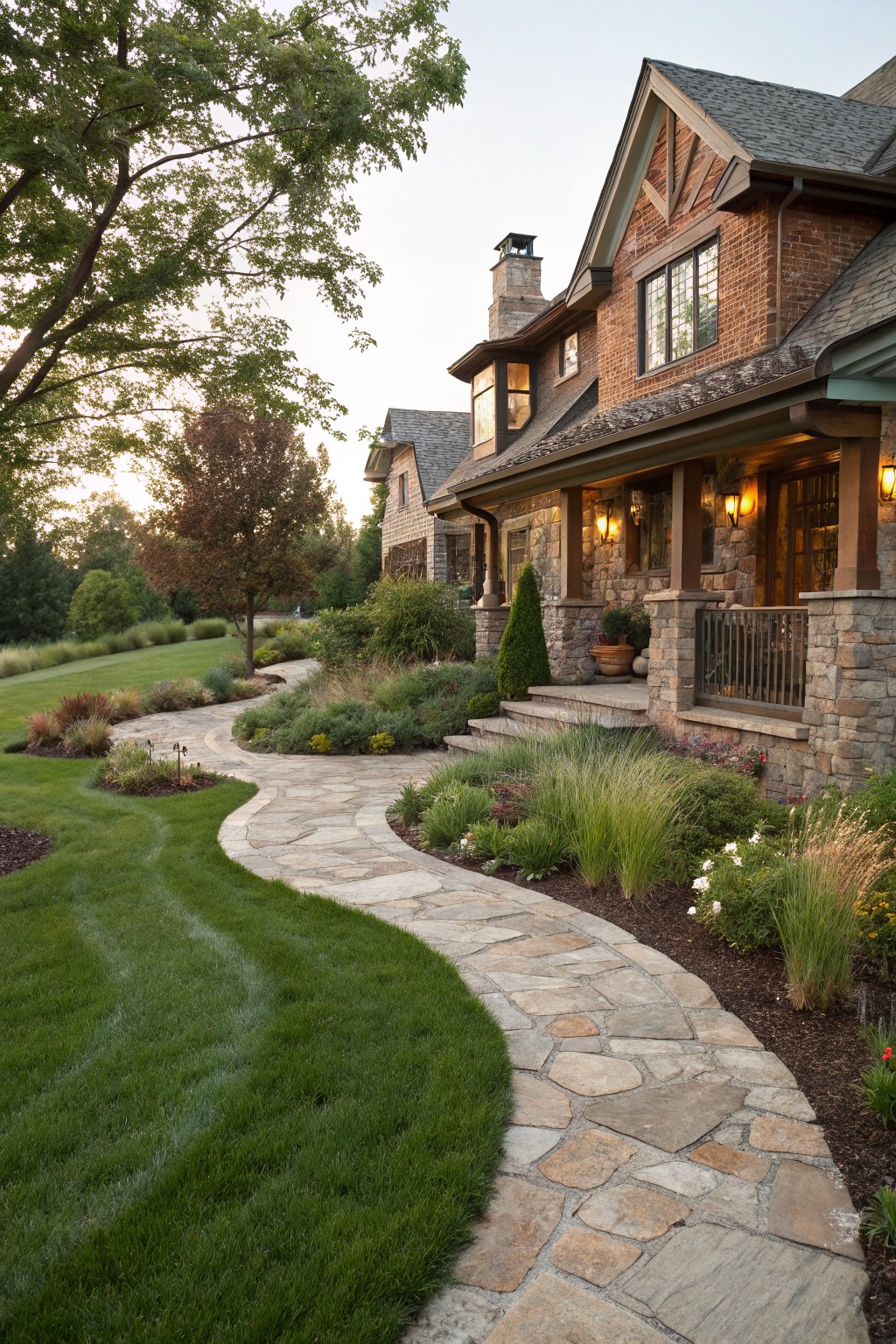
A simple curving path like this one, built from irregular flagstone, winds through the front yard and pulls your eye straight to the house entry. It feels natural and welcoming, especially next to a sturdy stone porch, because the soft bends avoid that straight-shot stiffness you see in older setups. The path mixes right in with the lawn and plant beds on both sides.
This works best on bigger front yards around traditional homes, where you have room for the curve to breathe. Set the stones in sand or mortar for stability, then fill edges with tough grasses and perennials that won’t crowd it out. Skip super-narrow paths; give it four feet wide at least so two can walk easy. Low upkeep too, if you pick the right plants.
Winding Brick Path with Flower Edges
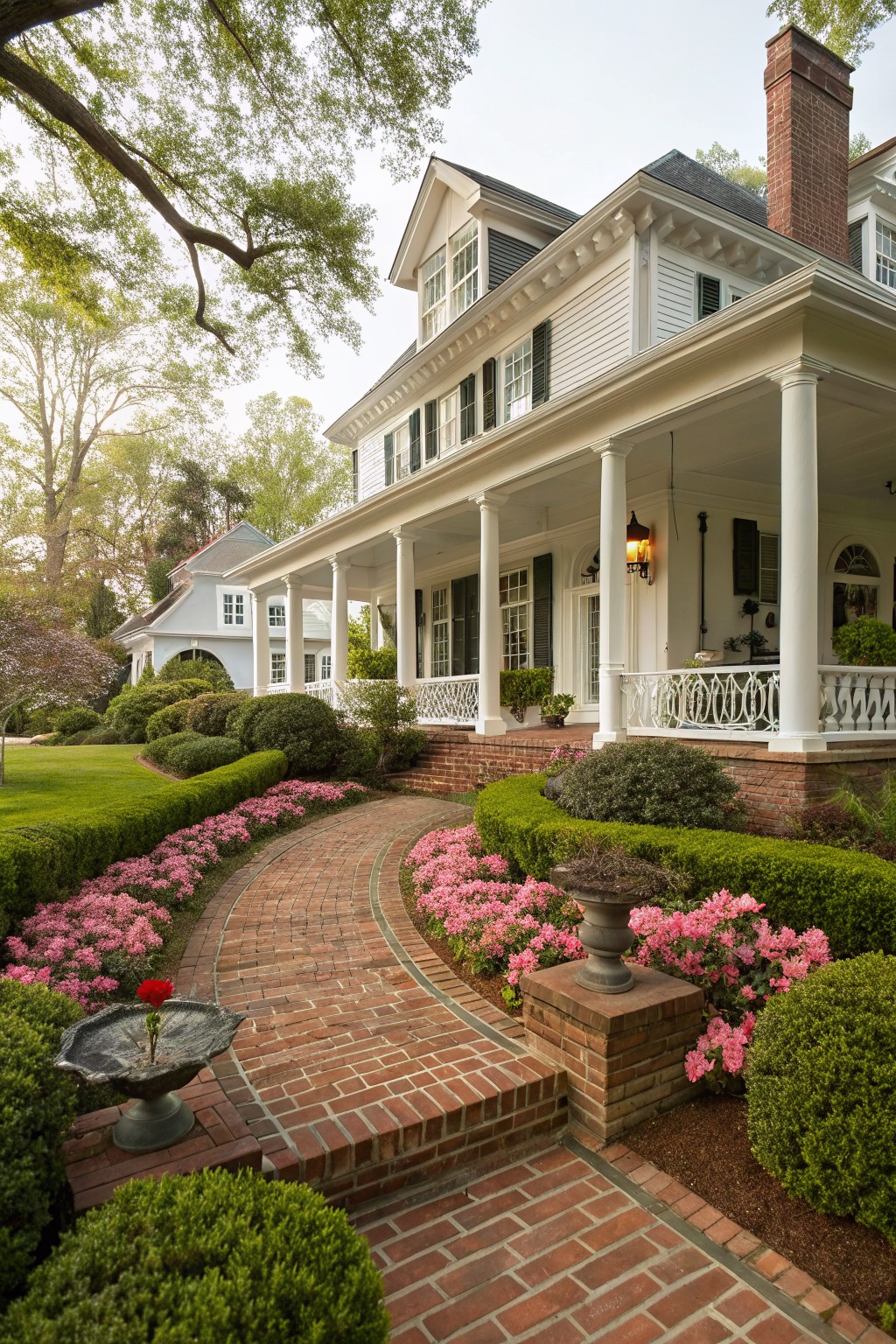
A simple winding brick path like this one makes the walk up to your front porch feel like a real invitation. The gentle curve, edged with masses of pink azaleas and clipped boxwoods, guides folks right to the door without feeling too straight or stiff. It softens the yard and pulls the house into the picture nicely.
This setup works best on traditional homes with a porch or steps, especially where you’ve got some slope to play with. Lay bricks in a loose curve, then plant repeating shrubs that bloom around the same time each spring. Keep the edges trimmed, and it’ll stay low fuss while boosting curb appeal year round.
Brick Walkway Lined with Boxwoods and Grasses
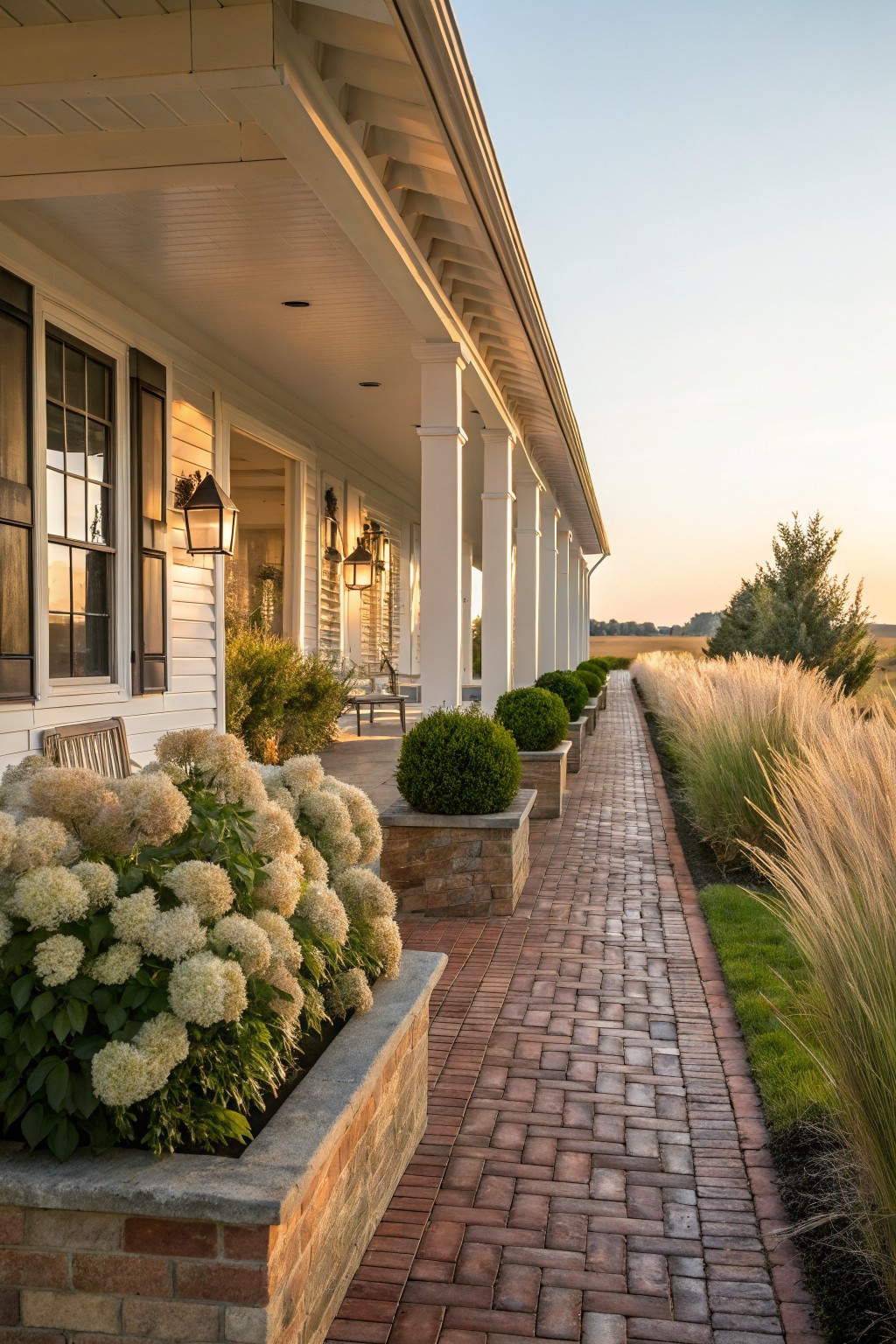
A straight brick path like this runs alongside the house, edged with round boxwoods in stone planters on one side and tall ornamental grasses on the other. It sets up a clean rhythm that matches traditional homes, making the yard feel put-together and leading folks naturally toward the porch steps. The mix of formal shrubs and looser grasses keeps things balanced, not too stiff.
This works best on longer front or side yards for colonials or farmhouses. Lay the bricks in a simple pattern, space boxwoods evenly for that repeating look, and plant hardy grasses that sway in the breeze. Pick drought-tolerant types to cut down on watering. It suits sunny spots well.
Brick Path Edged with Shrubs
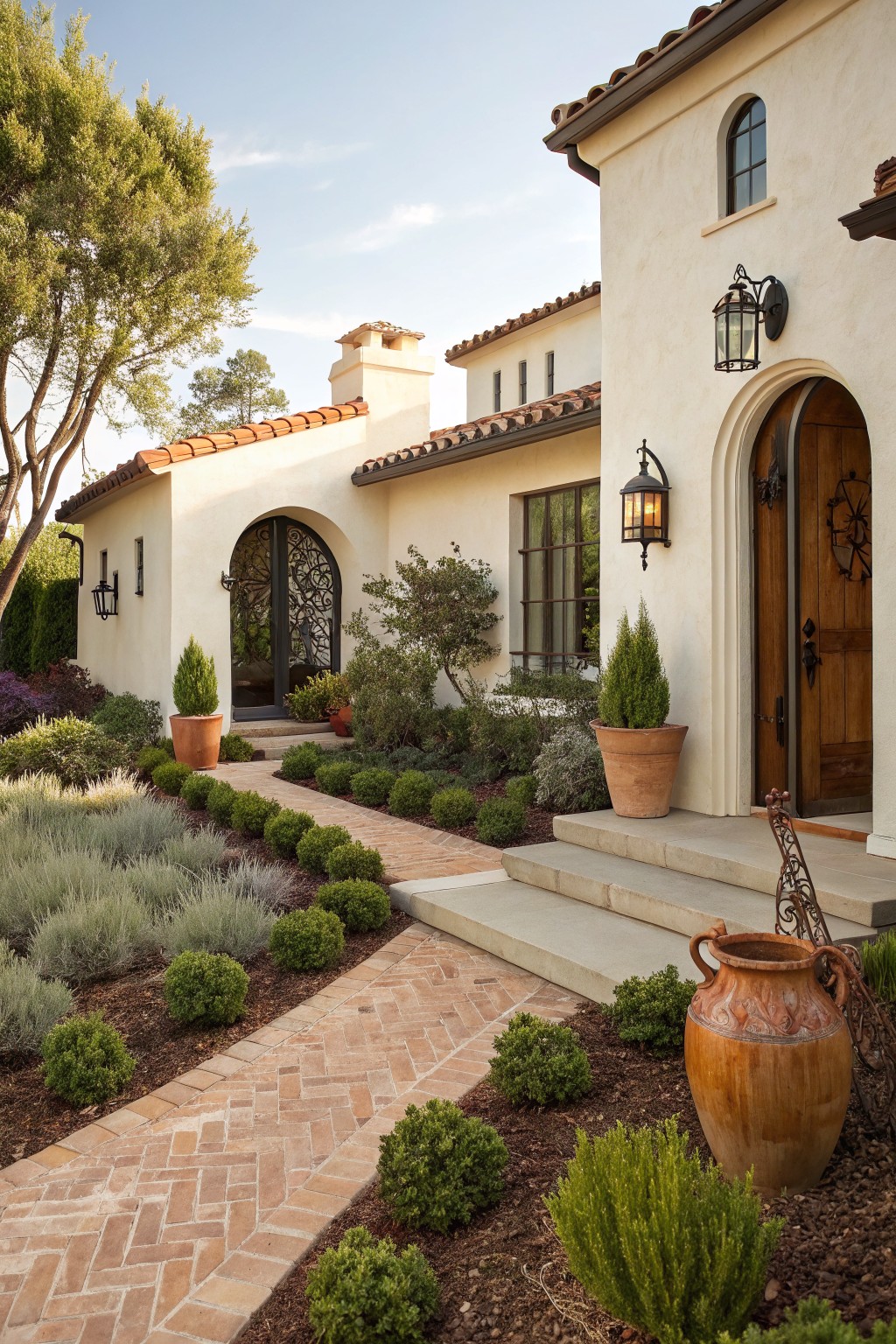
A simple brick path like this one runs right up to the front door. It’s laid in a zigzag pattern that gives some interest underfoot. Low boxwood shrubs line both sides, with bits of lavender and taller pots breaking things up. The whole thing keeps the focus on the house without overwhelming it. Folks like how it feels orderly yet natural.
You can pull this off in most front yards with decent sun. Pick tough shrubs that stay compact, like boxwoods, and space them to match your path width. Brick holds up well and fits older style homes. Just keep the plants trimmed so they don’t creep over the edges. It makes coming home feel a little more special.
Curved Gravel Path Lined with Boxwoods
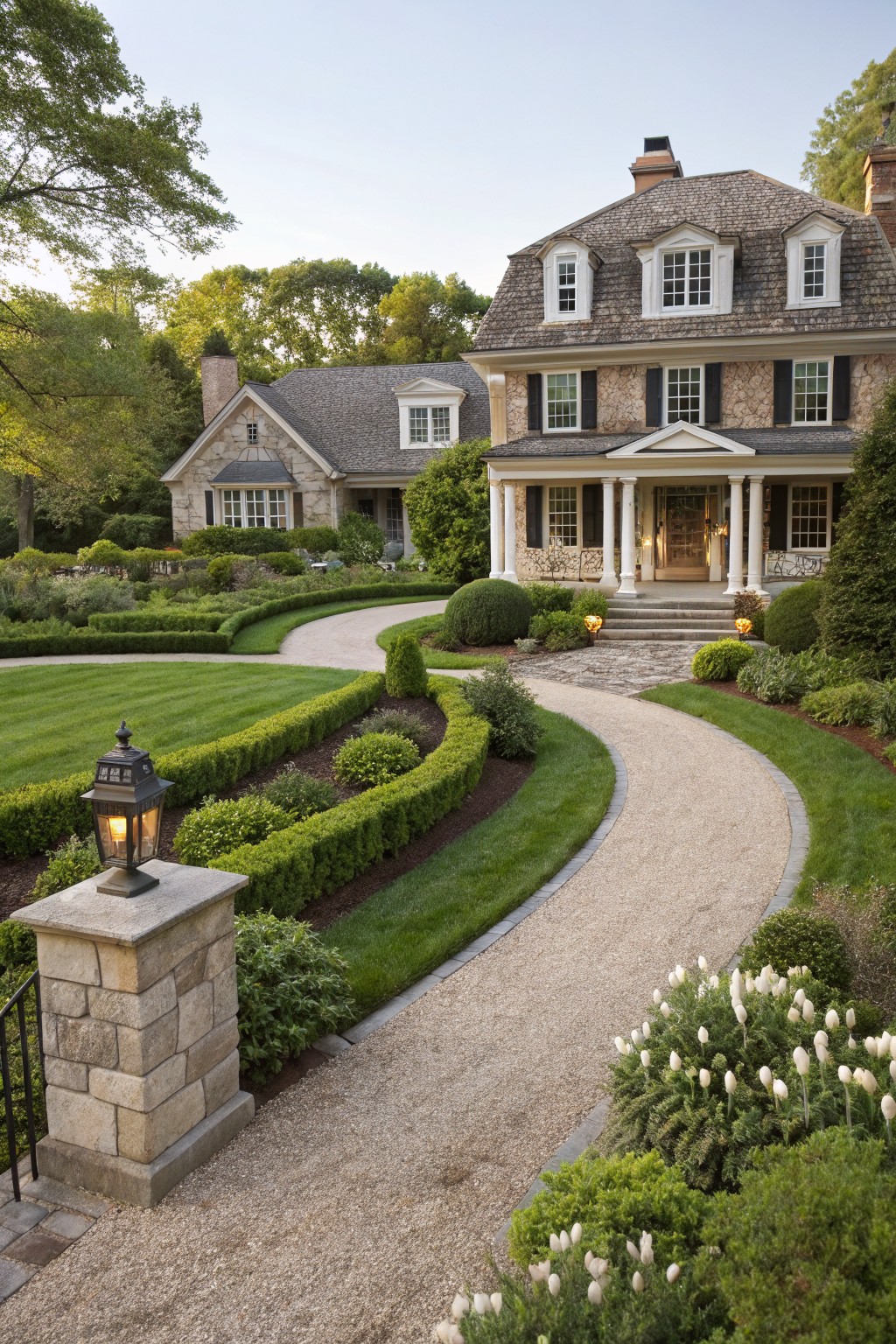
A gentle curving path like this makes the walk up to your front door more interesting than a straight shot. Boxwood hedges run right along the edges, keeping everything neat and contained, while the gravel gives a soft crunch underfoot. That setup pulls your eye toward the house in a natural way, especially with a lantern-topped stone pillar marking the start.
Try it in a front yard with room to spare, say on a half-acre or so. Plant the boxwoods low enough for easy trimming, maybe two feet high, and fill in with annuals or perennials for color. It fits traditional homes best, adds some formality without much upkeep, but skip it if your lot feels too tight.
Curved Paver Path with Stone Walls
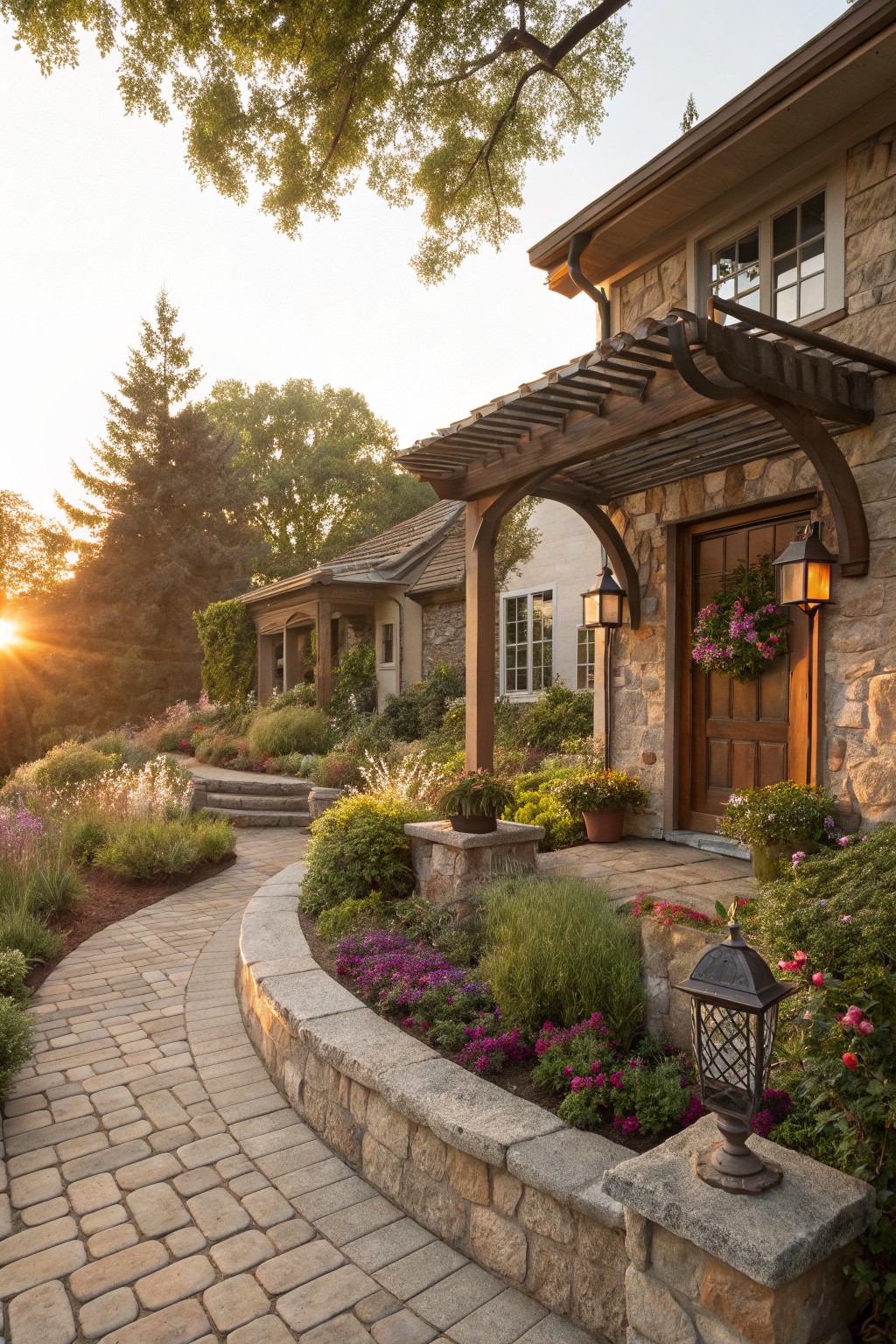
A simple curved path like this one makes the walk up to your front door feel easy and natural. Made from pavers that follow the yard’s gentle slope, it’s edged by low stone walls filled with plants. You get pink flowers spilling over, taller grasses for texture, all leading the eye straight to the entry without any rush. It’s a quiet way to add interest right where people first see your home.
This works well on sloped front yards around traditional stone or stucco houses. Lay the pavers in a loose curve to match your lot’s shape, top the walls with perennials and small shrubs that won’t grow too wild. Skip super tall plants near the path so it stays open. It’s practical for everyday use and keeps that classic look without much upkeep.
Curved Brick Path with Flower Beds
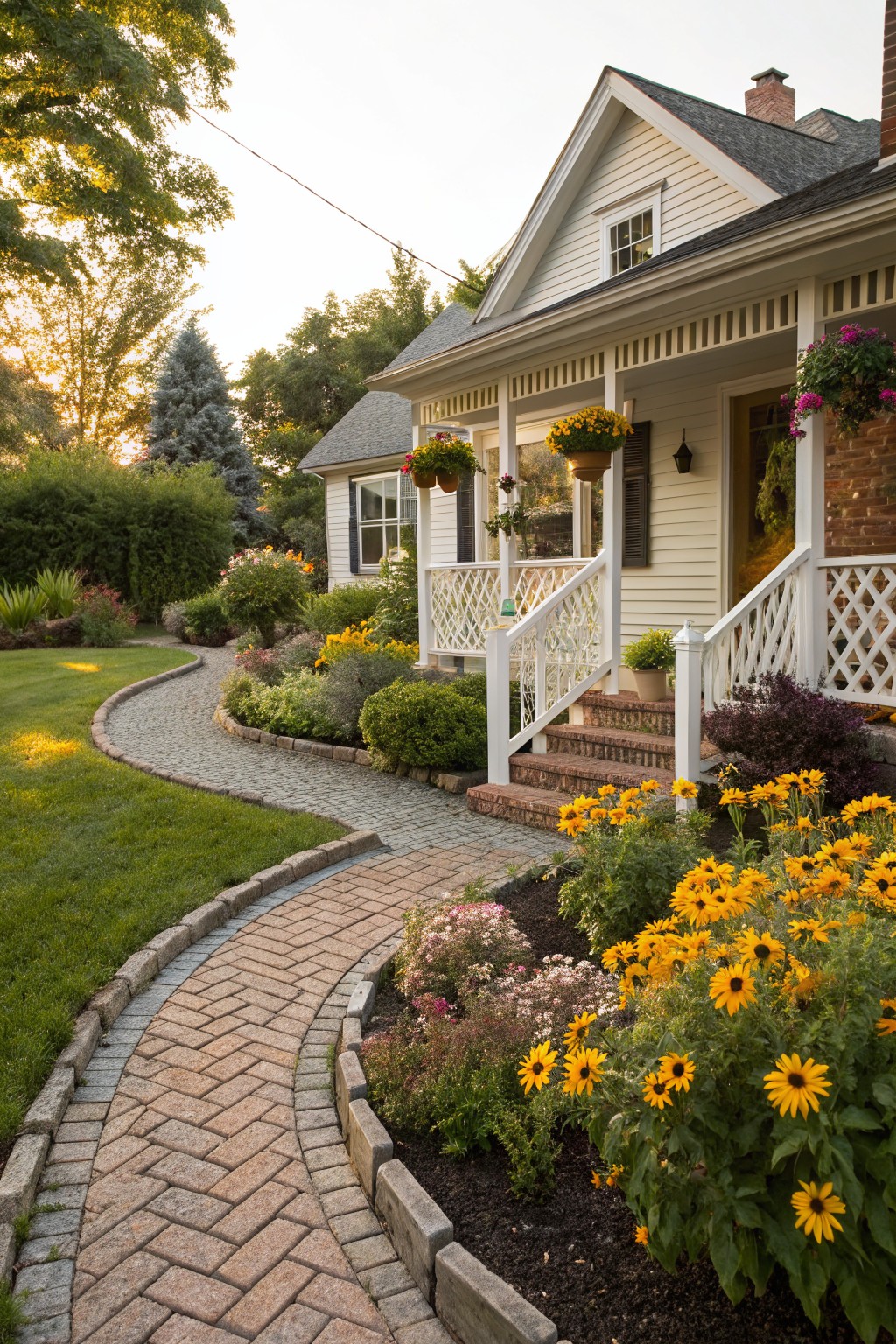
A curving brick path like this one makes a front yard feel more welcoming right away. It draws your eye gently toward the house instead of going straight there. The beds along the edges, full of yellow black-eyed Susans and other perennials, add color without overwhelming things. It’s a simple way to give traditional homes that classic cottage charm.
This setup works best on homes with porches or steps up front. Use bricks for the path to match older-style houses, and keep the curve soft for a natural flow. Plant low-growing flowers along the borders so they don’t block the walk. Watch out for too many plants near the path though. It can get crowded fast if you overdo it.
Boxwood Borders Along Entry Paths
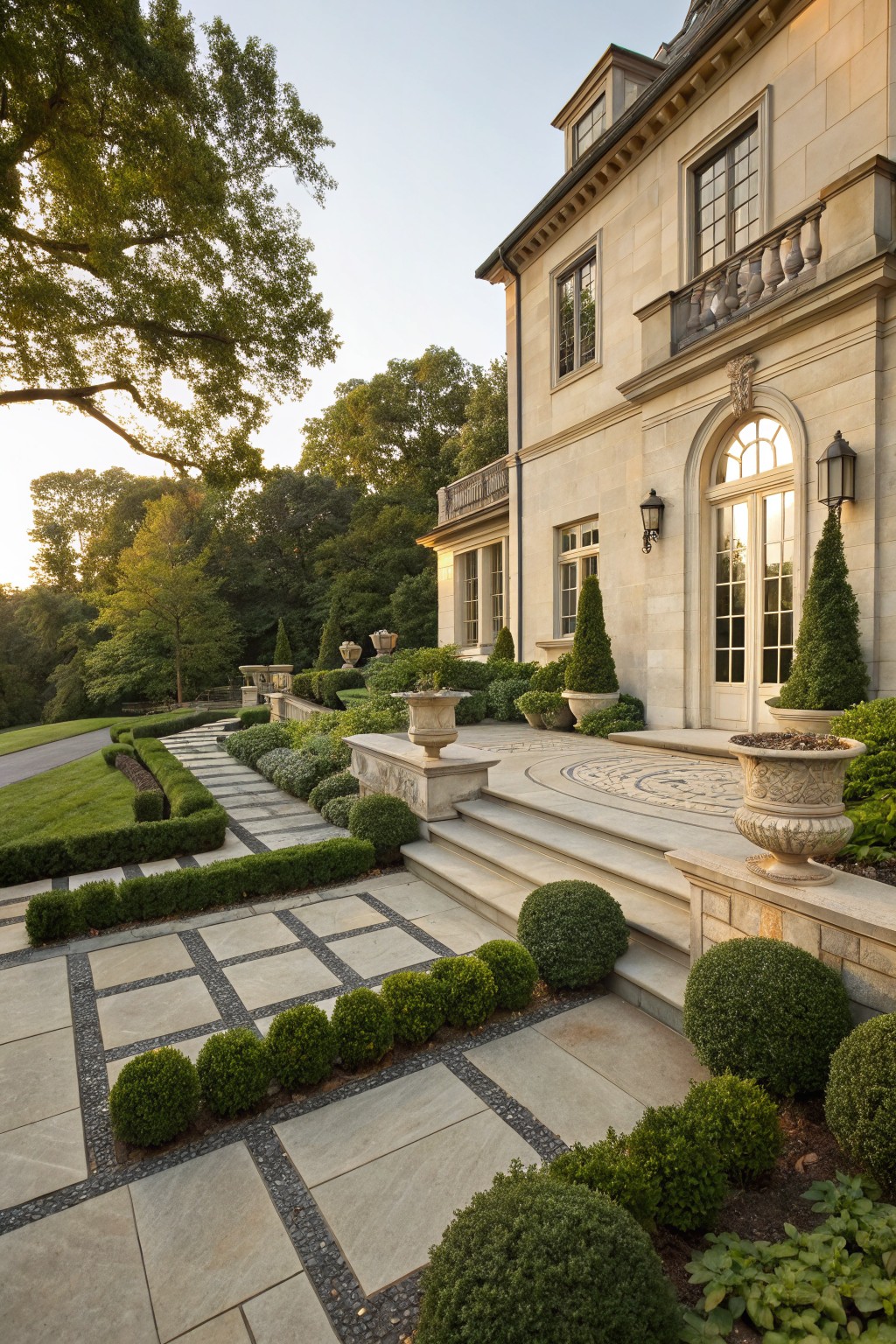
One simple way to make a traditional home’s front yard feel put-together is lining your main walkway with boxwood hedges. You see it here with those round-clipped bushes hugging the edges of wide stone pavers, right up to the steps. It pulls everything into a neat, formal rhythm that matches stone houses like this one. No fuss, just clean lines that say welcome without trying too hard.
Put this to work on any front entry with enough space for a few feet of planting beds on each side. Go for low boxwoods you can shear into balls or squares, and pair with pale gravel or pebble strips between the stones for drainage and contrast. It suits older homes best… keeps the look timeless, but watch the watering in dry spots.
Winding Pathways with Lush Borders
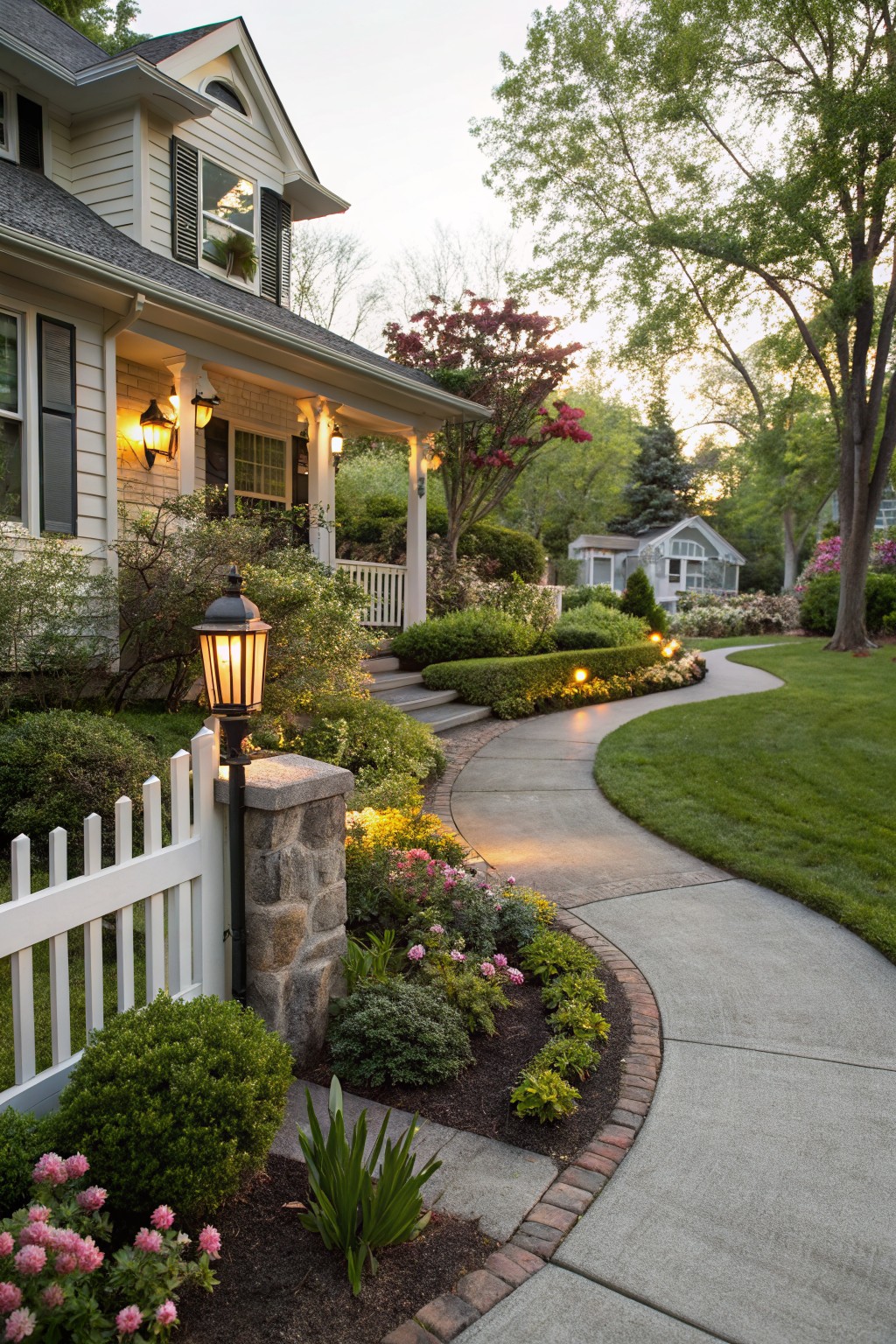
A winding path like this draws folks right up to your front door without feeling too straight and boring. It curves softly through the yard, edged with boxwoods, pink flowers, and that tall lamp post glowing at dusk. Keeps the walk interesting. And practical too.
Try this on a traditional home with a decent front yard. Lay down concrete or pavers for the path, plant low shrubs and perennials along both sides for that full look, then tuck in path lights. It suits sloped lots best. Just don’t make the turns too tight or it’ll feel forced.
Frequently Asked Questions
Q: How do I pick plants that fit a traditional home without guessing wrong?
A: Stick to boxwoods, hydrangeas, and lavender. They echo old-school charm and grow reliably in most yards. Match their height to your house scale so nothing looks out of place.
Q: Can I try these ideas if my yard gets mostly shade?
A: Choose ferns, astilbe, and impatiens for low-light spots. They fill beds with lush greens and soft blooms that nod to classic styles. Avoid sun-lovers like roses here.
Q: What’s a quick fix for boring grass in the front?
A: Plant a row of low hedges along the sidewalk. Trim them neat once a month. Your curb jumps right out.
Q: How do I stop my new mulch beds from looking messy fast?
A: Rake them smooth after rain or wind. Refresh the top layer yearly with two inches of fresh stuff. Edges stay crisp longest.
