

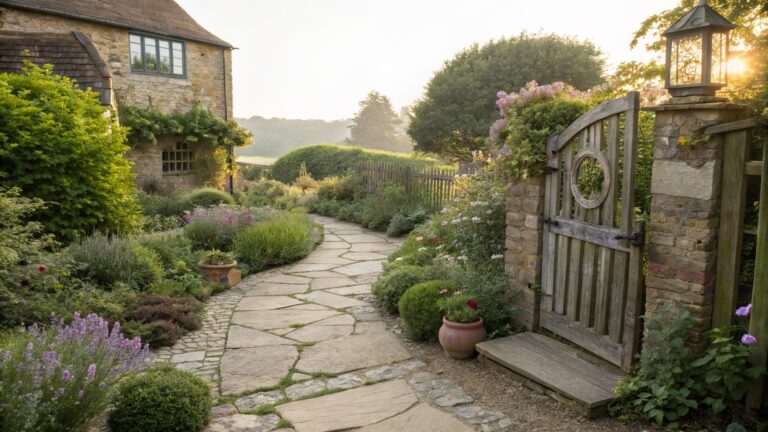
I always pay attention to front yard paths because they set the rhythm for how the whole planting layout unfolds as you approach the house. A good one curves through layered borders of perennials and low shrubs, edging everything neatly so the garden holds its shape through seasons of growth. In my yard, I’ve learned that paths made from local stone or mulch blend best and guide visitors without overpowering the plants around them. What catches the eye first is usually that welcoming line leading from the sidewalk, hinting at the care put into the space. Simple paths like these are worth sketching out for your own front yard.
Curvy Stone Paths Through Lush Borders
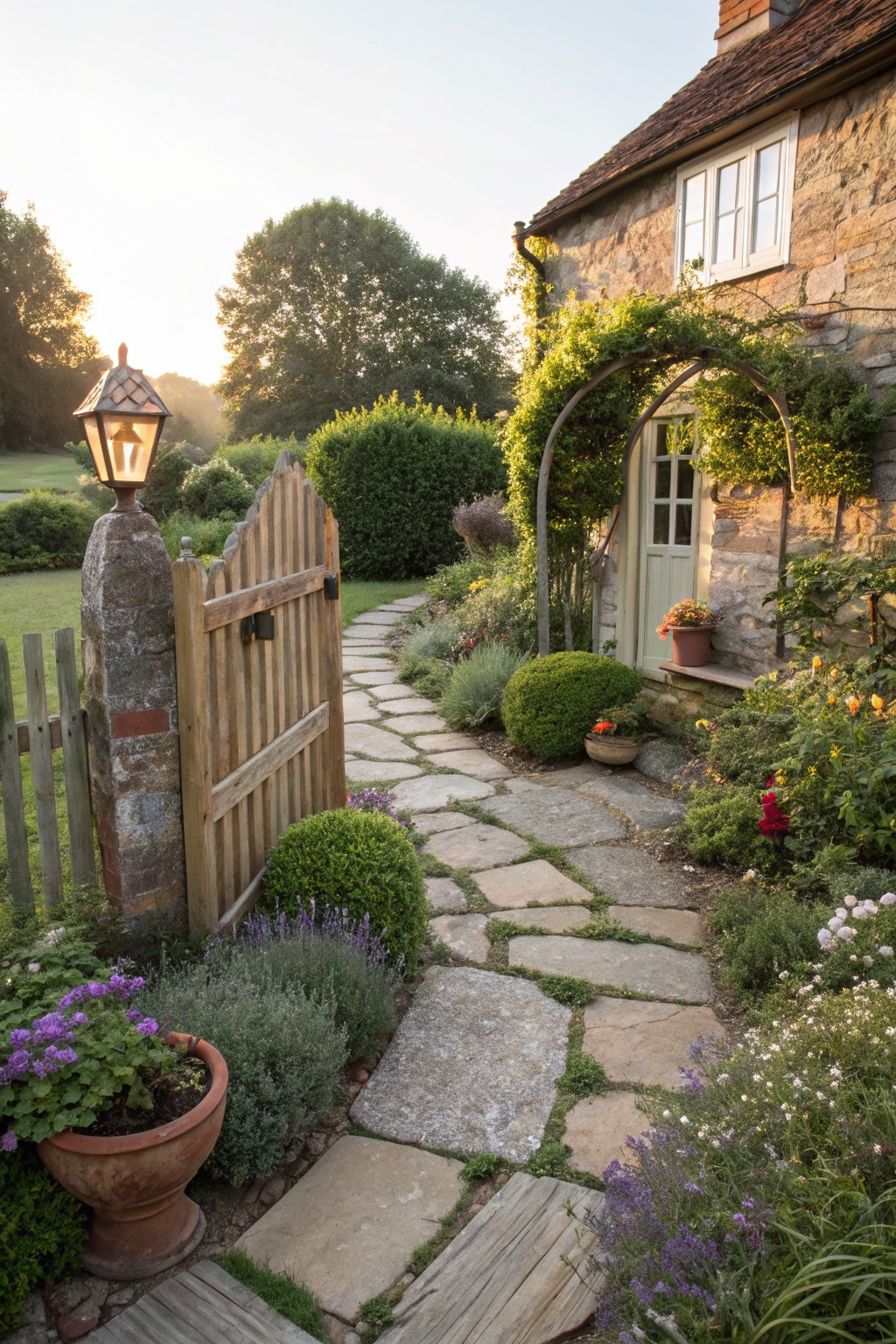
A simple way to make your front yard more welcoming is a winding path of irregular stone slabs set right into the grass and plants. It pulls the eye straight to the door without feeling too rigid. Here the path curves gently past pots of lavender and geraniums, with low shrubs and perennials spilling over the edges. That mix keeps things soft and lived-in.
This works best in smaller yards or older homes where you want a cottage feel. Lay the stones loosely with room for plants to grow between them, and choose tough bloomers like salvia or catmint that handle foot traffic. Skip straight lines. They can make the walk feel rushed.
Stepping Stone Path in Gravel
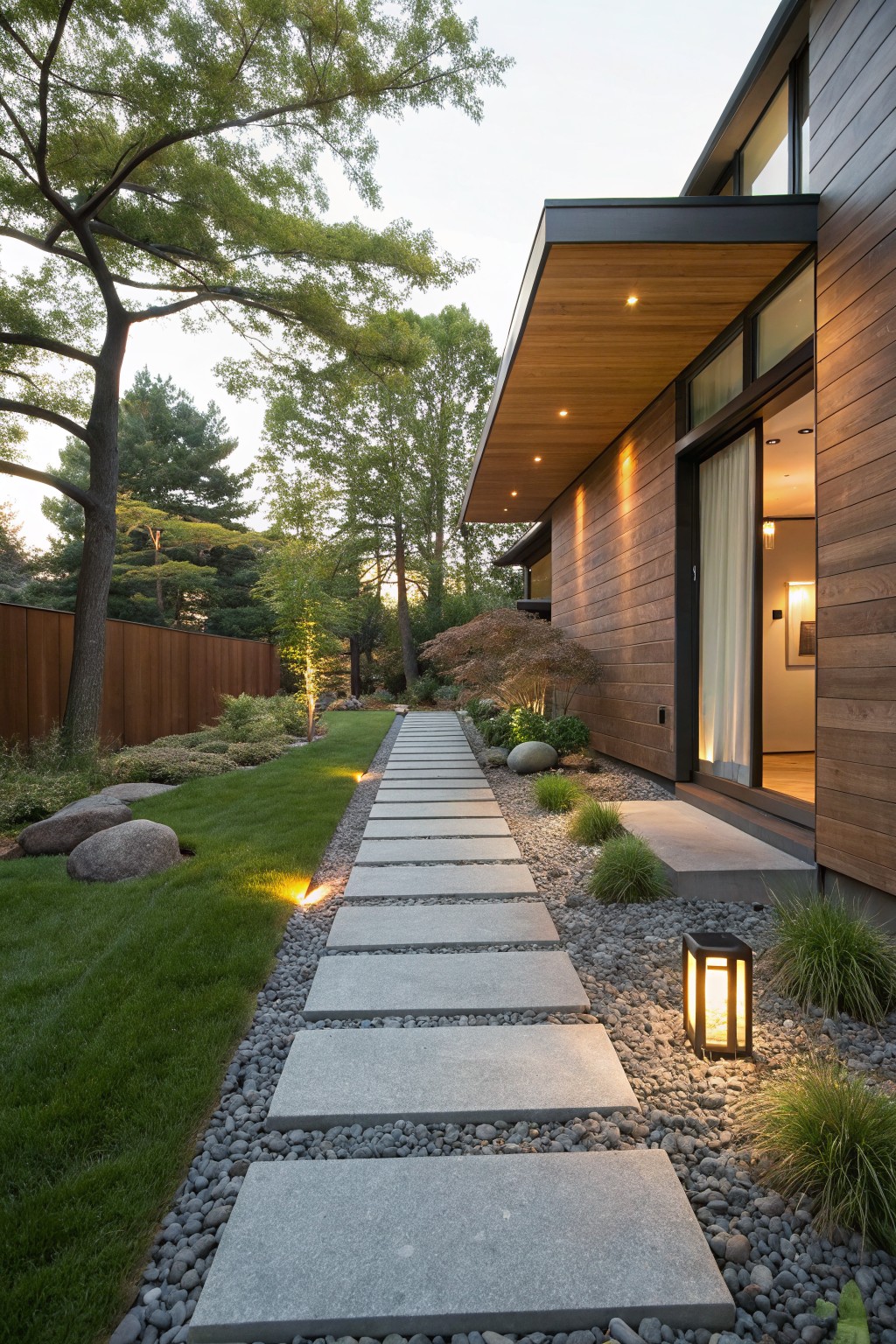
A simple way to guide people to your front door is with wide stone slabs set right into gravel. Here the large gray pavers sit loose in a gravel bed next to a strip of green lawn. Low grasses and rocks fill in the edges. It feels easygoing. No fussy borders or mortar needed.
This works best in yards that want a modern or Japanese garden look. Space the slabs so adults can step from one to the next without thinking. Add small path lights along the way for evenings. Skip it if your yard floods a lot… gravel can shift.
Winding Stone Path to the Front Door
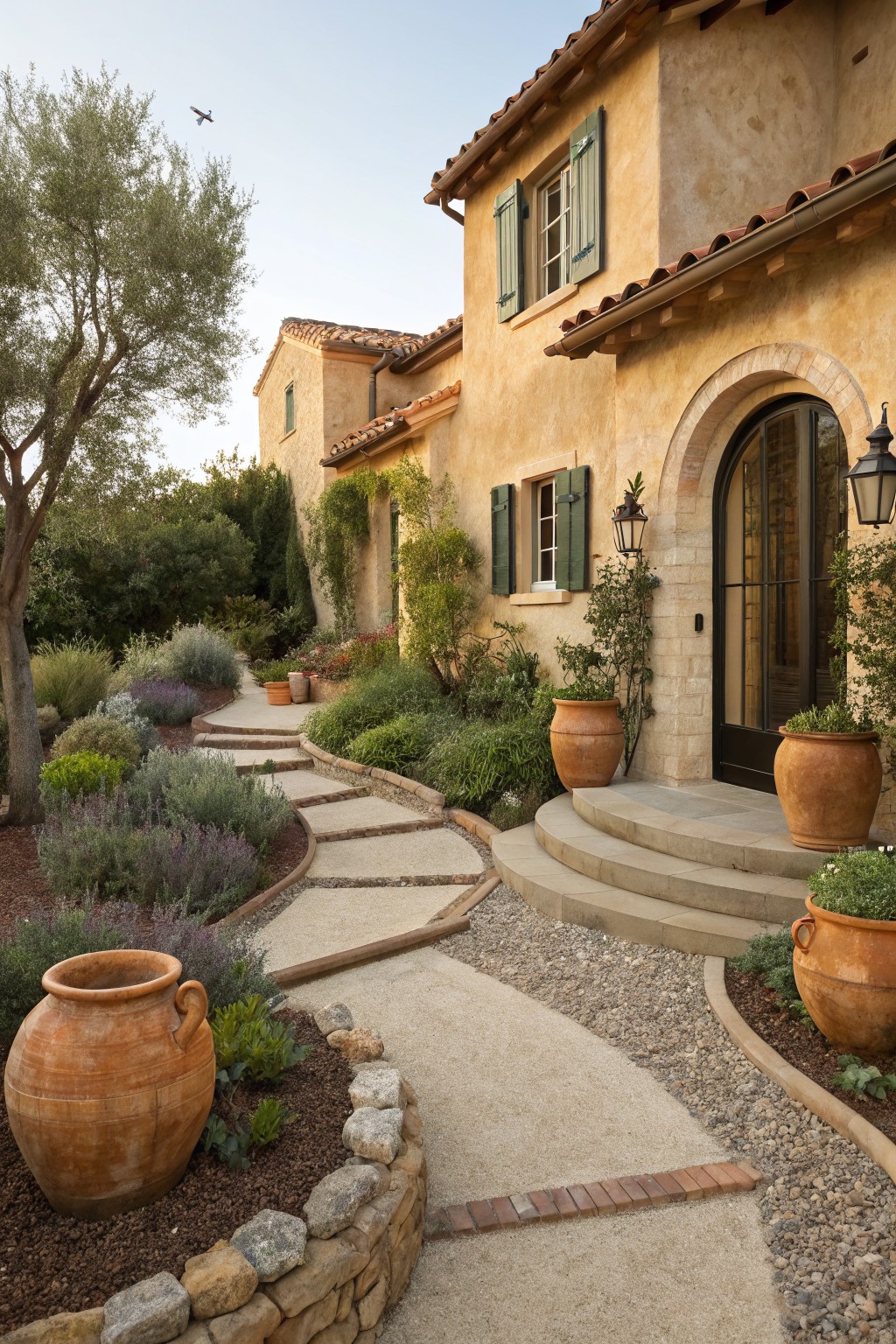
A winding path like this one makes the walk up to your house feel easy and natural. It uses simple stone steps set right into gravel, with low plants and big terracotta pots along the edges. Those large orange pots add some height without crowding the way, and the curve keeps it from feeling too formal. It’s a quiet way to tie the garden into the entry.
This setup works best in front yards with a bit of slope, or any spot where you want to slow people down a little on the approach. Go for local stone and drought-friendly plants like lavender or olive trees to keep it low fuss. It suits older homes with stucco or tile roofs… just watch the gravel doesn’t scatter too much in heavy rain.
Boardwalk Paths Through Coastal Dunes
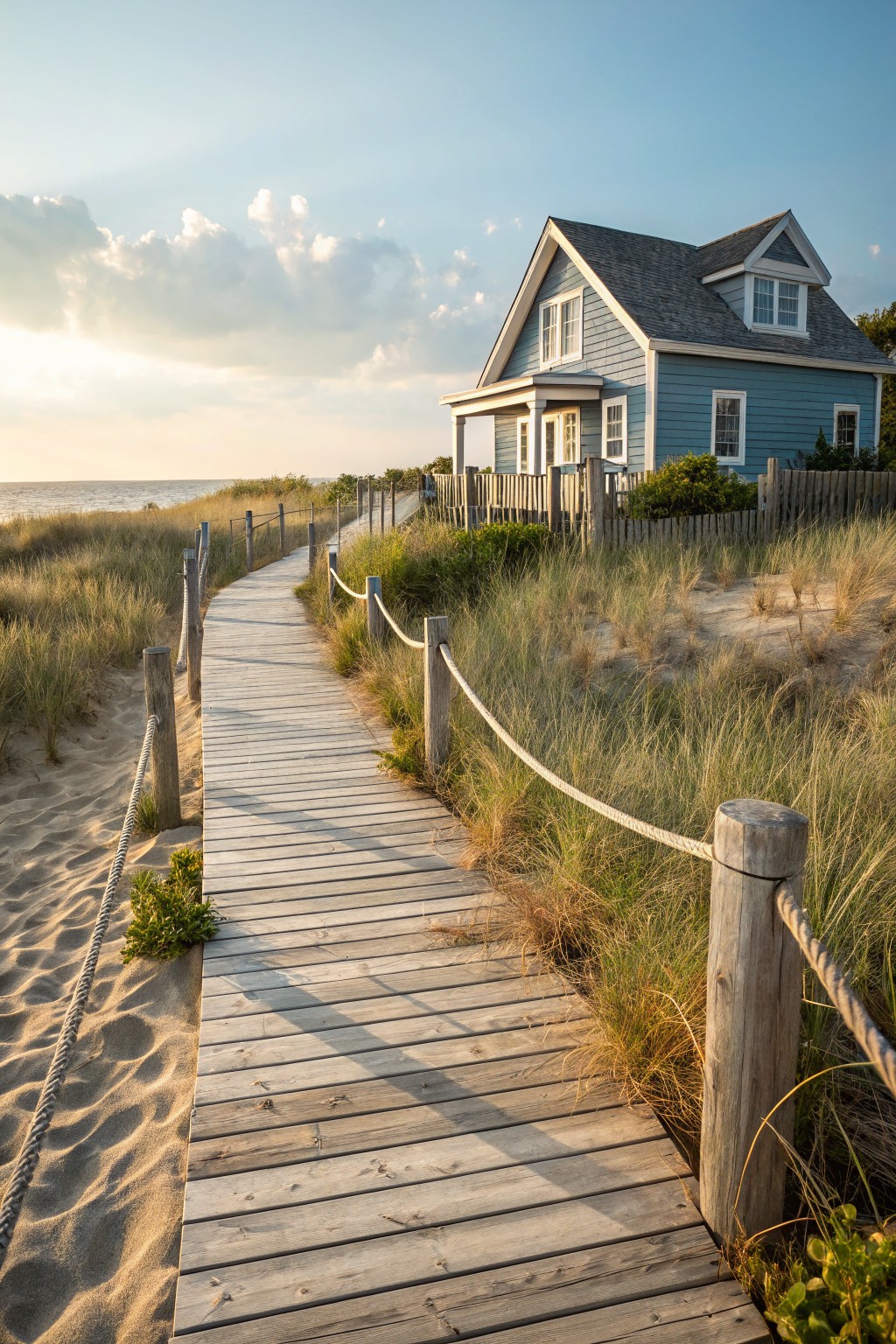
One straightforward way to handle a front yard full of natural grasses and sand is a raised wooden boardwalk. It lets you get to the house without trampling the plants or stirring up the dunes. Here the path curves gently from the beach area up to the home, with simple rope railings to keep things safe. That setup protects the landscape while making the walk to your door feel like part of the shore.
These paths work best on sloped or sandy lots near water, where you want low upkeep and a natural look. Use pressure-treated wood or cedar for the planks so they hold up to salt air. Keep the railings basic and the path wide enough for two people. It’s practical for beach houses or any yard mimicking that vibe, but watch the budget since custom curves add up.
Boxwood-Lined Path to the Entry
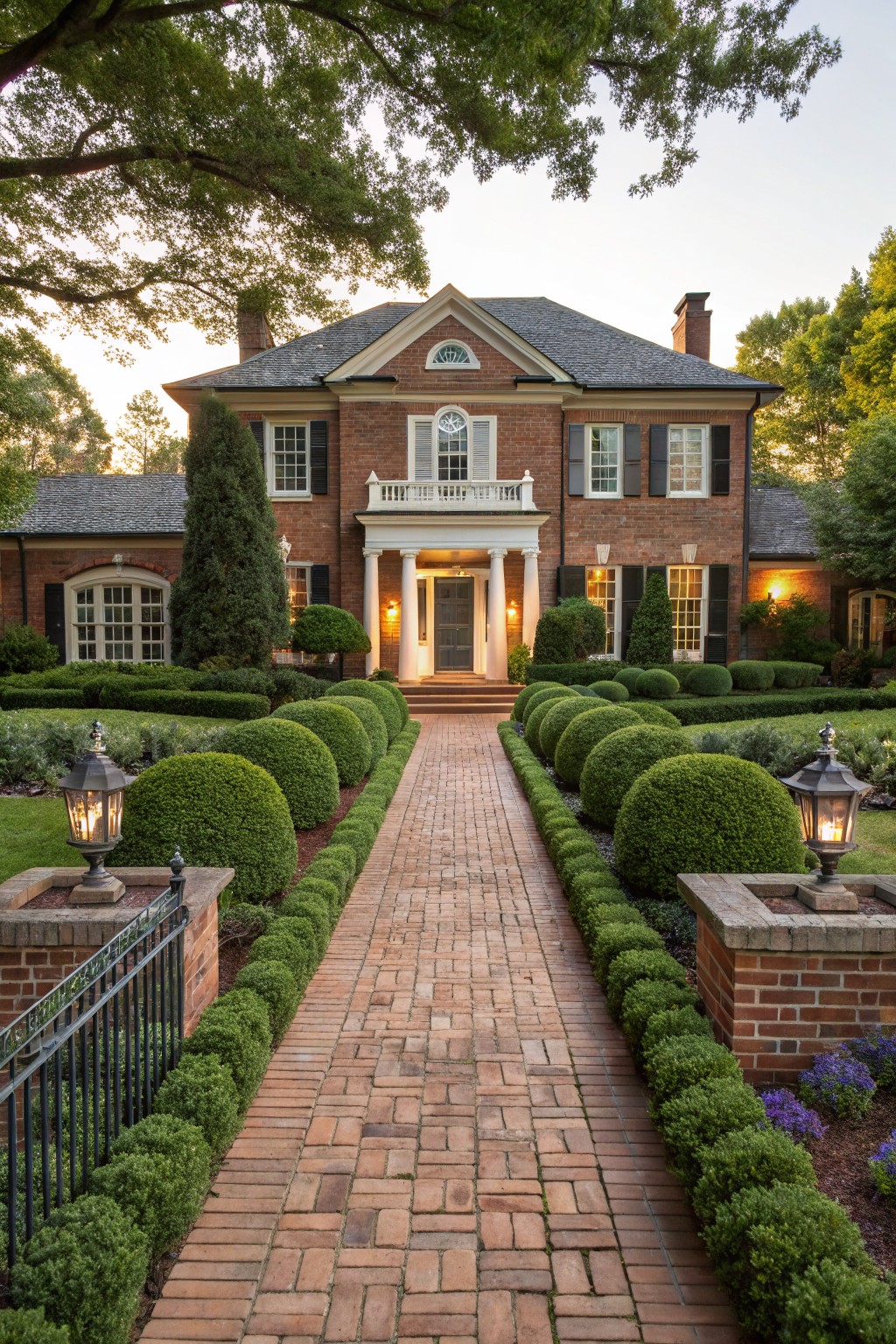
A simple brick path edged with round-clipped boxwoods makes a strong statement right at the front. It pulls your eye straight to the door without much fuss. Those neat green spheres stay full and tidy year-round. They give the yard some order that feels welcoming, not stiff.
This setup works best on homes with classic lines, like brick colonials. Line both sides of the path with the boxwoods, space them about three feet apart. Add lanterns on posts for evening light… keeps it practical. Skip it if your yard is small or shady, since boxwoods need sun to thrive.
Winding Gravel Path Through Beach Grasses
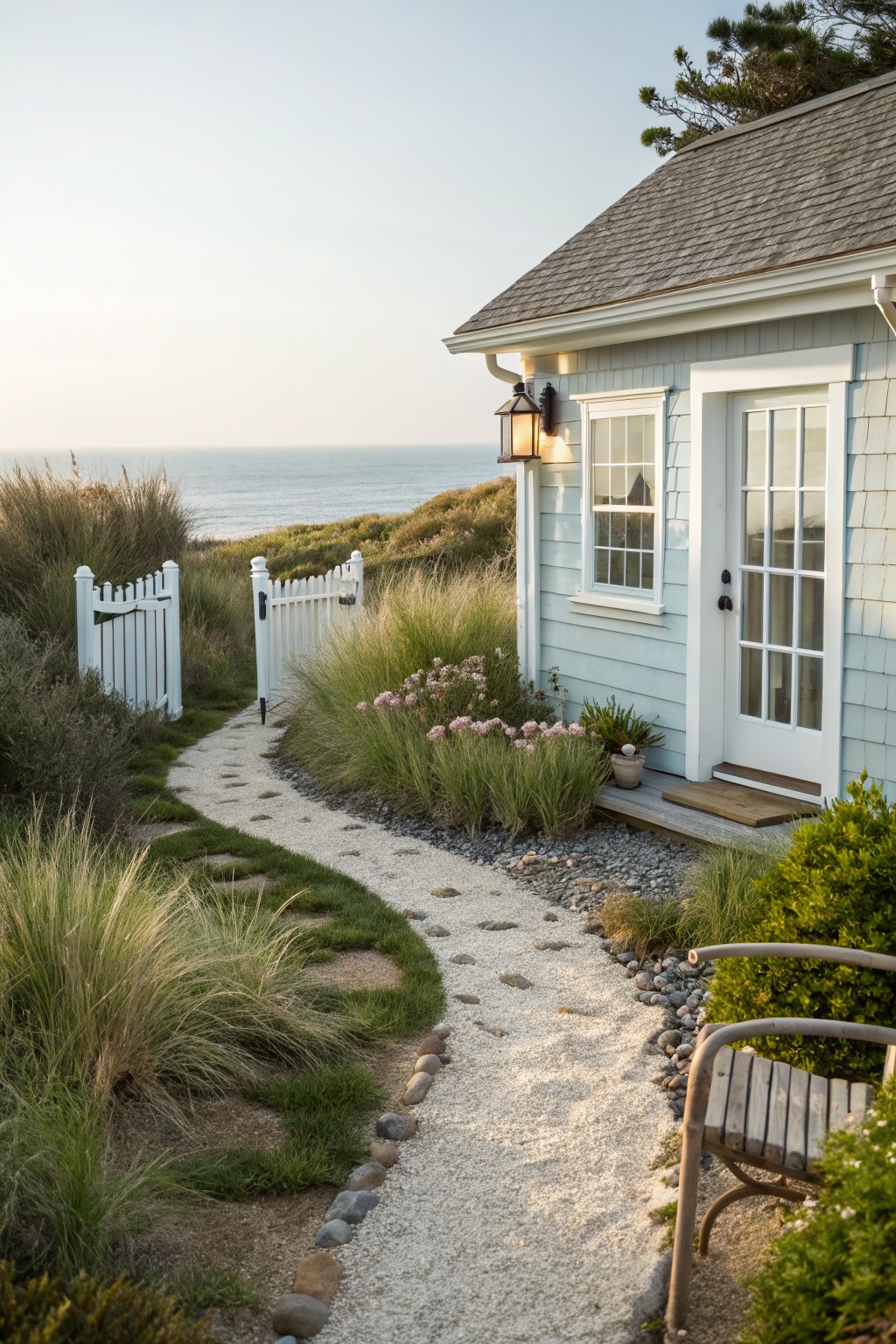
A gravel path like this winds gently from a simple white gate right up to the front door. It cuts through tall ornamental grasses and low plants, keeping things natural and easy to walk. What stands out is how it fits a coastal spot so well. The loose gravel and soft edges make the yard feel bigger and less fussy.
You can pull this off in any front yard with sandy soil or a beach vibe. Lay down gravel over landscape fabric, then edge it with drought-tolerant grasses that sway in the wind. Add a few flat stones for steps if you want. It works best where you don’t want high upkeep… just mow the edges now and then. Suits cottages or small homes by the water.
Winding Paths with Gravel Edges

A simple curving path like this one makes your front yard feel more alive. Made from wide stone pavers and tightly edged with dark river rocks and gravel, it guides you right to the door. The gentle bends keep it from looking too stiff, and the gravel mulch fills in around low plants like agaves without much upkeep.
This works best in dry yards or places where you want low water use. Pair it with a modern house that has clean lines, like stucco and wood accents. Start with bigger boulders to frame the beds, then layer in pebbles for the edge. Straight paths can feel cold… curves invite you closer.
Natural Stone Path Through Beach Grasses
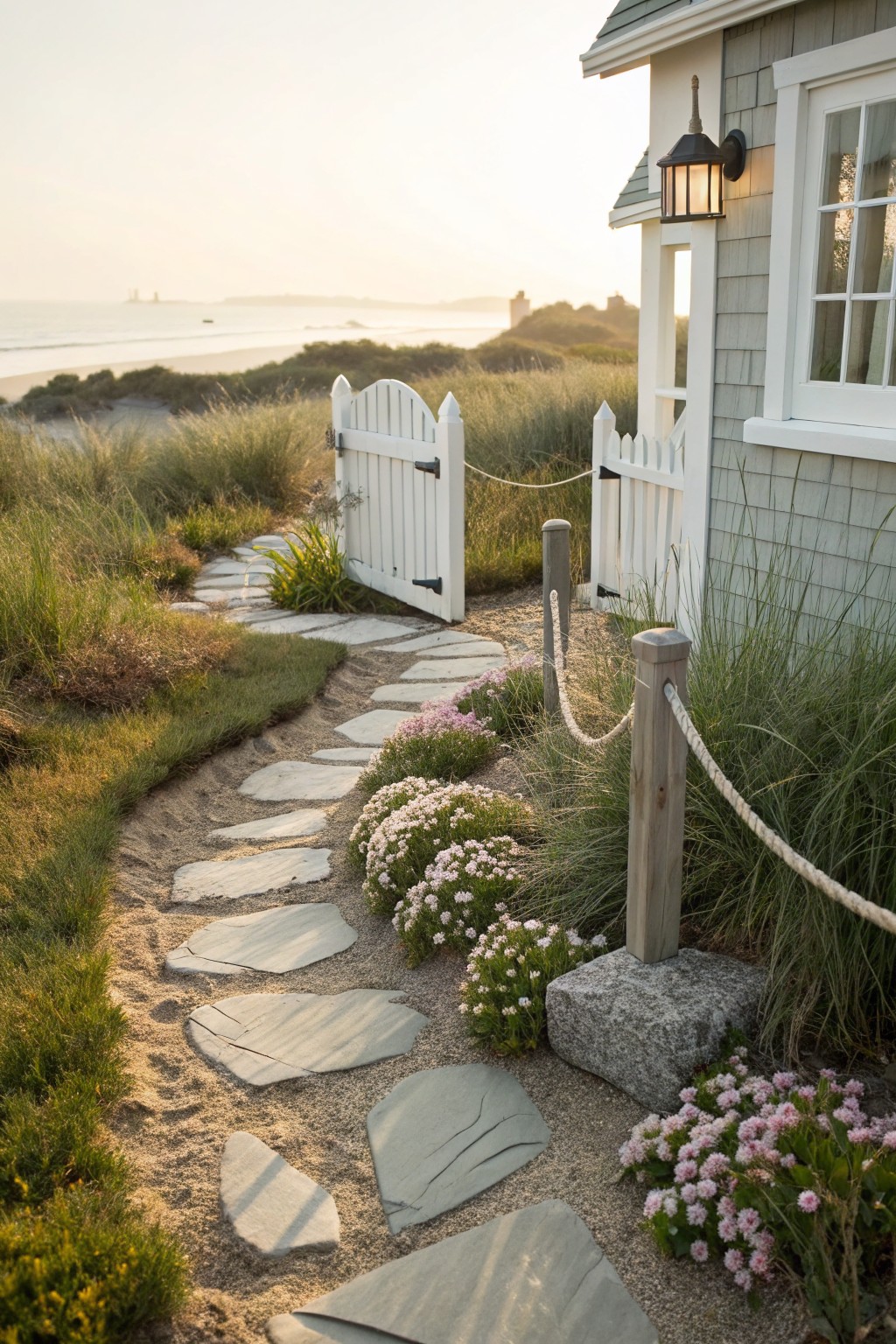
A simple stone path like this winds through native grasses and low flowers right up to the house gate. The irregular gray flagstones fit right into the sandy soil, making the walk feel easy and part of the dunes. That white picket gate at the end adds a friendly touch without overdoing it.
You can pull this off in any coastal yard or casual front entry. Pick flat local stones and space them out in sand or gravel for drainage. Plant tough beach grasses along the edges to hold soil and keep weeds down. It suits sloped lots best… low upkeep too.
Winding Brick Paths Through Flower Beds
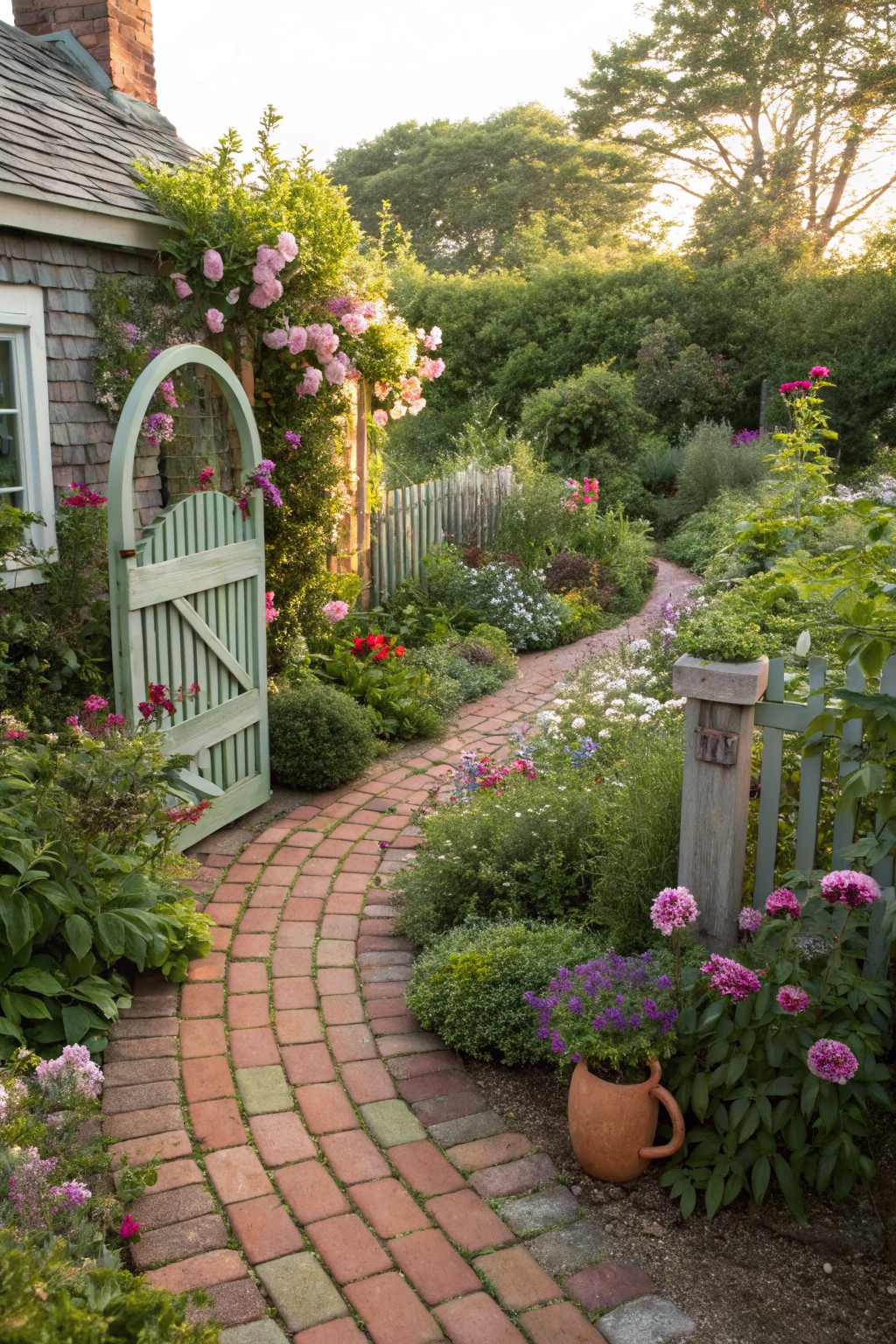
A gentle curve in a brick path like this one turns a plain front yard into something you actually want to explore. It snakes between tall perennials and roses, pulling your eye right along without feeling forced. That green arched gate draped in pink blooms just adds to the pull, making even a small space feel deeper.
These paths work best in cottage-style yards or anywhere with soft edges. Lay bricks in a loose pattern for that aged look, then edge them with low flowers up to shoulder-high shrubs. Keep the center clear for walking, and it suits most any home size… just watch the weeds if you skip edging.
Winding Stone Path Through Lavender Beds
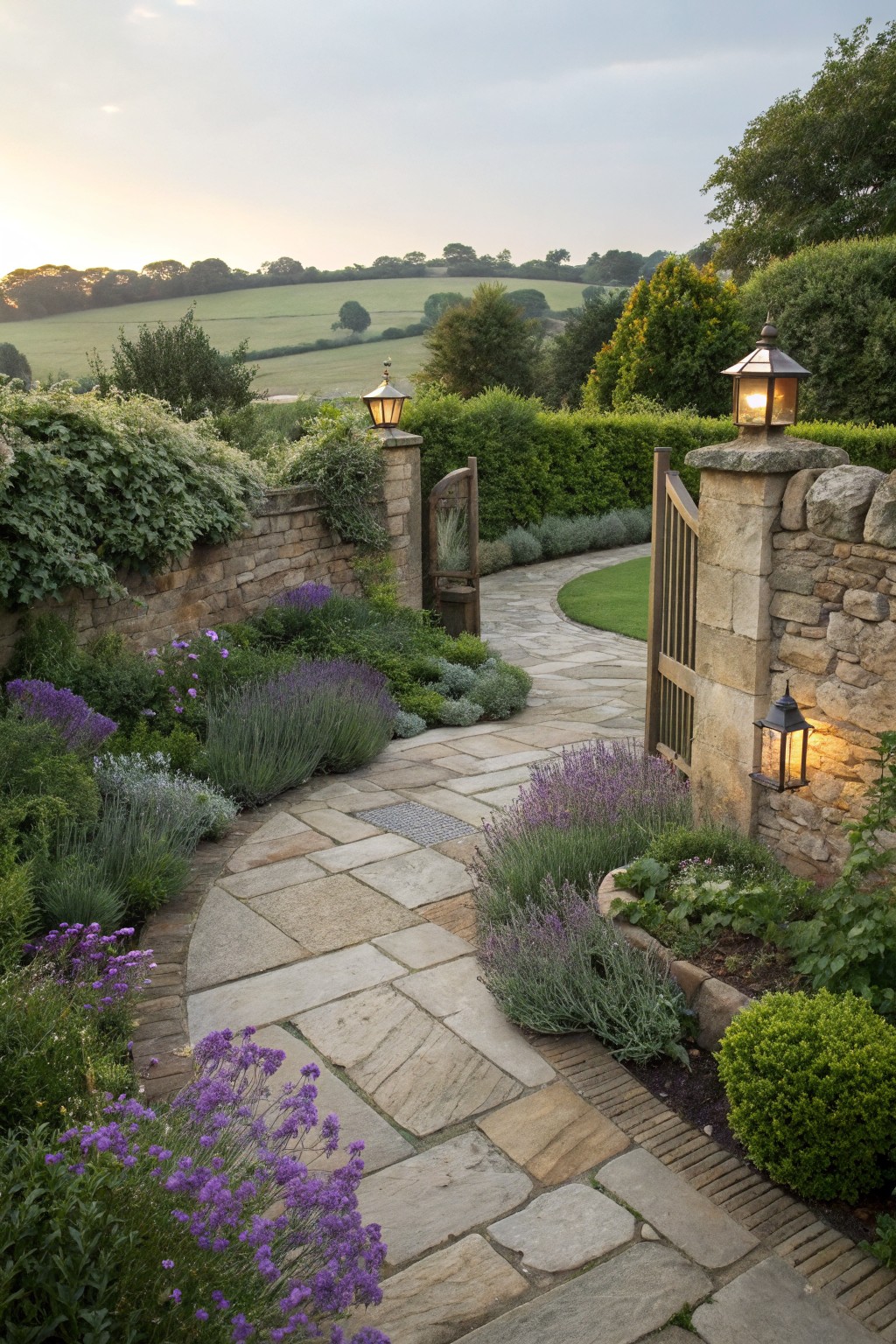
A gentle curve of irregular stone slabs winds through neat beds of lavender and low-growing plants. It leads right up to a simple gate between stone pillars topped with lanterns. This setup makes the garden feel like it’s guiding you along, easy on the eyes and not too fussy.
Try this in a front yard where you want that welcoming cottage garden look. Pick flagstones that fit your local stone, edge them with lavender for color and smell through summer. The lanterns work day or night… just make sure the path is wide enough for two to walk side by side. Suits older homes or any spot with a bit of slope.
Herringbone Terracotta Paths for Entryways
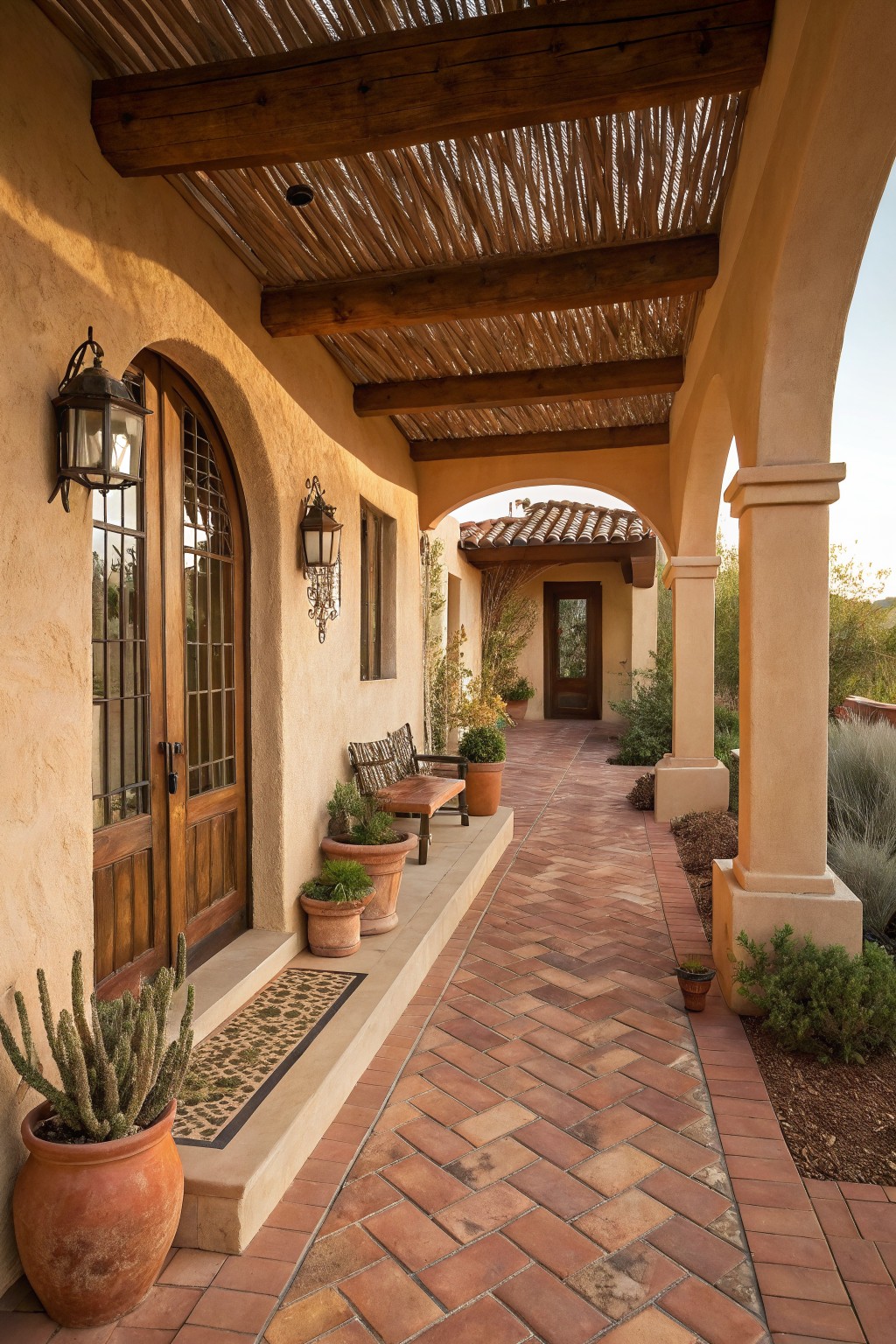
A simple herringbone pattern in terracotta pavers makes a front path that feels right at home next to adobe walls. It runs smooth along the covered porch, guiding folks straight to the door without any extra flair. Paired with big pots of cactus and agave, it keeps things low-water and sturdy in sunny spots.
This works best on smaller front yards or desert homes where you want easy maintenance. Set the pavers in sand over gravel for drainage, then tuck in a few succulents along the edges. Skip it on steep slopes though… might need a different pattern there.
Stone Slab Path in Pebble Bed
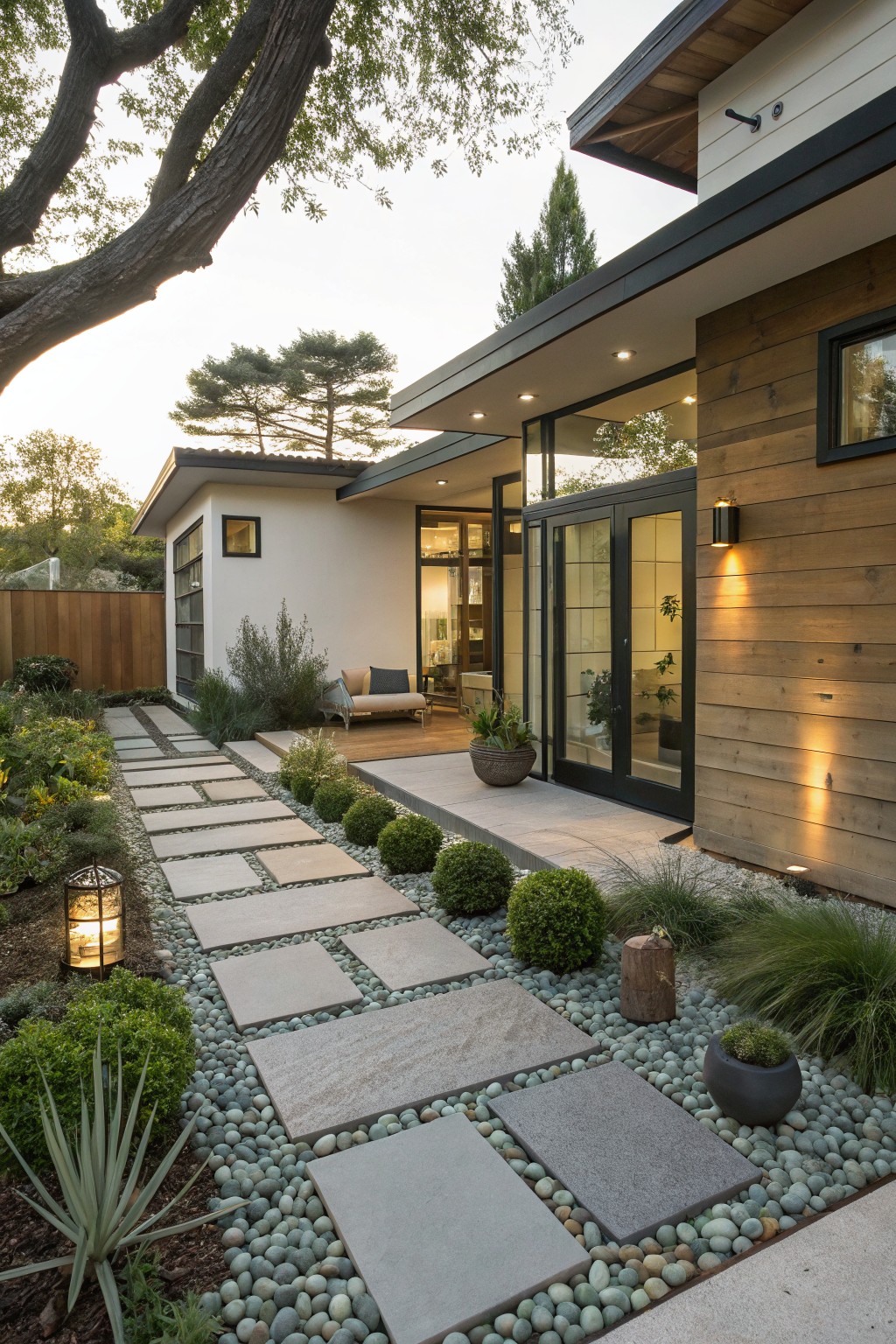
A path like this sets large rectangular stone slabs right into a bed of smooth pebbles. It makes walking to the door feel easy and a bit adventurous. Low shrubs and grasses tuck in along the edges without blocking the way. That open ground cover stays tidy and lets water drain quick.
Put this in a front yard where you want low upkeep. It suits modern houses or any spot with good drainage. Go for bigger slabs if the space is wide. Skip it on steep slopes though. Just rake the pebbles now and then.
Rustic Wooden Path Through Tall Grasses
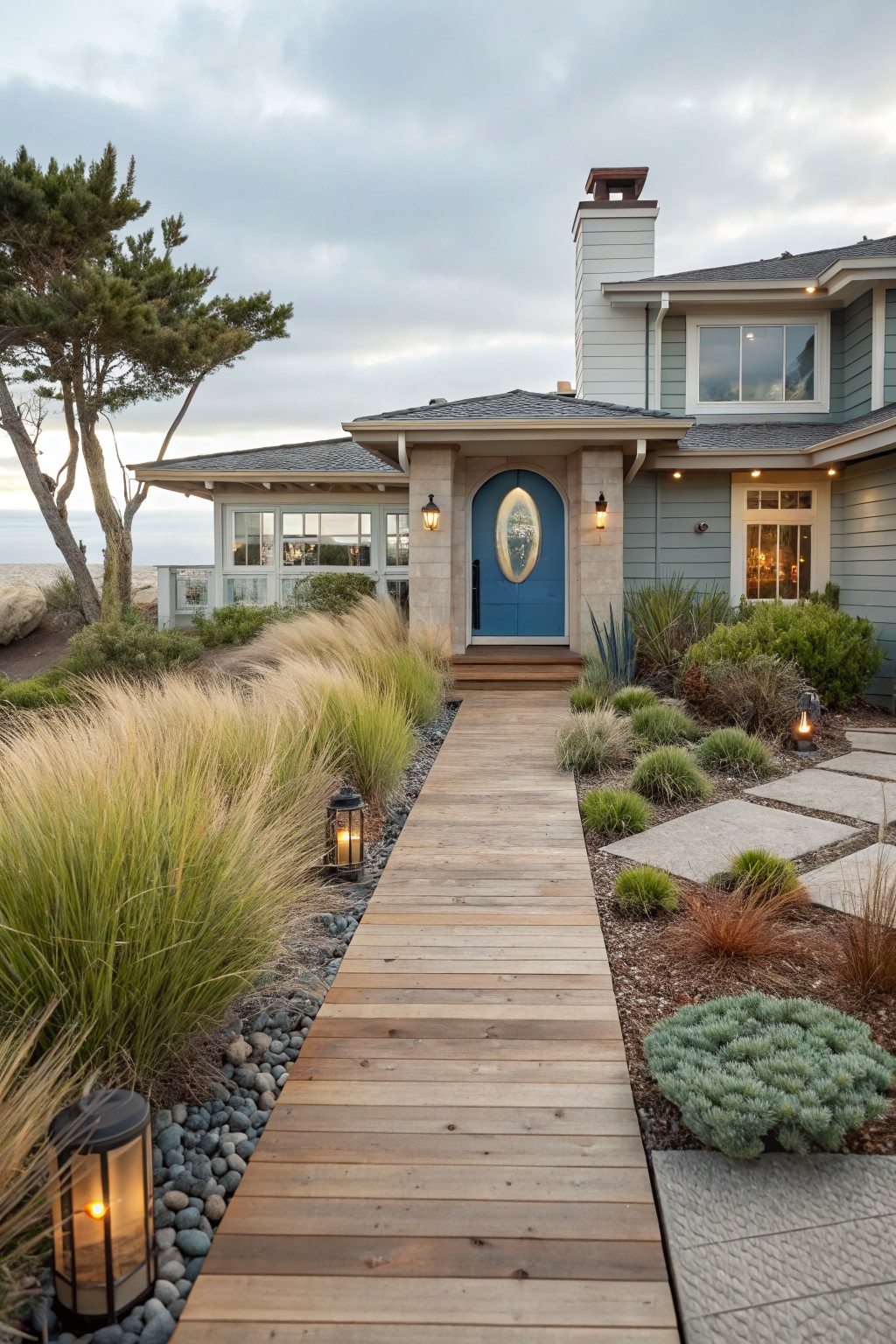
A straight wooden boardwalk cuts through the front yard here, edged on both sides by soft tall grasses. It keeps things simple and natural, pulling your eye right to the entry without any extra frills. The low lanterns along the edges add just enough light at dusk. Folks like this because it fits coastal spots so well, or anywhere you want that relaxed beach feel.
Try it in a yard with some slope, where gravel or pebbles fill in around the plants. Go for drought-tolerant grasses like fountain grass, they’re easy to maintain and sway nicely in the wind. Pairs best with a house that has some stone or wood details already… avoids feeling too out of place on super modern facades.
Stone Paths Edged with Lavender and Hedges
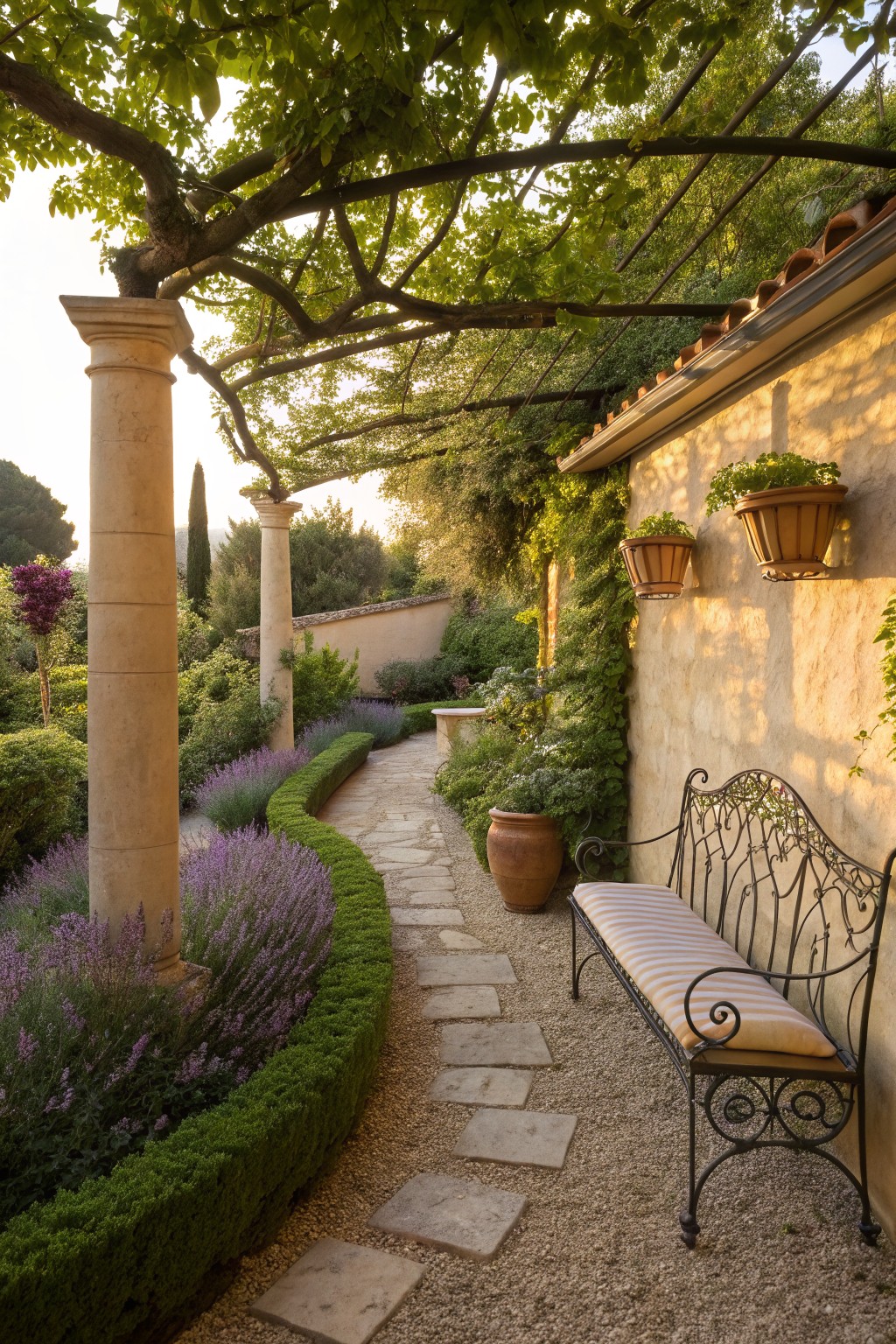
A simple winding path made from rough stone pavers works wonders here. It’s edged with low lavender bushes on one side and clipped boxwood hedges on the other. That combo gives a neat structure but keeps things soft with the lavender’s color and smell. The path pulls you right along to the bench without feeling too stiff.
You can use this in a front yard to welcome folks in or along a side garden for quiet spots. It suits older homes with stucco walls or stone details. Go for drought-tough lavender to keep upkeep easy, and trim the hedges once a year. Just avoid narrow paths… they cramp the walk.
Winding Stone Paths Through Tall Grasses
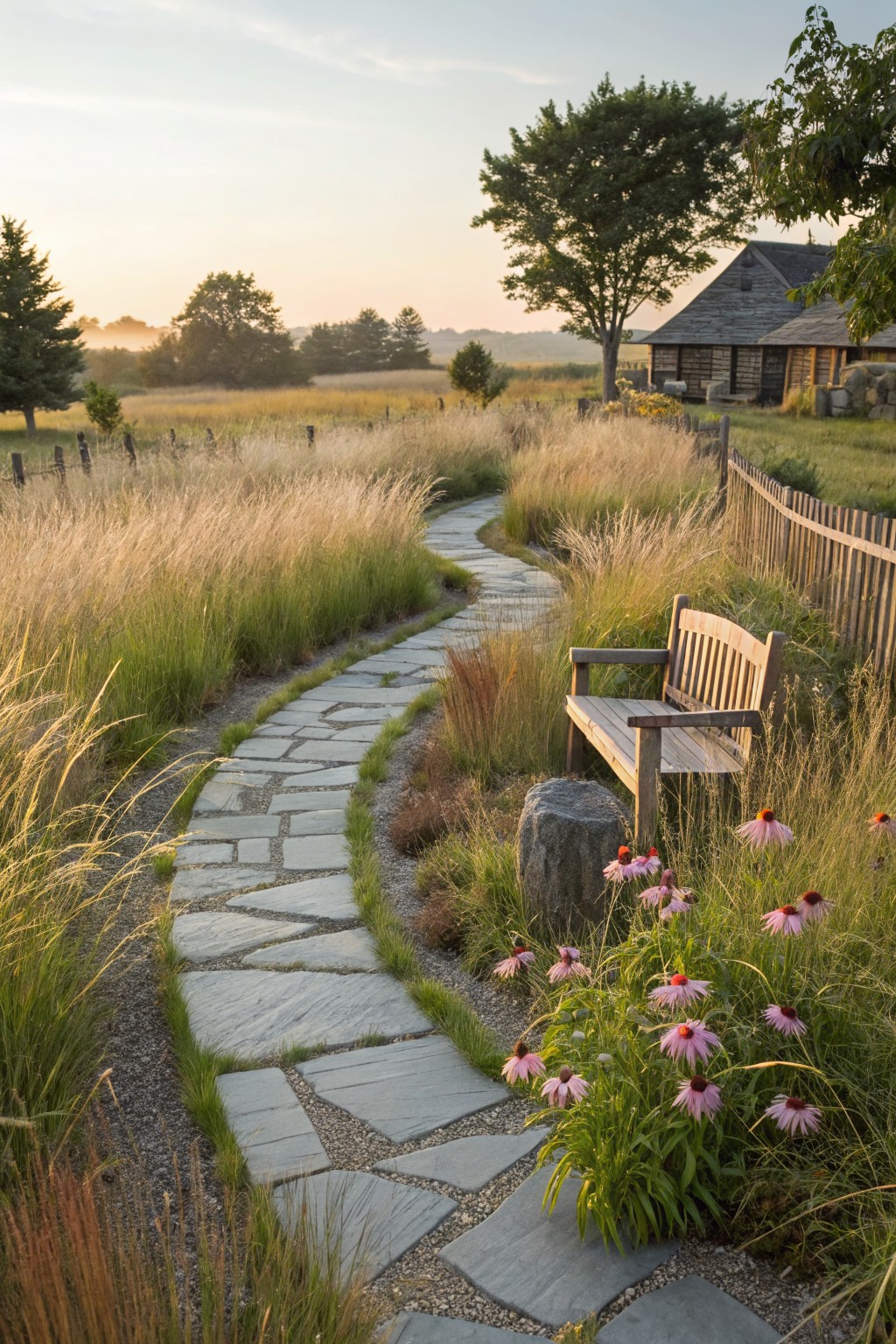
A simple flagstone path like this winds gently through clumps of tall grasses. The irregular stones fit right into the natural flow, without looking too planned out. It pulls your eye along toward the cabin in back, and that bench halfway makes you want to stop and sit a minute.
This setup works best in bigger yards with some open space, maybe near a country house or cabin. Lay the stones in gravel for easy drainage, and plant switchgrass or similar around them. Keep the grasses tall enough to brush your legs as you walk. Just make sure the path stays wide enough for two people.
Winding Brick Paths with Raised Planters
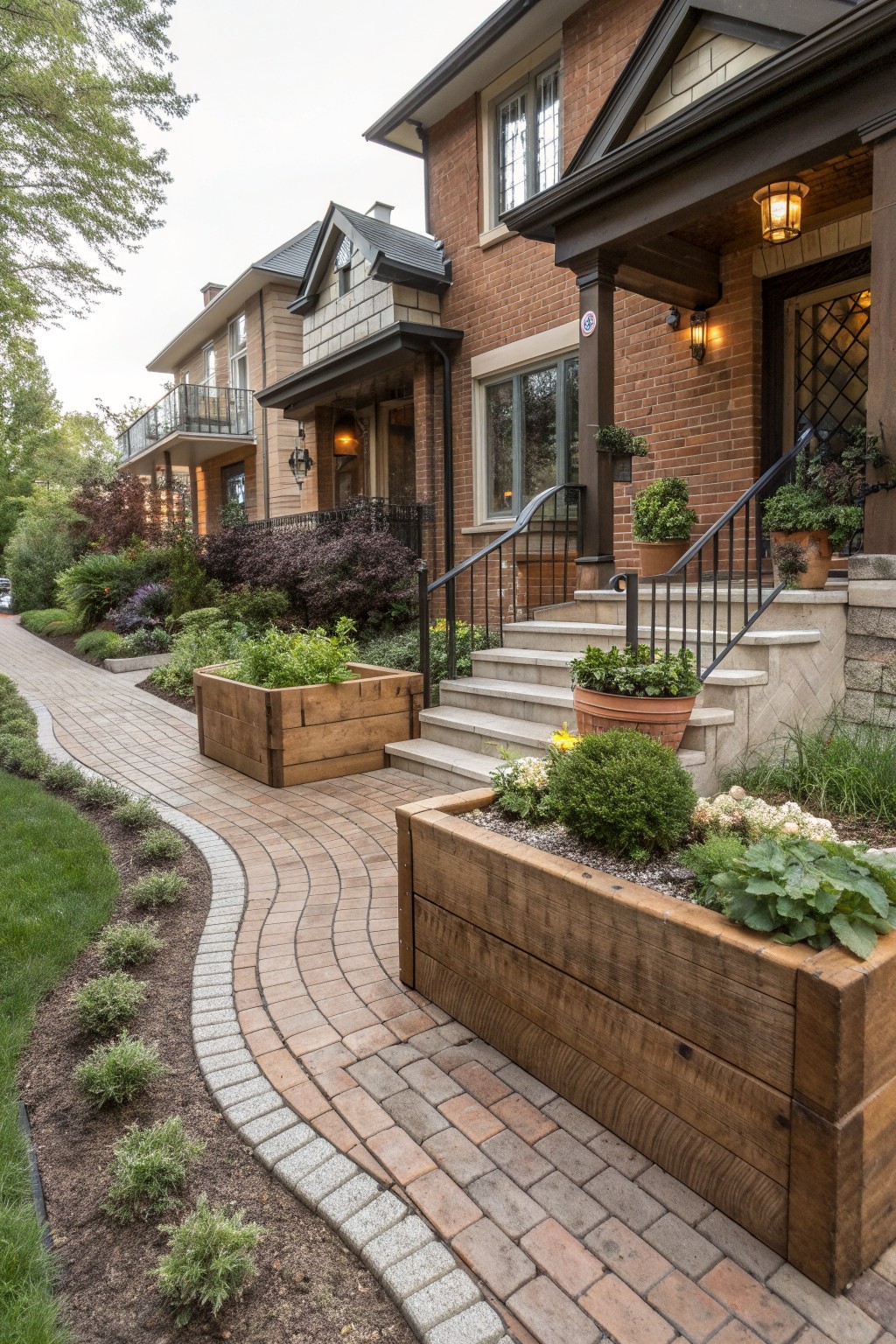
A simple winding brick path like this one makes the walk to your front door feel special. It curves gently through the yard, with sturdy wooden raised planters on both sides filled with greens and herbs. That setup turns a plain approach into something layered and alive, without much fuss.
You can pull this off in most front yards, especially where you want low upkeep but still some color. Use reclaimed wood for the boxes to keep costs down, and pick tough plants that handle foot traffic nearby. It suits traditional homes best, but watch the scale, bigger yards let the curve breathe more.
Winding Stone Steps Through Lavender Beds
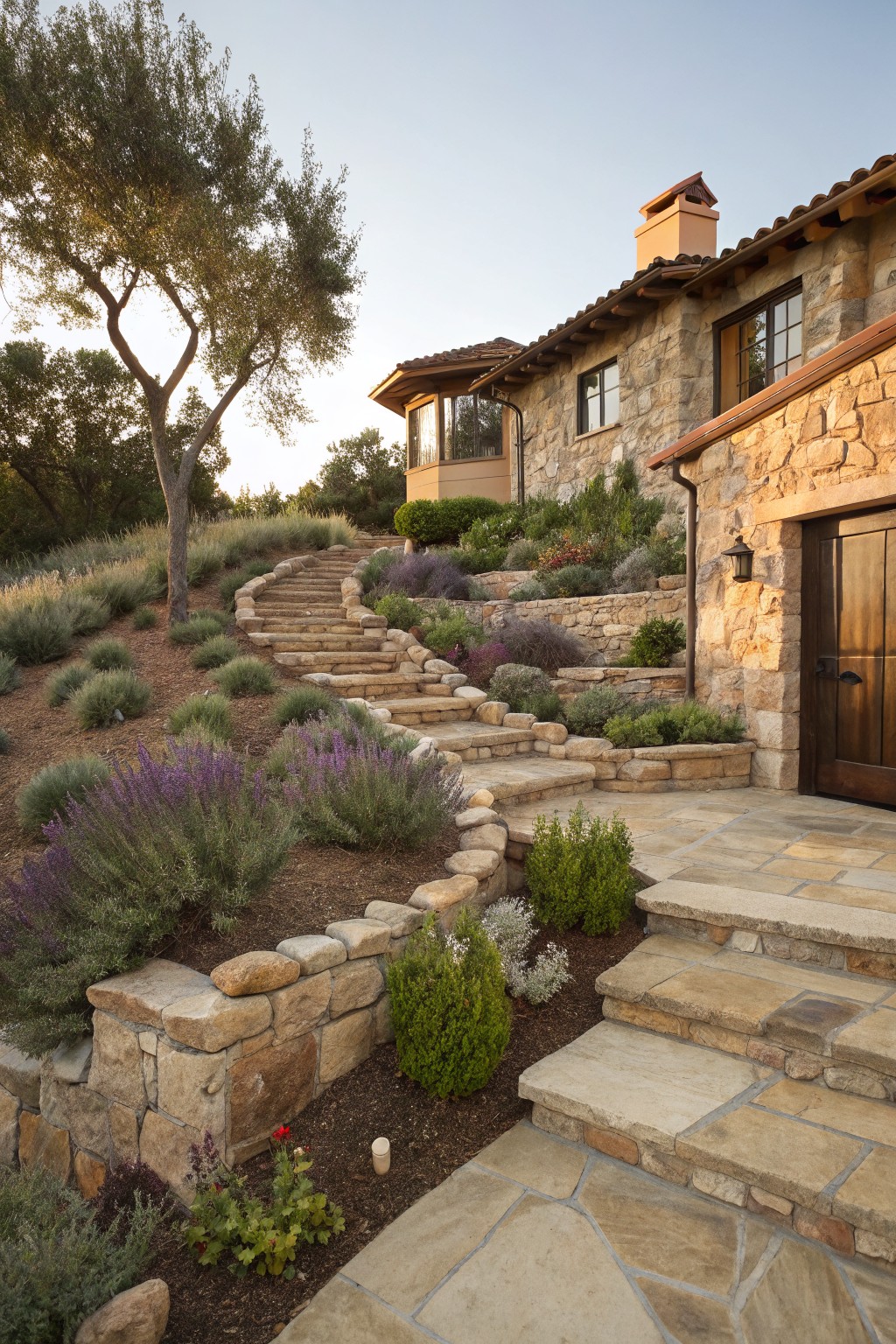
Winding stone steps like these make a steep front yard slope feel like a gentle garden stroll. The rough natural stone fits right in with the low lavender bushes and other plants tucked into terraced beds along the way. It turns what could be a plain climb into something you actually enjoy walking.
Use this on hilly lots where straight paths won’t work. Pick local stone for the steps and walls to keep costs down and tie into the house. Drought-tolerant plants such as lavender hold up well without much water, and it suits stone or rustic homes best. Just make sure the steps are wide enough for safe footing.
Winding Pebble Paths Through Lush Gardens
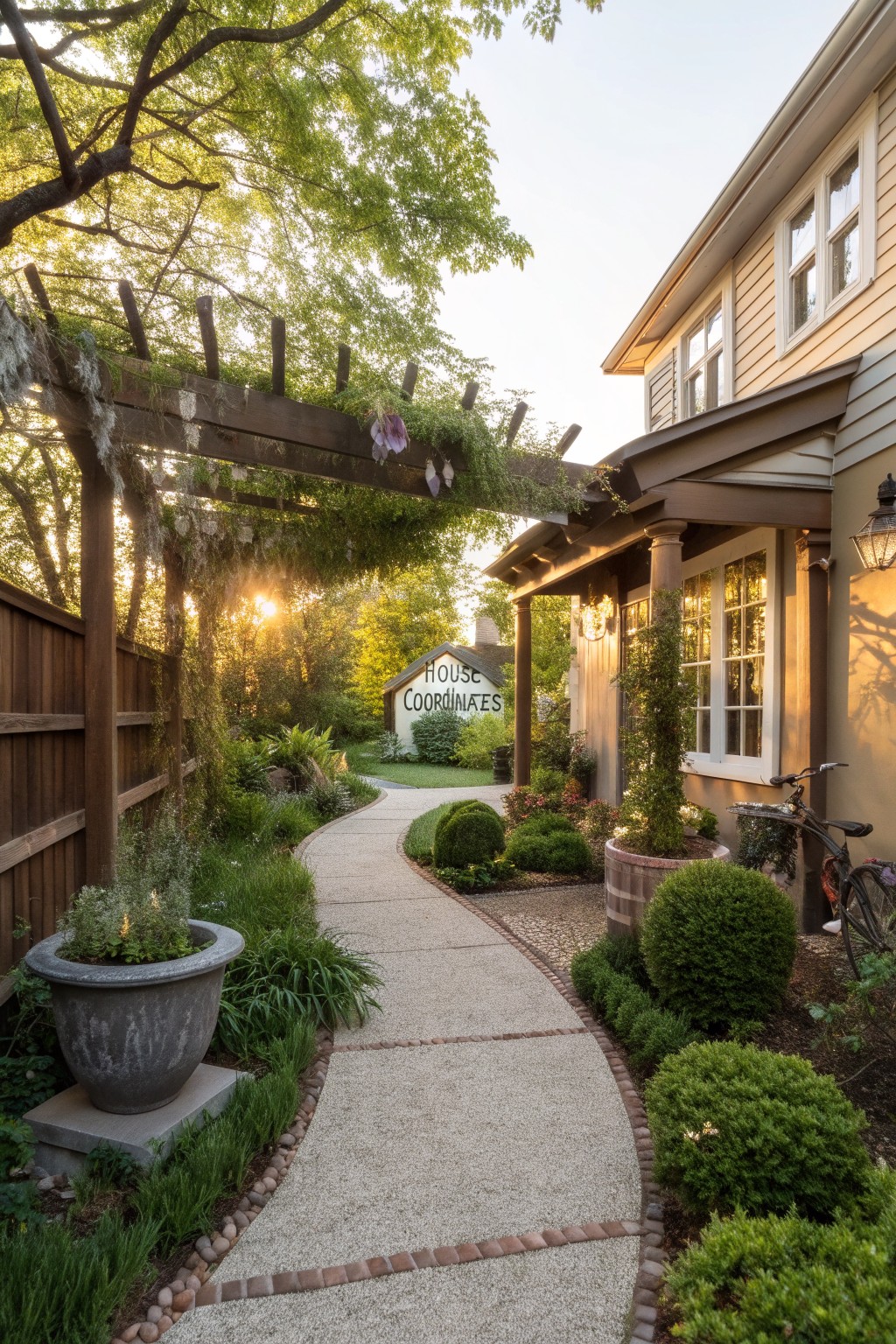
A simple curved path like this one, made from smooth pebbles with brick borders, turns a straight shot to the door into something more interesting. It pulls your eye along the gentle bends, past pots of herbs and clipped shrubs, right up to the house. Folks like it because it feels less rigid than concrete slabs. Makes the yard seem bigger too.
You can pull this off in most front yards that have room for a little meander. Works best on cozy homes, maybe Craftsman style or older bungalows. Start with gravel base, add the bricks for definition, then plant low stuff along the edges so it stays neat without much work. Just keep the path wide enough for two people.
Frequently Asked Questions
Q: How wide should I make my garden path?
A: Aim for at least 3 feet wide so two people can walk side by side without brushing plants. Narrower paths, around 2 feet, work great for a cozy, meandering feel that pulls you deeper into the yard. Test it out by pacing your route first.
Q: What’s a simple DIY way to build a path on a budget?
A: Grab gravel or mulch and lay it over cardboard to smother weeds right away. Outline curves with a hose for that natural flow, then rake it smooth. You’ll have a charming path in an afternoon.
Q: How do I edge the path to keep it looking sharp?
A: Dig a shallow trench and line it with bricks or stones you already have around. This holds the gravel or stepping stones in place and stops grass from creeping in. Refresh the edges once a year.
Q: My yard slopes. How do I handle that with a path?
A: Step it down with wide, flat stones or railroad ties to create gentle terraces. And tuck low plants like creeping thyme between them for soft landings. It turns the hill into an invitation.
