


I’ve spent enough time tinkering in my own front yard to know that a good layout pulls everything together, from the way plants frame the walkway to how edging keeps the beds neat as they fill out over time. People drive by and notice those clean lines first, the ones that make a yard feel intentional rather than overrun. In my case, swapping out a ragged mulch border for simple stone edging changed how the whole space read from the street. You don’t need a big budget or pro skills to get that effect, just a few smart starting points that build on each other. A handful of these ideas are practical enough that I’ll be borrowing them for my next round of tweaks come spring.
Winding Stone Paths Through Garden Beds
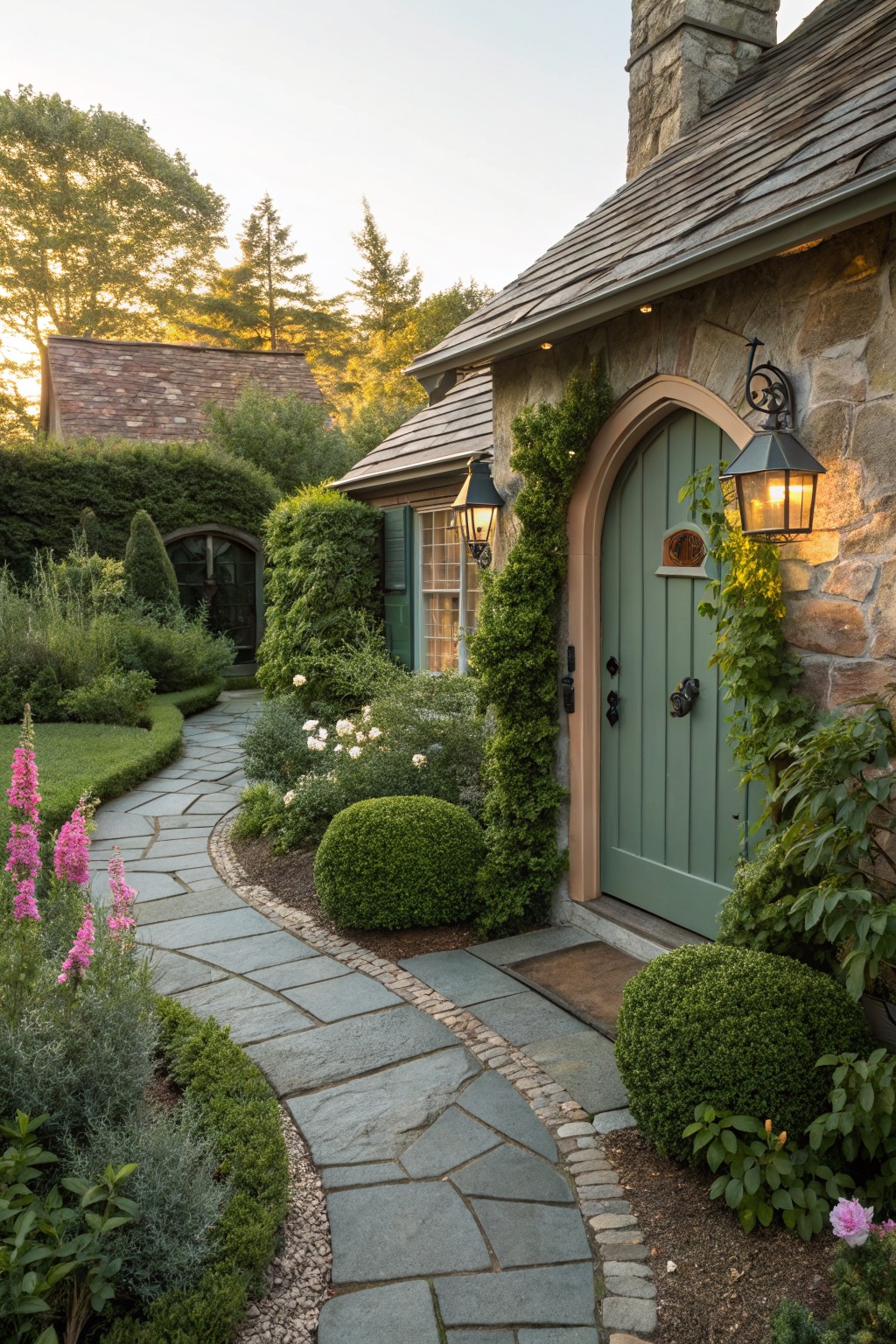
A winding stone path like this one turns a plain front yard into something special. It curves gently through low boxwood hedges and flower beds, pulling you toward the door in a natural way. No harsh straight lines here. Just a relaxed flow that fits right with the cottage feel of the house.
Try this in smaller yards where you want to slow folks down a bit as they walk up. Lay irregular flagstones on a gravel base for drainage, then edge with tough shrubs like boxwoods that stay neat without much fuss. Works best on level or gently sloped ground… skip it if your soil stays soggy.
Winding Brick Path Through Flower Beds
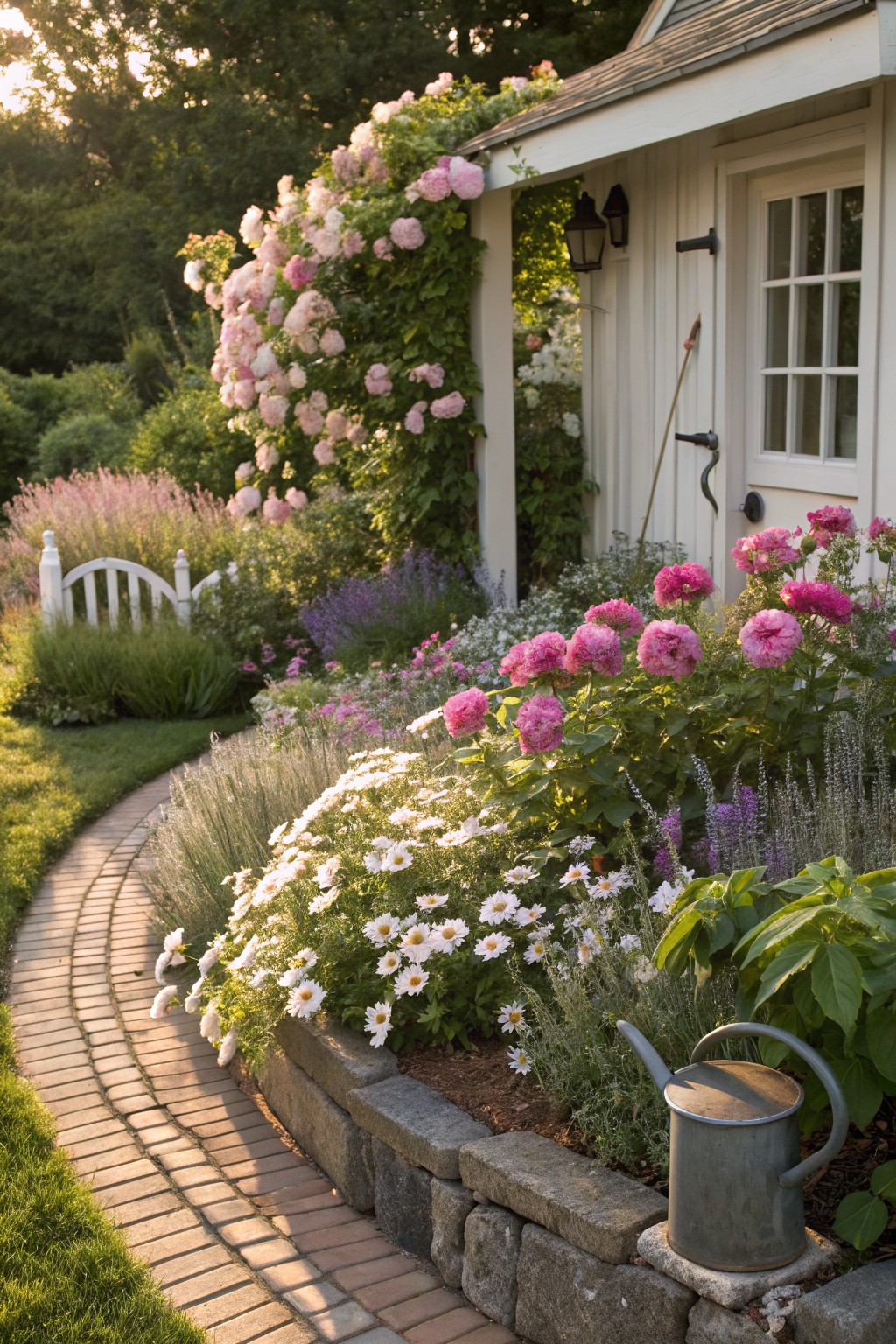
A simple winding brick path like this one pulls your eye right through the garden. It starts wide enough to walk comfortably and curves gently past layers of pink roses, white daisies, and soft grasses. The stone retaining wall along one side keeps everything neat while letting plants spill over just a bit. Folks love how it turns a plain yard into something that feels cared for and alive.
Lay it in a front yard where you want to connect the house to a shed or gate. Bricks are forgiving if you’re doing it yourself, and they fit most any style from cottage to casual. Plant perennials along the edges so it looks full without constant work. Skip straight lines unless your space is super tight. Just keep the path clear for easy mowing.
Wind a Curved Path to the Front Door

A simple curved path like this one makes the walk up to your house feel easy and natural. Made from rough-cut stone pavers, it snakes through garden beds instead of going straight. That little bend slows people down a bit. It fits right in with the mix of low flowers, medium shrubs, and taller plants around it.
Try this in a front yard with at least 10 feet of space from the street. Lay the stones loose on sand for drainage. Plant perennials and evergreens along both sides to frame it without blocking the house. It suits brick or siding homes in older neighborhoods. Just keep the curve gentle so it’s not hard to shovel in winter.
Curved Stepping Stone Path
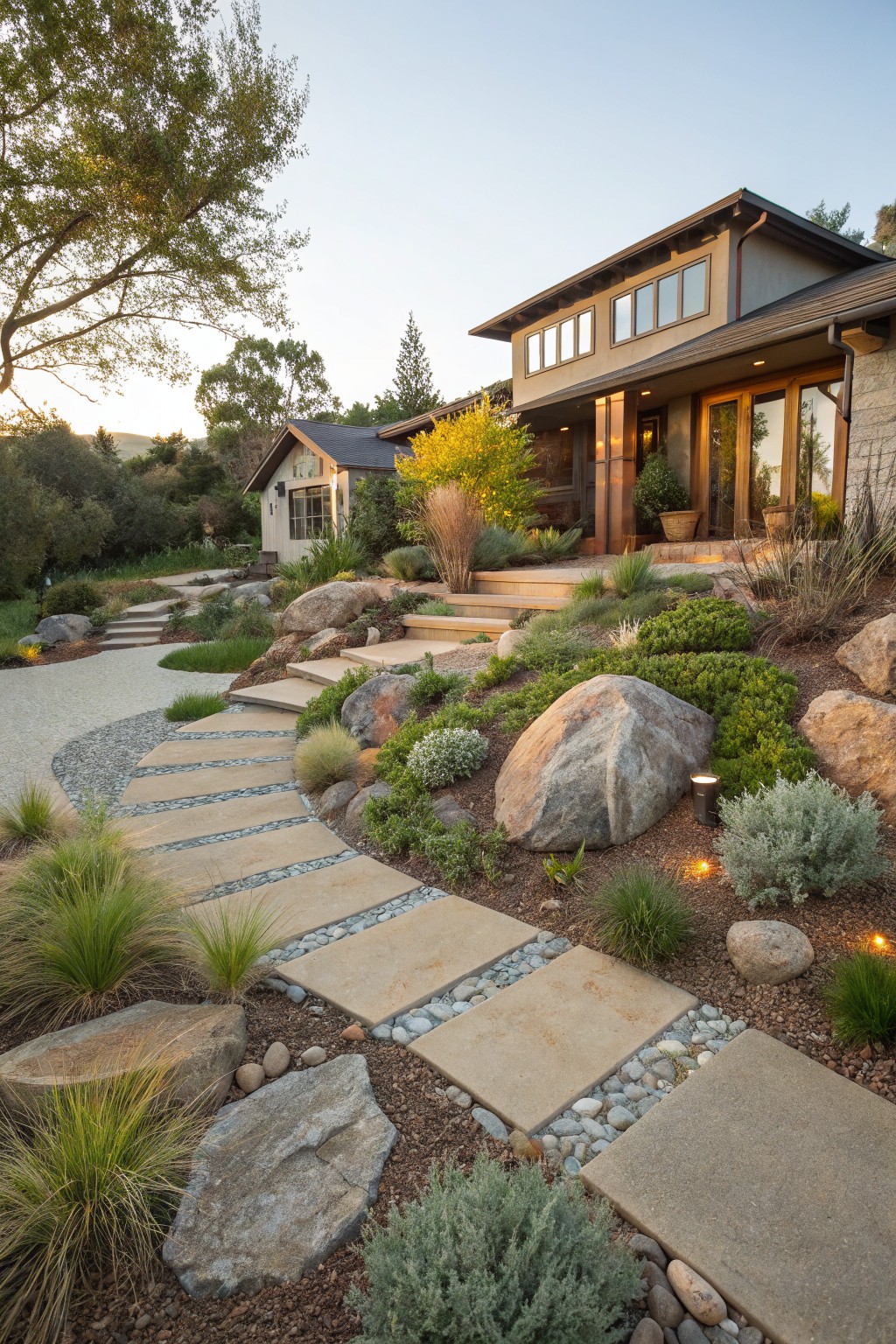
A curved path like this one uses wide concrete stepping stones set into gravel. Big boulders sit right alongside, with some grasses and low shrubs filling in the gaps. It feels natural, not too fussy, and pulls your eye up to the house without overpowering the yard.
This works best on a gentle slope where you want to slow people down a bit as they walk up. Pick stones that match your local rock, add tough plants that don’t need much water, and keep the gravel simple. It fits modern homes or anything with a clean entry, but skip it if your yard is super flat.
Winding Stone Path Through Grasses
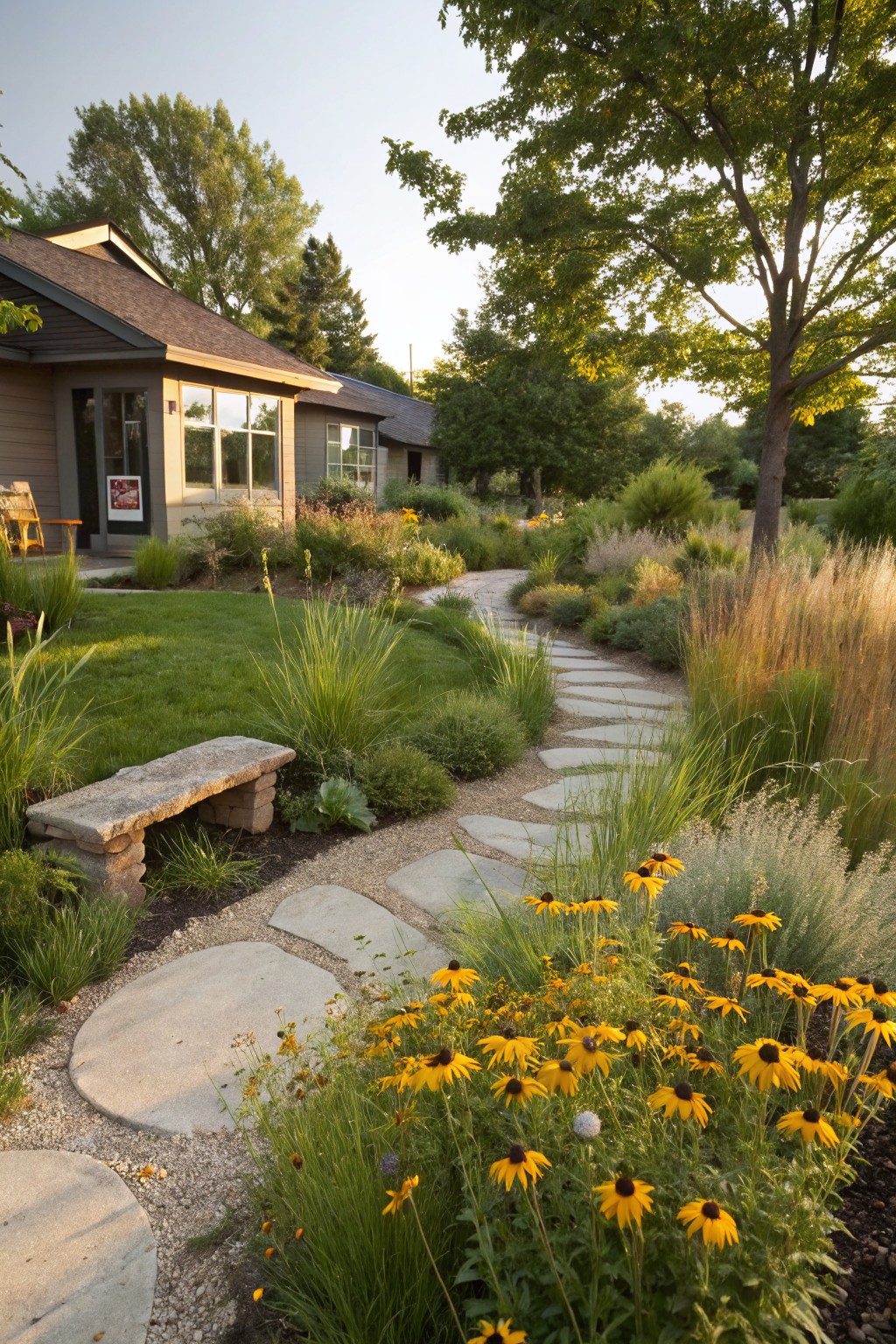
One easy front yard idea is a curving path of flat stones that winds right to your door. Tall ornamental grasses and yellow black-eyed Susans line both sides, turning a plain lawn into something more natural and relaxed. It pulls the eye along without feeling too formal, and that stone bench halfway adds a spot to pause.
You can do this in most yards with decent sun. Set the stones in gravel or mulch for drainage, then fill gaps with tough perennials and switchgrass. Keep it narrow for a garden feel. Works well on cottage homes or newer builds… low upkeep after the first year.
Stone Steps for Sloped Yards
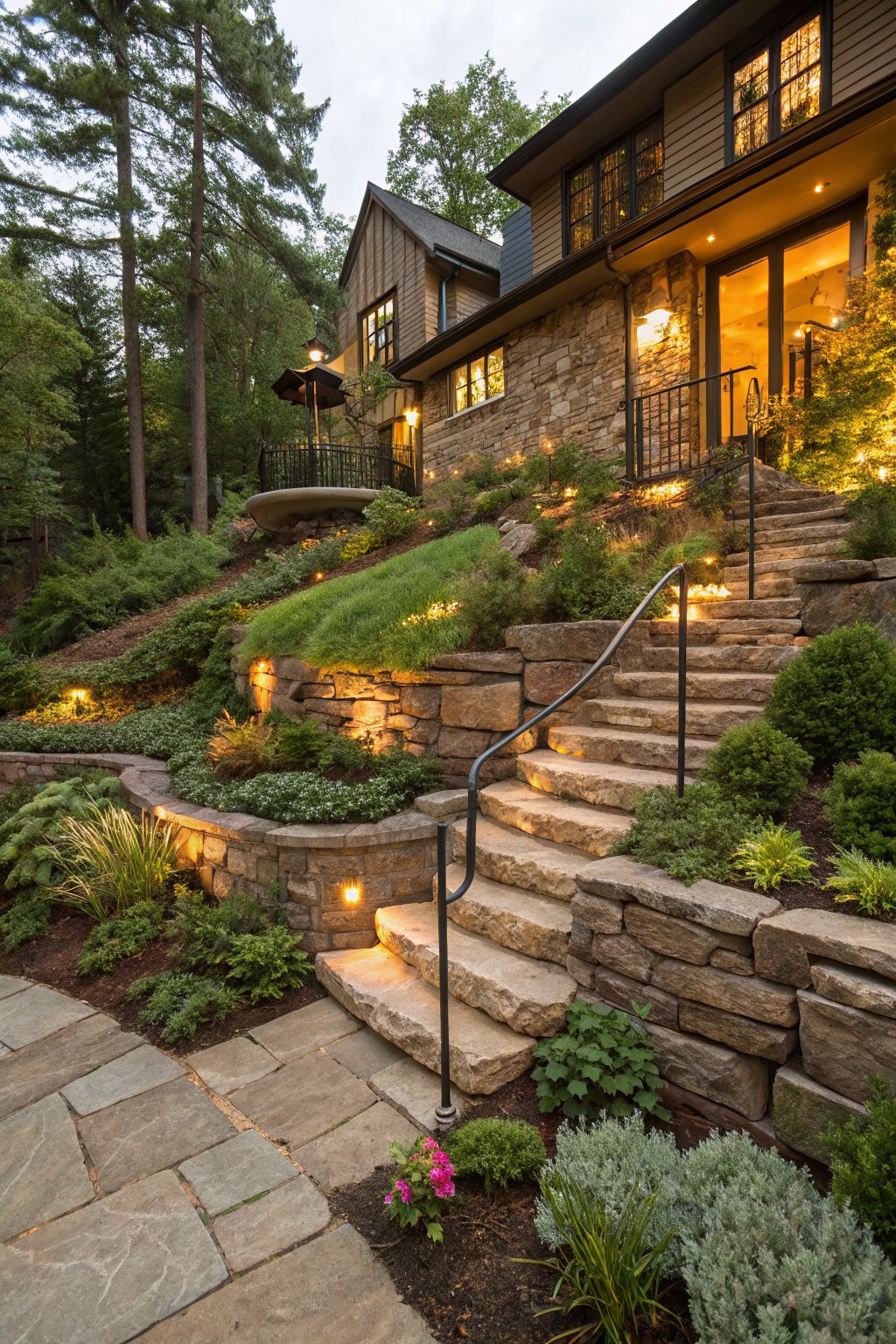
If your home sits on a hill, building stone steps like this one can make the front yard feel planned and easy to use. The wide steps with sturdy railings climb gently alongside low retaining walls. Small lights tucked into the stone edges light the way at night. It turns a steep slope into a path anyone can handle.
This setup suits lots of homes with uneven ground. Use rough-cut local stone so it blends in, and fill the wall pockets with tough plants like ferns or grasses. Keep the steps wide enough for two people. Watch the budget on labor since walls need good drainage. It really helps the house stand out from the street.
Wind a Stone Path Through the Front Yard
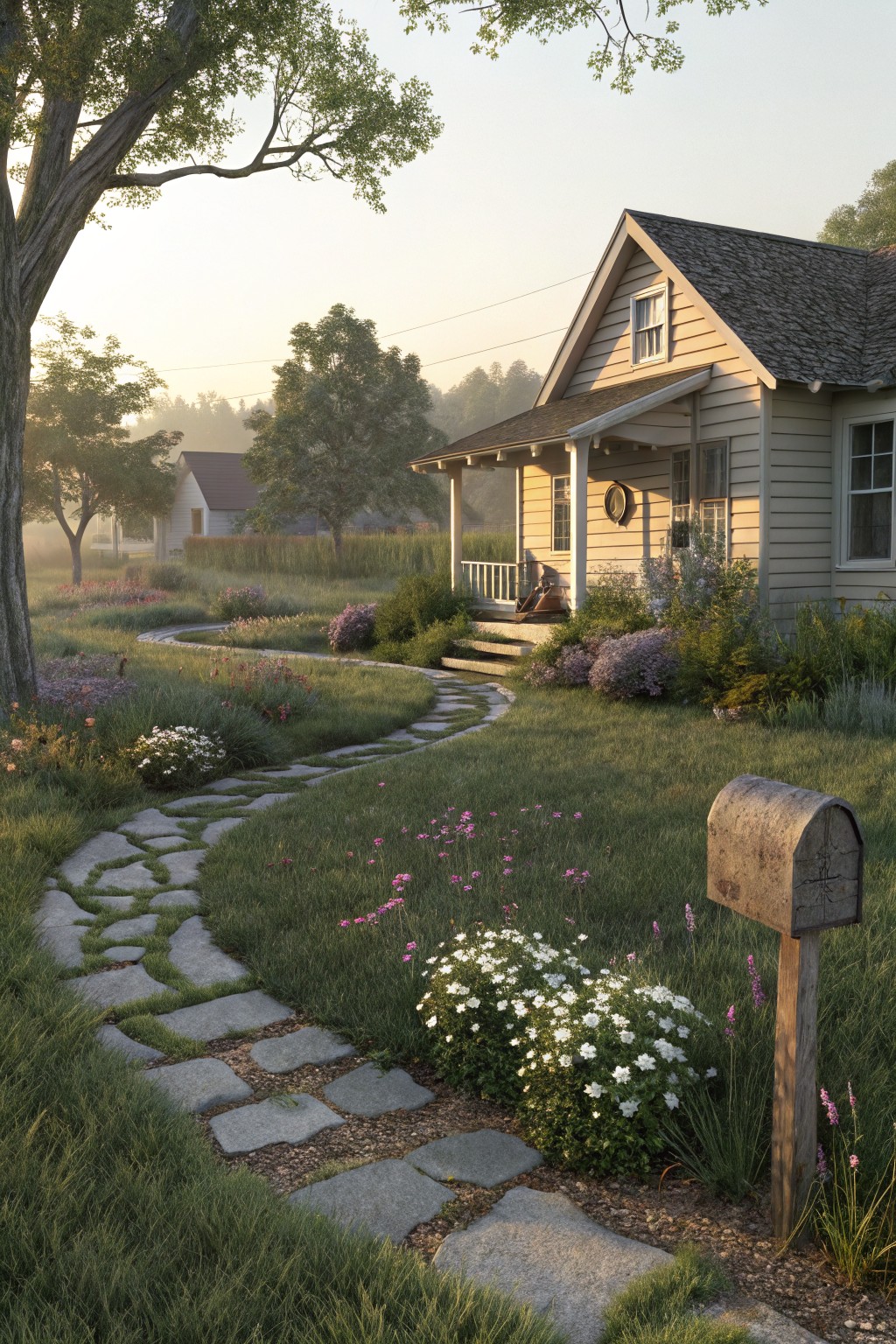
A winding path of irregular stone slabs cuts right through flower beds and soft grass, guiding you slowly to the front door. It turns a plain yard into something more like a garden stroll. Folks notice how it makes the space feel deeper and more alive without much work.
This idea fits older homes or any spot with room for plants along the edges. Mark the curve with a hose first, set the stones on a gravel base, and tuck in perennials like daisies that spread naturally. Skip straight lines. They feel too stiff next to a cozy house.
Gravel Path with Stepping Stones

A gravel path laid with rough-cut stepping stones makes for an easy walkway in tight spots. You just spread gravel over the ground and set the stones where your feet naturally fall. Low boxwood hedges along one side keep it tidy and point the way to the door. No big mowing needed. It feels put-together without much work.
This works best in narrow front yards or side entries where there’s not room for wider paving. Suits older brick homes like this one. Pick stones that match your house color a bit. Watch the drainage though. Wet gravel turns to mud fast if water pools. Add some edging to hold it in place.
Stepping Stones in Gravel Beds
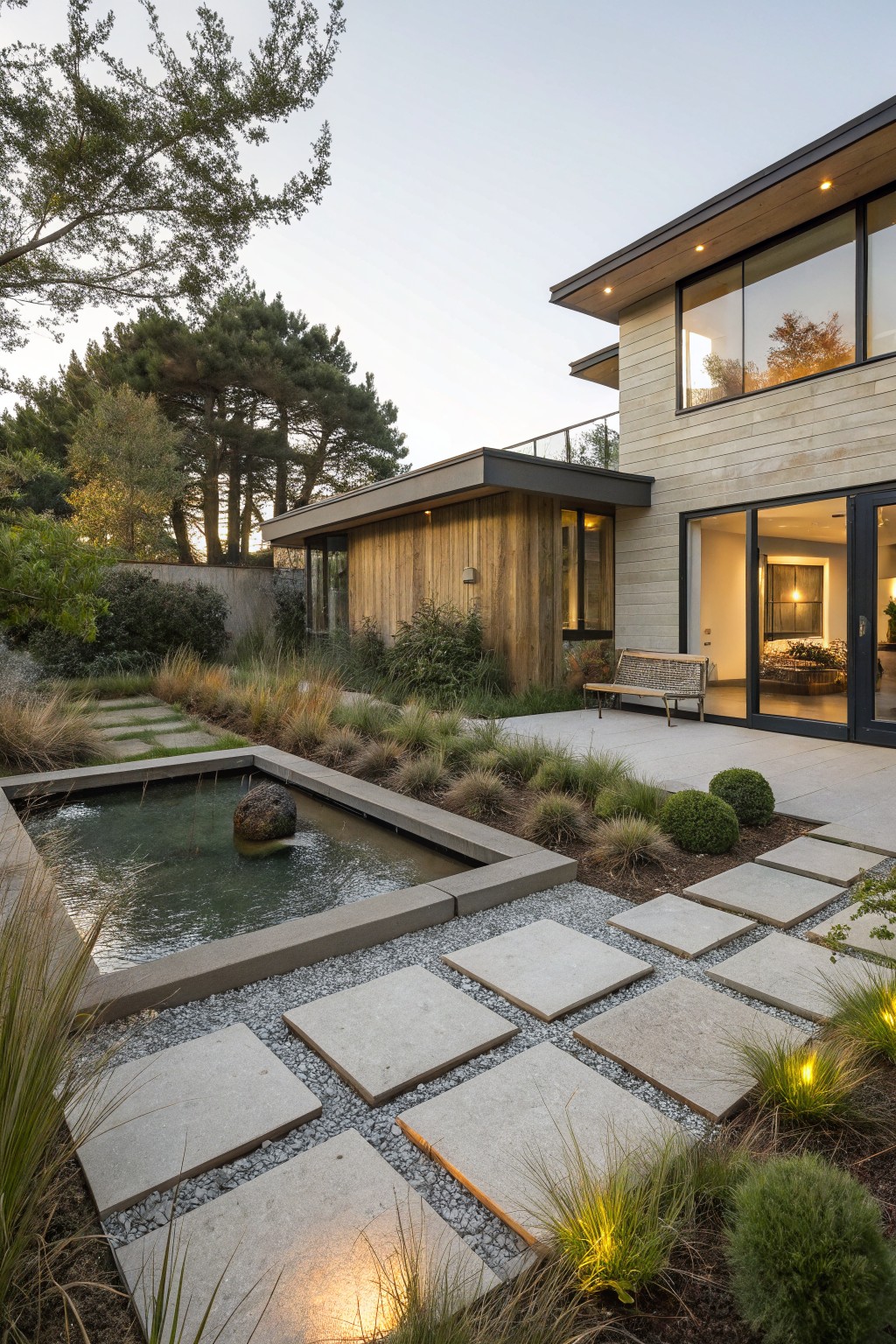
One straightforward way to guide people through a yard is with large square pavers set right into gravel. You see it here leading past tall grasses to a water feature and patio. It keeps things open and simple. No mowing the path itself. The gravel fills in around the stones for a natural flow that fits modern homes.
Try this in a front yard where you want a clear walk to the door without much upkeep. Pick pavers big enough for full steps, about two feet square, and drought-friendly grasses along the edges. It works on slopes too if you level the gravel base first. Just watch for loose gravel near the street.
Irregular Stone Path Through the Garden
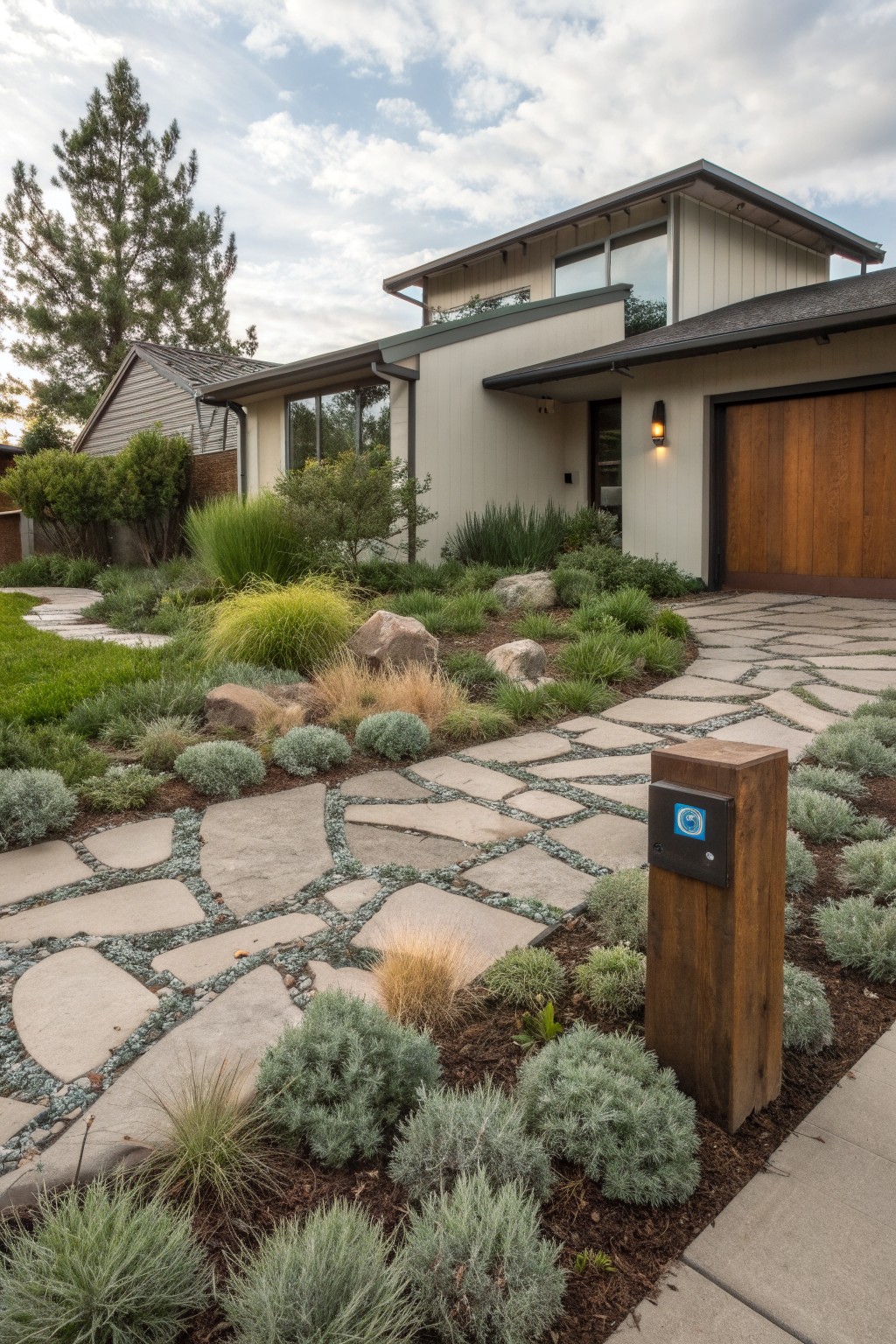
A simple way to make your front yard feel more natural is with an irregular stone path like this one. The large, uneven flagstones are laid right into the ground, curving gently past boulders and low plants. It skips the stiff lines of a poured walkway and just lets the yard pull you toward the house in an easy, welcoming way.
You can pull this off in most front yards by sourcing flat stones from a local quarry and setting them in gravel or soil with some space between. Edge it with drought-tough grasses and shrubs that won’t need much water or fuss. It suits modern homes or older ones getting a refresh… keeps things low-maintenance while boosting curb appeal.
Winding Brick Path Through Garden Beds

A winding brick path like this one turns a plain front yard into something more inviting. It curves gently through flower beds, drawing your eye to the door without feeling rigid. Folks like how it slows you down a bit, lets you notice the plants along the way.
This setup suits most homes with some yard room, especially older ones with porches. Lay bricks in a soft curve, edge with low flowers and shrubs for color. Add a swing nearby if you want. Watch the width, keep it at least three feet so two can walk side by side.
Stone Steps Winding Through Rocks and Succulents
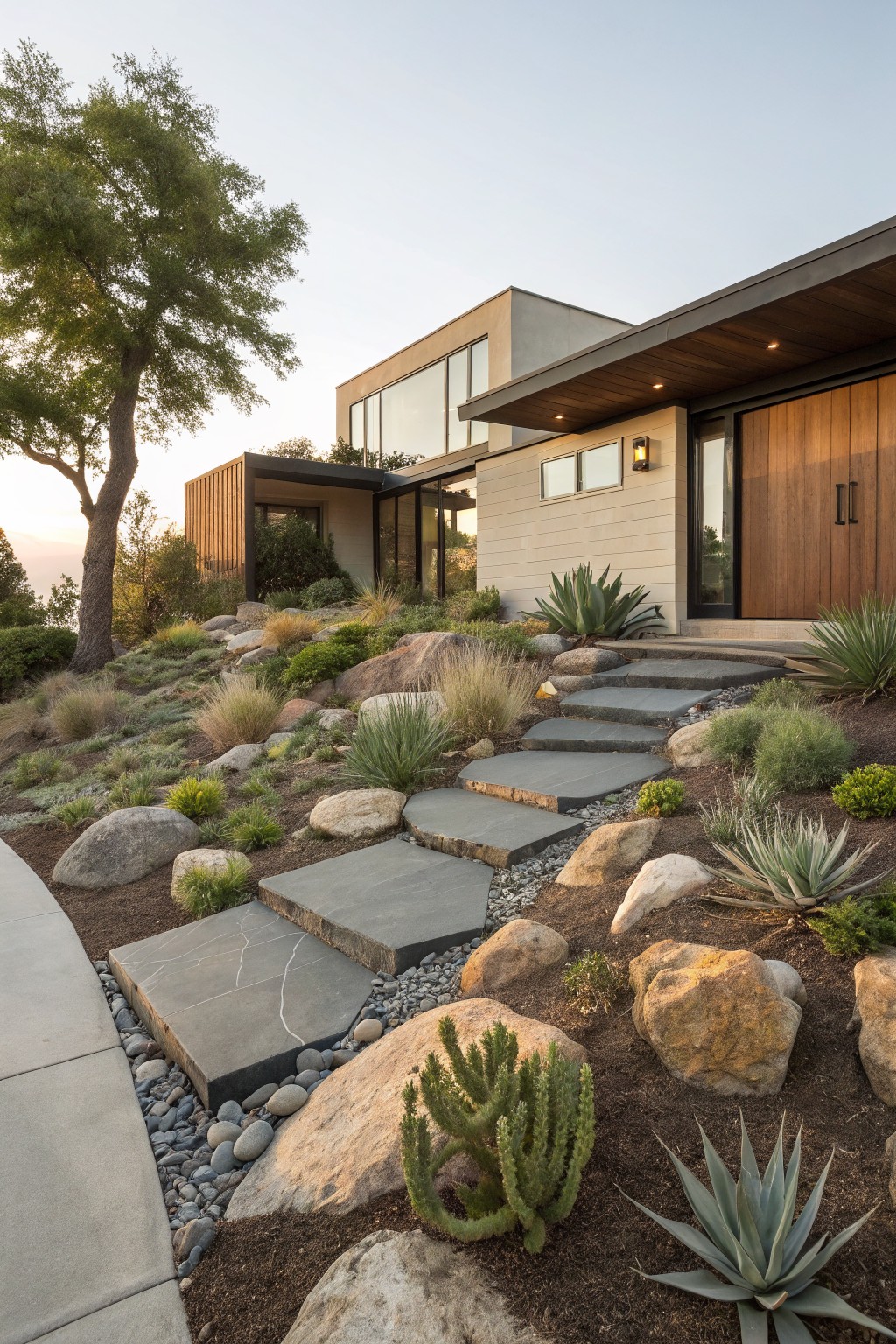
A simple way to handle a sloped front yard is with irregular stone steps set into gravel and boulders. Here, dark slate slabs lead up past big rocks and spiky plants like agave. It pulls your eye right to the door without much grass to mow. Feels rugged yet tidy.
This setup suits dry climates or sunny slopes where water use matters. Source flat local stones and cluster low-water plants around them. Skip straight lines. Let the path meander a bit for that natural walk-up feel. Works on mid-century homes too.
Brick Path Lined with Flower Beds
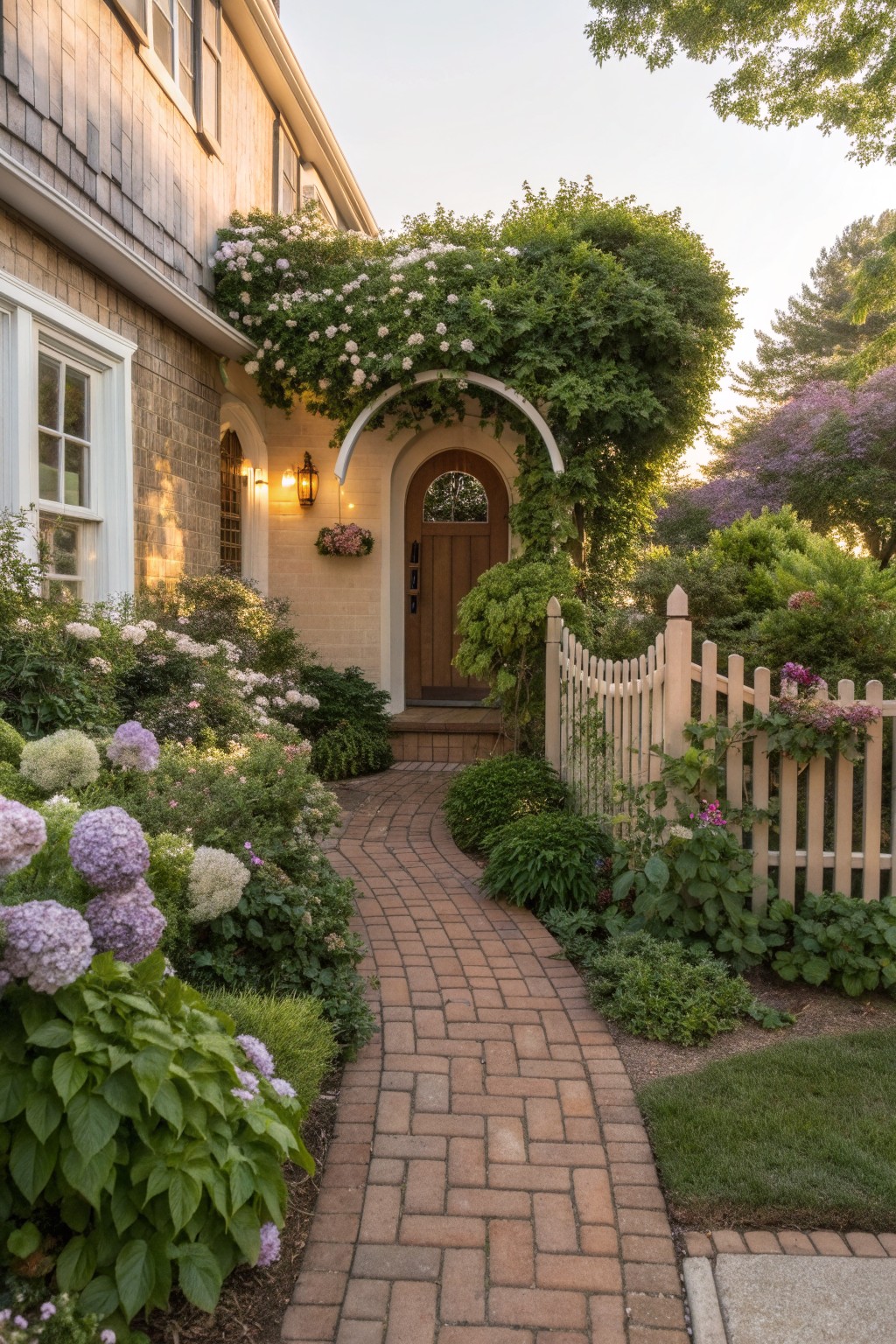
A curved brick path like this one makes your front yard feel welcoming right away. It winds through dense beds of hydrangeas, roses, and green shrubs, pulling the eye straight to the door. The mix of colors and heights keeps it interesting, but it’s all about that simple path guiding folks in.
You can pull this off in most yards with some basic bricks or pavers and easy perennials that come back each year. Tuck the path close to the house for a cozy feel, or widen it a touch if space allows. Pick plants that match your sun and soil. Avoid overcrowding the edges, or it’ll get hard to mow.
Checkered Turf and Paver Front Path
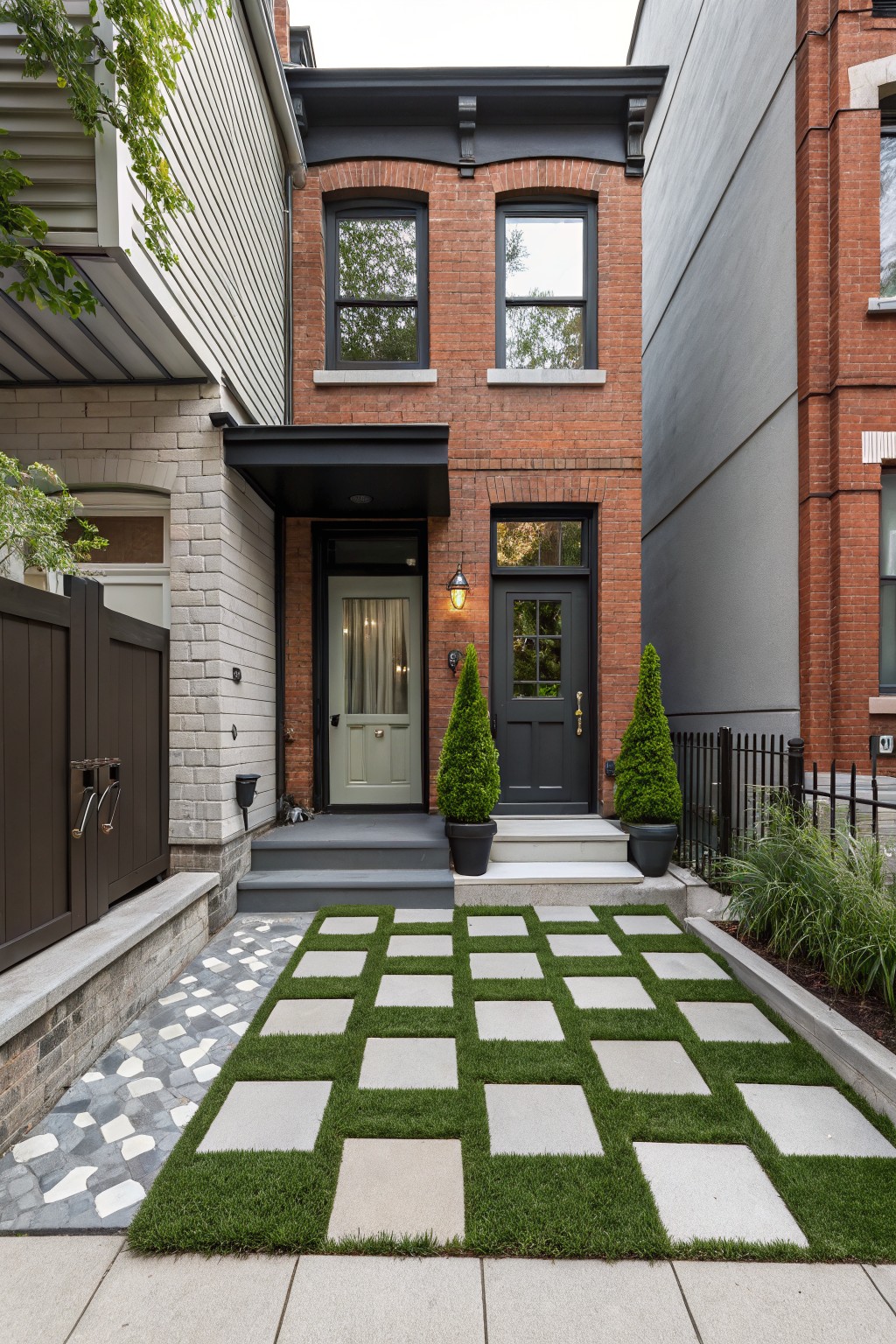
One easy way to update your front walk is with a checkered layout of concrete slabs and artificial turf. Here, the gray pavers mix with bright green grass squares right up to the house steps. It gives a fresh, modern feel without much upkeep, and the pattern draws the eye straight to the entry.
This works well in tight city yards or row house setups where you want something simple to install. Space the pavers evenly on a gravel base, then drop in the turf pieces. Skip real grass to avoid mowing, but watch for weeds in the joints. It suits most any home style if you keep the scale right.
Spiral Stone Pathways Around a Tree
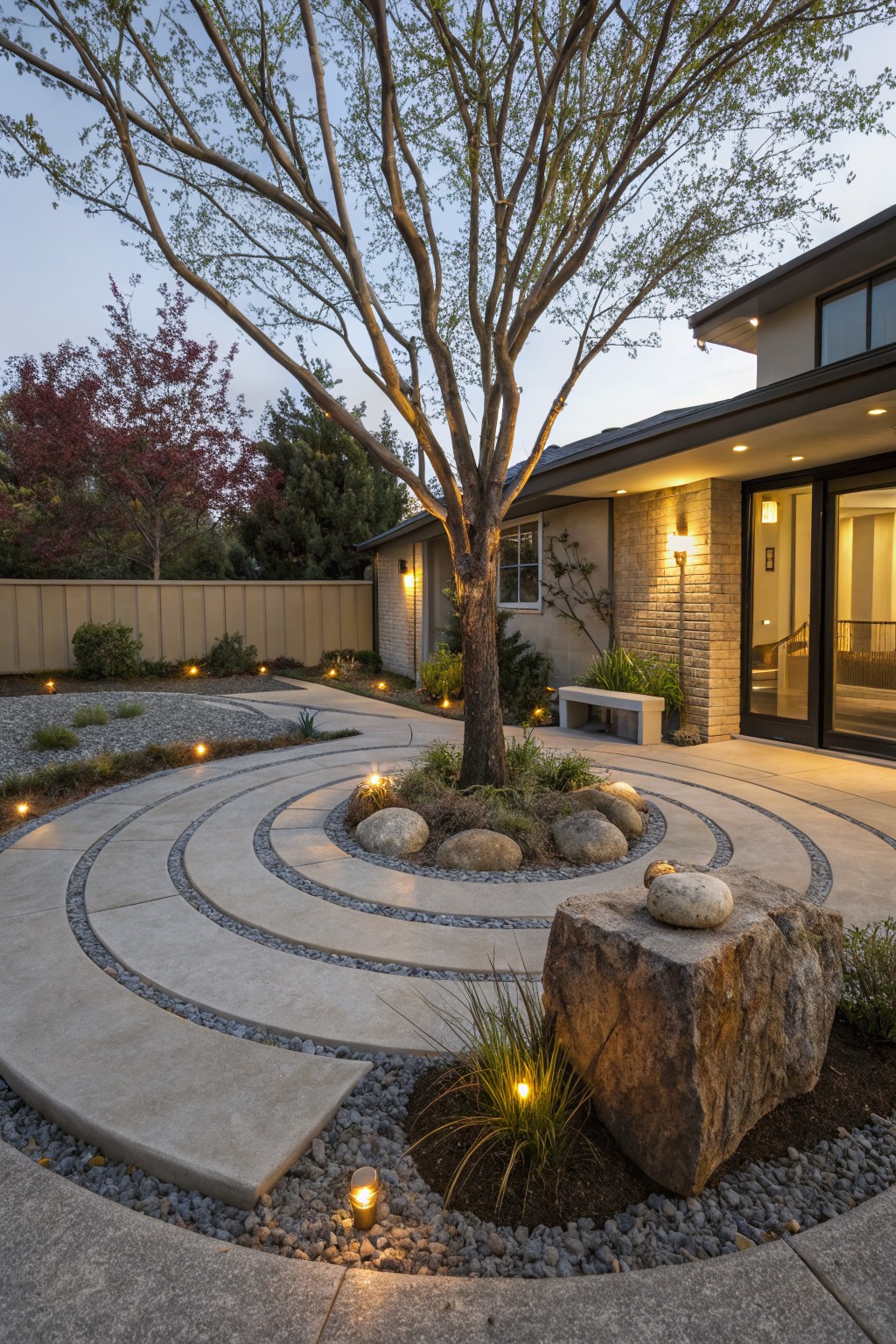
A simple way to add calm to your yard is a spiral path made from concrete rings filled with gravel. Here the circles wind around a single tree, with big boulders and low grasses tucked in the center. It pulls your eye in gently and makes the space feel thoughtful without much upkeep.
You can try this in a front yard corner or near the entry, especially if you have room for a focal tree. Start with poured concrete or precast pavers for the rings, then layer in river rocks and a few tough plants like sedges. It works best on flat ground and pairs well with a clean house style. Just keep the scale right so it doesn’t overwhelm a small lot.
Layer Perennials Along a Front Fence

One easy landscaping idea is filling the space right behind a low wooden fence with perennials and grasses. You get tall stems like fountain grass in back, then coneflowers and black-eyed Susans up front. It turns a plain fence line into something colorful that draws the eye without taking much room.
This setup fits narrow front yards along a street or driveway. Mulch with gravel to cut down on weeding, and add a simple bench nearby for everyday use. It suits bungalow-style homes or any spot with full sun… just pick tough plants that come back each year.
Simple Paver Path Through the Lawn
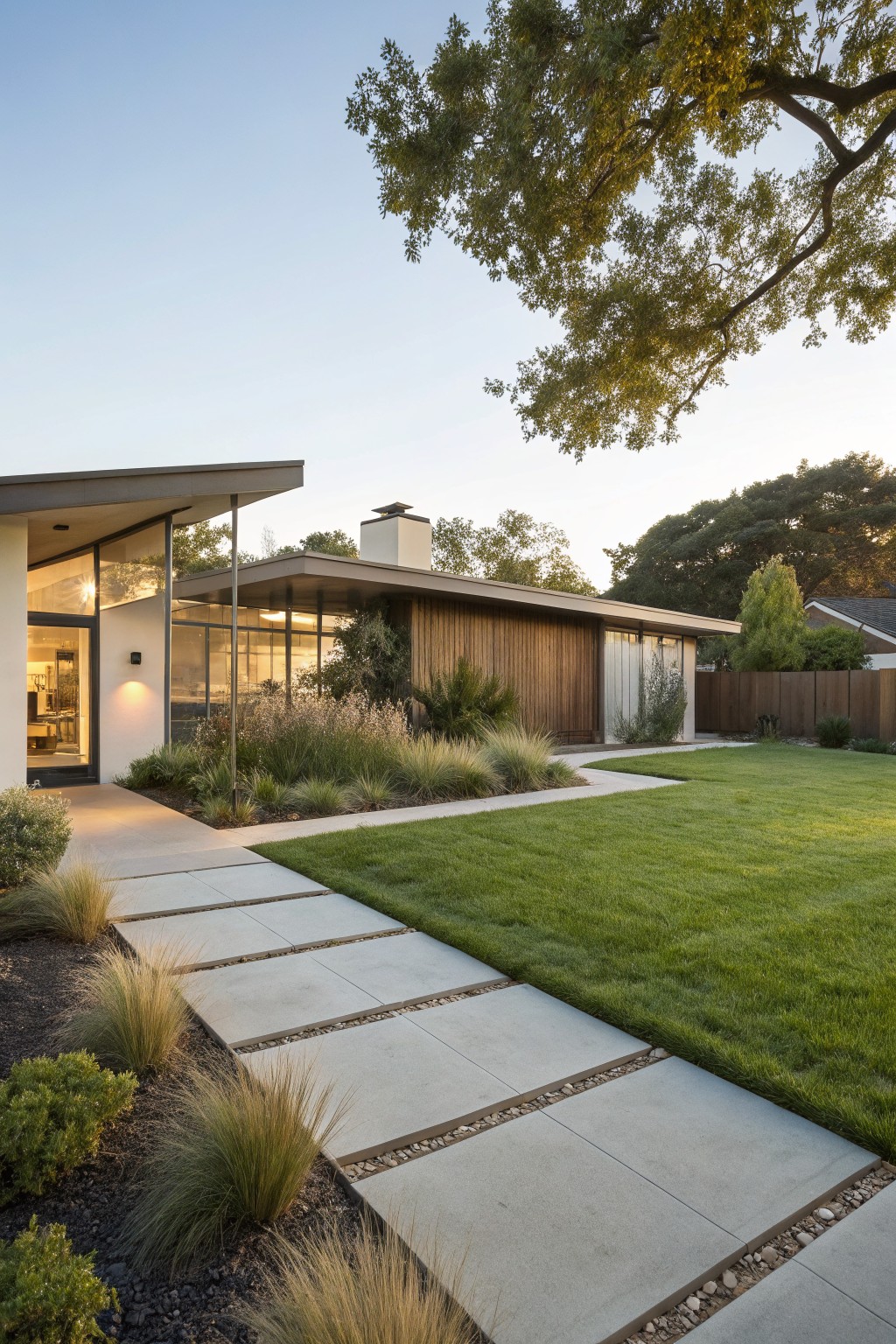
One easy way to guide people to your front door is with large concrete pavers set right into the lawn. These wide slabs, spaced with small gravel between them, keep things clean and modern without much upkeep. The tall grasses along the edges add some natural flow, and it all ties into the house without taking over the yard.
This works best in front yards with room for grass, especially on modern or ranch-style homes. Just lay the pavers where folks naturally walk, add gravel in the gaps for drainage, and plant low-water grasses nearby. Skip tiny stones or fussy borders. It stays simple year-round.
Frequently Asked Questions
Q: Can I pull off these ideas with a super small front yard?
A: Scale everything down. Use pots along the walkway or a few ground covers instead of big beds. Your yard will feel bigger and more inviting right away.
Q: What’s the easiest project for total beginners? A: Start with edging your lawn or paths with bricks or stones. It takes an afternoon and makes everything look sharper. Dig a shallow trench, drop them in, and backfill with soil.
Q: How do I keep weeds from ruining my new setup… A: Lay down landscape fabric before mulching. It blocks light so weeds can’t sprout. Top it with 2-3 inches of mulch to hold moisture and finish the look.
Q: Do any of these save water in dry areas? A: Go for drought-tolerant plants like lavender or sedum. And group them close to cut down on runoff. You’ll water way less once they root in.
