

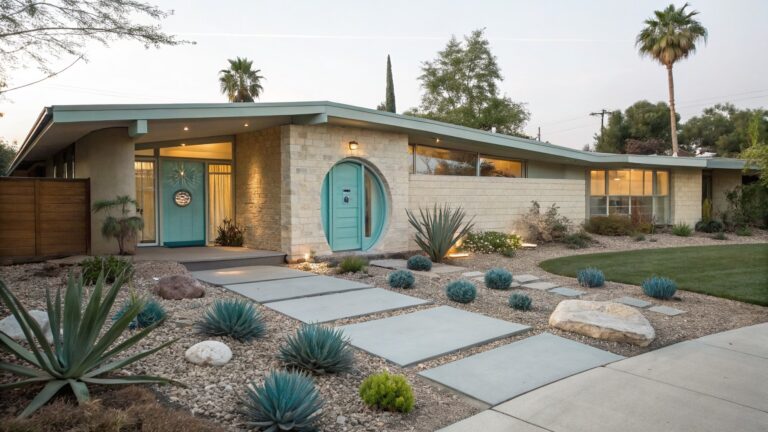
I drive past so many midcentury homes where the front yard either nails that clean, retro look or feels like an afterthought because the layout lacks focus.
Good ones rely on simple planting structures, with low boxwood hedges framing gravel paths that draw your eye right to the entry without any detours.
Pathways pull it together.
Over the years, these setups mature into something timeless, as drought-tolerant succulents and ornamental grasses fill out the edges just enough to soften the hard lines.
I’ve bookmarked the river rock borders and asymmetrical beds from this bunch to tweak for my own strip of yard, since they seem built to handle real seasons.
Stepping Stone Path Through Gravel and Succulents
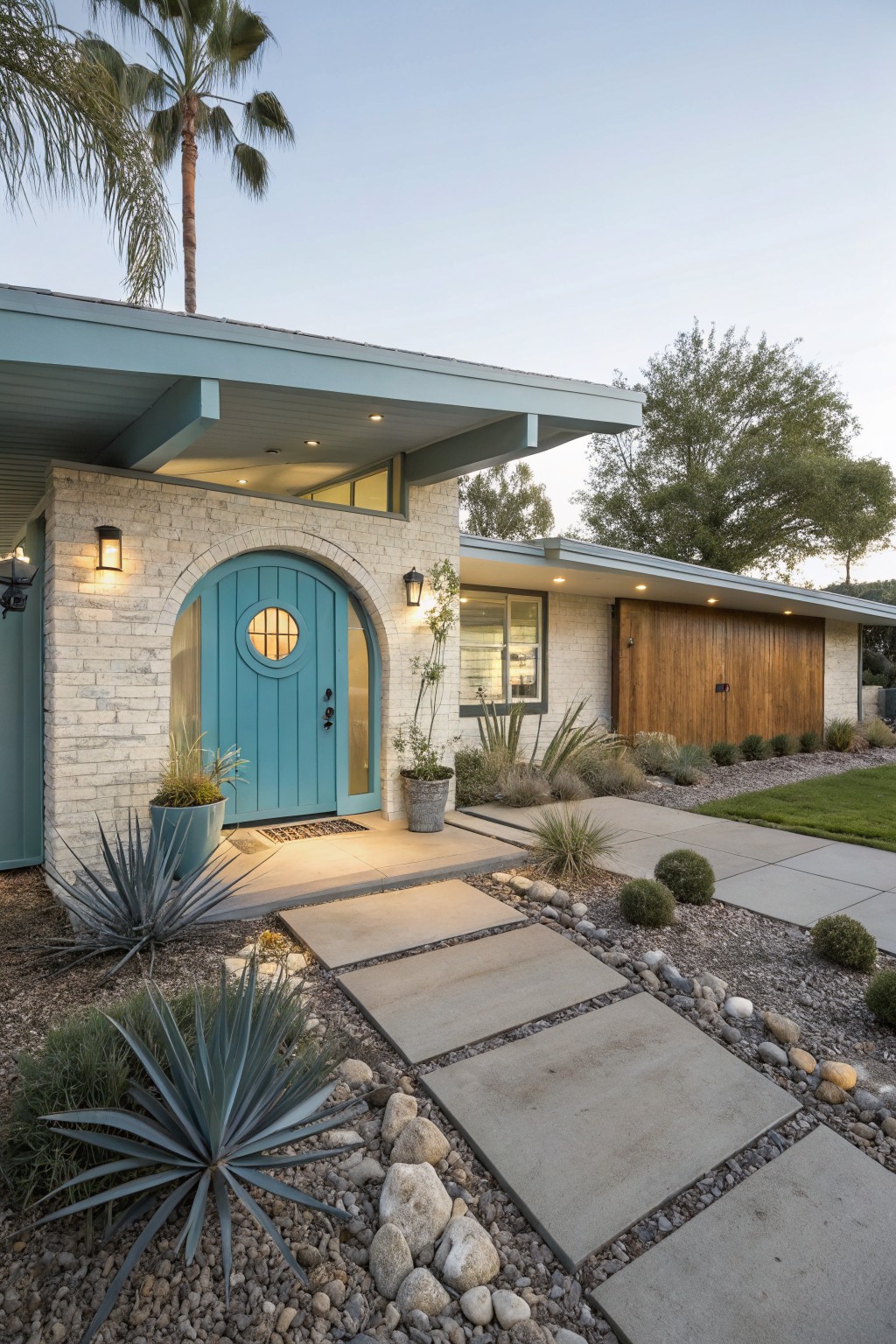
A straightforward gravel walkway with big square concrete pavers works great for midcentury modern front yards. It keeps things simple and low-maintenance, letting drought-tolerant plants like those blue agaves take center stage. The path guides you right to the entry without much fuss, and the gravel fills in the gaps nicely for drainage.
You can pull this off in sunny, dry spots where grass won’t grow well. Lay the pavers loose at first to get the spacing right, then add gravel around them. Plant agaves or similar spiky succulents along the edges for that retro sculptural look. It suits ranch-style homes or anywhere you want clean lines without constant upkeep.
Meandering Flagstone Paths in Rock Gardens
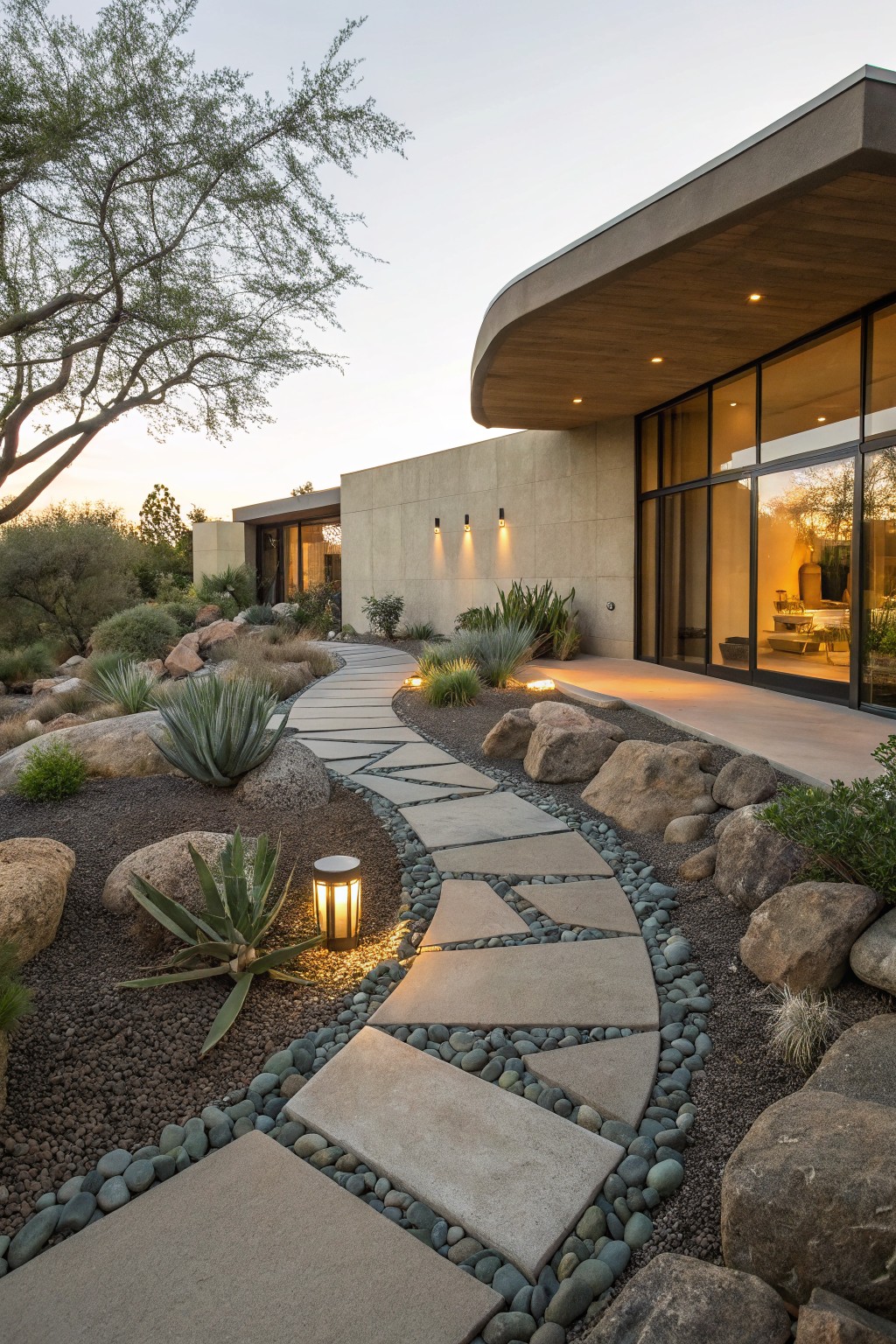
A simple winding path made from large flagstone pavers stands out in front yard landscaping. It curves gently through boulders and gravel, pulling your eye right to the entry without any straight lines. This setup fits midcentury modern homes perfectly. It keeps things low fuss in dry areas, using pebbles along the edges for a clean border that lets rocks and plants fill in naturally.
You can pull this off in most sunny yards with decent drainage. Lay the stones loose on gravel base so water runs through, then tuck in agaves or yuccas nearby. Add a lantern light or two along the way for evenings. It suits smaller lots too, just scale down the boulders. Watch the path width, though. Keep it at least three feet so it feels easy to walk.
Edging Paths with Ornamental Grasses
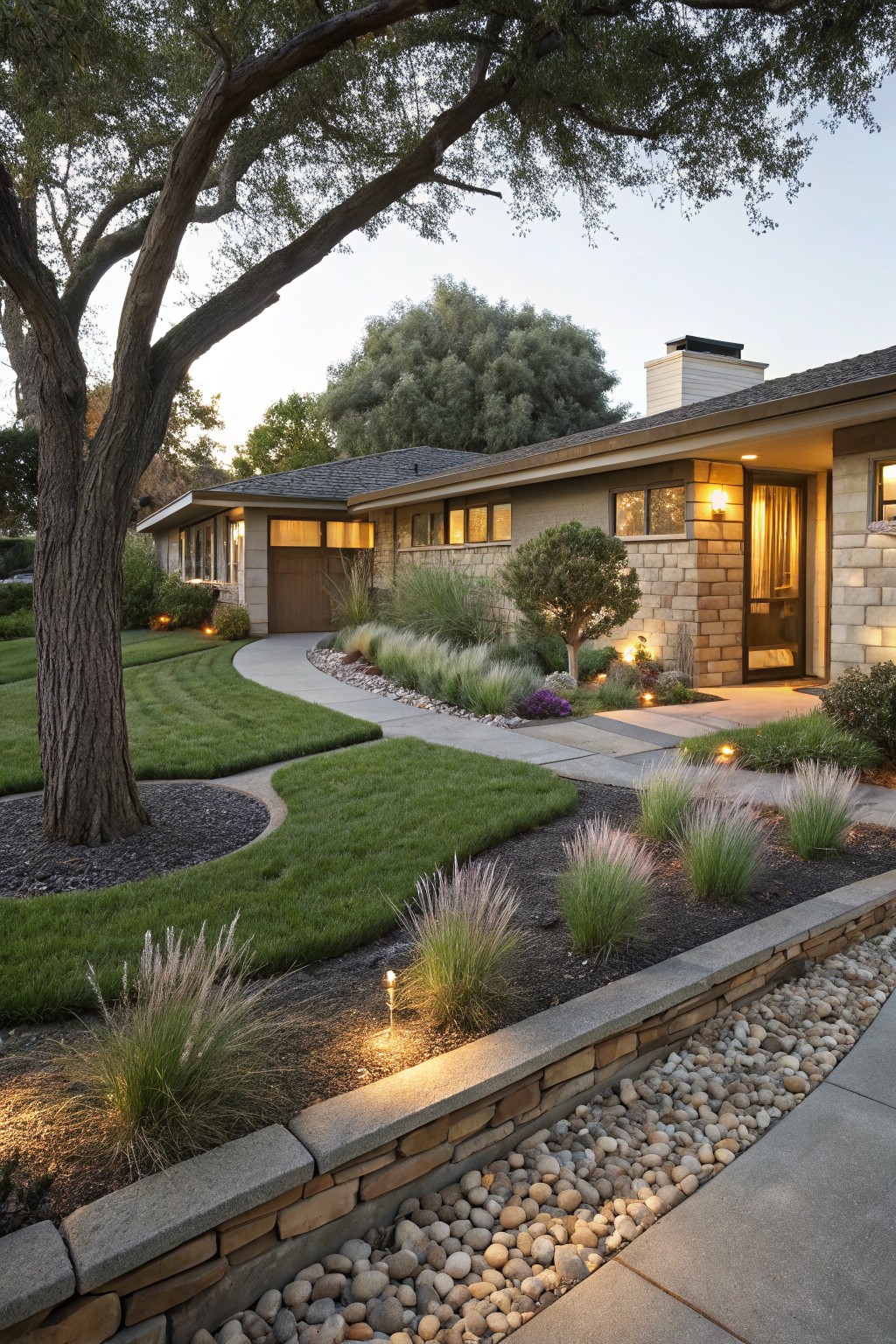
A simple way to guide eyes to your midcentury entry is lining the walkway with clumps of tall grasses set in gravel. Here the curving path has grasses tucked into river rock beds right along the edge. They add movement and texture without needing constant trimming, and that feathery look fits the era’s clean lines perfectly.
Plant these in front yards with some slope, like along a driveway or to the door. Use a low stone wall to keep soil in place if needed, and tuck in path lights at the base for nights. Skip fertilizers to stay low fuss, and choose varieties that turn pinkish in fall for extra interest. It suits homes wanting subtle curb appeal over busy blooms.
Wide Paver Path with Grass Strips
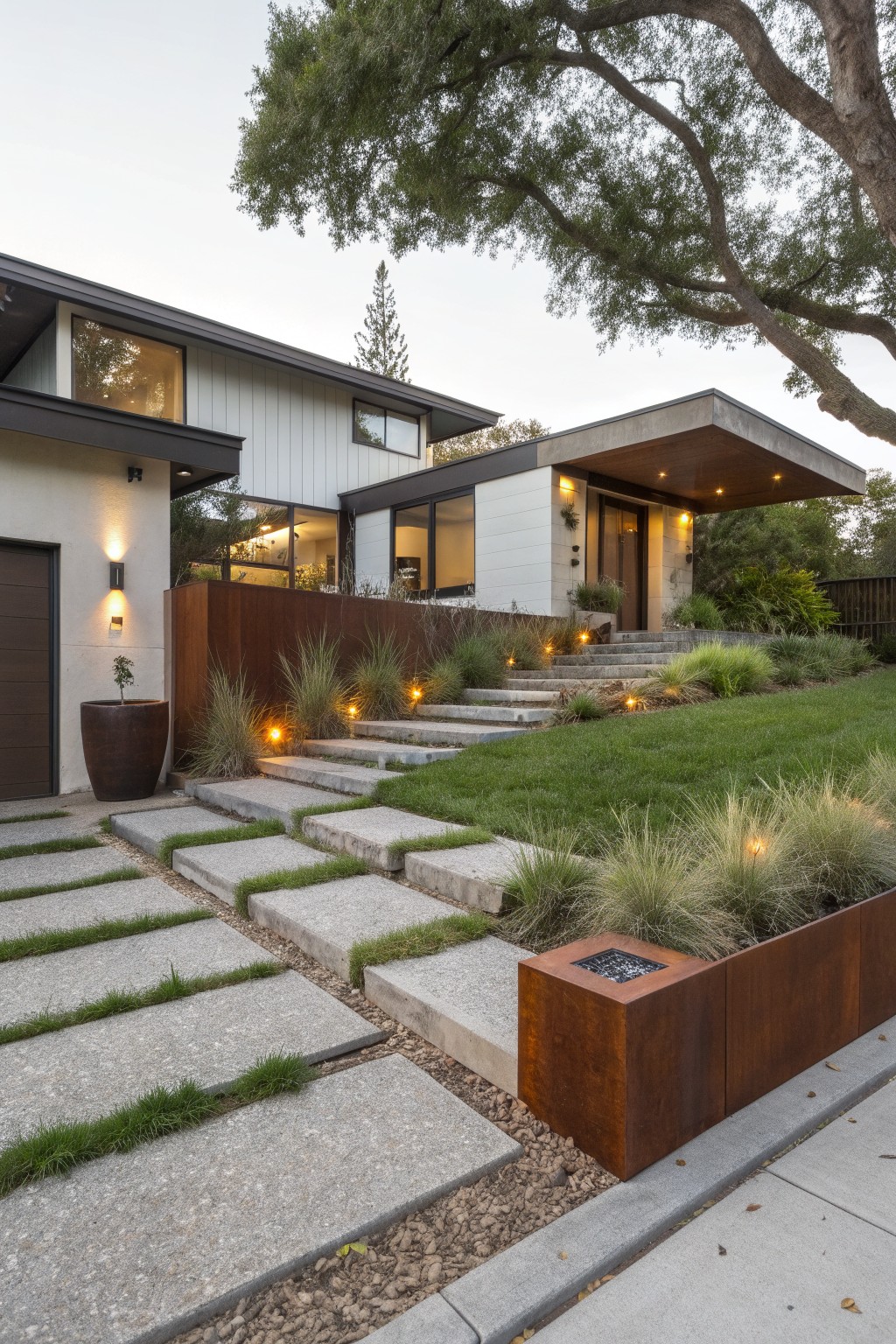
One straightforward way to handle a sloped front yard is to lay large concrete pavers with strips of grass between them. This path runs right from the street up to the entry steps, keeping things open and easy to walk. The grass softens the hard stone without much upkeep, and it fits right into a midcentury modern look where clean lines meet natural edges.
You can pull this off on any driveway approach or walkway that needs to climb a bit. Use bigger slabs for fewer cuts, plant tough grasses like fescue in the joints, and add low lights along the edges for night time. It works best on homes with simple facades, but watch the water runoff so the grass doesn’t drown.
Concrete Retaining Walls Frame the Entry Path
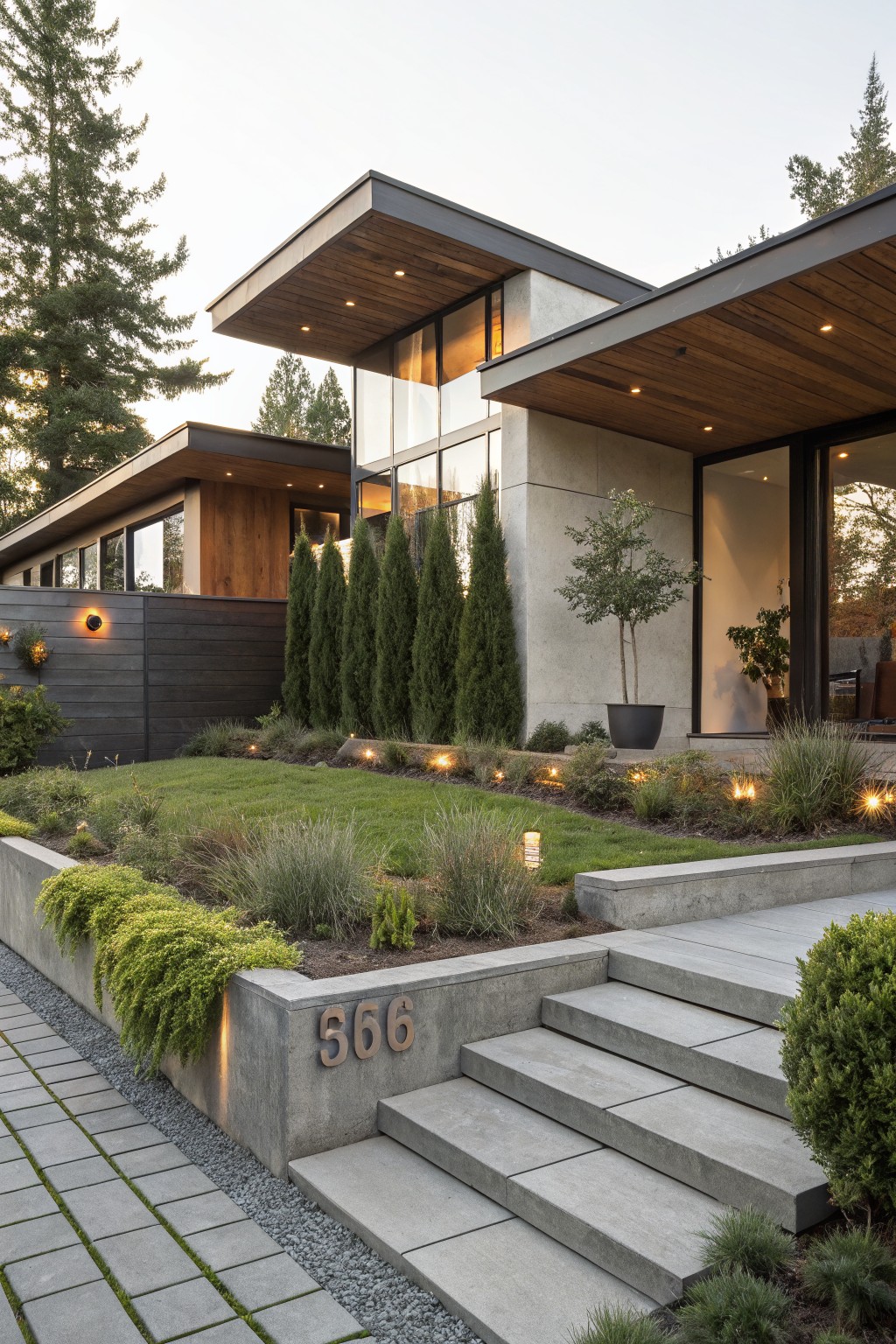
One clean way to organize a front yard is with low concrete retaining walls that hold back raised planting beds along the path to your door. Here they run right beside the paver walkway, keeping soil in place while letting grasses and low shrubs tumble over the edges a little. It pulls the modern lines of the house down into the yard and makes the whole approach feel put-together without too much fuss.
These walls work great on any gentle slope or flat spot where you want to add some height and structure. Build them sturdy but simple, maybe two or three tiers high, and tuck in your house number flush against one side. Line the tops with those small path lights for evenings. Skip fussy flowers, stick to tough evergreens or ornamental grasses that won’t need constant trimming. It’s practical for midcentury spots that need curb appeal but not high maintenance.
Round Stepping Stones in Gravel Mulch
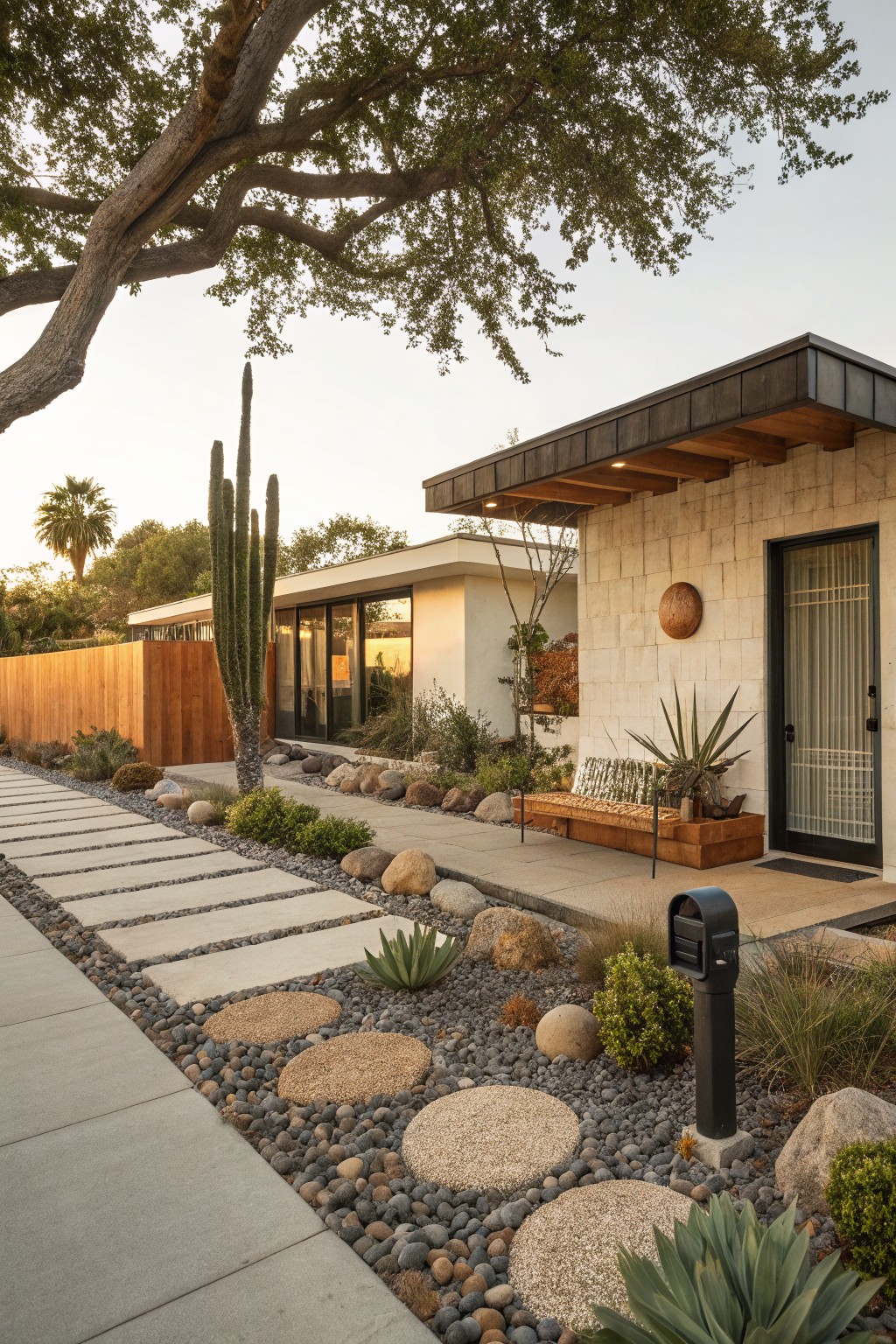
One easy way to handle a front yard path is setting round stones into gravel beds. Here they make a casual walkway that winds toward the house entry. Boulders sit alongside, and tough plants like agaves fill in the edges. It pulls together that dry, open midcentury look without grass or fuss.
This works best in warm climates where low water is key. Start with gravel over landscape fabric, drop in flat rounds for steps, scatter some rocks. Add a cactus or two if you want height. Suits sloped lots or narrow strips. Just keep the gravel fresh every couple years.
Curved Paver Path Through the Lawn
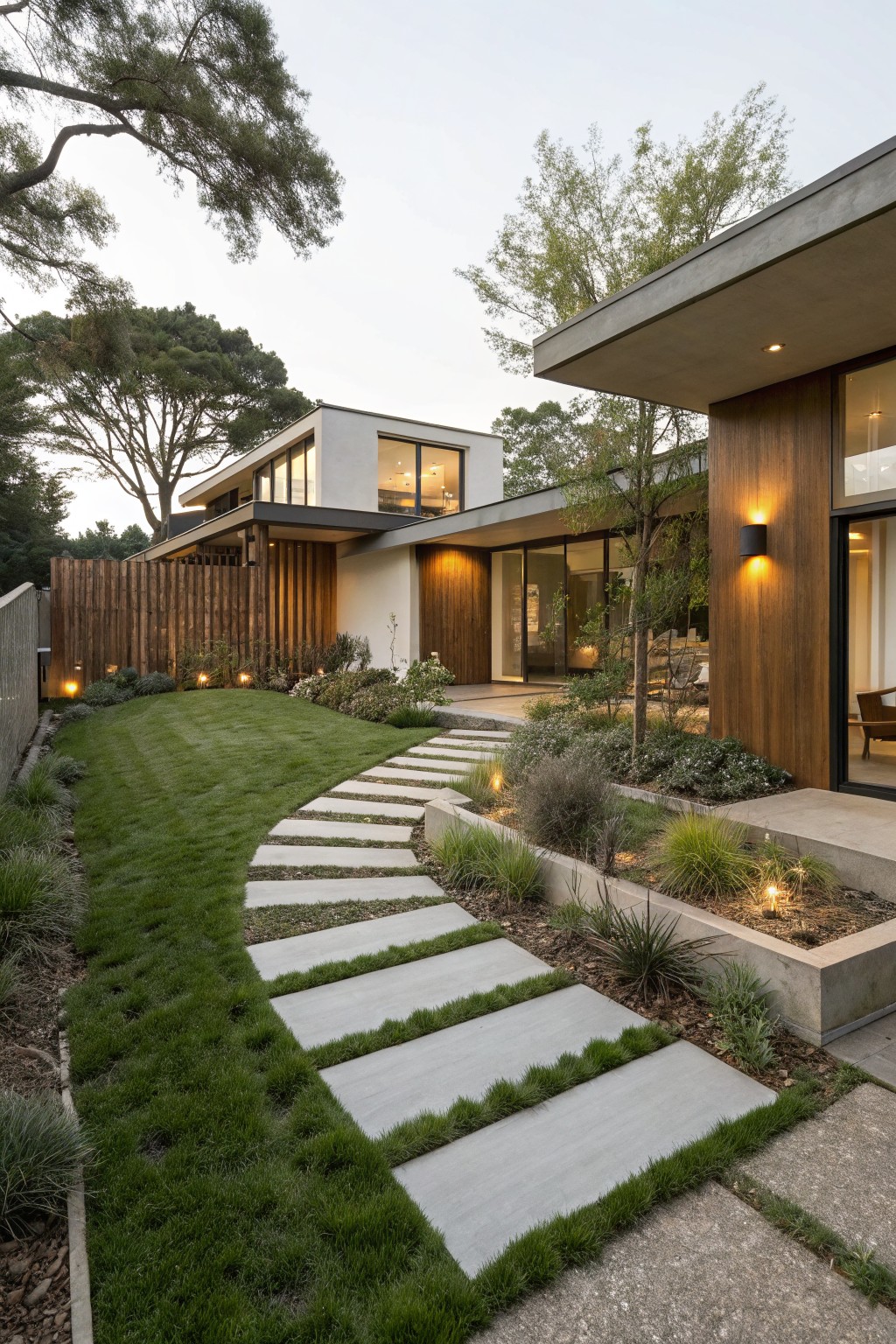
One simple way to make a front yard feel more welcoming is a curving path of large concrete slabs set right into the grass. It winds gently from the street to the door, like it’s grown there naturally. Those wide pavers give plenty of room to walk without feeling too formal, and the grass in between keeps things soft and easy to care for.
This works best on a sloped or open yard where you want to slow people down a bit as they approach. Pick light gray slabs to match midcentury vibes, space them unevenly for interest, and tuck in some low grasses or shrubs along the sides. Skip straight lines. It suits homes with clean lines already, and mowing stays straightforward.
Gravel Paths with Large Pavers
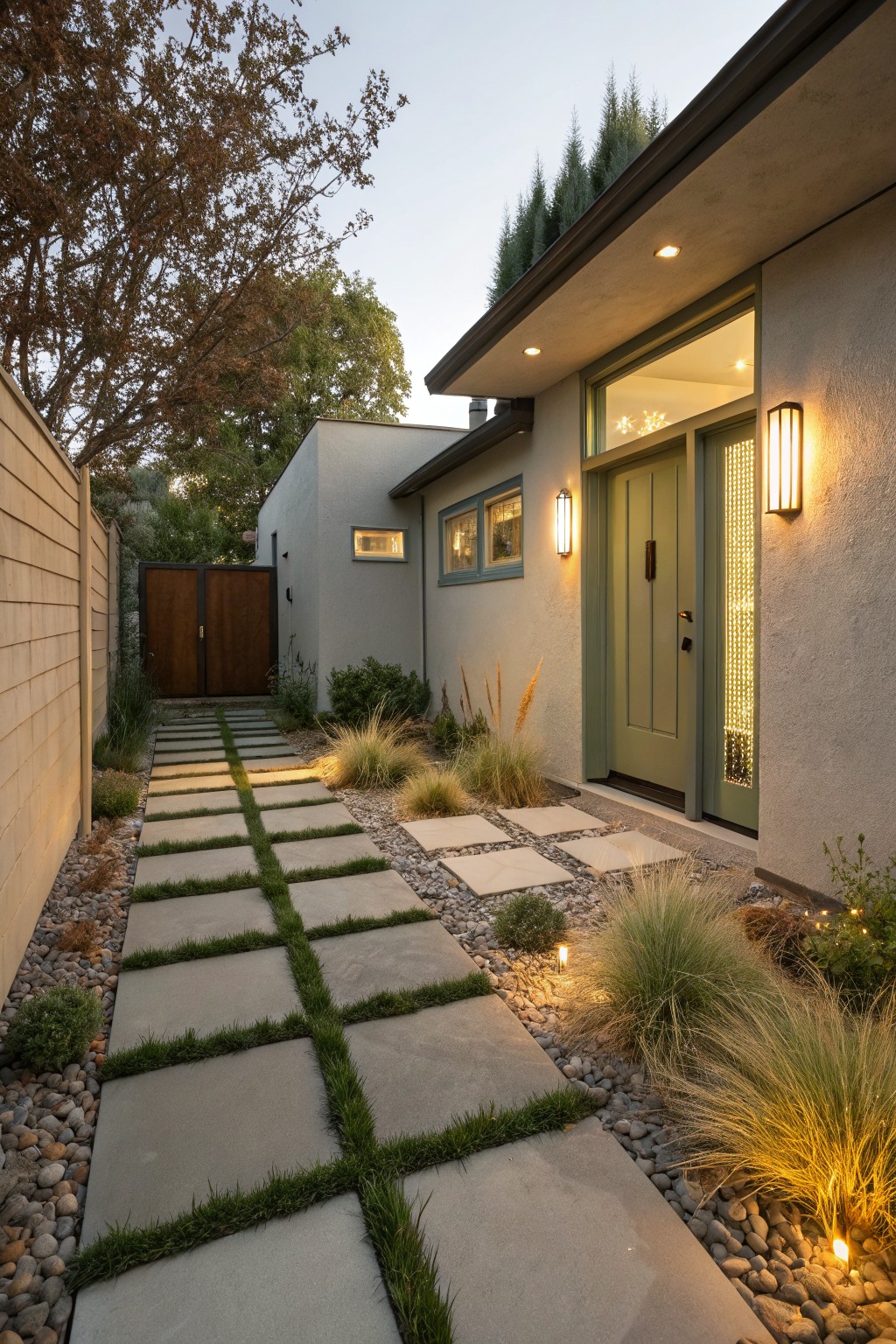
A gravel path like this sets big concrete slabs in a loose grid, with grass strips filling the gaps. Low plants edge it all, and small lights tucked in the gravel light the way at night. It pulls your eye straight to the entry without feeling too fussy, keeping that clean midcentury feel.
This works well in front yards with not much room or water to spare. Drought-tolerant grasses hold up fine, and gravel lets rain drain quick. Try it on a side approach to the door, but level those pavers good or folks might stub a toe.
Stone Steps for Sloped Entries
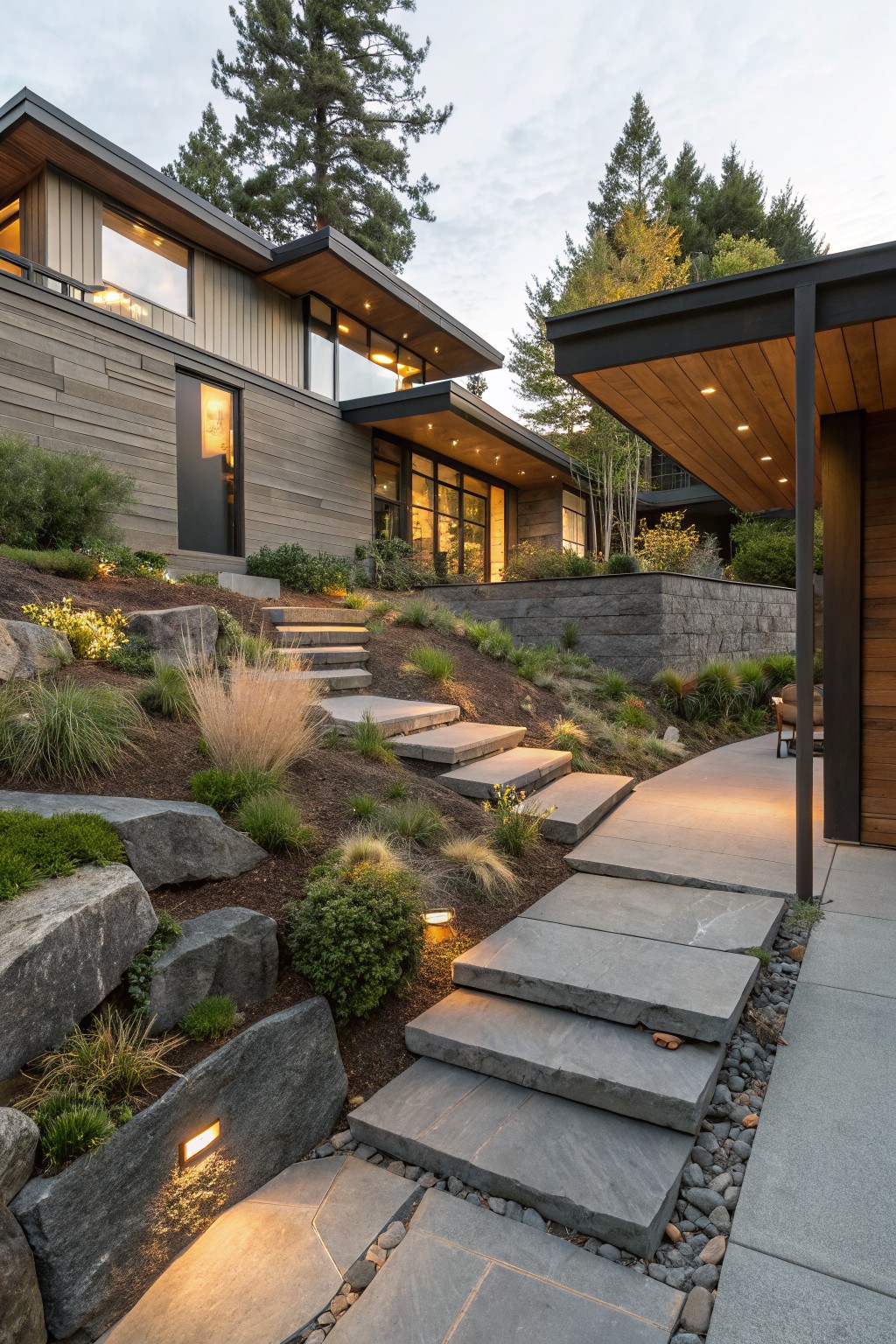
Wide stone slabs form steps that wind gently up this hillside, tucked with boulders and edged by low grasses. The path feels sturdy yet natural. It pulls your eye right to the house without looking too manicured. Those integrated rocks make it low-fuss too.
Try this on any front yard with a drop. Pick rough-cut local stone so it blends with the site. Add path lights and drought-tolerant plants along the edges. It suits midcentury homes on slopes. Just keep the steps wide enough for easy walking.
Grass-Filled Paver Walkway
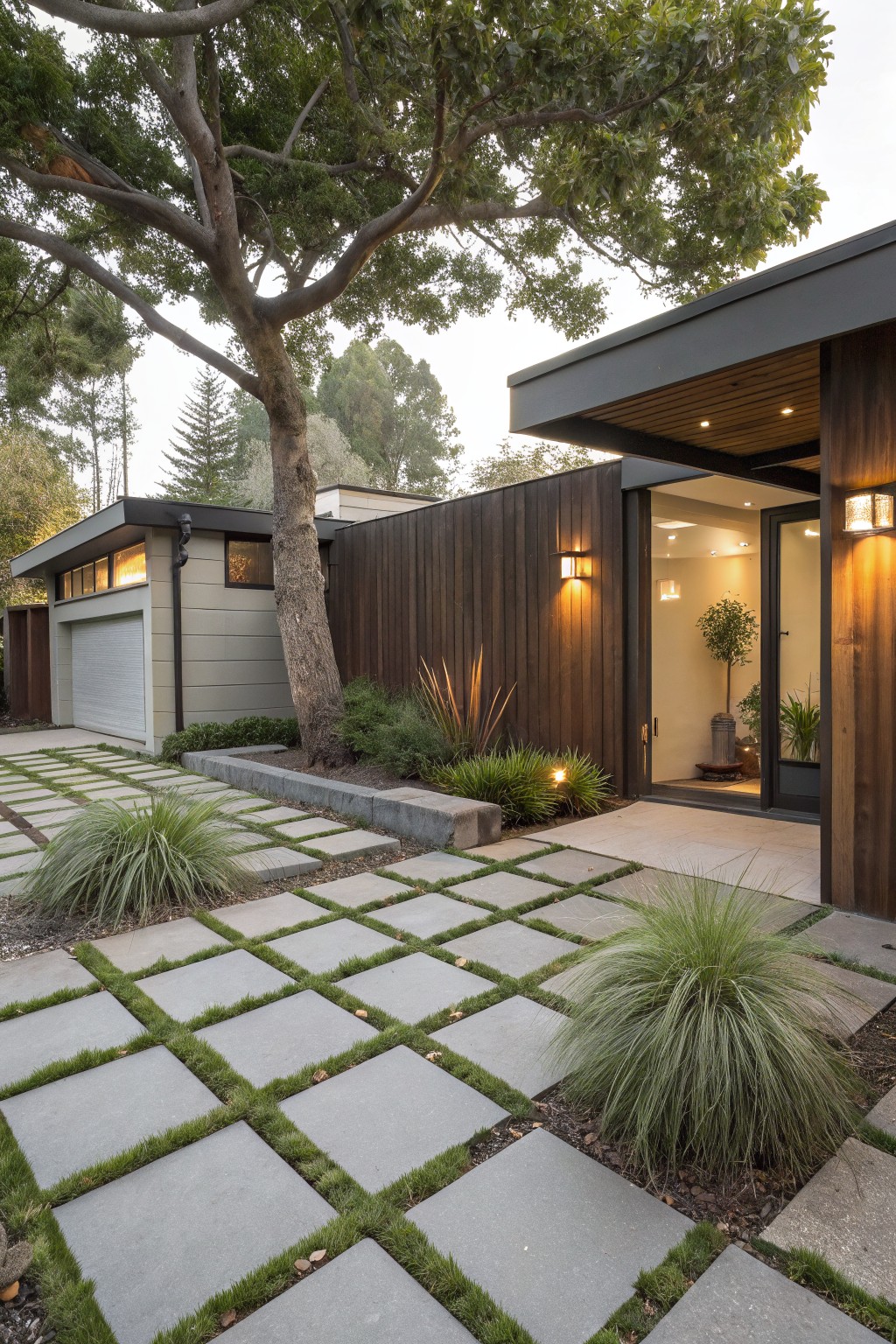
Big concrete squares laid out as a front path, with grass filling the gaps between them. This setup keeps things simple and modern, letting the hard pavers do the guiding while the grass adds that bit of green without a full lawn. It pulls the eye right to the entry door.
Try it in smaller front yards or where you want to cut down on mowing. It suits midcentury homes with clean lines, especially paired with a wood fence or low plants nearby. Pick sturdy pavers and tough grass varieties that handle foot traffic.
Curved Stone Path Leads to the Door
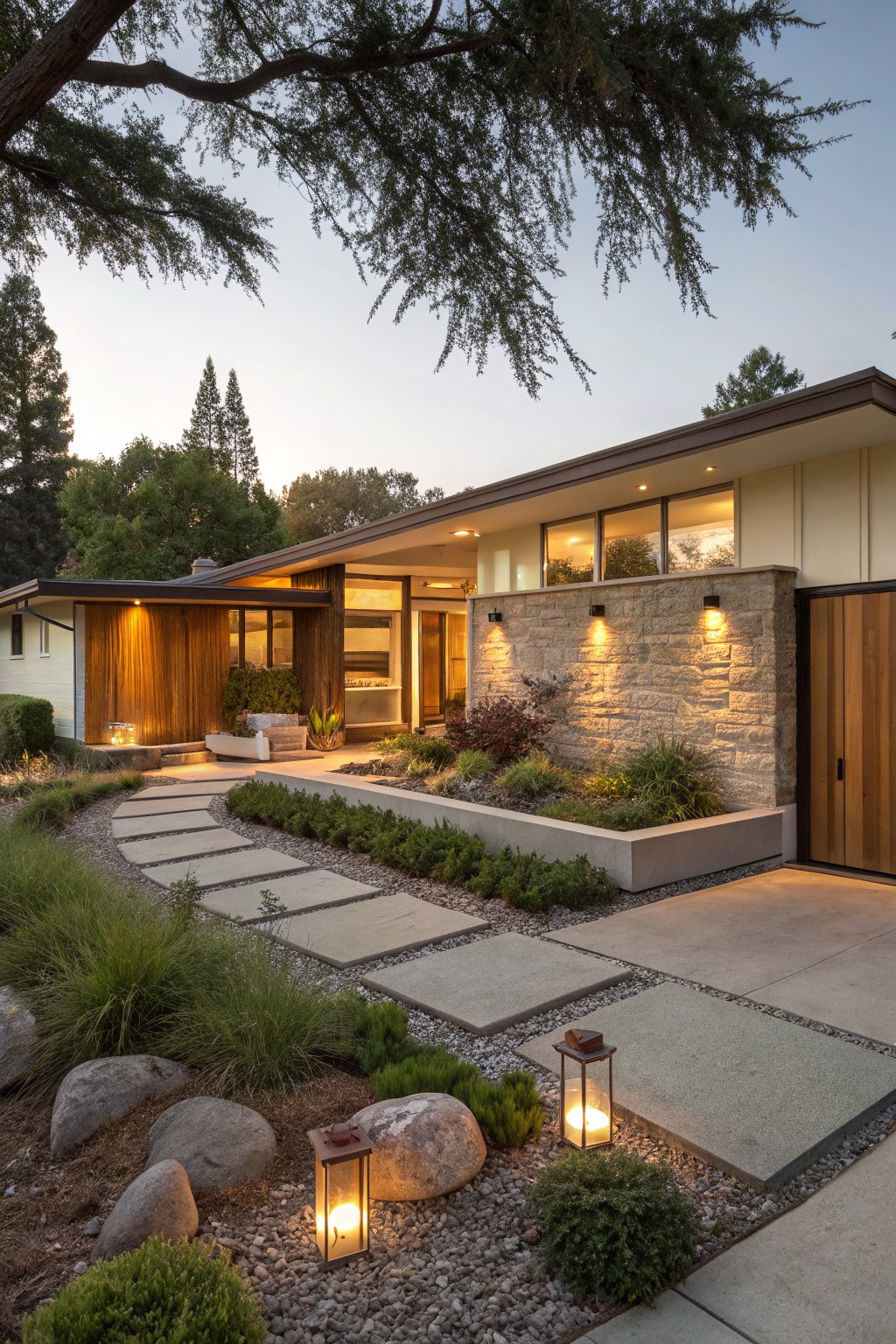
A simple curved path made from large pavers winds gently from the street to the front door. It cuts through gravel beds dotted with boulders and clumps of tall grasses, plus a few low shrubs for texture. Those battery lanterns tucked along the edges add a soft glow at dusk, making the walk feel easy and a little magical without being fussy.
This setup works great for midcentury homes where you want to soften the architecture and tie the yard to the entry. Use bigger pavers spaced out so grass can fill in between, and stick to drought-tolerant plants that won’t need much water. Skip straight lines, though. The curve slows people down and makes the approach more interesting, especially on a slope or wider lot.
Stepping Stone Paths Set in Grass
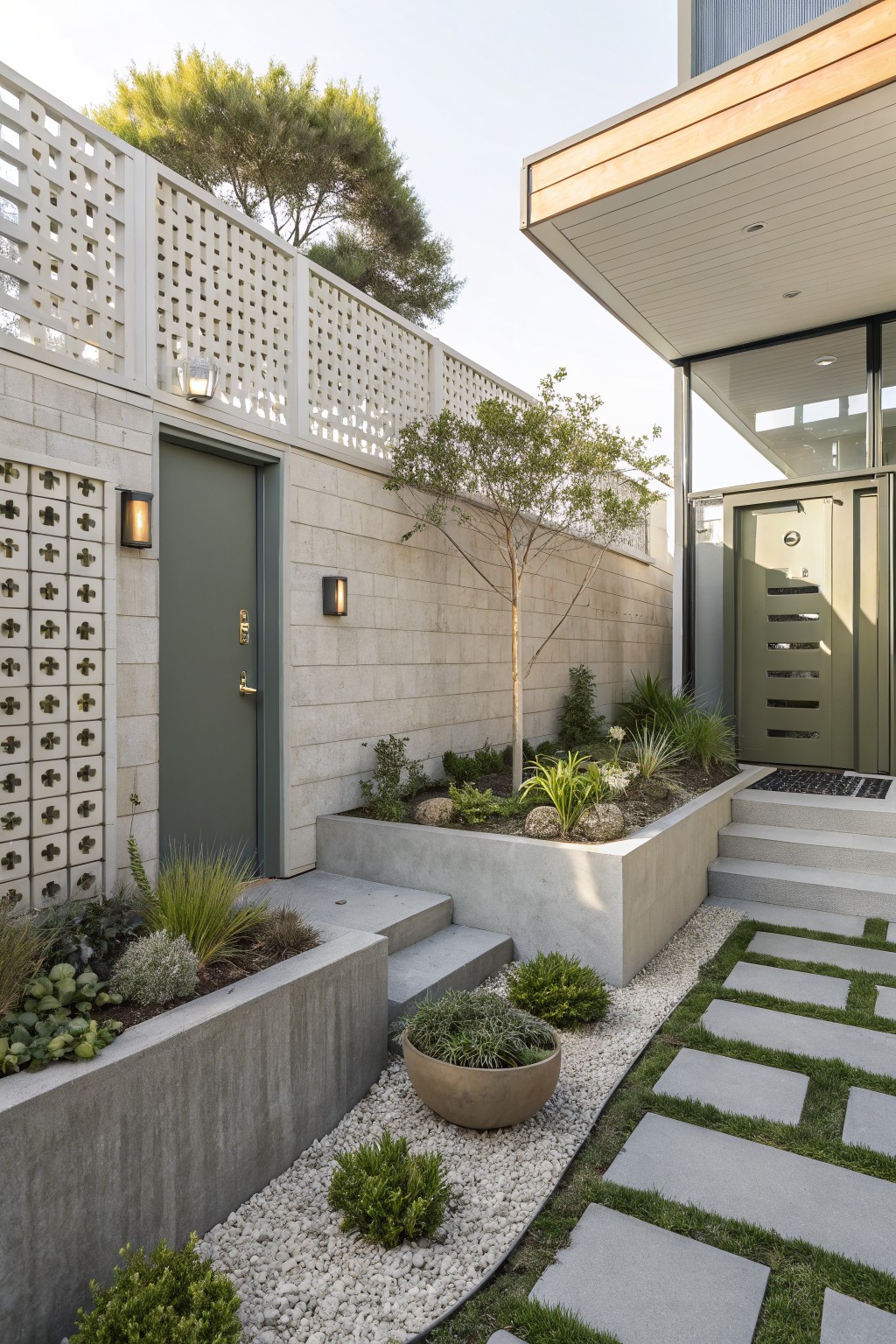
Large concrete pavers laid right into the grass make a simple walkway that fits right into a midcentury yard. Gravel fills the edges, and low plants tuck in nearby. It’s straightforward and keeps things open without a full pavement.
This works well leading up to an entry like this one, where steps meet the house. Space the stones loosely for a natural pace. Go with drought-tough plants in spots like the raised beds here. It suits sloped lots or sunny spots… low water needs too.
Gravel Entry Path with Pavers and Boulders
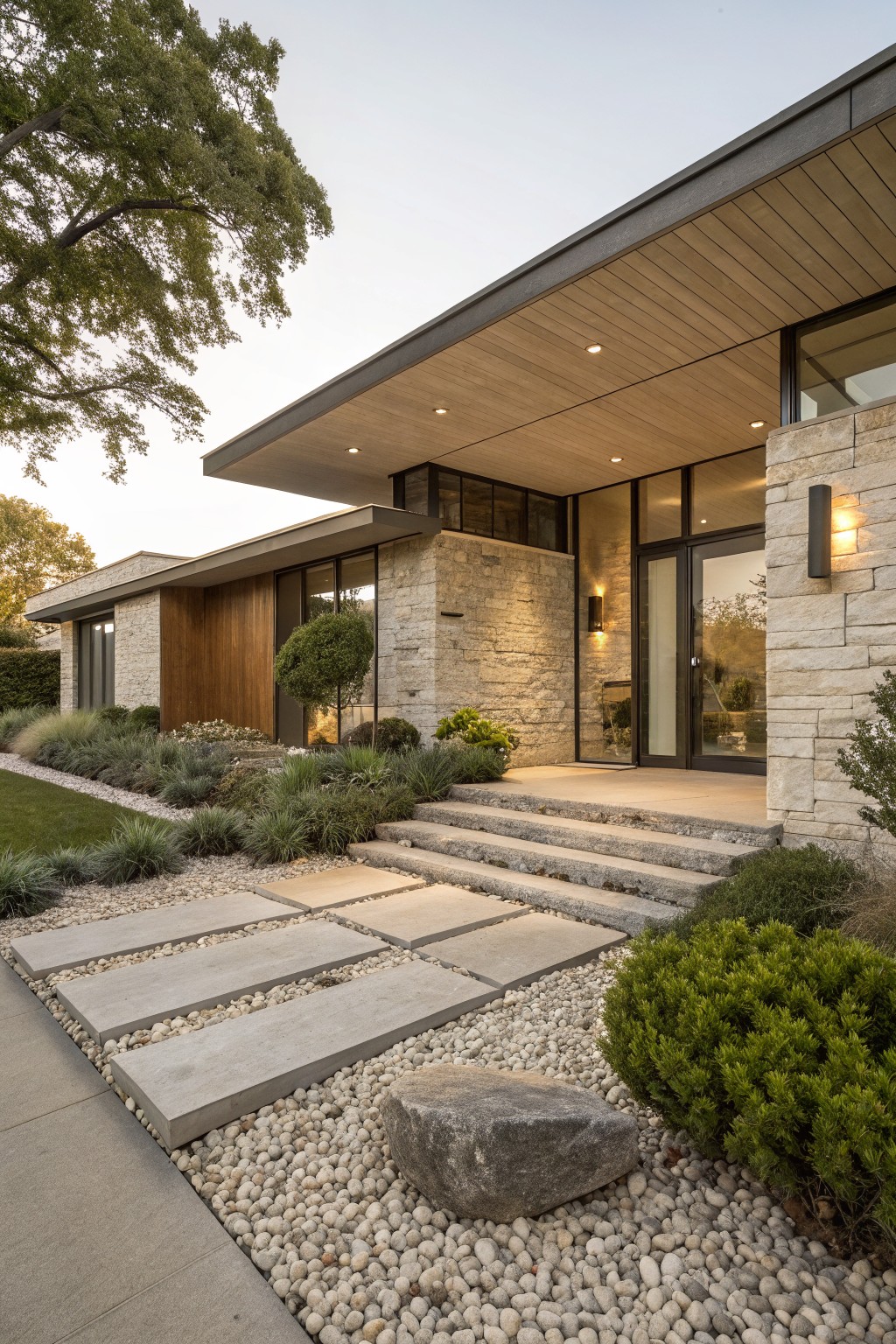
A gravel path like this one keeps things simple and modern. Wide concrete pavers set into a bed of smooth pebbles lead right up to the house steps. A big boulder sits off to one side, and low grasses fill in around the edges. It fits midcentury homes well because it doesn’t compete with the architecture. Instead, it pulls your eye to the entry without much upkeep.
You can do this in any front yard with decent drainage. Lay down landscape fabric first, then add gravel and space out the pavers every few feet. Tuck in drought-tolerant grasses or small shrubs along the sides. It works best on flat or gently sloped lots leading to a raised entry. Just keep the gravel topped up every couple years.
Simple Stepping Stone Path in Gravel
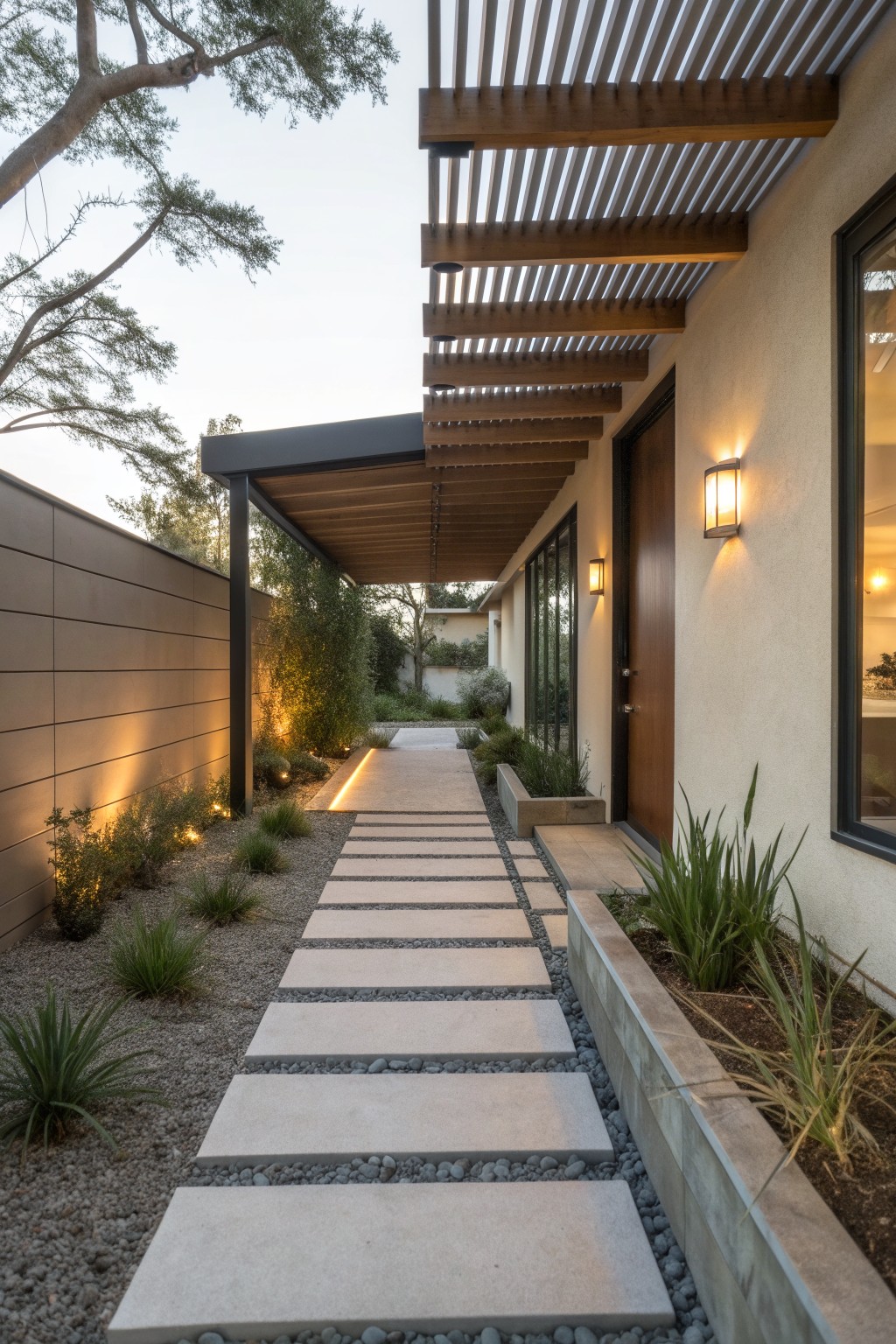
One easy way to give your front yard that midcentury modern look is a stepping stone path set right into gravel. The large rectangular pavers spaced out like this keep things open and clean. Low plants like grasses and agaves line both sides, and those uplights along the wall add just enough glow at dusk without overdoing it.
This setup works great for drought-friendly yards or anywhere you want low upkeep. Lay down gravel first, drop in the pavers where feet naturally fall, then edge with simple beds for tough plants. It leads straight to the door under a slatted overhang… fits homes with clean stucco walls and big glass. Skip tiny pebbles; go for bigger stones so it drains well.
Stepping Stone Paths with Grasses and Boulders
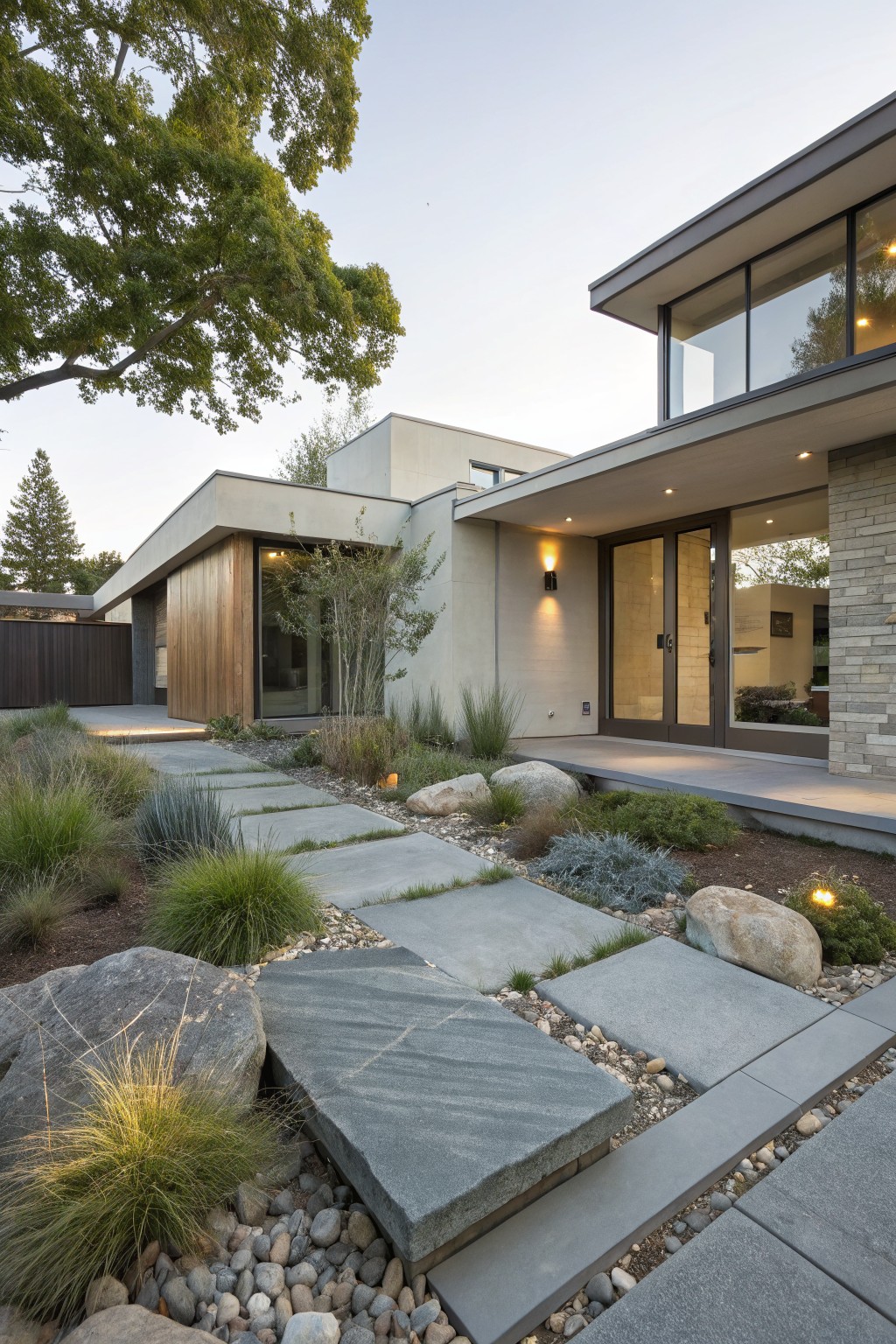
One straightforward landscaping idea for a midcentury modern front yard is a path made from large, irregularly spaced stone pavers set into gravel and edged by tall grasses and boulders. It creates a casual walk to the door that doesn’t compete with the house’s clean lines. The grasses sway a bit, adding movement without much upkeep, and the boulders give it a natural, grounded feel.
You can pull this off in most front yards, especially where water use matters. Pick drought-tolerant plants like feather grass or sedge, space the pavers wide enough for easy steps, and keep the boulders local if possible. It suits flat or gently sloped spots… just avoid tight curves if your yard gets heavy foot traffic.
Raised Beds Flank the Entry Path
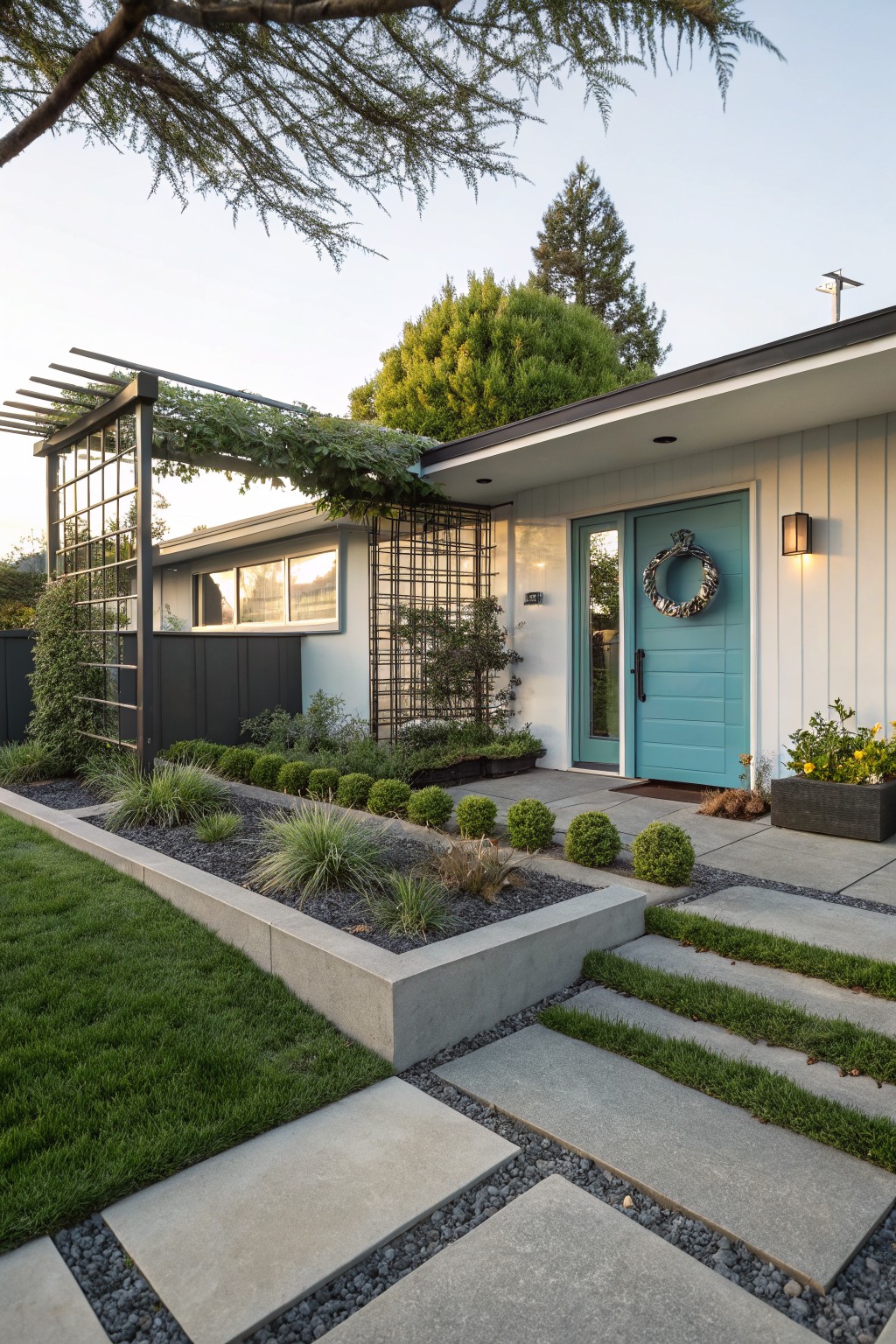
One straightforward way to add structure to a midcentury front yard is lining the walkway with raised concrete beds. Here, they’re packed with clumps of ornamental grasses, a few boxwood spheres, and black pebbles for drainage. The clean edges pull your eye right to the door, tying the yard into the house’s simple lines without overwhelming the space.
These beds work best where you need to separate lawn from path, especially on a gentle slope like this one. Fill them with low-water plants that stay tidy, and they’ll frame any color-pop door nicely. Skip anything too tall near the steps, or it’ll block the view.
Sloped Front Yard Steps with Retaining Walls
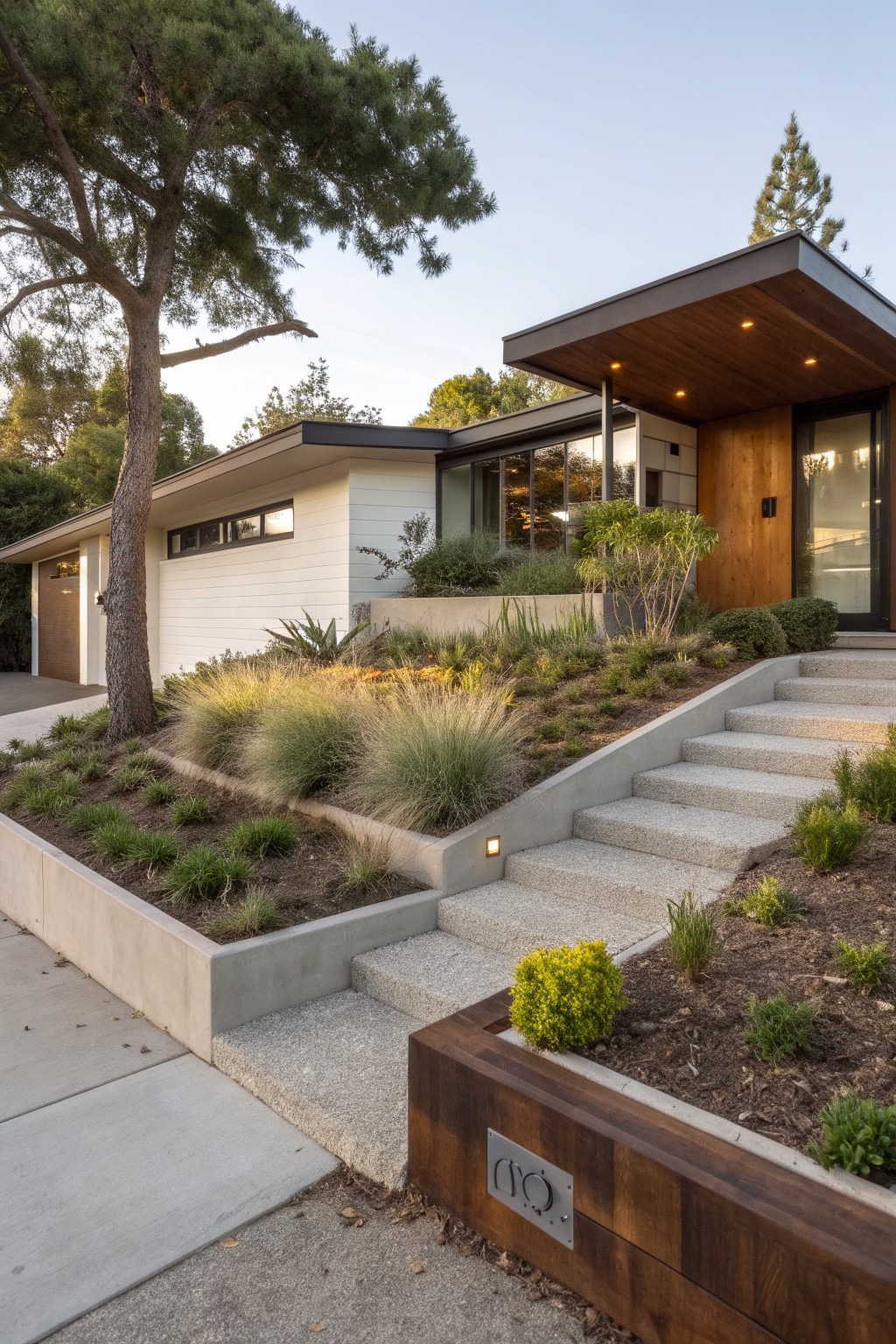
Wide, shallow concrete steps like these make climbing a sloped front yard feel easy and intentional. They match the house’s clean lines perfectly here, with matching concrete retaining walls that hold back soil and plants without overpowering the look. Feather grasses and low shrubs fill the beds, keeping things low-maintenance and textured. It’s a simple way to turn a tricky hill into a feature.
This setup works best on midcentury homes or any modern place with a slope to the entry. Use pebble-finish concrete for grip and subtle interest, then pick drought-tolerant plants that won’t spill over. Keep steps broad, maybe four feet wide, so two people can pass. Watch the rise, though. Too steep and it loses that welcoming flow.
Stepping Stone Paths in Gravel Yards
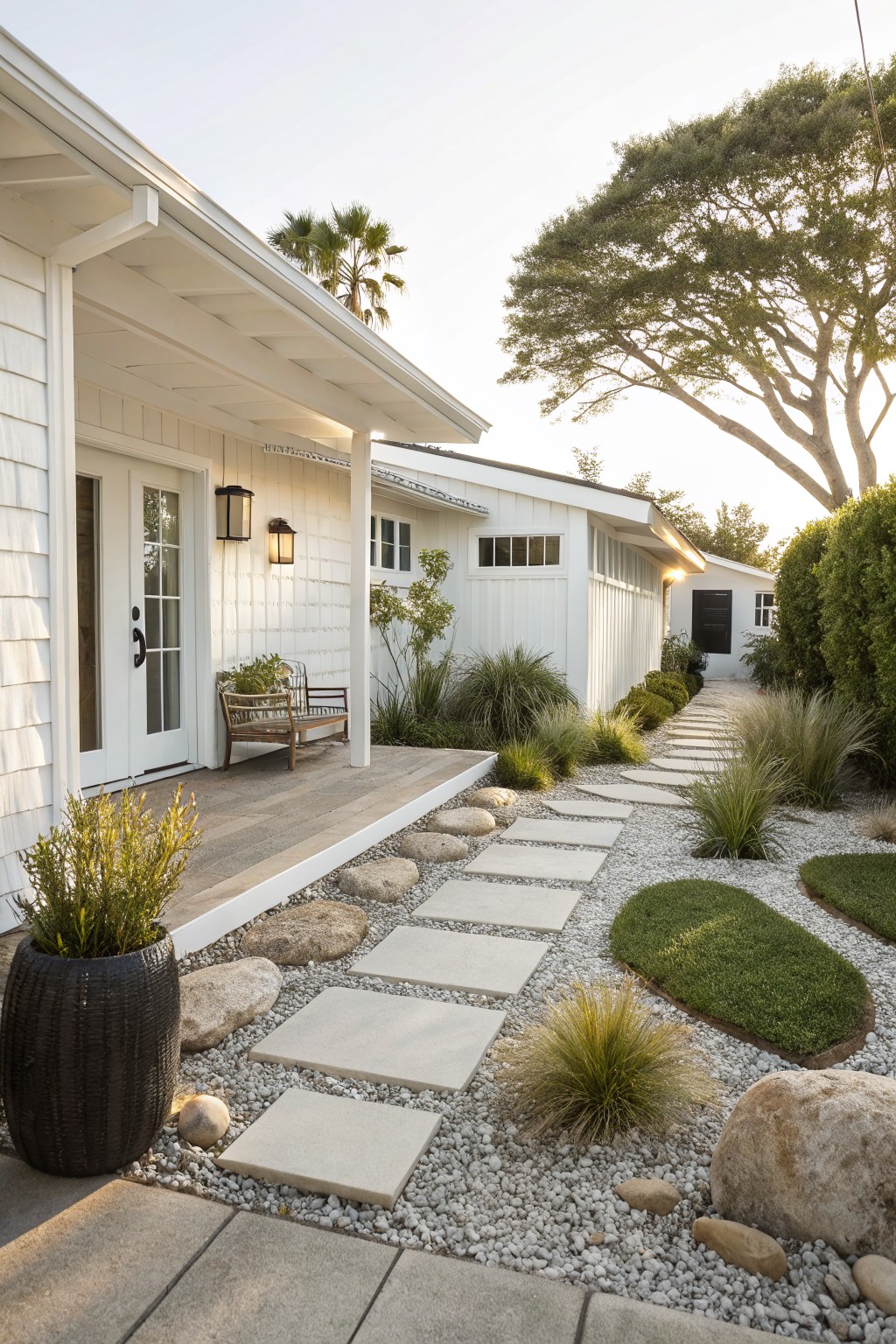
One easy way to guide guests right to your front door is with large, irregular stepping stones set into a bed of white gravel. It keeps things simple and modern, especially around a midcentury house like this one with its clean white siding and porch. The stones give just enough structure without a full sidewalk, and the gravel fills in softly around grasses and boulders.
This setup works great in sunny, dry spots where you want low upkeep. Use bigger stones for a bolder look, space them so your feet land naturally, and add a few tall grasses along the edges. It suits smaller front yards or drought-prone areas… just rake the gravel now and then to keep it tidy.
Agaves Flank the Entry Door
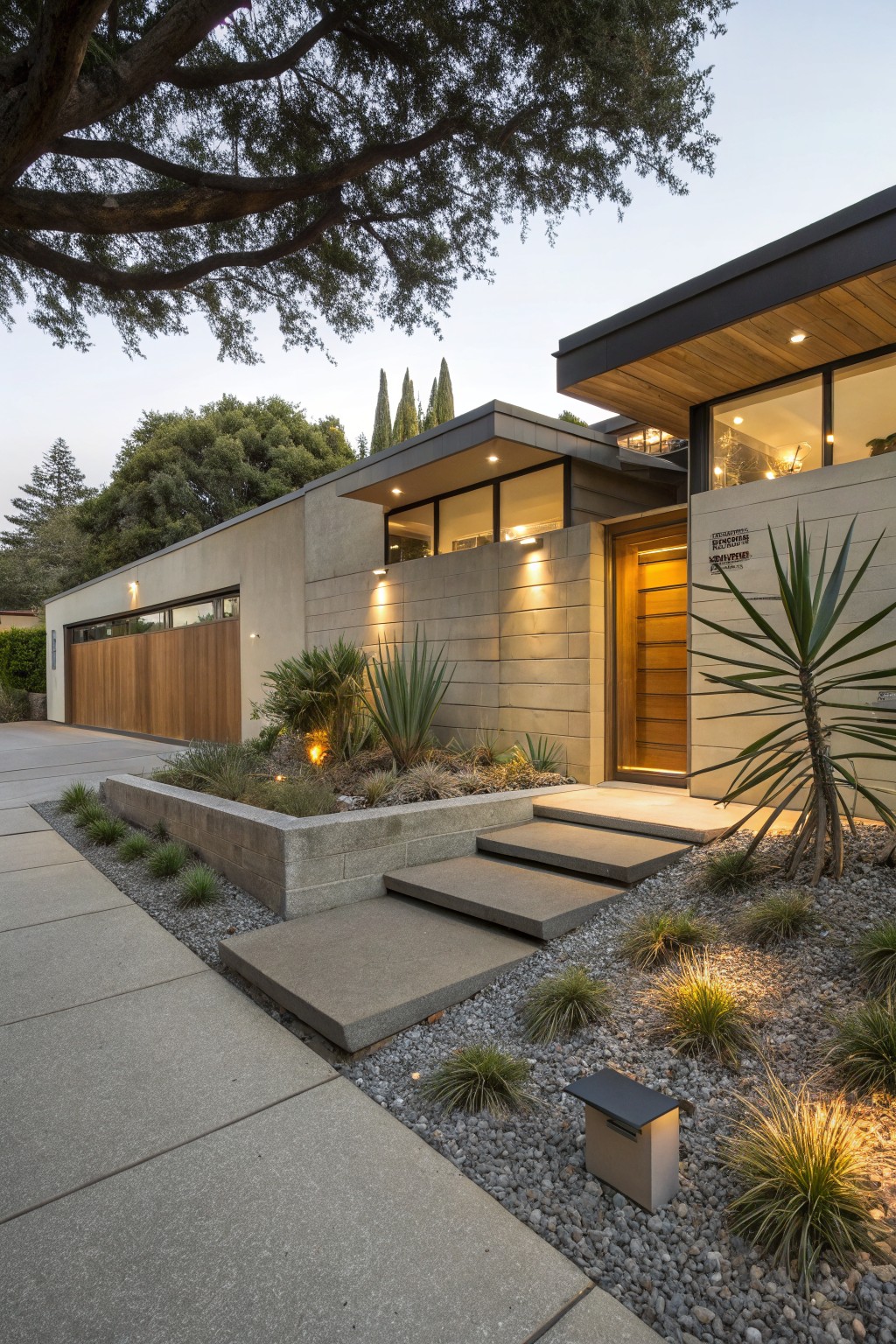
One simple way to give your midcentury modern home that retro-chic front yard vibe is planting tall agaves right next to the entry door. They stand out like natural sculptures against the plain concrete block wall, pulling the eye straight to the front steps without much upkeep. It’s a look that feels bold yet clean, especially when paired with gravel mulch that keeps weeds down.
These agaves work best on homes with flat facades and wide approaches, like in drier spots where water isn’t an issue. Just pick mature plants for instant height, space them a couple feet from the door, and fill around with river rock or grasses. Skip anything too fussy, or it loses that easy modern edge.
Zigzag Walkway to the Front Door
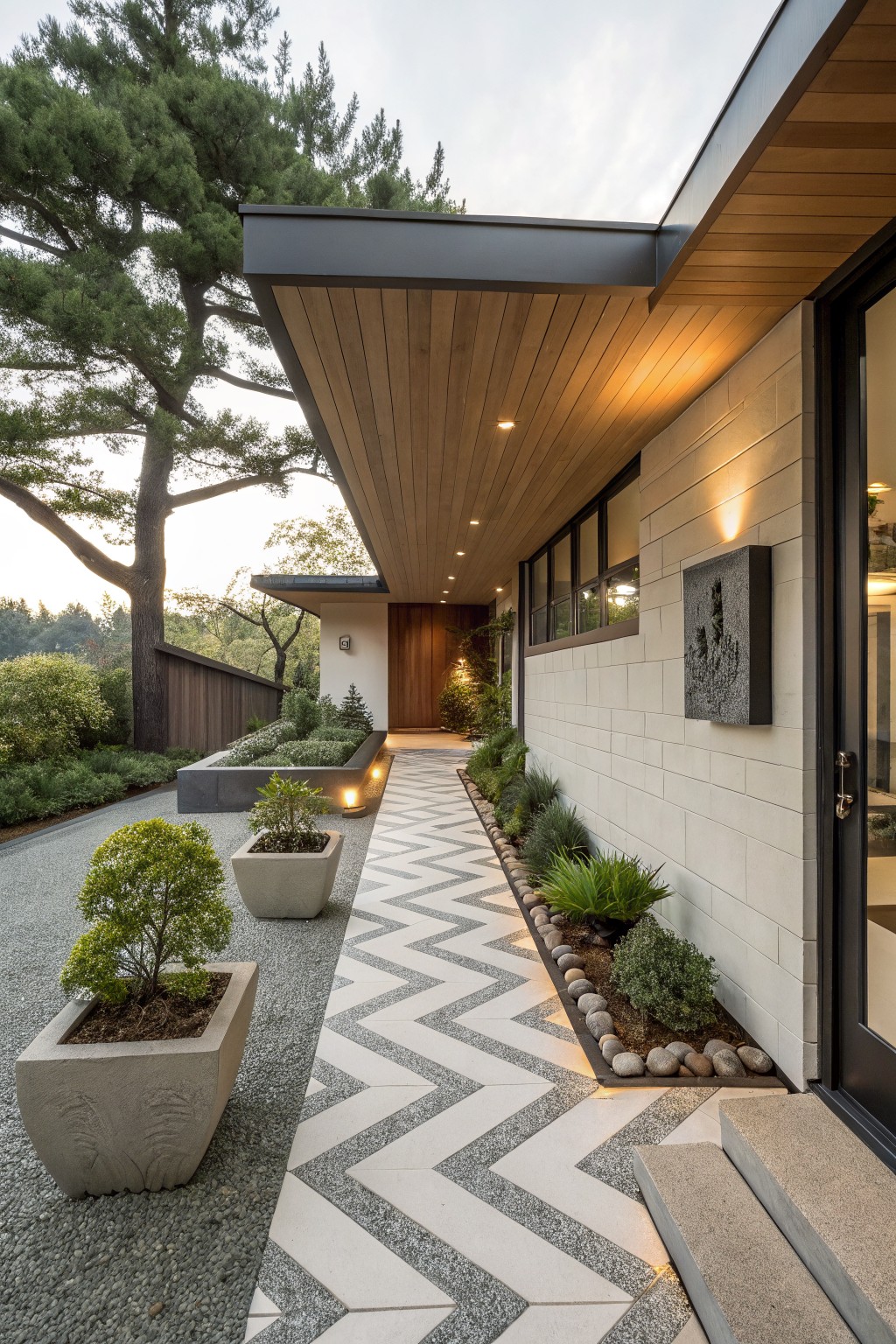
A zigzag walkway catches your eye right away in a front yard setup like this. The white and gray tiles form a playful pattern that pulls you toward the entrance, adding some movement without overwhelming the space. It ties into that midcentury modern look nicely, especially with simple plant borders on one side.
This works well for homes with a clean facade and not too much yard to fill. Lay down porcelain or stone tiles in a repeating chevron design, keep the path about four feet wide, and flank it with gravel or low shrubs. Skip anything fussy… it stays practical year round.
Frequently Asked Questions
Q: Can beginners really tackle midcentury modern front yards?
A: Start small with gravel paths and a few potted succulents.
You build confidence fast that way. Skip big digs until you feel ready.
Q: What plants nail that retro-chic vibe without tons of upkeep?
A: Pick agaves or yuccas for their sharp, sculptural shapes.
They thrive in sun and barely need water once established. Group them in odd numbers for punch.
Q: How do I handle a shady yard with this style?
A: Use hostas or ferns in clean geometric beds.
Add polished pebbles between for shine…it pops against the green.
Q: Quick budget tip to start?
And grab thrift store pots. Paint them matte black. Instant retro win.
