

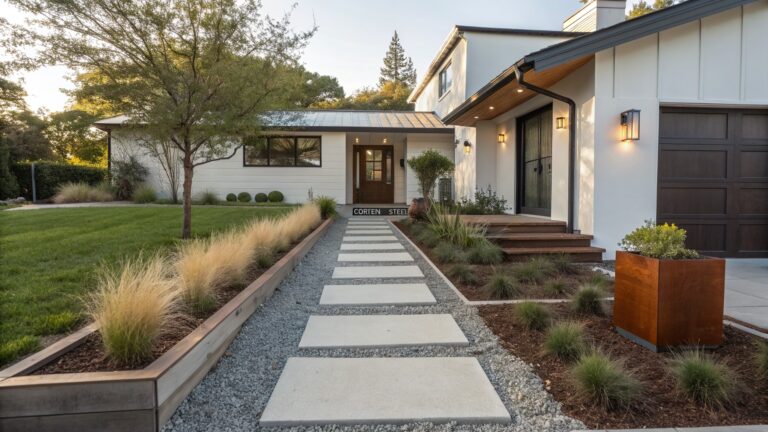
I always pay attention to how a front yard’s pathways and edging pull everything together when you walk up to the house. Pea gravel brings a quiet texture that grounds plantings and stone without needing constant upkeep. When I added some along my own walkway borders a few seasons ago, it made the space feel more layered as the perennials filled in around it. These setups often start with simple gravel sweeps that define beds or soften driveway edges, letting the yard evolve naturally over time. Try sketching one or two onto your layout, and see how that subtle crunch changes the whole approach.
Pea Gravel Path with Stepping Stones
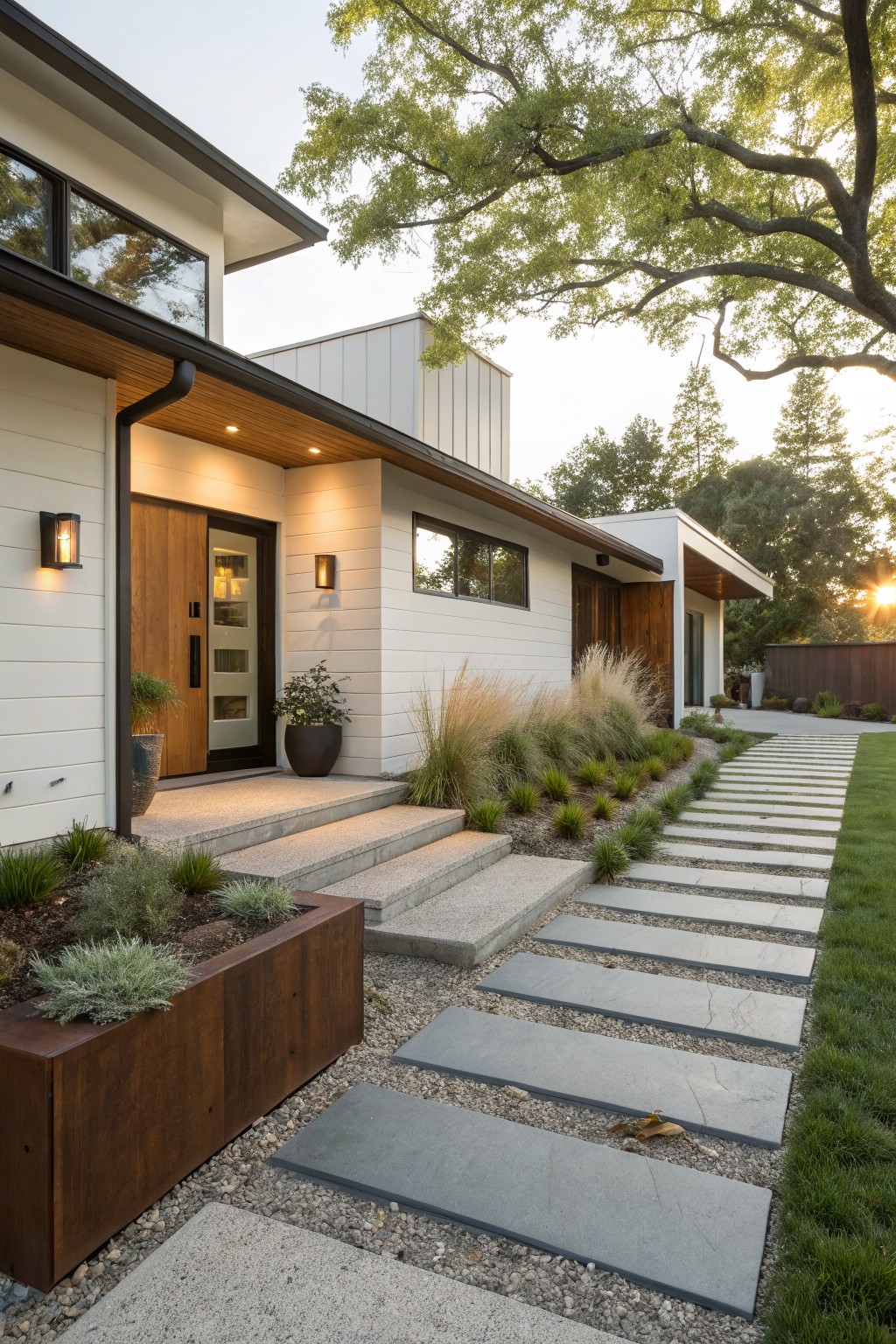
One easy way to add texture to your front yard is a simple path of large stone slabs set right into pea gravel. The gravel fills the gaps and softens the look around the edges, while the dark gray slabs stand out nicely against it. Grasses and low plants along the sides keep it from feeling too bare, and it leads straight up to the entry steps without any fuss.
This setup works best in yards that get full sun or partial shade, especially if you want something low-maintenance. It’s perfect for modern houses or ranch styles where you don’t want a solid concrete walkway taking over. Just make sure the gravel is at least three inches deep so it stays put, and edge it with metal or stone to hold everything in place.
Pea Gravel Path with Stepping Stones
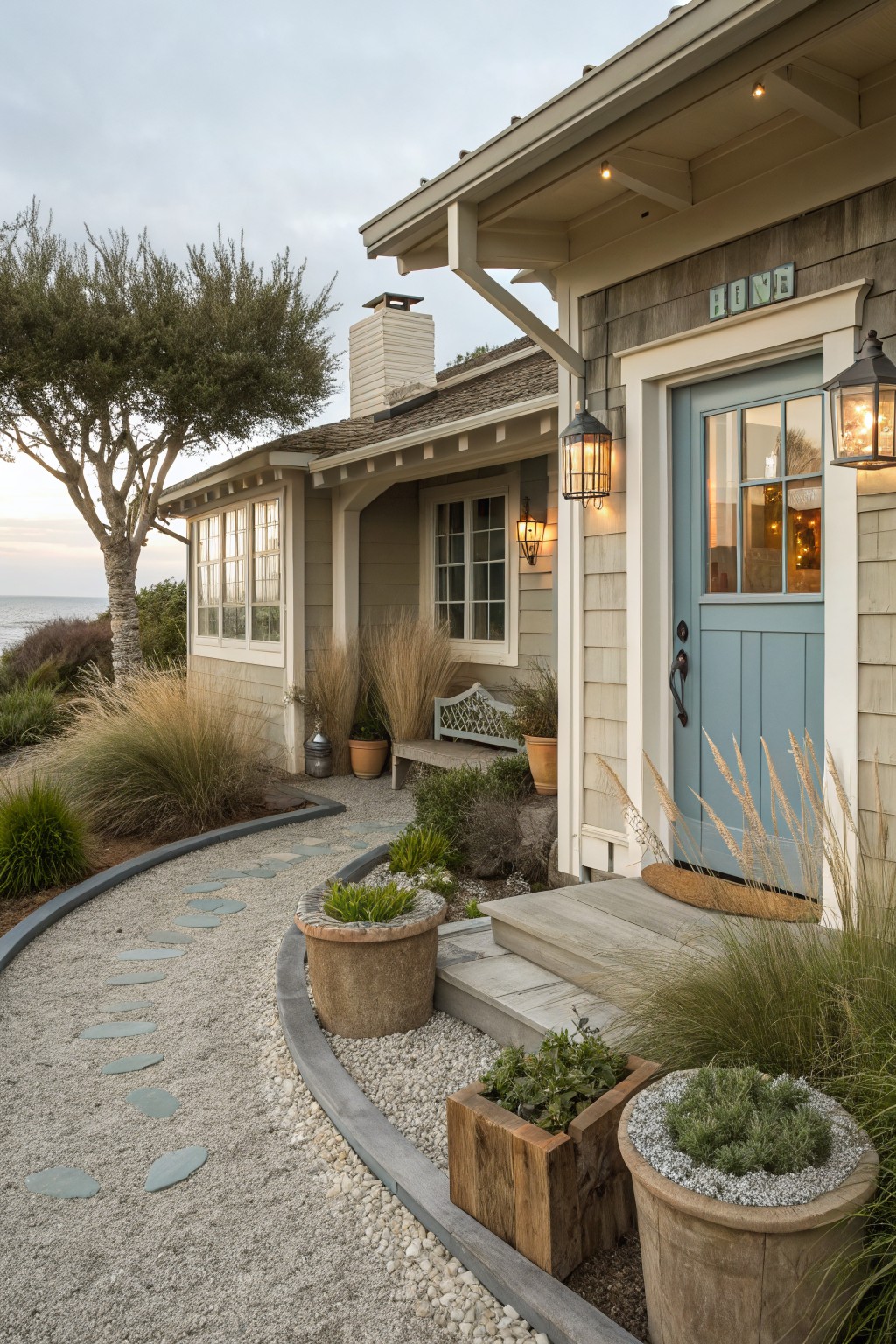
A simple curved path made from pea gravel works great for leading folks right up to the front door. Those round pebbles give a soft texture underfoot, and mixing in flat slate stepping stones keeps it practical so you don’t sink in after rain. The gravel’s light color picks up the coastal feel here, blending with the grasses and pots along the edge.
This setup suits low-maintenance yards near the beach or anywhere with a casual vibe. Lay down landscape fabric first to stop weeds, then edge it with wood or stone for a clean line. Skip it on steep slopes though…too much shifting. Add a few taller plants nearby and it frames the entry without much fuss.
Winding Pea Gravel Path to the Entry
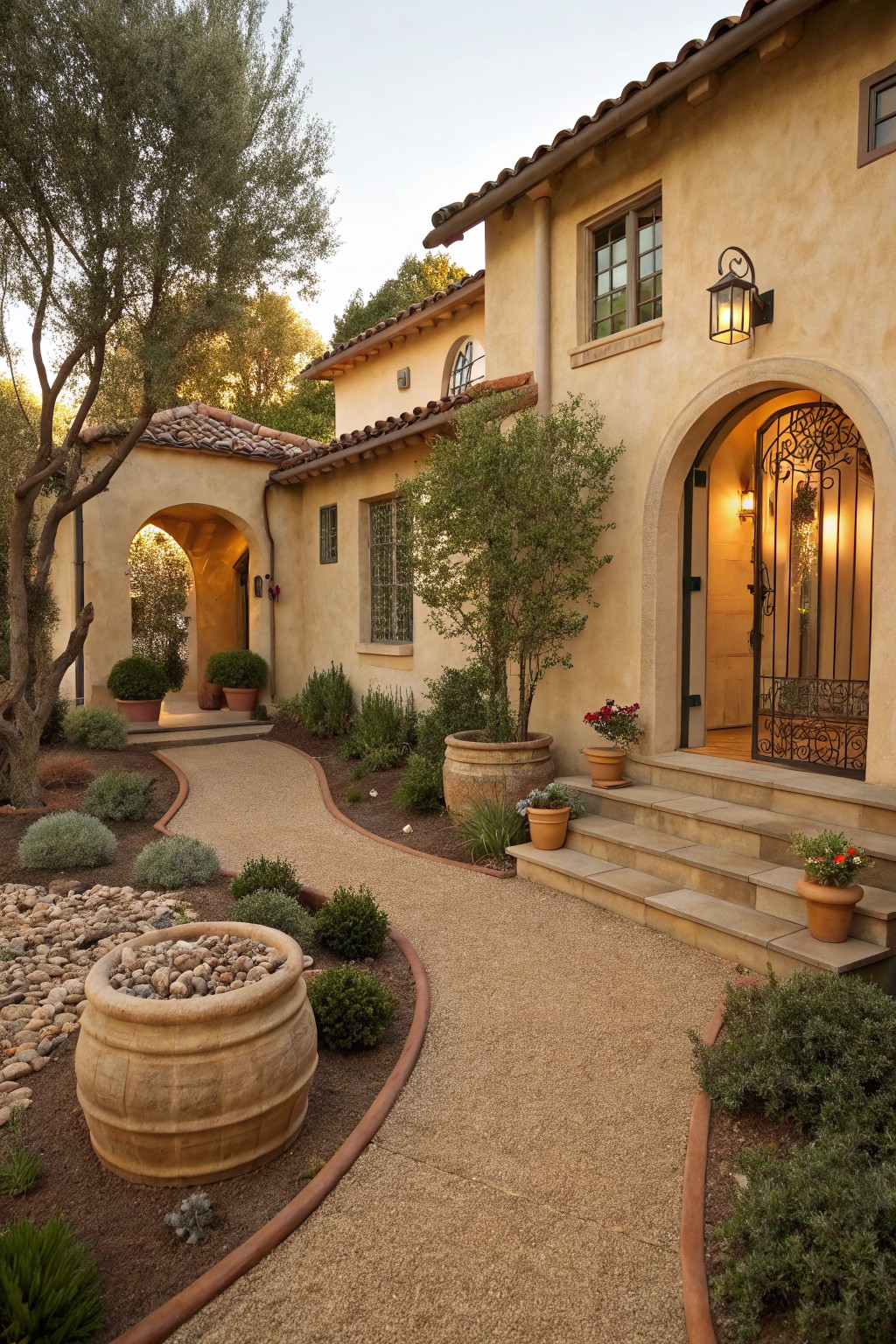
A simple winding path made from pea gravel works nicely in this front yard. It curves through low plants and edged beds, giving the ground some texture without much upkeep. That gravel crunch underfoot draws your eye right along to the door, and it ties the plants together without looking too fussy.
You can put one like this in most any front yard that needs a soft walkway. Keep the curves gentle so it fits the space, and edge it with stone or plants to hold everything in place. It suits homes with a bit of Spanish or rustic style… just watch that it doesn’t wash out in heavy rain without good drainage.
Stepping Stone Path in Pea Gravel
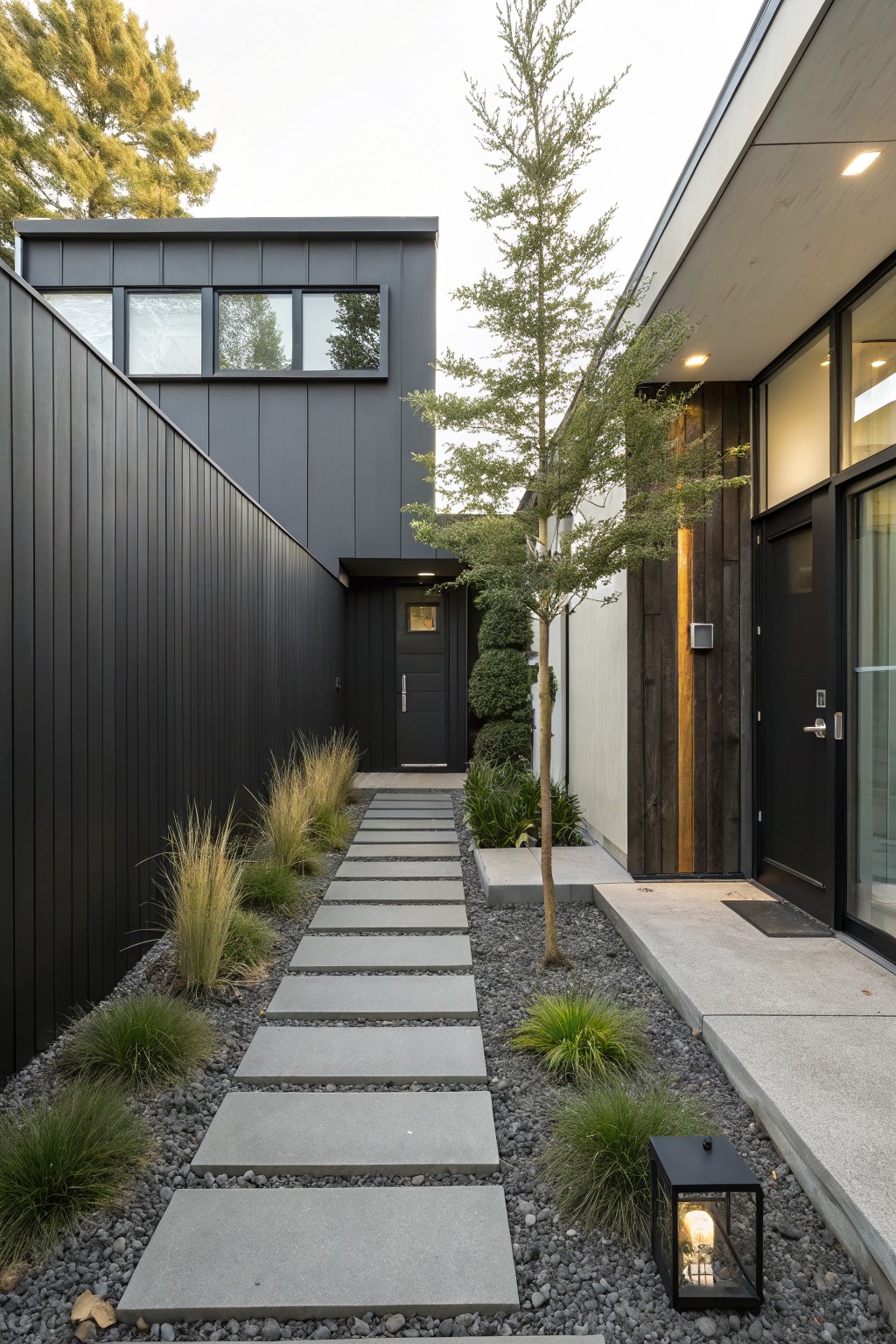
One straightforward way to add texture to a front yard walkway is setting large concrete stepping stones into a bed of pea gravel. It keeps things simple and modern. The gravel fills the gaps nicely, giving a soft crunch underfoot while the stones make a clear path to the door. Grasses tucked along the edges add some height without much fuss.
This setup works best in narrow side yards or entry paths where you want low upkeep. It suits homes with clean lines, like midcentury or contemporary styles. Just make sure the gravel drains well so it doesn’t shift in rain. A lantern light at the end helps it feel welcoming at night.
Rustic Stone Path Filled with Pea Gravel
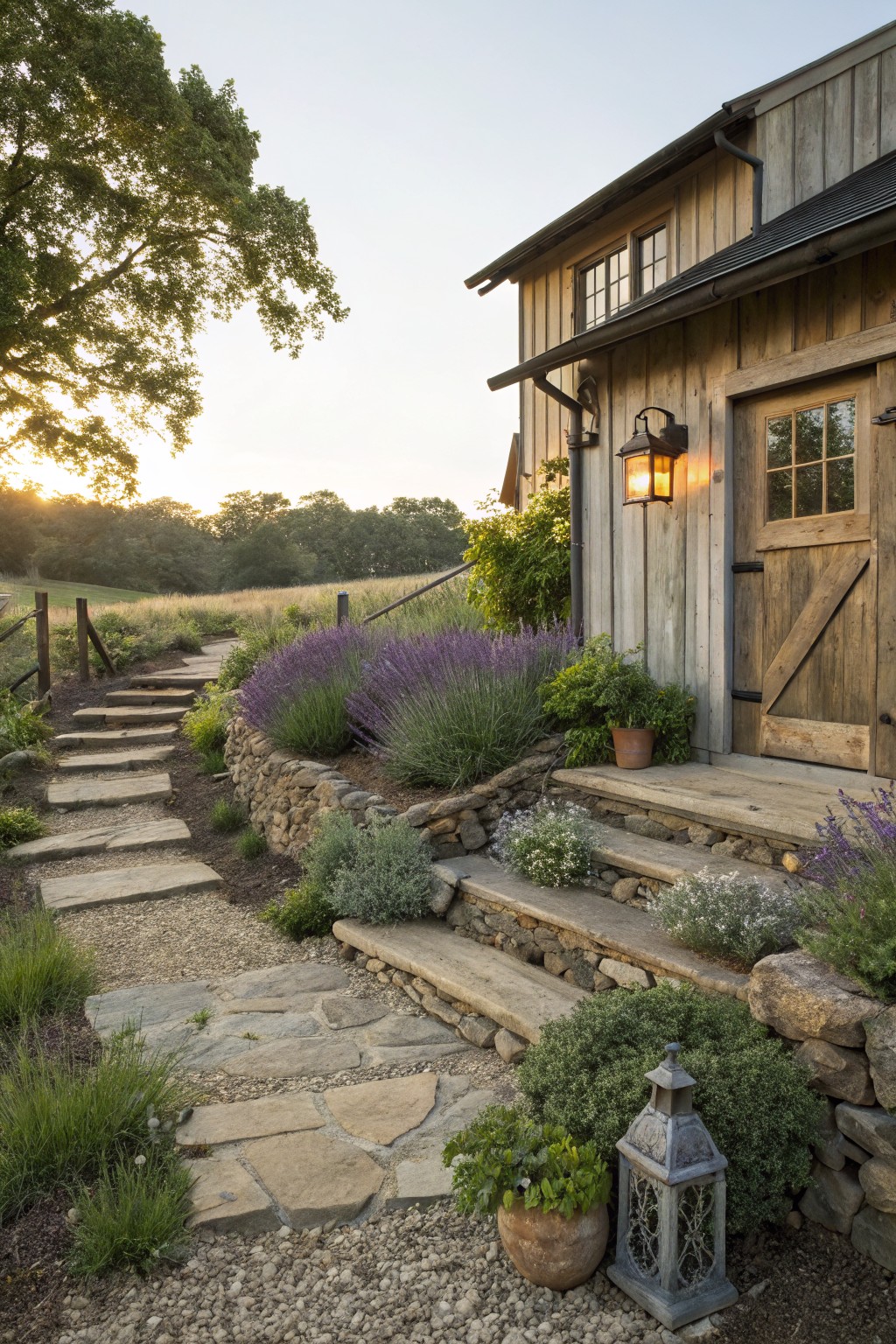
One straightforward way to add texture to a front yard is setting large, irregular stone slabs into pea gravel for the main path. It creates that nice crunch underfoot and keeps things from looking too manicured. Here, the gravel fills the gaps perfectly around the stones, and low plants like lavender tuck right in along the edges without much fuss.
This setup works best on a gentle slope leading up to your entry, like steps to a porch. It suits casual homes with wood siding or stone details, and the gravel drains fast after rain while holding back weeds. Just make sure to edge it with something sturdy, or the stones might shift over time.
Pea Gravel Borders Around Curved Paths
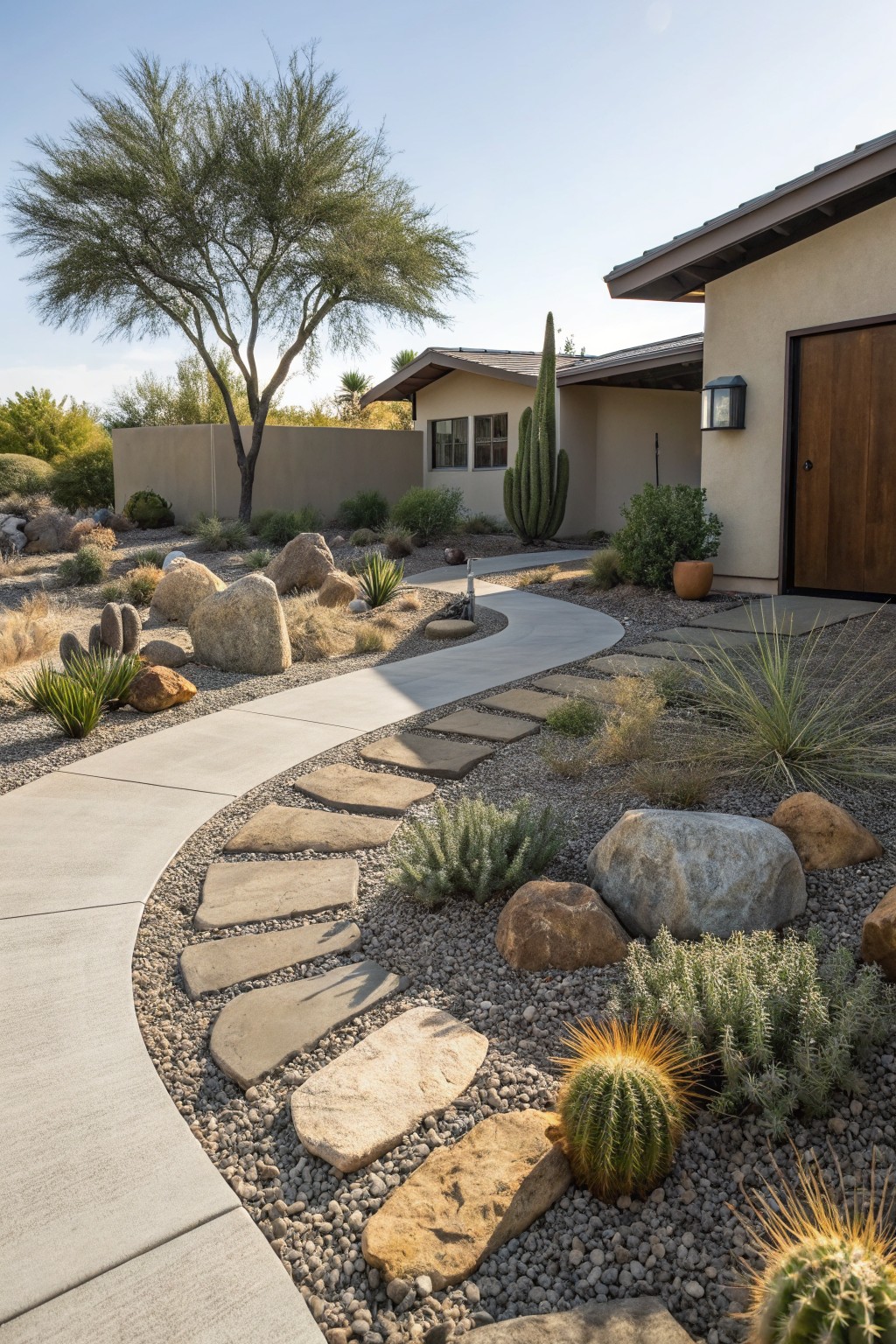
Pea gravel adds nice texture when you border a curved path like this one. The small rounded stones fill in around concrete walks and rough-cut stone steps, creating a smooth flow that pulls your eye toward the house. Mix in a few big boulders and desert plants, and it all feels natural, not fussy.
This idea fits best in dry front yards where low-water landscaping makes sense. Start with your path shape, edge it with gravel two or three inches deep, then tuck in succulents or cacti. Watch the gravel doesn’t wash away in heavy rain… a edging stone helps.
Wide Stepping Stones in Pea Gravel
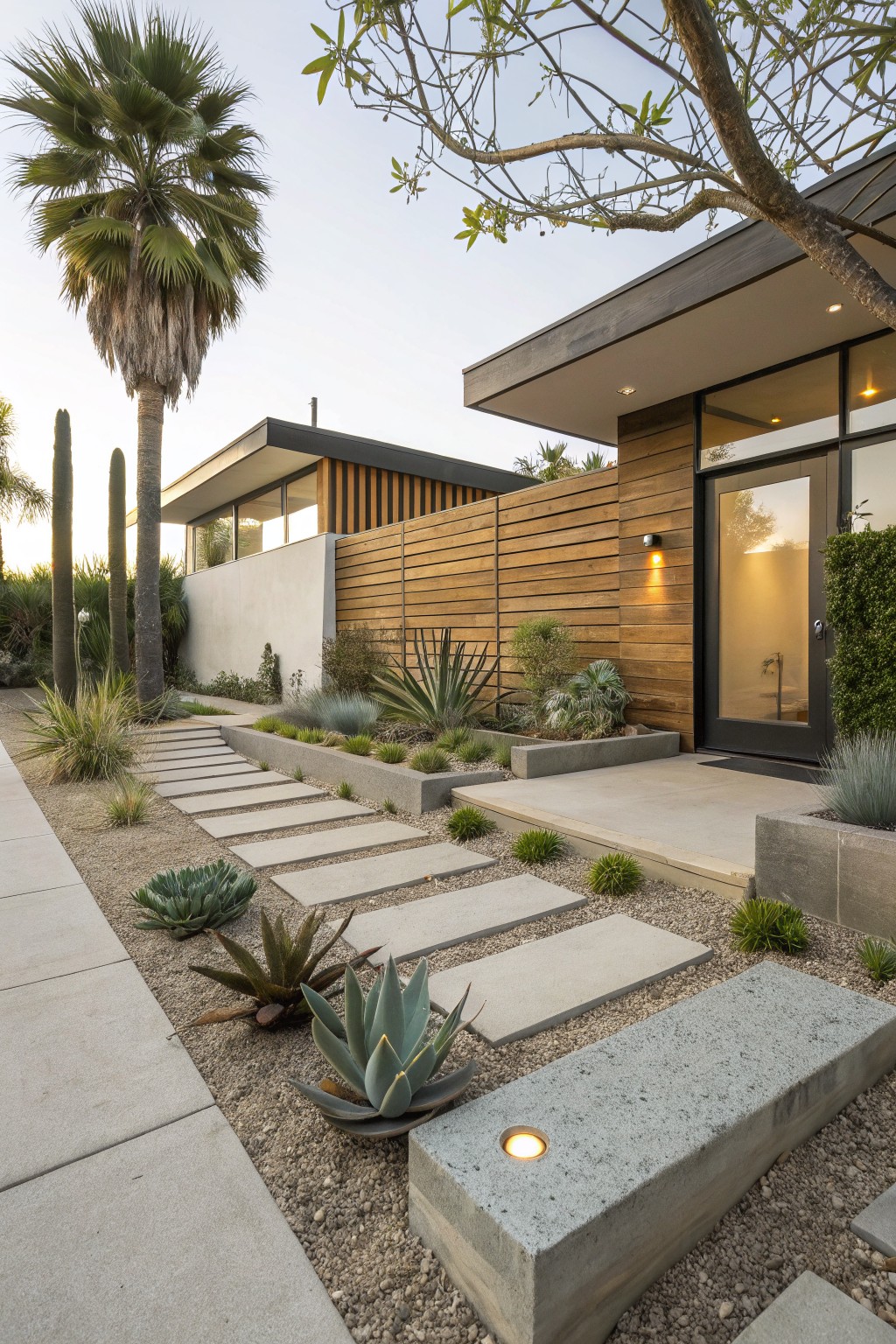
One straightforward way to handle a front entry path is setting wide concrete stepping stones right into pea gravel. The gravel fills the gaps and spills around the edges, giving the whole walkway a loose, textured feel. Tucked-in agaves and smaller succulents add some green without needing constant care. It keeps things clean and modern, especially heading up to a simple door like this.
This works best in sunny, dry yards where low-water plants thrive. Lay the stones far enough apart for the gravel to show, maybe two feet or so. It’s perfect for midcentury-style homes or anywhere you want a path that doesn’t demand mowing or edging every week. Watch the drainage though, gravel can shift in heavy rain.
Pea Gravel Path Through the Garden
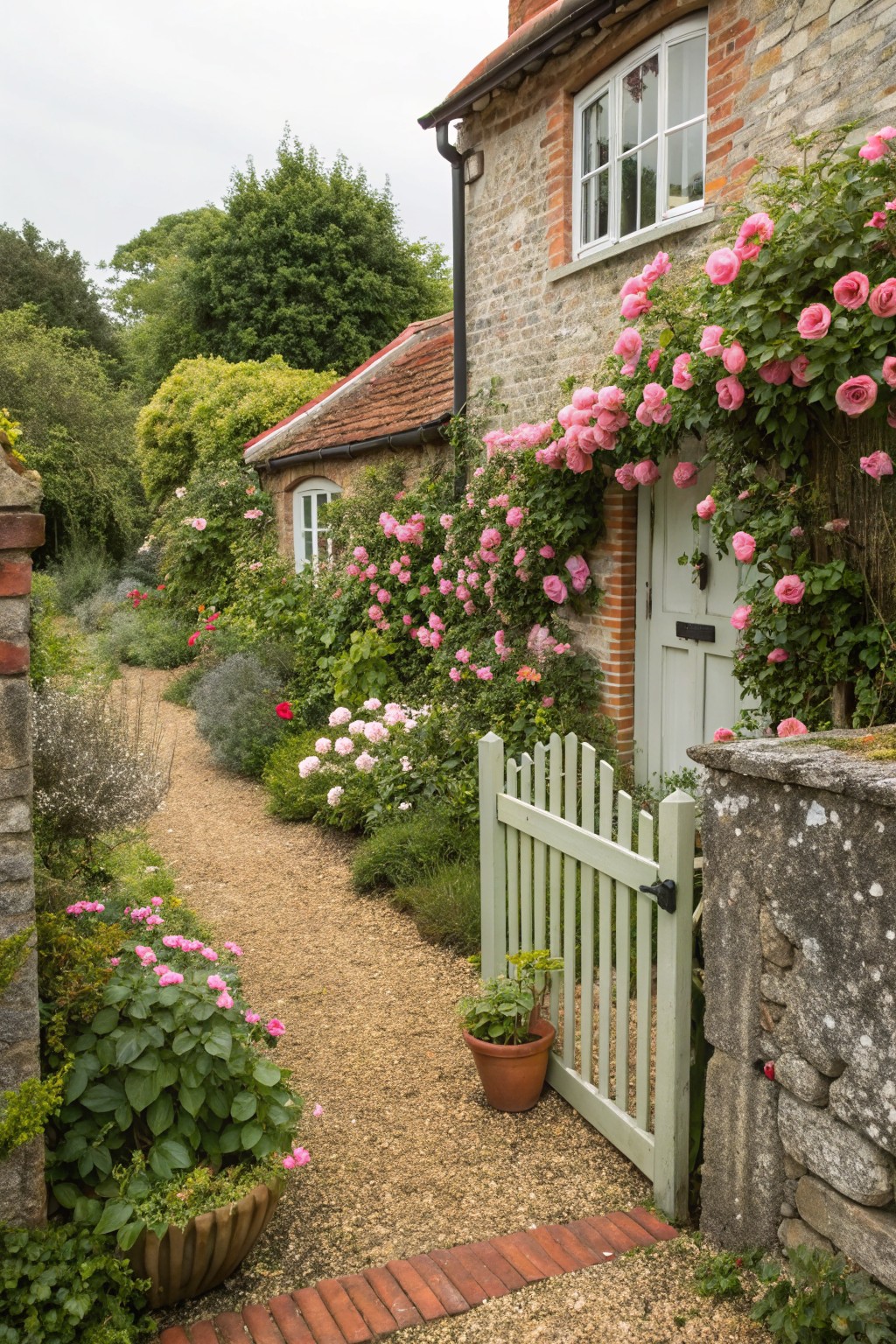
A pea gravel path like this winds gently from the street to the garden gate. It adds a nice crunch underfoot and lets you tuck in plants along the edges without much fuss. The loose stones give texture that softer dirt paths can’t match, and they handle rain well without turning to mud.
Try this in a smaller front yard where you want to guide folks right to the door. It suits older homes with stone walls or brickwork. Just edge it with low stones or plants to keep the gravel in place, and refresh the stones every few years.
Pea Gravel and Boulder Borders Around Paths
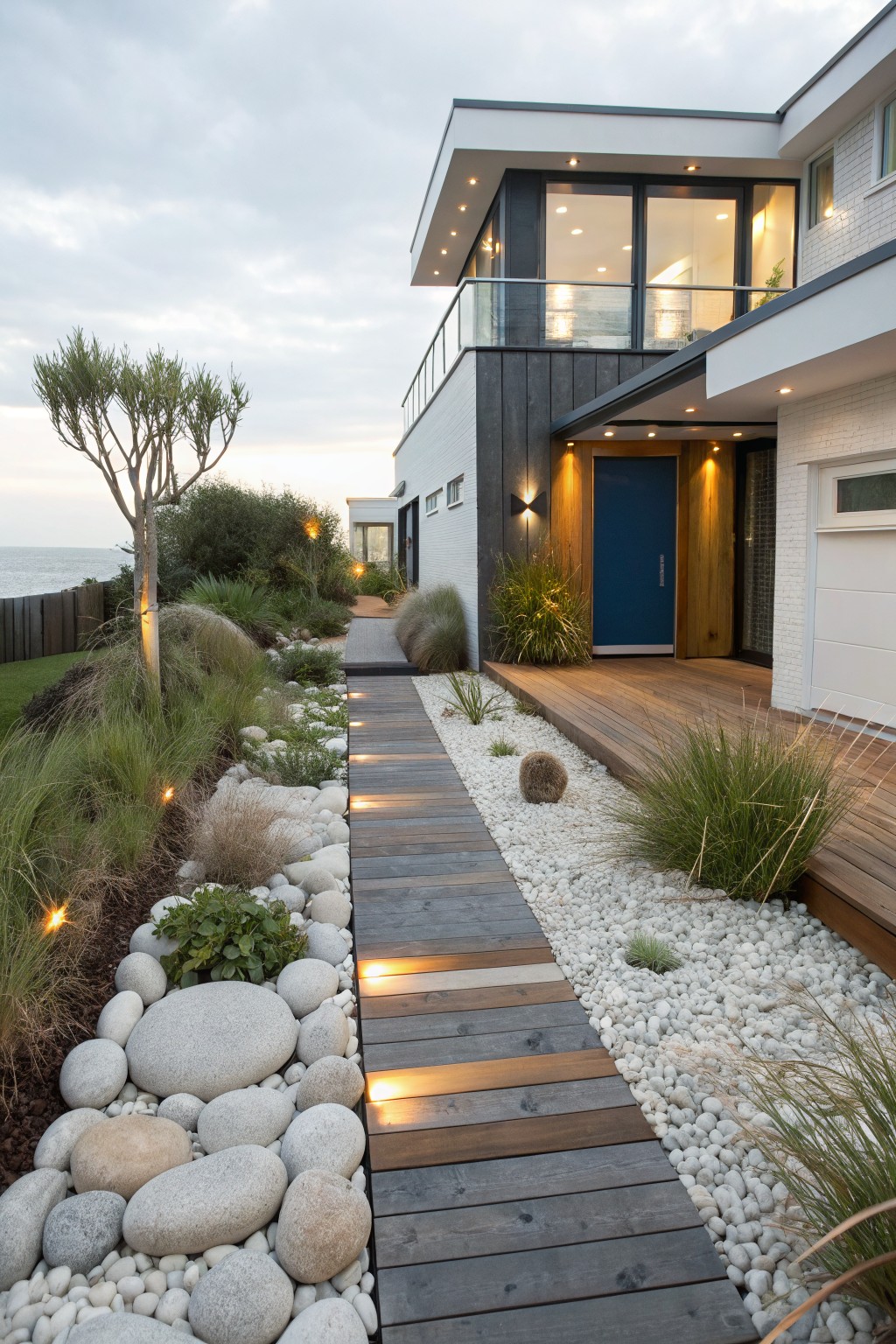
Pea gravel shines when you pair it with larger boulders to frame a simple front path. The tiny stones create a soft, textured base that contrasts nicely with the smooth, rounded boulders. It keeps things low-maintenance while adding visual interest that draws the eye right to the entry.
This setup fits modern homes with clean lines, especially near the coast where drought-tolerant plants thrive. Lay gravel two inches deep in beds along your walkway, drop in a few big boulders for punch, and edge with grasses. One thing to watch: good drainage prevents pooling after rain.
Pea Gravel Stepping Stone Path
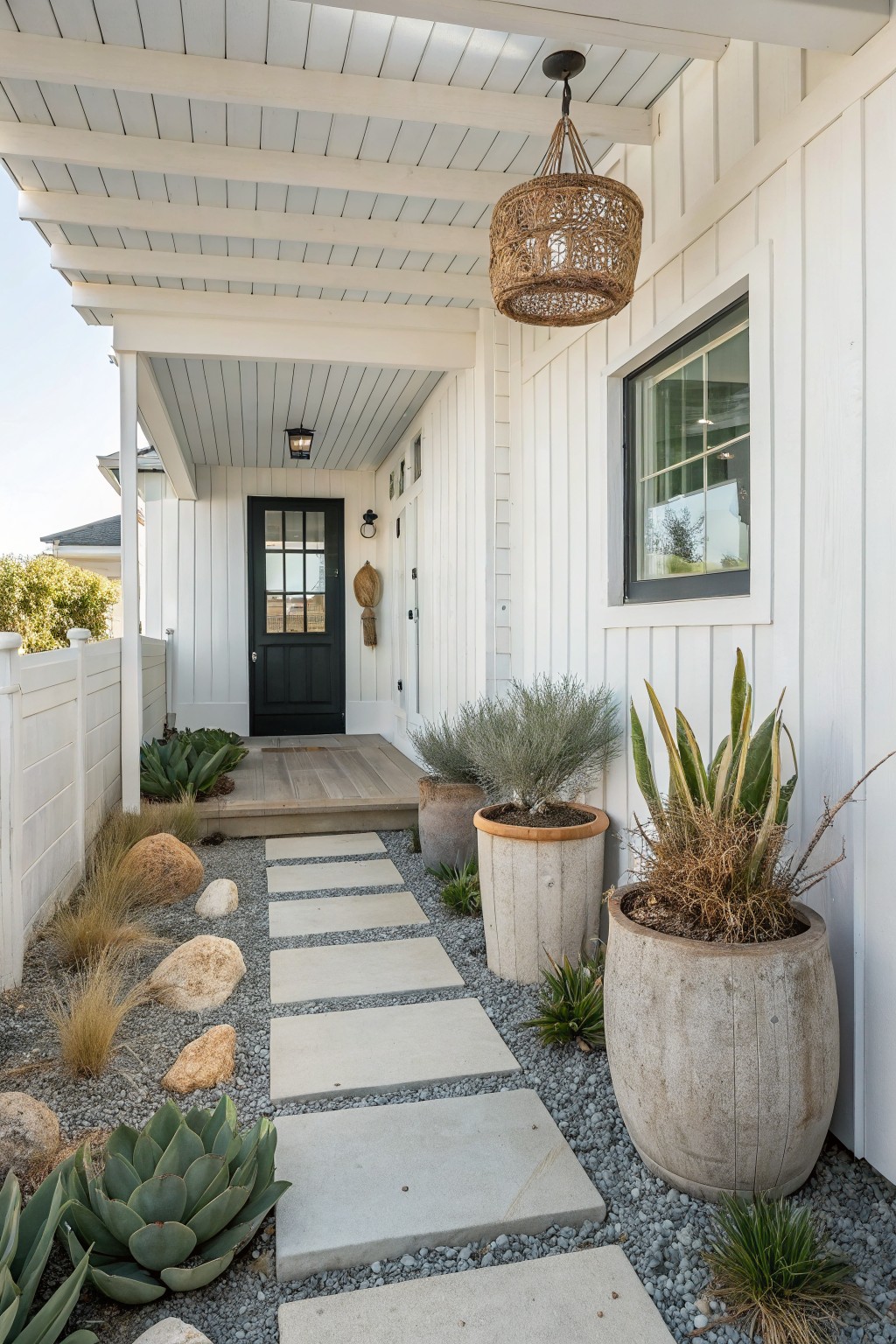
A simple way to guide people to your front door is with large square pavers set right into pea gravel. The gravel fills the gaps and spills around the edges, giving the path some natural texture without much upkeep. Succulents and agaves tucked in nearby make it feel planted but easygoing.
This works best in sunny front yards where you want low water use. Lay the stones loose at first to get the spacing right, then fill with gravel for drainage. It suits coastal or modern farmhouse homes… just keep the plants trimmed back from the walk.
Pea Gravel Pathways with Stepping Stones
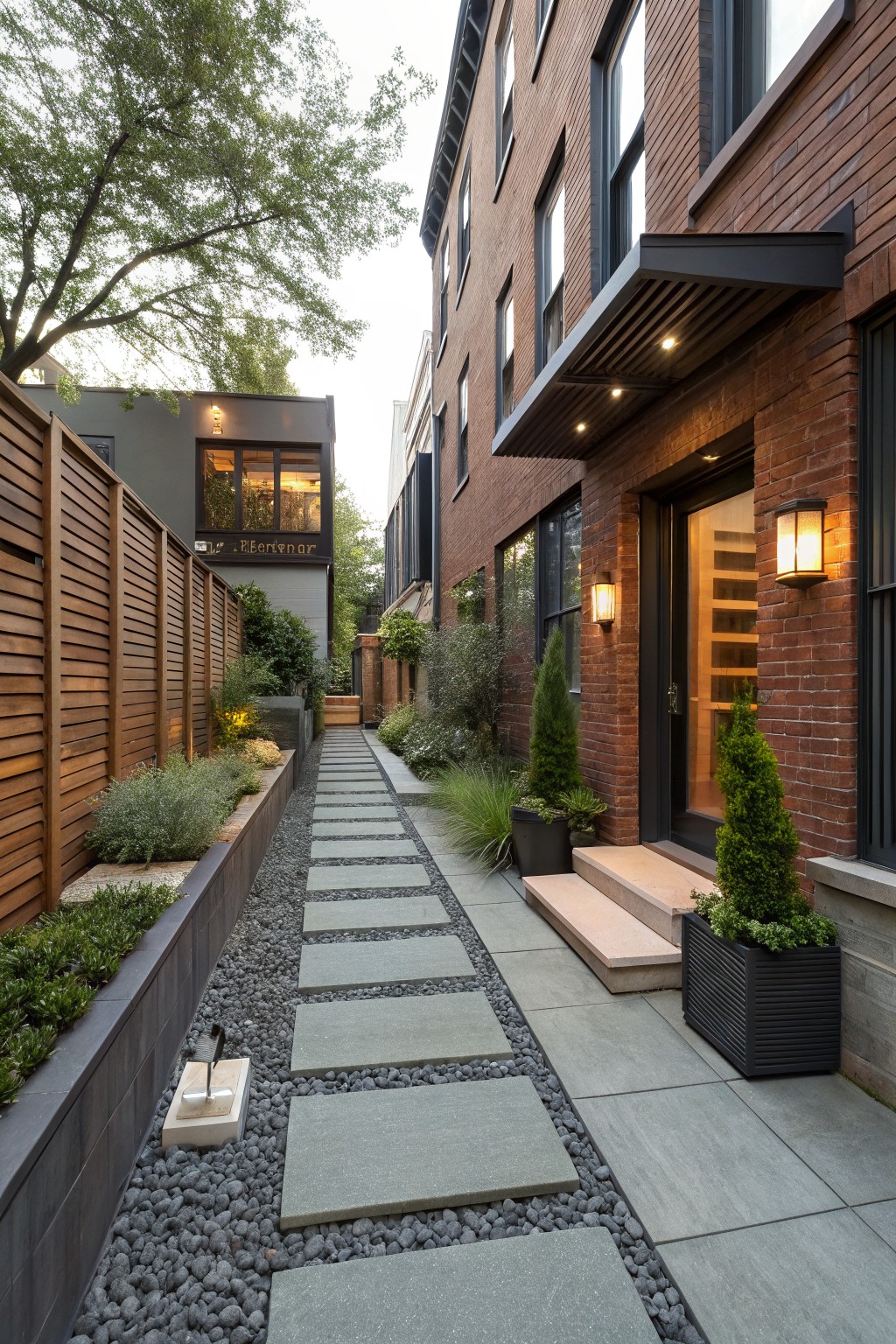
A simple way to add texture to a front yard is laying large stepping stones in pea gravel. The gravel fills the gaps and softens the path, while the stones give sure footing. It works well in narrow spots like this side entry, where plants along the edges keep it from feeling stark. That loose gravel look ties right into the yard without much upkeep.
Set these paths where you need to guide people to the door, especially in tight urban lots or along house sides. Use bigger stones for longer strides, and border with low plants or walls to contain the gravel. Just make sure the base drains well, or it can get mushy after rain.
Pea Gravel Paths on Sloped Front Yards
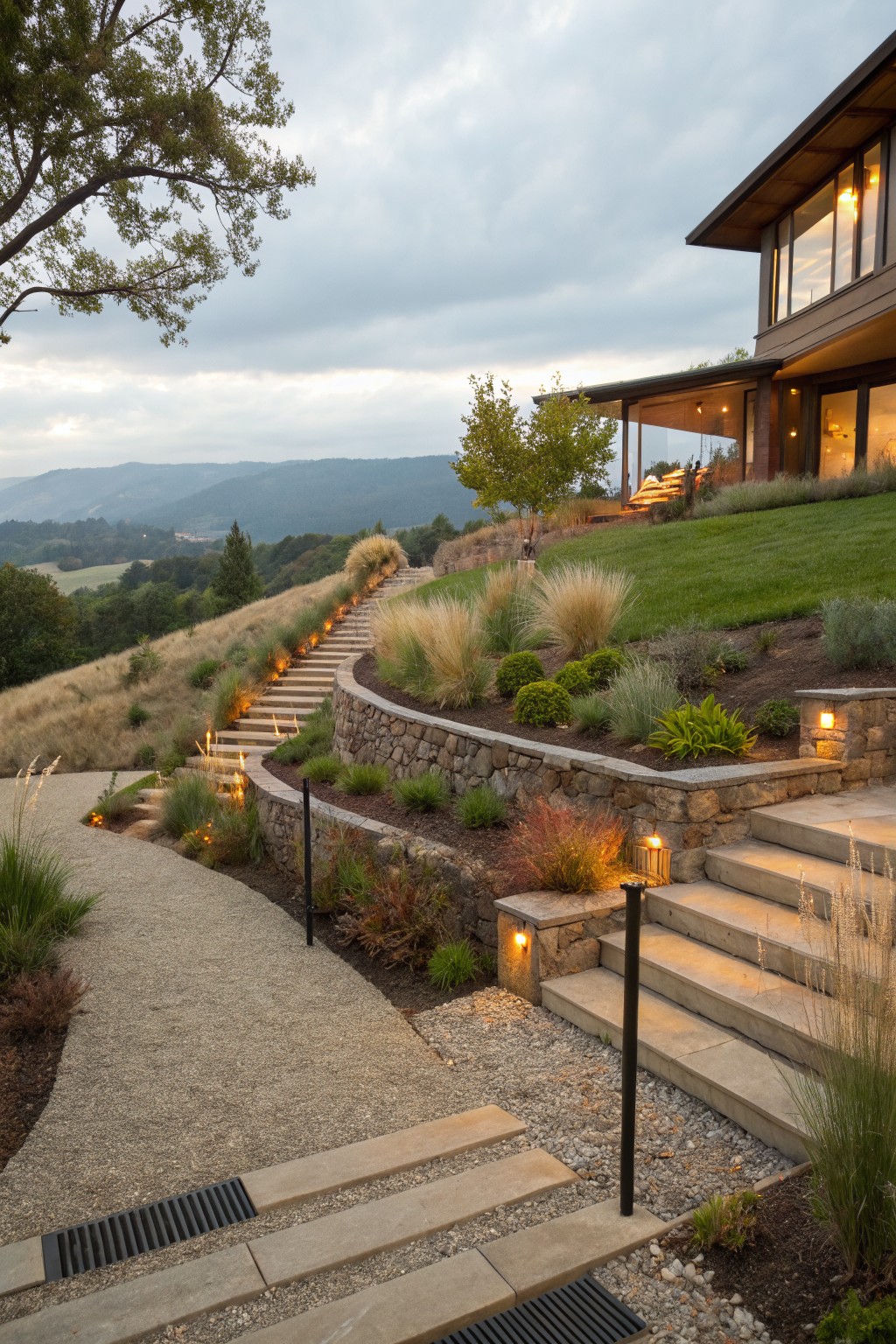
Pea gravel makes a smart choice for paths on sloped front yards. It adds that nice crunch underfoot and a bit of texture that stone stairs alone can’t match. In this setup, the gravel winds gently alongside wide stone steps, helping guide you up without feeling too rigid. The grasses and low plants tucked in keep it all looking natural and not overdone.
You can pull this off in yards with some rise, especially where you want low upkeep. Lay the gravel two inches deep over landscape fabric, edge it with metal or stone to hold the shape, and add simple path lights for evenings. It fits homes with a modern or rustic vibe, but watch the drainage so water doesn’t wash it away on steeper spots.
Formal Box Hedges with Pea Gravel Paths
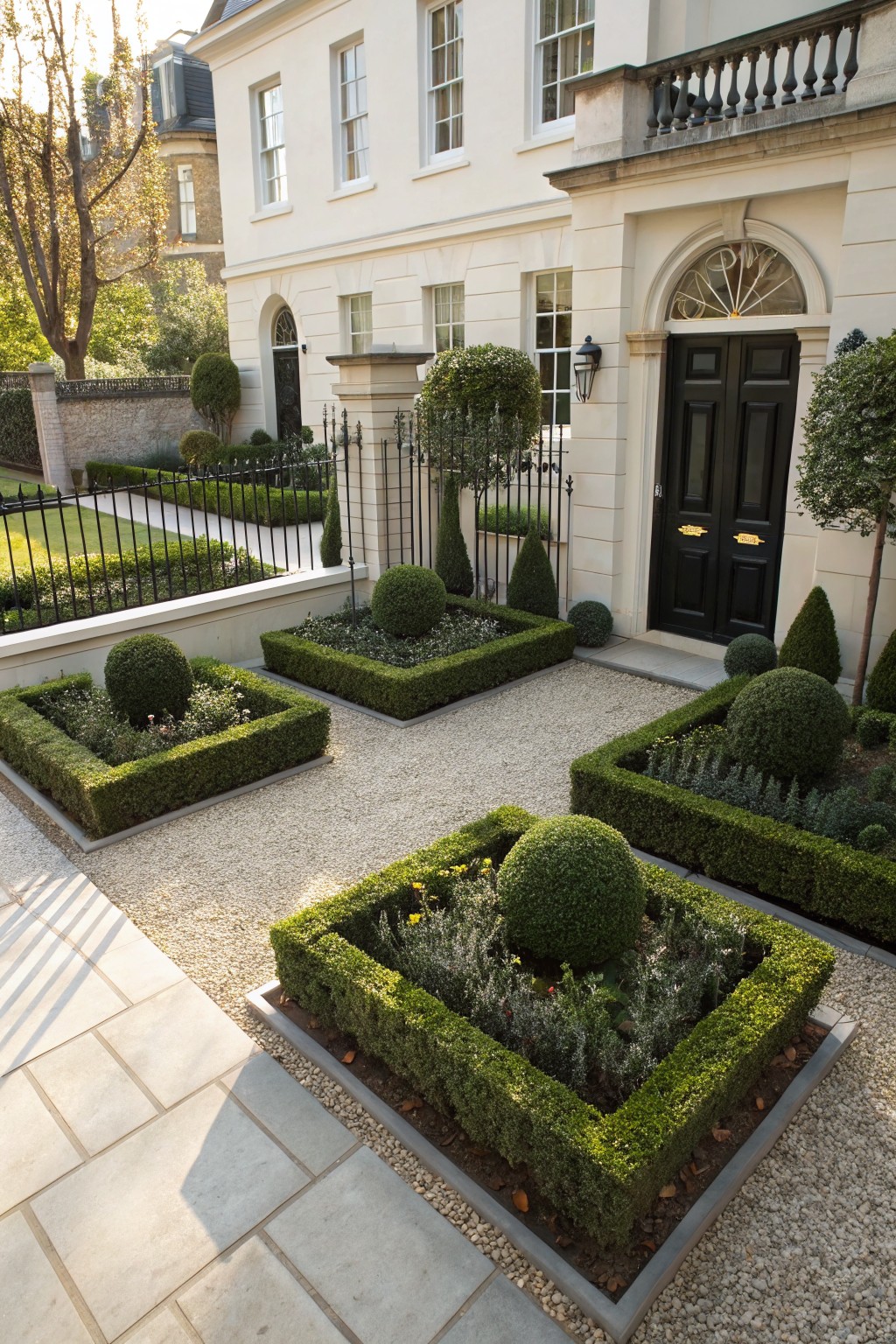
One simple way to give your front yard a polished look is box hedges arranged in neat squares around gravel paths. The light pea gravel fills the walkways and surrounds the beds, adding a soft crunch underfoot while keeping everything crisp and contained. It works because the gravel’s texture contrasts nicely with the tight green hedges, without needing much upkeep.
This setup suits classic homes or entry courtyards where you want low-maintenance elegance. Lay gravel over landscape fabric for paths two feet wide, plant dwarf boxwoods for the edges, and tuck in a few perennials inside. Keep it to smaller areas near the door… it can overwhelm big lawns.
Winding Pea Gravel Path to the Porch
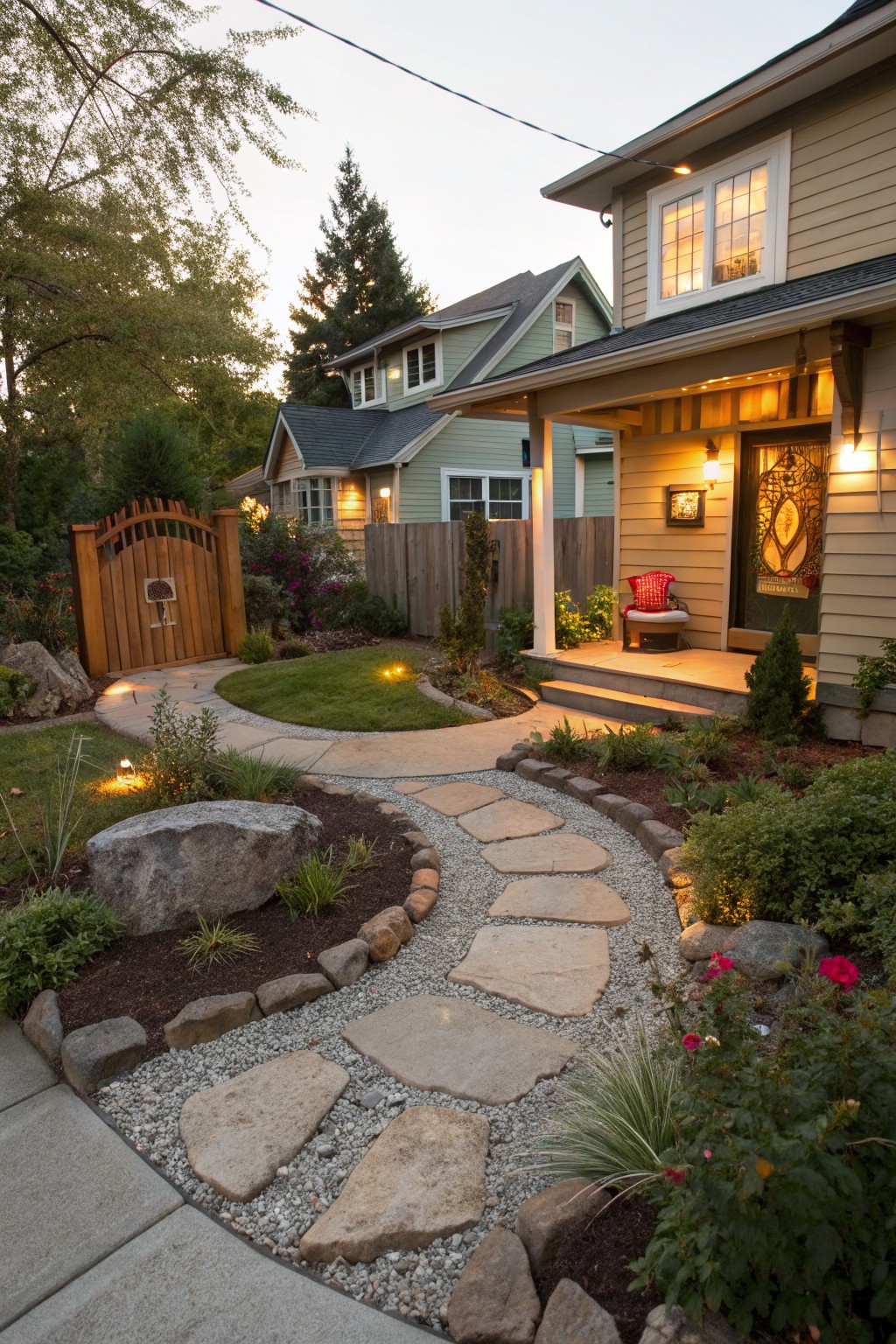
A winding path like this one makes getting to your front door feel more like a stroll through a garden. Pea gravel fills in around the flat stepping stones, giving the whole walkway a soft, textured look that fits right in with the plants and rocks along the edges. It’s casual but put together, and the curve keeps it from looking like just another straight sidewalk.
You can pull this off in most front yards, especially if you have some slope or want to guide folks naturally to the entry. Lay down landscape fabric first, add a couple inches of gravel, set the stones, and border with bigger rocks to keep everything neat. Works best on smaller lots or craftsman-style homes… just refresh the gravel every year or so to stay sharp.
Pea Gravel Walkway with Stepping Stones
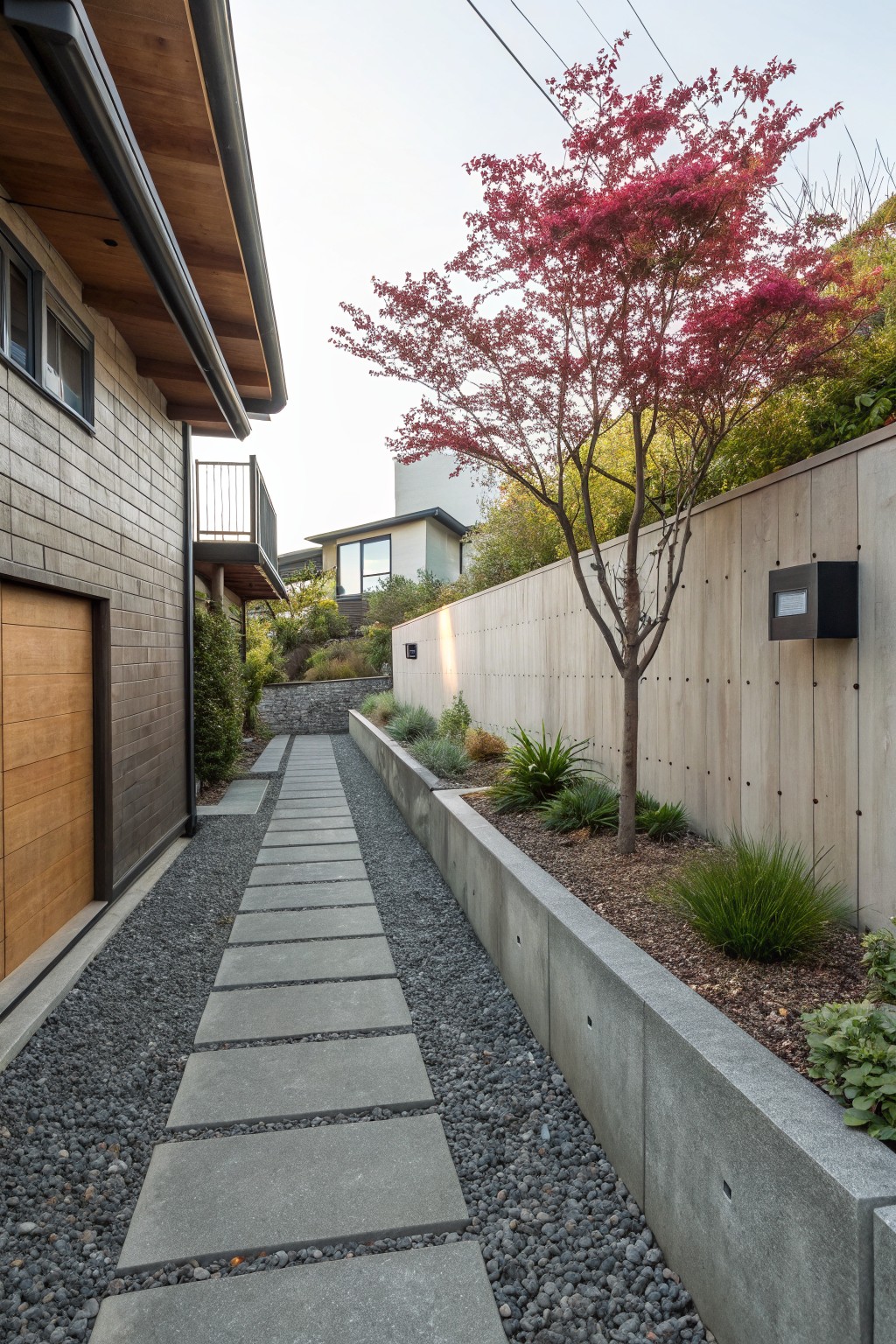
One straightforward way to handle a side yard path is to set large concrete stepping stones into pea gravel. The gravel adds that subtle crunch underfoot and lets water drain right through. It keeps the look clean without a lot of weeding, and those wide slabs make it easy to walk even when carrying groceries.
This setup works best along narrow spots next to a garage or fence, like here with the low concrete walls holding back simple grasses. Use it on sloped lots too, since the gravel stays put. Just make sure the pavers are thick enough so they don’t shift over time.
Pea Gravel for Walkway Texture
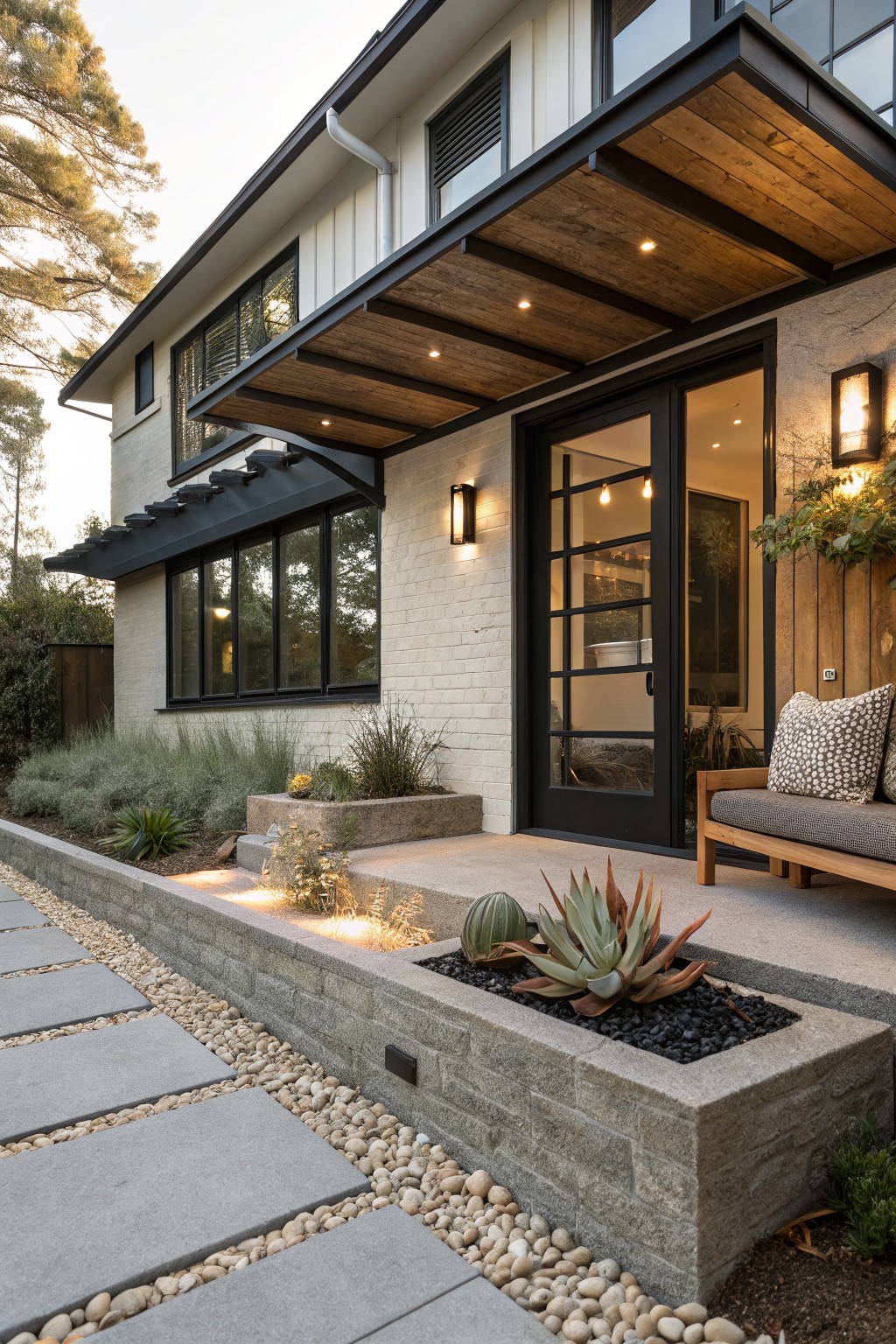
One easy way to give front yard paths some texture is filling gaps around large concrete pavers with pea gravel. The smooth slabs make a clean path to the door. The gravel in between adds that subtle crunch underfoot. It keeps things low-maintenance too. No mud tracking in after rain.
This setup suits modern homes with simple lines. Lay pavers with a few inches between each one. Pour in pea gravel and rake it level. Plant succulents or grasses along the edge for more life. It works on slopes or flat yards. Just refresh the gravel every couple years.
Paver Path in a Pea Gravel Yard
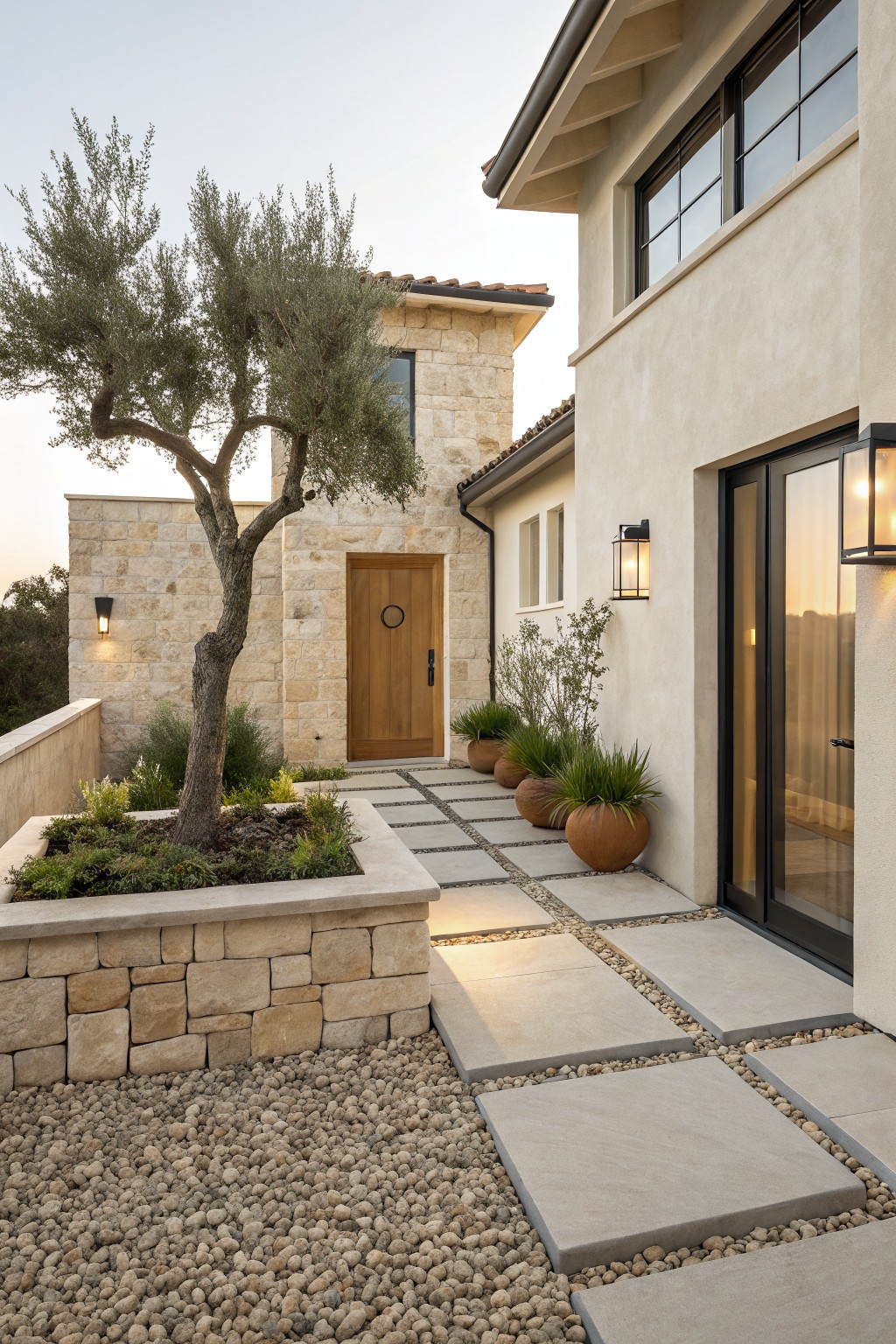
Large pavers laid right into pea gravel make a straightforward walkway that leads straight to the front door. The gravel fills everything around them, giving the yard some texture without needing turf or mulch everywhere. It keeps things simple and lets the house architecture stand out, like with the stone walls and olive tree nearby.
This works well in front yards that get full sun or stay dry. Use it where you want low upkeep, maybe on a slope or flat lot near a stucco house. Set the pavers firm so they don’t shift, and line the edges with stone to hold the gravel back. Throw in a few pots along the way for color.
Timber-Edged Pea Gravel Beds for Coastal Texture
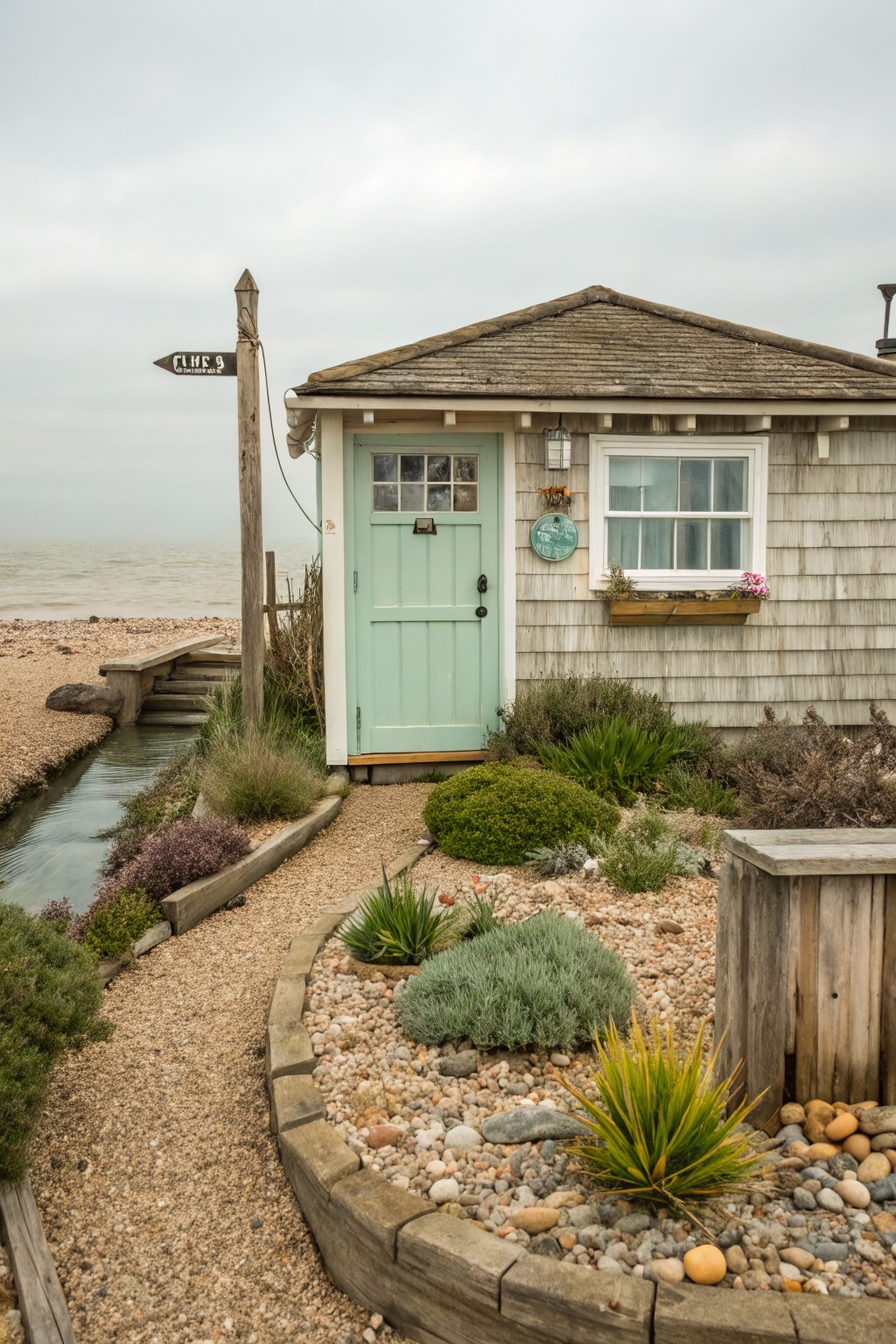
Pea gravel works great in front yards when you edge the beds with rough wood rounds or timbers. It gives that nice crunch underfoot and holds up well in sandy or beach areas. Here, the gravel fills curved borders around low plants like agaves and grasses, keeping everything neat without much upkeep. The texture from the small stones mixes with the wood’s natural look for a casual feel.
This setup suits small coastal homes or any spot with dry soil. Lay down landscape fabric first to stop weeds, then add the edging and gravel. Plant drought-tough stuff in between. Watch the gravel doesn’t wash away in heavy rain… top it up once a year.
Entry Paths with Pea Gravel Borders
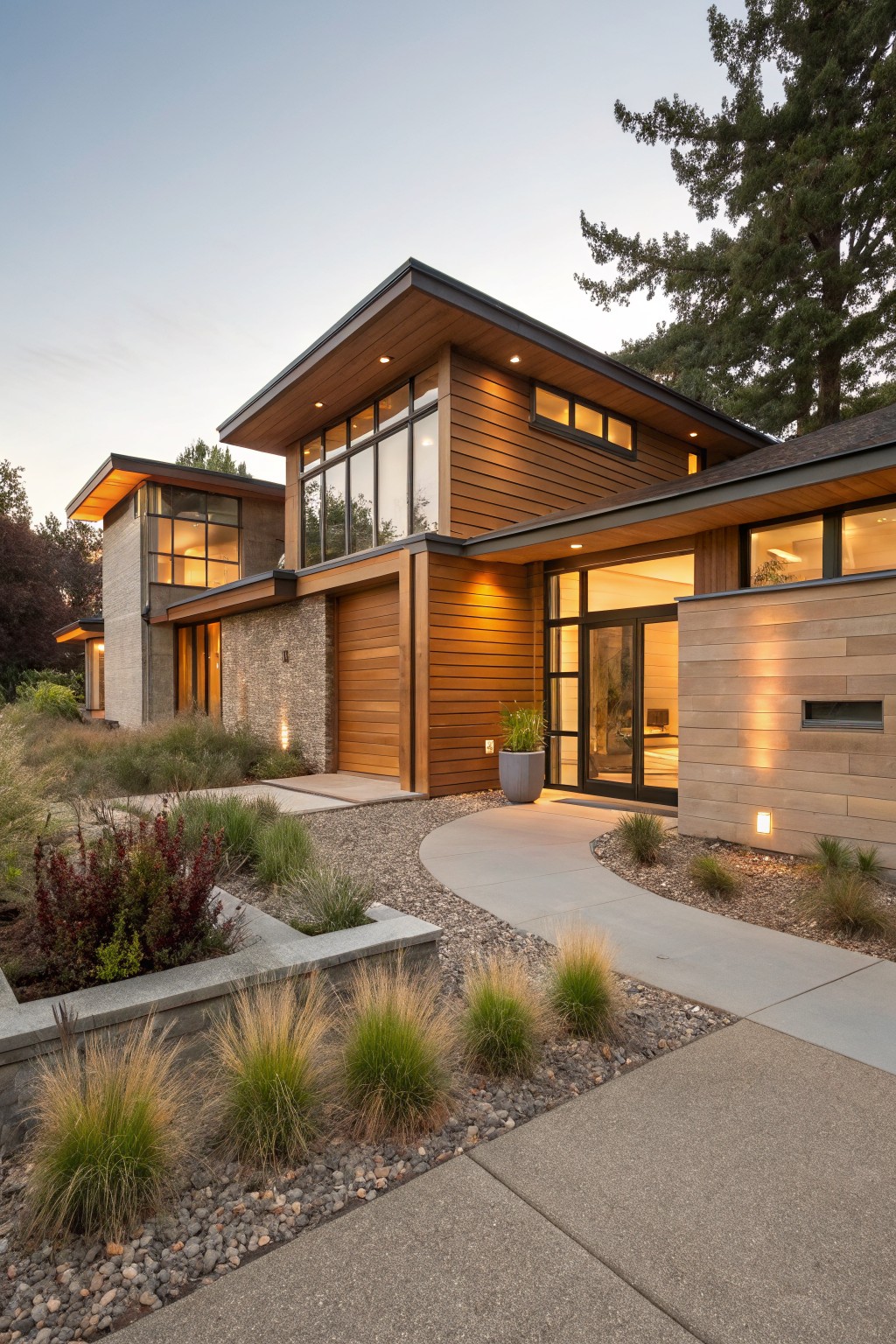
Pea gravel works great around a front entry path. It fills in the beds nicely and gives some texture without much upkeep. You see it here hugging a smooth concrete walkway, mixed with taller grasses that sway a bit. That rough pebble look contrasts the hard path and keeps things from feeling too stark.
Try this in a modern yard or anywhere with clean lines. Lay down landscape fabric first, then dump in 2 to 3 inches of gravel. Edge it with stone or metal to hold the shape. It suits sloped spots too… just watch for washout in heavy rain. Pairs well with drought-friendly plants.
Frequently Asked Questions
Q: How do I prep my yard for pea gravel without messing up the soil underneath? A: Dig out grass and weeds first, then lay down a thick layer of landscape fabric to block future growth. Tamp the soil flat so your gravel sits even. Water it lightly to settle everything before adding gravel.
Q: Does pea gravel get too hot in the summer sun? A: It warms up fast under direct sun, so mix in some stepping stones or pavers where you walk barefoot. Plant low ground covers nearby to add shade over time. That keeps your feet happy on hot days.
Q: How do I keep weeds from popping up in the pea gravel? A: Punch small holes in the landscape fabric under the gravel and spray vinegar solution on any sprouts that sneak through. Refresh the top layer of gravel every couple years to smother seeds. Top it off with mulch in high-traffic spots for extra cover.
Q: What’s the right amount of pea gravel to buy for a small front yard path? A: Measure your path length, width, and aim for 2 to 3 inches deep. Order about one cubic yard for every 100 square feet, and grab 10 percent extra for settling. Spread it by hand for that perfect texture.
