


Shady front yards test your planting choices because sunlight rarely reaches the soil, but they reward you with lush, low-fuss layers that soften the whole approach to your home.
I figured this out after my own oak tree cast gloom over the walkway, making the entry feel flat until ferns and mulch added that welcoming depth.
What draws eyes first is usually how beds curve along paths, edging them cleanly so they guide without crowding.
Build structure with hostas, hellebores, and bark paths that mature over seasons into something reliably cool.
A couple ideas here have me eyeing my yard for tweaks that stick around year after year.
Winding Stone Path Through Shade

A simple stone path like this winds gently through thick plantings in a shady spot. It uses irregular slabs set in mossy gravel, which fits right into the green without looking too formal. That path pulls your eye along, making even a narrow alley feel like a little adventure. Add a bench halfway, and you’ve got a spot to sit and enjoy the quiet.
This works great for front yards with low light or tight spaces between the house and fence. Lay the stones loose enough for plants to creep in, and pick shade lovers like hostas or ferns along the edges. Keep it to one main walkway so it doesn’t crowd the area. Just watch the drainage, since shade holds moisture.
Stepping Stone Path for Shady Front Yards

A simple stepping stone path cuts right through this shady front yard. It uses wide concrete pavers set in gravel, with low green plants along the edges. That setup keeps things open and easy to walk, even where big trees block most of the sun. Feet stay dry on the stones, and the gravel fills in without mud.
This works great for any shady spot near the house entrance. Lay the stones a boot-width apart so they feel natural to step on. Pick tough, low plants like those round shrubs that handle shade without much fuss. Skip solid grass here, it just turns thin. Good for modern homes or older ones wanting a clean look.
Winding Stone Paths in Shady Gardens
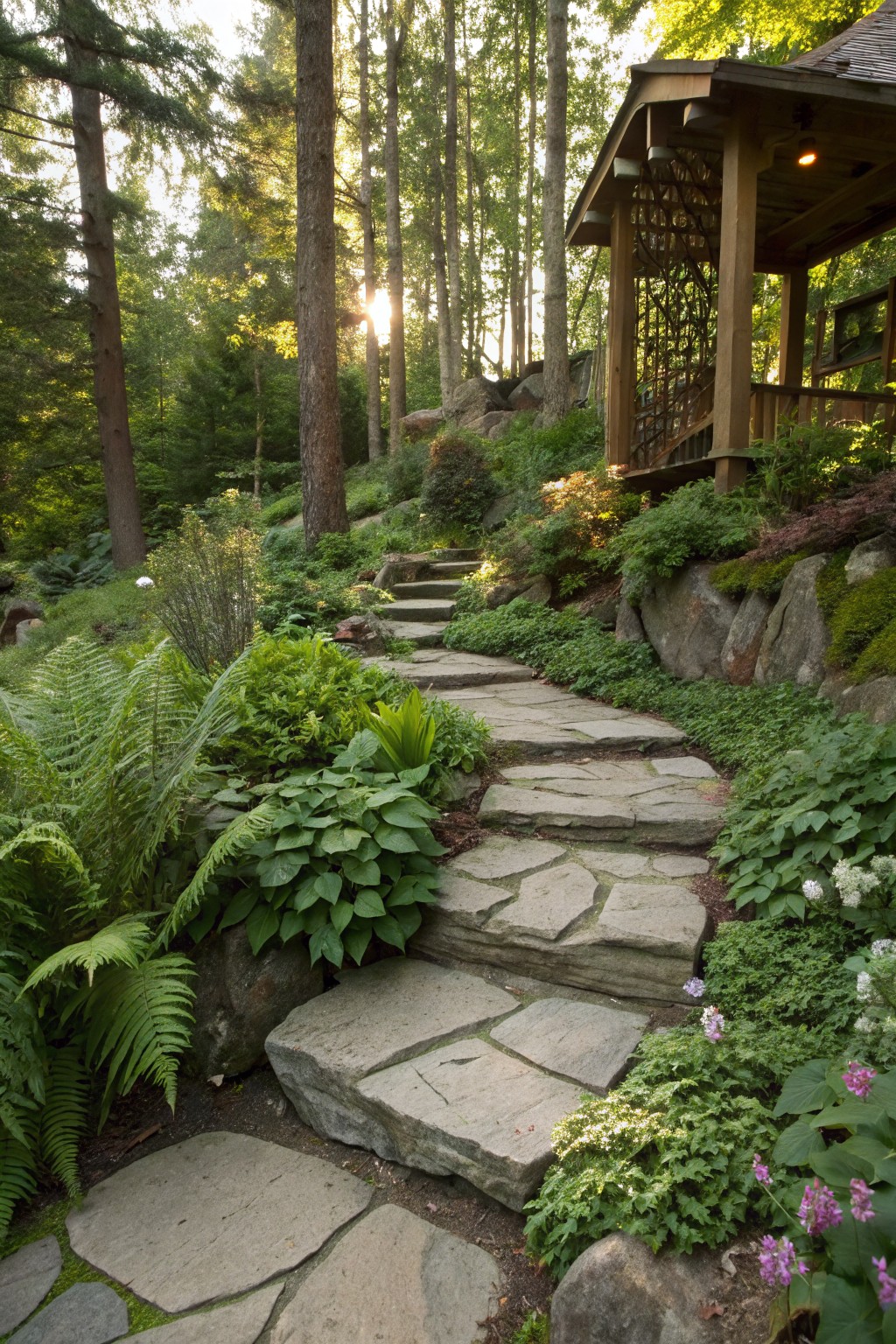
A simple winding path made from flat, irregular stones works great in shady front yards. It pulls you along without feeling forced, especially when edged with ferns, hostas, and mossy rocks. That natural curve softens the slope and makes the walk up more interesting than straight steps.
Put one in if your yard has trees or north-facing shade. It fits wooded lots or spots under big oaks. Keep stones level for safety, and plant low growers along the edges so it stays neat without much work. Just watch for slippery moss after rain.
Winding Flagstone Path Through Shade Plants
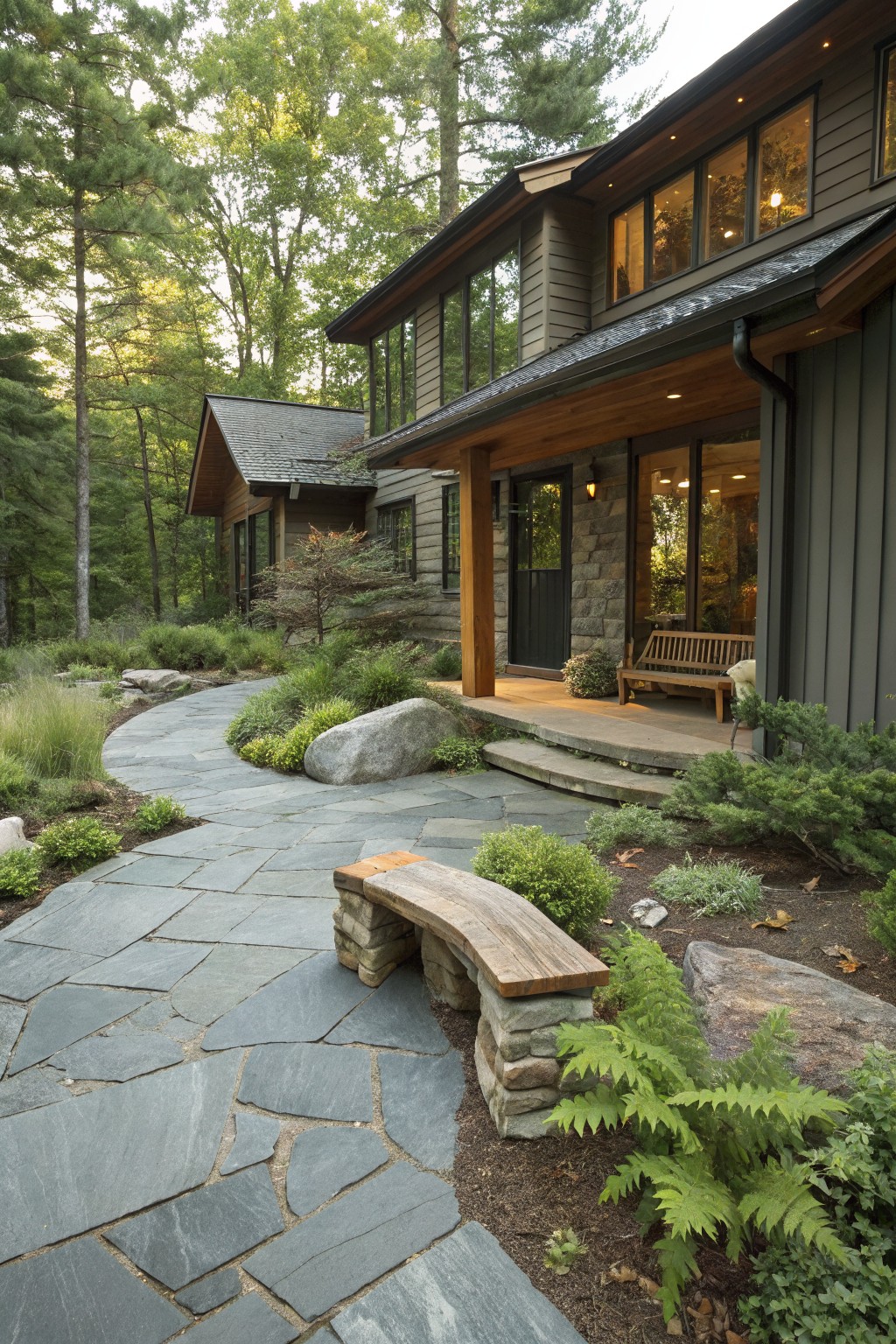
A simple winding path made from irregular gray flagstone works great in shady front yards like this wooded one. It pulls you right up to the house entry without feeling too straight or formal. Boulders and low plants along the edges keep it natural and tie into the trees around it. Folks like how it fits right into the landscape instead of fighting it.
You can lay this kind of path in spots with dappled light under big trees. Use native ferns and grasses that handle shade well, plus a few rocks for interest. Add a bench halfway for a rest spot. It suits cabin-style homes or anything tucked into the woods. Just make sure the stones are set firm so they don’t shift over time.
Vine-Draped Pergola Path
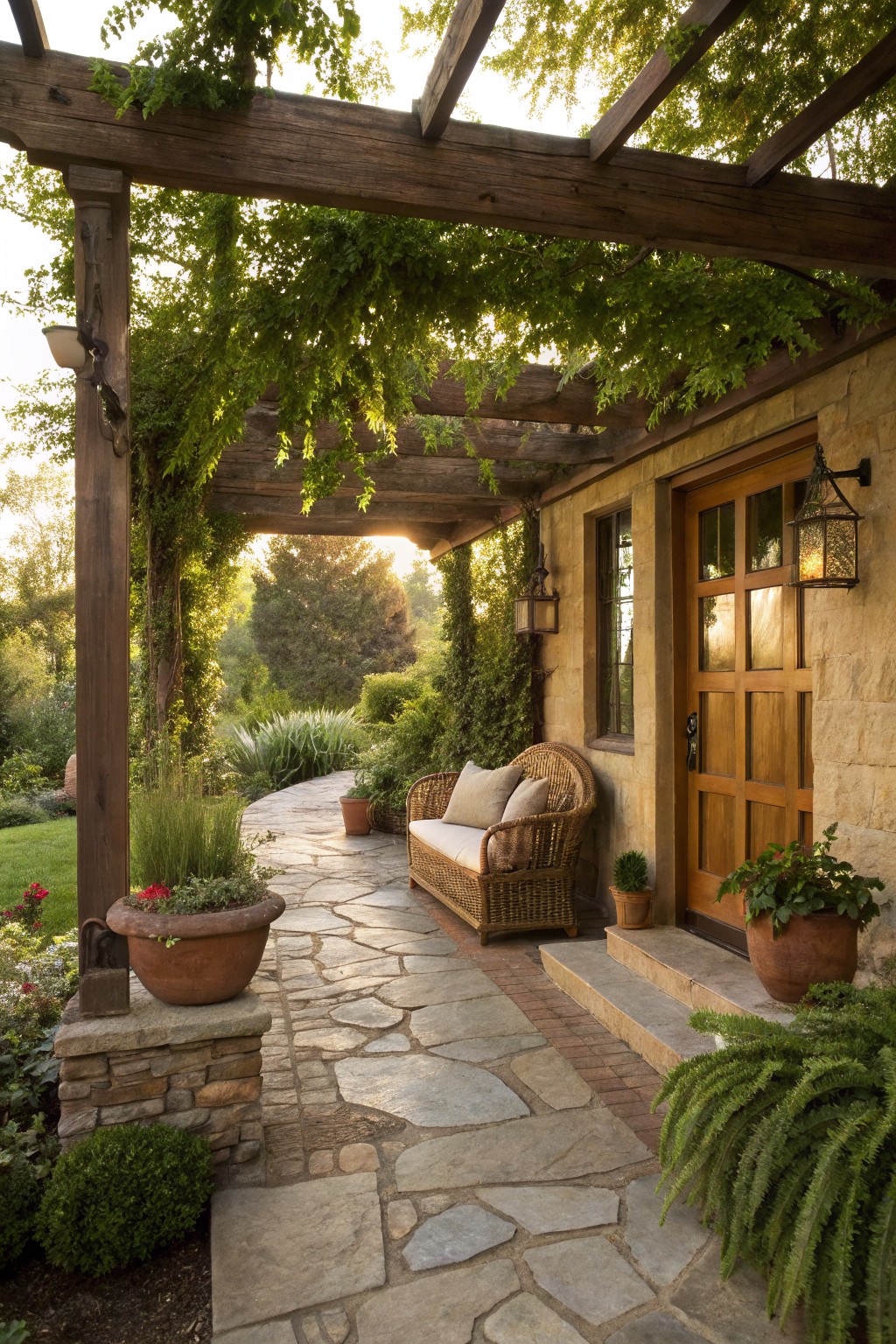
A simple pergola covered in climbing vines makes a great shady walkway right to your front door. The wood beams and thick greenery filter the light just enough to keep things cool without going dark. That winding stone path underneath pulls you along nicely, and it fits shady front yards where direct sun is already low.
Put this in spots with some natural shade from trees or the house itself. Use sturdy posts and let vines like grape or jasmine take over for low upkeep. Add a bench near the door for sitting, plus a few pots with flowers. It works on most homes, especially ones with stone or stucco, but keep the path wide enough to walk comfortably.
Formal Boxwood Path to the Entry
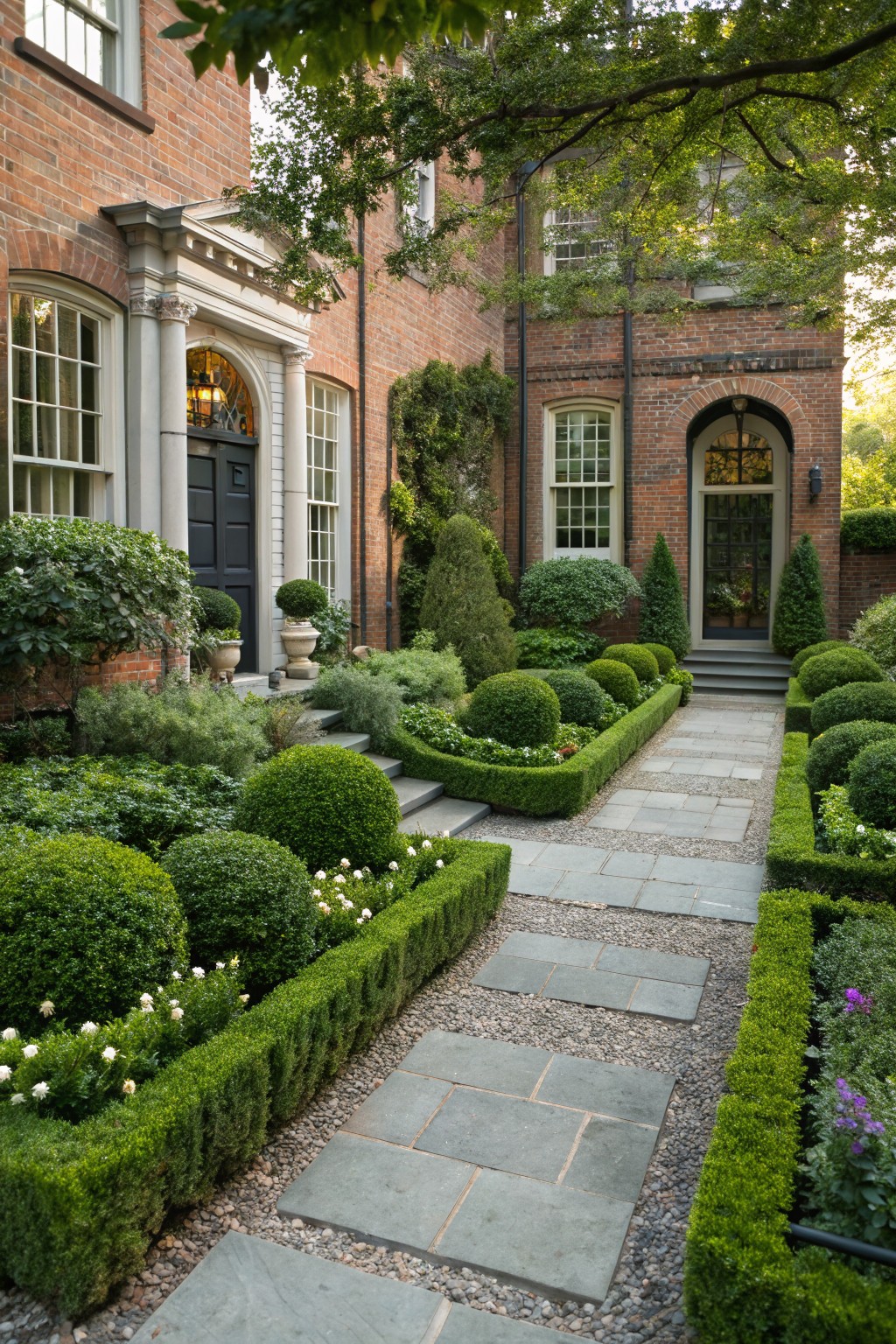
A simple stone path edged with round-clipped boxwoods leads straight to the front door. This layout feels tidy and pulls the eye forward without much fuss. Boxwoods handle shade well and stay green year-round, so the front yard always looks put-together.
Try this on a narrow shady spot next to the house. Keep the hedges knee-high for easy trimming, and fill path edges with gravel to let water drain. It suits brick homes or townhouses where you want some structure but not too much color.
Meandering Stone Paths Through Shade Gardens

A simple winding stone path can really open up a shady front yard. Here it curves gently through beds of low plants and flowers, pulling your eye toward the house without feeling too straight or formal. The rough flagstones blend with the greenery, and it makes even a dim spot feel alive and easy to walk through.
This idea suits tree-filled yards or areas under overhangs where grass struggles. Lay irregular stones in a loose pattern for drainage, then edge with tough shade plants like ferns, astilbe, or those pink flower clusters you see. It stays neat without much work, and leads nicely to a patio or door.
Winding Gravel Paths in Shady Yards
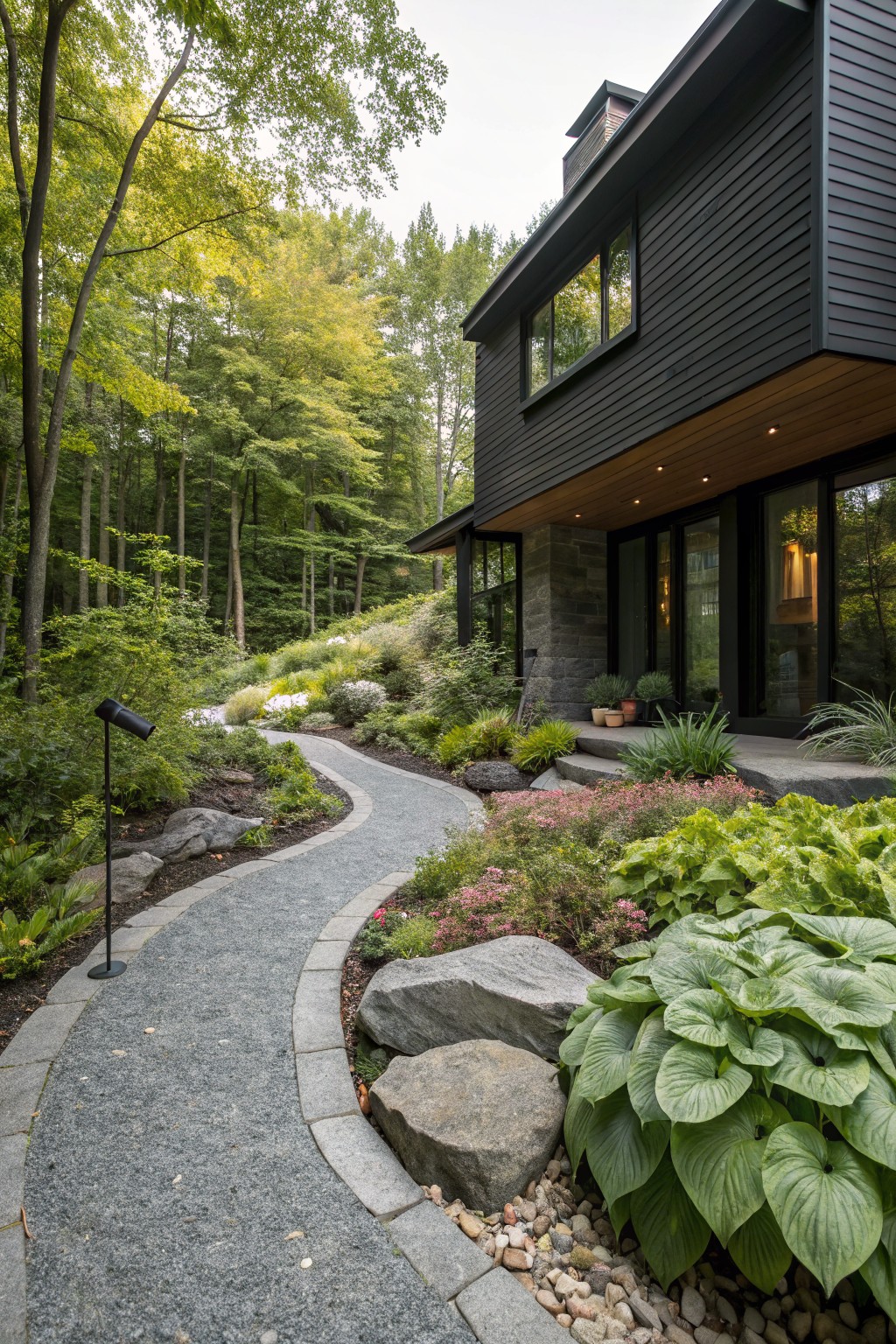
A simple gravel path that curves gently through a shady front yard can make the walk to your door feel like a little adventure. Here, large boulders sit along the edges with clumps of hostas and ferns filling in around them. It pulls your eye right to the house without feeling too formal, and those shade-loving plants thrive where grass might struggle.
This works best on wooded lots or north-facing yards where sun is scarce. Lay down gravel over a weed barrier for easy upkeep, add stone edging to keep it neat, and tuck in tough perennials like hostas or astilbe. Just watch the path doesn’t get too narrow in tight spots.
Winding Stone Paths in Shady Yards

A simple winding path like this makes a shady front yard feel more welcoming and less like a dark patch. The irregular flagstones fit right into the natural ground, and they’re edged with tough shade plants like ferns and hostas that fill in without much fuss. Those terracotta lanterns add a soft glow at dusk, turning the walk to the door into something you actually look forward to.
This works best on lots with mature trees where grass struggles. Lay the stones loosely with moss between them for that aged look, then plant low layers of green right up to the edges. Keep the path wide enough for two people, and skip straight lines, they make shade feel tighter. Just watch for slippery spots after rain.
Shady Pathways Lined with Ferns
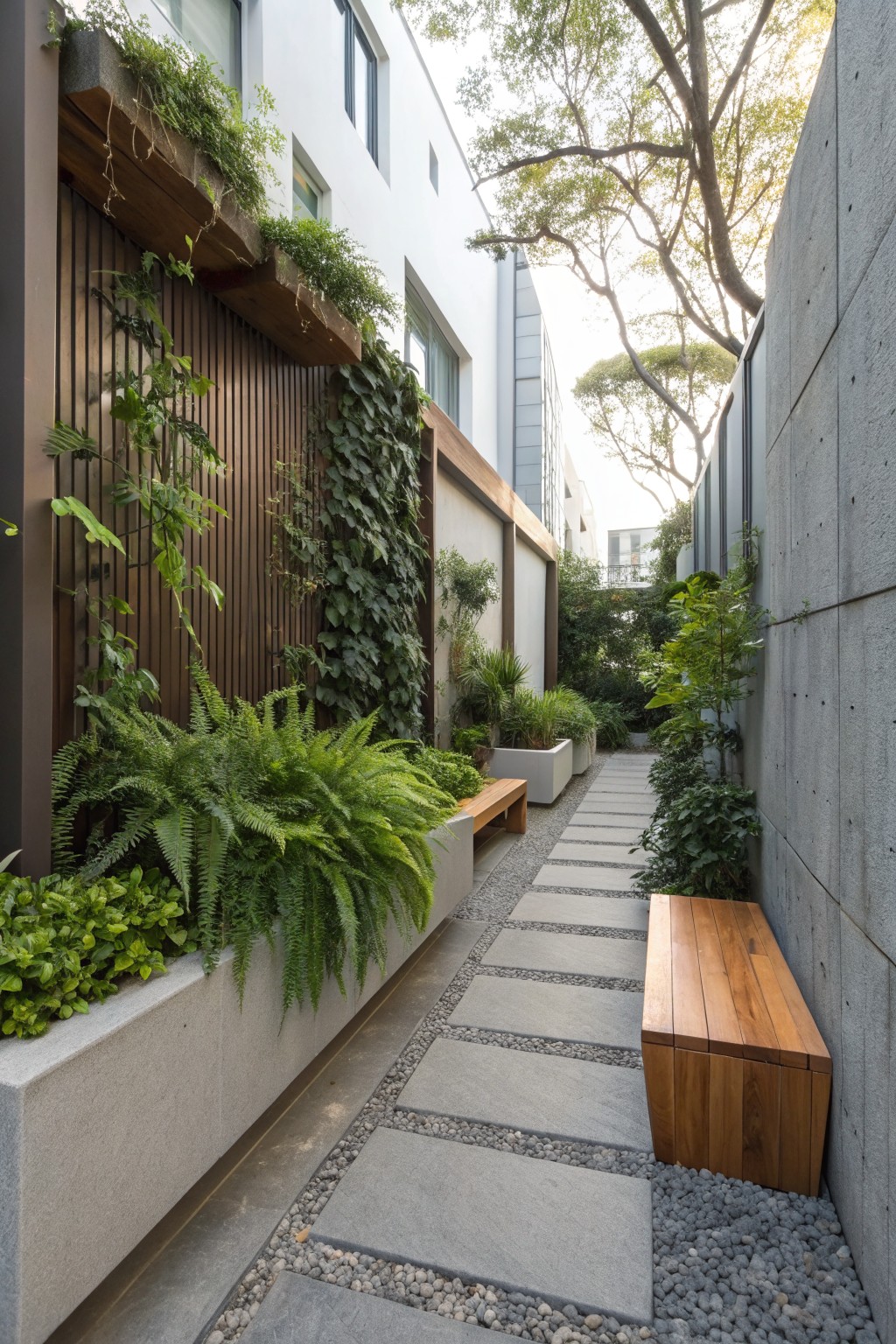
Narrow shady spots like side yards or front walkways can feel dark and forgotten. But filling them with ferns and climbing vines turns that gloom into something cool and alive. Here the path runs between tall walls covered in green, with big ferns spilling out from concrete planters right along the edge. It makes a simple walk feel like a little jungle tunnel, without needing much sun.
You can pull this off in any tight shady area by picking tough shade lovers like ferns, pothos, or ivy. Plant them in raised beds or let them climb wood or metal screens on the walls. Add stone pavers for the path and pebbles between to keep it neat and low fuss. A plain wood bench at the end gives a spot to sit. Works great for urban homes or spots under big trees, just watch for overwatering since shade holds moisture.
Stone Slab Path Through Shady Ferns
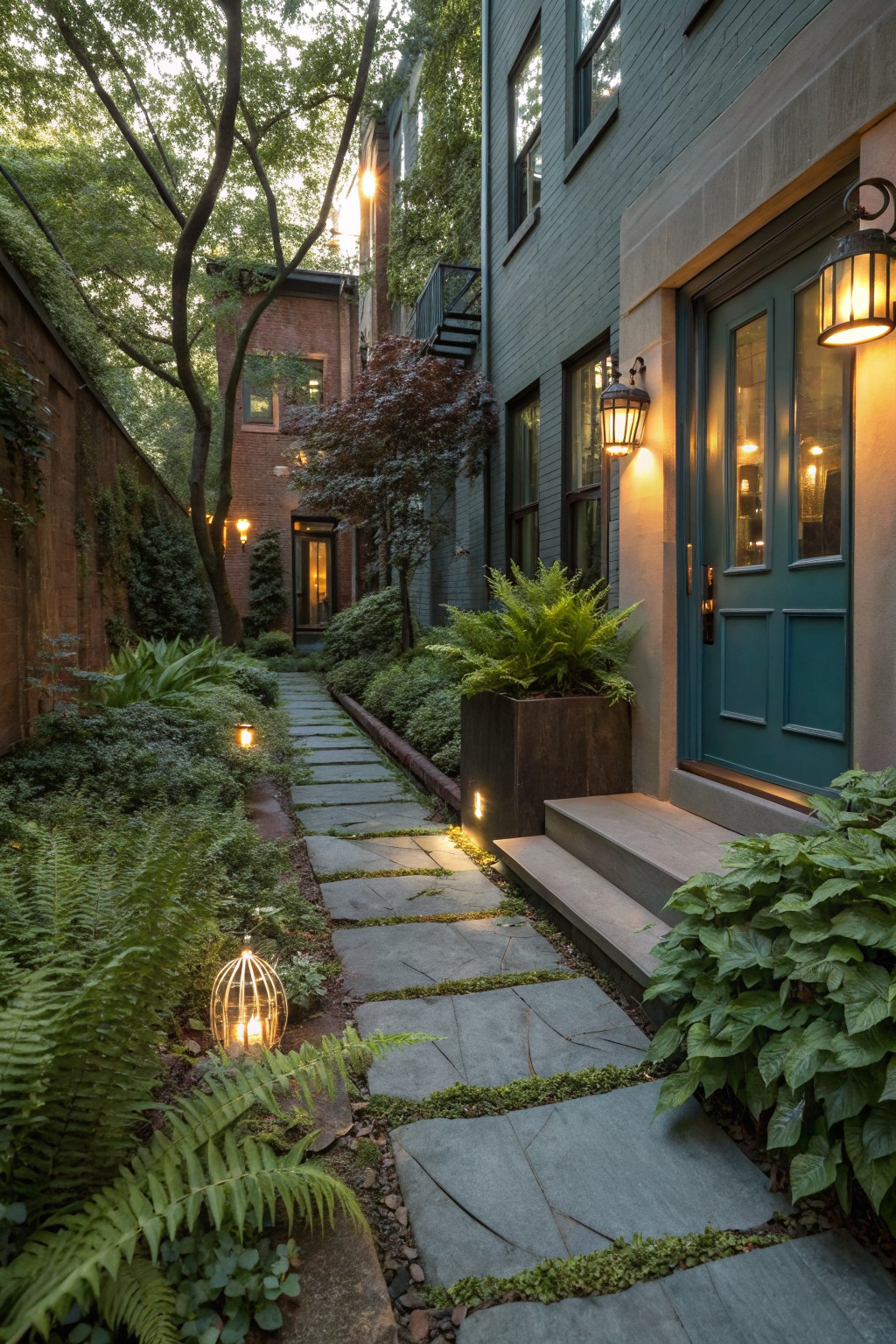
A simple path made from rough stone slabs works great in deep shade. Set them into gravel or soil with gaps for moss to grow in. Line both sides with tough ferns and low plants that handle low light. The result is a cool walk to your door that feels tucked away and green all season. Those lanterns along the way add a soft glow at dusk without much effort.
This idea fits narrow front yards or side paths where sun barely reaches. Skip straight lines. Let the stones step irregularly to match the natural feel. Use plants like ferns or hostas that stay full and don’t need trimming. It keeps mud off your shoes and makes the shady spot useful instead of empty.
Winding Stone Path Through Shady Plants

A simple winding path like this makes a shady front yard feel more welcoming. Instead of a straight walkway, the irregular flagstone slabs curve gently through layers of green shrubs and flowers. It slows you down as you approach the house, and the plants along the edges keep things cool and shaded. That stone lantern adds a quiet accent without overdoing it.
You can pull this off in wooded lots or spots under big trees. Pick flat stones for easy walking, then fill the beds with hostas, ferns, and low lavender types that handle low light. Keep the path about three feet wide so two people can walk side by side. Just watch the edges so plants don’t creep over time.
Tiered Rose Beds on Slopes

Slopes can be tricky in shady front yards but terraced beds make them work. Here roses climb stone walls and spill over steps creating that full layered look without much flat space needed. The pink blooms pop against green leaves and it stays cool under tree shade.
Use low stone walls to hold back soil then plant rambling roses that handle partial shade. Add a bench nearby for sitting and steps to reach the door. It fits older homes with some hill and keeps things low fuss once established. Just pick tough rose varieties.
Edging Walkways with Raised Gravel Beds

One straightforward way to handle a shady front yard is to edge the path with raised concrete beds packed with dark pebbles and grasses. Those beds keep mulch in place and give weeds no room to take over. The grasses add some height and motion without needing constant care, which fits right under big trees where sun is scarce.
Try this along a straight concrete walkway leading to your door. It suits modern houses with clean lines, or even older ones wanting a fresh look. Go for tough shade grasses like fescue or carex, top with river rock for drainage, and keep the beds low so they don’t block the view. Easy to set up yourself on a weekend.
Ferns Framing a Pebble-Edged Path

Big ferns like these make a shady front yard feel lush and welcoming right at the entry. They spill over the edges of a simple stone path, mixing soft greens with the hard lines of slate slabs and black pebbles. It’s a low-fuss way to fill shade without bare dirt showing.
Plant the ferns in beds along both sides of your walkway, keeping them trimmed back from the steps. This works best under trees or near north-facing walls where sun is scarce. Pairs well with a modern house facade… just watch for slugs in damp spots.
Natural Stone Path Through Moss
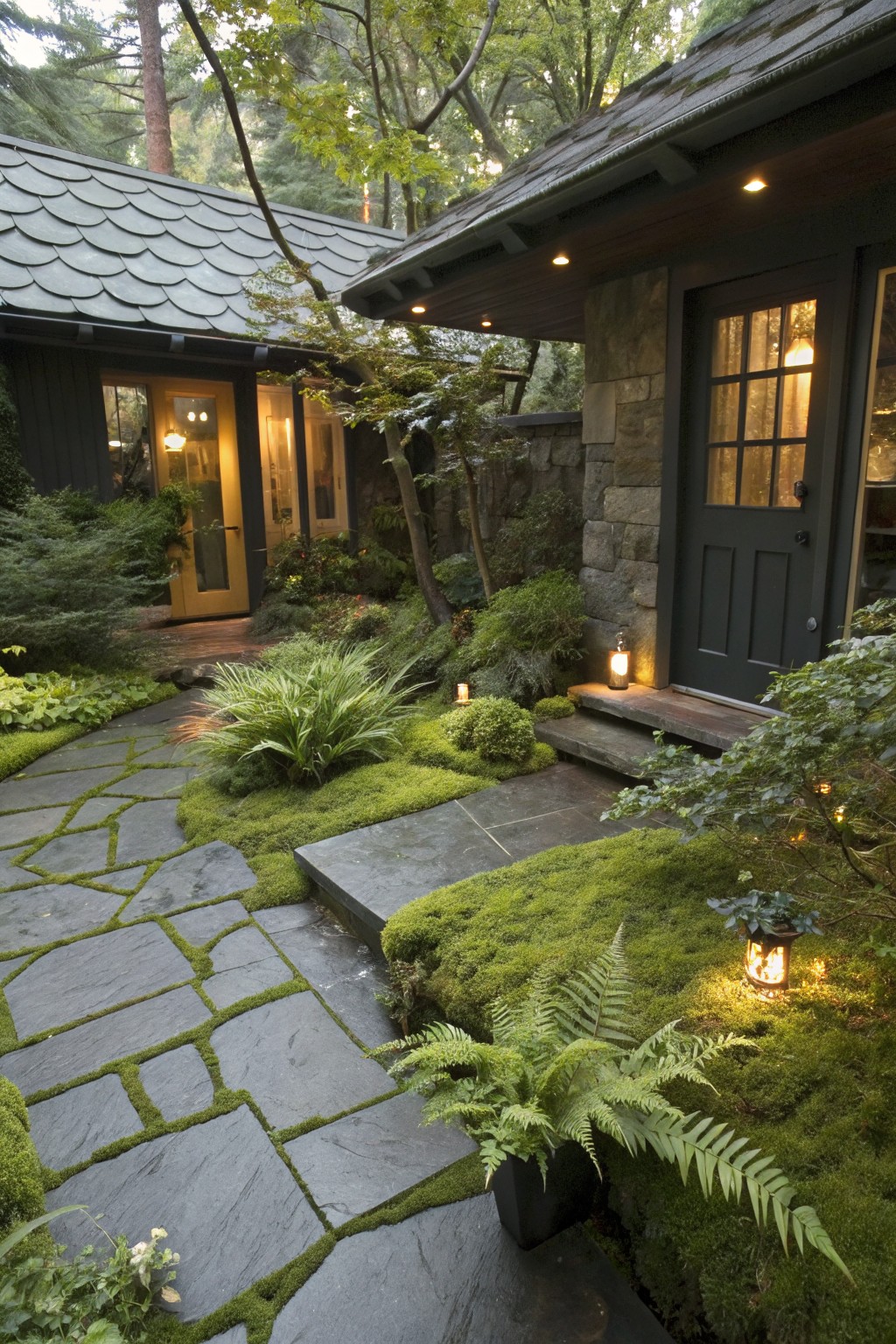
A simple path like this uses big irregular slate slabs set right into thick moss and low ferns. It works great in shady front yards where nothing else grows well. The dark stones blend with the green groundcover, making the whole area feel like a cool woodland walk. Those lanterns tucked along the edges give it a soft light after dark.
Try this in spots under big trees or along the side of your house. Pick flat stones in gray or black tones, space them unevenly, and fill gaps with moss or creeping sedum. It suits homes with a rustic look… just watch for slippery spots when wet.
Wind a Curved Path Through Shady Plants

A simple curved path like this one makes a shady front yard feel open and welcoming. It winds gently uphill using wide concrete pavers, edged by low stone walls that hold back layers of ferns, grasses, and low groundcovers. The plants stay dense but not wild, filling the shade without much upkeep, and the path pulls your eye right to the door.
This works best on sloped lots under trees, where straight paths can feel too stark. Mix in natives like sedges and hostas for easy care, and keep walls no taller than knee-high to avoid bulk. It suits homes with a woodsy modern look, turning what could be dark into a quiet stroll in.
Winding Flagstone Path in a Shady Yard

A simple winding path made from irregular flagstone slabs works great in shady front yards. It cuts through low green plants like ferns and groundcovers that handle low light well. The uneven stones give it a natural look, guiding you right to the door without feeling too formal. Folks like how it turns a dark spot into something welcoming.
To pull this off, set the slabs into soil or gravel with gaps filled by shade-tolerant plants. It suits wooded lots or north-facing yards where turf struggles. Curve the path a bit for interest. Watch that roots don’t lift the stones over time… a little mulch around the edges helps.
Meandering Stone Paths in Shady Yards

A winding path of irregular stone slabs works well in shady front yards. It pulls you gently toward the house through thick plantings, without looking stiff or out of place. Those uneven edges let moss and low plants creep in, which fits shady spots where grass struggles anyway.
Lay these paths on sand or gravel for good drainage, since shade keeps things damp. They’re right for cottage-style homes or any spot under big trees. Just keep the plants from blocking the way too much, or add a bench halfway like this one for resting.
Curved Brick Paths in Shady Yards
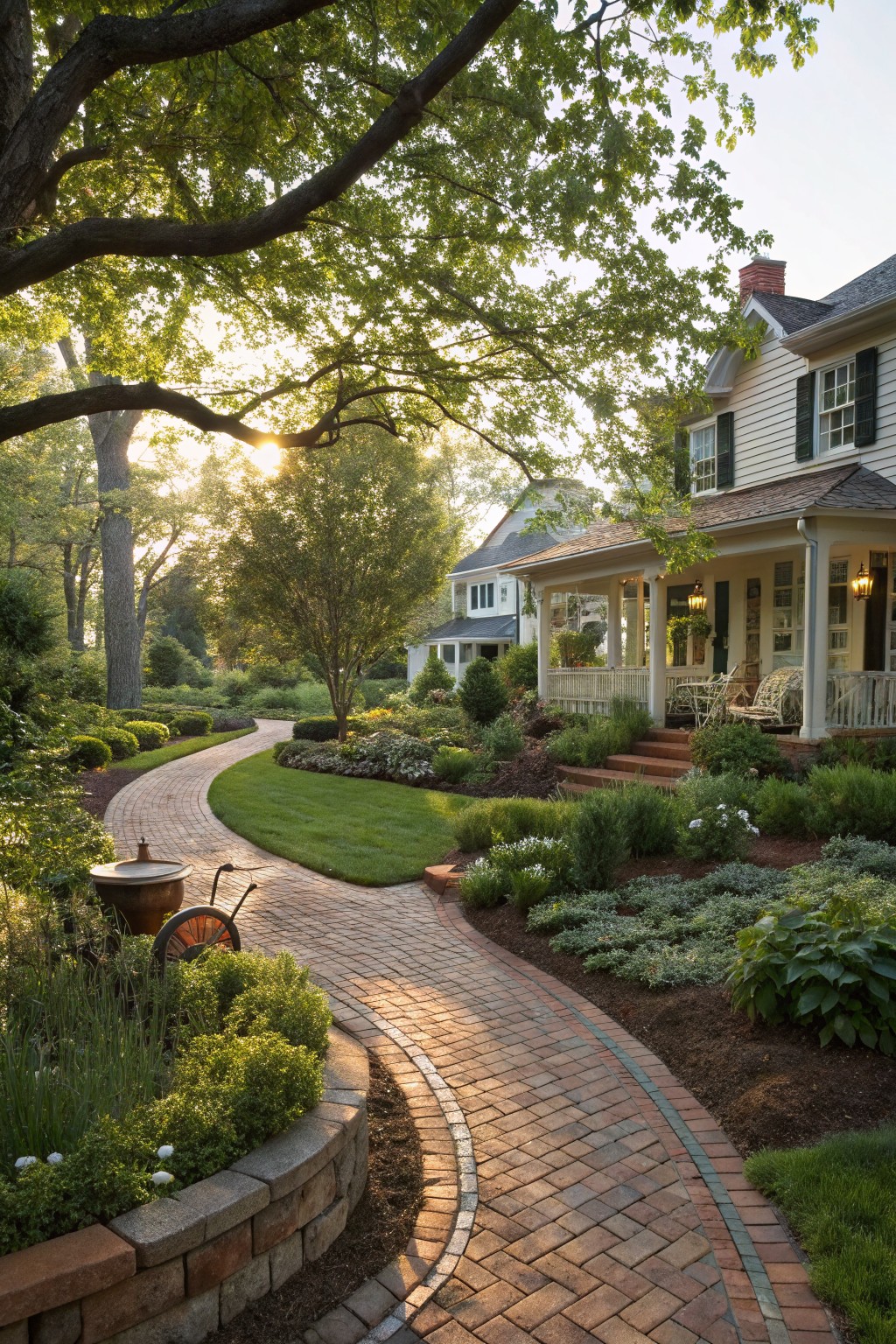
A simple curved brick path like this one works great in shady front yards. It winds gently through thick plantings and pulls you right toward the house without feeling too rigid. That soft bend keeps things interesting under the trees, and the brick holds up well in damp spots.
You can add one in most any shady yard by laying bricks over a gravel base for good drainage. Border it with low stone walls and shade plants like ferns or hostas. It suits older homes with porches best… just keep the curve natural so it doesn’t look forced.
Gravel Path with Irregular Stepping Stones

A gravel path like this works great in shady front yards. The loose gravel fills in around big, rough stepping stones, making a casual walkway that doesn’t need much upkeep. Shade-loving plants like ferns and hostas tuck right along the edges, and a few boulders add weight without crowding the space. Low lights along the way keep it usable at night.
You can pull this off in narrow side yards or along a house wall where grass won’t grow. Just lay down landscape fabric first to stop weeds, then add gravel and set the stones where they feel natural, not too straight. Skip it if your spot floods a lot… gravel shifts easy. Fits most homes, especially ones with modern or craftsman vibes.
Frequently Asked Questions
Q: What’s “shade” mean exactly for these front yard ideas?
A: Shade means spots with dappled light from trees or less than three hours of direct sun daily. Your north-facing yard or under big oaks qualify perfectly. These plants soak up that cool, dim glow.
Q: Can I plant these shade ideas now or should I wait?
A: Fall gives roots time to settle before winter. Spring works too if you mulch right away. And skip peak summer heat, unless you commit to daily watering.
Q: My shady spot has tons of tree roots. What now?
A: Pick groundcovers like vinca or ferns that spread shallowly around roots. Slice into soil just enough for small plants. They fill gaps without the battle.
Q: How do I stop weeds from taking over my new shady bed?
A: Lay down cardboard under mulch before planting. It smothers weeds as it breaks down. Refresh mulch yearly to keep them buried.
