


When you pull up to a house, the front yard garden beds catch your eye first, framing the entry path and giving the whole facade a sense of welcome structure. I tried a basic row of shrubs along my walkway once, but it felt flat until I added layers that pulled the view deeper into the yard. Good beds rely on thoughtful edging and plant heights to guide foot traffic naturally while letting color bloom against the house line. That depth changes everything. A few of these setups make me want to reshuffle my own beds this spring, adapting the layouts to how my soil holds up over time.
Winding Stone Path Through Flower Beds
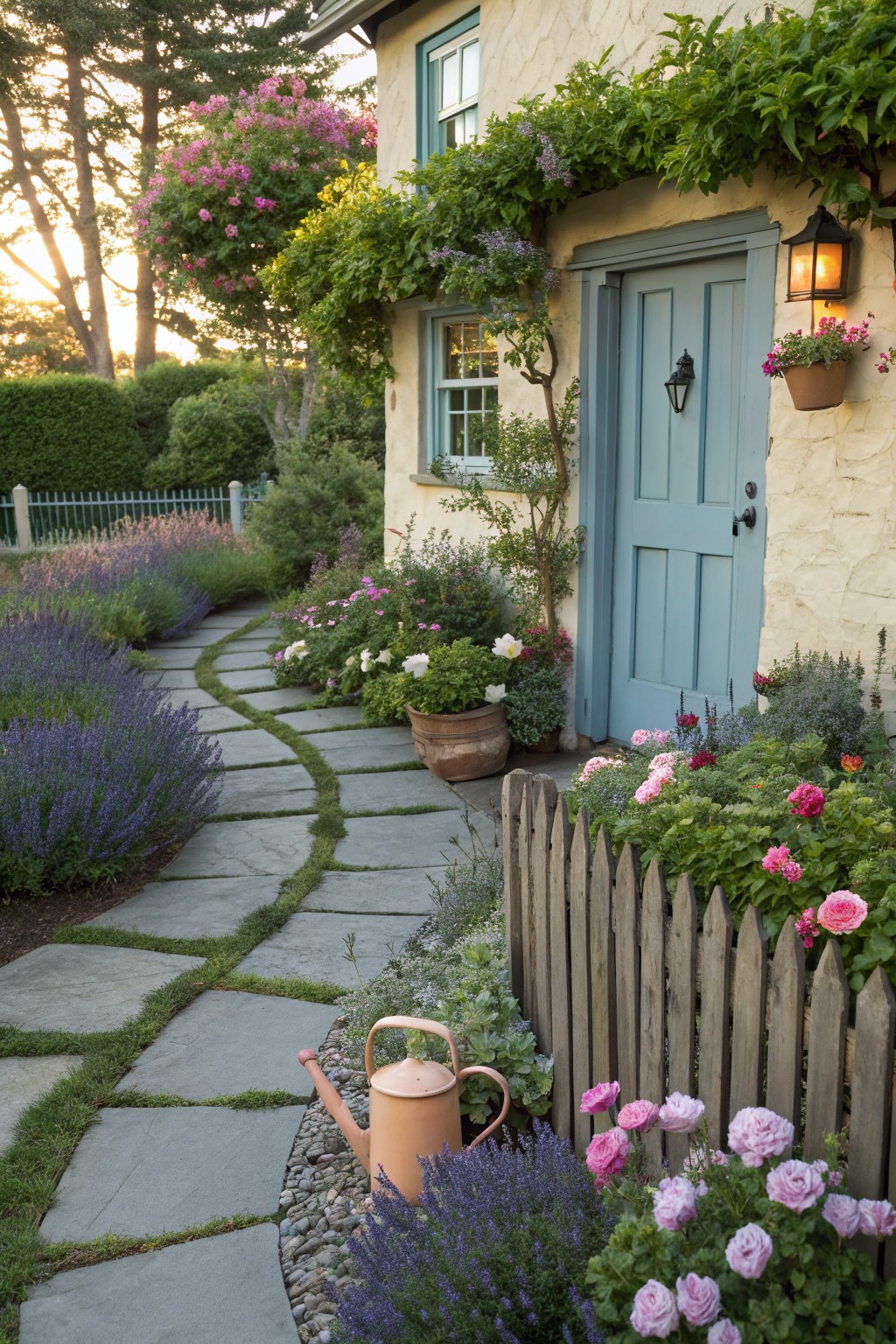
A simple winding path like this turns a plain front walk into something that draws you right to the door. The gray stone slabs curve gently through thick beds of lavender and roses, adding color and layers that make the yard feel bigger and more alive. It’s that easy flow from street to entry that gives the whole place a cozy garden feel.
You can pull this off in most front yards, especially cottage-style homes or anywhere with some sun for those perennials. Start with wide enough stones for two people to walk side by side, then edge them with low plants like lavender… fill in behind with roses or whatever blooms well locally. Keeps maintenance low once established, but watch for weeds creeping into the cracks.
Concrete Raised Beds for Succulent Gardens
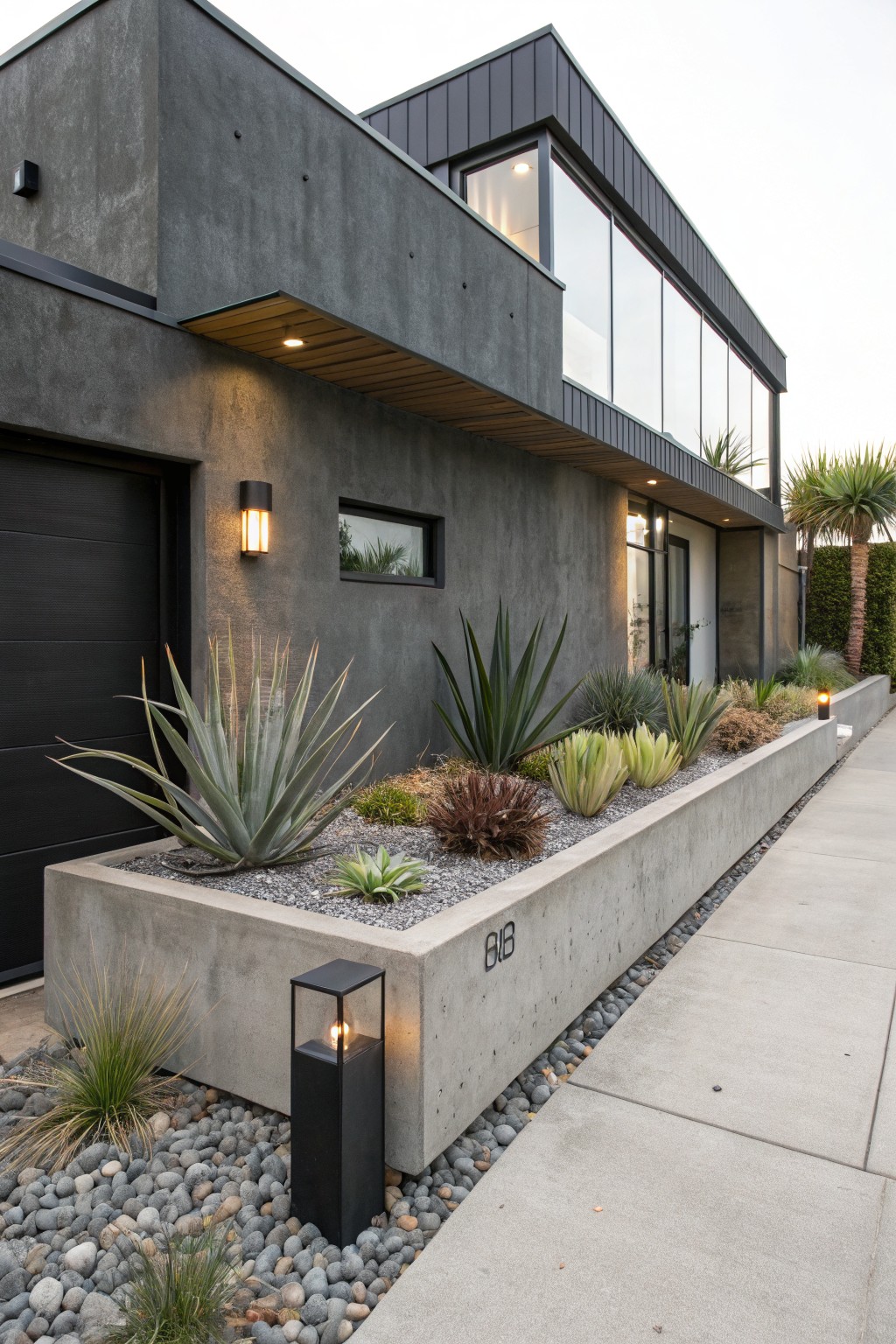
A raised concrete bed like this runs right along the sidewalk, filled with spiky agaves and other succulents. It adds clean lines to the front yard and ties into the house’s modern look without needing constant watering or weeding. The gravel mulch keeps it simple.
These beds work best in sunny spots or dry areas where low-maintenance plants thrive. Build one to match your home’s scale, maybe even stamp the address on the edge. Suits contemporary houses especially. Just make sure the soil drains fast… or you’ll lose those plants quick.
Tall Grasses Along a Winding Stone Path
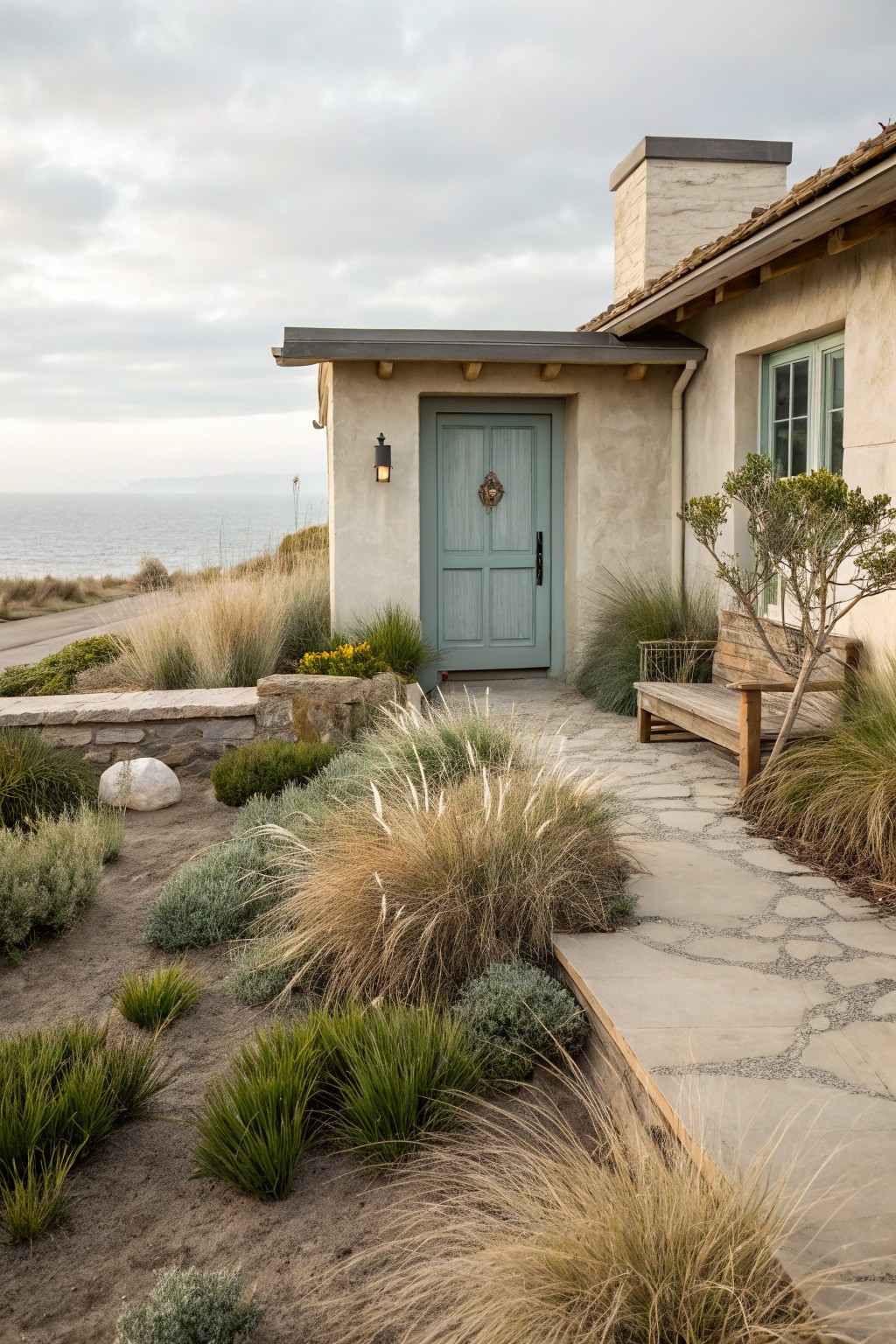
One simple way to add movement and texture to your front yard is lining a stone path with tall ornamental grasses. You see it here leading right to a turquoise door on a stucco house, with the grasses swaying softly beside low succulents and shrubs. That kind of planting softens the hard edges of the path and draws folks toward the entry without much fuss. It’s low-key but gives the yard some life, especially in a breezy spot like this.
Try it in drier yards or coastal areas where you want plants that handle neglect pretty well. Space the grasses in loose beds along both sides of an irregular stone walkway, maybe 3 to 4 feet wide. Throw in a wooden bench halfway for a rest spot. Skip anything too fussy. It suits ranch-style homes or modern cottages looking for easy curb appeal.
Hydrangeas in Front Garden Beds
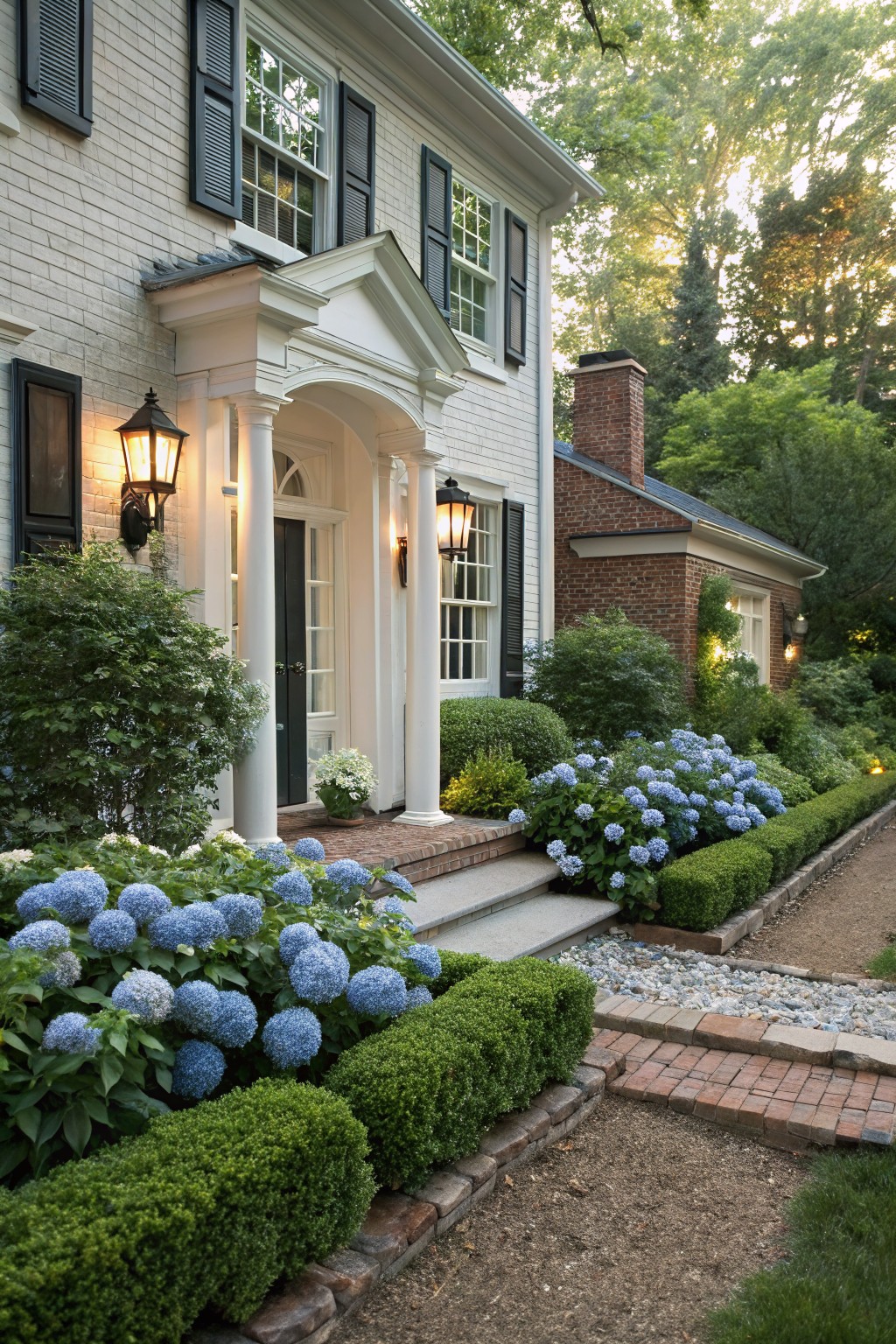
Big clusters of blue hydrangeas tucked into curved beds right along the front walk make a simple way to add color up close to the house. They bloom reliably and fill out fast, giving that full, lush look without needing perfect conditions. The boxwood edging keeps everything neat and ties it back to the steps.
This works best on classic homes with some structure, like brick or white siding. Plant in spots with morning sun and afternoon shade, shear the boxwoods once a year, and let the hydrangeas do their thing through summer. Keeps the entry welcoming year after year.
Grasses and Lavender Beds Line the Path
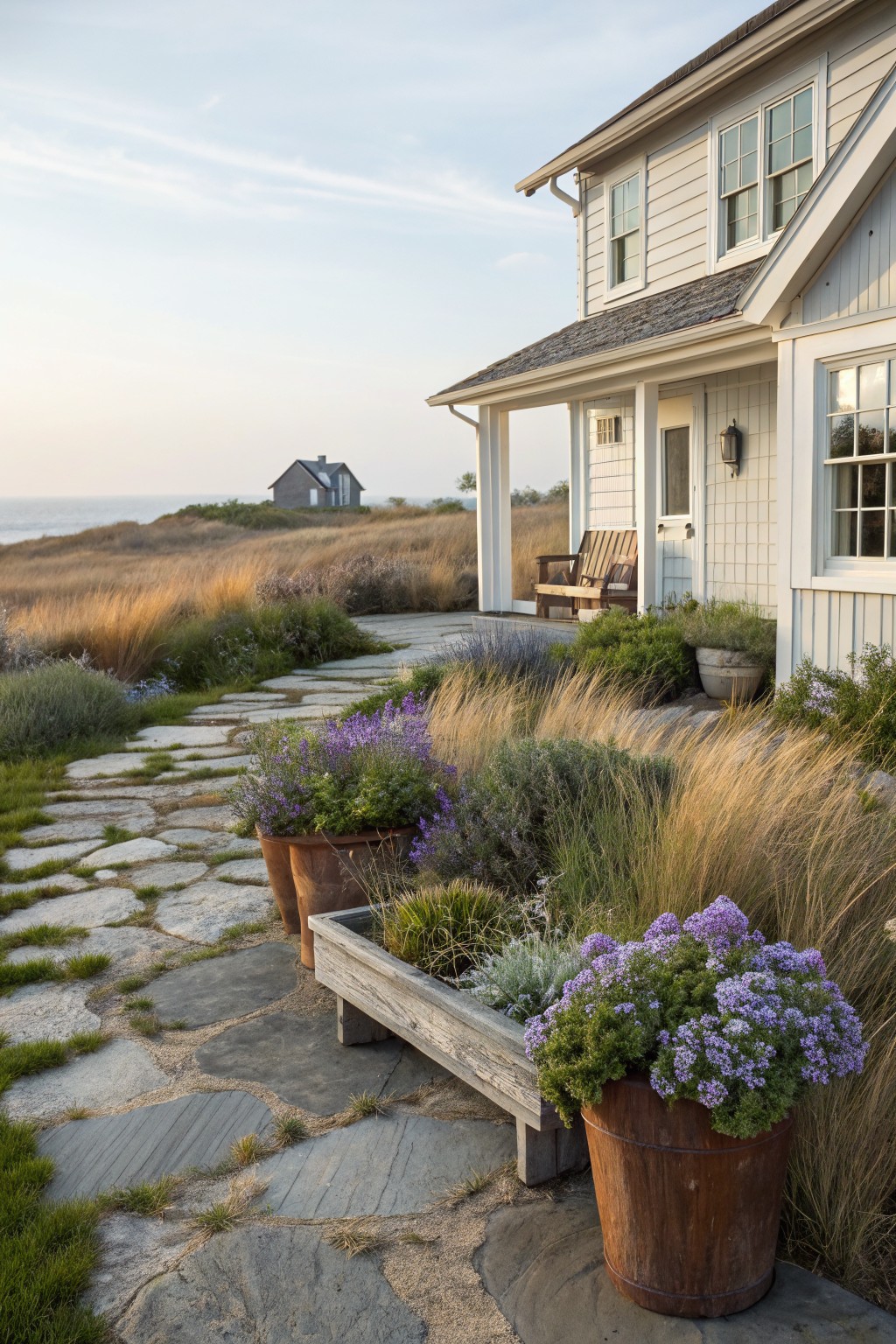
A flagstone path winds gently through tall ornamental grasses mixed with lavender in big terracotta pots and a wooden trough. The purple flowers pop against the golden grass tones. It pulls the eye right up to the house porch without feeling too formal. That natural flow makes the front yard feel bigger and more settled.
This works well in sunny spots with well-drained soil. Go for tough plants like feather reed grass or sea lavender that handle drought and wind. Space the stones irregularly for a casual walk. It’s ideal for coastal homes or open lots. Just trim the grasses back in late winter to keep things tidy.
Brick Pathway Lined with Boxwood Hedges
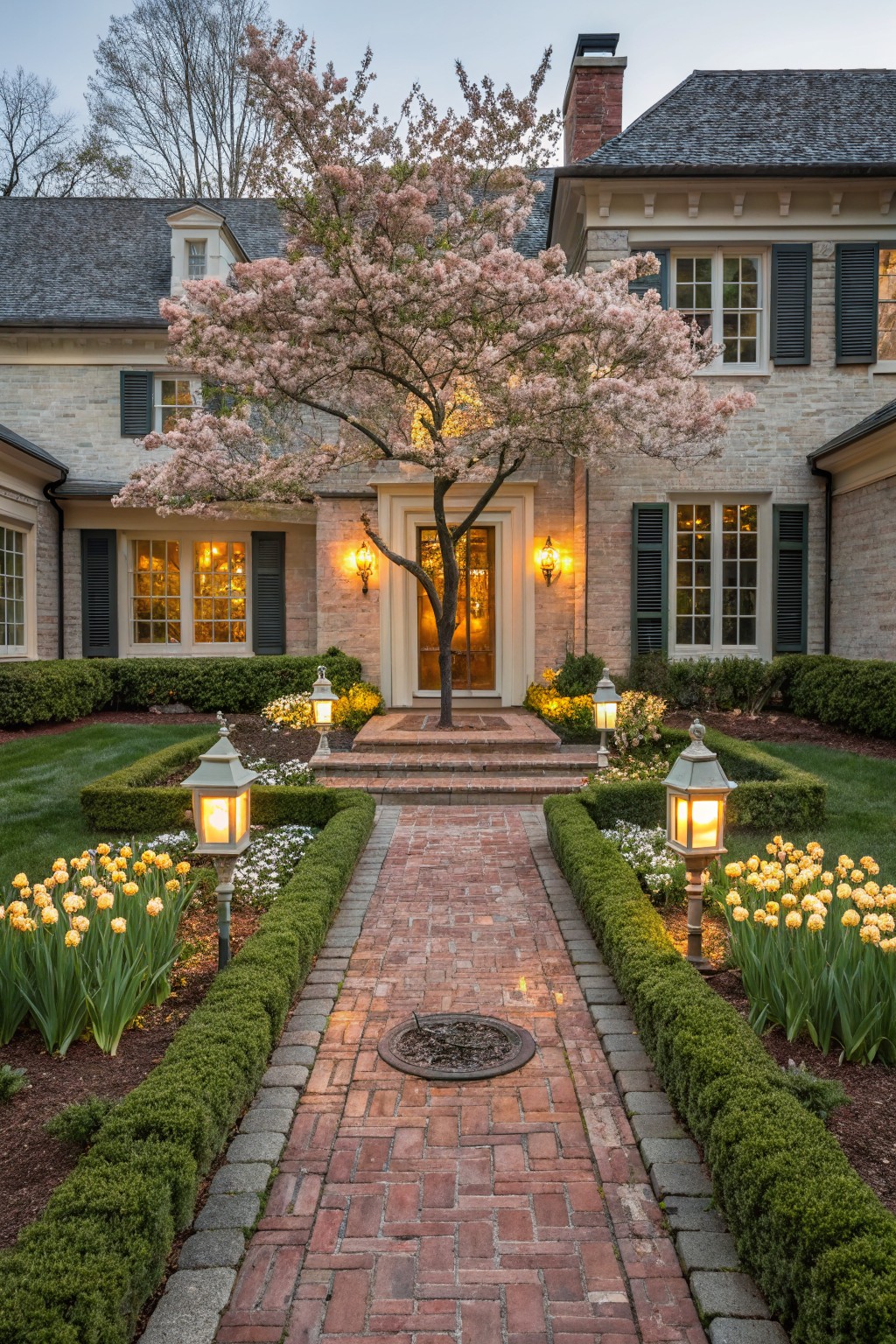
A simple brick walkway like this runs straight to the front door. Boxwood hedges edge both sides tight and low, with clumps of yellow tulips popping in the beds. Lanterns on pedestals light it up at dusk. That setup gives the yard real order without much fuss. It pulls your eye right where it should go.
Try this on a smaller front yard or anywhere you want a classic look. Boxwoods stay green year-round, and bulbs like tulips bring easy color in spring. Trim the hedges a couple times a year. It suits older homes or ones with stone or brick siding best. Skip it if your lot slopes a lot.
Terracotta Pots Line Entry Garden Beds
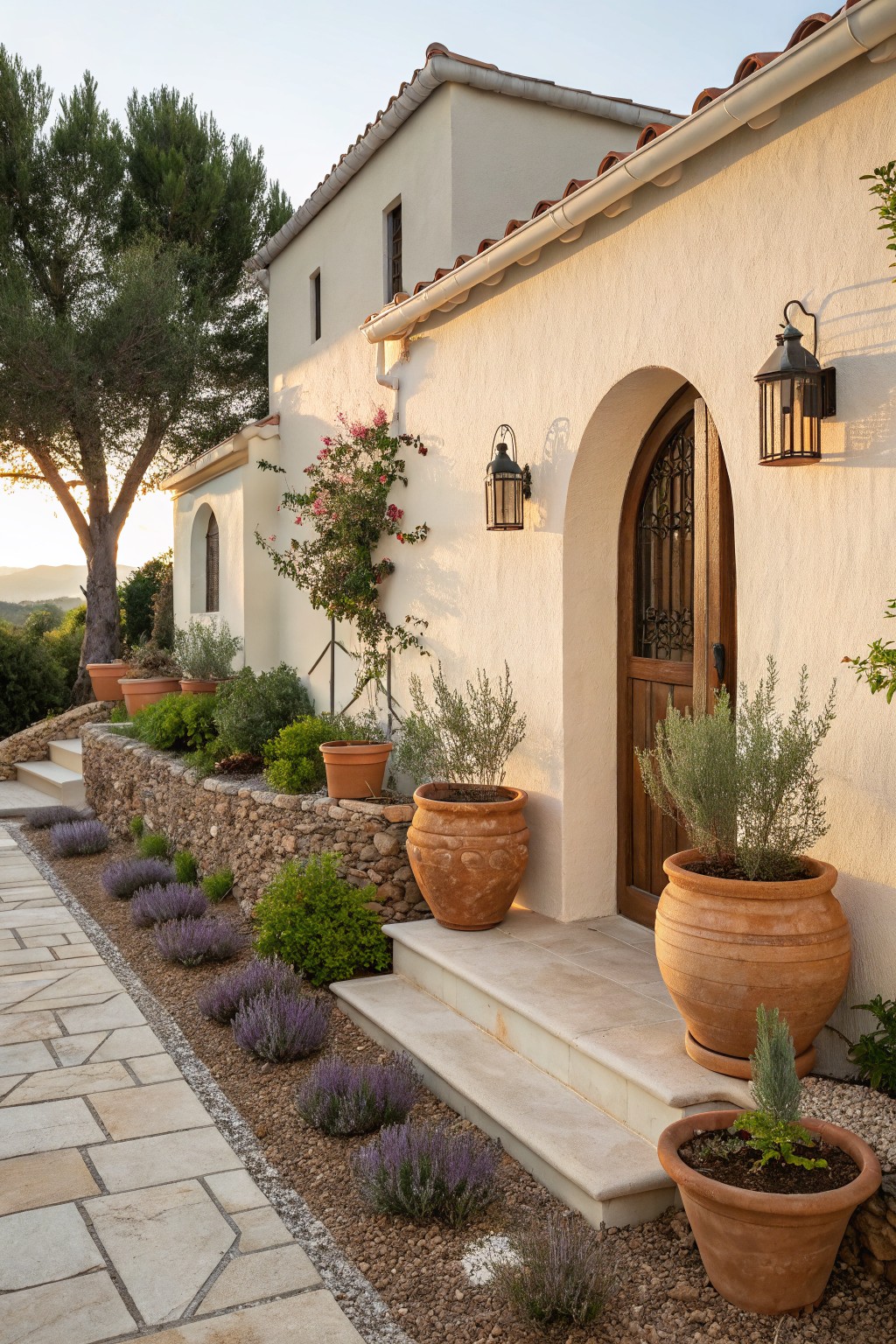
Large terracotta pots work great in front yard garden beds like this one. They bring a pop of warm orange color that stands out against white walls and green plants. Placed right by the steps, these oversized pots add some height and pull your eye straight to the door. Plus, they fill space without needing a ton of planting.
Try them along a path or at your front steps where you want quick impact. Go for drought-tolerant stuff inside, like the lavender edging here, to keep it low fuss. This setup fits dry spots or sunny yards best. Just make sure the pots are big enough so they don’t tip in wind.
Layered Grasses and Perennials Along Walkways
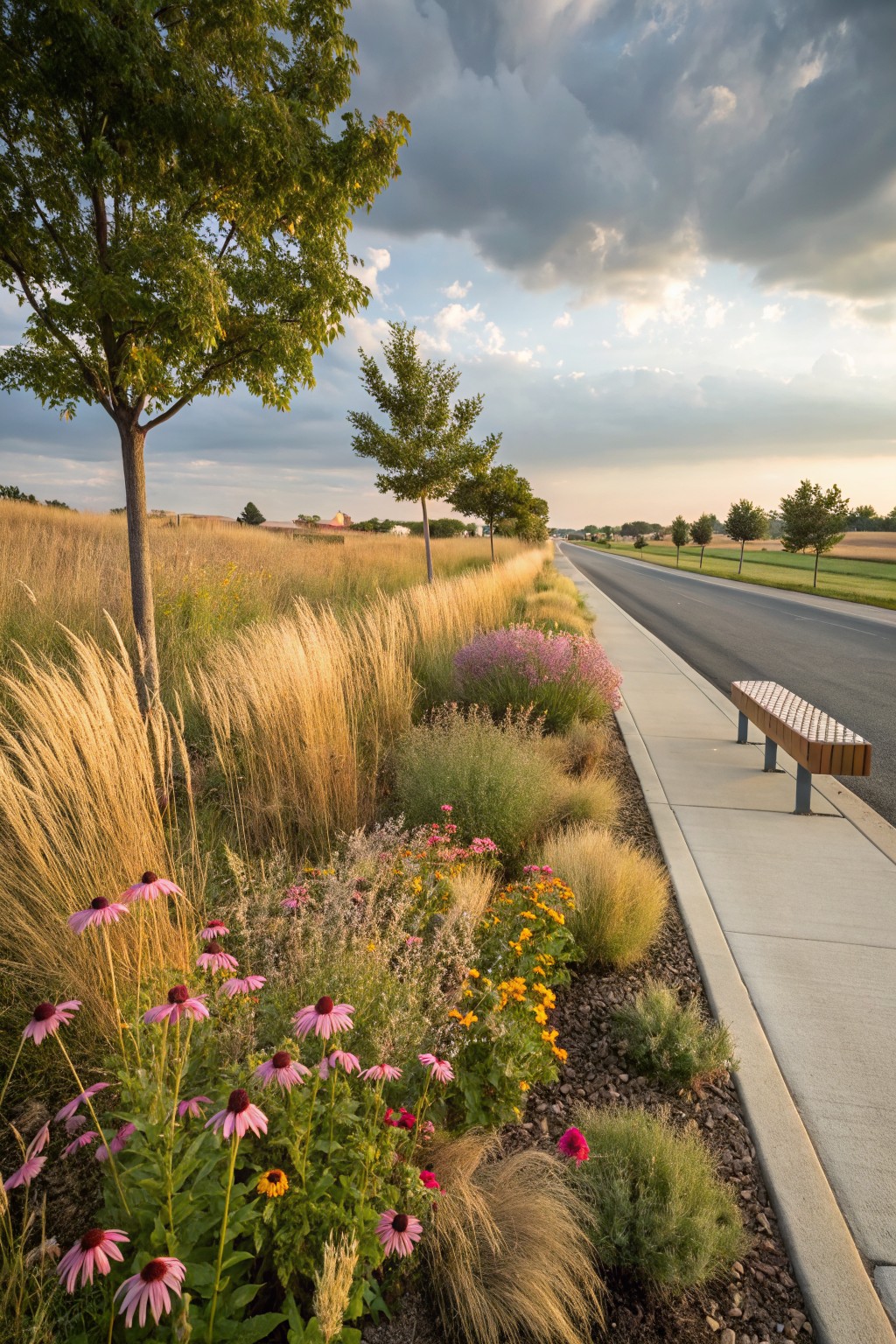
One simple way to add color and depth to front yard garden beds is layering tall ornamental grasses with clumps of perennials. You see tall golden grasses swaying behind shorter pink coneflowers and yellow flowers. This setup creates natural movement and fills out the space without much fuss. It looks full even in late summer when other plants fade.
Try this along driveways or sidewalks where you want low upkeep. Pick natives like switchgrass or little bluestem that handle sun and dry spells. Space the grasses to frame the flowers, and add mulch to keep weeds down. It fits ranch homes or any spot needing curb appeal without constant watering.
Raised Metal Beds Along Entry Paths
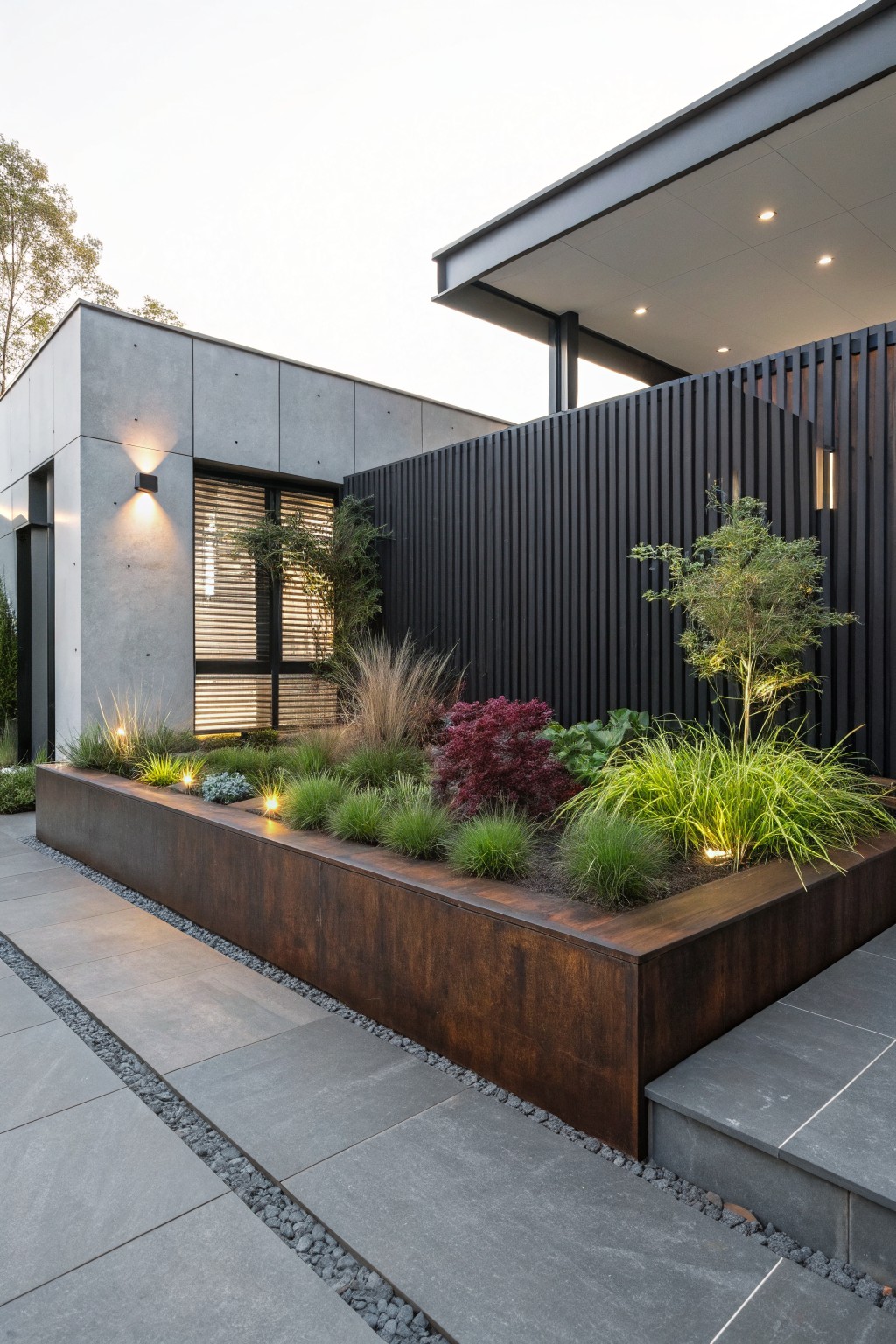
A raised bed like this one, built from weathered corten steel, runs right along the walkway to the front door. Filled with clumps of ornamental grasses and a few red-tinged shrubs, it brings quick color and soft texture to what might otherwise be a plain concrete path. The metal edge gives it a clean, modern look that ties into the house without much fuss.
These beds work best in smaller front yards or spots with modern architecture, where you want low-maintenance planting that doesn’t block the view. Just pick tough grasses that handle some shade, keep the soil simple, and let the metal patina over time. Avoid overcrowding it, or it’ll lose that open feel.
Terraced Stone Steps for Sloped Yards
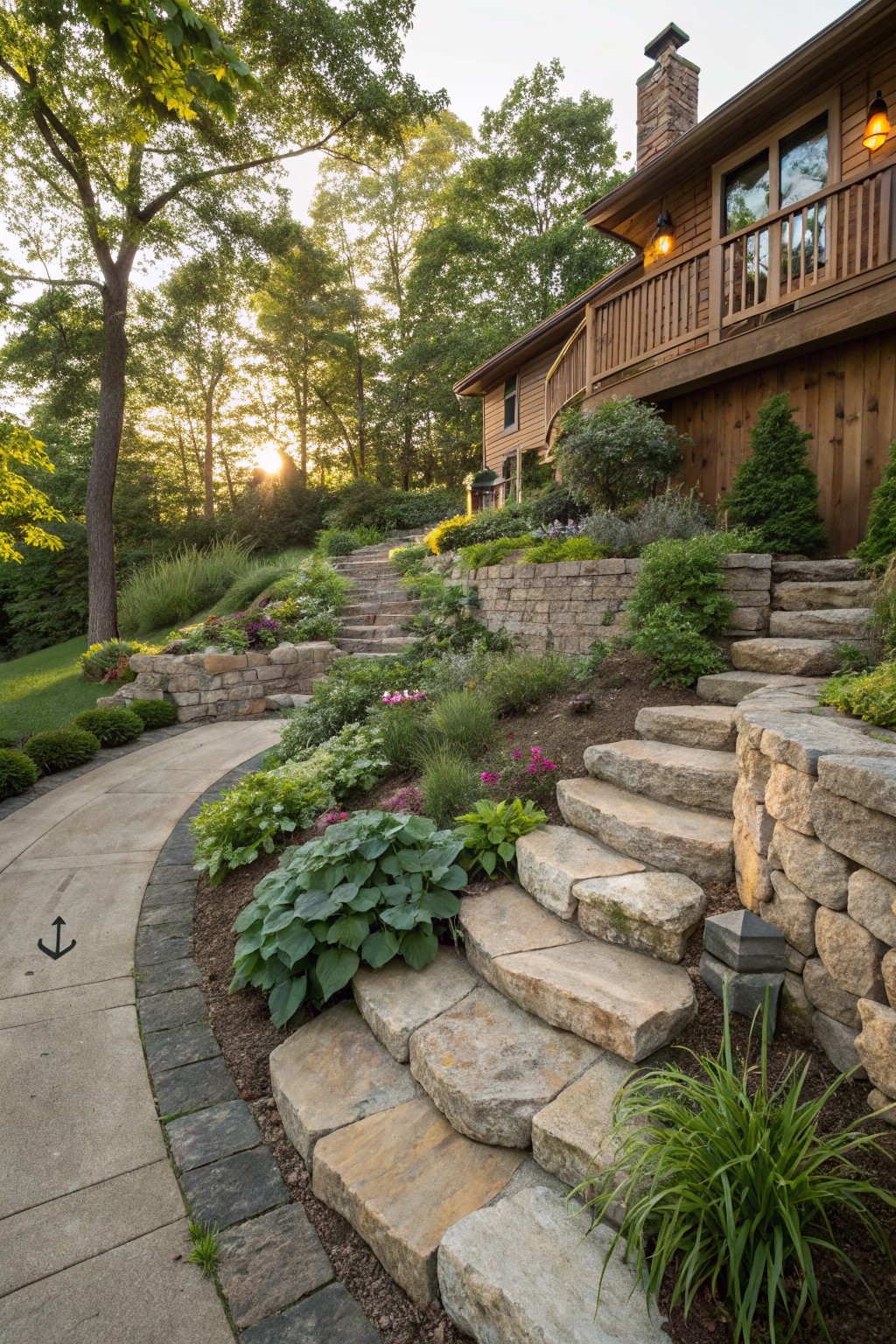
Sloped front yards can feel like a challenge but terraced stone steps make them work. You build up natural-looking walls and stairs from rugged fieldstone that hold back soil while creating flat spots for plants. In this setup the steps wind gently with garden beds spilling over the edges full of hostas and perennials. It adds real depth right away and pulls the eye up toward the house.
These steps suit homes on hills where straight paths won’t cut it. Pick stone that matches your area for a grounded look then layer in low shrubs and flowers that won’t flop over the edges. Good drainage matters so plan weep holes in the walls. It’s low fuss once planted and gives that layered garden feel without much flat ground to start with.
Boulder Anchored Succulent Beds
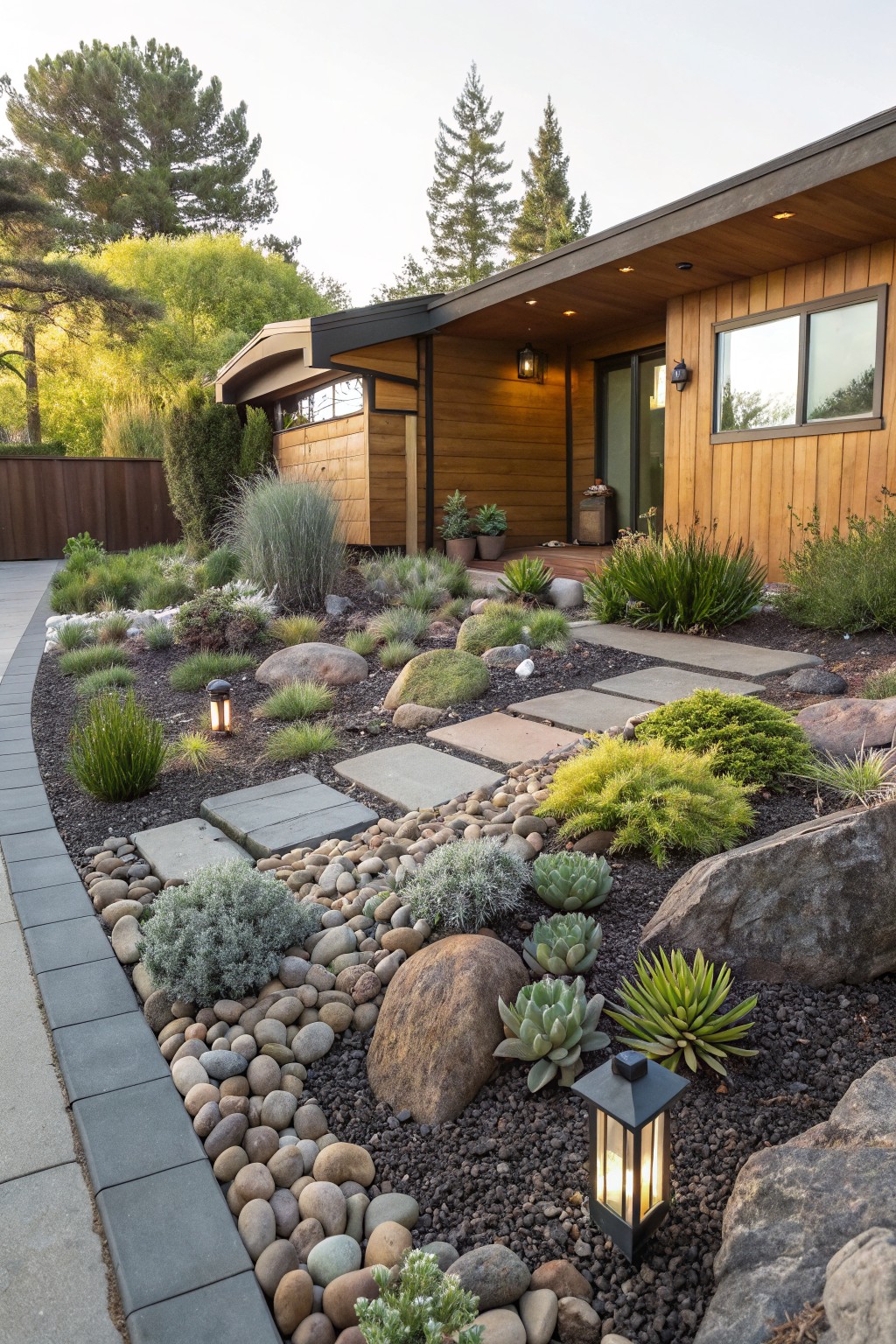
Big boulders tucked into gravel beds with tough succulents and grasses make a front yard feel rugged yet put together. The mix of stone sizes and low plants creates pockets of color and texture that pull the eye along without needing constant care. Those larger rocks act like anchors, keeping the beds from looking scattered.
Set this up along a driveway or entry path where you want easy upkeep. It suits modern homes or dry climates best, since the plants like agaves and sedums handle sun and little water. Just space the boulders to frame your stepping stones, and watch how it softens hard edges.
Simple Slab Path in Gravel Beds
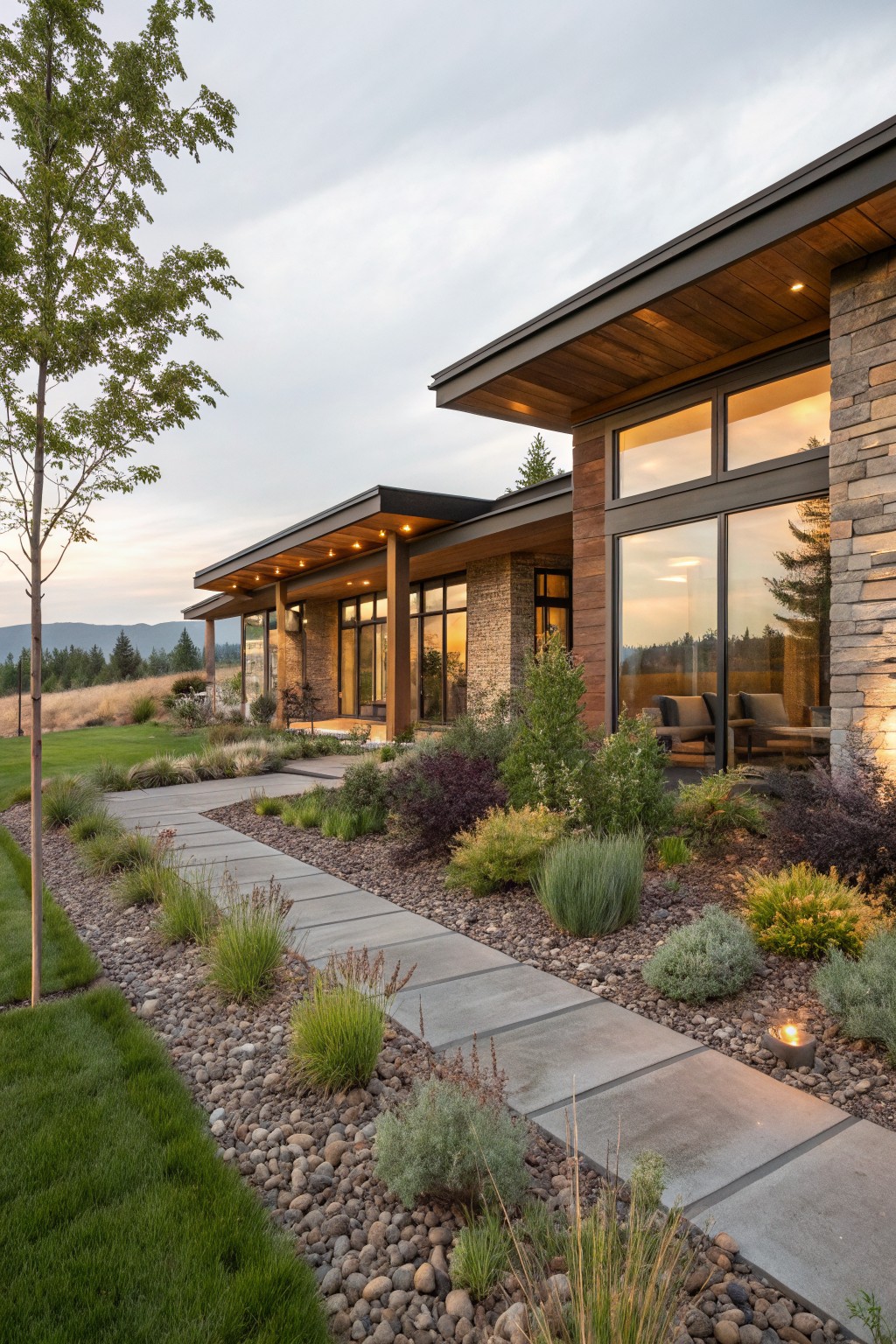
This front yard setup uses big concrete slabs laid loose in gravel beds, with grasses and low shrubs tucked around them. It gives a clean, modern walk to the door without a lot of mowing or watering. The gravel lets everything drain fast, and those waving grasses add movement and a bit of color that catches the eye from the street.
Try this in drier spots or where you want less upkeep. It works great next to a sleek house like this one, pulling the path right into the landscape. Just space the slabs wide enough for easy steps, and pick tough plants that match your zone. Skip it if your yard stays soggy, since gravel hates mud.
Tulip Beds Line Front Steps
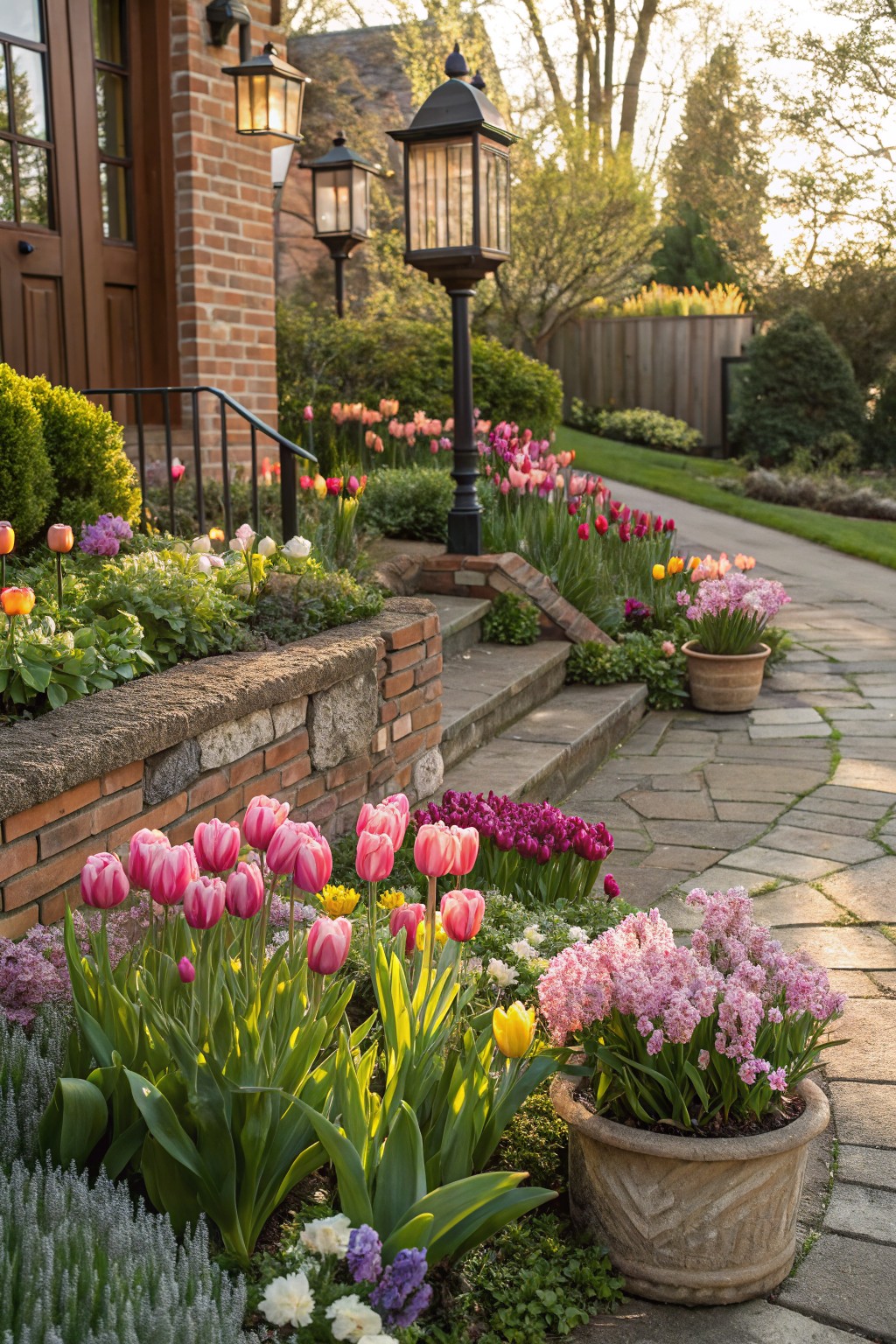
One easy way to brighten a front yard is filling garden beds along the entry steps with tulips. The mix of pink, red, and yellow blooms here gives instant color that pulls you right up the path. It adds depth too, with low plants at the base building up to taller ones behind.
Plant bulbs in fall for a big spring show like this. It fits homes with brick walls or stone paths, making the entrance feel more finished. Edge the beds with stone or brick to keep it neat, and toss in a few pots for extra punch. Works even on average lots… just watch for rabbits.
Colorful Flower Beds Along a Brick Path
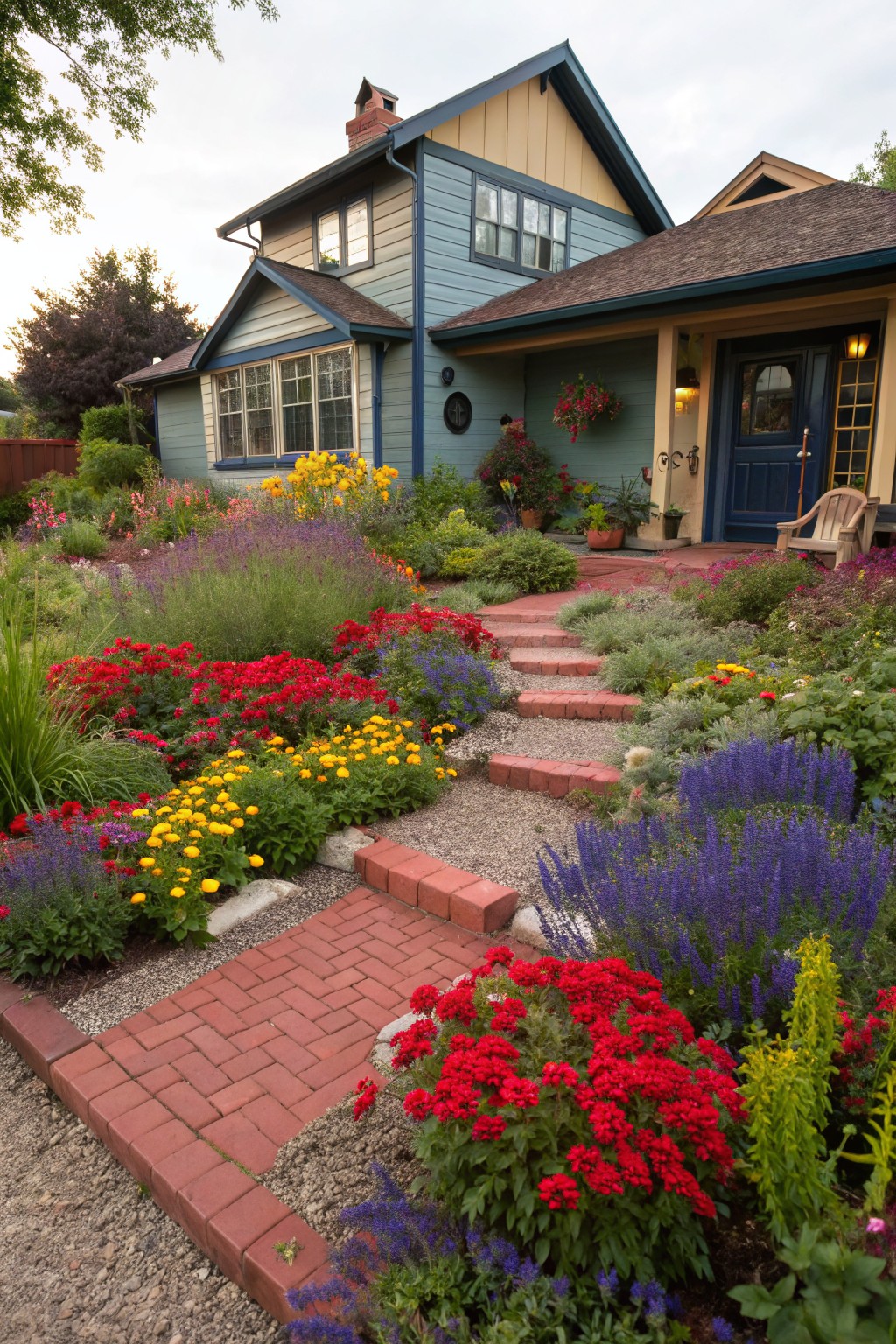
A simple brick path winding through masses of colorful flowers makes a front yard feel alive right away. Here, reds from salvias and kalanchoe mix with yellow coreopsis and purple salvias, all layered tightly along the edges. It pulls the eye up to the house without much fuss, and the gravel mulch keeps it neat.
This setup works best on smaller front yards where you want low upkeep but big impact. Plant perennials in drifts for repeat color each year, and use bricks for the path since they blend with most homes. Skip it if your slope is steep… opt for wider steps instead.
Winding Stone Paths in Garden Beds
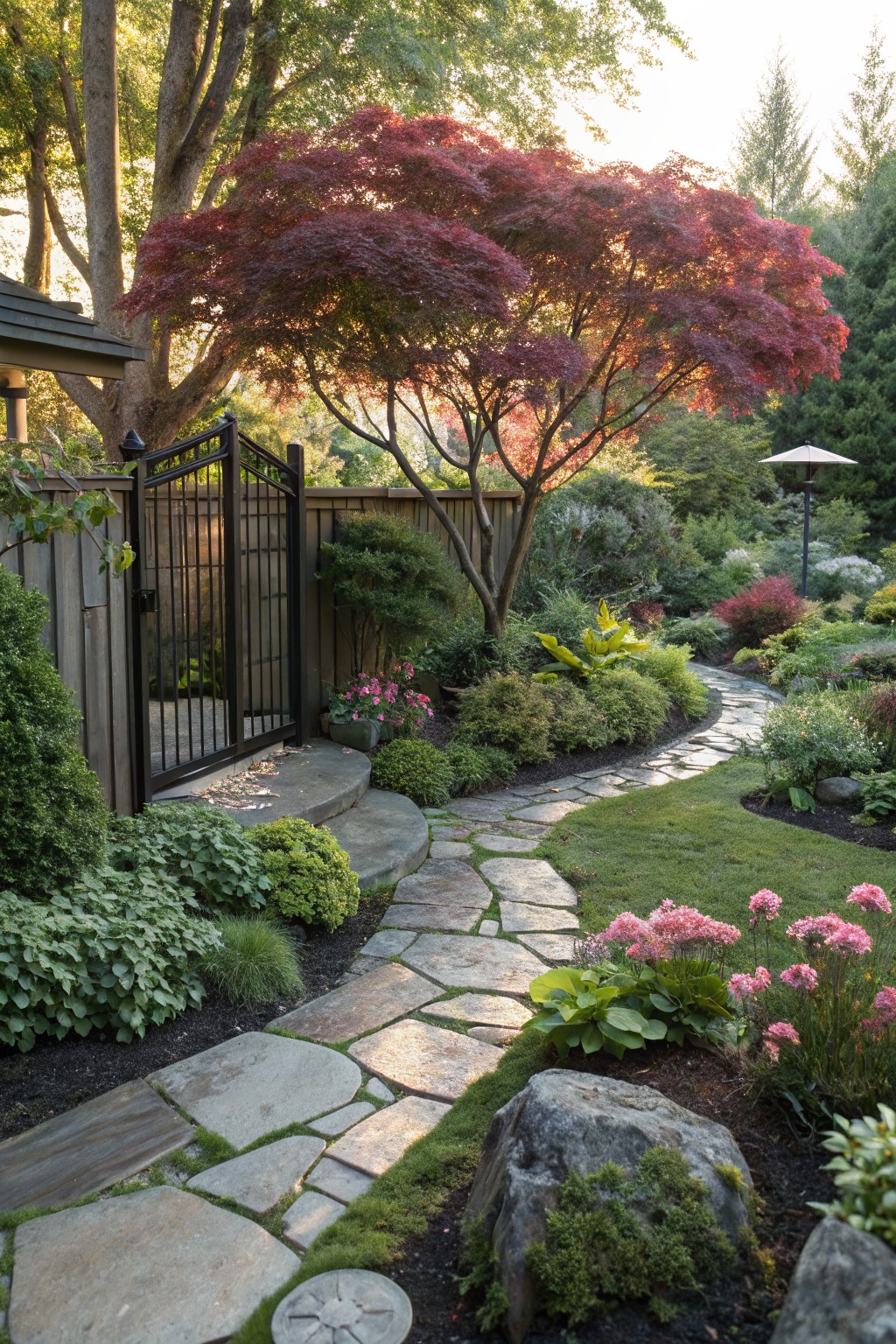
A good winding path like this one pulls you right into the garden. Made from rough-cut stone slabs set into grass and mulch, it curves gently past layered plants and big rocks. That red Japanese maple up ahead gives it a strong focal point, and the whole setup makes a small front yard feel deeper and more alive without much fuss.
You can do this in most any front yard bed. Pick stones that match your area’s look, space them irregularly for a natural feel, and edge with low plants like hostas or grasses. It works great on uneven ground. Just keep the path wide enough to walk comfortably, maybe three feet or so.
Wooden Planter Boxes Line Front Steps
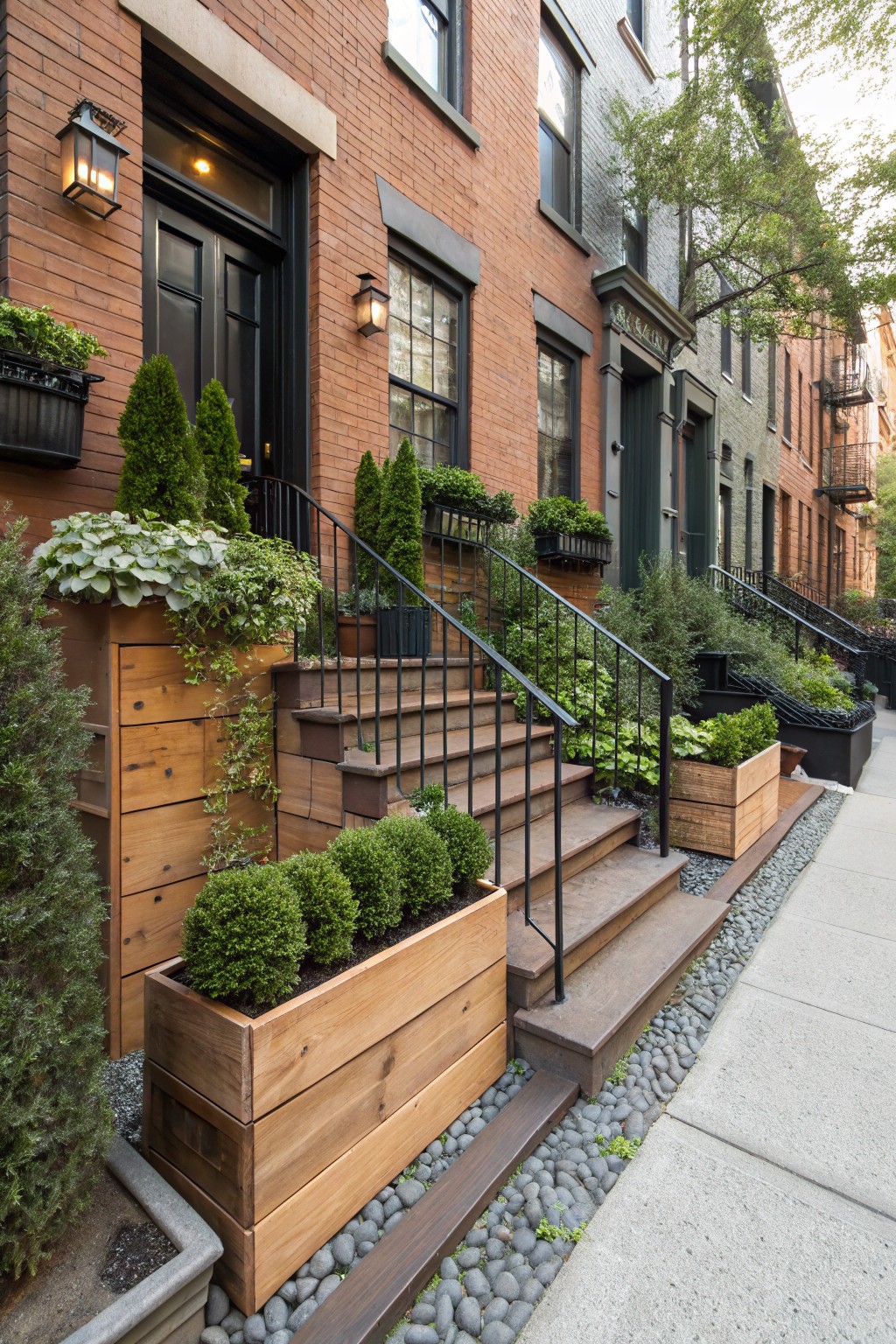
One simple way to add structure to a front yard is with wooden planter boxes along the steps to your door. These raised beds hold neatly trimmed boxwoods that give a formal look without much upkeep. The wood warms up brick or stone facades, and the plants stay green year-round for steady color.
Place them right by the stairs like this, using a few different sizes to follow the steps up. They work best on townhouses or smaller lots where you want definition but not a full yard overhaul. Just pick rot-resistant cedar or pine, and keep the boxwoods pruned to shape. Skip if your steps are super narrow, though.
Rose-Covered Pergola at the Front Entrance
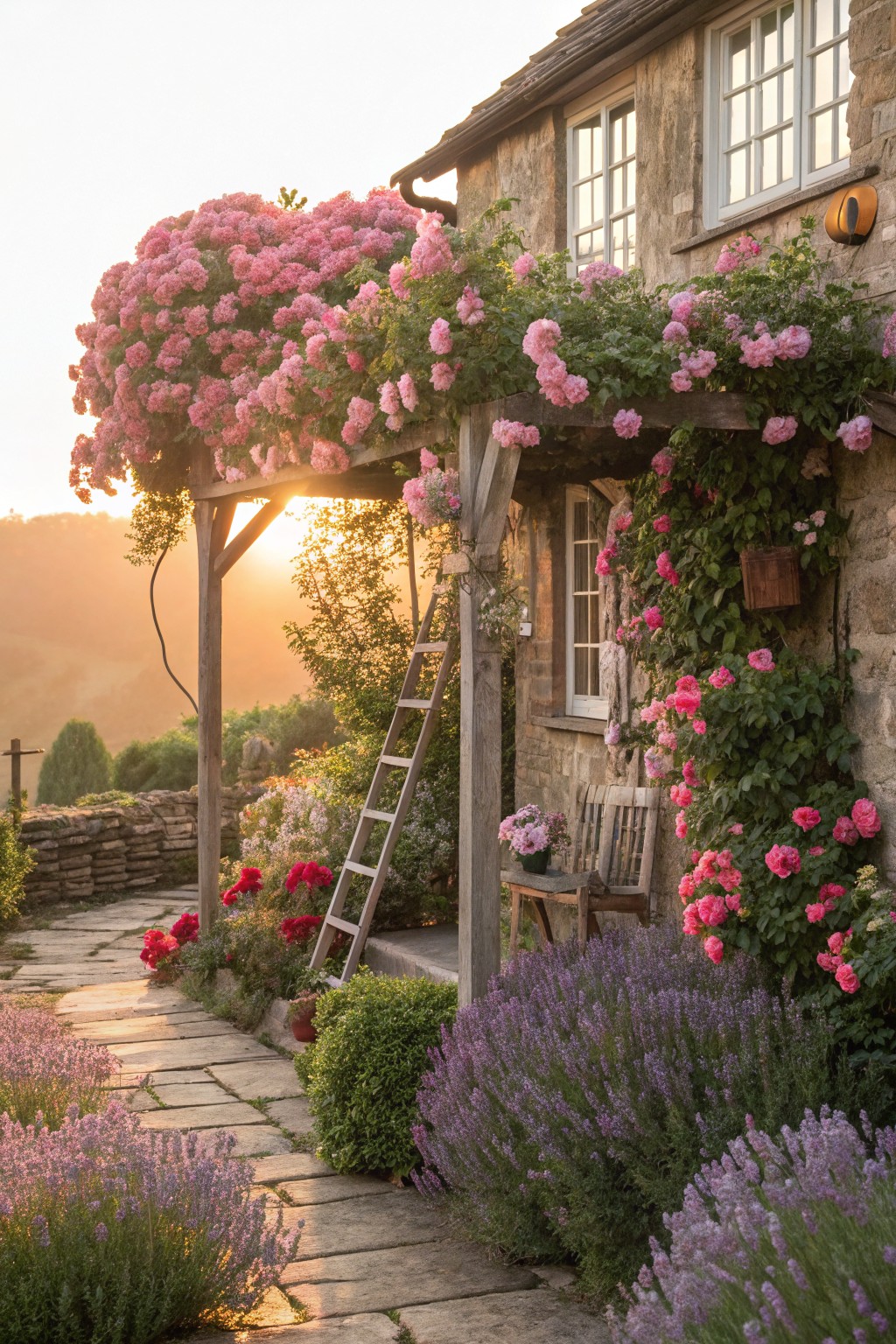
A wooden pergola draped in big clusters of pink climbing roses makes a natural arch right over the path to the door. It pulls the eye forward and ties the stone house to the garden beds below. Lavender bushes and other perennials fill in along the edges. This setup feels cottage-like without much fuss.
Plant the roses to climb up and over the pergola beams for that full, overflowing look. Line the path with low lavender for easy color that comes back each year. It suits older homes or any front yard with a straight shot to the entry. Just pick tough varieties that handle your sun and soil.
Meandering Stream Garden Beds
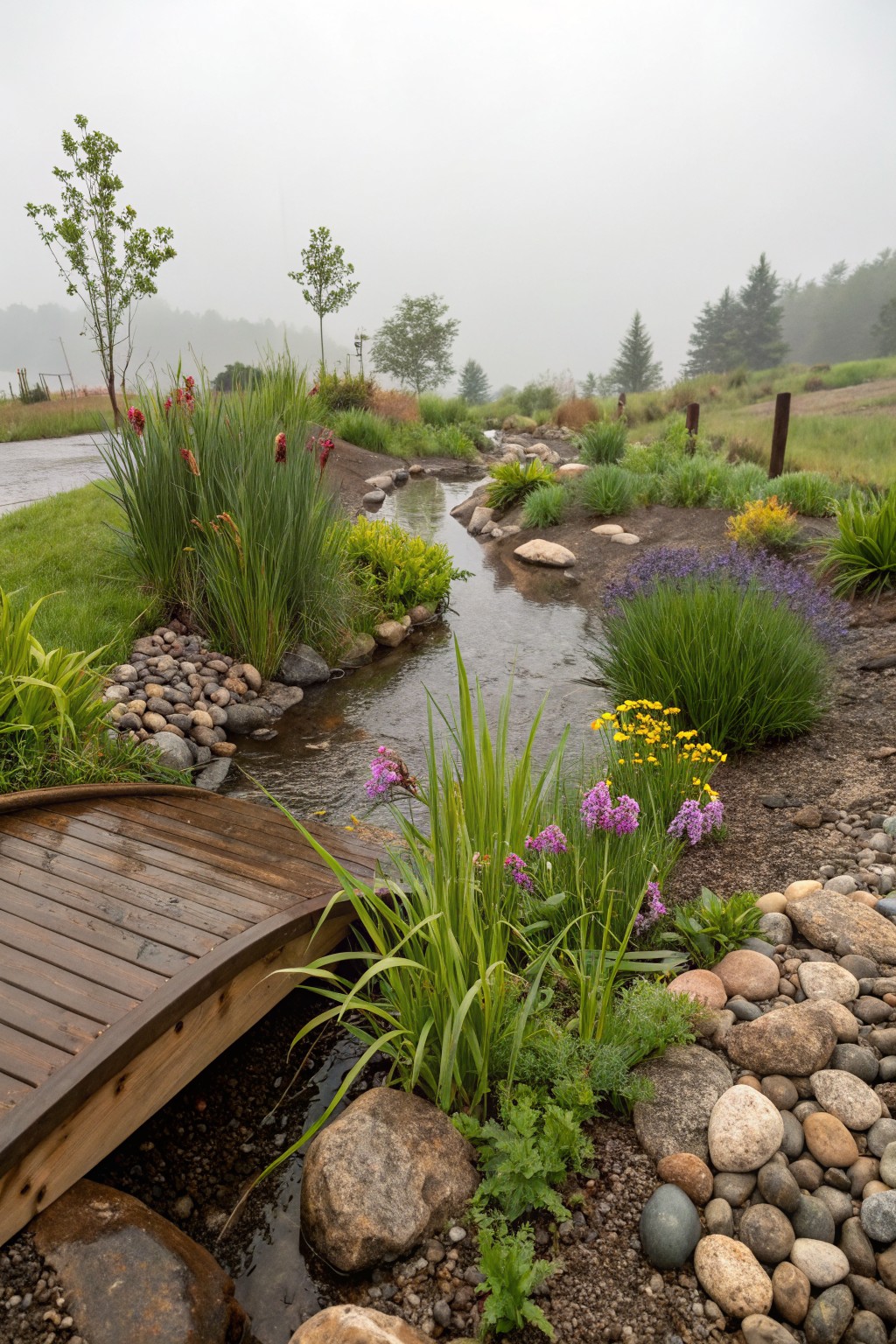
One simple way to give your front yard garden beds more life is with a meandering stream. It pulls the eye along with gentle curves, edged by boulders and smooth river rocks. Mix in tall grasses and colorful perennials like those pink spikes and yellow clusters you see here. The water adds constant motion without much upkeep, and it softens hard edges around the yard.
This works best in front yards with a bit of slope or near the driveway entrance. Start small with a pump to keep water recirculating, line the bottom with pond liner, and plant natives that handle wet feet. A short wooden bridge makes it practical to cross. Watch the scale though. Too big and it overwhelms a small lot.
Gravel Garden Beds with Oversized Pots
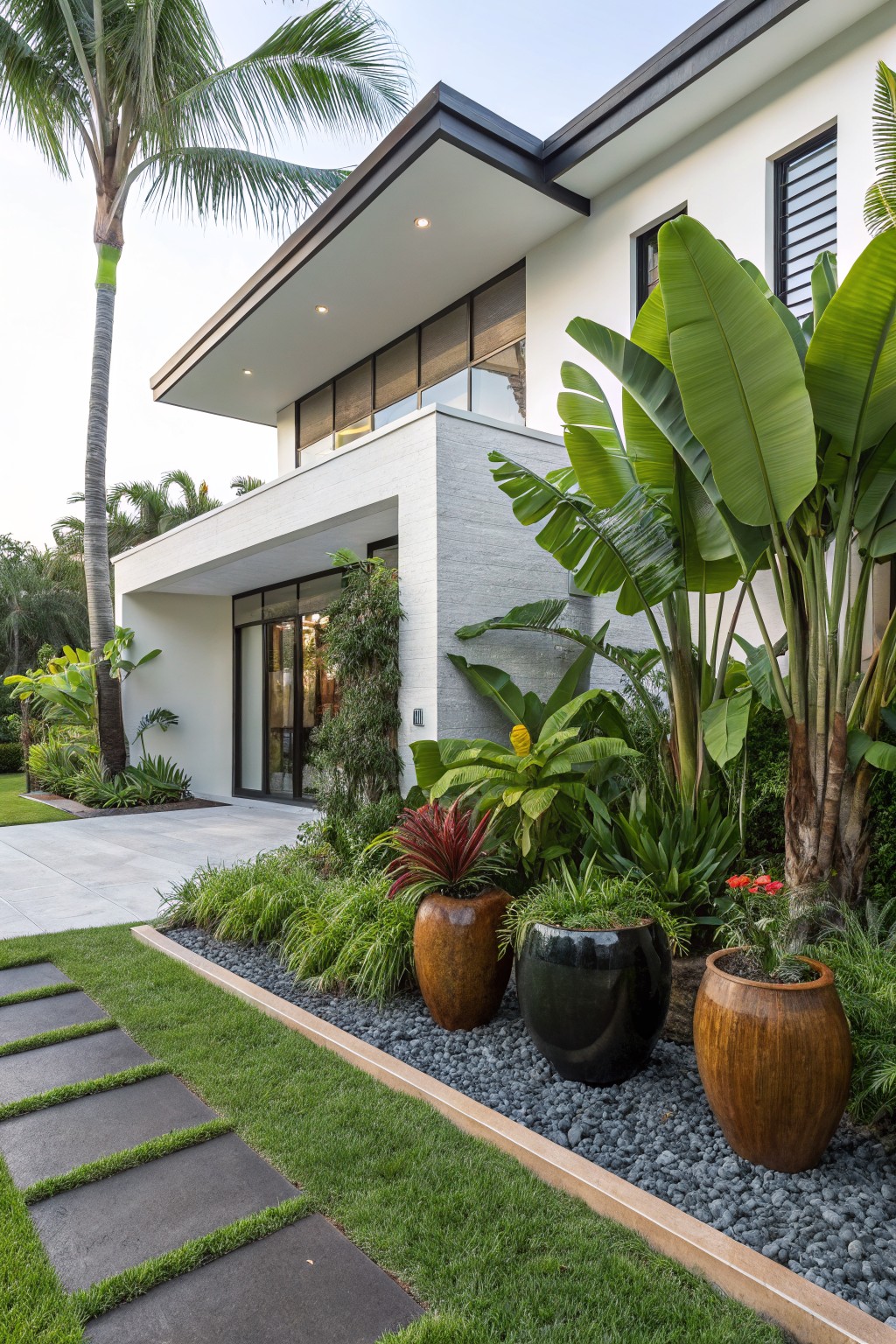
Gravel garden beds like this one keep things simple while packing in color and texture. Big pots in black, terracotta, and wood hold lush tropical plants that spill over just right. The dark pebbles set off the greenery and add depth without weeds taking over. It’s a clean look that frames the house nicely.
These beds work best along paths or lawns in warmer spots where you want low upkeep. Pick pots that match your home’s style, maybe mix a couple sizes for interest. Go for tough plants like bananas or bromeliads that handle sun. Skip it if your yard’s shady, gravel won’t drain as well there.
Curved Bench Along Garden Beds

A simple curved bench tucked right into the edge of a garden bed makes the whole planting area feel more welcoming. It gives you a spot to sit and enjoy the flowers up close, without needing extra furniture that might crowd things. Here the white stone bench sweeps along with colorful sedums, grasses, and perennials spilling over the sides, turning a basic border into something you actually want to linger by.
This works best in front yards where you want low-key seating that blends with the landscape. Build it from concrete or stone to match paths, and plant evergreen shrubs nearby for year-round structure. Keep the curve gentle so it follows the bed shape naturally. It suits cottage-style homes or any spot with room for a few feet of depth, but skip it if your beds are narrow.
Terraced Garden Beds on Stone Retaining Walls
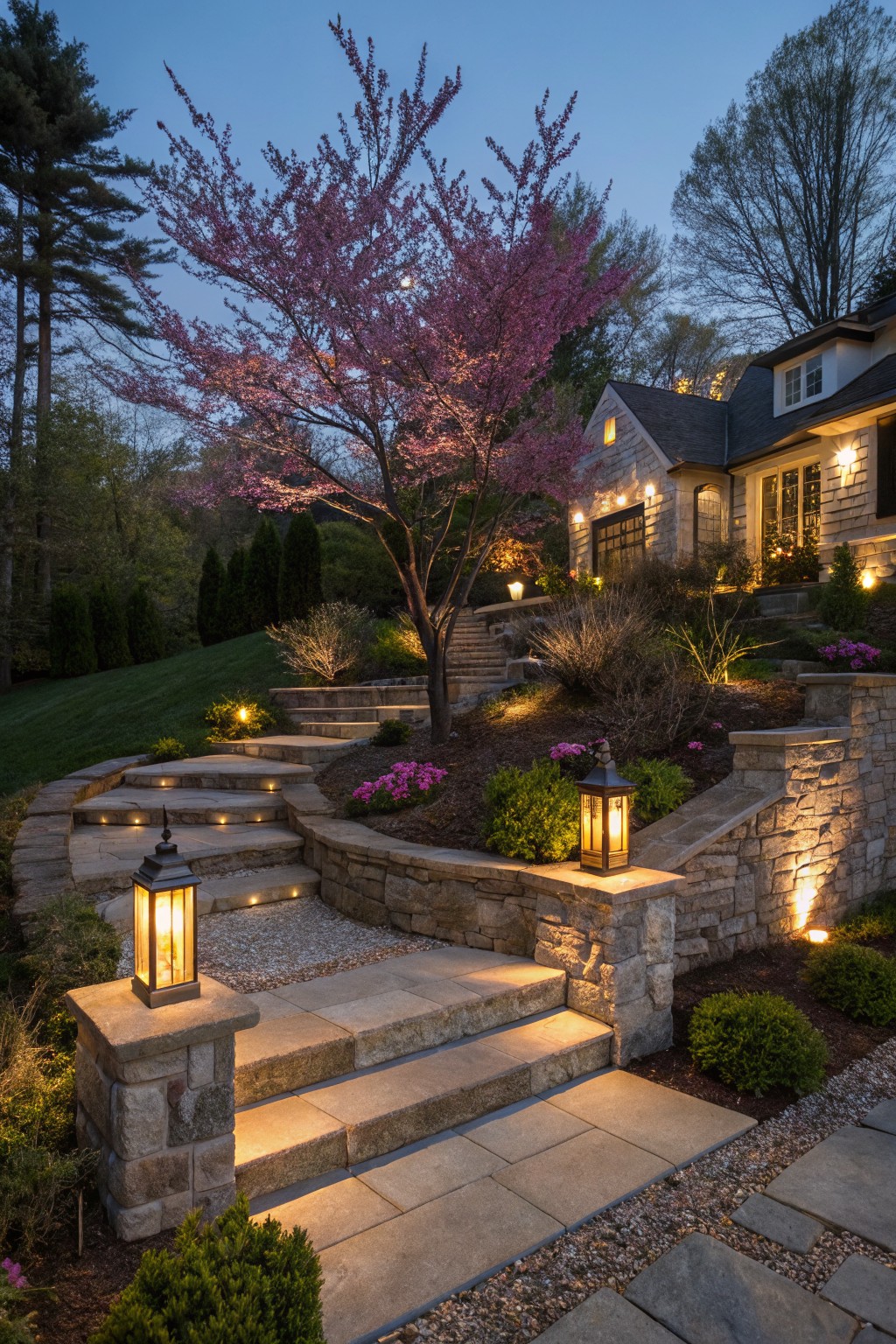
Sloped front yards can feel tricky to work with. But turning retaining walls into built-in garden beds solves that. You get flat planting spots right where the grade changes. Stone walls hold back the soil and create these natural pockets for flowers and shrubs. In this setup, purple blooms and low greenery hug the edges, while a big pink tree sits above it all. It adds color without extra fuss, and the layers make the yard feel deeper.
These work best on hills leading to your entry. Use local stone to blend with the house, then fill beds with perennials that come back each year. Keep paths wide enough to walk, and add low lights in the steps for evenings. Skip it if your slope is gentle. Flat yards don’t need the terraces. Just watch drainage so plants don’t drown after rain.
Frequently Asked Questions
Q: Can these garden bed ideas work if my front yard gets mostly shade?
A: Go for hostas, ferns, and astilbe that thrive without full sun. They bring lush greens and subtle blooms to build depth. Tuck in impatiens for punches of color that last.
Q: What’s the simplest way to build a raised bed without heavy digging?
A: Outline the shape with stones or bricks you already have. Fill it with topsoil mixed with compost. Plant right away so roots anchor everything.
Q: How do I get color that sticks around past summer?
A: Layer in fall bloomers like mums and sedum early on. And switch out spent annuals with pansies come September. They refresh the look through cooler months.
Q: Do these beds need daily watering once they’re going?
A: Water deeply twice a week until plants root in, then ease off. Mulch holds moisture so you water less often. Check soil an inch down, water only if dry.
