


When you approach a house, the front yard’s layout pulls you in first, especially clear pathways edged with rocks that guide your steps naturally.
Rocks bring structure to plantings, helping beds hold their shape as greenery grows and shifts over seasons.
I reshaped one of my front beds last year using fieldstones, and it cut down on weeding while making the whole area feel more put-together.
They age well outdoors, blending into the soil and catching light in ways that keep the yard looking fresh without much fuss.
Certain layered setups catch my eye for how they add depth to sloped or narrow spaces.
Winding Flagstone Path to the Front Door
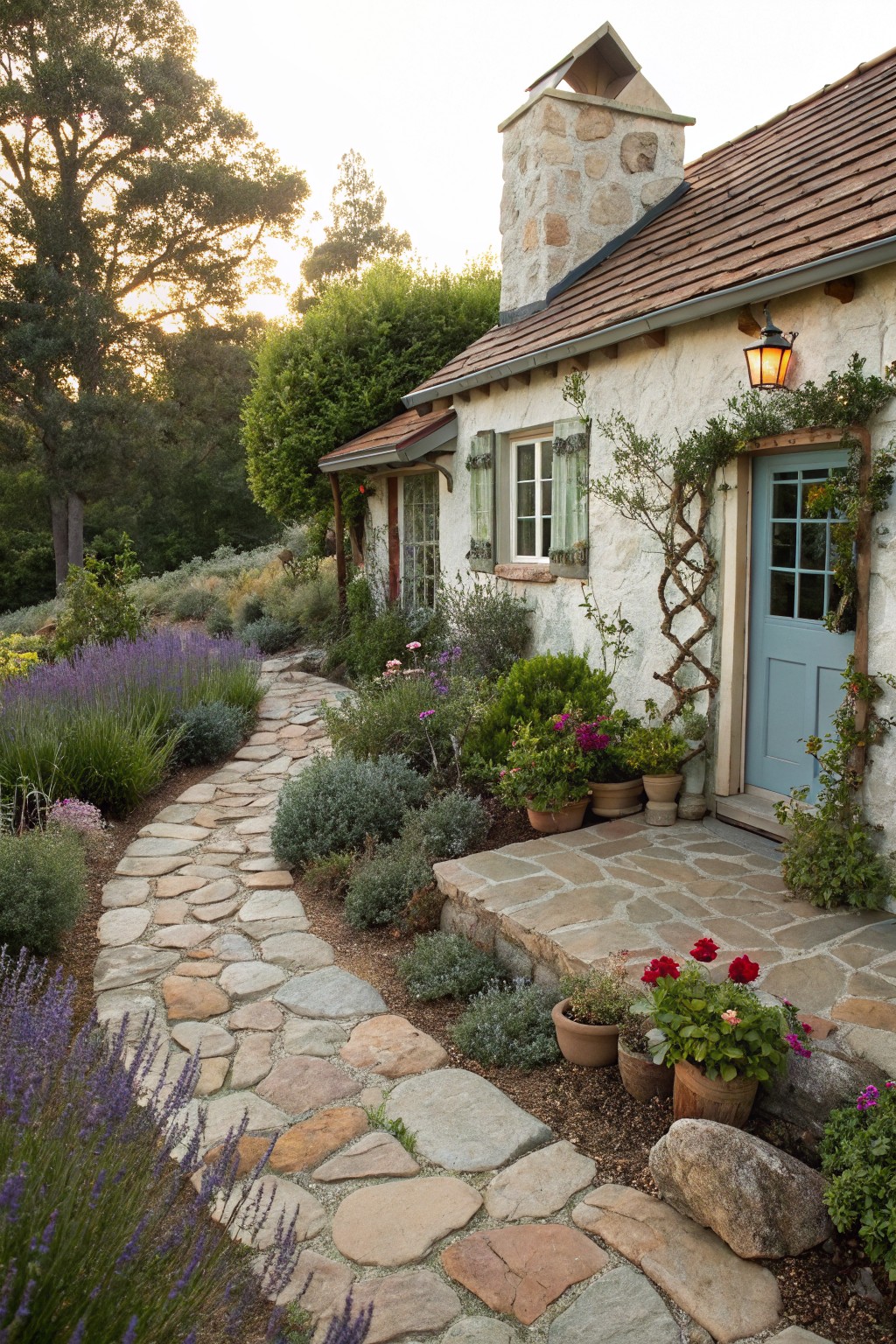
A simple winding path made from irregular flagstone slabs works great for front yards. It pulls your eye right to the entry without feeling too straight or formal. Here the path curves gently through low lavender and other plants, making the walk to the door feel like part of the garden. That natural flow keeps things relaxed and hides any yard flaws along the way.
You can lay this kind of path in most front yards with a bit of slope or flat ground. Source local flat stones for an authentic look, set them in sand or gravel with gaps for plants to grow between. It suits cottage style homes or drier spots where tough plants like lavender thrive. Just space the stones unevenly to avoid a rigid feel.
Large Boulders Anchor Desert Yards

Big boulders give a front yard real presence without much upkeep. Placed just right, they look like they grew there naturally, especially alongside tough plants like agave and cactus. The orange tones of these rocks pick up the warm stucco on the house, making the whole entry area feel put together.
Scatter a handful of them along the driveway edge or near the front door. Fill in with gravel mulch and a few spiky succulents for easy color. This fits dry spots perfectly, like southwestern homes where water is short. Keep rocks away from downspouts to avoid any drainage issues.
Gravel and Rock Stepping Stone Path
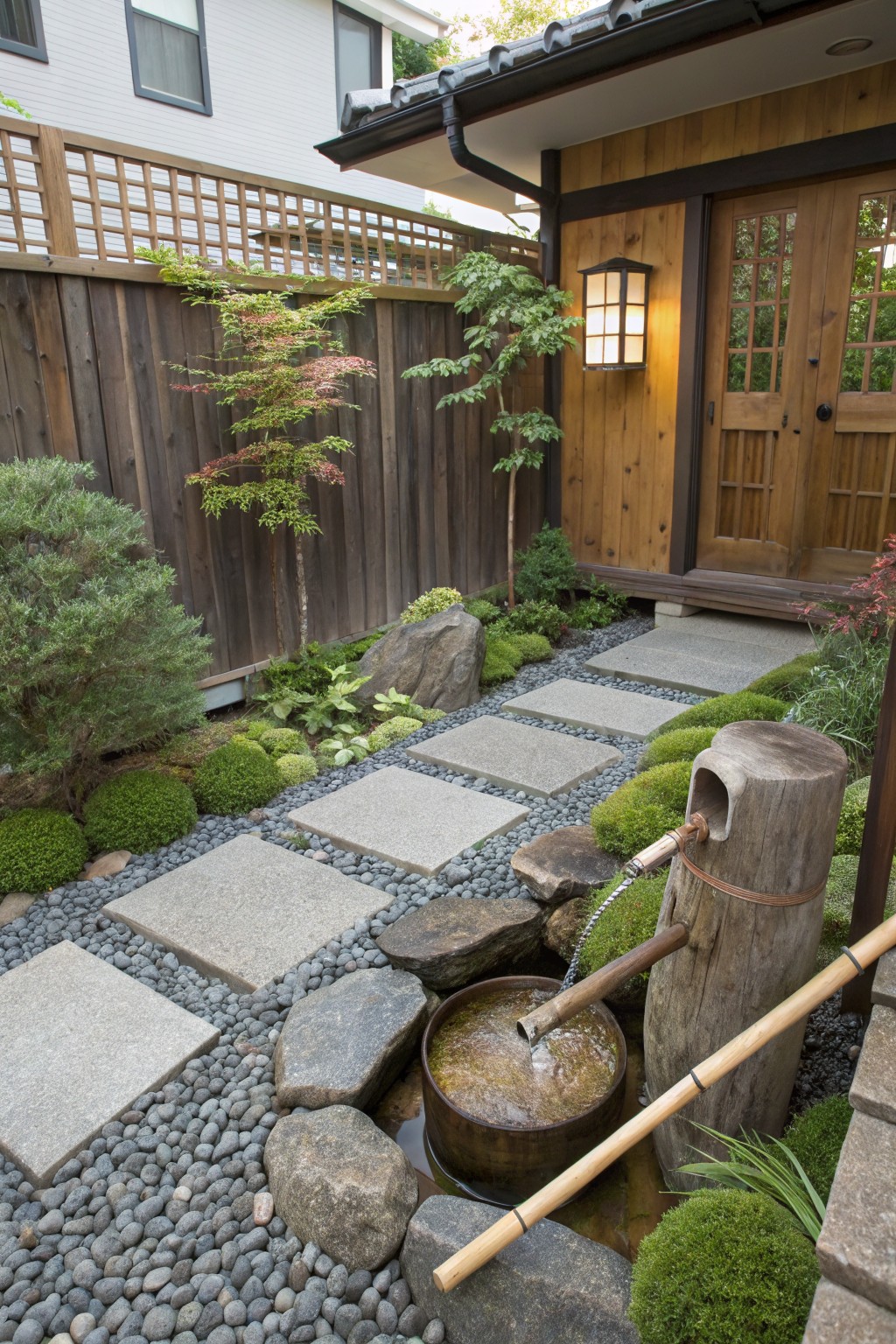
A simple way to handle front yard traffic is setting square pavers into wide beds of smooth gravel, then working in river rocks and boulders nearby. It keeps mud off your shoes, cuts down on mowing, and sets up that quiet garden walk to the door. The dark gravel pops against the stones, and those bigger rocks add some natural shape without much work.
This fits smaller yards or spots near the house entry, especially if you like a Japanese style. Lay gravel two inches deep over fabric to block weeds, space stones for normal steps, and tuck in low plants around the edges. Skip it on steep slopes… too much shifting. Add a bamboo fountain like this one if you want sound, but rocks alone do plenty.
Winding Flagstone Path with Rock Edges
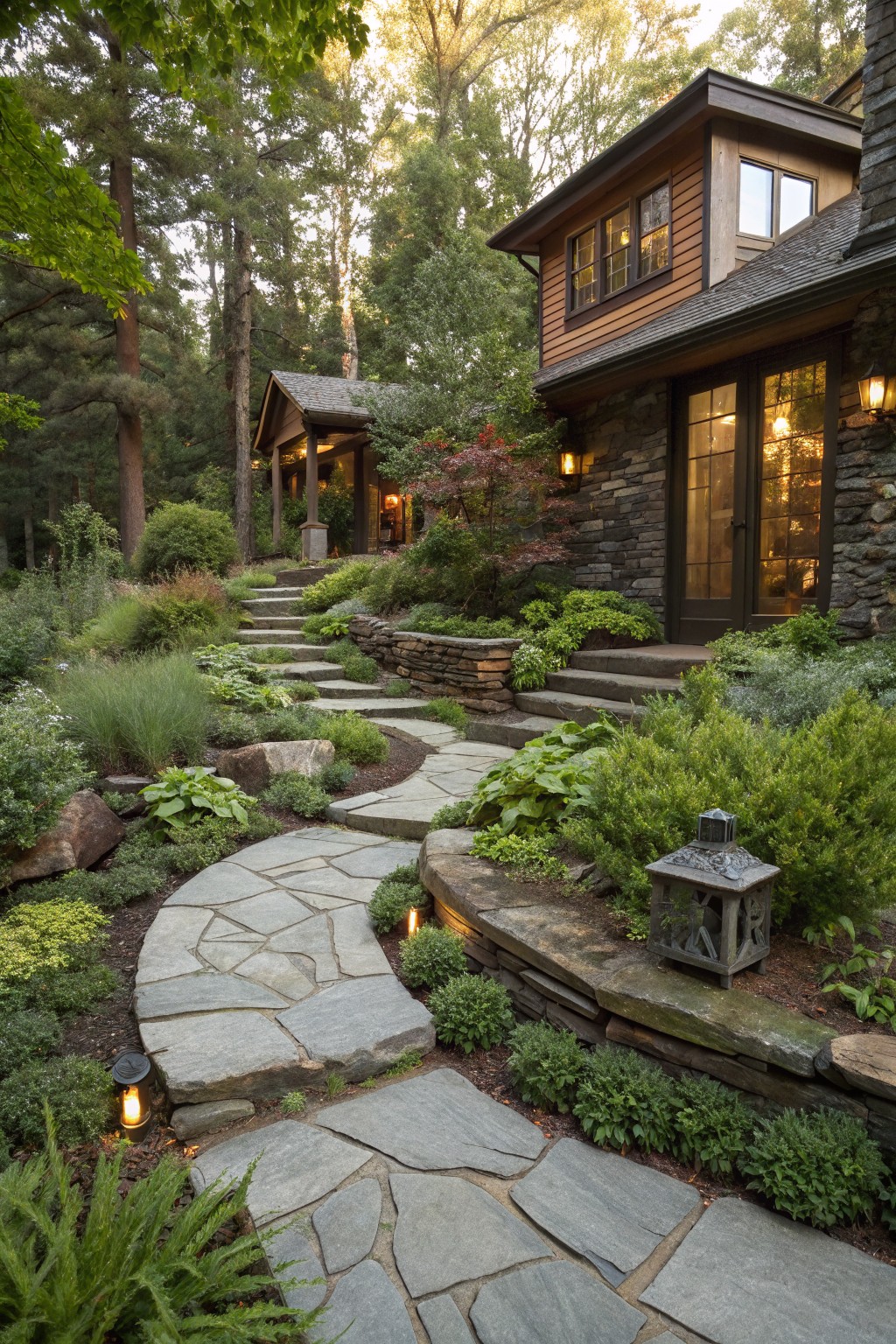
A simple winding path made from irregular flagstone slabs works great in a rock-heavy yard. It curves gently through plantings and boulders, leading straight to the house without looking forced. The rough stone edges mix right in with low rock walls that hold back soil and plants. Folks like how it feels natural, almost like a trail in the woods.
Try this on a sloped front yard where straight paths won’t do. Pick slabs in grays and earth tones to match your rocks. Tuck in ferns or grasses along the sides for softness. It suits cabin-style homes in wooded spots. Just keep the joints tight so it drains well after rain.
Boulders and Pebbles Around Entry Steps

Large boulders mixed with smooth pebbles make a simple path to the front door. They fill in around stone steps and raised beds without much planting needed. This keeps the yard neat and modern. The rocks pick up the house’s stone walls too. It feels calm at dusk with low lights along the edges.
Try this on a slight slope where grass struggles. Go for rounded boulders in different sizes for interest. Add tall grasses or low shrubs in the beds to soften it. Works best with clean-lined homes. Skip it if your yard floods. Just rake the pebbles now and then.
Rock-Lined Flagstone Entry Path
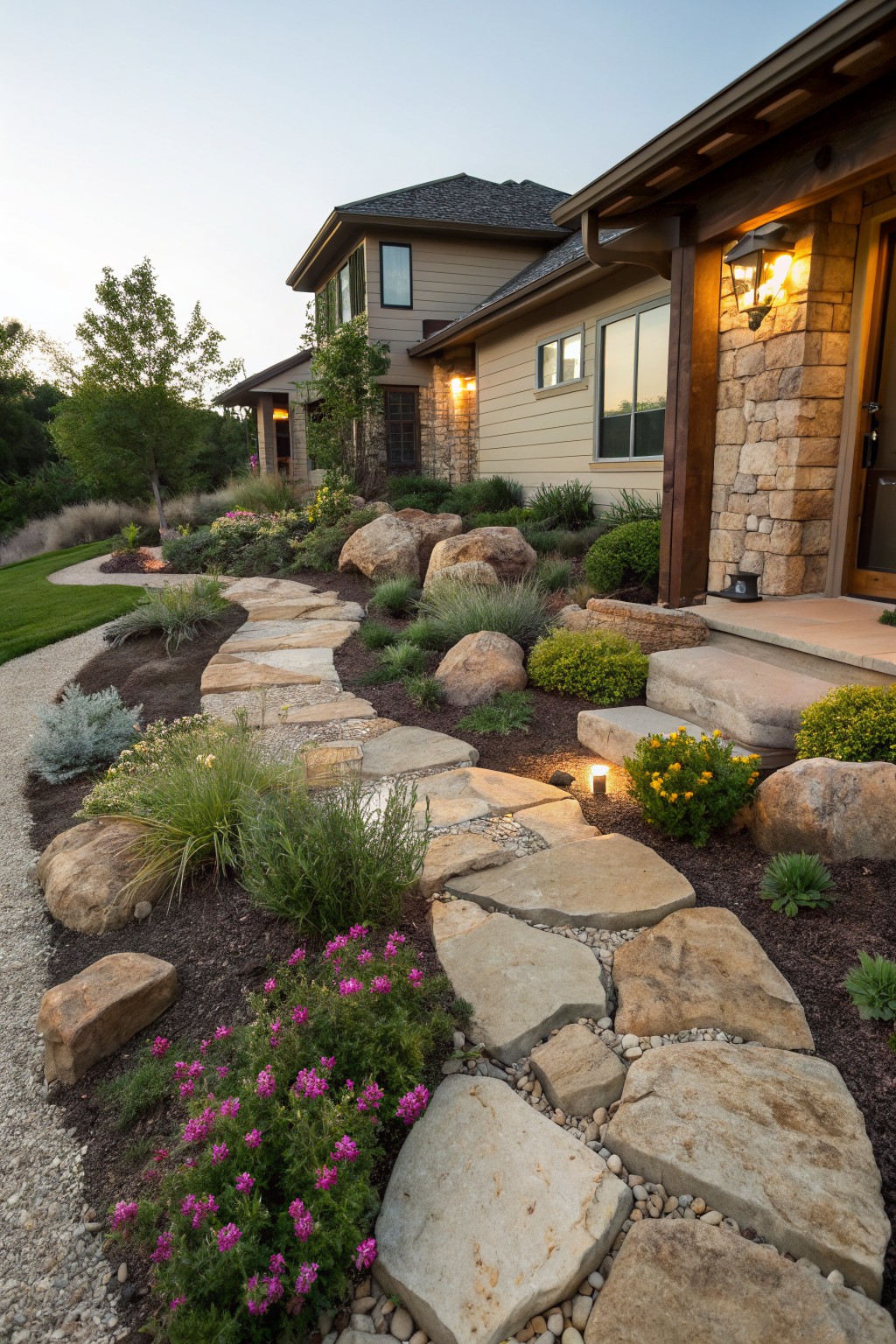
A simple flagstone path winds through the front yard, edged by big boulders and low plants. Those large rocks give the walk a rugged, natural feel that pulls the eye right to the door. No fussy borders here. Just stones stepping casually over gravel and mulch.
Try this where you want low upkeep and some heft in the yard. It suits homes with stone or wood siding. Source boulders locally for less hassle. Space them unevenly… keeps it from looking too planned. Add a path light if evenings matter.
Stone Slab Path Set in Gravel
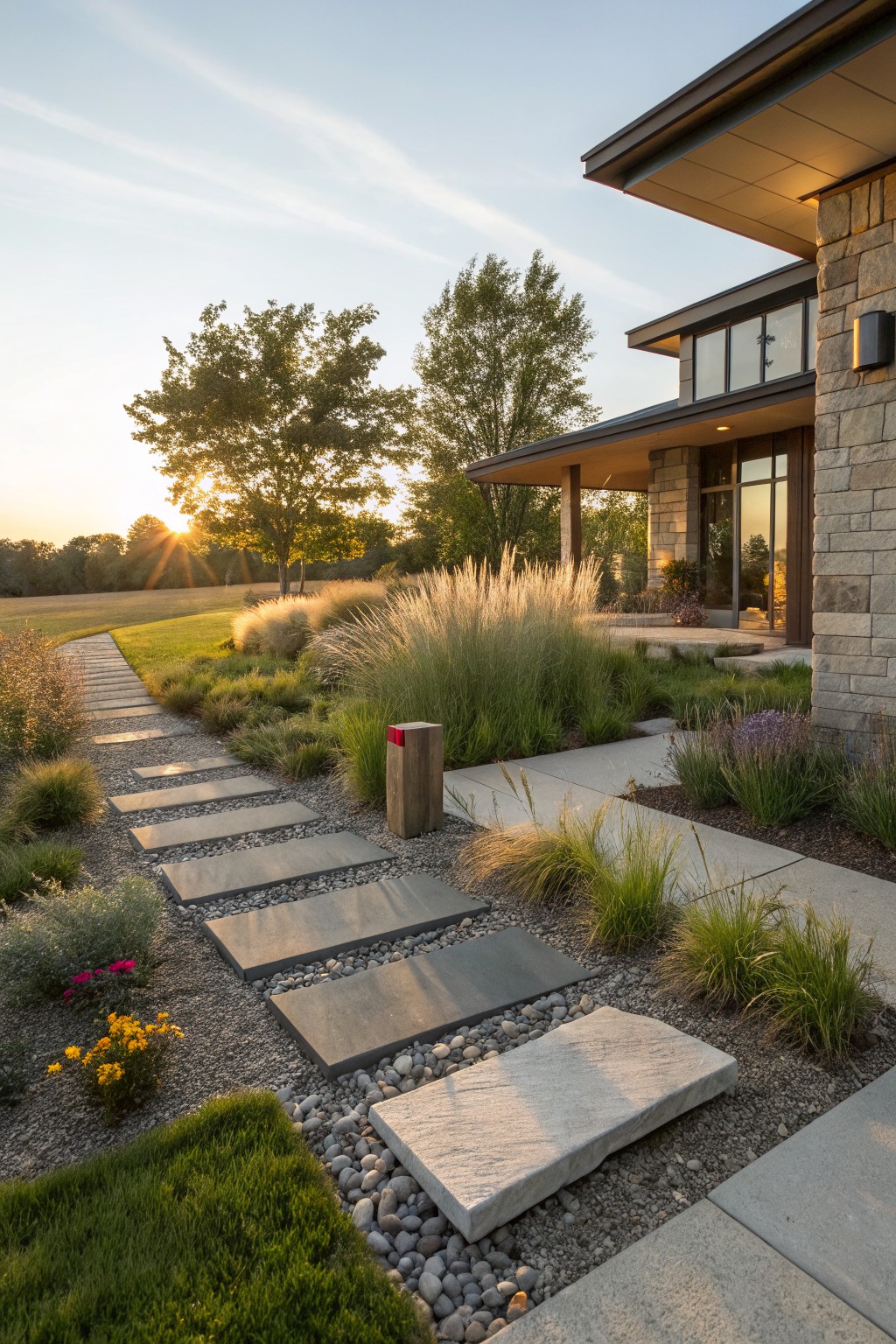
One straightforward way to add style to your front yard is a path made from large stone slabs laid right into gravel beds. It keeps things simple and modern, with the slabs guiding you to the door while gravel fills the gaps for easy drainage. Tall grasses and low plants tucked around the edges make it feel natural, not fussy.
This setup works great for homes with a clean, contemporary look or even more traditional ones wanting less upkeep. Lay the slabs irregularly for a casual rhythm, space them so gravel shows between, and plant drought-tolerant stuff like switchgrass nearby. Just make sure the gravel base is compacted well to avoid shifting over time.
Big Boulders Next to Stone Paths

A large boulder sitting right beside a simple stone path is one of those easy ways to make a front yard feel more interesting. It adds some real scale without trying too hard. The path stays clean and walkable, but that one big rock pulls your eye up the walkway toward the house. Low plants and gravel fill in around it nicely.
This works best in yards that aren’t too crowded already. Place the boulder off to one side of the path, maybe near the steps, so it frames the entrance. It’s great for modern houses with stone or wood siding. Just make sure it’s stable and not blocking foot traffic. Smaller rocks scattered nearby keep things from feeling too empty.
Boulder-Framed Stepping Stone Path
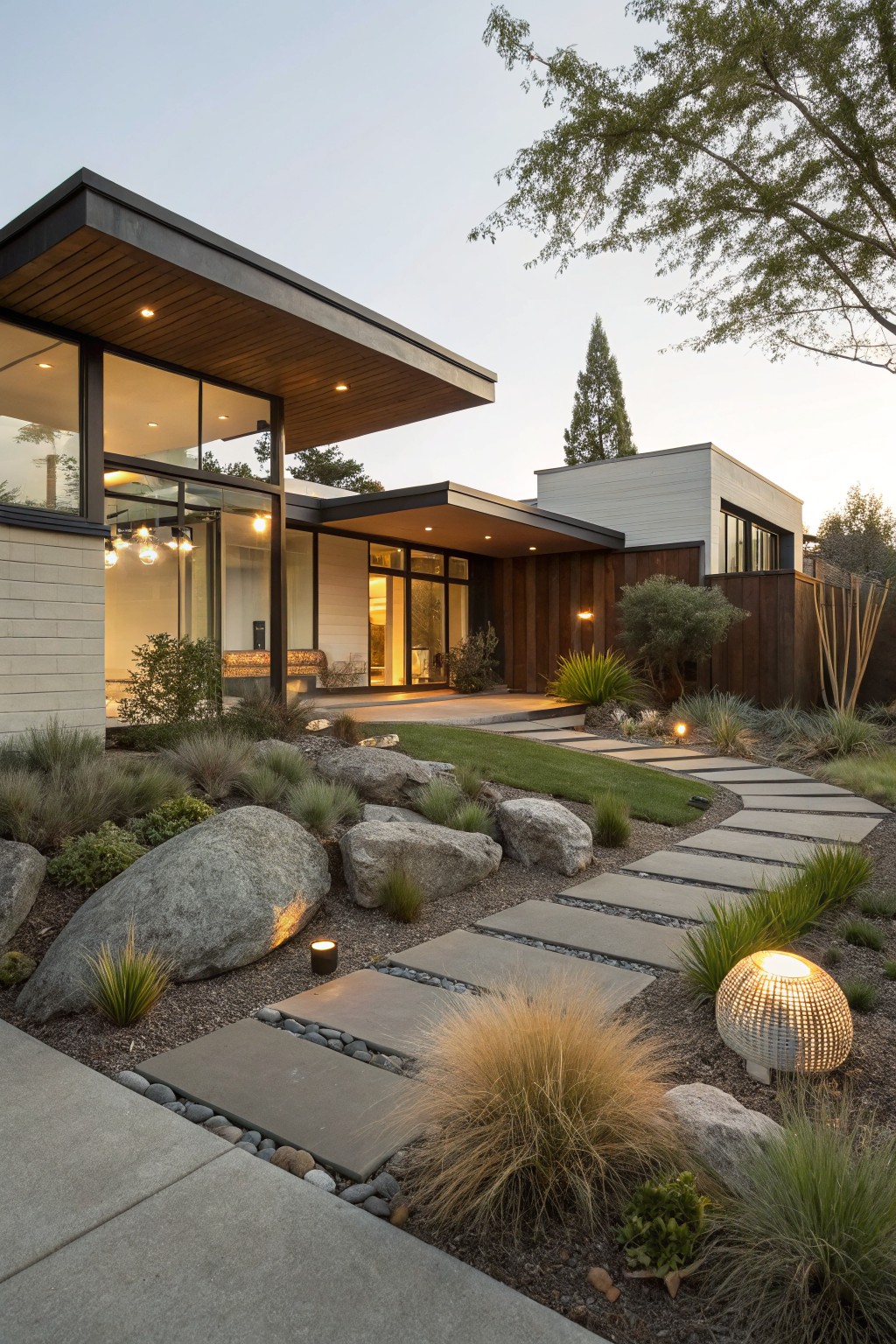
Big boulders like these make a simple path feel more like a natural trail right up to your front door. They hold the space together and draw your eye along without overpowering the yard. Mix in some tough grasses around them, and you get that easy, rugged look that fits a lot of front yards.
This works best where you want low upkeep and a bit of curve to slow people down on the way in. Go for local rocks to keep costs down, and space the concrete pavers just right so it’s walkable but not too formal. Suits modern houses or drier spots, but watch the scale, rocks that big need room to breathe.
Curved Stone Walls for Front Yard Beds
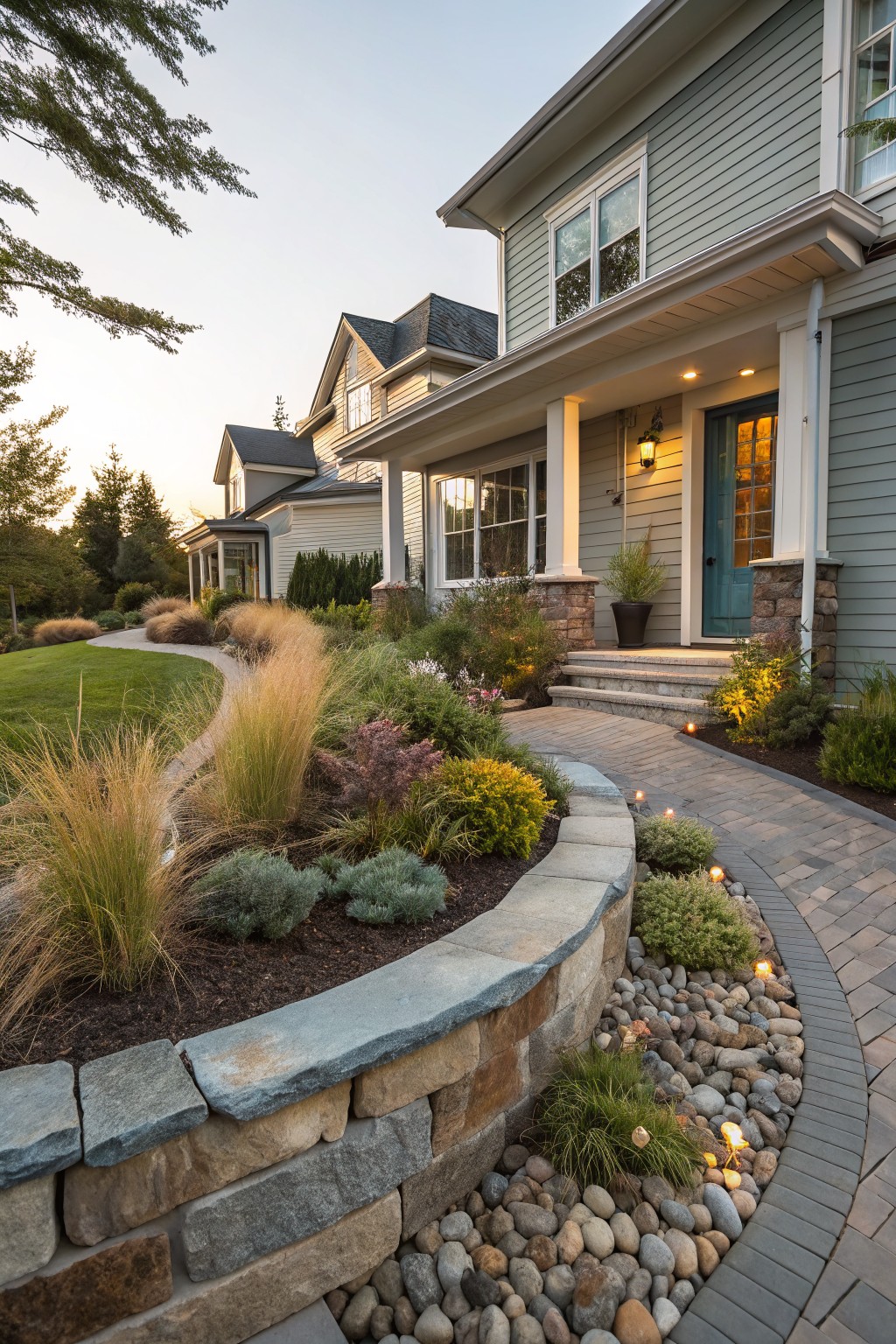
A low curved stone wall like this runs right along the walkway, holding back soil for grasses and low shrubs. It gives the yard some gentle shape without being too tall or fussy. The river rocks at the base fill in around the plants, keeping weeds down and adding a clean pebbly look that ties into the paver path.
This works well on lots with even a slight slope, or just to make a flat front yard more interesting. Go for natural fieldstone or similar if you can source it locally. Plant drought-tough stuff like fountain grass that doesn’t need much care. Skip it if your soil’s really sandy… might need extra prep there.
Winding Pebble Path with Stone Edges
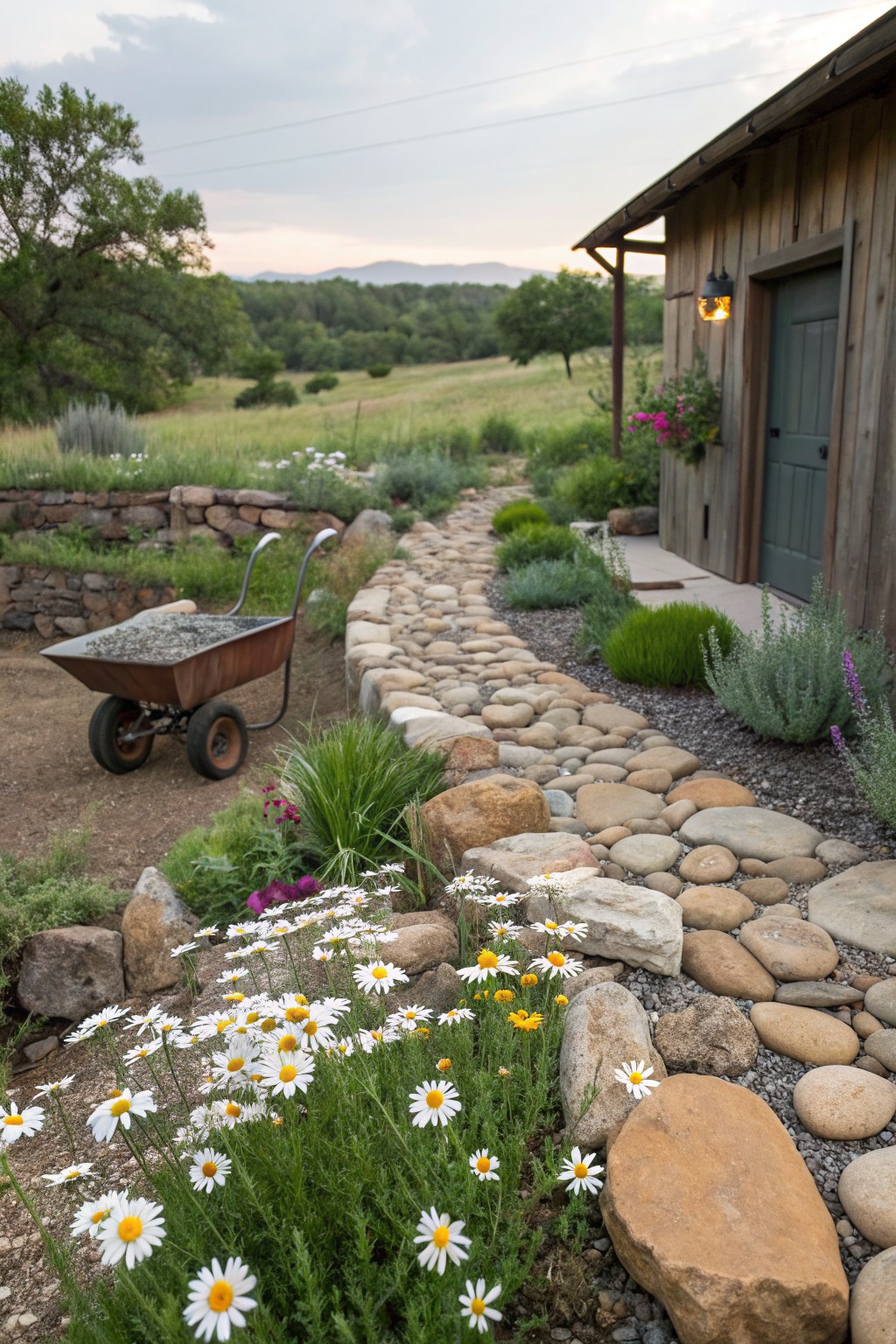
A simple pebble path like this winds gently through the yard using flat river rocks set into gravel. Stone walls on one side hold it in place, and low plants spill over the edges. It feels natural and fits right into a country setting without much upkeep. The curve adds a little interest and leads straight to a garden shed for practical use.
You can lay something similar in a front yard to connect the driveway to an entry or outbuilding. Use rounded pebbles for drainage and stack local stones for the border, then tuck in drought-tolerant flowers like daisies or lavender. It works best on slopes or uneven ground, but make sure the base is compacted so rocks don’t shift over time.
Stepping Stones in Gravel Beds

A simple way to handle a walkway is to lay down pea gravel and set flat stone pavers right into it for steps. In this setup, the gravel fills the spaces between the stones and softens the look of the path. It keeps things low maintenance since weeds stay down easier than in plain dirt, and the stones give sure footing without needing a full slab of concrete.
This works best in narrow side yards or leading up to a back entry, like on homes with stone walls or a bit of modern edge. Go for irregular slate or flagstone about 2 feet across so they don’t shift. Just rake the gravel now and then to keep it tidy, and add a few potted plants along the edge if you want some green.
Frequently Asked Questions
Q: How do I stop weeds from popping up in my new rock yard?
A: Lay down landscape fabric before you spread the rocks. It blocks light so weeds can’t sprout. Cut small slits in the fabric if you want to add plants later.
Q: What if my front yard slopes? Will rocks stay put?
A: Choose angular rocks over round ones. They lock together better and resist sliding downhill. Rake them in firmly after placing, and add a thin gravel base for extra grip.
Q: Can I mix in some plants with these rock ideas?
A: Pick tough, drought-loving plants like succulents or ornamental grasses. Plant them right through the fabric into the soil below. They add color without much water hassle.
Q: How much rock do I really need for a basic front yard bed?
A: Measure the length, width, and aim for 2-3 inches deep. Order a bit extra, rocks settle. Grab them from a local quarry to save on delivery.
