

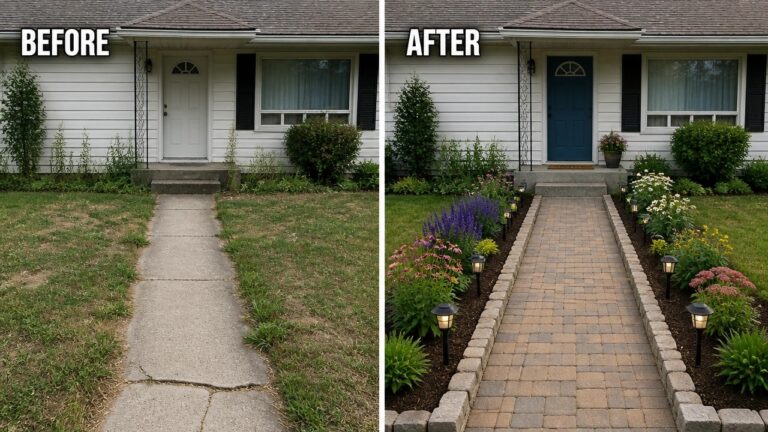
I often notice that a front yard with uneven grass and a bare walkway can make the house itself feel less welcoming from the street.
When I consider what actually improves the entry, it usually comes down to adding some planting structure and clearing sight lines to the door rather than trying to overhaul everything at once.
Those small shifts tend to matter more than expected.
I like to picture how certain plant placements or path adjustments would fit the houses I pass every day.
A few of the ideas focus on simple edging and layout fixes that make coming home feel more settled without requiring major work.
Use Pavers To Give A Front Walkway More Structure
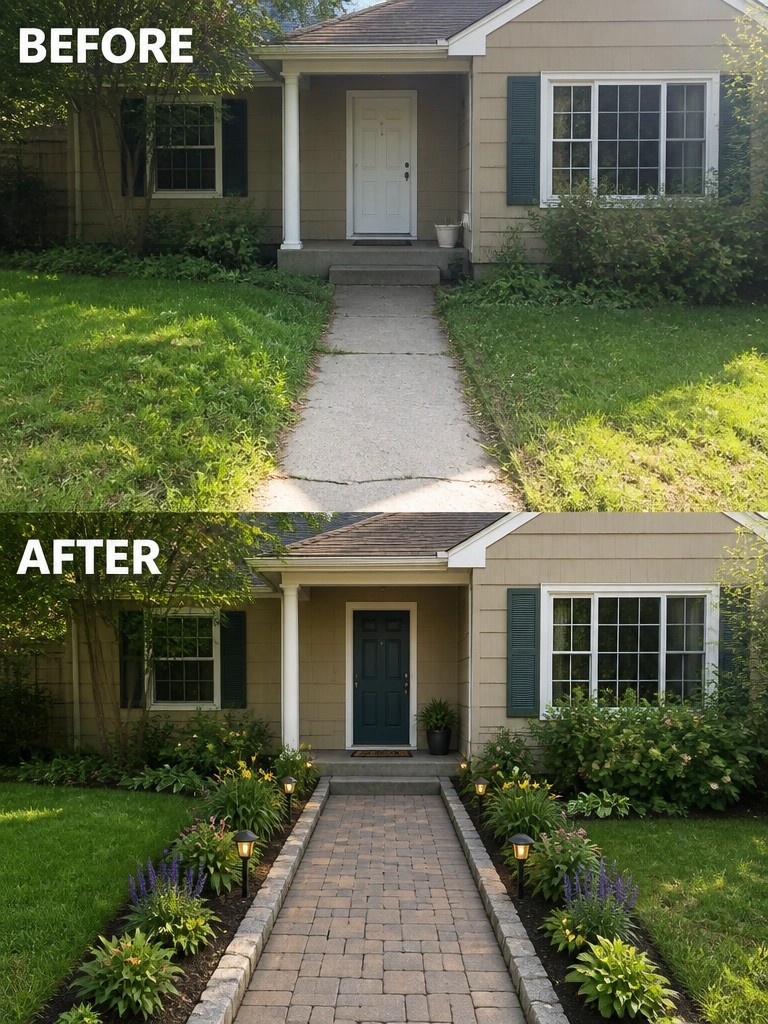
A plain concrete path can make the front of a house feel unfinished. Switching to pavers adds clear edges and a finished look while the new garden beds on both sides frame the walk and guide visitors straight to the door. The simple addition of low lights along the borders also makes the path feel more intentional without needing a lot of extra features.
This approach works well on houses where the entry feels a little flat or the lawn runs right up to the walk. Keep the beds fairly narrow so they do not crowd the path, and choose plants that stay low near the edges. Starting with the walkway and borders first gives you a solid base before adding any extra decor.
Refresh A Plain Entry With New Paint And Planters
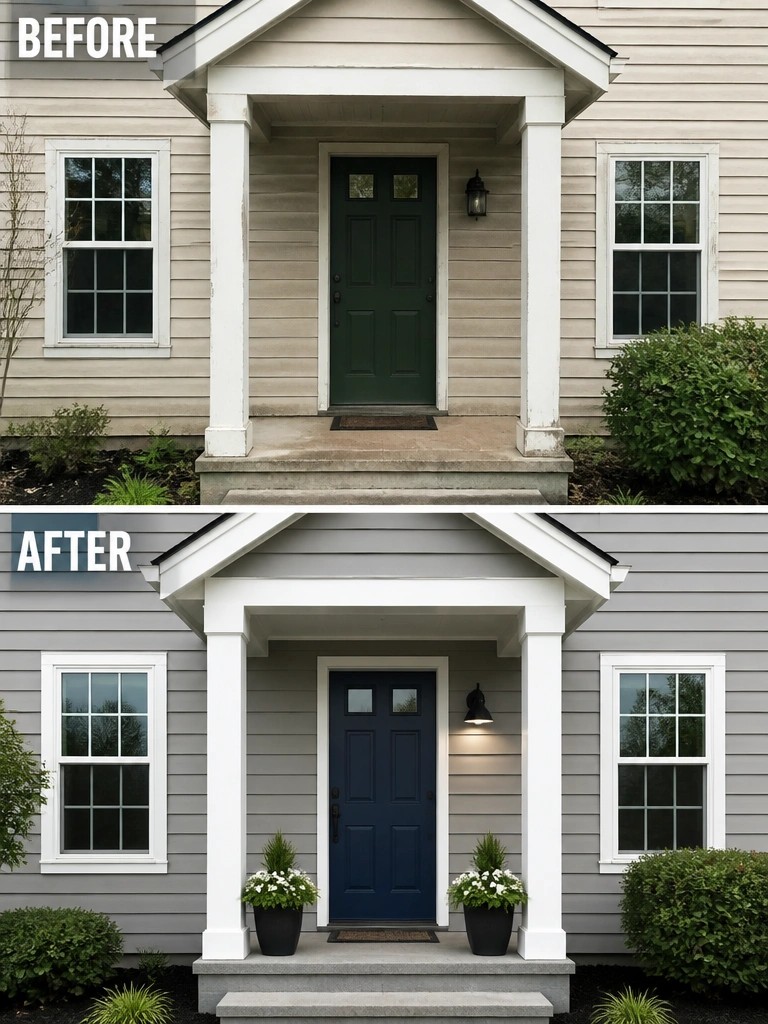
A simple color change on the siding and door can make a front entry feel much more current. In this case the house went from a tired beige to a soft gray, and the door shifted from dark green to a deep blue. Adding two matching planters on either side of the door gave the porch a finished look without crowding the space.
This approach works well on homes with straightforward porches that lack much detail. Choose a paint color that still feels like it belongs to the neighborhood, then pick one or two planters in a similar tone so the whole entry reads as one simple update. Keep the rest of the landscaping light so the new color and pots stay the focus.
Add Structure To An Overgrown Front Yard
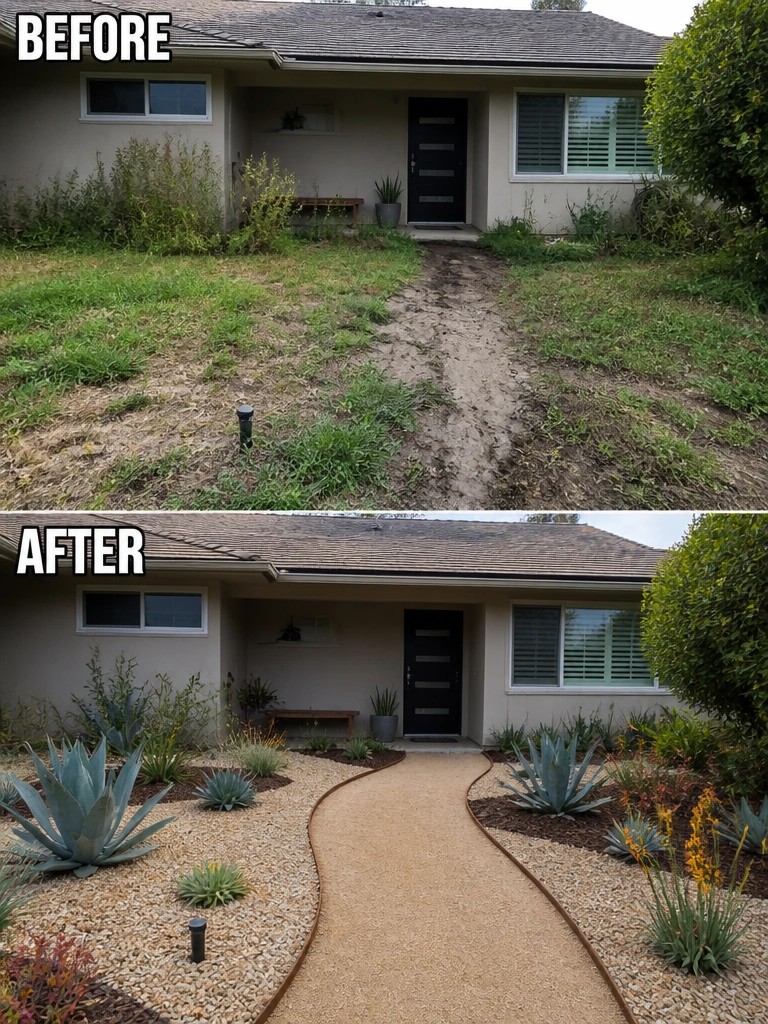
A dirt path through patchy grass and weeds makes the whole front yard feel neglected. Adding a gravel path with simple edging and bordered beds gives the space a clear layout that feels planned rather than accidental.
This idea works best on smaller front yards where the goal is easier upkeep. Clear the overgrowth first, then shape the path before adding plants. It suits homes that need a low-maintenance update without major construction.
Add A Deck To Give The Entry A Clear Purpose
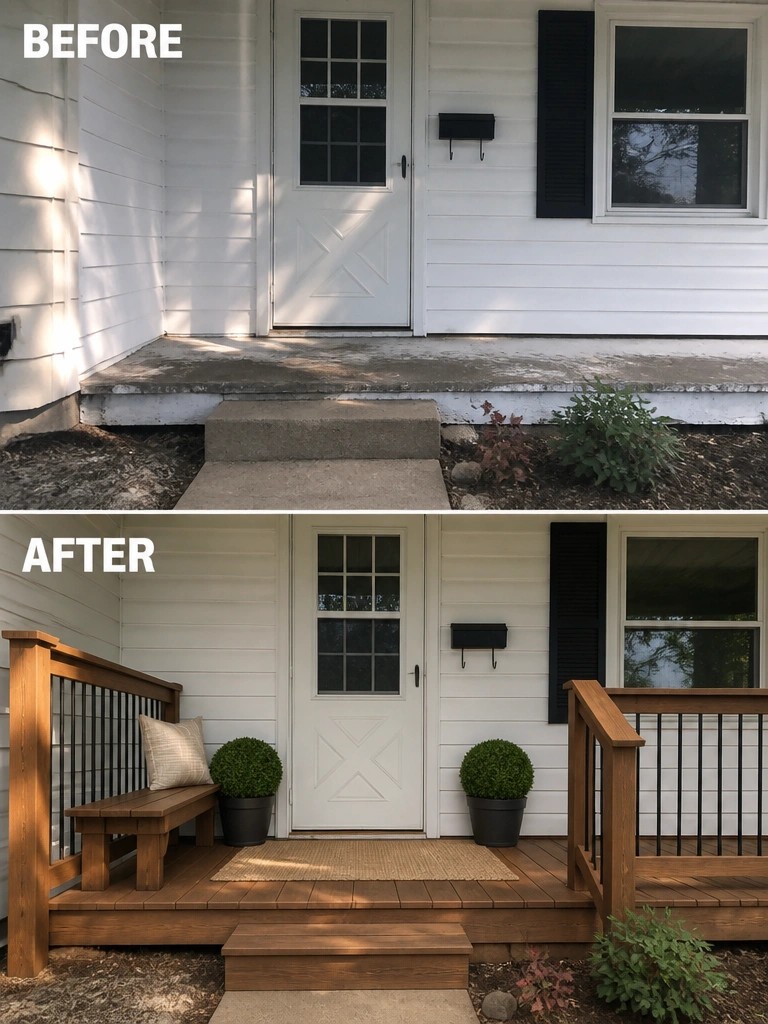
The concrete steps in the before photo left the front door feeling exposed and unfinished. Adding a raised wooden deck creates a proper landing that makes the entrance feel intentional and much easier to use.
This approach works well on homes where the original steps sit too low or look abrupt against the siding. Keep the deck simple, match the railing style to the house, and add just one bench or a pair of planters so the space stays open and easy to walk through.
Add Pavers And Garden Beds To Define The Front Path

A plain concrete walk with open lawn on both sides can feel unfinished and a little lost in front of the house. Replacing the concrete with pavers and adding raised beds on either side gives the path a clear edge and makes the whole front yard look more intentional.
This approach works well on smaller lots where you want the entry to feel organized without crowding the space. Start by deciding the width of the path and the depth of the beds, then choose a few repeating plants so the beds look full but stay simple to maintain. The mailbox base in the after photo shows how one small hardscaping detail can tie everything together.
Clear Overgrown Shrubs To Open Up The Entry
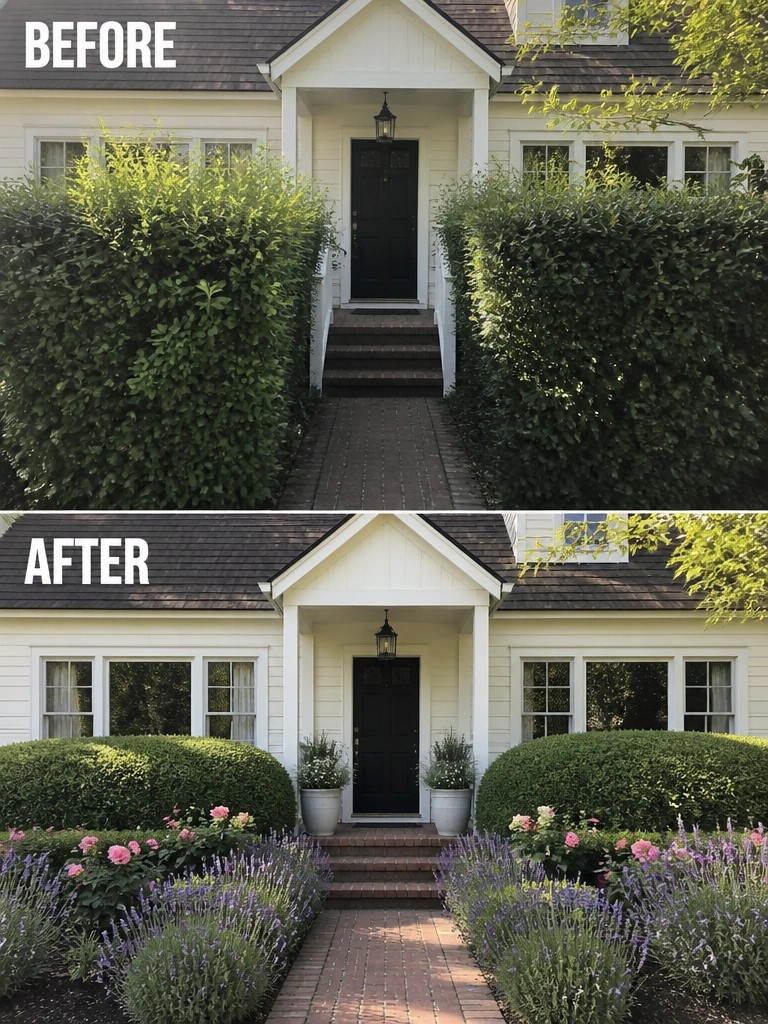
Tall, dense shrubs can quickly swallow a front entrance and make the whole house feel closed in. In this case, removing the heavy growth on both sides of the door let the windows show again and gave the facade a lighter, more balanced look. The new planting stays lower and steps down in layers, so the door becomes the clear focal point instead of disappearing behind a wall of green.
This approach works well on houses where the original landscaping has gotten out of scale. Start by cutting back or replacing the largest shrubs, then add a few simple flower beds along the walk and a pair of pots by the steps. Keep the new plants modest in height so they frame the door instead of hiding it.
Give A Bare Porch A Clear Purpose
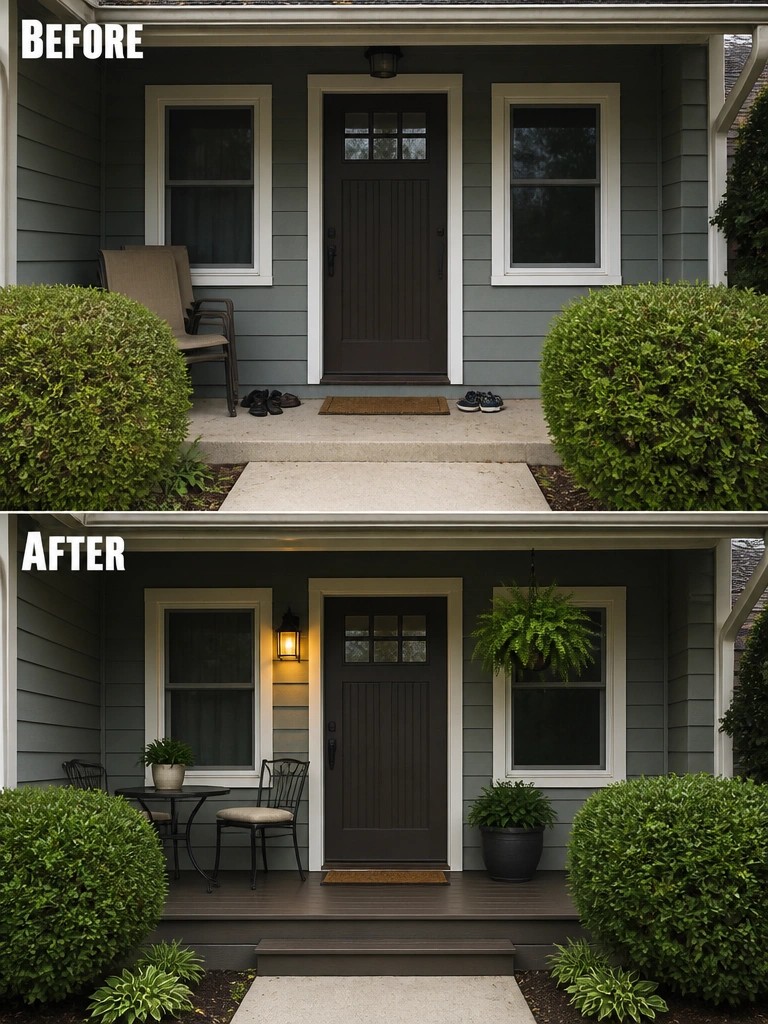
A front porch that only holds a single chair and a doormat often feels unfinished. Adding a small table and chairs along with a few potted plants turns the same space into a spot people actually use.
This approach works well on houses where the entry looks flat. Keep the furniture light so the porch does not feel crowded, and place the main seating where it still leaves room to walk. One or two plants and a simple light near the door are usually enough to make the change feel complete.
Curve The Front Walk For A Better Entry
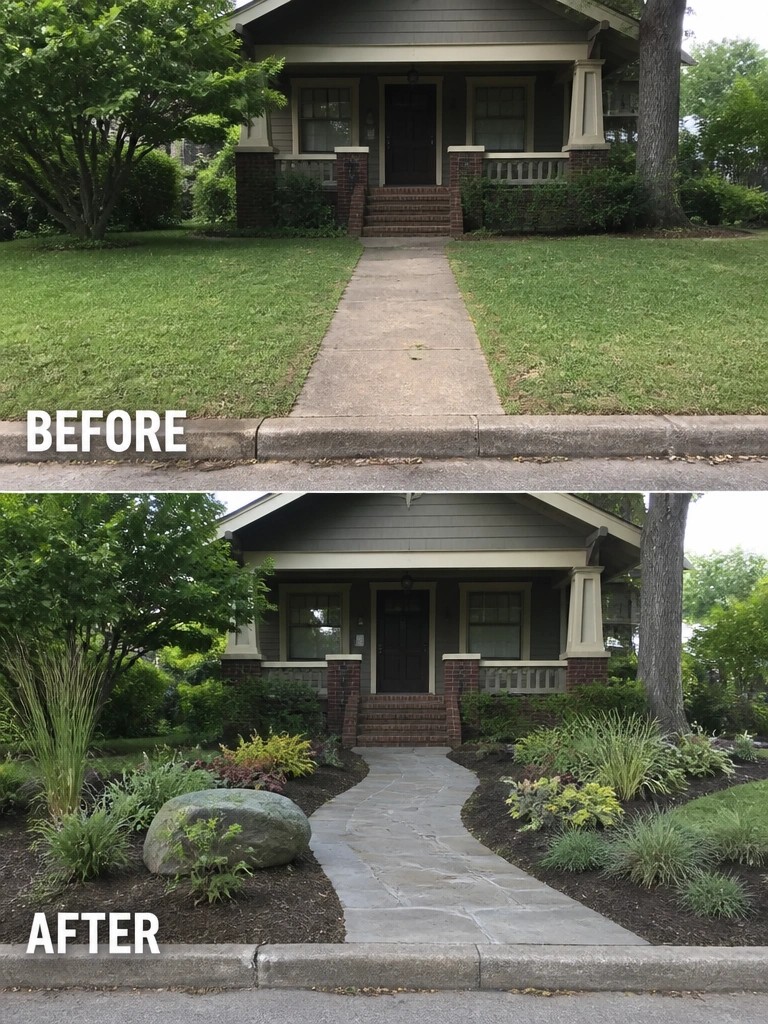
A straight concrete path can make the front of a house feel stiff and a little dull. Replacing it with a gentle curve in stone changes how the space feels right away. The new path leads the eye toward the door in a softer way, and the added planting beds on both sides give the house a finished frame without crowding the lawn.
This idea works well on homes where the front yard is mostly open grass and the existing walk feels too direct. Keep the curve simple so it still feels natural, and use a material like flagstone that matches the style of the house. Start with the path itself before adding too many plants, since the shape alone makes the biggest difference in how welcoming the entry looks.
Frame A Plain Entry With Shutters And Planters
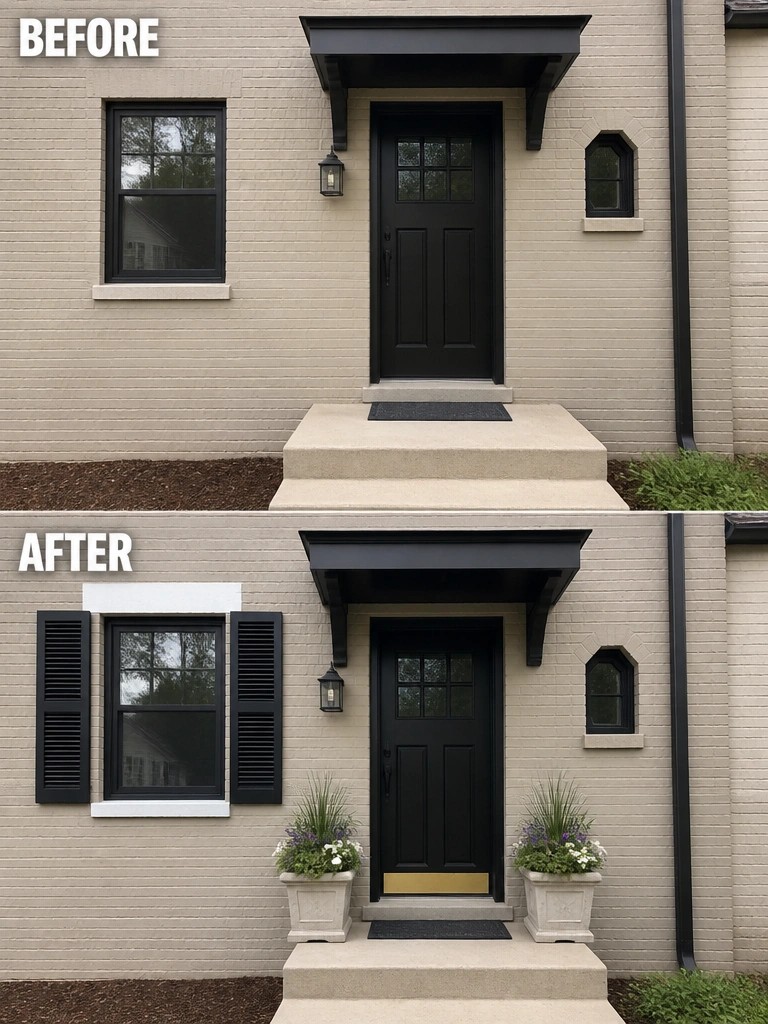
Many entries feel unfinished when the windows sit bare and the steps have no clear purpose. Adding shutters to the window and a pair of planters on the steps gives the area simple structure and draws attention to the door without major construction.
This idea works best on homes with fairly plain brick or siding. Match the shutter and planter colors to the door and hardware so the changes feel intentional rather than scattered. Start with those two elements before adding more details.
Define The Lawn Edge To Give The Yard Shape

An overgrown or patchy front lawn often looks worse because it has no clear boundary. In this case the fix started with a simple curved edge that separates the grass from the planting beds. Once the line was cut and the beds were mulched, the whole yard suddenly looked planned instead of neglected.
The same approach works on most small front yards. Cut a clean edge first, even if you do nothing else that season. Add mulch inside the new beds and keep the plantings low and simple. The edge does most of the work and keeps the lawn looking tidy with very little extra effort.
Make A Plain Front Entry Feel Welcoming
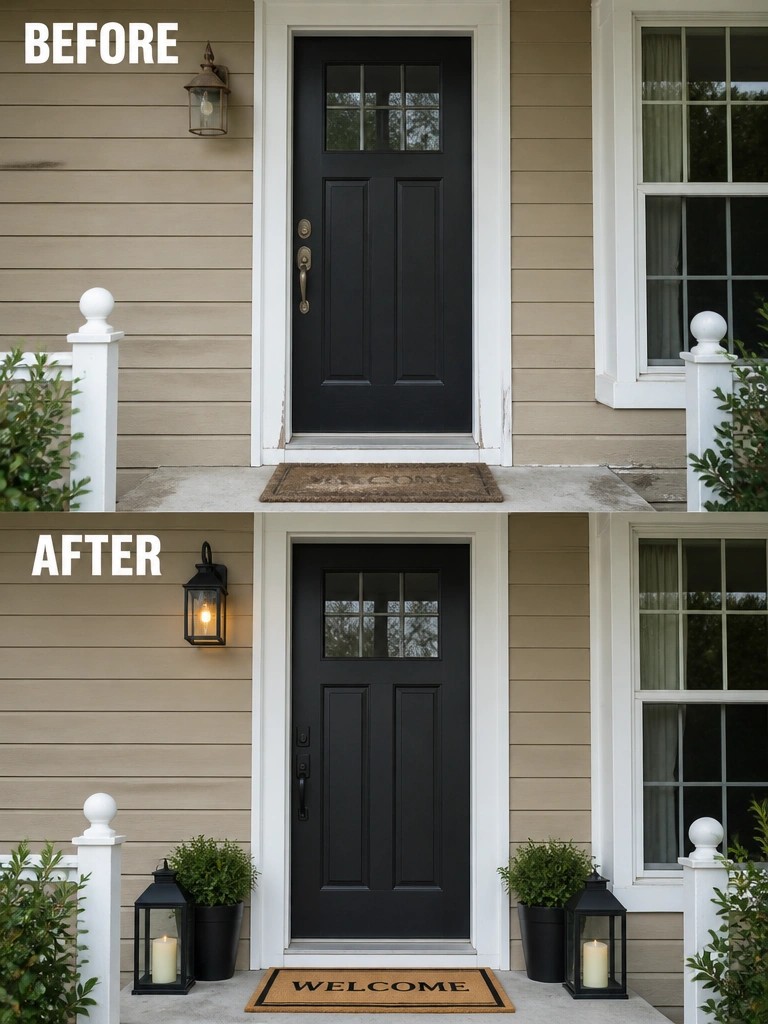
A front door that sits on its own often looks unfinished even when the paint and hardware are in good shape. Adding matching planters and lanterns on either side gives the entry a simple frame that makes the whole facade feel more put together.
This idea works on many houses with basic siding because it needs only a few matching pieces rather than a full renovation. Keep the planters the same size and color, and choose lanterns that match the door hardware so the additions feel like part of the house instead of extra clutter.
Add A Pergola To Frame A Front Walkway

A plain concrete path can feel a bit exposed and unfinished. Adding a simple wooden pergola over the walkway gives the entry some height and structure, while vines and string lights soften the look and make the approach feel more intentional.
This idea works well on any straight front path that leads directly to the door. Start with a basic pergola kit sized to the width of the walk, then add climbing plants that can handle your climate. Keep the rest of the planting simple so the pergola stays the main feature instead of competing with too many new beds.
Define The Front Yard With Edged Beds And A Path
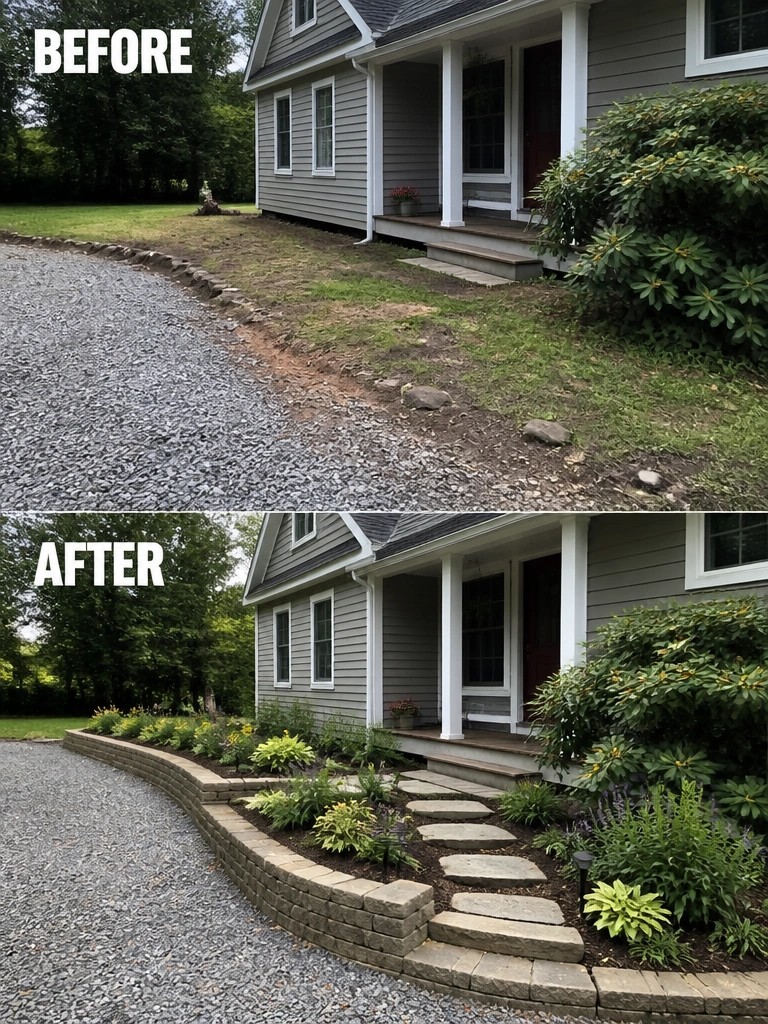
A simple border and a clear path can turn a messy front edge into something that feels intentional. In this case the bare dirt and loose gravel next to the drive were replaced with a low stone wall that holds the beds and a row of stepping stones that lead straight to the porch. The plants stay low and varied, so the walkway stays easy to follow.
This approach works best on houses where the front yard meets the driveway or road without any separation. Start with the edging and path first, then fill the beds. Keep the beds fairly narrow so they do not crowd the walkway or make mowing harder. The goal is structure, not a lot of new plants.
Replace Worn Concrete Steps For A Better Entry
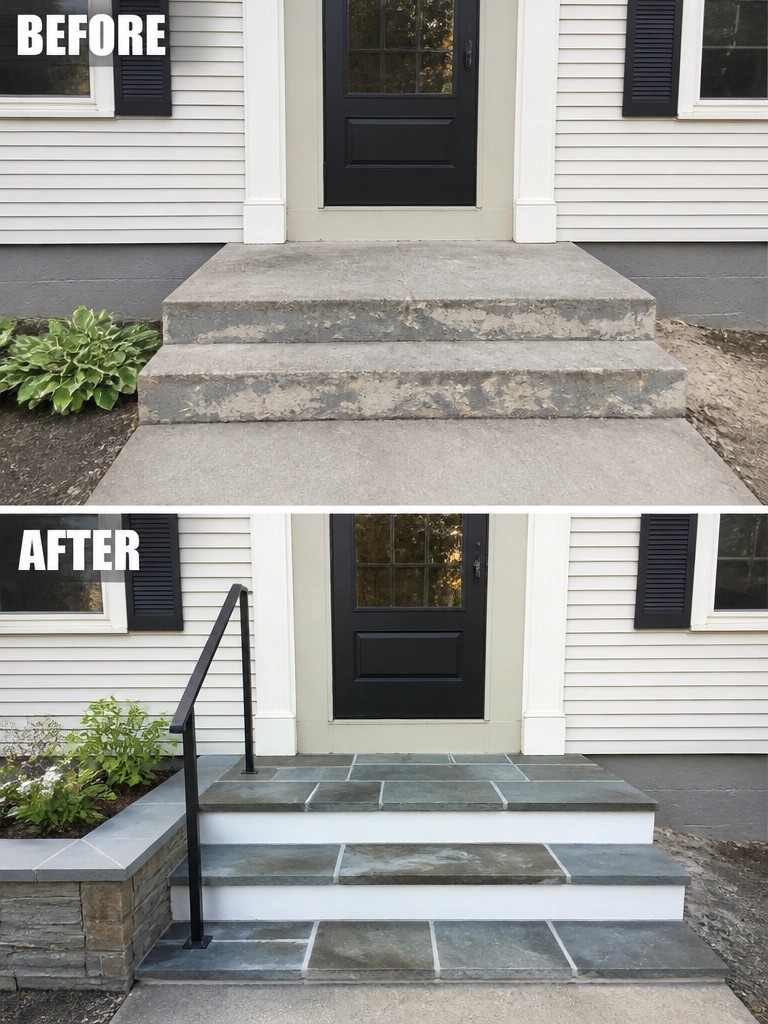
Old concrete steps often look tired after years of wear and can make the whole front of a house feel neglected. Switching to stone treads with clean white risers and adding a simple railing gives the entry a much more finished look without needing a full renovation.
This approach works well on homes where the steps are the main visible feature from the street. Start by checking the condition of the existing base and choose materials that match the house colors. Keep the railing simple so it adds safety without taking over the view of the door.
Replace A Worn Fence To Create A Welcoming Entry
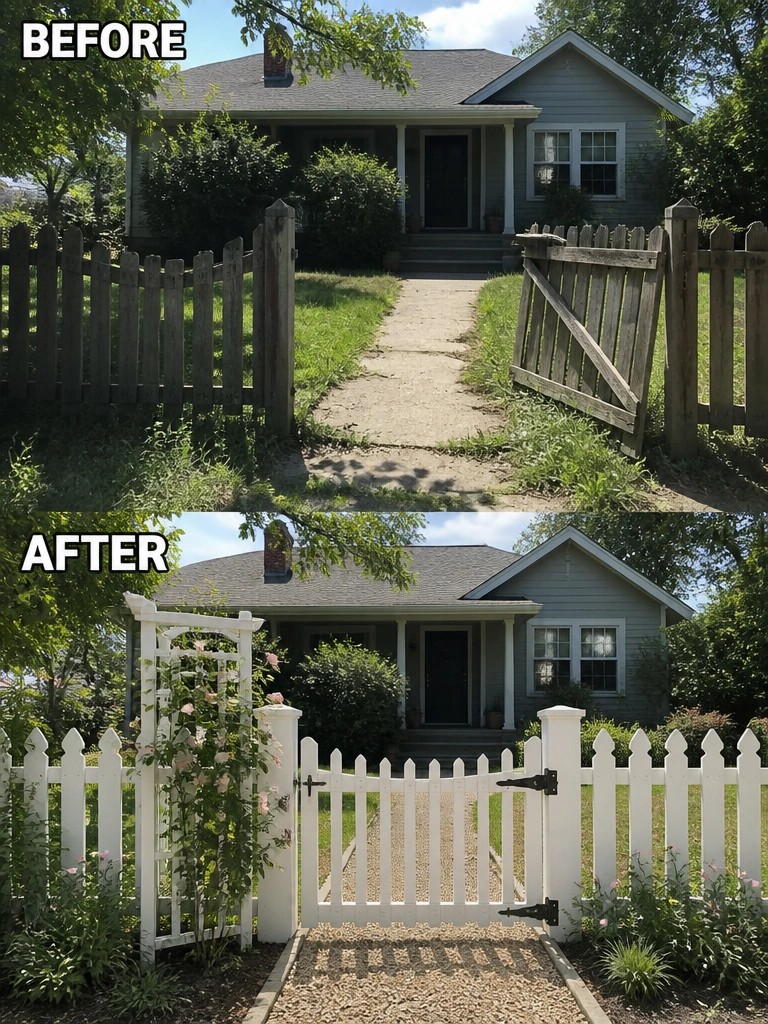
An old fence that sags or leans can make the whole front of a house feel neglected even when the house itself is fine. In this case the change came from swapping the broken wooden fence and open dirt path for a straight white picket fence and a simple gravel walkway that leads clearly to the door. The new fence gives the yard a finished edge while the path keeps feet off the grass and makes the entrance feel intentional.
This idea works best on smaller front yards where the fence is highly visible from the street. Keep the style simple so it ages well, and add just a few low plants along the base rather than filling every post with flowers. The main goal is to fix the boundary first, then let the path do the rest of the work.
Add Lighting To Front Steps
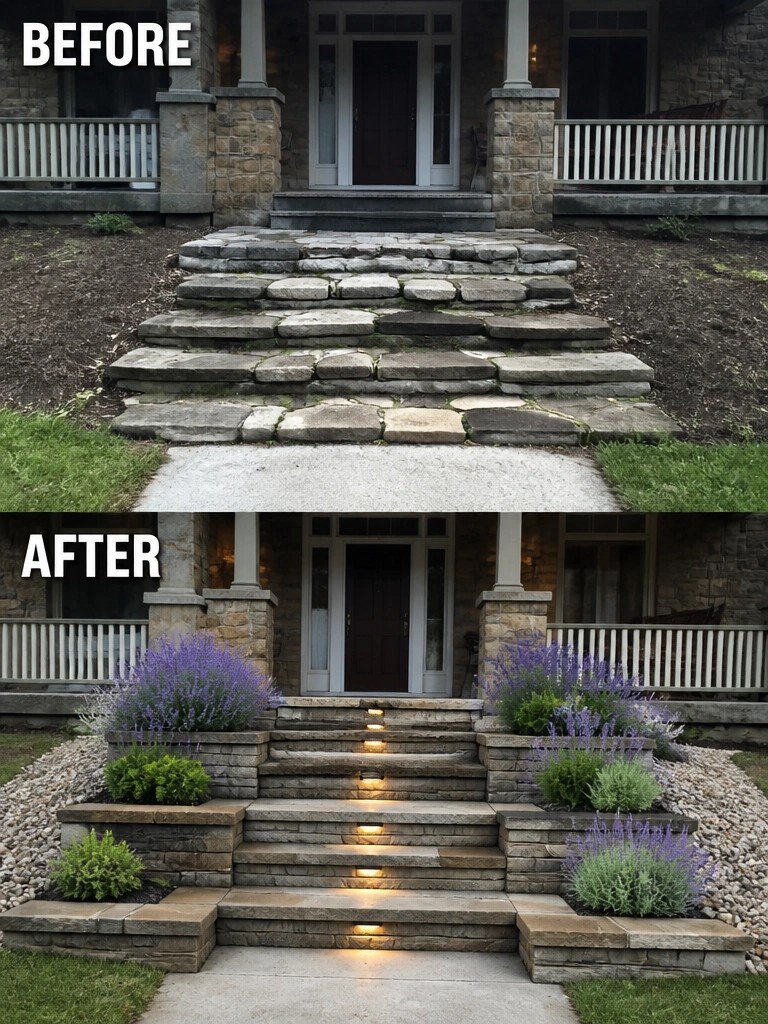
Plain front steps often disappear at night and leave the entry feeling unfinished. Rebuilding them with solid side walls and adding small lights into the risers gives the stairs clear shape and makes them much safer to use after dark.
This idea works best on homes where the door sits higher than the walkway. Focus first on getting the stonework or concrete right, then add the lights. Keep any planting low so it does not block the glow or crowd the steps.
Turn An Empty Porch Into A Welcoming Entry
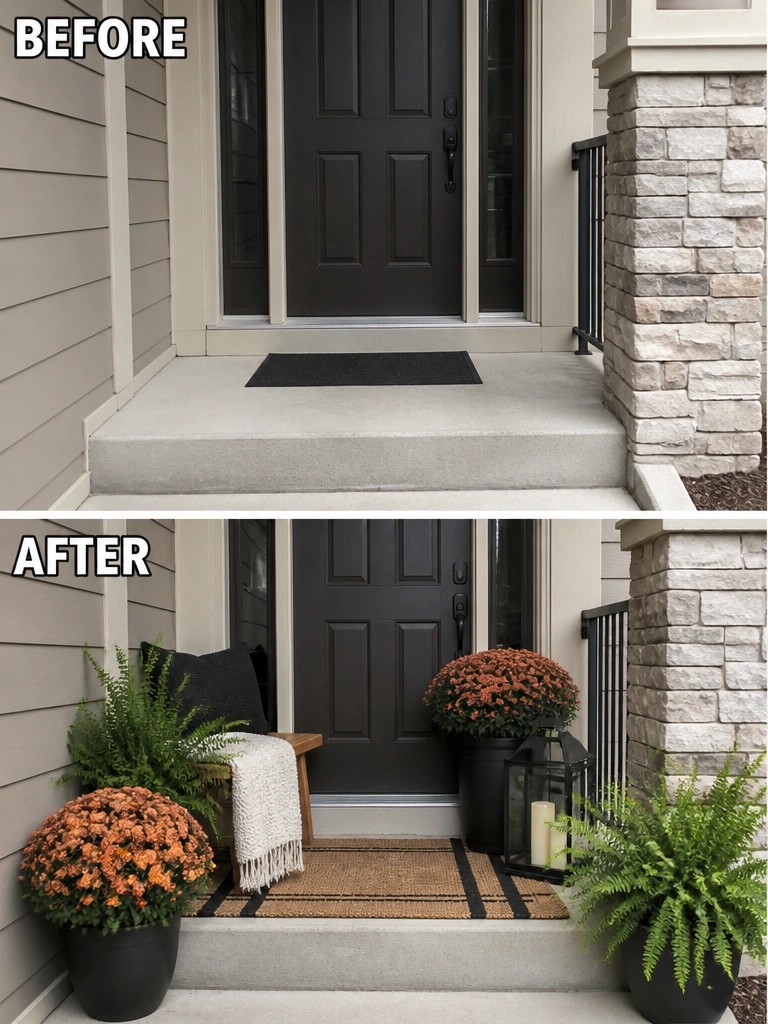
A plain concrete entry often feels unfinished even when the door and siding look fine. Placing matching planters on either side of the steps and laying down a simple rug gives the space a clear purpose and makes it feel more complete.
This works best on small porches where you want to add interest without blocking movement. Keep the planters at a similar scale, use hardy plants that can handle weather, and stick to one or two colors so the area stays balanced rather than cluttered.
Add Defined Beds To Frame The Entry

The front entry felt open and unfinished with nothing but patchy grass and bare soil along the walk. Adding low wooden borders on both sides and filling them with shrubs created clear lines that lead the eye straight to the door.
This idea works best on houses where the path is straight and fairly wide. Keep the borders low so they do not block movement, and choose plants that will fill in without spilling onto the concrete. The goal is simple structure that makes the entry feel intentional rather than just leftover space.
Give A Bare Porch A Clear Purpose
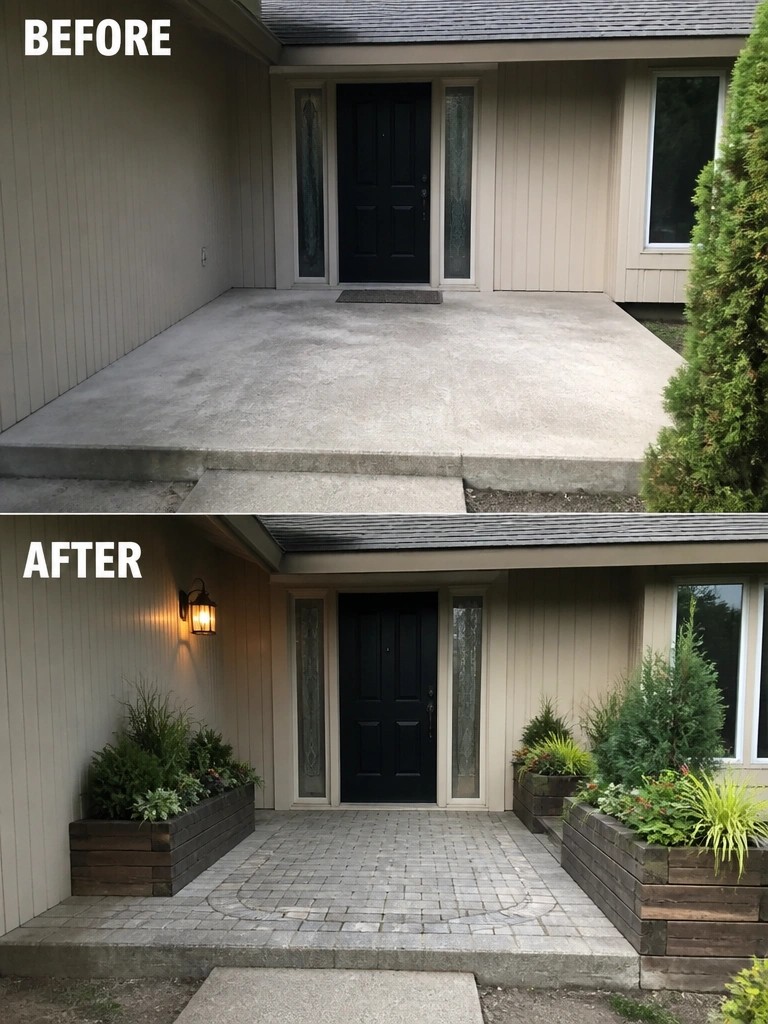
A plain concrete slab in front of the door often feels unfinished and uninviting. Adding a simple paver layout creates a defined space that separates the entry from the rest of the yard. A pair of large wooden planters on either side helps frame the door and adds some height without crowding the walkway.
This approach works well on houses where the front porch is basically just a flat slab. Start with the hard surface first, then add a few substantial planters rather than lots of small pots. It keeps the entry looking intentional even if you do not add furniture or other decor.
Give A Bare Side Yard Structure With Plants And A Path
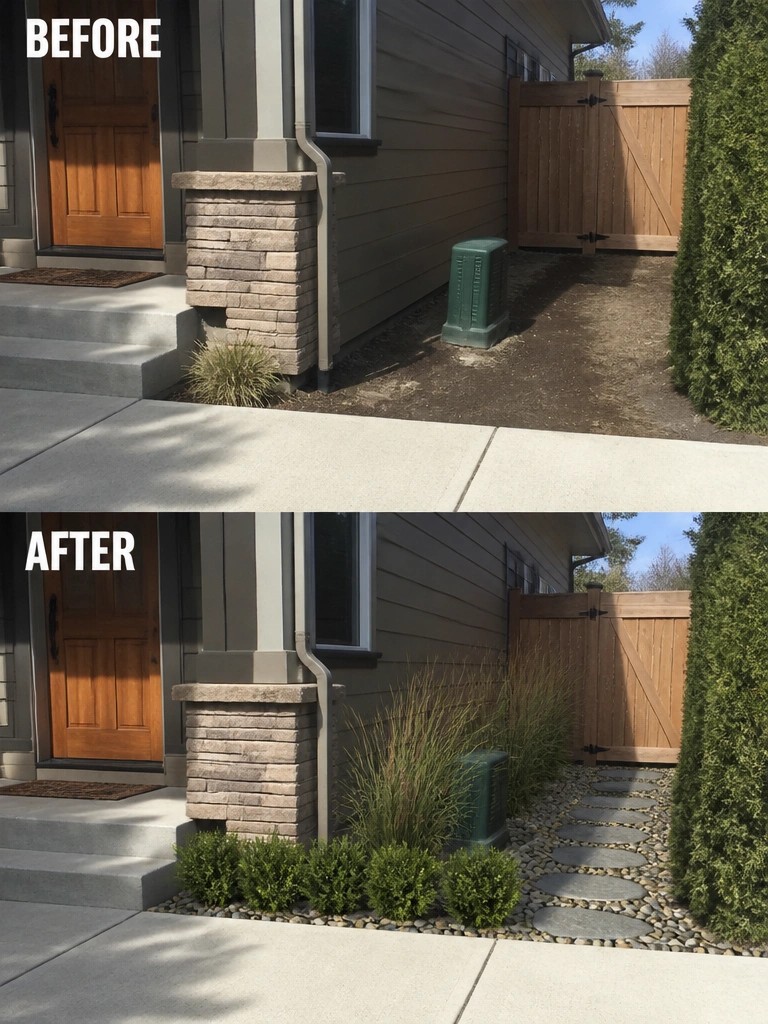
A plain dirt strip next to the house often looks unfinished, especially when it sits right beside the entry. Adding a few low shrubs, taller grasses, and a simple stone path turns that empty space into something that feels intentional and connected to the rest of the yard. The new planting also helps hide the utility box without blocking access.
This approach works well on narrow side areas where you want some greenery but still need room to walk. Start with the path to set the layout, then fill in with plants that stay low enough to keep the view open. It keeps the space looking neat without requiring a big budget or constant upkeep.
Lighten The Front Entry With A New Door And Window Boxes
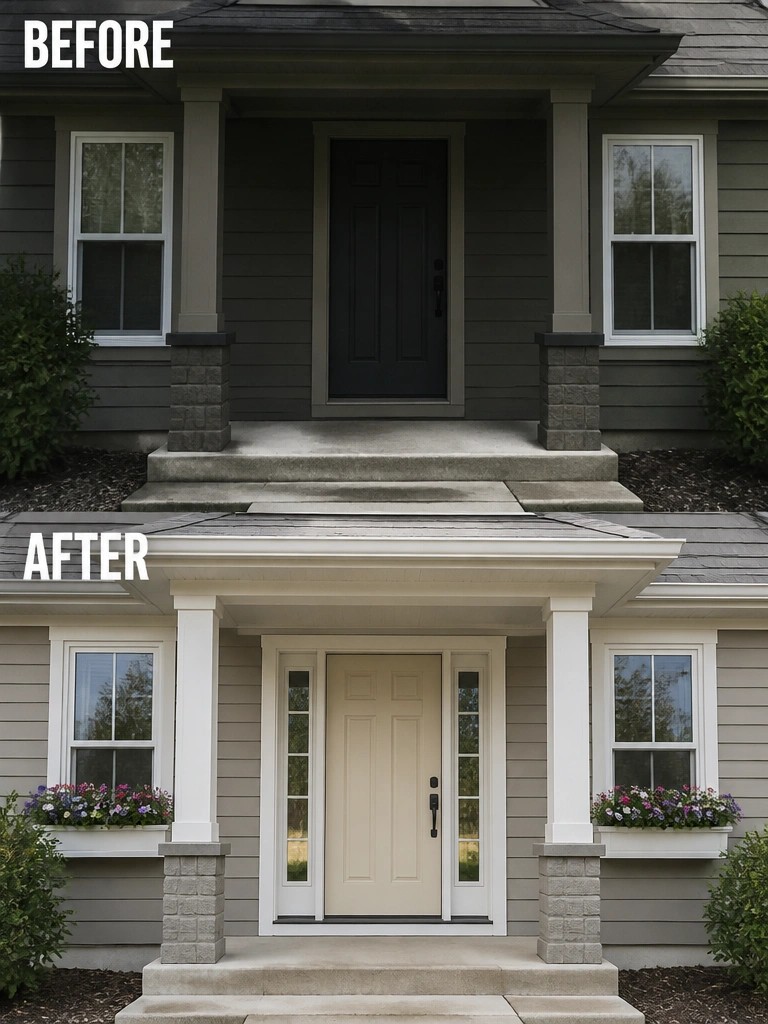
A dark door on a plain porch can make the whole front of the house feel heavy. Switching to a lighter door with glass panels and painting the trim white opens up the space right away. Adding window boxes with flowers gives the entry a simple finished look without much extra work.
This idea works best on houses with basic porches or small entry areas where you want to improve curb appeal without a big renovation. Start with the door and trim first, then add the boxes. Keep the planting low so it does not block the windows or make the walkway feel crowded.
Clear Overgrown Shrubs To Add Structured Garden Beds
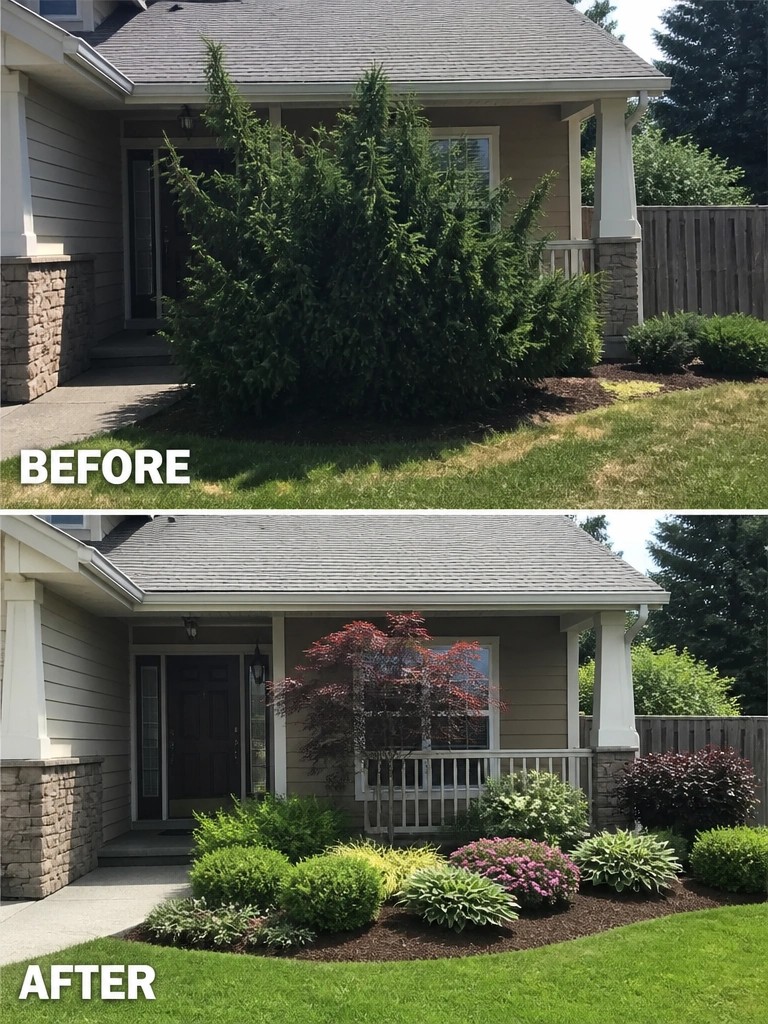
Removing one large overgrown shrub can completely change how a front bed feels. Once that heavy mass is gone, the area opens up and gives room for smaller plants, a mix of heights, and a clean mulch edge that actually shows off the house instead of hiding it.
The same idea works on many older homes where one plant has grown too big for the space. Start by cutting back the biggest offenders first, then lay out simple bed lines and fill them with a few repeating plant types rather than packing in too many different ones. This keeps the yard looking planned without requiring a full redesign.
Add A Pergola To Define The Front Entry
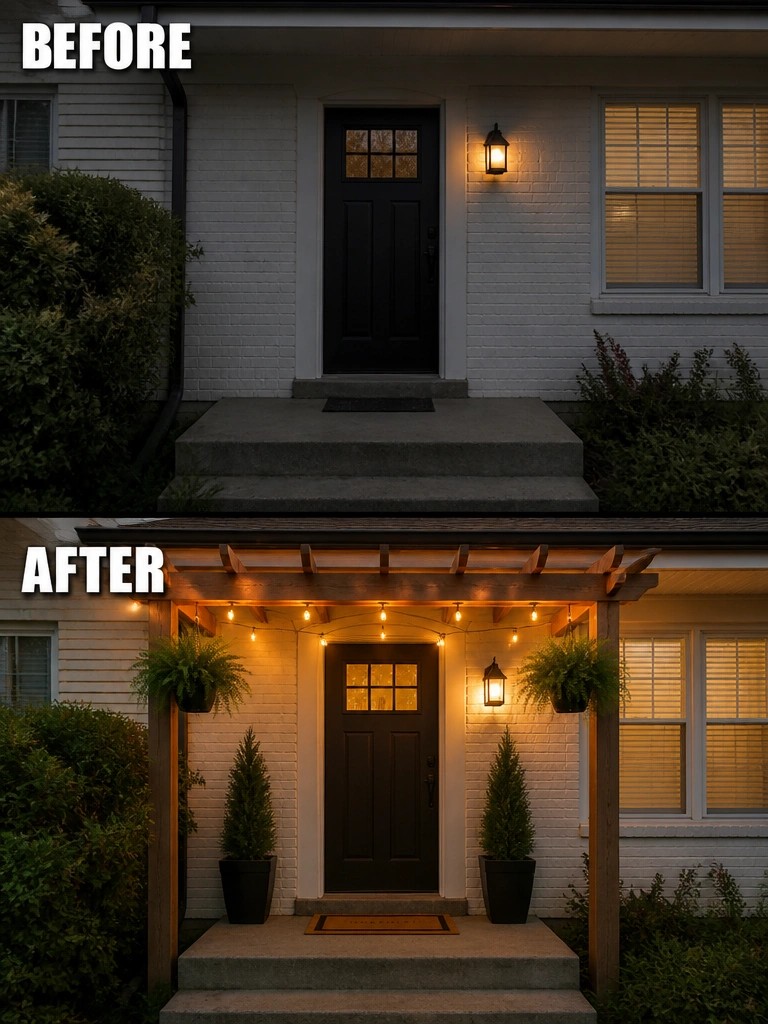
A plain front door often looks unfinished when it sits right on the steps with no overhead cover. Adding a simple wooden pergola with string lights gives the entry a clear frame and brings in a soft glow that makes the whole approach feel more finished.
This idea works best on houses where the door has little architectural detail around it. Start with a basic structure sized to the door width, keep the lighting warm and even, and add a few potted plants on each side so the entry feels balanced without crowding the steps.
Frequently Asked Questions
Q: Where do I even begin if my front yard looks nothing like the examples?
A: Walk out your front door and note the first thing you see. Fix that spot first with one simple swap like fresh mulch or a new light. The rest of the yard can wait until that entry feels right.
Q: How do I keep the new plants from dying in the first year?
A: Water them deeply twice a week until the roots take hold. Skip fancy soil mixes and just loosen the dirt you already have before planting. Most of the yards in the article stayed alive because the owners checked on them every few days at first.
Q: What if my space is tiny and none of the big transformations will fit?
A: Focus on the door itself with a narrow path or a couple of pots. Small changes like that still give the same before and after feel without needing extra room.
