

I often notice that front yards lose their sense of order when planting stays scattered and lighting stays limited to a single fixture by the door.
Adding clear pathways and building up layers of shrubs and ground cover tends to give the space a steadier structure that holds up through the seasons.
I would test a couple of low pathway lights first to see how they change evening movement around the yard.
Over time those adjustments usually make the front of the house feel more looked after even if the main structure stays the same.
Plenty of the ideas here combine simple plant choices with targeted lighting in ways that can be scaled to different lot sizes.
Line The Front Path With Lights And Garden Beds

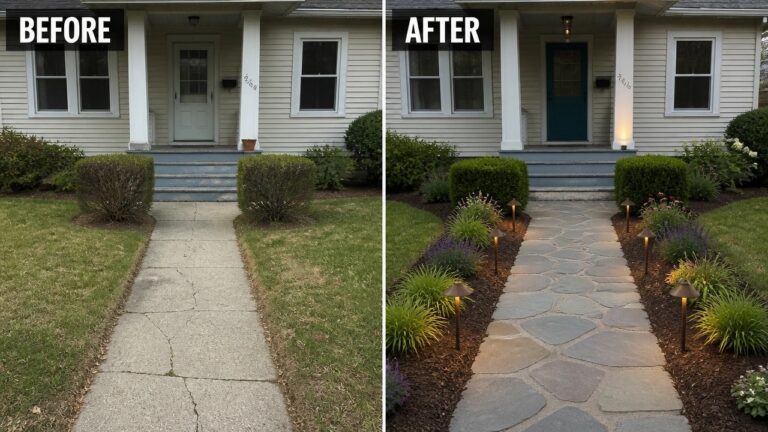
A cracked concrete walkway makes any front yard feel neglected. Replacing it with a stone path and adding low lights along both sides turns the route to the door into something clear and inviting. The new garden beds on either side add structure without crowding the lawn.
This approach works well on homes with a straight walk from the street. Keep the beds narrow so the path still feels open, and choose lights that sit low enough to mark the edges without glare. Start with the path and lighting before adding more plants.
Add Garden Beds And String Lights To Frame The Entry

A plain front yard often feels unfinished because the house sits right on open grass with no clear edges. Adding low stone borders and filling the beds with layered plants gives the entry a sense of structure. String lights hung between simple posts then bring the space to life after dark without needing major construction.
This approach works well on modest homes where the front yard is mostly lawn. Start with the beds and edging first so the layout stays clean, then add the lights along the path or across the facade. Keep the planting simple and repeat a few colors so the beds do not compete with the house itself.
Define A Plain Front Yard With Gravel And Lighting
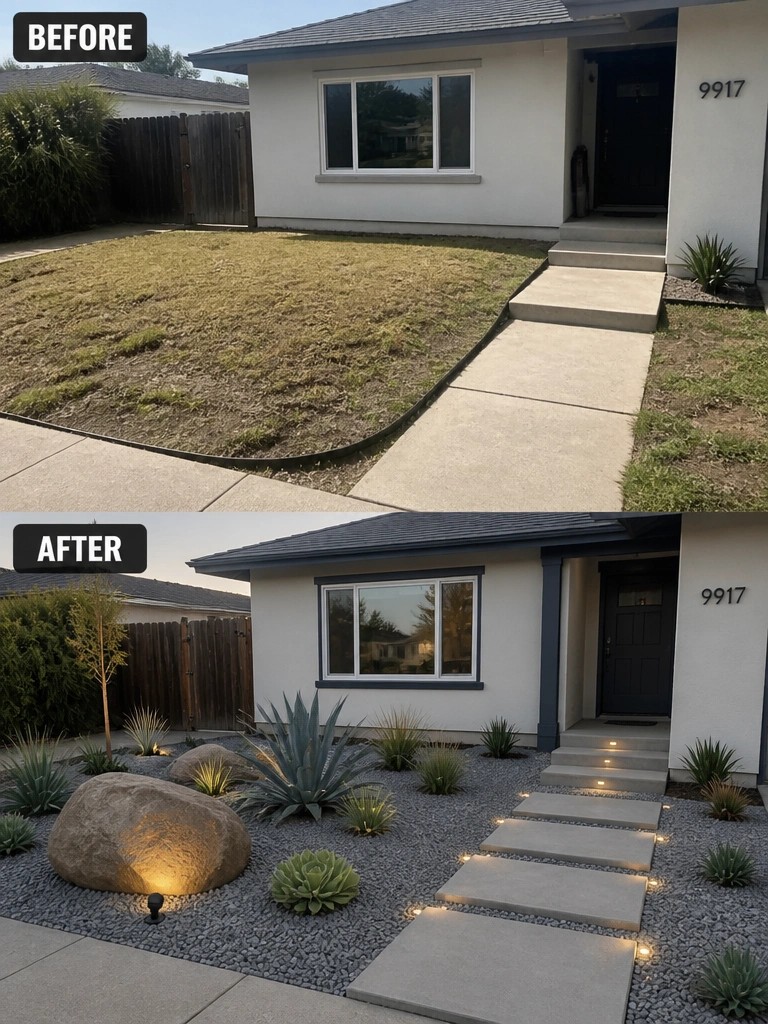
The front yard changed from a flat stretch of patchy grass into something with real shape. Gravel beds replaced most of the lawn, and a few large rocks plus low plants gave the space clear edges instead of one open area.
This idea works best on smaller lots where you want less mowing and a tidy look year round. Start by marking out the beds, lay down a solid base for the gravel, and add simple path lights so the walkway feels intentional after dark. Keep the plant choices low and repeat the same few types so the yard stays easy to maintain.
Add Outdoor Lighting To Highlight Your Home’s Exterior

Many homes look flat and uninviting at night because they have only one or two lights near the door. In this case the before photo shows a mostly dark facade with just a little light on the steps, while the after version uses multiple lights to lift the tree, wash the walls, and mark the planting beds. The result is a clearer shape and a much more welcoming front view without any major construction.
This approach works best on houses that already have decent structure but need help after dark. Start with one or two uplights aimed at the main facade or a focal tree, then add a few low path lights along the walkway. Keep the fixtures simple and aimed so they do not glare into the street or windows. The goal is to show off what is already there rather than to add more decoration.
Update The Front Door Color And Add Outdoor Lighting

A fresh door color can change how the whole front of a house feels. In this case the old white door was swapped for a deep navy one, and simple lights were added along the steps and beside the door. The result is an entry that looks cared for instead of forgotten.
This approach works well on houses where the basic structure is still sound. Pick a door color that contrasts with the siding, then add low step lights and one wall sconce near the door. The lighting makes the entry safer at night and gives the porch a finished look without needing new railings or major construction.
Define A Sloped Front Yard With Retaining Walls

A steep bare slope next to the house often looks messy and hard to maintain. Adding low retaining walls creates flat planting areas that hold soil in place and give the yard clear shape. The stairs also become easier to use once they are framed by the new beds and low lights.
This approach works well on any home with a noticeable grade in the front. Start with the walls to set the layout, then add simple plantings and path lighting so the space feels finished without crowding the entry. Keep the walls low enough that they do not block windows or the front door.
Define The Driveway Edge With Lighting And Planting

A simple way to improve a front yard is to give the driveway a clear border. The before view shows a rough transition where the asphalt just met the grass. Adding a line of pavers, gravel, low shrubs, and a continuous light strip turns that edge into something neat and intentional.
This idea works best on homes where the driveway sits right next to the lawn. Keep the planting low so the light stays visible, and run the strip along the full length for a clean look at night. It is an easy update that makes the whole front feel more finished without major construction.
Add Structure Along The Front Walk With Lighting

The biggest shift here comes from replacing a plain stretch of lawn with a row of rounded shrubs and low lights that run along both sides of the walk. The added lanterns near the house give the entry a clear sense of arrival without needing major construction.
This approach works well on houses that already have a straight path to the door. Start by cleaning up the edges of the lawn, then repeat one simple plant shape and add a few lights at even intervals. Keep the number of elements small so the walk stays easy to maintain and does not feel crowded.
Add Structure With Garden Beds And Path Lights
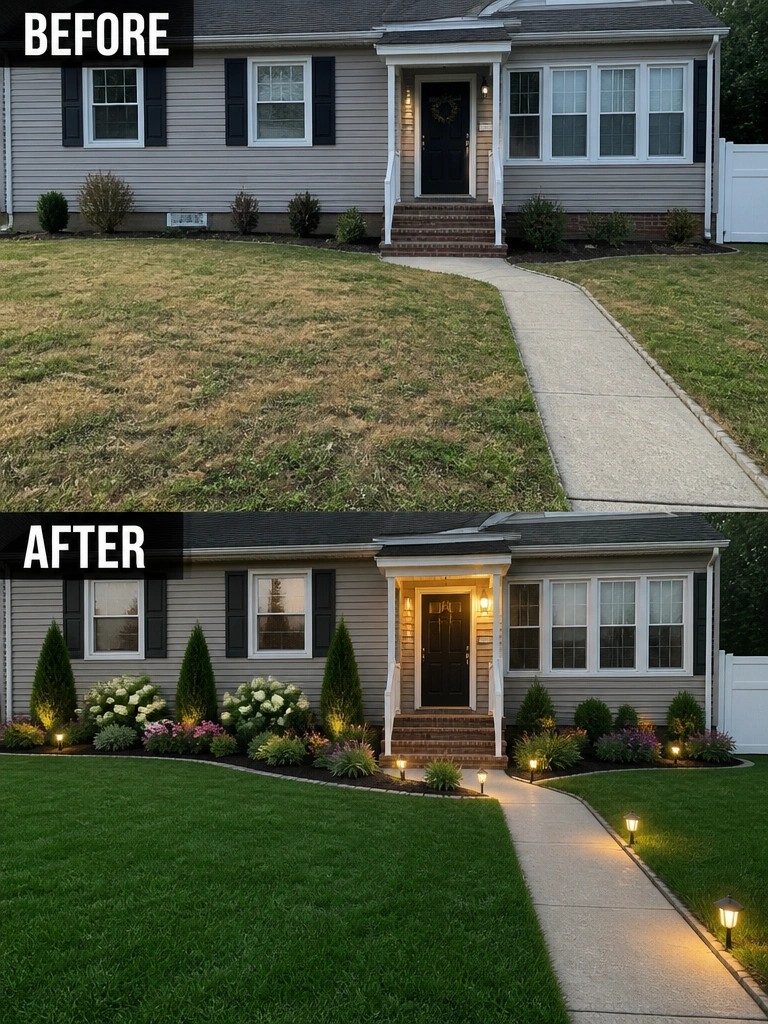
A patchy lawn and a few random bushes made the front of this house look unfinished. Adding clean edges, mulched beds, and a simple mix of shrubs and flowers gave the yard a much more intentional shape, while the low lights along the walk and beds made the entry feel welcoming at night.
This idea works best on houses where the lawn is the main view from the street. Clean up the grass line first, then build the beds before adding lights so the fixtures highlight the planting instead of sitting on bare ground. Keep the plant choices simple and repeat a few shapes so the beds stay easy to maintain.
Use A Gate And Lighting To Make The Entry More Welcoming

A chain link fence and open path can leave the front of a house feeling unfinished. Replacing the fence with a solid gate between matching pillars and adding lights on top gives the entry a clear starting point. The change makes the house feel more private and intentional without needing major construction.
This approach works well on homes with a straight path to the door. Keep the gate simple in style and match the light fixtures to the existing hardware. Make sure the pillars are wide enough to hold the lights securely and that the wiring stays hidden.
Add String Lights To Your Front Beds

The before photo shows a plain strip of mulch with scattered shrubs along the house. In the after, the beds are replanted and a simple line of string lights runs along the edge, giving the area a clear shape and a soft glow once the sun goes down.
This approach works best on houses with a visible foundation planting strip that needs more presence at night. Keep the lights low and follow the bed line rather than wrapping the whole house. Solar versions make it easy to try without running new wiring, and the effect stays subtle enough that it does not compete with your porch light.
Add One Lit Tree To Give The Front Yard A Clear Center

A plain front lawn often looks unfinished, especially when it has nothing to draw the eye. In this case the before view shows mostly open grass with a worn patch, while the after view places a single tree in a mulched circle and adds low lighting at its base. That one change turns an empty stretch of lawn into a simple, organized space that feels intentional.
The idea works best on a modest front lawn where you want structure without crowding the space. Start with a tree that stays in scale with the house, keep the bed round or gently curved, and run one or two low lights upward so the shape shows at night. Skip extra ornaments at first so the tree remains the main point.
Add Lighting To Front Steps For A Welcoming Entry
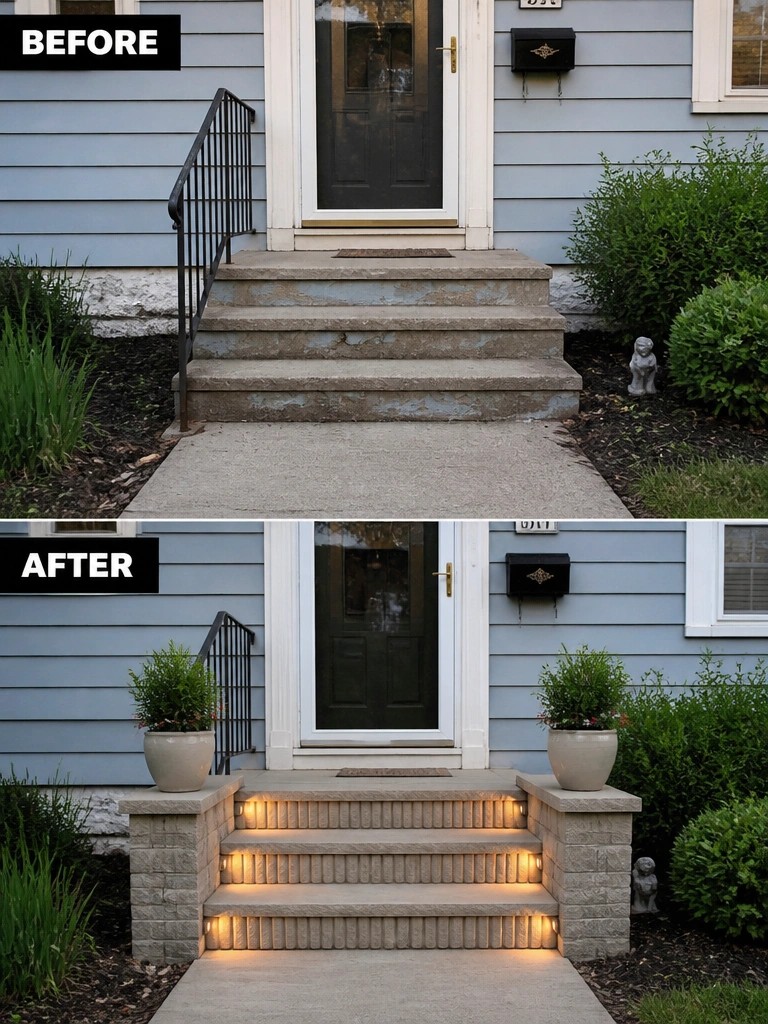
Many front entries start with plain concrete steps that get worn down over the years. Adding built-in lights along the stair edges and placing planters on new side columns gives the entry more structure and makes it much easier to navigate after dark.
This works especially well on older homes where the front steps sit close to the street. Focus on the lighting first because it changes how the space feels at night, then keep the planters simple so they do not block the walkway or require constant care.
Use Lighting To Highlight Fresh Garden Beds

Many front yards have a narrow strip of overgrown shrubs that just looks messy. Clearing those out and putting in a simple mix of grasses, low shrubs, and a few rocks gives the bed a much cleaner shape. Adding a few low lights then makes the planting stand out after dark.
This idea works best along a front walk or beside the house where you want some evening presence without a big project. Do the cleanup and planting first so the lights have something clear to show off. Keep the fixtures small and aimed at the plants rather than the path.
Light The Path To Make The Entry More Welcoming

A plain front lawn and simple stepping stones can leave the entry feeling unfinished. Adding a gravel surface, low border plants, and a row of lanterns along the path gives the house a clear approach and makes the door feel like the main feature.
This works well on smaller front yards where you want structure without crowding the space. Start with the path and lighting first, then add a few planted beds on either side. Keep the fixtures simple and low so they guide visitors without overpowering the house.
Define A Narrow Side Yard With A Path

A narrow strip of patchy grass and weeds next to the house rarely gets used. Adding a simple stone path with gravel edges and a row of low shrubs gives the space a clear purpose and makes it feel intentional instead of leftover.
This approach works well on any long, tight side yard where you need access or want to reduce maintenance. Keep the planting low and repeat the same materials so the area stays open and easy to walk through.
Add Lighting And A Clear Path To The Entry
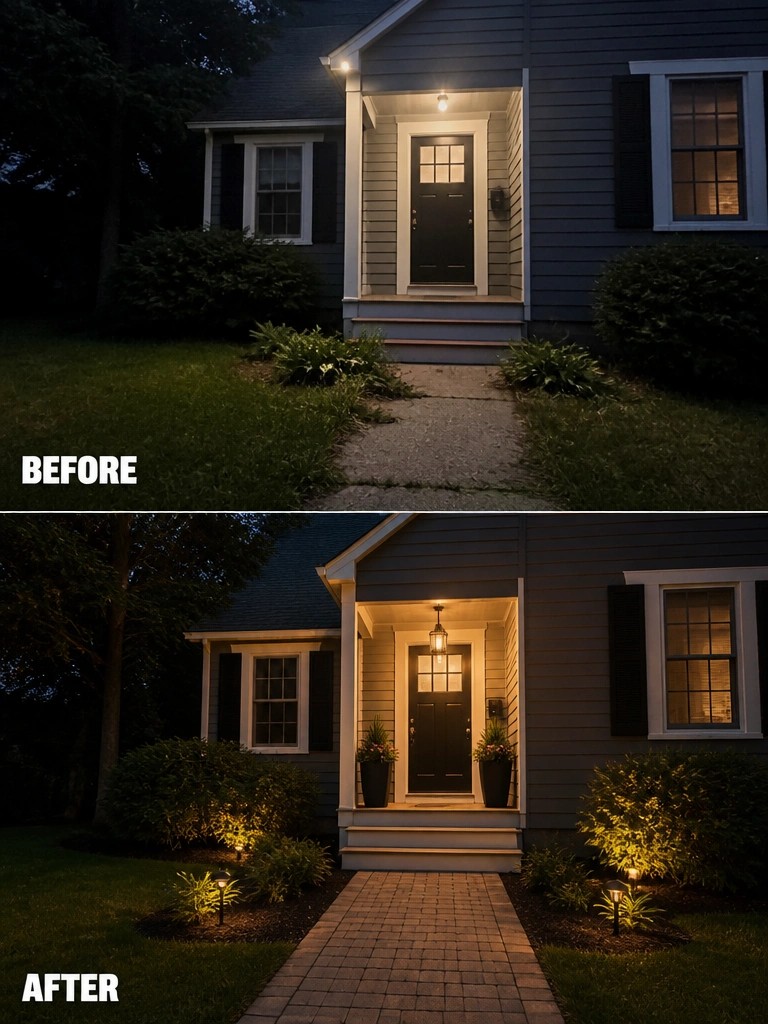
A simple front entry can feel flat and hard to navigate at night when there is no defined walkway or lighting. The change here shows how adding a paved path with low lights along the edges and a few potted plants near the door gives the space structure and makes it feel intentional without major construction.
This approach works well on homes with basic grass and shrubs where the main goal is better nighttime access and a tidier look. Start with the path to guide visitors, then add a couple of lights and planters so the entry reads as a finished space rather than an afterthought. Keep the fixtures modest so they do not overpower the house itself.
Add Structure To An Overgrown Front Yard
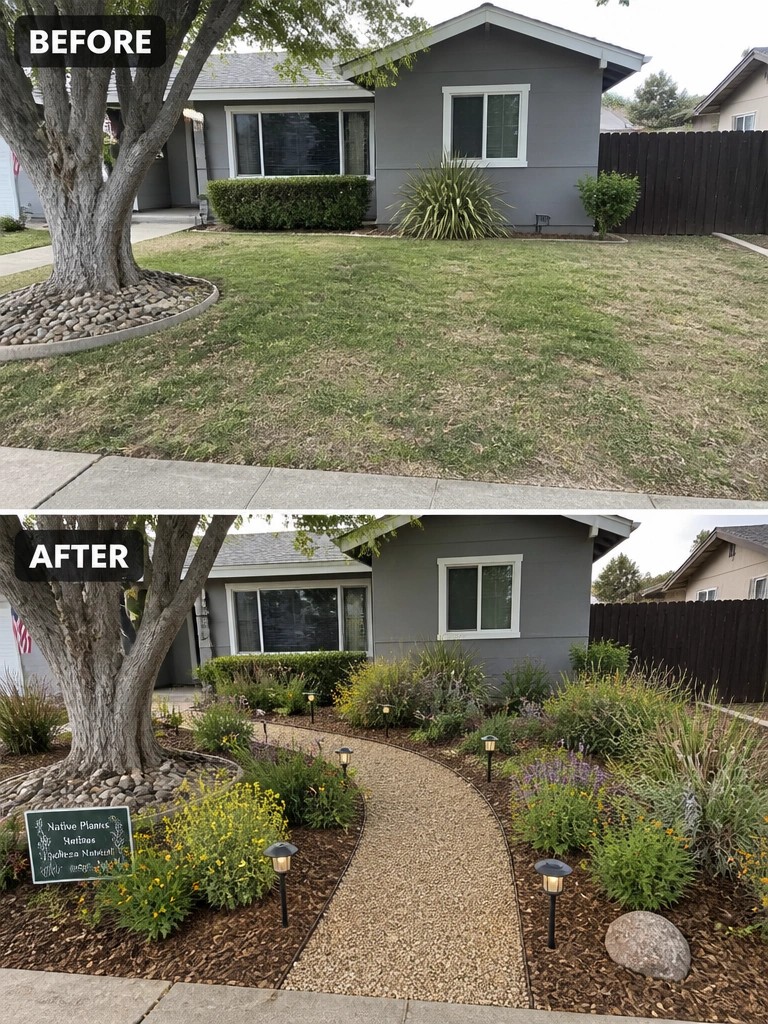
A patchy lawn with no clear shape can make a front yard feel unfinished. Adding defined beds, a gravel path, and a few lights turns the same space into something that looks planned and easier to maintain.
This idea works best on houses where the yard feels wide open and unused. Lay out the beds and path first so the layout stays simple, then add lighting along the edges. It suits modest front yards that need better flow without adding big structures or hardscaping.
Create A Defined Outdoor Seating Area In The Yard

An empty stretch of lawn often sits unused because there is no clear spot to sit or gather. Adding a small paved area with a fire pit and a couple of chairs gives the space a purpose and makes it feel like an extension of the house rather than just leftover grass.
This approach works well on side yards or modest front lawns where a full patio would be too large. Keep the paved section compact, use simple string lights overhead for evening use, and add a few potted plants around the edge so the area feels finished without crowding the rest of the yard.
Add Outdoor Lighting To Highlight A Plain Front Yard

Many homes have a simple exterior that looks flat once the sun goes down. Adding a few well-placed lights on the house and low lights in the beds gives the whole front a finished look without major construction. The before photo shows a basic ranch with no evening presence, while the after version uses wall lanterns and garden spots to make the entry and planting beds stand out.
This approach works best on houses with a clear front bed line and a simple facade. Start with one or two lights near the door, then add a couple more to mark the main windows or corners. Keep the fixtures modest in size so they match the scale of the house rather than overpower it.
Replace A Chain Link Fence For Better Curb Appeal

A chain link fence often makes the front of a house feel more like a boundary than a welcome. Swapping it for a solid horizontal fence with lights on the posts gives the yard a clear edge and makes the house feel more put together from the street.
This approach works best on modest front yards that sit right along the sidewalk. Keep the planting simple with a few shrubs and flowers at the base so the fence stays the main feature. Adding lights on the posts helps at night without needing a lot of extra wiring.
Add Structure To An Overgrown Front Yard
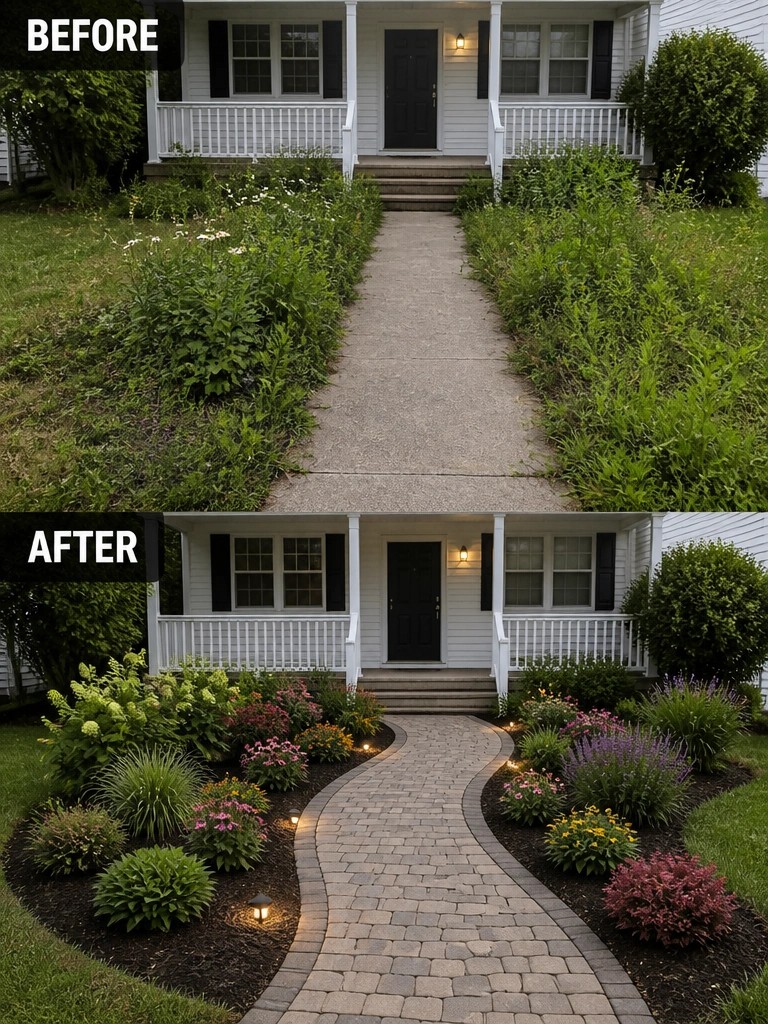
A straight concrete path surrounded by unchecked growth often makes a front yard feel neglected. Switching to a curved paver walkway and carving out clear garden beds on both sides gives the space a planned look and improves how the house connects to the street.
This idea works best on modest lots where the entry feels undefined. Lay out the new path first so the beds follow its shape, then use edging and mulch to keep the planting areas from spreading back into the lawn.
Add Step Lighting To Improve A Front Entry

Many front entries look unfinished because the stairs sit there with no real definition or light. Adding recessed lights into the risers changes how the whole area feels at night and makes the steps safer and more inviting without needing a full rebuild. The dark wood finish on the stairs also helps tie everything together once the lights are in place.
This idea works well on any house where the front steps are the main feature you see from the street. Start by choosing lights that are rated for outdoor use and sit flush so they do not get in the way of feet. Keep the planting simple on either side so the lights remain the focus instead of competing with too many new elements.
Add Lit Planters To Define A Front Entry
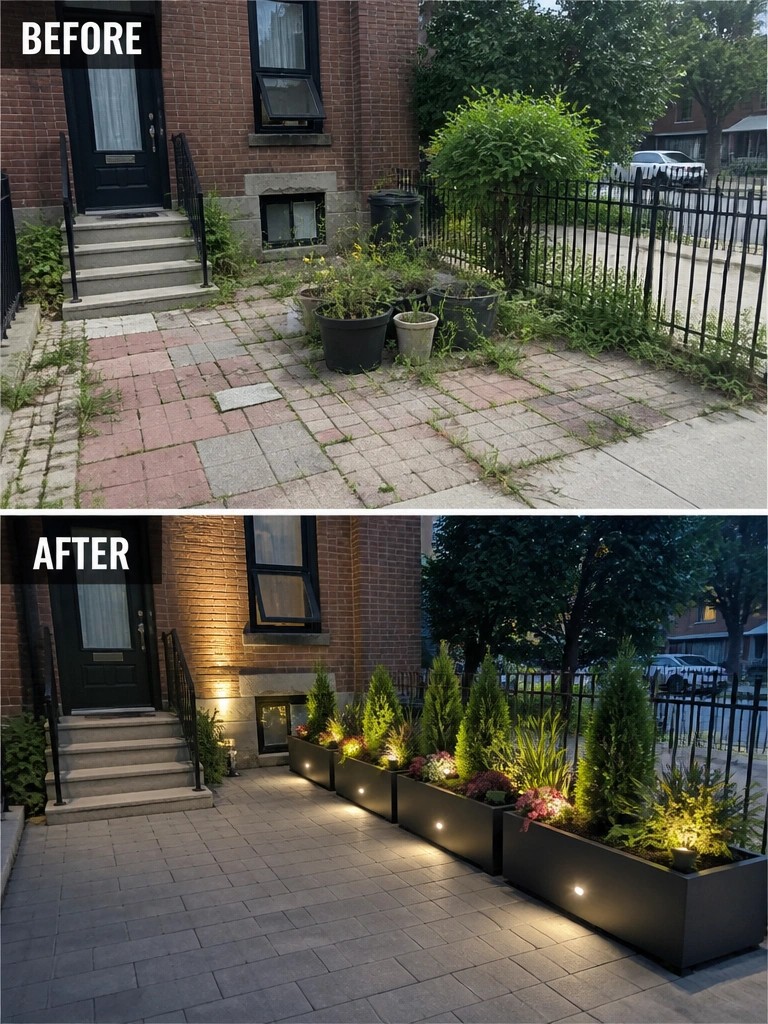
Replacing scattered pots and weedy pavement with a straight row of matching rectangular planters gives the front of the house a much cleaner line. The built-in lights turn the same area into something that feels intentional at night instead of just leftover space along the foundation.
This approach works best on narrow strips beside the house or next to a walkway where you need order without taking up much room. Keep the planters the same size and color, use simple evergreen plants, and place the lights low so they highlight the greenery rather than glare into the windows.
Frequently Asked Questions
Q: How do I choose plants that won’t block my new path lights after a season or two?
A: Go with low growing shrubs and ground cover right along the edges. These stay short enough to let the light spread out evenly without constant trimming.
Q: What’s the simplest way to run wires for front yard lighting if I want to skip a big trench?
A: Lay the cables along the side of existing beds and cover them with mulch. This keeps everything hidden while letting you adjust the layout later if needed.
Q: Can I mix solar and wired lights in the same front yard setup?
A: Yes, place solar ones in sunny spots for path accents and save wired fixtures for shaded trees or entry areas. The two types work fine together as long as you group similar brightness levels.
Q: How often should I check the lights after the landscaping goes in?
A: Walk the yard once a month to clear any leaves or debris off the fixtures. This keeps the glow steady without extra tools or effort.
