


My front yard always seemed like the part of the house that got the least attention, with patchy grass and nothing to guide the eye toward the door.
I have noticed that simple layout fixes like better edging and a few sturdy shrubs can make the whole place feel more looked after without constant work.
Choosing plants that handle dry spells means less time spent watering and more time enjoying how the entrance actually looks from the street.
Small choices add up.
Over the years I have seen how these kinds of updates keep the exterior feeling settled rather than forgotten.
Add Defined Gravel Beds For A Lower Maintenance Yard

The front yard went from a patchy lawn with no clear edges to a set of planted beds edged in gravel and larger rocks. This change gives the space structure without needing constant mowing or watering, and the curved path now feels more intentional.
This approach works well on small to medium lots where grass is hard to keep healthy. Start by clearing the old turf, then lay down a simple border and fill the beds with gravel so the plants stand out. Keep the number of plant types low so the beds stay easy to maintain over time.
Replace Overgrown Shrubs With A Low Hedge
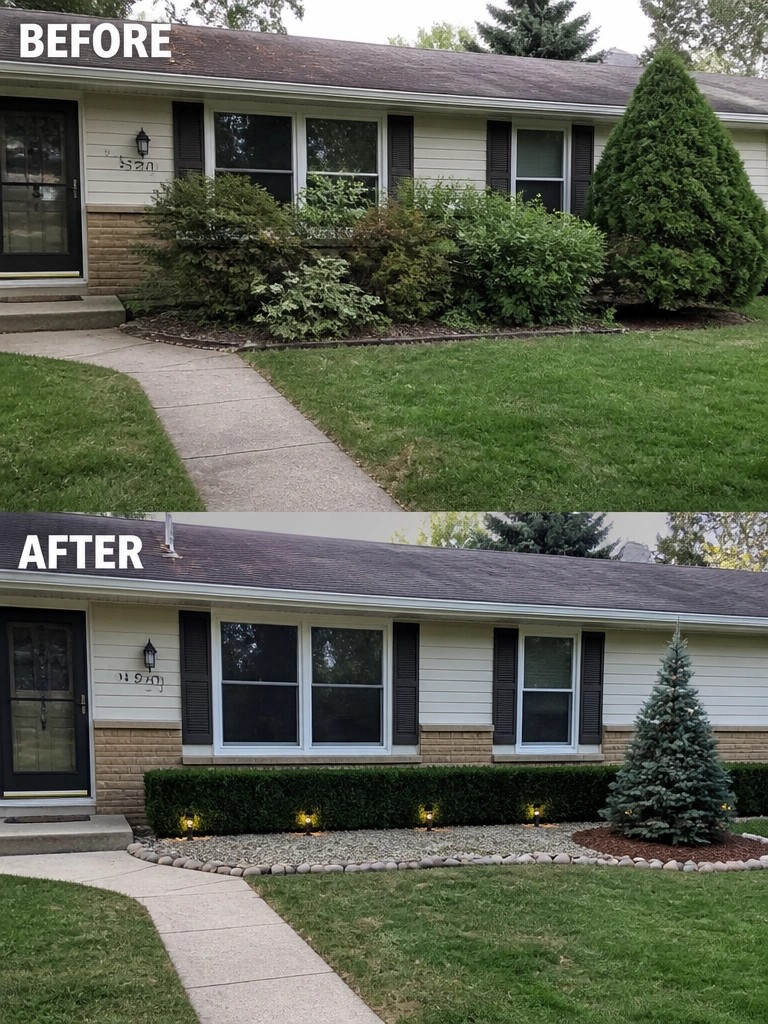
The main change here is swapping a messy row of tall, uneven shrubs for a neat, low hedge that runs along the foundation. This opens up the windows, gives the house a cleaner line, and makes the whole front look more cared for without adding a lot of new plants.
This approach works well on older ranch homes or any house where the original bushes have grown too big. Start by removing the old growth completely, then plant a simple evergreen hedge and edge the bed with gravel or stone. It keeps maintenance low because the hedge stays small and the gravel reduces weeding.
Define A Front Walkway With Pavers And Gravel Borders

A plain concrete path often looks unfinished next to a lawn. Replacing it with pavers and adding narrow gravel strips on each side gives the walkway clear edges and breaks up the wide stretch of grass. The change turns a basic route into something that looks planned without adding much height or clutter.
This approach works well on smaller front yards where you want low maintenance. Keep the beds narrow so mowing stays simple, and choose plants that stay under a foot tall. The same layout can be copied on any straight walk that currently runs through open grass.
Replace A Patchy Lawn With Artificial Turf

A struggling lawn often makes the whole front yard look tired. The before image shows brown patches and uneven grass that never filled in no matter how much watering was done. Artificial turf solves this by giving a solid green surface that stays even all year.
This idea works best in sunny or dry areas where real grass is difficult to maintain. Keep the change simple by adding a gravel border along the edges to create a clean line and reduce trimming work. It suits homes that need curb appeal without daily yard chores.
Add Matching Planters For A Cleaner Front Entry

Many older homes end up with a porch full of mismatched pots that look tired after a season or two. The simple fix shown here is swapping all of them for two large, identical planters placed on either side of the door. The change immediately makes the entry feel intentional instead of crowded.
This approach works well on small porches where space is limited. Choose sturdy planters that can stay out year-round, keep the plant choices simple and evergreen, and consider adding one light near the steps so the entry stays usable after dark.
Define Foundation Beds With Simple Edging
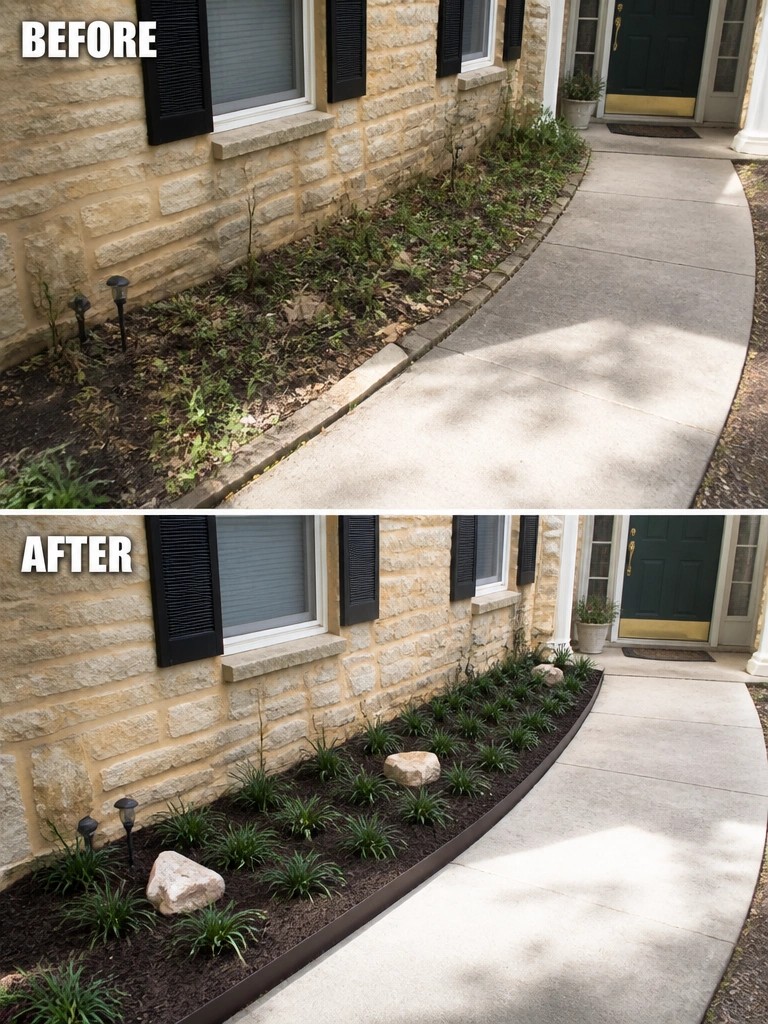
Adding a clear edge turns a weedy strip along the house into something that looks intentional rather than neglected. The metal border holds the mulch in place and gives the planting area a smooth curve that follows the walkway.
This approach works best on narrow beds next to sidewalks or driveways. Clear out the worst of the weeds first, install the edging, then mulch and repeat a few low plants like grasses so the bed stays neat without constant work.
Clean Up Overgrowth Before Adding Garden Beds
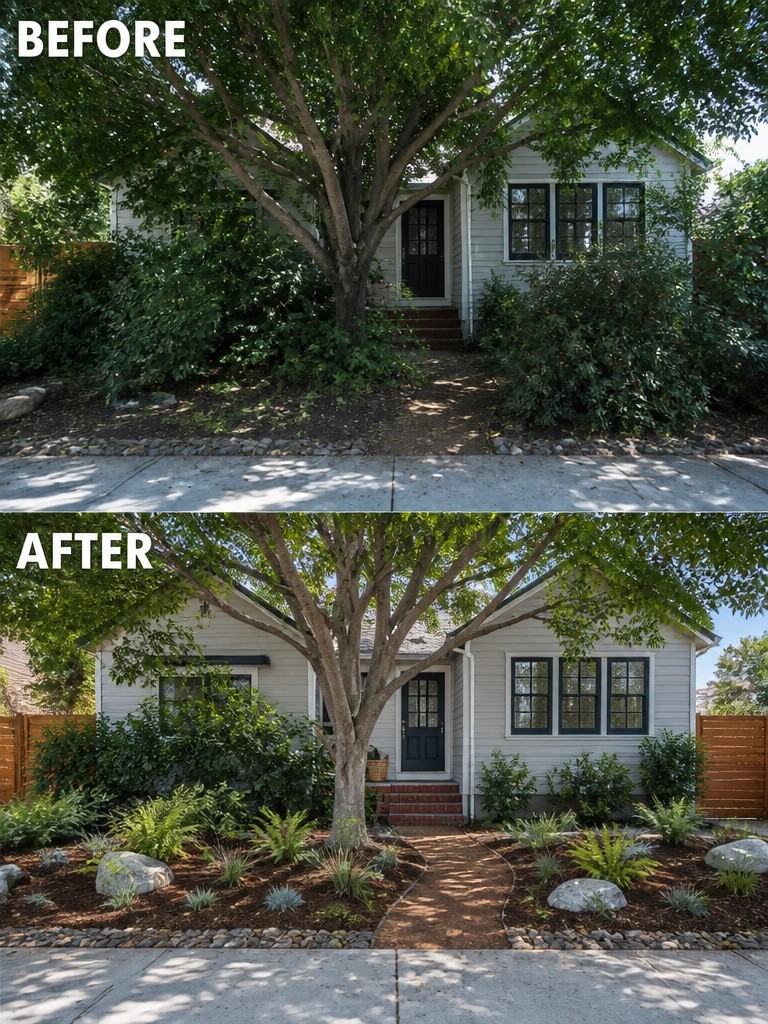
The biggest change here is clearing away the heavy, messy shrubs that hid the house and blocked the entry. Once those were removed, simple beds with mulch and low plants created a much cleaner line from the sidewalk to the door. The result feels open without losing any greenery.
This approach works well on older homes where the original planting has grown too large. Start by cutting back what is overgrown, then lay out beds that follow the natural shape of the walkway. Keep the new plants low so they frame the house instead of covering it.
Add Edging To Create Neat Garden Borders

One of the simplest ways to improve a front yard is by giving the garden beds a clear shape. Replacing the uneven brick border with a smooth metal edge and adding gravel helped turn a messy planting strip into something much more controlled and easier to maintain.
This works especially well along the front of a house where you want low maintenance curb appeal without constant weeding or trimming. Clean out the overgrowth first, install edging that follows the natural curve of the bed, then fill in with gravel and a smaller selection of reliable plants.
Add Railings To Give Your Entry Steps More Structure

Many older homes have basic concrete steps that feel unfinished and a bit unsafe. Replacing the surface with consistent tiles and adding matching railings on both sides creates a clear path to the door and makes the whole front feel more intentional.
This approach works well on homes with a few steps up to the entrance. Keep the railings simple and dark so they frame the door without overpowering it. A pair of matching planters on the landing helps tie everything together without adding clutter.
Define Front Beds With Gravel And Structured Plants

A cluttered flower bed can make the whole front yard feel messy. Switching to a gravel base with larger rocks and a row of succulents creates a clear edge that separates the planting from the lawn and gives the space a finished look without constant weeding.
This idea works best on smaller front yards or homes that want lower maintenance. Start by clearing the old plants and adding a simple gravel layer, then choose a few repeating plants that stay compact. The result stays neat with very little ongoing work.
Add Defined Garden Beds To Frame The Front Path
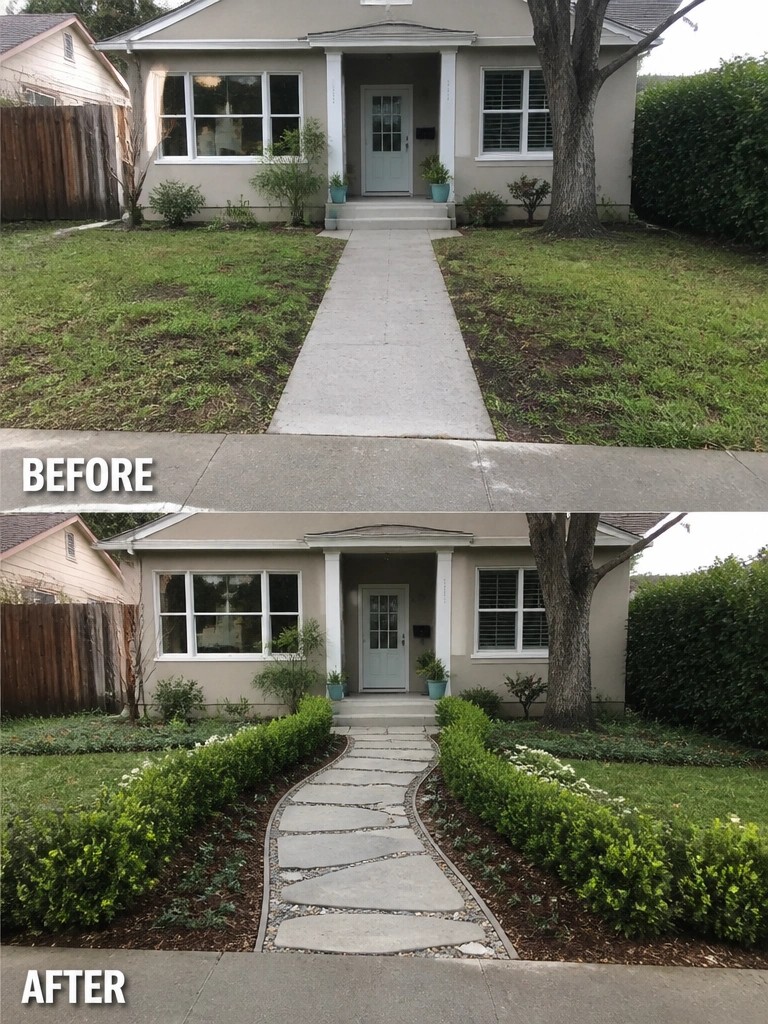
A plain concrete walkway with grass running right up to the edges often leaves the front yard looking unfinished. Replacing the straight path with a gently curved stone one and adding mulched beds on both sides gives the entry a clear shape and makes the space feel more planned.
This idea suits smaller front yards where you want to cut down on lawn care. Keep the beds a consistent width so mowing stays simple, and fill them with compact shrubs that need little pruning. The path can be laid with pavers or flagstone set in gravel for drainage and easy walking.
Paint The Front Door To Match Your Shutters

A white door can stand out too much against gray siding and shutters. Painting it the same gray as the shutters brings everything into line and gives the front a calmer, more finished look without any big construction.
This idea works on almost any house that already has painted trim or shutters. Pick a color already used on the exterior, test a sample on the door first, and keep the rest of the changes small so the paint job stays the main update.
Add Structure To A Sloped Front Yard
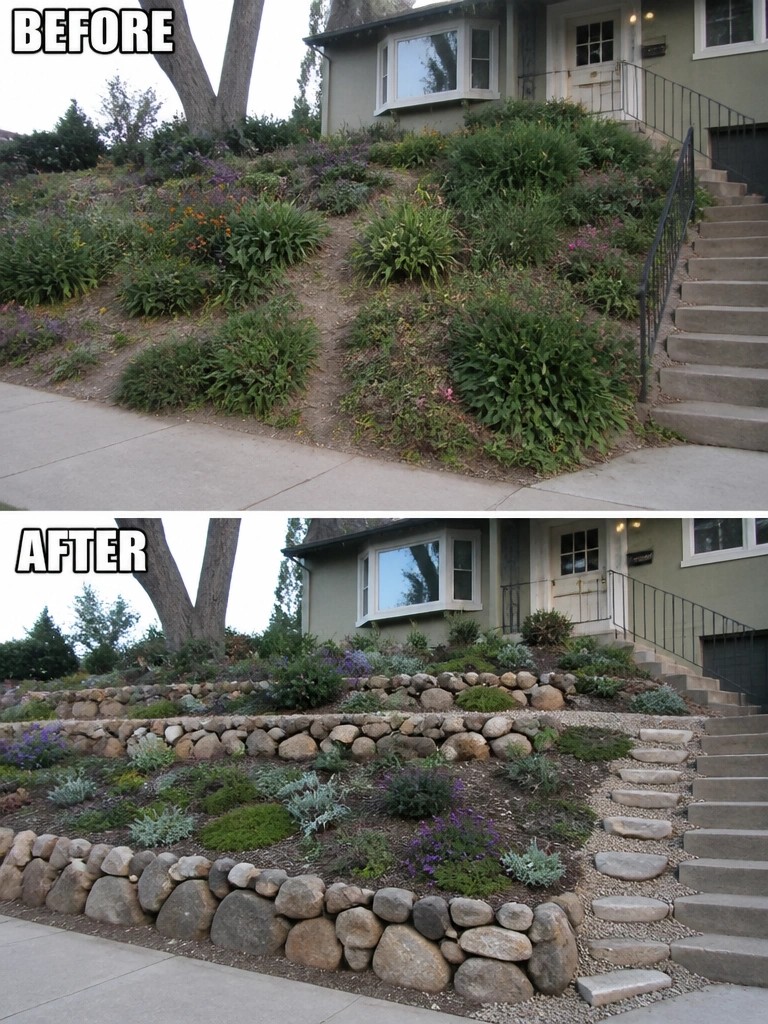
The steep slope in front of this house was mostly a tangle of plants with no clear shape. Adding rows of stone retaining walls turned the hill into a series of flat beds that are simpler to plant and keep under control.
This idea works on any property where the ground drops away from the house. Focus first on building low walls to create level planting areas, then fill them with easy-care ground covers and small shrubs. The result is a front yard that looks planned instead of neglected.
Add A Defined Border Along The Driveway

A bare stretch of lawn right up against the concrete often looks unfinished. Adding a narrow planted strip with a clean edge gives the driveway a clear boundary and makes the whole front look more intentional without much extra work.
This approach works well on any home where the lawn meets pavement. Keep the bed narrow, choose tough grasses that stay neat, and use simple edging like brick or pavers so the border stays in place and stays easy to mow around.
Add Structure To An Overgrown Entry Path

An entry path that has become uneven and hidden by random plants often makes the whole front of the house feel neglected. Laying out a simple grid of pavers with grass between them and placing matching planters on each side gives the walkway a clear shape and makes daily use much easier.
This idea works best in narrow side entries or front gates where space is limited. Keep the path material consistent and limit the planting to a few repeated pots rather than filling every corner. That approach keeps maintenance low while still making the entrance feel intentional.
Switch To Gravel For A Low Maintenance Front Entry

Many small front patios end up looking busy when they have old pavers, too many pots, and random furniture. Switching the surface to gravel cleans the space up fast and cuts down on weeding and sweeping. The after photo shows how removing most of the furniture and pots lets the door and simple seating become the focus instead of fighting for attention.
This approach works well on compact front yards or side entries where you want curb appeal without constant upkeep. Keep only one or two chairs and a small table so the area still feels open. String lights add a bit of warmth in the evening without needing much wiring.
Add Structure To Overgrown Garden Beds

Front yards often fill in with too many plants that compete and spread, leaving a tangled look along the foundation. Clearing the mixed flowers and adding a layer of gravel with a few repeated grasses and shrubs gives the bed a clean edge that stays neat next to the walk.
This works best on homes where you want lower upkeep without giving up all the greenery. Remove the old growth first, put down a barrier, then use gravel to hold the shape so weeds have less room to start. Stick with plants that stay compact and repeat them so the area does not need constant attention.
Add A Raised Bed For A Clean Foundation Look

A bare strip of dirt right against the house often looks unfinished. Adding a simple raised bed gives that area a clear edge and turns it into a planted border instead of an afterthought. The wooden frame keeps the soil contained and makes the whole front look more intentional without needing constant upkeep.
This idea works well on houses with a plain foundation or where the grass meets the siding in an uneven line. Use a low bed like the one shown, fill it with mulch, and choose a mix of shrubs that stay compact. It keeps the planting neat while leaving the lawn open and easy to mow.
Add Simple Lighting To A Front Walkway

A plain path can disappear at night and make the front yard feel unfinished. Placing lights along both sides gives the walkway clear shape and makes the entrance feel more welcoming without any major construction.
This idea works best on homes where the path leads straight from the street to the door. Use solar lights to avoid wiring, and keep the spacing even so the effect stays balanced rather than cluttered.
Clean Up Overgrown Beds With Gravel Mulch

An overgrown bed next to the house often ends up full of weeds and random growth that makes the whole area feel neglected. Switching to gravel mulch gives the space a tidy base that stays in place and cuts down on weeding while still letting a few larger plants stand out.
This works best along sidewalks or foundation walls where you want low upkeep without removing the bed entirely. Start by clearing the worst of the weeds, then lay down landscape fabric and gravel before adding a few structured plants that can handle dry conditions. Keep the edging simple so the bed stays contained and easy to walk around.
Add Structure To An Overgrown Front Yard

The biggest change here came from clearing the messy ground cover and replacing it with gravel and a few defined planting areas. This turned a yard that looked neglected into one that feels intentional and much easier to keep up.
Gravel works well in front yards because it gives the space shape without needing constant weeding or mowing. Start by removing the worst of the overgrowth, then lay down a simple border and fill in with low plants that stay neat on their own. This approach suits older homes where the goal is curb appeal without high upkeep.
Define Garden Beds For Lower Maintenance

The before photo shows flower beds packed with mixed blooms right up against the walkway, which looks full but quickly becomes high upkeep. In the after photo the beds are edged cleanly with mulch, and the planting shifts to a few repeating shrubs and grasses that hold their shape with far less work.
This approach works best along front paths or entry stairs where you want curb appeal without constant weeding and deadheading. Clear the old growth first, lay down a solid mulch layer, then keep the plant list short so the beds stay neat through the seasons.
Frequently Asked Questions
Q: How do I pick plants that won’t need much water once they grow in?
A: Start by checking what grows wild nearby. Those varieties already handle your weather and soil. Plant them in groups so they shade the ground and hold moisture better.
Q: What if I want to skip the lawn but still have something green out front?
A: Ground covers like clover fill in fast. They need mowing just once or twice a year.
Q: Is it worth adding edging around the beds?
A: Simple metal or stone borders keep grass from creeping in. You install them once and they save hours of trimming later. That small step keeps the whole yard looking sharp with less effort.
