

I have watched plenty of front yards stay flat and bare for years because the lawn alone never gives the space much direction.
Adding simple edges and a few layered plants often turns that same stretch into something that feels more settled without needing a complete overhaul.
I would probably start with the edging and path ideas first since they give the lawn an actual shape to work around.
Over time those small decisions add up and the yard starts to look like it belongs with the house instead of sitting in front of it.
Some of these changes are easy to test in sections.
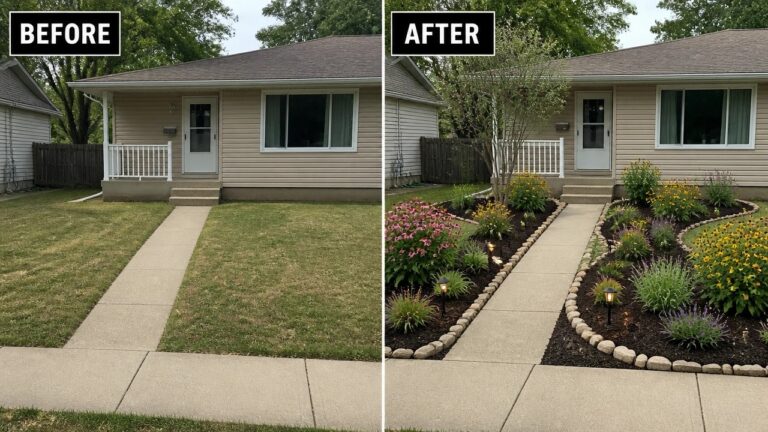
Add Edging To Shape Garden Beds In A Plain Yard
A flat lawn next to a walkway often looks unfinished because there is no clear separation between grass and planting areas. Adding a simple stone edge and filling the new beds with mulch and flowers gives the whole front yard a more organized look without needing a full redesign.
This approach works well on smaller lots where you want some color near the house but still need room to mow. Start with the edging first so the beds stay neat, then choose plants that match the amount of sun the spot gets. Keep the curve gentle so the mower can follow it easily.
Add Structure To A Simple Front Walkway
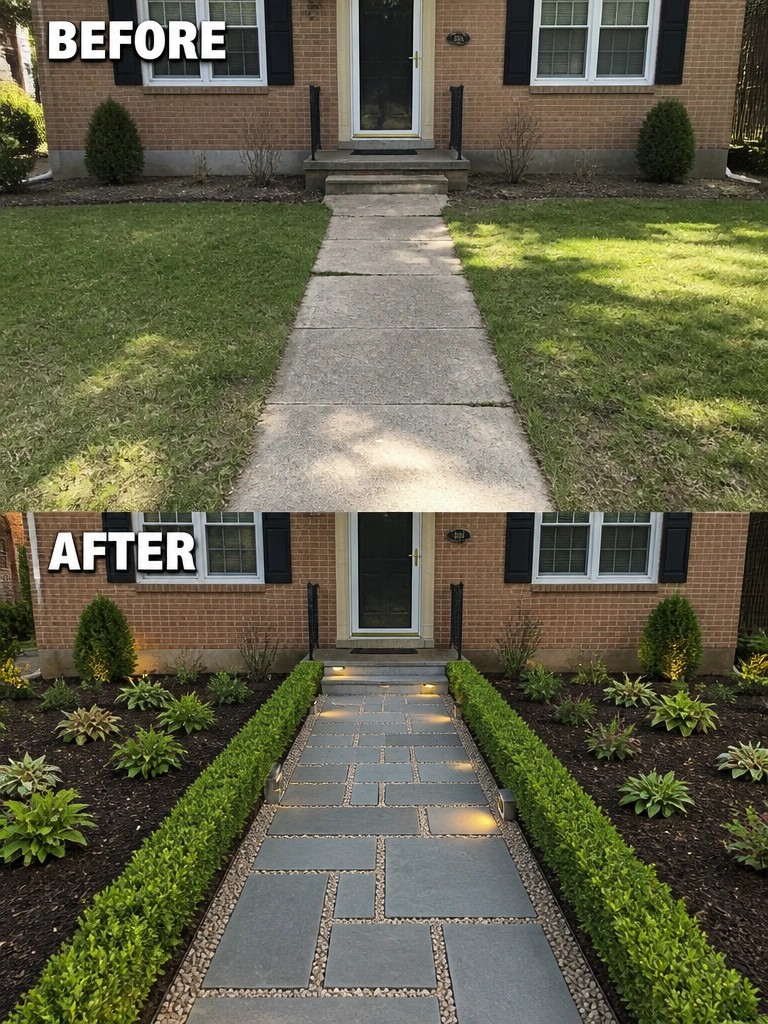
A plain concrete path through a lawn often feels unfinished and does little to guide visitors toward the door. Replacing it with irregular pavers set in gravel creates a clear route, while low hedges on both sides give the walkway definition and make the entry feel more intentional.
This approach works well on modest front yards where the goal is to improve flow without adding large features. Start by laying out the new path width so it still leaves room for easy mowing on either side, then choose a simple hedge that stays low enough to keep sight lines open.
Replace A Plain Lawn With Gravel And Defined Beds
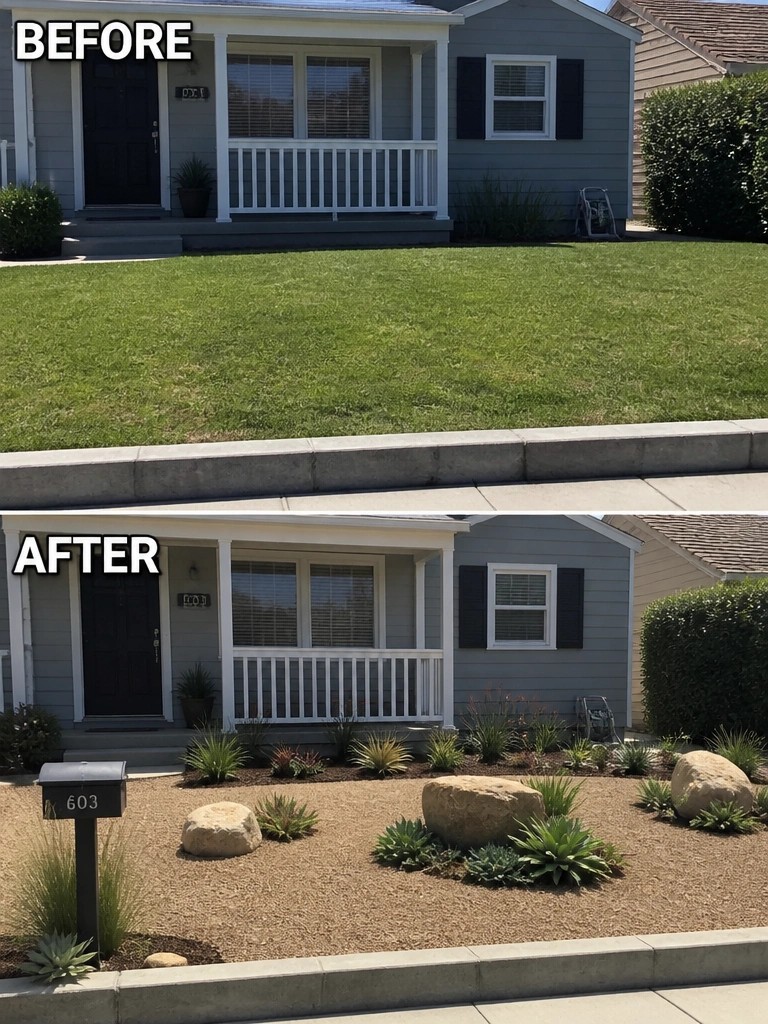
A flat stretch of grass often makes a front yard feel unfinished. Switching the lawn for gravel, a few large rocks, and low clusters of plants creates clear shape and makes the whole area look more intentional without adding much height.
This idea suits homes that want lower water use and less mowing. Clear the grass first, add a simple border or edging, then lay gravel over a barrier so the beds stay neat. Keep the plantings modest and repeat a few types rather than mixing too many.
Add Structure To A Plain Front Yard With Garden Beds
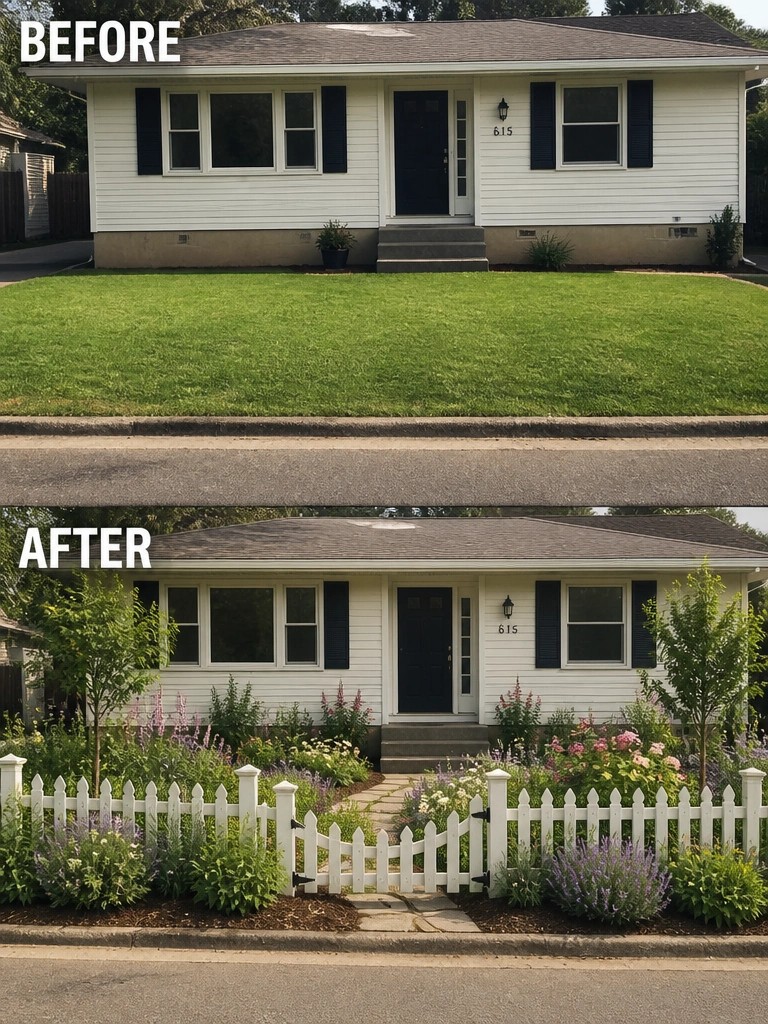
A plain front lawn often looks unfinished because there is no clear edge between the grass and the house. Adding raised beds along the foundation and a low fence at the sidewalk gives the yard shape and makes the entry feel more intentional. The main change here is the shift from one open stretch of grass to several planted areas that guide the eye toward the door.
This idea works best on modest lots where you still want to keep most of the lawn. Mark out the beds first, keep the plantings simple, and use the fence to mark the front boundary. The result feels planned without requiring a complete overhaul of the yard.
Add Structure To A Plain Front Yard With Gravel And Pavers
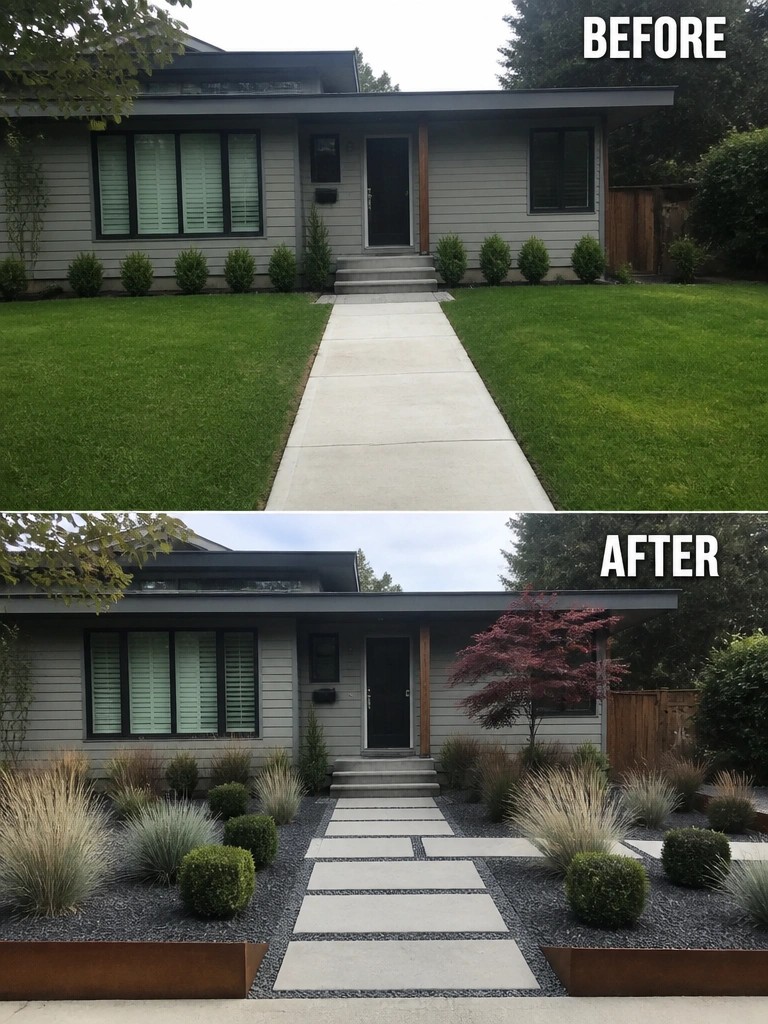
A wide concrete path and solid lawn can make a front yard feel flat and unfinished. In this case the lawn was removed and replaced with gravel beds that hold a mix of grasses and shrubs, while the old path was swapped for stepping stones set into the gravel. The new layout gives the yard clear lines and makes the entry feel more intentional.
This approach works well on homes with simple facades where the yard lacks shape. Keep the beds narrow enough to leave room for movement, repeat a few plant types instead of using too many varieties, and make sure the path width stays comfortable for walking. The result is a front yard that looks planned without needing constant upkeep.
Add Raised Beds To A Plain Front Lawn
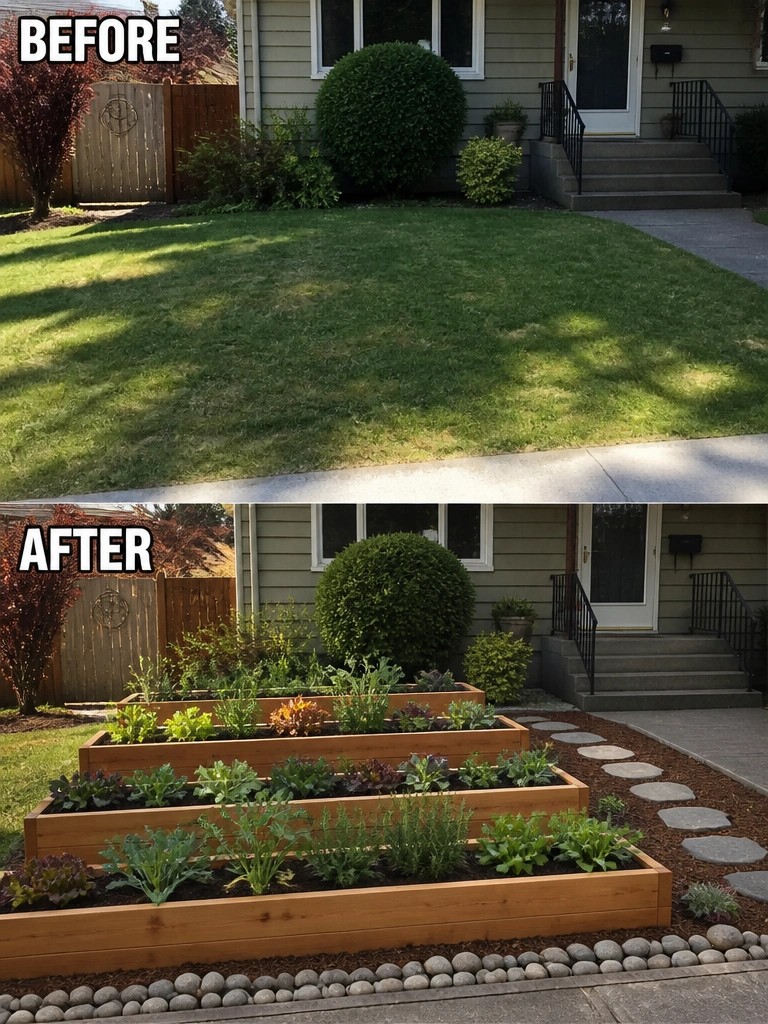
A flat stretch of grass often leaves a front yard feeling empty and unused. Adding raised beds gives the space clear purpose while keeping the planting area contained and easy to manage.
This approach works best in smaller yards where you want to grow vegetables or herbs without taking over the whole lawn. Keep the beds a few feet from the house and sidewalk so there is still room to walk and mow what grass remains.
Fix A Bare Spot With A Garden Bed
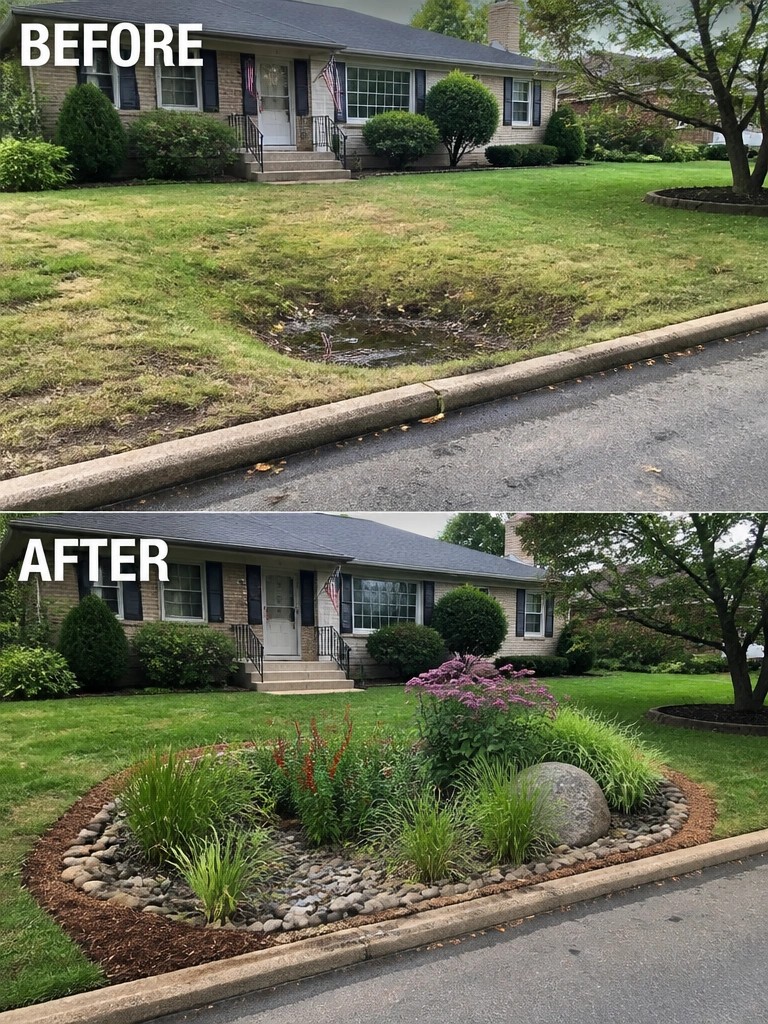
A low or worn-out patch right along the curb is hard to fix with grass alone. Turning that spot into a simple garden bed solves the problem by replacing the struggling lawn with mulch, edging, and plants that can handle the conditions.
This works best in front yards where the lawn meets the street and drainage is an issue. Keep the bed modest in size, use a clear edge to separate it from the grass, and choose plants that match the amount of sun and water the spot gets.
Give A Plain Front Lawn Structure With A Patio And Beds
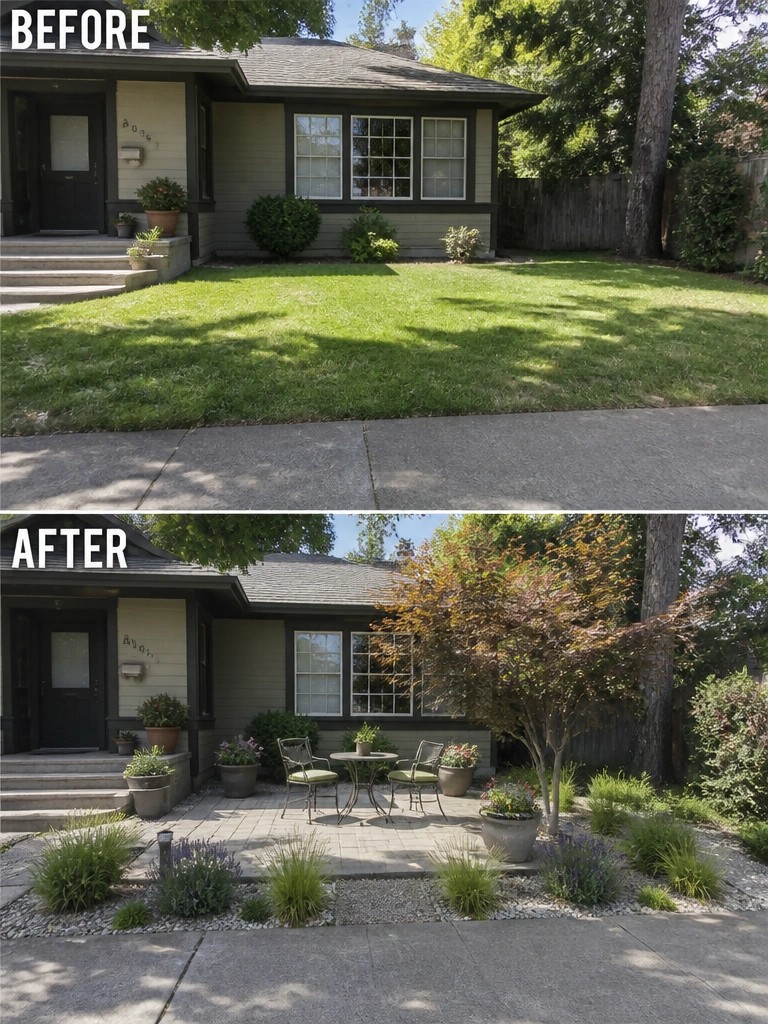
A flat lawn often looks unfinished because there is no clear place to pause or spend time. Adding a small paved patio with seating creates an obvious spot to sit while the new garden beds and tree around it give the yard shape and layers.
This idea works best on modest front yards where you want both usable space and better curb appeal. Mark the patio size first so it does not crowd the walkway or the house, then plant around the edges with simple shrubs and perennials that match your climate.
Give A Plain Front Yard More Structure With Garden Beds
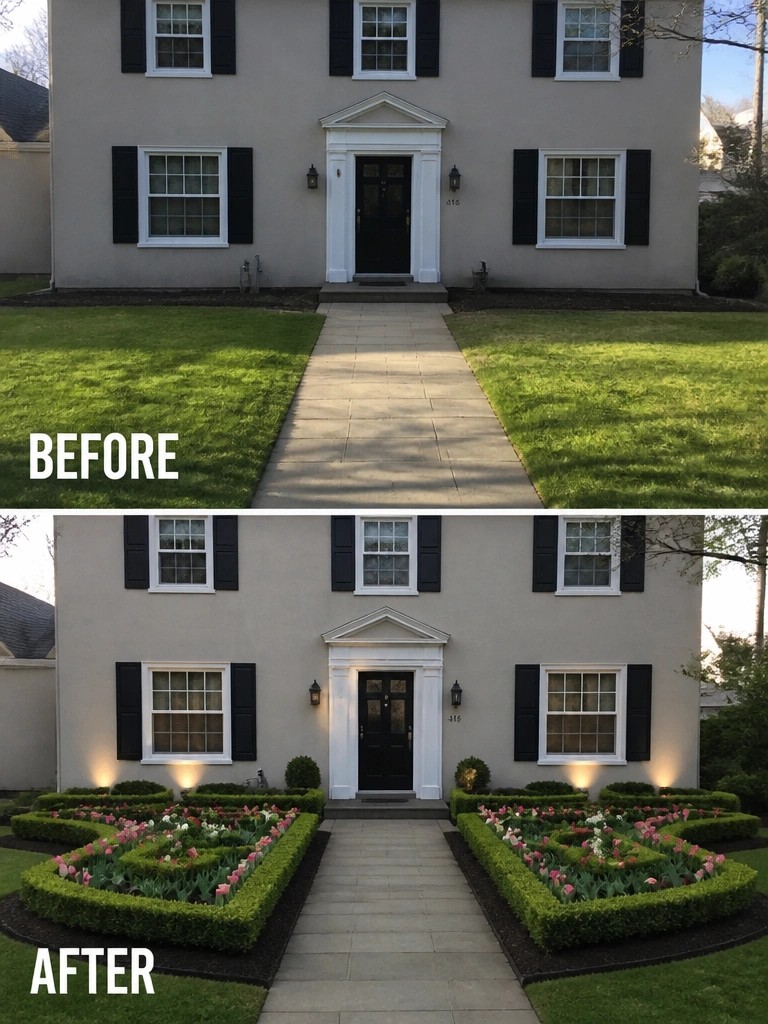
A flat lawn on either side of the walkway makes the front of a house feel unfinished. Adding low boxwood hedges and flower beds creates clear lines that lead the eye straight to the door. The small lights tucked into the beds add a simple layer of evening interest without any complicated wiring.
This approach works best on houses with a straight path to the entry. Keep the beds narrow so they do not crowd the walkway, and choose plants that stay low in front of windows. Start with the edging and a few repeating shrubs before filling in flowers.
Add Retaining Walls To A Sloped Lawn
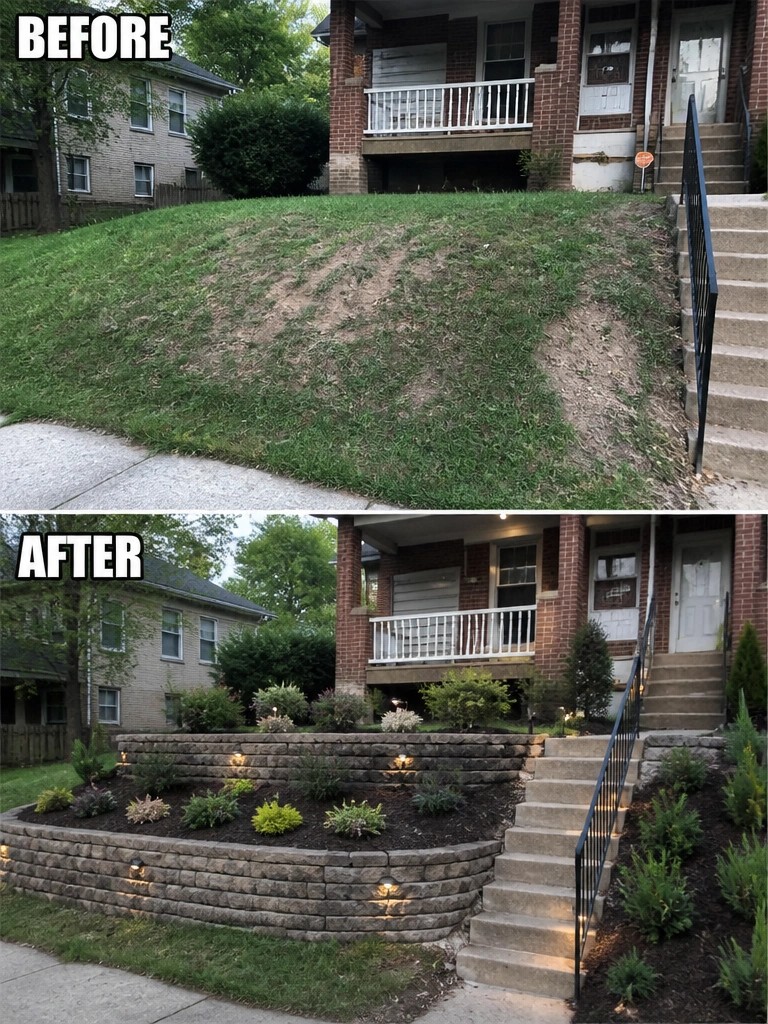
A steep, patchy lawn is hard to mow and rarely looks tidy. Low retaining walls solve this by breaking the slope into flat sections that can hold soil and plants without washing away.
This idea works best on front yards with noticeable inclines. Focus on the walls first to give the space structure, then add mulch and a few shrubs or ground covers. The result is a yard that feels planned instead of neglected.
Add Garden Beds And A Path To A Plain Lawn
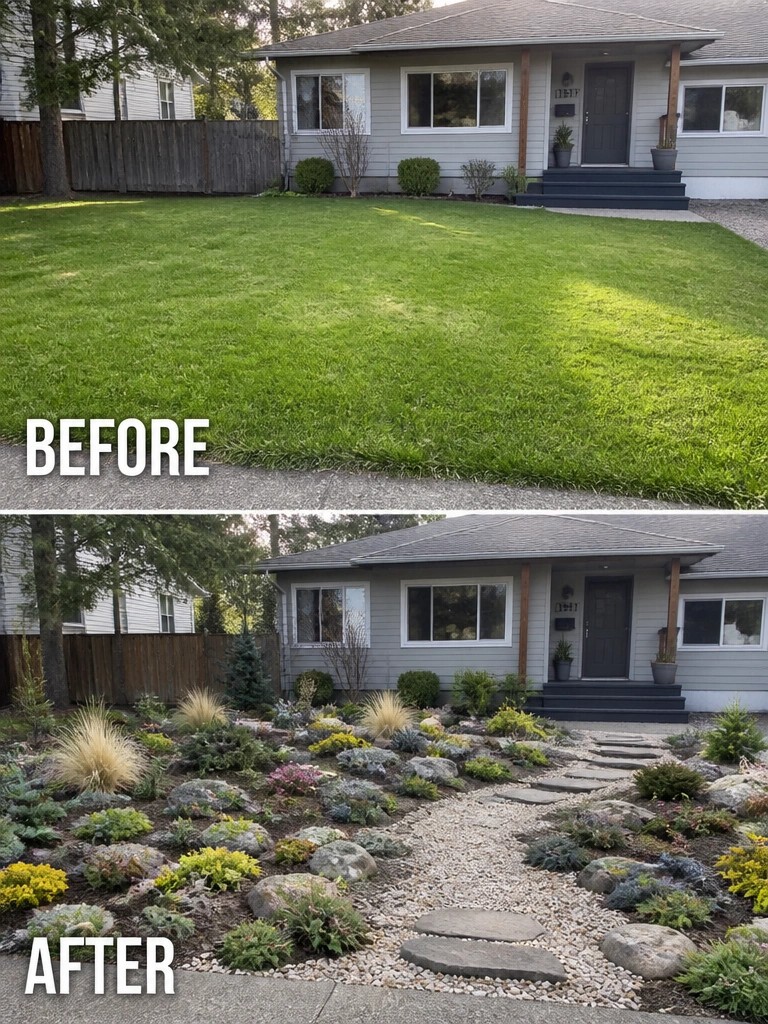
A flat lawn can look fine from the street but often feels unfinished up close. The change here comes from carving out beds along the front, filling them with low plants, and laying a simple stone path through gravel. That one move breaks up the open grass and gives the yard a clear shape without adding much height or clutter.
This approach works well on smaller front yards where you still want some open grass but need better flow from the sidewalk to the door. Start with the beds and path first, then add plants that stay low so the house stays visible. Keep the gravel or mulch edges clean and leave enough walking room so the space does not feel crowded.
Add Hedges To Give A Plain Lawn Privacy And Shape
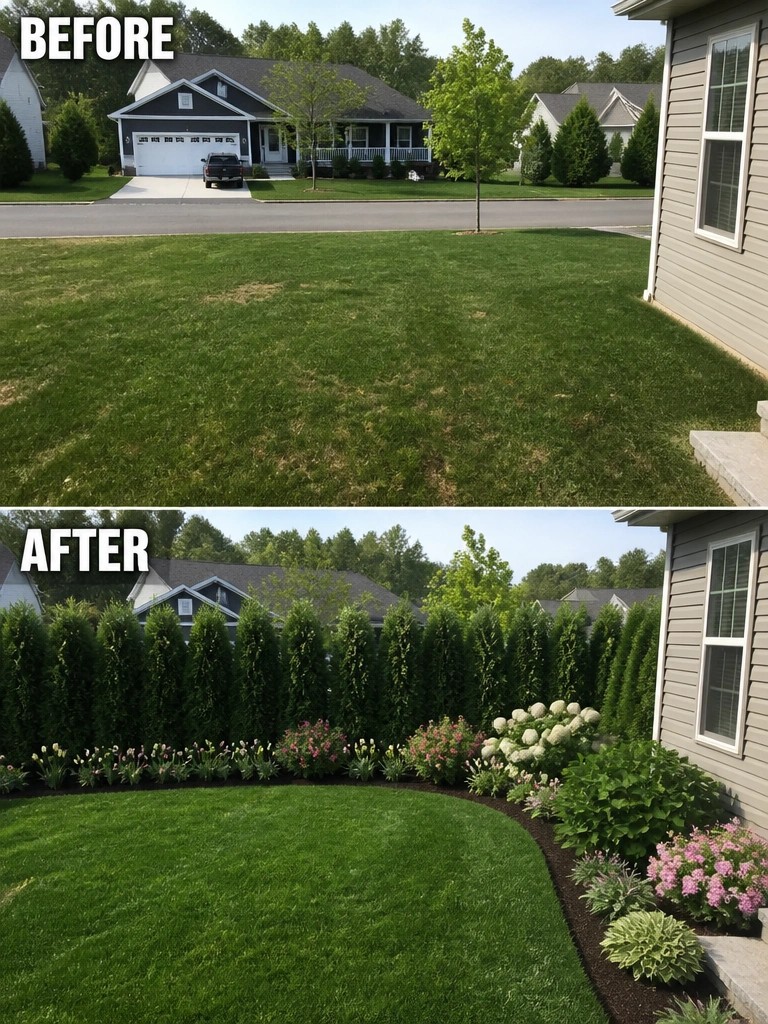
A wide open lawn often feels exposed, especially when it sits right next to the street. Planting a solid row of tall hedges creates a clear boundary and blocks the view from the road. Adding a narrow flower border in front of the hedge gives the eye something to rest on without crowding the grass.
This idea works best on lots that need a quick privacy screen. Keep the hedge as the main backbone and use lower plants only along the front edge. The lawn stays open and easy to mow, while the yard gains structure and a finished look.
Add Pathway Lighting To Frame A Front Walk
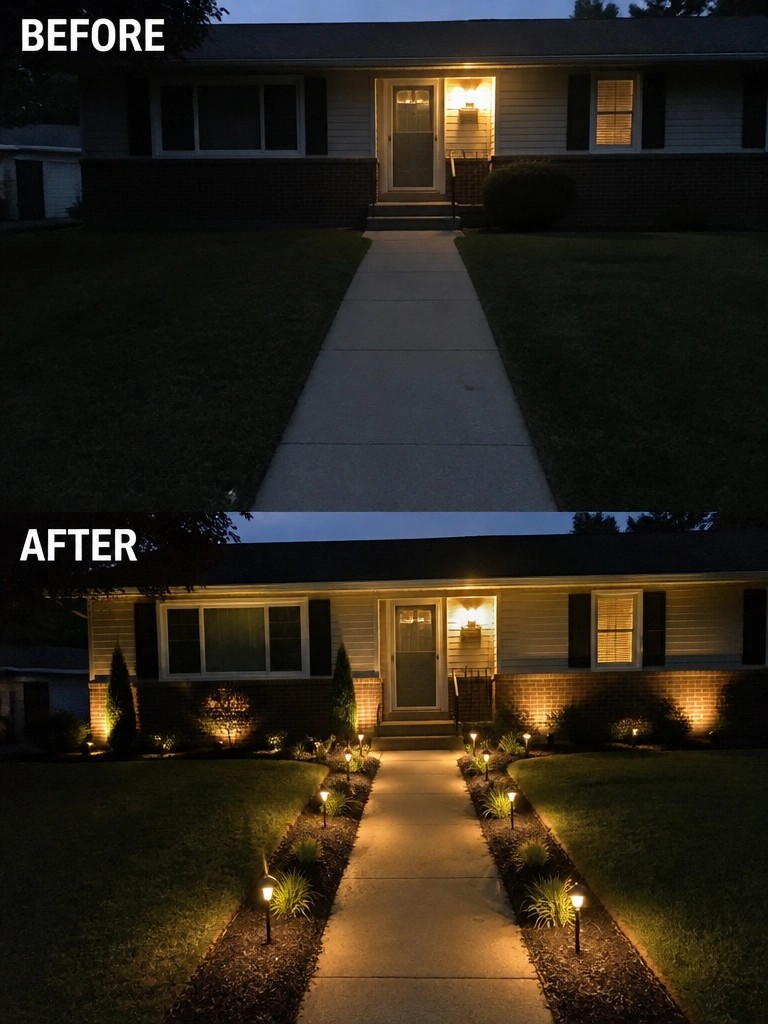
A long concrete walkway can feel flat and forgotten once the sun goes down. Placing low lights along both edges and a few uplights near the foundation gives the path a clear shape and makes the whole front of the house feel more finished.
This idea works best on homes where the walk runs straight from the street to the door. Use solar lights first if you want to test the layout, and keep the spacing even so the line stays simple rather than busy.
Add Clean Borders To A Patchy Lawn
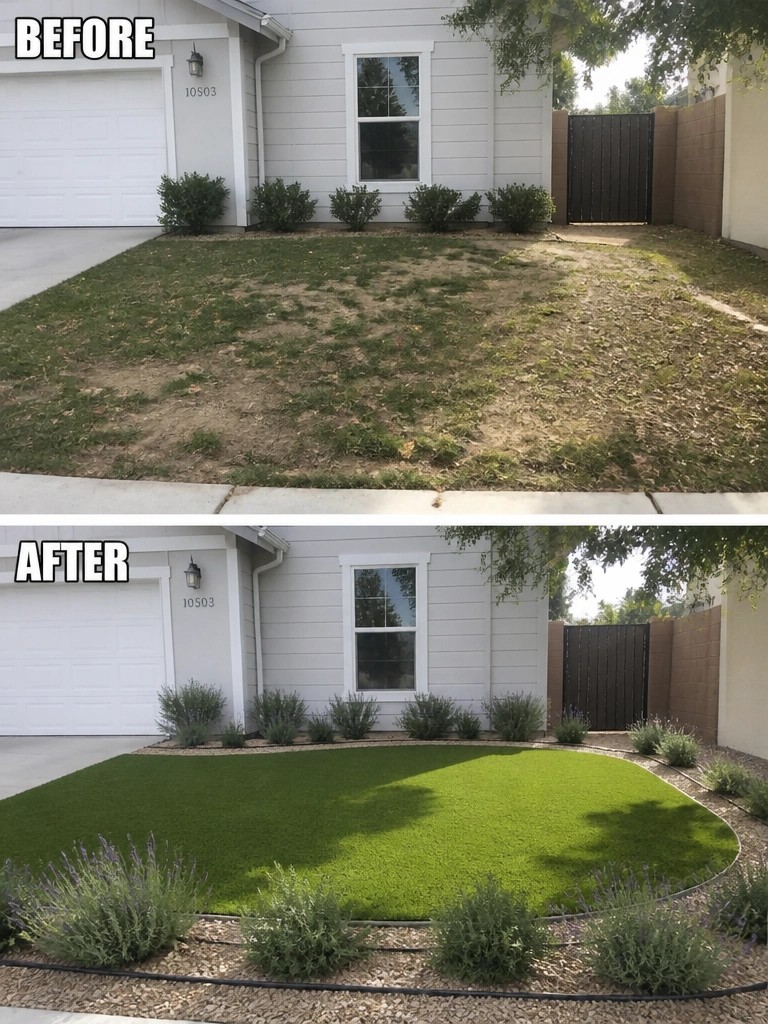
The front yard had a large stretch of grass that looked thin and worn in places. Shaping the lawn into a simple curve and adding gravel along the edge gave the space a clear outline and made the whole area feel more planned.
This idea works best on small front lawns where the grass is hard to keep even. Mark out the shape first, put in a solid edge, and keep the planting along the border simple so the lawn stays the main feature without needing constant upkeep.
Turn A Plain Lawn Into A Fire Pit Seating Area
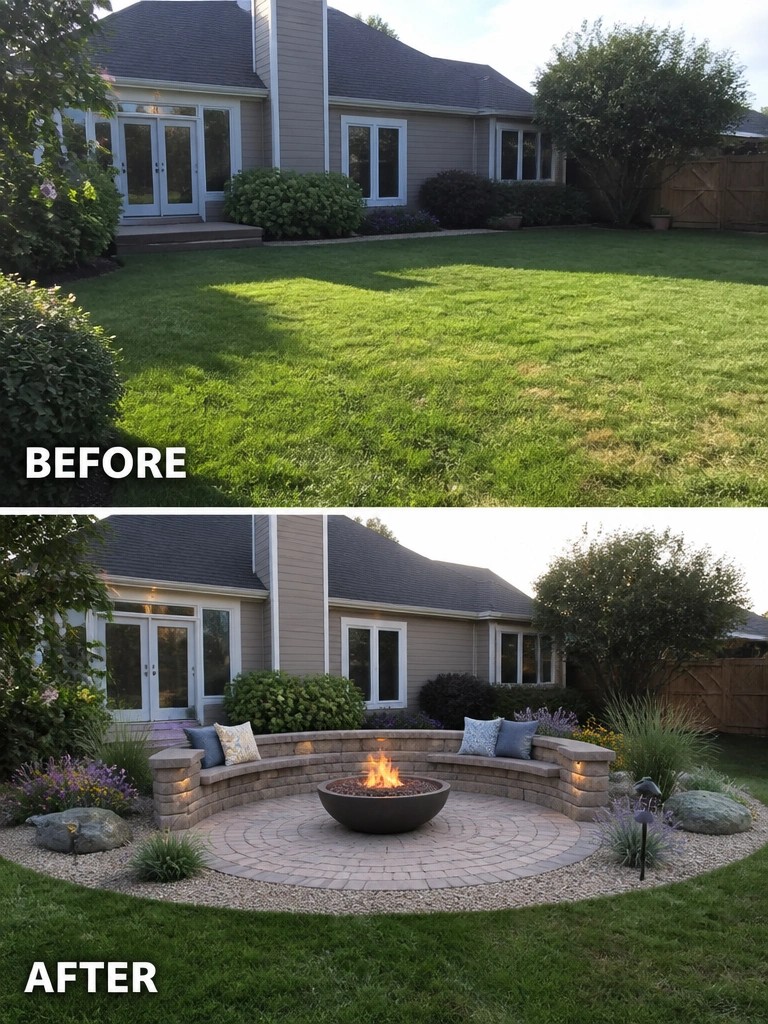
A big stretch of empty grass often sits unused because there is nothing to draw people outside. Adding a fire pit with a built-in seating wall and a paved circle gives the space a clear purpose. The curved bench creates a natural gathering spot while the pavers keep the area dry and defined, so the rest of the lawn stays simple to maintain.
This idea works best in a backyard that gets regular use in the evenings. Start with the hard surface and seating first, then add a few plants around the edges. Keep the scale modest so the seating area does not take over the whole yard and still leaves room to walk around it.
Add Planting Beds Along The Foundation
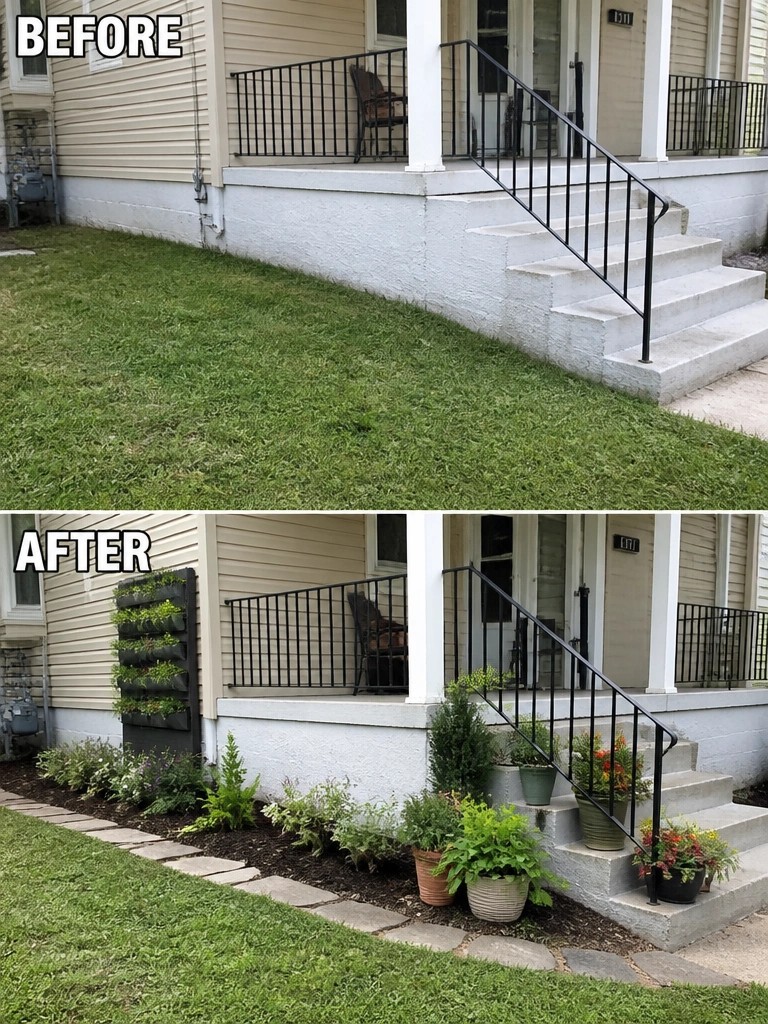
A flat lawn that runs straight into the house wall usually feels unfinished. Adding a narrow planting bed with a few shrubs, perennials, and a layer of mulch gives the front a clear edge and makes the whole house sit better on the lot.
This idea suits homes with a simple foundation and a decent amount of lawn. Keep the bed only a couple of feet wide so it does not crowd the walkway, and choose plants that can handle the sun exposure on that side of the house.
Add Structure To A Plain Front Lawn
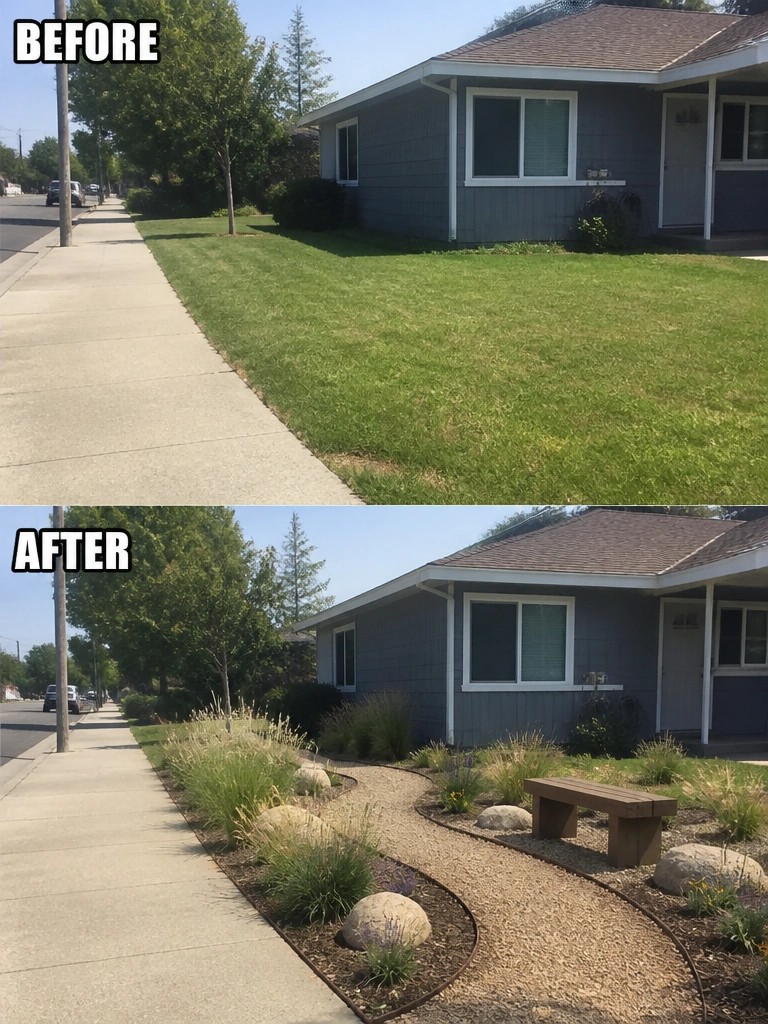
A wide stretch of grass often looks unfinished because it has no clear edges or purpose. Adding curved beds with gravel paths and simple plantings gives the yard shape and makes the whole front feel more planned.
This idea suits homes with a modest front yard where you still want some open lawn but need better definition near the street. Lay out the beds first with a hose so you can adjust the curves before you dig, and keep the plantings low enough that they do not block the view from the sidewalk.
Refresh The Entry With A New Door Color
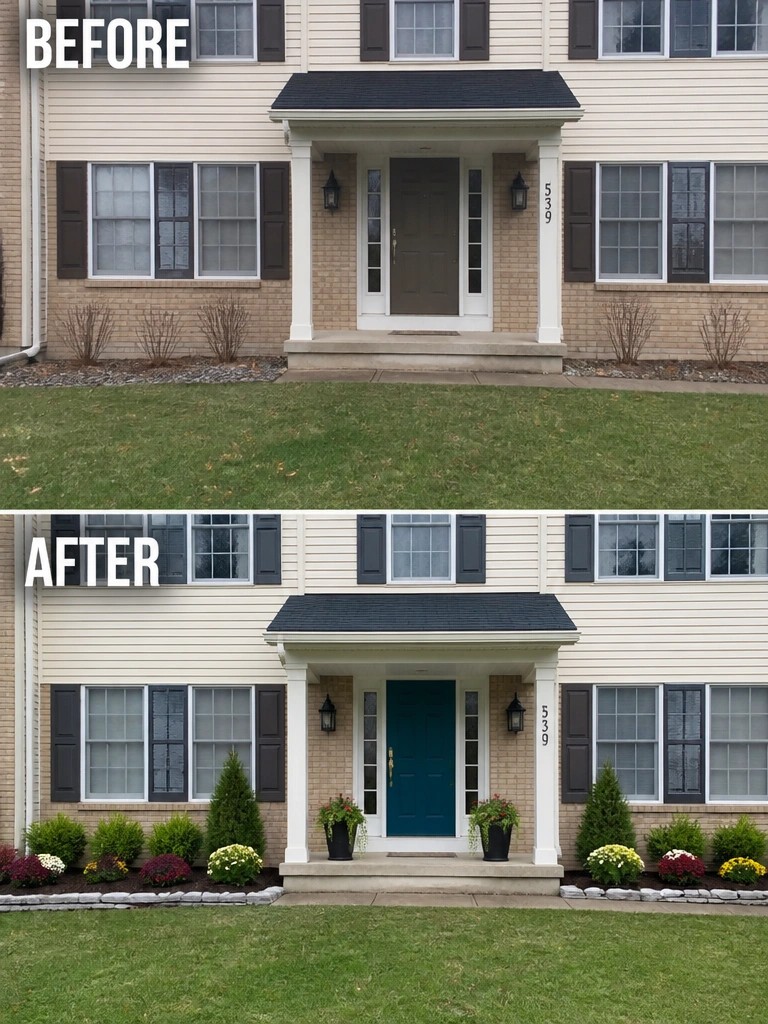
A simple way to update a plain house front is to change the door color and add some structure around the entry. In this case the brown door became a deep teal while the beds on either side were cleaned up and planted with low shrubs and flowers. The new color draws attention to the door without any other major work.
This approach works well on houses with a clear front porch or stoop. Pick a color that contrasts with the siding and brick, then keep the planting low so it frames the steps instead of hiding them. Start with one or two beds and add edging if the lawn runs right up to the house.
Define A Front Path With A Low Border Wall
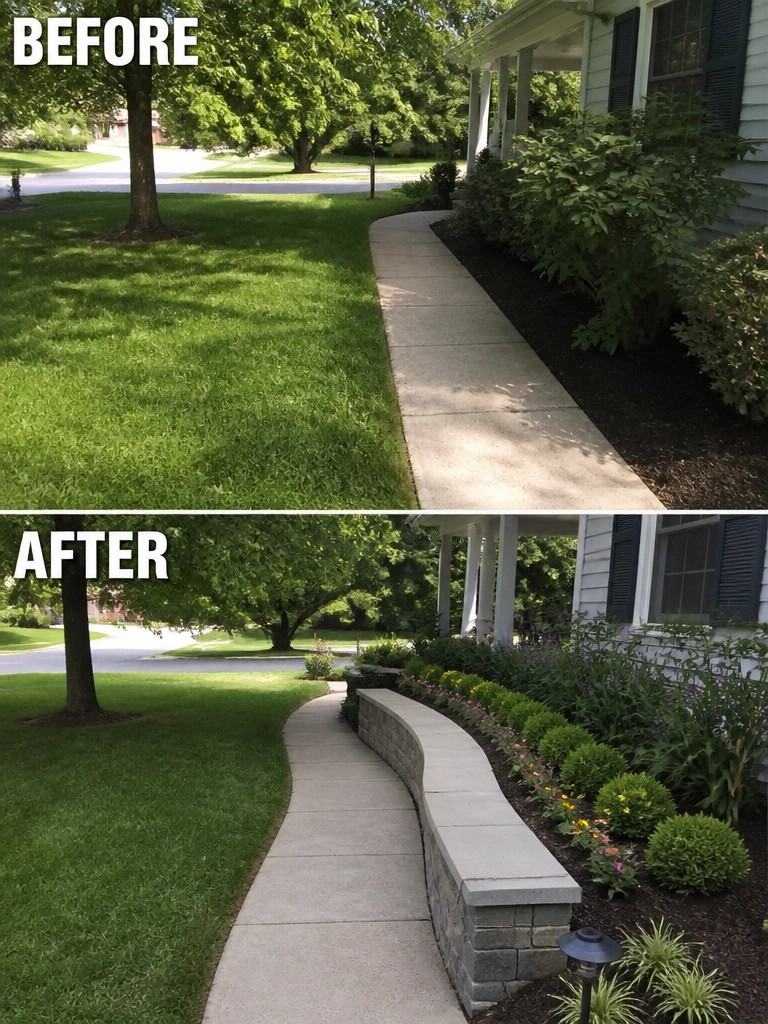
A straight concrete walk next to a flat lawn often feels unfinished. Adding a low stone wall along one side creates a clear edge and gives you room for a planting bed right beside the house. The change turns the path into something that feels more intentional without needing a full redesign.
This works best on homes where the walk runs close to the foundation. Start with the wall height and curve first, then fill the bed with low shrubs and seasonal flowers. Keep the lawn side clean so the border stands out and the path stays easy to walk.
Add Defined Garden Beds To A Plain Lawn
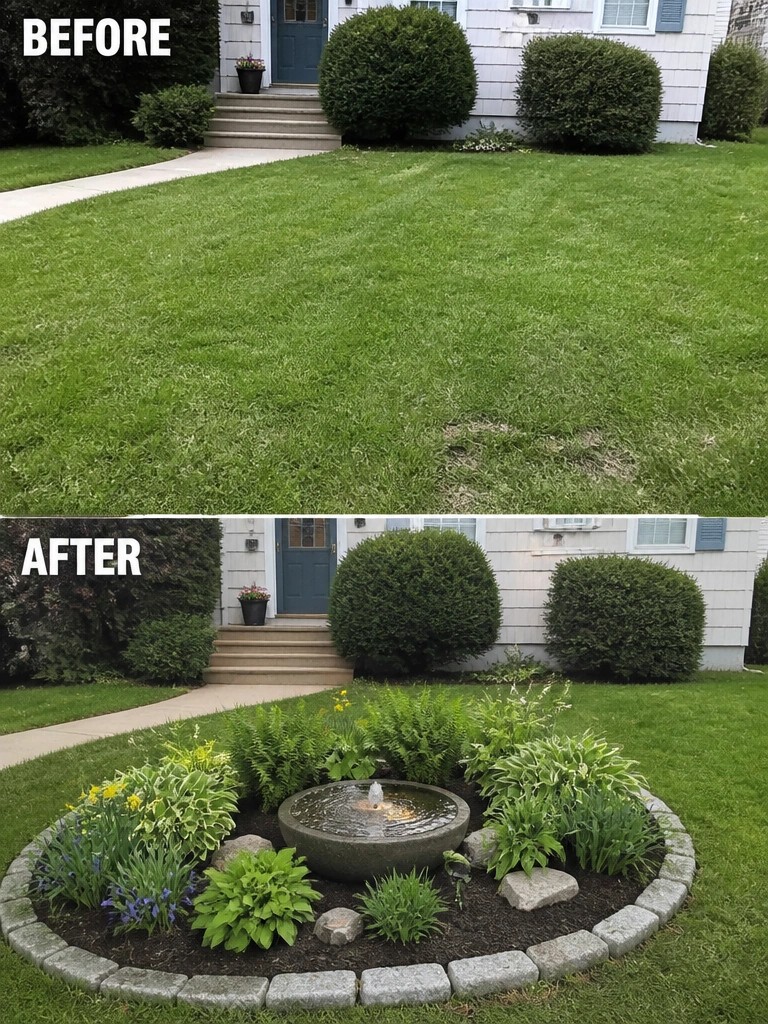
A large stretch of grass can start to feel empty and flat after a while. Adding one clear garden bed with edging and a simple center feature gives the space shape without needing to redo the whole yard. The change from open lawn to a planted circle shows how a single defined area can make the front feel more planned and welcoming.
This idea works best on bigger lawns where the grass runs right up to the house. Start with the border and soil first, then add plants that stay low enough to keep the view open. Keep the bed a simple shape so it stays easy to mow around and does not crowd the walkway.
Add Defined Garden Beds To A Plain Front Lawn
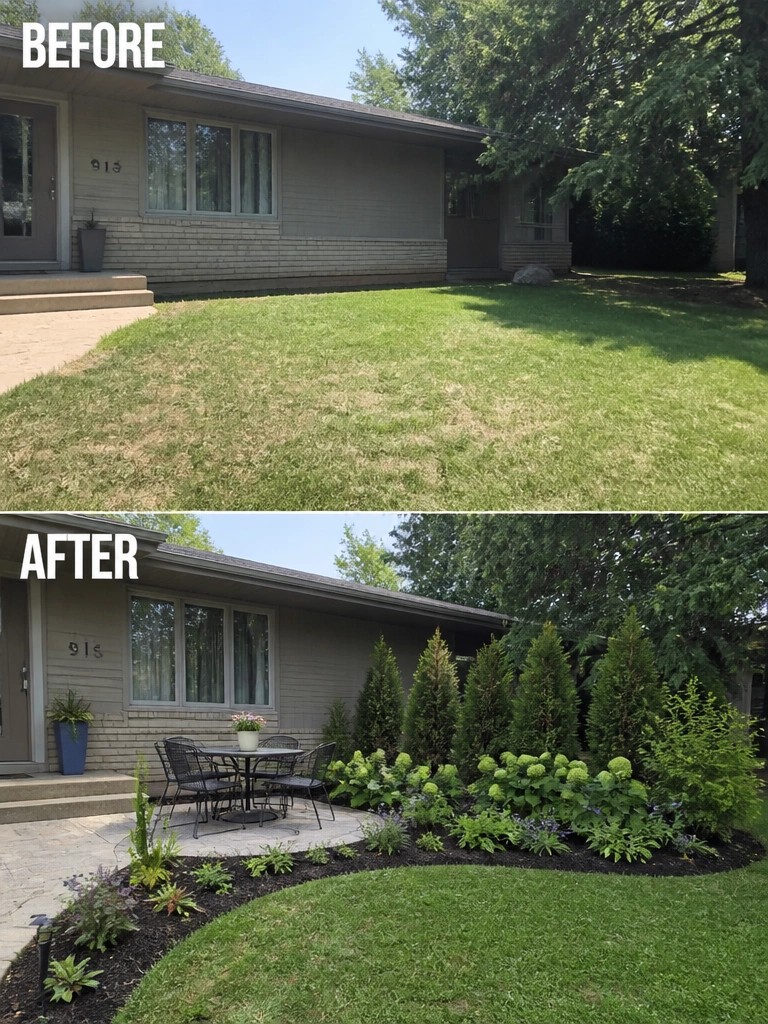
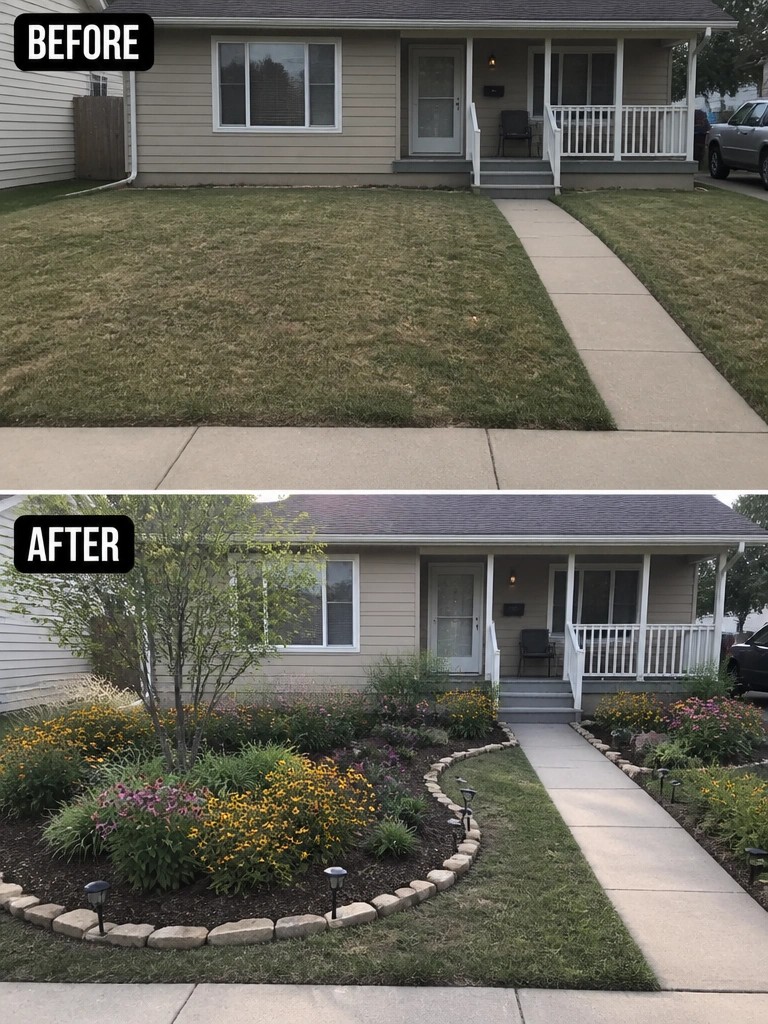
A flat lawn often makes a house look unfinished because nothing connects the building to the yard. The main change here is the addition of a wide, curved planting bed that follows the front of the house and creates a clear border between the grass and the foundation.
This idea works best on simple single-story homes where the lawn runs straight to the walls. Start by marking a gentle curve with a hose, then fill the bed with a mix of evergreen shrubs for height and lower perennials for color. Keep the planting simple so it stays easy to maintain.
Frequently Asked Questions
Q: Which ideas work if I want to spend under a hundred dollars at first?
A: Begin with fresh mulch and a few large pots placed near the walkway. These steps add color and shape right away without major digging. You can build from there once the basic look feels right.
Q: How do I keep new plants alive during the first summer?
A: Water them deeply twice a week instead of a light sprinkle every day. Group plants with similar water needs together so nothing gets overlooked. After the roots settle in, most will need far less attention.
Q: What if my neighbors complain about the changes?
A: Talk to them casually about your plans so they feel included. Most people appreciate a fresh yard once they see the results.
