

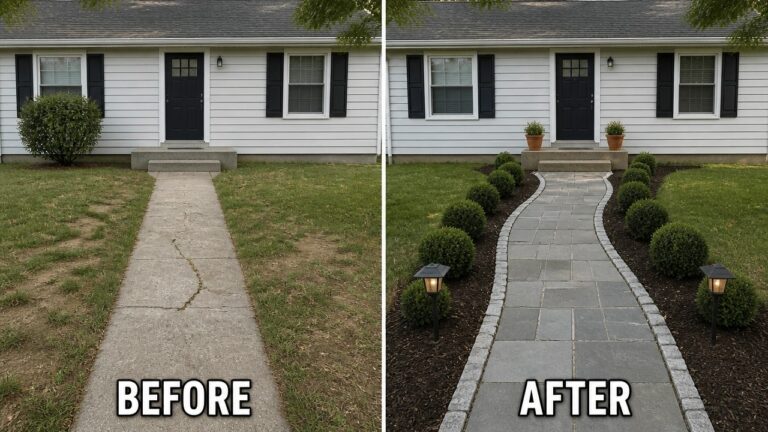
I have seen plenty of homes where the front yard just sits there looking a bit flat and overlooked.
Simple adjustments to the entry area or plantings can shift how the whole house reads from the street.
I would start with the walkway and edging on my own place before adding anything else.
Those changes usually make the space feel more intentional.
The result is a home that feels ready for people to stop by.
Give The Front Yard A Clear Structure With Pavers And Beds
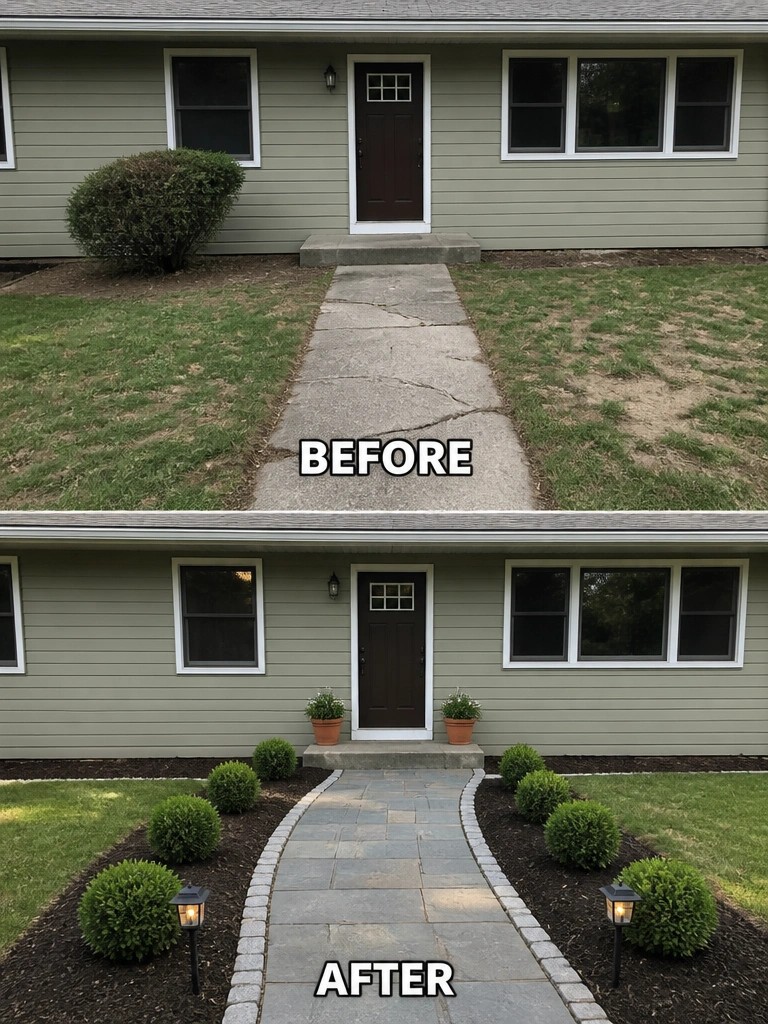
A straight concrete path with nothing around it often leaves the front of a house feeling unfinished. Replacing it with a slightly curved paver walkway and adding planted beds on both sides gives the entry a sense of order without needing a full redesign.
This approach works well on homes where the lawn is uneven or patchy. Start by laying out the new path so it leads naturally to the door, then keep the beds simple with low shrubs and a clean edge. The result is easier to maintain and makes the whole front feel more intentional.
Add Defined Garden Beds To A Plain Front Yard
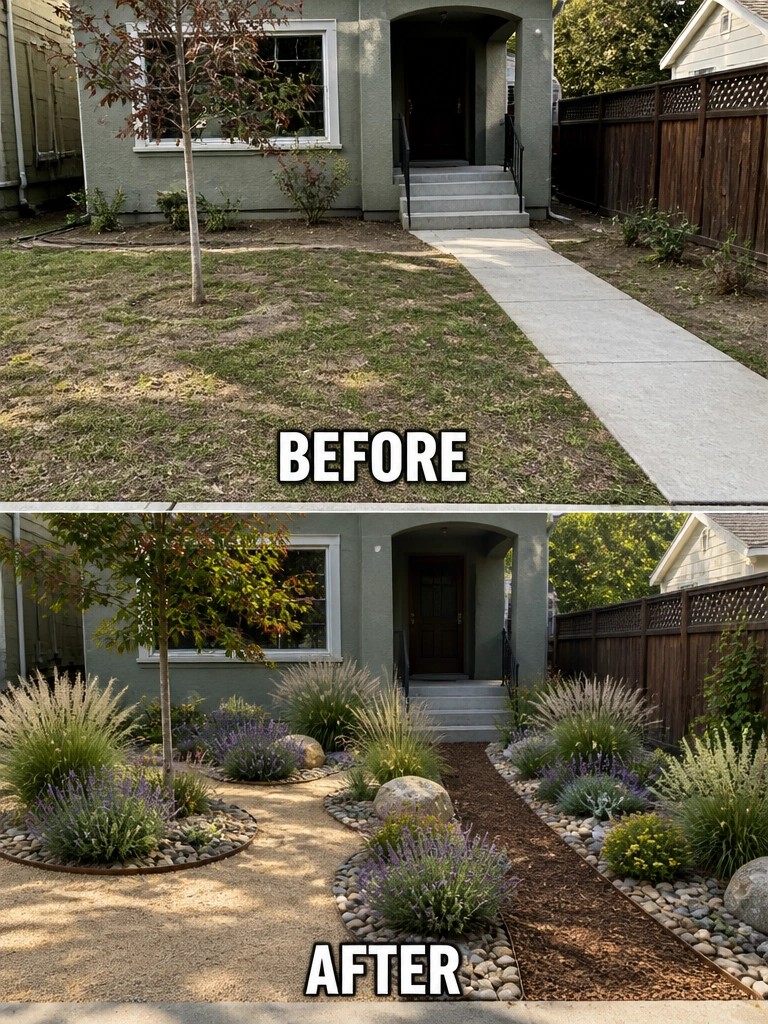
A bare front yard with just patchy grass tends to feel unfinished next to the house. Adding garden beds creates clear lines and gives the entry a more settled look. Here the lawn was replaced with curved beds edged in stone and filled with plants, which immediately makes the path feel like it belongs.
This idea suits smaller yards where you want some planting without losing open space. Outline the beds first so they follow the natural flow of the walk, then choose a few plant types that repeat along the edge. Mulch keeps everything looking neat and cuts down on weeding.
Add Garden Beds And A Low Fence To Frame The Front
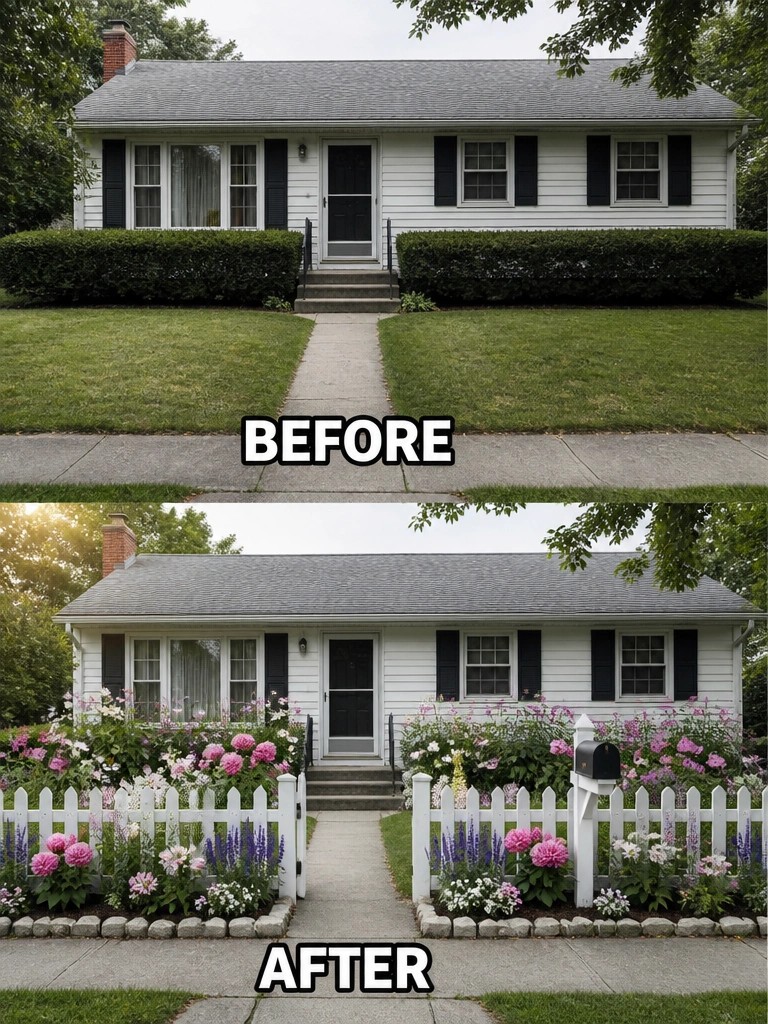
The main change here is replacing a plain strip of lawn with defined flower beds and a white picket fence on either side of the walkway. This simple addition gives the house a much clearer front boundary and makes the entry feel more intentional without any changes to the siding or roof.
This approach works well on houses that already have a straightforward shape and just need a bit of structure in front. Start by laying out beds along the foundation and the walk, then choose a fence height that stays low enough not to block windows. Keep the planting mix simple so it stays easy to maintain through the seasons.
Update Your Front Door Color For A More Welcoming Entry
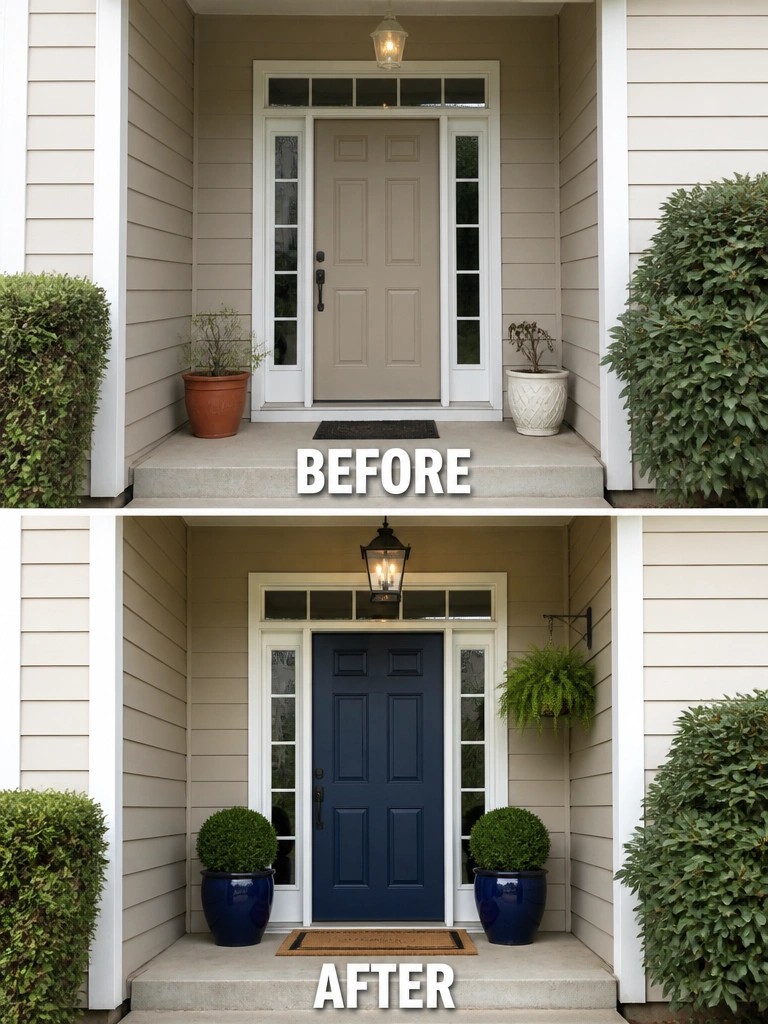
A quick way to improve the front of a house is to change the door color. Here the plain beige door was painted a deep navy, which makes the entry feel more solid and intentional. Matching planters on both sides and a new light fixture above the door help the whole area look pulled together without much extra work.
This idea suits homes with simple siding where the door can become the main focal point. Choose a color that contrasts with the walls but still fits the overall style, then add a pair of pots in a similar tone so the changes feel balanced rather than scattered.
Replace Overgrown Shrubs With Defined Beds
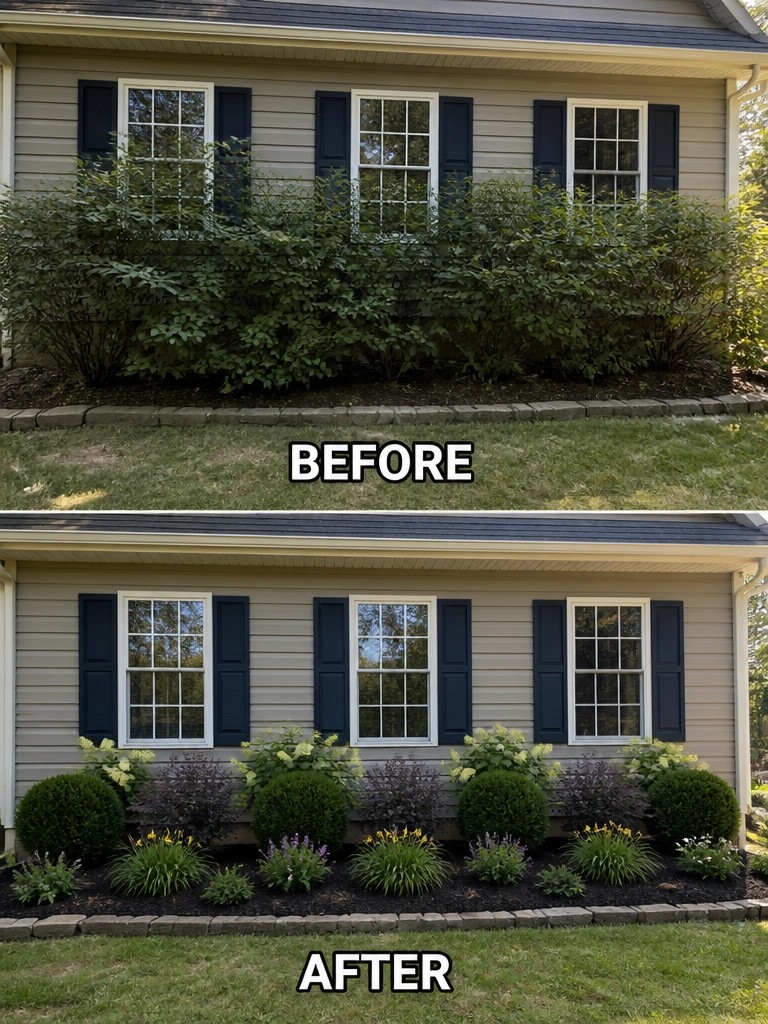
The main change here is removing the tall, messy shrubs that covered the lower part of the house and replacing them with low, structured planting. The new beds use a mix of rounded shrubs and smaller perennials set in mulch, which keeps everything neat and lets the windows stay visible.
This idea works on many homes because it stops the foundation from looking hidden or neglected. Start by cutting back anything that has grown too large, then shape the beds so they follow the line of the house. Keep the plants low enough that they do not block light or views, and repeat a few plant types for a cleaner look.
Add Structure With A Front Garden Border
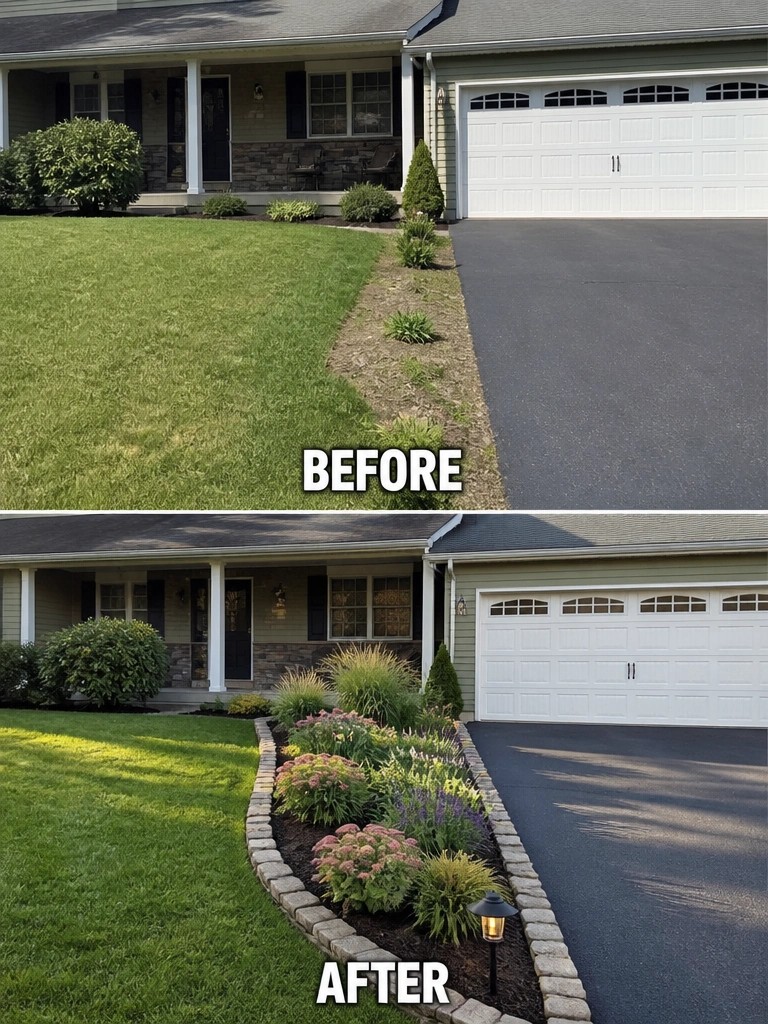
A straight lawn edge next to the driveway can make the whole front yard feel unfinished. Adding a curved stone border and filling the new bed with shrubs and flowers gives the space clear shape and makes the entry feel more planned.
This approach suits homes with a long driveway strip or a plain lawn line. Lay the edging first to set the curve, then plant in layers so nothing looks scattered. It works best when you keep the bed a reasonable width so the lawn still has room to breathe.
Add Lighting To Brighten A Front Entry
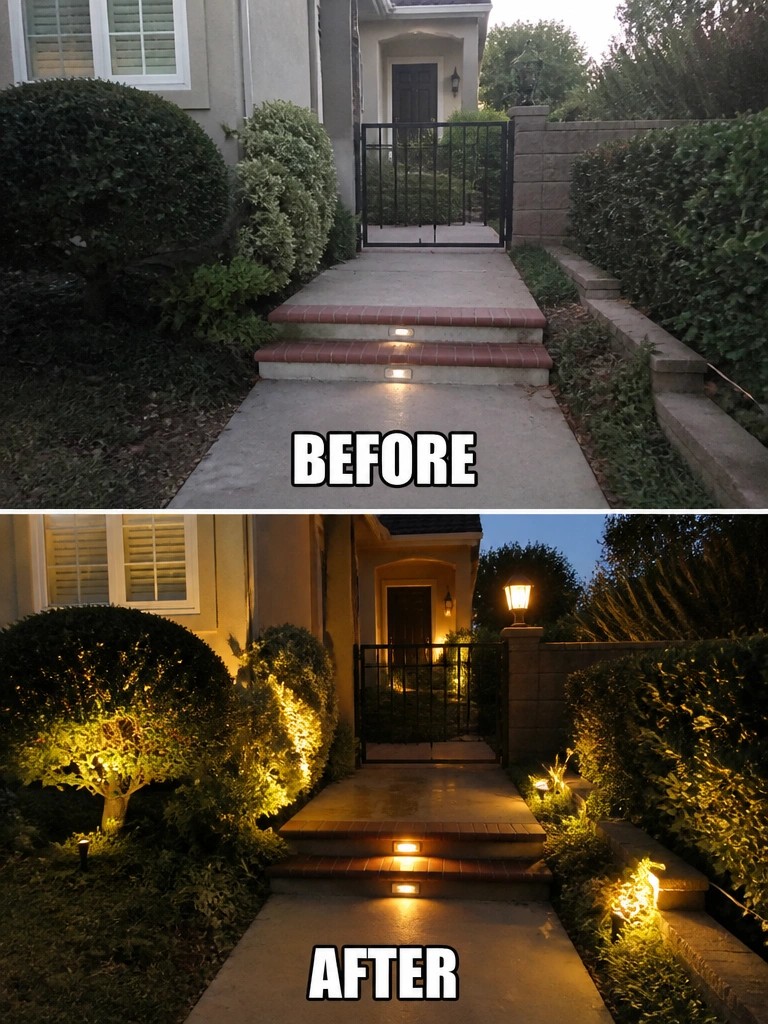
Adding lights along the path and around the plants turns a dark set of steps into a clear, usable entry. The before photo shows a plain concrete walkway that disappears into the evening. The after photo shows how a few well-placed fixtures make the same space feel safer and more finished without changing the layout.
This idea works best on homes where the front walk feels flat or hard to see at night. Start with low lights on the steps and a couple of spots aimed at key plants. Keep the fixtures simple so they do not compete with the house itself.
Update A Plain Exterior With Color And Shutters
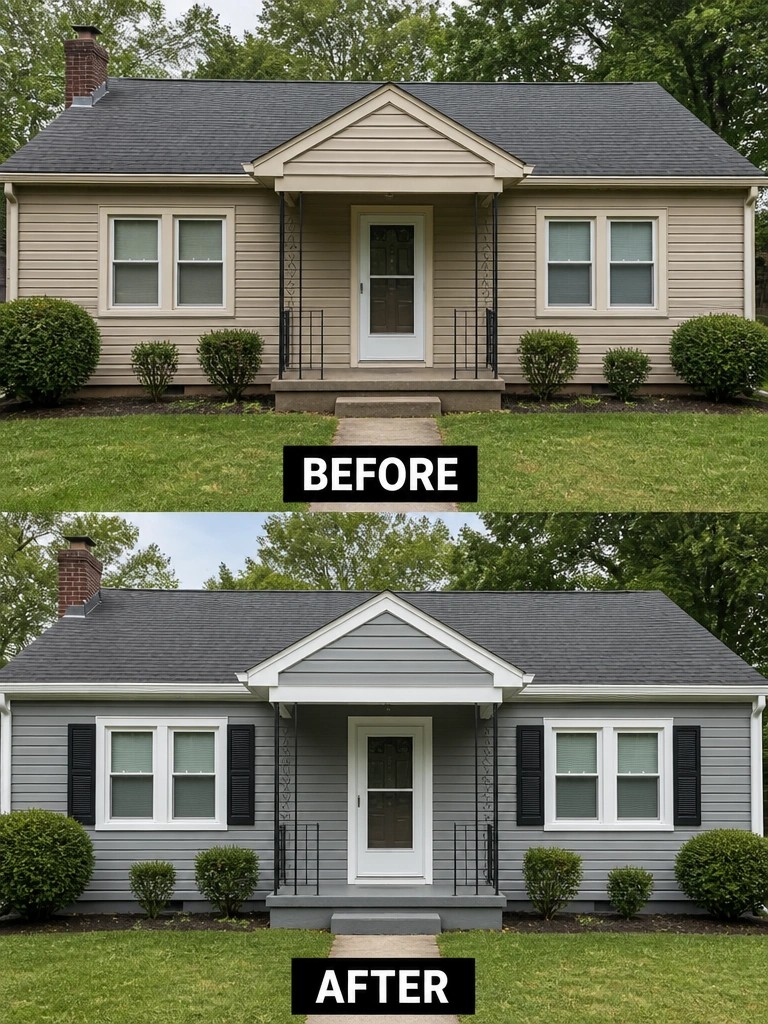
Changing the siding color and adding shutters can make a simple house look more finished without major construction. The beige walls felt flat and unfinished, while the new gray siding with black shutters gives the front a clearer shape and better presence from the street.
This approach works well on smaller homes with basic trim. Pick a color that pairs with the roof, then add shutters on the main windows first. Keep the changes consistent across the front so the house reads as one updated whole rather than a collection of small fixes.
Add Defined Garden Beds To Give Your Front Yard Structure
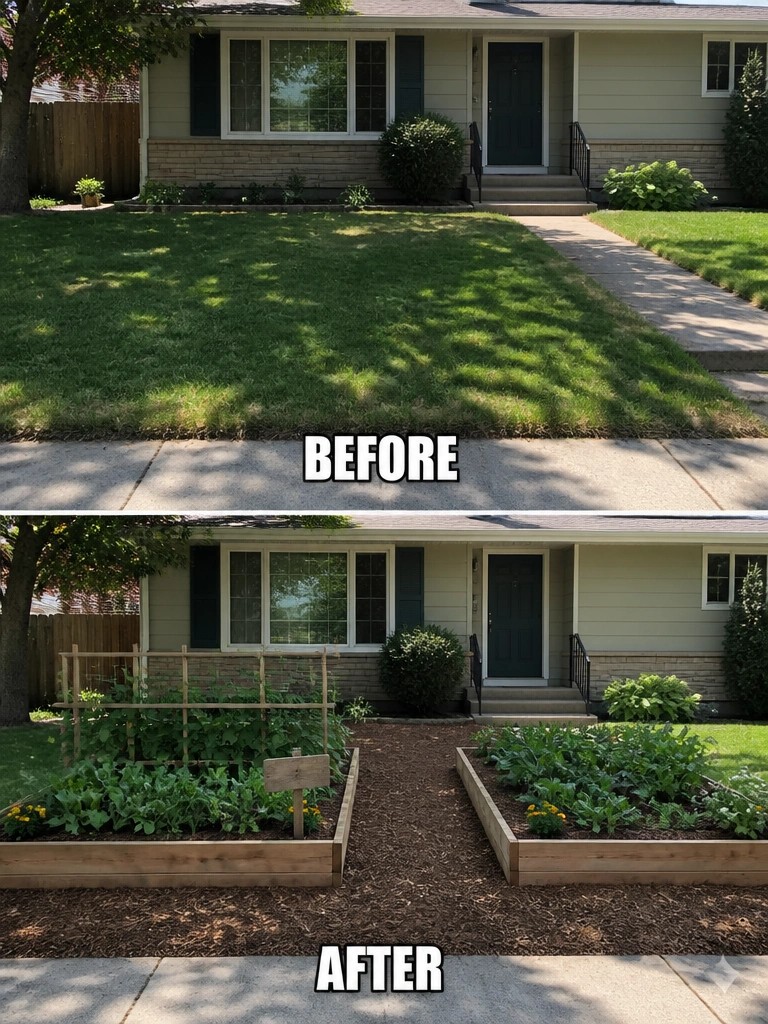
A flat lawn often looks unfinished even when it is neat. Adding raised beds in key spots breaks up the open space and gives the yard clear lines without needing major construction.
This idea works best on modest front yards where you want planting but still need room to walk and mow. Keep the beds low, line them up with the house, and use matching wood so the beds feel like part of the same plan rather than scattered additions.
Upgrade A Mailbox With A Stone Base
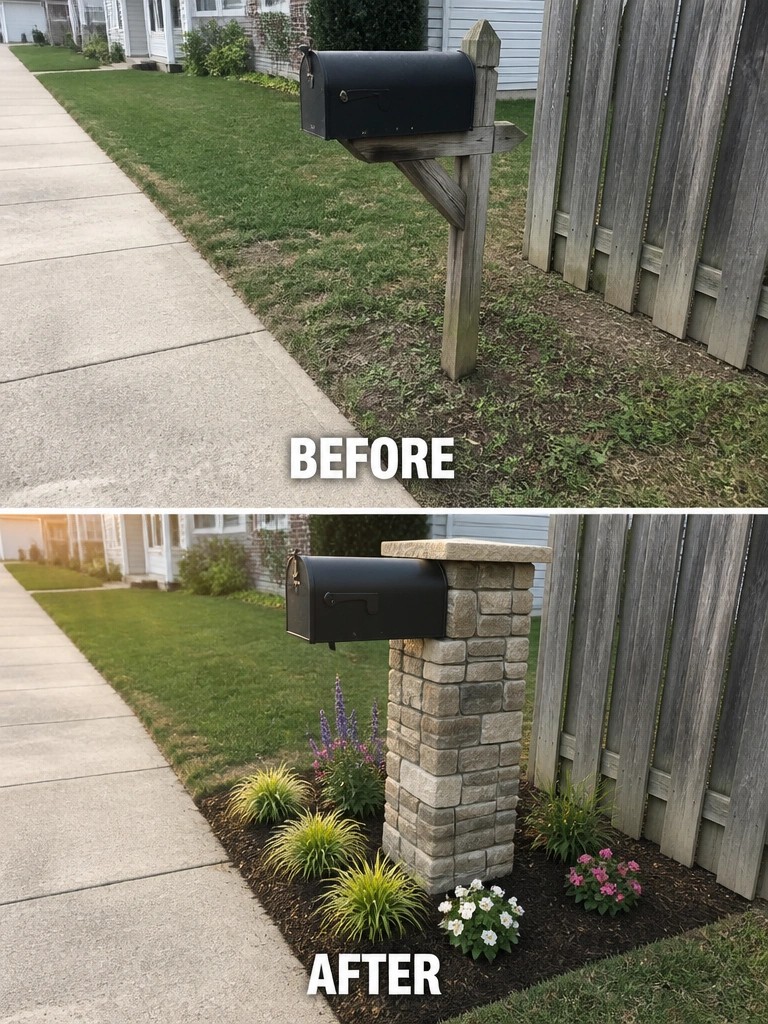
A simple wooden post works fine until you want the front of the house to feel more finished. Switching to a stone pillar gives the mailbox real weight and presence, while the added garden bed keeps the whole area from looking like an afterthought. The change turns a basic functional item into something that matches the rest of the yard.
This idea works well on any front lawn where the mailbox sits close to the sidewalk. Start with the base first, then add a few low plants and mulch so the bed looks intentional rather than scattered. Keep the planting simple so it stays easy to maintain and does not block the mailbox door.
Add Retaining Walls To Shape A Sloped Yard
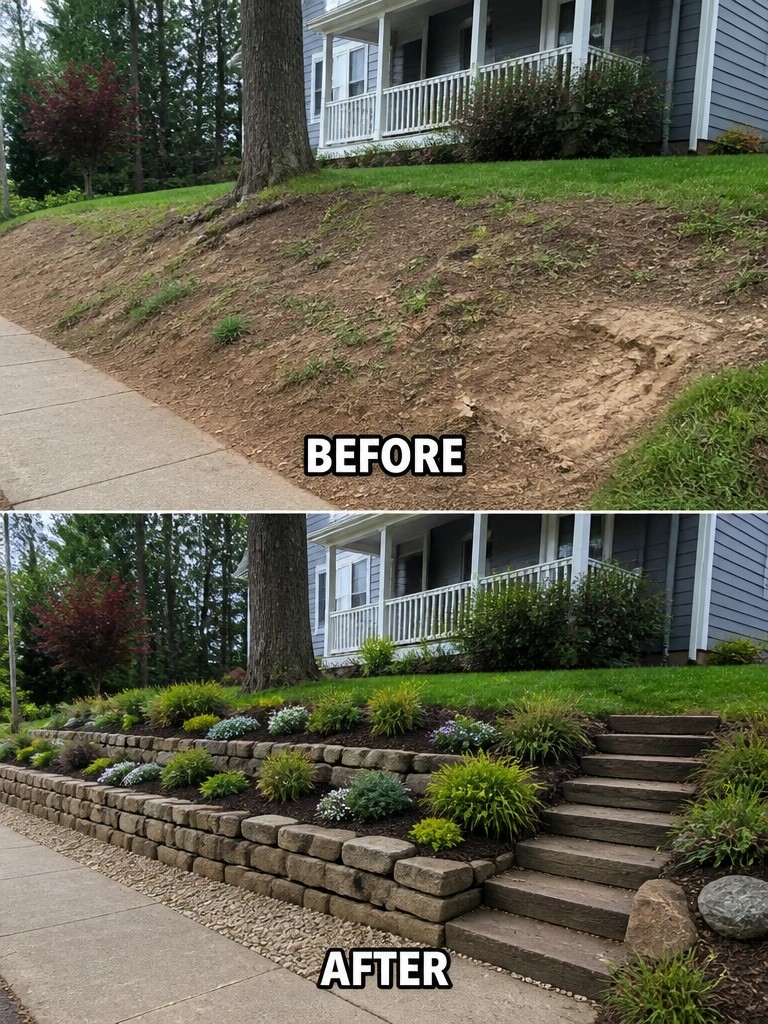
A steep front slope that keeps washing out is tough to mow and nearly impossible to plant. Low stone retaining walls solve the problem by breaking the hill into flat beds that hold soil and give plants a place to grow.
This idea works best on homes where the yard drops toward the street or sidewalk. Build the walls first to create level planting zones, then add mulch and shrubs that match your conditions. The result keeps the slope from eroding and turns wasted ground into something you can actually maintain.
Add Structure To Bare Foundation Beds
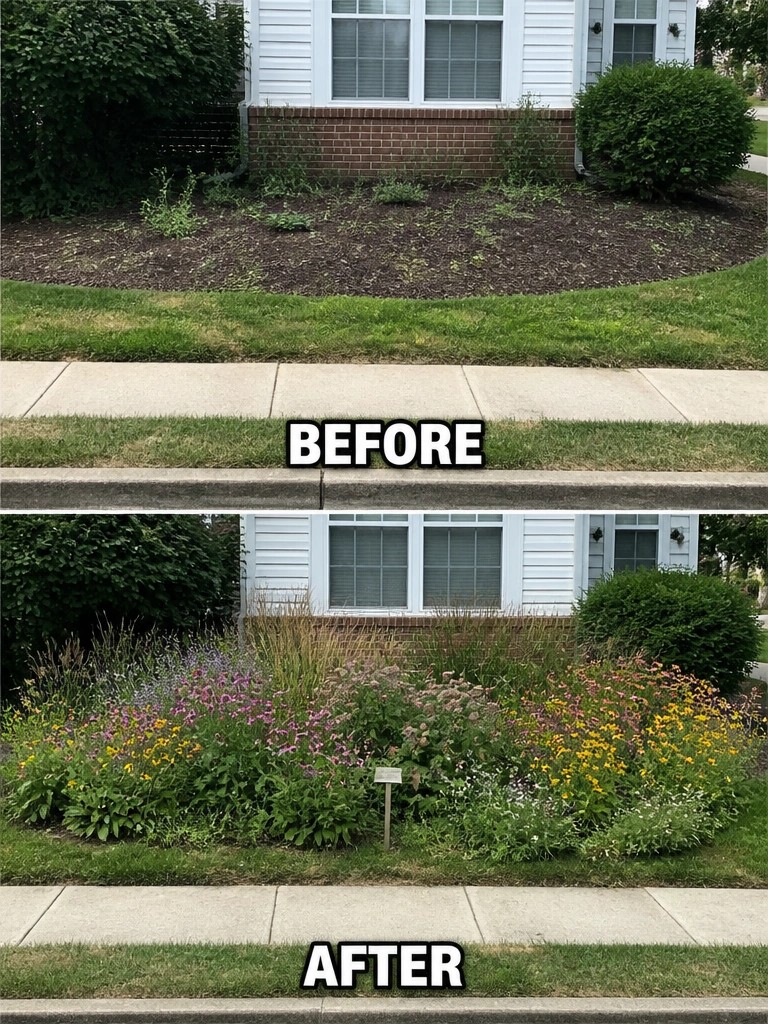
Many homes have a strip of mulch right along the front that never quite looks finished. Filling that area with a mix of taller grasses, mid-height flowers, and lower ground covers turns the same space into something that actually frames the house.
This approach works on almost any style of home where the foundation shows. Outline the bed edges first so the planting has a clear shape, then layer plants by height rather than scattering them. The result feels intentional without needing a full landscape redesign.
Add An Arbor To Define A Front Garden Path
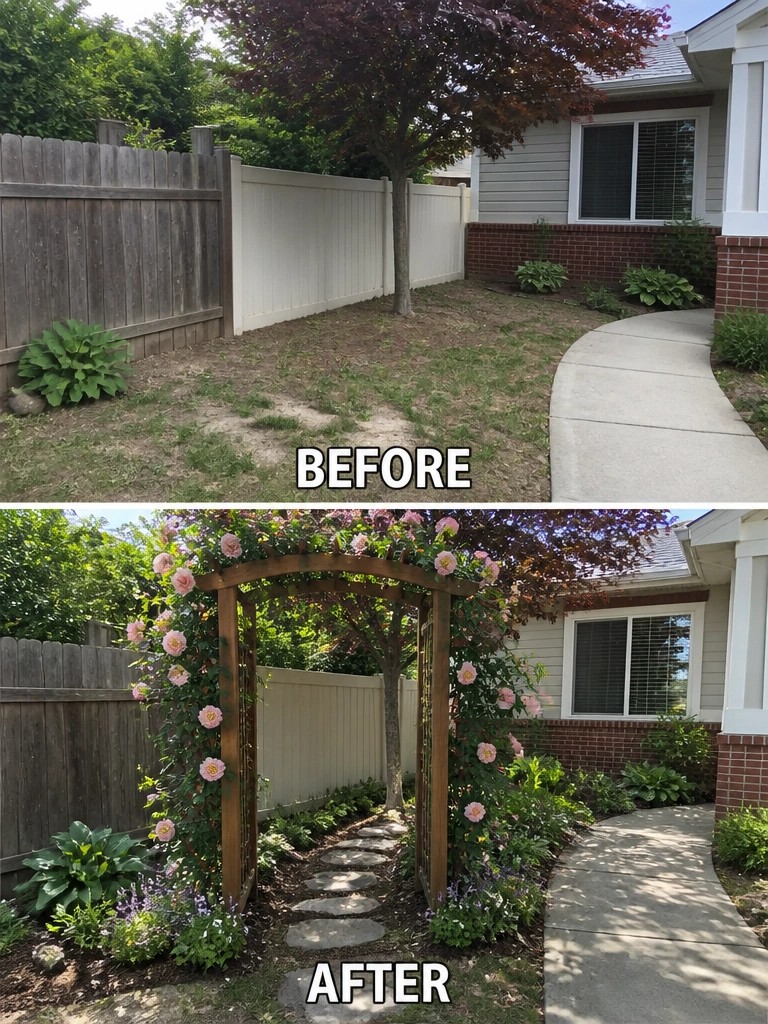
A bare patch of dirt next to the house can feel unfinished even when the lawn and fence are in decent shape. Adding a simple arbor with a path underneath gives the space a clear purpose and makes the walk from the sidewalk feel more intentional. The wooden structure and stepping stones turn what was just open ground into a short garden journey.
This idea works well on smaller front yards where you want structure without crowding the space. Keep the arbor narrow enough for easy passage and let climbing plants do most of the filling in over time. Focus on one main path first rather than trying to plant everything at once.
Add Pavers To Create A Small Seating Area
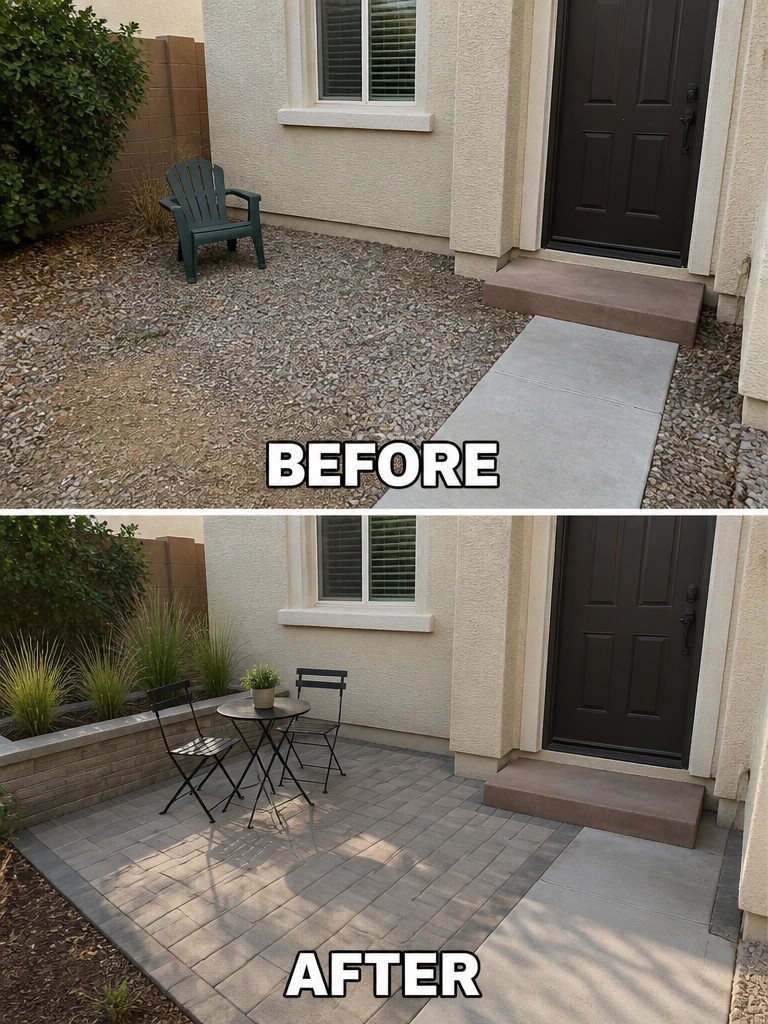
Replacing gravel with pavers gives the space a solid surface that actually invites people to sit down. The before photo shows one lone chair on loose rock, while the after adds a compact table and chairs that stay level and usable right by the entry.
This idea works best in narrow front areas where there is not enough room for a full patio. Keep the furniture simple and weatherproof, and add a few plants along the edge to soften the look. It helps the space feel intentional without needing a big budget or major construction.
Add Tile Accents To Concrete Steps
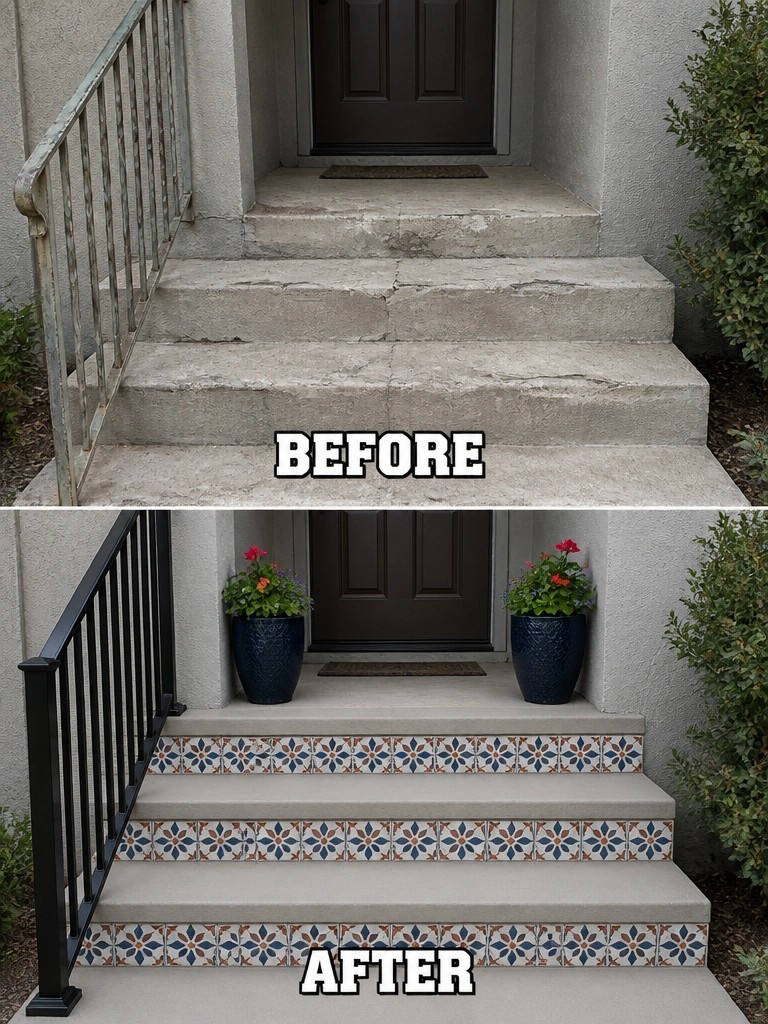
Plain concrete steps often look unfinished and a bit dull over time. A strip of patterned tile along each riser adds color and structure right where people notice it first. The change keeps the steps functional while giving the entry a cleaner, more intentional feel.
This works best on homes with straightforward fronts where you want a quick visual lift. Pick tiles that echo colors already in your door or trim, and keep the surrounding area simple so the pattern does not compete. Start with clean, level surfaces before you begin.
Add One Tree To Give A Plain Lawn Some Focus
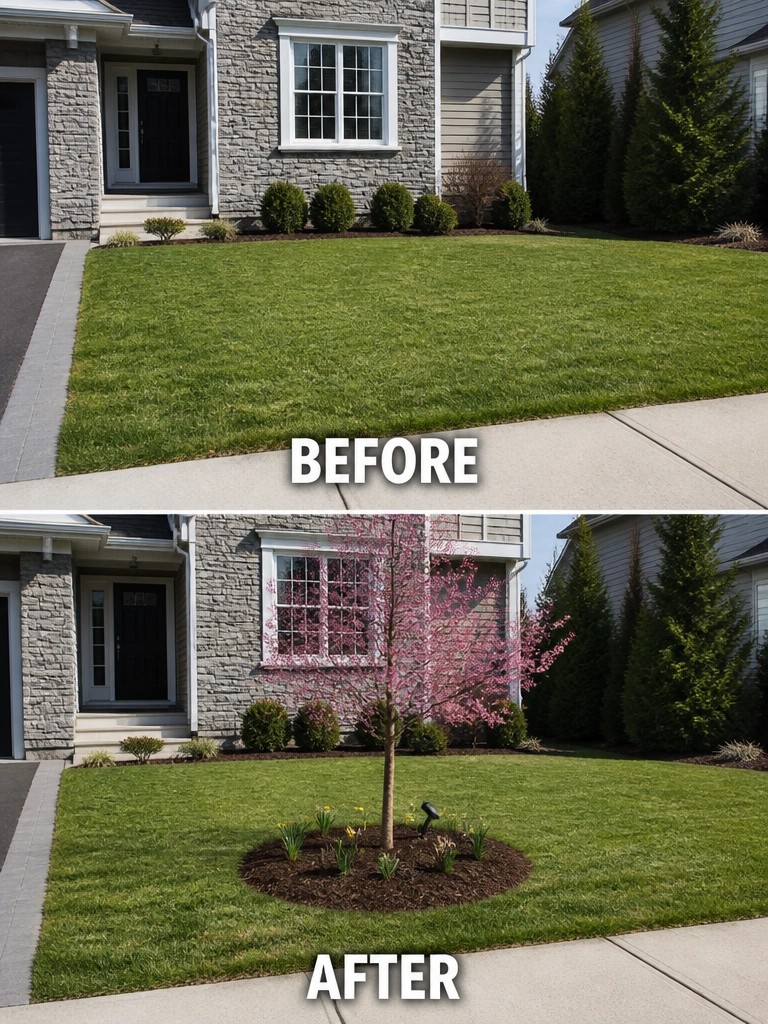
A wide empty lawn often looks unfinished even when the grass is healthy. Placing one tree in a mulched bed with a few low flowers around it gives the yard a clear center and breaks up the flat space.
This approach works best on medium to large front lawns where you want a simple focal point without crowding the area. Choose a tree that matches the scale of your house, keep the bed size modest, and leave plenty of open grass so the yard still feels open.
Lay A Stone Path To Organize An Overgrown Entry
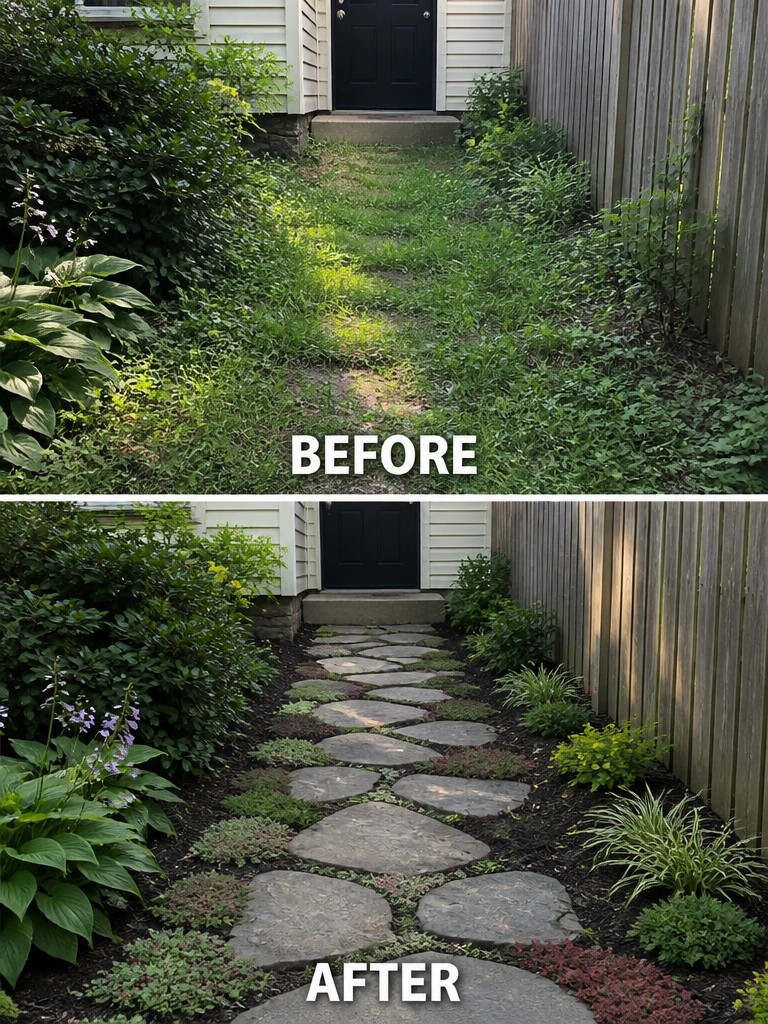
A simple stone path can turn a messy, overgrown walkway into something that actually guides people to the door. In the before photo the grass had taken over and the route felt unclear. Once the stones were laid with planted edges on both sides, the space suddenly felt intentional and much easier to walk through.
This idea works well on narrow side yards or front entries where the ground has become a tangle of weeds. Start by clearing the overgrowth first, then set the pavers in a straightforward line before adding low plants along the sides. It keeps the area looking cared for without needing a full garden redesign.
Replace A Chain Link Fence With A Picket Fence
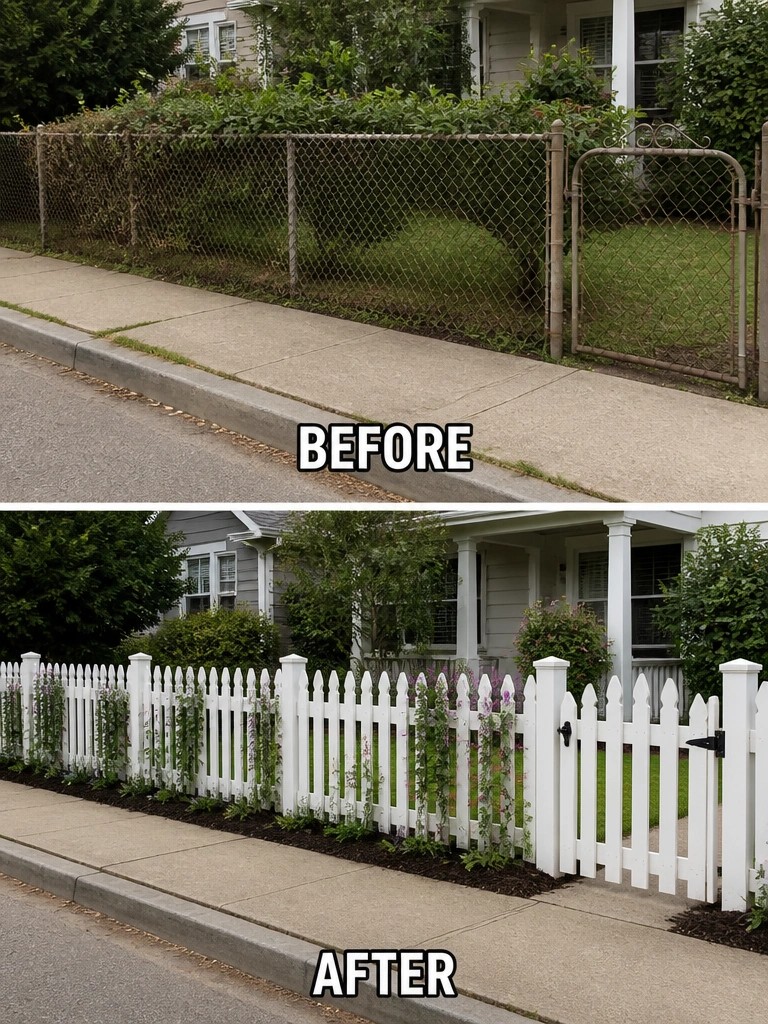
A chain link fence often feels more like a barrier than a boundary, especially along the front of a house. Switching to a white picket fence with a planted bed at the base gives the yard a clear edge and makes the whole front look more finished. The planting softens the fence line and keeps the look from feeling too stark.
This idea works well on smaller front yards where you want some privacy without blocking the house completely. Keep the fence height modest and choose plants that stay neat along the sidewalk. Start with good soil and mulch in the bed so the fence does not end up sitting in bare dirt.
Turn An Empty Porch Into A Cozy Seating Area
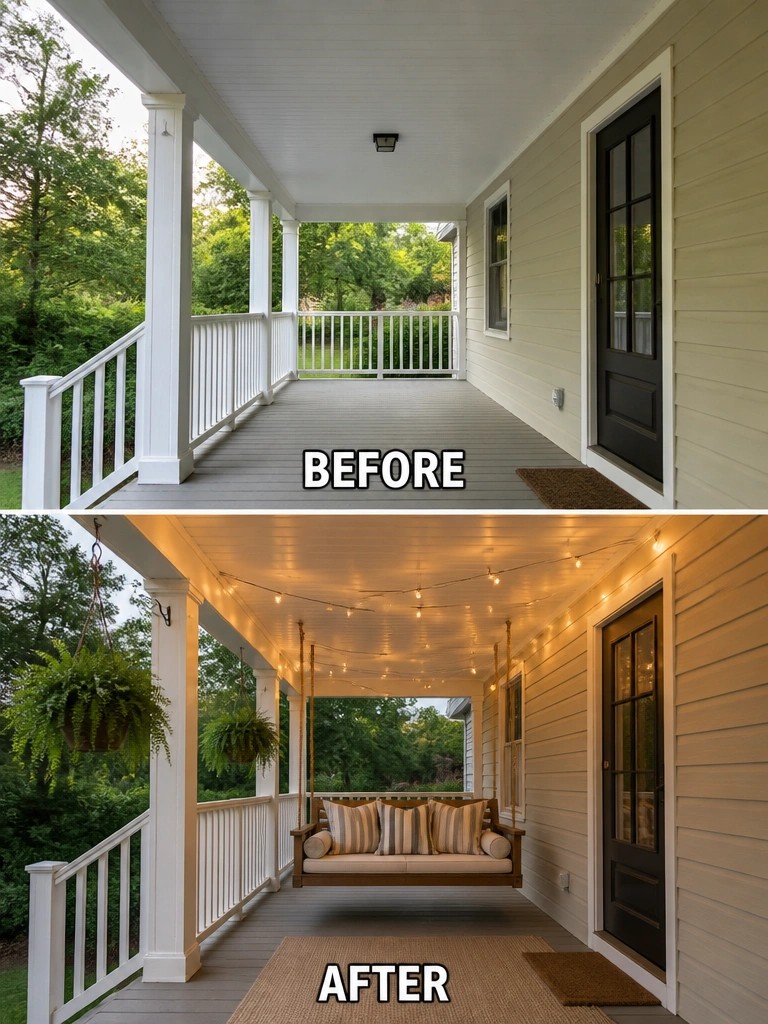
An empty porch often feels like unused space until you give it a clear purpose. Adding a swing and string lights creates a simple seating spot that makes the area feel finished and welcoming.
This idea works best on covered porches that already have decent flooring and railings. Keep the main piece to one swing or bench, then add lights that can stay up year round. Leave enough open floor so the space still feels easy to walk through.
Add Low Hedges To Frame The Front Entry
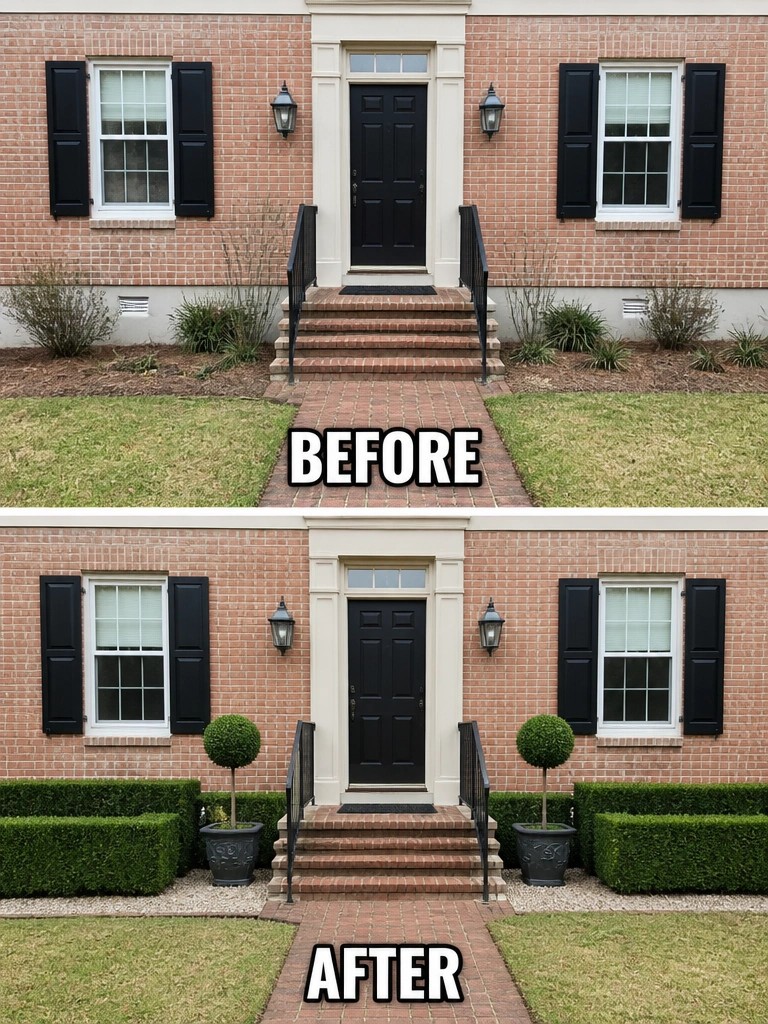
The main change here is swapping scattered shrubs for clean, low boxwood hedges along the foundation and a pair of potted topiaries beside the steps. That simple shift gives the walkway a clear border and makes the entry feel more pulled together without adding much height or clutter.
This approach works well on houses with a straight front walk and brick or siding that needs a little softening. Keep the beds narrow, use gravel or mulch for a tidy edge, and stick with evergreens so the look holds up through winter.
Refresh The Porch Ceiling And Light Fixture
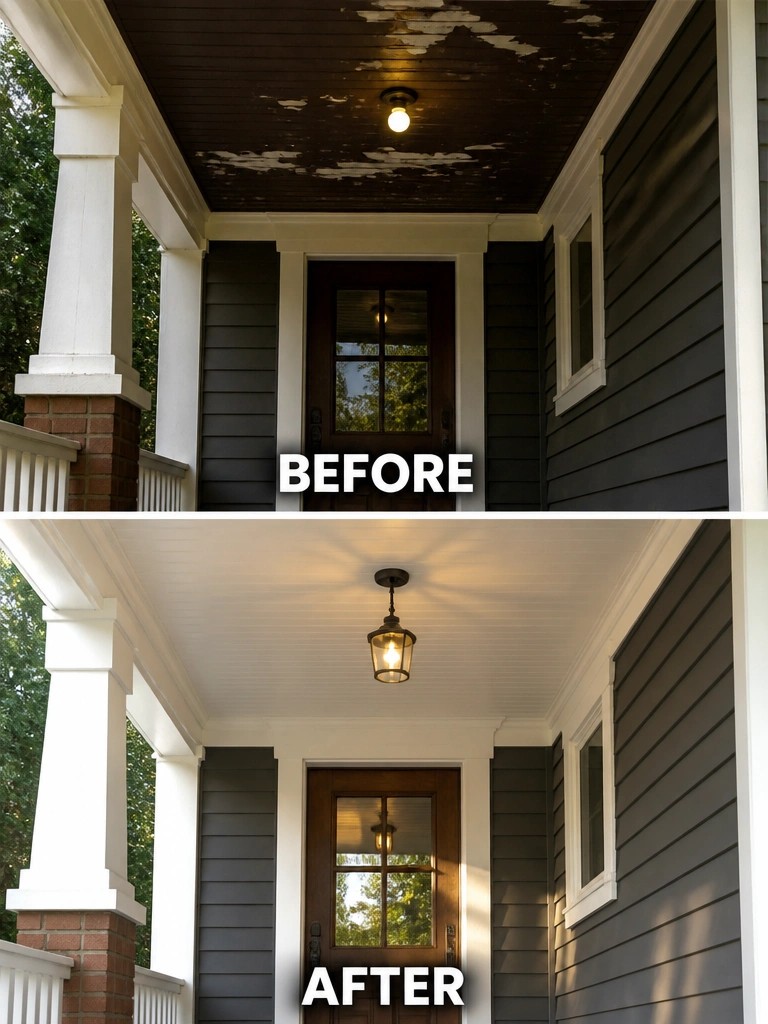
A dark, peeling porch ceiling can make the whole front of a house feel neglected. Painting the ceiling white and replacing the old light with a simple lantern-style fixture brightens the space and gives the entry a cleaner, more finished look.
This approach works best on homes with a covered front porch. Focus on prepping the surface well before painting, and choose an exterior-rated light that fits the scale of your door. It is a low-cost update that improves curb appeal without major construction.
Give A Cluttered Entry A Clear Purpose
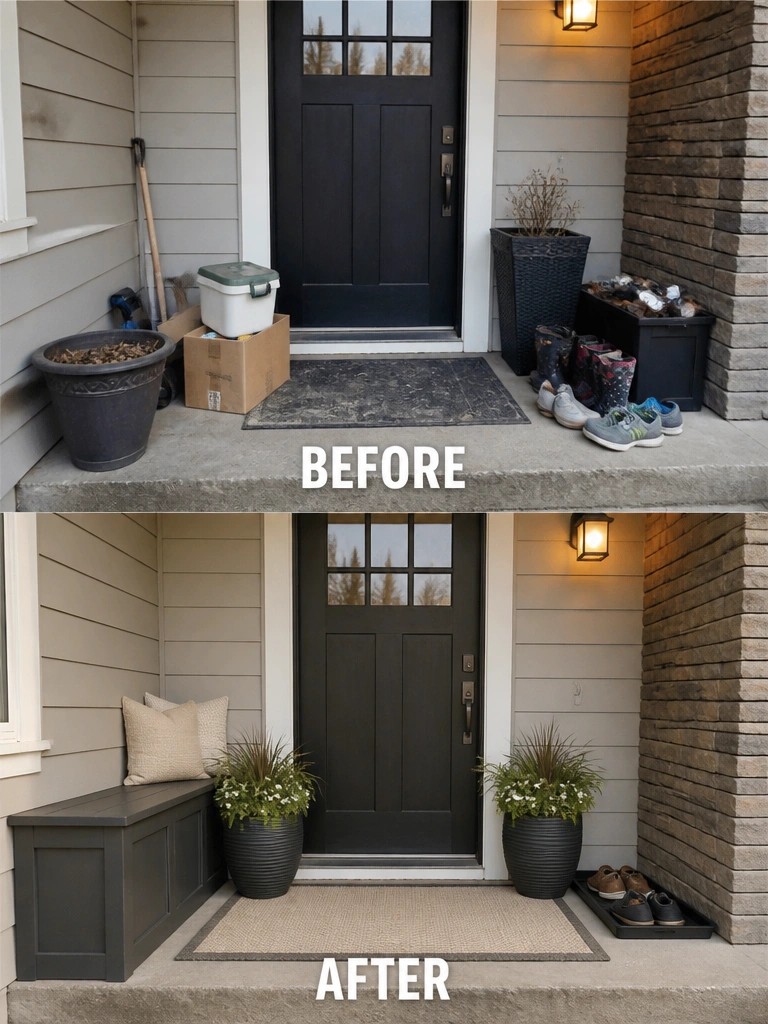
A messy front porch often ends up as a catch-all for tools, boxes, and stray shoes. Clearing the surface and adding one bench with storage underneath turned this entry into a spot that actually works for daily use instead of just collecting more stuff.
This idea suits small porches or stoops where space is limited. Focus on one main function first, such as seating or shoe storage, then add just enough plants or a rug to keep the area feeling open and easy to maintain.
Add Defined Garden Beds To Give Your Front Yard Shape
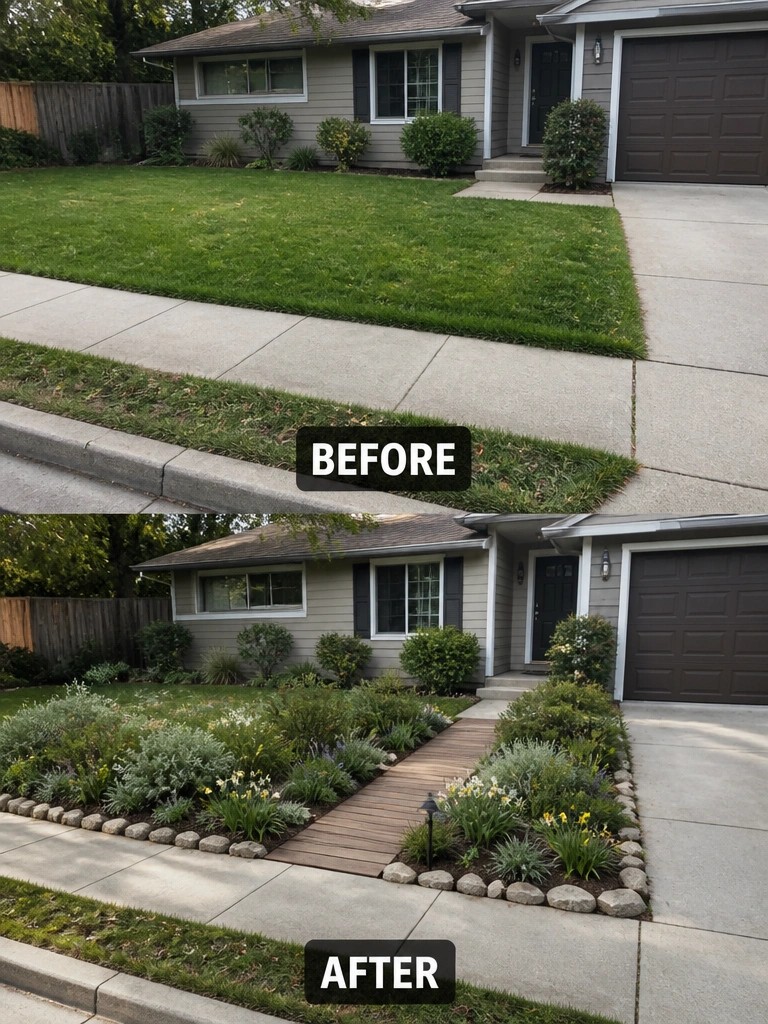
A plain front lawn often looks unfinished because there is no clear edge or purpose. Adding garden beds along the sidewalk and driveway, plus a simple path to the door, gives the space structure and makes the whole yard feel more planned.
This idea works best on smaller or average lots where you want to add interest without losing open lawn space. Mark out the beds first, use a consistent edging material, and keep the planting mix simple so the beds stay easy to maintain over time.
Frequently Asked Questions
Q: What if my front yard is mostly shade?
A: Pick plants like hostas or ferns that thrive without much sun. Add a few solar lights along the walkway to brighten the space at night. Test a small spot first before buying a bunch.
Q: How do I stop the grass from looking patchy after I add new beds?
A: Edge the beds cleanly with a spade and lay down fresh sod or seed in the bare spots right away. Water the new grass lightly every day for the first week. This fills things in faster than waiting.
Q: Can I tackle a makeover in just a weekend?
A: Yes if you stick to simple swaps like mulch, potted plants, and a new doormat. Skip big jobs like pouring concrete or moving trees. Focus on one area at a time so it feels done.
