

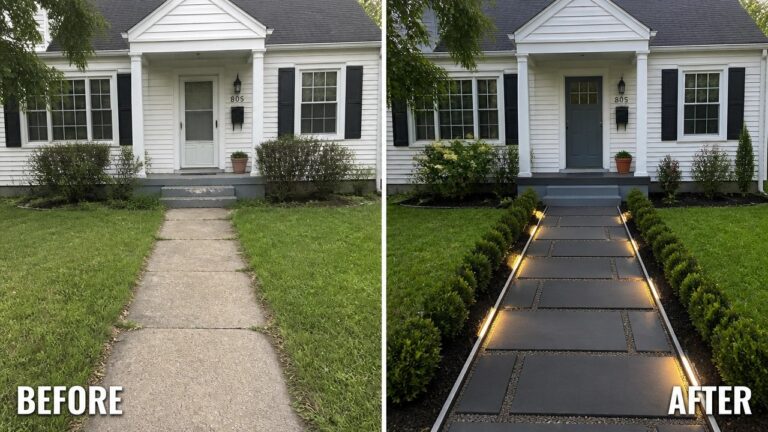
Many front yards end up with a worn strip of grass leading straight to the door because there was never a proper path planned from the start.
Adding a walkway gives the space some structure and lets you arrange plantings or borders along the sides without everything looking scattered.
I tend to test ideas with simple materials first to see how the path actually gets used before committing to anything more permanent.
That step alone changes the feel.
Over time the surrounding lawn and beds fill in around it and the whole area starts to look more complete.
Define Your Front Path With Pavers And Lights
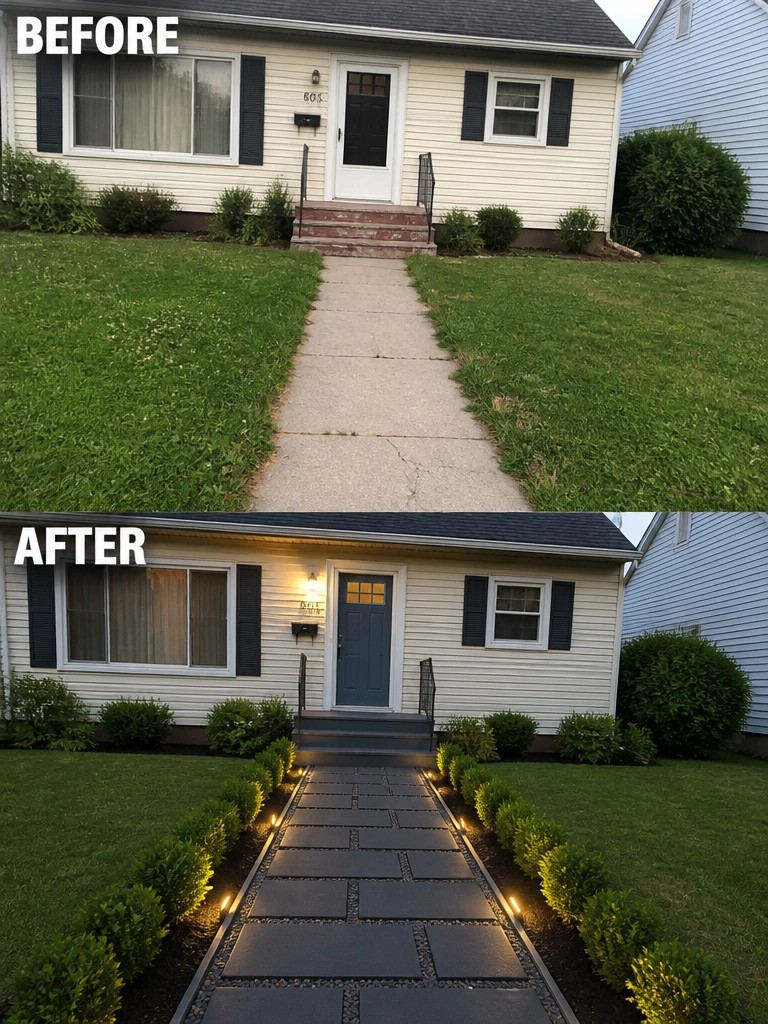
A plain concrete walkway often makes the front of a house feel unfinished. Switching to dark pavers laid in a simple pattern gives the path clear shape and connects the lawn to the door more directly. Low lights placed along the edges make the route easy to follow at night and add a finished touch without much extra work.
This idea suits homes with a straight front walk and a basic lawn. Keep the pavers in a single color and repeat the same light style on both sides so the path stays the main feature. Leave enough room on the edges for low shrubs so the walkway does not feel too narrow.
Add A Stone Path To Organize An Overgrown Yard
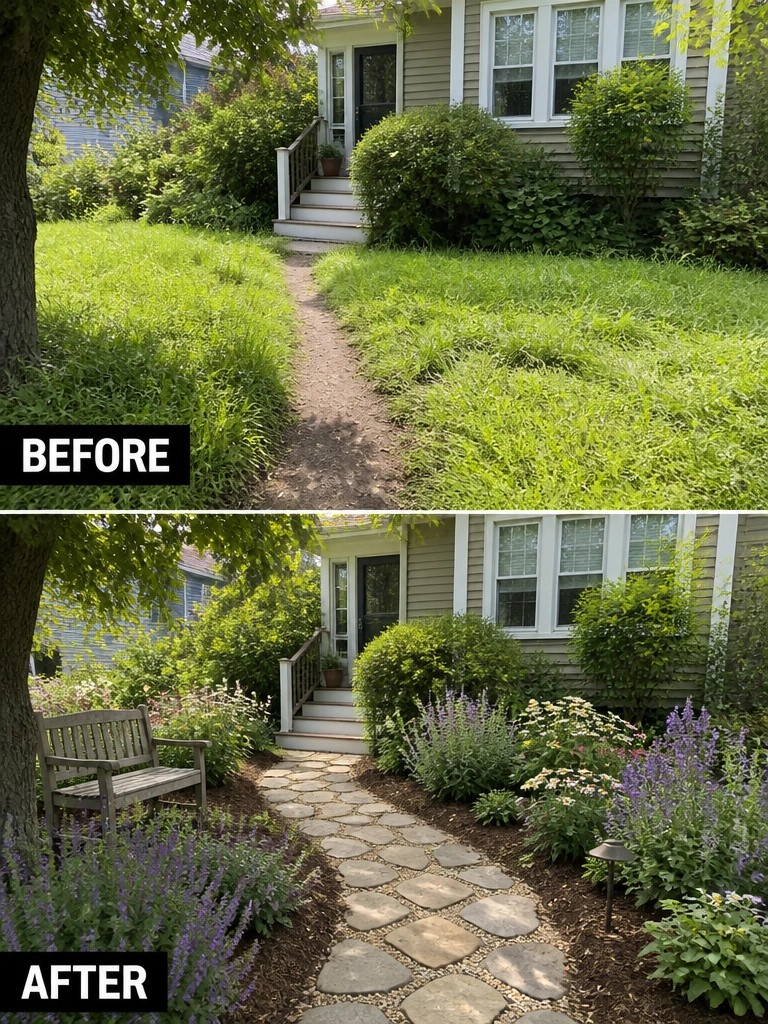
The dirt path through tall grass made the front yard feel neglected and hard to walk through. Laying a flat stone walkway with gravel edges and planting beds on both sides gave the space clear lines and made it much easier to reach the door.
This idea works best on older properties where the lawn has taken over. Clear the overgrowth first, then build the path before adding plants. It keeps the yard looking neat without constant trimming and gives you a simple way to guide visitors straight to the entrance.
Define A Front Path With Simple Garden Edging
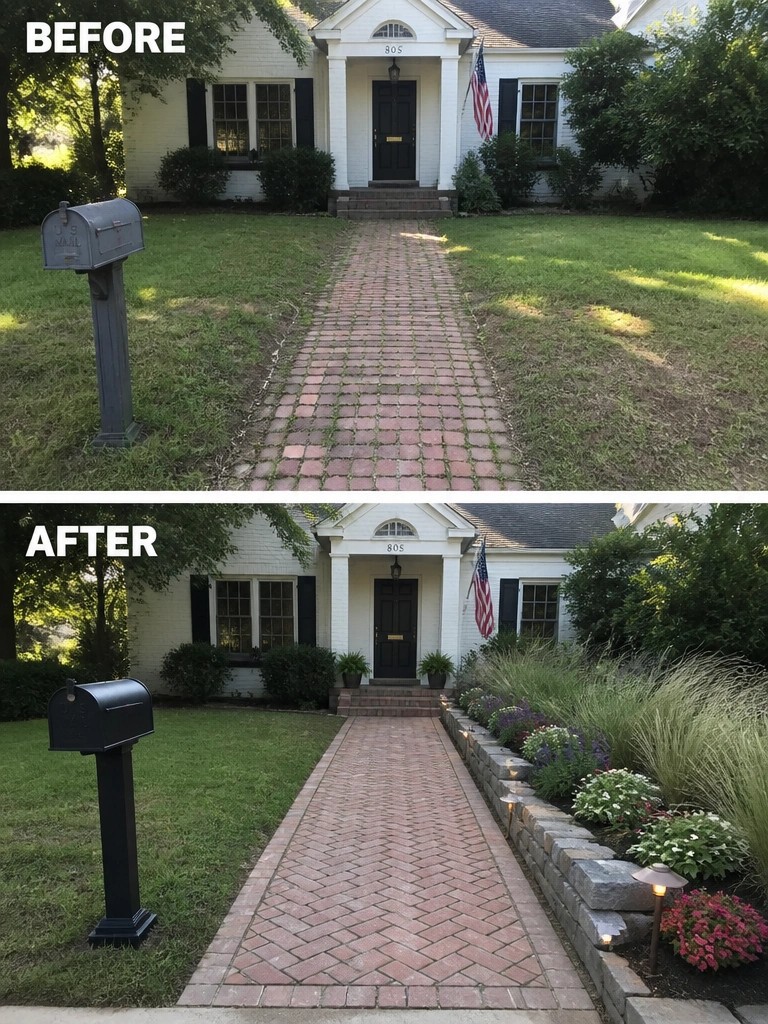
A straight walkway can feel a bit plain when grass runs right up to both sides. Adding a low stone edge and a planted border along one side gives the path a clear frame and makes the whole front yard look more finished without any major construction.
This approach works well on smaller lots or homes where the path already leads straight to the door. Keep the beds narrow so the walkway still feels open, choose plants that stay under knee height, and repeat one or two colors from the house to tie everything together.
Add Pavers To Give A Side Yard Path Clear Shape
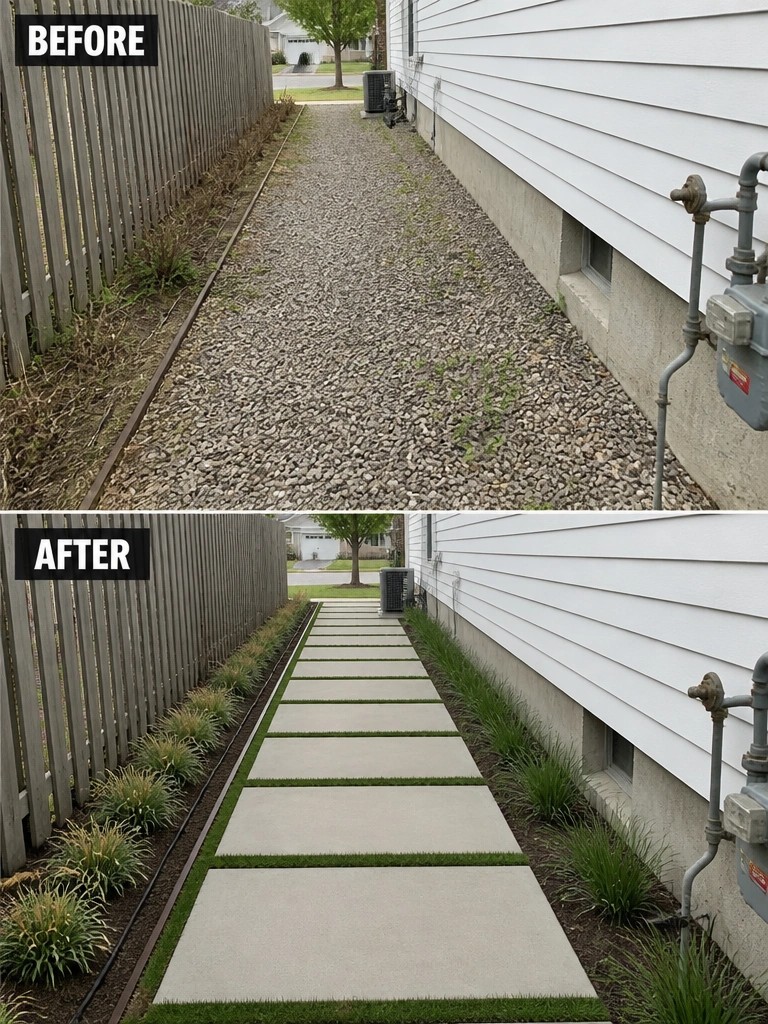
A narrow side yard often ends up as a forgotten strip of gravel that collects weeds and looks unfinished. Switching to concrete pavers laid in a straight run instantly changes that. The pavers create a solid walking surface, keep the edges tidy, and make the whole area feel planned instead of leftover space.
This approach works well on any tight lot line where you need a reliable path but do not want to widen the area. Start by clearing the old gravel and weeds, then set the pavers with a simple grass or ground cover border on each side. Keep the planting low so the walkway stays the main feature.
Add Structure To An Overgrown Front Yard
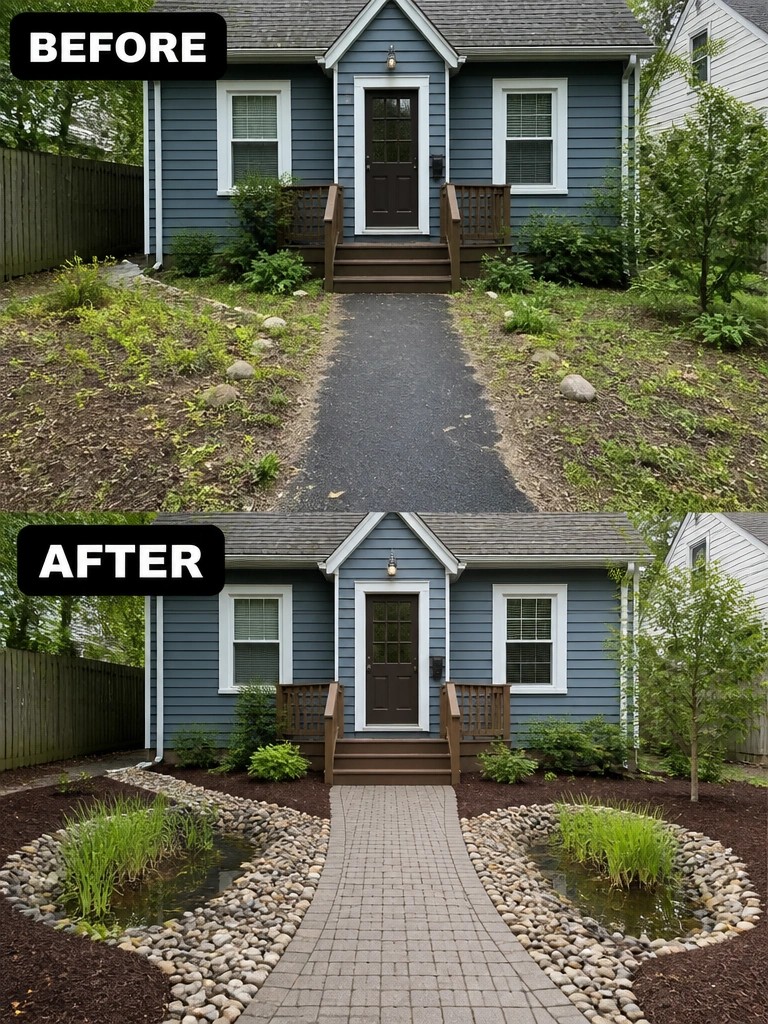
The front yard looked messy because the slope had no clear edges or planting areas. Once the grass and weeds were cleared, the new path and bordered beds gave the whole space a planned look instead of a scattered one.
This approach works best on small or sloped lots where you want to keep things simple. Start by laying out the path first, then build beds around it with mulch or gravel so the yard feels organized without needing a lot of new plants right away.
Add A Defined Pathway To Structure The Front Yard
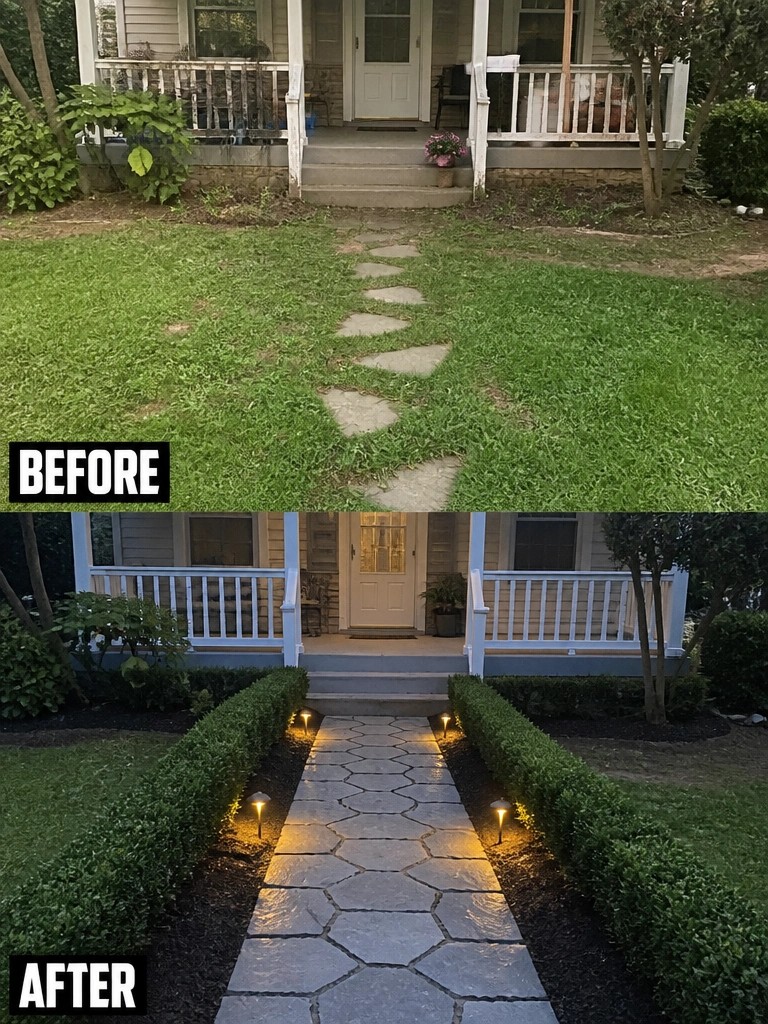
A scattered line of stepping stones across the lawn rarely feels like a real entrance. Replacing them with a wide, solid path made of pavers gives the whole front yard a clear direction and makes the walk to the door feel intentional. The change also creates natural edges where planting can sit without looking random.
This approach works well on any modest front lawn where the grass alone does not guide visitors. Keep the path width comfortable for two people, add simple borders on each side, and stop there. Extra lighting or low hedges can come later if the basic layout already feels finished.
Add Raised Beds To Define A Front Path
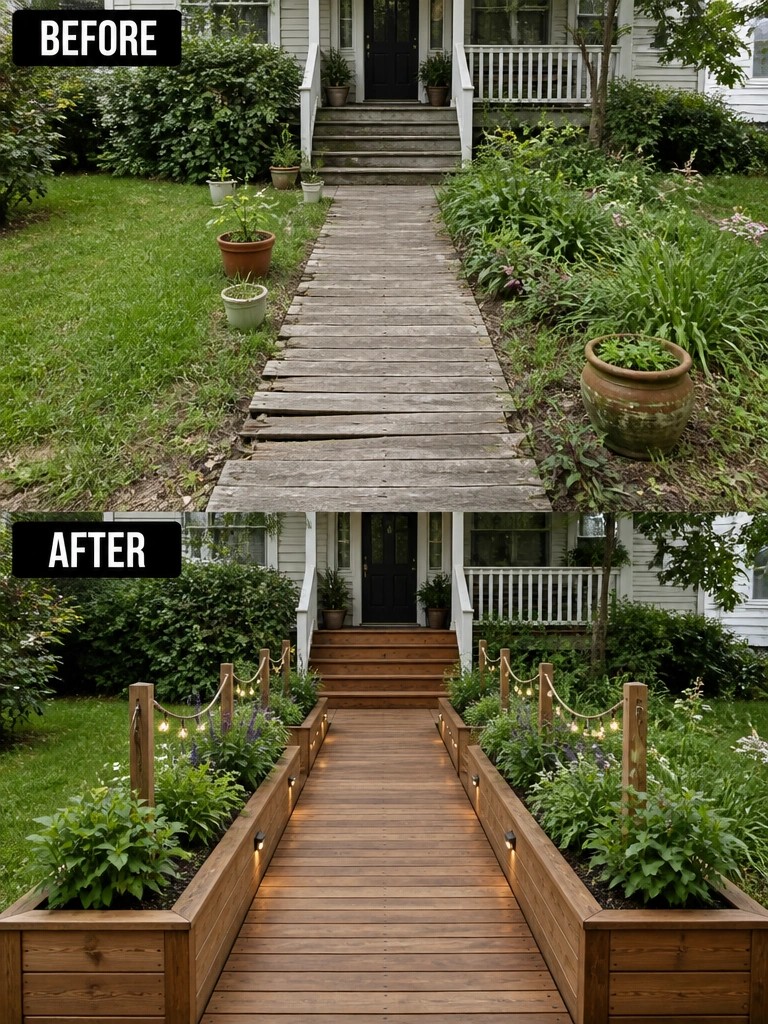
A simple wooden walkway often gets lost when the ground around it stays loose and messy. Adding raised beds on both sides gives the path clear edges and turns it into the main feature that leads visitors straight to the door.
This works best on narrow front yards where you want plants without losing walking space. Use the same wood tone for the beds and path so they feel connected, and keep the planting low enough that it does not crowd the walkway at night.
Use Stepping Stones To Create Structure In A Narrow Side Yard
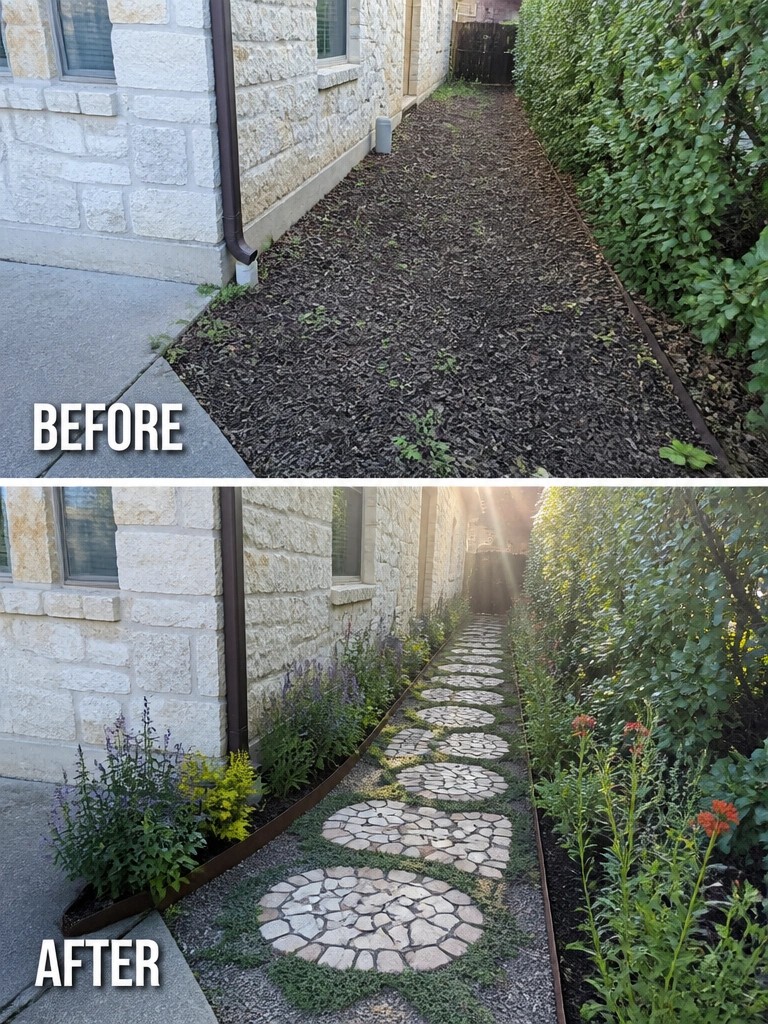
A bare strip of mulch next to the house often stays flat and unused. Adding a line of stepping stones gives the area a clear path and breaks up the space so planting can sit neatly on both sides. The stones make the strip feel purposeful instead of leftover.
This approach works best on long, narrow side yards or foundation beds where you want easy access without losing planting room. Lay the path first, keep the stones roughly the same size, and add simple borders of low plants so the walkway stays the main feature.
Curve A Straight Path With Garden Beds
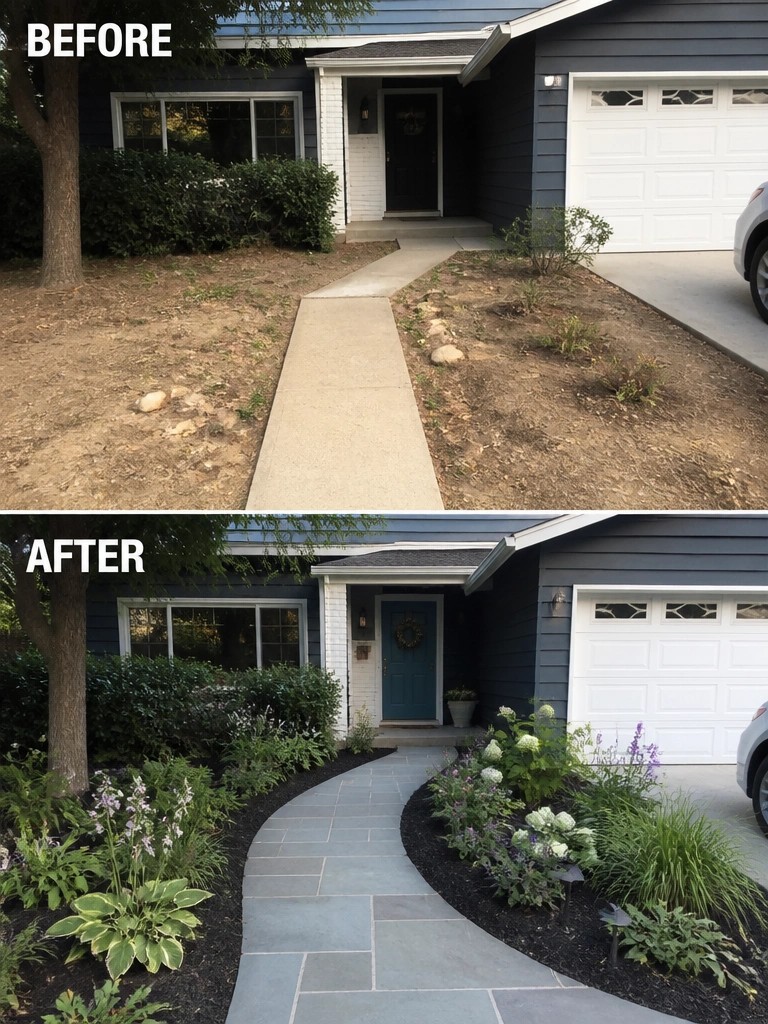
A straight concrete walkway can make a front yard feel narrow and plain. Replacing it with a gentle curve of stone pavers and adding mulched beds along both sides gives the space better shape and makes the entry feel wider and more welcoming. The change also turns empty dirt into planted areas that soften the view from the street.
This idea works well on homes with a basic front path that leads straight from the sidewalk to the door. Keep the curve simple so it still feels natural, and use the beds to repeat a few plant types rather than packing in too many different ones. Start with the path and edging before adding more details.
Add Retaining Walls To Shape A Steep Slope
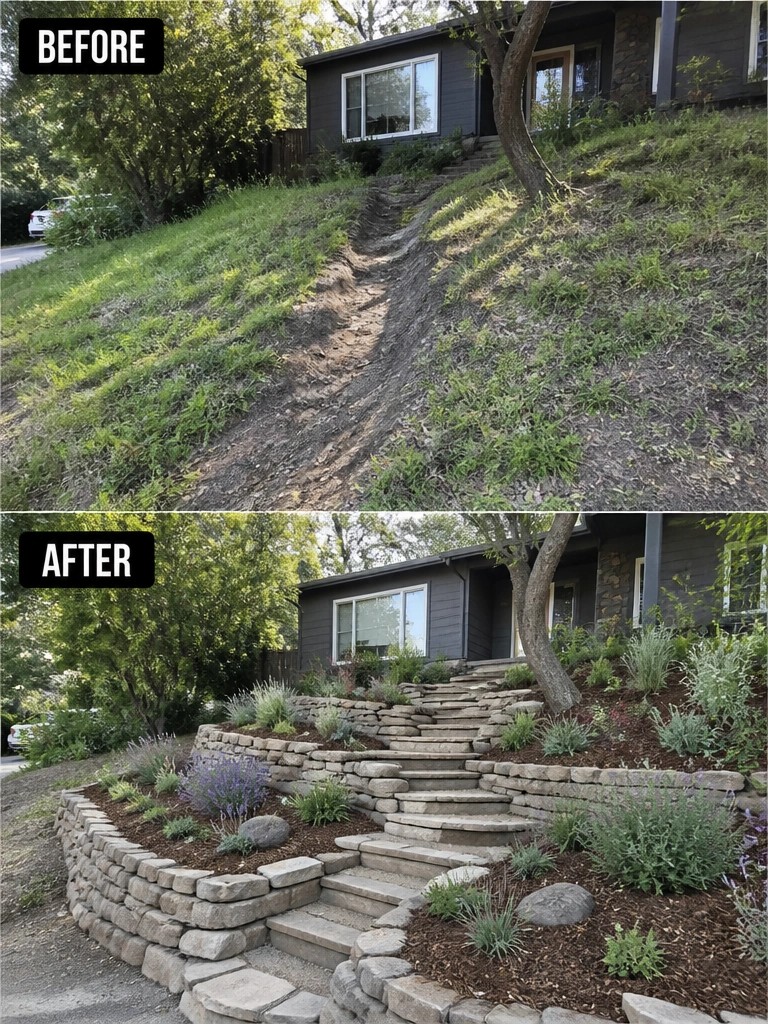
A steep front slope with a worn dirt path is hard to use and easy to damage over time. Adding low stone retaining walls creates flat planting areas and lets you build proper steps that stay in place. The result turns a messy hillside into a clear route from the street to the house without constant erosion.
This approach works best on yards where the grade is too sharp for simple planting or lawn. Start by fixing the slope itself before adding any extras. Keep the walls low and repeat the same stone or block so the path feels like part of the house rather than an afterthought.
Use Pavers To Give A Front Path Clear Shape
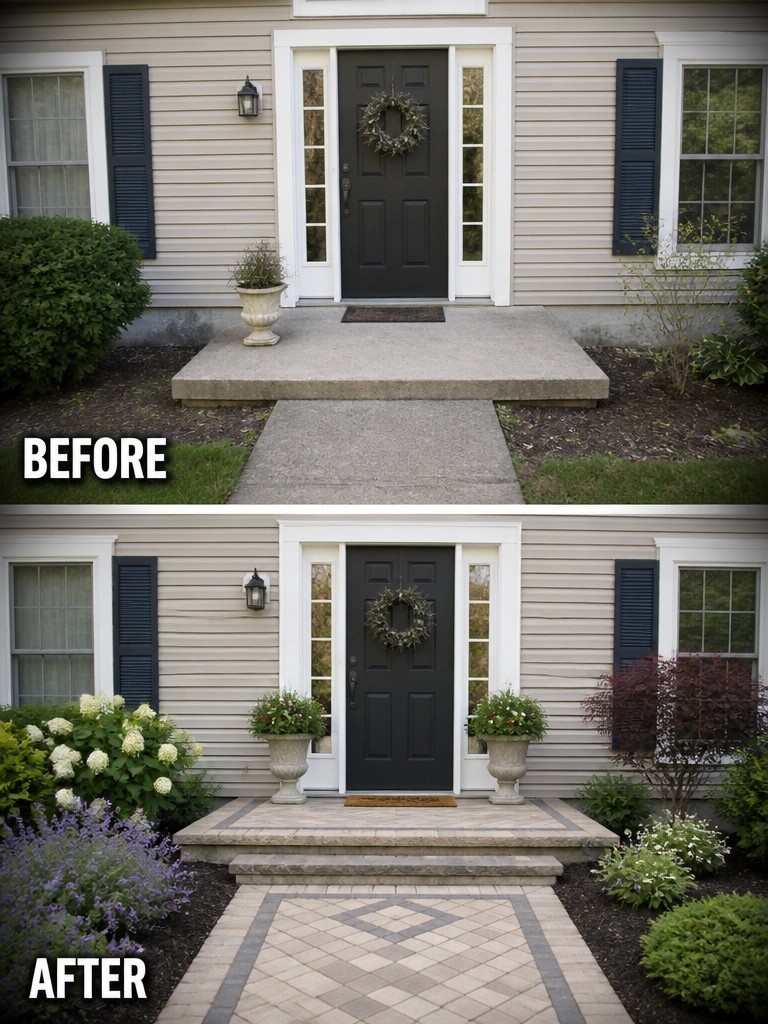
A plain concrete slab often leaves the front of a house looking unfinished. Switching to a patterned paver walkway adds lines and edges that make the whole yard feel more organized. The new path also creates a gentle rise with steps, which makes the entry feel more intentional without needing major construction.
This approach works well on houses where the original walk is wide and flat. Start with the path itself before adding plants, and keep the pattern simple so it does not compete with the door or siding. It suits most suburban lots where you want better flow from the street without spending on a full hardscape overhaul.
Define A Front Path With Simple Edging
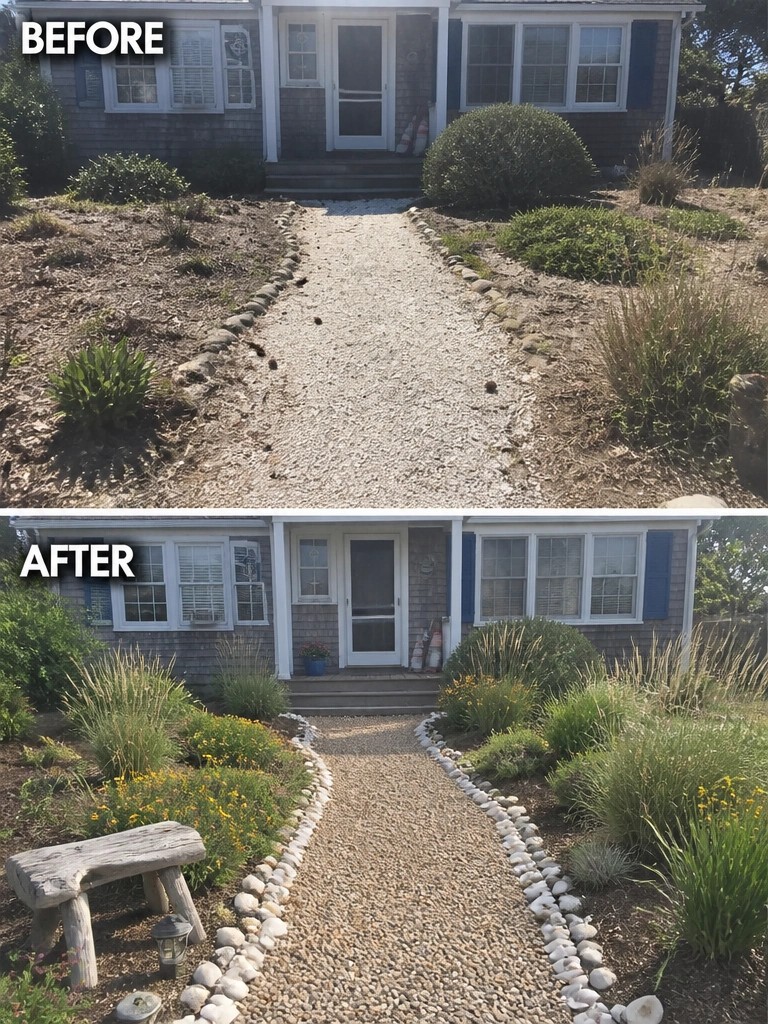
A loose gravel path often looks messy when it has no clear edges. Adding a simple border of rocks on both sides turns the same path into something that feels planned and easy to follow. The beds on either side can then be planted without the whole yard looking scattered.
This approach works best on small to medium front yards where the path is the main feature. Start by laying out the edging before you add plants so the shape stays consistent. Keep the beds fairly narrow so the path still feels open and nothing crowds the walkway.
Add Structure To An Overgrown Pathway
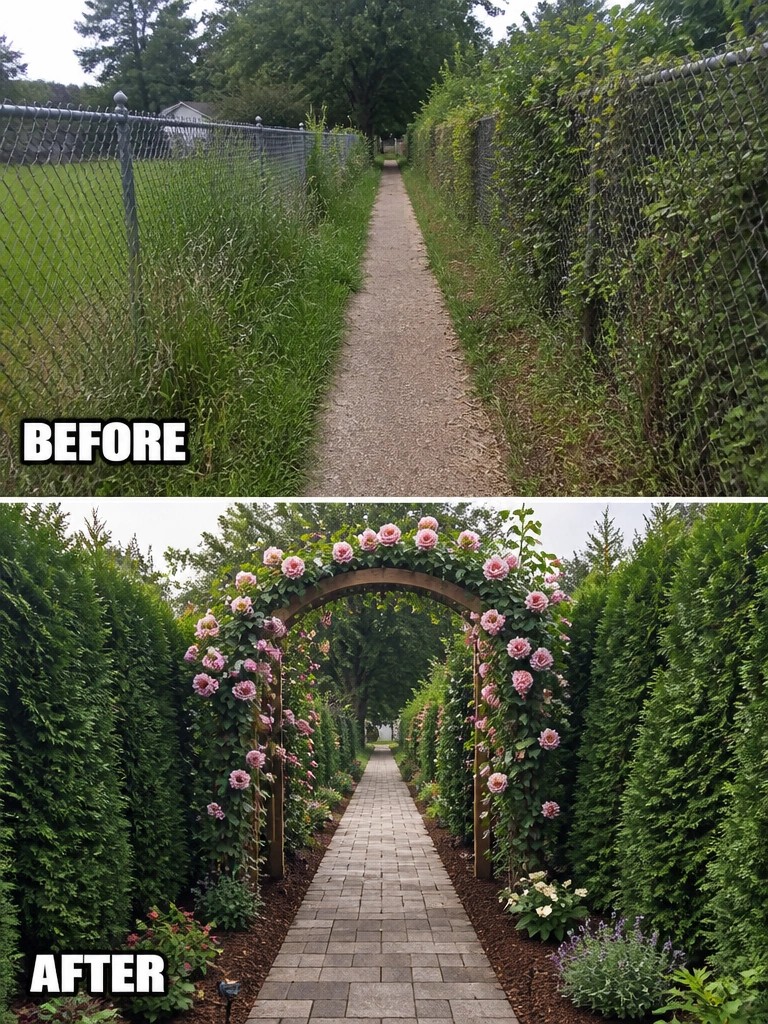
A narrow side path often gets ignored until it turns into a strip of weeds and gravel. The biggest shift here came from replacing the loose surface with pavers and adding a simple arch and clipped hedges that give the walkway clear edges and height.
This approach works best on long, narrow lots where the path needs to feel intentional rather than leftover space. Start with the hard surface first, then layer in a few vertical plants or a basic arch so the eye follows the route instead of wandering into the weeds on either side.
Replace A Concrete Path With Stone Steps And Planting
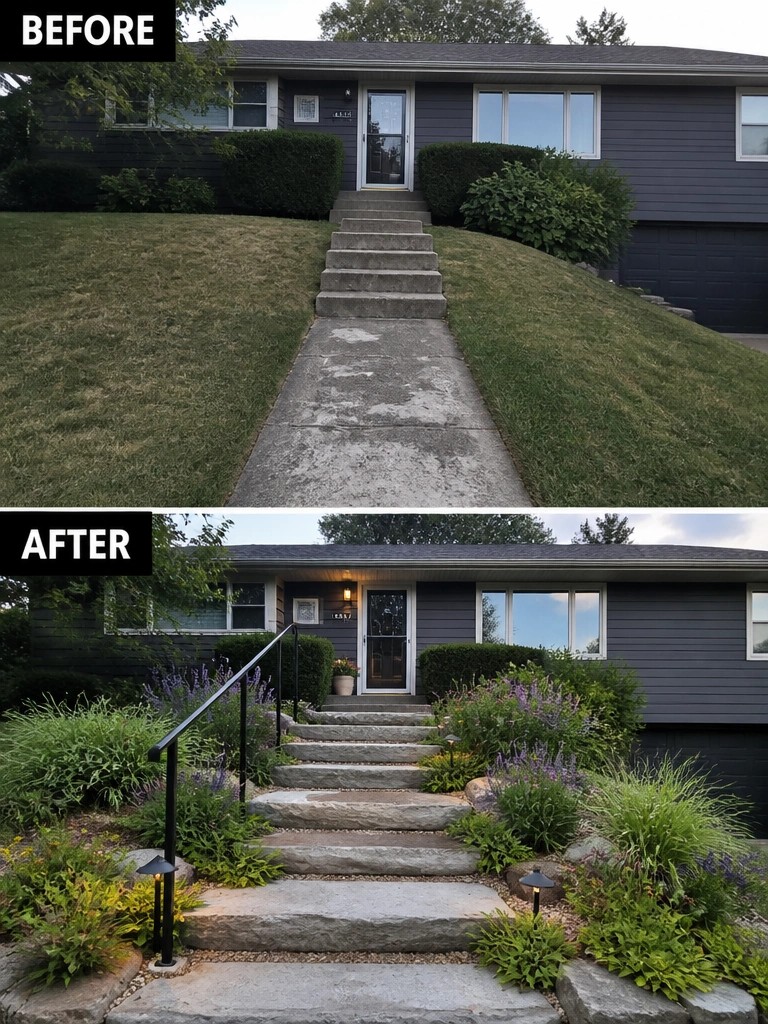
A straight concrete walk up a slope often looks flat and unfinished. Switching to irregular stone steps gives the path better shape and makes the climb feel more natural while the added garden borders on each side help frame the entry.
This idea works best on sloped front yards where the original path feels too plain. Start with the steps first, then add low planting and a few lights along the edges so the walkway stays clear and easy to follow at night. It suits homes that already have decent siding and windows but need the approach to look more finished.
Define A Narrow Path With Gravel Borders
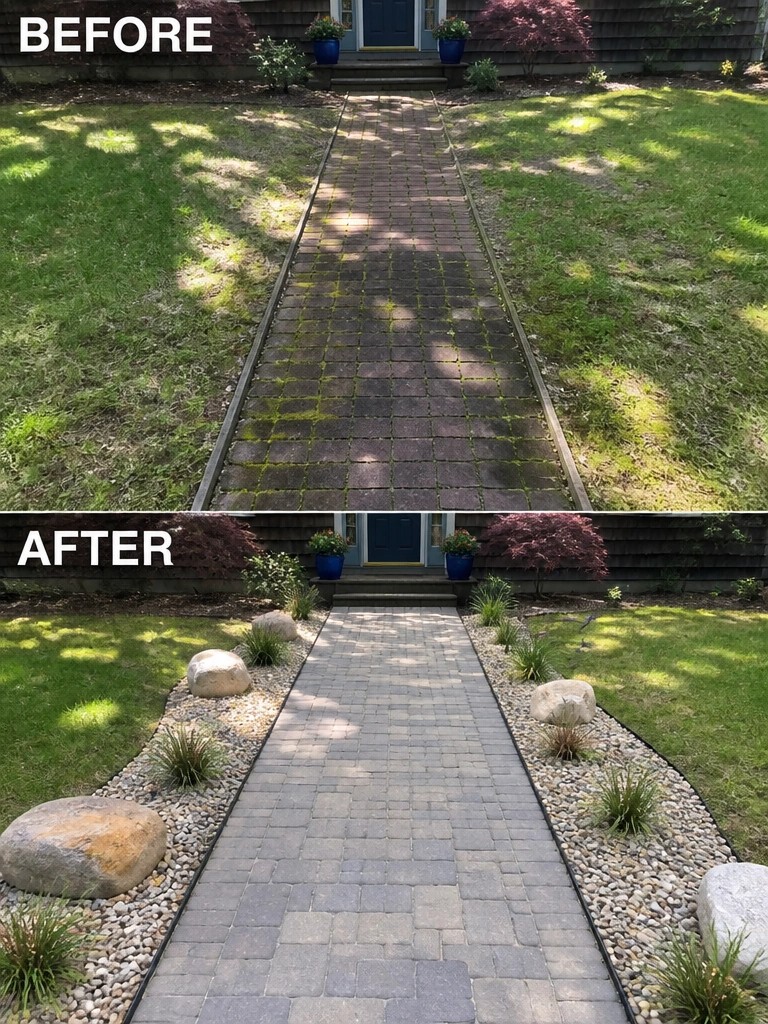
A simple path can start to disappear when it blends into the lawn on both sides. Adding gravel borders on either side gives the walkway a clear edge, keeps the grass from creeping in, and makes the whole front yard feel more organized without any major construction.
This approach works well on older homes where the original pavers are still solid but the edges have softened over time. Keep the gravel strip fairly narrow so it does not take over the lawn, and use a few larger rocks and low grasses to break up the line. The result is a path that looks intentional while still leaving plenty of open grass on either side.
Add A Defined Pathway To Organize The Front Yard
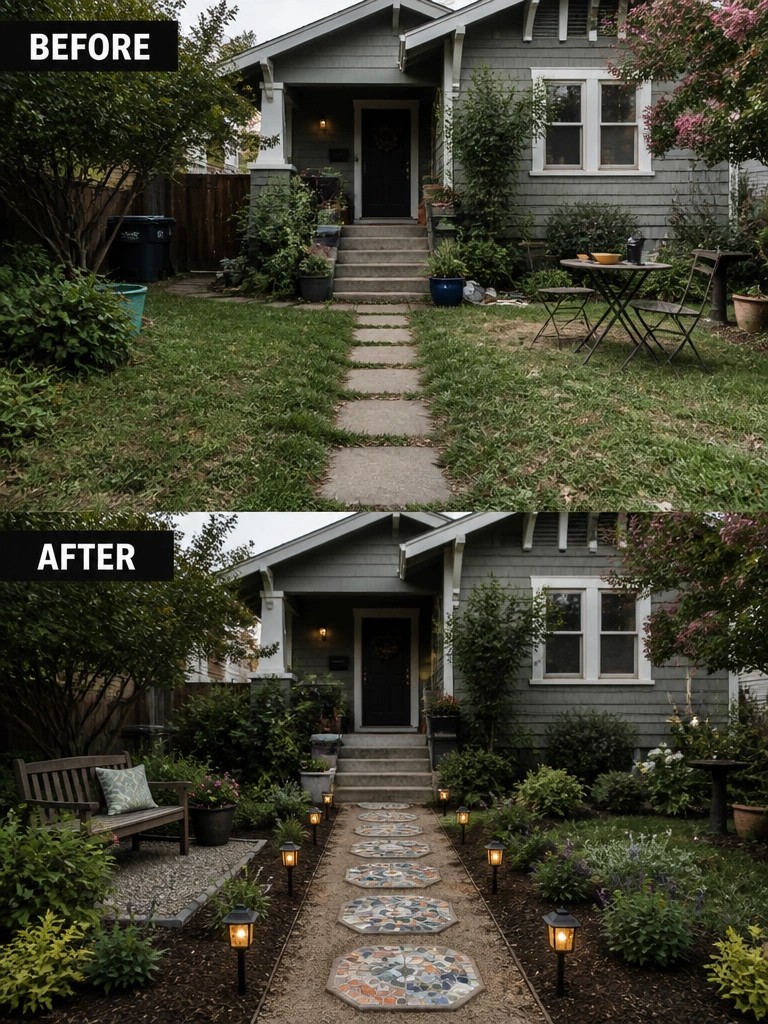
A plain strip of concrete rarely gives a front yard much shape. Replacing it with a series of mosaic pavers creates a clear line that leads visitors to the door and makes the rest of the space feel intentional rather than scattered.
This approach suits homes that already have decent grass and basic plantings but need better structure. Lay the path first, keep the borders simple, and add a few low lights so the walkway stays useful after dark.
Create A Defined Pathway With Pavers
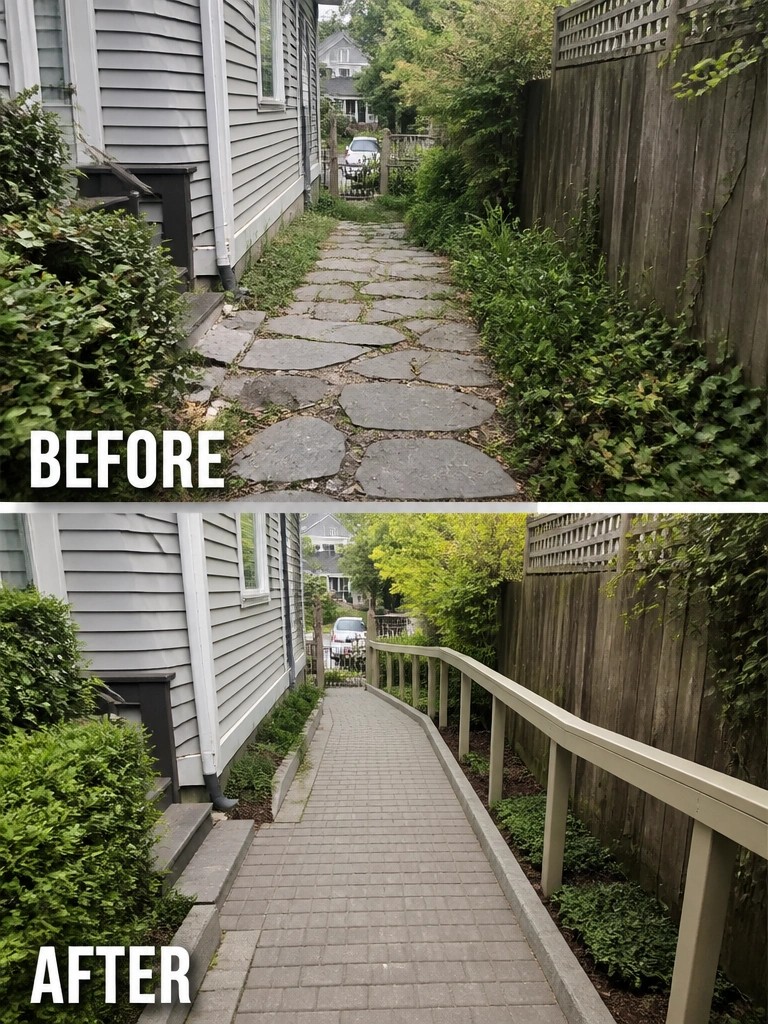
An uneven stone path that had become lost under weeds and spreading plants made the side yard feel neglected. Replacing it with a straight run of uniform pavers and adding a simple railing turned the same narrow space into a clear, usable walkway that connects the front to the back of the house.
This idea works best in tight areas between a house wall and a fence where traffic needs to stay contained. Clear the old surface first, then set the pavers on a solid base so they stay level over time. A railing is worth adding if the path slopes or if older adults will use it regularly.
Give A Simple Front Path More Structure With Pavers
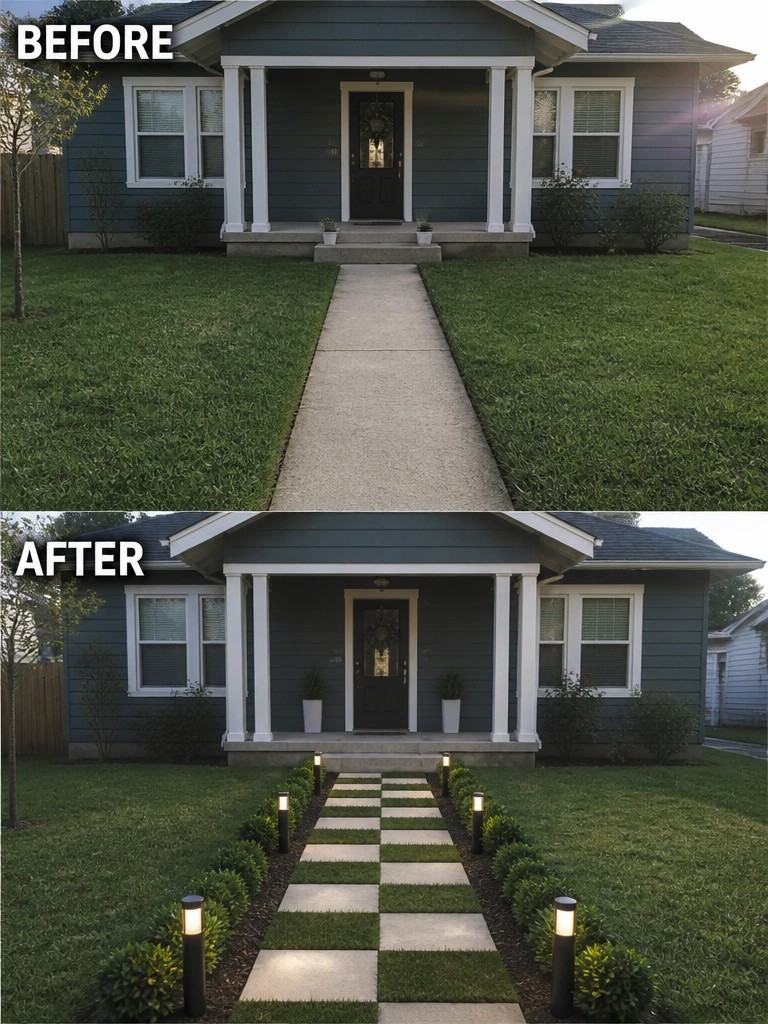
A plain concrete walkway often makes the front yard feel flat and unfinished. Replacing it with a checkerboard pattern of pavers and grass creates clear lines and breaks up the long stretch of lawn. Adding low shrubs and lights along both sides keeps the path feeling intentional instead of just functional.
This approach works best on smaller or average-sized front yards where a strong central line helps organize the space. Keep the planting simple and repeat the same border plants on both sides so the path stays the main feature. Make sure the pavers sit level with the lawn for easy mowing and walking.
Add Landscape Lighting Along A Stone Path
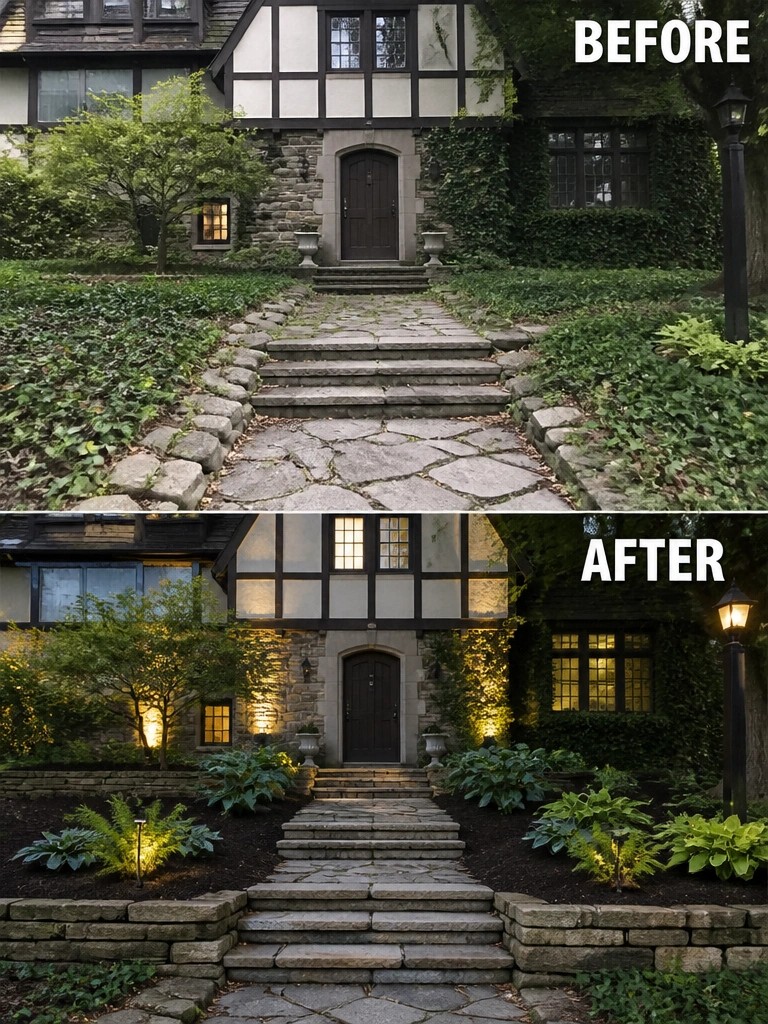
Lighting can turn a plain front path into something that feels intentional and easy to follow after dark. In this case the stone walkway stayed the same, but low fixtures were added beside the steps and beds, and a few uplights were placed to wash the house wall. The result is a clearer route from the street to the door without any big construction.
This approach works well on older homes where the original path is still solid but the surrounding planting has grown wild. Start with one or two fixtures near the steps so the light leads visitors forward, then add a couple more along the edges if the path is long. Keep the fixtures small and aimed low so they do not glare into windows or the street.
Define The Front Path With Pavers
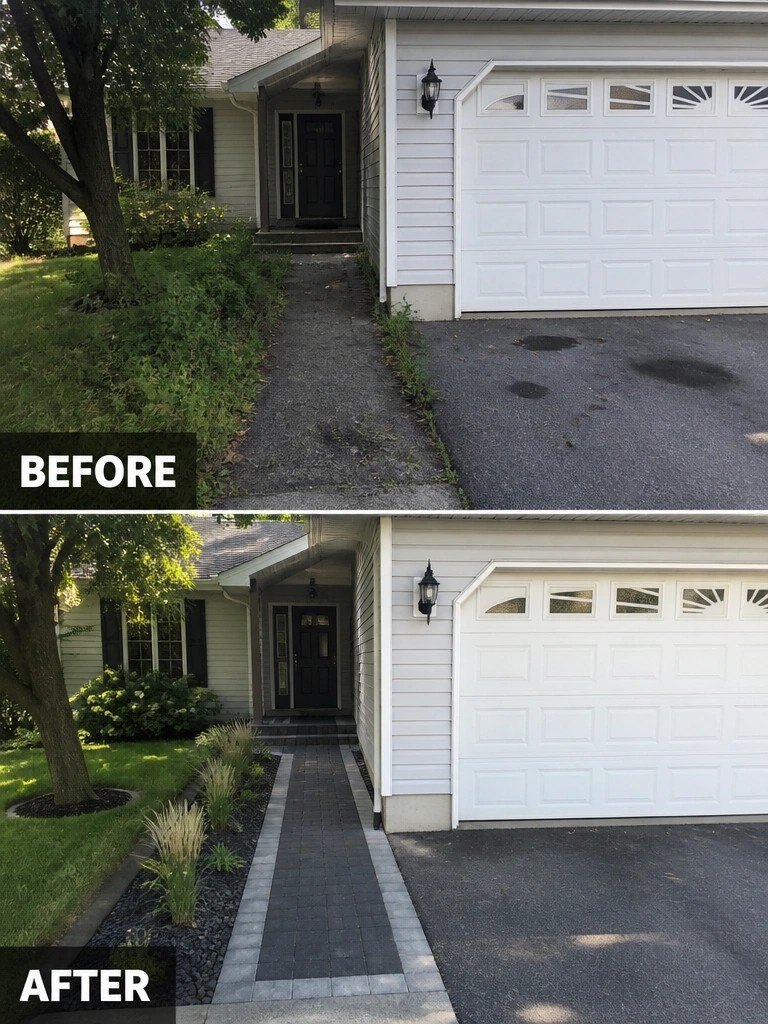
A loose gravel path often leaves the front yard feeling unfinished. Switching to a paved walkway with simple stone borders gives the entry a clear line and makes the whole space look more settled.
Pavers suit most front yards because they stand up to daily use and create an easy route from the driveway or street. Keep the path a practical width, add a low border on each side, and plant along the edges so the walkway feels like part of the landscape rather than an afterthought.
Swap A Straight Path For Natural Stone Pavers
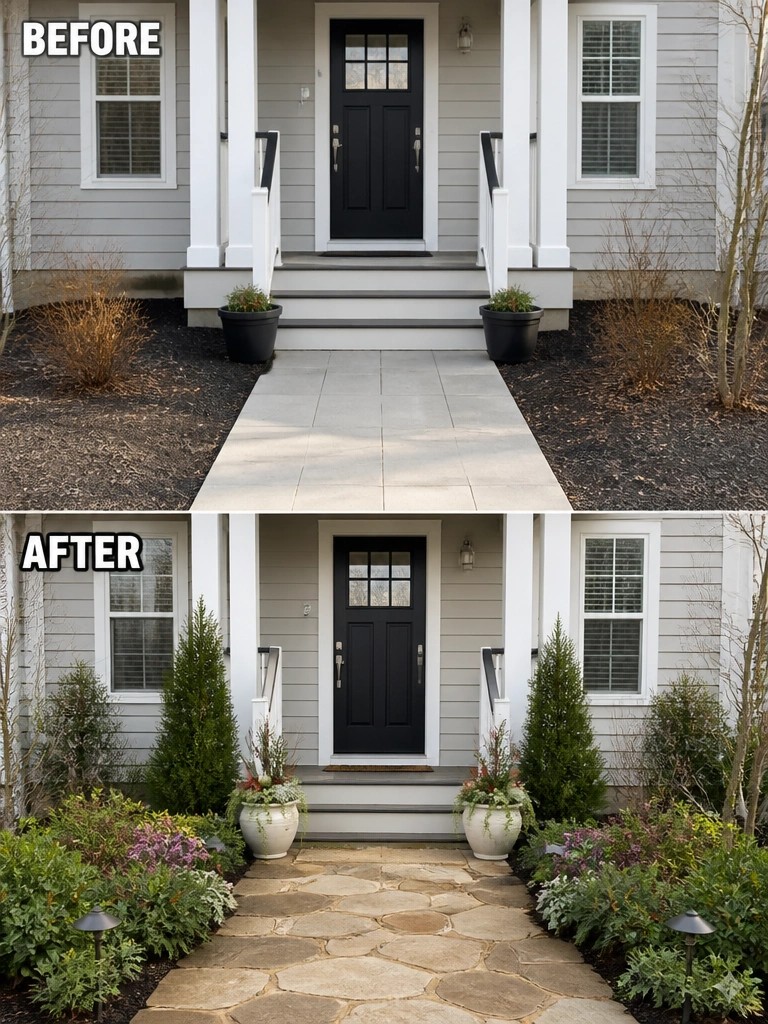
A plain concrete walkway often makes the front of a house feel flat and unfinished. Switching to irregular stone pavers gives the path more shape and interest while the new garden beds on each side add height and softness that lead the eye to the door.
This approach works best on modest front yards where you want a clear route without making the space feel crowded. Start with the path itself, then fill the beds with a mix of evergreens and seasonal color so the planting stays simple to maintain and still looks full through the seasons.
Add Structure To A Narrow Side Yard
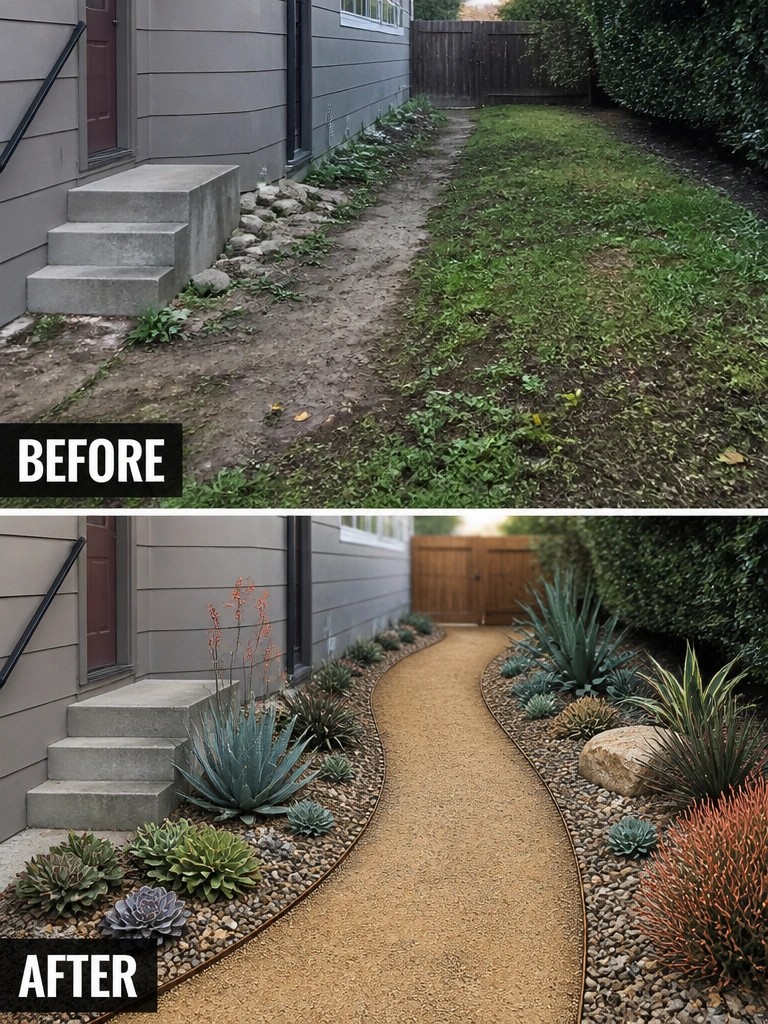
A narrow side yard often becomes a weedy, muddy strip that no one uses. Replacing the bare dirt with a gravel path and adding simple rock edging gives the space a clear shape and makes it feel intentional rather than leftover.
This works best on homes where the side area is mostly functional, like a route to the backyard. Start with the path itself so the layout stays practical, then fill the borders with tough plants that need little water. The result stays low-maintenance and keeps the walkway usable year-round.
Add A Brick Path To Give The Front Yard Structure
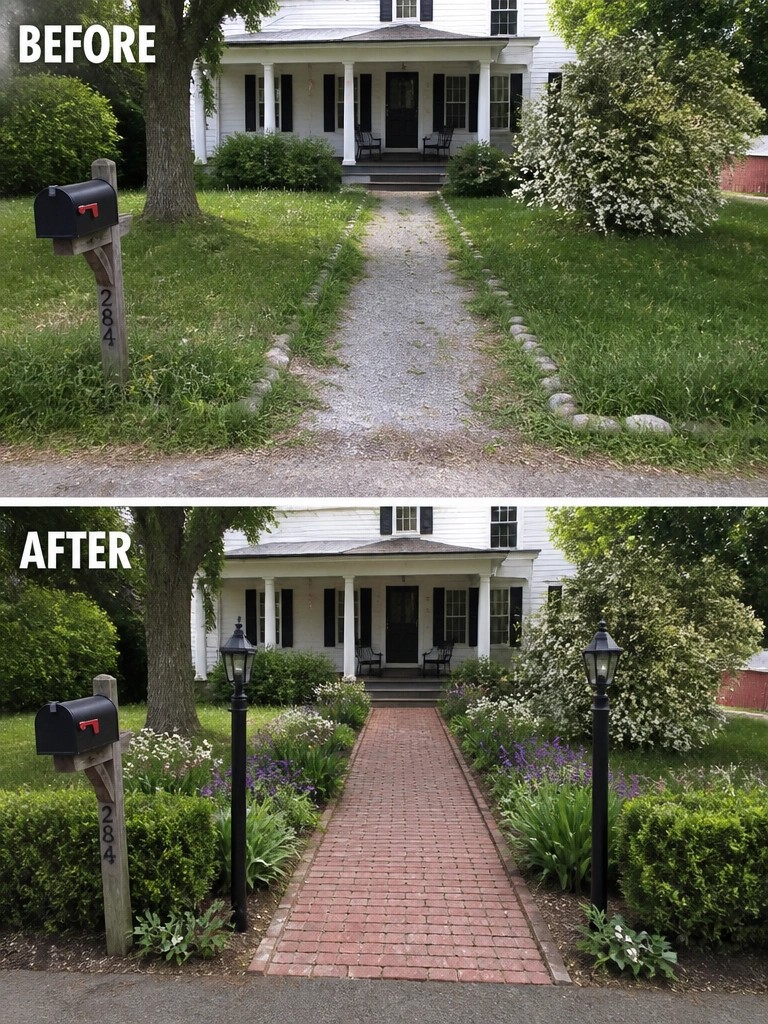
The loose gravel path looked temporary and made the whole front feel unplanned. Replacing it with a solid brick walkway and adding planted borders on both sides gives the yard clear shape and makes the entrance feel intentional.
This approach works best on homes where the walk from the street is long or the lawn feels shapeless. Keep the path width comfortable for two people and use the same material for any side steps so everything reads as one project. Plant low flowers and shrubs right along the edges to soften the hard lines without crowding the walk.
Frequently Asked Questions
Q: How wide should the paths be if I want two people to walk together?
A: Go at least four feet across for comfortable side by side strolling. Anything narrower still works fine for one person at a time. Lay out a hose first and test the feel before you commit.
Q: What if my yard slopes downhill in spots?
A: Build the path to follow the hill with a few wide steps where needed. Keep each section from getting too steep so feet stay steady. Gravel grips better than flat stones on any slope.
Q: How do I keep grass from creeping into the path edges?
A: Edge the sides with a simple border like bricks or metal strips right after you lay the path. Pull stray grass every couple weeks at first. This keeps the lines clean without much extra work.
