

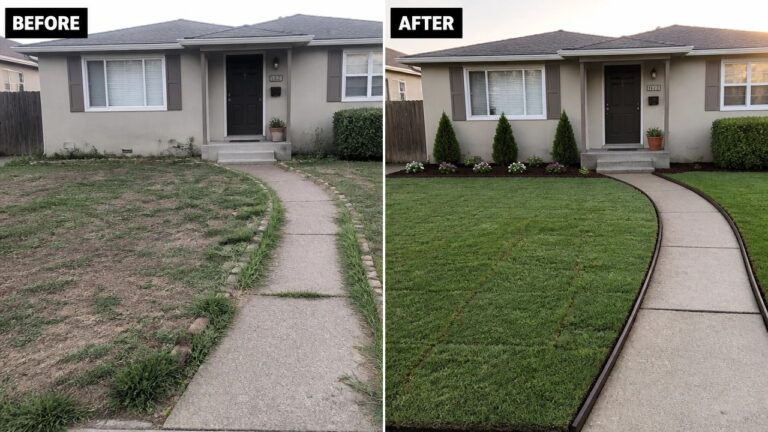
I have noticed that the front yard often decides whether a house looks cared for or simply overlooked from the street.
Small changes to the layout and planting can pull the whole exterior together without touching the structure itself.
If I were working on my own front space I would start by reshaping the lawn edges and clearing the overgrown beds before adding anything new.
Those steps alone tend to make the entry feel more direct and the house itself seem a bit more settled.
The difference shows up right away.
Add Defined Garden Beds Along The Front Walk
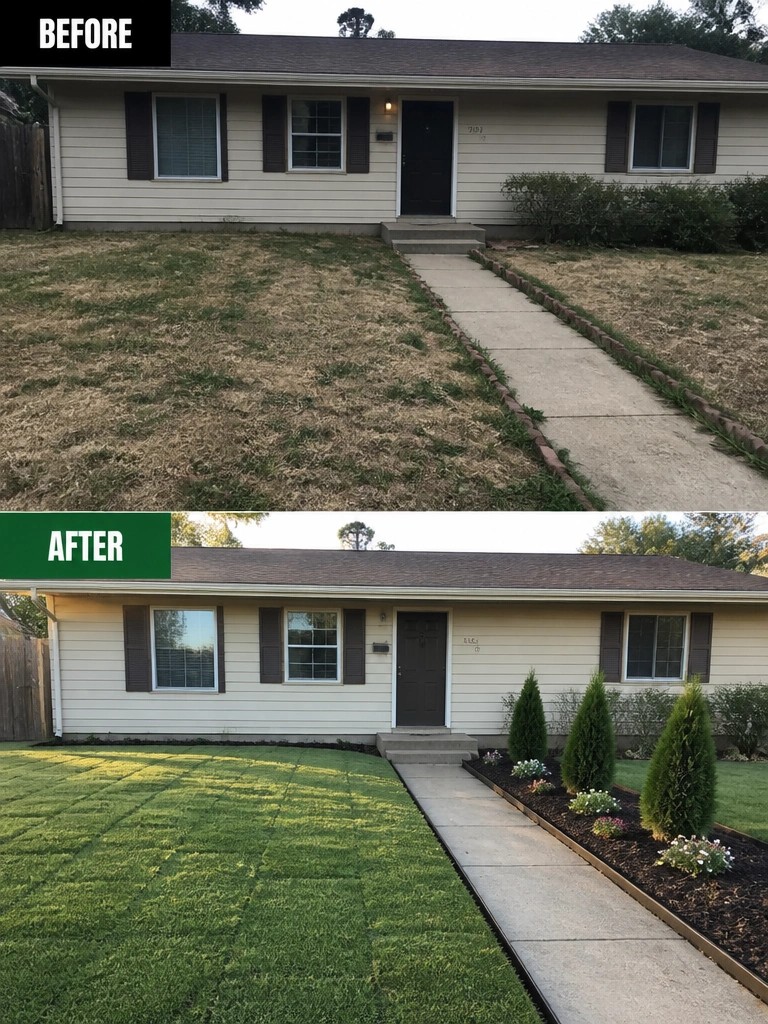
A patchy lawn and an undefined walkway can make the whole front of a house feel unfinished. In this case, the main change came from laying out clear beds on either side of the path, filling them with mulch, and adding a few shrubs and flowers. The fresh lawn then tied everything together and gave the house a much cleaner base.
This approach works well on any home where the front walk feels like it just cuts through grass. Start by deciding the bed width, add a simple edge, and keep the plant choices low and repeated. It keeps the yard looking intentional without needing a big budget or constant upkeep.
Clear Overgrowth First To Define Your Garden Beds
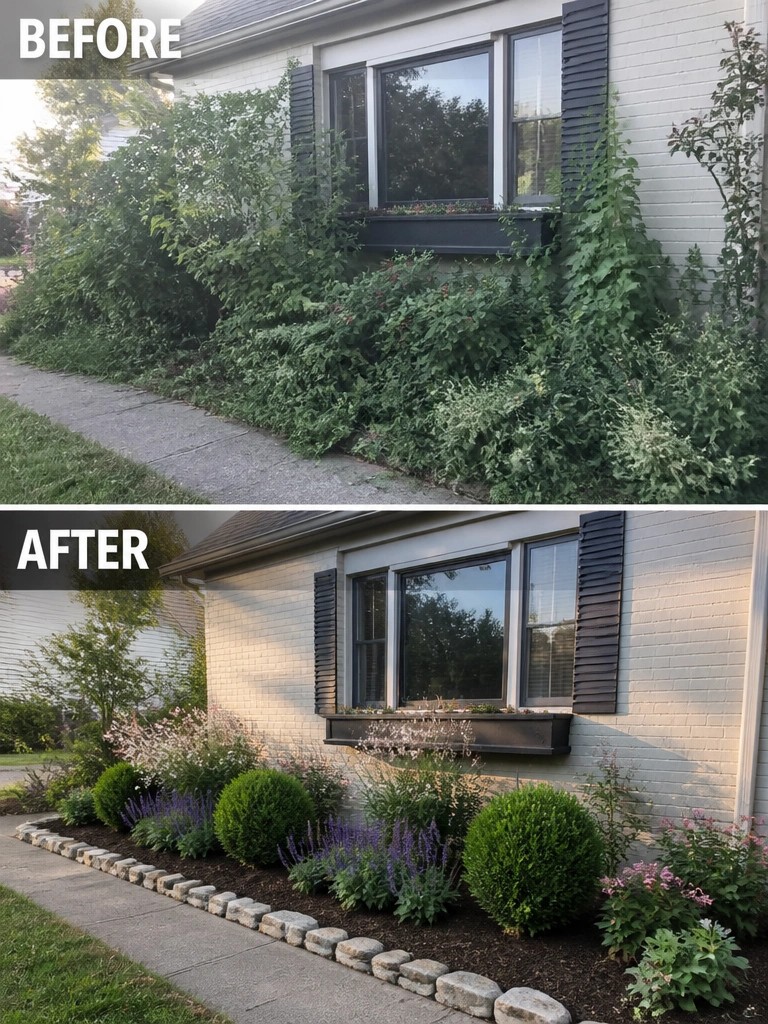
Removing the thick, tangled growth along the front of the house made the biggest difference here. Once the tall bushes and vines were cut back, the space could be replanted with lower shrubs, simple flowers, and a low stone border that keeps everything looking tidy instead of wild.
This approach works well on older homes where plants have been left to spread for years. Start by clearing everything down to the soil, then lay out beds that follow the foundation line. Use a few repeated shrubs and a simple edge like stone or brick so the beds feel planned rather than scattered.
Paint The Front Door A New Color
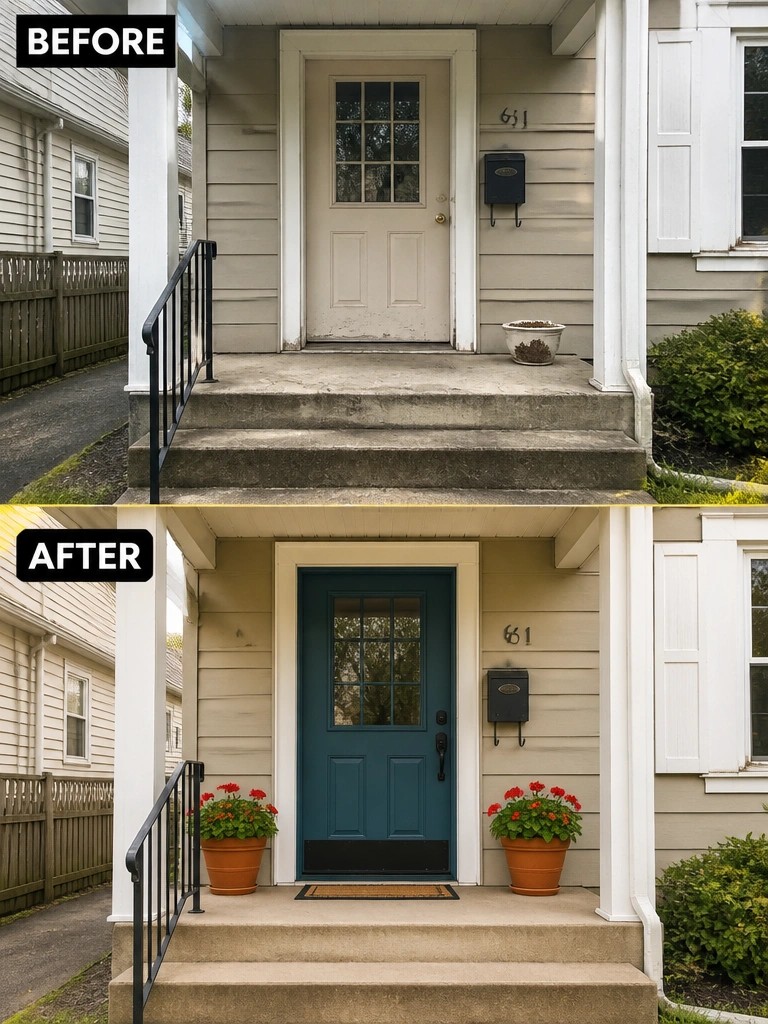
A new door color can shift the whole look of a house without any major construction. Here the old off-white door was swapped for a deep teal that gives the entry a clear focal point.
This works on many homes where the facade feels plain. Choose a color that contrasts with your siding, then keep the surrounding area simple so the door stays the main feature. A couple of planters can support the change but are not required.
Replace A Cracked Path With Stepping Stones
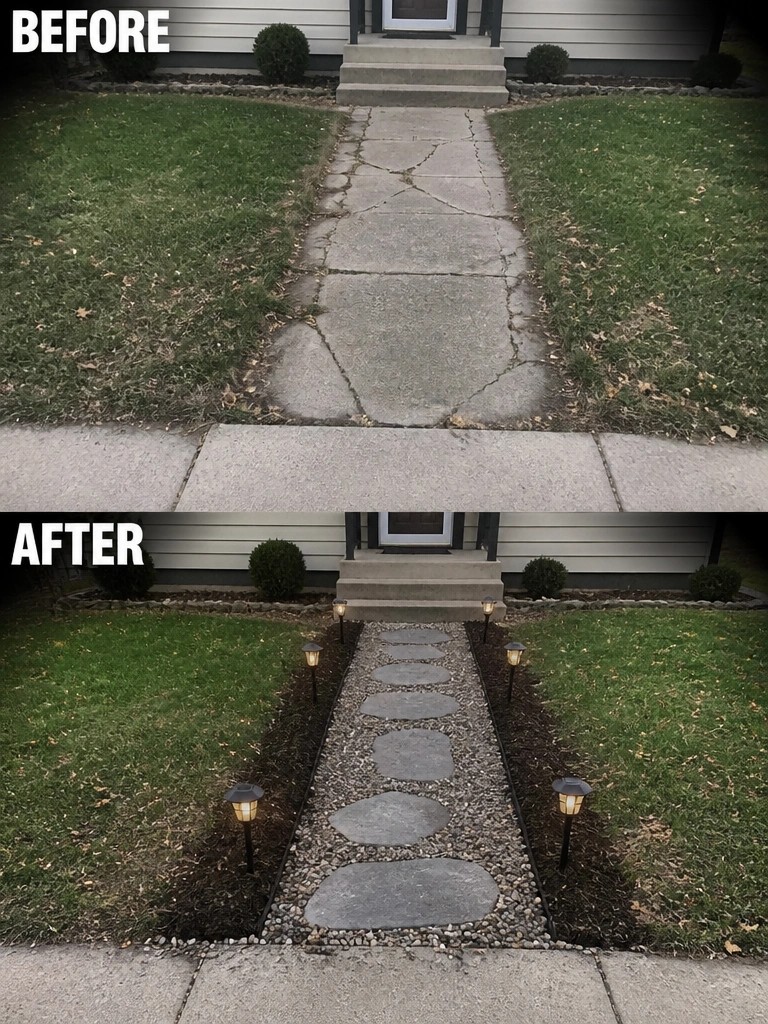
A solid concrete walk that has cracked over time often makes the whole front yard feel neglected. Replacing it with stepping stones set into gravel gives the path better shape and lets water drain properly instead of pooling on the surface.
This idea suits older homes where the original walkway has settled unevenly. Keep the stones spaced evenly, add a simple border of mulch or edging on each side, and use low lights if you want the path to feel safer at night without adding much cost.
Add A Defined Border Around Your Mailbox
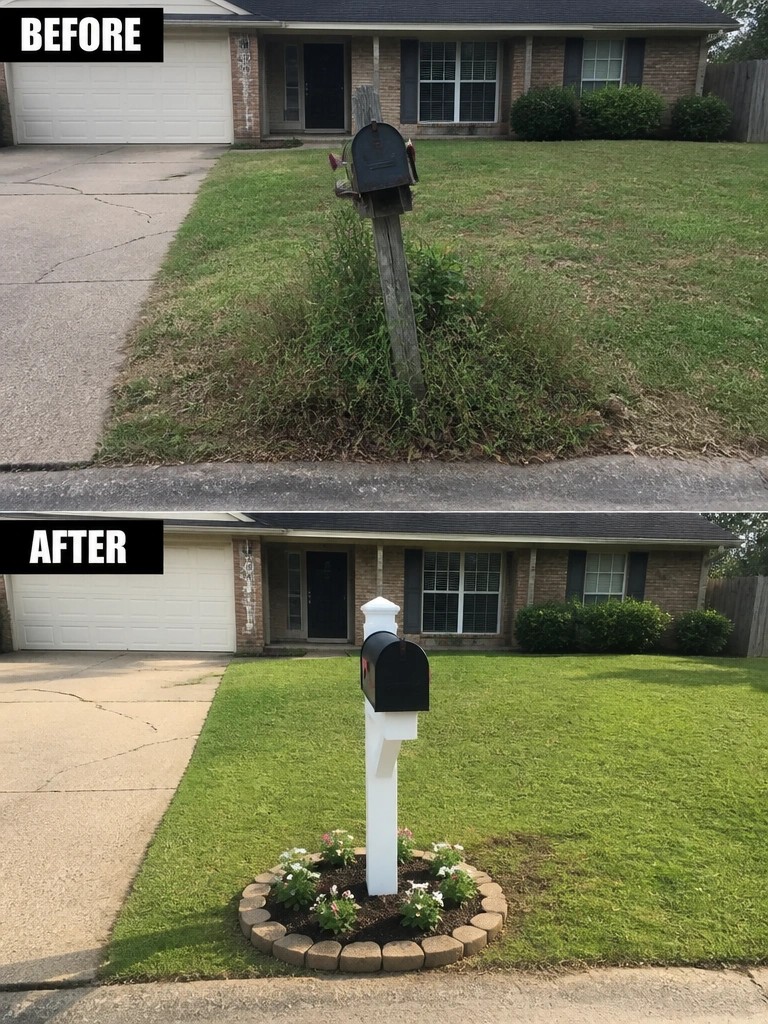
An overgrown patch of weeds around a mailbox can make the whole front yard look neglected. Clearing that area and adding a simple circular bed with edging gives the space a clear purpose and keeps the grass from creeping back in. Painting the post white also helps it stand out without any extra effort.
This approach works well on any modest front lawn where the mailbox sits out in the open. Start by removing the weeds completely, then lay down a basic edge like stones or bricks before adding mulch and a few low flowers. The key is keeping the bed small so it stays easy to maintain.
Turn An Empty Porch Into A Seating Area

An empty porch often feels like dead space until you add a few simple pieces that invite people to stop and sit. In this case a small table and two chairs, paired with a rug and string lights, turned a plain concrete slab into a spot that feels finished and usable.
This idea works best on front or side porches that already have some cover. Keep the furniture compact so there is still room to walk past, and use weather-safe pieces that can stay out year-round. A single rug helps define the seating zone without crowding the space.
Add Shutters And Window Boxes To A Plain Exterior
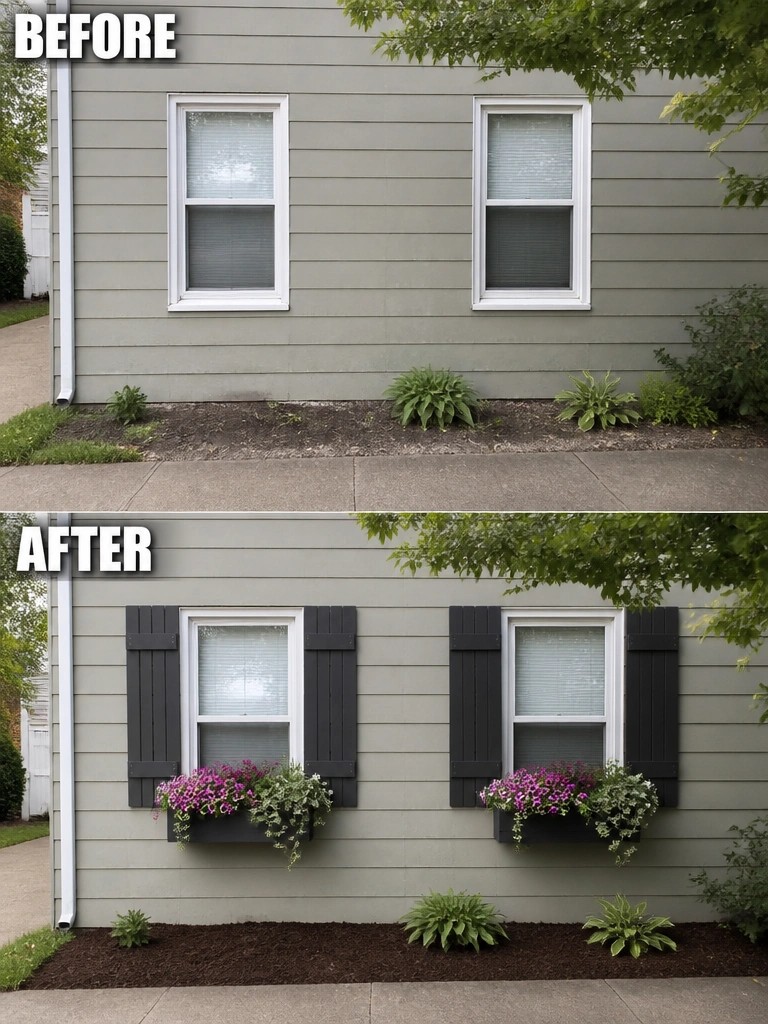
Many houses have rows of plain windows that sit flat against the siding and give the wall a blank look. Adding shutters on both sides of each window and a simple box below creates structure and makes the openings feel intentional.
This works best on homes with basic horizontal siding where you want to add interest without changing the whole exterior. Match the shutter color to your trim or roof accents, and choose boxes that are wide enough to hold a mix of flowers without crowding the walkway below.
Add Gravel To Create A Clean Edge Along A Fence

A gravel strip gives the area along a fence a finished look without much cost. In this case, the messy mix of dirt and ivy was replaced with a simple gravel border that keeps the ground cover in place and stops weeds from creeping up to the fence. The hanging buckets add a bit of color without taking up ground space.
This idea works well on narrow strips next to sidewalks or driveways where a full garden bed feels too much. Start with a weed barrier and a few inches of gravel, then add a few planters on the fence if you want more color. It stays low maintenance and gives the whole side yard a tidier appearance.
Add Outdoor Lighting To Brighten A Dark Entry
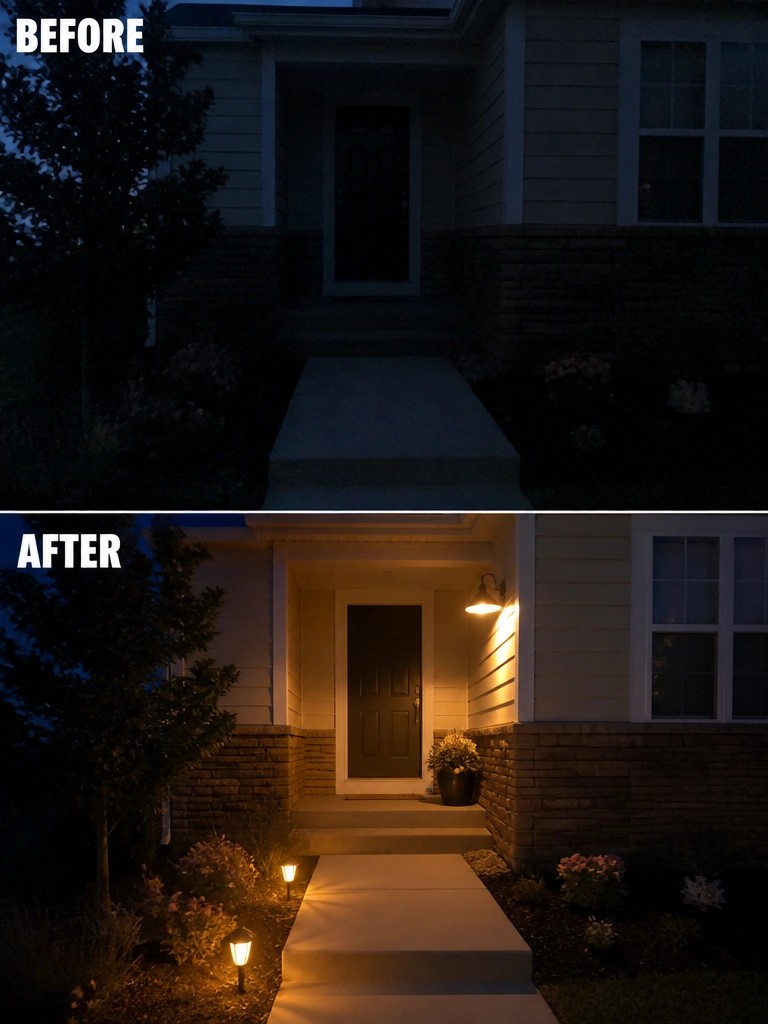
A front door can look completely forgotten once the sun goes down if there is no light around it. Here the simple addition of one wall sconce and a pair of path lights changed the entrance from a dark, flat space into something that actually draws the eye at night.
This idea works on almost any house where the entry feels plain after dark. Place one light close to the door so it highlights the door itself, then add a few low lights along the path. The goal is to improve safety and make the house look finished without needing a big remodel.
Create Defined Garden Beds Along The Front
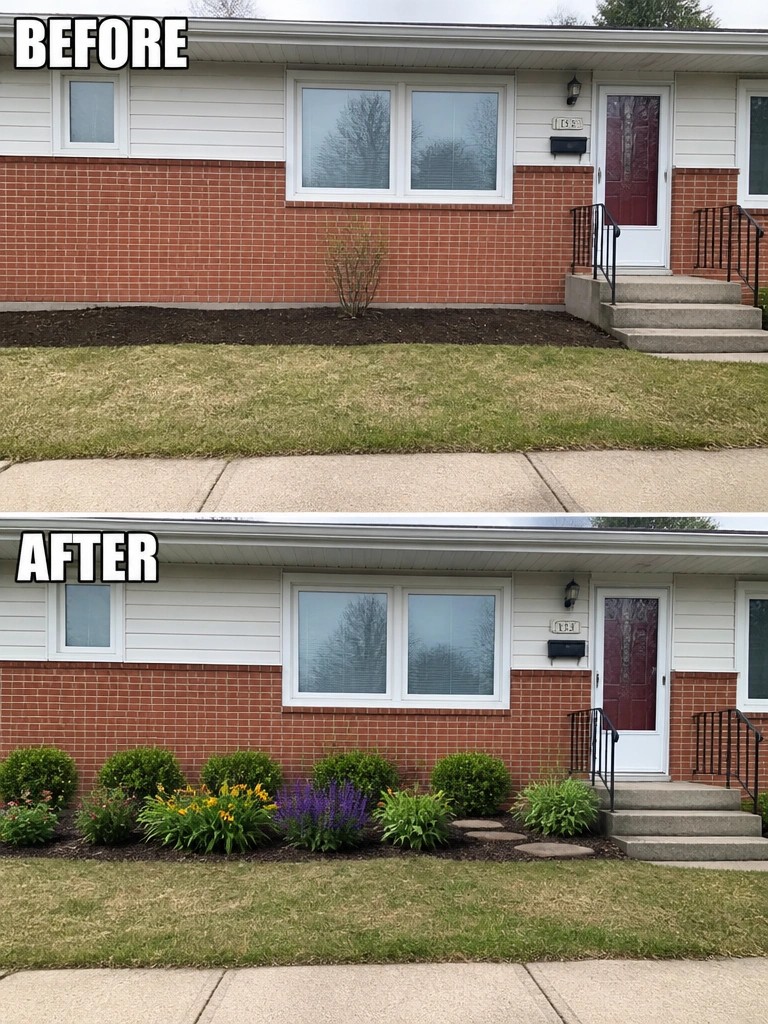
A plain strip of mulch and grass in front of the house often looks unfinished. Adding a row of shrubs and flowers gives the space clear shape and makes the whole front feel more complete without any major construction.
This works best on homes with a similar low bed right against the foundation. Clear out the old area first, then plant a simple mix of evergreen shrubs for structure and a few colorful perennials in between. Keep the beds mulched and add a few stepping stones if you need easy access for watering.
Add Planting Structure To A Gravel Yard
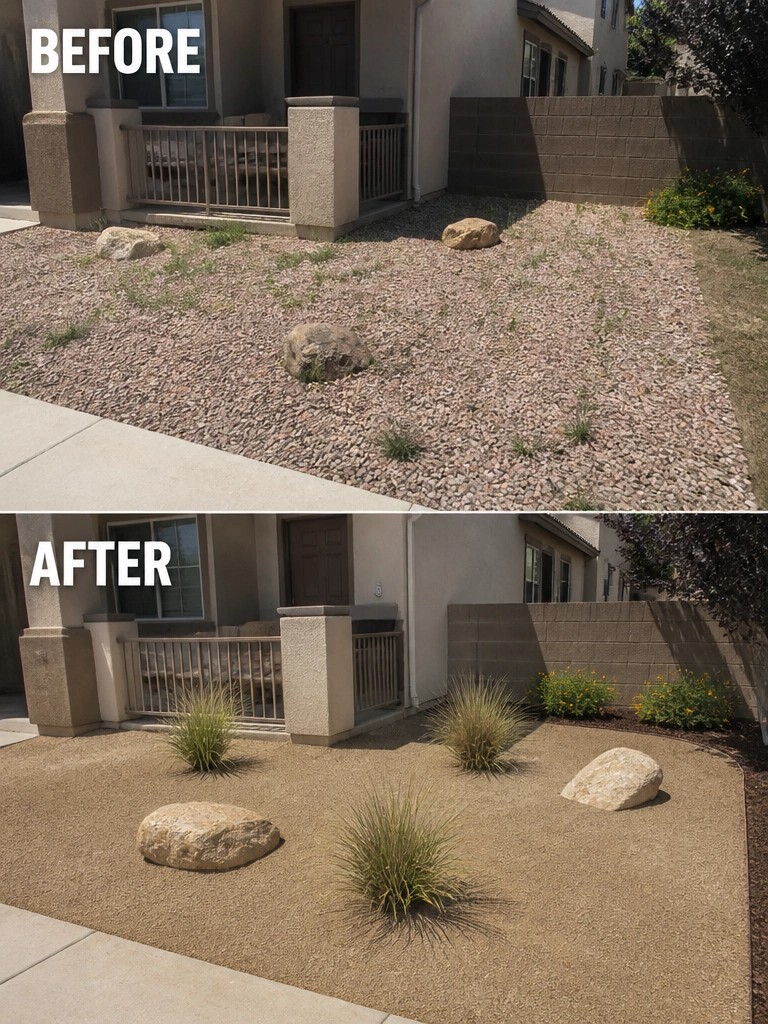
A gravel front yard can look flat and unfinished when left mostly bare. The change here came from adding a few clusters of tall grasses and moving the rocks into clearer spots. Those simple additions give the space shape and keep it from feeling random.
This approach works well on small side yards or entry areas where you want some greenery without a full garden overhaul. Start with a few low-maintenance grasses that suit your climate, place them in groups rather than scattered singles, and let the gravel stay as the main ground cover. It keeps the look clean while making the space feel more intentional.
Add Raised Beds To Define Planting Areas
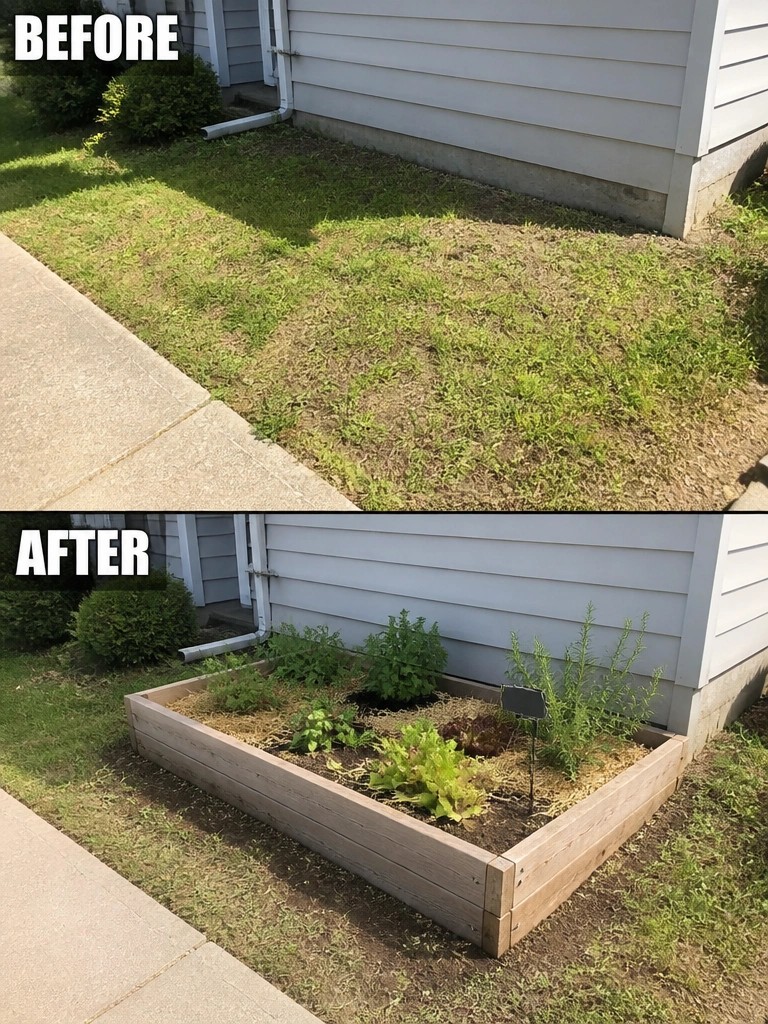
A raised bed turns a weedy strip of grass right against the house into a contained garden space. The before photo shows bare ground and patchy growth creeping up to the foundation, while the after shows how a simple wooden frame creates clear edges and gives the plants a proper home.
This idea suits homes with narrow side yards or foundation areas that need order without major grading. Keep the bed narrow enough to reach across easily, use untreated lumber if you prefer a natural look, and fill it with decent soil and mulch so weeds stay down. It also protects the house siding from constant moisture.
Add Stepping Stones To Shape A Narrow Planting Strip

A long, narrow strip of patchy grass next to the house often ends up looking messy because it has no clear edges or purpose. Laying down a simple path of stepping stones and turning the rest into mulched beds gives the space a reason to exist and makes it much easier to maintain.
This approach works especially well on tight front yard strips where you still need occasional access along the foundation. Start by marking out the beds, add the stones first so you can walk through without compacting soil, then fill in with low-maintenance plants and mulch to keep weeds down.
Tile Concrete Steps To Refresh The Entry
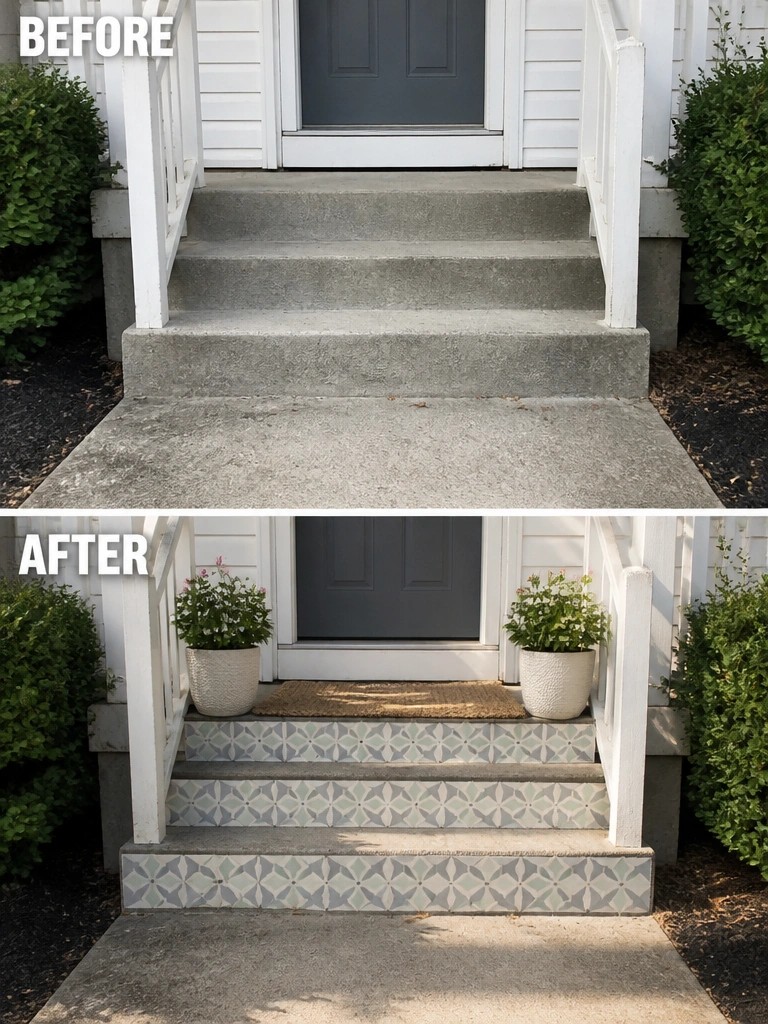
Concrete steps often look flat and unfinished on their own. Adding tile across the treads gives the stairs a clear pattern and breaks up the gray surface. A simple doormat and two matching planters on the landing finish the look without crowding the space.
This works best on homes with basic front steps that already have good structure. Choose outdoor-rated tile that can handle weather, and keep the planters modest so people can still walk through easily. Start with the tile if the concrete is sound, then add just enough planting to soften the sides.
Hide Utility Equipment With A Lattice Screen
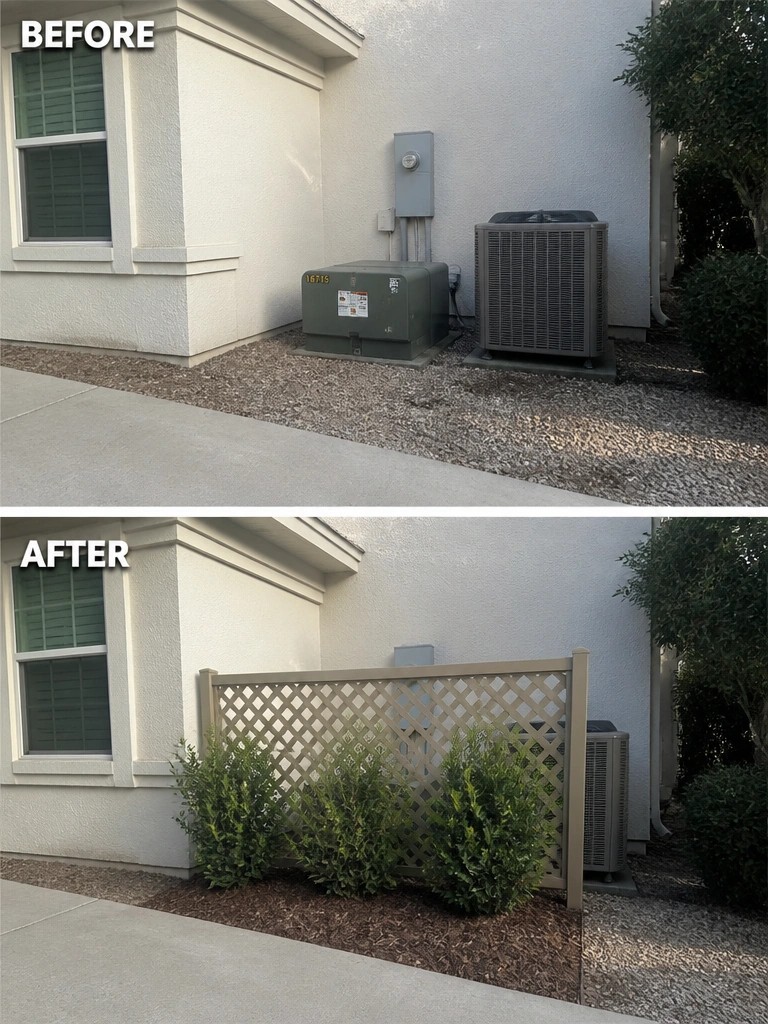
Many homes end up with air conditioners, generators, or electrical panels sitting right along the side of the house where they are hard to miss. A simple lattice fence placed in front of them, paired with a few shrubs, keeps the equipment accessible while making the area look much cleaner and more intentional.
This idea works best on narrow side yards or any spot where the equipment must stay in place but does not need to be the main view. Match the fence color and style to your house trim, and keep the planting low enough that service access stays easy.
Define Garden Beds With Mulch And Edging
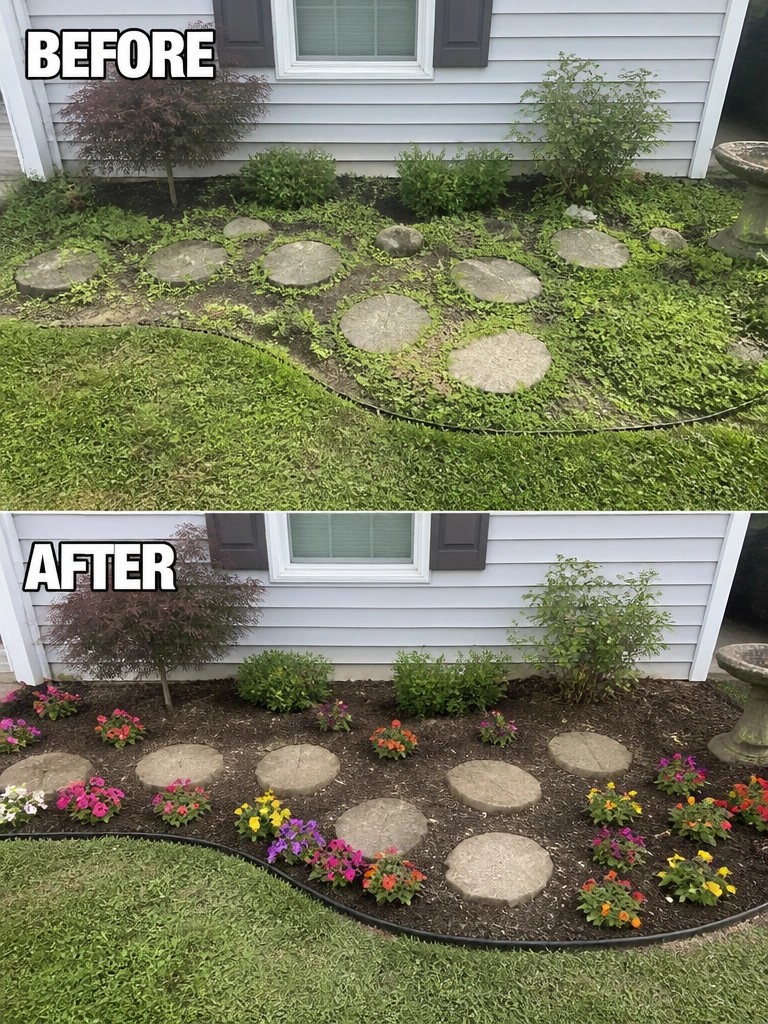
The main change here is how the messy strip along the house was handled. Weeds and grass had taken over the area around the stepping stones, making the whole bed look neglected. Adding a clean edge, fresh mulch, and clusters of flowers gave the bed a clear shape and made the path feel intentional instead of random.
This approach works well along the front of a house where you want the beds to look tended without a lot of daily work. Start by pulling out the worst of the grass and weeds, lay down a simple border to keep the lawn from creeping back in, then mulch heavily before planting. The mulch does most of the heavy lifting by suppressing new weeds and keeping the soil looking tidy even when the flowers are not in full bloom.
Organize A Cluttered Front Entry With Storage
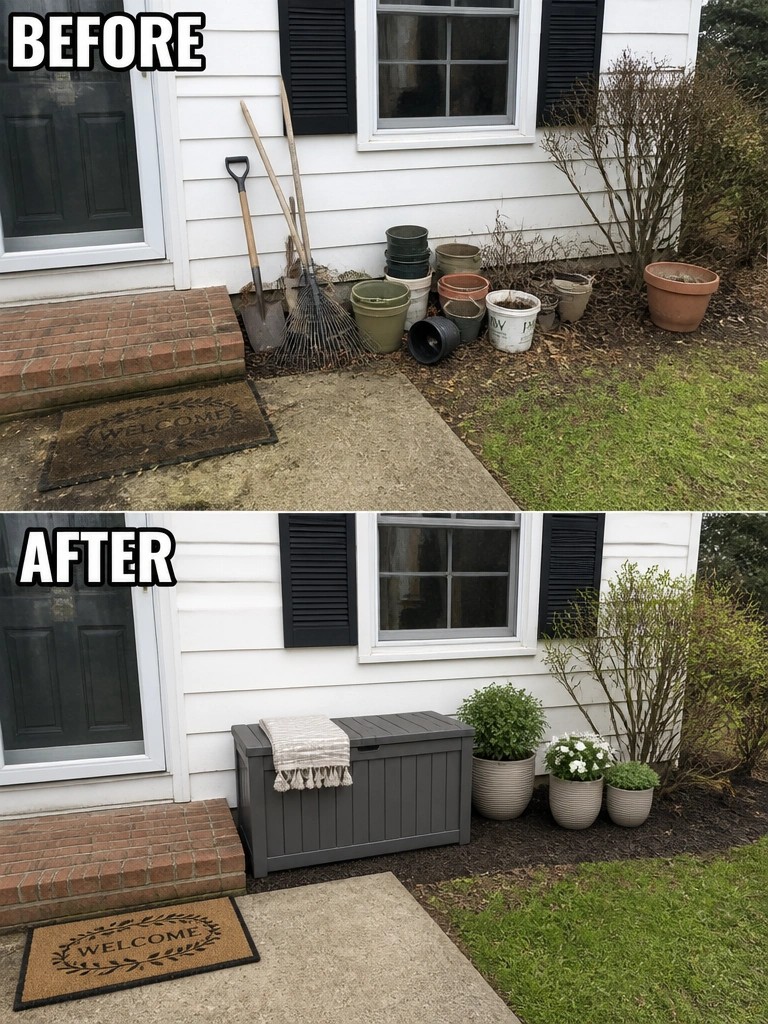
A messy front entry makes the whole house feel less welcoming. In this case the scattered pots, tools, and random containers were cleared out and replaced with one storage bench that keeps everyday items out of sight while giving the space a settled look. Grouping a few matching planters on the side finished the change without adding much.
This works well on small front areas where things tend to pile up. Start with a bench that can handle weather and has room inside for shoes or garden tools. Keep the planting simple and repeat the same style of pot so the entry feels pulled together instead of busy.
Add Shutters And Foundation Beds To A Plain House
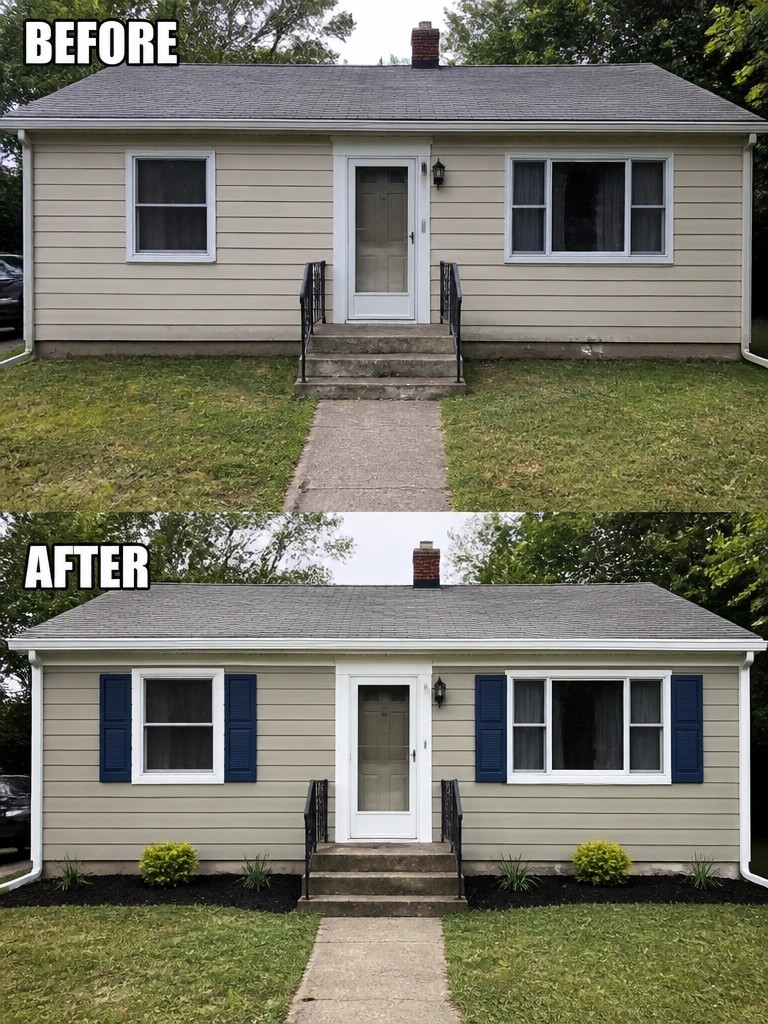
One of the simplest ways to give a flat-looking house more shape is to add shutters to the windows and create a few narrow beds along the foundation. Here the windows received dark shutters while the front gained mulch and a handful of shrubs. Those two moves break up the long siding and make the house feel more settled.
This idea suits ranches and older single-story homes that can look bare across the front. Put the shutters on first if your windows feel empty, then keep the new beds only a couple of feet deep so they stay easy to maintain. Focus on one color for the shutters and repeat it lightly elsewhere if you want the changes to feel connected.
Frequently Asked Questions
Q: Where should I start if my front yard looks overgrown right now?
A: Clear out the weeds and dead plants first. That alone opens up the space and makes everything else easier to see. From there you can add a few cheap borders or fresh mulch to pull it together fast.
Q: How often will I need to redo these budget changes?
A: Most hold up for a year or more if you choose hardy options like rocks or hardy ground cover. Check on them every few months and fix small spots early. That keeps the whole yard looking good without extra work.
Q: Can painting my front door count as one of these transformations?
A: Yes it does. A fresh coat changes the whole entrance for very little money. Pair it with some potted plants on the steps for even more impact right away.
