

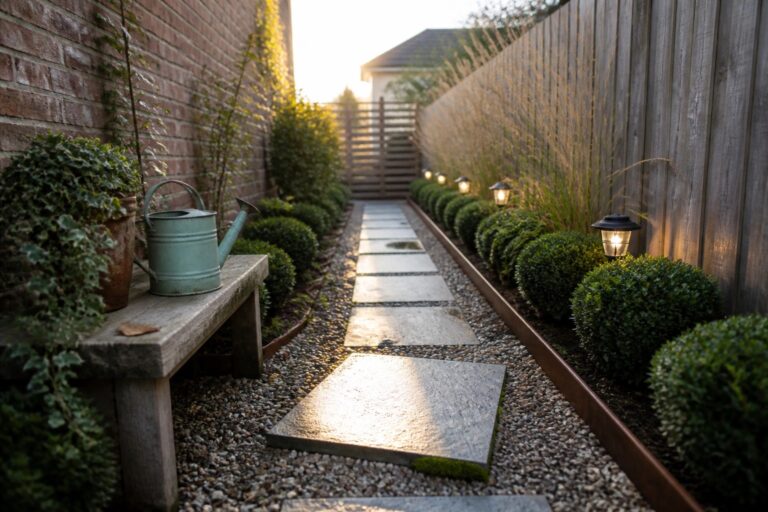
Over the years I have noticed that small gardens tend to feel more usable when the layout stays straightforward and the plants do not demand constant attention.
I often find myself returning to ideas that avoid extra layers of edging or paths because those additions can quickly crowd a compact space.
A garden that grows well with minimal fuss usually rewards the effort put into choosing the right structure from the start.
Keep things basic.
What works in one yard might need slight tweaks based on sun patterns and soil, yet the core approach remains the same.
Stone Slabs Set In Gravel Make An Easy Path
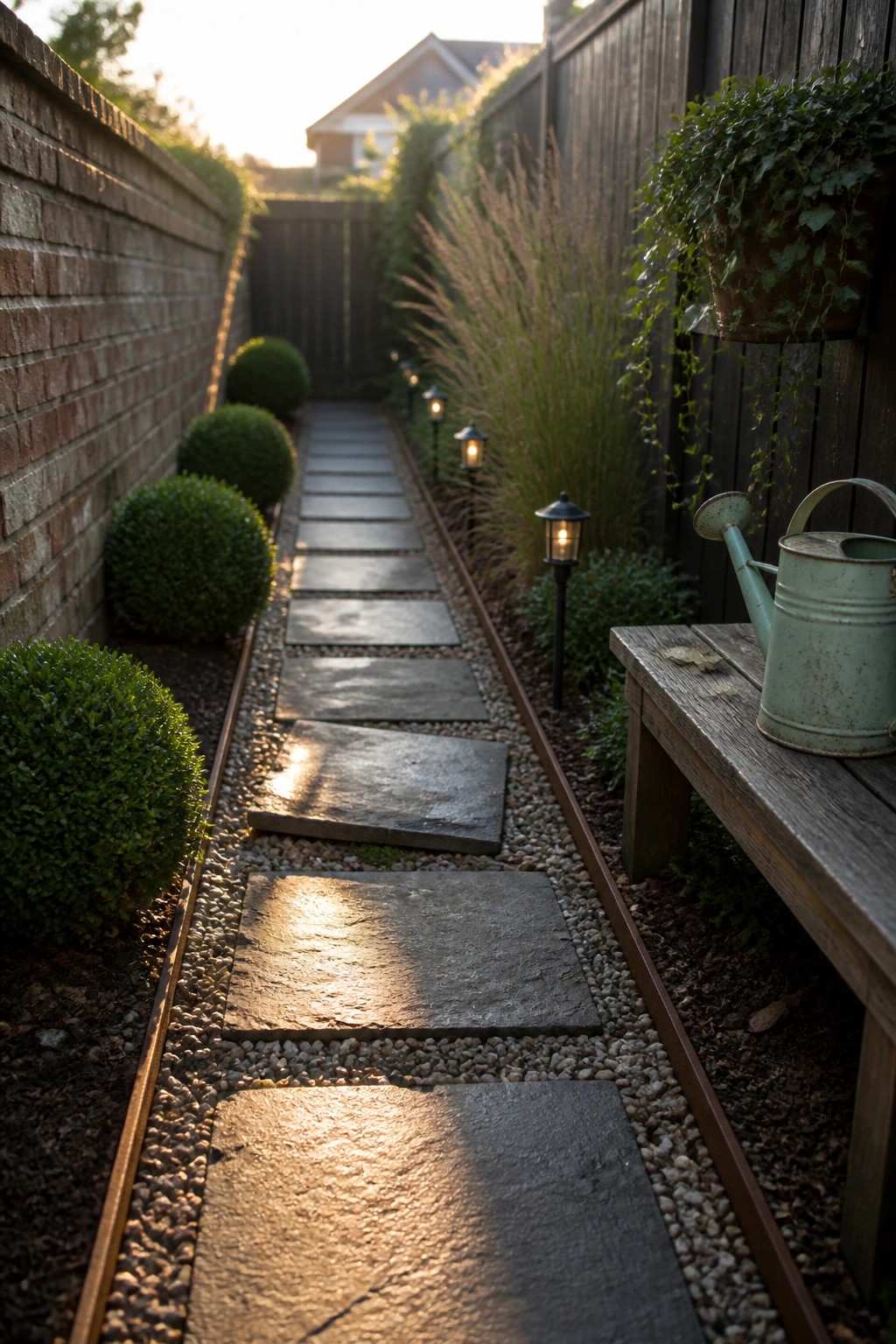
A path made from large stone slabs laid straight into gravel gives a small garden a clean line without extra materials or complicated edges. It keeps the space open and easy to walk through, and the simple repeat of stone and gravel feels calm rather than busy.
This layout suits narrow side yards or tight passages between fences. Use low rounded shrubs along the sides so the path stays clear and nothing needs frequent cutting back.
Keep Seating Simple With One Chair And Basic Pots
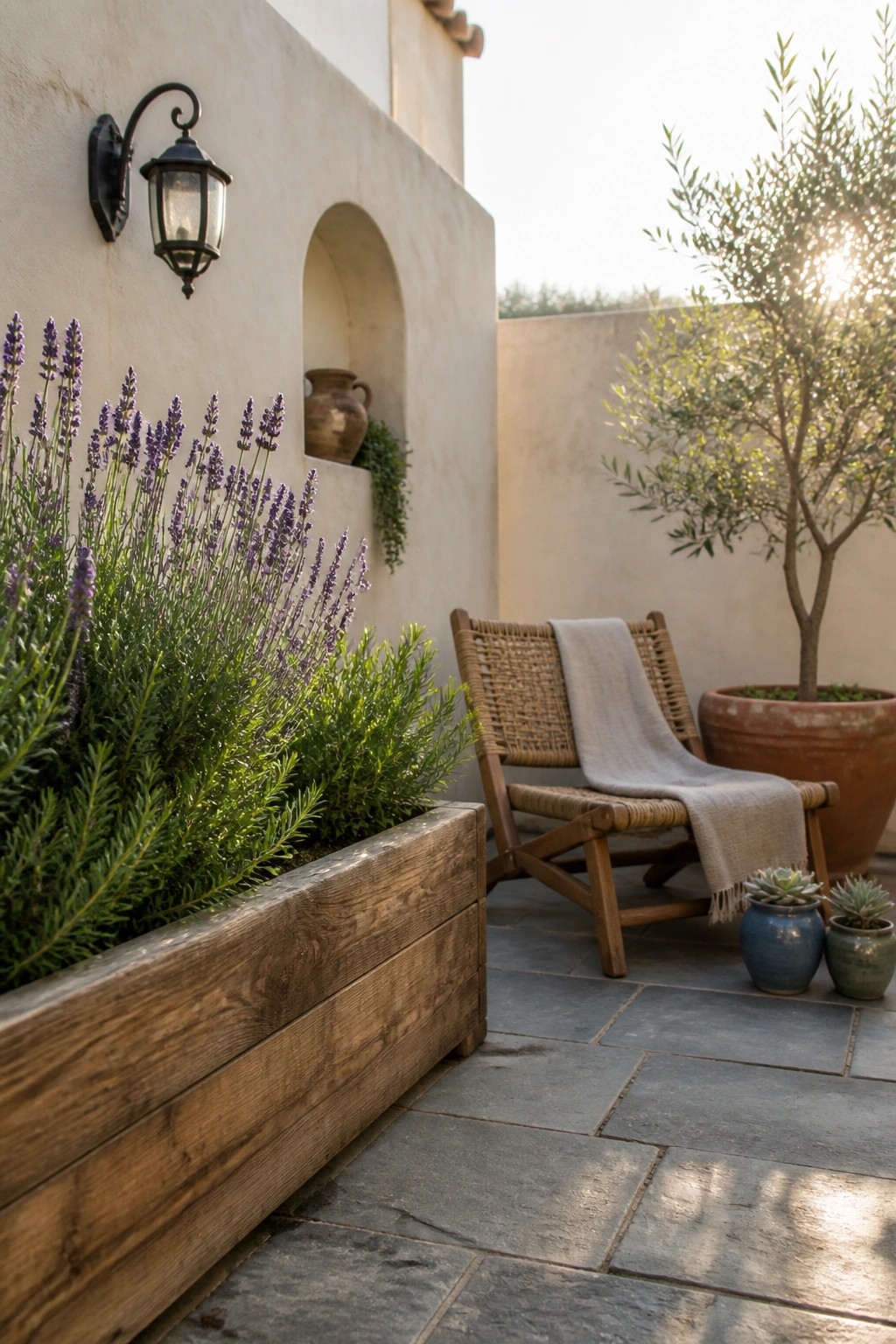
A single chair and a few containers can turn a small paved spot into a usable place to sit. This approach avoids crowding the area and keeps maintenance low since there are fewer plants to tend.
It works well on a side patio or narrow courtyard where you want an easy outdoor seat without building anything big. Stick to one comfortable chair and two or three pots in similar materials so the space stays open and calm.
A Bench Along the Wall Keeps Seating Simple
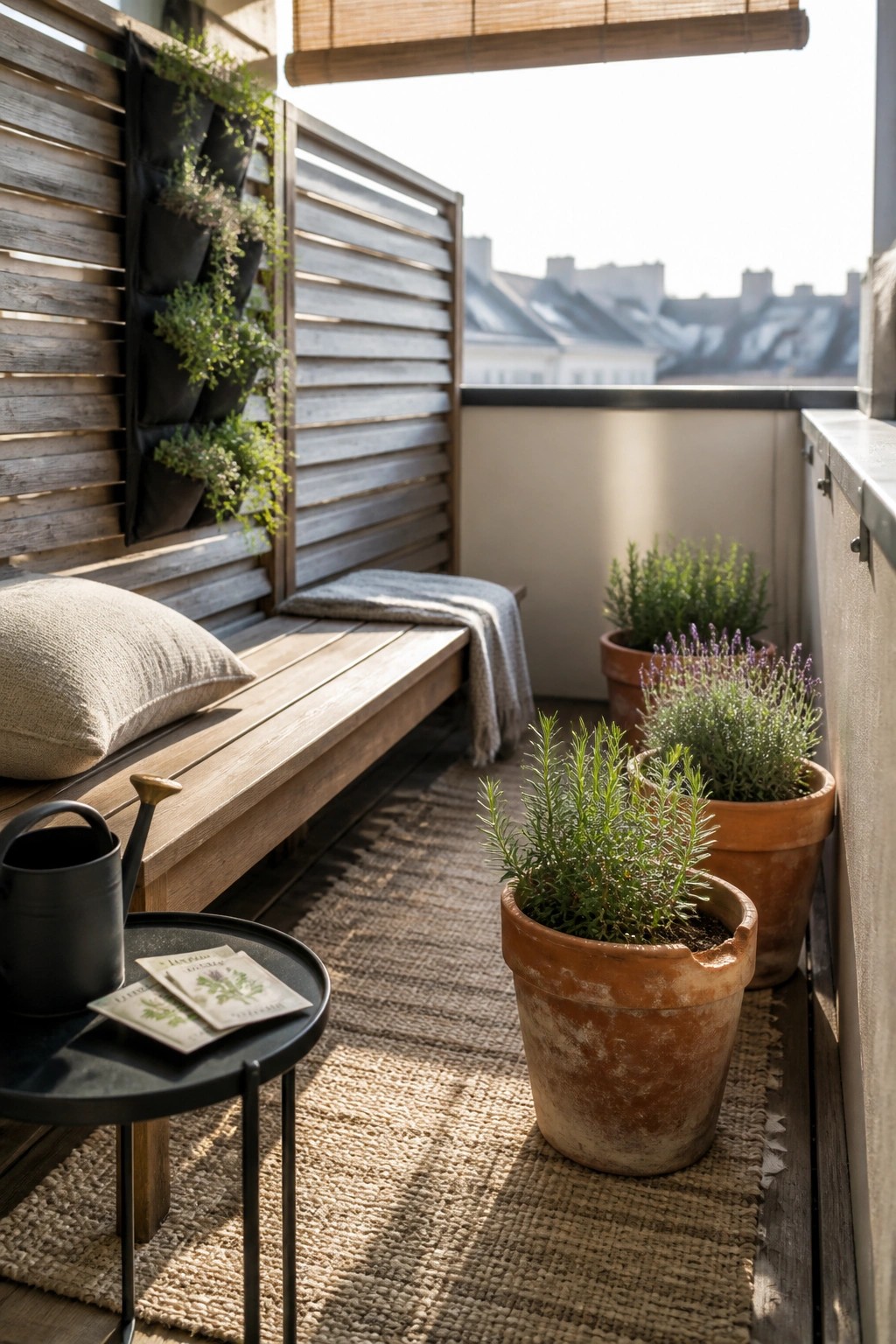
A bench built along one wall turns a small balcony into a usable spot without adding extra chairs or tables. It stays flat against the structure so the floor stays open and the space does not feel crowded.
This works best on narrow balconies or patios where you want a place to sit but do not want to bring in more furniture. Keep the planting to a few basic pots and a simple wall planter so the whole area stays easy to maintain.
Keep Garden Paths Simple With Stepping Stones
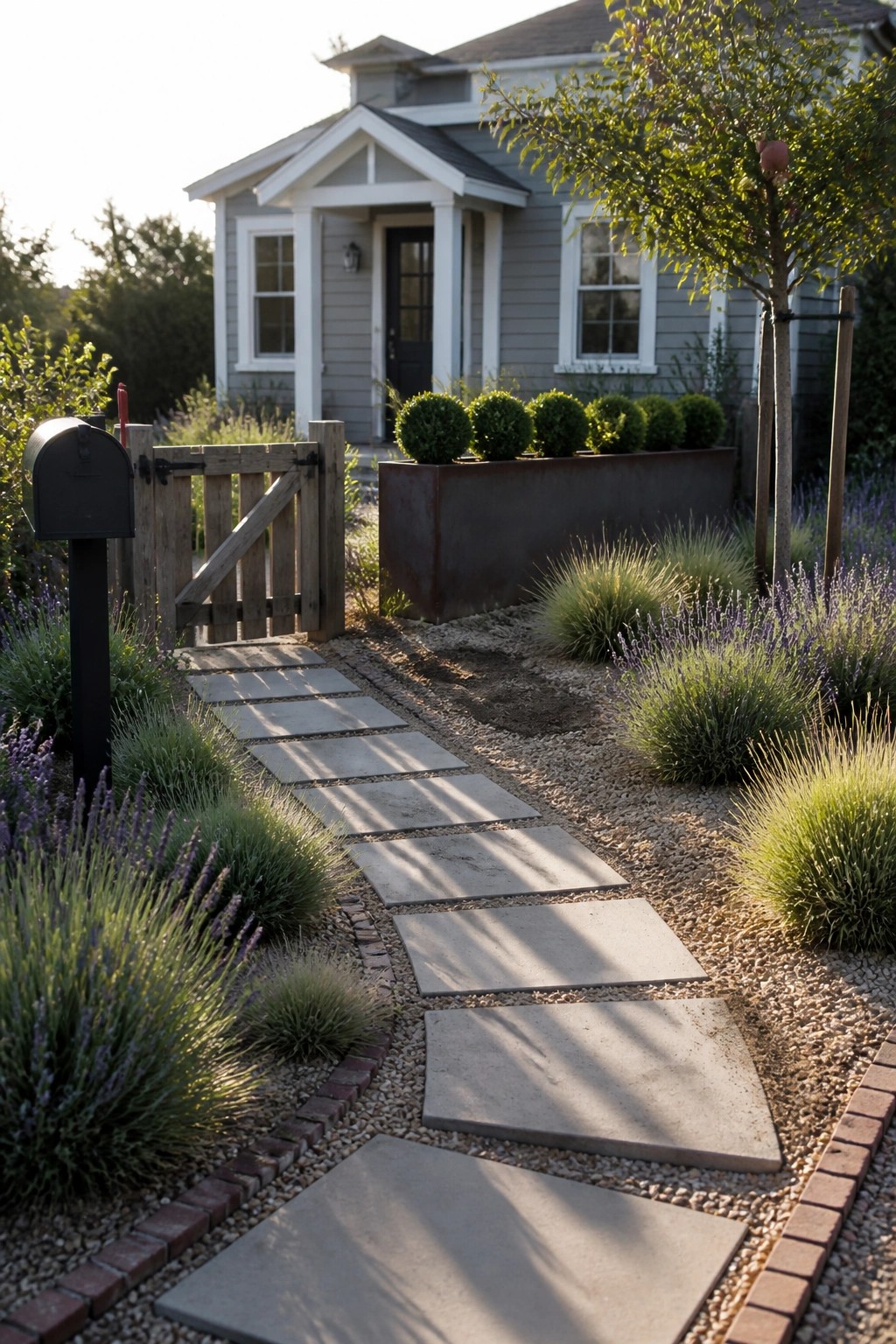
A path made from large stepping stones set into gravel gives a small garden a clear route without adding extra materials or busy patterns. The stones sit flat and let the surrounding plants stay low and easy to manage.
This works best along the side of a house or from a gate to the door. Use just one or two types of plants along the edges so the path stays open and the whole area feels calm rather than crowded.
Raised Beds Keep A Small Garden Neat
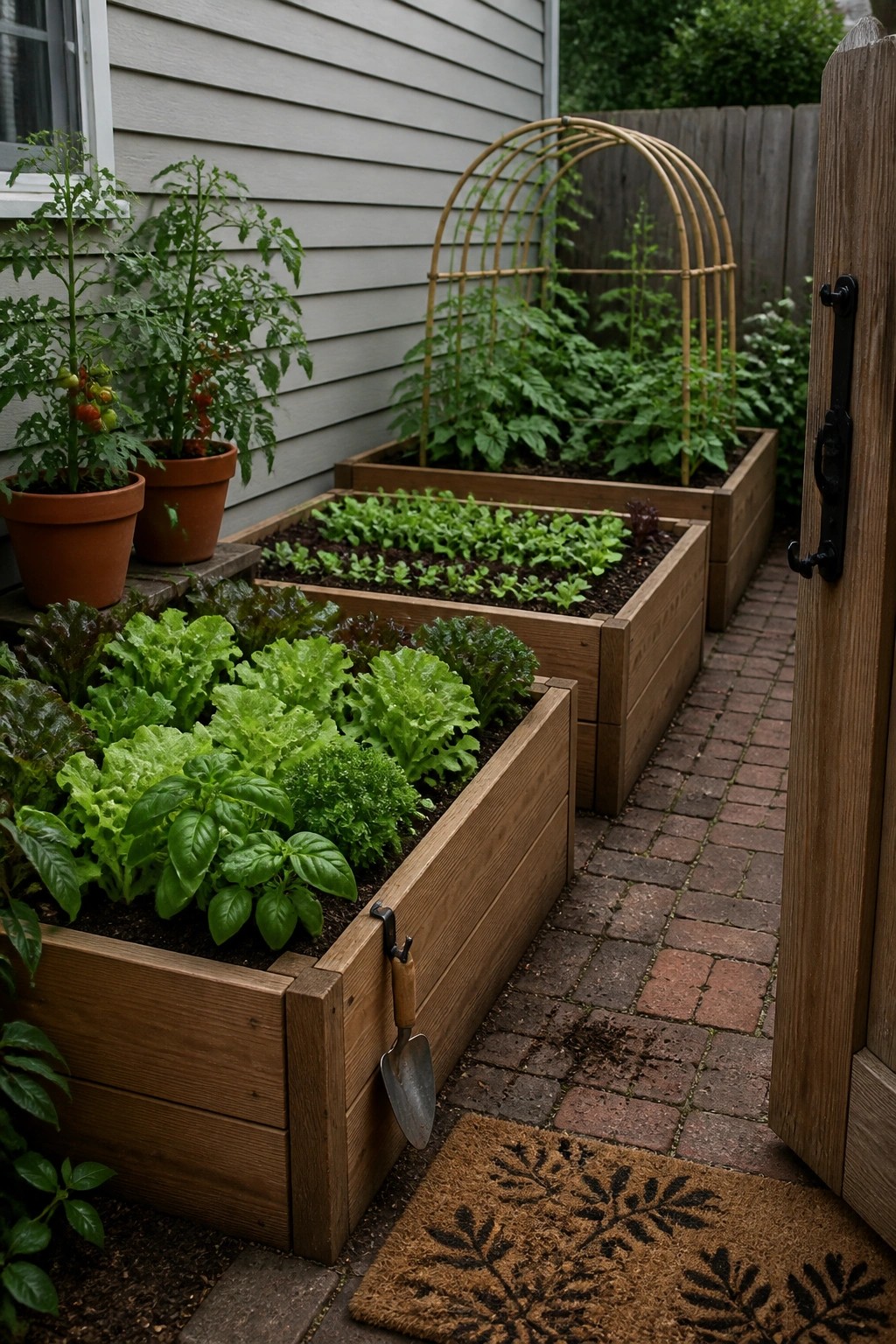
Raised beds give structure to a tight garden space without adding extra clutter or complicated layouts. The contained soil and defined edges make it simple to plant, water, and harvest while keeping pathways clear. This approach works especially well when space runs along a house or fence.
They suit small yards best because you can add several beds in a row and still leave room to walk through. Stick with basic wood frames and a mix of easy greens and vegetables so the garden stays practical and low maintenance.
Gravel Paths With Stepping Stones Stay Simple
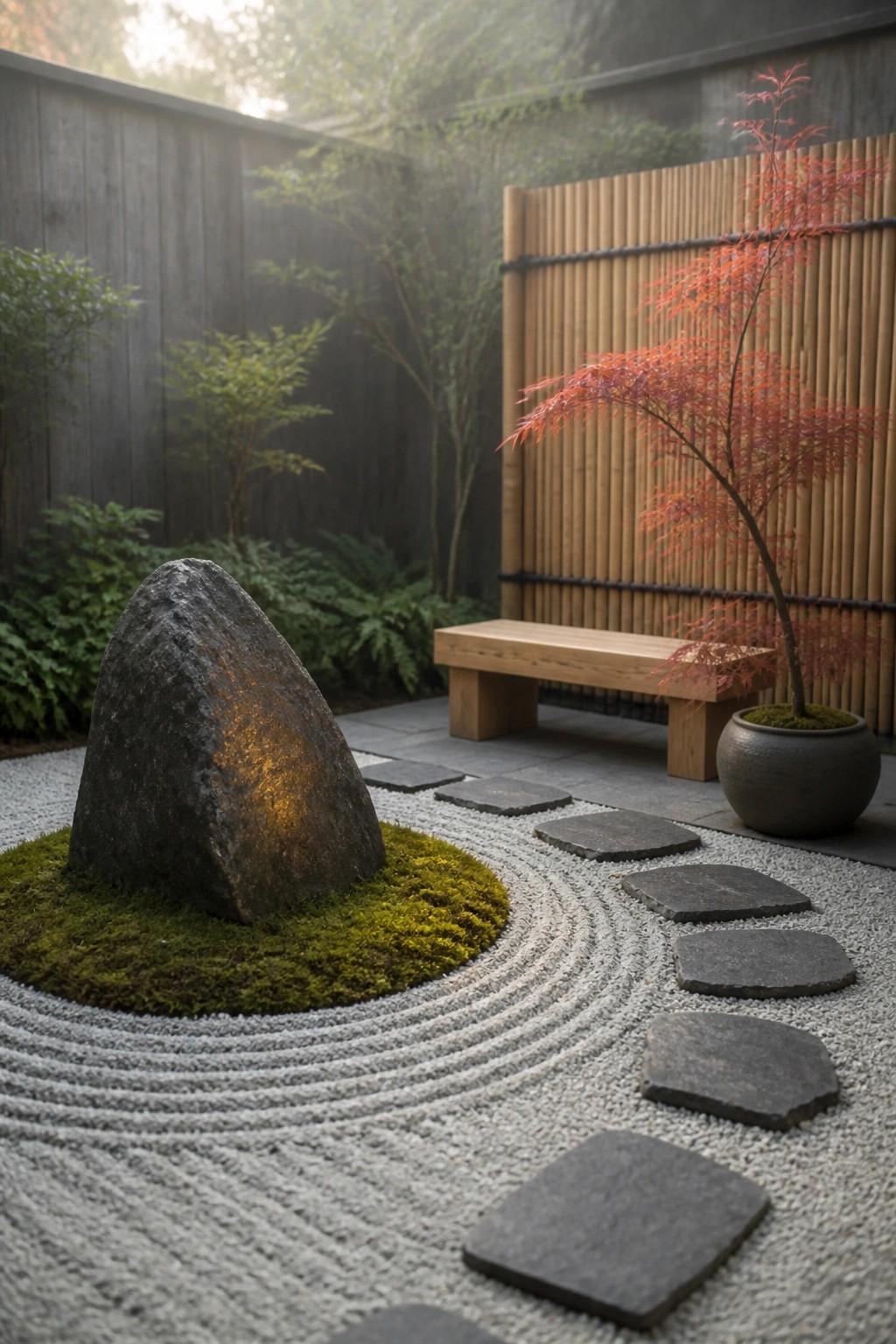
A gravel base raked into soft lines gives a small garden shape without adding beds or borders. It keeps the ground light and open while still showing where to walk.
Set flat stones at a natural stride so the path feels useful rather than decorative. This works best in narrow side yards or back corners where you want low upkeep and no extra planting to manage.
Mount Planters on the Wall
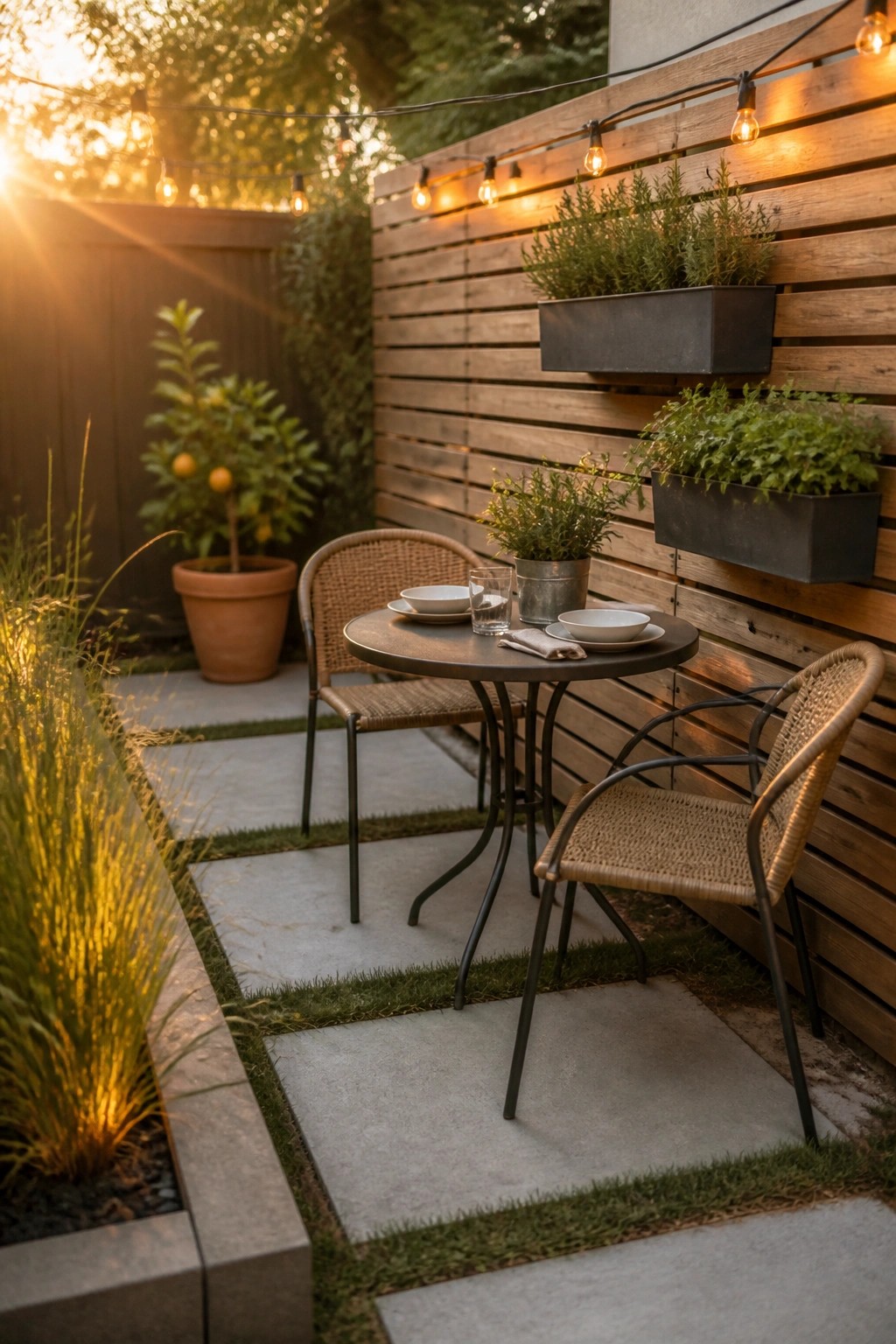
Wall planters keep the ground clear in a small patio while still giving you some greenery nearby. They work well on a fence or side wall where floor space is tight and you want to avoid extra pots scattered around.
This setup suits a compact backyard or side yard that needs a simple dining spot. Stick to one or two long boxes, fill them with easy herbs or greens, and keep the rest of the area open for the table and chairs.
Line Pots Along a Gravel Edge
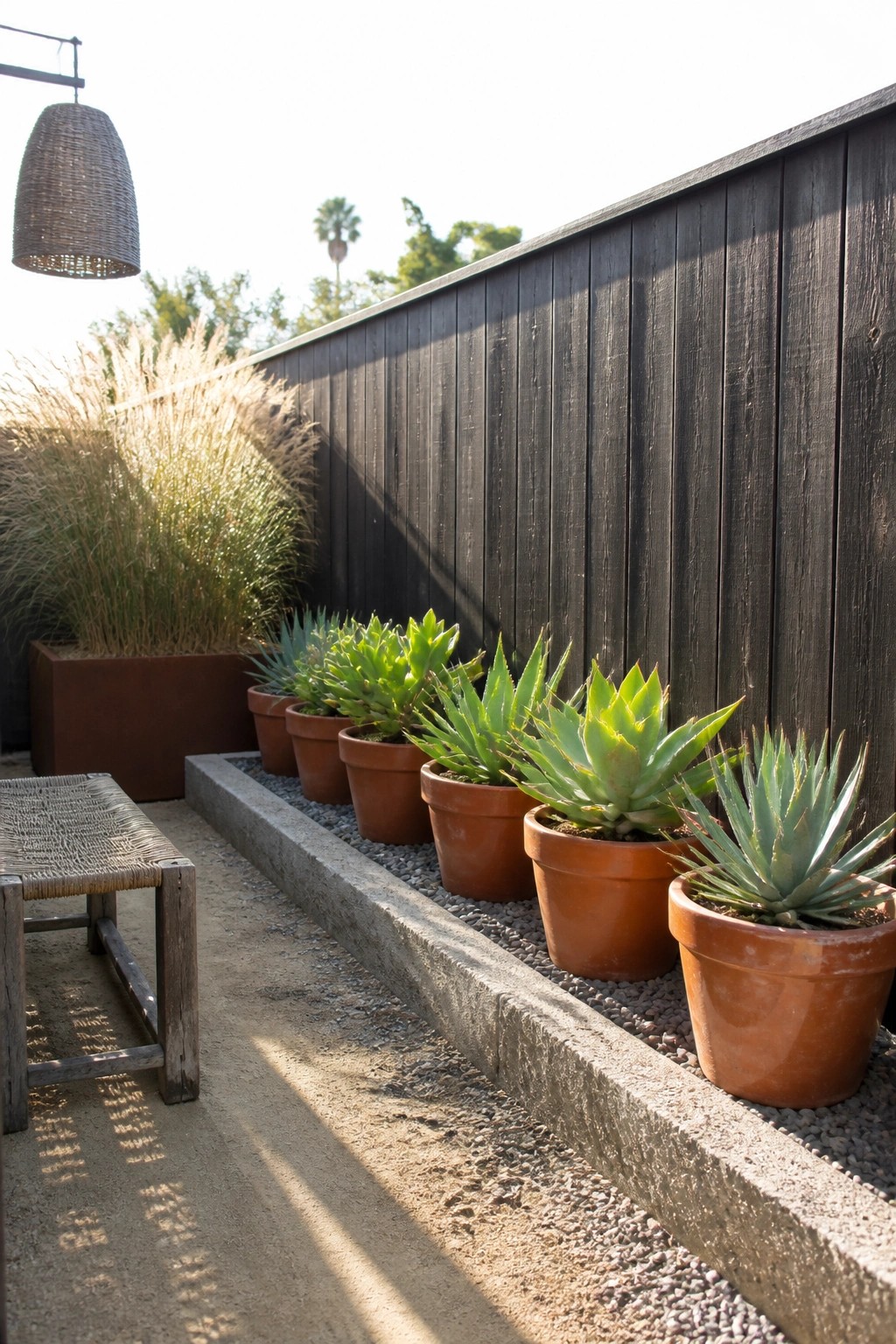
A straight row of matching pots set into gravel gives a garden clear structure without needing fancy beds or lots of different plants. The uniform terracotta and simple concrete border keep everything tidy and easy to maintain, which works well when space is tight.
This setup suits small yards or side areas where you want planting that stays neat year after year. Choose tough plants that handle sun and skip the urge to add more layers or decorations around them.
Terrace Small Slopes With Stone Retaining Walls
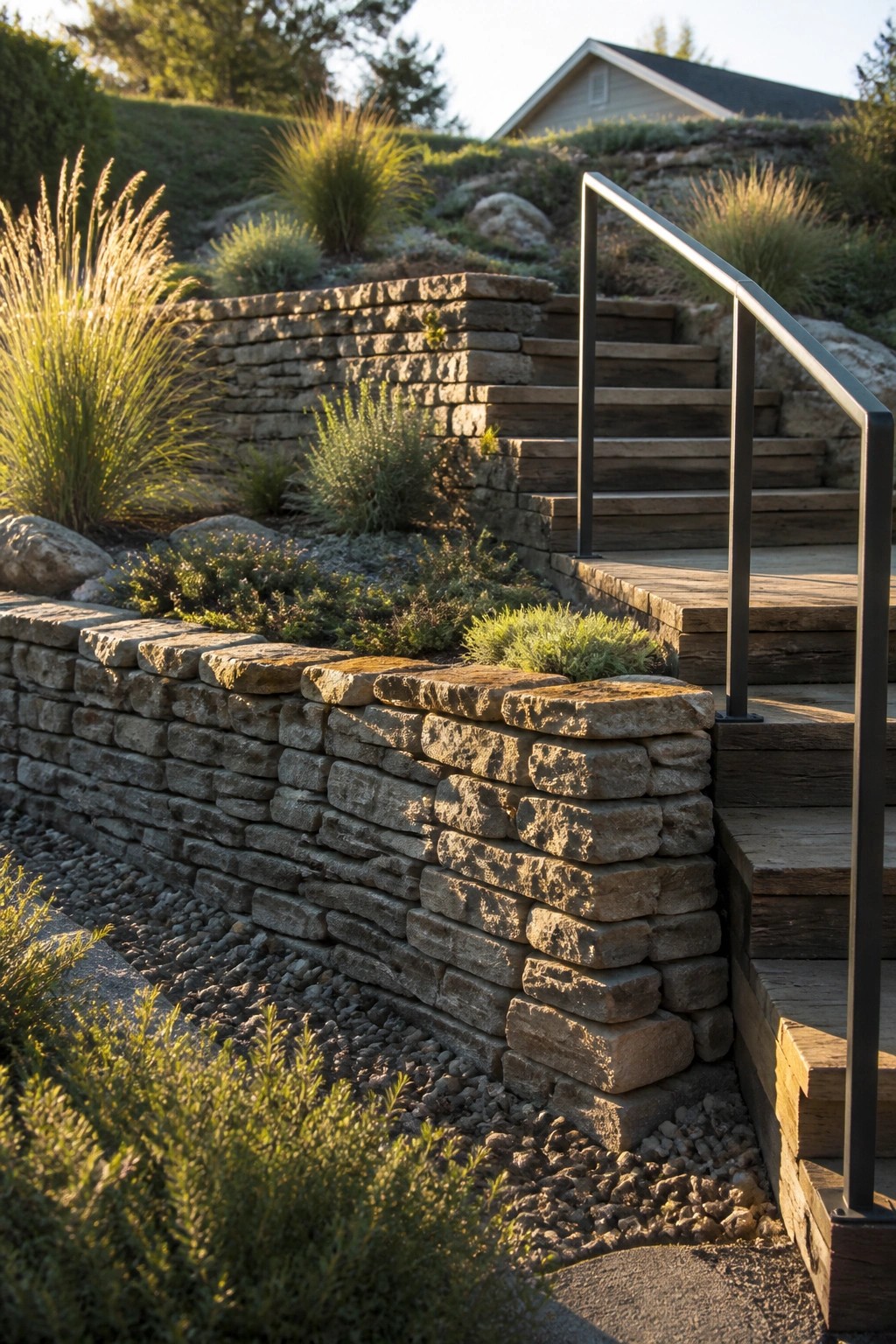
Stone retaining walls turn a sloped yard into a series of flat, easy-to-manage beds. They keep soil in place and give the garden clear structure without needing lots of plants or complicated layouts.
This works especially well on modest hills where you want defined planting areas but still prefer a simple look. Stick to low plants and gravel mulch so the walls stay the main feature.
Log Edging Defines Beds Without Extra Work
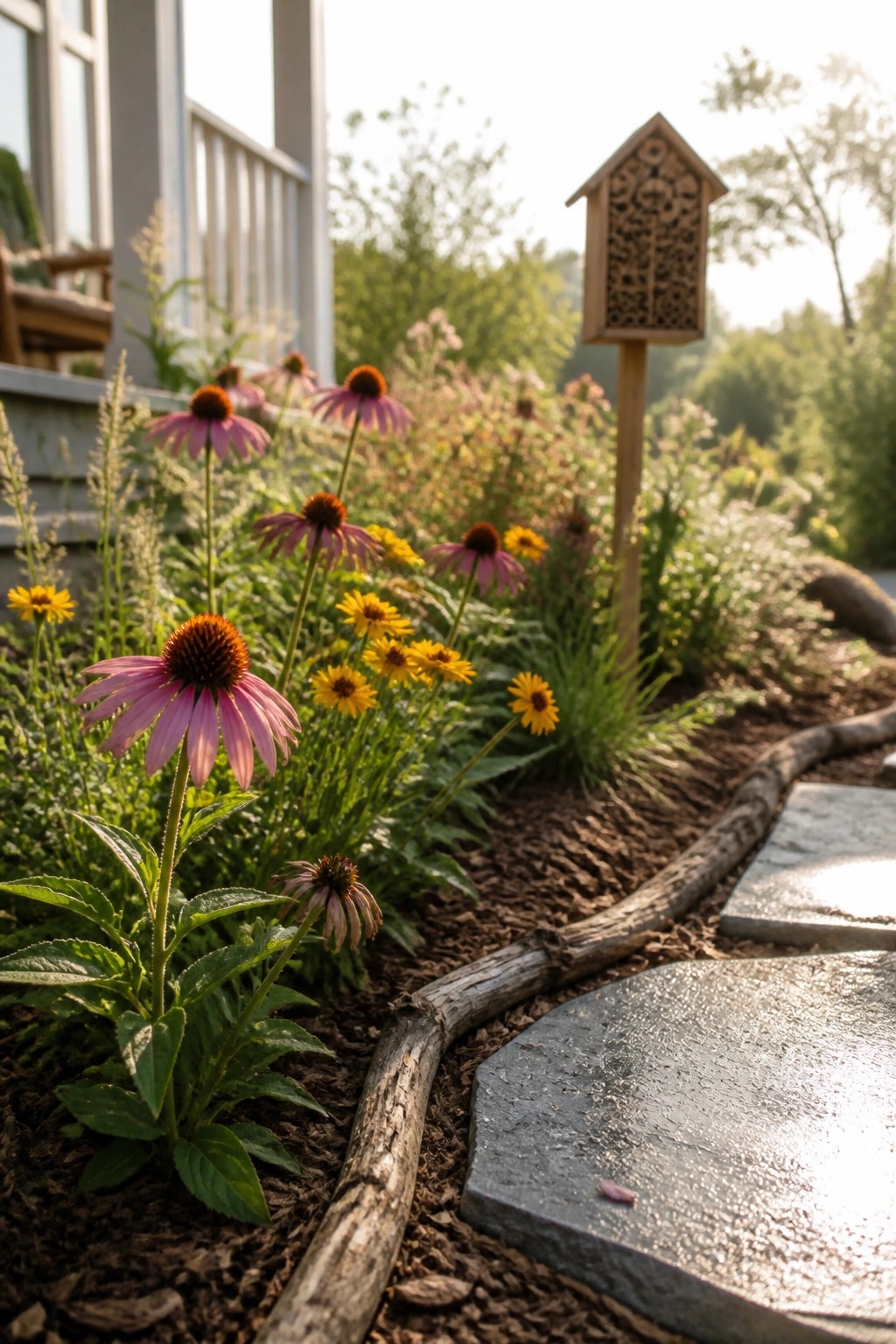
Natural logs make a simple border that holds mulch in place and gives beds a clear shape. They work especially well in small gardens where you want something sturdy but not fussy or hard to install.
Place the logs right along the edge of the bed and let them follow the natural curve of the space. This approach suits homes with casual yards and keeps maintenance low since the wood weathers on its own.
Add a Straight Water Feature
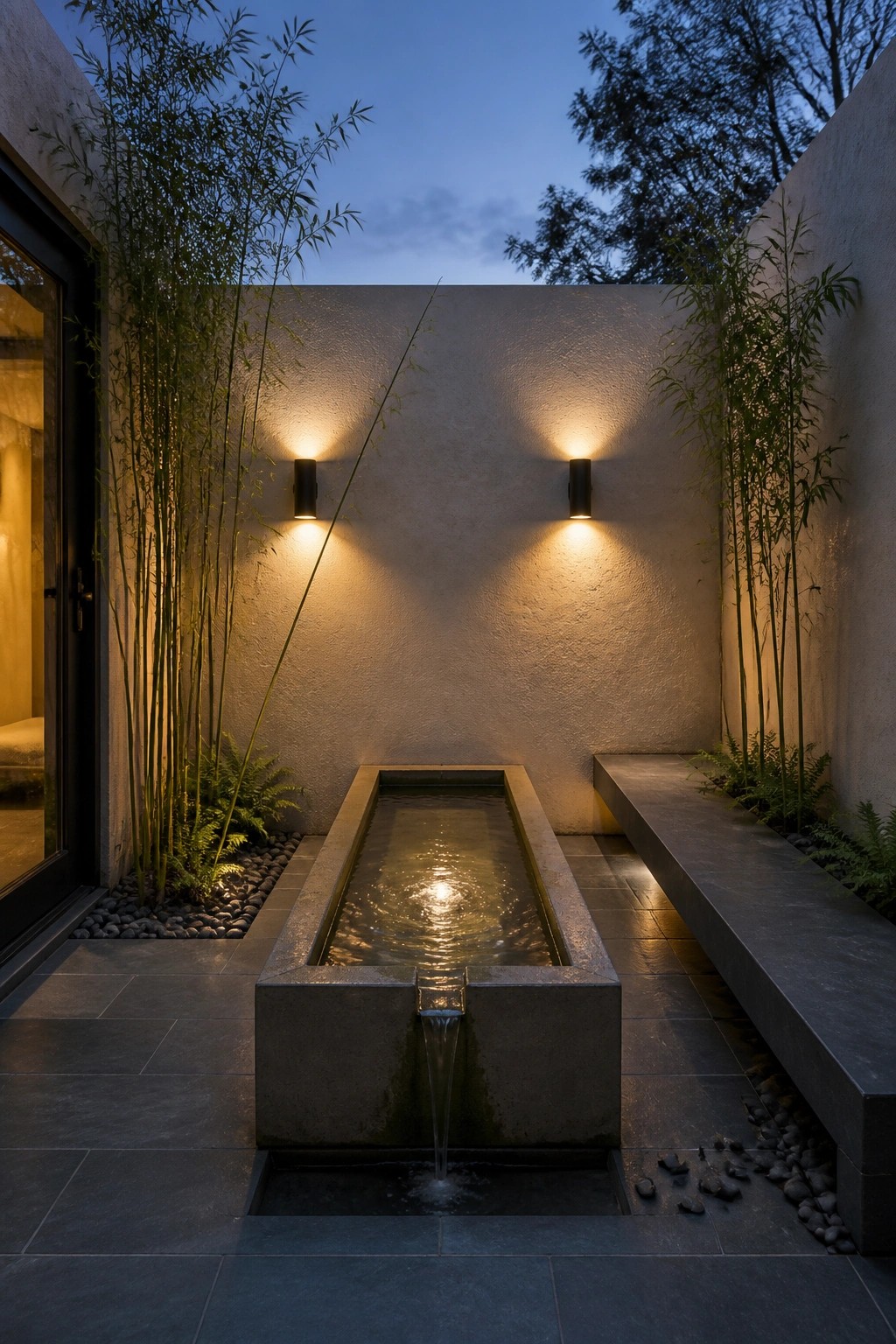
A long narrow water feature gives a small garden a clear center without needing lots of plants or extra decoration. The steady line of water and the sound it makes help the space feel calm and finished even when the rest of the layout stays very simple.
This idea works best in tight courtyards or side yards where you want movement but do not want to crowd the floor with beds or paths. Keep the edges plain concrete or stone and let just a few tall plants, like bamboo, run along one side. Avoid curves or extra fountains that start to feel busy.
Raised Beds Built With Stone
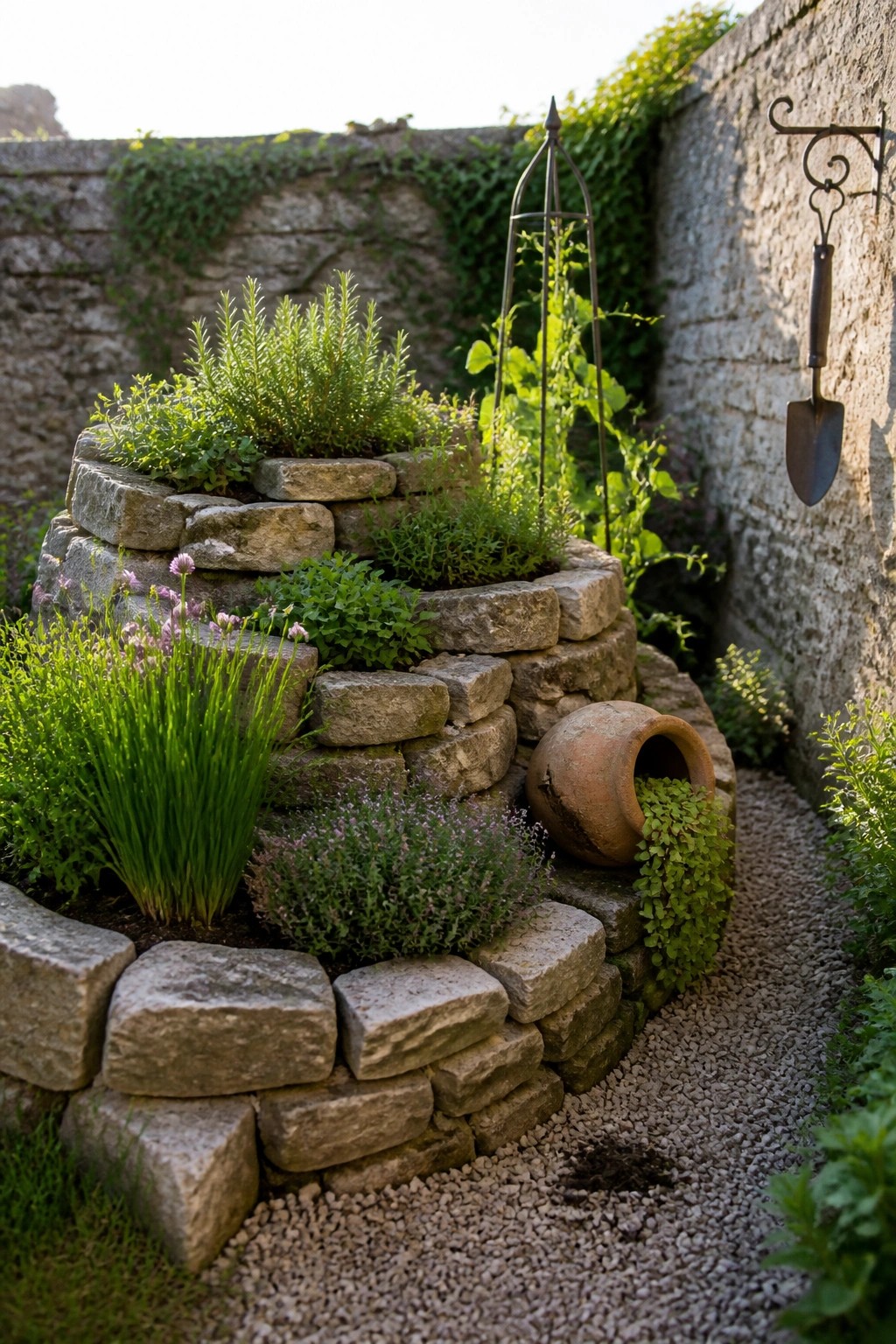
Stone makes a good base for raised beds because it gives the garden clear edges and holds the soil in place without extra frames or dividers. The stacked layers let you plant at different heights, which keeps things looking full even when you use only a few simple plants.
This approach works best in small yards or tight corners where you want structure but not a lot of upkeep. Stick to one type of stone and keep the walls low so the beds blend into the rest of the space without feeling built up.
Use A Pallet For Vertical Planting
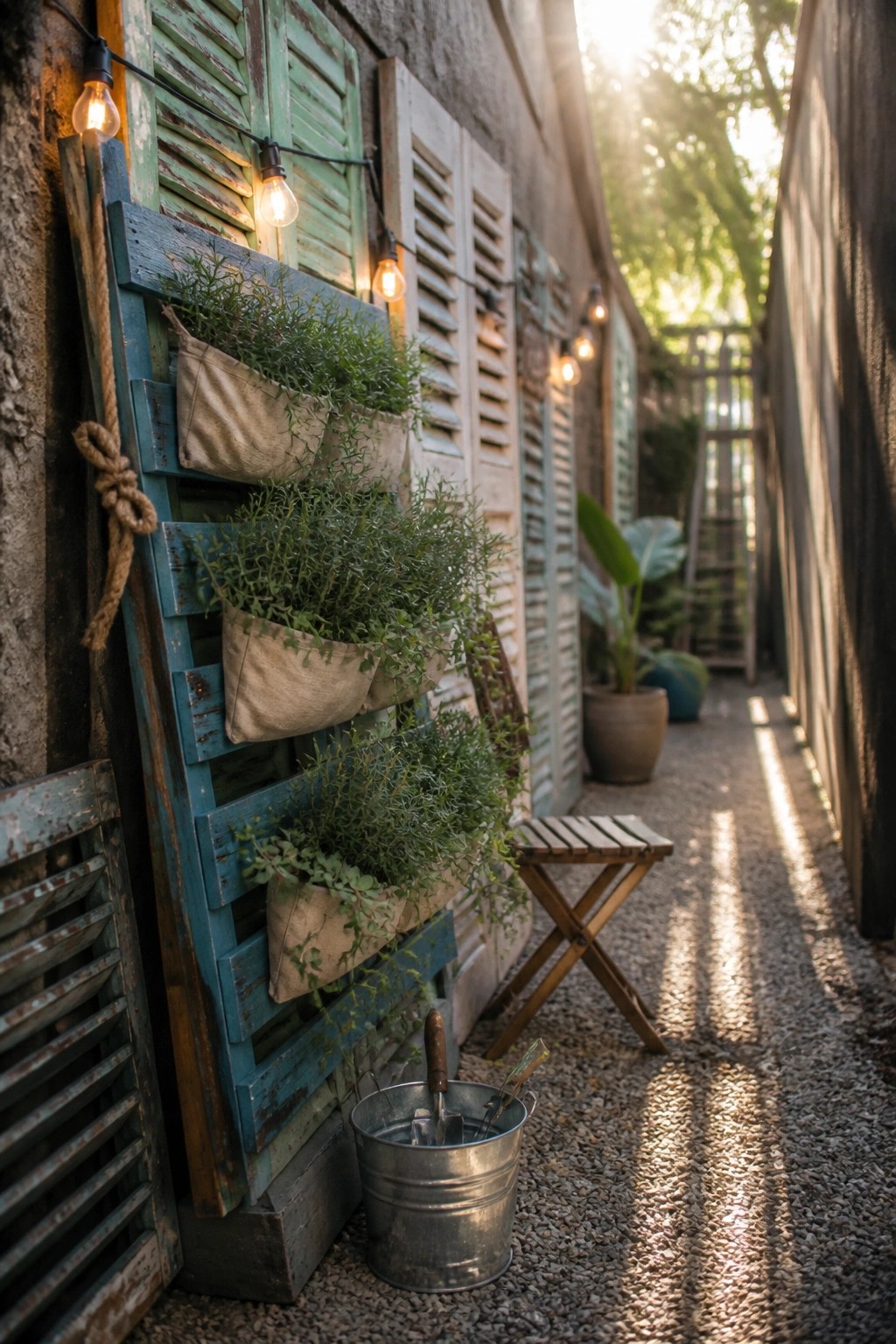
A pallet makes an easy vertical planter when space on the ground is tight. It lets you grow a few plants up against a wall instead of spreading them out, which keeps the area open and simple.
This works best in narrow side yards or along a fence where you want some greenery but nothing fussy to maintain. Screw or wire the pallet in place, add fabric pockets, and fill them with herbs or hardy greens that do not need constant care.
Use a Fire Bowl on a Rug
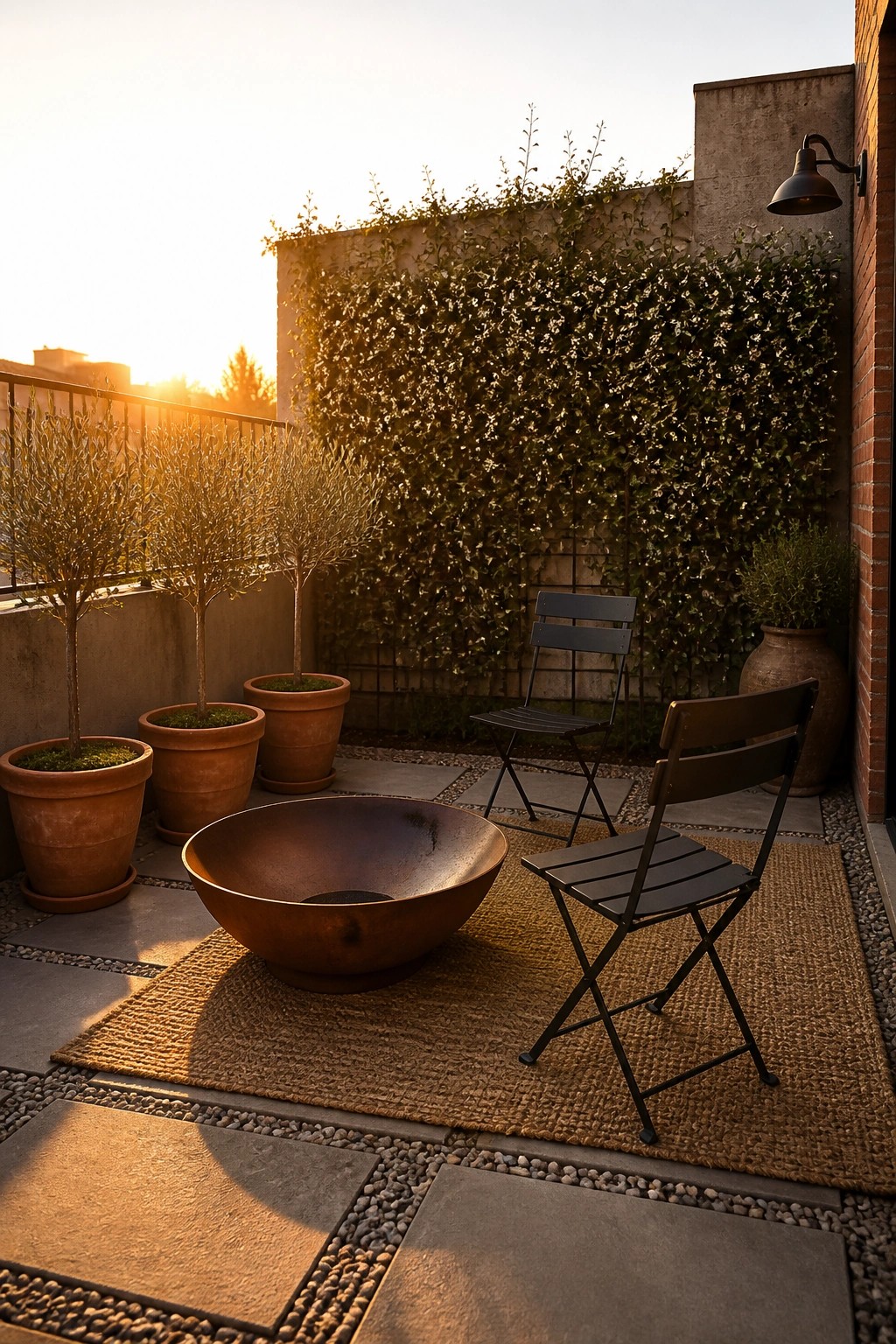
A fire bowl on a rug gives a small patio a clear center without needing built-ins or extra furniture. It keeps the space open and easy to rearrange while still feeling like a finished spot.
This works best on balconies or terraces where you want something simple that can move with the seasons. Stick to a few foldable chairs and limit the pots so the area stays open.
Stepping Stones Through Ground Cover
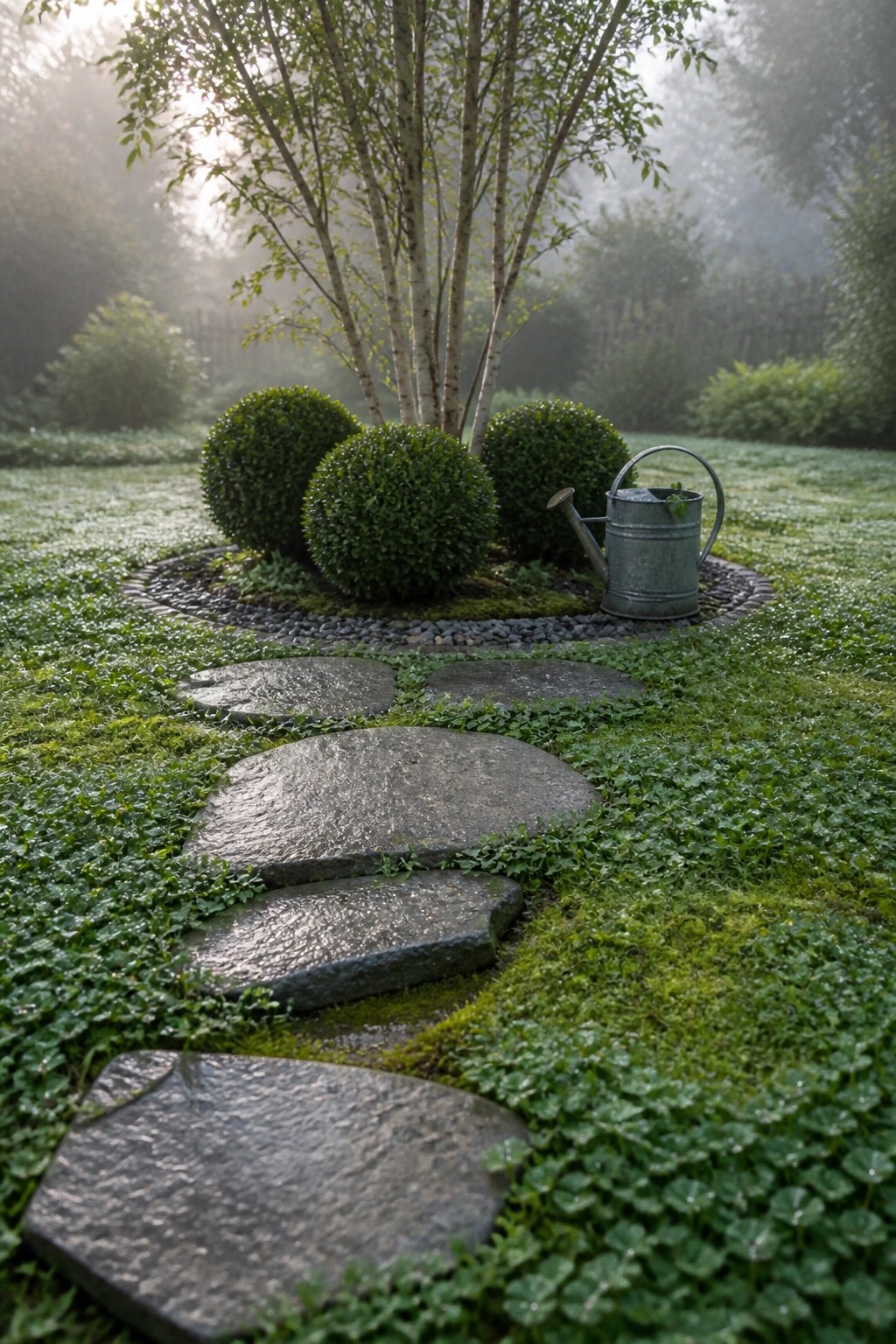
Stepping stones set directly into low-growing plants give a small garden a clear path without adding extra structure or edging. The stones stay low so the ground cover can grow right up around them, which keeps the whole area looking simple and connected.
This layout suits tight spaces where you still need to walk through the garden without creating separate beds or hard lines. Just choose stones that sit flat and pick ground cover that can handle some foot traffic so the path stays usable over time.
Raised Wooden Planters Keep Planting Simple
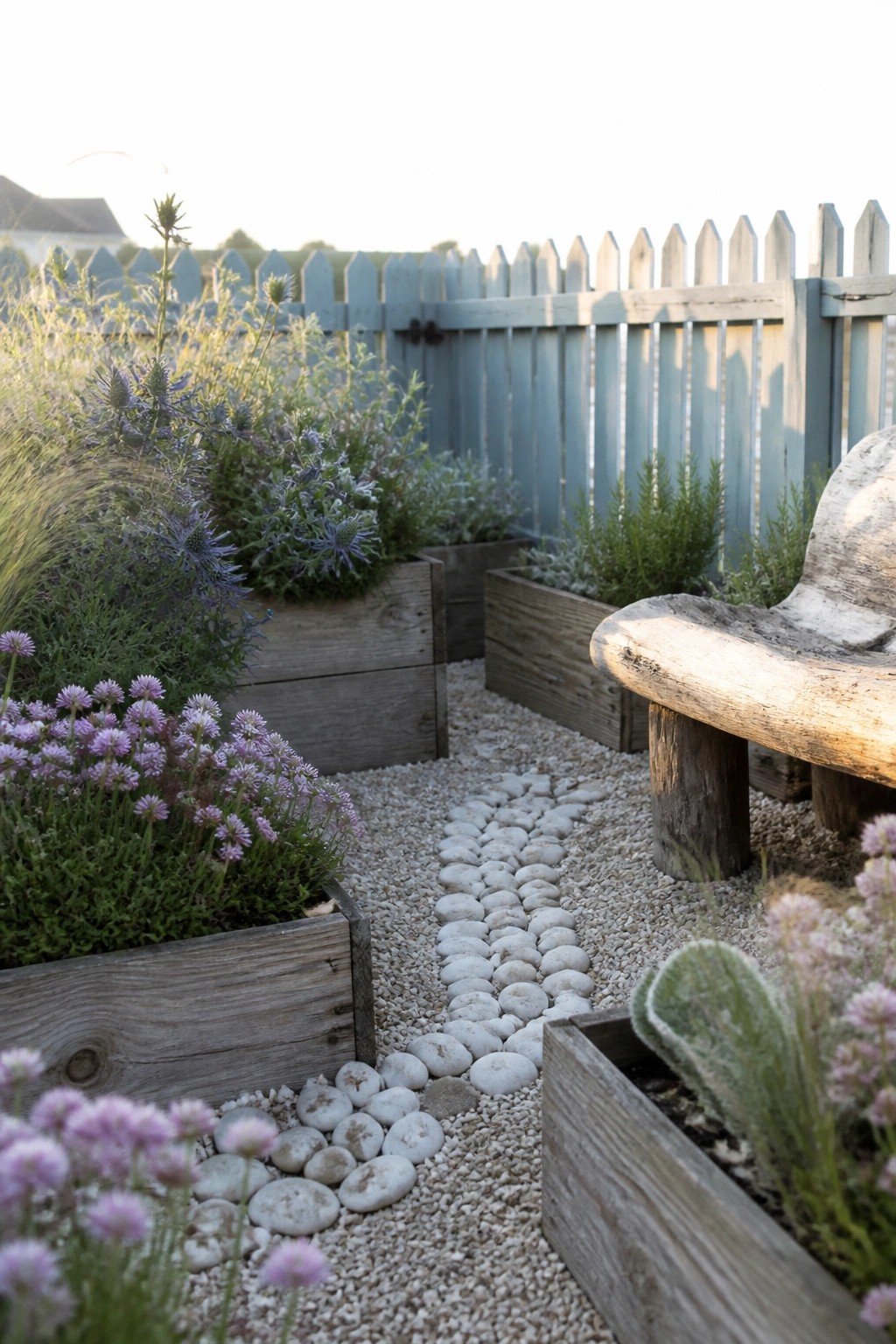
Raised wooden planters give a small garden clear edges without extra borders or fussy layouts. They hold the soil and plants in tidy blocks, so the space stays easy to manage even when you want just a few kinds of greenery.
These boxes suit tight yards or side areas where you need to keep things contained. Set them along a path or fence and fill them with low-care plants that do not need constant trimming.
Use A Built-In Bench To Keep Seating Simple
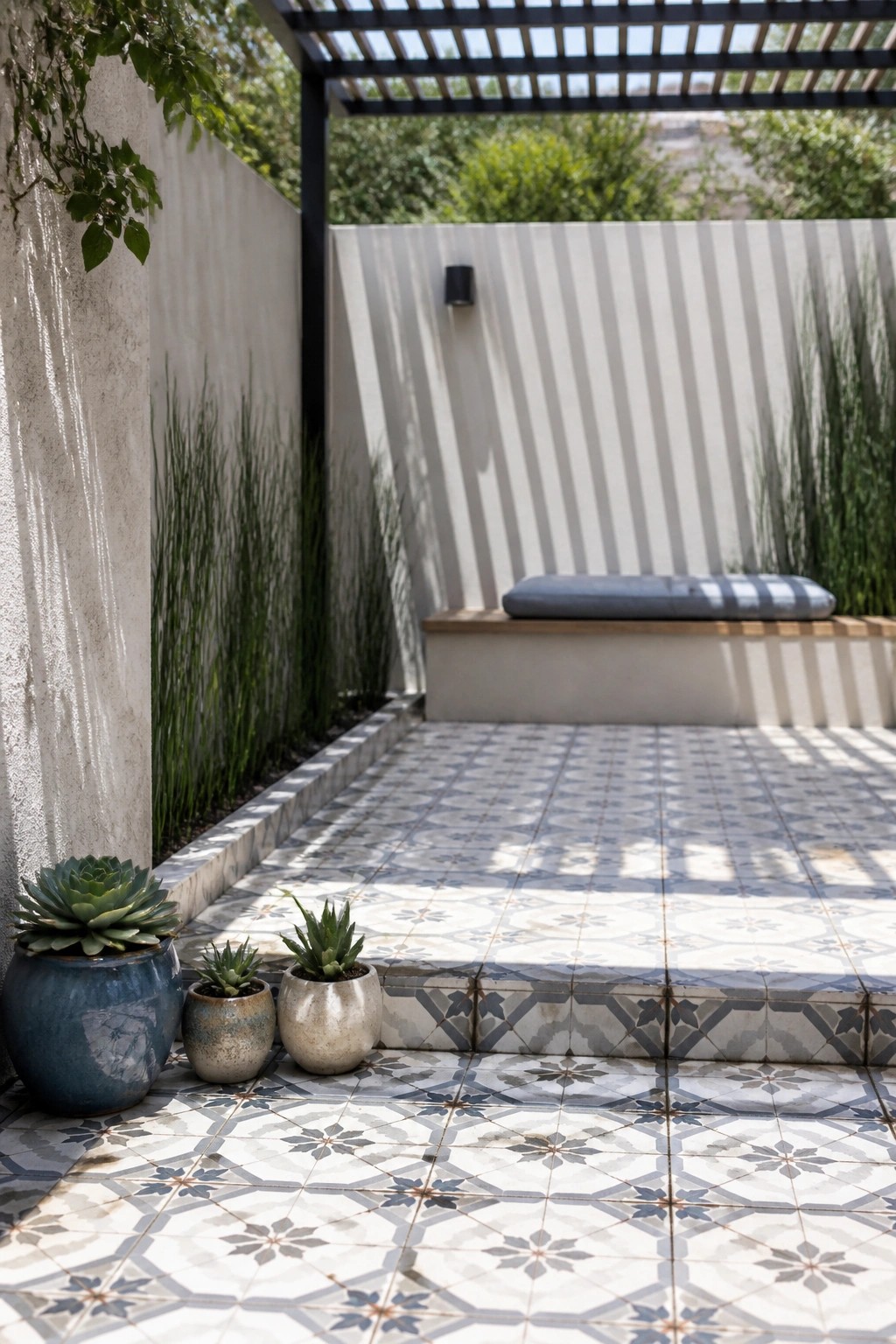
A built-in bench takes up less space than loose chairs or a sofa and still gives you a comfortable spot to sit. It works especially well in small outdoor areas where you want room to move around without bumping into extra furniture.
This setup suits compact patios or side yards that get regular use but need to stay low maintenance. Place it against a wall or fence and keep the rest of the space open with simple paving underfoot.
Stepping Stones With Brick Edging
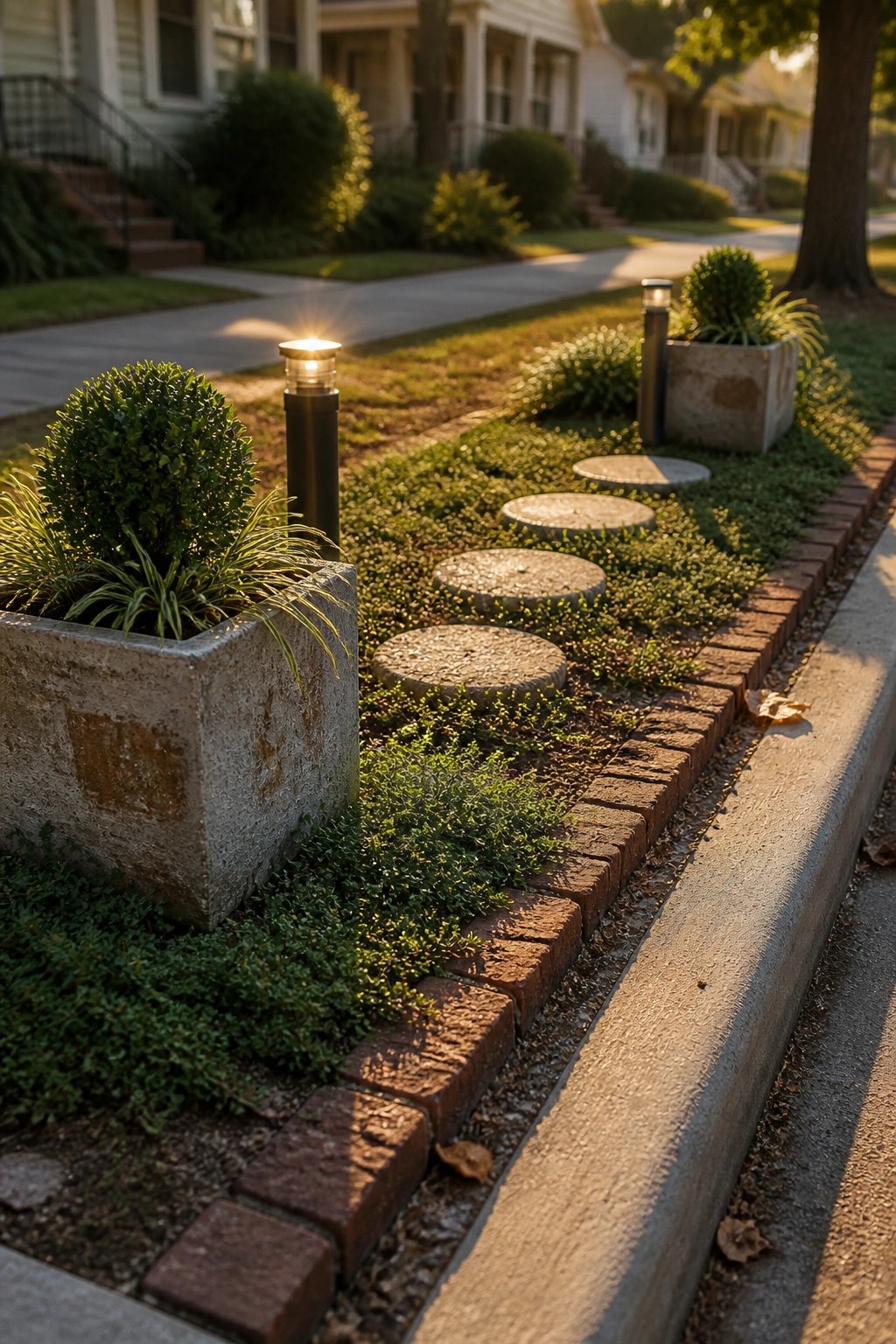
Stepping stones set into low ground cover give you a clear path without filling the space with too many plants or hard surfaces. The brick border keeps the edges neat and stops the lawn or ground cover from creeping over the walkway.
This layout works best along the front of a house where the strip between the sidewalk and the lawn is narrow. Place the stones where foot traffic naturally happens and let the low plants grow around them.
Frequently Asked Questions
Q: How do I pick plants that stay small without constant trimming?
A: Go for varieties that naturally top out at your preferred height like dwarf lavender or compact ferns. Check the label for mature size before you buy and skip anything labeled vigorous. This keeps the layout clean from day one.
Q: What if my space gets almost no direct sun?
A: Focus on shade-tolerant options such as hostas or heucheras in simple pots. Group them together in one corner rather than spreading them out. They thrive with less fuss and leave the rest of the area open.
Q: Can I fit a chair without crowding everything else?
A: Place one lightweight stool or bench against the back edge and keep plants low in front of it. This uses the vertical plane without eating floor space. You still have room to move around easily.
Q: How often should I actually water once everything is in?
A: Stick your finger into the soil each morning and water only when it feels dry an inch down. Most of these low-care choices handle a missed day without drama.
