

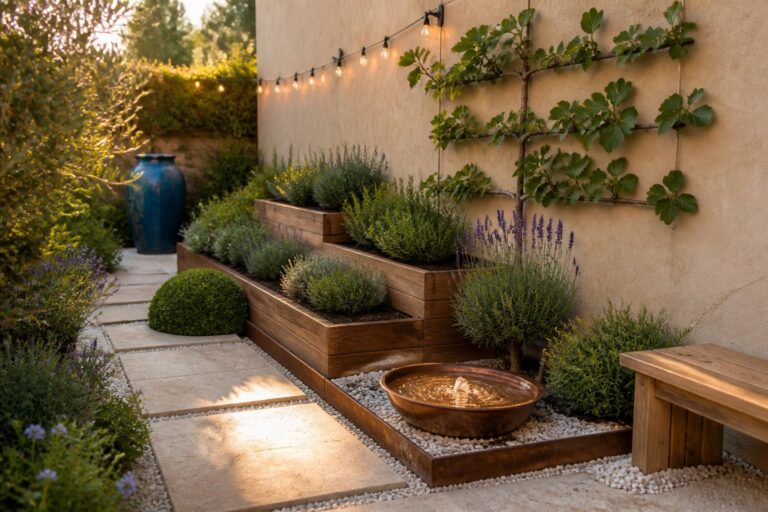
When tight yards force every choice to count, the real work starts with how paths and beds meet the existing angles rather than fighting them.
I have watched small corners stay bare for years simply because the first layout idea never accounted for how people actually walk through the space.
In my own garden I usually sketch two or three options on paper first, then mark them out with string so I can stand inside the shape before any digging begins.
That step often reveals whether a bed will feel generous or merely squeezed once the plants fill in.
It keeps the final result usable instead of just looking planned on paper.
Tiered Raised Beds Along Narrow Paths
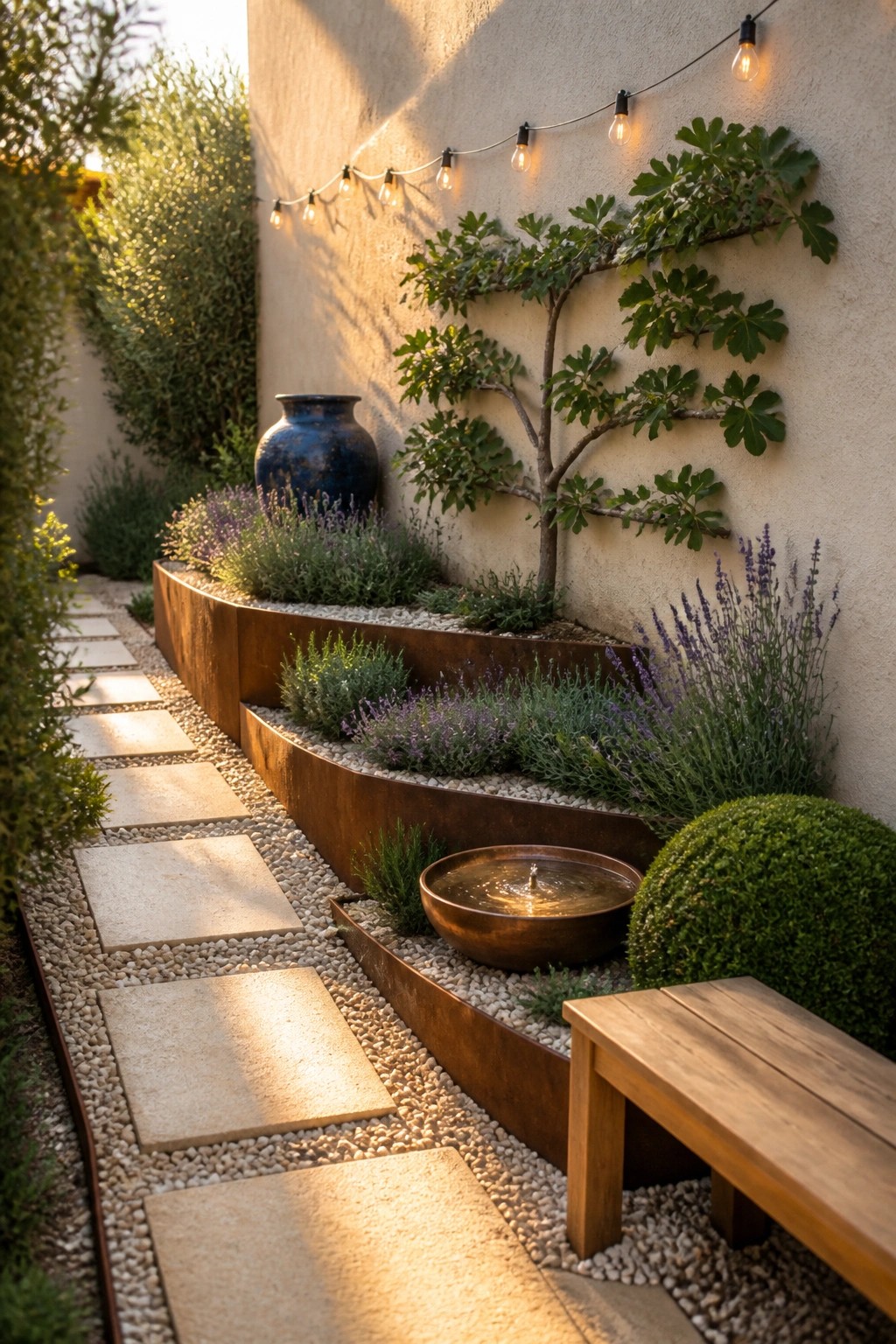
Tiered beds give you more planting room without widening the whole space. The curved metal edges hold each level in place and create a gentle flow that keeps the area from feeling boxed in. This setup works especially well when you only have a strip of ground between a wall and a walkway.
You can copy the idea with any weatherproof edging and fill the levels with plants that vary in height. It suits small side yards or awkward corners where a flat bed would look cramped. Just keep the curves soft so the path beside it stays easy to walk.
Brick Edging For Narrow Garden Beds

Brick edging works well when you need to shape a planting area in a tight spot along a fence. It holds the mulch and soil neatly in place while giving the bed a clear edge that does not eat into the walking space.
This approach suits small yards or awkward corners where you still want room for a path. Lay the bricks low and follow a soft curve so the bed feels wider than it really is.
Railing Planters For Narrow Balconies
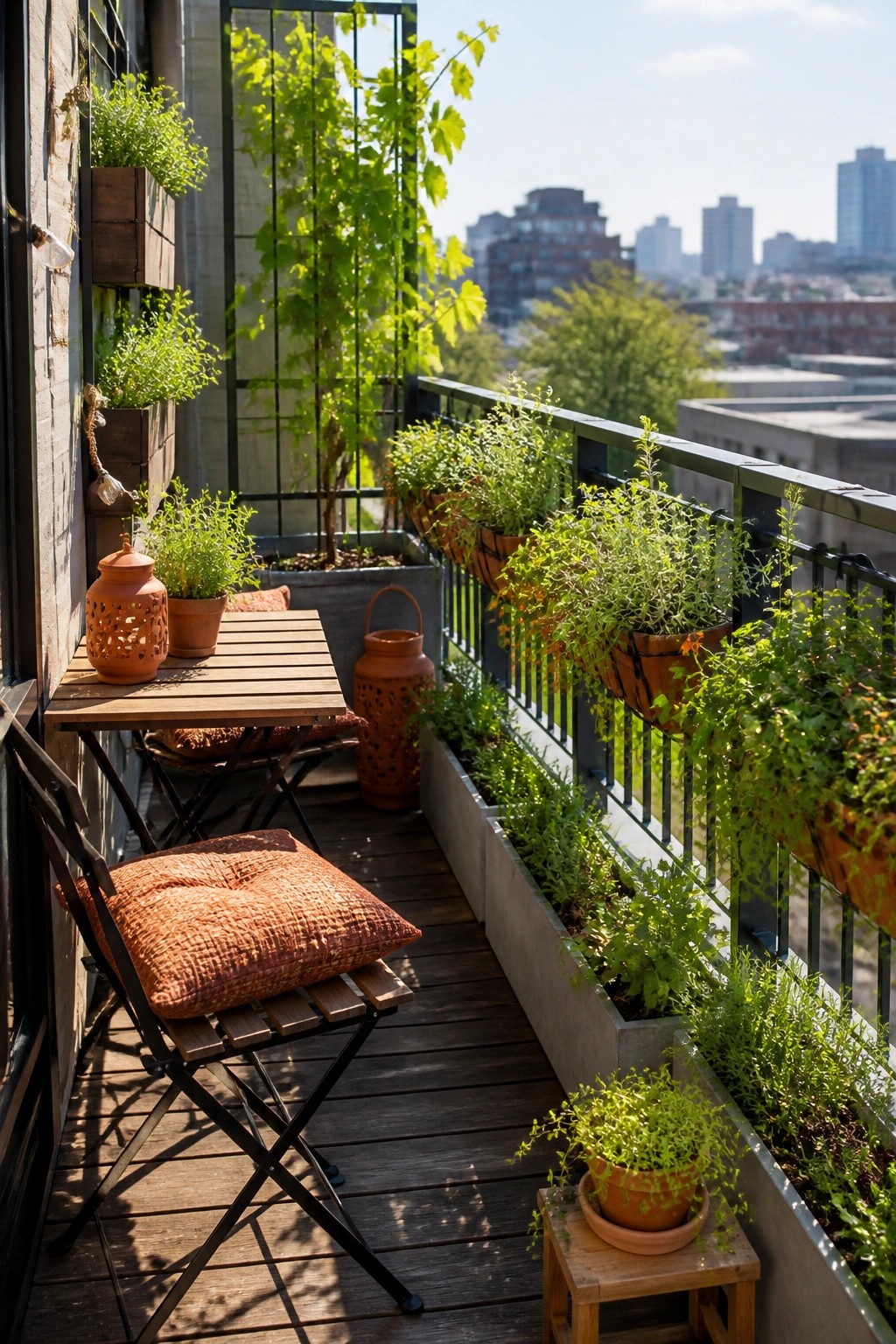
Many small balconies feel cramped once you add a table and chairs. Mounting planters along the railing gives you room for herbs, flowers, and trailing vines without taking up floor space.
This setup works best on urban balconies or narrow decks where every inch counts. Use lightweight containers and check the railing can handle the weight, especially after watering.
Curve a Path Through Narrow Garden Spaces
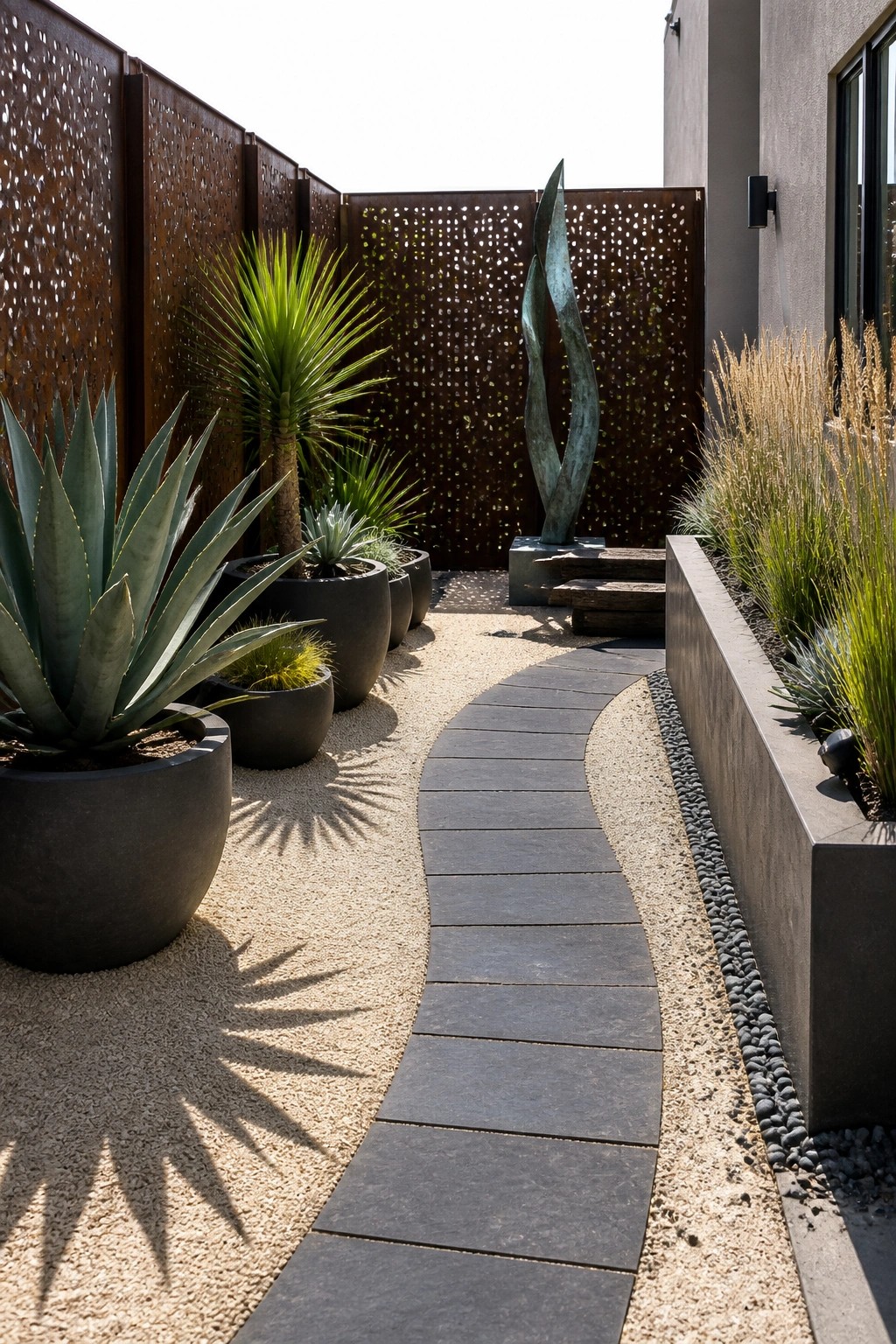
A curved path keeps a tight side yard from feeling like a straight hallway. The gentle bend slows things down and makes the space feel wider than it really is.
This layout works well between fences and house walls where a straight line would emphasize the narrowness. Set dark pavers in gravel and let the edges soften with a few large pots placed at different depths.
Curved Raised Beds For Tight Yards
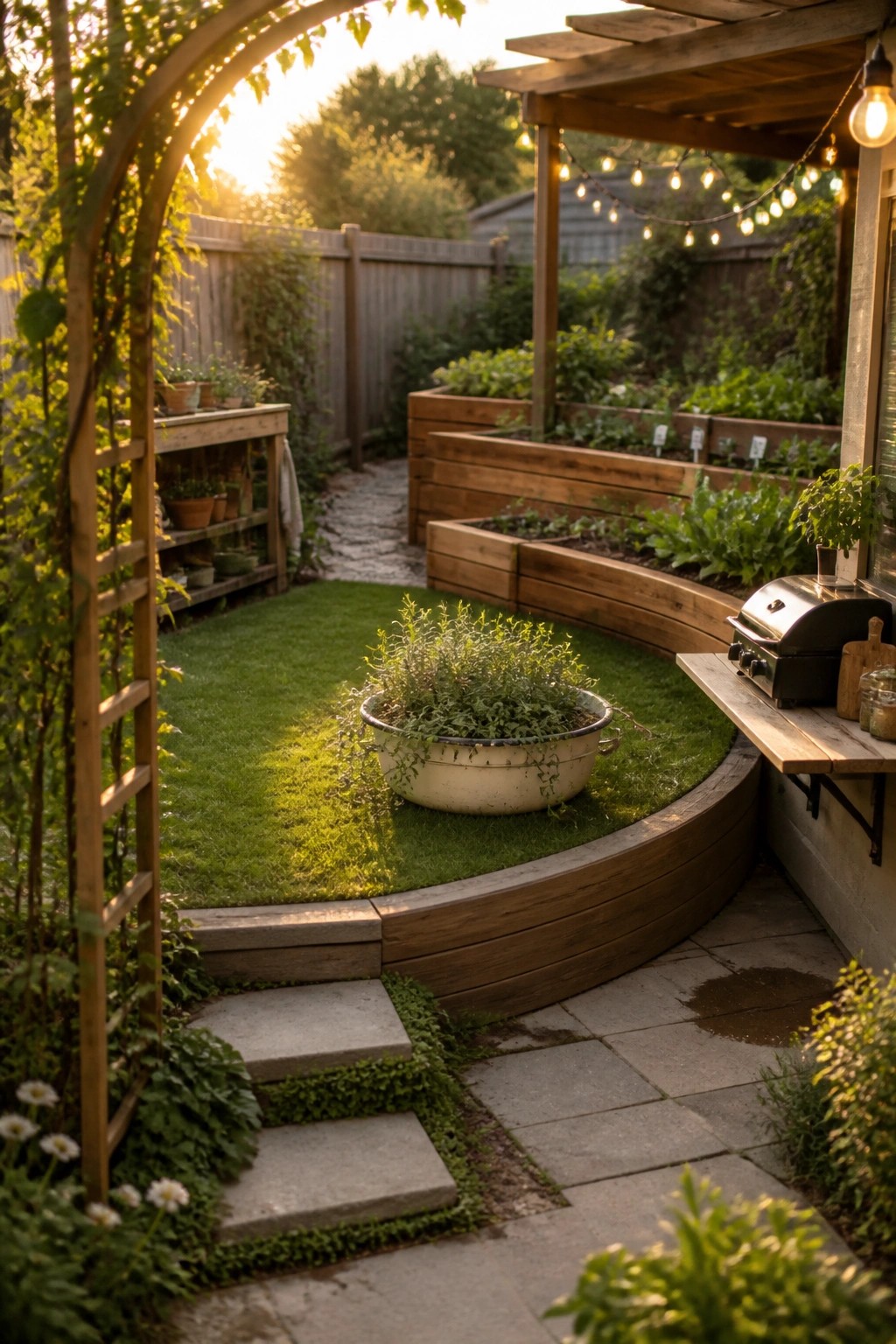
Raised beds that curve around the edge of the yard give you more planting room without making the space feel chopped up. The shape softens the boundaries and leaves a usable patch of grass in the middle instead of filling every inch with straight rows.
This setup works best in small rectangular yards where straight beds would crowd the center. Keep the beds at different heights if the ground slopes, and add a simple path so you can reach the plants without stepping on the lawn.
Use Large Planters to Frame a Bench
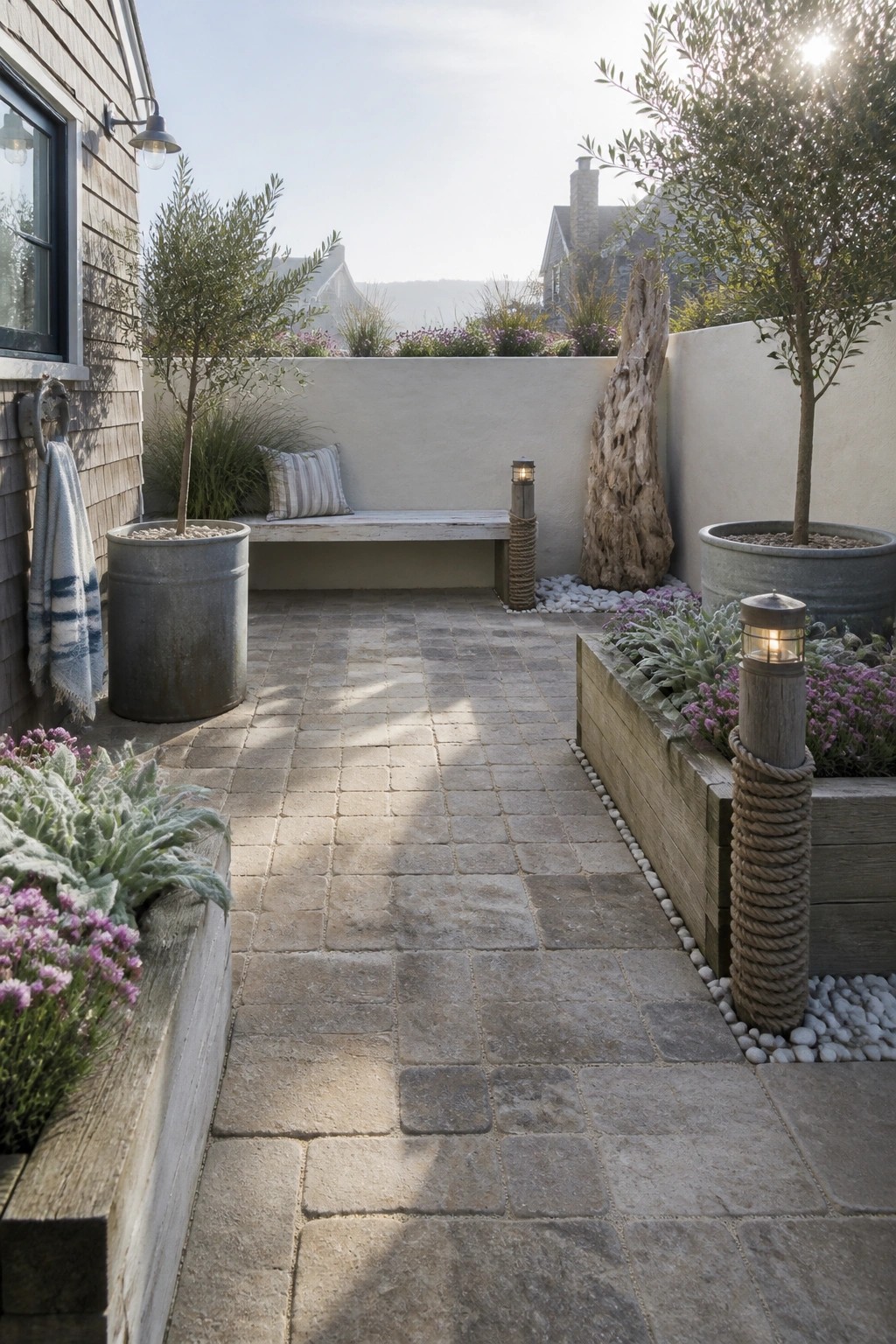
One simple way to turn a narrow paved spot into a usable seat is to set a bench between two oversized planters. The containers act as side walls that give the area a bit of enclosure without any construction.
This setup suits small side yards or back corners where you have a straight path but want a place to sit. Keep the planters similar in height to the bench so the whole group feels settled rather than scattered.
Winding Paths For Narrow Gardens

A winding path works well when you have a long narrow strip of garden to work with. The curve keeps the eye moving and stops the space from feeling like a straight corridor.
It suits tight side yards or awkward corners between a house and a fence. Lay brick along the edges and fill the center with gravel so the path feels softer underfoot and stays simple to maintain.
Overhead Shade for Tight Courtyards
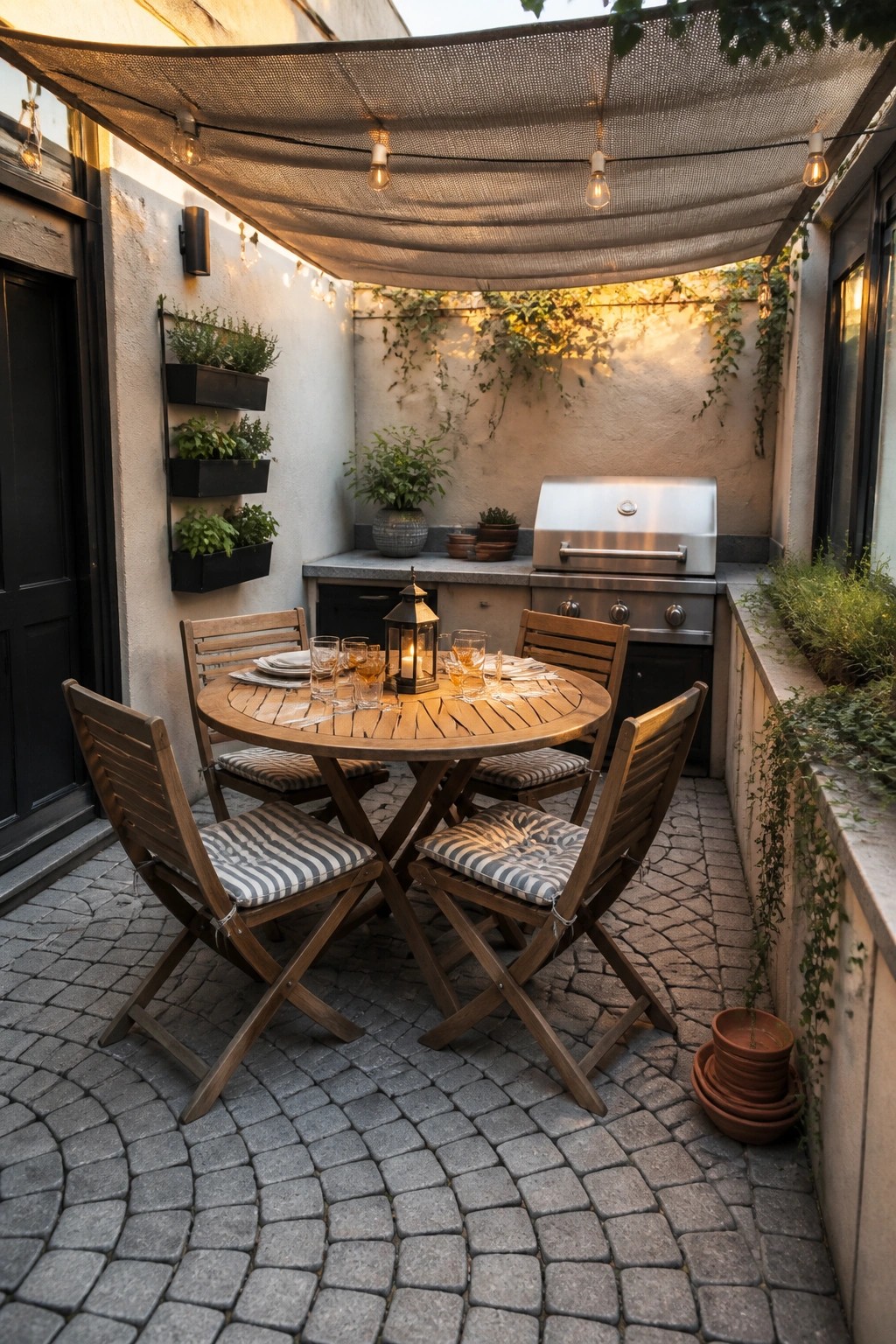
Small paved corners often sit empty because direct sun makes them uncomfortable for much of the day. A simple mesh shade stretched overhead can fix that without taking up floor space or blocking too much light.
This setup works best in narrow side yards or urban courtyards where walls already give some enclosure. Keep the shade a little loose so air can move, and add basic seating that folds away when you need the floor clear for other uses.
Stepping Stone Paths Through Meadow Beds
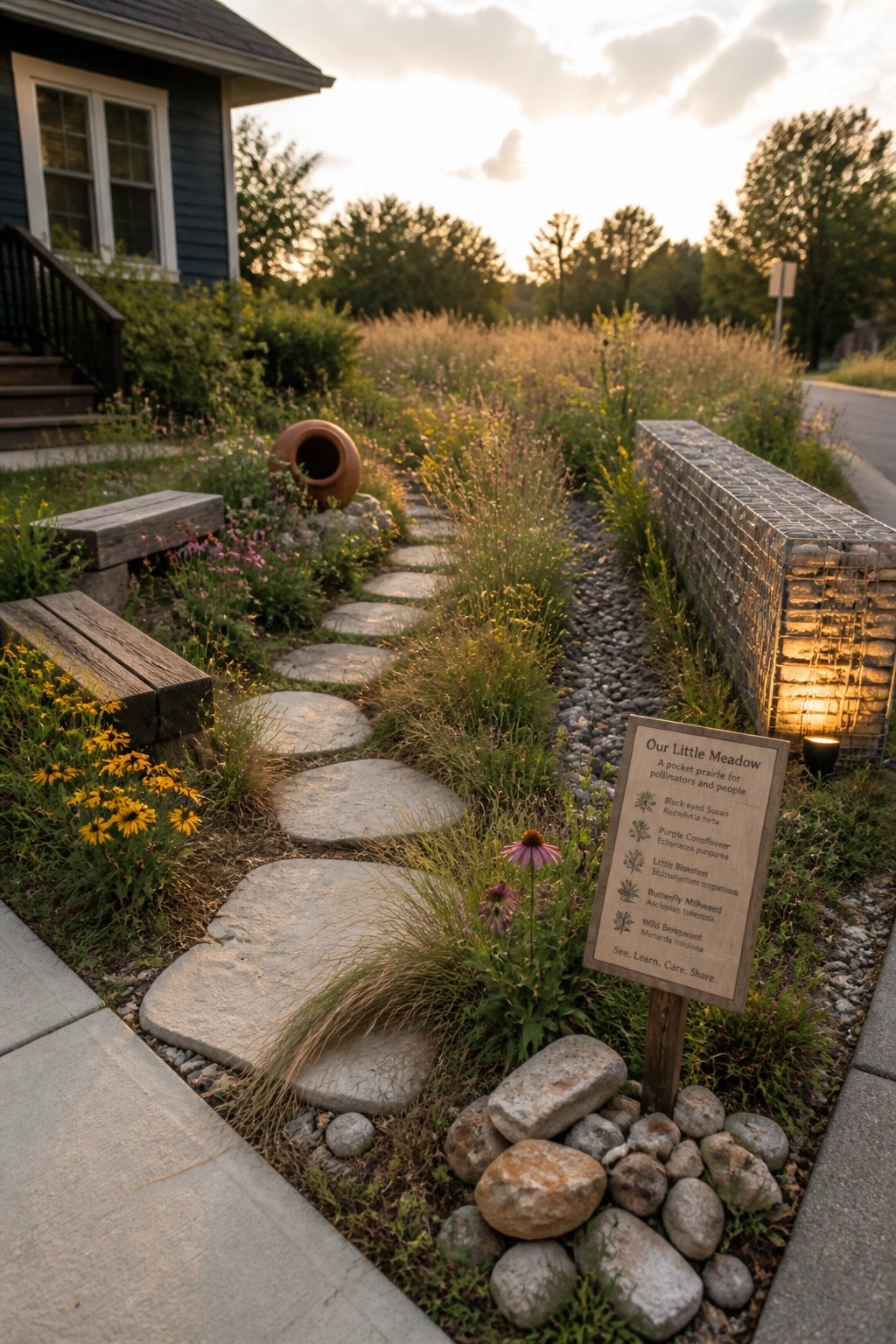
A stepping stone path lets you turn a narrow strip of ground into a working garden without losing the ability to walk through it. The stones keep feet off the soil while the plants on either side can grow freely, which works especially well in tight spaces next to a house or along a sidewalk.
This layout suits homes where the side yard is too slim for regular beds or turf. Space the stones so an adult can step comfortably, and stick with shorter native grasses and flowers that will not overgrow the path. A small sign can also help mark the plants if you want to share the space with visitors.
Narrow Plunge Pools Work In Tight Yards
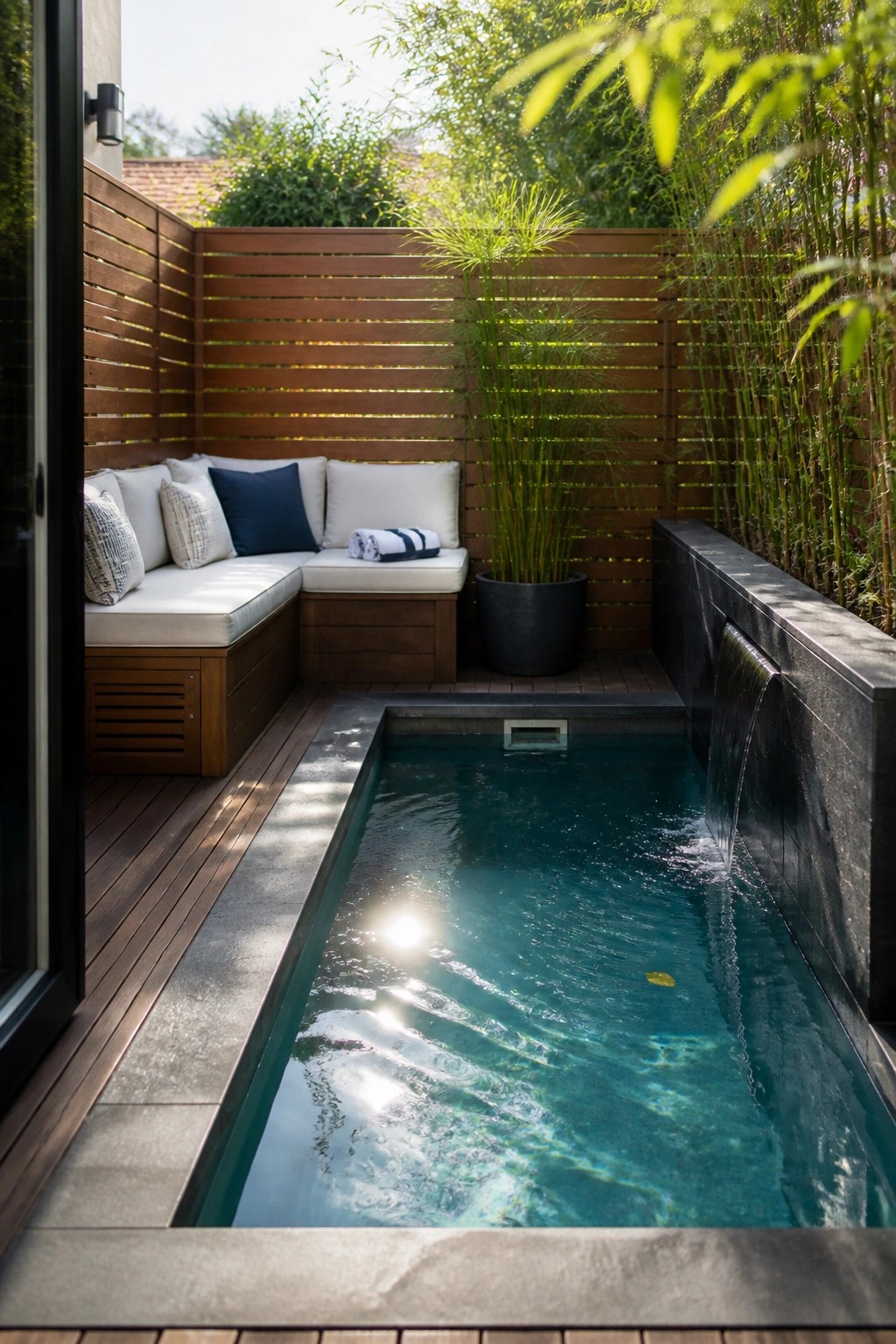
A long narrow pool can turn a cramped side yard or awkward corner into a real feature without taking over the whole space. It keeps the layout simple and leaves room for seating right alongside the water.
Set the pool along one wall or fence line and add built-in benches on the open side. This setup suits small urban yards or narrow lots where a wider pool would feel out of place.
Stack Wooden Crates For Planting In Narrow Passages
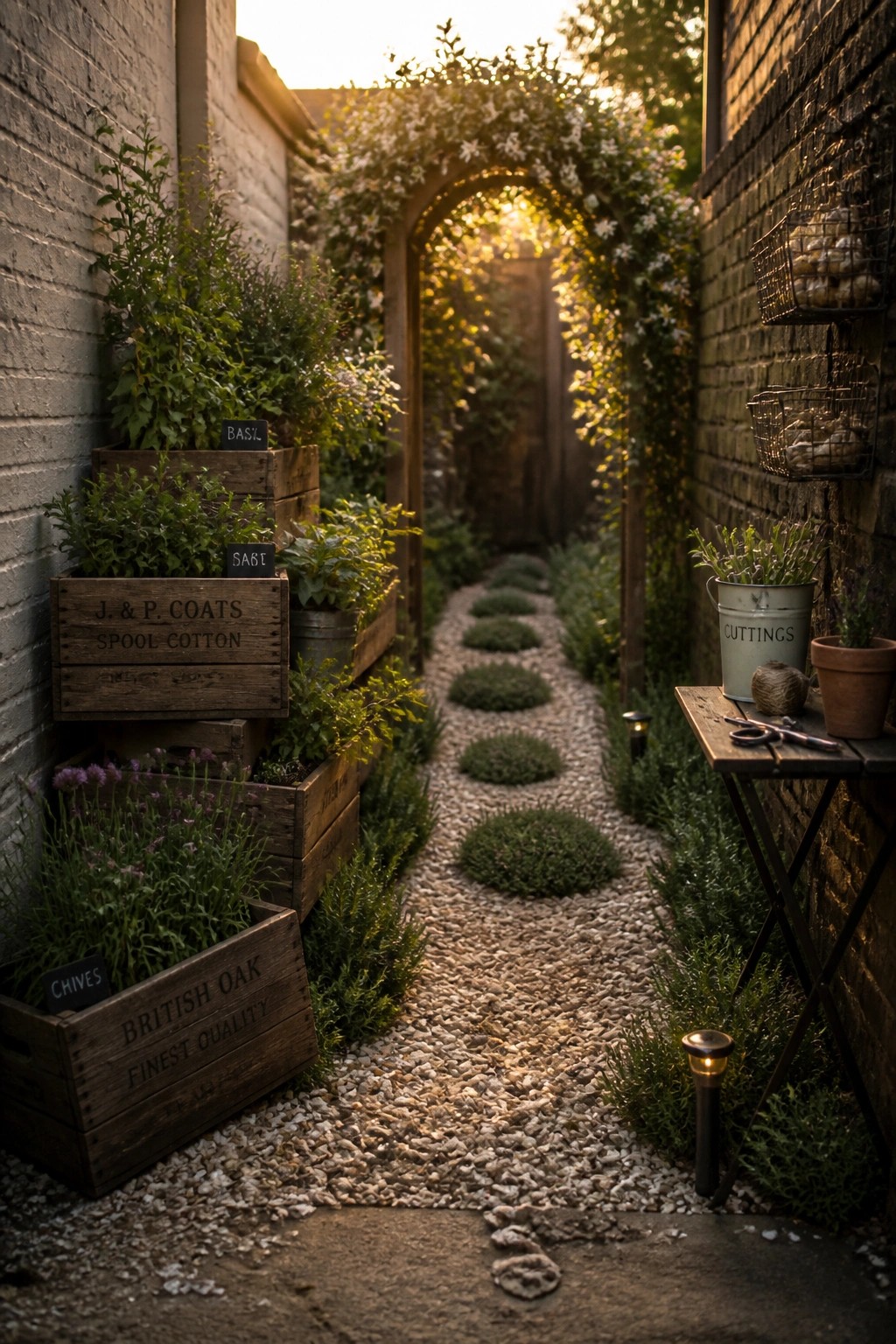
Many tight yards run between walls with little room for beds or borders. Stacking wooden crates against those walls adds layers of planting while keeping the path clear.
This setup works best in side passages or urban corners where soil space is limited. Line the crates to hold moisture and group plants by height so everything gets light.
Weave a Brick Path Around Rocks
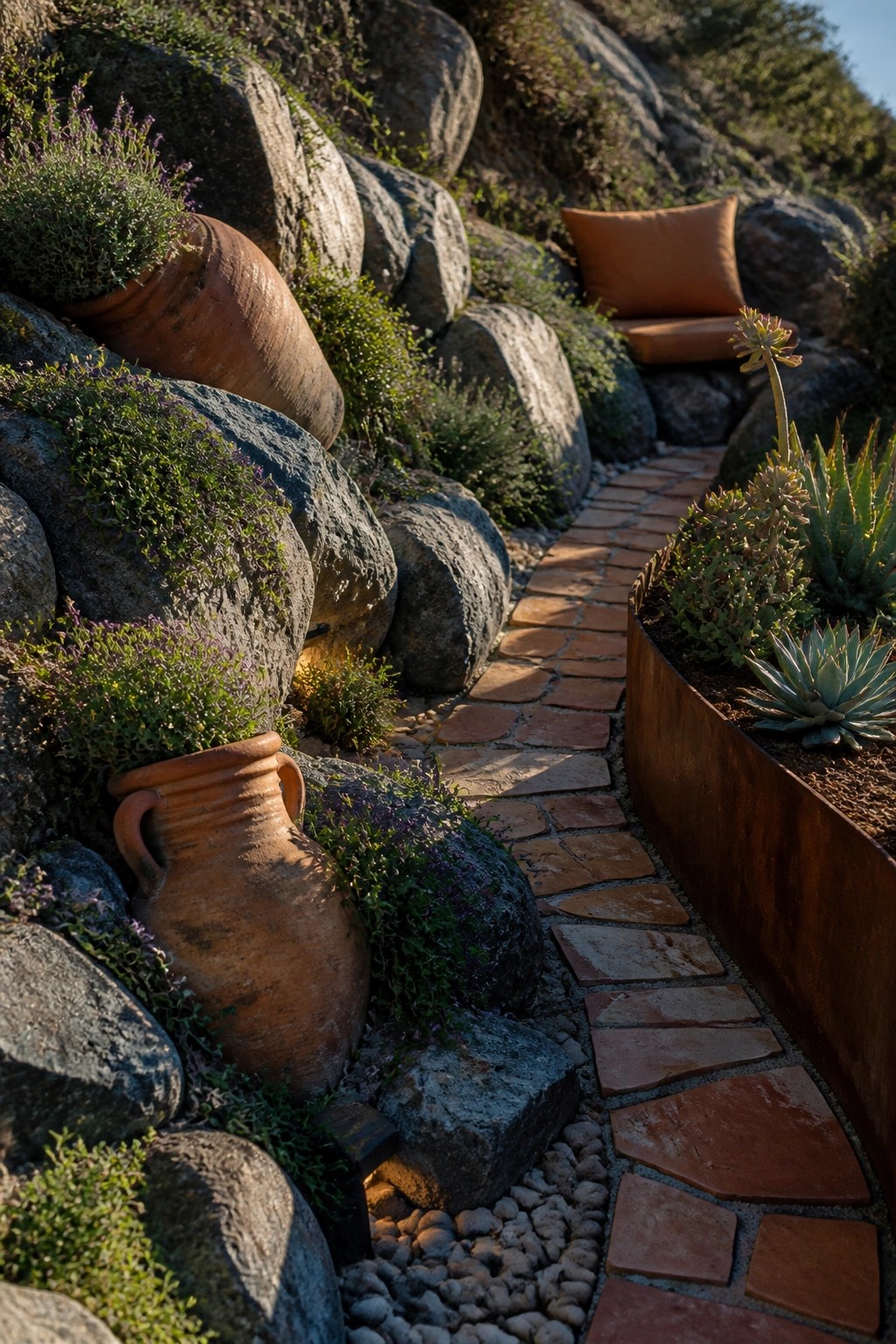
A brick path that curves around large stones makes good use of a tight or uneven spot. The path stays narrow and follows the ground instead of fighting it, so you avoid major digging or leveling.
Place a few pots in the gaps between rocks to hold plants that need better soil. This setup suits sloped yards or corners full of boulders where a straight path would not fit.
Wrap Seating Around A Fire Pit
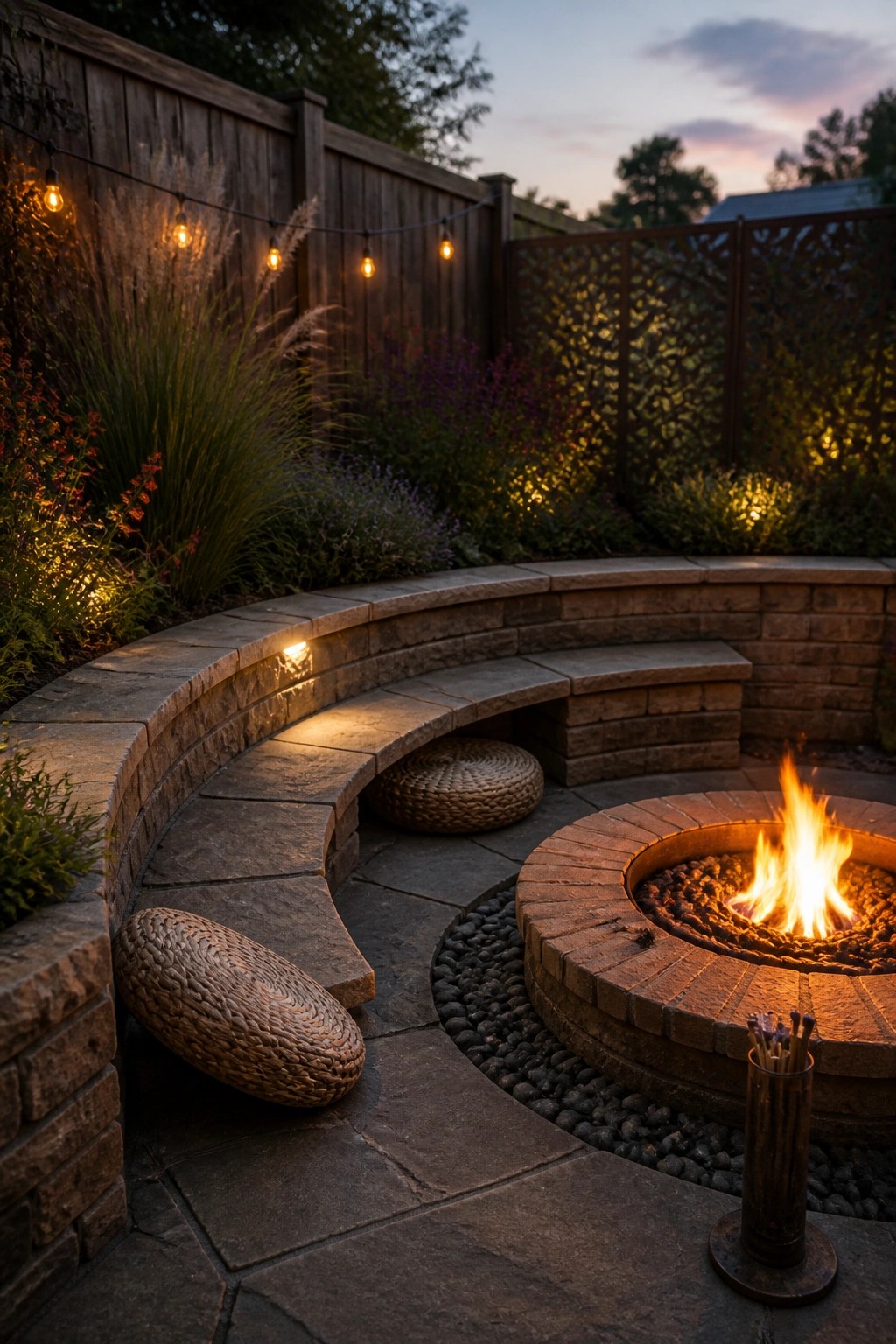
A curved bench built right around the fire pit makes the most of a small yard. It pulls people close to the fire without crowding the space or needing extra furniture.
This layout suits tight backyards or awkward corners where straight lines feel cramped. Keep the bench low and use the same material as your patio so it blends in and leaves room for plants behind it.
Build Narrow Paths With Pavers And Grass Strips
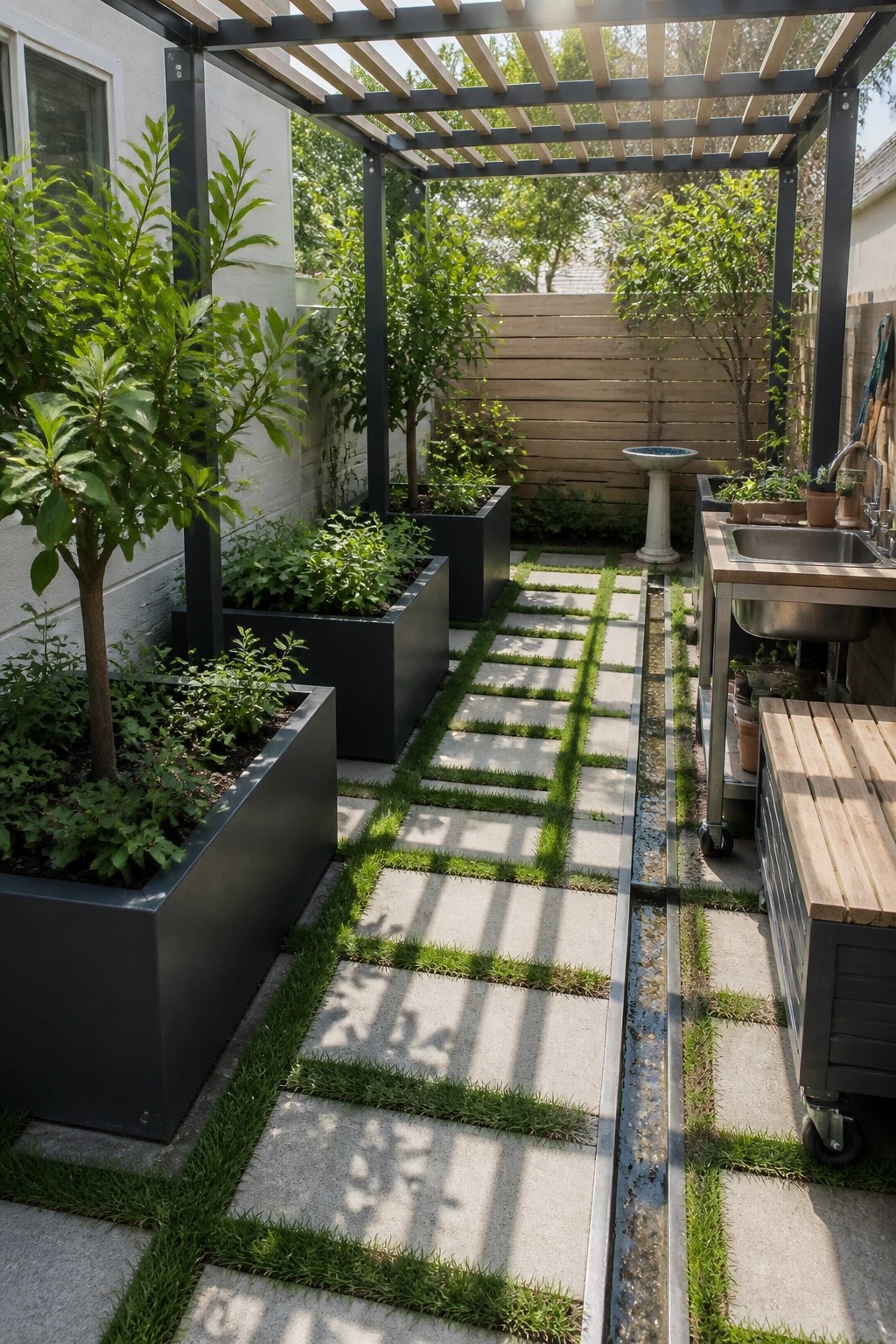
This layout keeps things simple in tight spaces. The pavers give you a clear walking surface while the grass strips between them soften the look and help with drainage. It avoids the need for a wide solid path that would crowd the rest of the yard.
It works best along side yards or between raised beds where every inch counts. Make sure the pavers sit level and pick a low-growing grass that can take some wear. The black planters on either side help frame the path without adding clutter.
Stepping Stones Over Gravel
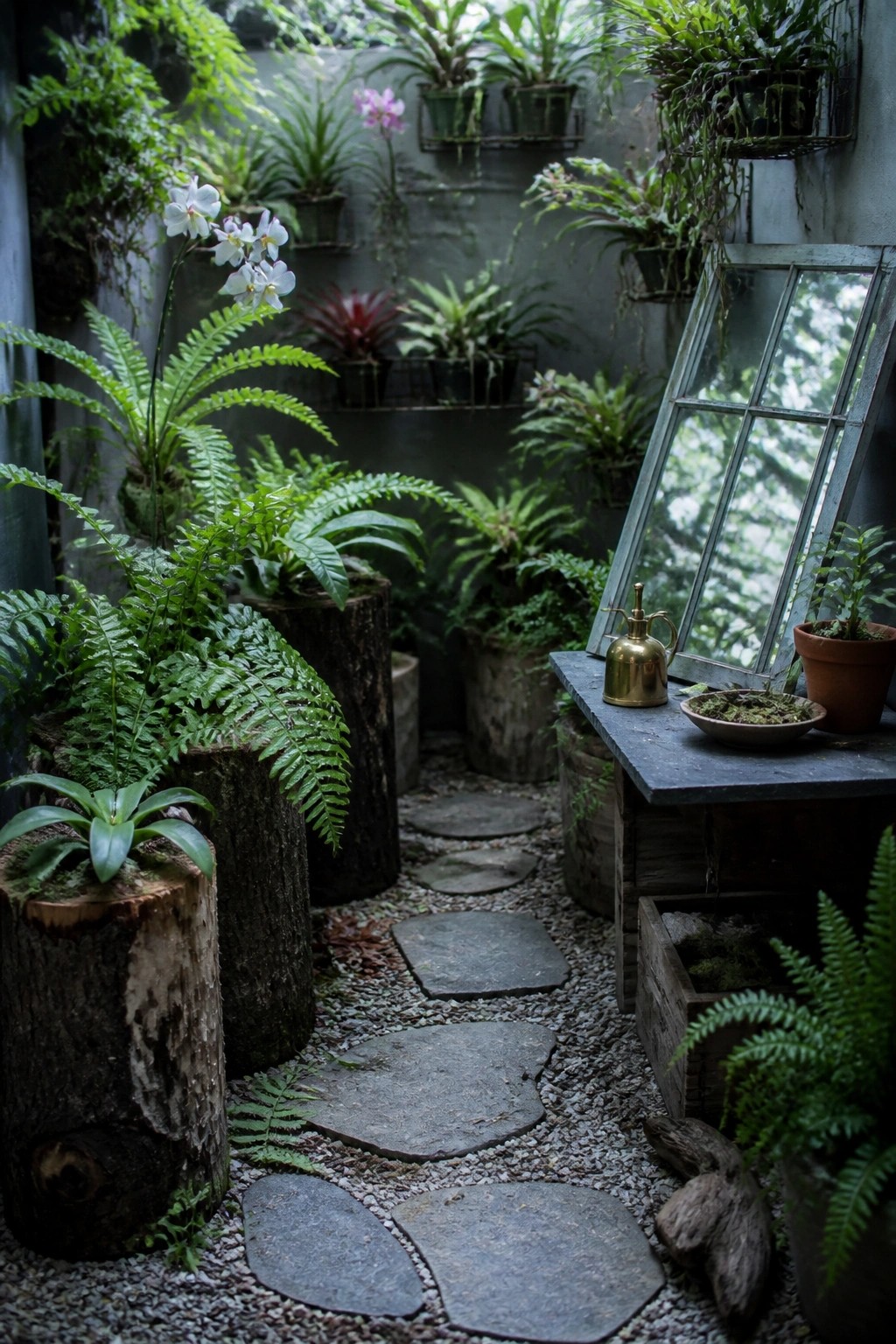
A gravel base with stepping stones gives you an easy way to walk through a narrow garden without crowding the plants. It keeps the ground covered, drains well, and lets you use every bit of space for pots and beds along the sides.
This works best in tight side yards or corners where a solid path would feel too heavy. Keep the stones irregular and slightly spaced so the gravel shows through, and add low plants right at the edges to soften the look.
Use a Vertical Garden Wall in Tight Outdoor Spots
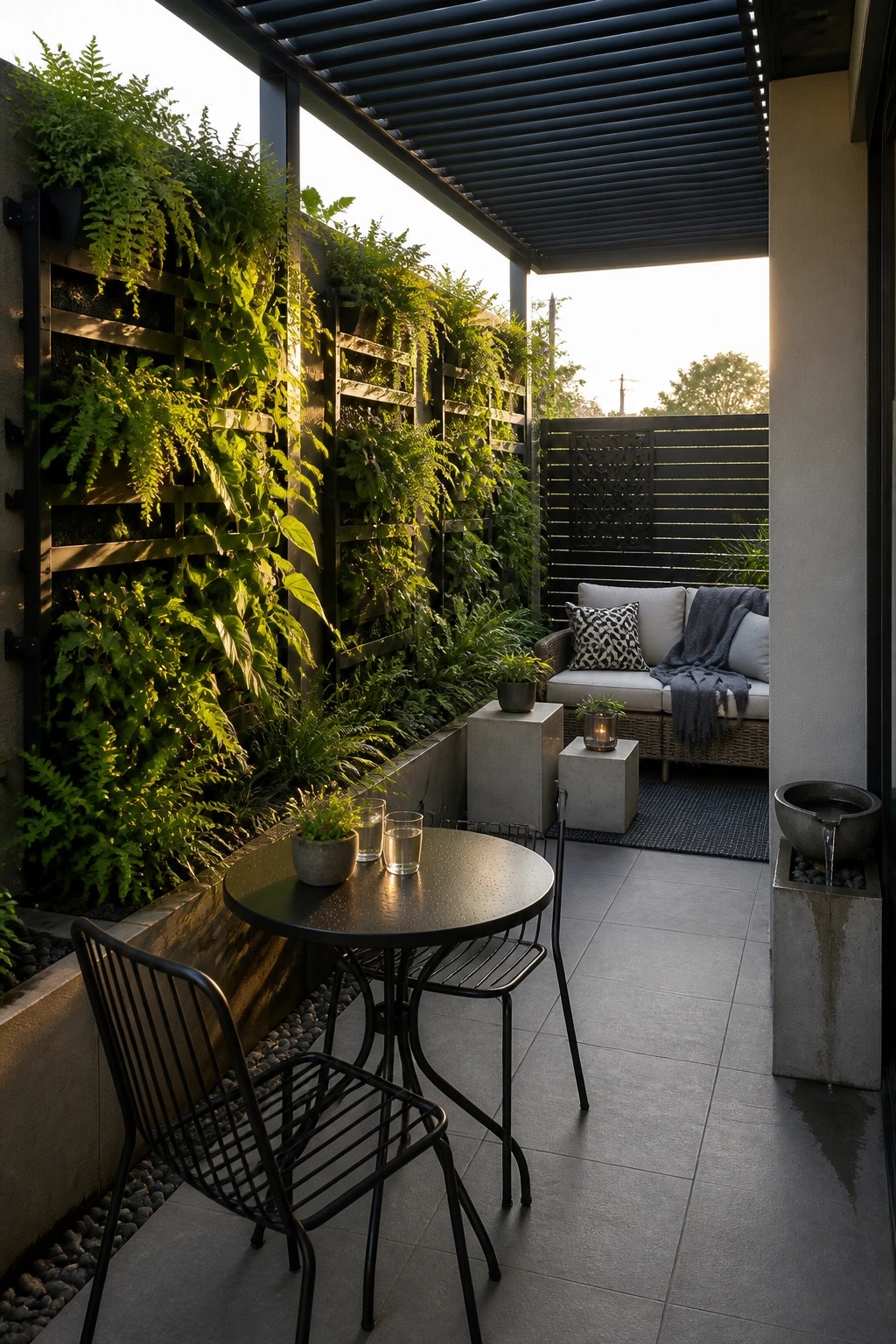
A vertical garden wall works well when floor space is limited but you still want plenty of greenery. It turns an empty side wall into the main planting area, which keeps the ground clear for seating or walking through. This setup feels especially useful in narrow patios or corner spots where regular beds would crowd things.
You can mount a simple grid or pocket system on any sturdy wall and fill it with ferns or trailing plants that handle partial shade. It suits townhomes, side yards, or small rental patios where digging beds is not an option. Just make sure the wall can handle the weight and that you have easy access for watering.
Repeat Low Hedges Along a Tight Garden Path
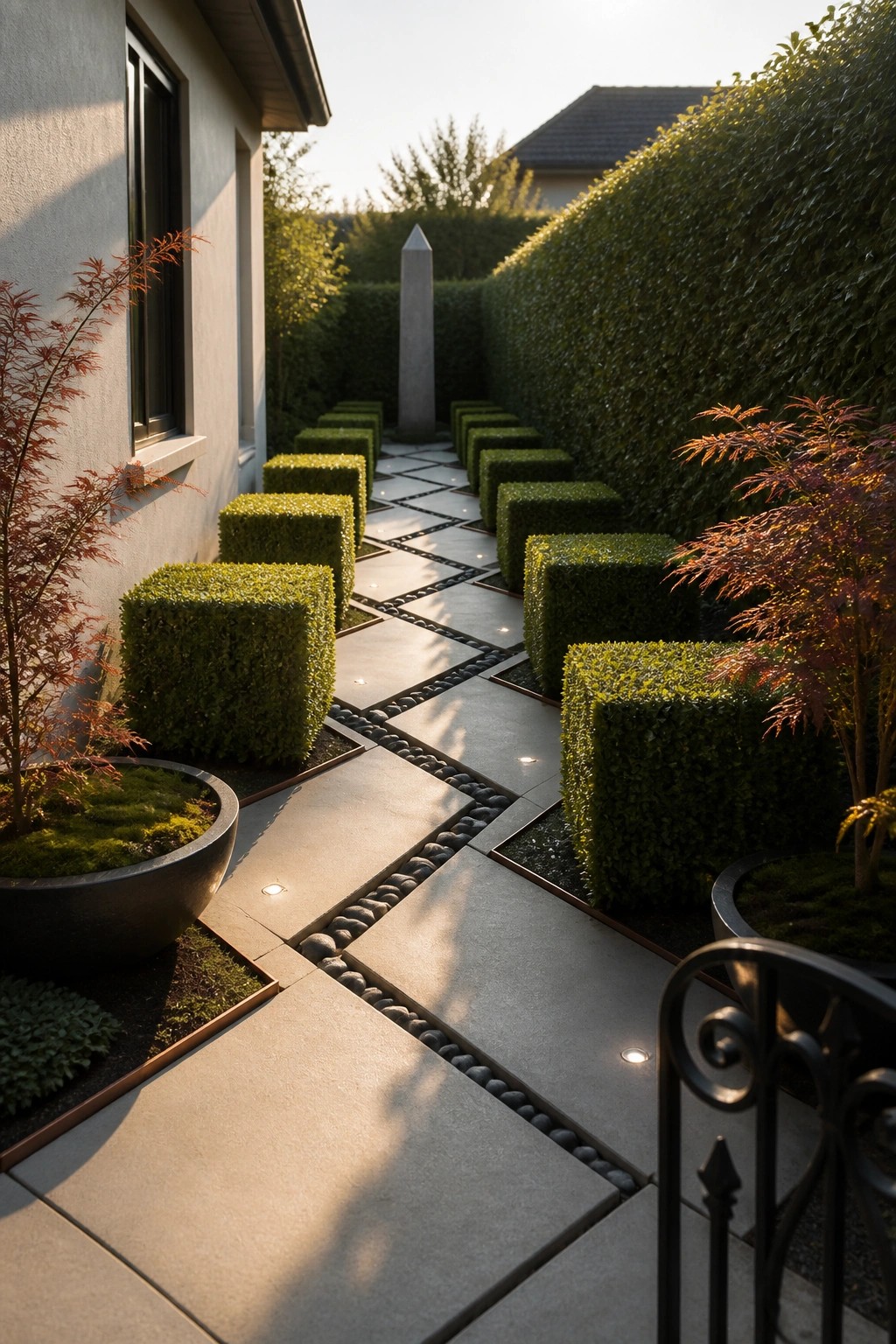
A row of square box hedges set on either side of a paved walkway turns a narrow side yard into something orderly instead of cramped. The repetition gives the eye a clear route to follow and keeps the space from feeling like leftover ground.
This layout suits homes with long, awkward strips between the house and a fence or neighboring wall. Use it where you want low care greenery that still looks intentional. Just keep the hedges clipped so they do not overgrow the path edges.
Frequently Asked Questions
Q: How do I know which layout fits my tight side yard best?
A: Measure the width and check sun patterns first thing in the morning and afternoon. Match those details to ideas that rely on narrow beds or hanging planters. This avoids crowding and keeps the path clear.
Q: Can I really use a corner that stays damp most of the year?
A: Choose plants that handle moisture like astilbe or ligularia and raise the soil slightly with a low border. Add a simple stepping stone path through it so you can reach the plants without sinking. The spot turns useful instead of wasted.
Q: What if I want to start small instead of tackling the whole yard at once?
A: Pick one vertical feature like a trellis or a couple of stacked crates for that first corner. Watch how it feels for a season before adding more. You learn what actually works in your space without overdoing it.
