

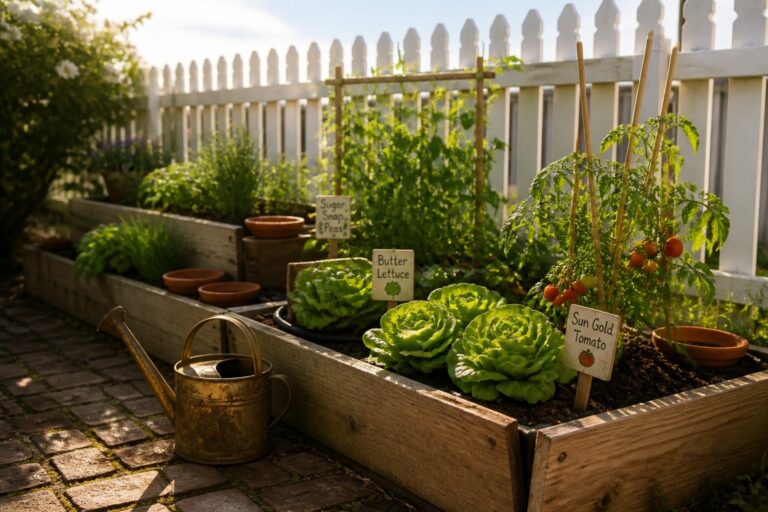
I have learned over time that productive small gardens depend more on smart layout than on having lots of space to work with.
Raised beds help define the planting areas and keep the soil in good condition so harvests come easier throughout the season.
In my own space I always check how the beds sit relative to sun patterns before deciding on any new arrangement.
Layout changes everything.
A few adjustments like these often turn a cramped patch into something that actually yields well without constant effort.
Label Plants In Raised Beds
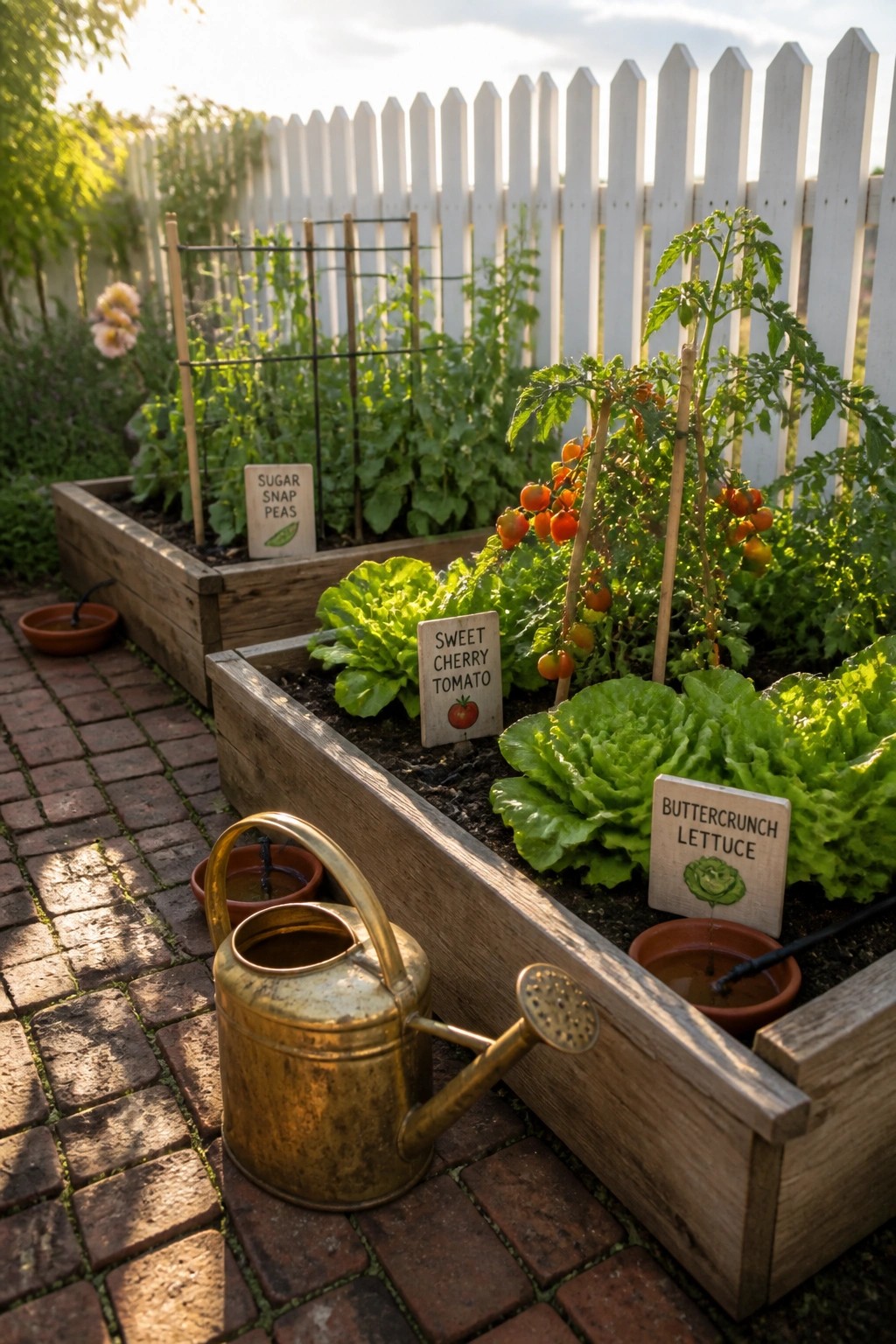
Adding simple labels to each section of a raised bed helps keep small vegetable gardens organized and productive. It lets you track what is growing where without guessing, which matters when plants are still young or when several leafy crops sit side by side.
Wooden signs work especially well in backyard setups with a few beds along a path. They make daily checks and harvests quicker and cut down on mix-ups when you need to water or pick at the right time.
Run Raised Beds Along a Wall
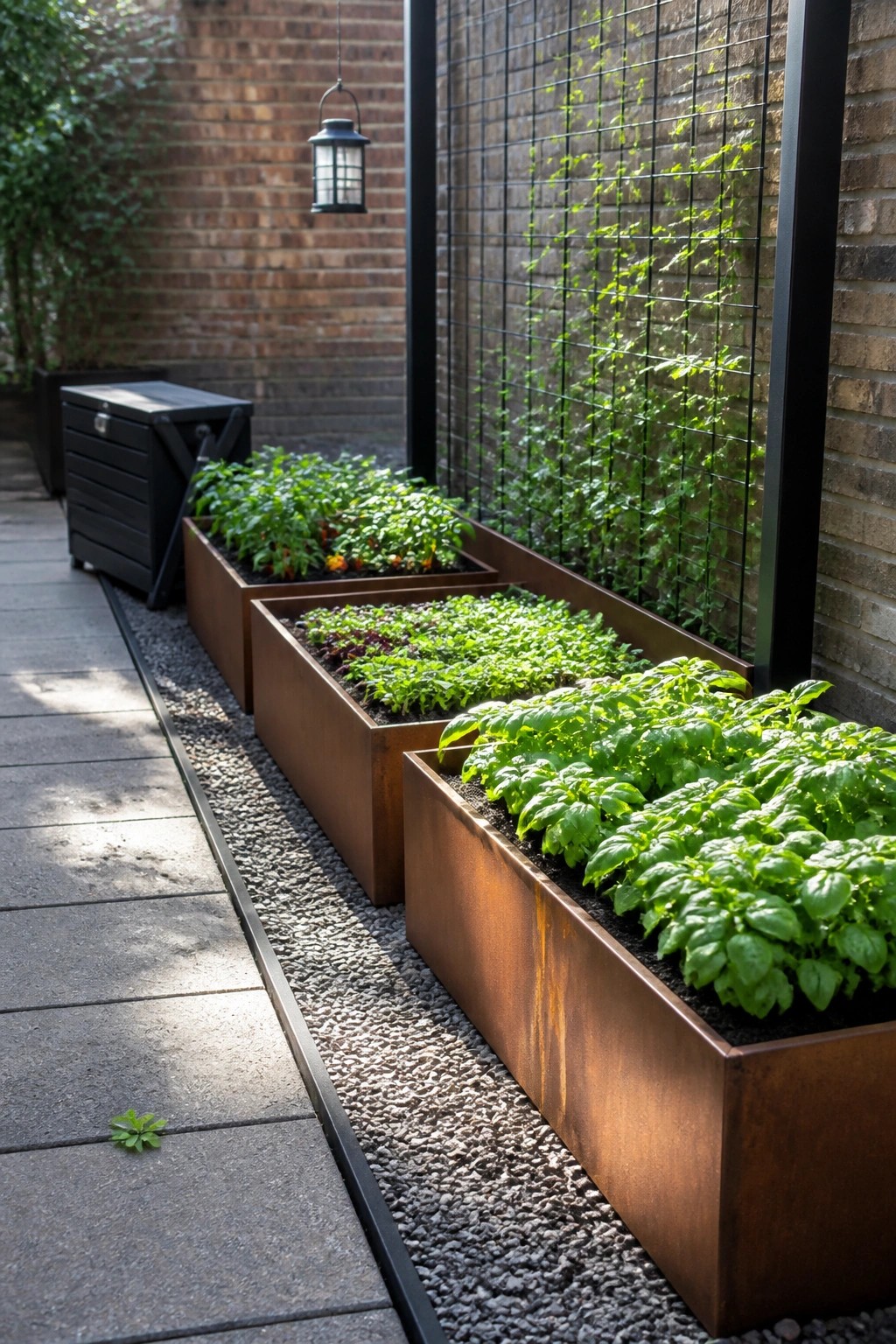
Placing long raised beds in a single line against a wall makes good use of narrow spaces that often get ignored. The setup keeps everything within easy reach for watering and picking, and the vertical support behind the beds lets vines grow upward instead of sprawling out.
This works especially well in side yards or along the edge of a patio where ground space is limited. Metal beds hold up over time and the gravel strip underneath helps with drainage, though you will want to check that the soil stays moist enough in hotter months.
Raised Beds Along A Garden Path
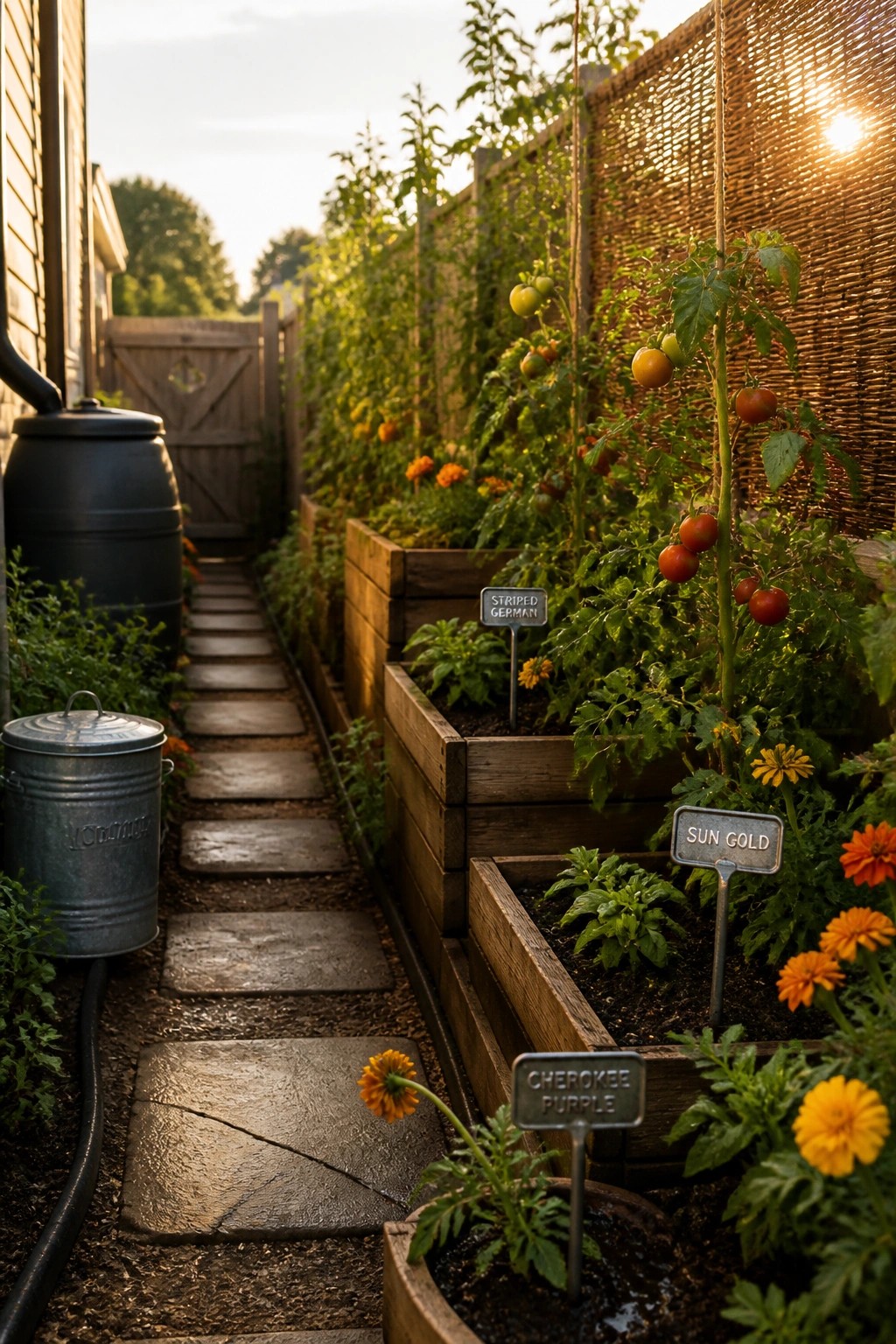
Many small gardens stay productive when raised beds run right alongside a simple path. This layout keeps everything within easy reach so you can water, prune, and harvest without stepping into the beds. It also helps with drainage and soil control in tight spaces.
This approach works best in side yards or narrow lots where a bigger garden bed would feel out of place. Use wood frames that match the scale of the area and leave the path wide enough for comfortable walking or a cart. Focus on a few reliable crops rather than trying to pack in too many varieties at once.
Tiered Raised Beds For Sloped Yards
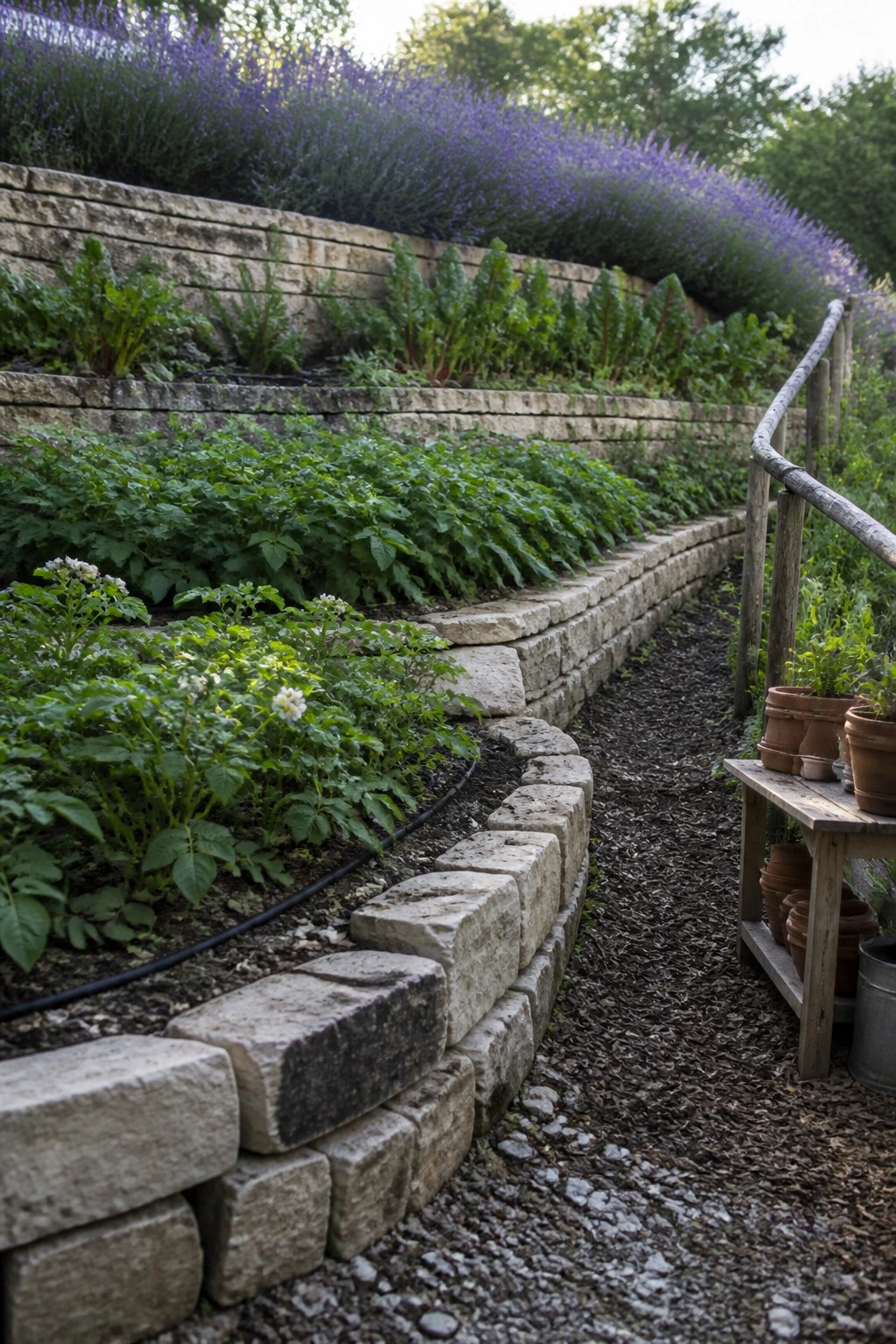
Many people with sloped yards give up on vegetables because the ground feels too uneven to work. Stone retaining walls solve that by turning the slope into a series of flat, easy-to-reach beds.
The tiers keep soil in place and make watering and harvesting simpler. This setup works best on gentle to moderate hills where you want more growing space without major grading.
Espalier Fruit Trees Above Vegetable Beds
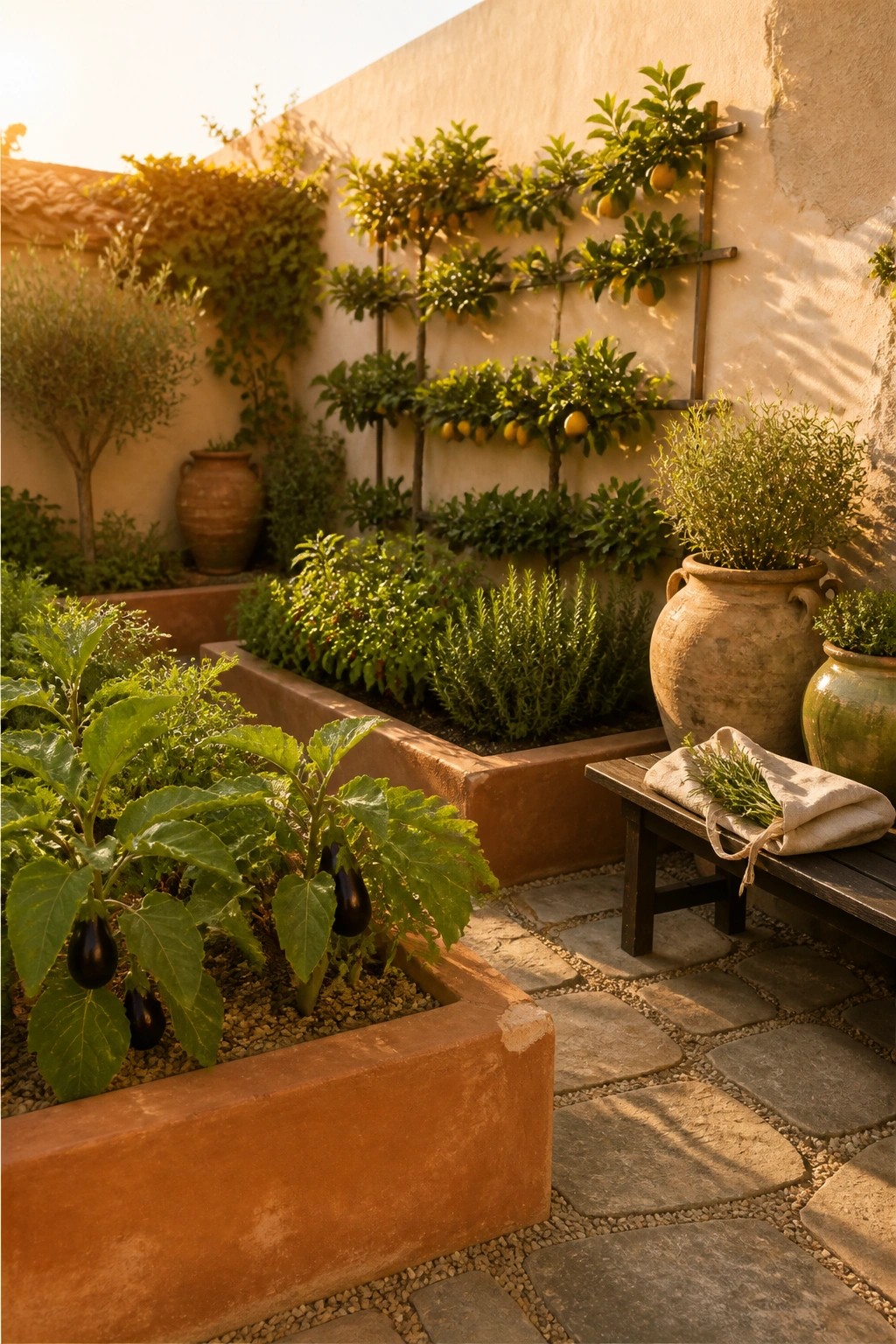
Raised beds work best when the ground space stays open for vegetables that need room to spread. Training fruit trees flat against a wall uses vertical space instead, so you can keep more beds dedicated to tomatoes, peppers, or eggplant without crowding everything together.
This setup works well in small courtyards or along a sunny fence where ground is limited. Start with a simple trellis or wires, choose dwarf varieties, and prune regularly to keep growth flat. The beds stay productive and easy to reach while the wall adds extra harvests without taking up extra floor area.
Use Metal Plant Tags For Easy Harvest Tracking
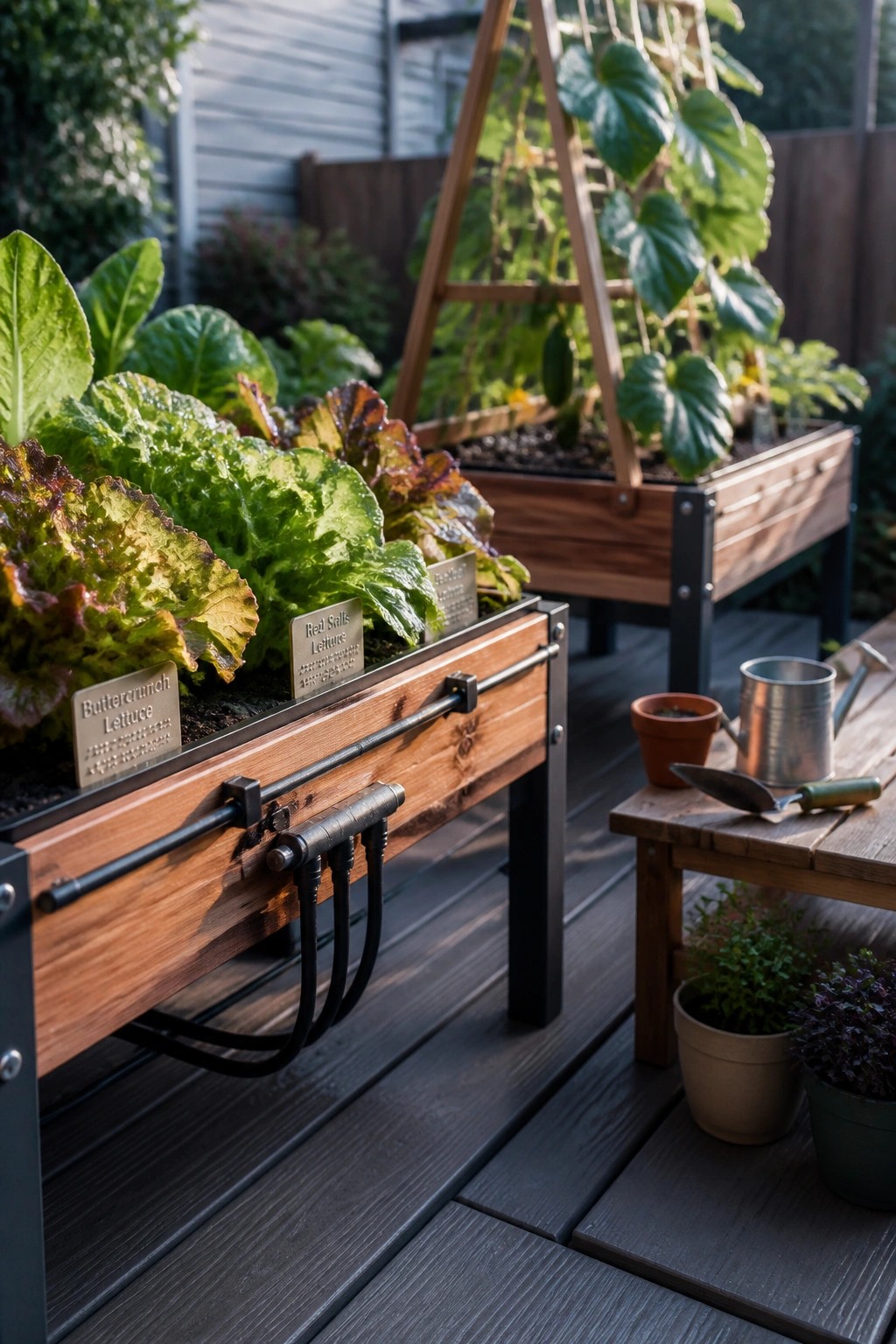
Labels make a big difference when you grow several types of greens in the same bed. They help you know exactly what is ready to pick and keep you from guessing which variety is which as the plants fill in.
Metal tags work well because they hold up outside and stay readable through the season. This approach suits small decks or patios where beds are close together and quick identification saves time during harvest.
Protect Crops With Covered Raised Beds
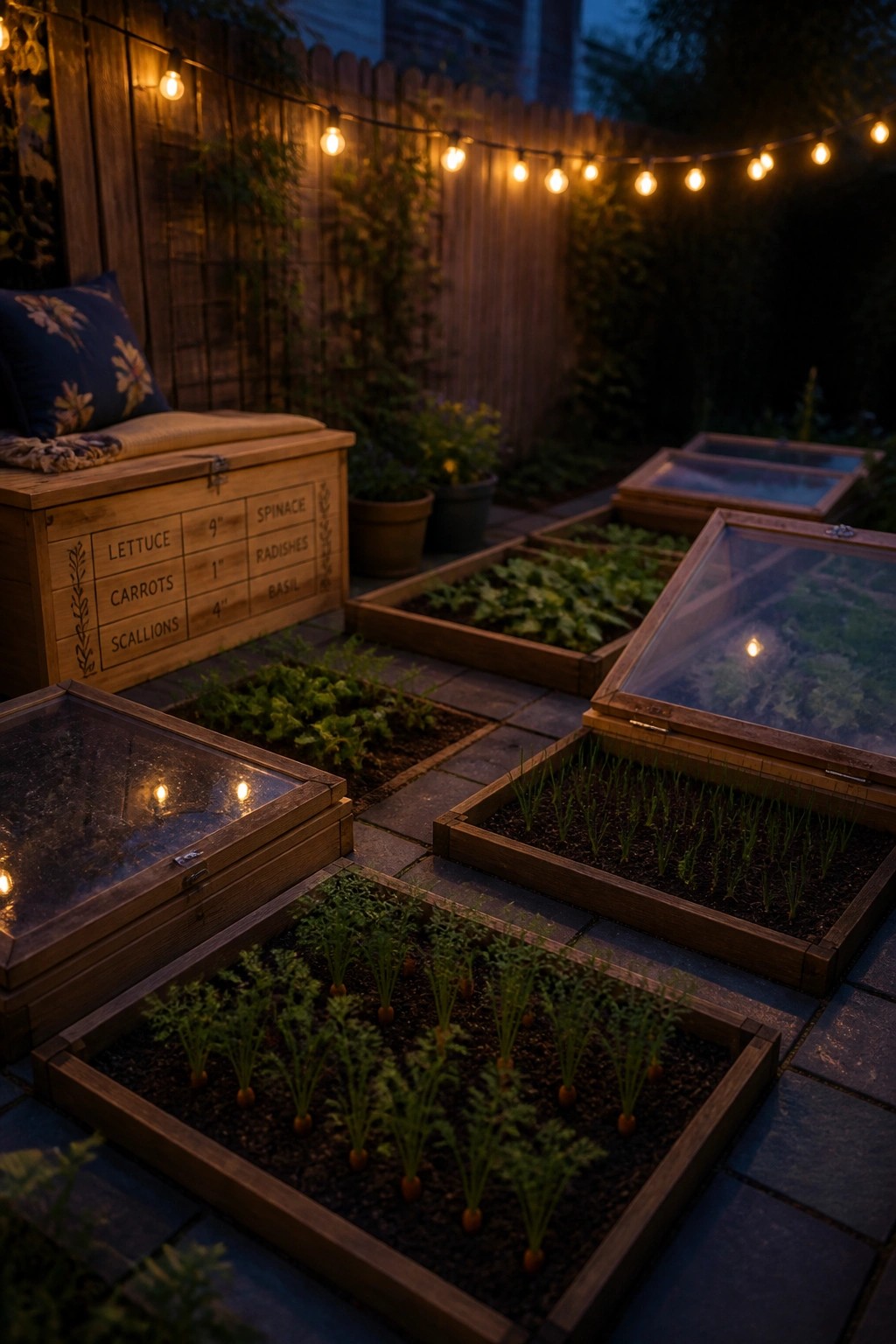
Covered raised beds make it easier to grow vegetables in small spaces without worrying as much about weather changes. The glass lids help trap warmth and keep pests out, so plants like lettuce or carrots stay productive longer than they would in open soil.
This setup works best in backyards with limited room or in areas where nights turn cool early. Build a few beds with hinged covers so you can open them on sunny days and close them when needed. A simple bench nearby also gives you a spot to store tools without taking up extra space.
Raised Beds Along the Balcony Railing
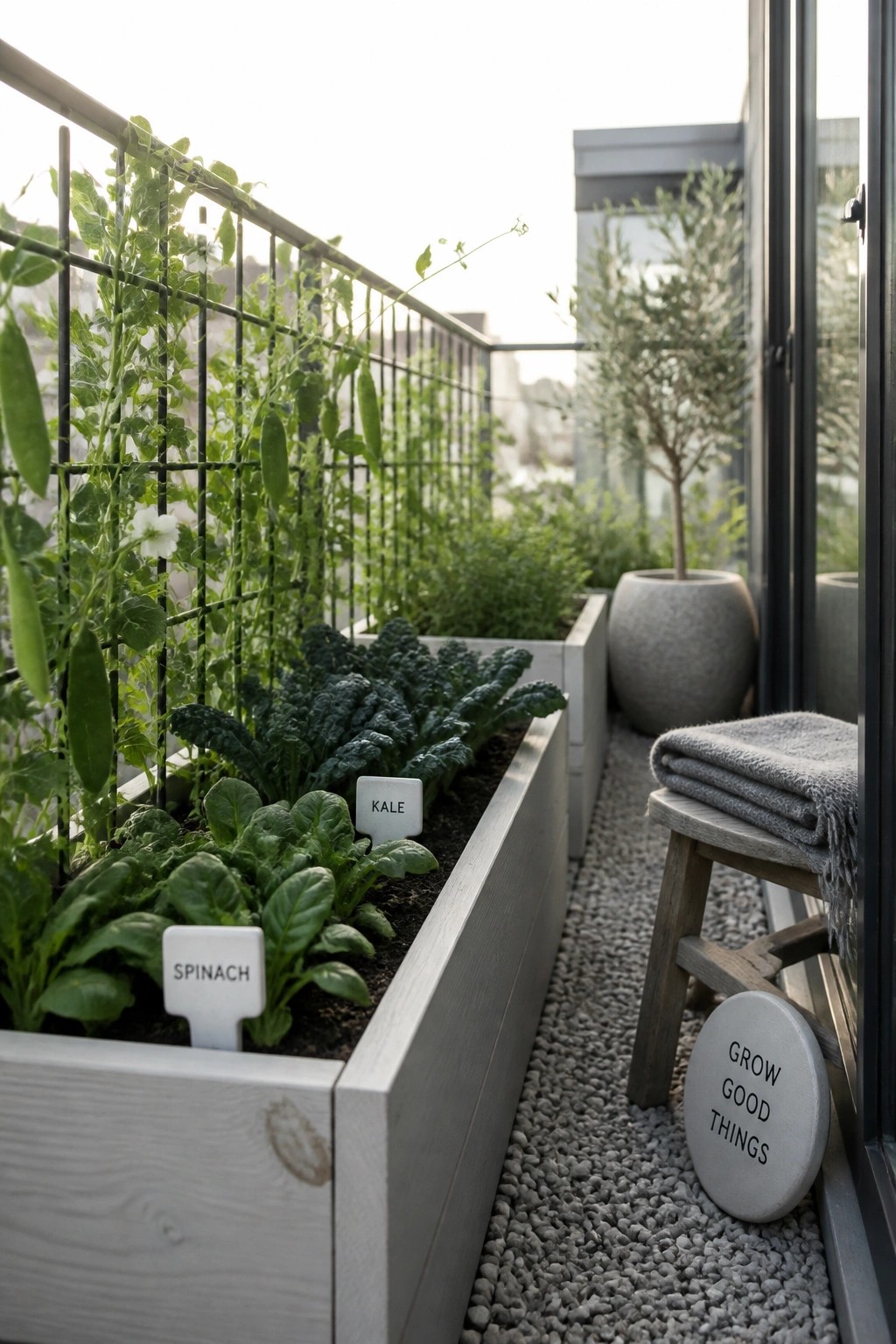
Many people are turning narrow balconies into productive vegetable gardens by running raised beds right along the railing. This layout keeps the growing area contained while leaving room to walk and sit.
It suits apartments and small outdoor spaces where ground is not available. Simple labels make it easy to track different crops, and the beds stay convenient for watering and harvesting without much bending.
Trellises Help Maximize Space In Small Raised Beds
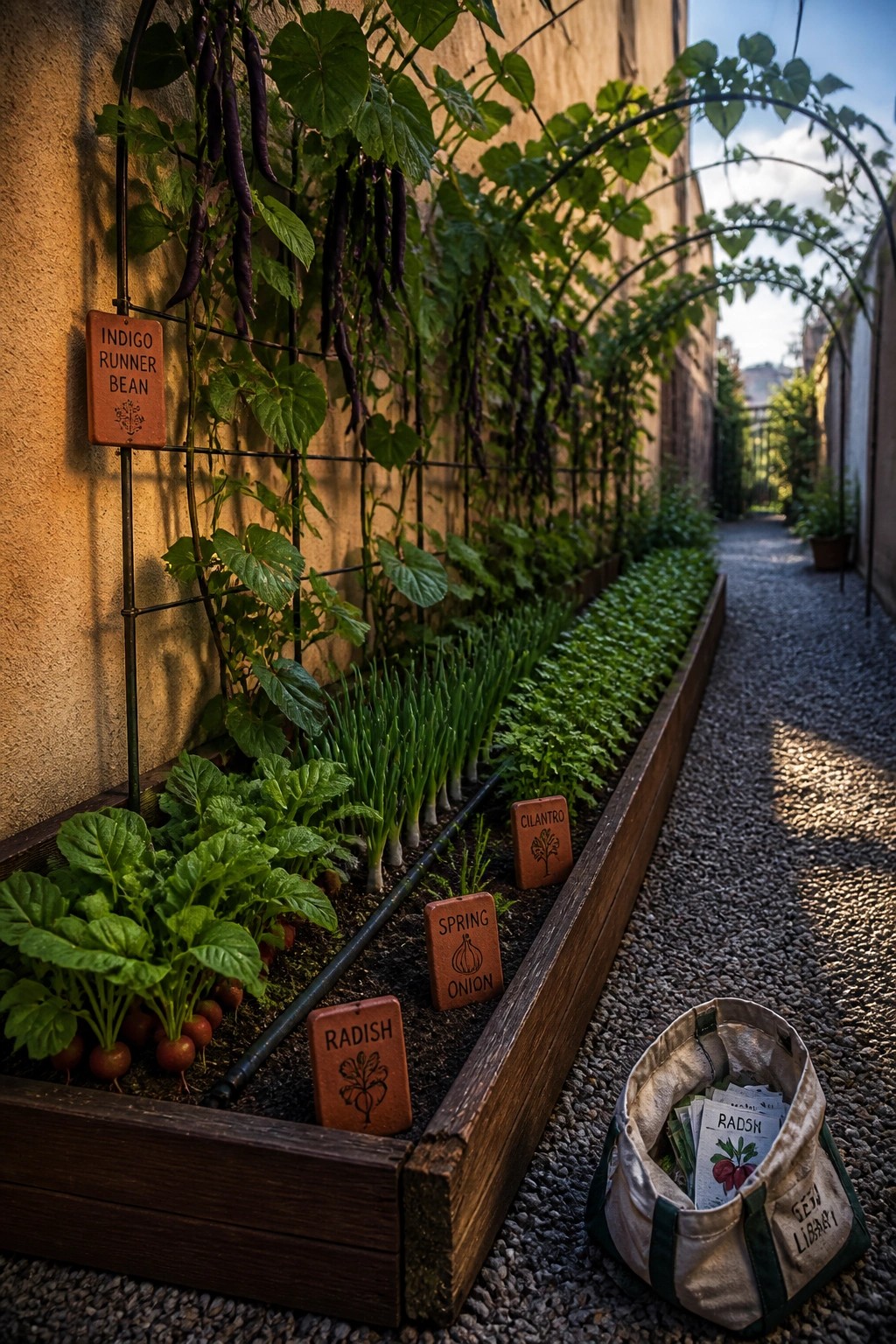
A simple trellis along the back of a raised bed lets you grow climbing crops without taking up extra ground space. In narrow garden spots this setup keeps the bed productive while the plants grow upward instead of sprawling out.
This approach works well in side yards or along walls where room is tight. Just match the trellis height to the crop, secure it firmly to the bed frame, and leave room in front for shorter plants like root vegetables.
Add a Circular Stone Raised Bed for Herbs
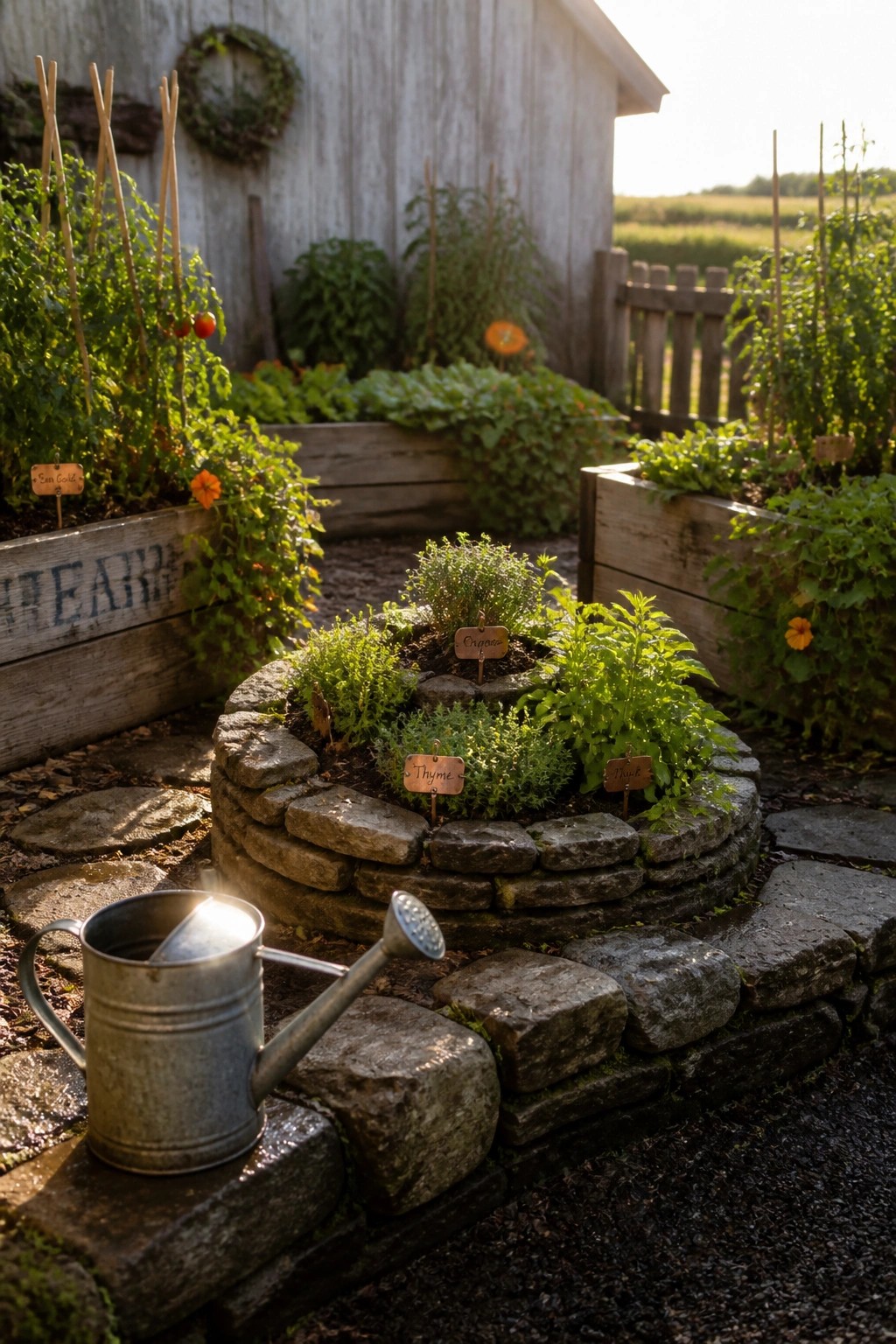
A round stone bed gives herbs their own spot while keeping everything within easy reach. The low stacked walls hold the soil in place and create a clear edge that separates the herbs from the rest of the garden without taking up much room.
This shape works best in a small yard or next to a shed where you want quick access for picking. Use stones that fit together easily, keep the bed no more than two feet high, and plant the herbs in layers so the taller ones sit in the middle.
Border Garden Paths With Productive Raised Beds
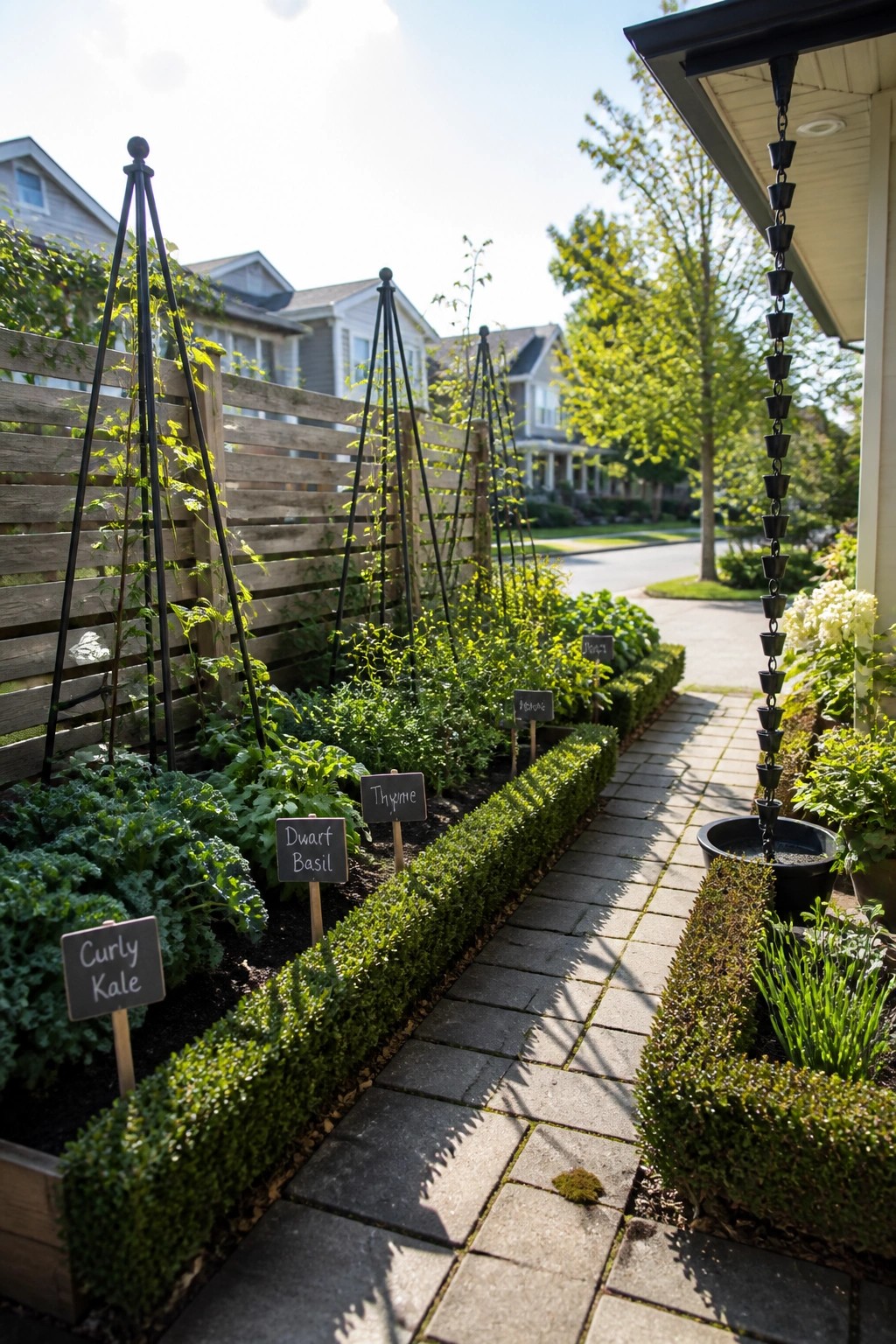
Placing raised beds right next to a stone path keeps the plants easy to reach and turns even a narrow strip of yard into a working garden. The setup works because you can walk down the path and tend or pick from either side without stepping into the soil.
This layout suits smaller homes or side yards where space is limited. Simple labels on stakes help you track what is growing and make quick harvests more practical during the week.
Raised Beds Made From Metal Troughs
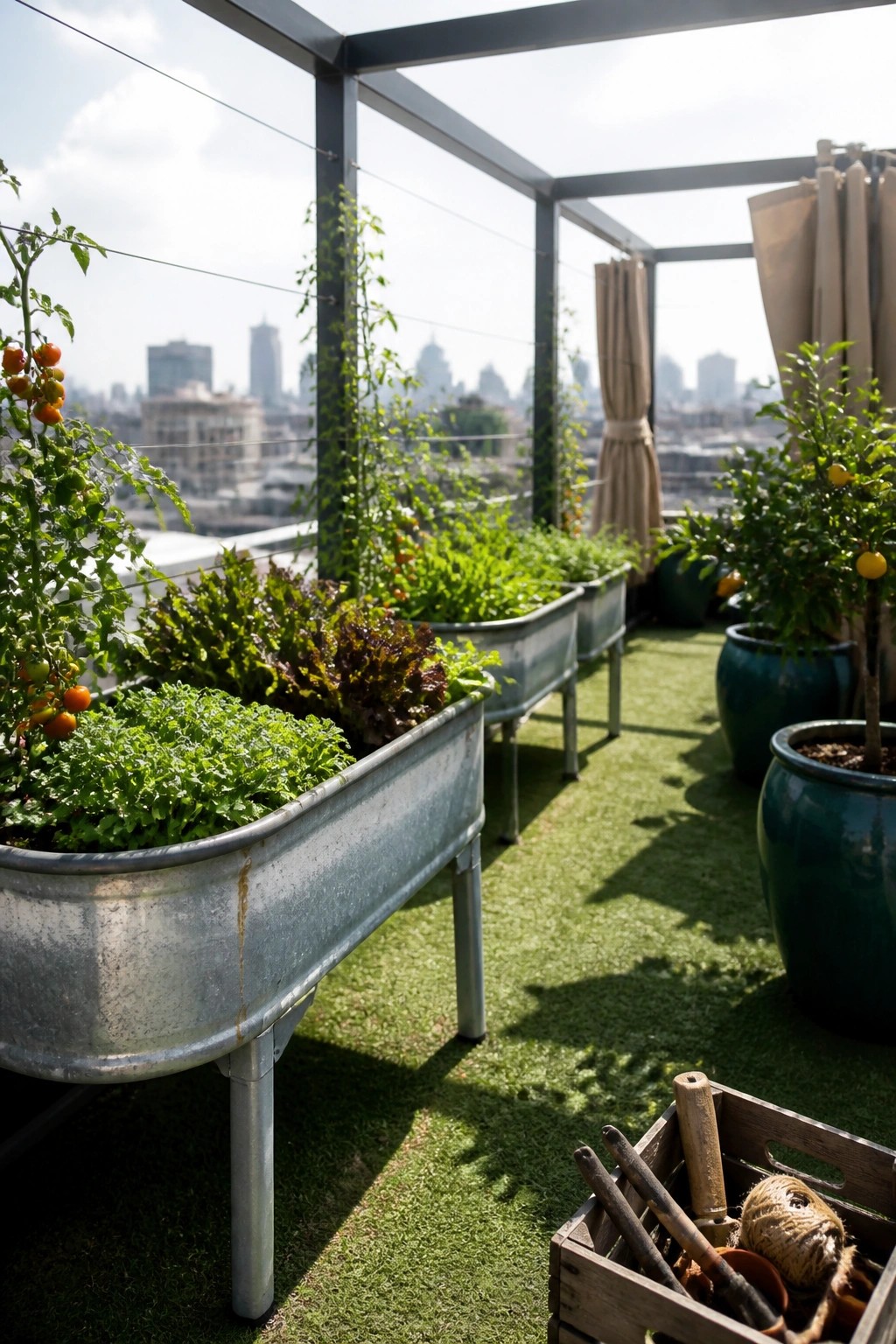
Metal troughs offer a straightforward way to set up raised beds when space is limited. They hold a good amount of soil, drain well, and keep plants off the ground so roots stay healthier. Many gardeners like them because they are durable and do not need much extra work once they are in place.
These beds suit rooftops, balconies, and small patios where weight and drainage can be an issue. Place them on a solid surface, use a quality soil mix, and keep the plants within easy reach for watering and harvesting.
Wall-Trained Fruit Trees For Small Courtyards
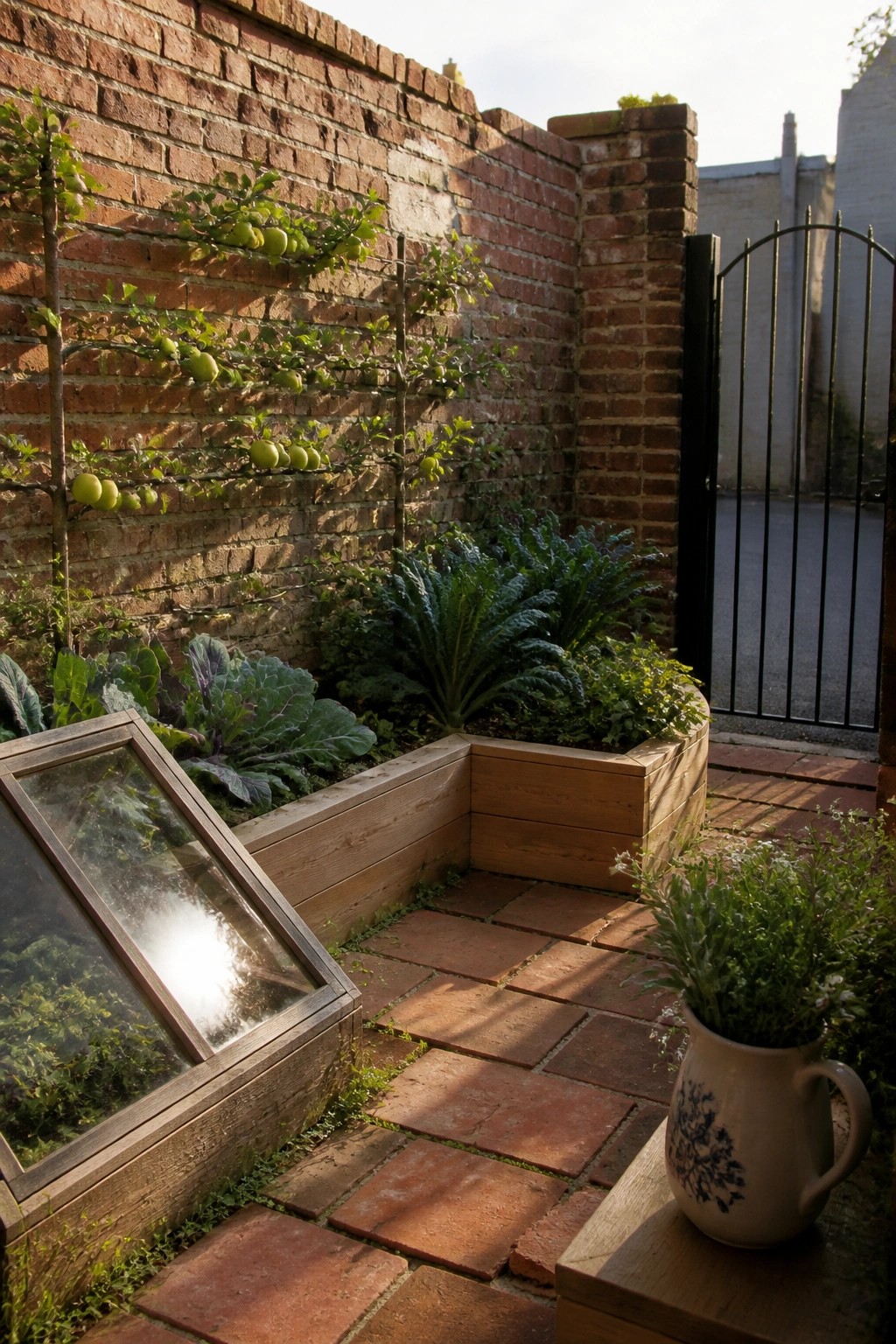
One of the easiest ways to add more production in a small garden is to train fruit trees flat against a wall. This setup keeps the trees out of the way while still giving them plenty of sun and air. It also turns an otherwise plain wall into a useful part of the growing space.
This works especially well in tight yards or courtyards where ground room is limited. Use sturdy wires or a simple trellis and prune regularly so the branches stay flat. Raised beds in front of the trees keep the soil tidy and make harvesting easier without crowding the path.
Raised Beds With Gravel Paths
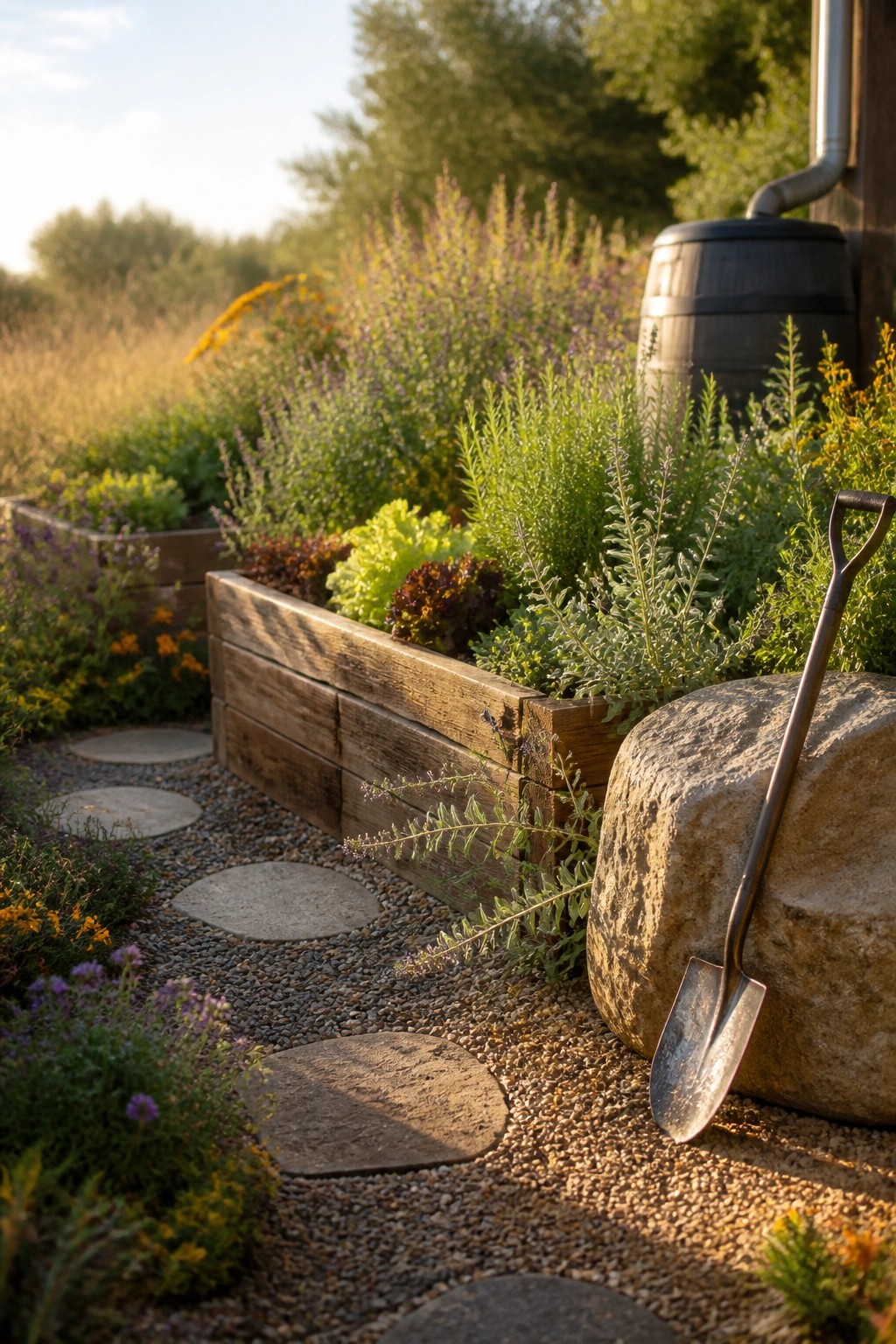
Raised beds become much more practical when you add simple gravel paths around them. The gravel keeps things dry underfoot while the stepping stones give you a solid place to stand as you reach in to pick or weed.
This layout works especially well in smaller yards where every bit of space needs to count. It stops you from compacting the soil and makes daily harvests faster without needing fancy materials.
Vertical Pallet Gardens For Small Yards
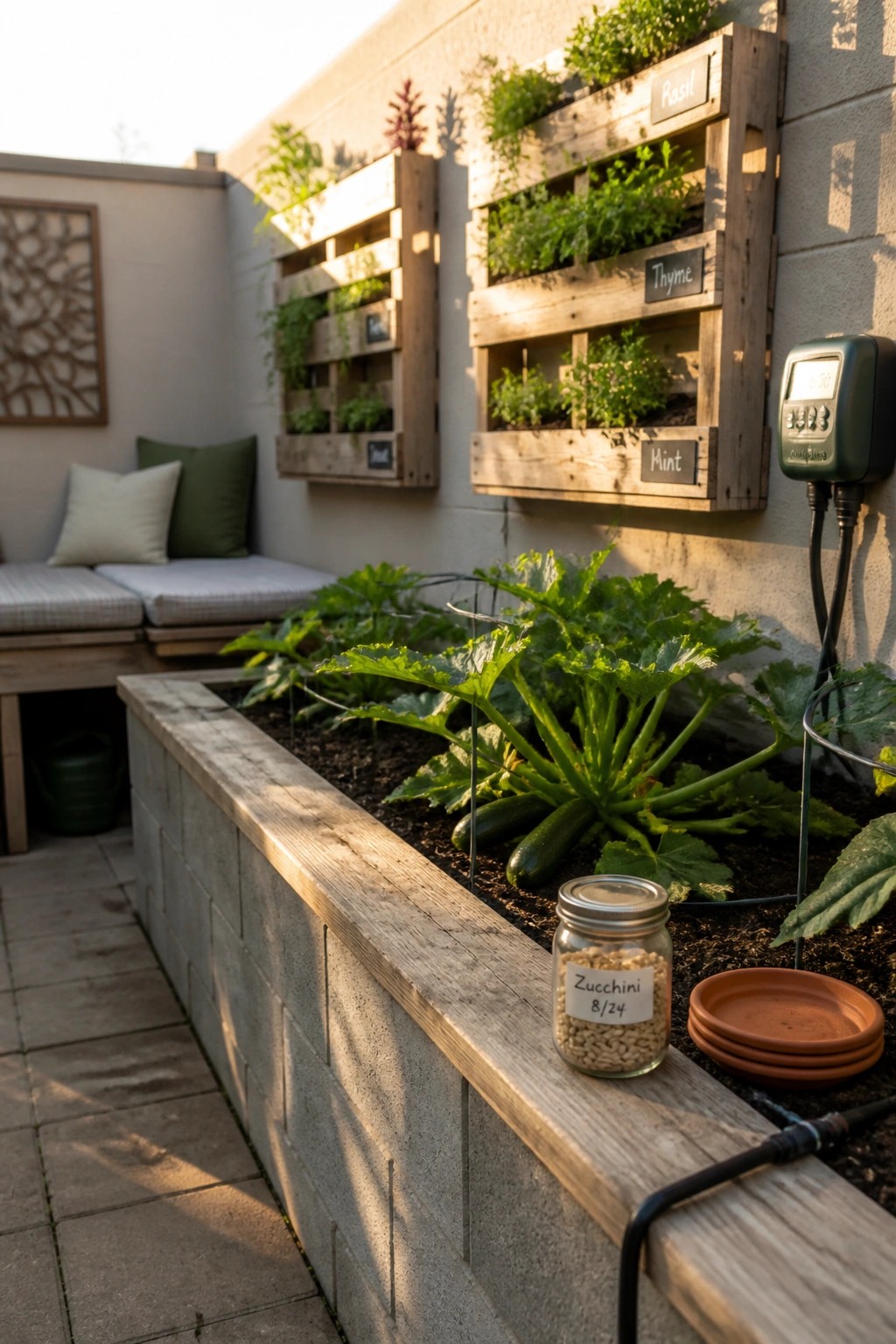
Vertical pallet gardens let you grow more in tight spaces by turning unused wall area into planting spots. They work especially well when ground space is limited but you still want a steady supply of herbs and quick crops.
Mount a few pallets above or next to a raised bed so the plants stay within easy reach for watering and picking. This setup suits small patios or side yards where every square foot counts and you need simple, low cost expansion.
Mount Raised Beds On A Fence
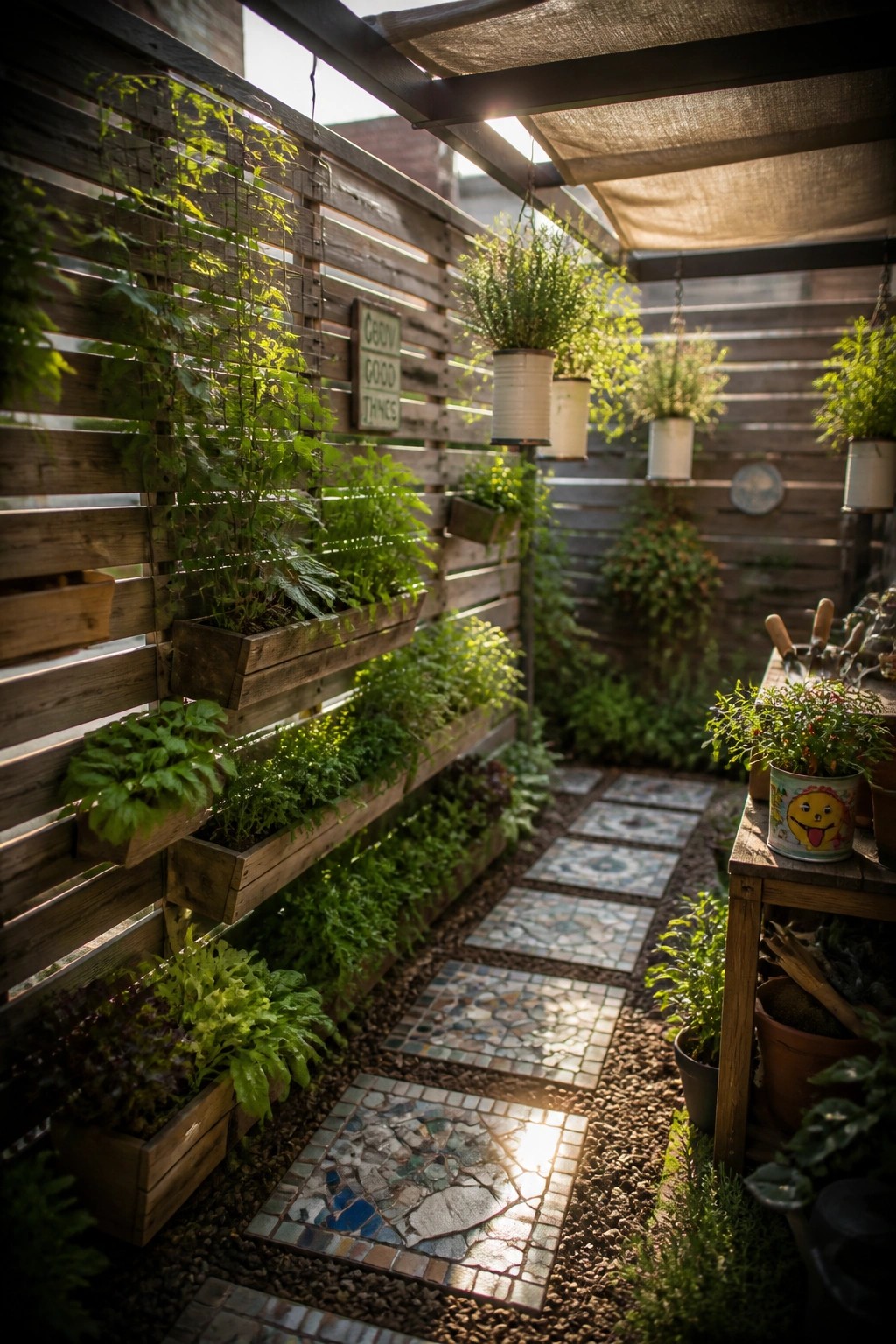
Mounting raised beds right onto a fence or wall turns unused vertical space into a productive growing area. It keeps the beds off the ground, improves drainage, and makes it easier to reach the plants without bending over or crowding the path.
This setup works best along a side yard or narrow backyard where ground space is tight. Use a sturdy fence, secure the boxes well, and pick vegetables that fit the light conditions in that spot.
Raised Beds On The Deck
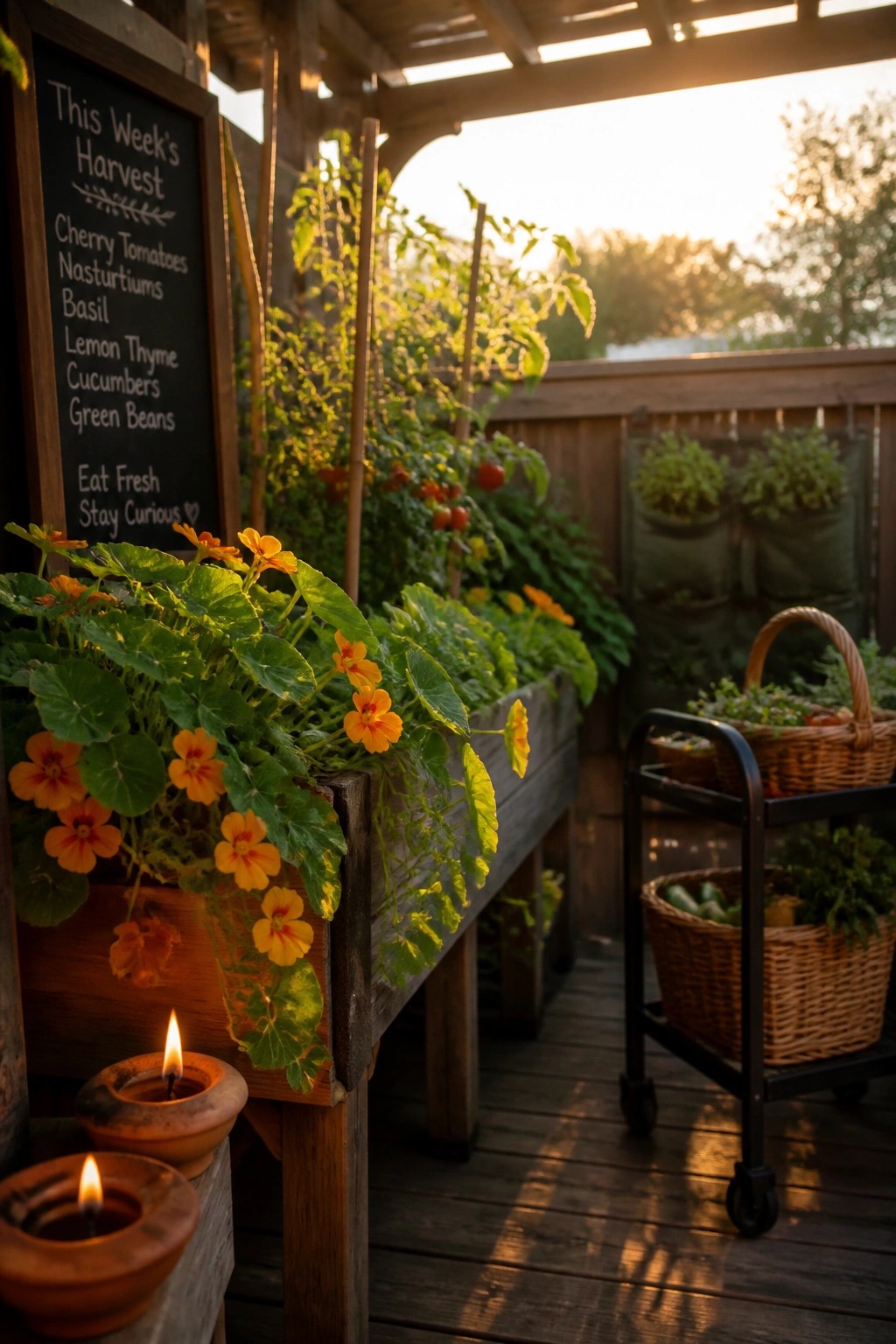
Raised beds placed directly on a deck bring the garden close to daily life. You can check on plants, water them, and pick what is ready without stepping into a separate yard area. This setup works especially well when space is tight or when you want vegetables within easy reach of the kitchen door.
A simple wooden bed filled with tomatoes, beans, and herbs fits neatly along the edge of the deck. Keep a small chalkboard nearby to note what is ready each week. The arrangement suits homes with limited ground space and makes regular harvesting feel like part of the routine rather than extra work.
Raised Stone Beds For Small Vegetable Gardens
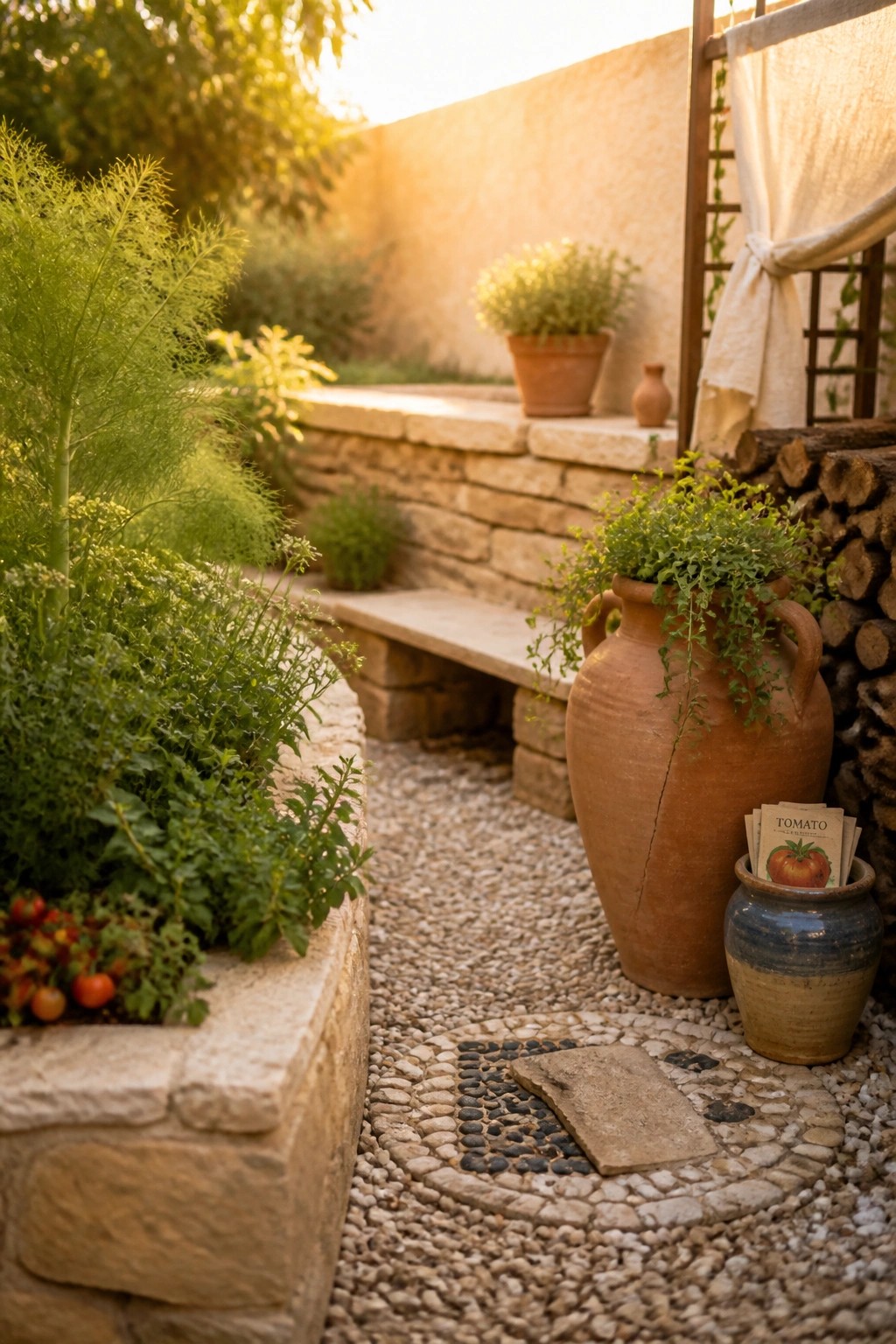
Stone borders around raised beds give a vegetable garden a clear shape while making it easier to work in. The edges hold the soil in place and create a solid spot to kneel or rest tools, so you spend less time bending over or stepping on plants.
This setup works especially well in tight yards where space is limited. Gravel paths between the beds keep things dry underfoot and let you move through the garden quickly when it is time to pick tomatoes or herbs.
Use Wooden Plant Markers In Compact Garden Beds
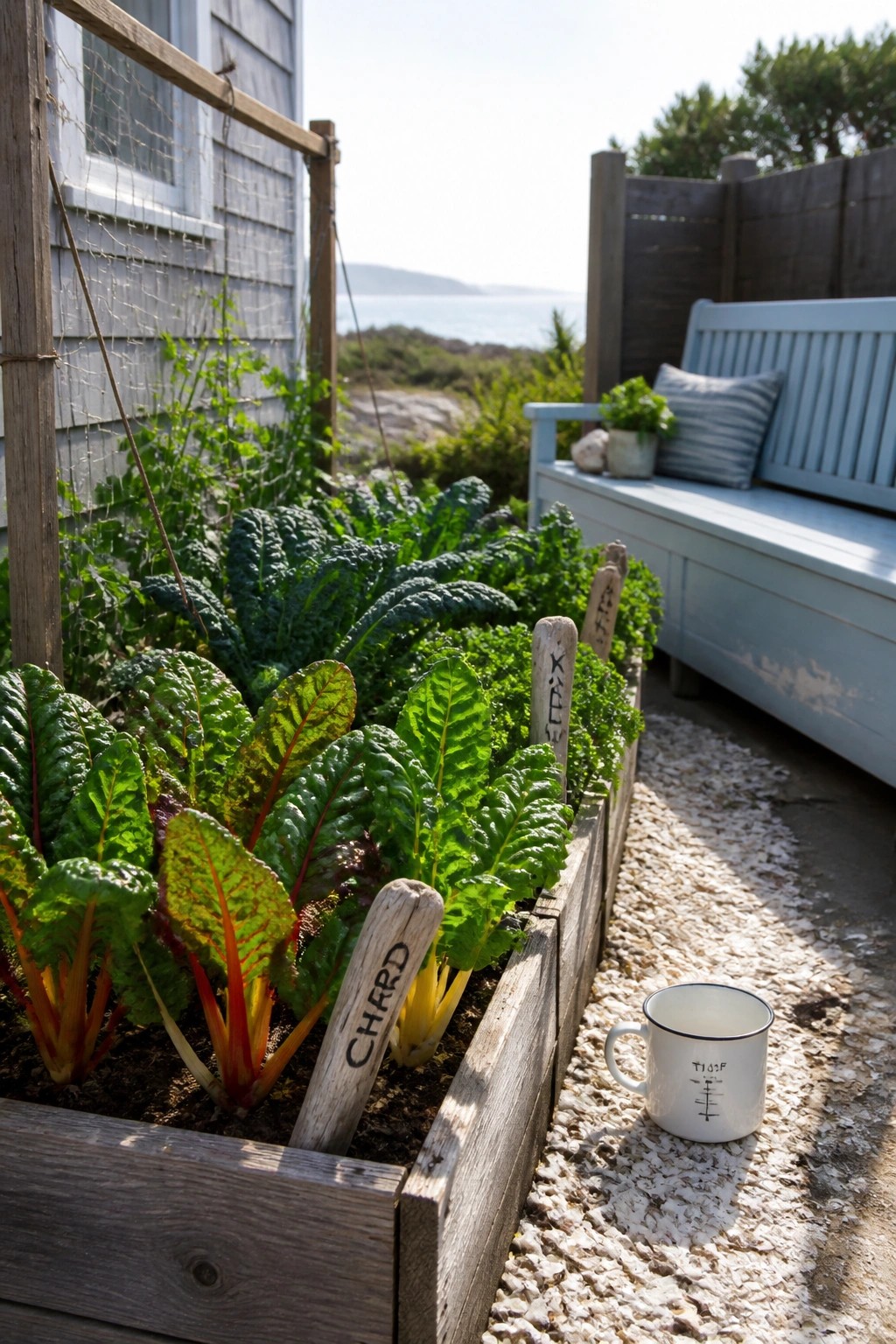
Plant markers make a big difference in small raised beds. They help you keep track of what is growing where, which matters when you have several crops close together and want to harvest at the right time.
Wooden stakes are easy to make and blend in without looking fussy. Write the names clearly and push them in right after planting so nothing gets mixed up later. This works especially well in compact gardens where space is limited and every plant needs to earn its spot.
Frequently Asked Questions
Q: How close can I plant without things getting crowded? A: Follow the spacing on the seed packet but switch to a grid pattern instead of straight rows. This uses every inch without overlap. Pull out weak seedlings as soon as they show up so the strong ones have room.
Q: Raised beds dry out quick in the sun. How do I handle watering? A: Spread mulch over the soil surface right after you plant. It slows evaporation so you check moisture less often. Water deeply when the top inch feels dry and aim for early morning so leaves stay healthy.
Q: Slugs keep showing up in my beds. Any simple fix? A: Place shallow dishes of beer near the plants overnight. The slugs go for it and don’t make it to your greens. Empty them each morning.
