

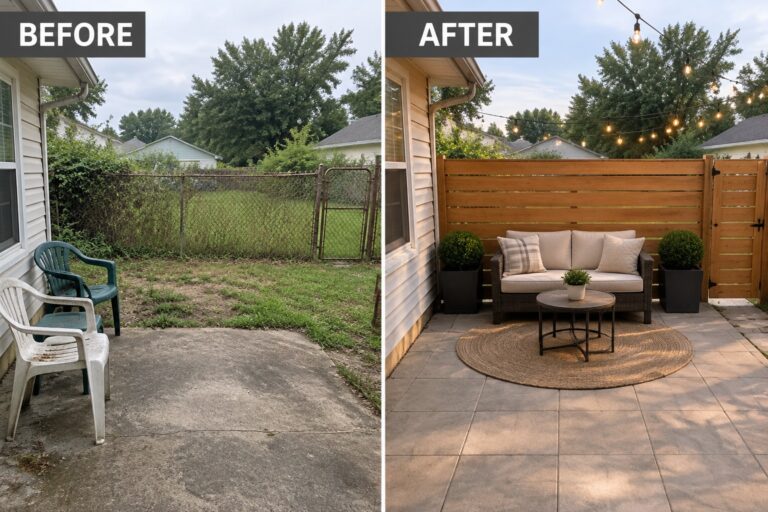
A backyard patio can feel exposed and hard to settle into when there is little to soften the view or block nearby activity.
I like how a well-placed privacy fence can give the seating area a clearer shape while making it more comfortable for meals, reading, or quiet time outside.
The best designs also work with the home and yard, using materials, height, and planting to add privacy without making the space feel boxed in.
Seeing a bare patio become more useful is satisfying, especially when the changes feel practical rather than fussy.
Some of these ideas are worth saving and adapting to fit your own yard, budget, and level of privacy.
Create Privacy With a Backyard Fence
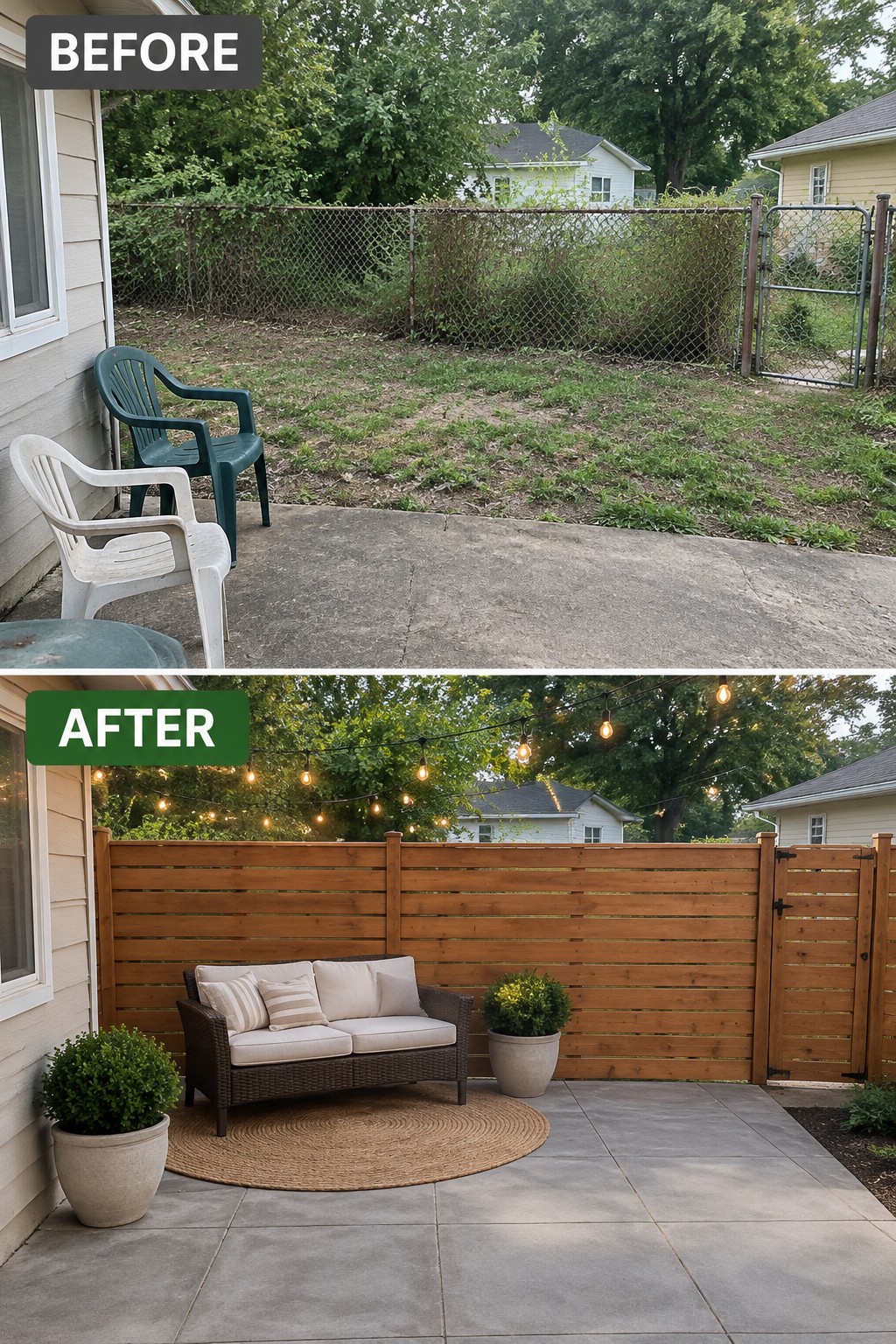
Replacing the chain-link boundary with a solid wood fence turns an exposed patio into a more private seating area. The fence gives the yard a clear edge, so the patio feels more like an outdoor room rather than an open patch beside the house.
For a similar setup, choose a fence height that offers privacy without making a small yard feel boxed in. Keep the seating close to the house, and leave enough room to move comfortably around it.
Turn A Bare Patio Into A Private Seating Area
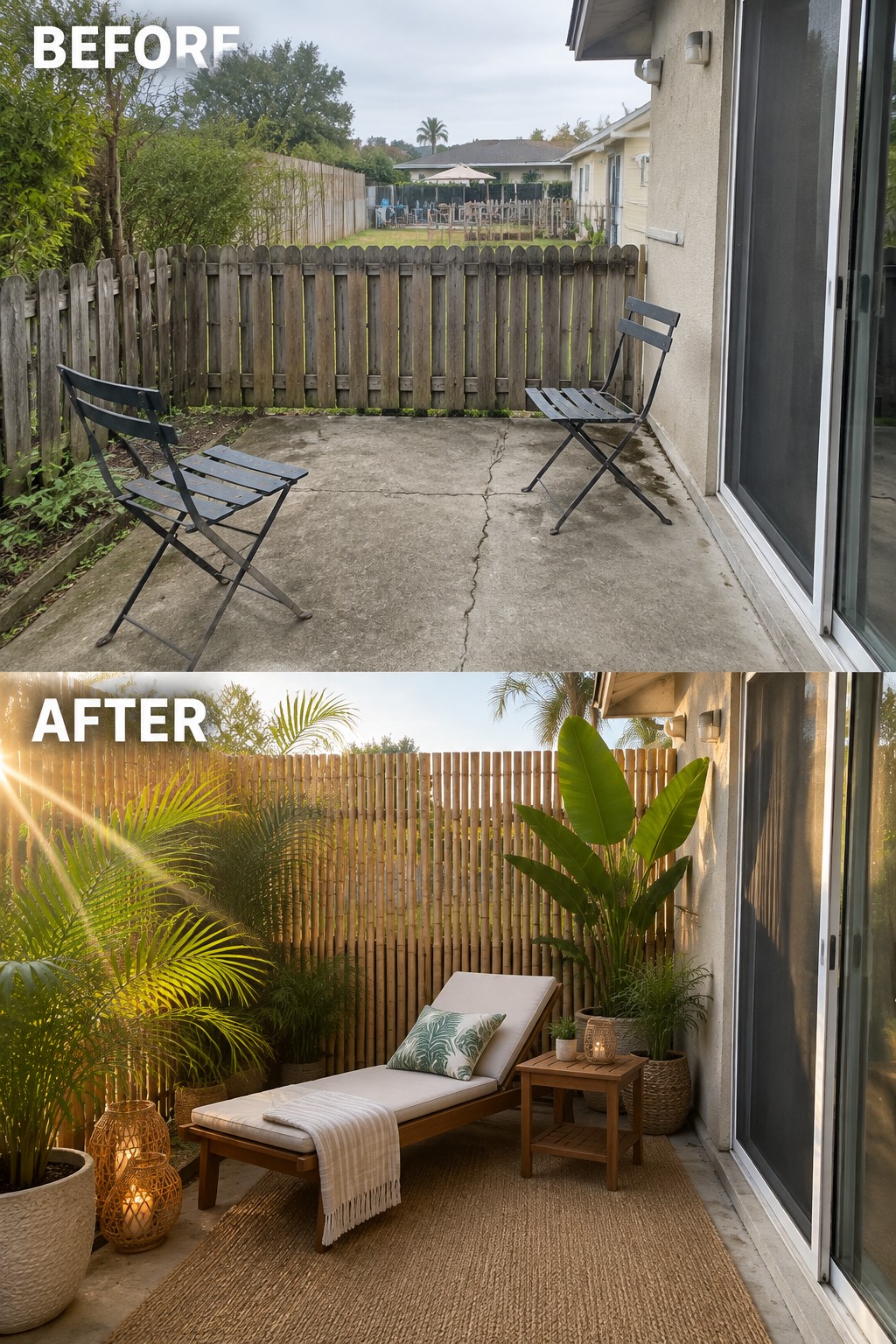
An unused concrete patio can become a comfortable place to sit when privacy is handled first. Here, a bamboo screen replaces the open view through the fence, making the small patio feel more sheltered and giving the seating area a clear boundary.
For a similar space, attach a privacy screen to a sound fence, then add just enough furniture to leave room to walk. A slim lounge chair works well on a narrow patio, and a weather-resistant rug can help define the spot without crowding it.
Create A Private Patio Seating Area
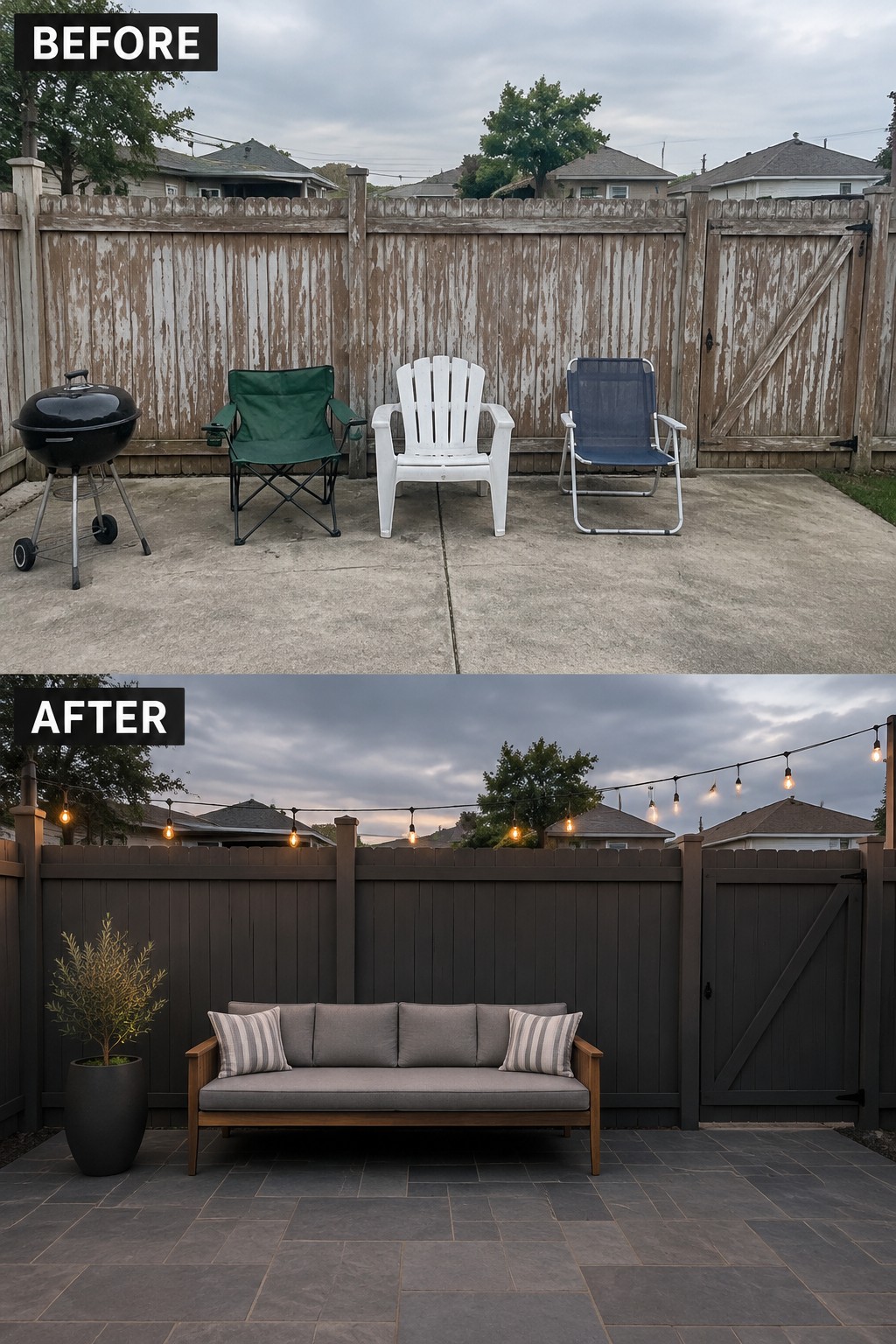
A worn fence can make a patio feel exposed and unfinished. Replacing it with a solid, dark privacy fence gives the seating area a more defined backdrop, turning bare concrete into a place that feels set aside for relaxing.
For a similar update, start with the fence and seating before adding smaller decor. A simple sofa can make a narrow patio useful without crowding it, and weather-rated string lights help the space work into the evening. Check that the fence finish is suitable for outdoor use and that the seating still leaves room to walk.
Create Privacy Along The Patio

The bare strip beside this patio was hard to use, but adding trellis panels along the fence gives climbing roses a place to grow and makes the seating area feel more sheltered. It’s a practical way to bring privacy to a small yard without building a taller fence.
Use a sturdy trellis that suits your existing fence, and leave enough room for plants to grow without crowding the path. Climbing plants take time to fill in, so the patio can still work well while they establish.
Turn A Blank Patio Into A Private Seating Area
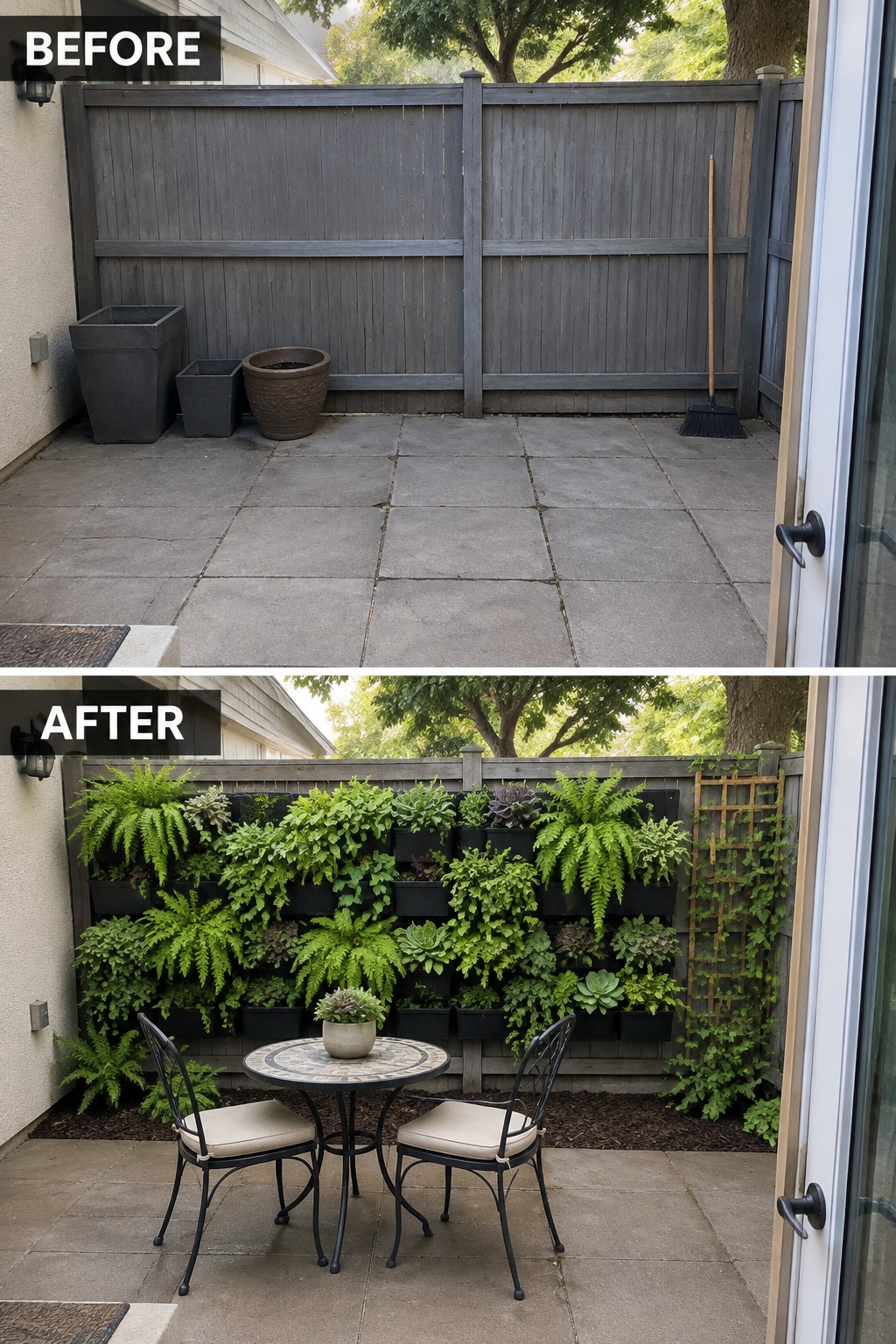
A tall fence can do more than block a view. Here, wall-mounted planters turn the bare fence into a leafy backdrop, while a small table and chairs make the concrete patio useful for sitting and dining.
This idea works well in a compact patio where there isn’t room for a large garden bed. Use sturdy planters suited to your fence and choose plants that fit the available light. Keep the seating modest so there’s still space to move around.
Turn An Unused Patio Into A Private Seating Area

A privacy fence can make a narrow patio feel like a room instead of a walkway. Here, the old picket fence gives way to a taller metal fence with wood posts, and the once-empty concrete becomes a place to sit.
This idea works well in side yards where space is limited but privacy is lacking. Choose weather-ready seating that fits without blocking the path, and keep the layout simple so there’s still room to move.
Turn An Empty Patio Into A Private Seating Area

The worn fence made this patio feel exposed, and the bare concrete had little purpose. Replacing the solid boards with translucent privacy panels gave the seating area a more enclosed feel while still letting in light.
For a similar setup, add a compact outdoor sofa or chairs to make the patio useful, and choose panels tall enough to block sightlines where you need privacy. Check local rules before changing a boundary fence, and leave enough open floor space to move around comfortably.
Build A Patio Bench Along The Fence
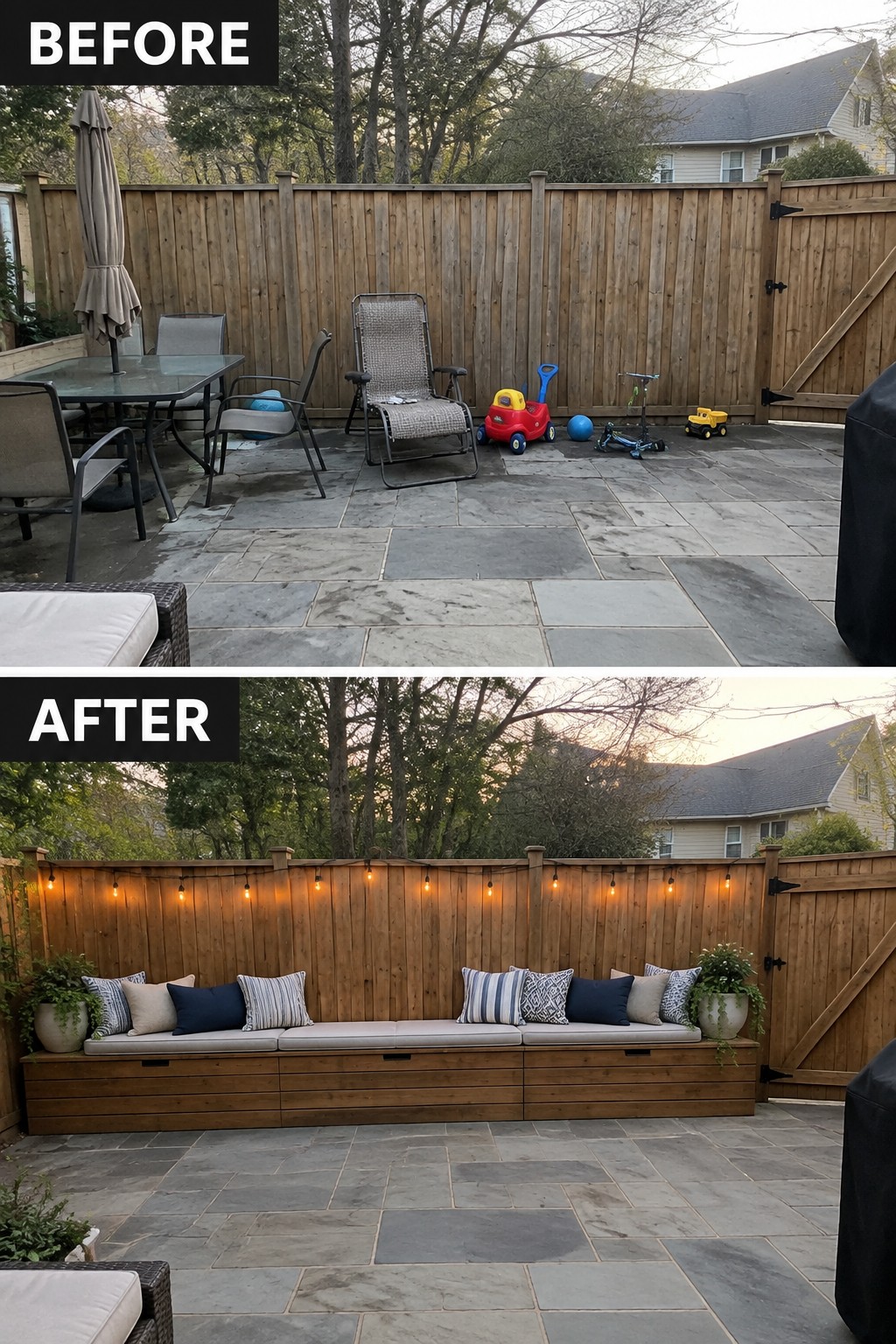
A long built-in bench turns an underused patio into a comfortable place to sit while making use of the fence line. Here, the scattered chairs are replaced by a continuous wooden seat, giving the patio a clear seating area without taking up the middle of the space.
This idea works well in a narrow or small backyard where freestanding furniture can get in the way. Keep the bench depth comfortable, leave room to walk in front, and choose cushions made for outdoor use.
Add Privacy To A Covered Patio
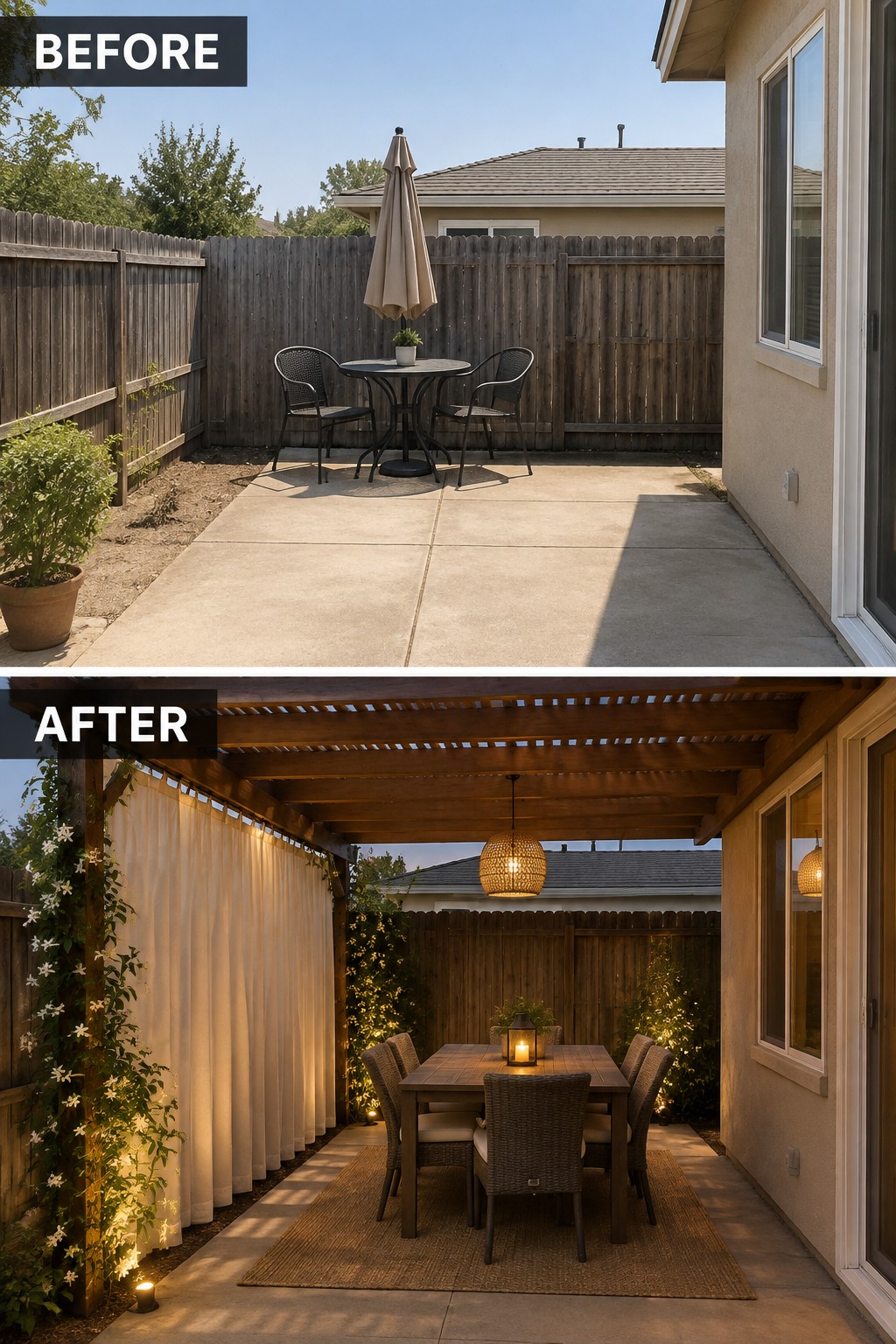
A pergola and outdoor curtains turn an exposed patio into a more sheltered place to eat. The curtains help screen the side of the seating area, while the roof gives the table a clear place to sit.
This idea works well on a narrow patio beside the house, especially when a tall fence alone does not make the space feel enclosed. Use weather-friendly curtains and leave enough room to pull chairs out and walk around the table.
Replace A Plain Fence With A Privacy Wall
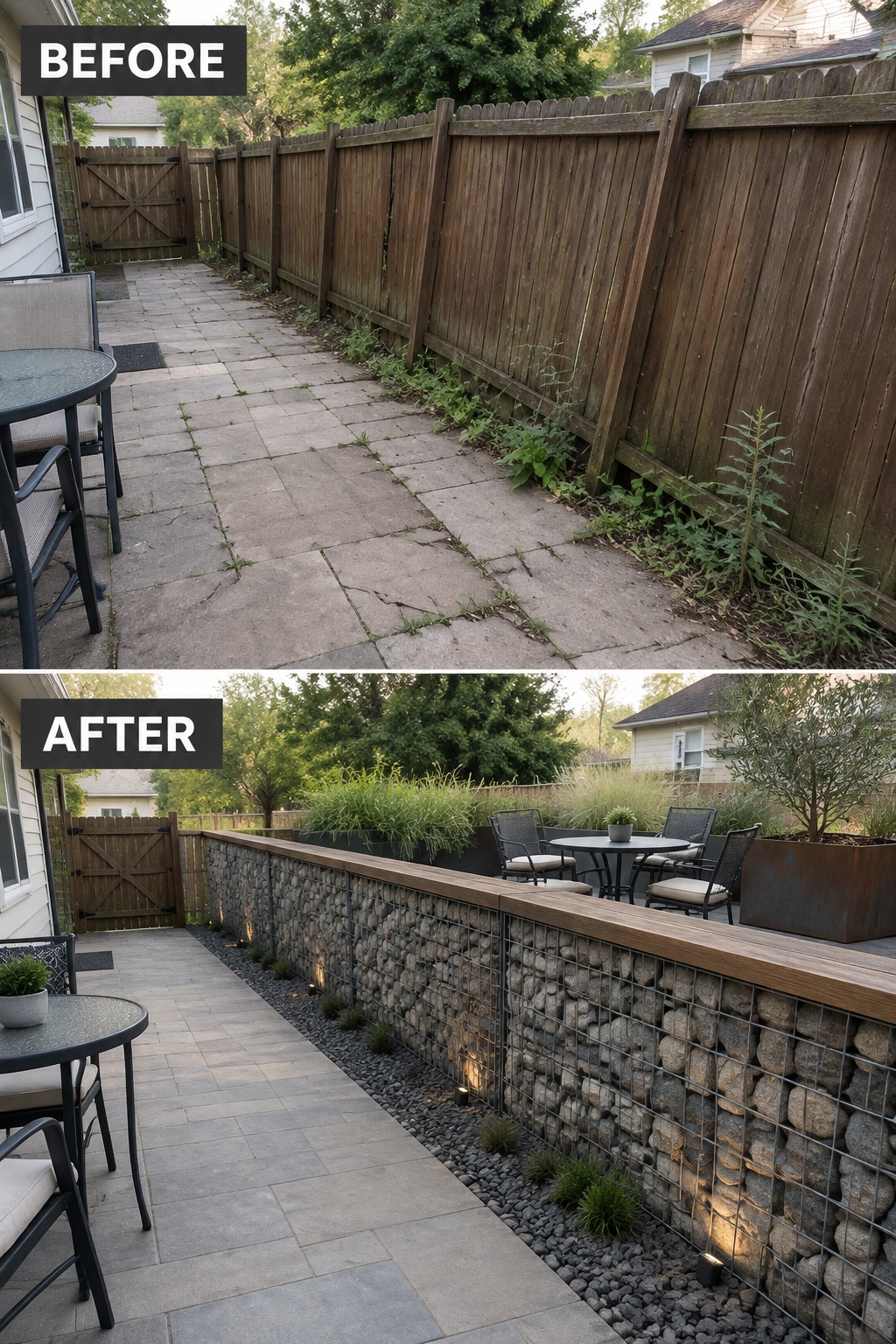
The old fence left the patio feeling exposed and a little neglected. Replacing it with a stone-filled gabion wall topped by wood gives the seating area more privacy and makes the boundary feel intentional.
This idea suits a narrow patio where the fence runs close to the seating. Keep the wall low enough to preserve light, and leave enough room for a clear walking path beside it.
Add A Raised Planter Along The Fence
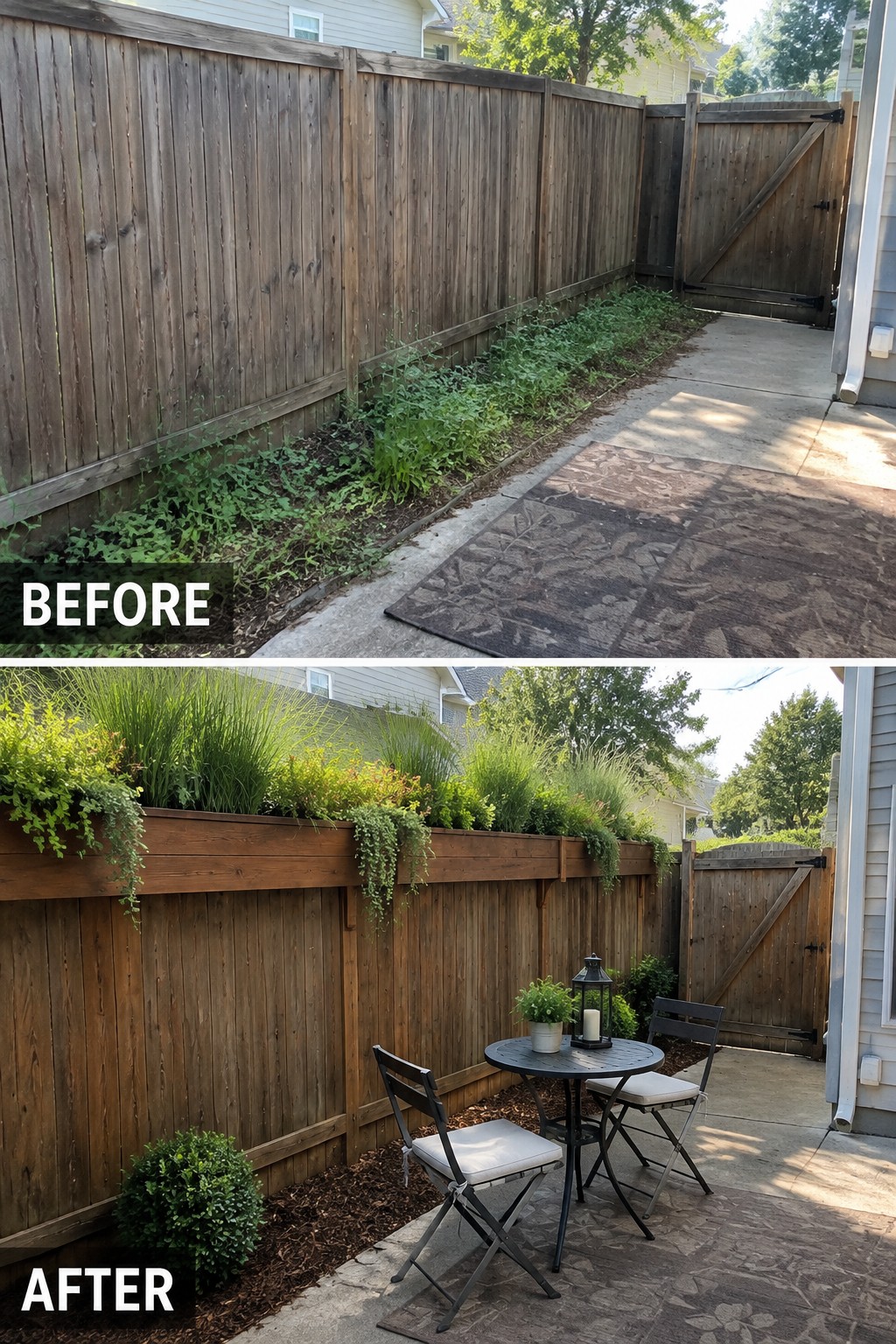
A narrow planting strip can make a bare fence feel more finished and give a small patio a little privacy. Here, a raised planter adds greenery above the fence line while the cleared bed below helps the space feel tidier.
This idea works well along a side-yard patio where there isn’t room for large garden beds. Keep the planter sturdy and choose plants suited to your sun and climate, then leave enough space below for a small seating area.
Make A Small Patio Feel Like An Outdoor Room
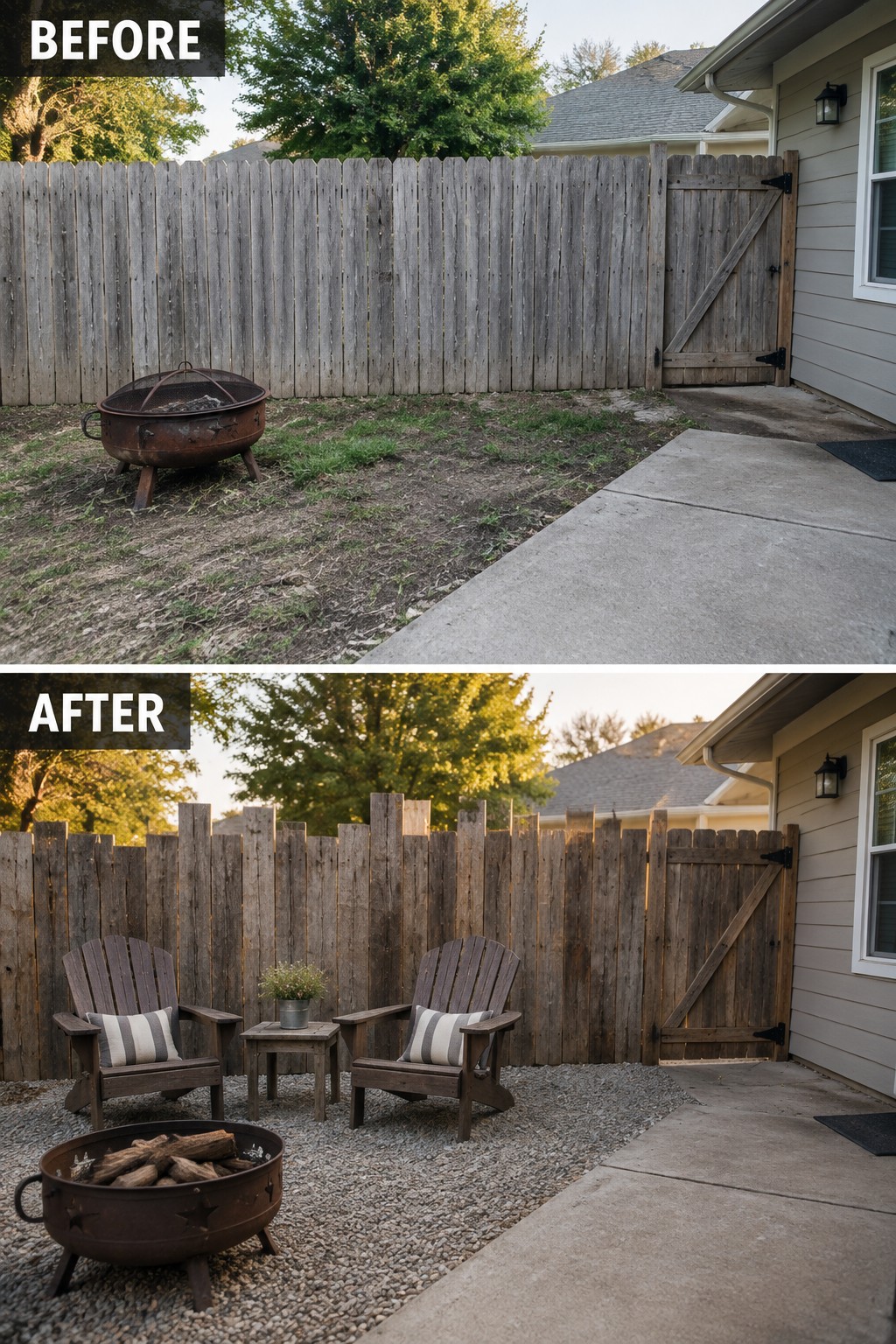
The bare yard becomes a more useful seating spot once gravel covers the worn ground and chairs gather around a small table. The existing fence gives the area a sense of privacy, so there’s no need to add more screening before making room to sit.
For a similar setup, use gravel to define the seating area and choose weather-ready chairs that fit without blocking the path to the house. A fire pit can sit nearby, but leave enough space around it for safe, comfortable movement.
Use A Painted Fence To Define A Patio Seating Area
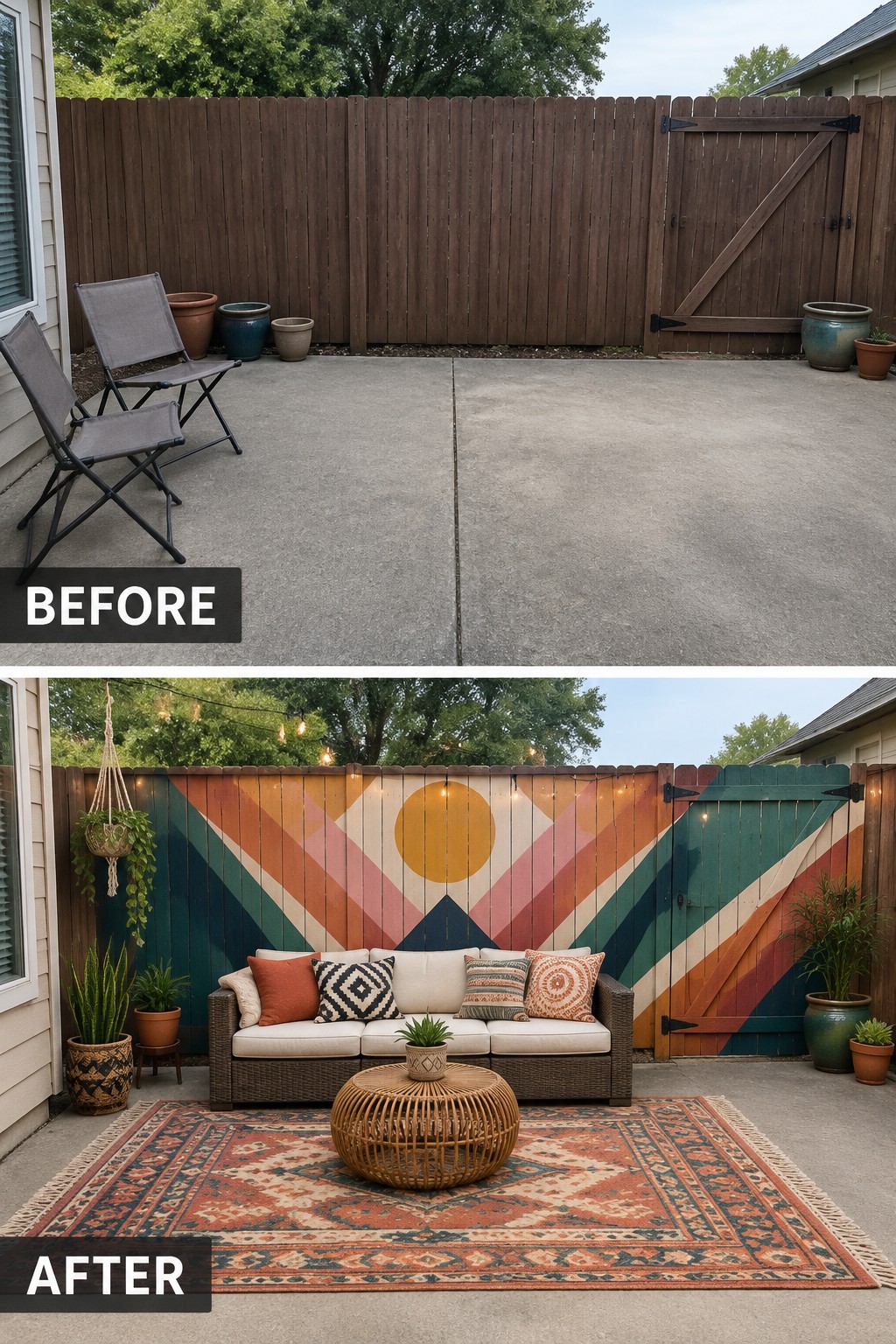
A plain fence can do more than block the view. Painting it in a bold geometric pattern gives a patio a clear focal point, while a sofa and outdoor rug turn bare concrete into a comfortable place to sit.
This idea works well in a small, enclosed yard where the fence is always in view. Choose a few colors that suit your cushions, and keep the furniture low enough that the painted design remains visible.
Use Fence Lighting To Make Patio Dining More Usable

The plain fence becomes a useful backdrop for outdoor dining once the patio has a table and warm lights along the posts. The lighting helps define the seating area and makes it easier to use after sunset, without changing the fence itself.
For a similar setup, place lights where they illuminate the table and seating, then keep the furniture sized to leave room to walk around. This works well when a privacy fence already encloses a concrete patio that needs a clear purpose.
Add Curtains To Create A Private Patio Seating Area

An empty concrete patio can feel exposed and hard to use. Here, outdoor curtains make a tucked-away seating area beside the fence, giving the patio a clearer purpose without changing the hardscape.
For a similar setup, place the seating where the curtains can provide privacy without blocking the main walkway. Choose weather-resistant fabric and sturdy hardware, and leave enough room to open the curtains when you want more light or airflow.
Turn A Plain Fence Into A Patio Feature

A tall fence can do more than block views. Here, narrow wood slats and a few shelves turn a bare patio boundary into a useful backdrop for plants, while still keeping the seating area private.
This idea works well in a small patio where the fence is already the main boundary. Use weather-resistant wood and keep shelves shallow so they do not crowd the space. A few well-spaced plants are usually enough.
Use A Fence Screen To Make A Patio More Private

The tall bamboo screen turns a patio that felt exposed into a more secluded place to sit. It covers the weathered fence without taking up much floor space, so the small area can work as a quiet seating nook.
A reed or bamboo screen can be a practical option when replacing a fence is not in the budget. Secure it well, and leave enough room for chairs and a clear path through the patio.
Add A Lattice Top For Patio Privacy

The bare patio felt exposed, but adding a lattice section above the solid fence gives the seating area more privacy without making the fence feel like a tall, solid wall. A sofa and outdoor rug then make the concrete feel like a place to sit, not just a path beside the house.
This idea works well in a narrow side yard where you want a little separation but still want light and air to pass through. Check local fence-height rules before adding a lattice top, and keep enough clear space for people to walk comfortably.
Replace A Worn Fence To Make The Patio More Private

A solid wood fence can make a patio feel like a separate outdoor room, especially when the old, weathered barrier is replaced with a taller, more finished one. Here, the new fence gives the seating area privacy and a cleaner backdrop.
If your patio feels exposed, start by checking local fence rules and choosing a style that suits the space. Keep the seating simple and leave enough room to move around comfortably; a private patio works best when it still feels easy to use.
Use A Slatted Fence To Make Patio Dining More Private

A slatted fence turns an exposed concrete patio into a more comfortable place to eat outdoors. The horizontal boards block much of the view from outside while still letting light and air pass through, so the seating area feels less closed in than it would behind a solid wall.
This idea works well when you want privacy without making a small patio feel boxed in. Choose weather-resistant furniture, and leave enough space around the table for people to pull out their chairs and move comfortably.
Add a Privacy Wall Along The Patio

A low stone wall and dense planting turn the bare strip beside this patio into a more private seating area. The wall gives the bench a defined place to sit, while the greenery blocks views through the fence without closing off the yard completely.
This idea works well in a narrow patio where there isn’t room for a separate screen. Keep the wall low enough to preserve an open feel, and leave a clear path between the seating and the house.
Add Vertical Greenery For Patio Privacy

A bare fence can make a patio feel exposed and unfinished. Climbing plants and hanging greenery turn it into a more private backdrop, while leaving the patio floor open for seating.
Use a trellis or sturdy supports to guide climbers, and choose plants suited to your climate and the amount of sun the fence gets. Start with a few well-placed containers rather than crowding a small patio with pots.
Add Lighting To Make A Fence-Side Patio Usable
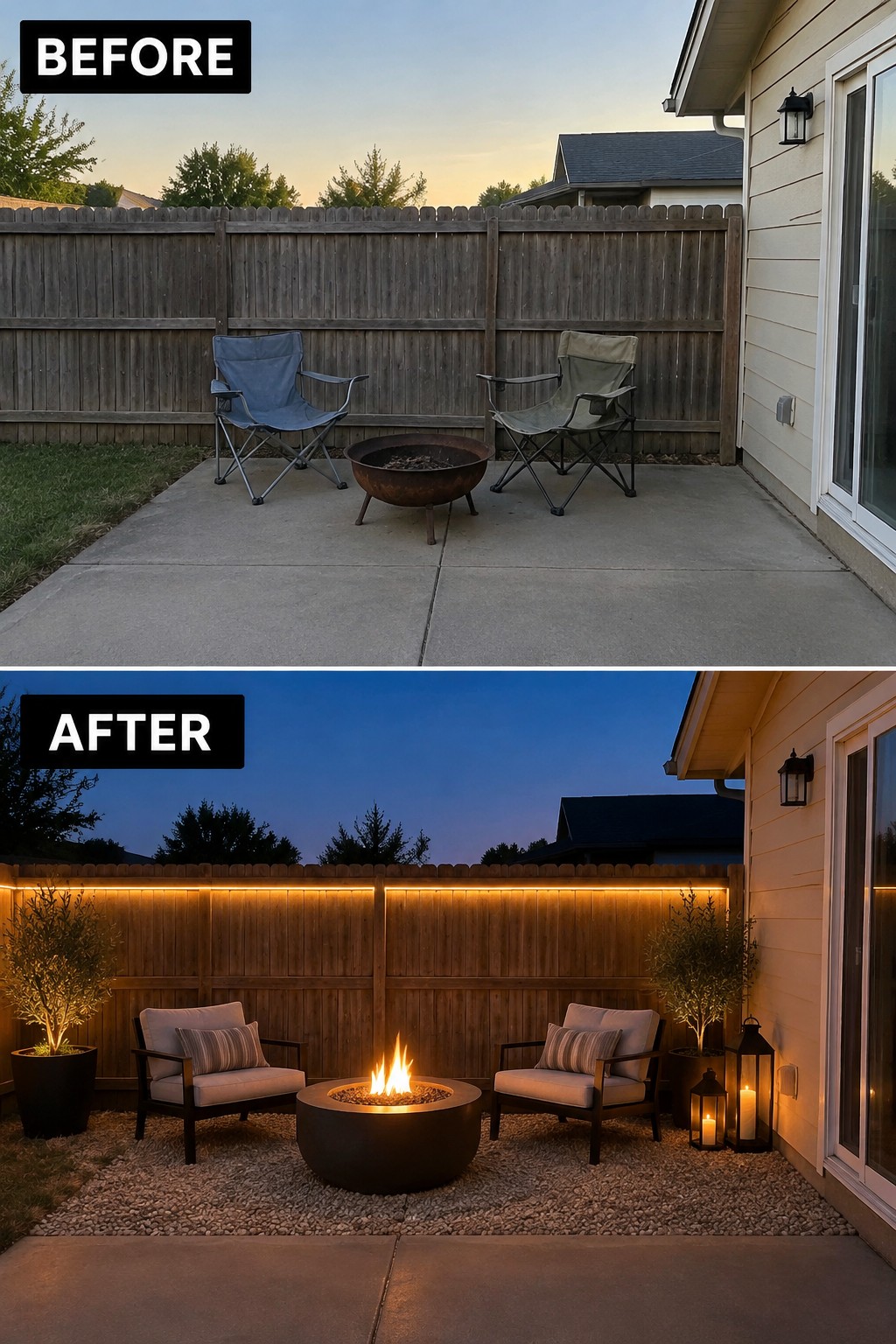
The bare concrete patio becomes a more comfortable seating area, and lights along the privacy fence help make it usable after dark. The fence gives the small yard a clear boundary, while the steady light makes the seating area feel connected to it.
For a similar setup, start with weather-resistant fence lighting and place it where it can illuminate the seating without shining into the house. Keep the furniture arrangement simple so there is still room to move around.
Frequently Asked Questions
Q: How tall should a privacy fence be around a patio?
A: A six-foot fence blocks most views from nearby yards while still feeling comfortable around a seating area. If your patio sits lower than a neighbor’s, a taller fence or a short privacy screen near the table may work better.
Q: Can I add privacy to an existing fence without replacing it?
A: Yes. Attach lattice, horizontal slats, or outdoor fabric to the parts where you need more coverage. Check that the fence posts can handle the added weight, especially if the new material catches wind.
Q: What plants work well along a patio privacy fence?
A: Choose plants that suit your sun and space, such as climbing vines on a sturdy trellis or narrow shrubs along the fence. Leave room for airflow and watering so the plants don’t press against the wood and trap moisture.
Q: How do I keep a privacy fence from making my patio feel boxed in?
A: Break up a solid wall with a lighter finish, open lattice near the top, or a few built-in planters. Even one opening toward a garden view can make the patio feel more inviting.
