

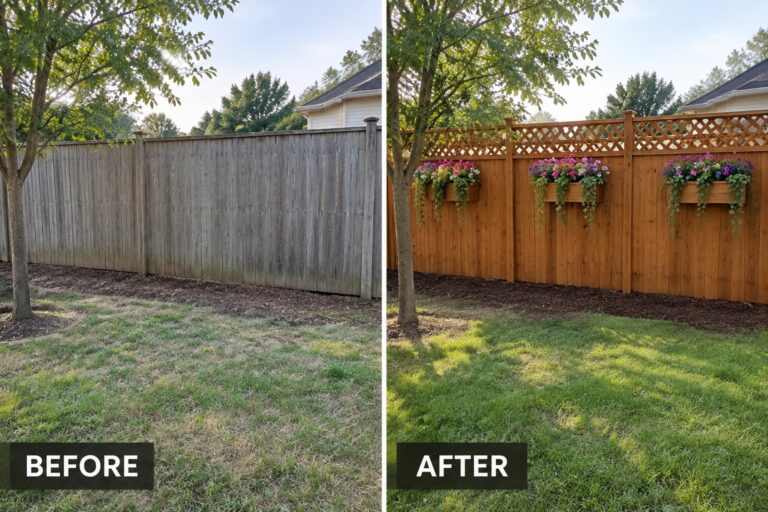
A plain privacy fence can make a yard feel closed off without adding much character, while a lattice extension brings extra height and a lighter, more finished look.
I like how the open pattern can soften a solid fence and give climbing plants somewhere to grow, while still helping screen a patio or seating area.
The best changes also take the fence’s condition and the yard’s layout into account, so the added detail feels like it belongs rather than an afterthought.
Seeing a once-bare boundary become more useful and cared for is a satisfying kind of progress.
I’d save the ideas that suit your fence and test a small section first to see how the height, pattern, and planting work in your own yard.
Add A Lattice Extension For More Privacy

A lattice extension gives a tall privacy fence a more finished look without making the whole yard feel boxed in. Here, the plain fence gains a decorative top and a warm stain, while flower boxes bring a little color along the fence line.
This idea works well when you want extra privacy but still want some openness above the fence. Check local height rules before adding an extension, and secure it firmly to the existing posts.
Add Lattice To Improve Fence Privacy

Replacing a worn fence with solid lower boards and lattice above gives the yard more privacy without making the boundary feel like a solid wall. Climbing roses help the new fence blend into the garden, but the lattice is the main change that makes this idea useful.
This approach works well when you want to screen a neighboring yard while still letting some light and air through. Choose sturdy lattice panels and secure them well, especially if climbing plants will add weight over time.
Add Privacy To An Overgrown Yard

A solid fence can make a neglected yard feel more private and orderly. Here, the open chain-link boundary is replaced with a tall white fence topped with lattice, so the yard feels screened without the top looking completely closed in.
This idea works well when you want more privacy along a patio or property line. Check local fence-height rules first, and leave enough clearance around plants so they do not press against the panels.
Turn A Plain Patio Into A Private Seating Area

A solid fence can make a patio feel closed off, but replacing part of it with a lattice extension lets in light while still giving the space privacy. Here, the updated fence helps turn bare concrete into a spot for sitting outdoors.
This idea works well in a small backyard where the fence is close to the seating. Keep the lattice height suited to the privacy you need, then leave enough open patio space to move around the chairs.
Give A Plain Fence More Privacy And Character

A solid fence can feel a little bare, especially when it runs along the whole yard. Adding lattice above the fence panels lets in some light while giving climbing plants room to grow, so the boundary feels more finished without losing its private feel.
This idea works well along a side yard or property line where you want a clearer edge and a bit of greenery. Keep the planting bed narrow and leave enough space to maintain the fence; a simple gate in a contrasting color can make the entrance easier to spot.
Make A Plain Fence Feel More Finished

Adding lattice above a solid fence gives the yard a more considered look without replacing the whole fence. Here, the lattice extension breaks up the long blank panels, while the planted border helps the fence feel connected to the garden.
This idea works well when a fence is sound but looks plain or weathered. Keep the planting bed narrow if space is limited, and use a few repeated plants so it stays tidy rather than crowded.
Turn An Overgrown Patio Into A Private Seating Area

A lattice extension can make a backyard feel more private while giving climbing plants a place to grow. Here, the bare, overgrown yard becomes a more usable patio, with a taller fence and lattice helping screen the seating area.
This idea works well in a small yard where neighboring windows or nearby homes look into the patio. Keep the lattice height in line with local rules, and leave enough open space for comfortable seating and movement.
Add A Trellis To Give A Bare Wall More Privacy

A trellis can make a plain concrete boundary feel more private and considered without replacing the wall. Here, the wooden lattice gives climbing plants room to spread, turning the blank surface into a greener backdrop.
This idea works well in a narrow side yard or along a boundary that needs a little screening. Secure the trellis properly, choose a climber suited to your light and climate, and leave enough room below for a bench or path.
Make A Poolside Patio More Private

The solid fence left the pool area feeling exposed and bare. Adding a lattice extension gives the yard more privacy without making the fence feel like a tall, blank wall, and a narrow planter shelf makes the new fence line more useful.
This idea works well around a pool or small patio where you want a little screening but still want the space to feel open. Keep the planting low enough to avoid crowding the seating area, and leave plenty of room to move around the pool.
Add A Lattice Extension For More Privacy

A low fence can leave a narrow side yard feeling exposed. Adding a lattice extension and reed screening above the existing fence makes the path more private without replacing the whole fence. The planting along the walkway helps it feel like a small garden passage rather than a bare corridor.
This approach works well beside a house where space is tight and a full-height solid fence might feel too closed in. Check local fence height rules first, and leave enough room for the path so the added screening does not make the walkway feel cramped.
Add Lattice For More Fence Privacy
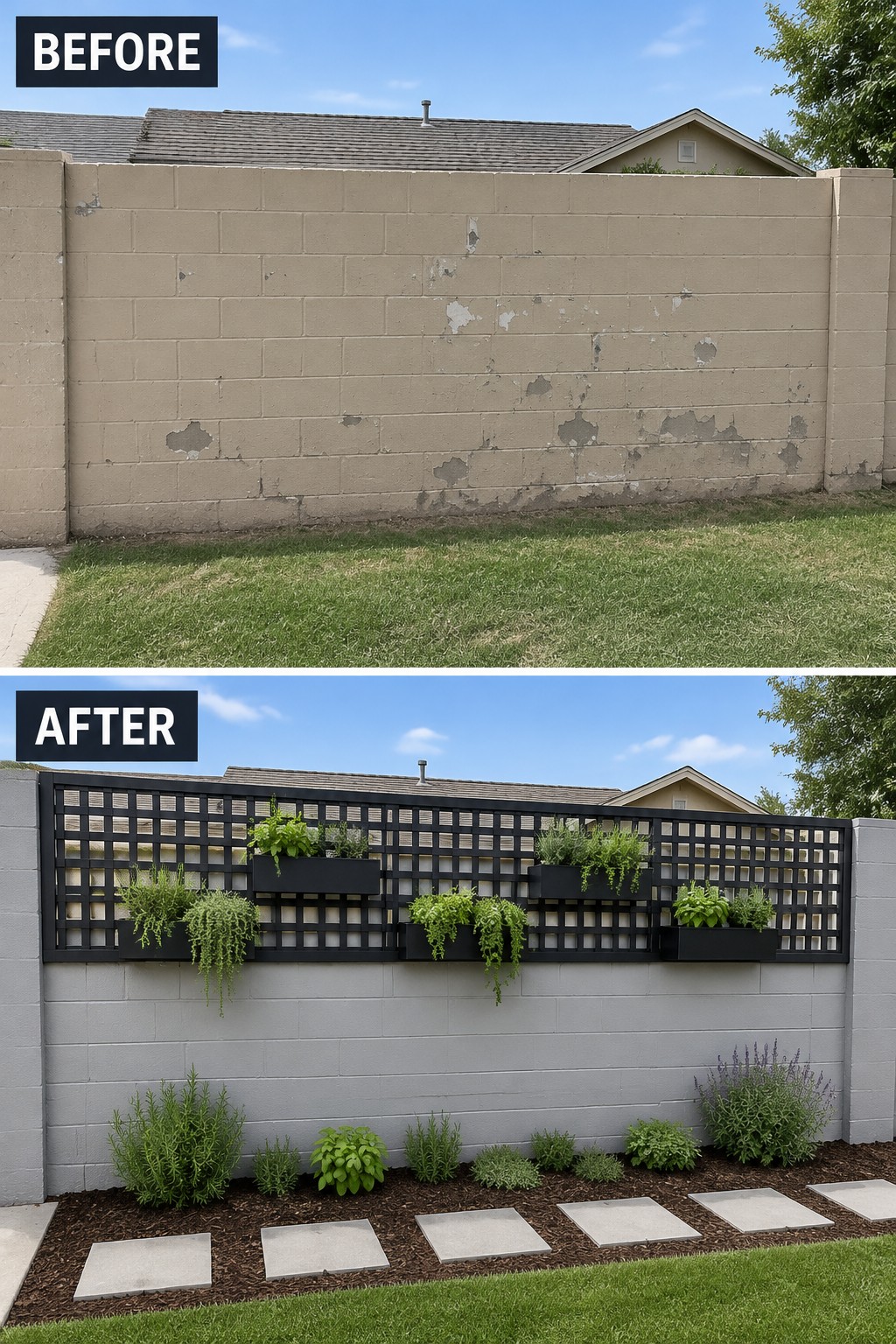
A lattice extension can make a plain block wall feel more private and finished without replacing the fence. Here, the dark panels cover the upper section, while the lighter wall below keeps the yard from feeling boxed in.
This idea works well when a solid wall is sturdy but looks worn or feels too low for privacy. Attach a secure lattice panel and add a few planters if you like, but leave enough open space for the fence to feel light.
Add Lattice To Create More Privacy
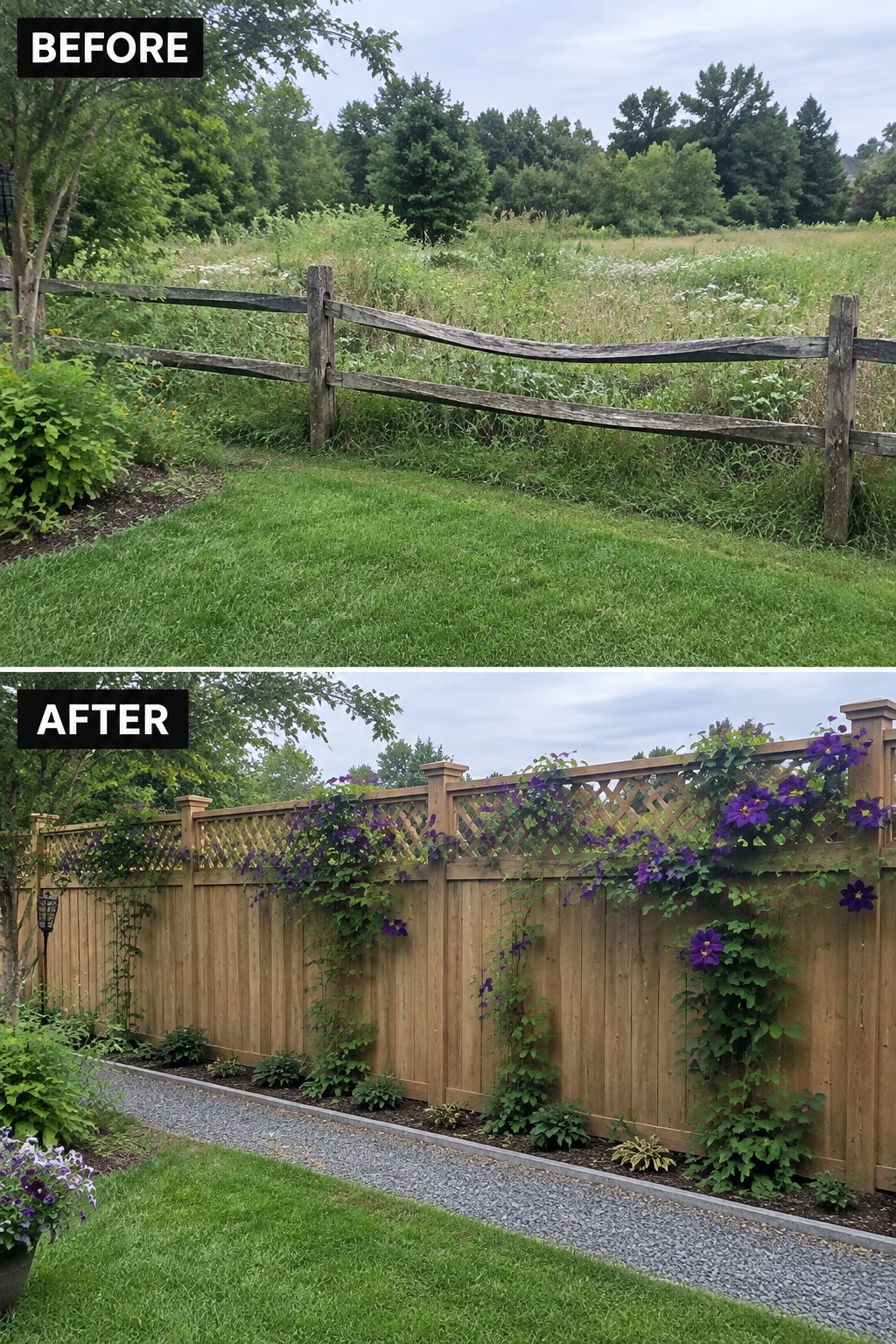
A solid fence with a lattice top can make an exposed yard feel more secluded without closing it off completely. Here, the old rail fence is replaced by a taller wooden fence, and the lattice gives climbing plants a place to grow.
This idea works well along a property line where you want privacy but still want the fence to feel open. Choose sturdy lattice and plant vines with enough room to spread, while keeping them trimmed so they do not weigh down the fence.
Turn A Plain Deck Into A Private Seating Area
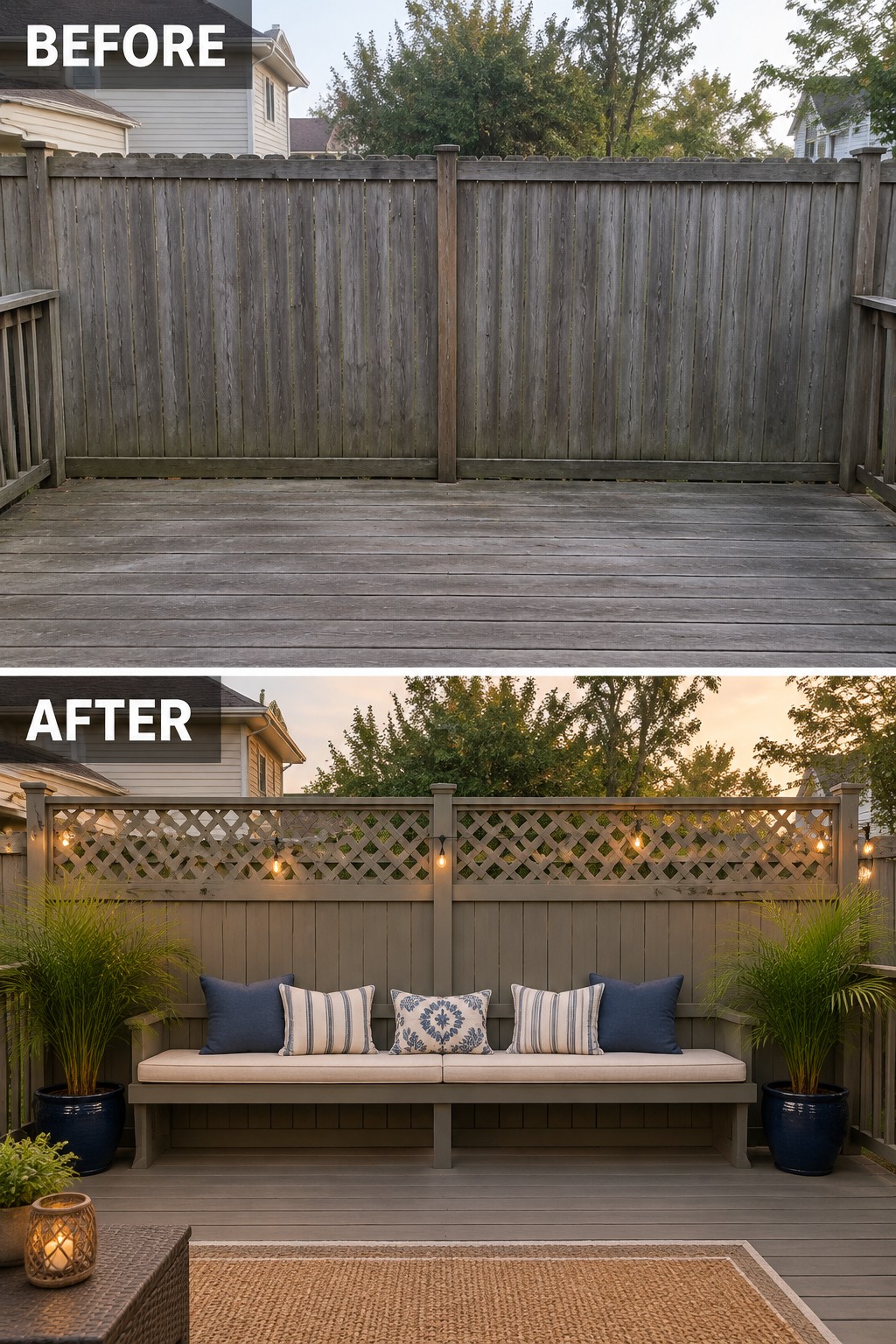
A tall, solid fence can make a deck feel closed off, even when it offers good privacy. Adding a lattice section along the top lets in a little more light and gives the fence a finished look, while a built-in bench makes the space useful for sitting.
This approach works well on a small deck where a separate seating set might take up too much room. Keep the bench sized to the available space, and leave enough clearance to move around it.
Use Planter Boxes To Finish A Privacy Fence

A fresh stain and narrow planter boxes turn a worn fence into a neater, more useful boundary. The lattice already provides extra privacy, while the boxes bring greenery up to eye level without taking up much yard space.
This idea works well along a side yard or any fence that feels bare but still needs to screen nearby views. Choose sturdy boxes that attach securely, and keep plants trimmed so they do not weigh down the fence or block the lattice.
Update An Old Fence For A Cleaner Yard

An overgrown fence line can make a yard feel neglected, even when the lawn is kept up. Replacing the worn panels with a dark fence and adding a lattice extension gives the boundary a cleaner, more consistent look while improving privacy.
This idea works well when an old fence is the main eyesore in a backyard. Keep the planting simple, or use a few large planters along the base so the new fence remains easy to see and maintain.
Refresh A Fence With A Clean White Finish
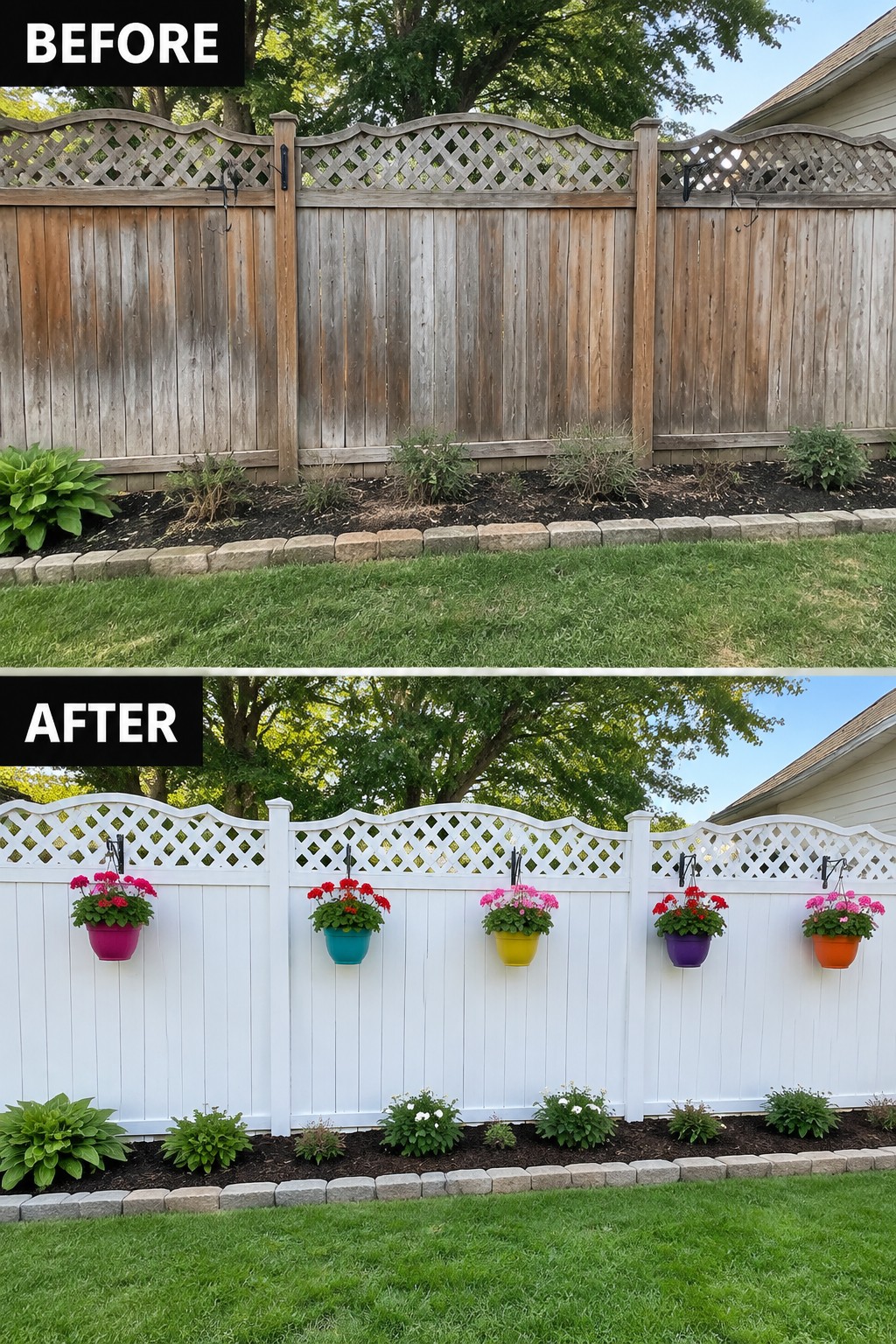
Painting a weathered privacy fence white gives the yard a much tidier backdrop. Here, the lattice top remains in place, while the fresh finish makes the whole fence look more cared for.
This idea works well when the fence is sound but faded or stained. Clean and repair the boards first, then use an exterior paint made for fences; check whether the wood needs a primer so the finish holds up.
Make A Small Patio More Private

A lattice extension can make a compact patio feel more like its own outdoor room without replacing the whole fence. Here, the open lattice above the solid fence gives the seating area more separation while still letting in light and air.
This idea works well in a close-set backyard where a full-height solid fence might feel too heavy. Add lattice securely to the existing fence, then keep the furniture compact so there is still room to move around.
Add A Colorful Lattice Top To A Backyard Fence

A plain fence can feel more useful and finished when a lattice extension adds privacy without making the yard feel closed in. Here, the colorful upper panels give the play area a clearer boundary, while the low storage bench helps keep toys close at hand.
This idea works well in a family backyard where the fence is the main backdrop. Choose weather-resistant paint and keep the lattice pattern consistent, then check that the added height is allowed by local rules.
Build A More Private Vegetable Garden

A lattice extension can make a low or open garden fence feel more sheltered without blocking all the light. Here, climbing vegetables fill the trellis above raised beds, turning a sparse planting strip into a more private growing space.
This works well along a shared boundary where you want room for vegetables but do not want a solid wall. Set sturdy posts securely, choose plants suited to your sun and space, and leave enough room to reach the beds.
Give A Plain Fence More Privacy And Character
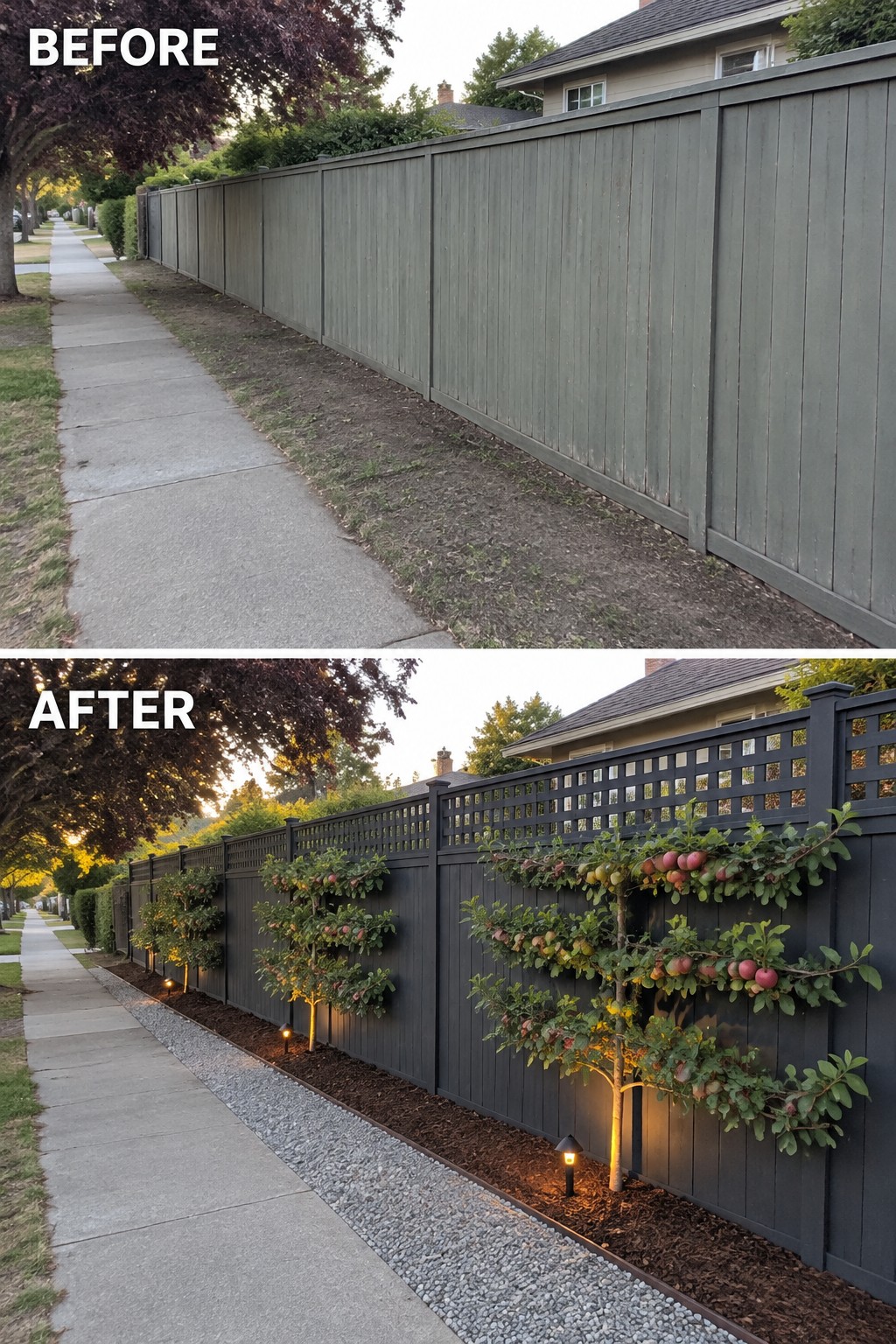
A solid fence can feel imposing, but adding a lattice extension gives it a more open finish while keeping the yard screened. Here, the dark fence also makes the fruit trees along the path stand out.
For a similar look, add lattice above an existing fence and train fruit trees or other compact plants along the bed below. Check local fence-height rules first, and leave enough room for the plants to grow without blocking the walkway.
Turn A Plain Fence Into A Private Patio

A lattice-topped fence can make a bare patio feel like a place to sit and stay awhile. Here, the added lattice and overhead trellis give the seating area more privacy without closing it in completely.
This idea works well in a small backyard where the fence is close to the patio. Add a simple bench or loveseat, and leave enough open floor space to move around comfortably. Climbing plants can fill in the lattice over time, but the seating area should still feel usable while they grow.
Frequently Asked Questions
Q: How much privacy does a lattice extension actually add?
A: It blocks more of the view without making the fence feel like a solid wall. For extra coverage, add climbing plants or choose smaller lattice openings, keeping in mind that plants need time to fill in.
Q: Can I add lattice to my existing fence?
A: Often, yes, if the fence posts are sturdy and tall enough to support it. Check for rot or wobbling first, since adding height puts more strain on the posts.
Q: Should I paint the lattice to match the fence?
A: Matching the fence makes the extension blend in, while a contrasting color draws attention to the pattern. Use outdoor paint or stain, and seal any cut edges before installing.
Q: Will a lattice extension hold up in windy weather?
A: It can, but a tall, solid-backed fence catches more wind than open lattice. Secure the extension firmly to the posts and check local height rules before adding it.
