

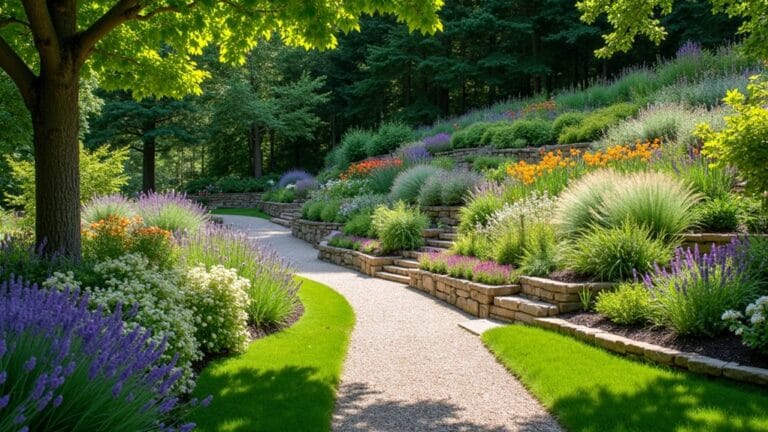
Are you looking to transform your sloped yard into a stunning garden space?
Flower beds might be the perfect solution to add both charm and functionality.
They not only beautify your landscape but also help prevent erosion.
I’ve gathered some clever ideas that blend aesthetics with practicality.
Let’s explore how these strategies can enhance your outdoor oasis.
Terraced Flower Beds
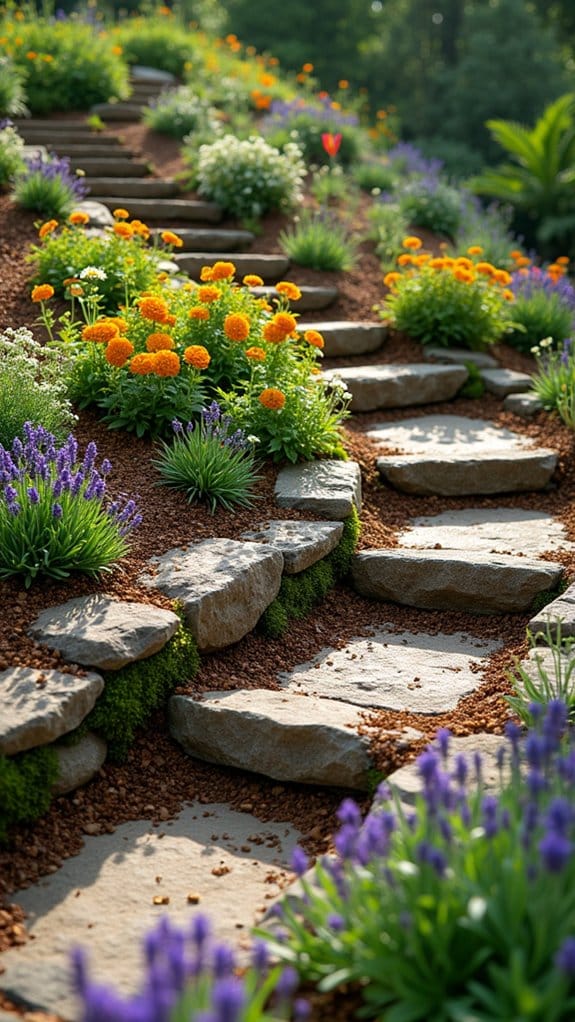
When I think of terraced flower beds, I picture a stunning multi-level garden that adds depth and interest to a sloped yard.
I love how these beds create distinct planting areas, each with its own unique flowers. They not only enhance the landscape but also help control soil erosion.
If you’re considering this option, you’ll find endless possibilities for design and color!
Retaining Walls With Built-In Planters
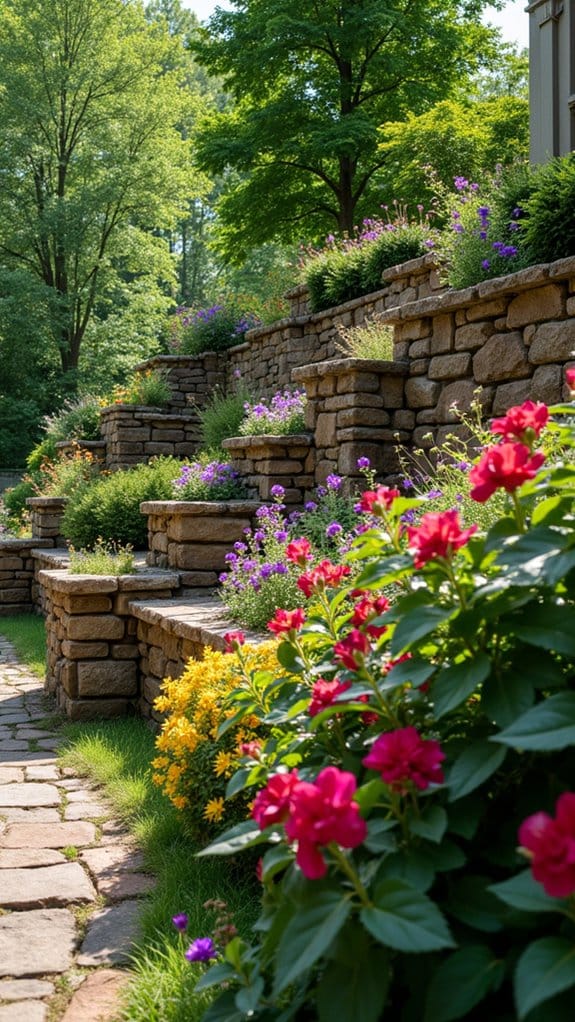
While creating a functional and beautiful landscape, I find that retaining walls with built-in planters offer a perfect solution for sloped yards.
They not only prevent erosion but also provide a stunning display of flowers and greenery.
I love how these walls create defined spaces, making it easy to incorporate various plants while adding depth and character to my outdoor area.
Native Plant Landscaping
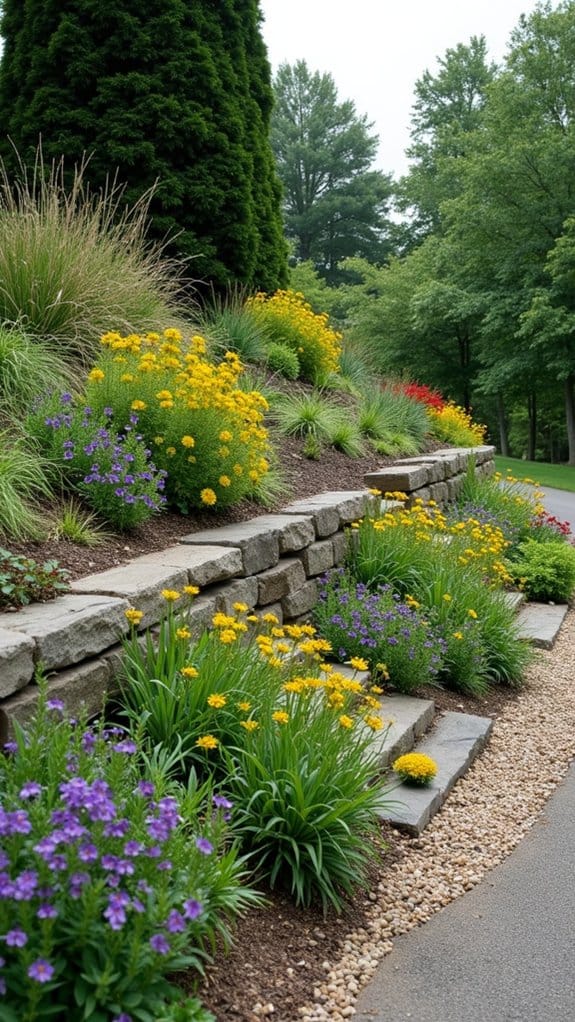
After establishing a sturdy foundation with retaining walls and built-in planters, I find that incorporating native plants into my landscape truly enhances its beauty and sustainability.
These plants thrive in my local climate, requiring less water and maintenance. Plus, they attract beneficial pollinators, creating a vibrant ecosystem.
Using native species not only looks great but also supports the environment. It’s a win-win!
Ground Covers for Erosion Control
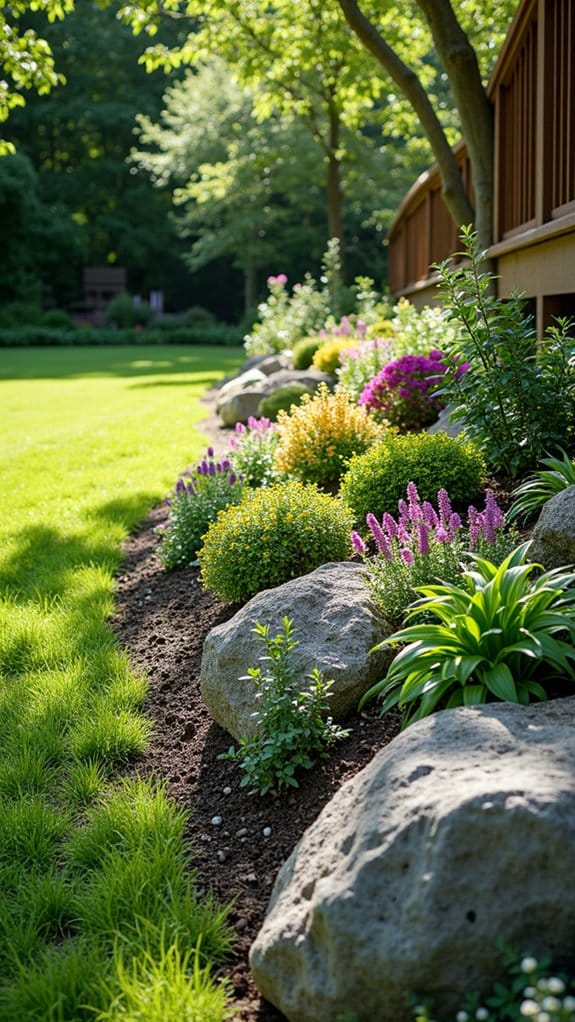
Although sloped yards can pose challenges for water drainage and soil stability, choosing the right ground covers can effectively prevent erosion.
I’ve found that plants like creeping thyme, sedum, and blue star creeper not only look great but also establish deep roots, holding the soil in place.
They’re low maintenance and add beauty while protecting your landscape from erosion.
Rock Gardens for Stability
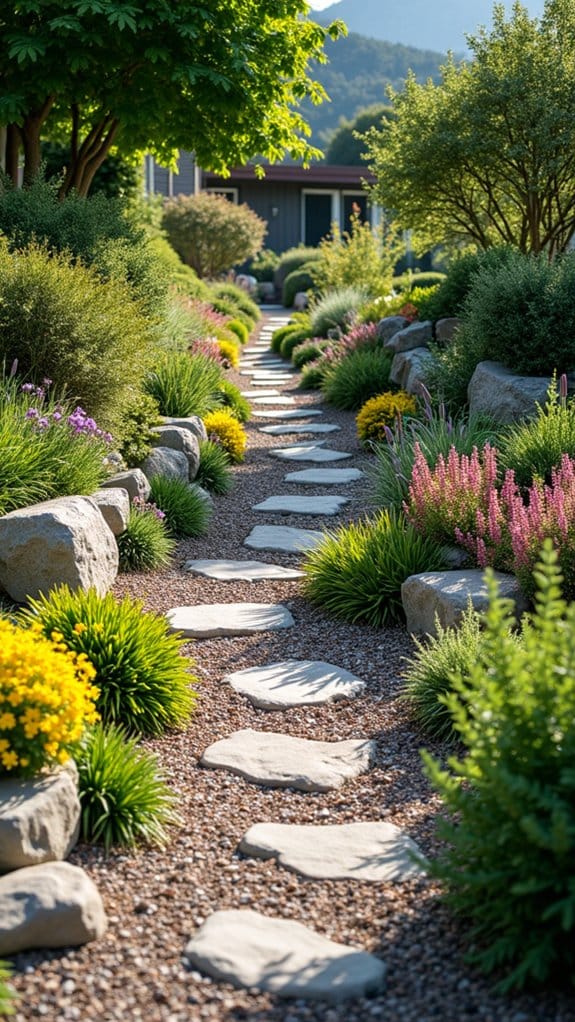
Creating a rock garden can be an excellent way to enhance stability in a sloped yard.
I love how these gardens not only prevent erosion but also add texture and visual interest. By strategically placing rocks and drought-resistant plants, you can create a stunning landscape that holds the soil in place.
Plus, they require minimal maintenance, making them a practical choice!
Raised Planter Boxes
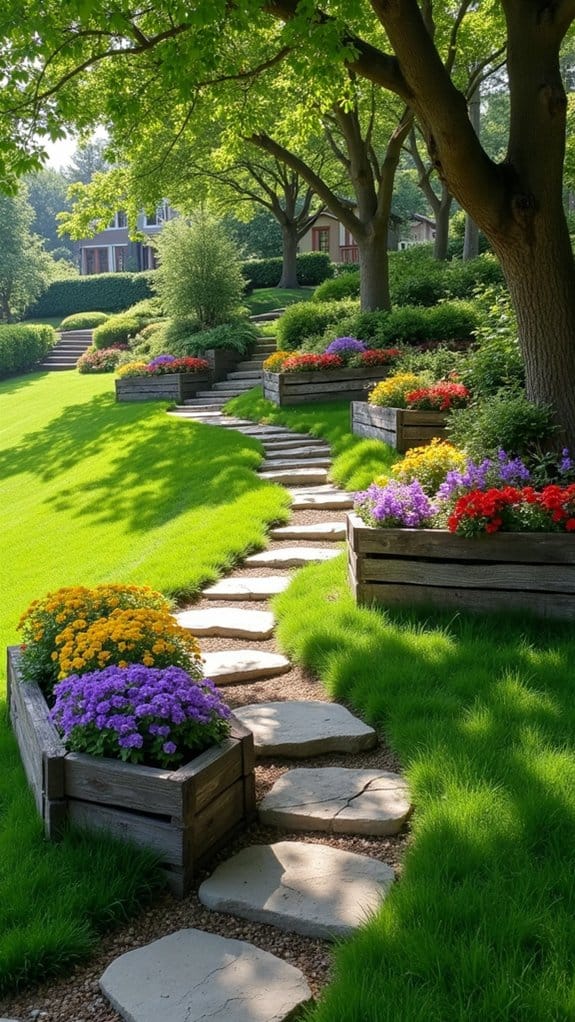
While I often seek practical solutions for sloped yards, raised planter boxes stand out as a versatile option.
They not only add visual interest but also help manage soil erosion effectively. I love how I can customize their height and design to fit my space.
Plus, they create defined areas for planting, making maintenance a breeze and allowing for a beautiful garden display.
Sloped Pathways With Plant Borders
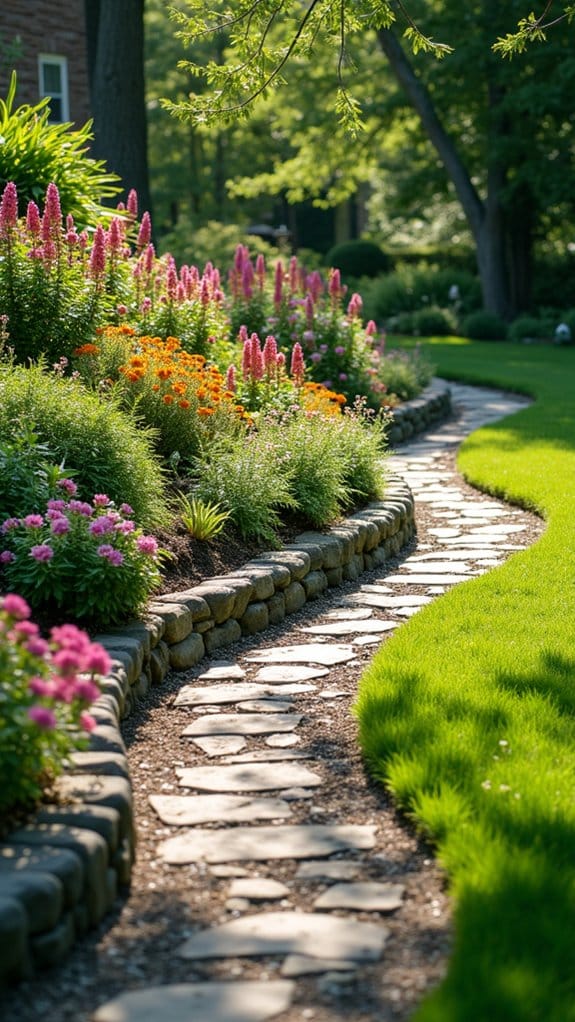
When I design sloped pathways, I love incorporating plant borders to enhance the visual appeal and soften the hardscape.
Using a mix of low-maintenance plants, like ground covers and perennial flowers, creates vibrant edges that guide the eye.
These borders not only provide color and texture but also help stabilize the soil, reducing erosion while making the pathway more inviting.
Bioengineering Techniques
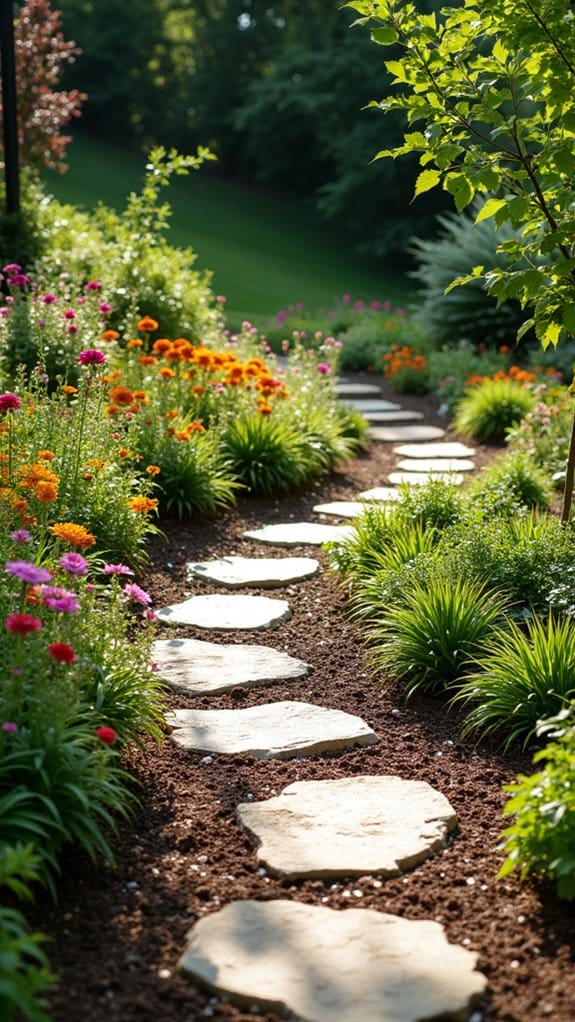
Incorporating plant borders along sloped pathways not only enhances aesthetics but also sets the stage for effective bioengineering techniques.
I’ve found that using native plants with deep root systems helps stabilize the soil, reducing erosion.
Additionally, layering organic materials like mulch supports moisture retention and soil health.
These methods promote a sustainable landscape that thrives while protecting your yard from erosion.
Installing Gabion Walls
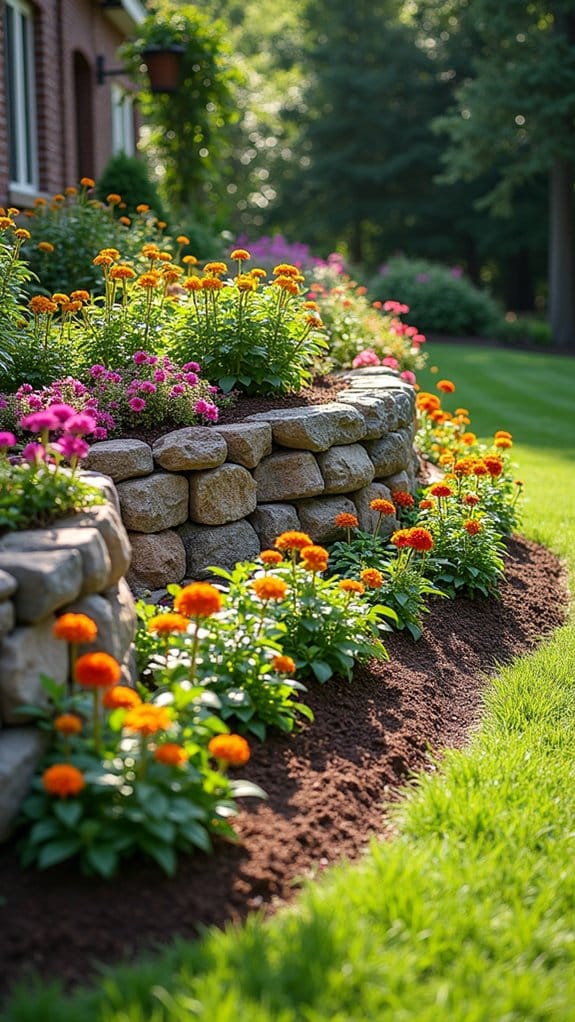
One effective way to manage a sloped yard is by installing gabion walls.
I’ve found these stone-filled wire cages not only look great but also provide excellent support against erosion. They’re versatile, allowing for various designs that blend with your landscaping.
Plus, they create natural drainage pathways, helping to manage water runoff effectively. It’s a practical solution that enhances beauty and stability.
Drip Irrigation Systems
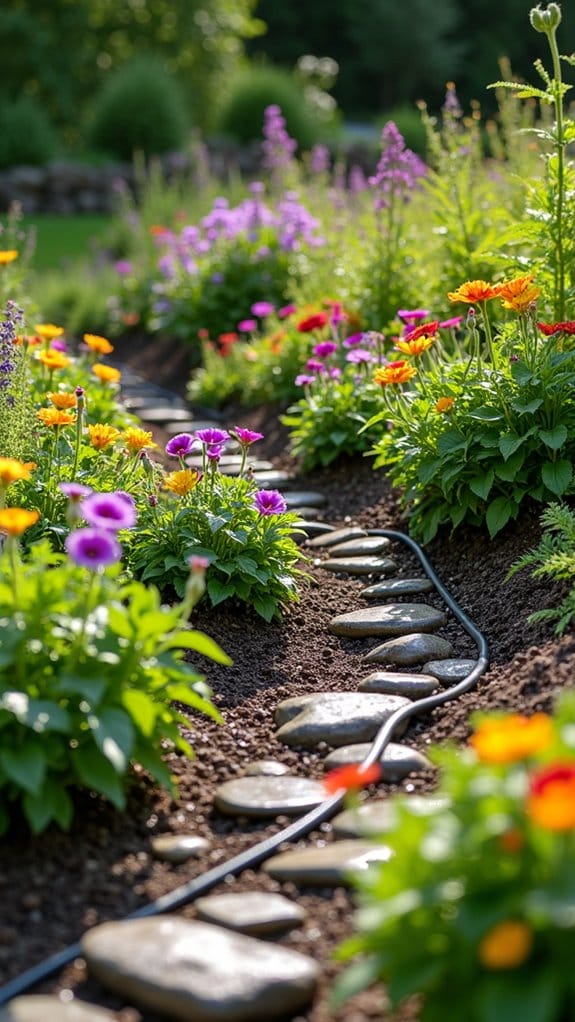
After setting up gabion walls to stabilize your sloped yard, it’s time to think about how to keep those plants thriving.
I’ve found that installing a drip irrigation system is a game-changer. This method delivers water directly to the roots, reducing waste and ensuring consistent moisture.
Plus, it’s easy to set up and maintain—perfect for busy gardeners like us!
Using Mulch for Soil Retention
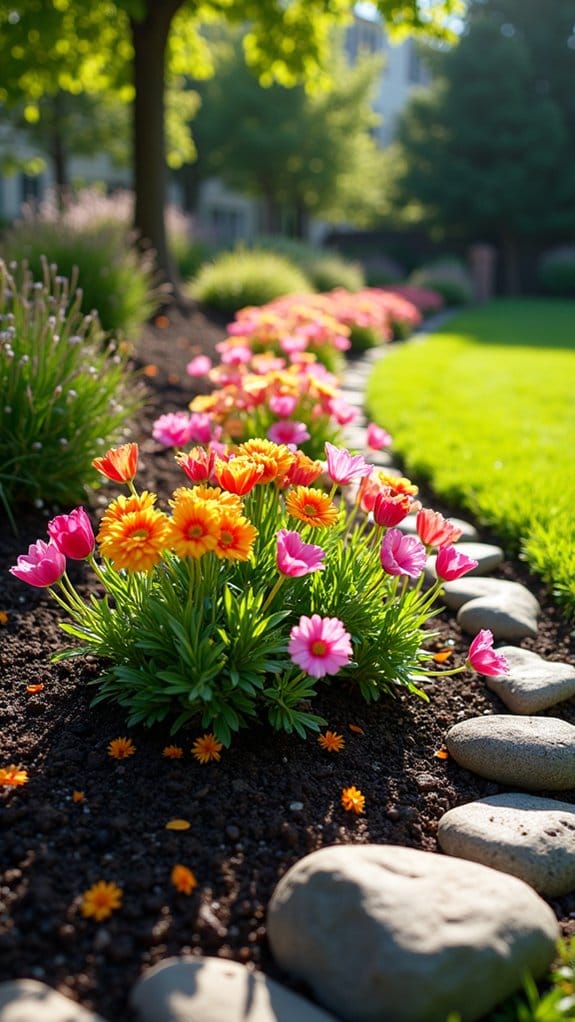
While you’re working on your sloped yard, using mulch can greatly enhance soil retention.
I’ve found that a thick layer of organic mulch not only helps keep moisture in but also reduces erosion. It acts as a barrier against heavy rain, preventing soil from washing away.
Plus, it adds a finished look to my flower beds, making everything feel more inviting.
Perennial Flower Beds
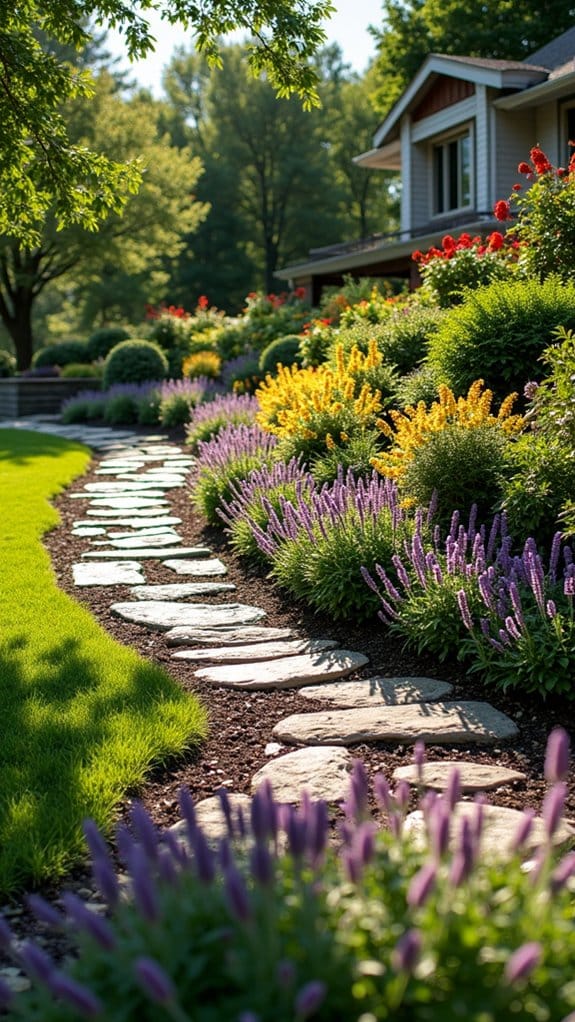
When I decided to plant perennial flower beds in my sloped yard, I wanted to create a vibrant, low-maintenance landscape.
I chose a mix of native plants that thrive in our climate, ensuring they’d come back year after year. Their deep roots help stabilize the soil, preventing erosion while adding beauty and color to my outdoor space.
It’s been a rewarding experience!
Creating a Rain Garden
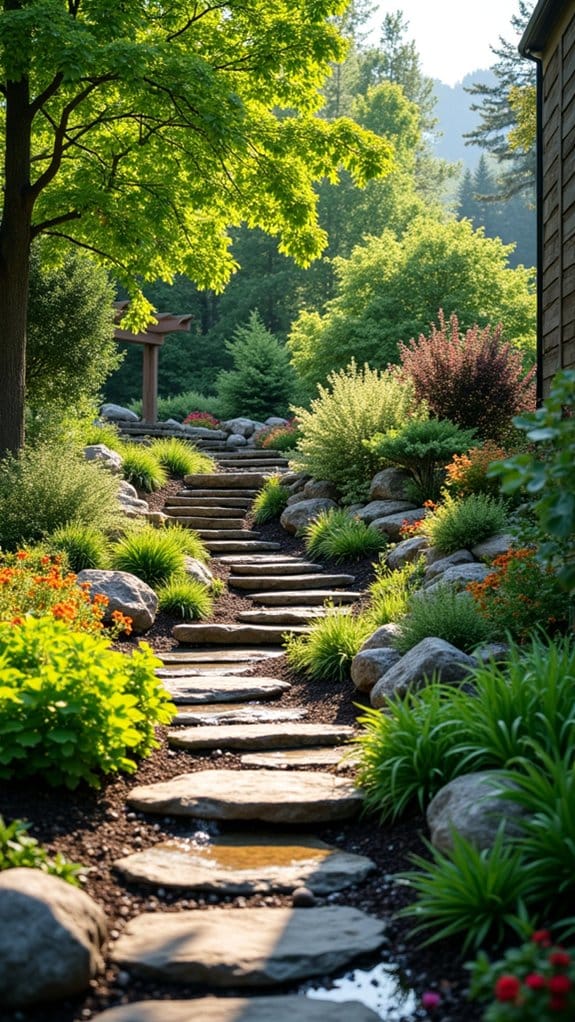
Building on my experience with perennial flower beds, I decided to create a rain garden to manage water runoff effectively.
I chose a low spot in my yard, digging it out to create a shallow basin.
I selected a low area in my yard and excavated it to form a gentle basin.
Next, I added native plants that thrive in wet conditions.
This not only helped with drainage but also enhanced my landscape’s beauty and biodiversity.
Drought-Resistant Plants
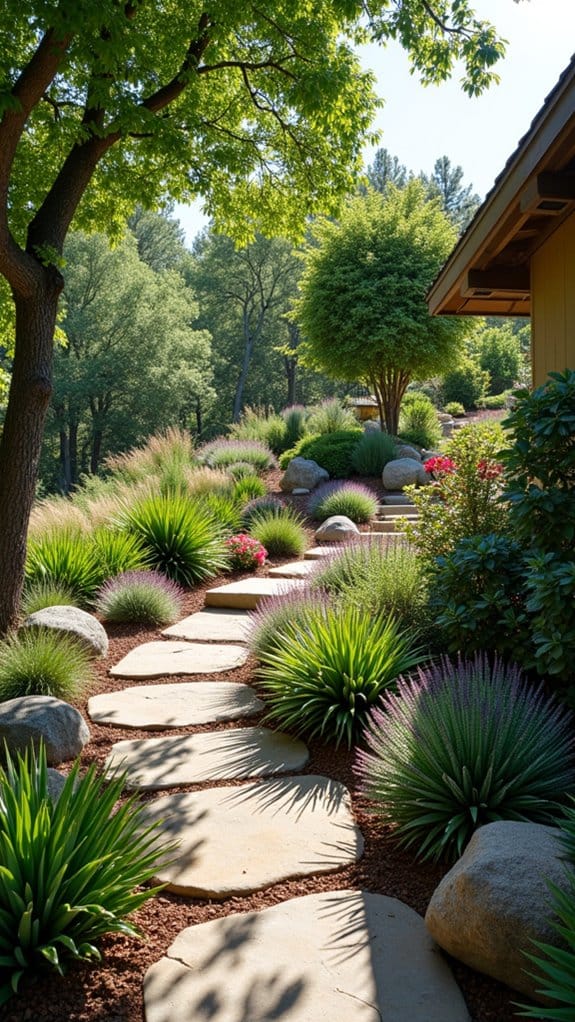
Many homeowners overlook the benefits of incorporating drought-resistant plants into their landscaping.
I’ve noticed that these plants not only thrive in challenging conditions but also require less maintenance and water.
By selecting varieties like succulents or lavender, I’ve created a vibrant garden that keeps erosion at bay.
Plus, they add beauty while conserving resources—making them a smart choice for any sloped yard.
Incorporating Edible Landscaping
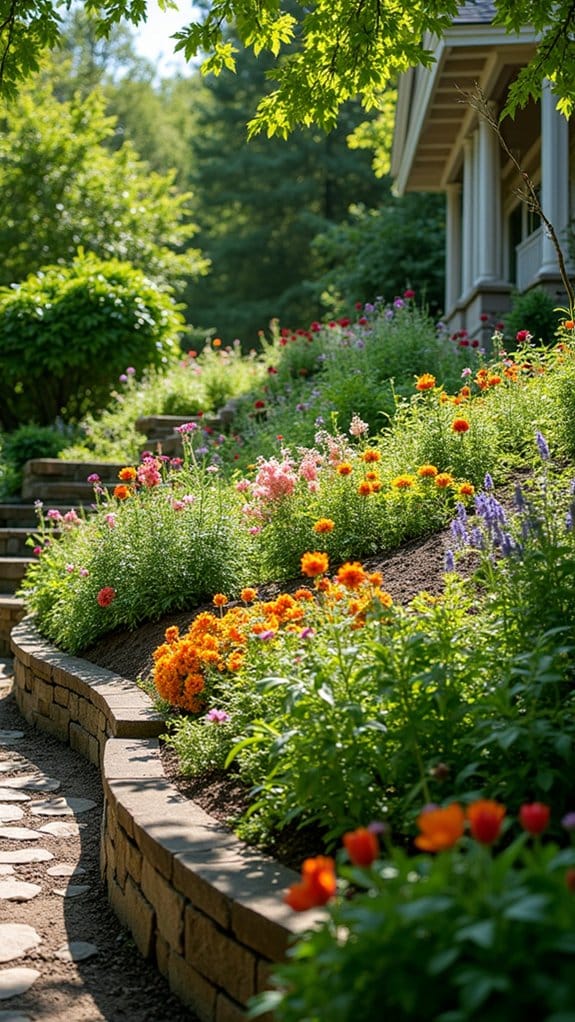
Although incorporating edible landscaping may seem challenging, I’ve found it to be a rewarding way to enhance the beauty and functionality of a sloped yard.
Vertical Gardens for Small Spaces
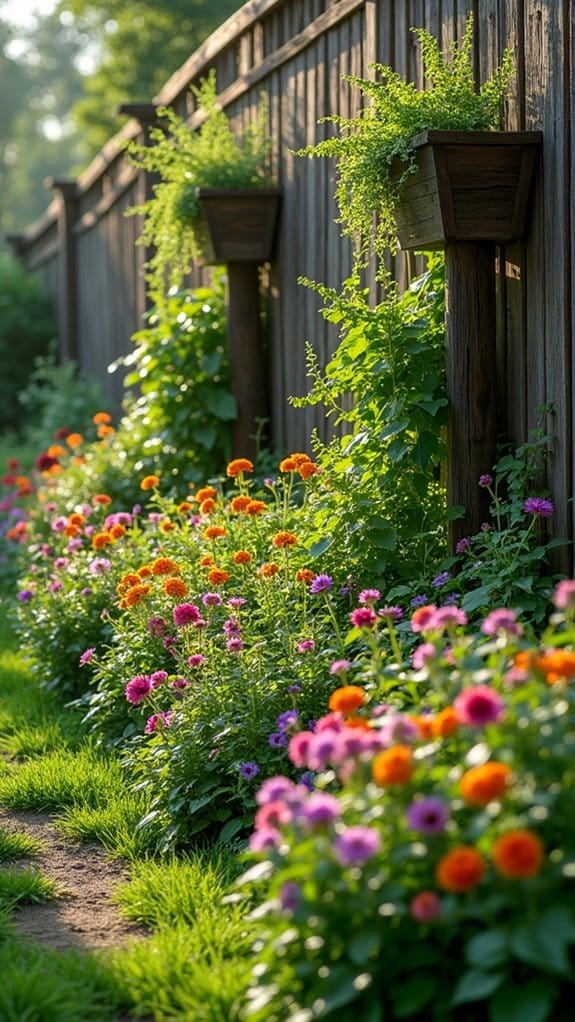
How can you maximize a small space while adding greenery and charm?
Vertical gardens are your answer! By using wall-mounted planters or trellises, you can create a stunning display without sacrificing floor space.
I love mixing herbs and flowers for a vibrant look. Plus, they’re great for erosion control on sloped yards.
Decorative Boulders and Stones
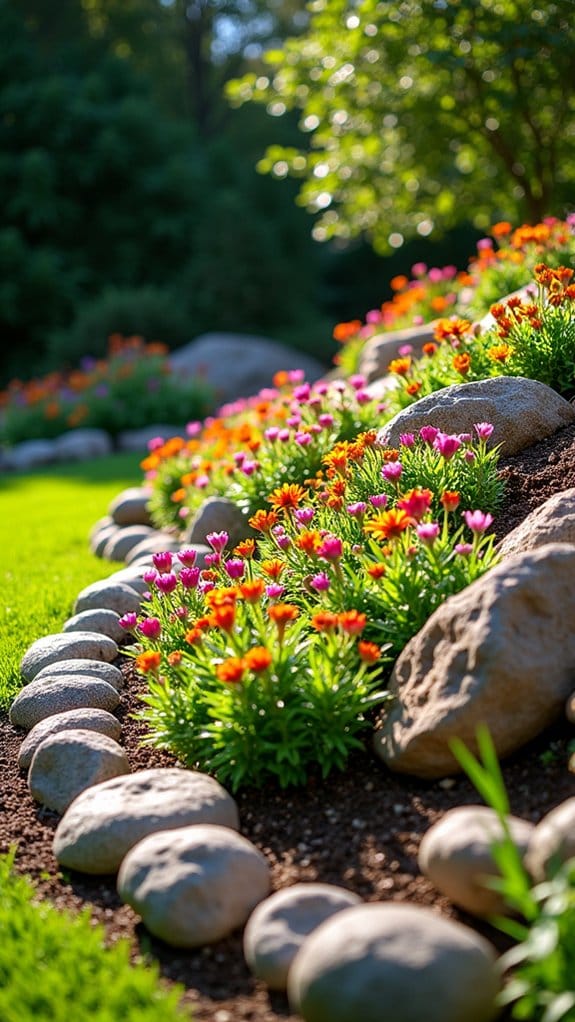
When you want to add character to your sloped yard, decorative boulders and stones can transform the space into a stunning landscape.
I love incorporating these natural elements to create visual interest and texture. You can arrange them in clusters or as standalone features.
Plus, they’re great for preventing erosion by stabilizing the soil, making your garden both beautiful and functional.
