

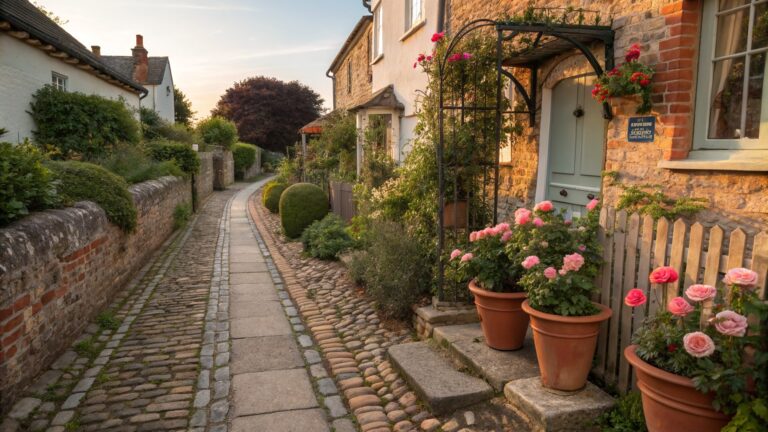
I always notice a sidewalk first when approaching a house because it sets the tone for the whole front yard layout.
Flowers tucked along the edges draw your eye gently toward the entry without overwhelming the path itself.
In my own yard, I learned that choosing plants with a mix of heights keeps the walkway clear while letting colors pop as they mature.
Simple edging materials like stone or brick help define the borders and prevent sprawl over time.
A handful of these setups are practical enough to adapt to most any front path.
Climbing Roses Over a Path Arch
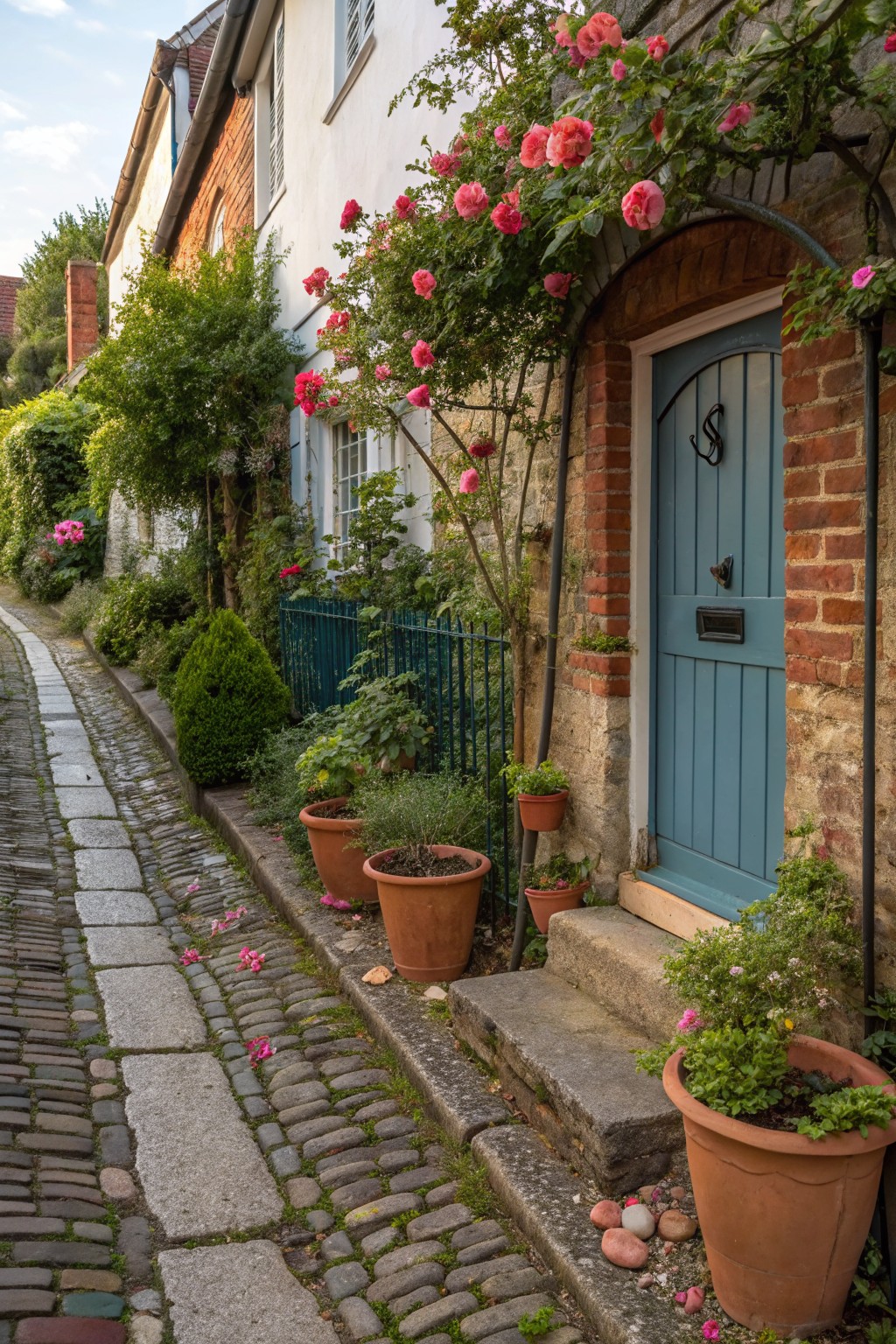
A simple arch draped in pink climbing roses makes this narrow cobblestone path feel like a secret garden entrance. The roses spill over the brick frame right above a blue door, pulling the eye forward while pots of herbs and flowers line both sides. It’s that old-fashioned touch that turns a plain walkway into something memorable without much fuss.
This works best on cottage-style homes or older brick houses where you want soft color against hard stone. Pick repeat-blooming roses like those shown here, train them up a metal or wood arch, and tuck in terracotta pots for easy swaps. Keep the path clear… just enough flowers to brighten, not crowd. Suits shady spots too, since roses handle dappled light well.
Grass-Jointed Paver Walkway
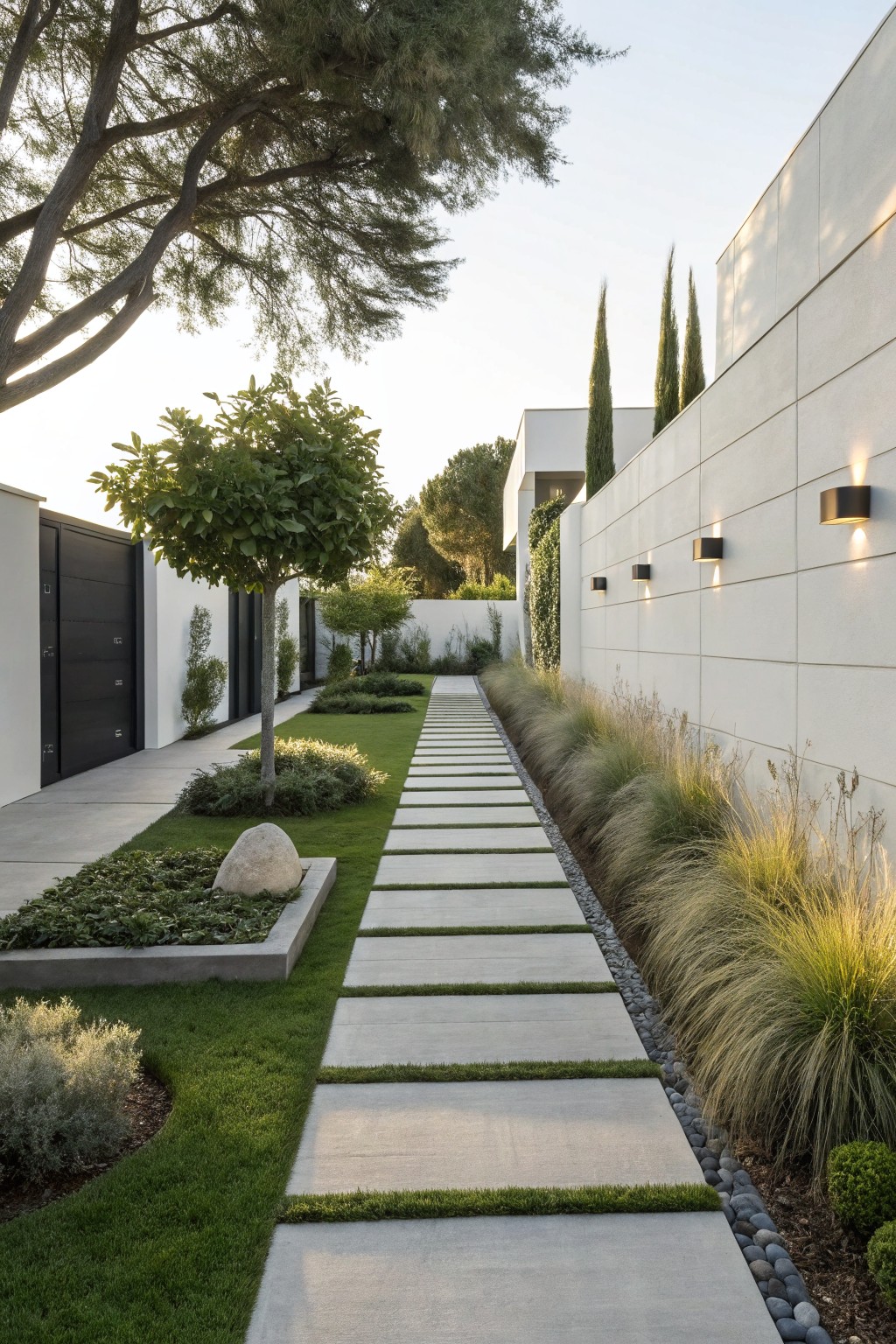
One nice way to handle a side path is to set large concrete slabs right into a strip of grass, leaving green joints between each one. Those wide pavers keep it practical for walking, and the grass softens everything up. Tall, feathery grasses run along one edge, adding some movement without crowding the space.
This works well in narrow yards or along a fence line, especially if you want low upkeep. Pick drought-tough grasses like miscanthus that sway in the breeze. It suits modern homes with clean lines… just make sure the pavers are level so no one trips.
Flagstone Path Lined with Flowers
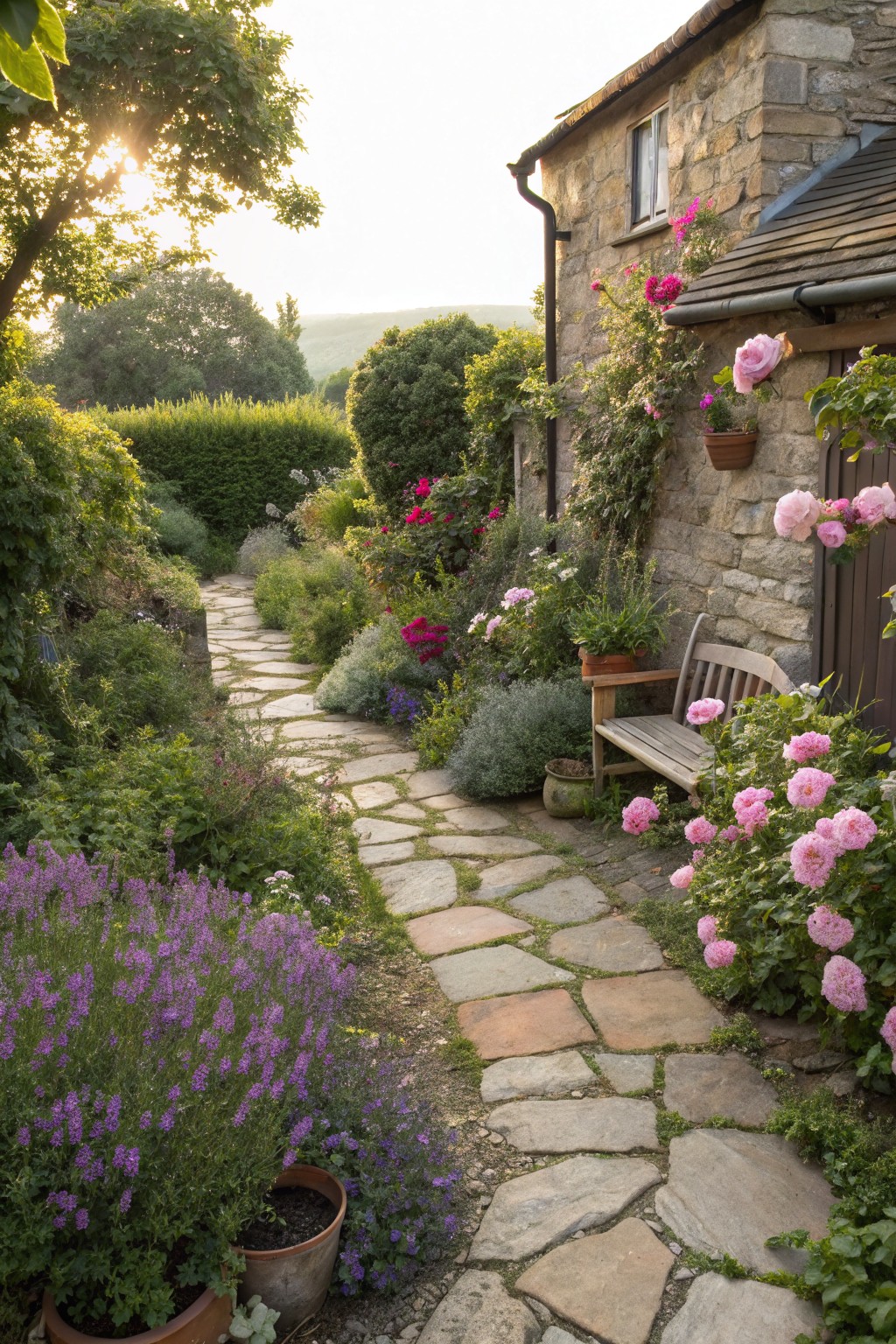
A simple flagstone path like this winds gently through the garden, with pink roses and lavender spilling over the edges. It turns a plain walkway into something you actually want to follow. The loose stones fit right into the ground, and the plants hide any gaps nicely.
This works best along the side of a house or leading to a back door, especially on older homes with stone walls. Set the stones in sand or gravel for easy drainage, then fill borders with tough bloomers that come back each year. Keep the path at least three feet wide so two can walk side by side.
Winding Brick Path with Flower Beds
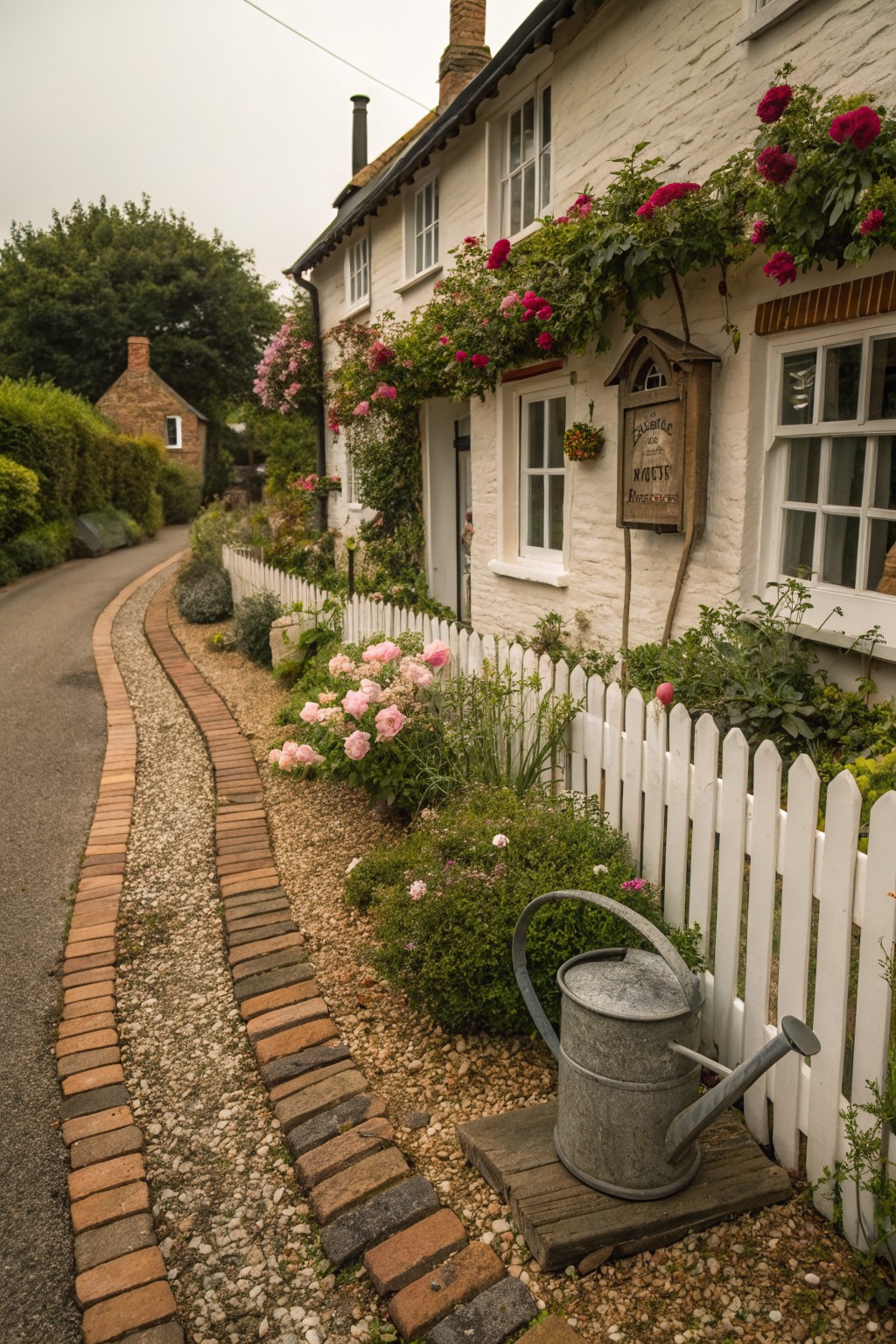
A simple way to make your sidewalk more interesting is to edge it with bricks and fill the center with gravel. It curves naturally here, winding past pink roses and other low flowers in neat beds along a white picket fence. That setup guides folks right to the door without feeling too rigid. Plus the gravel stays tidy and lets water drain easy.
This works best in front yards with a cottage feel or older homes. Lay bricks in a single row for the border, then plant soft flowers like roses that spill over without getting too tall. Keep the beds mulched to cut down on weeding. Watch the gravel though…it can track inside if you don’t sweep now and then.
Multicolored Brick Garden Path
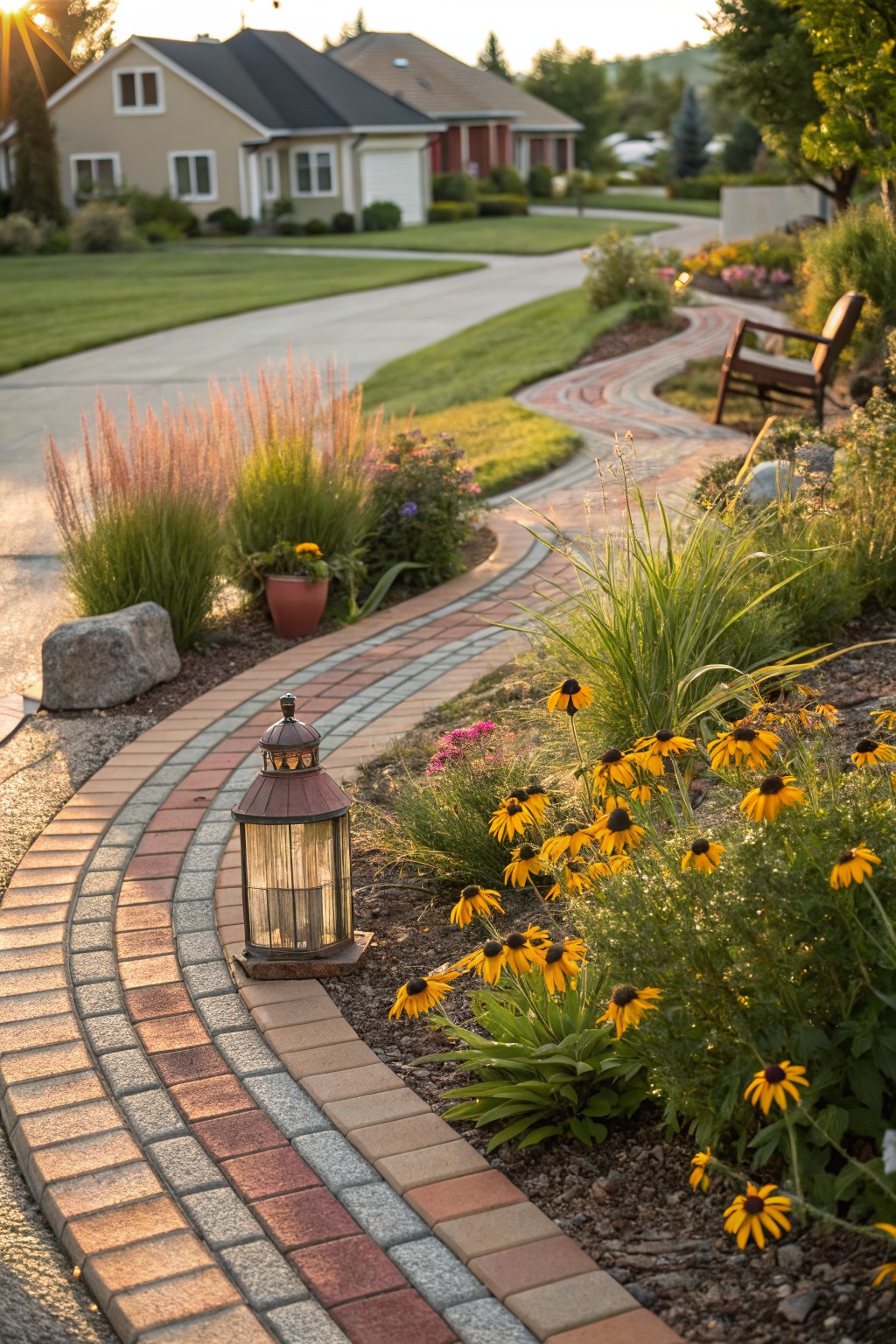
A simple winding path like this one uses bricks in red, tan, and gray shades to create gentle curves through flower beds. It stands out because the color mix adds quiet interest without overwhelming the plants, and the path naturally guides you toward the house. Tall sunflowers and waving grasses frame it just right, keeping things loose and natural.
This works best in front yards where you want to soften a straight driveway edge. Lay the bricks in a freeform pattern, tuck in perennials that bloom summer through fall, and add a lantern for evenings. It suits most suburban lots, but skip it on super steep slopes… too much work to keep stable.
Boxwood-Edged Gravel Path with Daffodils
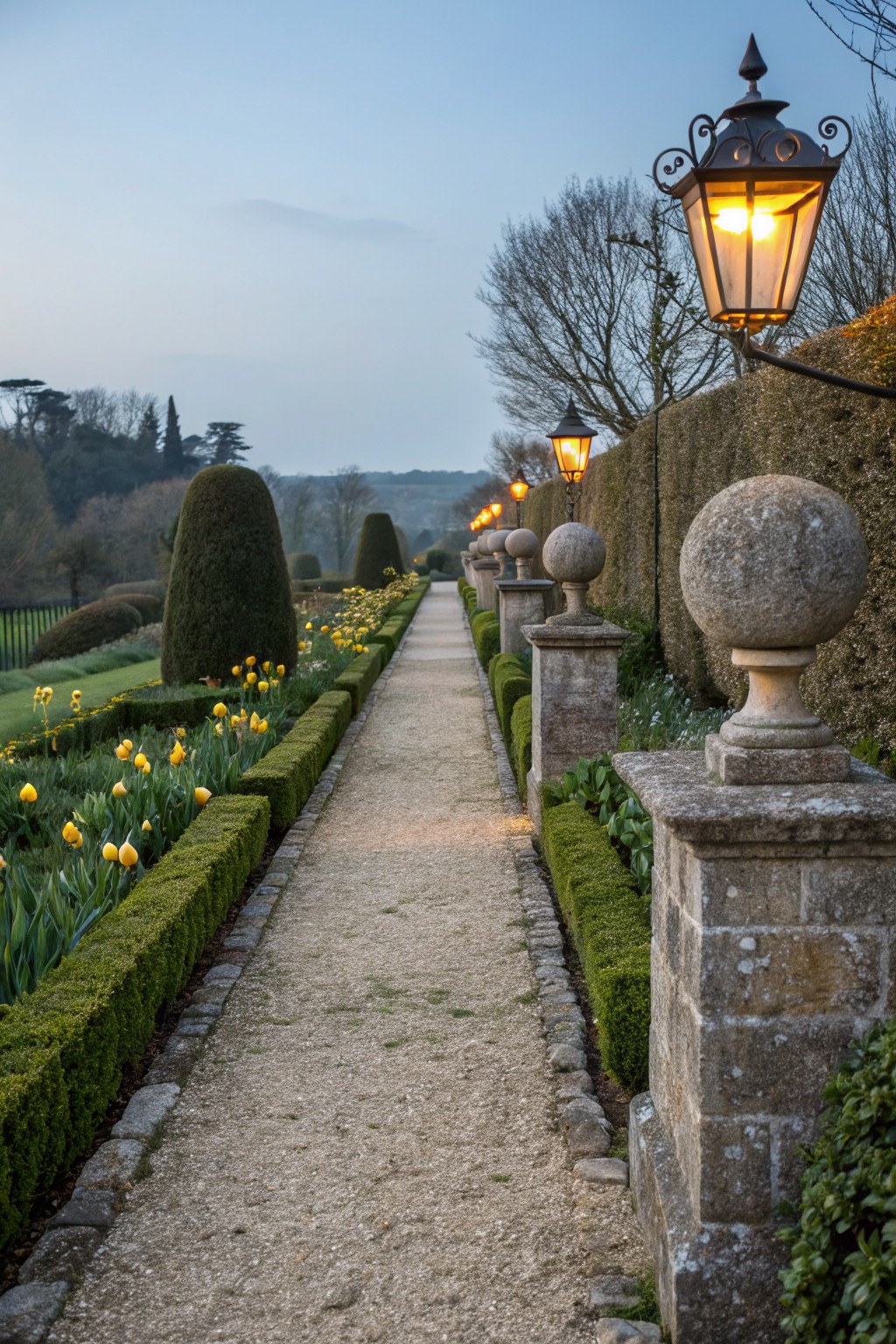
A gravel path like this gets its charm from neat rows of low boxwood hedges along both sides. Tuck in yellow daffodils right at the base, and they pop up each spring to line the way. The lanterns and stone pillars add a touch of formality without overdoing it.
You can pull this off in a narrow side yard or along a driveway edge. Go for dwarf boxwoods that stay under two feet tall, plant bulbs in fall for easy color. Gravel drains well and crunches underfoot… just keep the edges trimmed neat.
Brick Path Lined with Pink Flowers
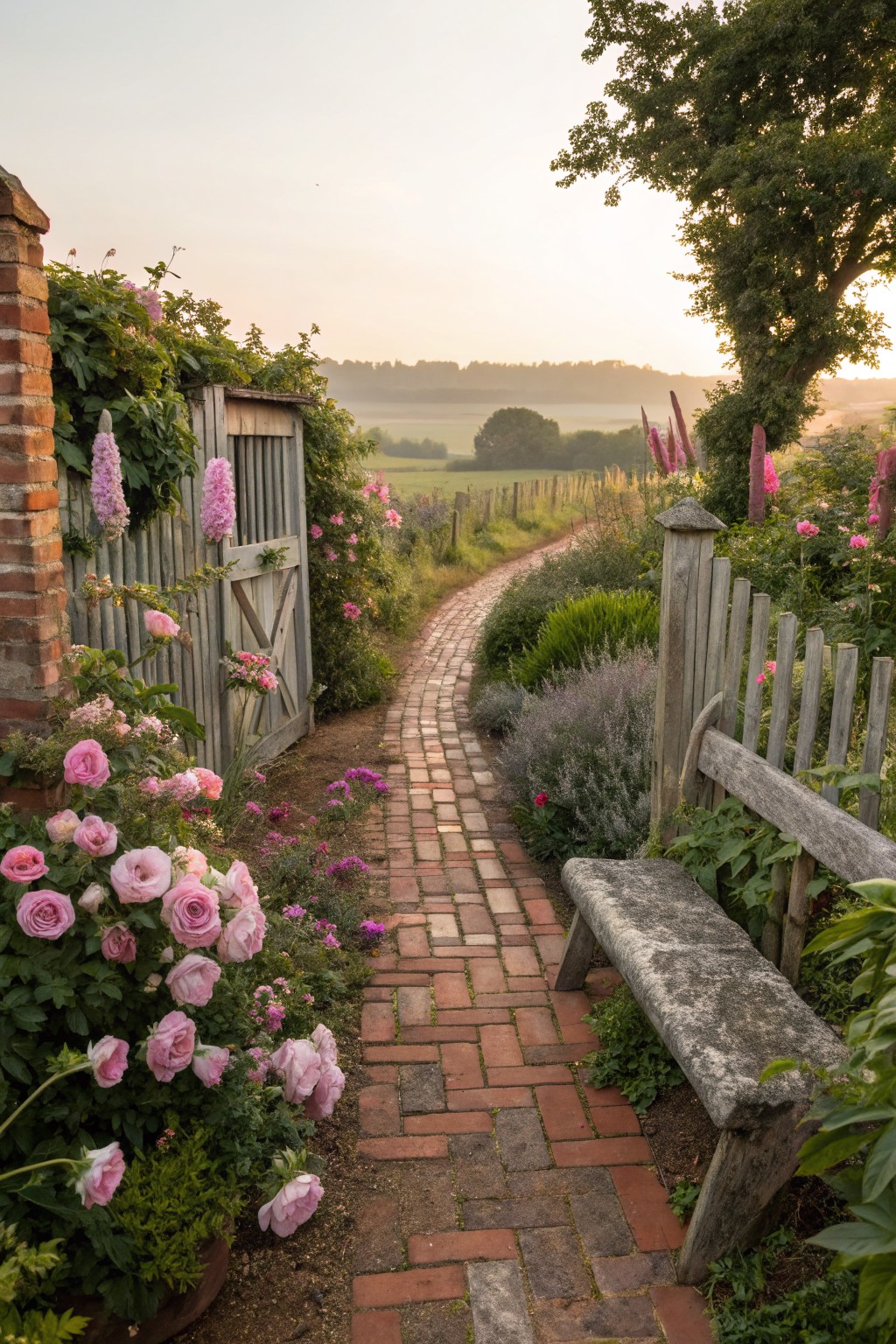
A brick walkway like this one winds gently through the garden, edged on both sides with soft pink roses and tall lavender spikes. The rustic wooden gate and simple stone bench add just enough structure without taking over. It turns a plain path into something you actually want to walk every day.
This works best in cottage-style yards or along a side entrance where you want a bit of color without too much upkeep. Plant roses and perennials in loose clusters right up to the edge of the bricks. Keep the path narrow, maybe three feet wide… that keeps the flowers close and cozy. Suits older homes with some charm already.
Lighted Paver Path for Side Yards
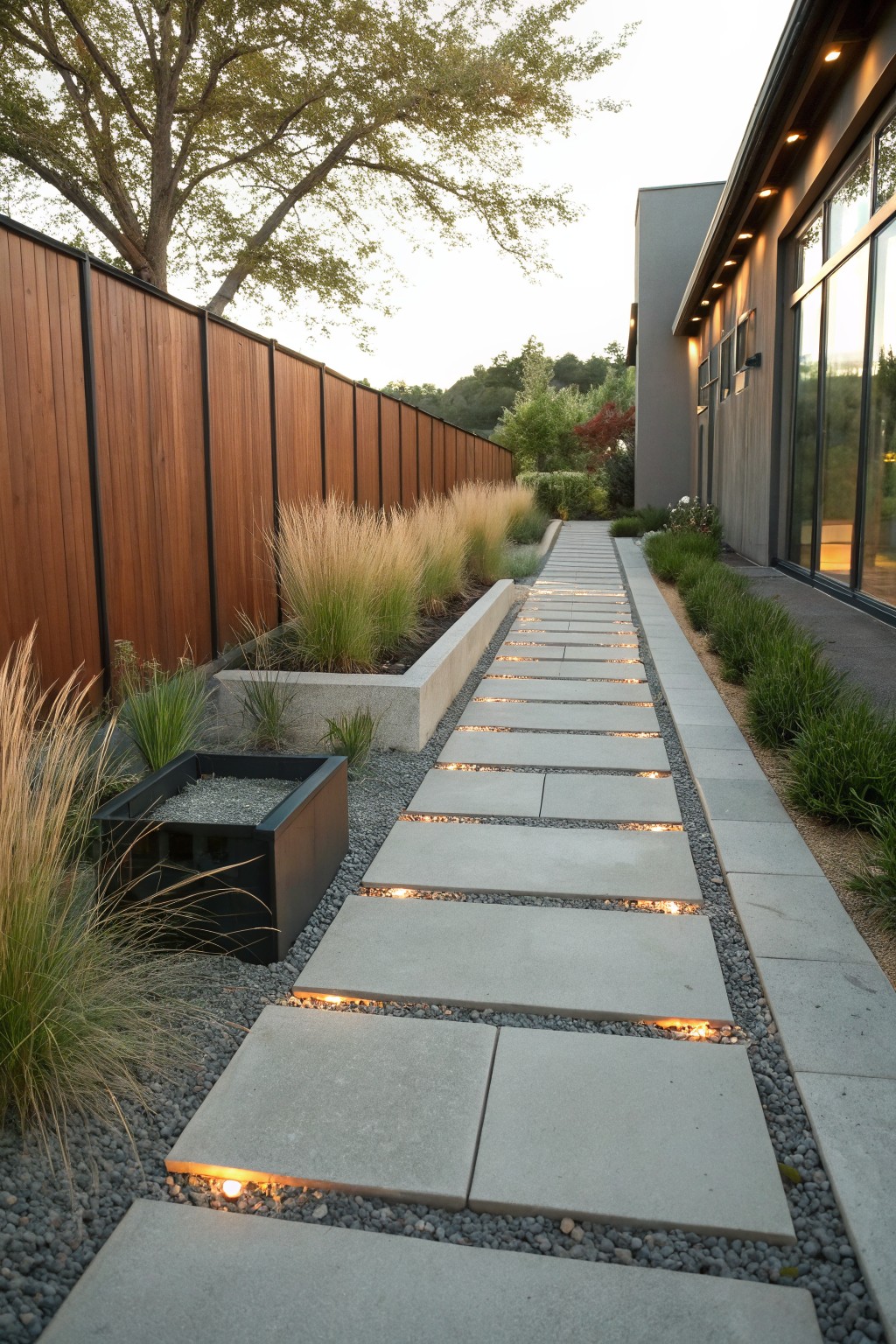
Large concrete pavers line this narrow side walkway, with small LED lights tucked under the edges. They come on at dusk and cast a gentle glow across the path. Paired with tall grasses and simple gravel borders, it feels modern without much fuss. Walks stay safe, and the yard gets a quiet evening lift.
Try this in tight side areas that connect front to back, like to a gate or patio. Pick pavers at least 2 feet wide for steady steps, and run low-voltage wires safely. It suits low-water yards or modern homes best. Just make sure the setup drains well, or puddles could short the lights.
Lavender-Lined Pathways
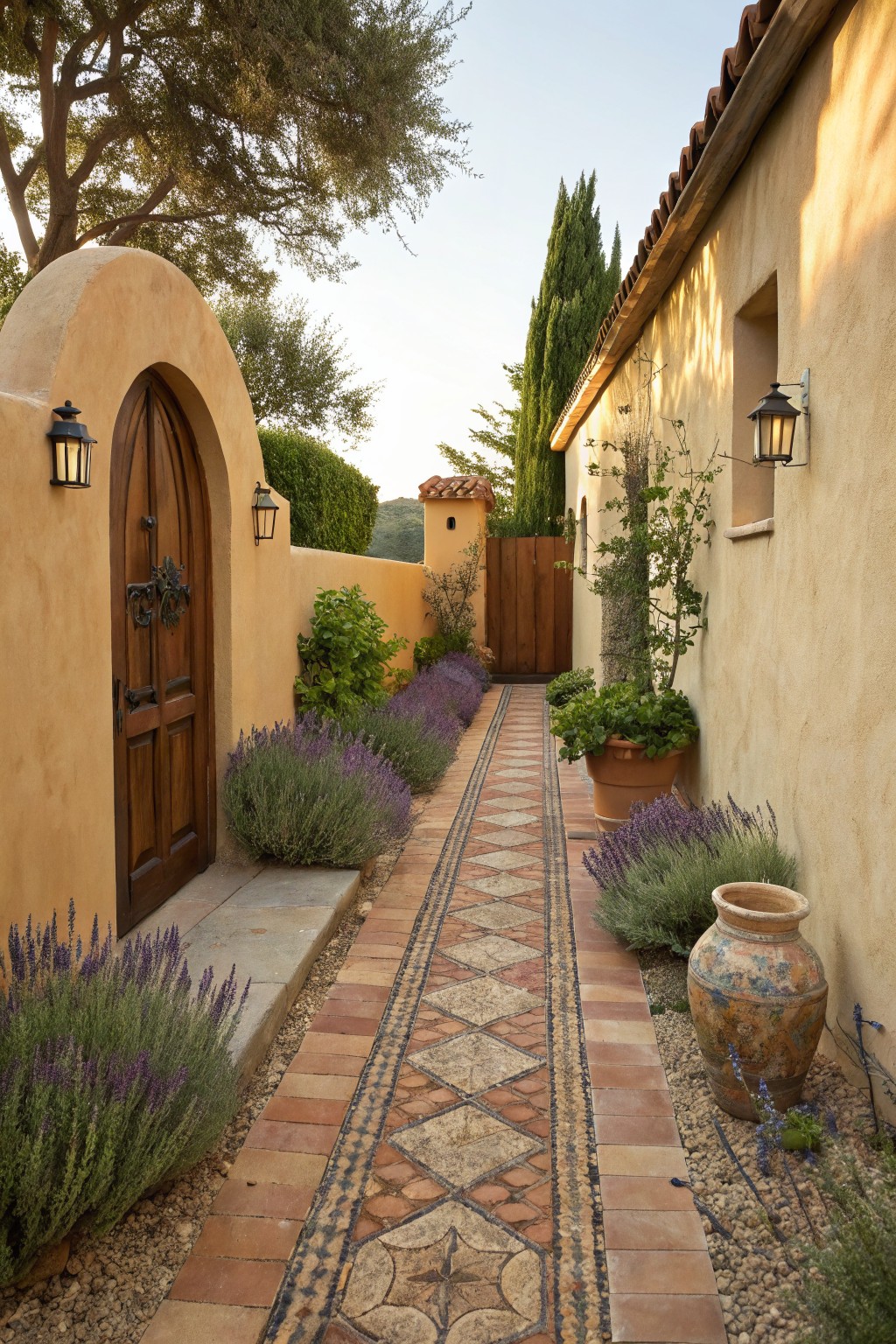
Lavender makes a simple border for garden paths. The low bushes hug the edges without crowding the walk. They add soft purple color and that nice smell when you brush past. In this setup, the plants fill in around a tiled path nicely. It keeps things tidy but feels natural.
Plant lavender where it gets full sun and good drainage. It works great next to stucco walls or in dry spots. Space them about a foot apart for a full line. Trim once a year to keep the shape. Pairs well with gravel or stone paths in warmer yards.
Stone-Edged Perennial Beds Along Walkways
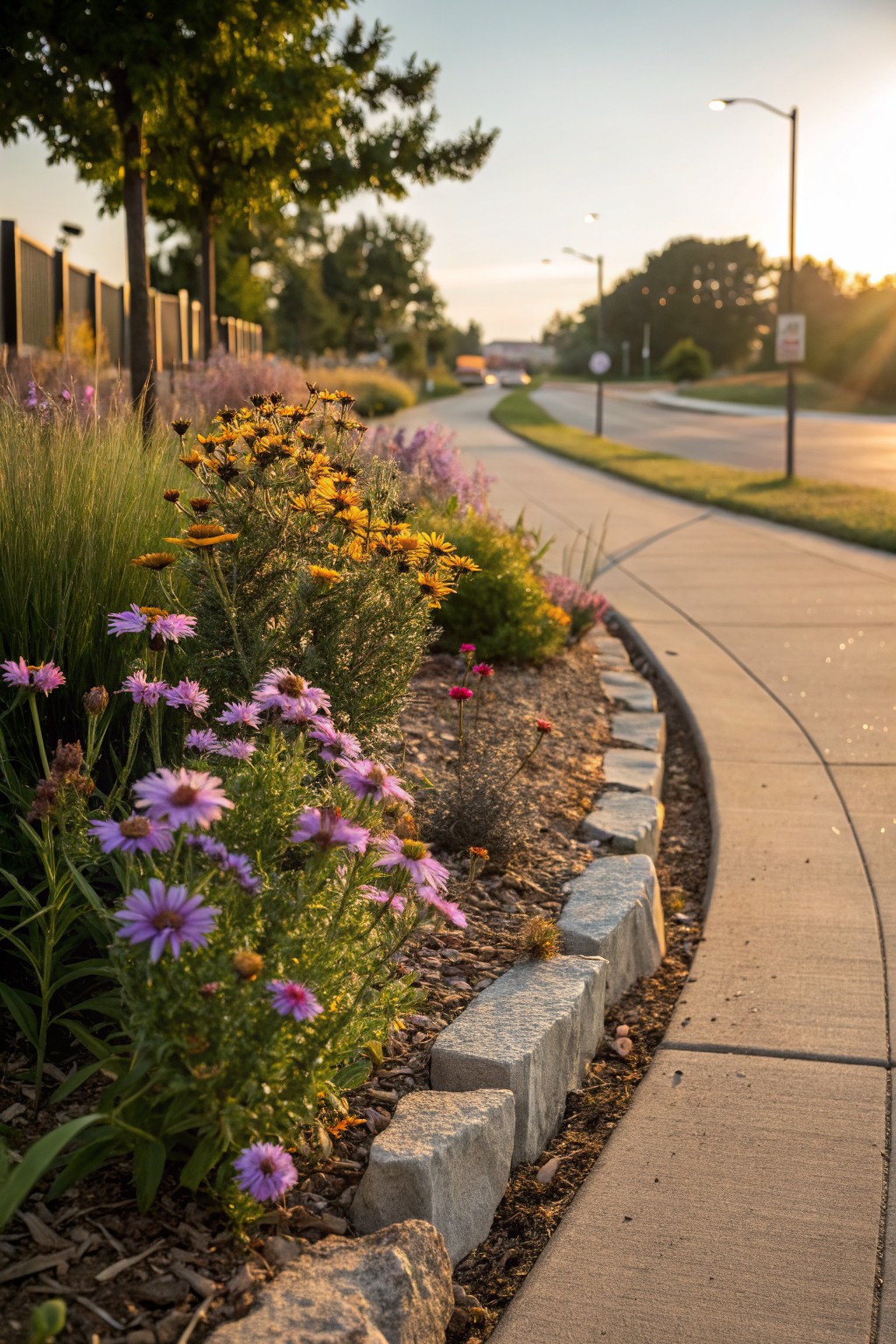
One simple way to brighten a sidewalk is with low flower beds edged in natural stone blocks. Here the beds mix tall grasses, yellow black-eyed Susans, and clusters of purple asters for color that lasts into fall. The stone keeps everything tidy while letting plants spill over just enough to soften the hard concrete path.
This look suits front yards or side paths where you want curb appeal without daily weeding. Pick tough natives that handle sun and dry spells. Curve the beds to match your walkway… it pulls the eye right along. Just leave room for walking, about two feet wide.
Line Your Path with Terracotta Pots
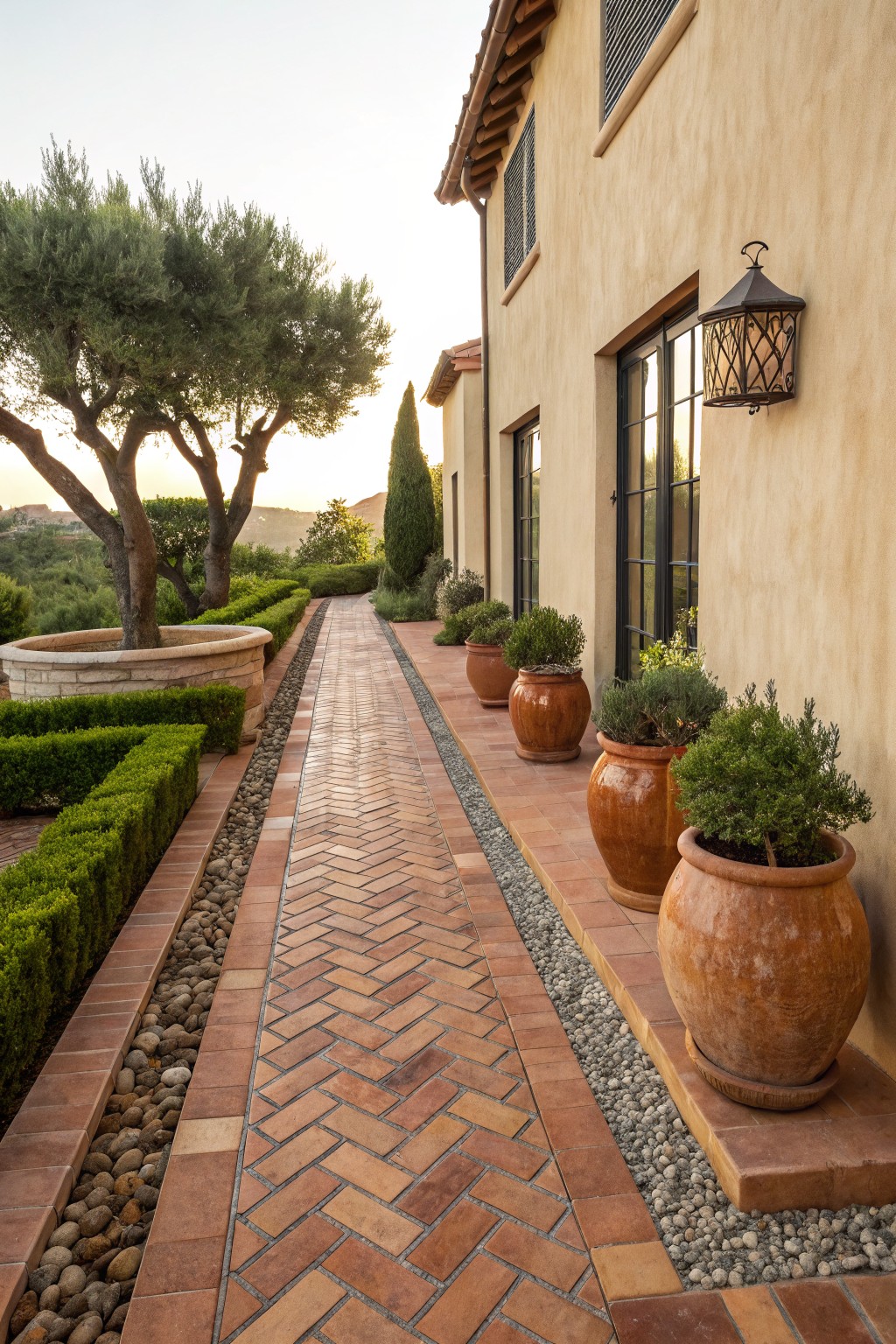
One easy way to make a walkway feel more alive is to line it with big terracotta pots. These pots hold shrubs and low plants that soften the hard edges of a path. In this setup, the warm orange tones of the pots pick up the brick walkway nicely. They add height and texture without much upkeep.
Place them along one side of the path, spaced out evenly. This works great next to a house wall or in a sunny spot. Go for drought-tolerant plants like lavender or boxwood to keep it simple. Just watch the pots don’t block the way if your path is narrow.
Lush Plant Borders Along a Brick Path
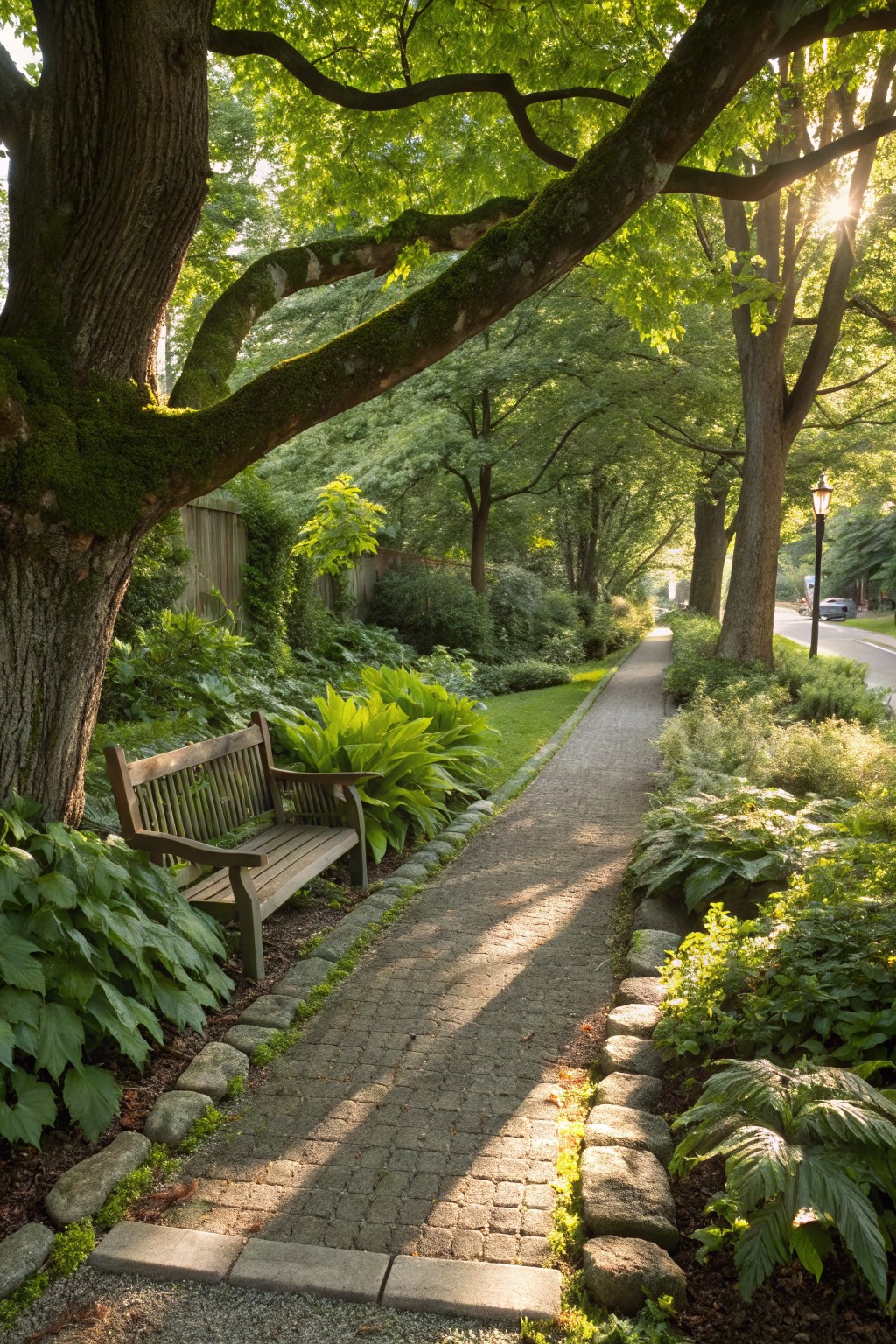
A brick path like this gets its charm from thick borders of hostas and ferns right along the edges. The plants spill over just enough without crowding the walk, and that wooden bench under the tree branch gives a spot to pause. It turns a plain sidewalk into something shaded and green, easy on the eyes.
Try this for side paths or entry walks where you want low upkeep. Big leaves fill in shady areas fast, and the stone edging keeps it neat. Suits older homes with trees already in place… just trim back once a year.
Wall-Mounted Flower Boxes Line the Path
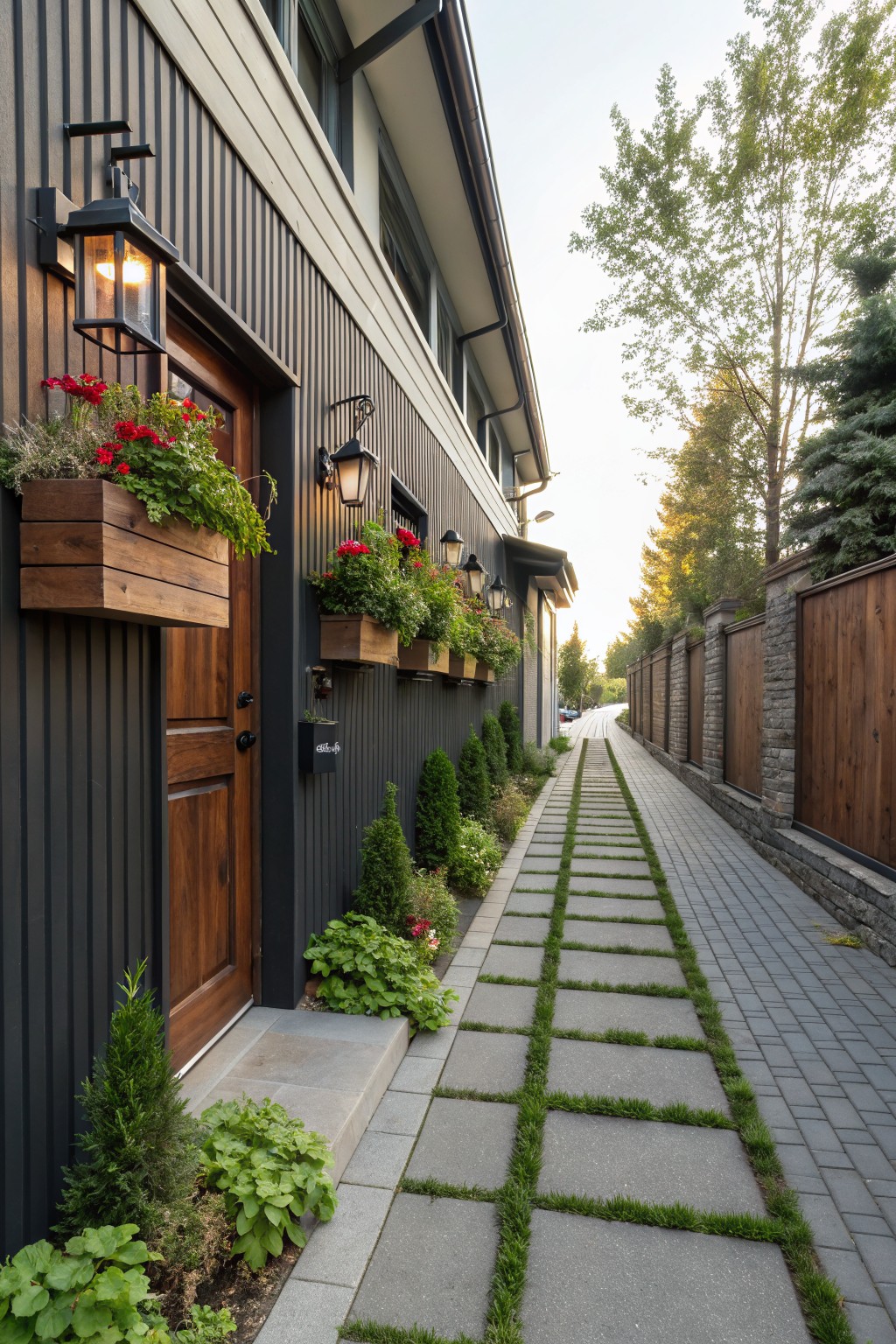
One easy way to make a side path feel more welcoming is to add flower boxes right on the house wall. Here, wooden boxes filled with bright red geraniums run along the dark siding, leading straight to the door. They pull the eye down the walkway and add a pop of color without taking up ground space. It’s a simple fix that turns a plain entry into something pretty.
These work best on narrow paths or side yards where you want height in the planting. Mount them at eye level near the door, and keep the flowers full but not spilling over. Pair with low shrubs at the base for balance. They suit modern homes with clean lines, but watch the watering, since wall boxes dry out faster.
Whiskey Barrel Hydrangeas by the Path
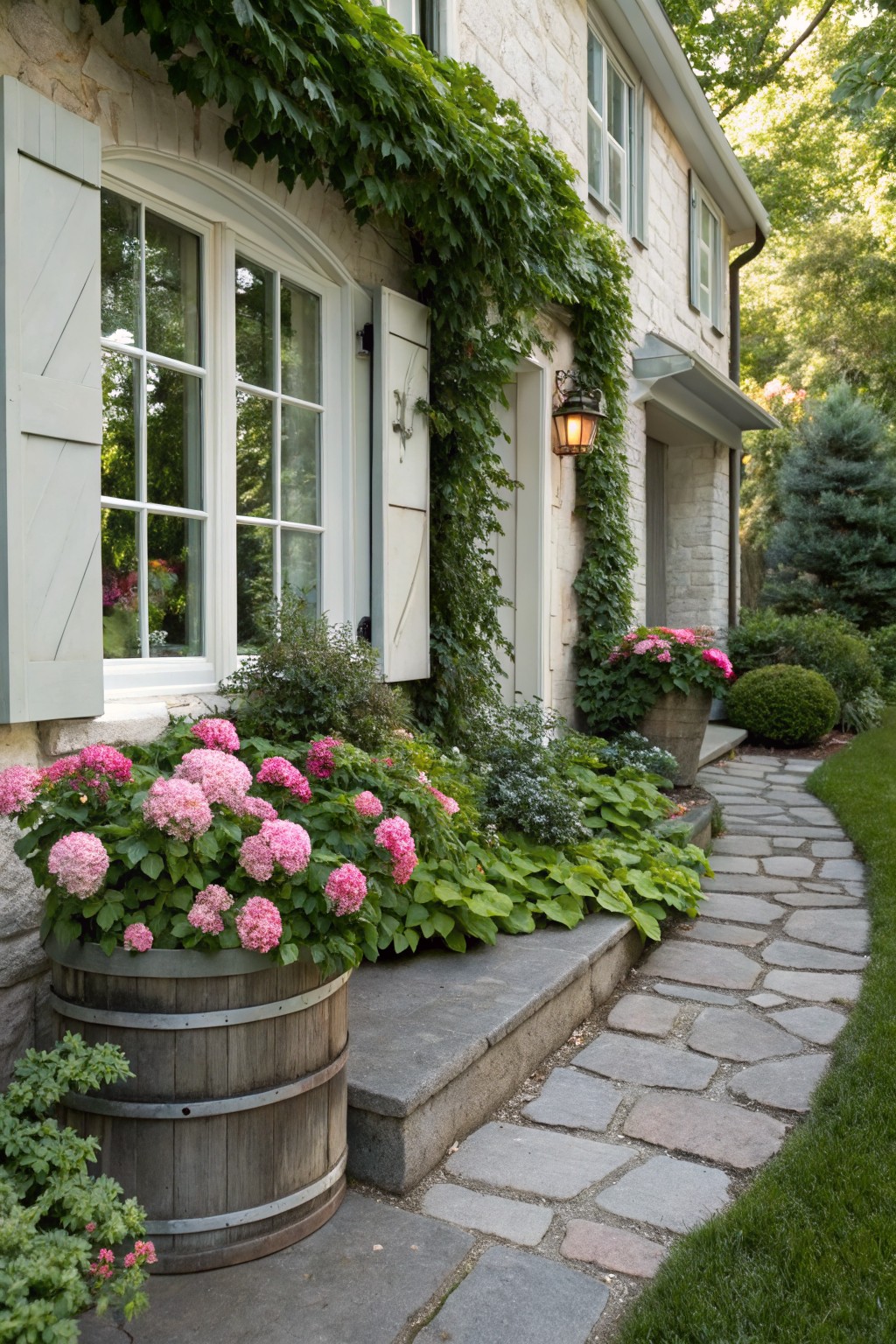
A weathered whiskey barrel stuffed full of pink hydrangeas sits right at the edge of this stone walkway. It adds a burst of color and shape that feels right at home next to the house’s stone base and simple plantings. Those big fluffy blooms stand out without overwhelming the path.
Try this on a front walk where you want easy curb appeal. Go for a half-barrel size and a compact hydrangea like Little Lime. Place it near steps or a turn in the path on homes with neutral stone or brick. Just make sure it gets some afternoon shade and regular water. Works best in milder spots.
Spaced Pavers in Gravel Beds
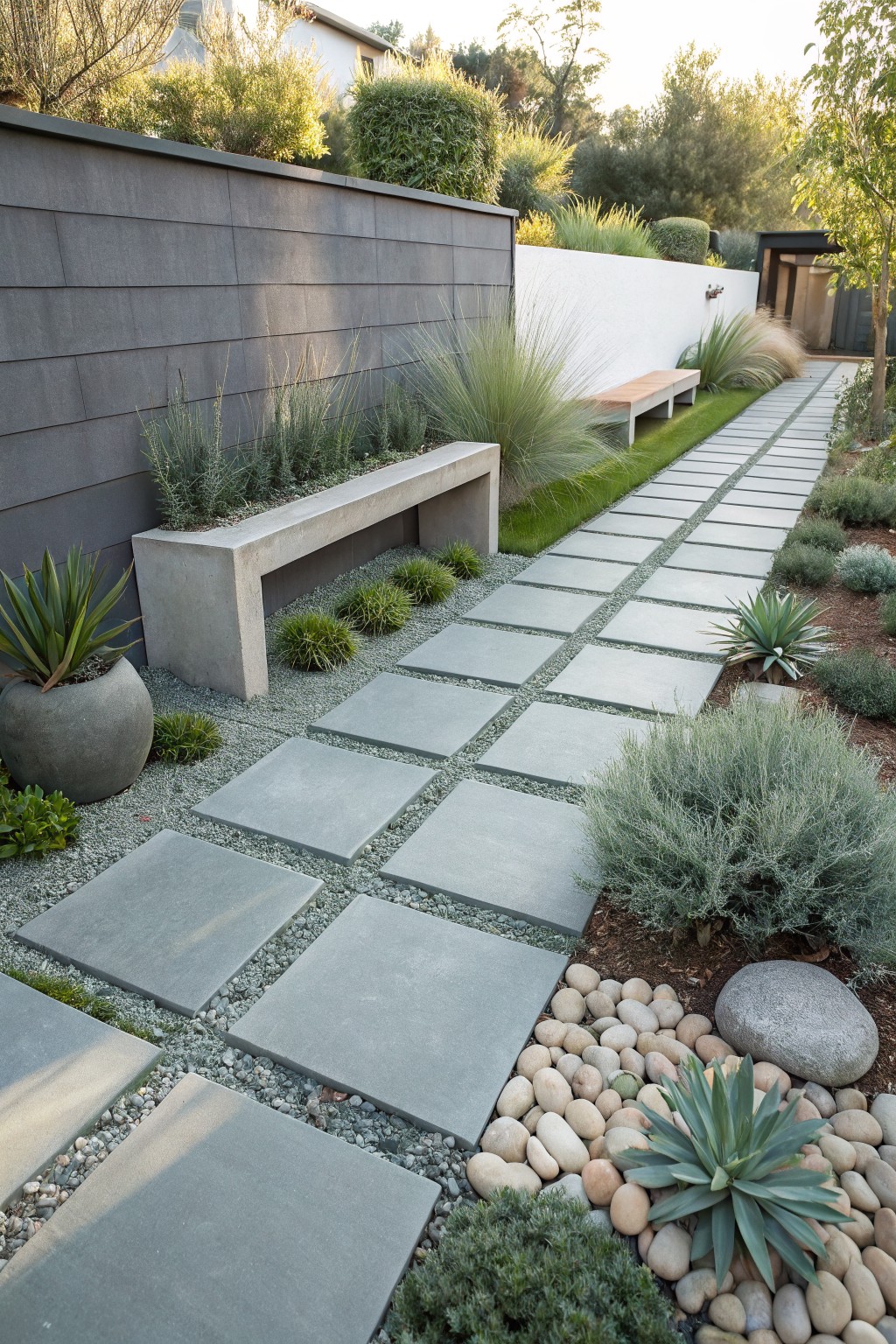
Big concrete pavers laid out with gaps between them make a clean path through gravel mulch. Plants like agave and grasses fill in around the edges. This setup looks sharp and modern. It cuts down on hard surfaces too, which helps water soak in and keeps maintenance low.
Try it for a side walkway or entry approach. It fits homes with a clean, drought-tolerant yard best. Go with sturdy, low-growing plants so they don’t crowd the walking space. Check that your gravel base drains right to avoid puddles after rain.
Stepping Stone Path in Gravel
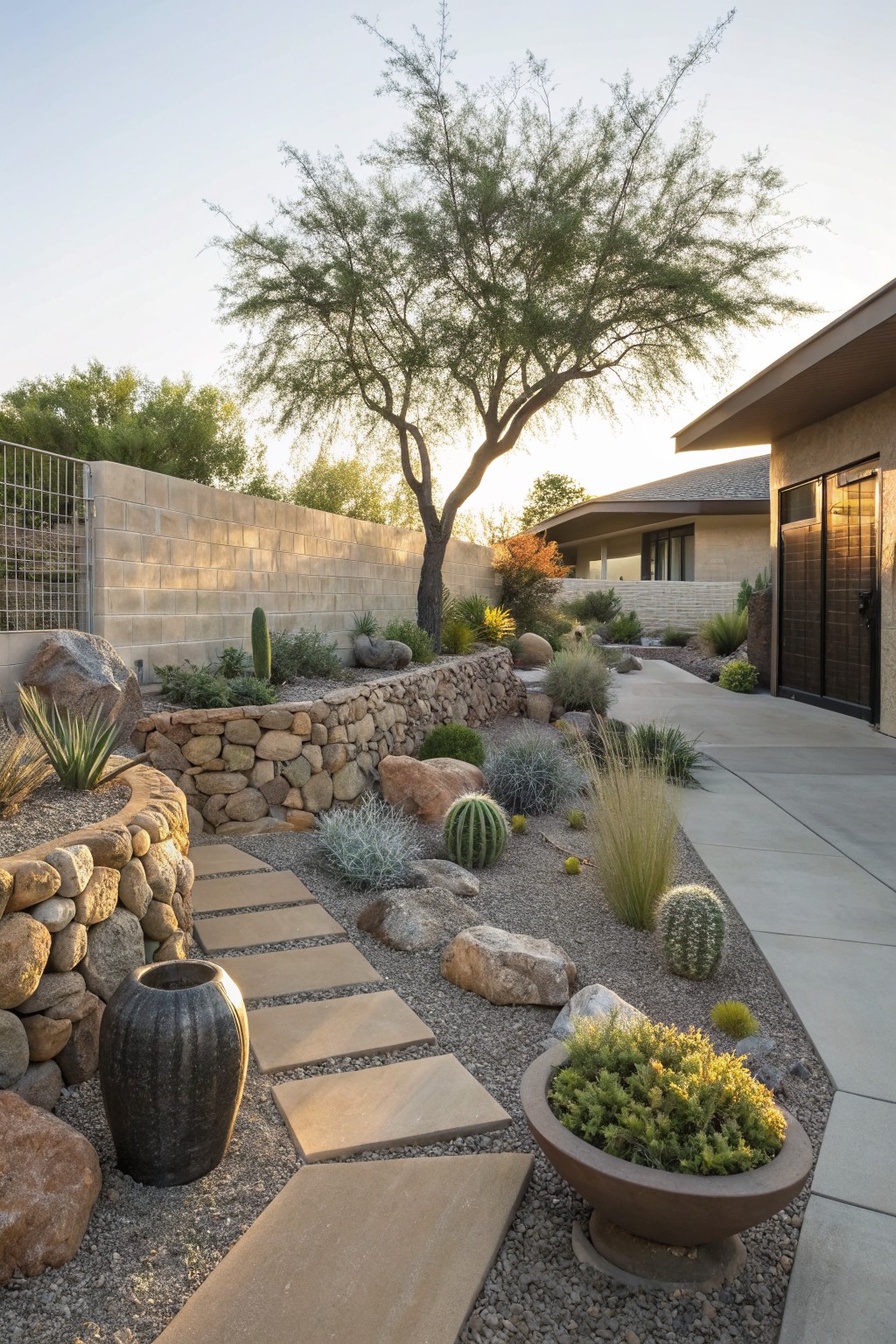
A simple way to guide people through a yard is with large stepping stones set right into gravel. Here, the tan stones lead from the street toward the house garage, winding past boulders and spiky succulents like cacti and agave. It feels natural. No mowing needed, and the gravel keeps weeds down while letting water drain fast.
This works best in sunny, dry spots or side yards where you want low upkeep. Pick stones about two feet apart to match a normal step. Add a few tough plants around the edges for color, but skip anything that needs much water. Suits modern homes or desert areas…keeps the path clear and the look clean.
Winding Stone Path with Moss Edges
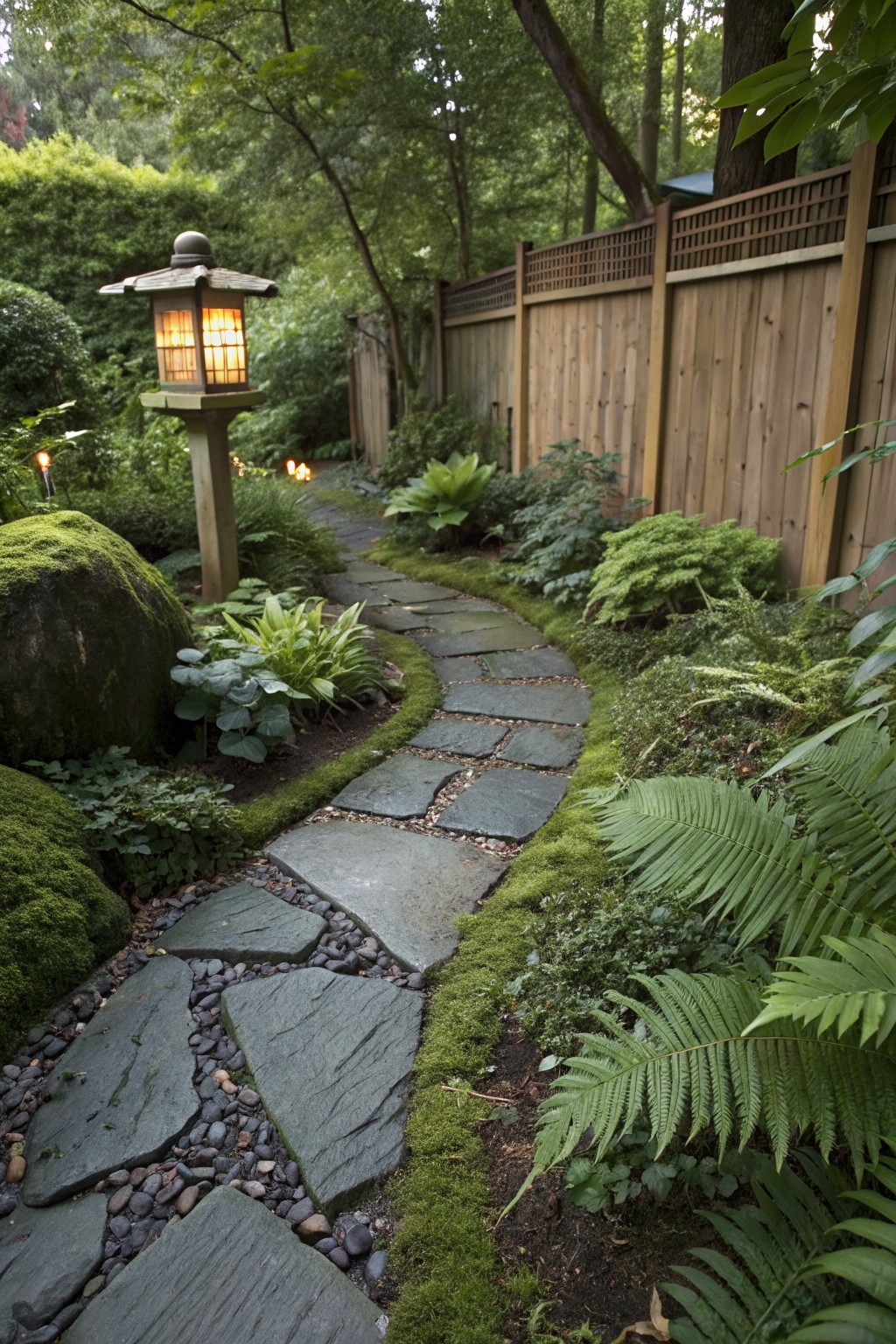
A simple winding path made from irregular slate stones fits right into a shady garden spot. The moss and gravel filling the gaps between stones gives it a soft, natural edge that blends with the surrounding plants. Little touches like hostas, ferns, and mossy boulders make the path feel like it’s always been there, leading you deeper into the yard without any hard lines.
This works best in moist, wooded areas where moss grows easy. Lay the stones loose on soil or sand, then plant right up to the edges with low ferns or groundcovers. Skip it for sunny, dry spots, though. Add a lantern or two for evening walks. Keeps things low maintenance once established.
Stone Path Lined with Succulents
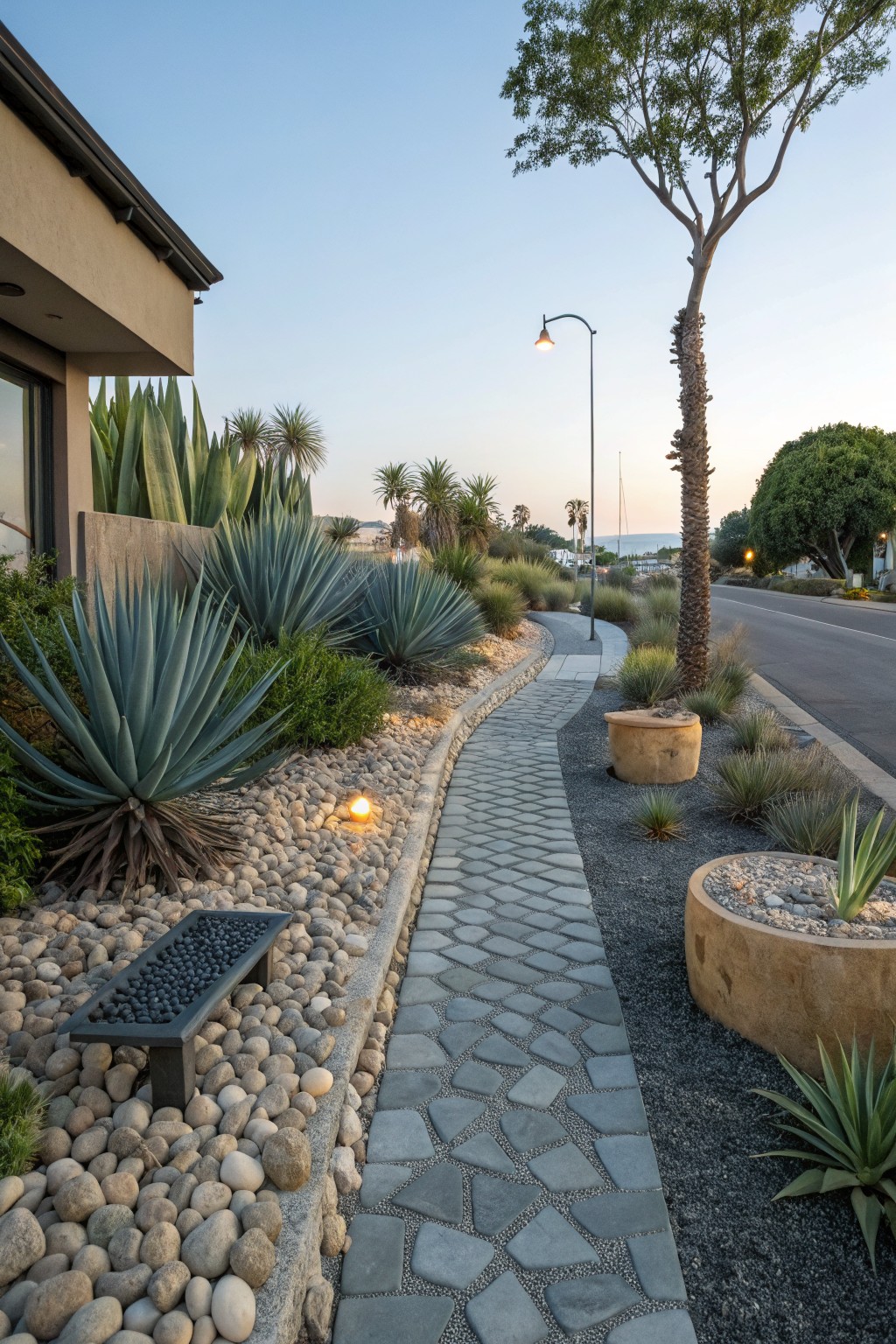
Big blue agaves planted right along a curving stone walkway make a simple statement. The gravel and pebbles around them keep things tidy and let the plants stand out. No fuss, just clean lines and good texture that pulls your eye right to the door.
Try this where you have full sun and dry soil. It fits modern homes or any yard needing low-water borders. Space the agaves a few feet apart so they fill in over time, and add river rock for that extra crunch underfoot.
Lantern-Lined Stone Path
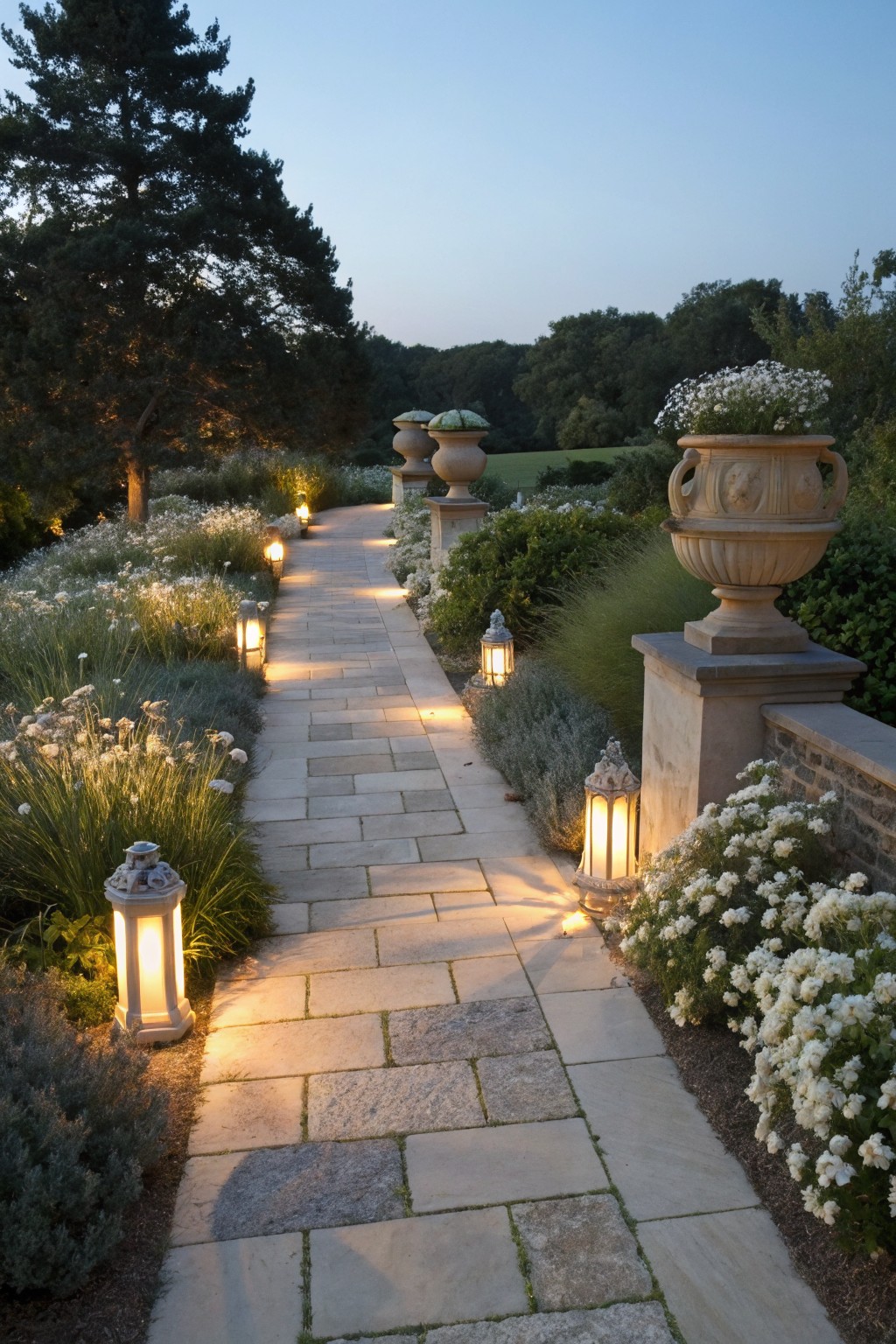
A stone path like this gets a quiet lift from lanterns placed along the edges. White flowers and tall grasses fill in the borders, catching the light just right as evening comes on. It keeps things simple but makes walking there feel a little special.
Try it on a side walkway to your house or garage. Go for easy white bloomers like sweet alyssum mixed with ornamental grasses, then add lanterns on short pedestals. Suits most yards, especially if you want low upkeep that looks good year round.
Path Edged with Lush Flower Borders
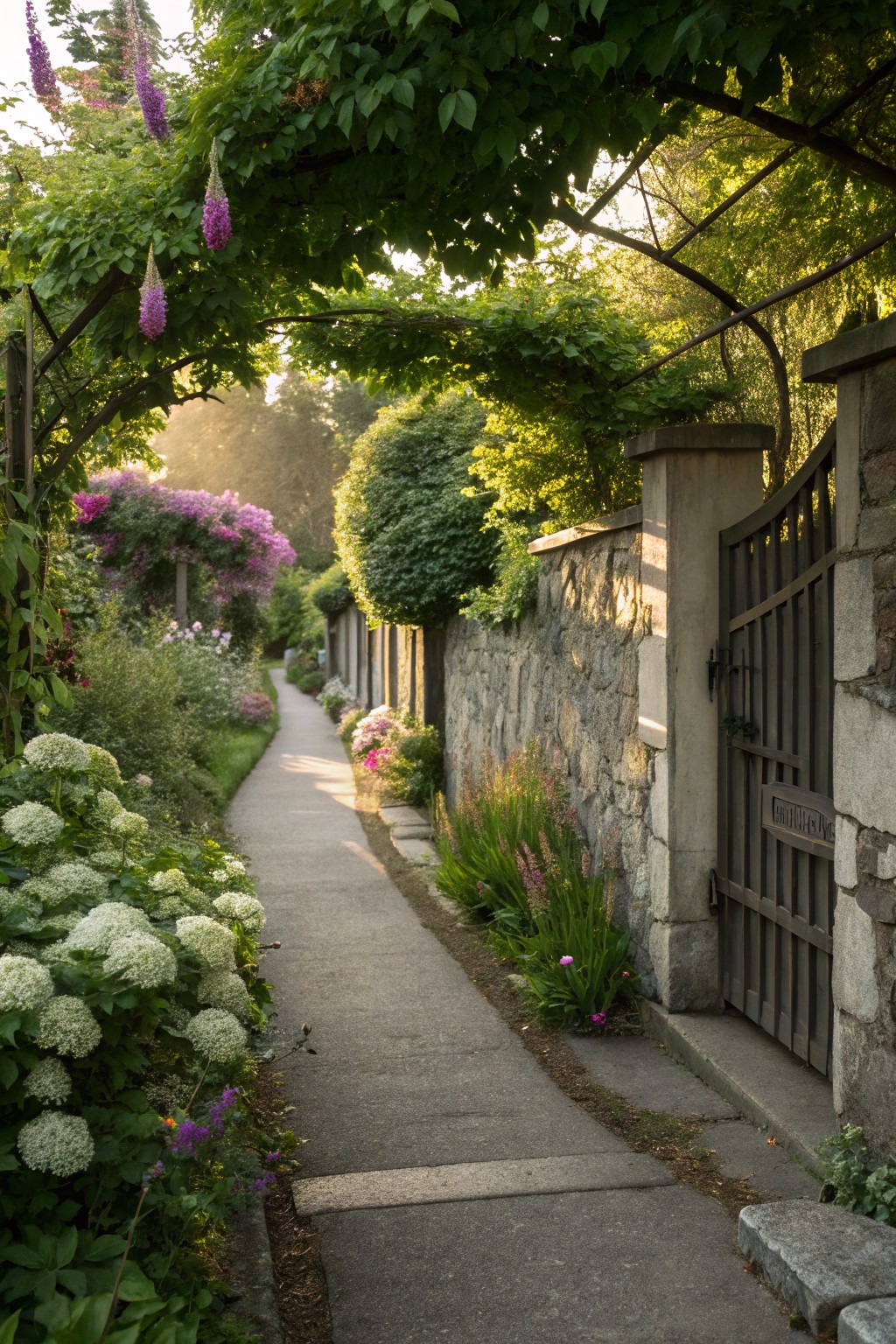
A narrow walkway like this gets its charm from the way flowers spill right over the edges. Big white hydrangeas hug one side, with purple foxgloves and climbers dangling from an archway ahead. That soft overflow makes the path feel tucked away and welcoming, even on a straight run.
Try it on side paths to a gate or backyard door. Plant mounding perennials close to the edge, and train vines up a simple metal arch. It suits older homes with stone walls or fences. Watch that taller stuff doesn’t block the way… trim back once a year.
Frequently Asked Questions
Q: What if my sidewalk gets tons of foot traffic? How do I keep the flowers from getting smashed?
A: Tuck plants into sturdy borders or raised beds just off the path. They stay pretty without getting stepped on. Choose tough bloomers like sedum that bounce back fast.
Q: Full shade along the path? Which flowers actually thrive there?
A: Grab hostas or impatiens. They love the dim spots and fill in lush. Add a splash of color without much fuss…
Q: How do I water these without drowning them or wasting time?
A: Check soil an inch down, water only if dry. Do it early morning so leaves dry quick. And group thirsty plants together for easy hose runs.
Q: Can renters pull off these ideas without messing up the yard?
A: Line up colorful pots right along the edge. They pop like the planted versions. Move them anytime your landlord swings by.
