


I’ve noticed in my own garden that peonies and hydrangeas transform plain borders into lush, structured backdrops when you account for their spreading habits from the start. These flowers work best in classic layouts where taller hydrangeas anchor the rear and peonies fill mid-level beds, letting pathways weave through without feeling crowded. People usually spot the planting structure first, especially how repeated blooms create rhythm along edges that hold up through summer heat. Over time, they shape the whole space by filling out gaps and softening hard lines from fences or stonework. A couple of these setups are worth tweaking for your yard right now.
Brick Path Lined with Hydrangeas
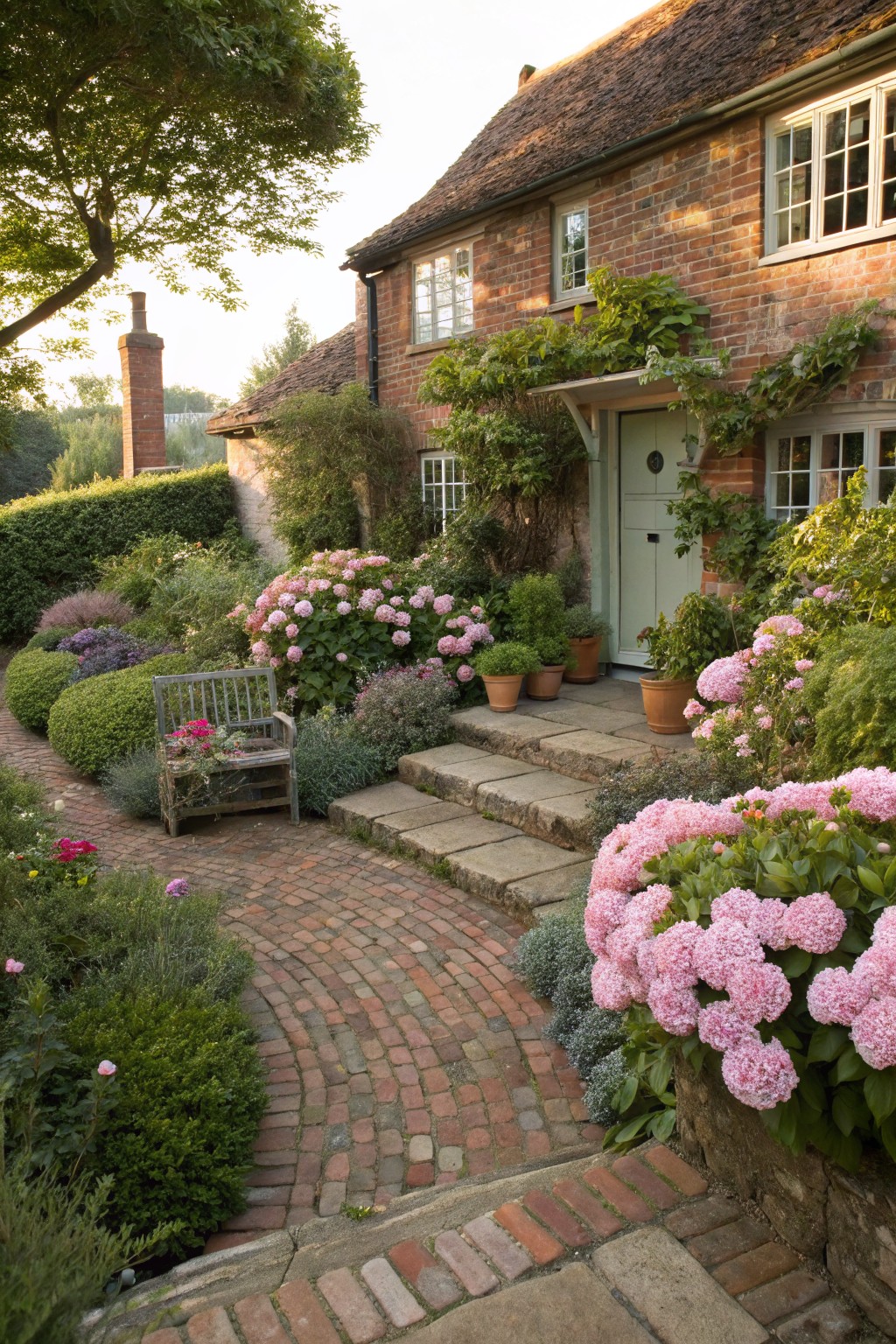
A gentle brick path like this one makes the walk to your front door feel easy and pretty. It winds just enough to slow you down, with big pink hydrangea bushes planted right along both edges. Those full blooms give a soft, full look that ties the garden to the house without much fuss.
You can pull this off in a front yard with dappled light, especially around an older cottage or brick home. Lay the path narrow, about three feet wide, and tuck hydrangeas in close so they mound up over time. Add a simple bench nearby if space allows. Keep the bed weeded so the path stays neat.
Classic Formal Parterre with Central Fountain
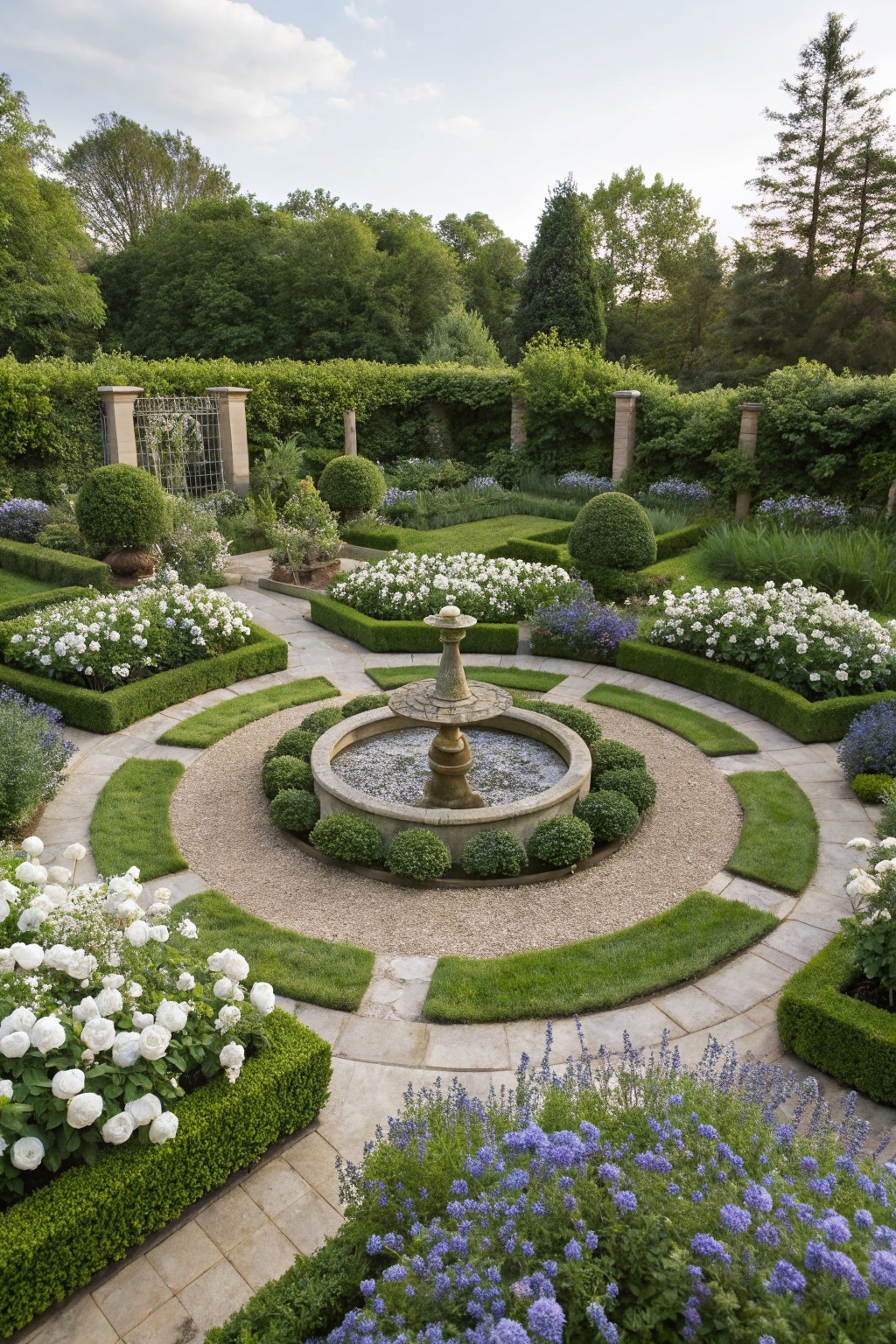
Formal parterres like this one use boxwood hedges to shape neat geometric beds around a stone fountain. The white flowers spilling over the edges add that lush touch without messing up the clean lines. It gives a garden real structure, especially when you want something classic and easy to walk through.
This setup works best in a side yard or courtyard where you have room for paths and some sun. Plant peonies or hydrangeas in the beds for bigger blooms come summer, and keep the boxwoods trimmed once a year. Skip it if your space is too small or shady, since the symmetry needs space to breathe.
Courtyard Patio Centered on a Hydrangea Bed
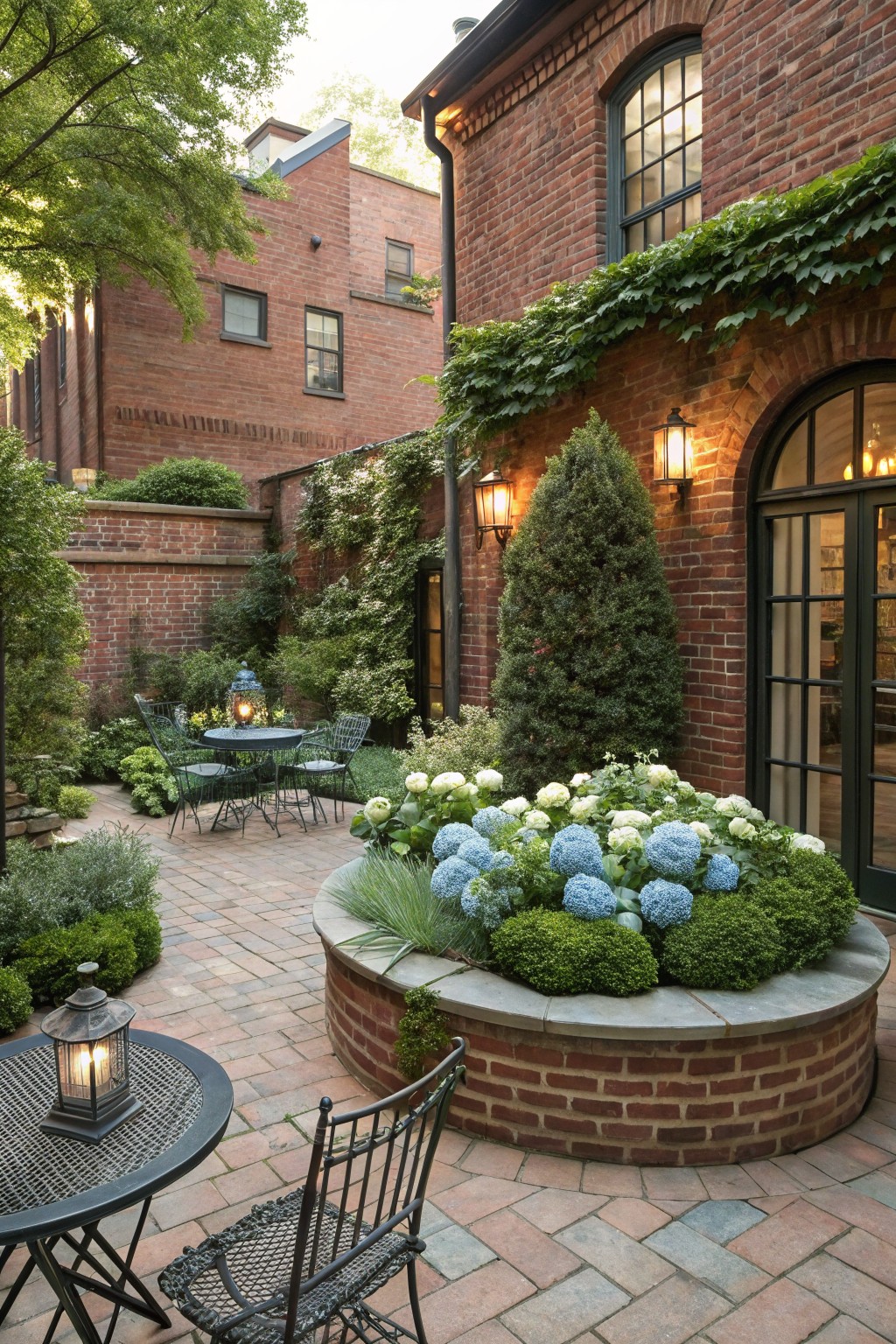
A raised round bed packed with blue and white hydrangeas makes a perfect focal point right in the middle of a brick courtyard. It softens all that hard brick wall and paving without taking up much room. The full blooms fill out the circle nicely and pull your eye to the center where people can sit nearby.
This setup fits small urban backyards or side yards next to older brick homes. Match the bed’s brick edge to your walls for a tied-together look. Go for big mophead varieties that mound up well, and keep seating simple like bistro tables so the plants stay the star. Just make sure the spot gets morning sun.
Walkway Lined with Pink Hydrangeas
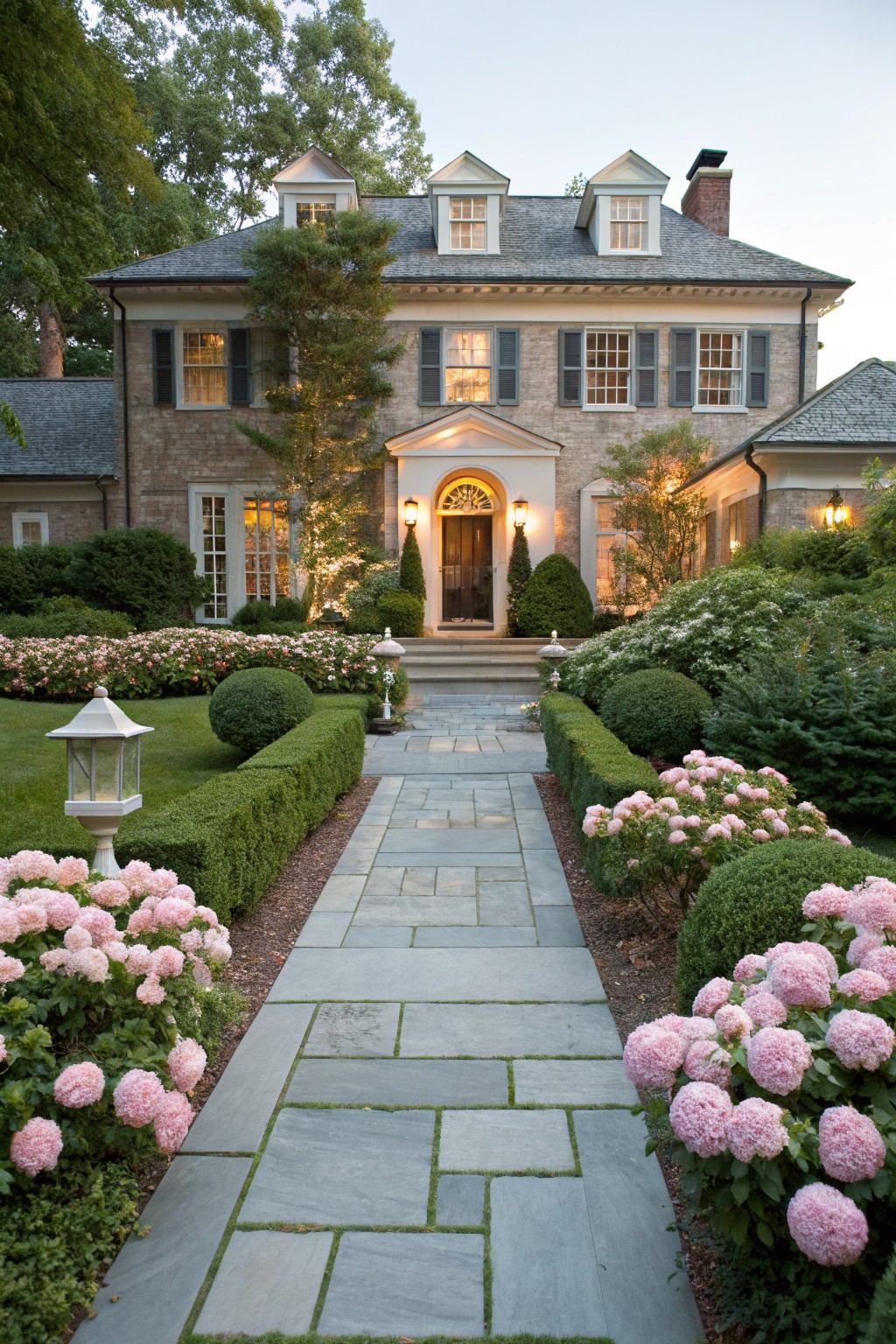
Big pink hydrangea blooms planted tight along both sides of a walkway make a simple but full entrance garden. They give that soft repeat of color and shape that pulls you right up to the door. Paired with low boxwood edging, it keeps things neat and structured without much fuss.
This idea fits older homes or any spot with a straight path to the front. Plant hydrangeas in narrow beds next to the stones, where they get morning sun and afternoon shade. Trim the boxwoods once a year to hold the line. Just watch they don’t flop over the path when wet.
Shaded Brick Path with Hydrangea Clusters
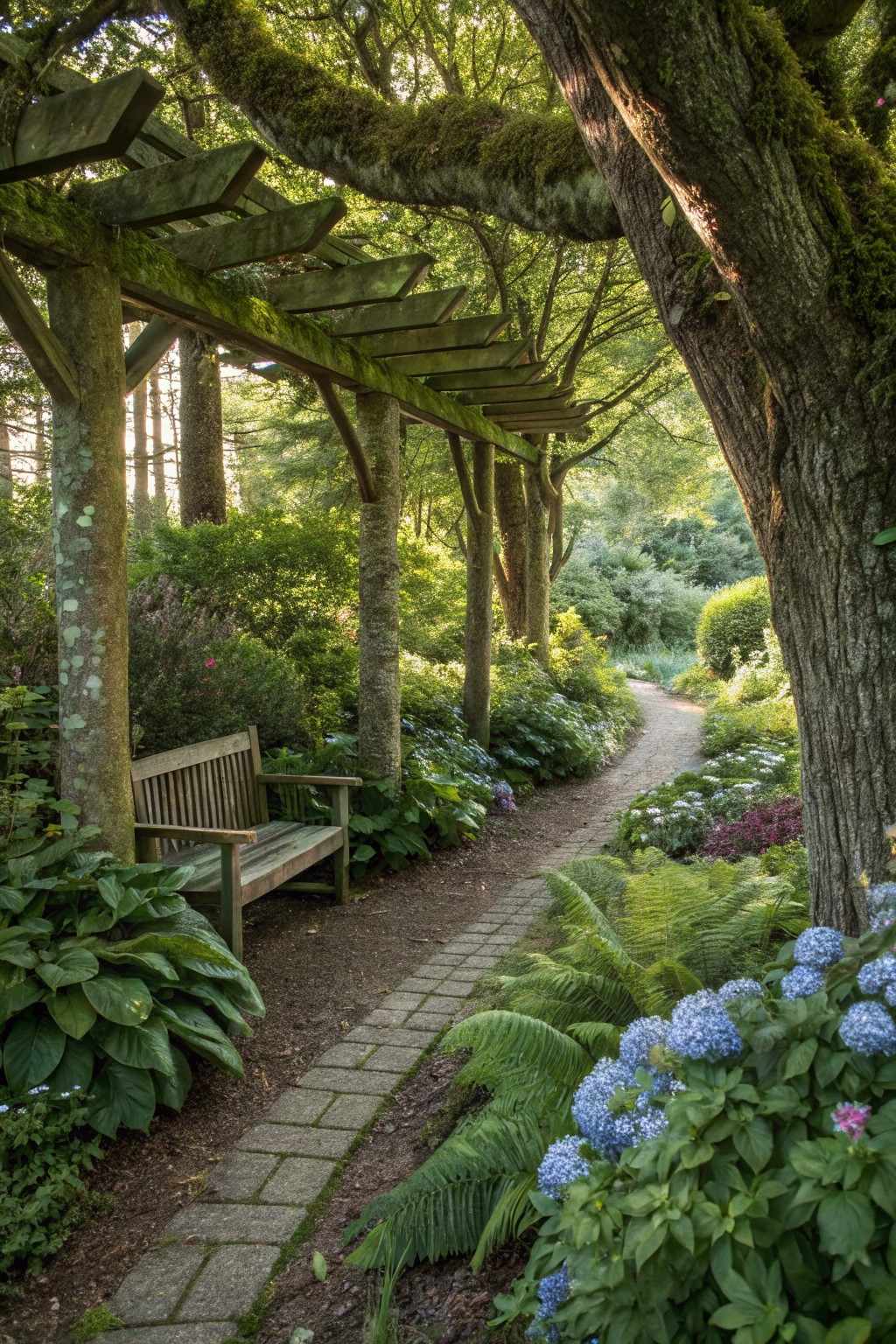
A simple brick path like this works great in a shady garden spot. It winds gently past big clusters of blue hydrangeas and ferns, with a plain wooden bench tucked in for sitting. The mossy pergola overhead keeps things dappled and cool. Folks like it because it turns a walk into something peaceful. No big show, just plants doing their thing.
Put one in where trees already give shade, maybe leading to a back corner. Lay bricks loose on sand for easy changes later. Plant hydrangeas in groups along the edges. They bloom best with some morning light. Add the bench near ferns for that soft green look. Skip fancy edging. It stays classic that way.
Garden Path Lined with Hydrangeas
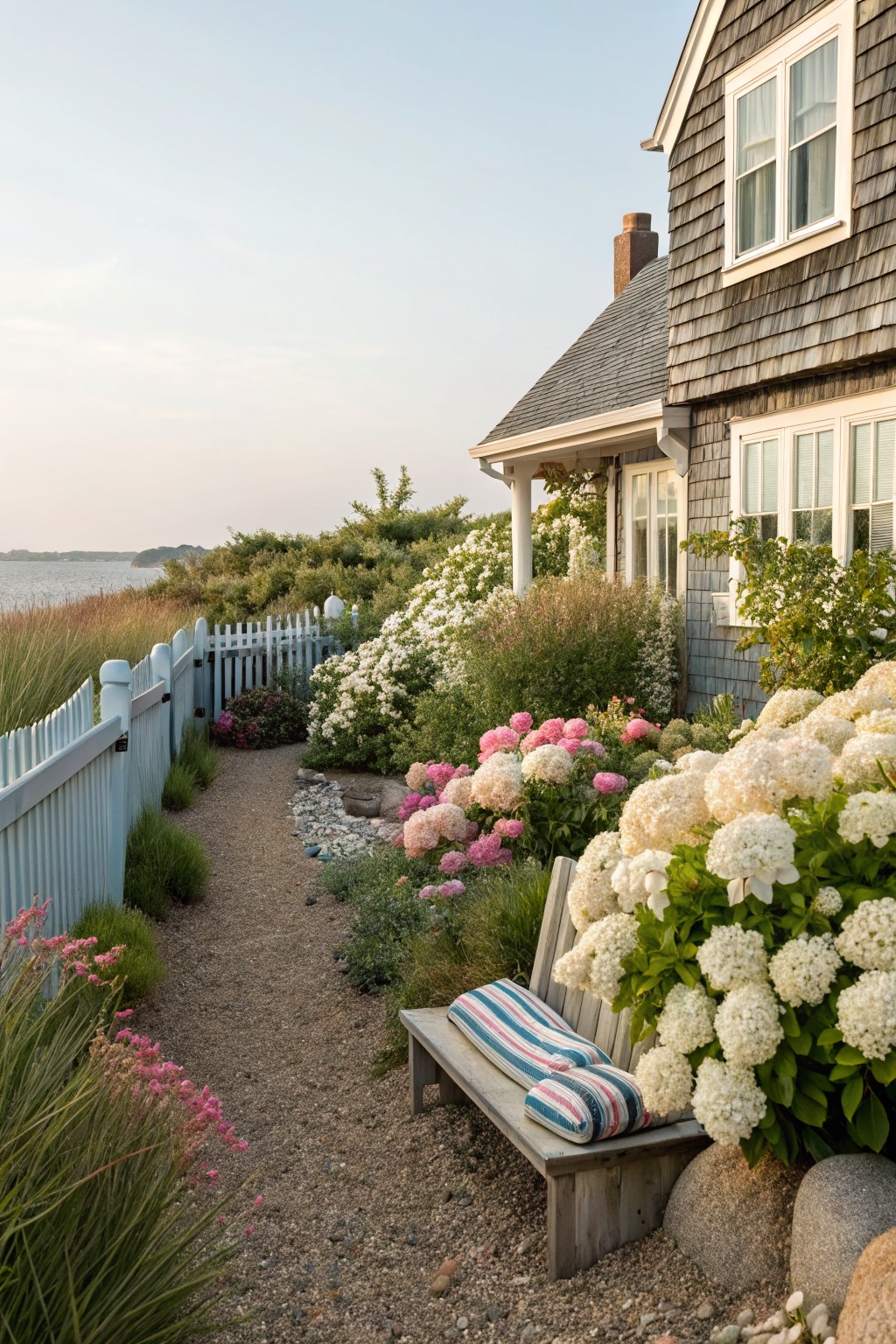
A gravel path like this one pulls you right through the garden. It’s edged with big white hydrangea blooms and touches of pink flowers, all tucked behind a picket fence. That setup keeps things neat but full of life. The path feels easy to follow, and the flowers make the short walk to the bench worth it.
You can do this in a side yard or along the house toward the water. Pick gravel so it drains well in rainy spots. Mass the hydrangeas for that full look, and mix in pinks for color through summer. It suits older homes with a cottage feel… just keep the fence low so the blooms show.
Hydrangeas Tucked Against Stone Walls

Big pink hydrangea bushes planted right at the base of a low stone wall give this garden path a soft, overflowing feel. The fluffy blooms spill out just enough to contrast the wall’s clean lines, while the gravel path keeps things practical for walking. Lavender strips along the path add a bit of structure without taking over.
This works well in formal or cottage-style gardens where you want flowers hugging the architecture. Plant hydrangeas in groups where they get morning sun and afternoon shade, since they like that. Keep the lavender trimmed as edging. It’s low fuss once established, and suits older homes with stonework… just watch for deer nibbling the hydrangeas.
Stone-Edged Beds Along a Driveway Path

A good driveway doesn’t have to be plain. Edge it with knee-high stone walls and pack the beds with peonies and hydrangeas for a soft, full border that pulls you right in. White hydrangea clusters mix with pink peony blooms here, hugging the gravel curve up to the gate. It makes the whole entrance feel like an extension of the garden, classic and easy on the eyes.
Try this on properties with room for a winding drive, like older homes or cottages. Use local stone for the walls to blend in, plant in big drifts so the flowers mound up nicely, and mulch well to keep weeds down. It suits sloped spots best… the walls hold soil while the blooms spill over. Just don’t skimp on the plants or it looks sparse.
Boxwood Parterres Around a Central Fountain
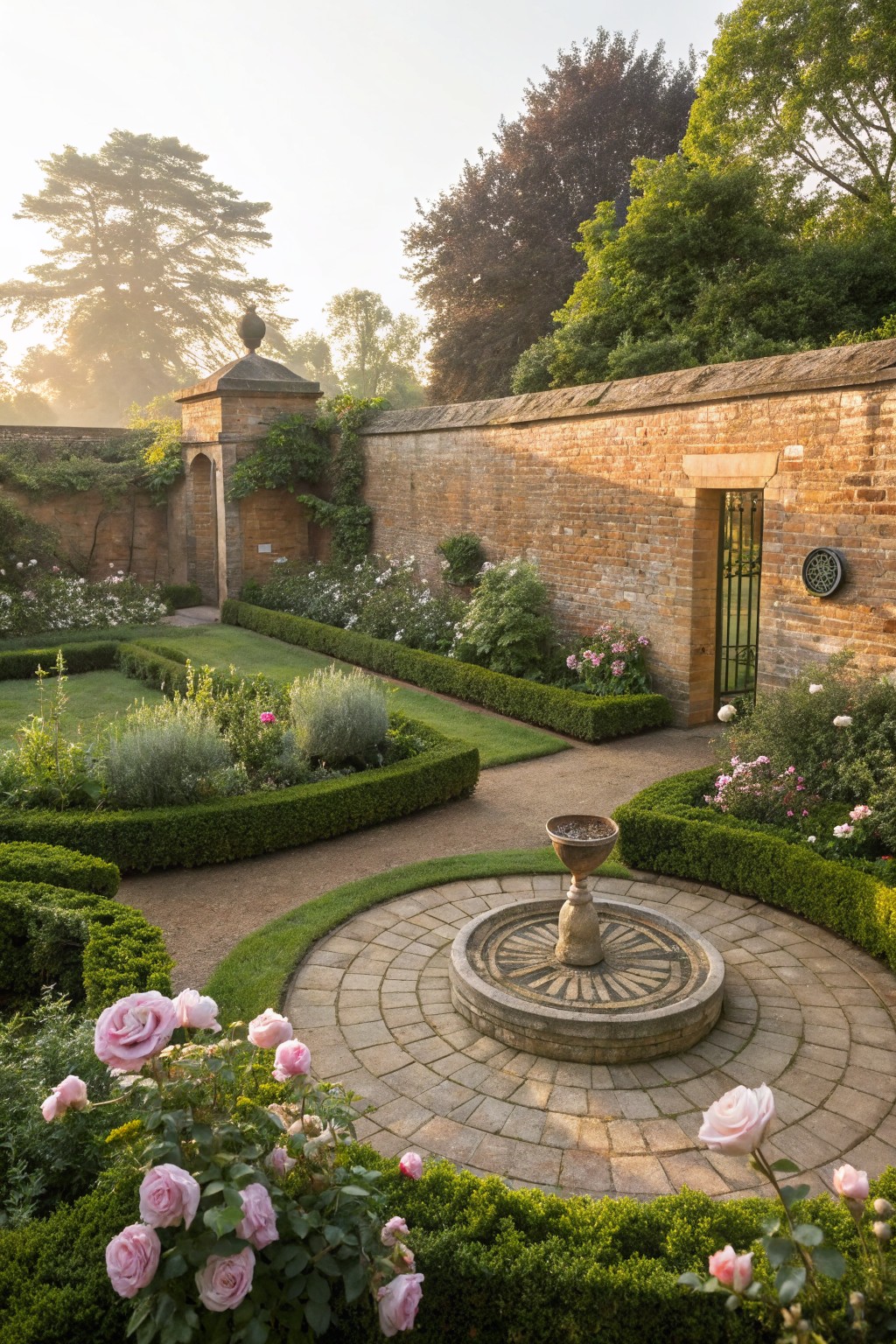
A simple boxwood parterre layout like this one gives any classic garden a sense of order and calm. The low hedges form neat squares and curves that frame flower beds nicely, with a stone fountain right in the middle pulling everything together. It keeps things tidy without feeling too stiff, and those pink roses spilling over show how well it holds up bigger blooms.
This setup works best in a walled courtyard or smaller side yard where you want defined planting zones. Plant peonies or hydrangeas in the beds for that lush look, and keep the boxwoods trimmed once a season. It suits older homes with brick walls, but watch the scale, smaller spaces need shorter hedges to avoid crowding.
Stone Path Through Peony Beds
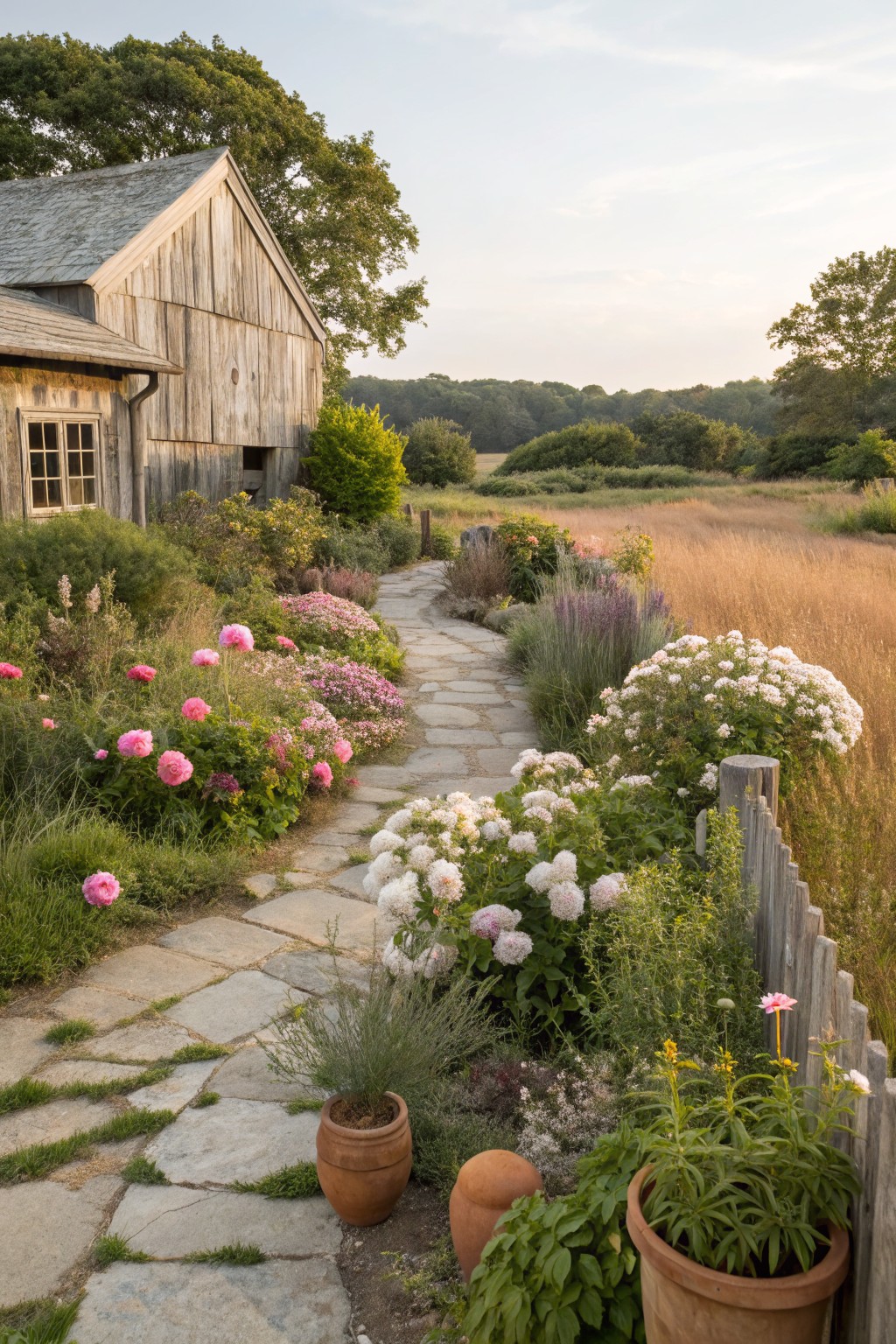
A winding flagstone path cuts right through thick plantings of peonies and hydrangeas in this setup. The rough stones fit the casual vibe, and the flowers spill over the edges just enough to make it feel like a real country garden. Pink peonies pop against the white hydrangea clusters, with tall grasses adding some height without blocking the way.
Try this along a side entrance or backyard stroll spot. Lay irregular stones in a gentle curve, then edge them with low-growing perennials and those big bloomers. It suits older homes or farmhouses best, especially where you get some afternoon sun. Just keep the path wide enough to walk two abreast.
Pool Deck Lined with Hydrangeas
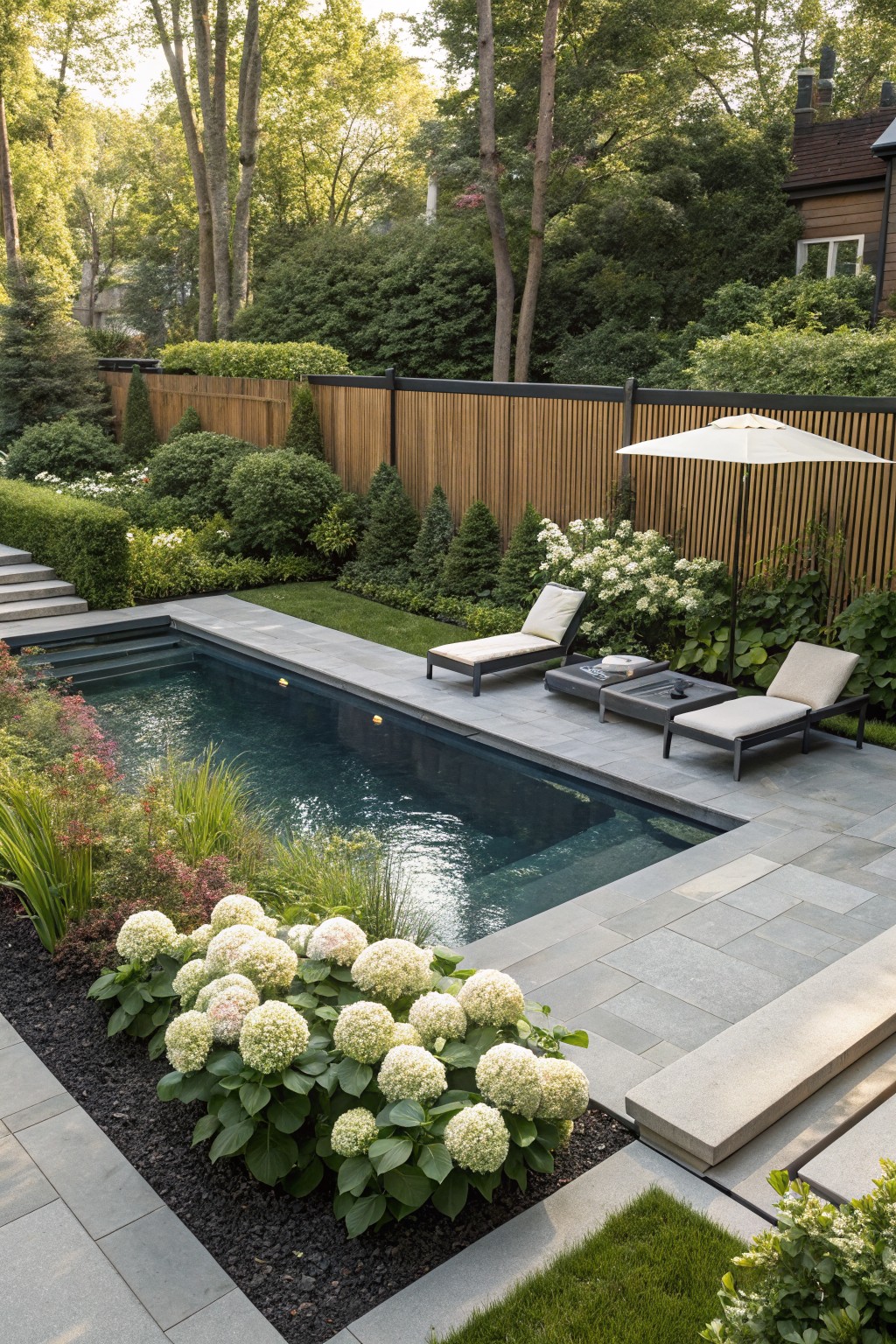
A narrow pool like this one sits flush with a simple stone deck, complete with loungers and a market umbrella for shade. The real draw here is the thick planting of those big white hydrangea heads right along the edge. They bring a full, summery softness that tones down the pool’s sharp modern look and makes the whole spot feel more garden-like and lived-in.
This works best in a backyard with some tree cover already, where the hydrangeas can tuck against fences or walls for support. Go for them in darker stone surrounds to let the blooms pop, and keep the beds mulched with black gravel so watering stays easy. Just make sure the deck edge has good drainage, or the roots might cause shifts over time.
Gravel Path Lined with Hydrangeas and Boxwoods
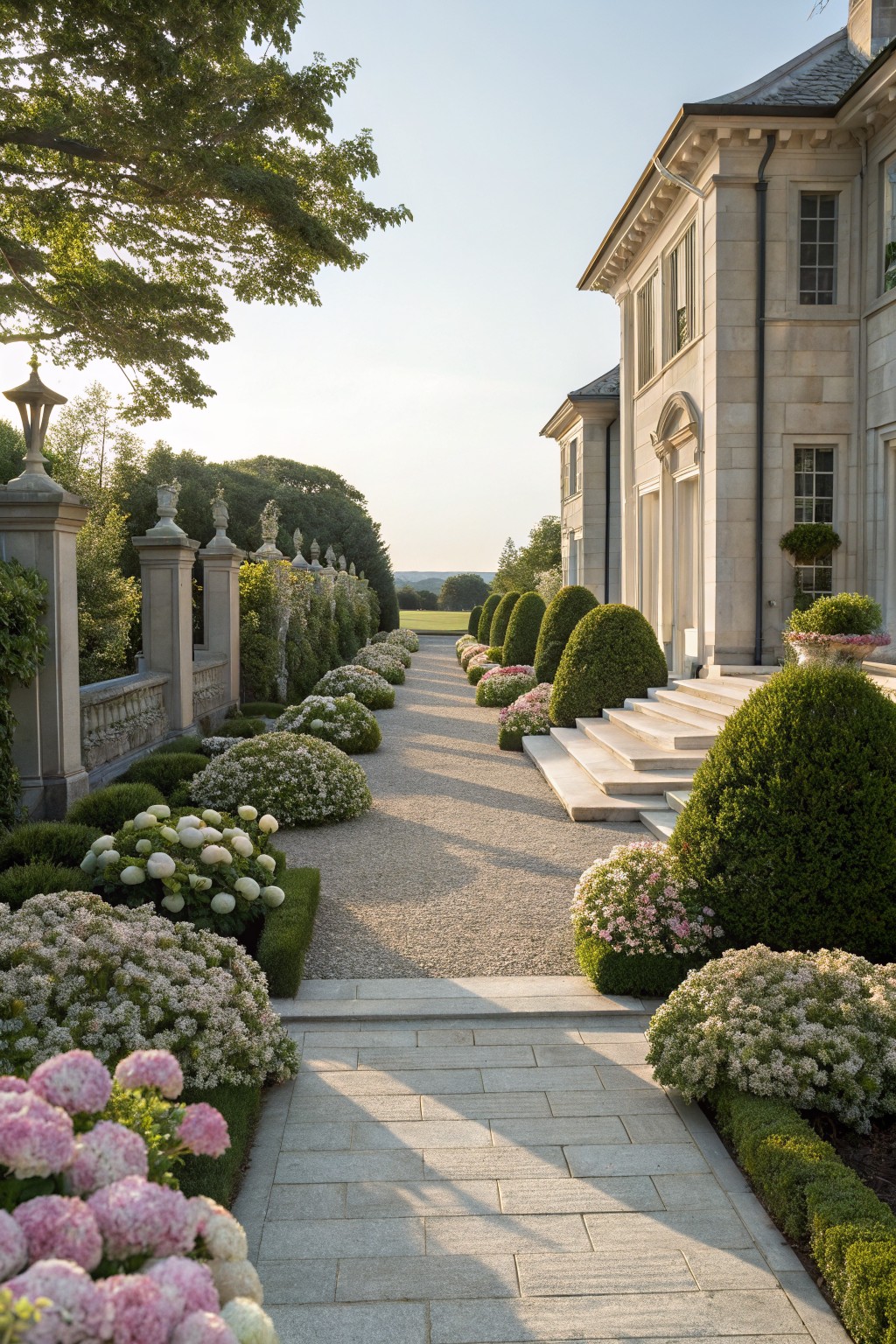
A straight gravel path edged in rounded boxwoods and stuffed with hydrangea blooms makes for an easy classic garden walk-up. The puffy pink and white flowers sit low along the edges, keeping things neat while the boxwoods hold the shape. It pulls your eye forward to the door nice and steady.
Plant this in front yards with some symmetry, like along a driveway or entry approach. Go for mophead hydrangeas that mound up without sprawling. Boxwoods take clipping well, so they stay formal. Works on most soil if you mulch the beds right… just watch for deer nibbling the new growth.
Brick Path Lined with Hydrangeas
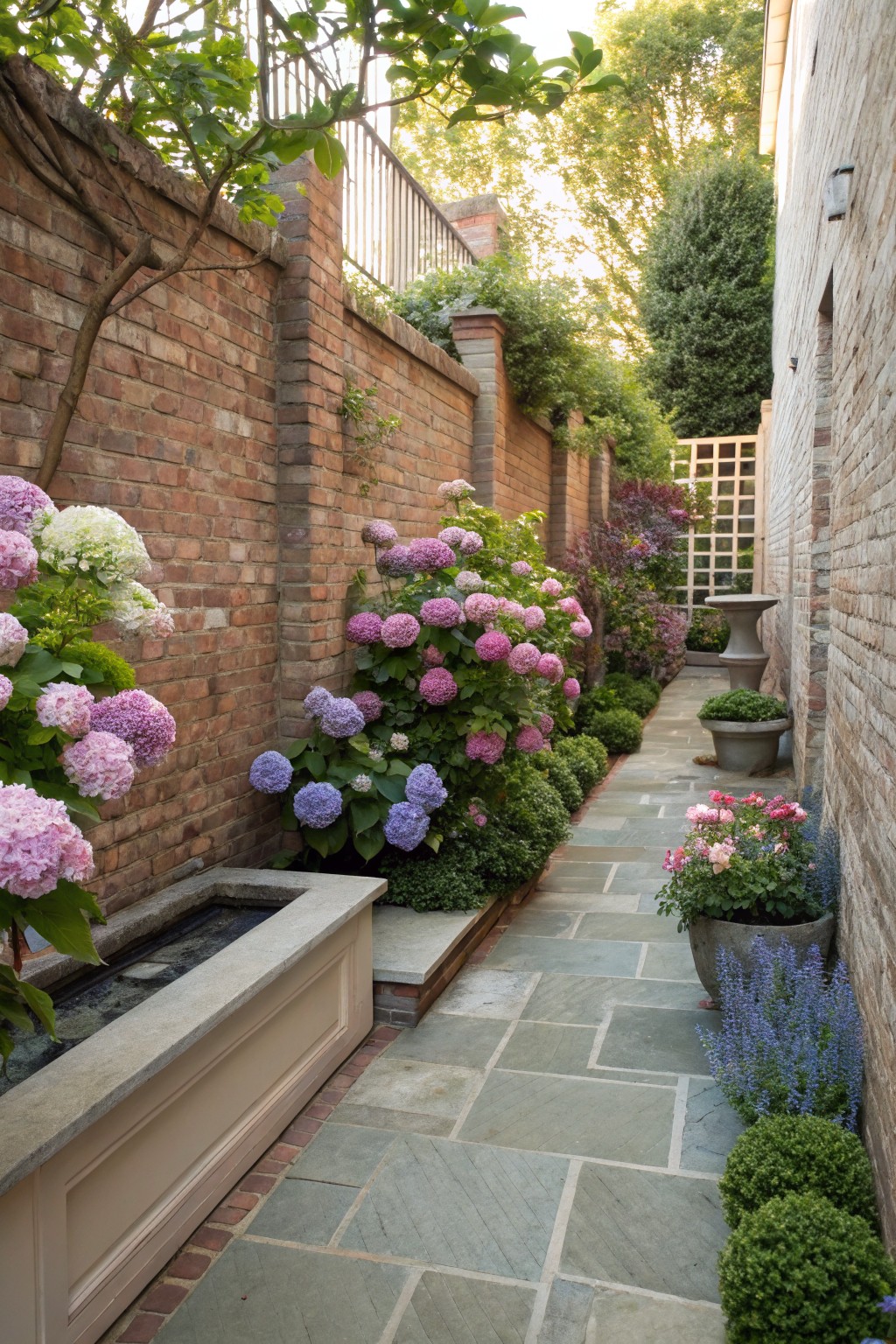
A simple brick-walled path gets a big lift from hydrangeas planted right along the edges. Here they’re massed in pinks and blues, filling the narrow space without crowding the stone walkway. The blooms hug the walls nicely, turning what could be a plain alley into a proper garden passage.
This works best in tight side yards or between buildings where you want privacy and color without much room. Plant the hydrangeas close to the base of the walls for support, then edge with low plants or pots. It suits older homes with brick already in place… just keep the path clear for walking.
Peony-Lined Stone Garden Path
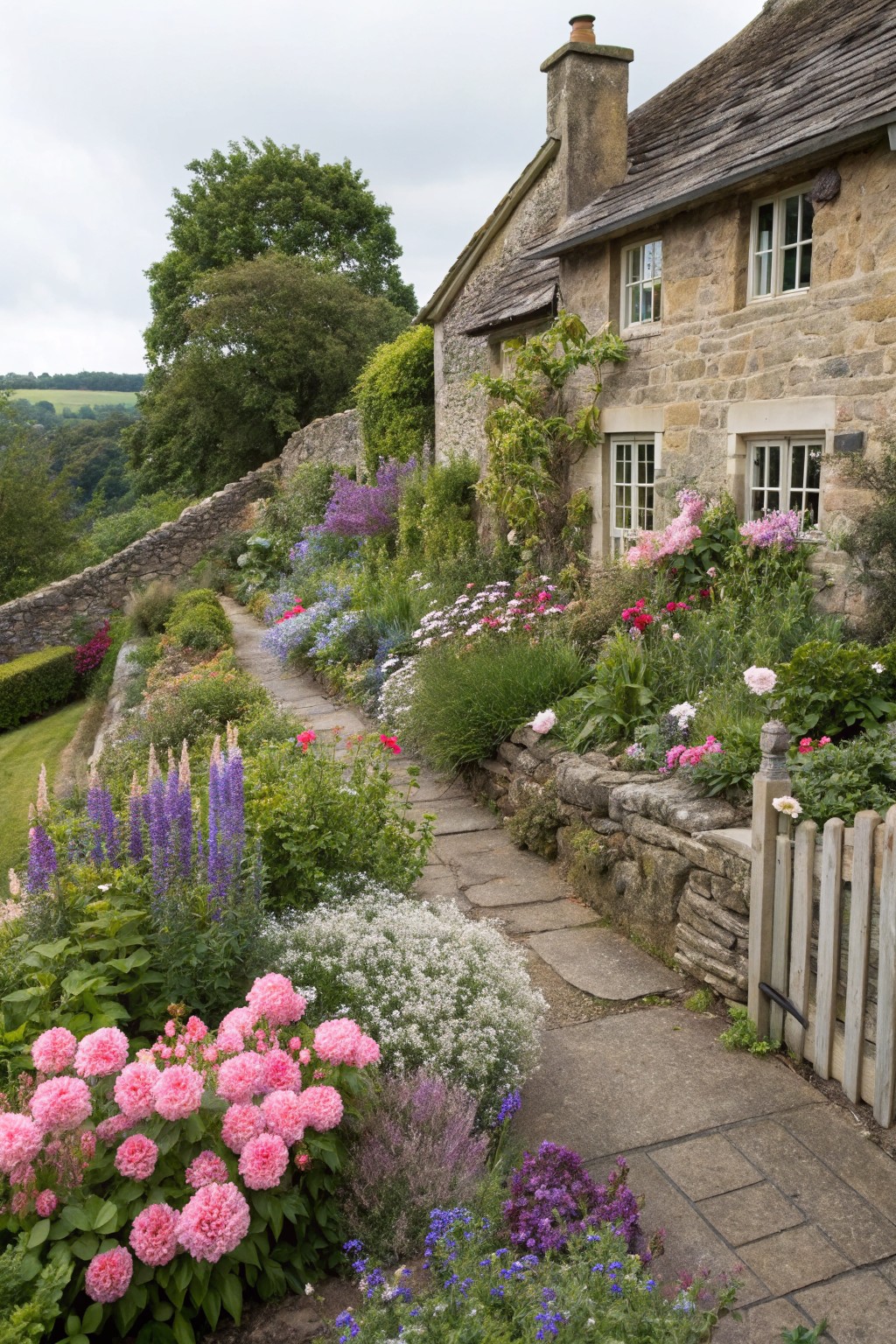
A simple stone path like this winds gently through thick beds of peonies and hydrangeas. It pulls the eye toward the house in a natural way. Those big pink peony blooms along the edge make the walk feel abundant but not crowded. The mix of heights keeps it interesting without much fuss.
This works best next to a cottage-style home or on a gentle slope. Lay flat stones for easy walking, then plant peonies right at the border so they spill over just a bit. Add hydrangeas for later color. Skip anything too spiky… it stays welcoming that way.
Hydrangeas in Raised Stone Beds by the Pool
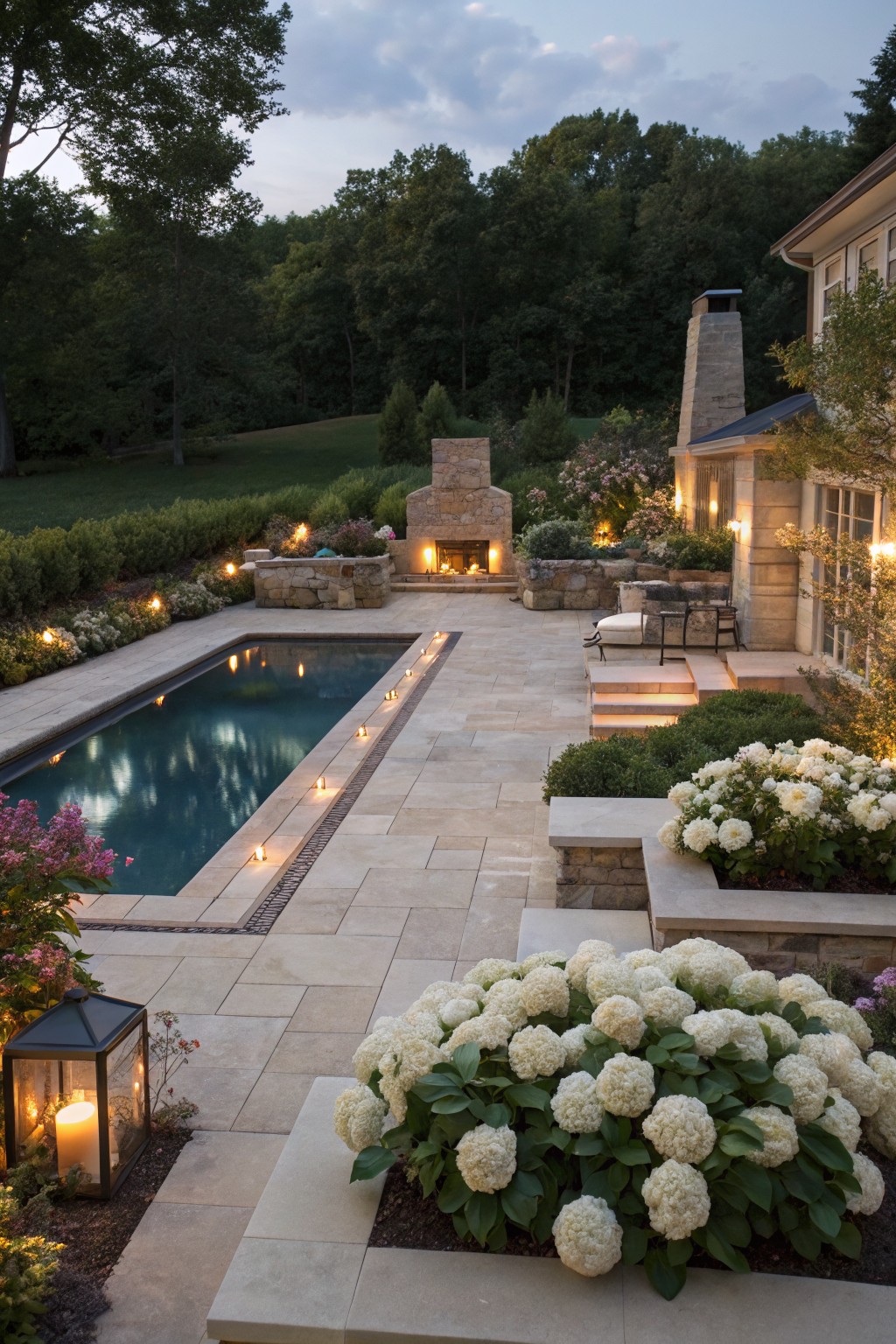
Big clusters of white hydrangeas tucked into sturdy raised stone beds make a pool area feel more like a classic garden spot. They soften all that hard paving around the water and add some real bulk without crowding the space. Those fluffy blooms stand out nice against the stone and give the whole setup a settled, lived-in look that fits right into a traditional yard.
You can pull this off in most backyard pool setups, especially where you want to tie the patio into the planting without flat beds that might flood. Keep the beds low enough to sit on the edge if you like, and plant them thick for that full effect come summer. Works best with homes that have some stone details already, so it all blends easy.
Formal Boxwood Parterres with a Central Fountain
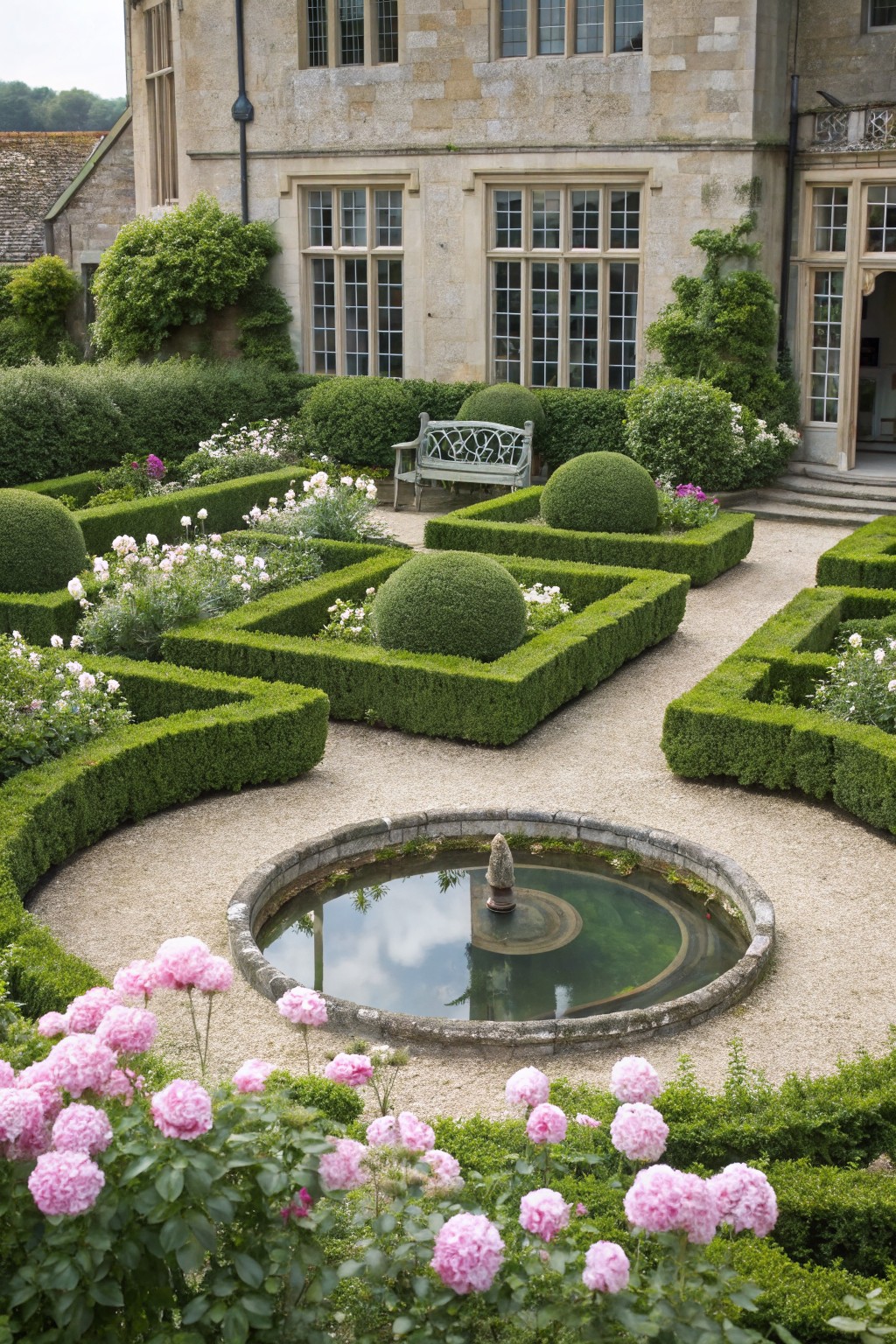
Boxwood parterres like this one lay out a garden in clean geometric shapes. The hedges form boxes and paths that guide you right to the fountain in the middle. Pink peonies clustered nearby bring some loose color against all that tidy green. It’s a classic way to make a yard feel organized without being stiff.
These work best in bigger spaces near stone houses or older homes where you want that English garden look. Plant the peonies along the edges for seasonal pops, and gravel paths keep it simple to walk. Just stay on top of trimming the boxwood… or it can get wild quick.
Fire Pit Along a Brick Garden Path
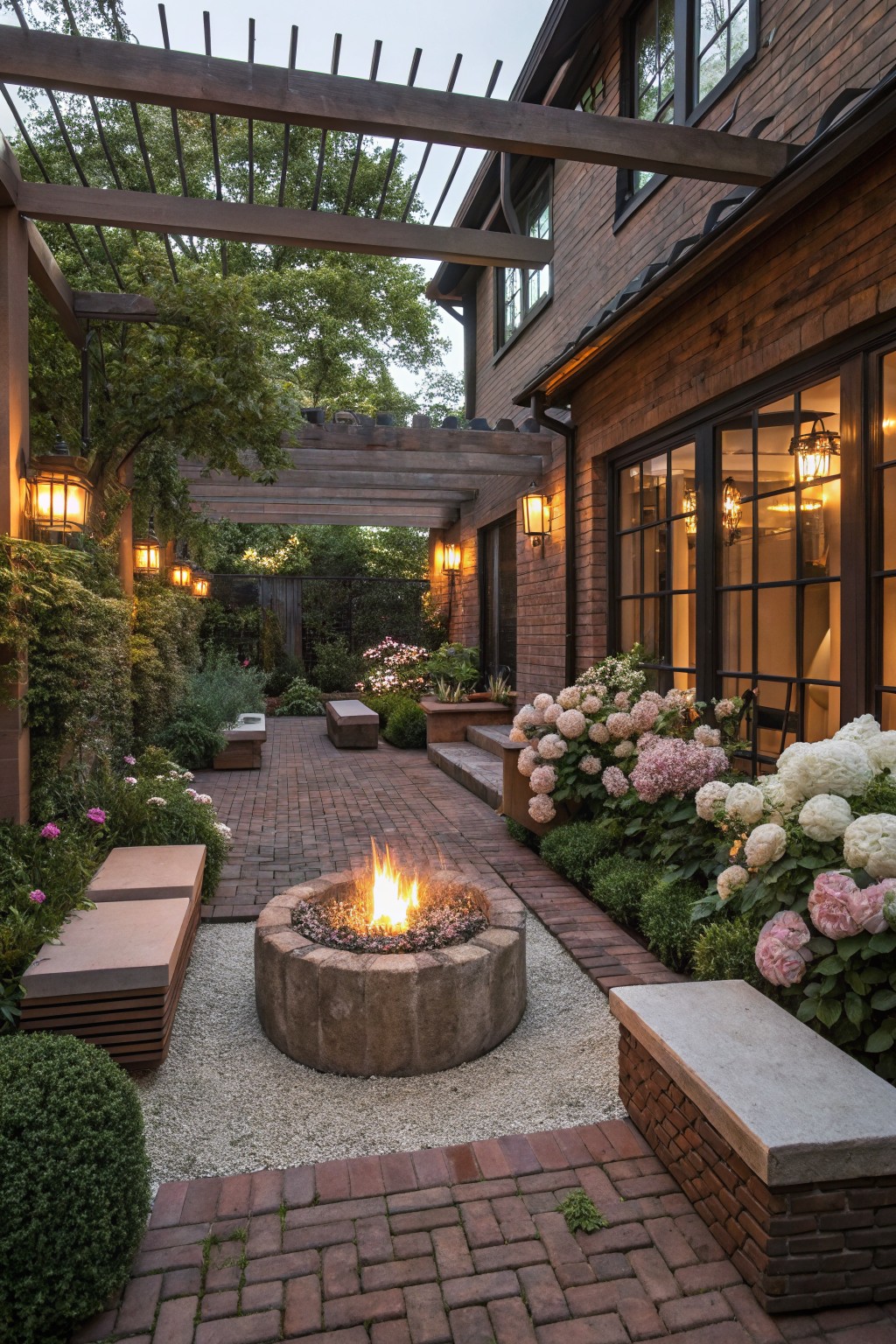
A round stone fire pit sits smack in the middle of a brick walkway, with low concrete benches pulled up close around it. Lush hydrangea bushes in pinks and whites line both sides, turning what could be just a path into a spot where people actually stop and sit. The warm glow from the fire pulls it all together on evenings when you want to linger outside.
This works best in narrow side yards or spaces between the house and a fence. Keep the path simple like this brick one to let the plants and fire do the talking. Go for gas if you can, easier cleanup. Suits classic brick homes with a bit of garden room.
Formal Boxwood and Peony Beds at the Entry

Boxwood hedges and topiary spheres give this front garden a clean, structured look that lasts all year. Then pink peonies fill in the beds with soft color and volume right at the steps. Together they pull the eye up to the door without overwhelming the space. It’s a simple way to make an entrance feel put-together and classic.
This works best on homes with a few steps to the door, like traditional brick or stone ones. Start with low boxwood borders along the path, add taller topiaries by the entrance, and tuck peonies in the front for bloom. Trim the box regularly. Skip it if your yard is too shady, since peonies need sun.
Wooden Footbridge Over a Garden Stream

A simple wooden footbridge like this one makes a backyard stream feel like part of the garden journey. It pulls you right into the planting beds without overpowering the natural flow of the water. Those big pink and white hydrangea blooms along the edges add a soft, full look that fits classic gardens perfectly. The bridge keeps things practical too. No fancy railings. Just weathered wood that blends with the rocks and grass.
You can add this in smaller yards where a stream runs through, or even fake one with a recirculating pump if water isn’t natural there. It works best around older homes with cottage-style landscaping. Watch the scale though. Keep the bridge narrow so it doesn’t crowd the path. Pair it with low stone walls and hydrangeas for that lush repeat bloom all summer.
Raised Brick Beds Along a Garden Path
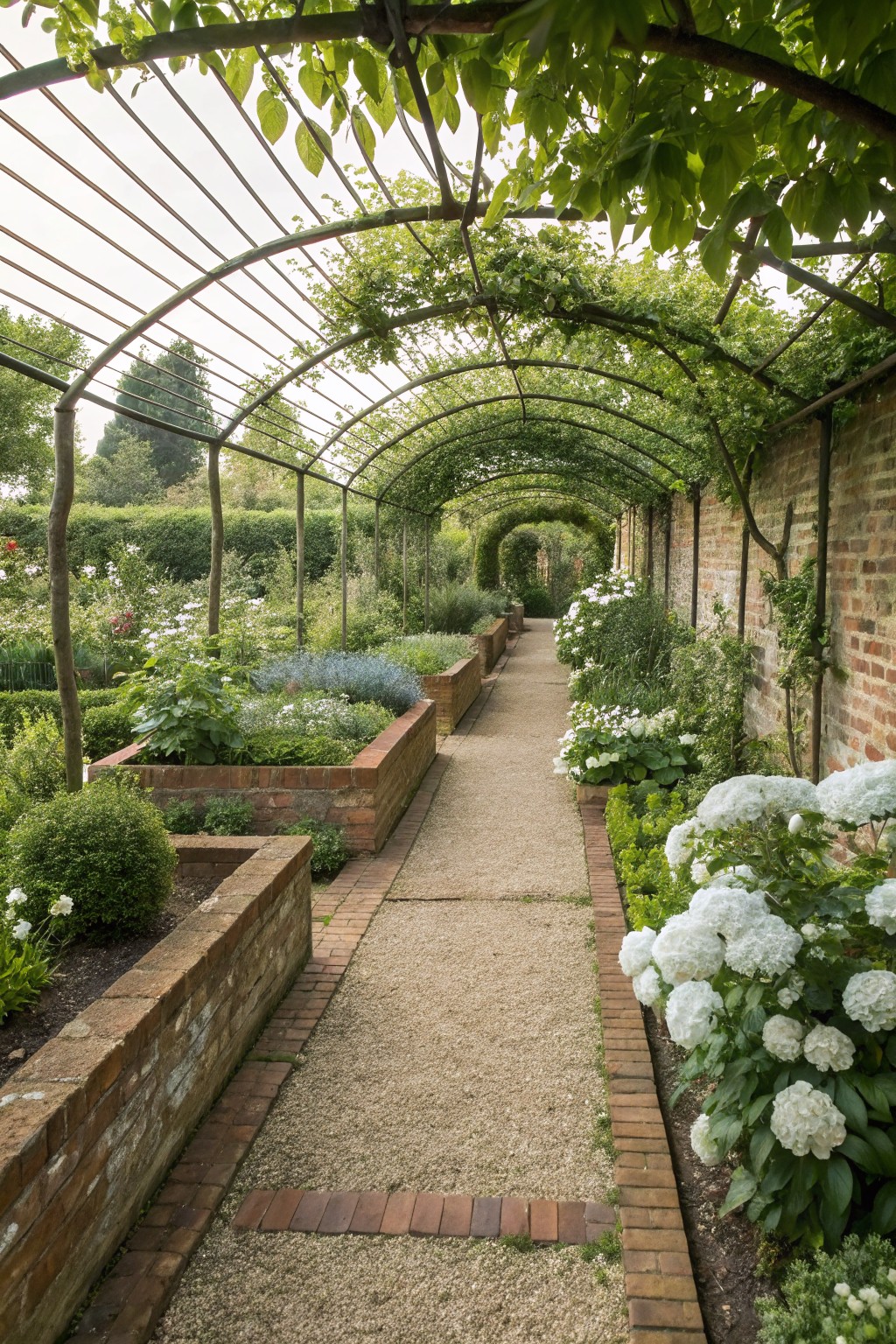
Raised brick beds make a garden path feel put together and easy to walk. They hold back the soil neat and let plants like hydrangeas stand out without spilling everywhere. The gravel underfoot stays simple. Overhead vines on a metal frame add some shade without crowding things.
This setup fits older homes with brick walls or a walled yard. Keep beds about two feet high for reaching in to weed or pick. Fill with summer bloomers such as white hydrangeas along the edge. It works best where you want structure but not too much fuss.
Winding Path Edged in Hydrangeas and Peonies
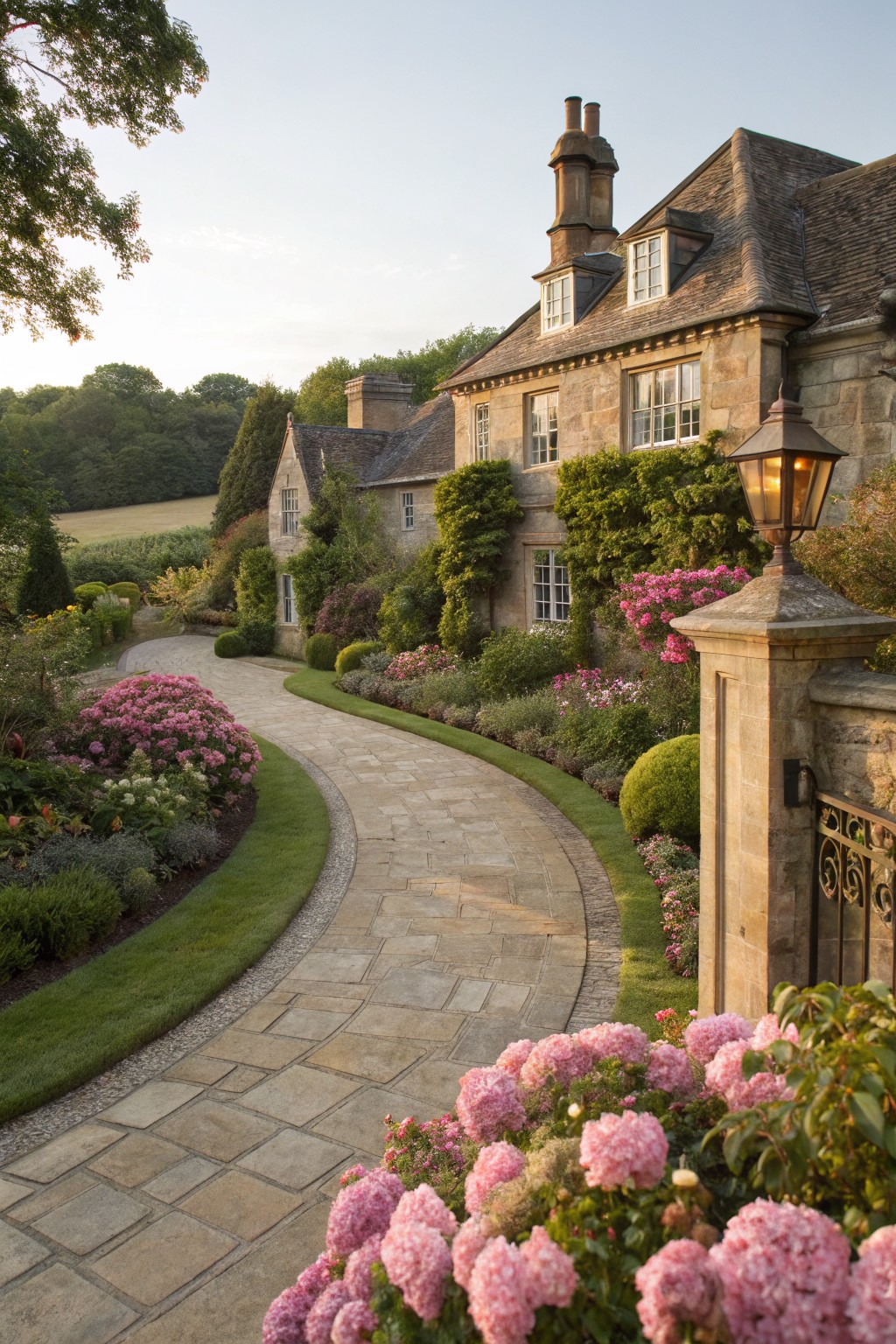
One simple way to draw folks through a classic garden is a curved stone path lined with big clusters of hydrangeas and peonies. Those soft pink blooms spill right over the edges, making the walk feel easy and welcoming. It ties the planting beds together without much fuss, and the low stone walls keep everything neat.
This setup works best in front gardens leading to a house entrance, especially on older homes with stone or brick. Plant the hydrangeas in drifts along the outer curve for more impact, and mix in peonies for season-long color. Just make sure the path stays wide enough for two people. It softens a formal layout nicely.
Frequently Asked Questions
Q: Can I plant peonies and hydrangeas right next to each other in my border?
A: Pair them up for a lush, full look that screams classic garden. Peonies stay compact while hydrangeas bush out behind them. Just space peonies 2 feet apart to let them breathe.
Q: When should I get these in the ground?
A: Fall works great for peonies so roots dig in before winter hits. Pop hydrangeas into spring soil once the frost danger passes. Your garden rewards the wait with stronger plants.
Q: What if my yard mostly gets shade?
A: They handle dappled light under trees just fine. Aim for morning sun to keep blooms coming strong… too much deep shade thins them out. Shift any leggy ones to brighter edges next season.
Q: How do I keep them blooming big year after year?
A: Water deeply once a week during dry summer stretches. And mulch around the base each fall to cozy up the roots. Skip the fancy feeds, plain compost in spring does the trick.
