

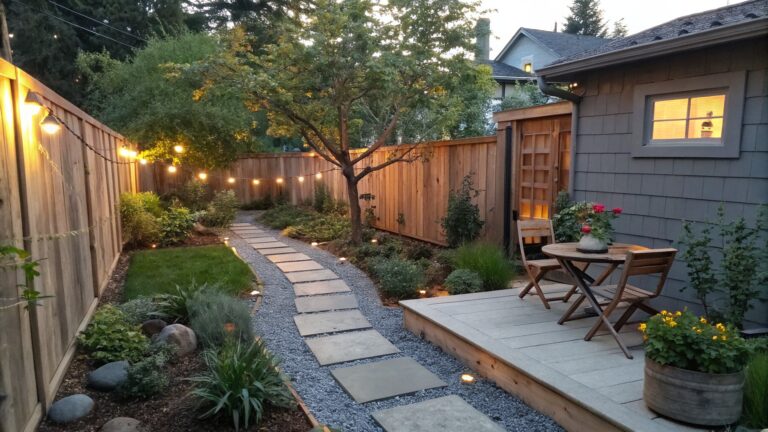
When planning lights for a small garden I always start by walking the space at dusk to see where shadows already fall naturally.
That step helps me avoid adding pieces that compete with the planting structure or the way pathways guide movement through the yard.
Some fixtures I tested last year blended in so well that they only became visible once the sun went down.
It is easy to overdo it with visible poles or strings in a compact area.
I tend to favor ideas that use existing walls or low edging to hide the source while still highlighting key plants or steps.
String Lights Hung Overhead Along a Garden Path
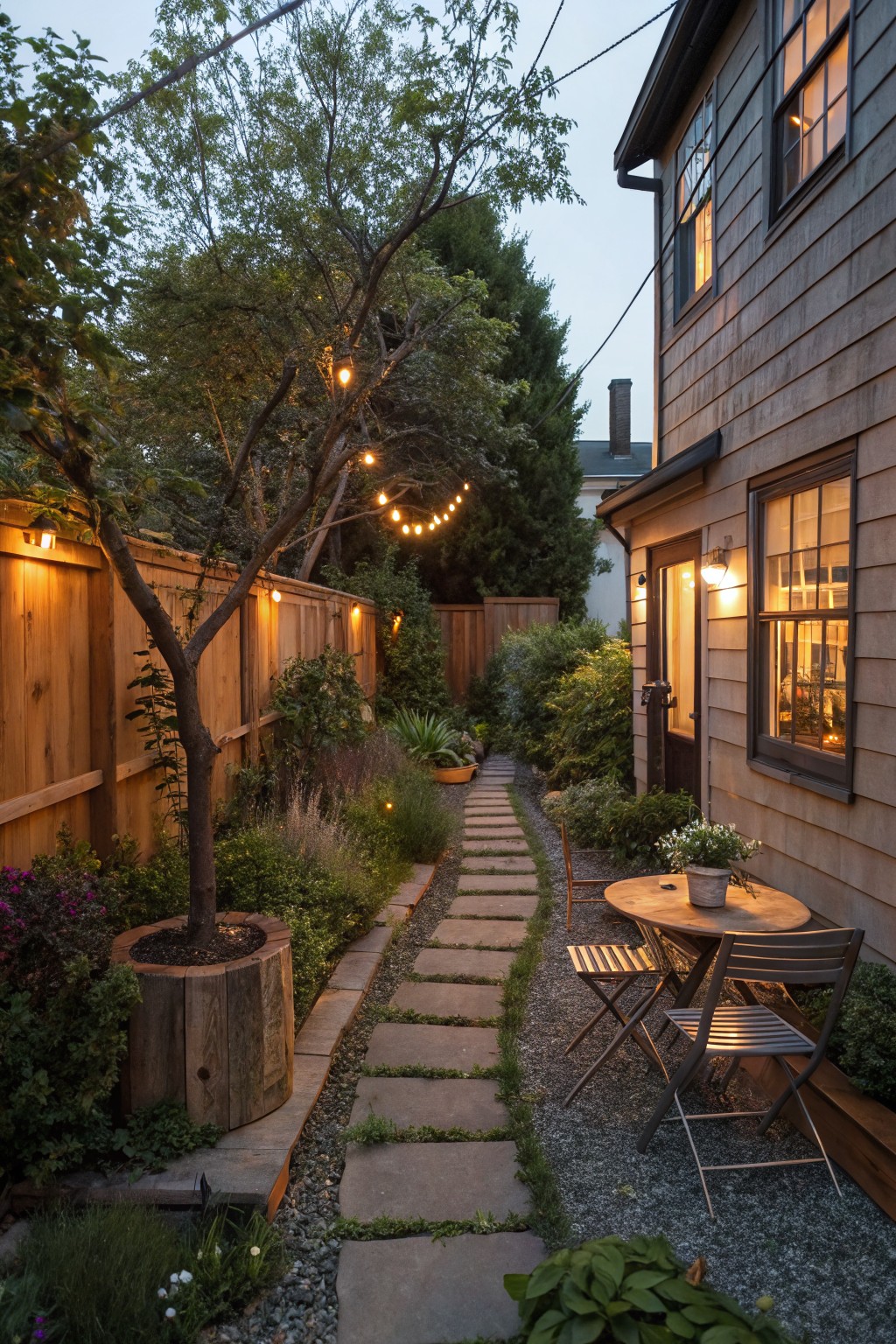
String lights work well when you want to light a narrow garden path without adding poles or ground fixtures that crowd the space. Hanging them high keeps the planting beds and stepping stones clear and lets the light feel softer as it filters down through branches.
This setup suits tight side yards or back gardens where the path runs close to the house or fence. Run the lights from trees or simple posts at the edges so the glow stays above eye level and does not compete with the plants below.
Low Lights Along Narrow Path Edges
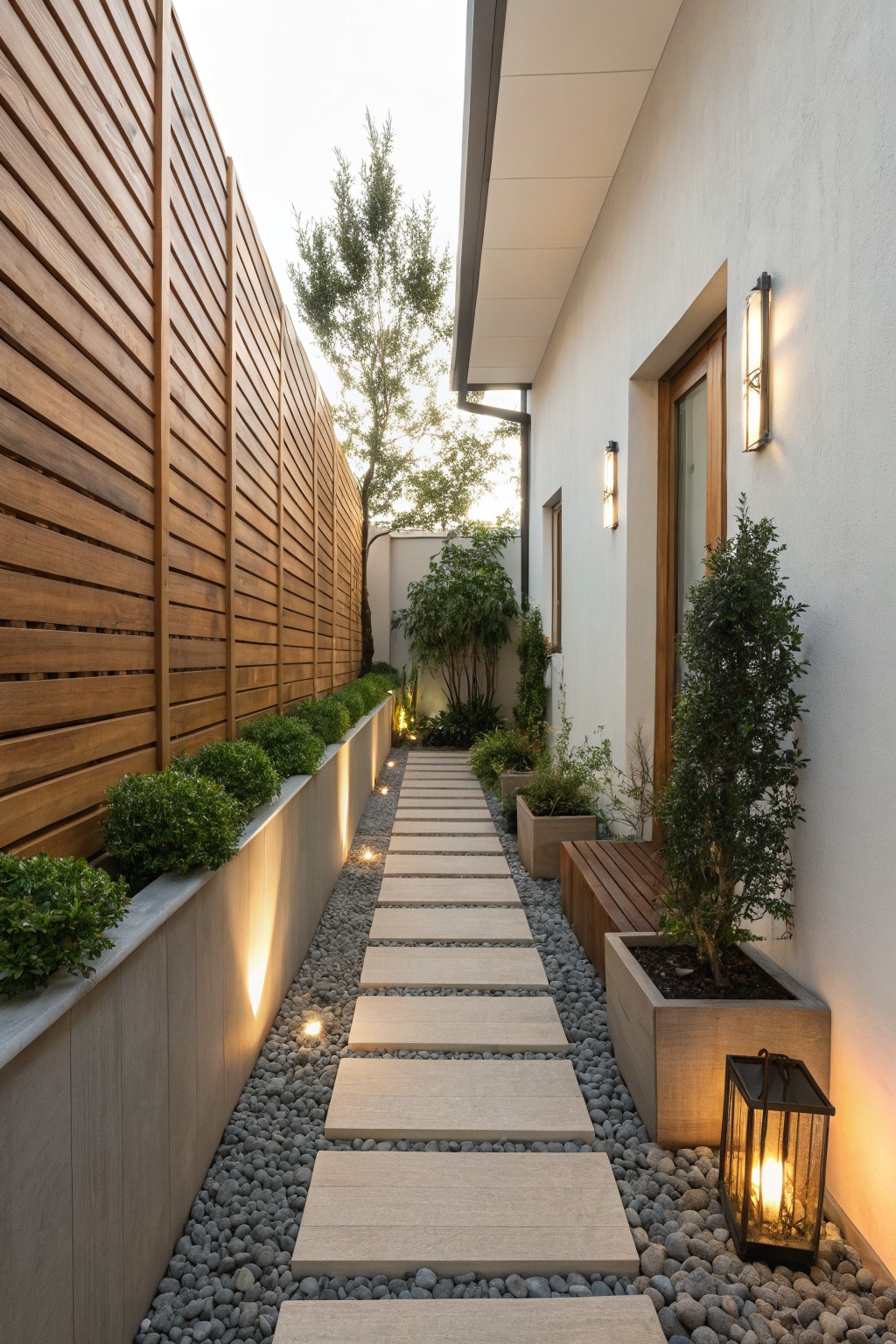
Many small gardens get cluttered fast when path lighting stands out too much. Setting small fixtures low into the edges of a path or planter keeps the light useful while the fixtures stay almost hidden during the day.
This approach works best in tight side yards or between a fence and house wall where every inch counts. Use gravel around the stones so the light spreads softly without needing tall posts or extra hardware.
Low Wall Lights Keep Small Gardens Simple
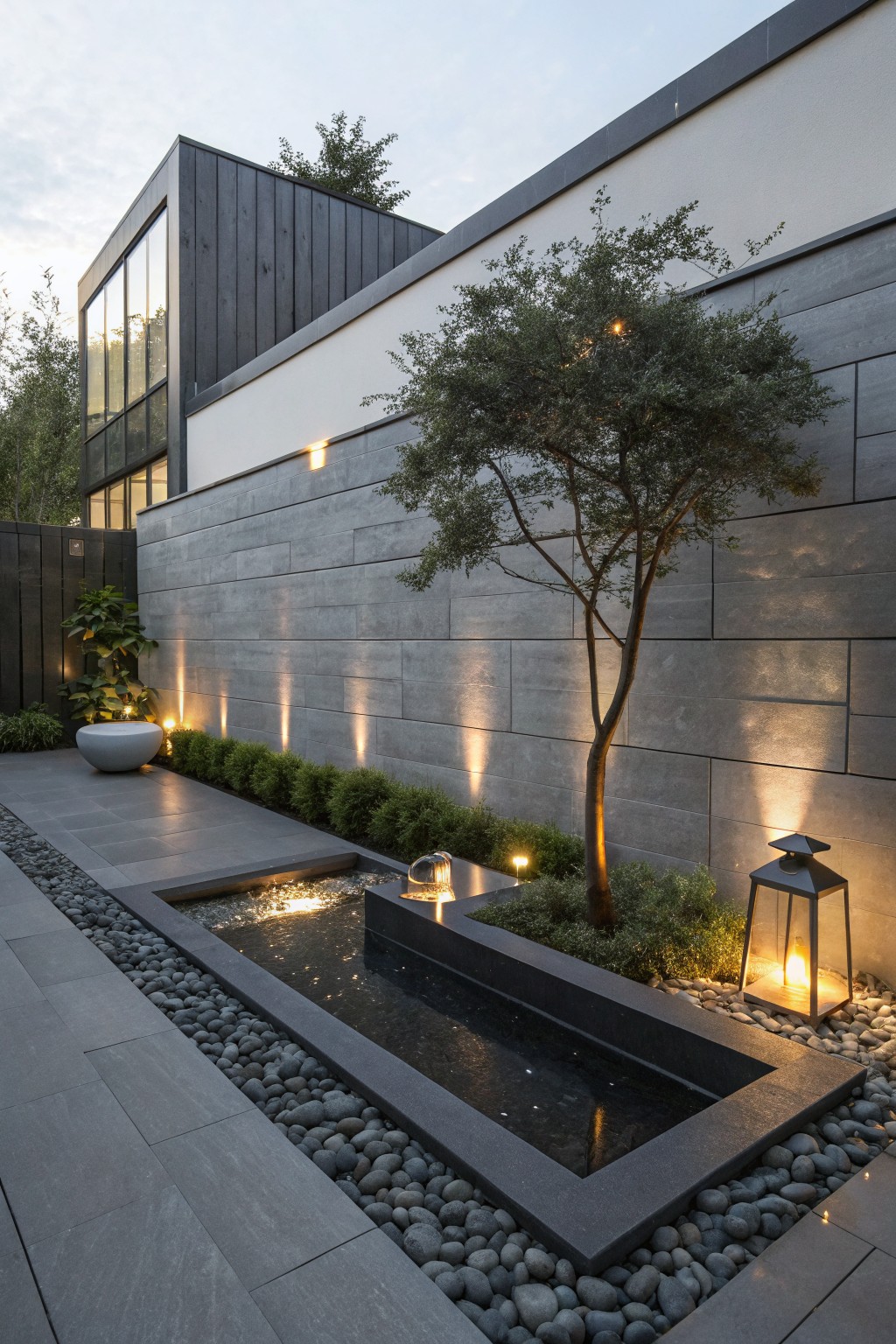
Running a line of small lights right along the base of a wall gives enough light for the plants and path without adding extra poles or stands that take up room. The fixtures stay low and out of the way, so the space still feels open even when the lights are on.
This works well in narrow courtyards or side gardens where every bit of floor space matters. Match the color of the lights to the wall and space them evenly so they do not draw attention during the day.
Use Low Lights to Edge Garden Paths
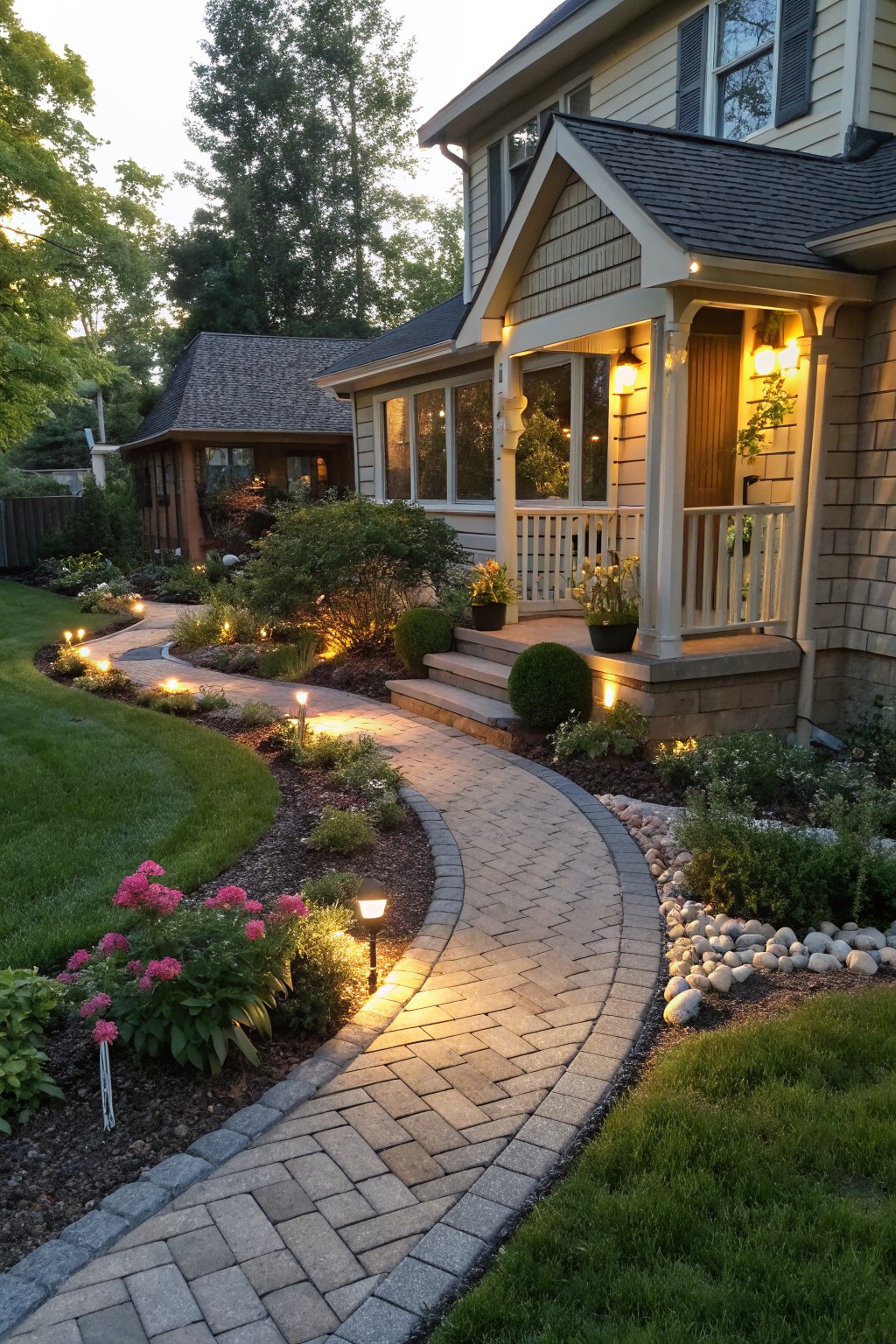
Low lights tucked right along the edge of a path give enough light to walk safely at night without adding tall fixtures or bright poles that break up the view. This keeps the garden feeling open and simple even when the lights are on.
It works well on smaller lots where every element needs to stay quiet. Stick with small fixtures that sit just above the mulch or ground cover and aim them downward so they light the surface without shining into the beds or the house windows.
String Lights Run Overhead
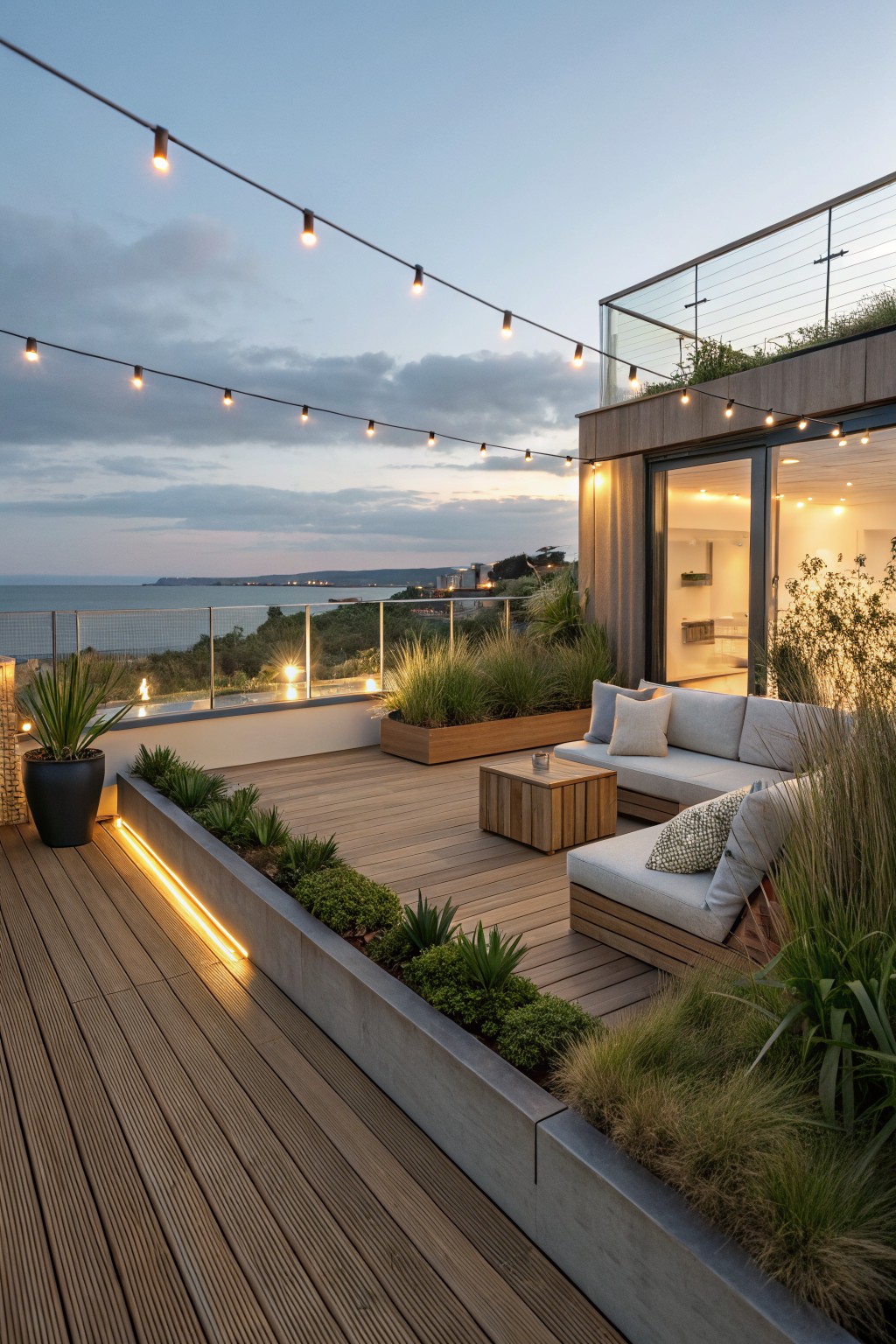
String lights give you soft evening light without adding lamps or poles that crowd a small deck or terrace. Running them high across the space keeps the seating area clear and lets the glow come from above instead of from objects on the ground.
This works best on balconies and roof terraces where you can attach the wires to the building or railings. Use a single strand or two and keep the spacing wide so the lights stay subtle instead of turning into a busy grid.
Place Lanterns Low Among The Plants
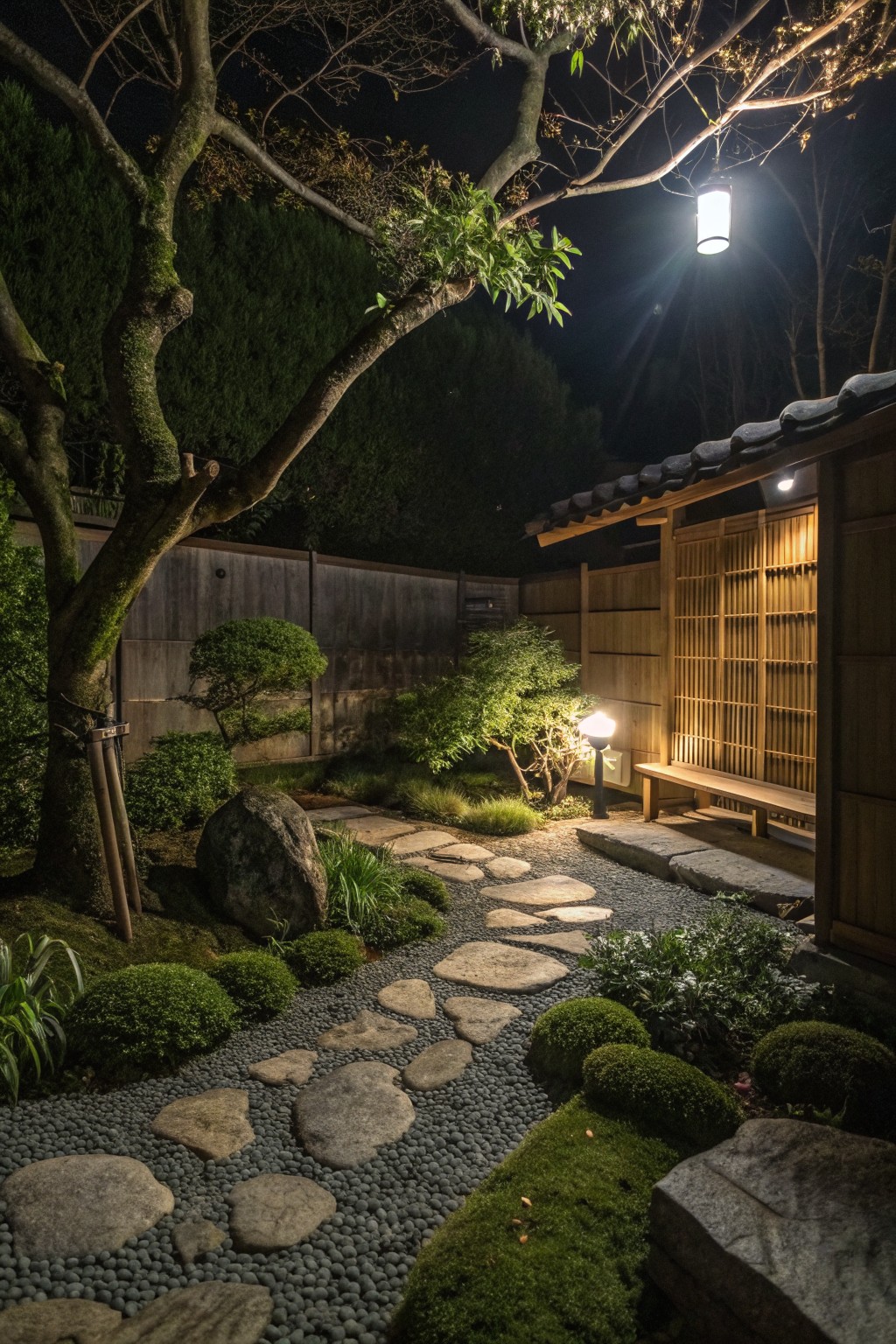
Low lanterns work well in small gardens because they light the ground without adding extra poles or tall fixtures that crowd the space. In this setup the lights sit right at plant level so they highlight the path and a few key shrubs while the rest of the garden stays dark and simple.
Try setting one or two stone lanterns near the edge of a path where they can double as both light and garden accent. They suit compact yards best when you keep the number small and let the glow stay soft rather than bright.
Edge garden paths with low lights
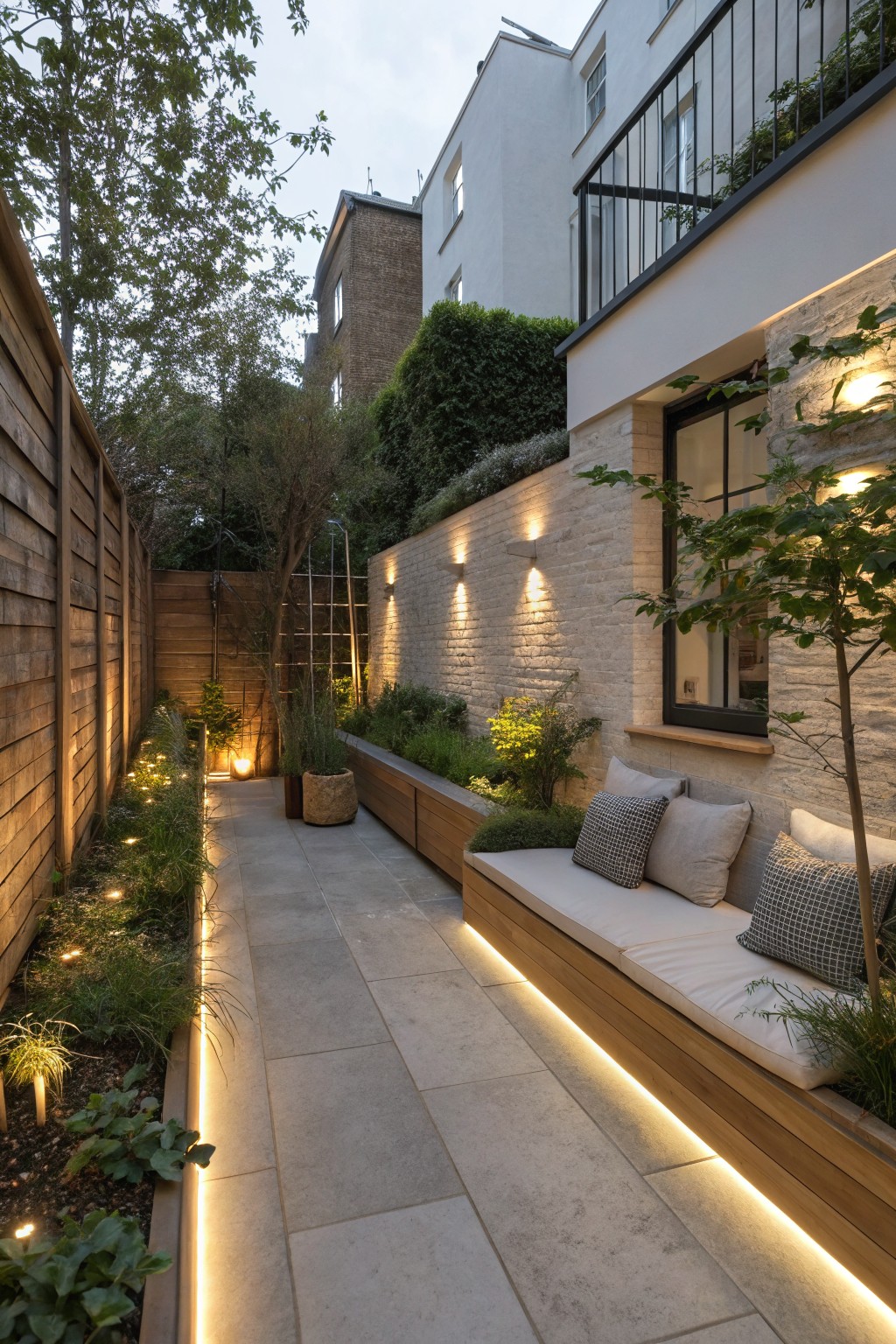
Low lights tucked right along the edge of a path give enough light to walk safely at night while keeping the whole garden looking simple. In a narrow space this approach avoids the need for extra lamps or poles that would crowd the view. The glow stays close to the ground so it highlights the planting without shining into windows or creating glare.
This works best on straight or gently curving paths where you can run a slim LED strip in a shallow channel. It suits small city gardens or side returns where every inch counts. Just make sure the channel sits flush so it does not become a trip hazard.
Recessed Path Lights Keep Things Simple
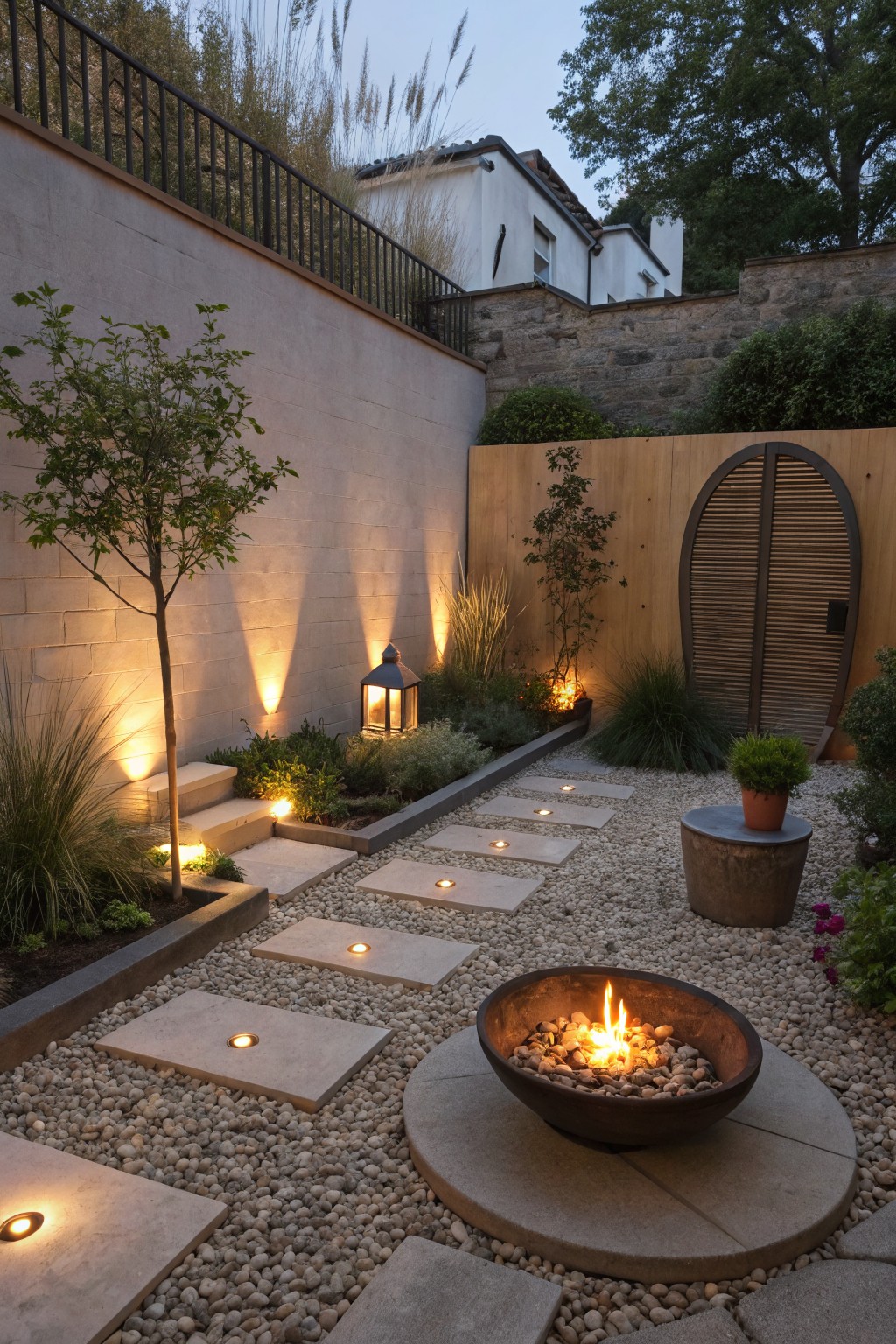
Recessed lights set right into the stepping stones give just enough light to follow the path at night. They stay nearly invisible during the day, so the garden does not end up dotted with extra poles or fixtures.
This works best in small spaces where every added object can start to feel like clutter. Use them along the main route through gravel or stone and keep taller lights to a minimum so the planting stays the focus.
Mount Lights on the House to Light Garden Paths

Many small gardens stay calmer when you skip extra posts or bollards. Mounting a couple of lights on the house wall gives enough glow to follow the path and see the beds without adding more objects to the view.
This works best when the path sits fairly close to the building. Keep the fixtures simple and aim them downward so the light spreads across the gravel and plants without bright spots or visible hardware.
Tuck Lights Into Planting Beds
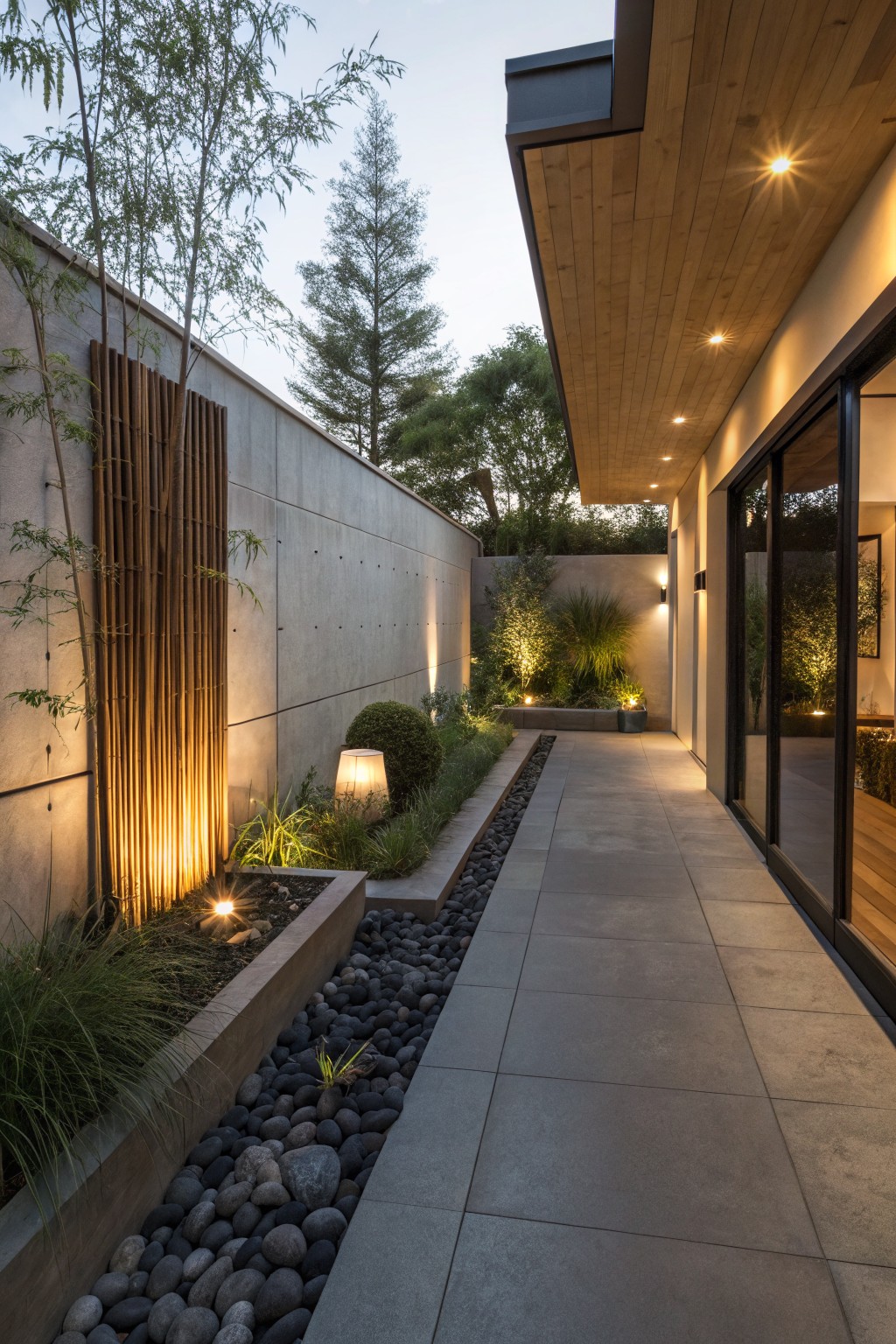
One of the easiest ways to light a narrow garden path is to keep the fixtures out of sight. Placing small lights low inside the planting beds lets the glow spill onto the walkway and highlight the plants without adding poles, spikes, or extra objects along the edge.
This approach works especially well in tight side yards or modern gardens where every visible item counts. Use warm LEDs tucked behind foliage or set into the bed wall so the light source stays hidden during the day and only the effect shows at night.
Build Lighting Into Walls And Steps
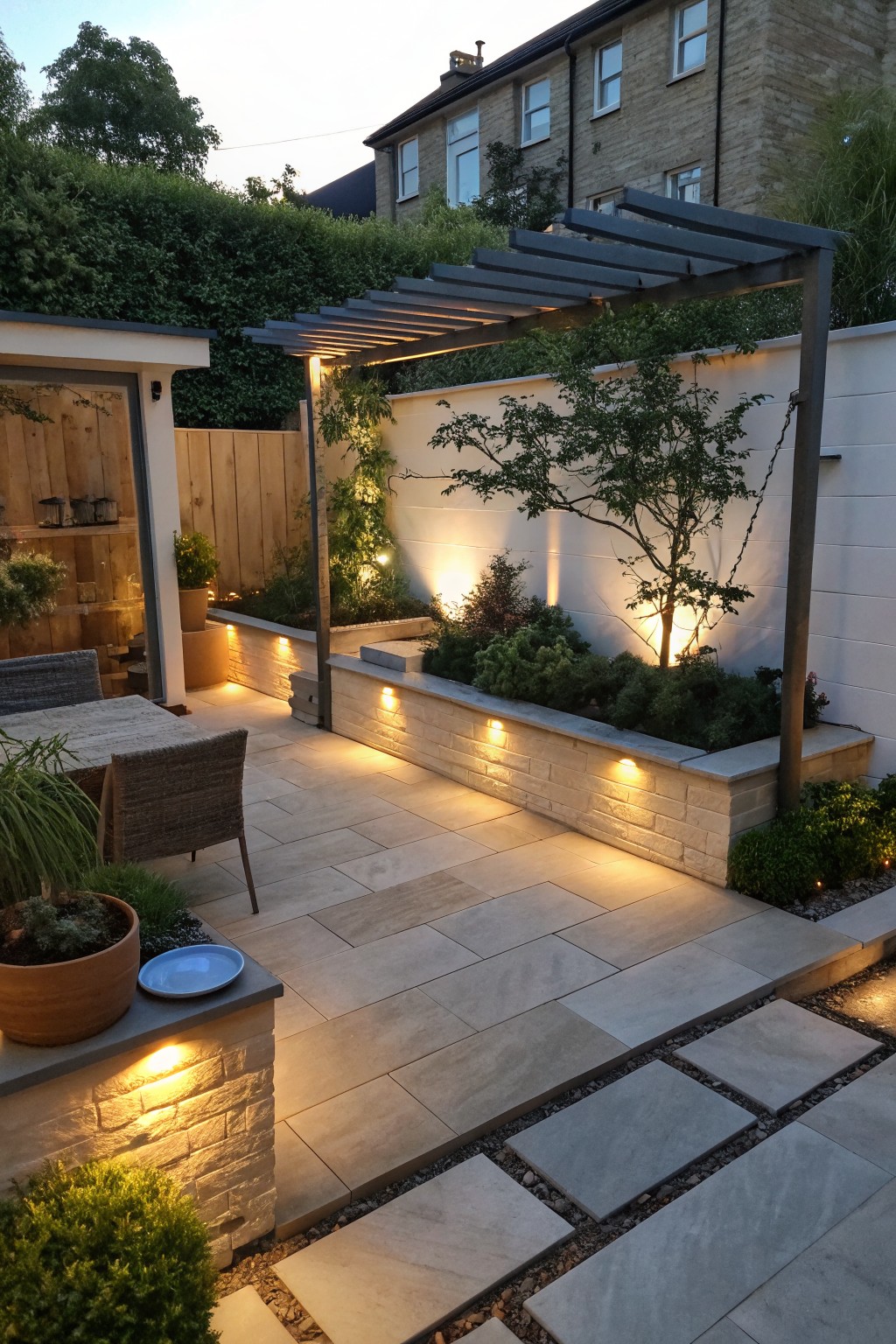
One of the easiest ways to light a small garden without adding clutter is to tuck the lights right into the walls and steps. This keeps the fixtures out of sight during the day and still gives a soft, even glow at night. The lights stay low and steady instead of standing out as separate objects.
This approach works well on patios or terraces where you already have stone or rendered walls. Place them along the top edge of a low wall or under a step tread so they light the path without extra posts or spikes. Just make sure the wiring is planned before the walls go up, since adding it later gets messy.
Line Narrow Paths With Low Ground Lights
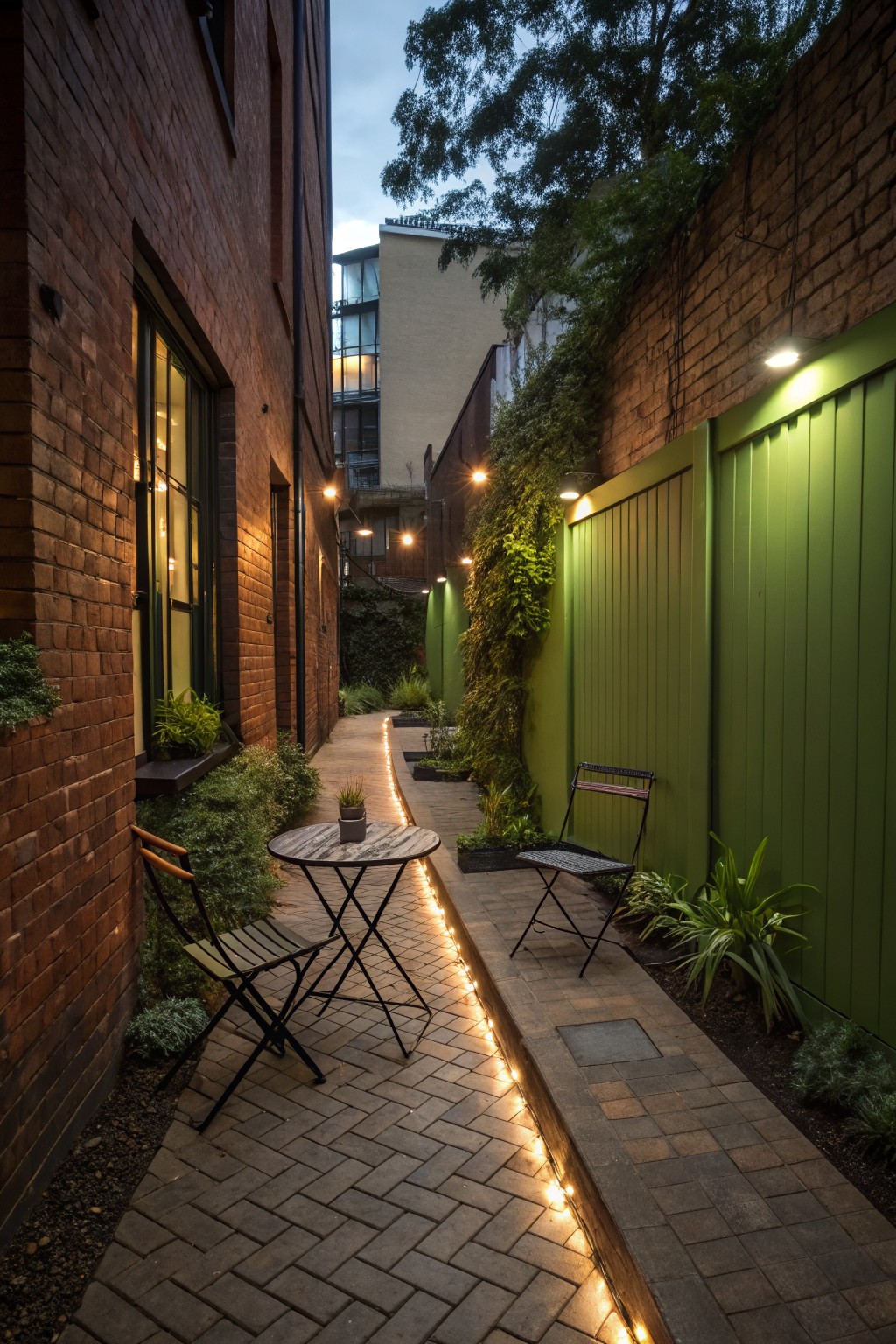
A row of small lights tucked right along the edge of a path gives enough light to walk safely without adding poles or fixtures that crowd the space. In tight garden areas this keeps the view open and the whole setup feels calmer because nothing sticks up or blocks sight lines.
This works especially well beside brick walls or in side yards where you already have a clear walking route. Space the lights evenly, keep them low to the ground, and choose warm bulbs so the effect stays soft instead of stark.
Build Lighting Into Retaining Walls
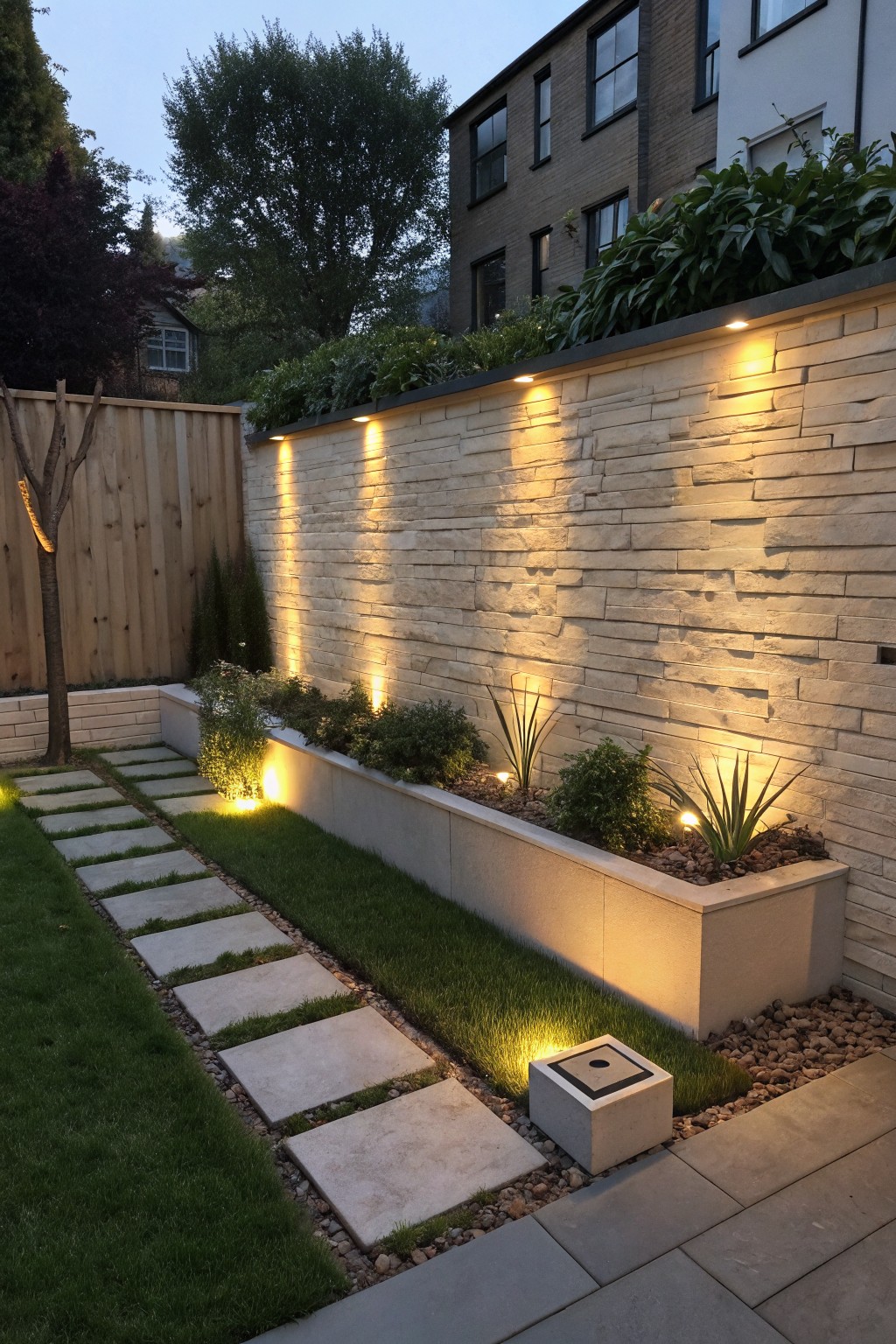
Placing lights directly into a retaining wall or raised planter keeps the fixtures out of the way while still giving the garden enough light at night. This approach works especially well in small gardens where there is little room for extra posts or lamps that would crowd the space.
It suits narrow side yards or back gardens with straight edges, since the lights follow the existing lines of the wall instead of adding new ones. Just make sure the fixtures sit low and point downward so they light the plants and path without shining into windows or neighboring yards.
Hang Pendants From Overhead Beams
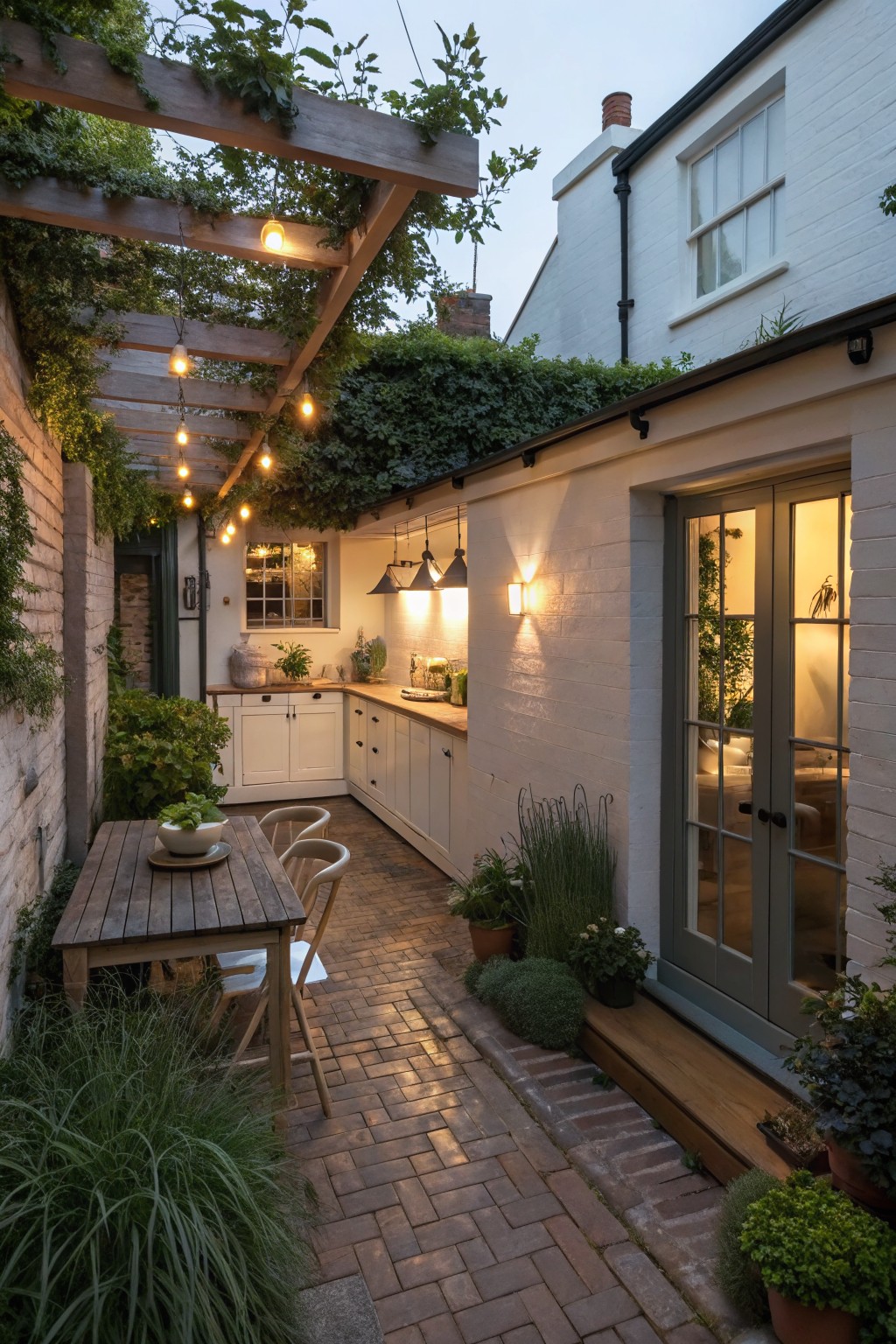
Hanging a few pendants from an existing pergola or roofline gives you directed light right where you need it. This approach keeps the ground and walls clear so the space stays open and easy to move through, especially in a narrow courtyard or small garden.
It works best when the fixtures match the structure in color and scale. Place them over a counter or table rather than scattering them, and stick to two or three lights at most so the wiring stays simple.
Recess Lights Into Steps And Walls
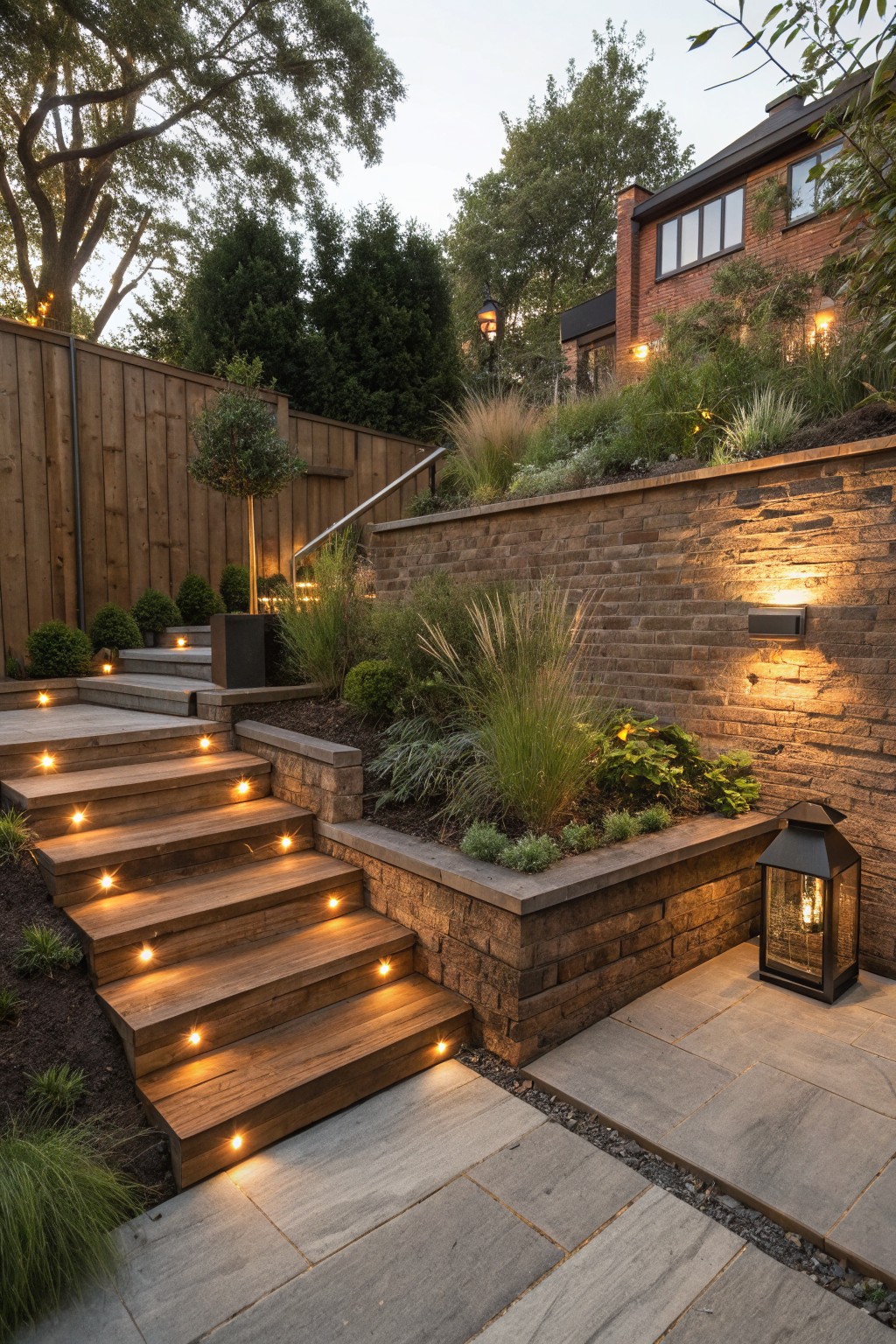
Recessed lighting keeps garden paths and stairs safe without adding poles or fixtures that crowd the space. Small LED inserts along the treads and low wall lights give just enough glow to guide people at night while the planting stays the main focus.
This approach suits homes with changes in level or existing retaining walls. Place the lights every two or three steps and keep the color temperature warm so the garden still feels natural after dark.
Low Lanterns Along Garden Paths
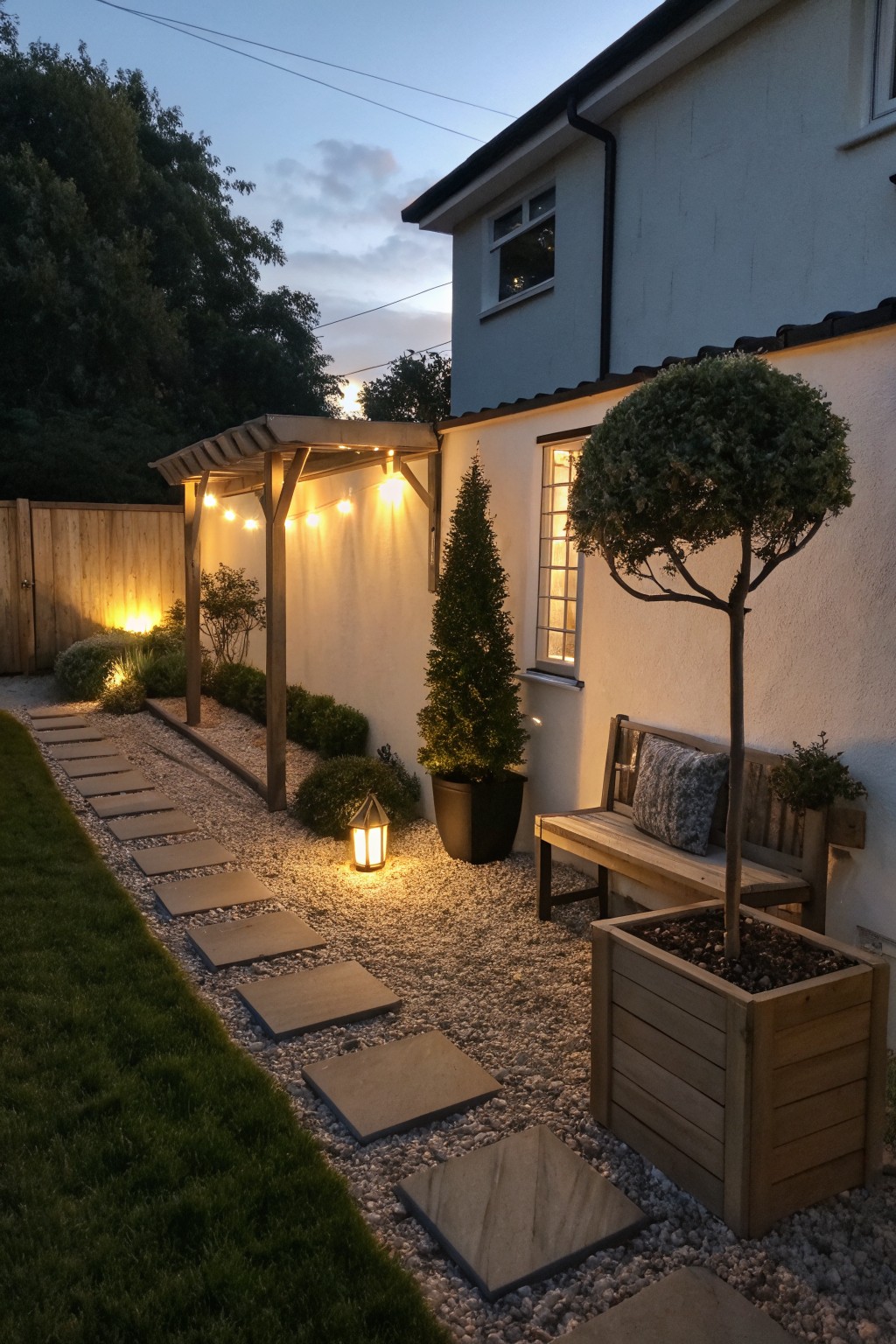
A single small lantern set right on the ground gives enough light to mark the way without adding poles, fixtures, or extra hardware that can crowd a tight space. This approach keeps the focus on the plants and the path itself rather than on the lights.
It works best in smaller gardens where every object counts. Set the lantern near a step or curve in the path, use warm bulbs, and move it around until the light lands where you actually walk. One or two lanterns are usually enough.
Frequently Asked Questions
Q: How do I pick lights that blend in during daylight?
A: Go for dark or earth toned fixtures that sit low to the ground and match your existing pots or fence. Tuck them behind a clump of plants so they disappear when the sun comes up. A few well hidden spots beat lining the whole border with visible hardware.
Q: Can I run lights without digging up the yard for wires?
A: Solar picks charge on their own and skip cords completely. Battery packs tucked inside a planter give you a few hours of light without any trenching. Clip the units low or set them on the soil so nothing shows.
Q: What if the lights make my small space feel too busy at night?
A: Keep beams aimed down paths or up at leaves for gentle pools of glow. Skip anything that shines straight out or creates sharp lines across the space. Two or three quiet sources usually feel calmer than a full row.
Q: How often do these lights need checking?
A: Wipe off dirt or leaves every couple of months and they stay clear. Most hold up through weather once you seat them firmly at the start.
