

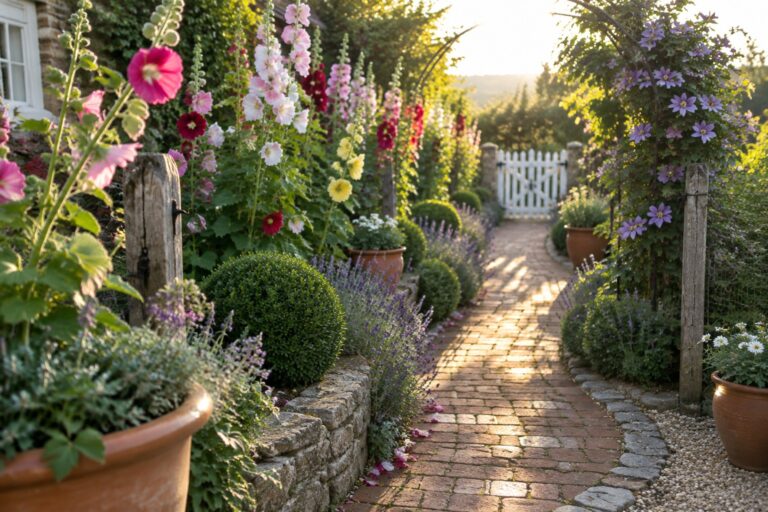
Hollyhocks can give a cottage garden height and an easy, old-fashioned feel, but they look best when they have room to grow rather than crowding every border.
I like seeing them placed behind lower flowers or along a fence, where their tall stems add structure without blocking paths or windows.
The first thing I notice in a garden like this is how the plants lead the eye, so spacing, color, and a clear route through the beds matter as much as the blooms.
Some arrangements feel charming in a photo but need a little adjusting to suit real soil, sunlight, and the way people move through the yard.
I’d save the ideas that work with your garden’s shape and use them as a starting point for a planting plan that can settle in over time.
Let Hollyhocks Line a Garden Path

Hollyhocks work especially well along a path, where their tall flower spikes give the garden a clear sense of direction. They bring plenty of color without needing a complicated layout, and the blooms make an ordinary walkway feel like part of the garden.
Plant them along one side of a path or in a loose row beside a low stone edge. Give them room to grow, and use shorter plants near the path so the flowers don’t crowd the walkway. They suit cottage gardens best, especially where a slightly informal look is welcome.
Let Hollyhocks Line a Garden Path
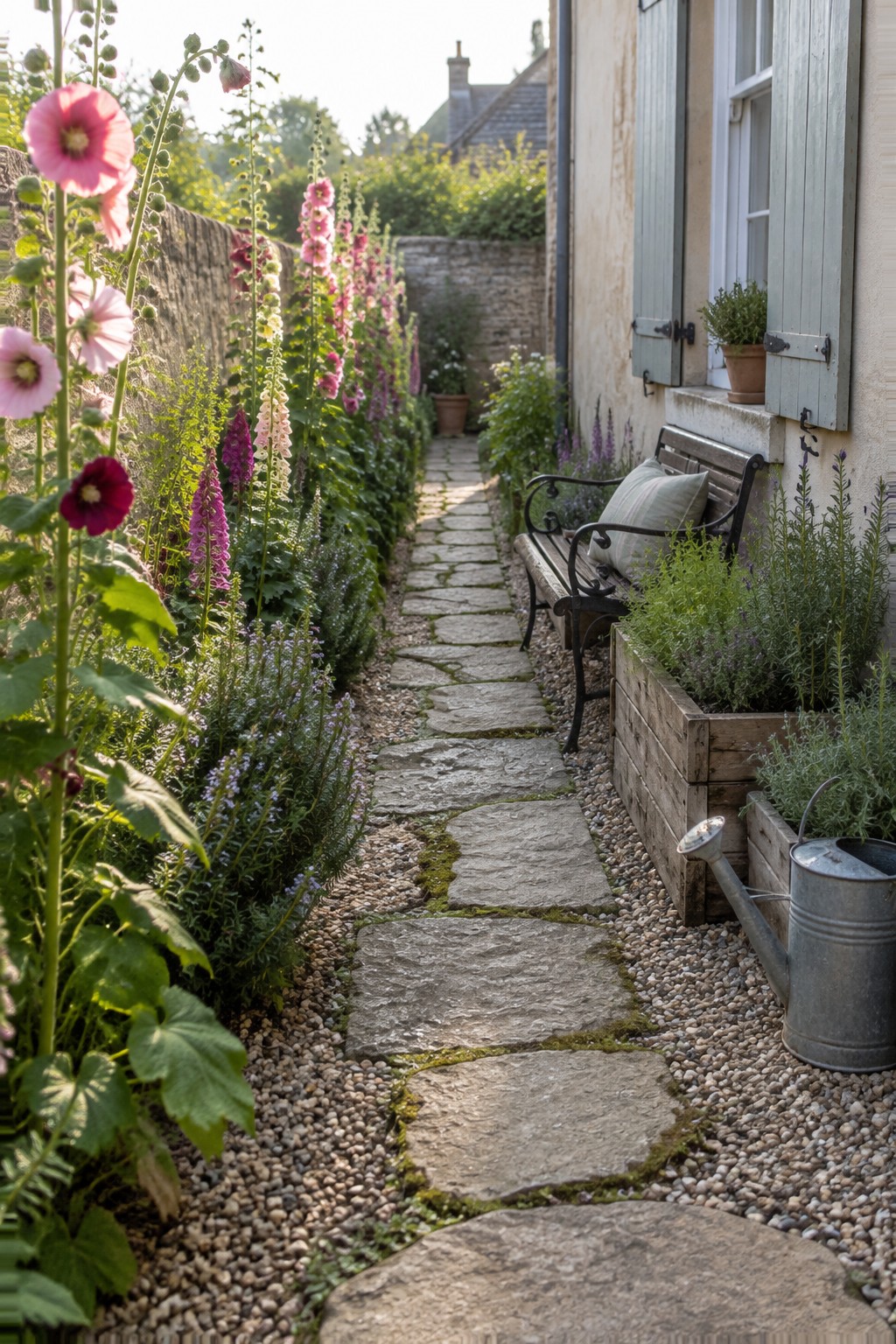
Hollyhocks can make a narrow path feel like part of the garden rather than a way through it. Their tall flower spikes bring color up to eye level, while the stepping stones leave a clear route through the planting.
Plant them along a fence or wall where they can grow upright without crowding the walkway. Leave enough room for leaves and stems to spread, and keep the path wide enough to use comfortably.
Let Hollyhocks Grow Along a Garden Path
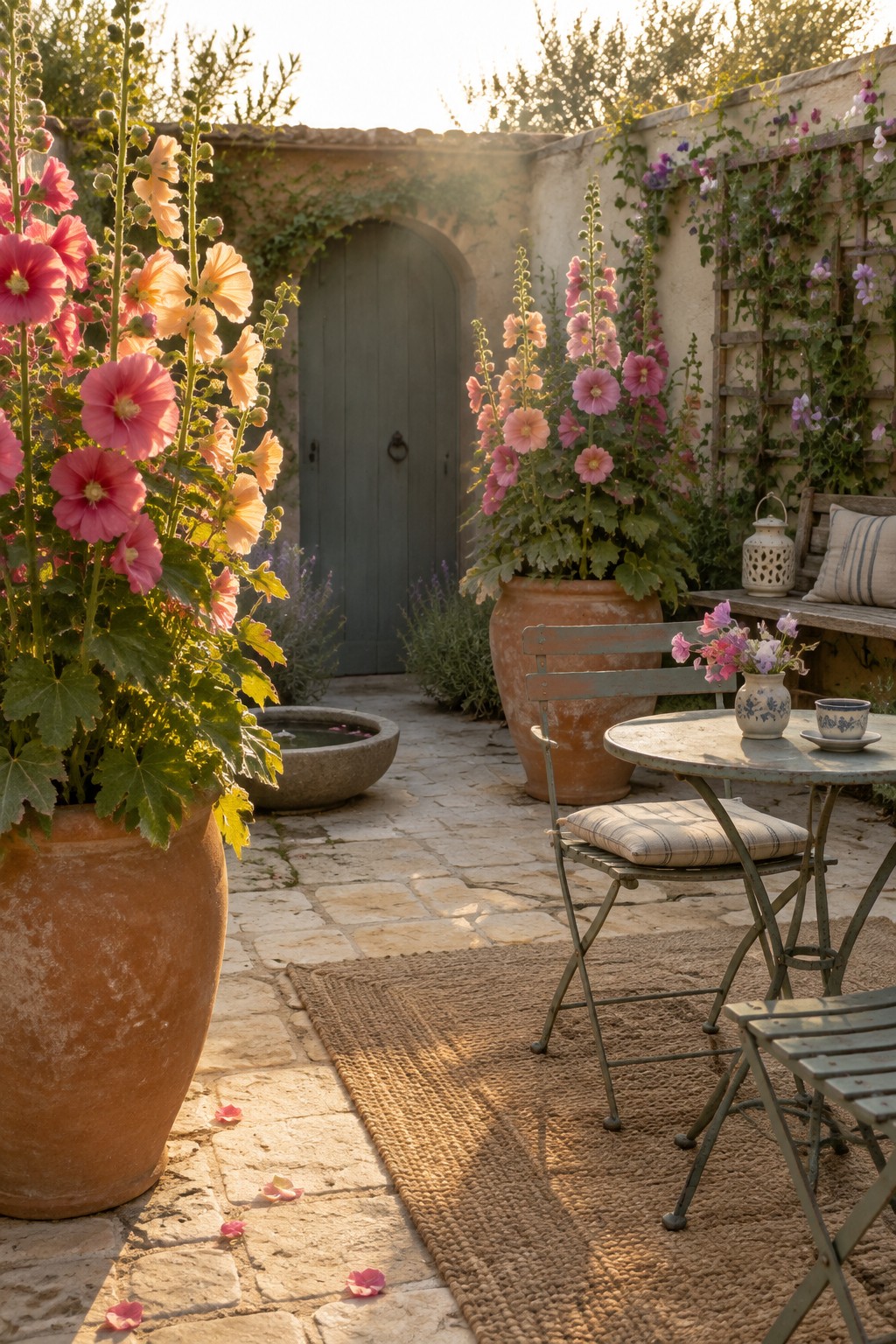
Hollyhocks can give a cottage garden a clear sense of structure when they grow along a path. Their tall stems make a soft border, while the flowers bring color up to eye level.
Leave enough room for the plants without narrowing the walkway, and use a few sturdy supports if the spot gets windy. This works especially well beside a stone path or along a garden wall.
Let Hollyhocks Grow Along a Garden Path
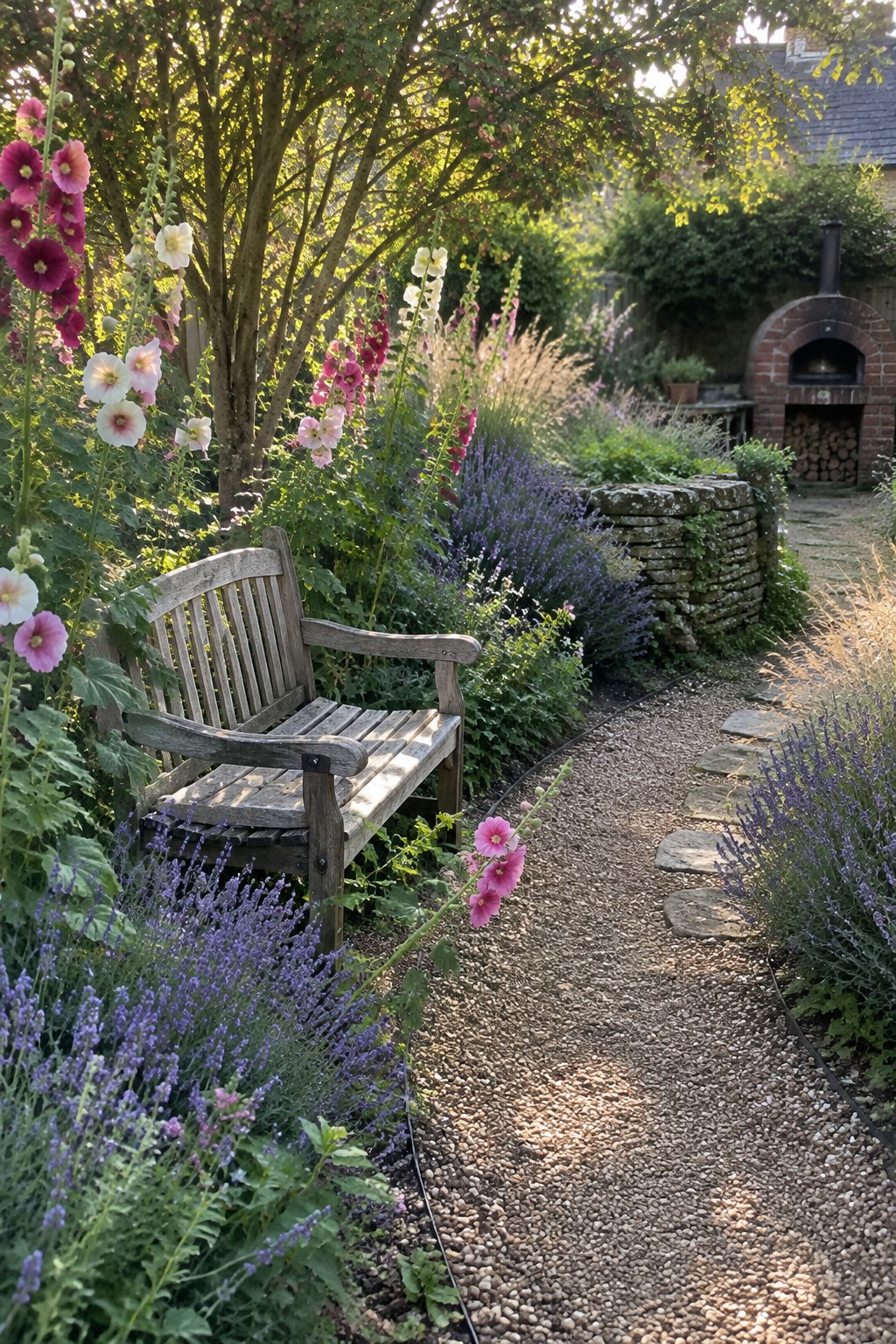
A curving path can give a cottage garden a clear route through abundant planting. Hollyhocks suit this layout well because their tall flower spikes add height along the edge without taking up much ground space.
Plant them in small groups beside the path, leaving enough room for people to pass and for the stems to spread. Here, pink and pale hollyhocks rise near a gravel path, with lavender filling the lower planting.
Use Hollyhocks to Build a Layered Garden Bed
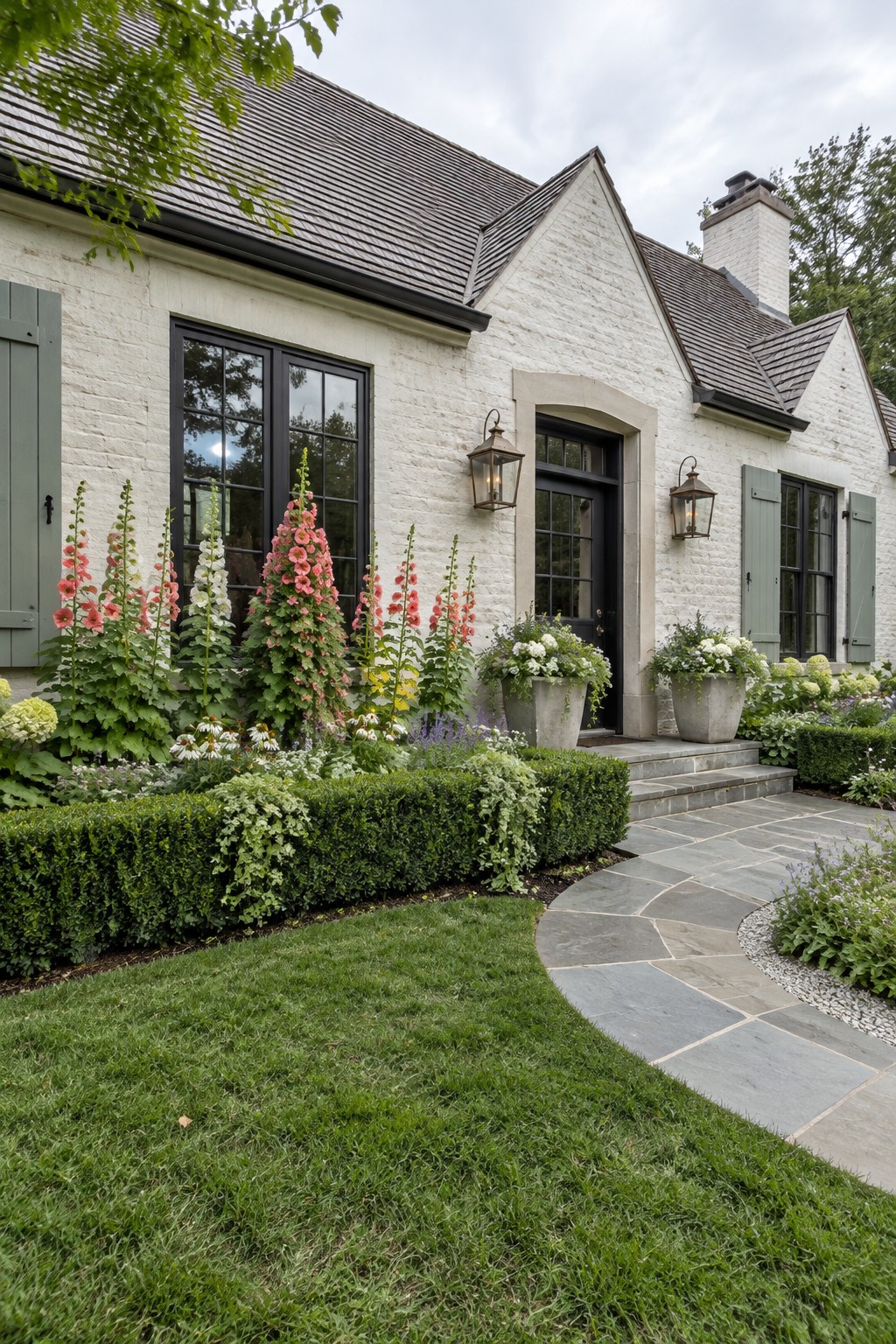
Hollyhocks bring height to a cottage garden, especially when they grow behind lower flowers and neat edging. Their tall stems make a flower bed feel full without needing a complicated layout.
Plant them along a house wall or at the back of a border, leaving enough room for air to move between the stems. Add shorter flowers in front, and keep the bed from spilling onto the path with a simple clipped edge.
Use Hollyhocks To Add Height Around a Patio
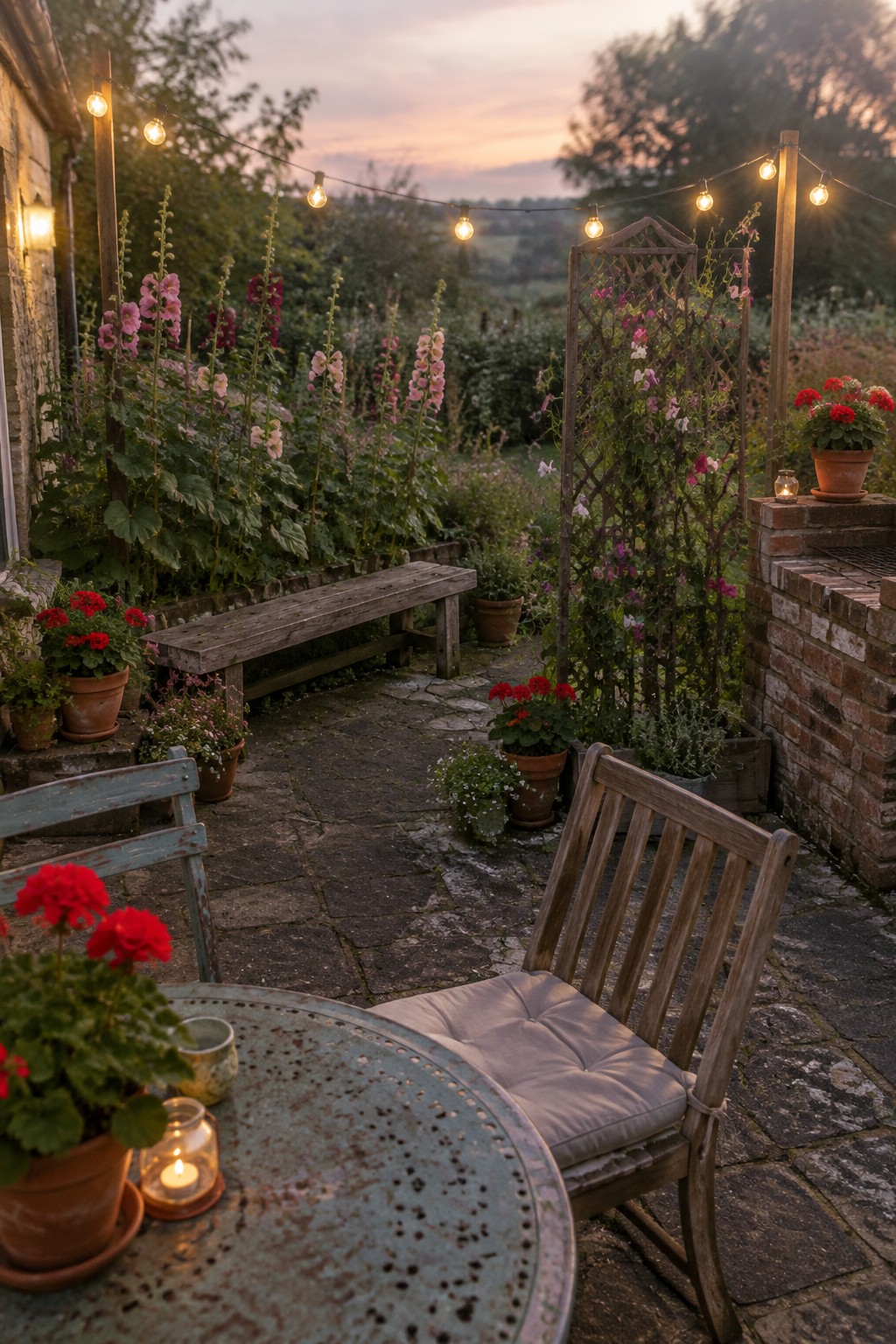
Hollyhocks can bring a cottage-garden feel to a patio without taking up much sitting space. Their tall flower spikes add height along the edge, while shorter plants can fill in near the path.
Plant them behind low flowers or beside a trellis, leaving enough room for chairs and a clear walkway. They suit informal gardens best, since their stems can lean and may need support in a breezy spot.
Use Hollyhocks to Mark a Garden Entrance

Hollyhocks can make a garden entrance feel like part of the planting, rather than a separate opening in the wall. Their tall flower spikes are especially useful beside a gate, where they bring color up to eye level.
Plant them in a bed behind a low stone wall, leaving enough room for the gate to swing freely. A few lavender plants along the path can fill the lower edge, while the hollyhocks add height without blocking the entrance.
Use Hollyhocks to Add Height Behind Raised Beds
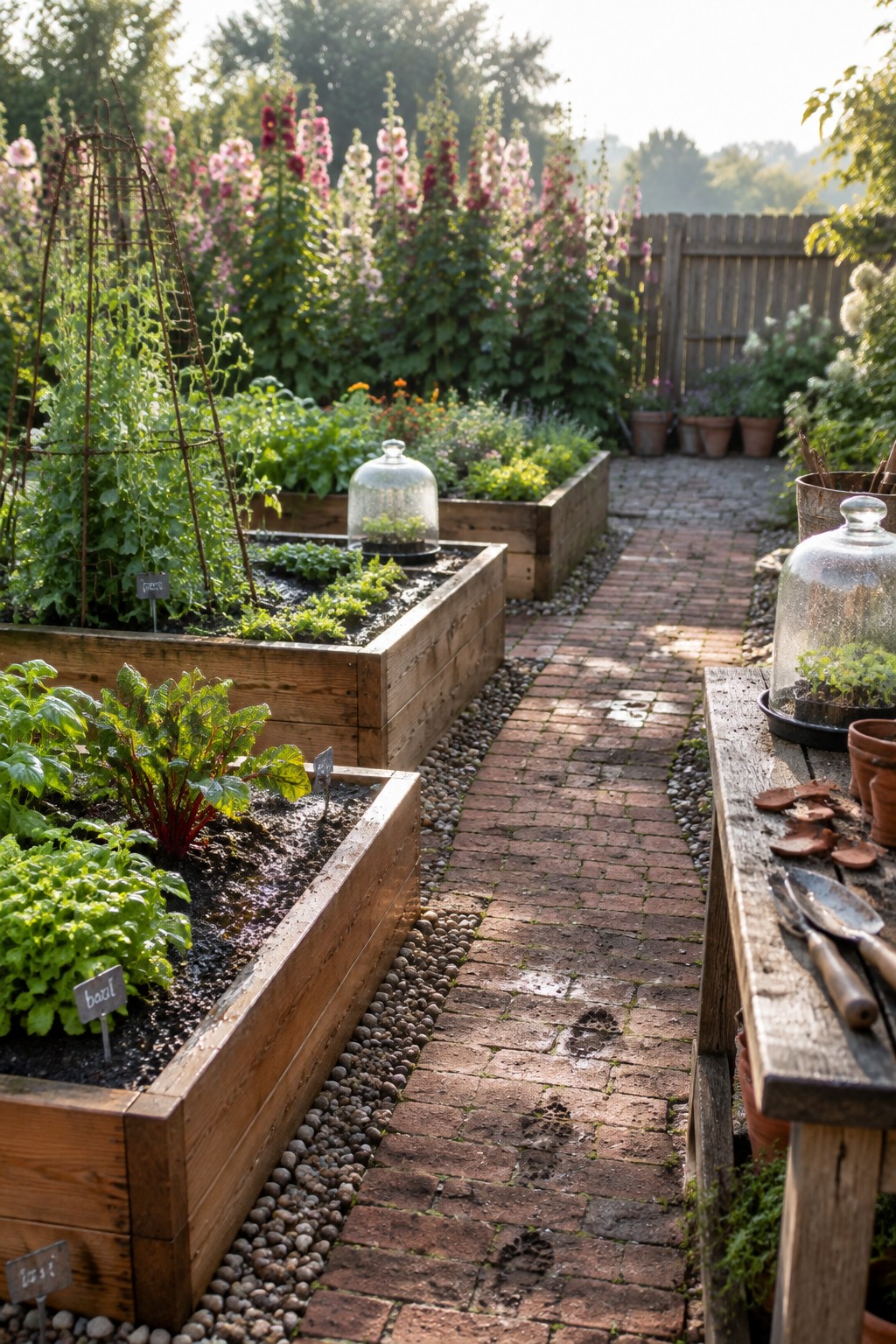
Hollyhocks make a useful backdrop for a kitchen garden, bringing tall flower spikes behind lower crops without taking up much bed space. Their height also gives a simple row of raised beds a more cottage-garden feel.
Plant them along the back edge of a bed or just beyond it, where they won’t shade sun-loving vegetables too much. A brick path between the beds makes it easy to reach both flowers and crops.
Use Hollyhocks to Add Height Around a Garden Seating Area
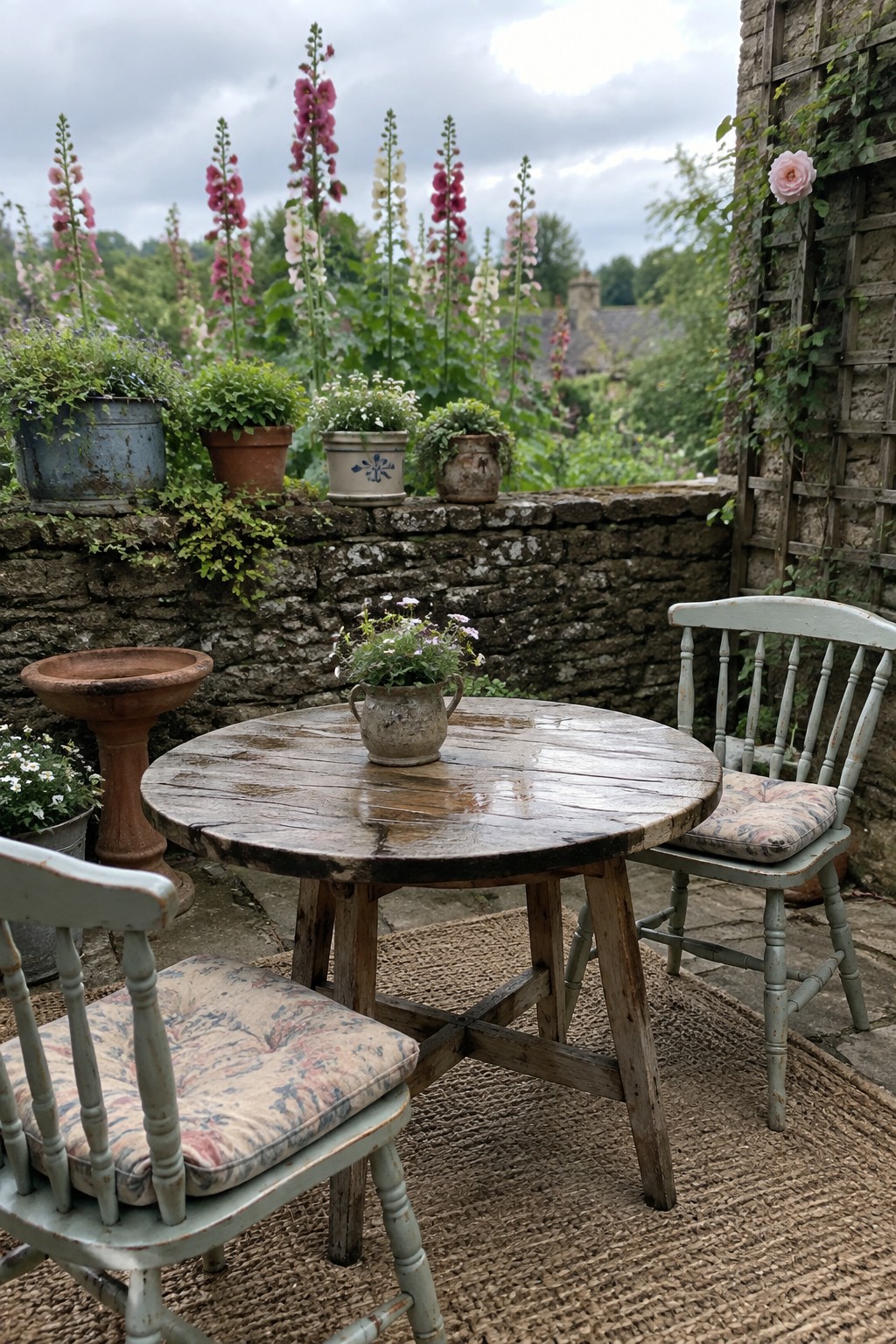
Tall hollyhocks can make a small seating area feel connected to the rest of the garden. Their upright flower spikes bring color above a low stone wall without taking up much ground space.
Plant them behind a patio or along its outer edge, where they can rise beyond the chairs without blocking the view. Leave enough room to reach them for staking and care, especially in a windy spot.
Use Hollyhocks Along a Garden Walk
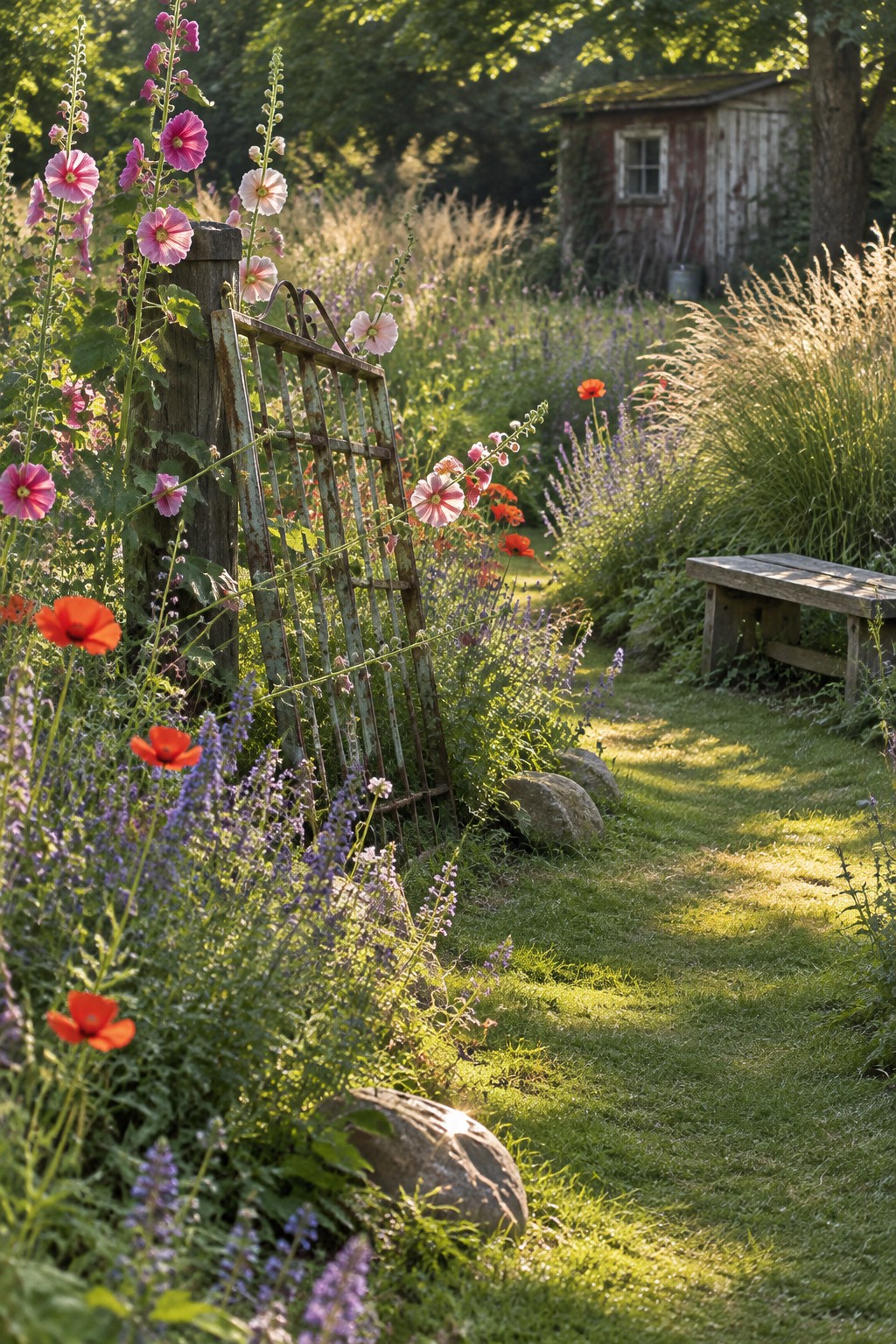
Hollyhocks can give a garden path a loose, old-fashioned border while drawing the eye toward the garden beyond. Their tall flower spikes stand above lower plants, so the path feels tucked into the planting rather than cut straight through it.
Plant them along one side or in small groups, leaving enough room for the stems to grow without leaning into the walkway. They work especially well beside a simple grass path, where a few vivid blooms can mark its edge.
Grow Hollyhocks Along a Cottage Porch

Hollyhocks planted beside a porch bring tall blooms right up to the home, making the entrance feel connected to the garden. Their upright growth suits a narrow strip where shorter flowers might get lost.
Plant them along the sides of the entry, leaving the doorway and steps clear. They work especially well on cottage-style homes with simple siding, but give them enough room and sunlight so the stalks do not crowd the walkway.
Create a Hollyhock-Covered Pergola for Outdoor Dining
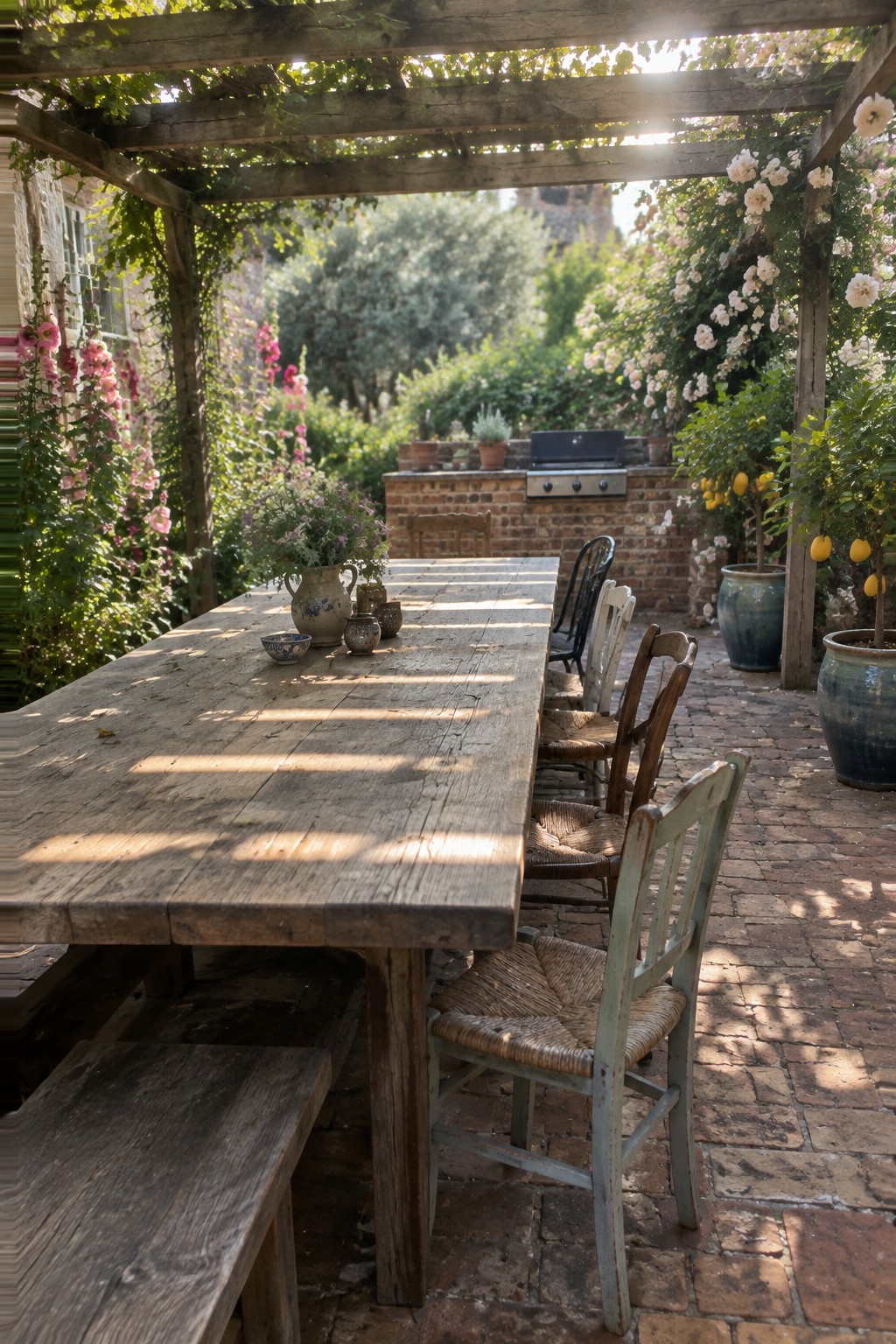
A pergola draped in hollyhocks can make an outdoor dining area feel tucked into the garden. The flowers climb the posts and overhead beams, bringing the planting up around the table instead of keeping it only at the edges.
Use sturdy supports and give the hollyhocks room to grow without blocking the walkway or chairs. This works especially well over a patio dining table, where the structure can provide a little definition without closing off the garden.
Use Hollyhocks Along a Cottage Garden Path

Hollyhocks can give a narrow garden path a clear, old-fashioned rhythm. Their tall flower spikes rise above lower plants, while leaving the walkway open and easy to follow.
Plant them along the edges of a gravel or stepping-stone path, leaving enough room for people to pass and for the leaves to spread. They suit cottage gardens especially well, but avoid crowding them against the path where the foliage may spill across it.
Use Hollyhocks to Add Height Along a Garden Path
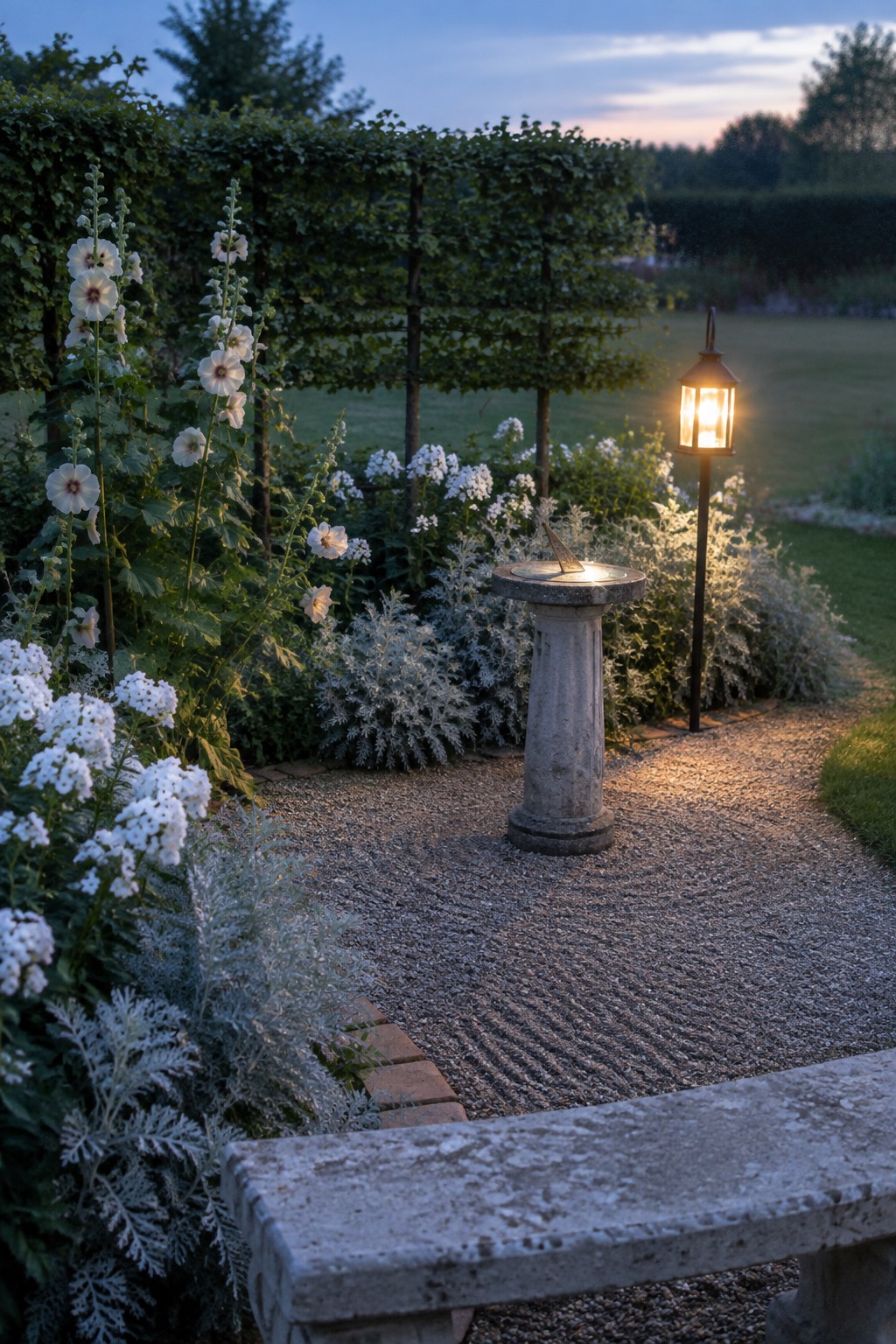
Tall hollyhocks give a garden path a clear edge and bring flowers up to eye level. They work especially well in cottage gardens, where a loose row of blooms can make a simple gravel walk feel tucked into the planting.
Plant them along one side of the path, leaving enough room for people to pass and for the stems to spread. Mix in lower flowers at the front, and give hollyhocks a spot with plenty of sun.
Use Hollyhocks to Add Height Along a Garden Border
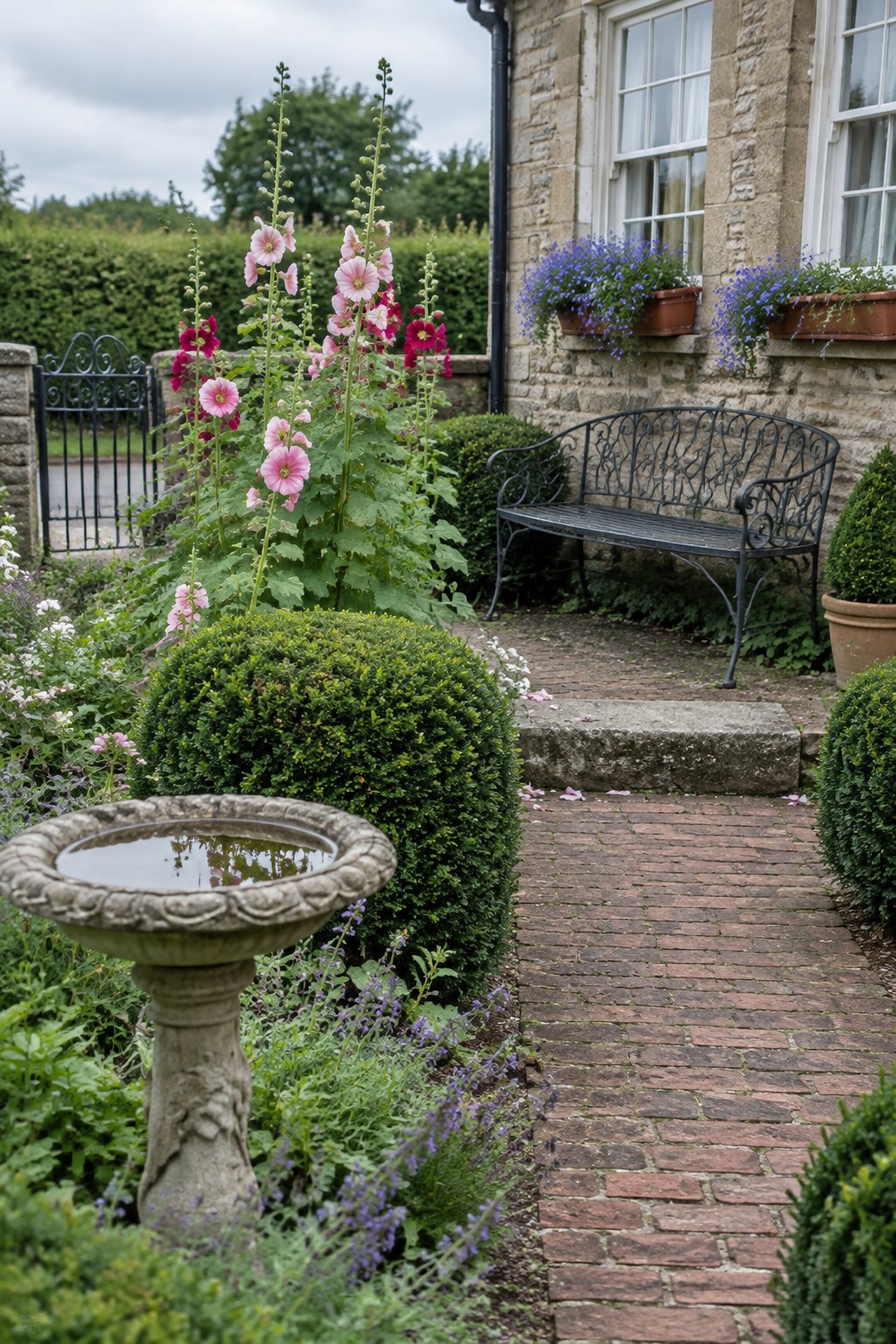
Tall hollyhocks bring a cottage garden border up to eye level, giving the planting a clear vertical shape. They work especially well behind lower flowers, where their stems can rise without blocking the rest of the bed.
Plant them along a path or beside a wall, leaving enough room for the broad leaves and tall flower spikes. A few sturdy supports can help keep the stems upright in exposed spots.
Use Hollyhocks to Edge a Cottage Garden Path

A narrow path beside a planted bed makes a cottage garden easy to explore without cutting through the flowers. Hollyhocks bring height to the planting, while lower herbs and leafy vegetables keep the bed full closer to the ground.
Keep the path wide enough to walk comfortably and leave room for hollyhocks to spread. This layout suits informal gardens where you want a clear route through dense planting; a simple woven edge can help keep the bed tidy.
Add Hollyhocks Around a Garden Pond
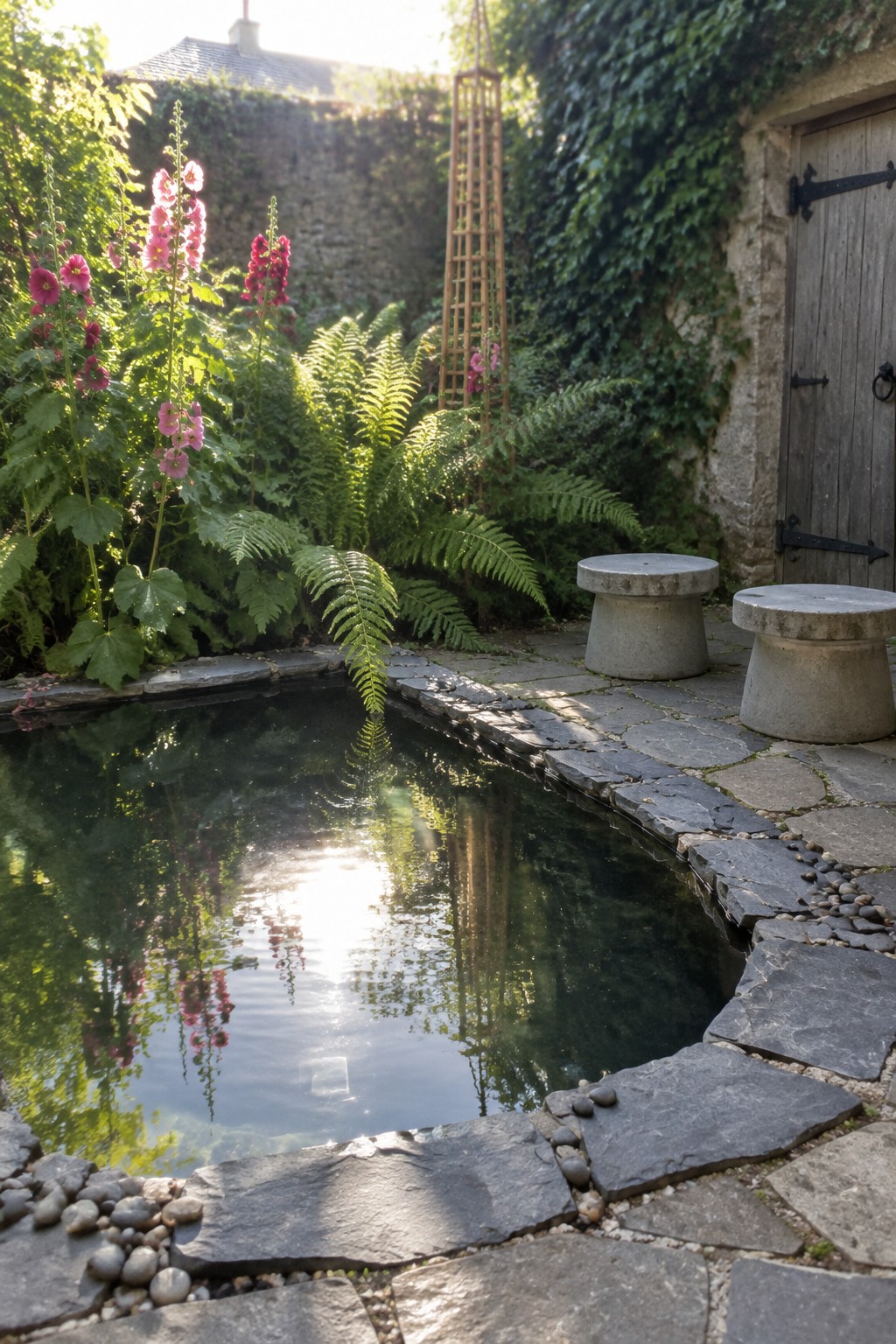
Hollyhocks can bring useful height to a small water garden, where their upright flower spikes stand out above lower, leafy plants. Their cottage-garden look suits an informal pond edge, and the flowers add color without taking over the whole space.
Plant them toward the back of the pond border, leaving room for ferns and other low plants near the water. Hollyhocks need sun and decent airflow, so avoid crowding them against a damp wall or placing tall stems where they block a narrow path.
Add Hollyhocks Along a Garden Path

Tall hollyhocks can give a cottage garden path a clear, welcoming edge. Their upright flower stems add height without taking over the walking space, and they suit an informal path bordered by mixed planting.
Plant them toward the back of the border so the path stays easy to use. A simple arch or gate can mark the far end, while the hollyhocks provide color along the way. Allow room for their height, and avoid placing them where they will lean across a narrow path.
Frequently Asked Questions
Q: How much sun do hollyhocks need to bloom well?
A: Hollyhocks flower best in a spot that gets at least six hours of direct sun a day. If your garden gets afternoon shade, they may still grow, but you’ll likely see fewer blooms.
Q: What can I plant in front of tall hollyhocks?
A: Low-growing cottage garden favorites like catmint, sweet alyssum, or hardy geraniums soften the bare stems without hiding the flowers. Leave a little room around the base so air can move through.
Q: Do hollyhocks need staking?
A: Tall varieties may need support, especially in windy gardens. Put a discreet stake in place early, while the stems are still easy to tie without damage.
Q: How can I keep hollyhocks from spreading everywhere?
A: Snip off flower stalks before the seed pods open if you don’t want seedlings popping up nearby. Leave a few pods to ripen if you’d like new plants for next year.
