

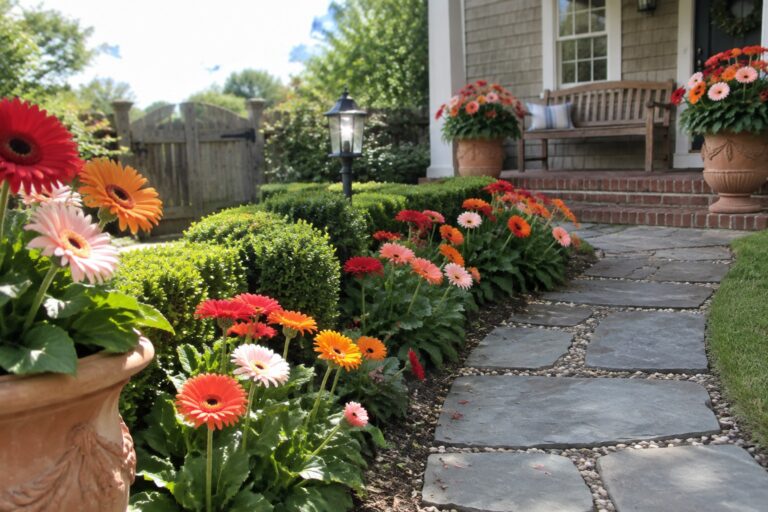
Gerbera daisies can bring a lively patch of color to a garden, but they look best when their placement feels intentional rather than scattered.
I like to think about how their bright blooms will sit against surrounding foliage, edging, and paths, since those details shape the whole bed.
A cluster near a walkway can catch the eye, while smaller groups can soften a border or add color around a patio.
The key is to give the flowers enough room and pair them with plants that suit the same light and watering conditions.
Some of these layouts are easy to adapt to an existing yard, and I’d start by testing the one that fits the shape and colors you already have.
Use Gerbera Daisies Along a Garden Path
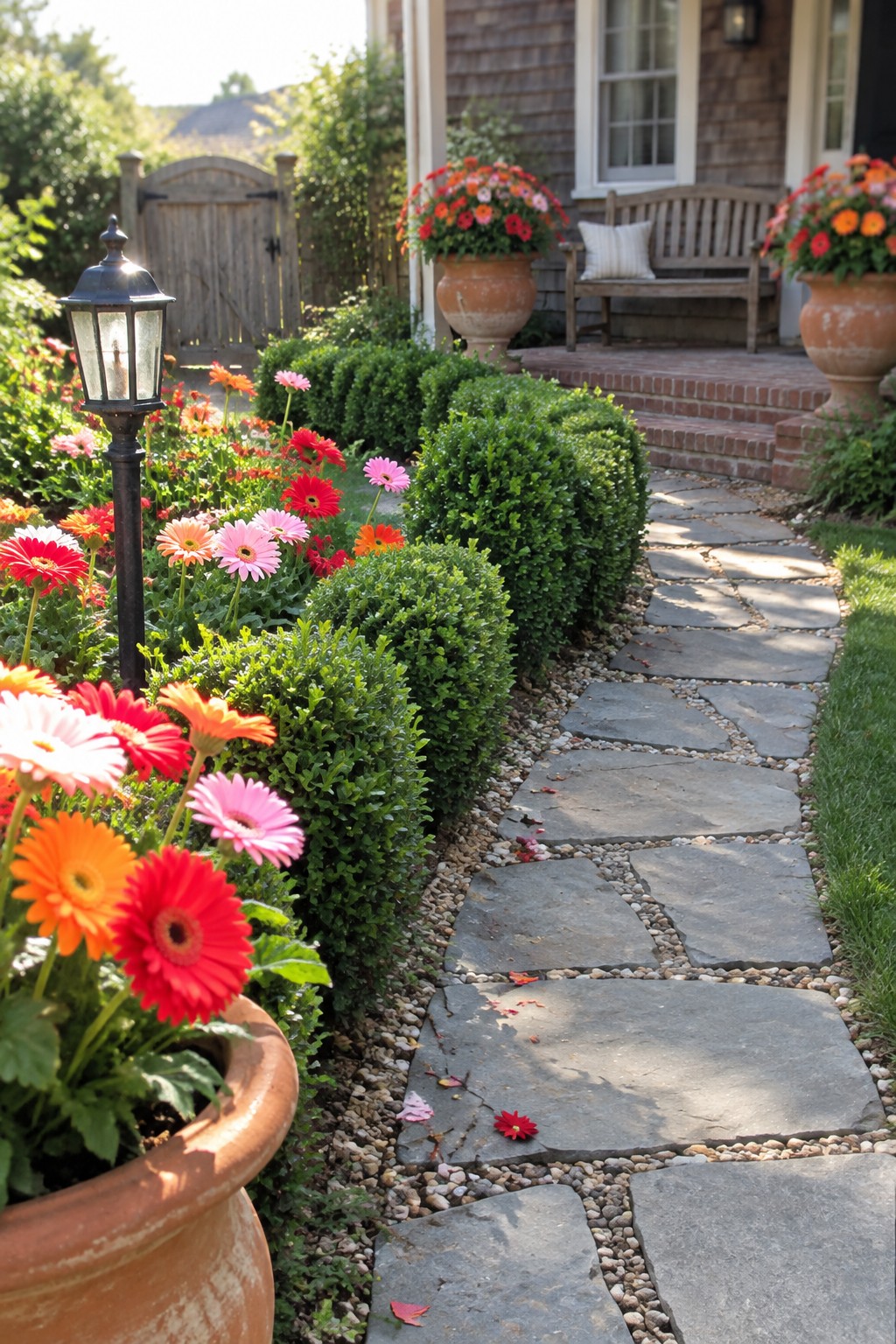
A stone path gives a flower bed a clear shape, while gerbera daisies bring bright color right to its edge. The blooms feel cheerful without needing a complicated planting plan.
Plant daisies in clusters beside the path, leaving enough room for the stones to stay easy to reach. They work well in sunny beds, and a few rounded shrubs can help keep the planting looking tidy.
Use Gerbera Daisies in Repeating Garden Beds
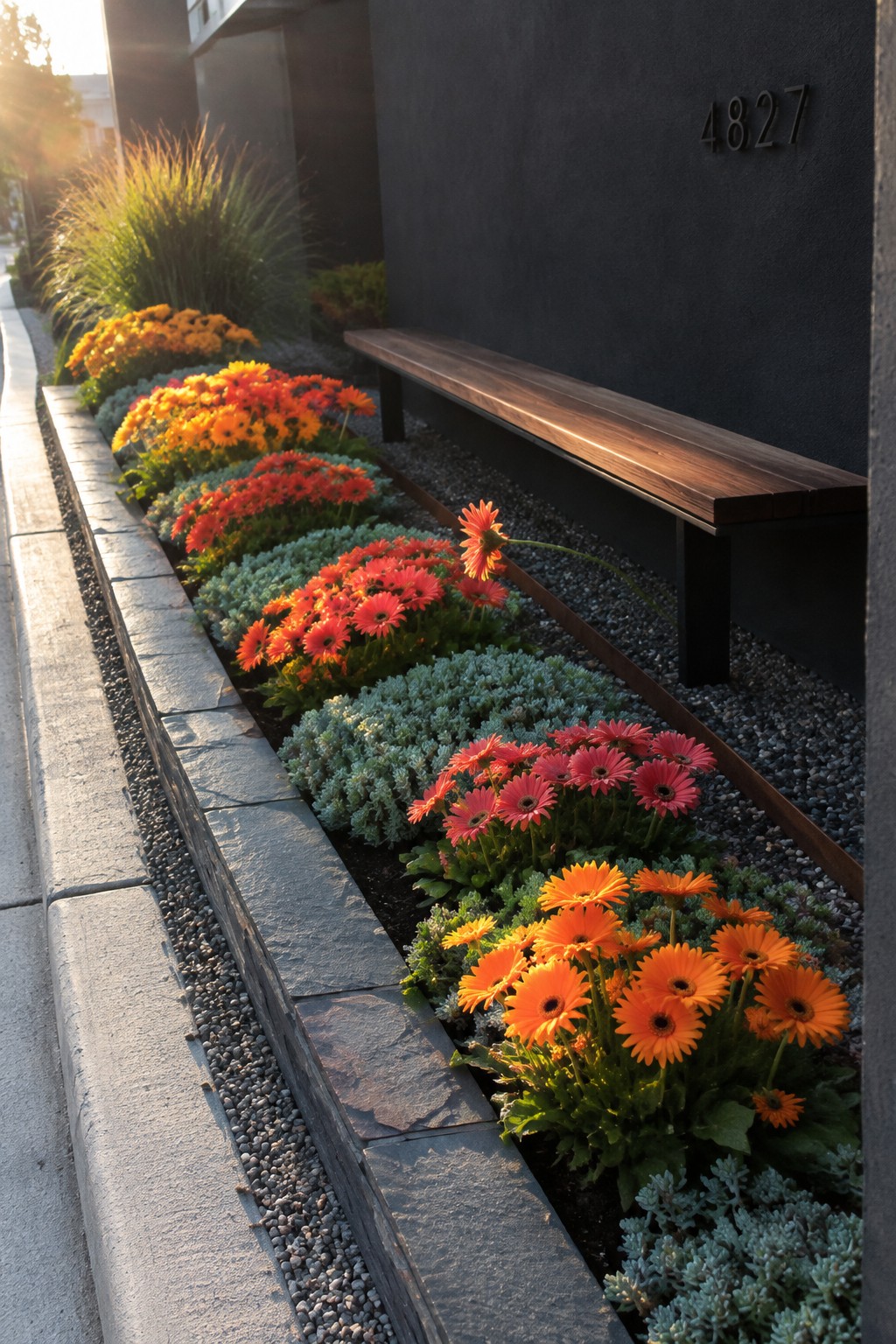
Repeating groups of gerbera daisies along a narrow planting bed give the garden a clear rhythm and spread bright color along the path. The flowers stand out against low, cool-toned ground cover without needing a complicated planting plan.
Try this approach beside a walkway or along a simple border, keeping the daisies in generous clusters rather than scattering them individually. Leave enough space between groups for the plants to grow, and choose a few flower colors to keep the bed from looking busy.
Gerbera Daisies for Patio Color

Gerbera daisies are an easy way to bring bright color to a patio without changing the whole garden. Set them in terracotta pots near the seating area, where their cheerful blooms are easy to enjoy.
Use a few pots to mark the edge of a terrace or brighten an open corner. Choose containers with good drainage, and leave enough room to water them without splashing the furniture.
Plant Gerberas in Long, Raised Beds

Raised beds let you grow gerberas in clear rows, making their bright flowers easy to enjoy and convenient to cut. Repeating pink, red, and white blooms gives the planting a simple rhythm without needing a complicated design.
Use this layout along a garden path or beside a shed, where you can reach the flowers from the edges. Leave enough room between plants for airflow, and choose a sunny spot with well-drained soil.
Add Gerbera Daisies to Patio Planters

Gerberas can bring a bright spot of color to a patio without needing a full flower bed. Grouping them in large containers makes the flowers easy to enjoy from a seating area, and the pots can be moved if the sun shifts or the layout changes.
Use sturdy planters near a patio edge or raised seating area, where the blooms are easy to see. Keep the soil well drained, and leave enough room between containers for people to move around.
Add Gerbera Daisies to Poolside Planters
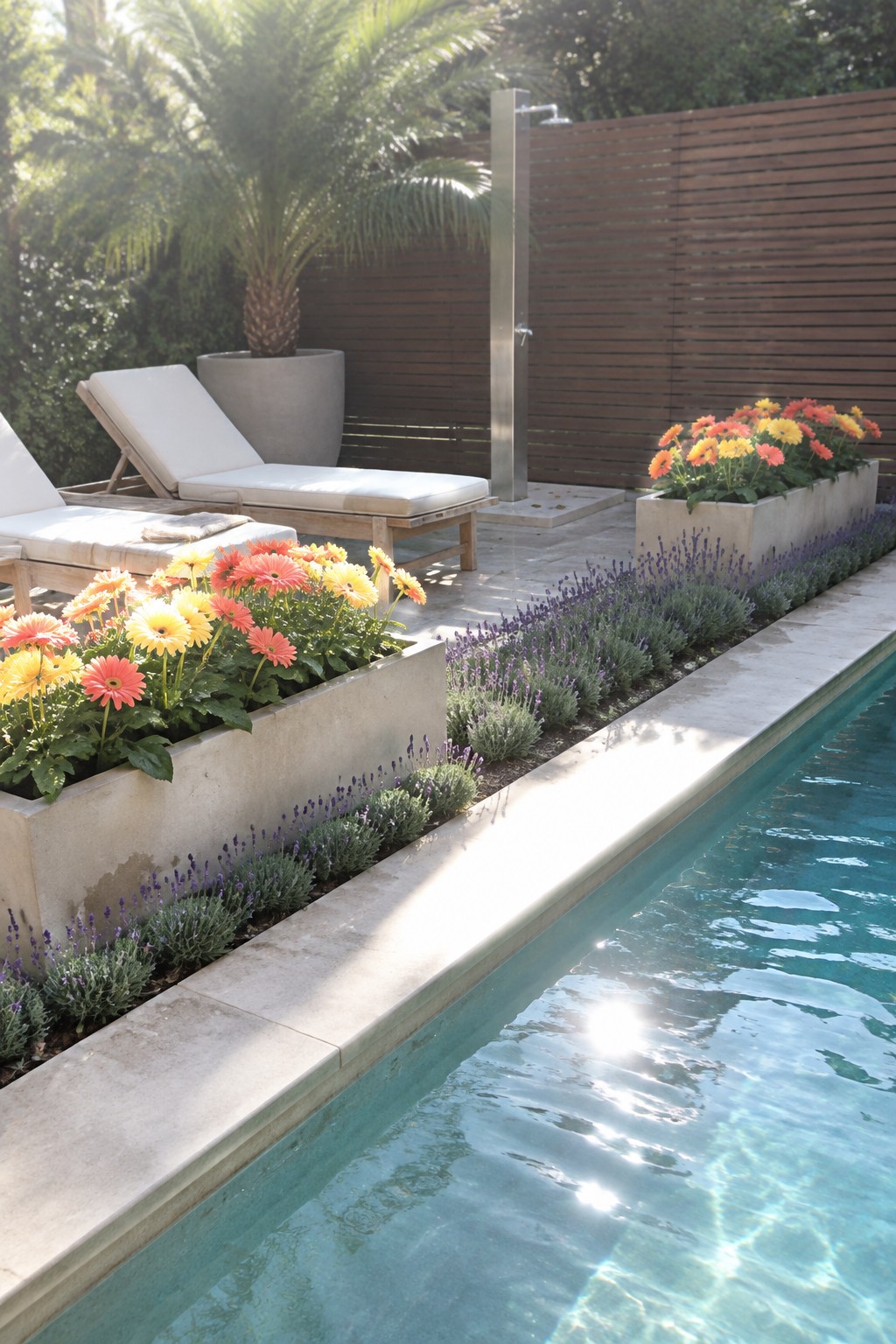
Gerbera daisies can bring a clear burst of color to a pool area without needing a large garden bed. Set them in raised planters near the seating area, where their bright blooms are easy to enjoy and simple to change with the seasons.
Choose sturdy containers with drainage, and leave enough room around the pool edge for walking and lounging. A low border of lavender can add a softer layer, but keep the taller flowers away from spots where they might block the view.
Add Gerbera Daisies to Layered Garden Borders

Gerbera daisies can bring bright color to a layered border without taking over the whole garden. Tuck them among taller flowers and soft grasses, using their cheerful blooms to add a lower band of color along the lawn.
This works well beside a lawn or garden path, where the flowers are easy to see and reach. Leave enough room between plants for air to circulate, and choose a sunny spot with soil that drains well.
Add Gerbera Daisies to a Terraced Garden
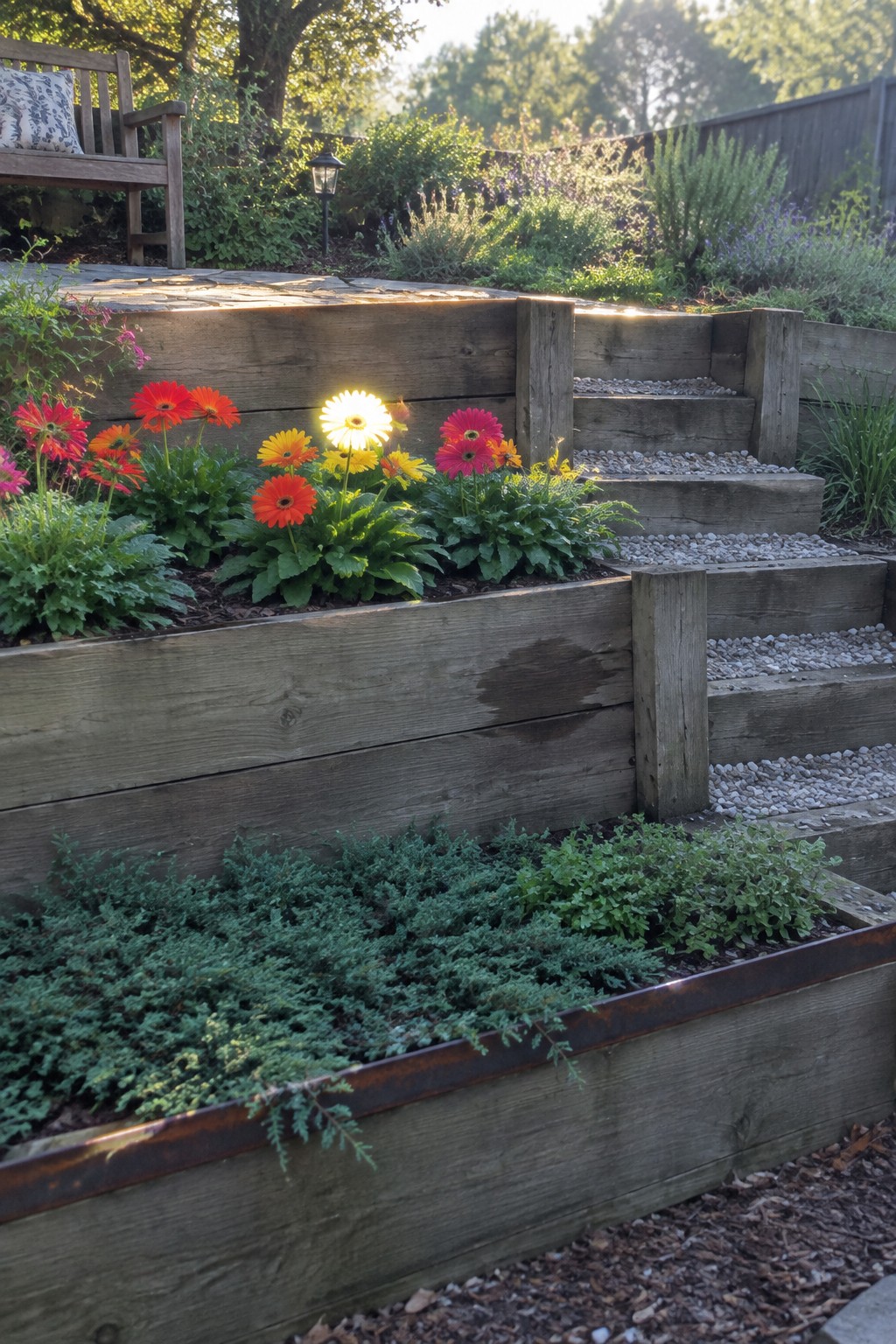
Gerbera daisies bring a bright patch of color to terraced beds, where flowers can stand out against simple timber retaining walls. Planting them in one raised level also makes the blooms easier to see from the path below.
Use a sunny, well-drained bed and leave enough room for air to move around the plants. A small group of red, yellow, and pink gerberas can give a sloped garden a clear focal point without filling every level with flowers.
Use Gerbera Daisies to Brighten an Entry Garden

Gerbera daisies can bring a strong burst of color to a simple foundation bed. Planting them in small groups among rounded evergreen shrubs gives the flowers room to stand out while keeping the garden looking orderly.
This approach works well beside a front walk or entry, where the flowers can be enjoyed up close. Repeat a few colors through the bed, and leave enough space between plants for air to circulate and routine care.
Use Gerbera Daisies in a Coastal Garden Border
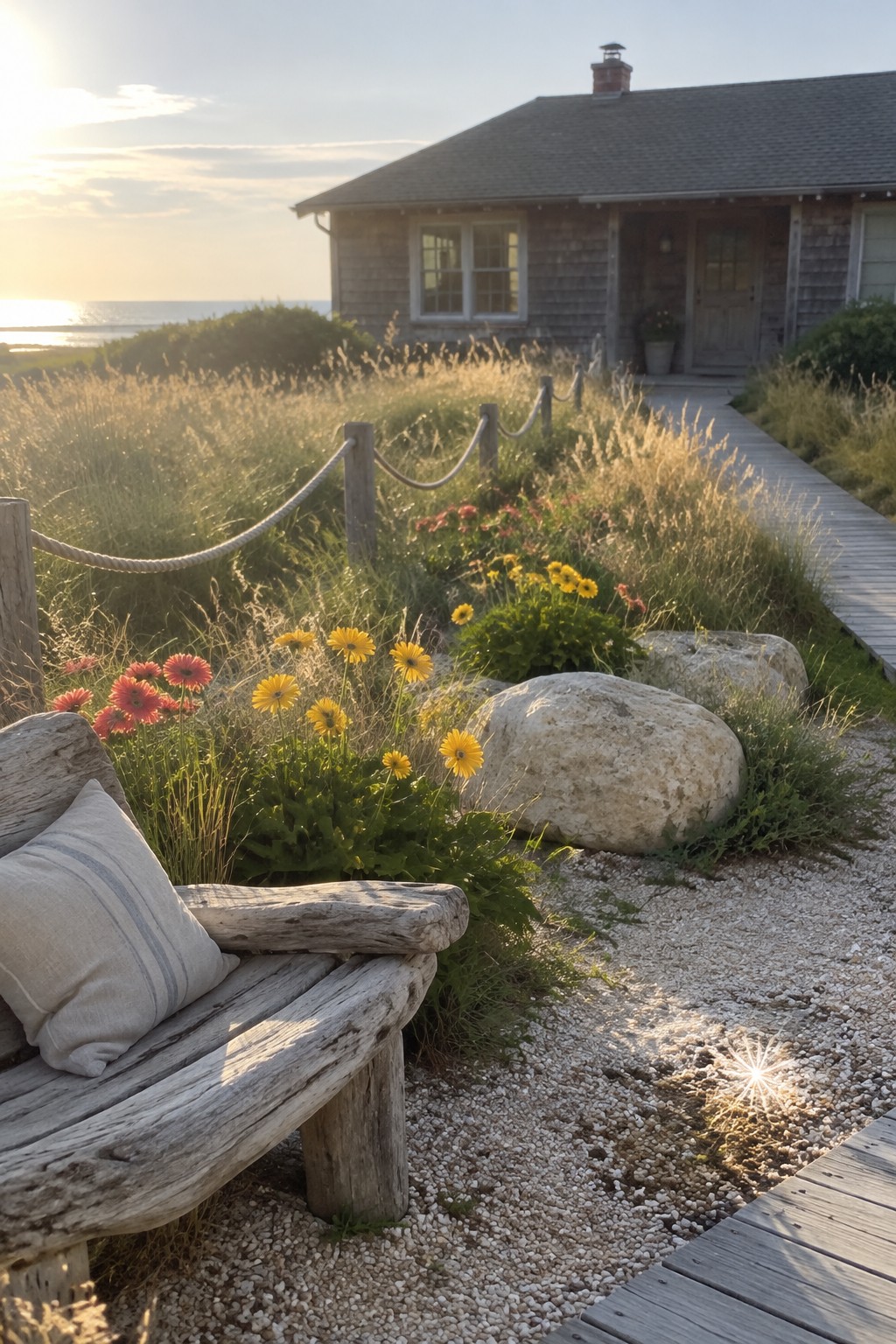
Gerbera daisies bring a bright patch of color to a relaxed coastal garden. Their cheerful blooms stand out among softer grasses and give an informal border a little more life without making it feel overly planned.
Plant them in small groups near a path or seating area, where the flowers are easy to enjoy. They suit sunny, well-drained spots, but choose varieties that can handle your local conditions and leave enough room for air to move around the plants.
Grow Gerbera Daisies in Balcony Planters

Gerbera daisies can bring a lively burst of color to a small balcony without taking up floor space. Hanging baskets make use of the space above the seating area, while keeping flowers close enough to enjoy from a table or chair.
Choose baskets with good drainage and a size that gives the plants room to grow. Gerberas do best with plenty of light, so check how much sun your balcony gets and water when the soil starts to dry.
Use Gerbera Daisies Along a Curved Garden Border
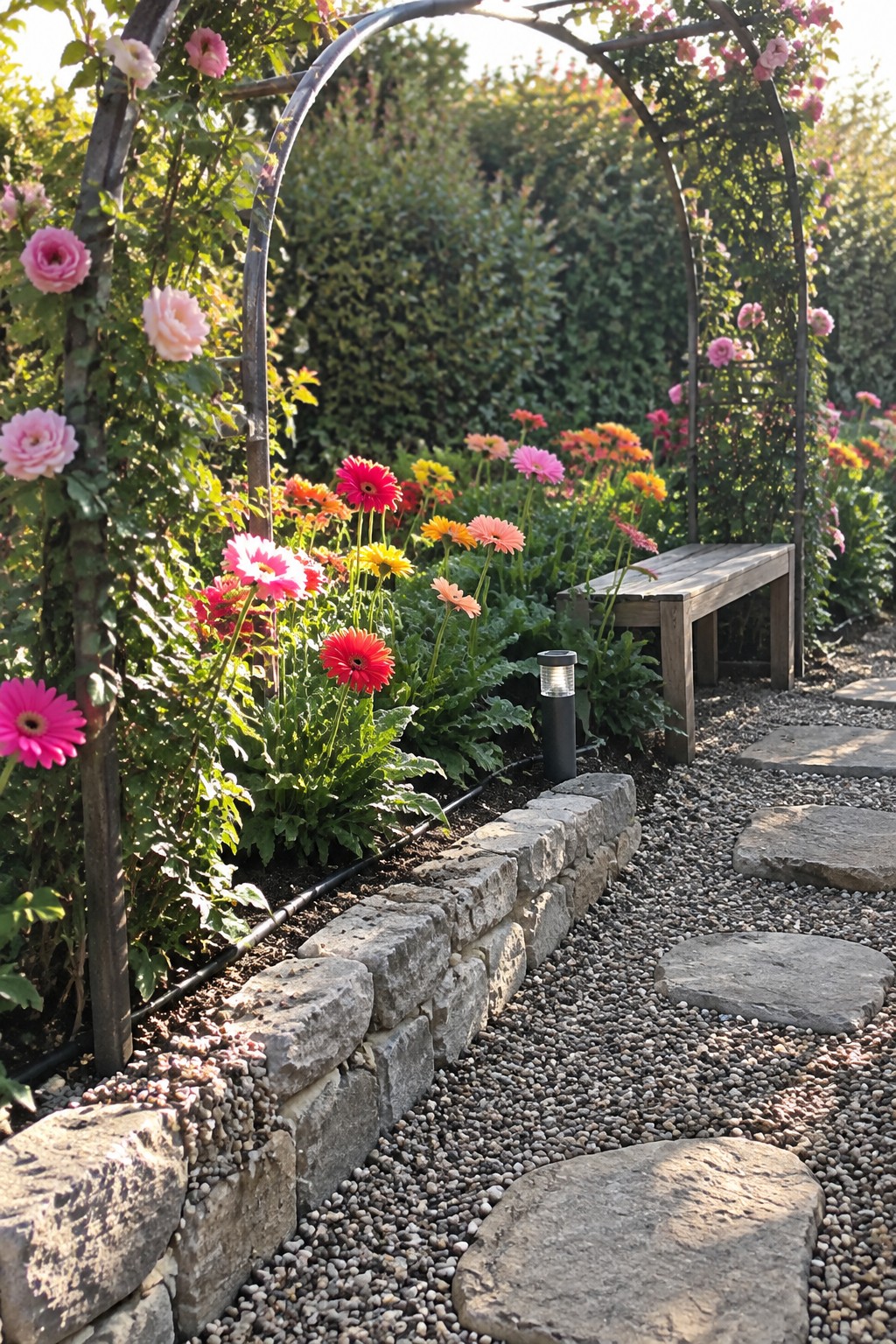
A curved stone edge gives a gerbera bed a clear shape and keeps the flowers distinct from the path. The stones also add a sturdy, informal finish that suits a cottage-style garden.
Use the same idea beside a gravel walkway or a small seating area, keeping the border low enough that it does not crowd the path. Plant gerberas in loose groups along the curve for color, and leave enough room between them for air to move through the foliage.
Add Gerbera Daisies Along a Stone Walkway
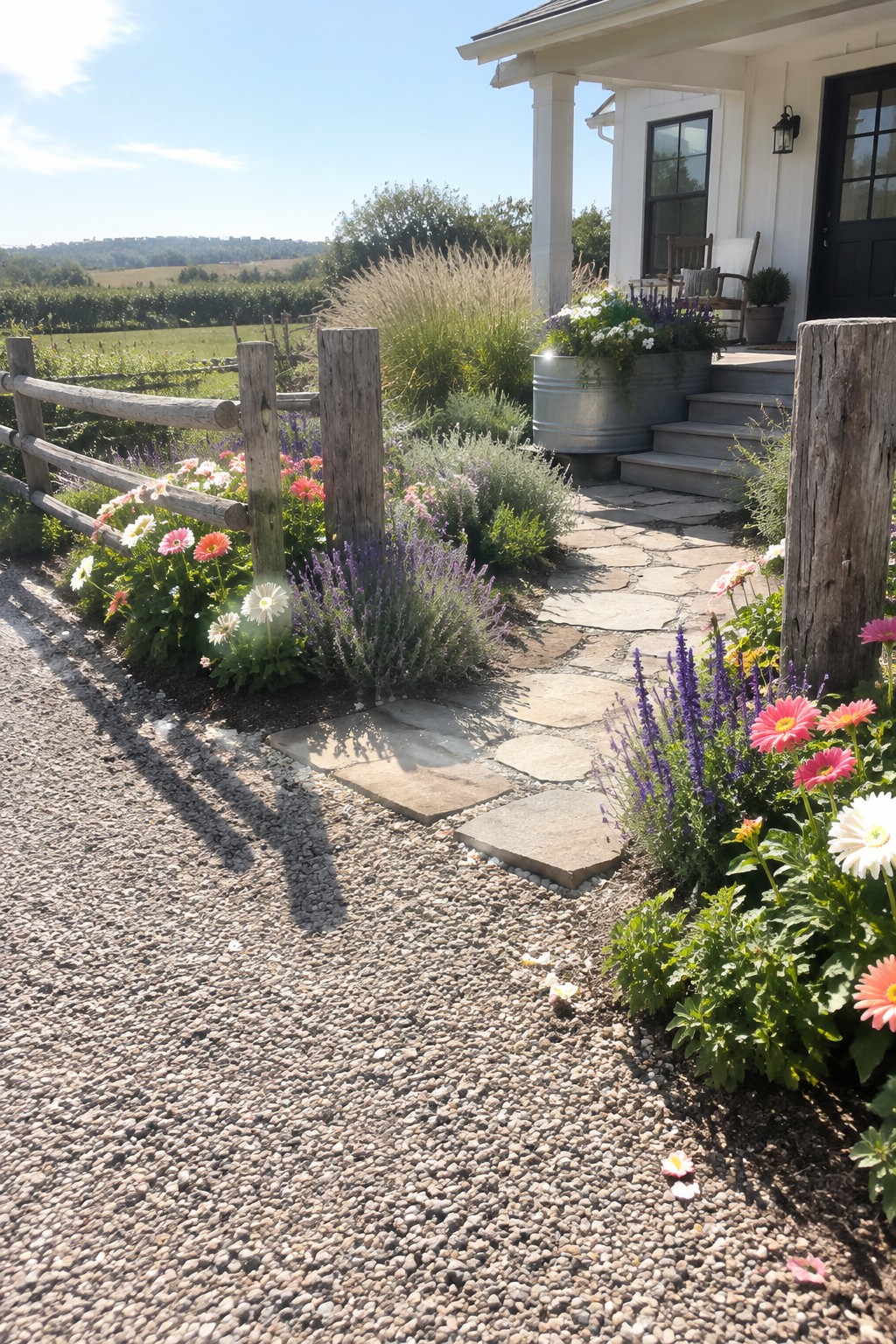
A stone walkway can give a flower bed a clear shape and make it easy to enjoy the blooms up close. Gerbera daisies planted along the edge bring bright color right to the path without needing a large garden.
Keep the stones spaced for comfortable steps, then plant daisies in small groups beside them. Leave room between plants so they can grow without crowding the walkway.
Use Gerbera Daisies in Concrete Planters
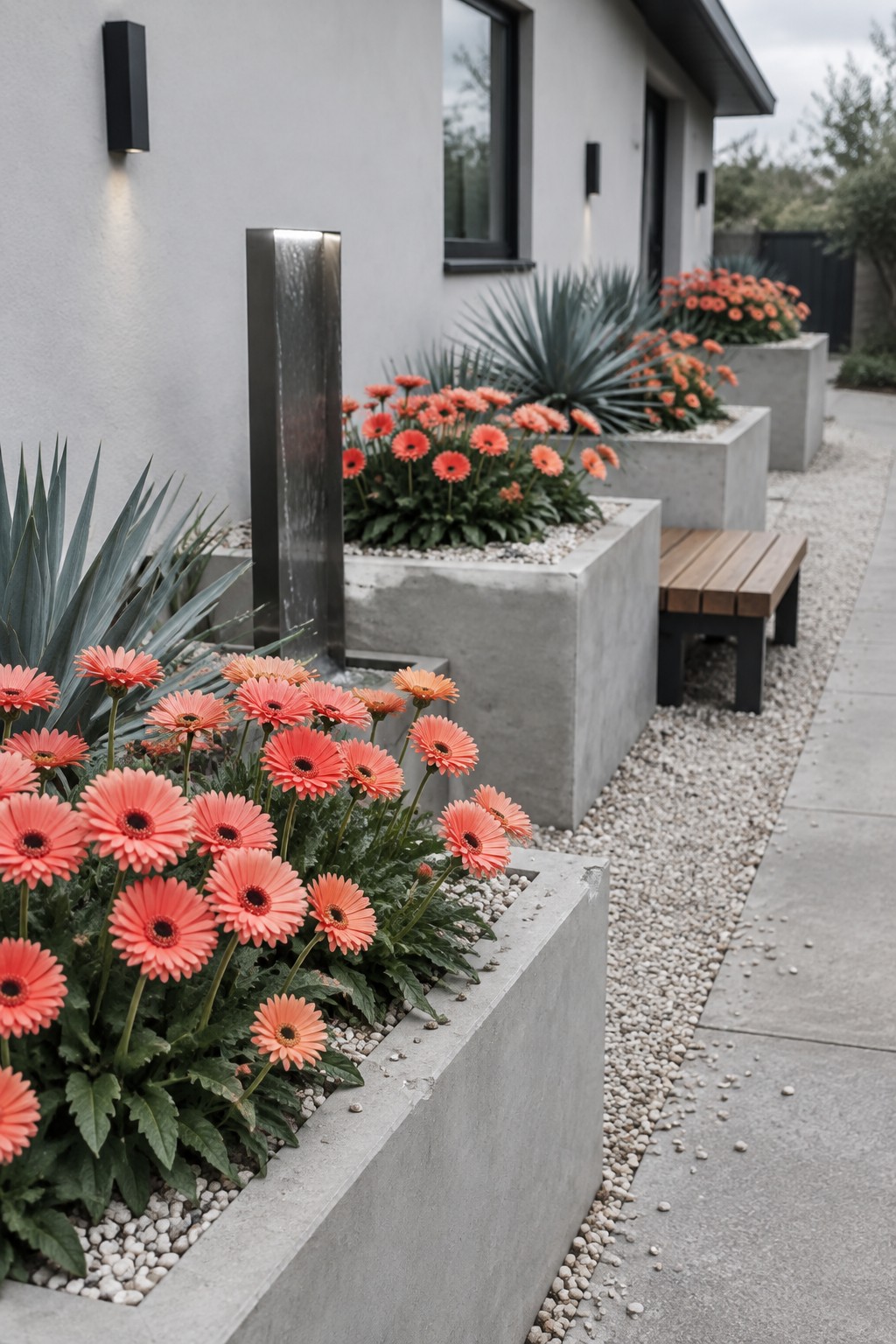
Raised concrete beds give gerbera daisies a tidy place to grow and make their bright flowers stand out against a simple, modern home. Repeating the beds along a wall also gives the planting a clear rhythm without needing a formal hedge.
This setup works well beside a walkway or along a narrow side yard. Leave enough room for the flowers to spread, and use containers with drainage so the soil does not stay soggy.
Plant Gerbera Daisies Along a Stone Path
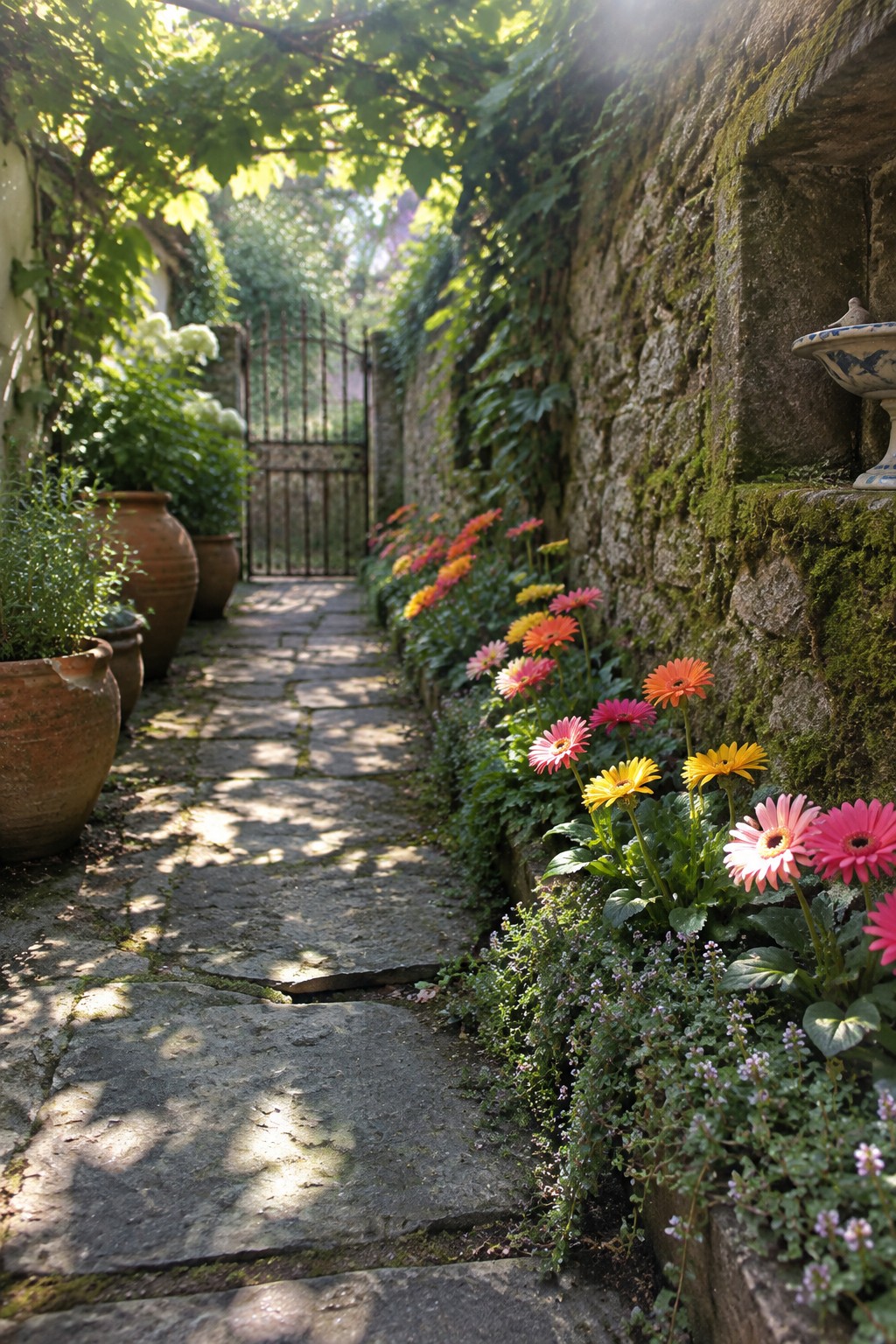
A narrow planting bed can make a garden path feel more colorful without taking up much walking space. Gerbera daisies planted in a loose row bring bright blooms right to the edge of the stones, where they’re easy to enjoy as you pass.
Keep the bed wide enough for the plants to grow without spilling across the path, and leave room to reach in for deadheading or watering. This approach works well in a side garden or other narrow passage, especially where a stone walkway already gives the planting a clear edge.
Use Gerbera Daisies in a Raised Garden Bed
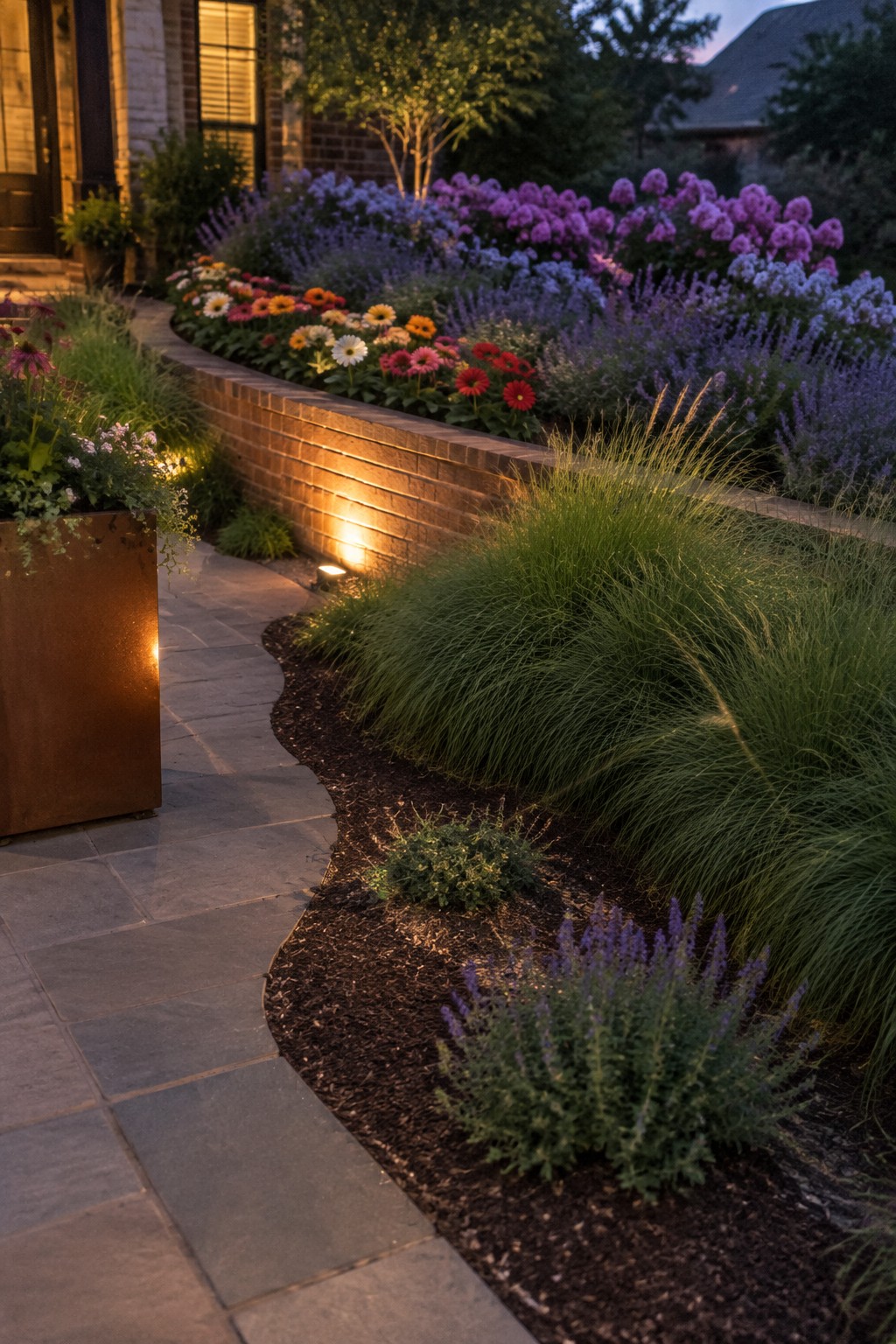
A raised flower bed gives gerbera daisies a clear place in the garden and makes their bright blooms easy to enjoy along a walkway. The curved brick edge also helps define the planting area without making it feel too formal.
For a similar look, plant gerberas in a sunny raised bed and mix them with lower flowers so the daisies remain easy to see. Check that the bed drains well, since gerberas do not like sitting in soggy soil.
Create a Rooftop Garden Path
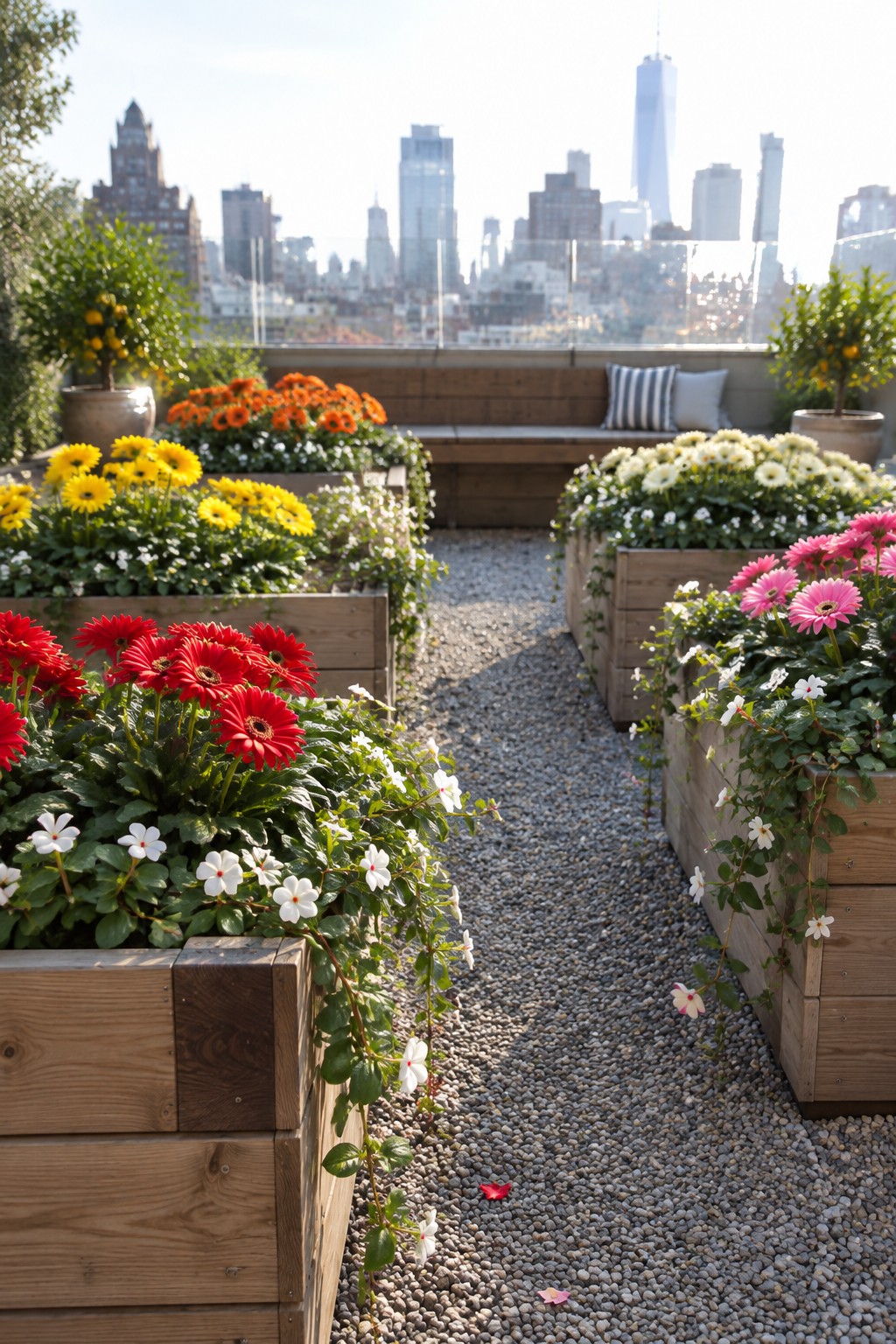
A gravel path through raised beds gives a rooftop garden a clear layout and makes it easier to reach flowers for watering and upkeep. Gerbera daisies bring bright color to the beds on either side, while the open path keeps the planting from feeling crowded.
This setup works well on a terrace or rooftop with room for sturdy planters and a level walking surface. Leave enough width to carry tools or pass someone comfortably, and choose containers that can handle the site’s wind and sun.
Use Gerbera Daisies to Edge a Garden Path
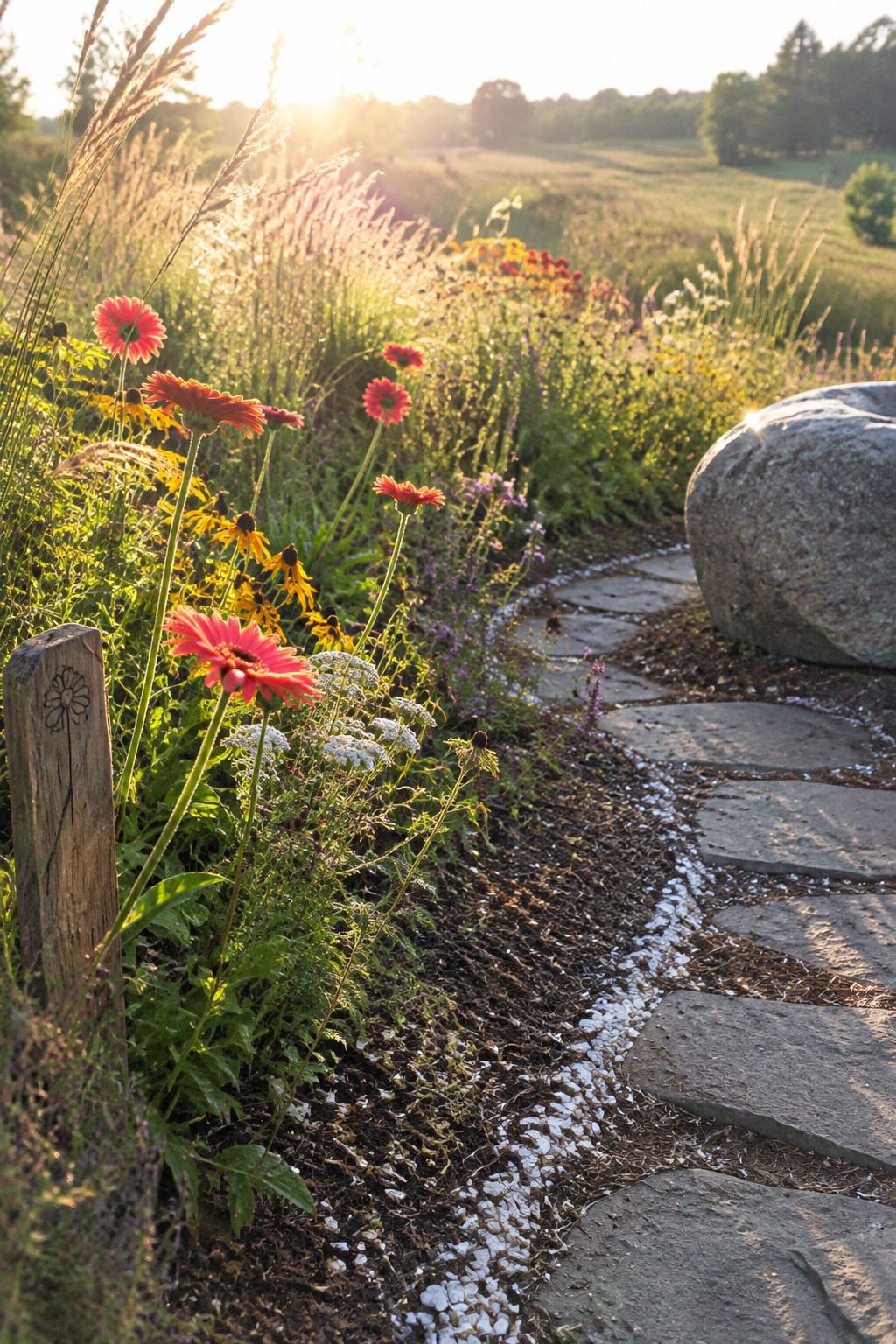
A stone path feels less formal when colorful flowers grow close along its edge. Gerbera daisies bring bright spots of color to the route, while the planting bed makes the walkway feel like part of the garden rather than a separate strip of paving.
Plant daisies in small groups beside the stones, leaving enough room for them to spread without covering the path. This works well in a sunny cottage-style garden, but avoid crowding the edge so the stepping stones stay easy to use.
Use Gerbera Daisies to Color Patio Steps
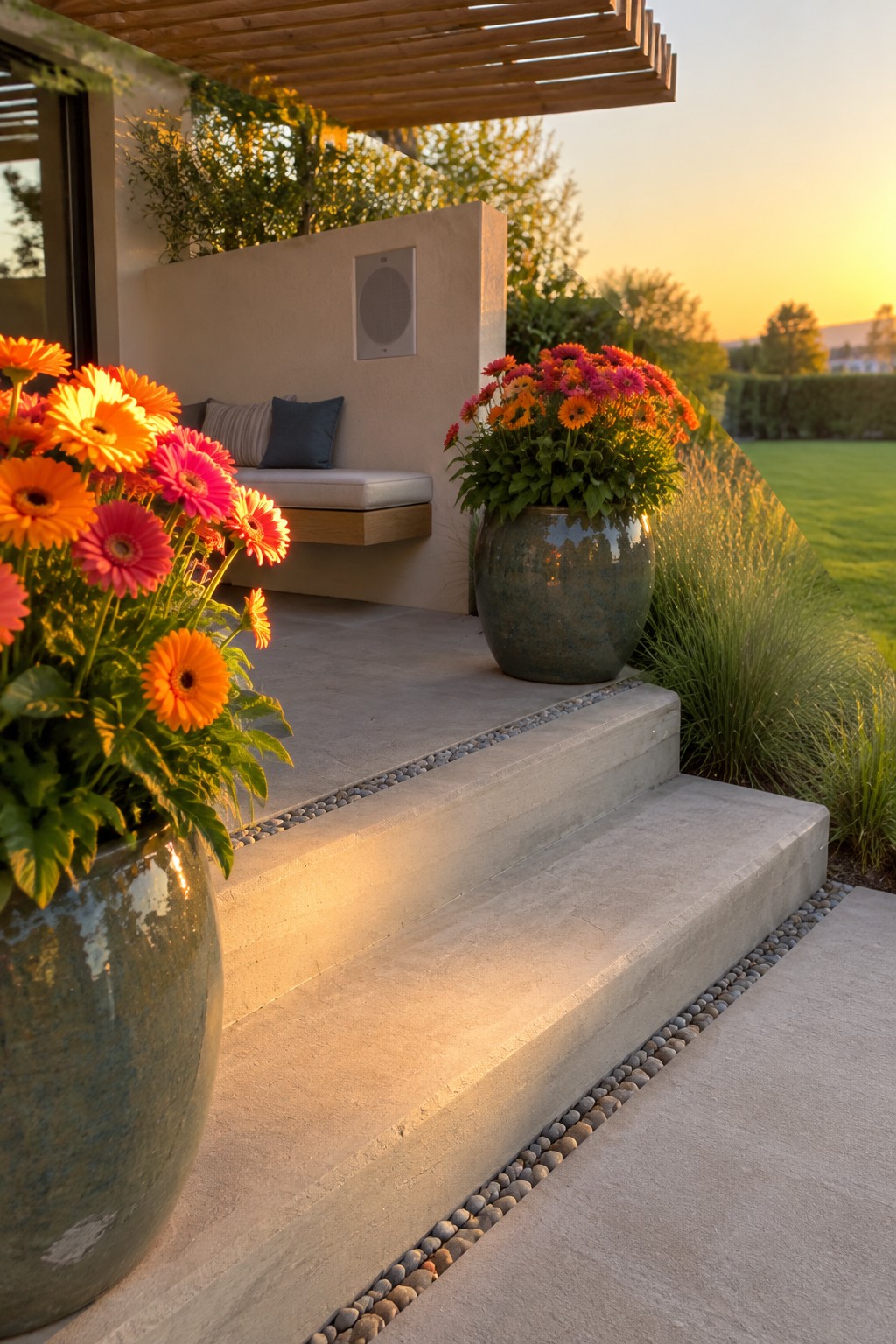
Gerbera daisies in large pots can bring bright color to a stepped patio without taking up space in the seating area. The flowers stand out against pale stone, and containers make it easy to change the planting when the season turns.
Place a pot on a wide landing or beside the steps, where it won’t narrow the walking route. Choose a stable container, and leave enough room around it for people to pass comfortably.
Frequently Asked Questions
Q: Can I plant gerbera daisies in a garden bed, or are they better in pots?
A: Both work well. Pots make it easier to move them into shelter during heavy rain or cold snaps, while a sunny, well-drained garden bed gives them room to fill out.
Q: How much sun do gerbera daisies need to keep blooming?
A: Give them a sunny spot with about six hours of direct light. In very hot climates, a little afternoon shade can help keep the flowers from wilting.
Q: Why are my gerbera daisy leaves yellowing?
A: Too much water or poorly drained soil is a common cause. Let the top of the soil dry slightly between waterings, and make sure the crown where the leaves meet stays above the soil.
Q: Will gerbera daisies come back next year?
A: In warm climates, they may return as perennials. Where winters freeze, treat them as annuals or bring potted plants indoors before the first frost.
