


Hydrangeas are a favorite when it comes to transforming outdoor spaces. Their lush blooms and varied heights create stunning borders that catch the eye. Mixing different hydrangea varieties can boost visual charm and attract helpful pollinators. If you’re looking for ways to incorporate these beauties into your landscape, let’s explore some versatile ideas to elevate your garden design.
Choosing the Right Hydrangea Varieties for Your Garden
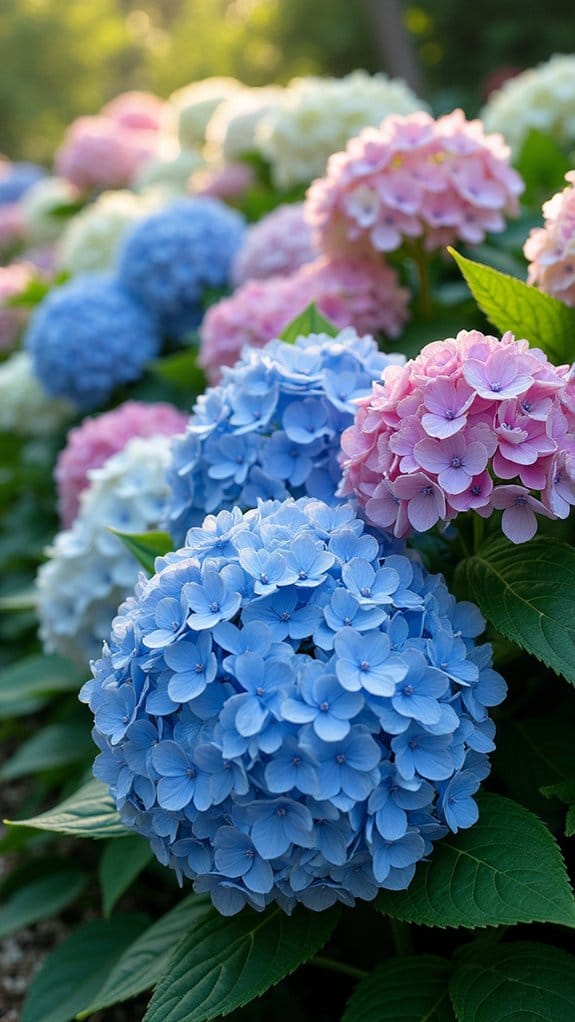
When it comes to selecting hydrangeas for your garden, understanding the different varieties can feel overwhelming.
Selecting hydrangeas for your garden can be daunting, but understanding the varieties makes it easier to create a beautiful landscape.
I remember my first time choosing them; I was confused by the colors and sizes.
I recommend starting with the popular ones like Hydrangea macrophylla for vibrant blooms or the easy-to-grow Paniculata for height.
Choosing the right types can truly transform your landscape into a stunning display.
Creating a Hydrangea Hedge for Privacy

After picking the right hydrangea varieties, I found that creating a hydrangea hedge can add both beauty and privacy to my garden.
I planted them close together, allowing their lush foliage to grow densely. The vibrant blooms not only shield me from prying eyes but also create a stunning backdrop.
I love how this hedge transforms my outdoor space into a serene retreat.
Pairing Hydrangeas With Perennials for Year-Round Interest
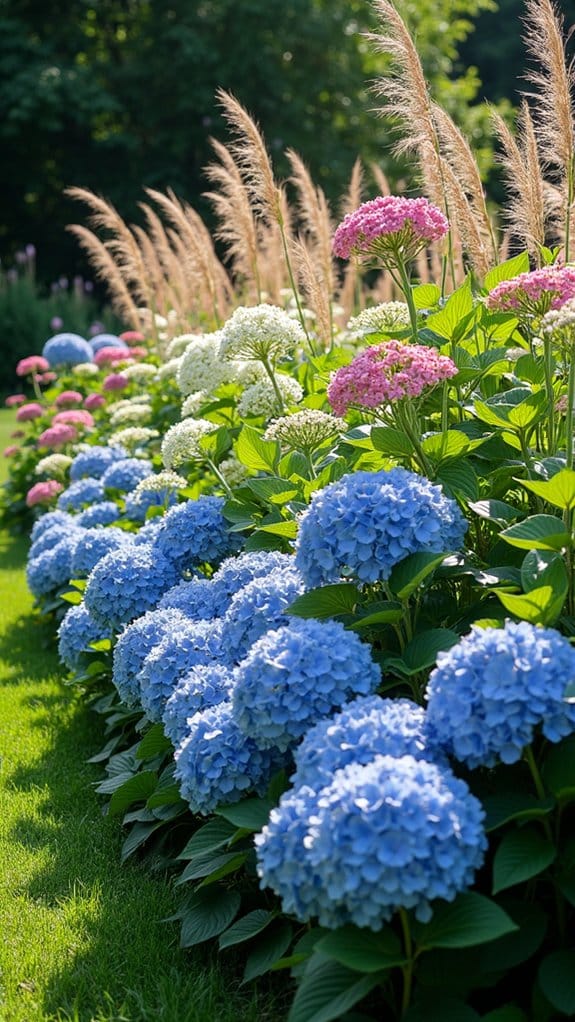
While I adore the beauty of hydrangeas, I’ve discovered that pairing them with perennials can create a dynamic garden that’s visually appealing throughout the seasons.
For instance, combining hydrangeas with daylilies or coneflowers offers vibrant blooms in summer, while ornamental grasses provide texture in winter.
This mix not only enhances color but also guarantees interest year-round, making my garden truly enchanting.
Designing a Hydrangea-Centric Border
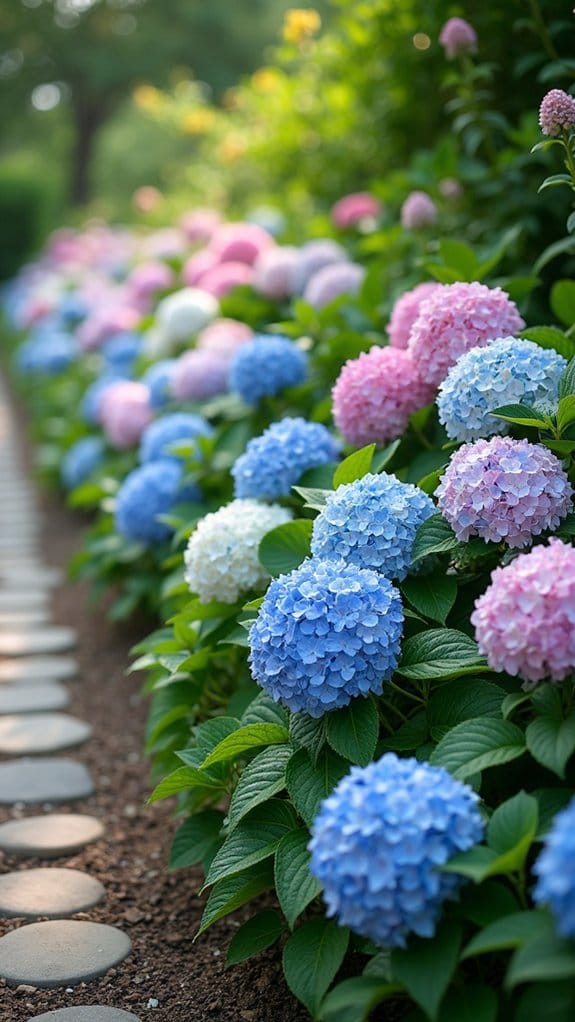
Creating a hydrangea-centric border transforms any garden space into a lush retreat filled with color and texture.
I love mixing different hydrangea varieties, like the bigleaf and panicle types, to achieve a stunning visual contrast.
Planting them in clusters allows their vibrant blooms to shine.
Don’t forget to take into account the sunlight and soil conditions for ideal growth and health!
Incorporating Hydrangeas Into a Cottage Garden

Incorporating hydrangeas into a cottage garden brings a romantic charm that’s hard to resist.
I love mixing their lush blooms with classic perennials like daisies and foxgloves. The varying shades of blue, pink, and white create a stunning palette.
Placing them near rustic pathways or old stone walls enhances that whimsical feel.
Trust me, hydrangeas transform any cottage garden into a dreamy retreat.
Utilizing Container Gardening With Hydrangeas

If you want to add a touch of elegance to your outdoor space, utilizing container gardening with hydrangeas is a fantastic choice.
I love placing these vibrant blooms in decorative pots on my patio or balcony. They’re perfect for small spaces and allow for easy rearranging.
Plus, the colors can complement any decor, creating an inviting atmosphere for relaxation and enjoyment.
Mixing Hydrangeas With Ornamental Grasses

While many people admire the bold colors of hydrangeas, mixing them with ornamental grasses can elevate your garden’s aesthetic to new heights.
I love how the soft texture of grasses contrasts beautifully with the vibrant blooms. It creates a dynamic visual appeal.
Plus, the grasses sway gracefully in the breeze, adding movement and life to your landscape, turning it into a serene retreat.
Crafting a Colorful Hydrangea Pathway

As I walk through my garden, the sight of a colorful hydrangea pathway never fails to lift my spirits.
I’ve arranged vibrant blues, pinks, and whites along the edges, creating a stunning entrance. The lush blooms invite me deeper into my garden, and their delightful fragrance fills the air.
Each step feels like a journey through a floral wonderland, rejuvenating my soul.
Planting Hydrangeas for a Shady Retreat
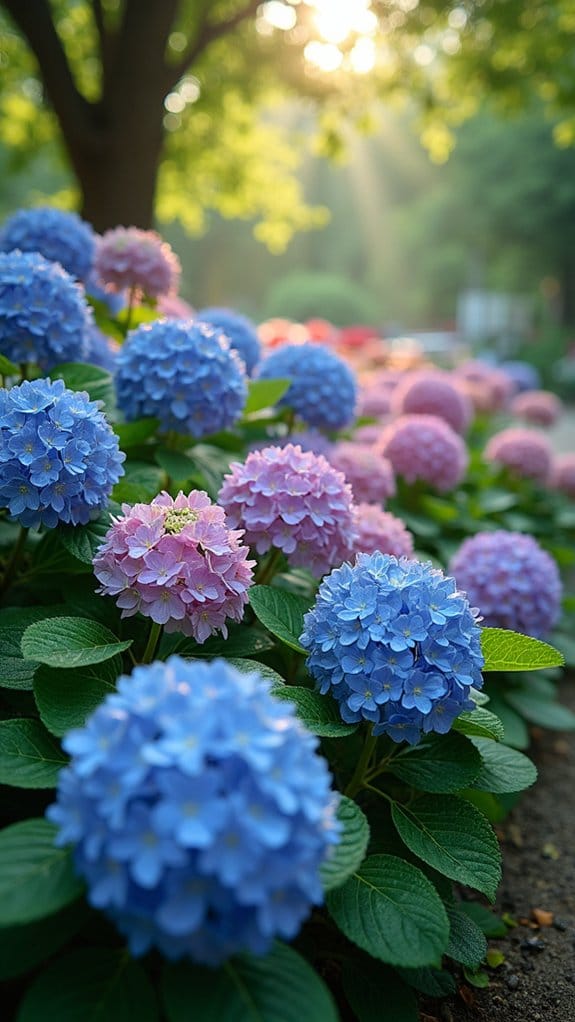
When I think about creating a shady retreat in my garden, hydrangeas instantly come to mind. Their lush foliage and vibrant blooms thrive in partial shade, adding a touch of elegance to any corner.
I love planting them near tall trees or under eaves, where they flourish. With careful watering and mulching, these beauties transform my garden into a serene, colorful escape.
Combining Hydrangeas With Edible Plants
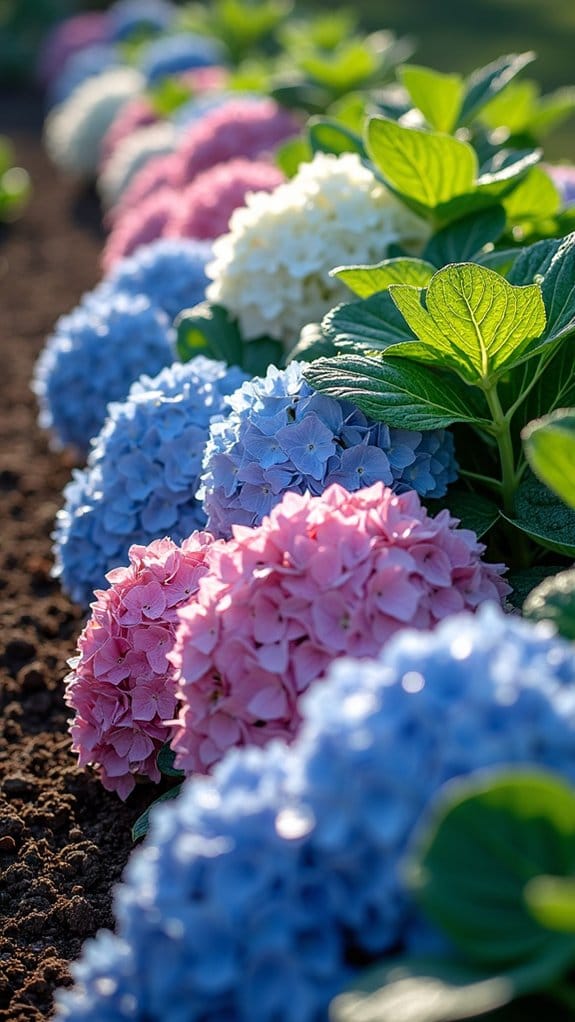
Combining hydrangeas with edible plants can create a stunning and productive garden space.
I’ve found that interspersing vibrant hydrangeas with herbs like basil or rosemary not only looks beautiful but also maximizes space.
The lush foliage of hydrangeas complements the edible plants perfectly.
Plus, having fresh herbs at my fingertips adds flavor to meals while keeping my garden visually appealing.
Creating a Hydrangea Color Palette

After enjoying the beauty of hydrangeas alongside edible plants, I found that creating a cohesive color palette can elevate the overall aesthetic of my garden.
I love mixing shades of blue, pink, and white hydrangeas to achieve a harmonious look. By grouping similar colors together and balancing them with foliage, I bring depth and vibrancy to my landscape, truly making it a stunning focal point.
Using Hydrangeas in Vertical Gardens
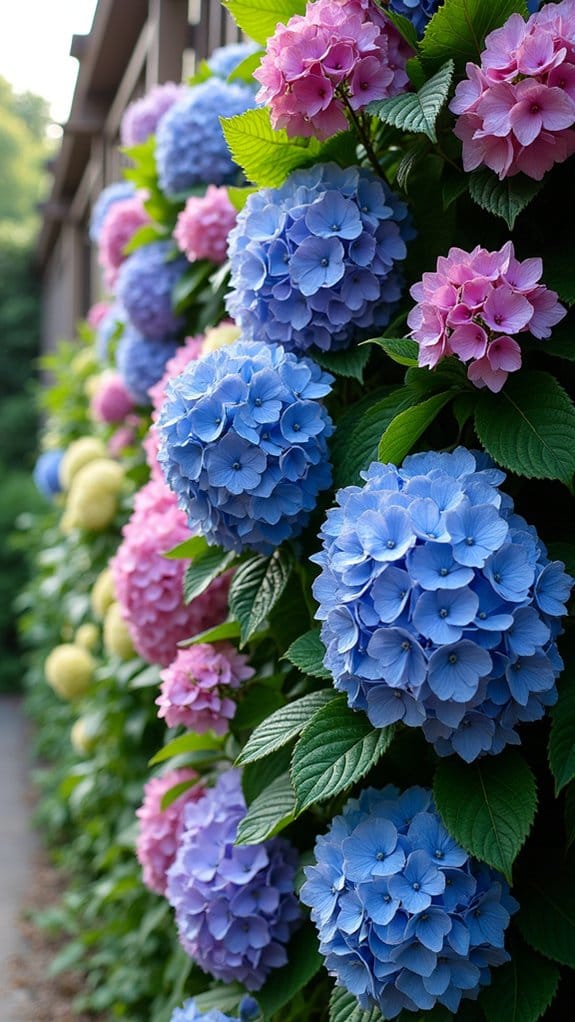
Vertical gardens have become a popular way to maximize space and add visual interest, and I’ve found that hydrangeas can play a stunning role in these designs.
Their lush blooms create a vibrant backdrop, and the cascading effect can soften hard surfaces.
I love mixing different varieties for texture, ensuring a striking display that attracts attention and brings life to any vertical space.
Enhancing Your Landscape With Dwarf Hydrangeas

While many gardeners might overlook dwarf hydrangeas, I believe these compact beauties can truly enhance your landscape.
Their smaller size makes them perfect for borders, containers, or even tucked into tight spots. With vibrant blooms in various colors, they add depth and interest.
Plus, their low maintenance needs make them an ideal choice for busy gardeners like me who love a stunning garden.
Establishing a Hydrangea Flower Bed
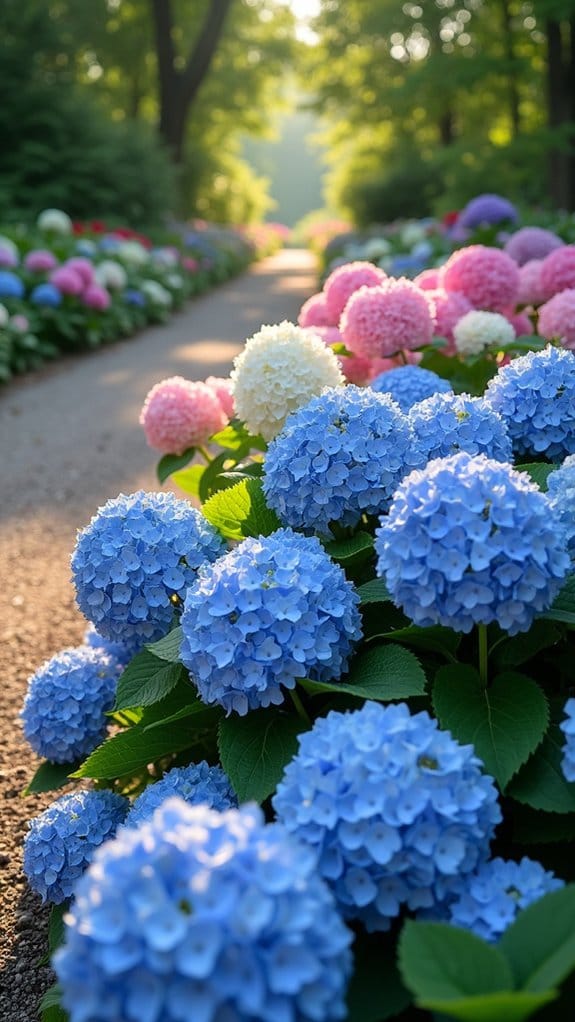
Building on the charm of dwarf hydrangeas, establishing a dedicated flower bed for these plants can create a stunning focal point in your garden.
I recommend choosing a well-drained location that gets plenty of morning sun.
Prepare the soil by mixing in organic compost, and space your hydrangeas appropriately to allow for growth.
With care, you’ll enjoy vibrant blooms all season long.
Designing a Hydrangea and Rock Garden

When I think about designing a hydrangea and rock garden, I envision a harmonious blend of natural elements that enhances the beauty of both.
By strategically placing rocks of varying sizes, I create visual interest and texture.
I love mixing vibrant hydrangeas with the ruggedness of stones, allowing their colors to pop.
This combination adds depth and a unique charm to my landscape.
Adding Hydrangeas to a Coastal Landscape
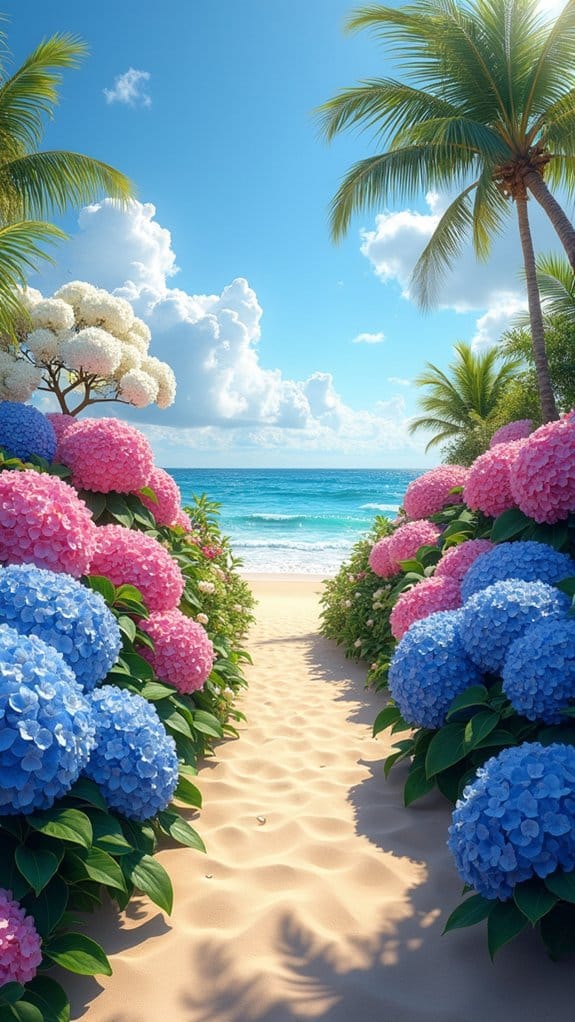
As I explore the idea of adding hydrangeas to a coastal landscape, I’m captivated by how these stunning blooms can thrive in such an environment.
Their ability to withstand salty air and sandy soil makes them perfect for coastal gardens.
I love mixing them with grasses and other native plants, creating a vibrant, textured border that beautifully complements the natural coastal scenery.
Hydrangeas as Focal Points in Large Gardens
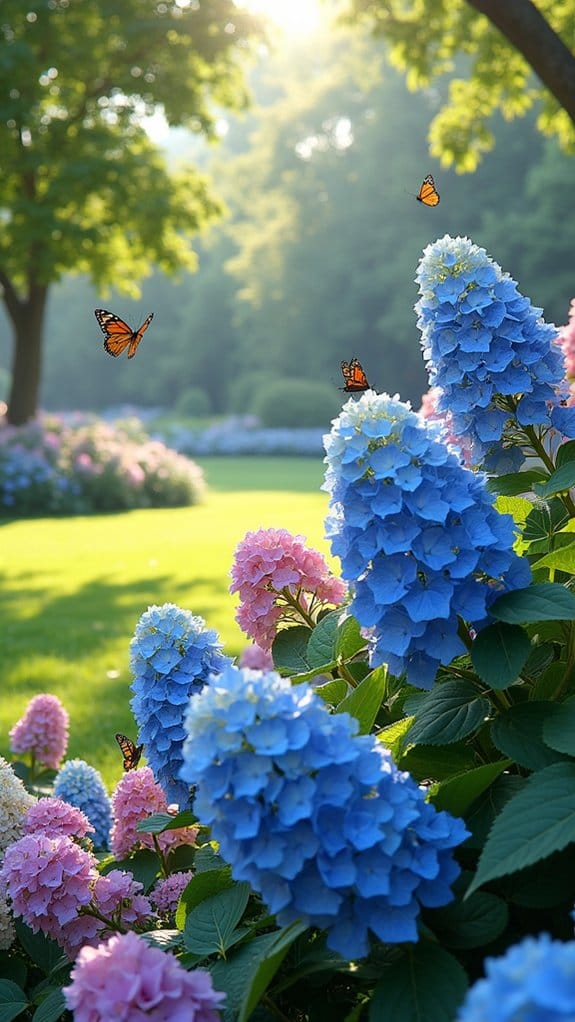
Hydrangeas can truly transform a large garden into a stunning visual masterpiece, especially when they’re used as focal points.
I love placing them strategically along pathways or at the end of a vista, drawing the eye. Their vibrant blooms create a beautiful contrast against greenery, making every visit feel special.
Trust me, you’ll be amazed at how they enhance your garden’s overall appeal!
Creating a Hydrangea and Wildlife-Friendly Garden
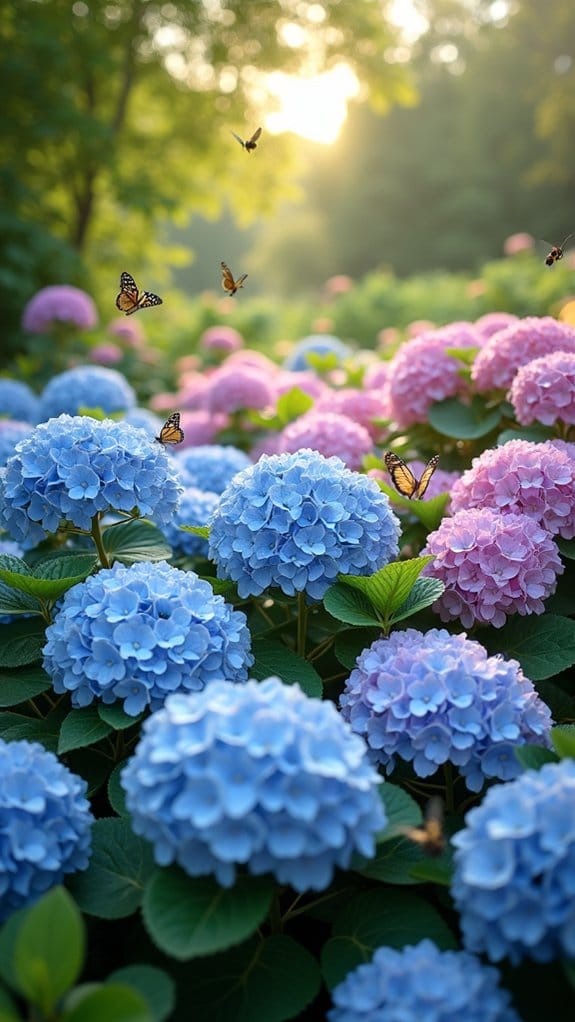
Incorporating hydrangeas into your garden not only enhances its beauty but can also support local wildlife.
I’ve found that planting hydrangeas alongside native plants attracts pollinators like bees and butterflies. Their lush foliage provides shelter for birds, too.
Incorporating Hydrangeas in Formal Landscaping
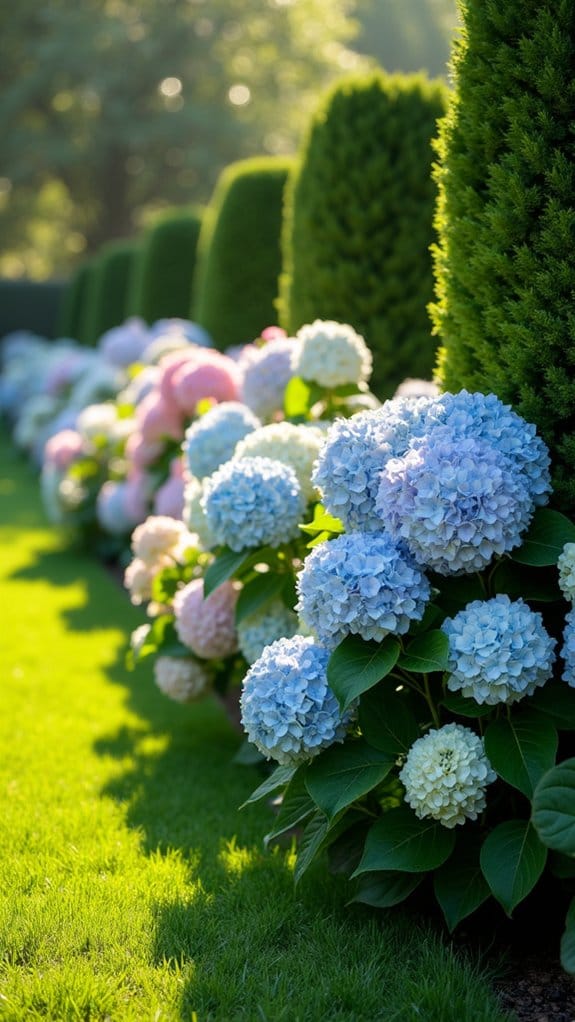
When planning a formal landscape, I often think about how hydrangeas can elevate the design with their elegant blooms and structured form.
I love using them as focal points in symmetrical beds or lining pathways. Their rich colors and lush foliage create a refined atmosphere.
With proper pruning, they maintain their shape, ensuring a polished look throughout the seasons.
Using Hydrangeas in Seasonal Displays
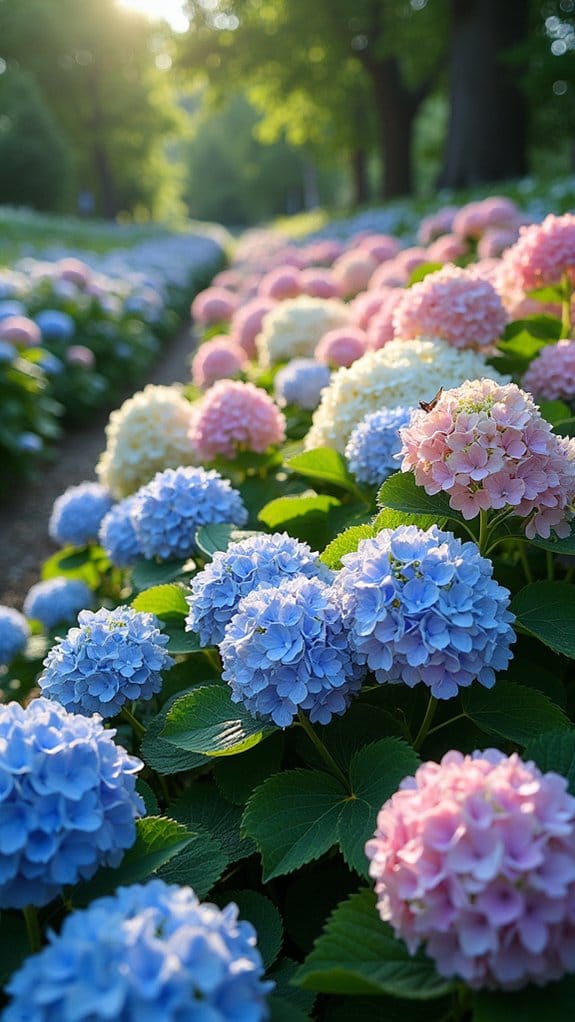
While planning seasonal displays, I often find that hydrangeas bring a vibrant touch to my gardens. Their large blooms create stunning focal points, whether in pots or borders.
I love mixing different colors and varieties, allowing them to shine throughout the seasons. With careful placement, hydrangeas can shift beautifully from spring to fall, making my outdoor space feel alive and inviting.
Tips for Maintaining Healthy Hydrangeas in Your Garden
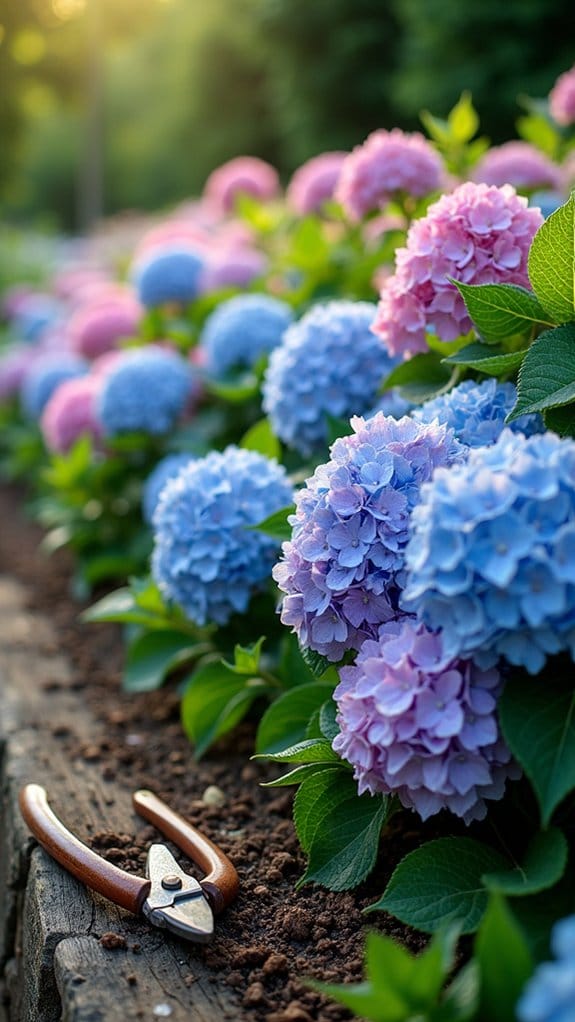
Maintaining healthy hydrangeas is essential for showcasing their stunning blooms year after year.
I always make certain they get plenty of water, especially in dry spells, and use a balanced fertilizer in spring.
Pruning them at the right time keeps them vigorous.
Finally, I pay attention to their sunlight needs, providing some shade during the hottest part of the day, which really helps them thrive.
