

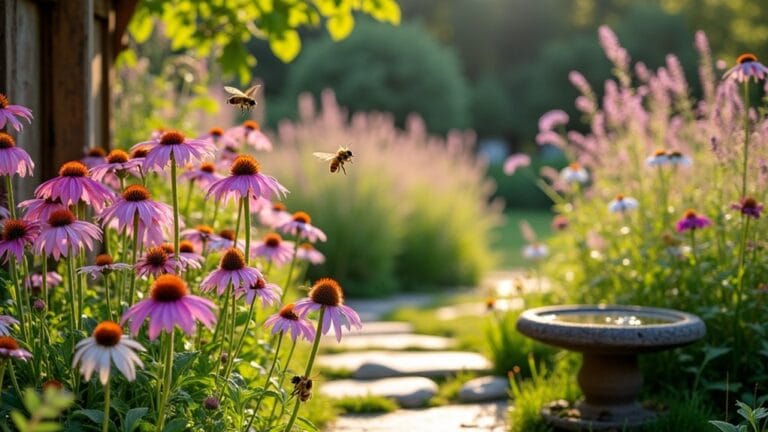
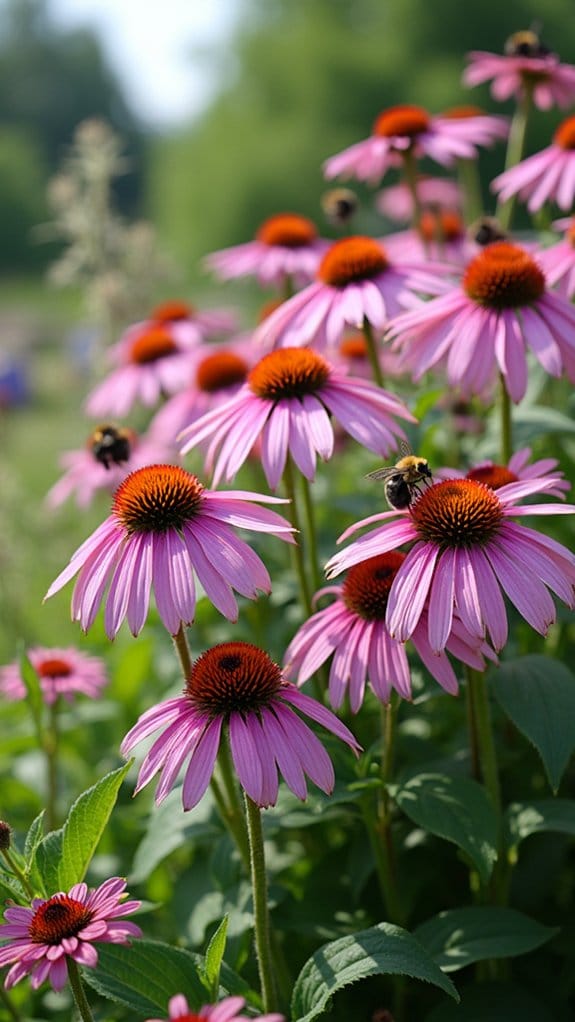
Looking to infuse your garden with vibrant color while supporting our buzzing friends, the bees? Coneflowers might just be your new best friend. These stunning blooms are not only a treat for the eyes but also a haven for pollinators. By choosing the right varieties and planning your garden thoughtfully, you can create a beautiful, bee-friendly oasis. Let’s explore some inspiring ideas that can make your garden a buzzing paradise.
Choosing the Right Variety of Coneflowers for Your Garden
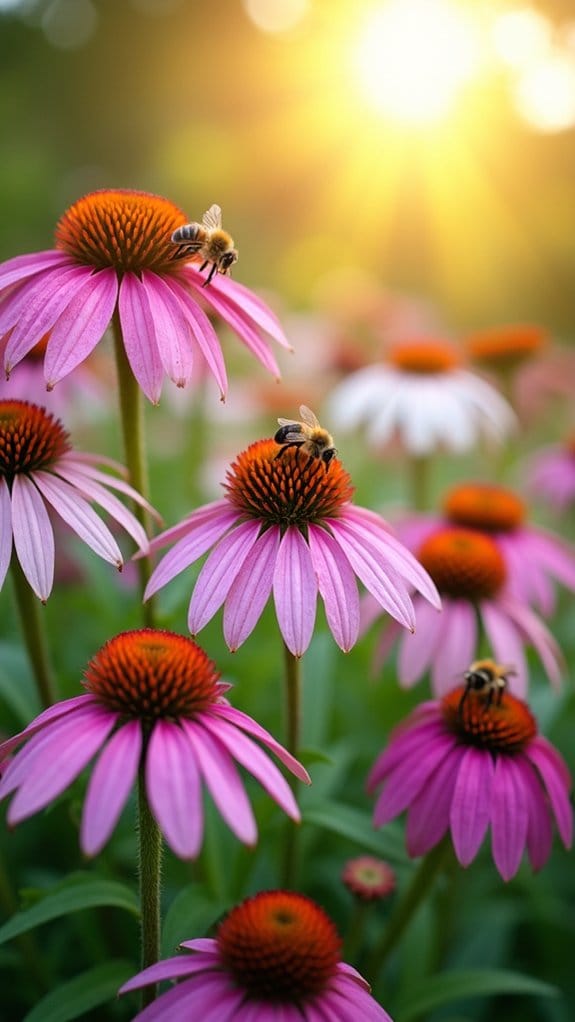
When it comes to choosing the right variety of coneflowers for my garden, I’ve found that narrowing down the options can really make a difference.
I consider factors like flower color, height, and bloom time. For example, I love the vibrant pinks of Echinacea purpurea, but Echinacea tennesseensis offers a unique, more subdued look.
It’s all about finding what fits my space best!
Planting Coneflowers in a Pollinator Garden
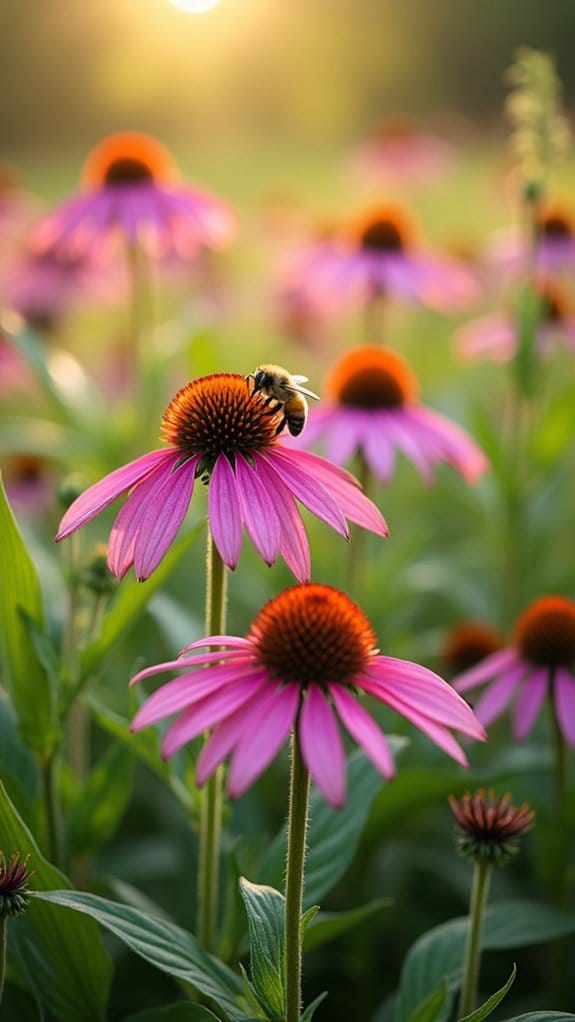
Since I want to create a thriving pollinator garden, planting coneflowers is a fantastic choice.
These resilient flowers not only attract bees and butterflies but also add vibrant color to my space. I love to group them in clusters for a natural look.
Plus, they’re low-maintenance, allowing me to enjoy my garden without constant upkeep. It’s a win-win for both me and the pollinators!
Creating a Colorful Coneflower Border
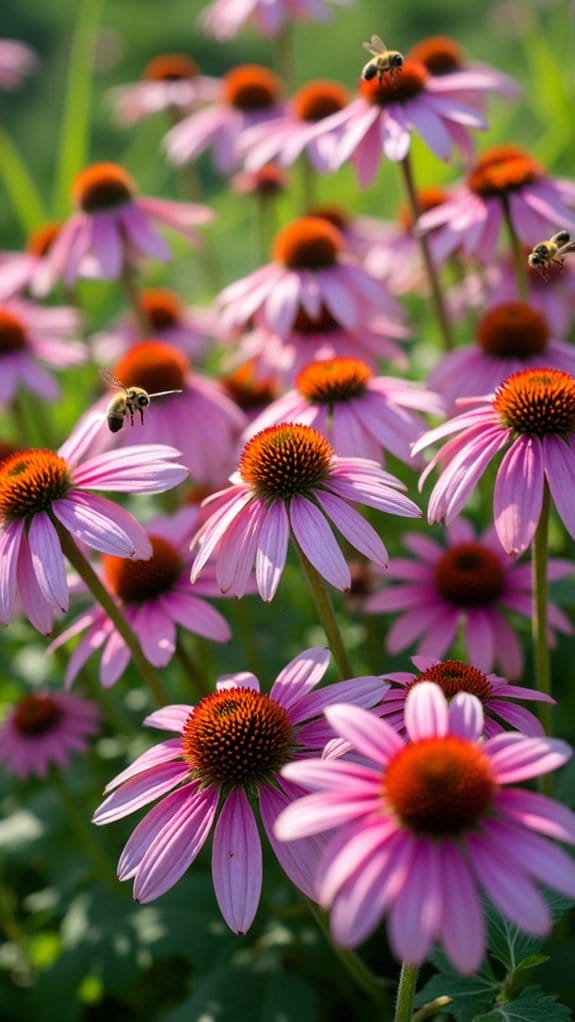
Although I love the look of a well-defined garden space, a colorful coneflower border takes it to the next level.
I’ve found that mixing different coneflower varieties creates a stunning visual impact. Use tall varieties in the back and shorter ones in the front for depth.
Plant them in clusters to draw the eye and attract pollinators, enhancing both beauty and biodiversity.
Mixing Coneflowers With Native Wildflowers
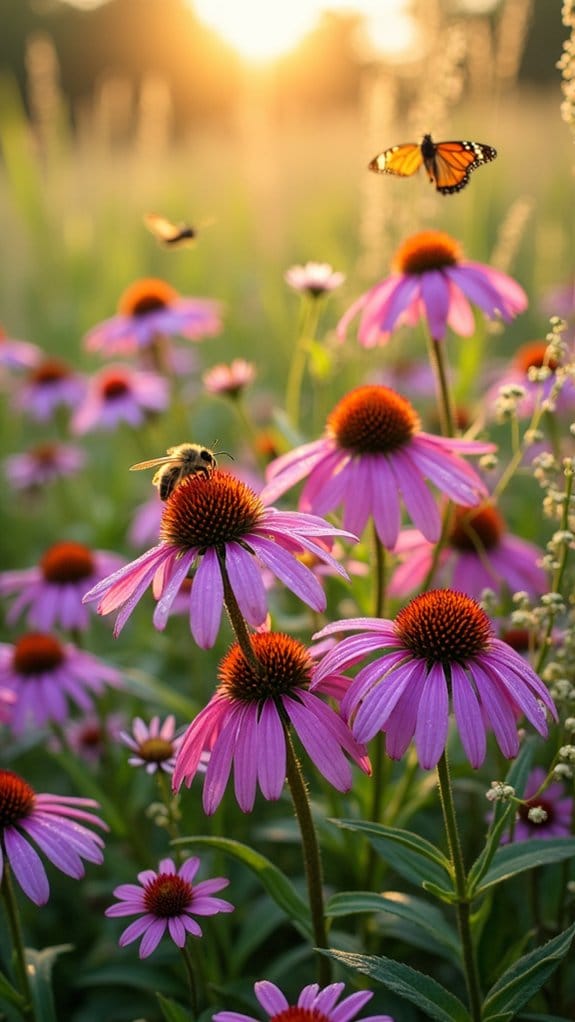
Mixing coneflowers with native wildflowers creates a vibrant tapestry that not only enhances the garden’s beauty but also supports local ecosystems.
I love combining coneflowers with species like black-eyed Susans and wild indigo. This mix attracts a variety of pollinators while providing contrasting colors and textures.
It’s a rewarding way to celebrate nature and promote biodiversity right in my backyard.
Designing a Cottage Garden Featuring Coneflowers
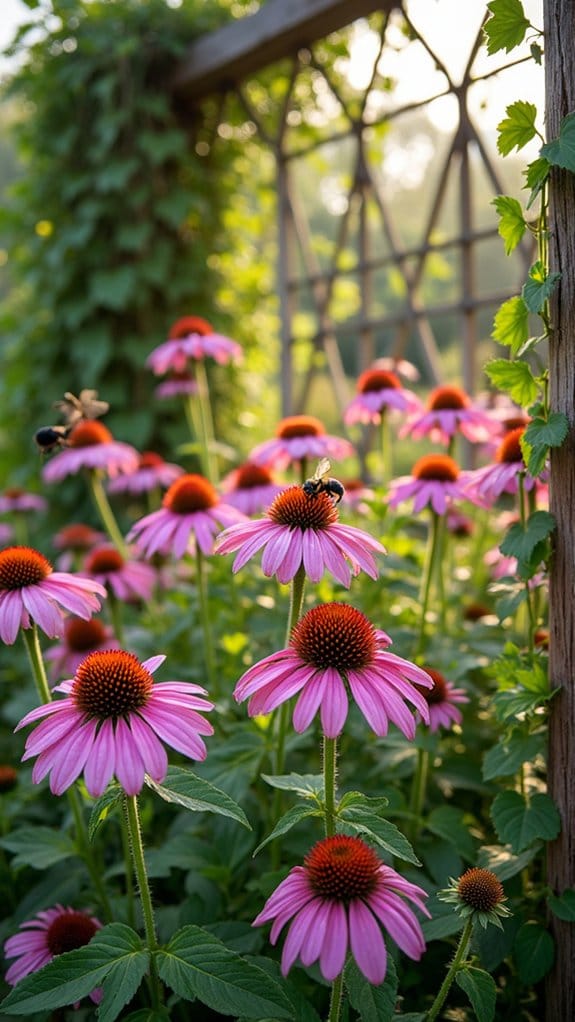
Creating a cottage garden is a delightful way to showcase coneflowers alongside a mix of other charming plants.
I love combining them with daisies, lavender, and salvia for vibrant color and texture. Planting in clusters adds a natural feel, while varying heights creates visual interest.
Don’t forget to leave space for pathways, inviting visitors to explore this enchanting space filled with life and beauty.
Incorporating Coneflowers Into Container Gardens
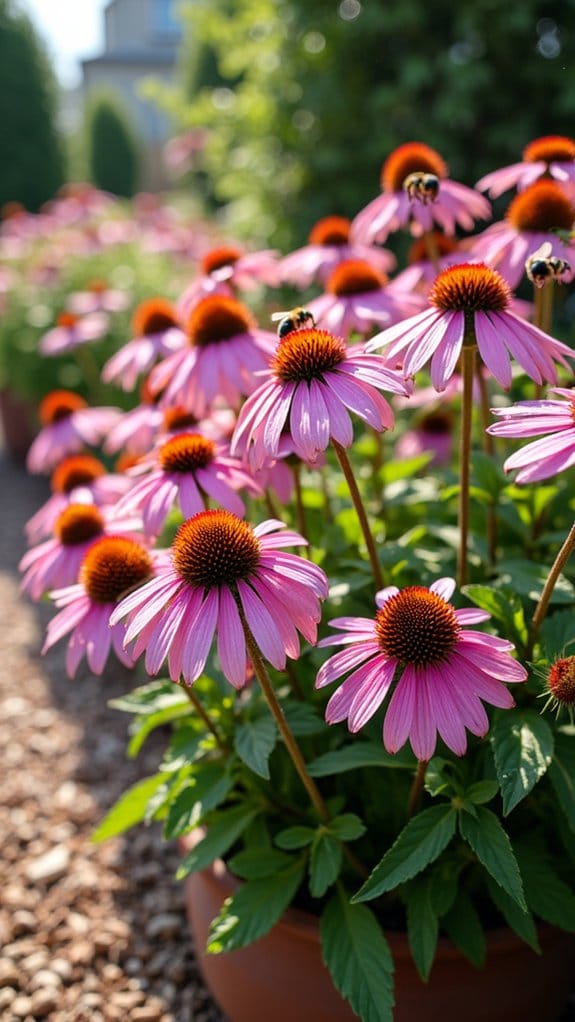
When I want to add a splash of color to my outdoor space, incorporating coneflowers into container gardens is one of my favorite strategies. Their vibrant hues brighten up any area, and they’re surprisingly easy to care for.
I love mixing different varieties in a single container, creating a stunning focal point that attracts bees and butterflies, enhancing my garden’s beauty.
Building a Coneflower and Butterfly Garden
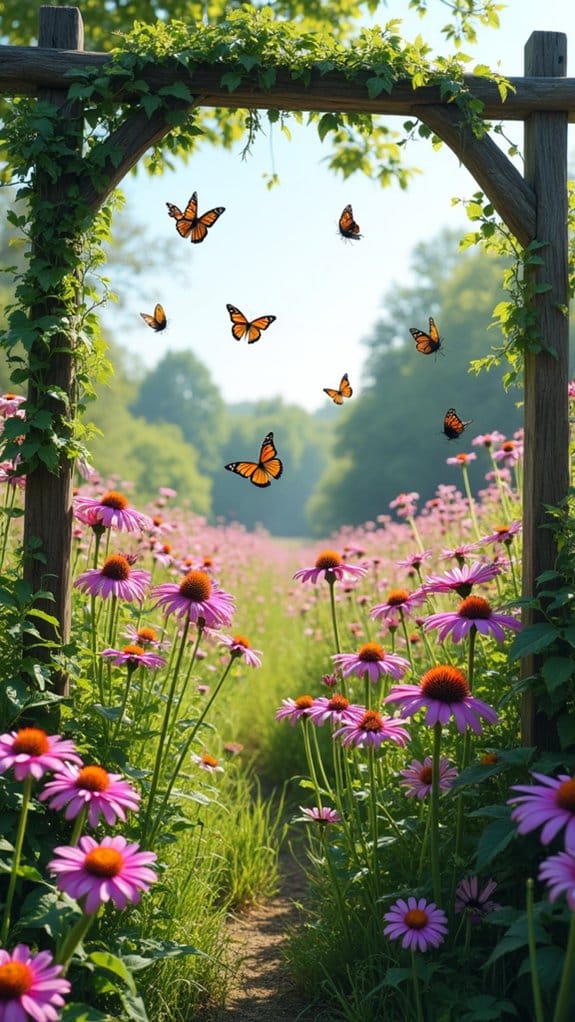
As I plan my garden, I can’t help but envision a vibrant coneflower and butterfly haven that draws these beautiful pollinators in.
I’ll mix different coneflower varieties with other nectar-rich plants like milkweed and butterfly bush.
Mixing coneflower varieties with nectar-rich plants like milkweed and butterfly bush will create a stunning pollinator paradise.
Adding rocks and shallow dishes of water will create a perfect habitat.
With careful placement and color, I’ll invite butterflies to dance among the blooms.
Using Coneflowers in a Wildlife-Friendly Landscape
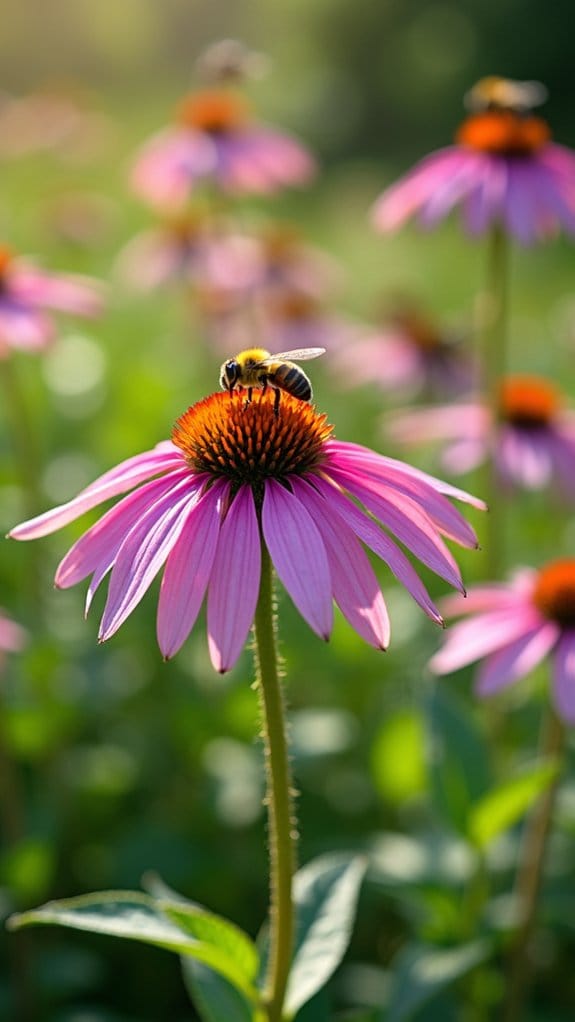
Incorporating coneflowers into a wildlife-friendly landscape not only enhances the garden’s beauty but also nurtures local ecosystems.
I love how these vibrant flowers attract bees, butterflies, and other pollinators, creating a lively environment.
Plus, their resilience means they thrive in various conditions, making them an ideal choice.
Layering Coneflowers With Perennials and Annuals
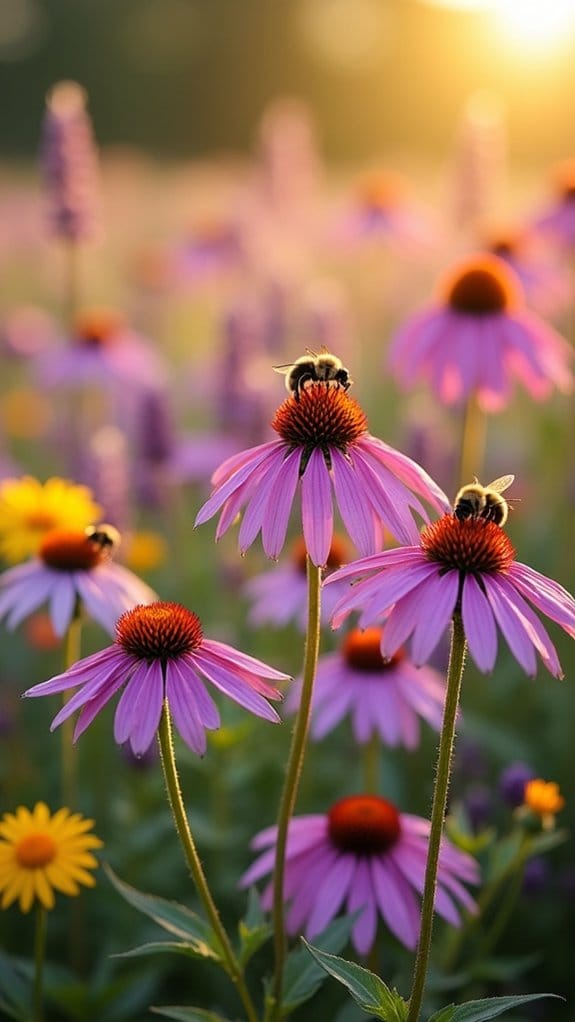
Layering coneflowers with perennials and annuals can transform your garden into a vibrant tapestry of color and texture.
I love mixing tall coneflowers with shorter annuals like marigolds or petunias for contrast. This not only creates visual interest but also attracts more pollinators.
Establishing a Coneflower Meadow
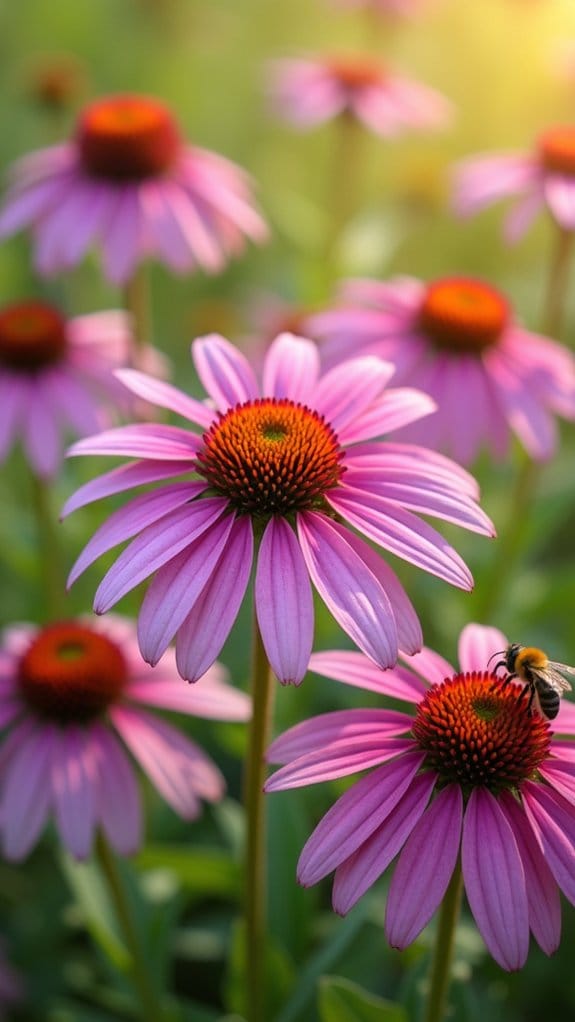
Creating a coneflower meadow can be a rewarding project that brings a natural beauty to your landscape.
I love selecting a sunny area, preparing the soil, and sowing seeds in spring.
Once they bloom, the vibrant colors attract bees and butterflies.
Don’t forget to water regularly until established, and soon you’ll have a stunning, low-maintenance meadow bursting with life!
Crafting a Coneflower Rock Garden
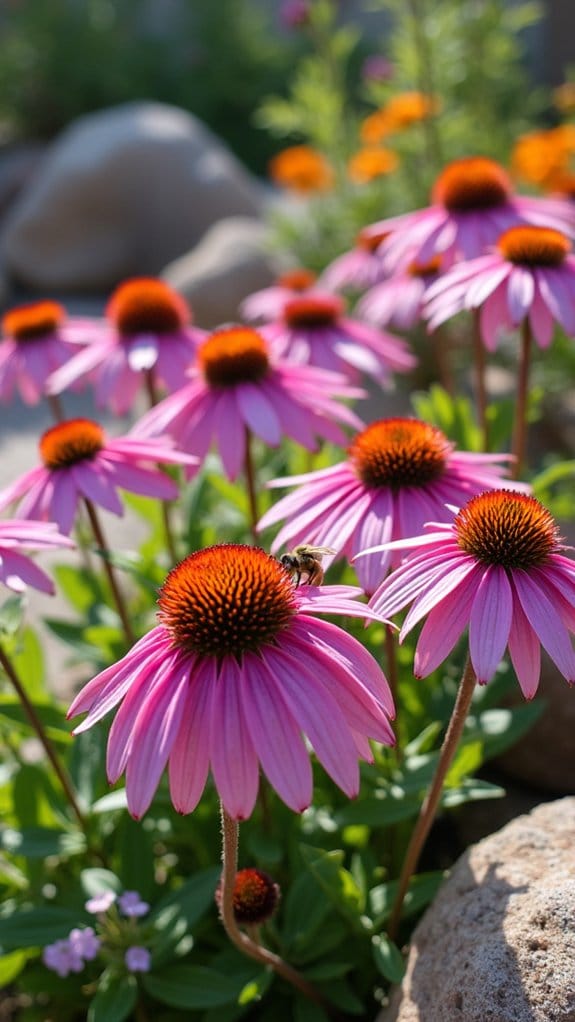
While designing a coneflower rock garden, I find it essential to blend natural elements that highlight the flowers’ vibrant hues.
Using varying sizes of smooth stones creates visual interest, while strategically placing coneflowers among the rocks allows them to flourish.
I love incorporating drought-resistant plants to complement the coneflowers, ensuring a lively, low-maintenance space that attracts bees and adds beauty throughout the seasons.
Planting Coneflowers Alongside Edible Plants
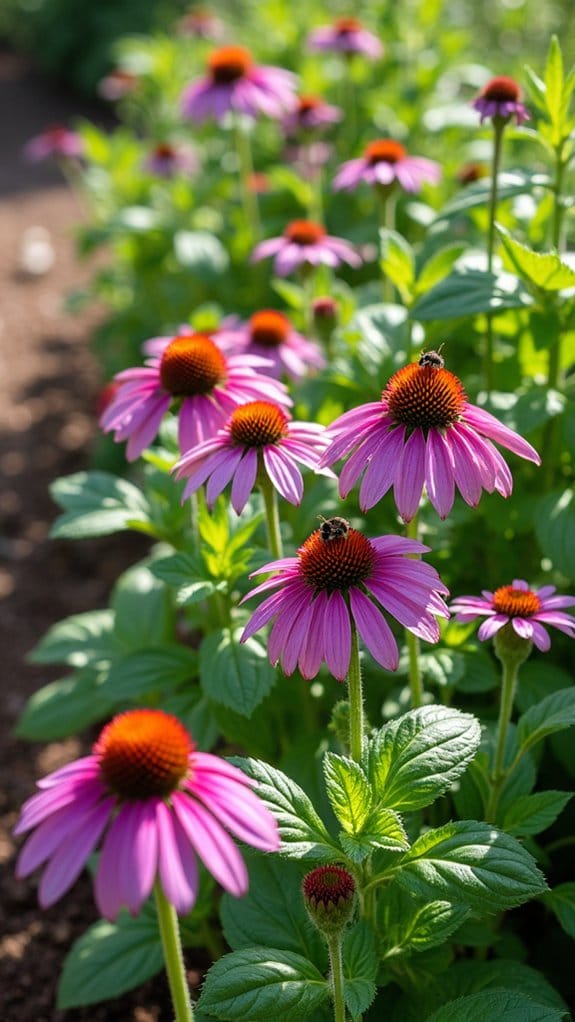
If you want to add a splash of color to your vegetable garden, consider planting coneflowers alongside your edible plants.
Not only do they attract beneficial pollinators, but their vibrant blooms also create a stunning contrast with greens and reds of your veggies.
I’ve found that the combination enhances both beauty and productivity, making my garden a lively, thriving space.
Creating a Coneflower and Ornamental Grass Combination
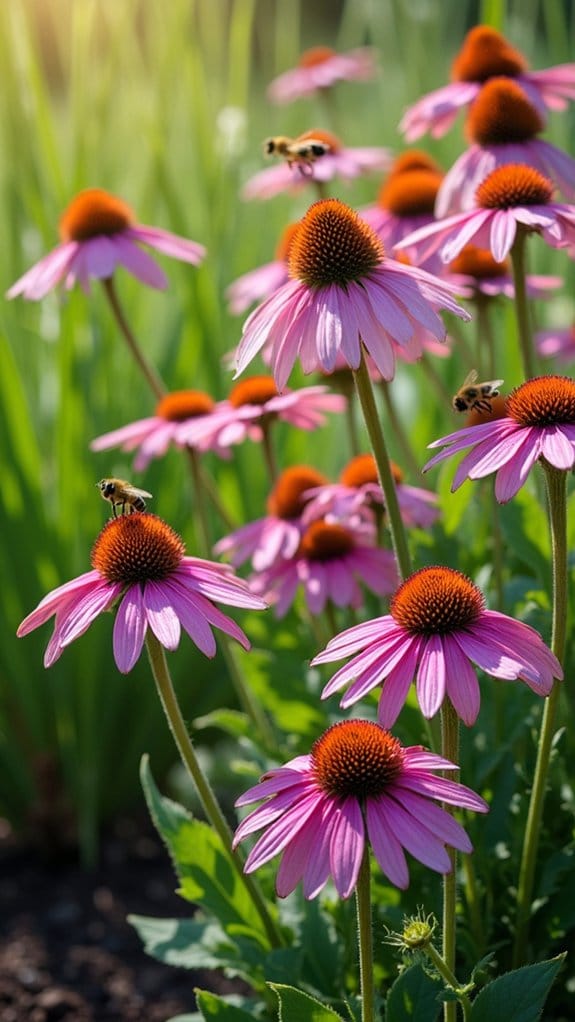
Combining coneflowers with ornamental grasses can transform your garden into a dynamic and visually appealing landscape.
I love how the tall, swaying grasses create a stunning backdrop for the vibrant coneflowers. This combination not only adds texture but also attracts pollinators.
Try mixing different grass varieties with your coneflowers for a layered effect that enhances the beauty of your outdoor space.
Utilizing Coneflowers in Rain Gardens

When I think about enhancing rain gardens, coneflowers immediately come to mind for their resilience and beauty.
Their vibrant blooms draw in pollinators, making the garden lively. I love how they thrive in wet conditions, adding color and texture.
Plus, they require minimal maintenance, allowing me to enjoy the garden’s natural charm without constant upkeep.
Coneflowers truly elevate any rain garden!
Designing a Coneflower Pathway
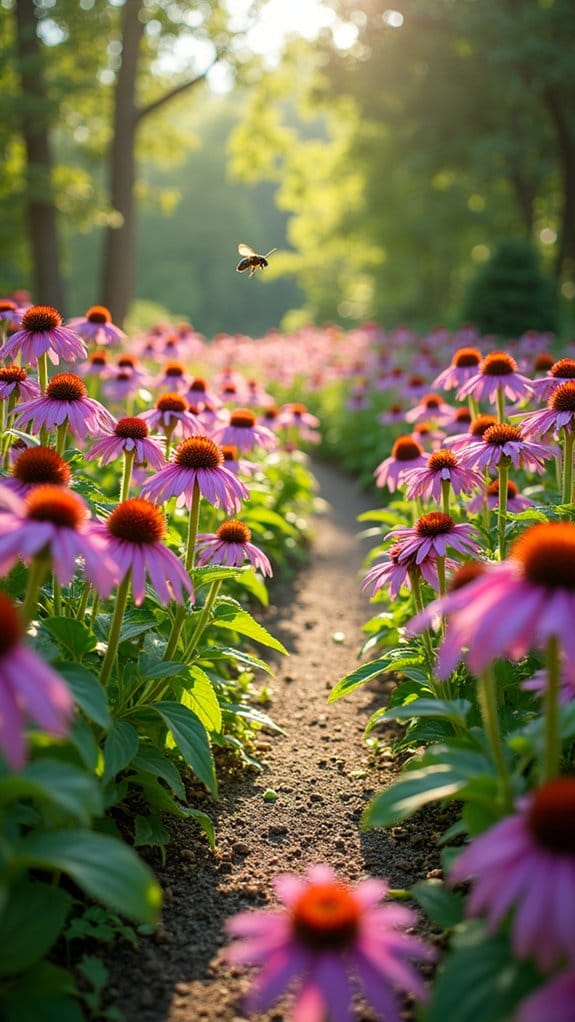
After exploring how coneflowers enhance rain gardens, I’m excited to share ideas for designing a coneflower pathway.
Start by outlining a gentle curve with stepping stones, allowing coneflowers to flourish on both sides.
Mix colors and heights for visual interest, and incorporate native plants to attract bees.
This pathway not only guides visitors but also creates a vibrant, inviting atmosphere in your garden.
Installing Coneflowers in Vertical Garden Systems
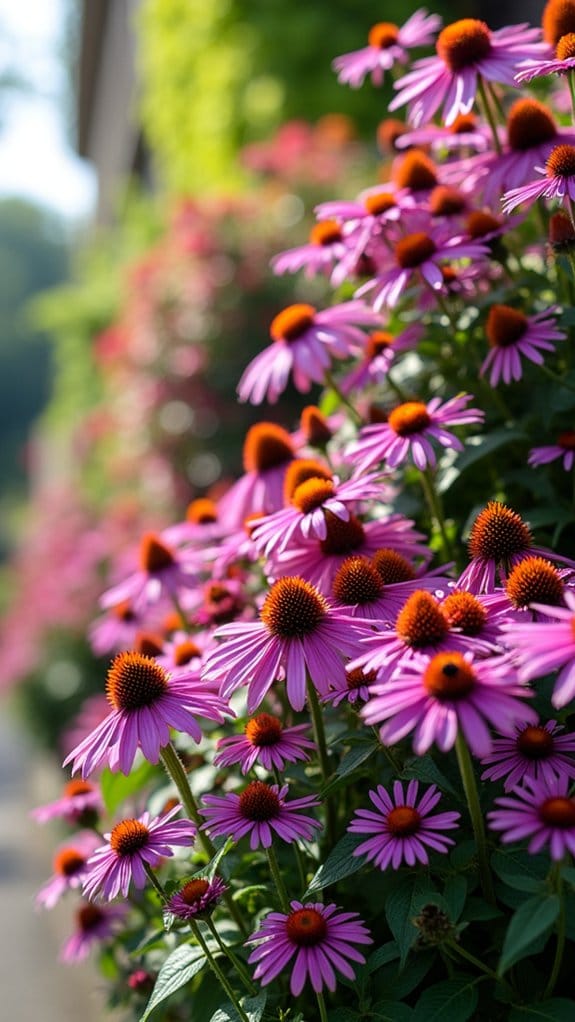
Installing coneflowers in vertical garden systems can be a fantastic way to maximize space while adding vibrant color to your home.
I love using wall planters or tiered shelves to create a stunning display. These systems allow for better air circulation and drainage, ensuring healthy plants.
Plus, they attract bees, making my garden a lively and buzzing oasis. It’s truly rewarding!
Enhancing Your Landscape With Coneflower Cuttings and Arrangements
Vertical garden systems not only showcase coneflowers beautifully but also provide an opportunity to explore their versatility in cuttings and arrangements.
I love using vibrant coneflower cuttings in bouquets or as accents on my dining table. Their unique shape and colors add a delightful touch, and they can easily elevate any space, inviting nature indoors while attracting those buzzing bees we adore.
