

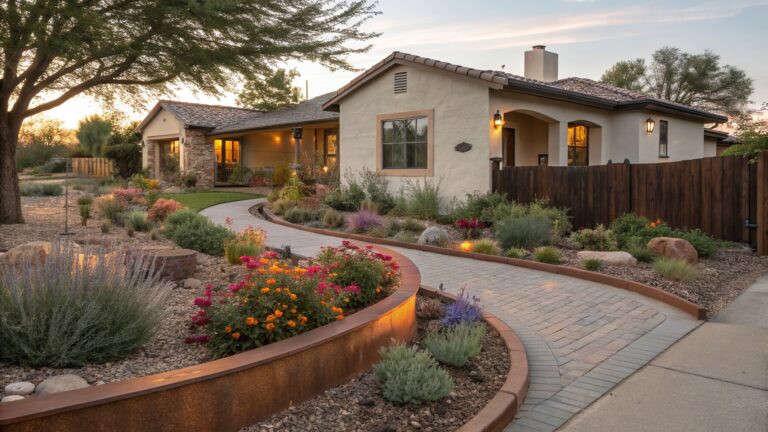
Living in Arizona taught me early on that flower beds only thrive when you build them around sun-tolerant plants and smart layouts from the start.
I’ve watched neighbors’ gardens wilt under our heat because they skipped sturdy edging or layered the wrong combos, leaving bare spots by midsummer.
What grabs attention first in a good one is how the bold colors frame pathways and focal points, drawing you through the yard without overwhelming it.
These ideas lean into that structure, mixing natives with accents that hold their vibrancy season after season.
I’ll probably test the compact border design along my driveway this spring.
Winding Steel-Edged Path to the Entry
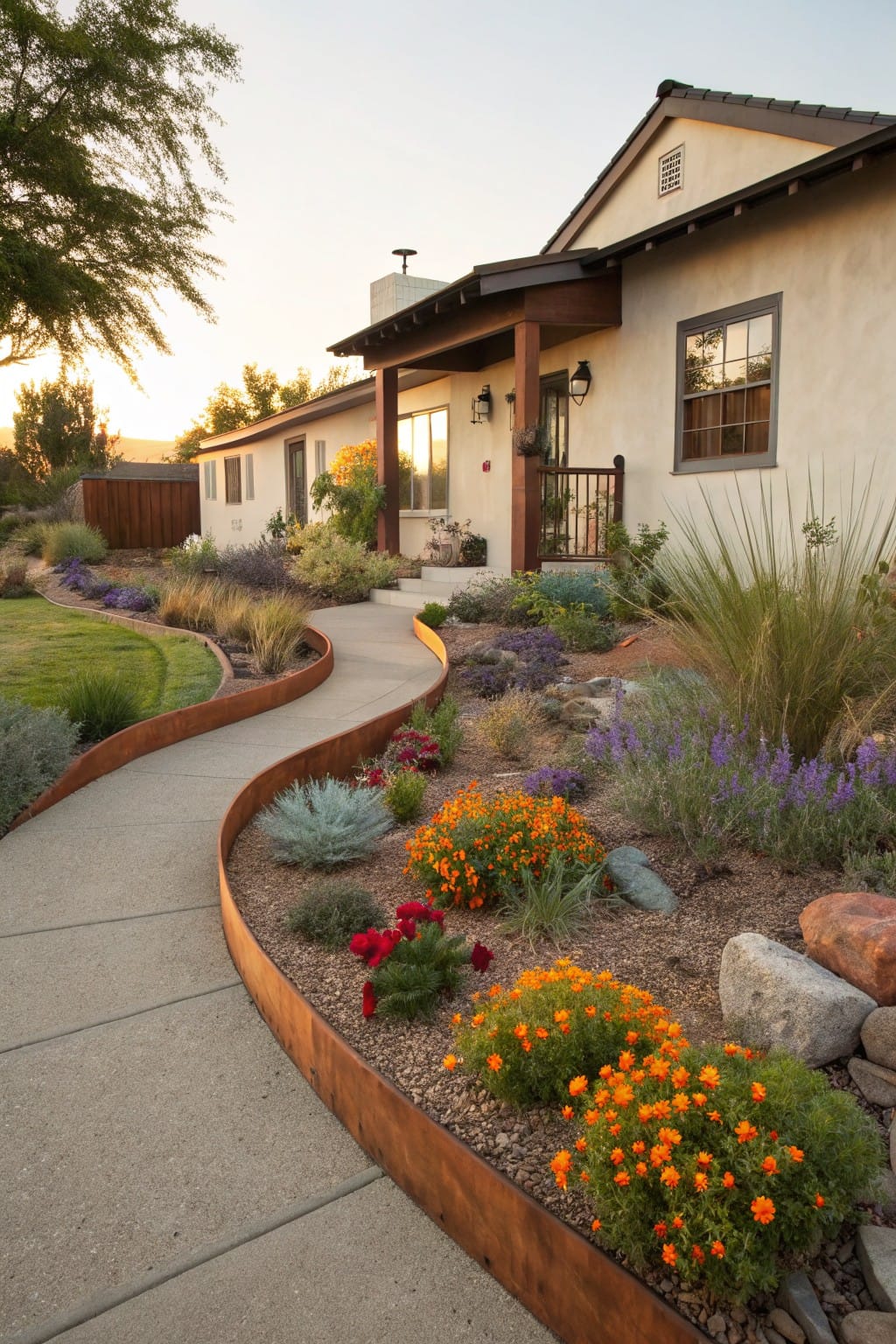
A gentle concrete path curves through the yard, bordered by corten steel that holds back beds of tough, colorful plants like orange calendulas and upright grasses. This setup guides you right to the door while showing off flowers that handle full Arizona sun without much water or fuss. The metal edge gives clean lines that age nicely over time.
It works best in front yards with dry soil where you want low upkeep but some cheer. Start with a simple path layout that follows the yard’s natural flow, add the edging to keep mulch or gravel in place, and pick heat-proof bloomers. Just make sure the steel sits level so it doesn’t shift with rain. Suits ranch-style homes like this one.
Winding Stepping Stone Path in Succulent Beds
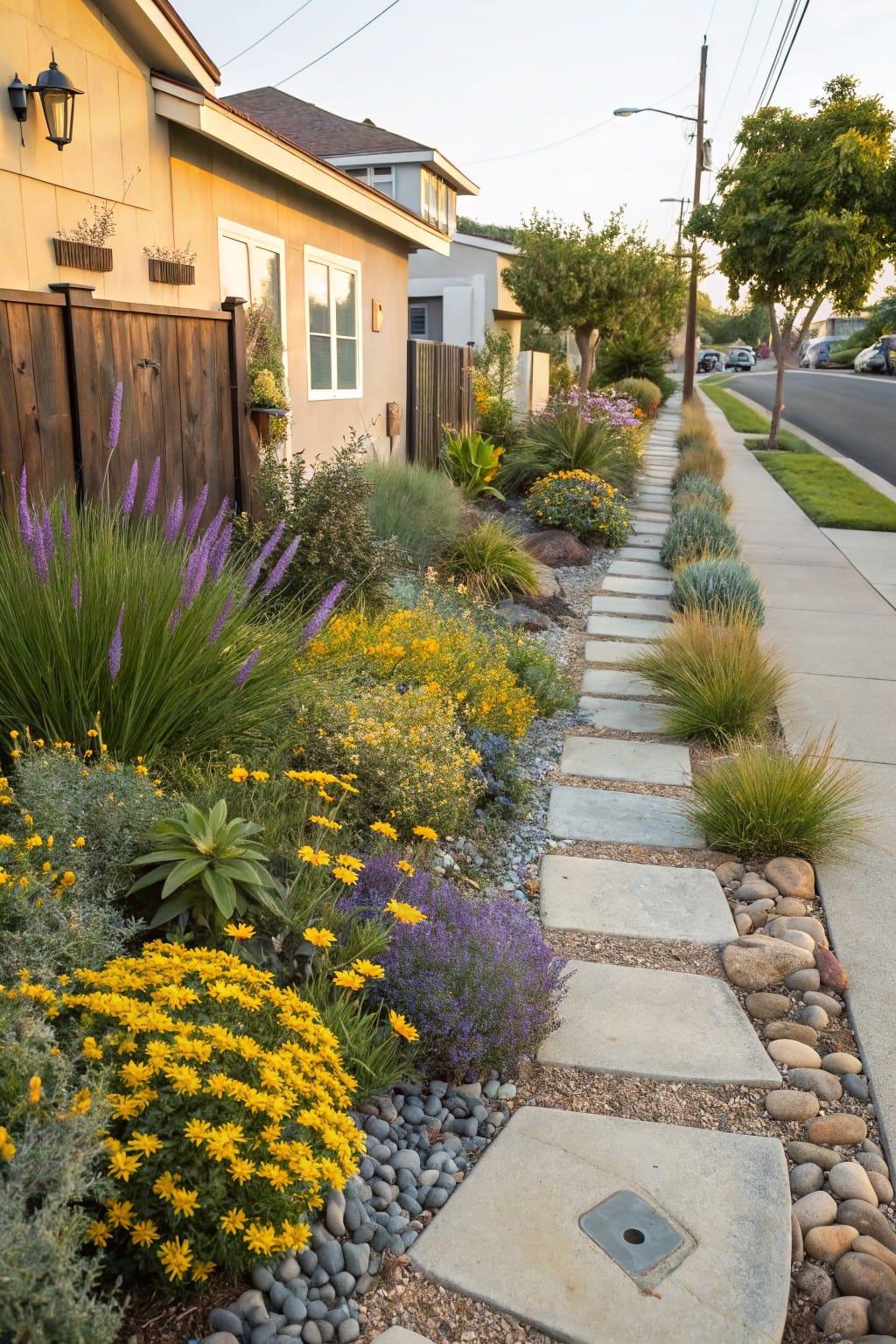
A simple path of rough-cut stone slabs set into gravel runs right through these front yard beds. It pulls you in among the plants without a solid walkway taking over the space. Yellow daisy clusters and tall purple flower spikes mix with agave and waving grasses for color that lasts through hot months.
This works best in full-sun yards where low-water plants do their thing. Pick stepping stones big enough to step on comfortably, space them for a relaxed stroll, and fill gaps with gravel to cut down on weeds. Suits most any home with a strip along the sidewalk. Just avoid overcrowding the path itself.
Terraced Stone Walls for Sloped Yards
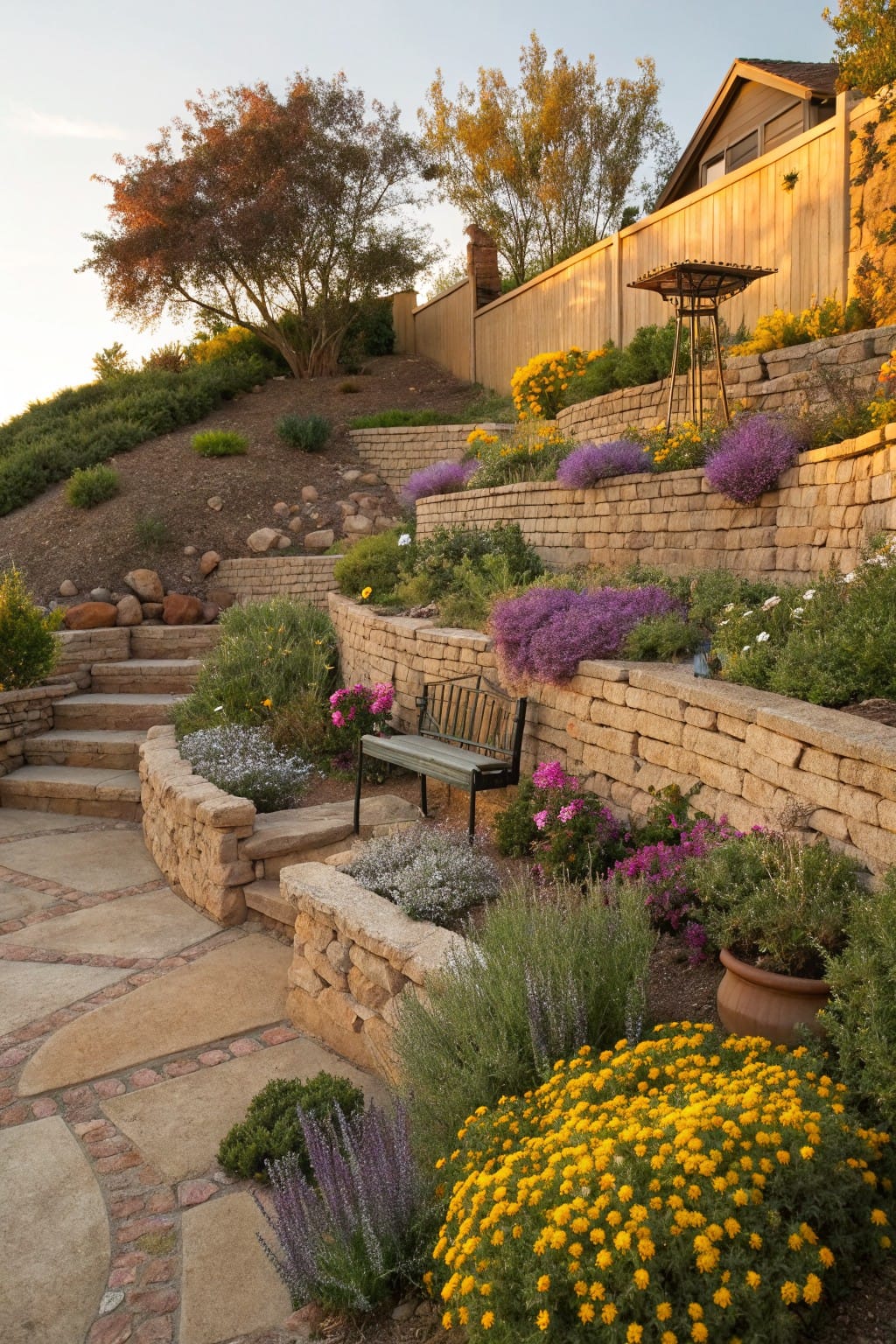
Slopes often go unused in backyards, but stacking them with natural stone walls turns the hill into flat planting beds. You get room for flowers that love full sun, like those purple lavender bushes and clusters of pink blooms hugging the edges. The warm stone blends right in, and the levels add interest without much flat space needed.
This works best on sunny, dry hillsides like in Arizona, where drought-tough plants fill the beds and need little water. Build wide enough steps between terraces for walking up, maybe add a simple bench on a landing. Keep plants mostly perennials to cut down on upkeep… just watch for erosion after heavy rains.
Linear Metal Planters for Desert Flower Pops
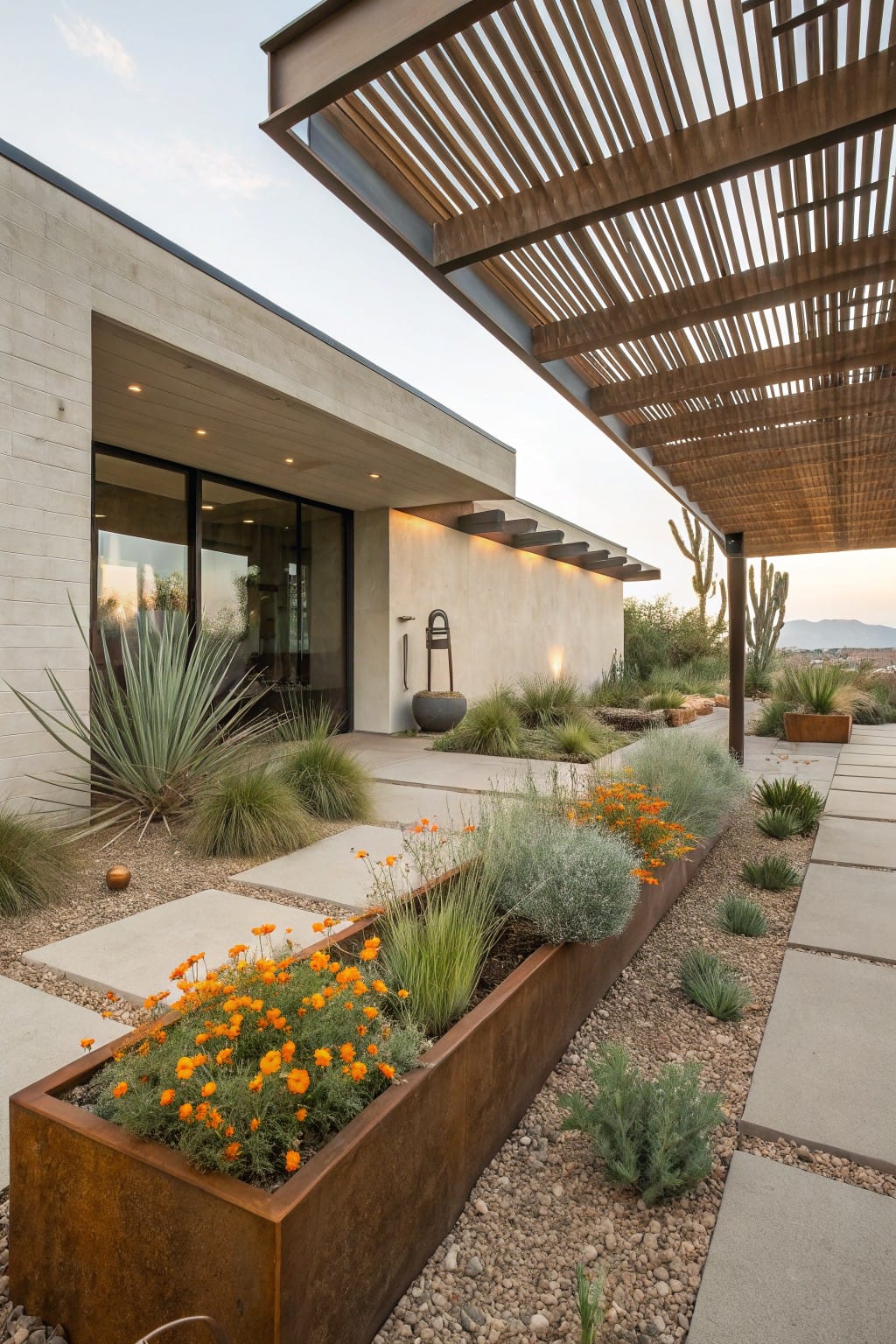
One simple way to add color to a sunny Arizona yard is lining a walkway with long, low metal troughs planted full of orange poppies. These rusty-edged planters hug right along the stone path, giving a bold burst without taking up much space. They fit right in with gravel mulch and tough natives like agave and fountain grass, keeping things low-water and easy.
Place them leading up to your front door or patio edge, where they catch the eye on the way in. Poppies love full sun and heat, so they’re perfect for desert spots. Just let them reseed for next year… pair with softer grasses to avoid too much uniformity.
Winding Stone-Edged Flower Beds
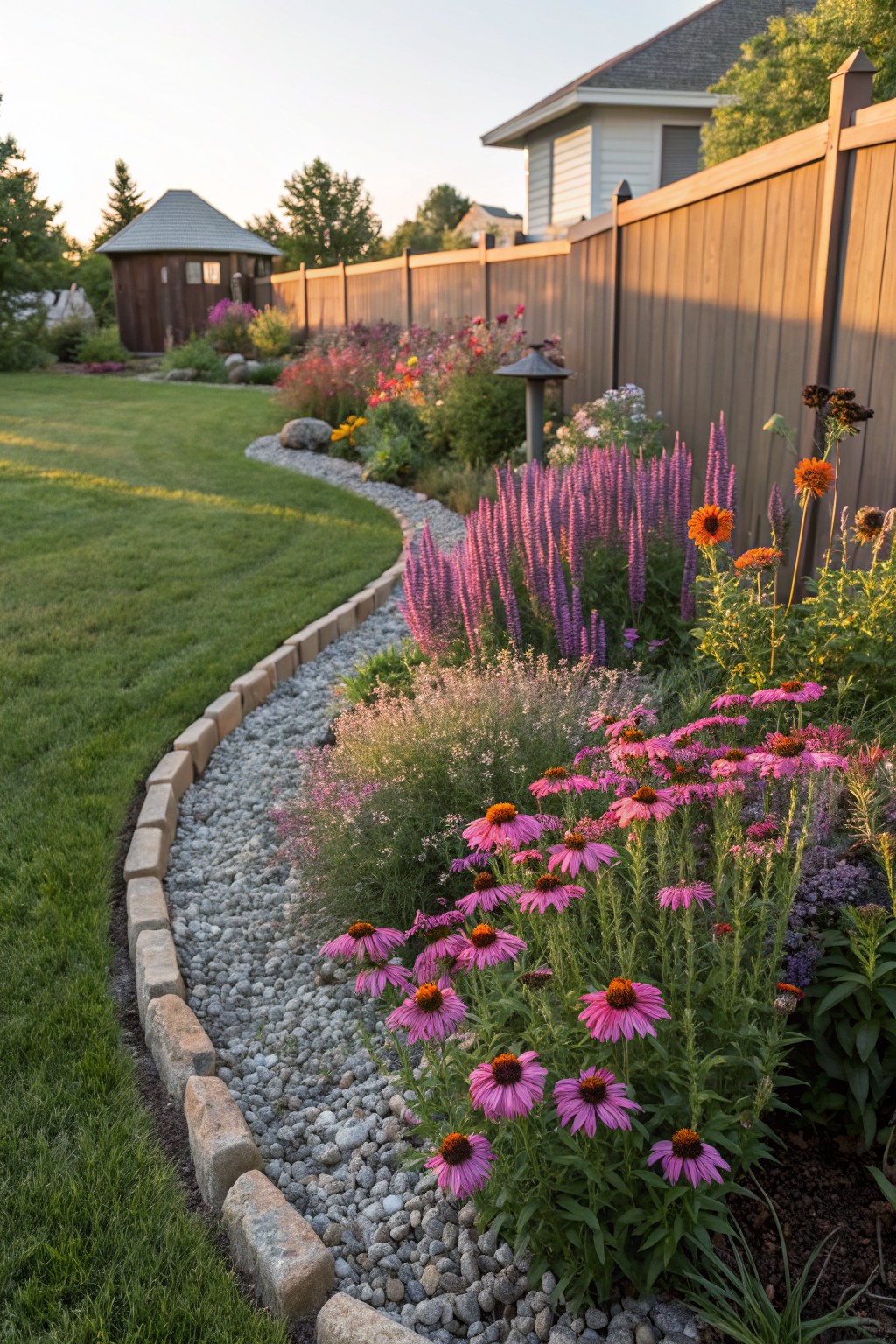
A simple curve shaped by beige stone blocks sets off this gravel bed full of color. Tall purple phlox and pink coneflowers fill it out nicely, making a soft path that pulls you along the yard. The gravel keeps things neat and lets the plants pop without much upkeep.
This works best along fences or property lines where you want definition but not a hard line. Pick tough sun perennials that handle heat and bloom long. Layer heights like this for year-round interest. Watch the stones don’t shift over time… a little gravel refresh fixes that.
Orange Blooms Massed in Gravel Beds
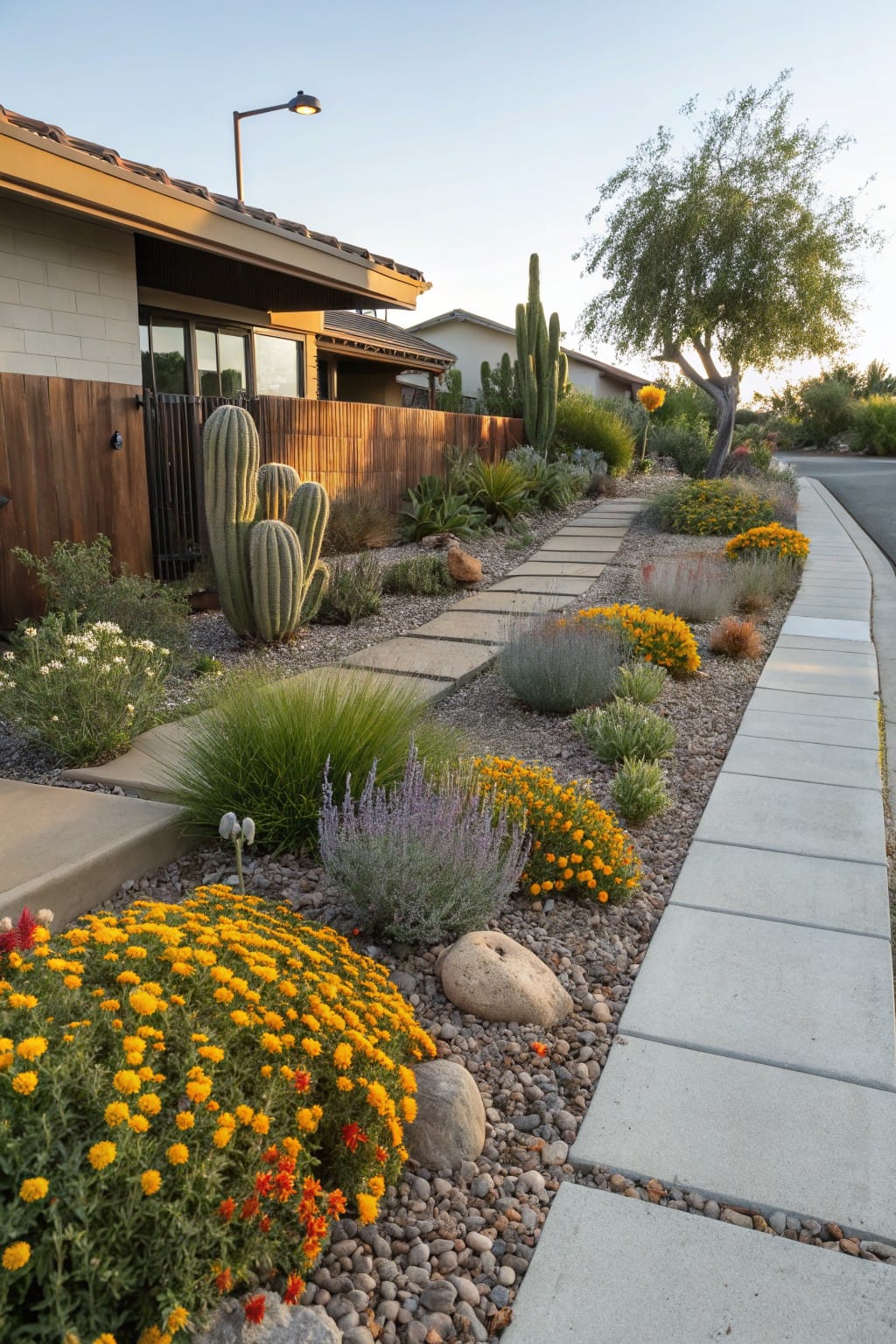
One simple way to add punch to a sunny Arizona yard is massing orange flowers like Mexican marigolds in gravel mulch beds. These tough bloomers cluster thickly along the path edge, popping against gray rocks and low succulents. They hold up in heat and need little water, giving nonstop color from spring into fall.
Tuck this idea into narrow strips by sidewalks or driveways where space is tight. It suits modern or ranch-style homes with clean lines… just mix in a tall cactus or two for height. Keep the gravel fresh to avoid weeds, and you’ll have easy curb appeal that lasts.
Purple Flower Beds Frame Stone Entry Steps
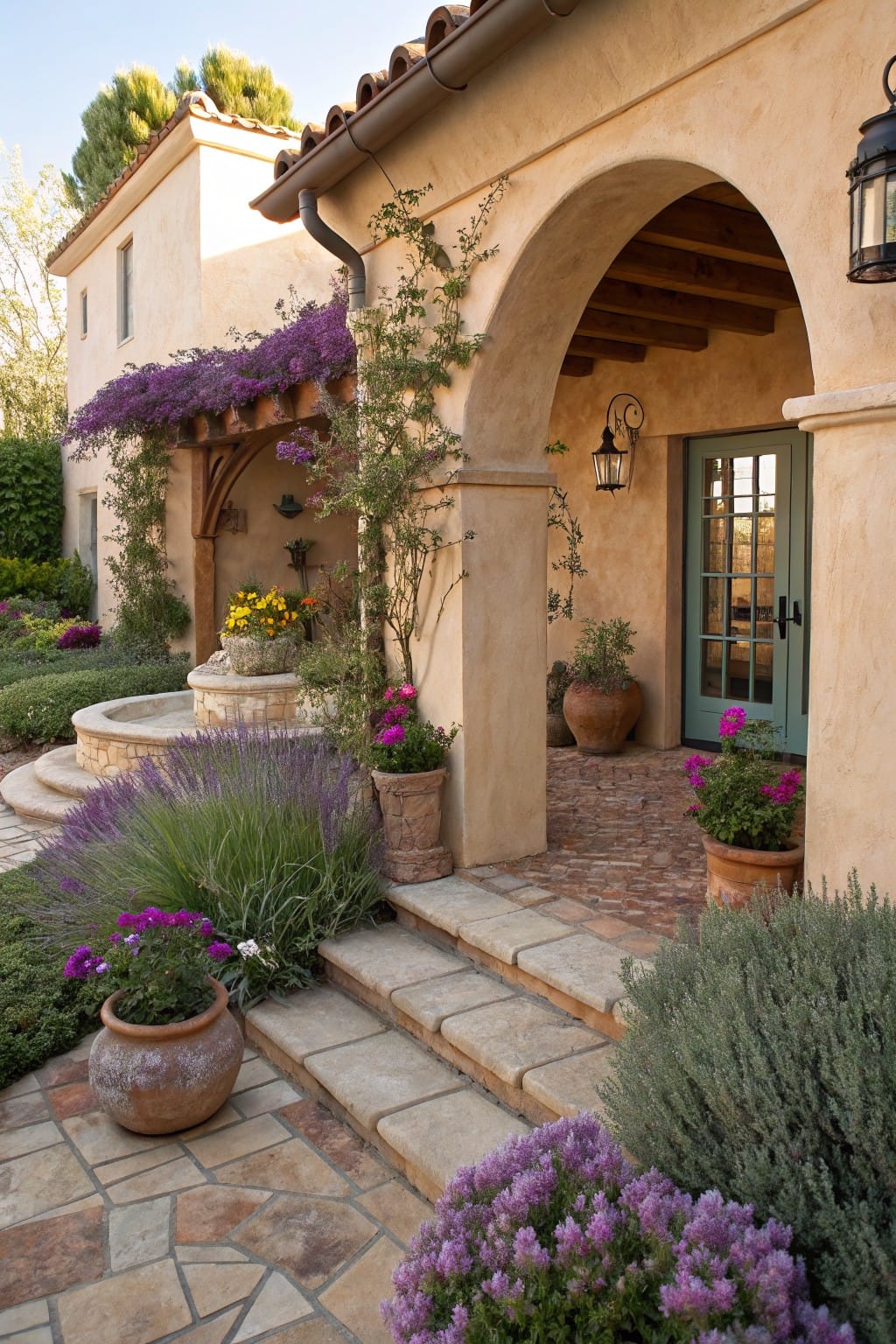
One simple way to boost curb appeal in sunny Arizona yards is filling flower beds with masses of purple lavender right along your entry steps. These tough plants love the heat and bloom reliably without much fuss. They soften hard stone edges and pull the eye up toward the door, making the whole approach feel more welcoming.
Plant them in layers along both sides of the path, mixing in taller grasses and lower pots for rhythm. This works great on stucco homes with arched entries. Keep beds mulched to save water, and they’ll hold color through summer. Just trim back once a year.
Terracotta Pots Around Patio Seating
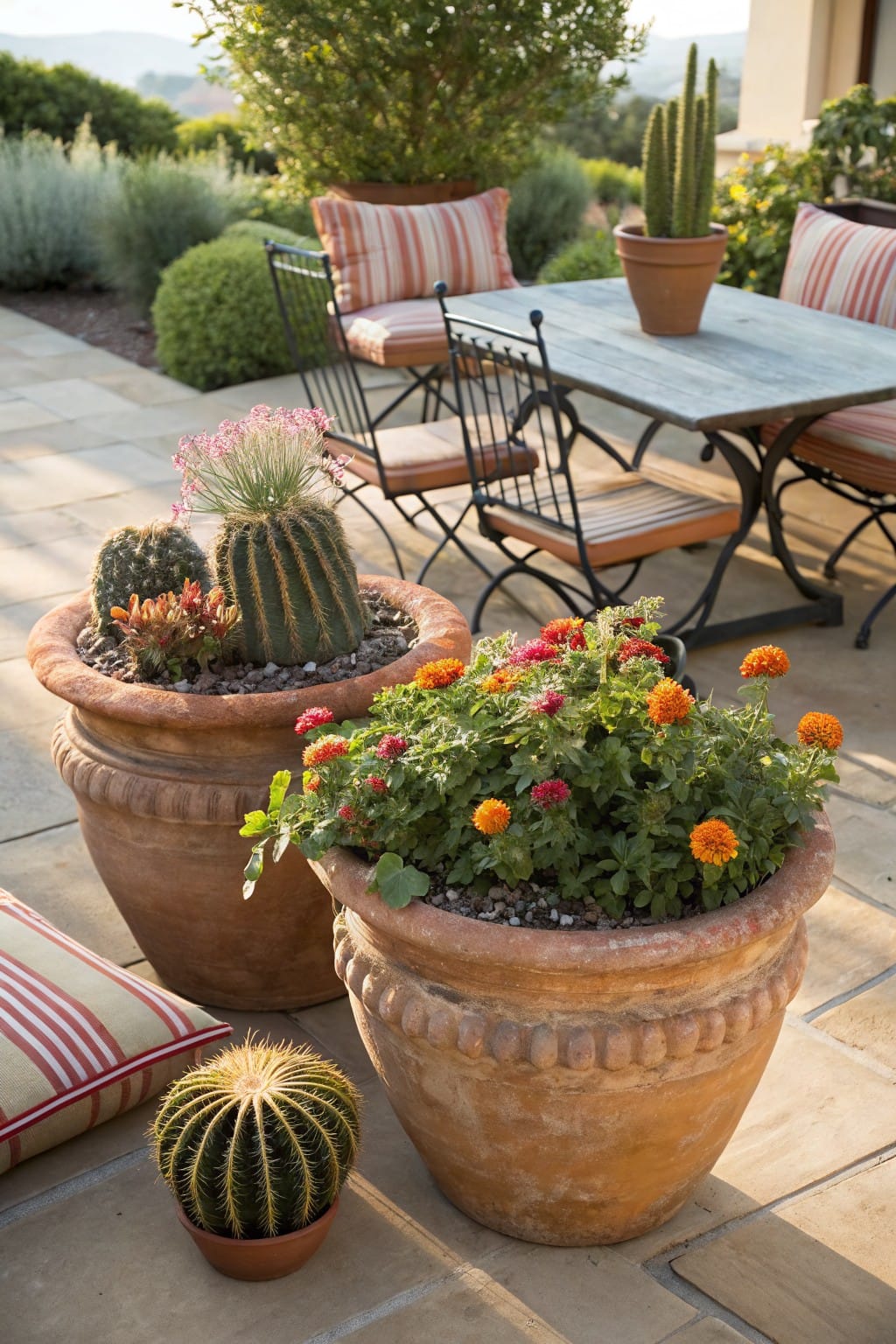
Big terracotta pots like these work great for adding color and structure to a simple patio setup. Filled with tough cacti and bright orange marigolds, they handle full sun without much fuss. The pots sit right next to black metal chairs and a table, making the space feel full and lived-in without a big garden bed.
Group a few oversized pots along the edges of your stone patio or near seating. Pick sun-lovers such as barrel cactus or spiky Echinocactus paired with marigolds for that Arizona pop. They suit dry climates best and keep things low-maintenance. Just make sure the pots drain well to avoid root rot.
Layered Flower Beds Along Stone Steps
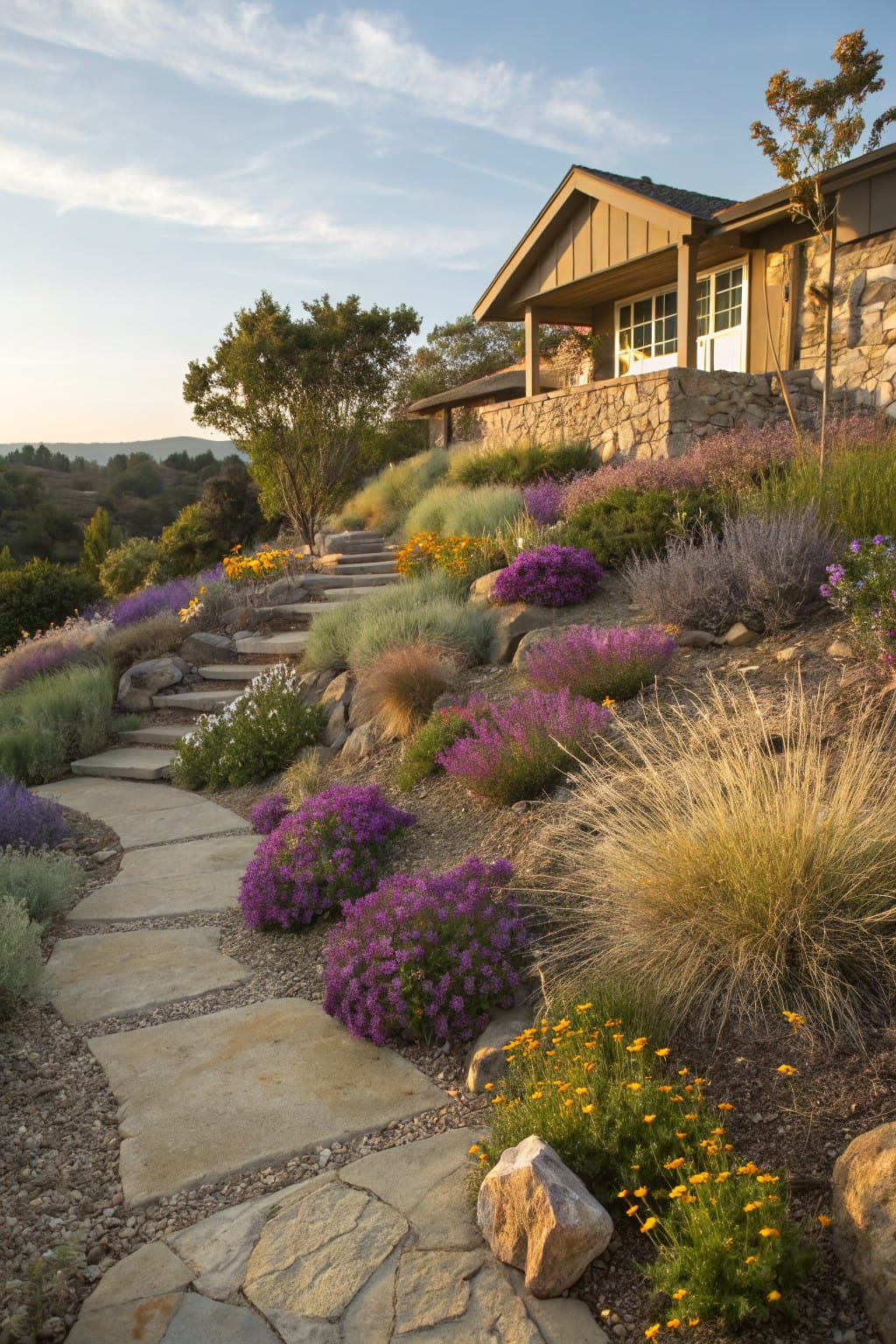
One simple way to handle a sloped yard is terraced flower beds right along stone steps. Here, tough sun lovers like lavender, heather clumps, and waving grasses fill the beds, turning a basic path into something colorful and alive. The layers keep soil in place and make the walk up to the house more interesting.
This works best on hillsides with full sun, like in Arizona. Pick plants that handle heat and dry spells, mix low growers at the edges with taller ones behind. Stone steps give good footing. Just watch drainage so water doesn’t pool after rain.
Large Planters Line Pool Edges with Color
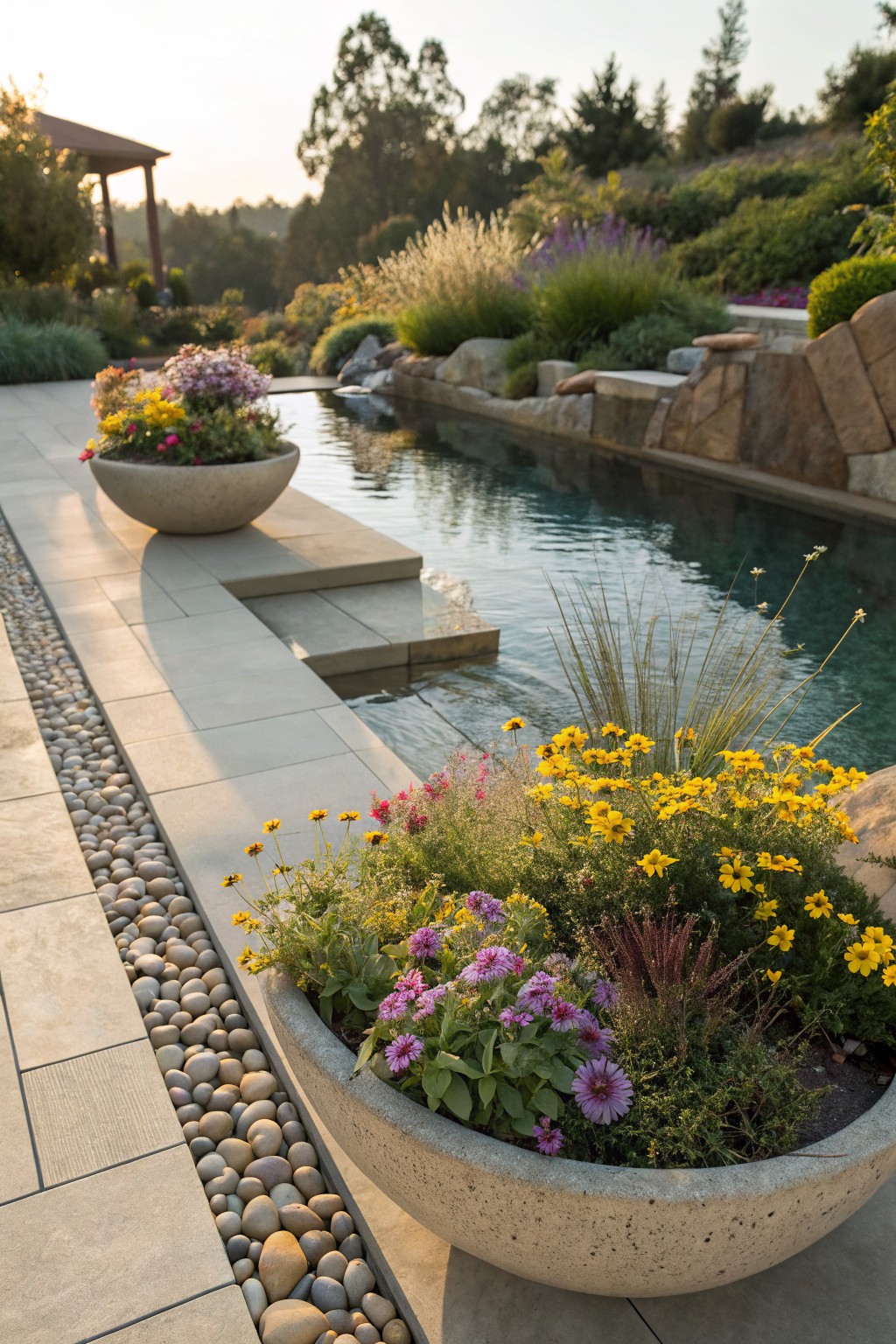
Big concrete planters like these work great along a pool or path. They hold a mix of sunny yellow daisies, pink blooms, and wispy grasses that spill over the edges. The simple gray pots blend with stone steps and pebble borders, keeping the whole area neat and full of life without looking busy.
In a hot climate, go for these in full-sun spots where regular beds might struggle. Fill them with drought-tough plants that come back each year. They suit modern poolsides or natural rock setups… just make sure the pots drain well to avoid root rot.
Corten Steel Raised Beds Add Garden Structure
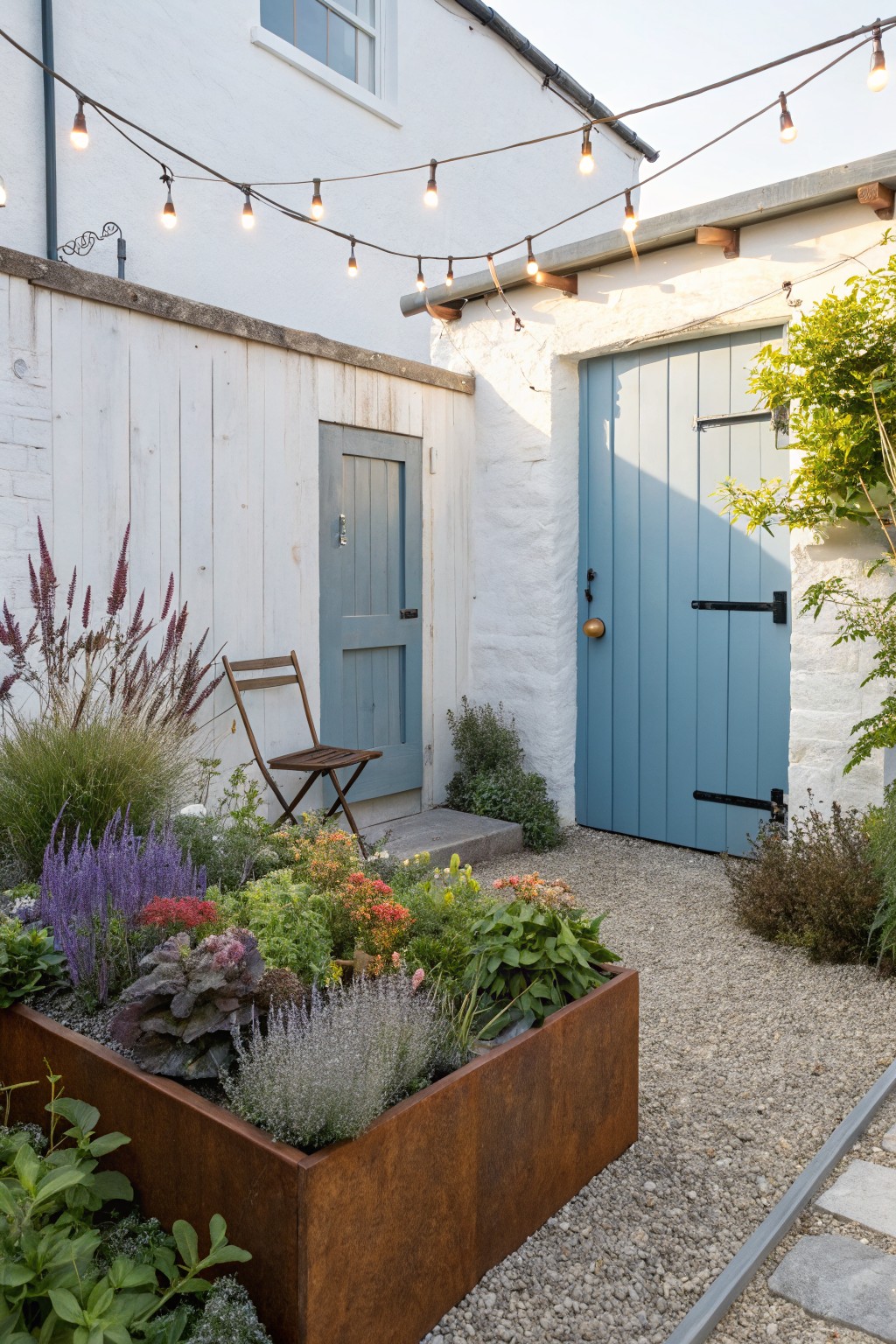
A corten steel raised bed like this one makes a clean spot for packing in sun-loving plants. You see colorful salvias, sedums, and grasses spilling over the edges, all held in by that weathered metal box. It pulls the planting together right next to the house, without needing fancy borders.
These work great in hot, dry spots like Arizona yards. Place one along a gravel path or by an entry door. Go for tough perennials that handle full sun, and let the steel rust for a natural look over the years. Keeps weeds down too.
Boulders and Succulents in Desert Beds
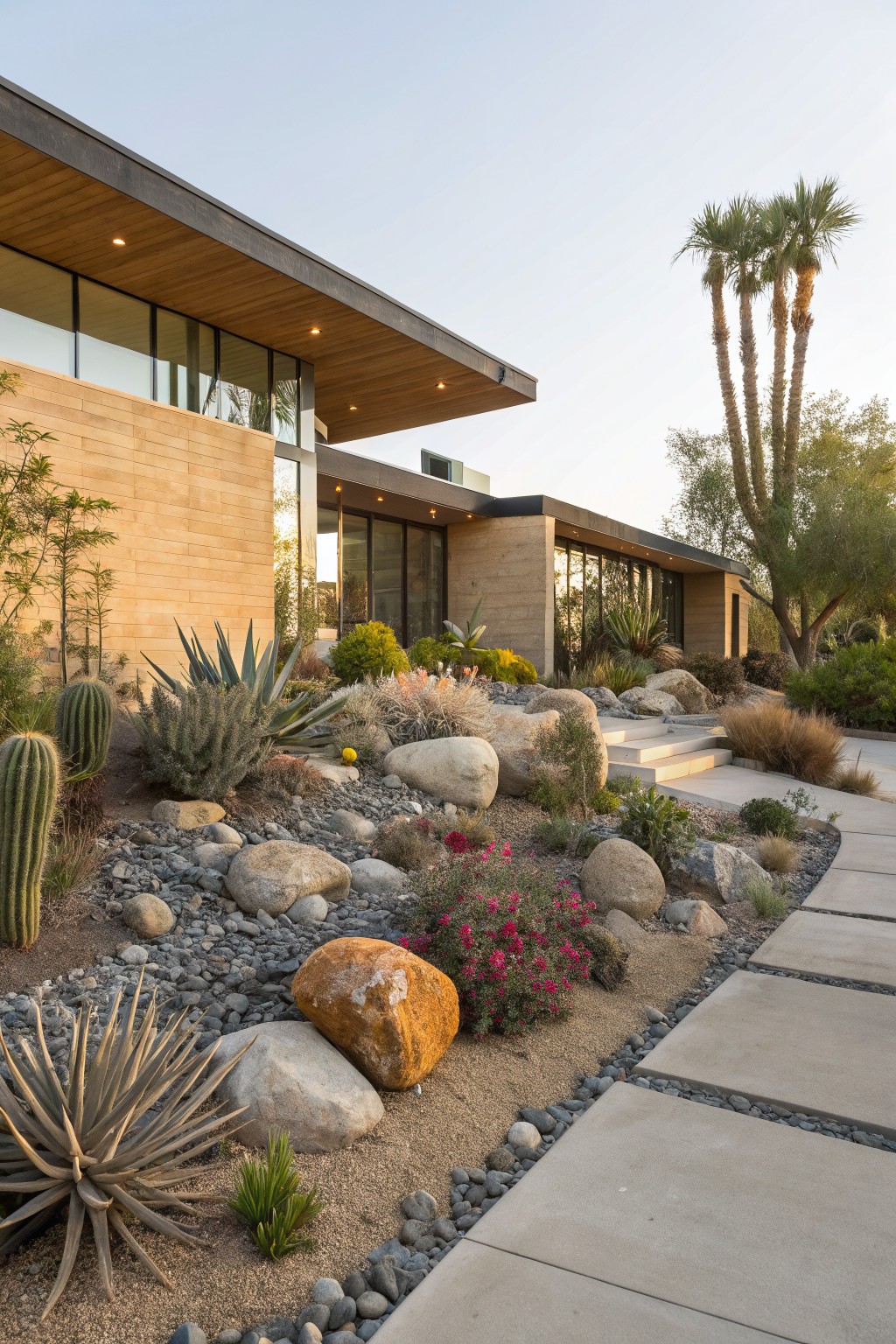
One simple way to build flower beds that handle full Arizona sun is to tuck large boulders right into the mix with tough succulents and cacti. Those rounded stones, like the big orange one here, give the beds some solid shape without much work. They hold heat all day but let gravel mulch around them keep soil from washing away in rare rains. Plants like agave and spiky yuccas fill in the gaps nicely, staying green year-round with almost no water.
This setup works best around modern homes or entry paths where you want low upkeep but still some color from blooms on ice plant or whatever flowers pop up. Space the boulders unevenly for a natural feel, then layer in smaller rocks and gravel to cut down on weeds. Just make sure the path pavers lead right to your door so it all connects. Skip it if you’ve got shady spots, though. These beds need that bake.
Raised Wooden Planters for Balcony Edges
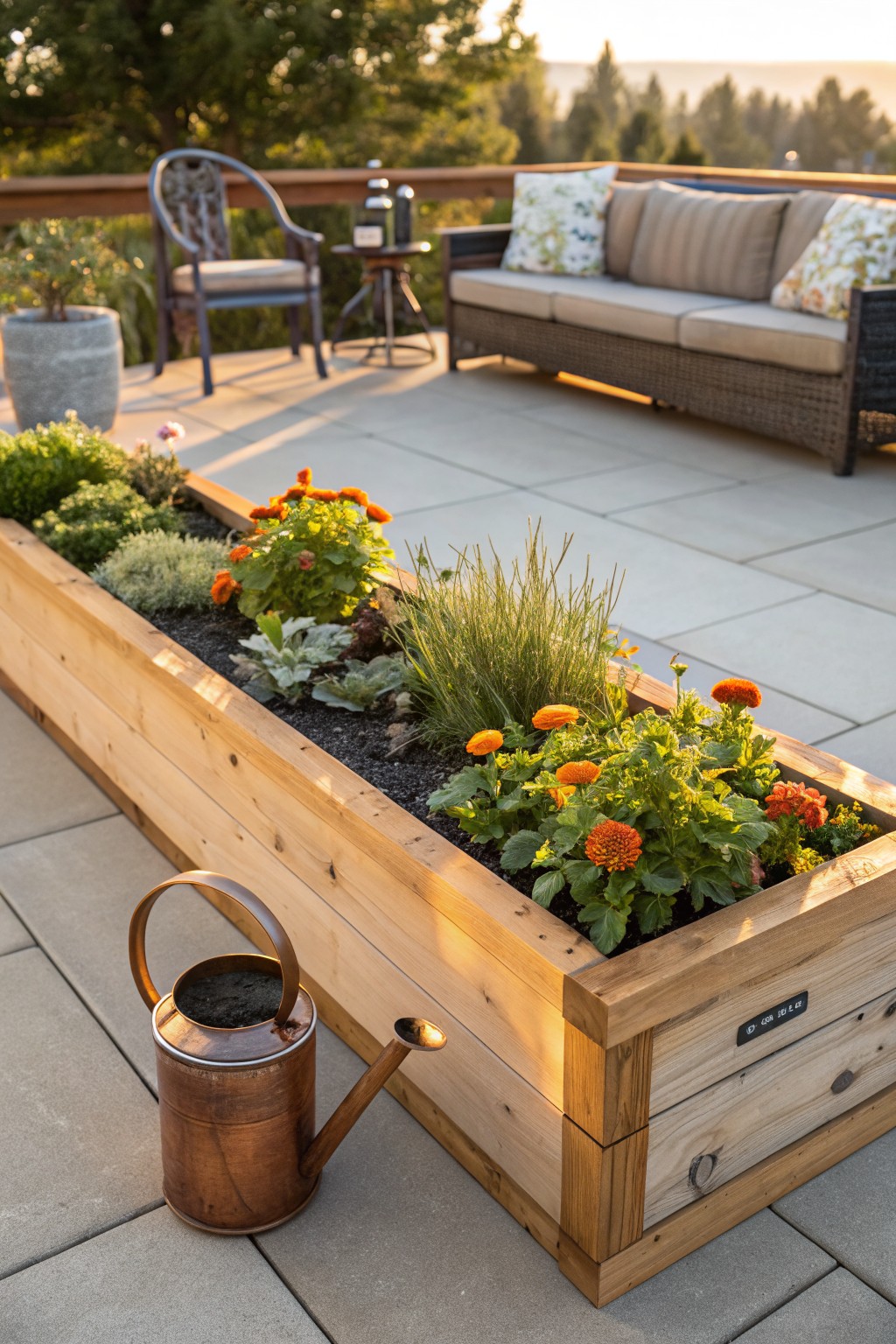
A simple raised wooden planter like this one runs right along the balcony edge. It’s packed with tough sun-lovers such as marigolds, grasses, and herbs that hold up in hot spots. The natural wood keeps things low-key while letting those orange blooms pop against the deck surface. It’s a practical way to add color without taking up seating space.
Build these for balconies, patios, or even rooftops where ground planting isn’t an option. Use cedar or pine treated for outdoors, fill with well-draining soil, and pick heat-tolerant varieties. Keep them narrow so you can still walk by easily. Just water regularly, like with that copper can nearby, and trim back as needed to stay neat.
Raised Metal Beds Line Rooftop Edges
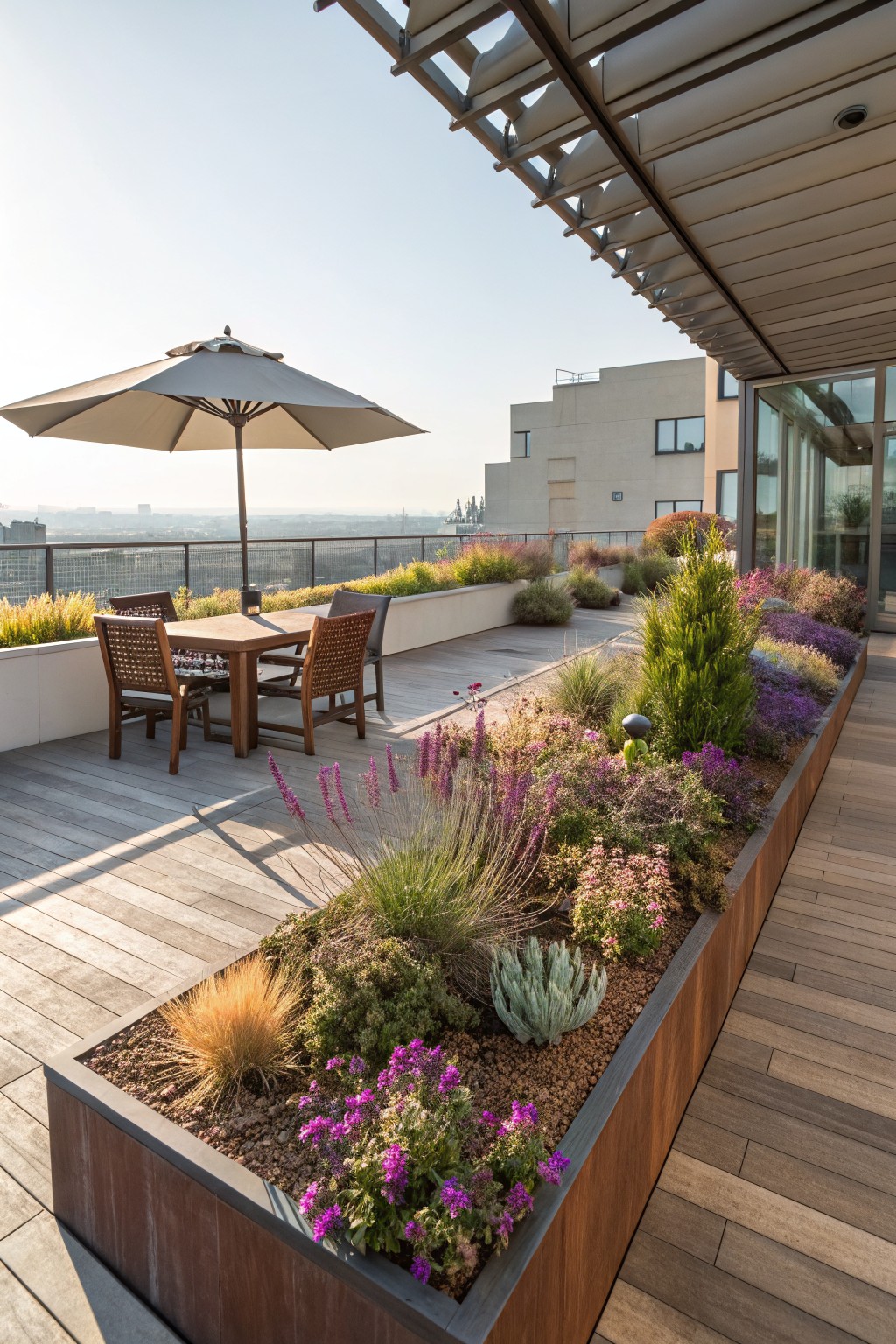
Long raised planters like these, edged in rusted metal, hug the sides of a wooden deck and fill up with sun-loving plants. Grasses sway next to low flowers and succulents, making a colorful strip that’s tough in heat. It keeps the open space feeling wide while adding life right where you walk.
Put them on balconies, rooftops, or sunny patios where soil is shallow or wind is strong. Pick drought-tough stuff like lavender, fescue, and sedums that barely need water. They work best around seating areas… just keep beds under two feet wide so chairs fit easy.
Curved Raised Beds with Stone Walls
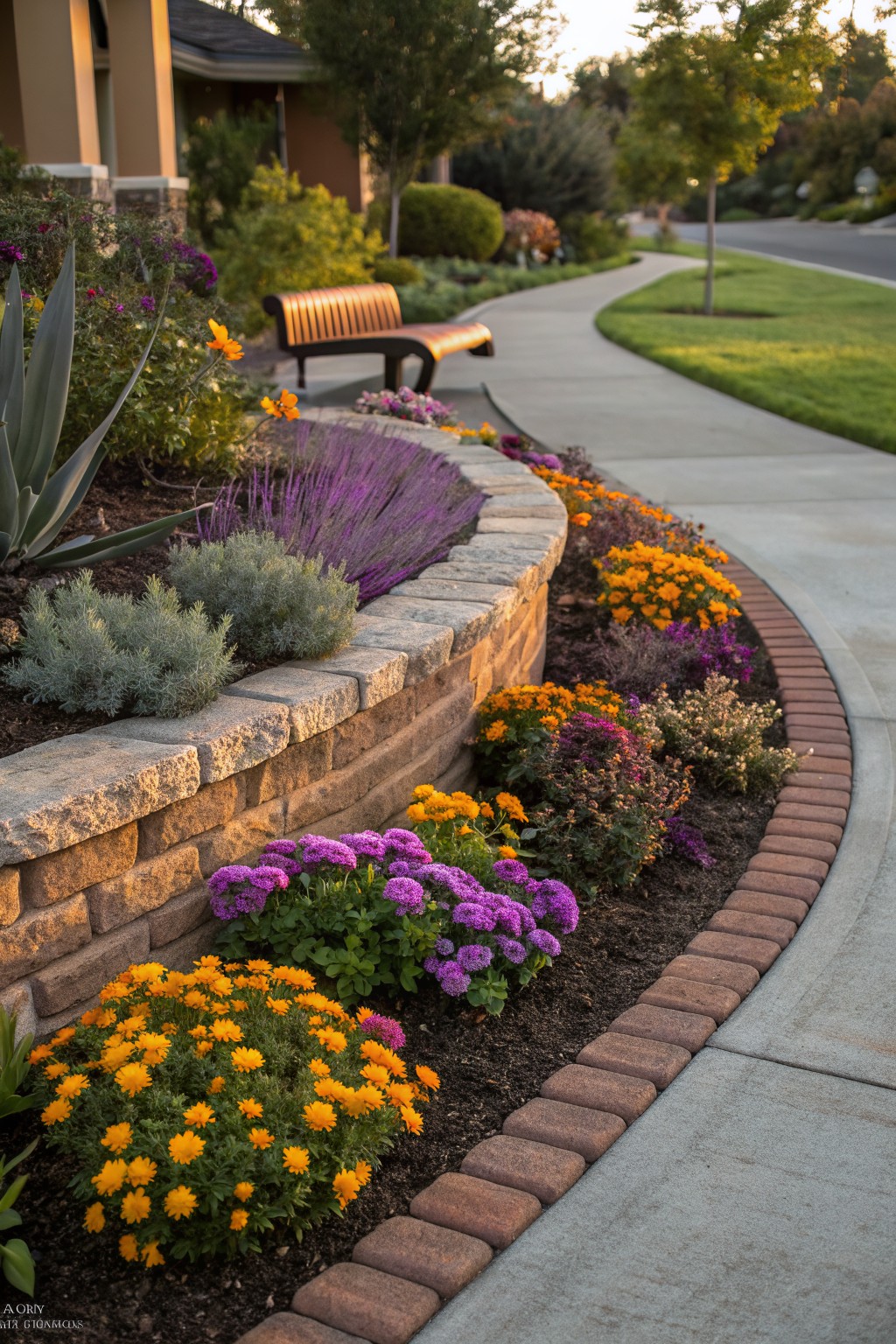
One straightforward way to bring color right up to your walkway is a curved raised bed built with a low stone retaining wall. It keeps soil in place on slopes or flat ground and lets you pack in sun-tolerant flowers like bright orange marigolds, fuzzy purple asters, and tall lavender spikes. The gentle curve softens the hard edges of concrete paths and ties into the house nicely.
These beds shine in full-sun front yards, especially where you want low-water plants that handle Arizona heat. Plant in layers, taller stuff in back and spillers up front. Add brick edging for clean lines that won’t fade. Just mulch well to cut down on weeds, and it’ll look good year after year with little trimming.
Raised Beds Framing the Entry Path
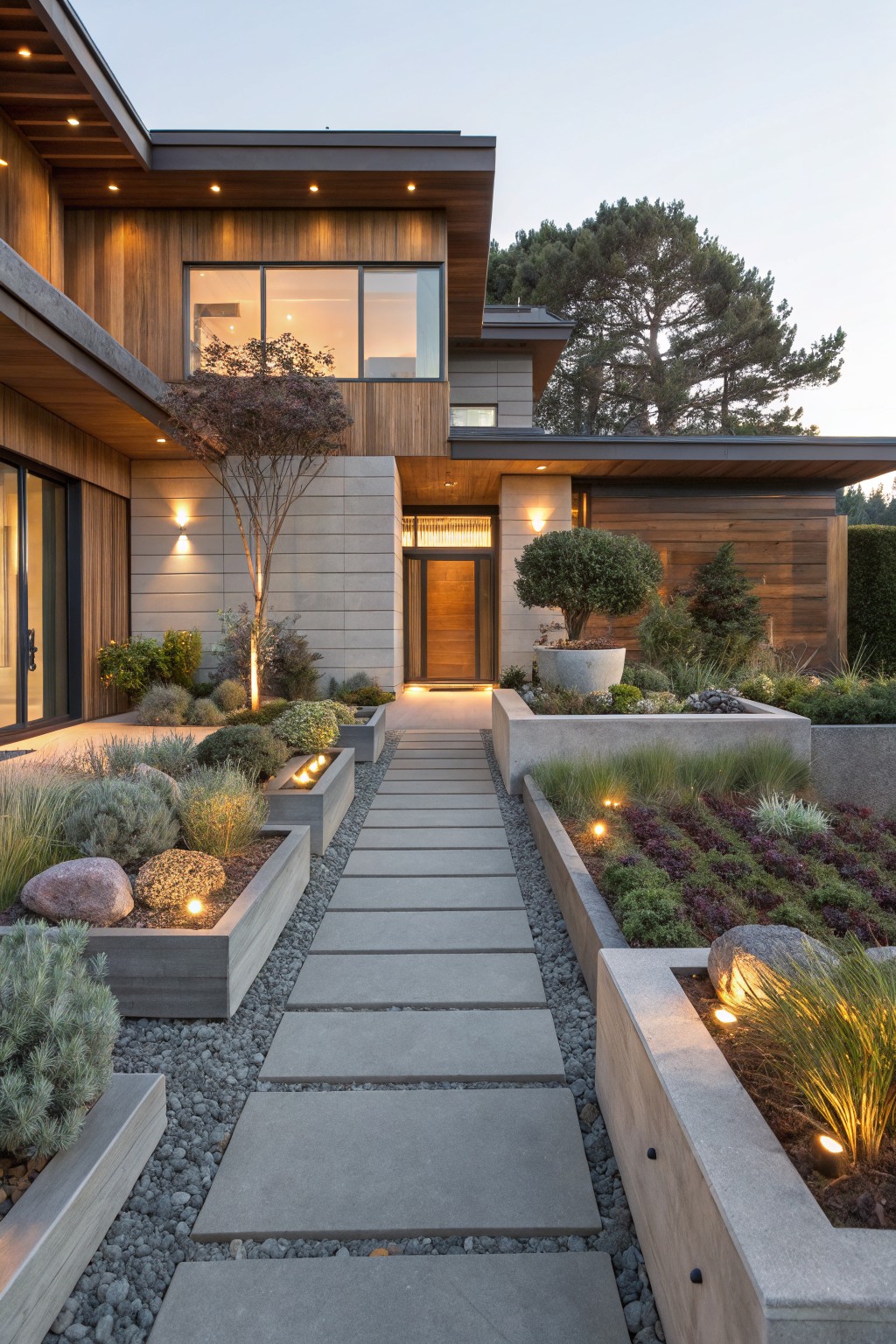
One straightforward way to make a walkway pop is lining it with raised concrete beds packed with sun-loving plants. Here the gray stone path cuts right through, with beds holding grasses, sedums, and a few rocks for that clean, no-fuss look. It pulls the eye straight to the door and keeps things low-maintenance since everything in there shrugs off heat and drought.
This works best up front where you want some structure without a ton of mowing or watering. Go for beds about two feet high to edge the path nicely, fill with Arizona natives like agave or feather grass, and tuck in gravel for better drainage. Add those low lights along the base if you use the entry at night…just makes it safer and a bit more polished.
Curved Path in Desert Flower Beds
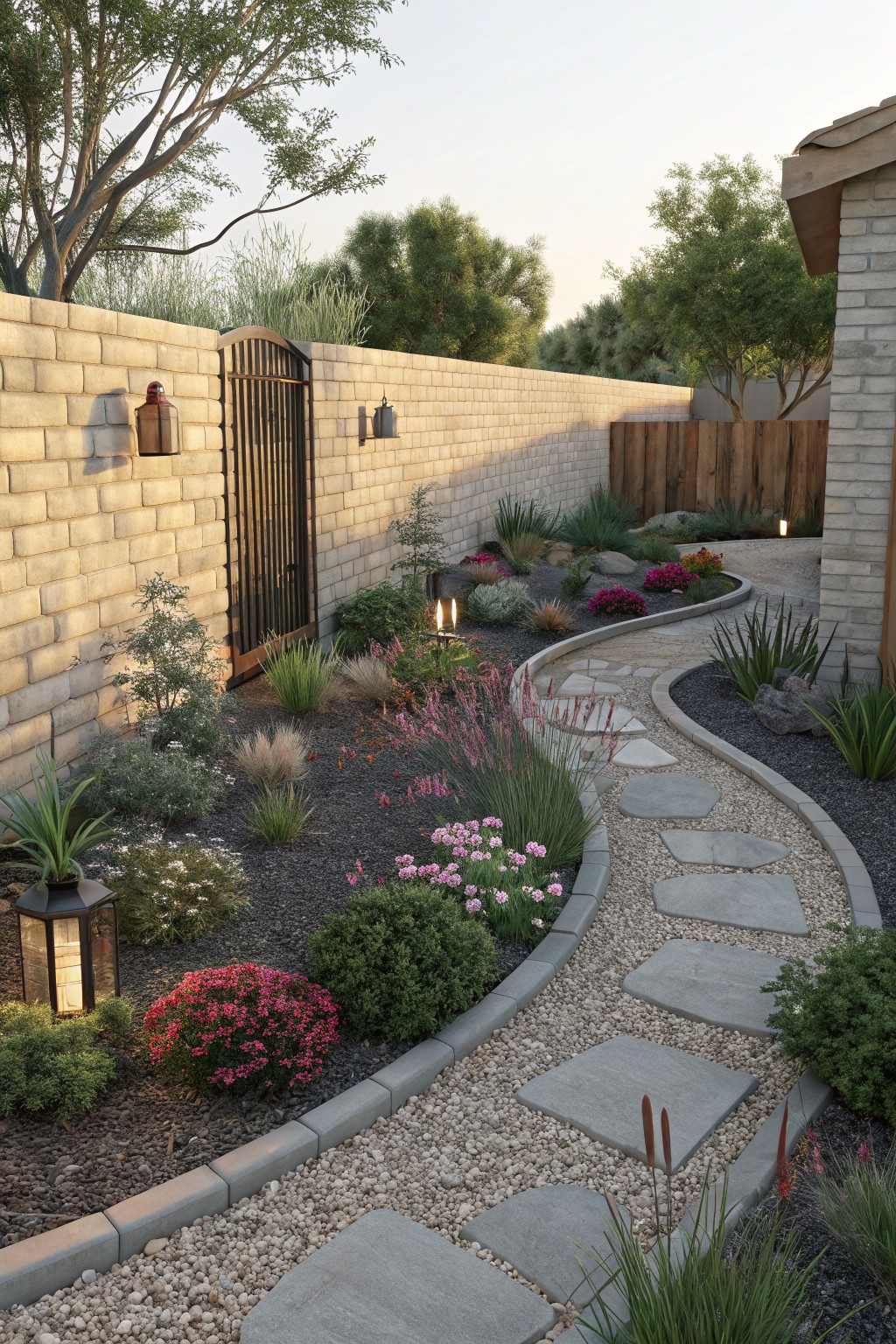
A simple curved path like this winds gently through a flower bed packed with sun-loving plants. Flat gray stones set into light gravel make it easy to walk, while the curve adds interest without fuss. Pink blooms and spiky agaves pop against dark mulch, keeping things colorful even in hot Arizona sun.
This works best along a side yard or near a gate, guiding folks to the house without taking up much space. Stick to drought-tough choices like grasses and succulents that thrive in full blast. Add a low concrete edge to hold gravel in place… and low lights for evening strolls.
Metal-Edged Winding Stone Path
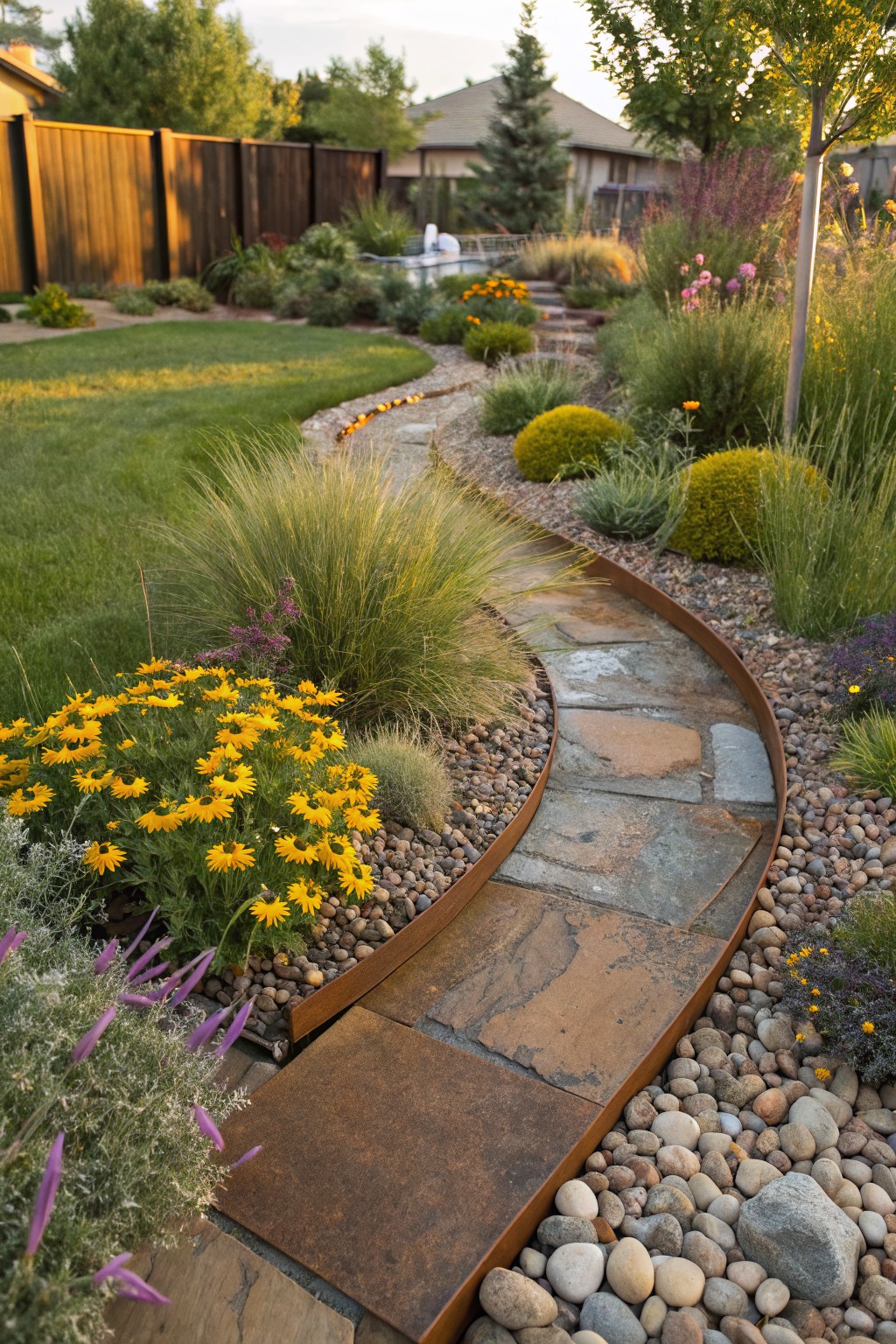
A simple curved path like this one uses flat stones set in a gentle sweep, edged all along with corten steel that rusts to a nice warm brown. It pulls the garden together by keeping gravel and mulch right where you want them, while letting colorful plants like those sunny yellow coreopsis spill over just enough. In full Arizona sun, this setup handles heat without much fuss, and the path invites a slow walk through the beds.
Try it to link your lawn to a pool area or back door. It suits low-water yards with grasses and perennials that thrive in dry spots. Source the steel edging in long bends for easy curves, then fill borders with river rock. Watch the scale though. too narrow a path feels pinched.
Colorful Flower Beds Flanking Entry Steps
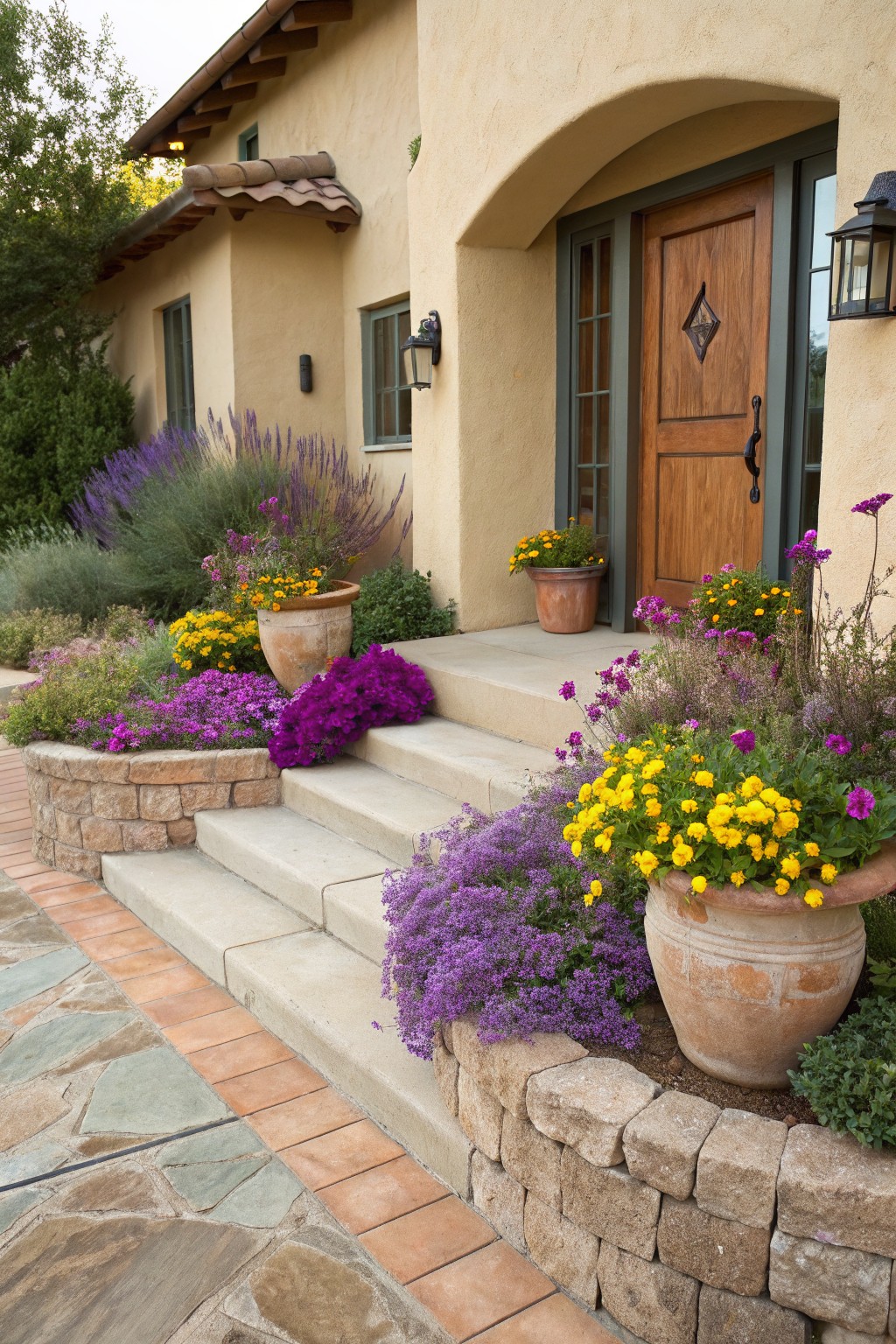
One simple way to boost curb appeal is filling raised stone beds along your front steps with sun-loving flowers. Here purple lavender bushes mix with yellow coreopsis and daisies, spilling over the edges in big terracotta pots. The colors pop against a plain stucco house, and these plants handle Arizona heat without much fuss.
This setup works best on sunny entry paths where you want a welcoming feel without high maintenance. Plant drought-tolerant varieties like lavender, verbena, and marigolds in zones 4 through 9. Keep the beds low enough not to block the door… and refresh spent blooms to keep it looking full all season. It suits Southwestern homes especially well.
Meandering Path Through Desert Wildflower Beds
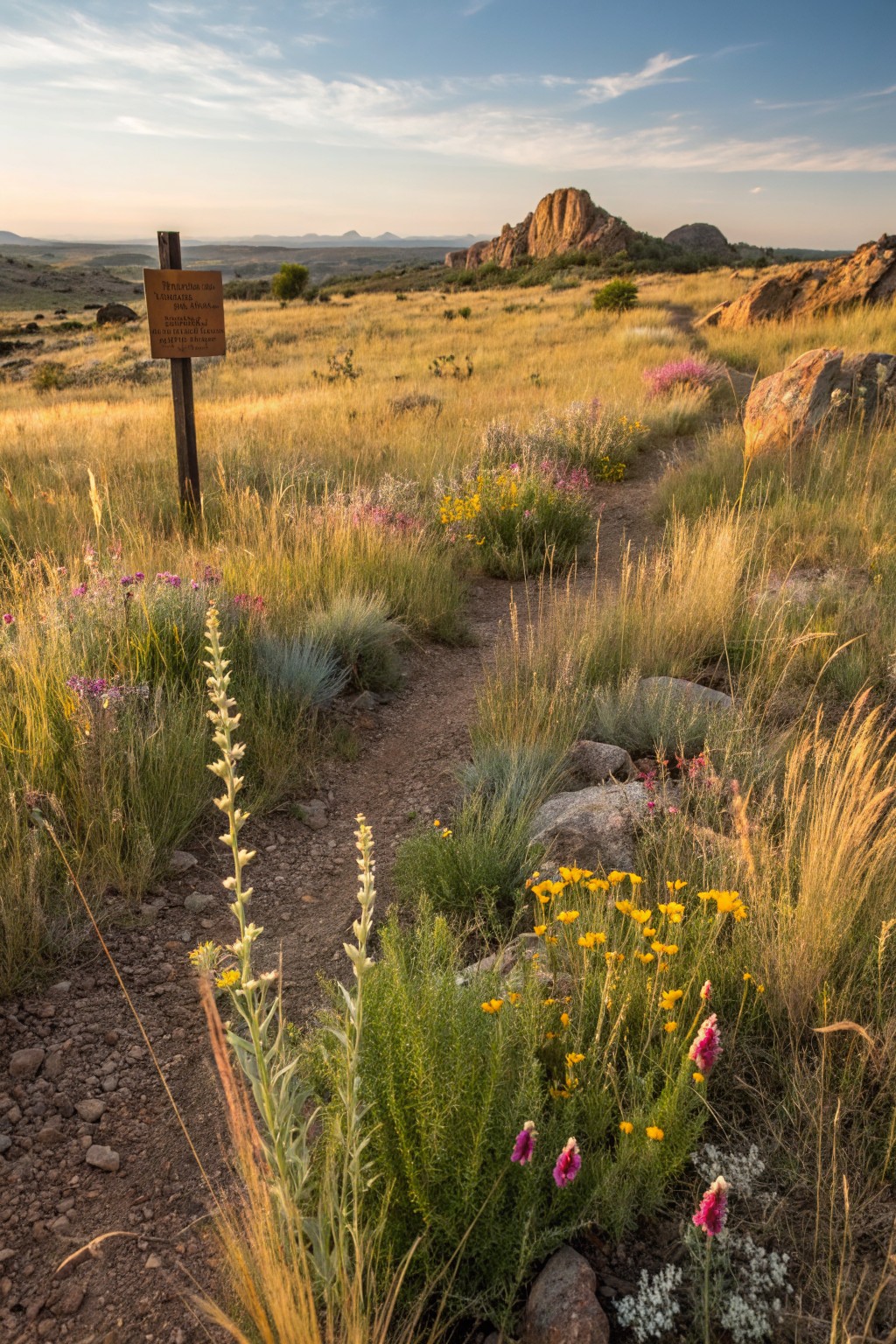
A good walking path doesn’t have to be fussy. This one winds gently through knee-high grasses and colorful blooms like yellow coreopsis and pink penstemon, all set in sunny Arizona dirt. The rocks and wooden trail sign keep it feeling like real desert country, and those native plants handle the heat without much fuss.
Put something like this in your backyard where you need a low-key trail from the house to a seating area or gate. It works best on slopes or flat open spaces with full sun, using drought-tough varieties that come back year after year. Just clear the path wide enough for feet, and let the flowers spill over the edges… no edging needed.
Terraced Stone Steps with Desert Flowers
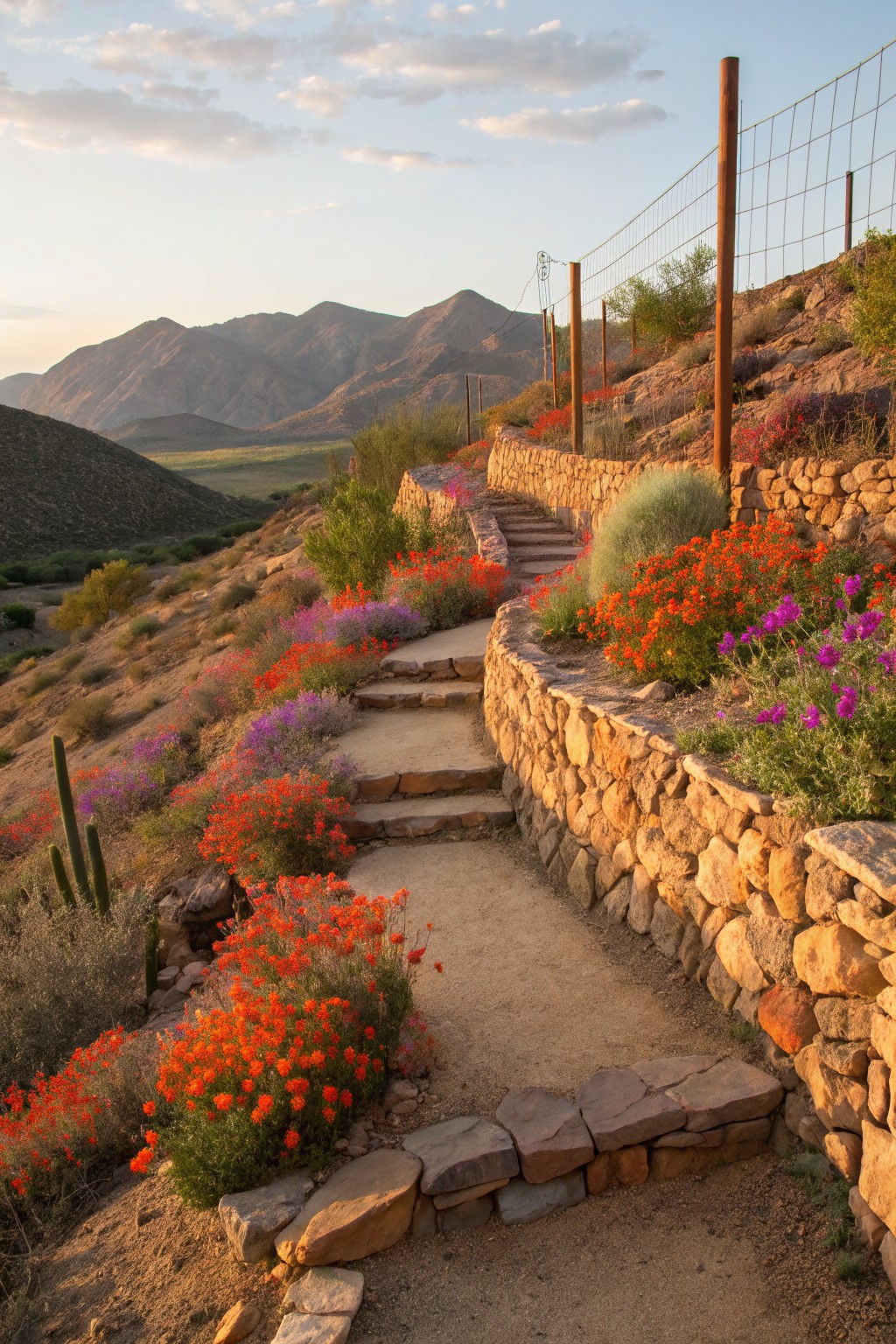
One smart way to handle a steep hillside is terracing it into flower beds right along stone steps. Here the path curves gently up the slope, with low stone walls holding back soil that’s packed with orange poppies and purple blooms. Those colors pop against the dry earth and distant mountains. It makes climbing feel like a garden walk instead of a chore.
This works best on sunny, dry slopes like in Arizona, where drought-tough plants thrive without much fuss. Stack natural stones for the walls, fill with natives such as California poppies or penstemon, and let them spill over. Keep the path wide enough for two people. Watch the soil erosion on rainy days… add gravel if needed.
Succulent Beds Along Pool Edges
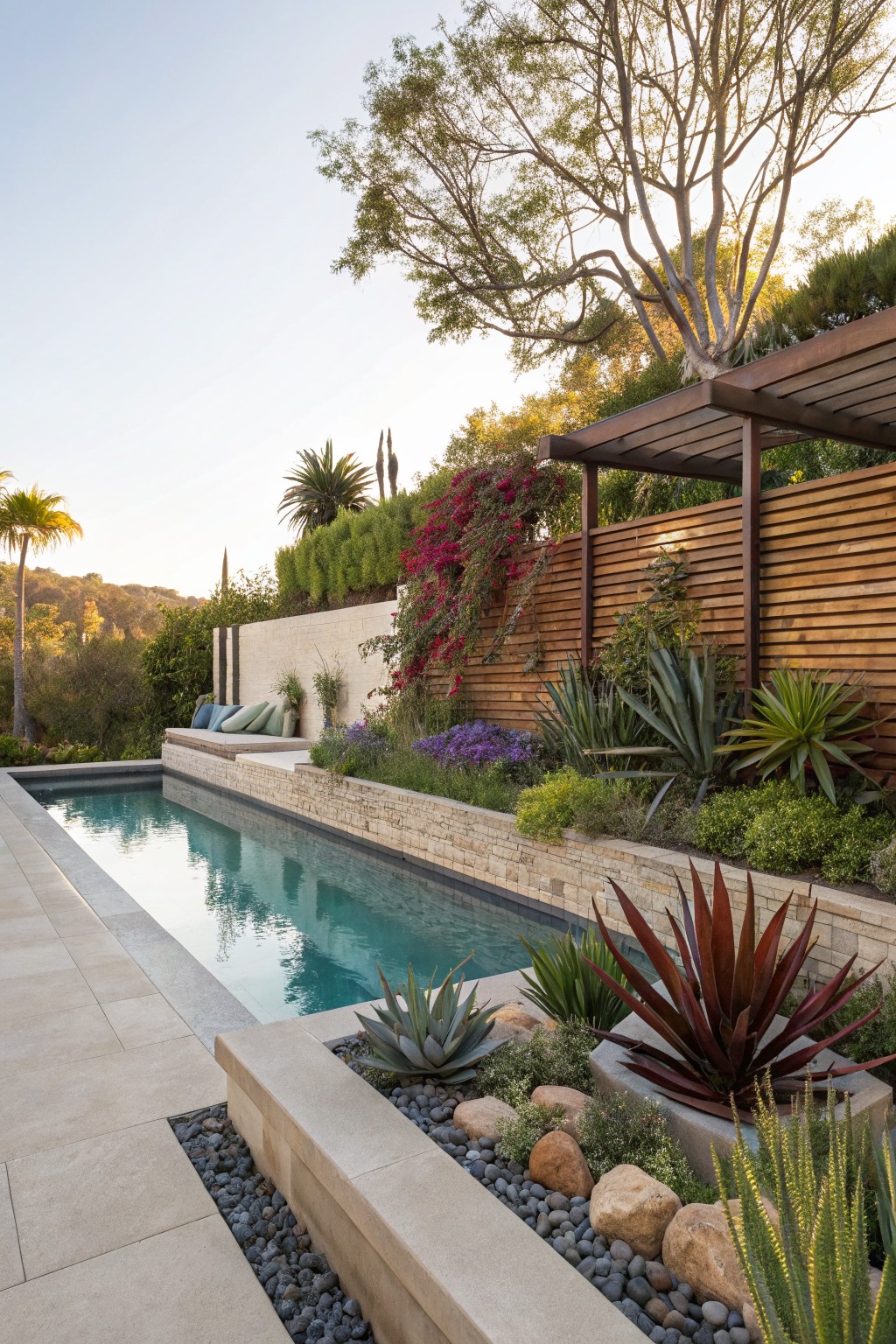
Big agaves and spiky succulents make a strong statement when planted right up to the pool edge. They handle full Arizona sun without much fuss and give that bold texture people notice. The stone borders keep everything neat, and the pebbles in between let water drain fast.
Use this in narrow spaces next to a lap pool or patio. It fits modern homes in dry spots best. Just make sure the beds are raised a bit… helps with roots and keeps mulch in place.
Frequently Asked Questions
Q: What’s the best time to plant these Arizona flower beds?
A: Go for early spring or fall. Roots dig in deep before the brutal summer heat hits. You’ll dodge transplant shock that way.
Q: How do I handle our super rocky soil?
A: Break it up with a shovel and stir in organic matter like compost. That opens up air and water flow for tough roots. Plants settle faster and grow stronger.
Q: Which ones need the least water once they’re going?
A: Pick desert marigold or fairy duster. They thrive on rain alone after the first year. Color pops without the hose work.
Q: Will these beds look good year-round?
A: Layer in evergreens like turpentine bush with bloomers. And swap spent annuals for winter interest. Keeps the vibe alive through cooler months.
