

I’ve found that nothing draws attention to a garden layout quite like the steady hum of bees working over coneflowers, pulling your gaze along the planting beds before you even notice the pathways. In my backyard, I planted a cluster of Echinacea along the edge of a gravel walk a few years back, and watching them spread into a low hedge showed me how they build structure without much fuss. They hold their own against windswept borders or sunny slopes, filling out over time to frame whatever else you tuck in nearby. Bees flock to them reliably, turning what could be a plain filler plant into the heartbeat of the space. A few of these setups are simple enough to tweak for sloped lots or shady corners, worth sketching out for your own yard.
Brick Path Lined with Coneflowers
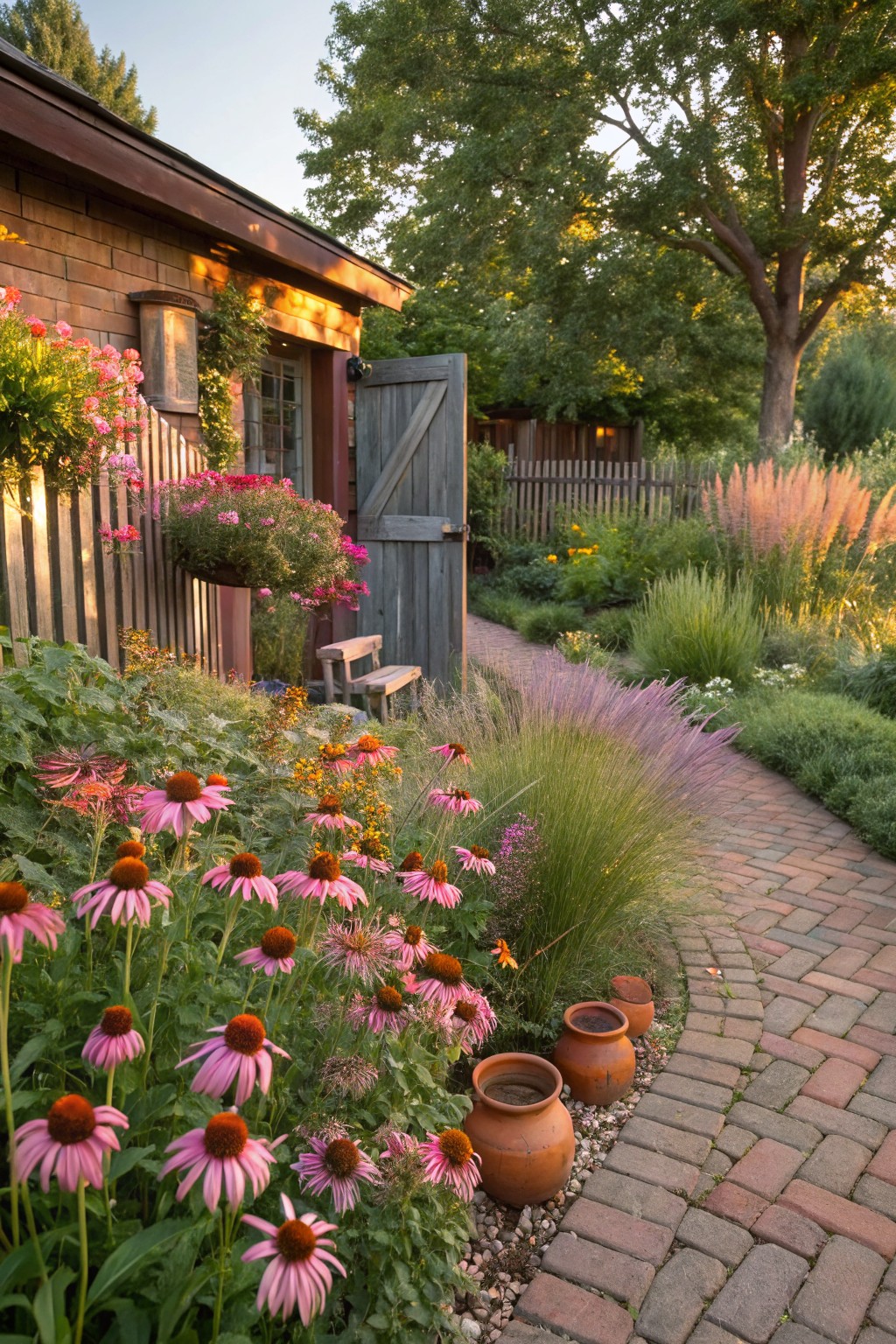
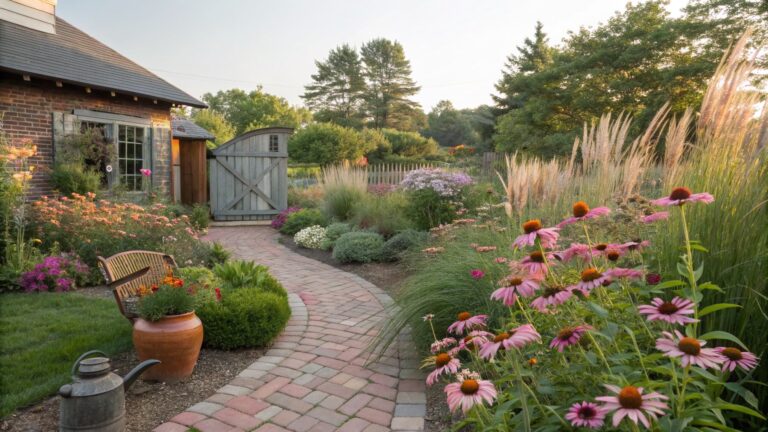
One simple way to guide folks through a backyard garden is a curved brick path edged with coneflowers. Here the path winds gently past big clusters of those pink Echinacea blooms mixed in with grasses and other perennials. It pulls you right toward the little shed without feeling too rigid. Bees love it too, since coneflowers draw them in steady.
This setup works great in smaller yards or cottage-style spots where you want some direction but not a straight shot. Lay the bricks in a soft curve, plant the coneflowers thick along one side for color and pollinators, and tuck in a bench nearby if space allows. Keep the beds mulched to cut down on weeding… just watch that the path doesn’t get too narrow for wheelbarrows.
Winding Gravel Paths with Coneflowers

A gravel path like this winds gently through tall grasses and clumps of coneflowers. It keeps things natural looking, no fussy edging needed. Those yellow echinacea blooms pop along the way and pull in bees without much effort from you.
This works best in bigger open spaces, like a backyard meadow or side yard. Just outline your path shape, add gravel over landscape fabric, then tuck coneflowers and natives around it. Skip straight lines… curves make walks more relaxing. Suits country homes or any spot wanting low upkeep.
Stone Path Through Coneflower Beds
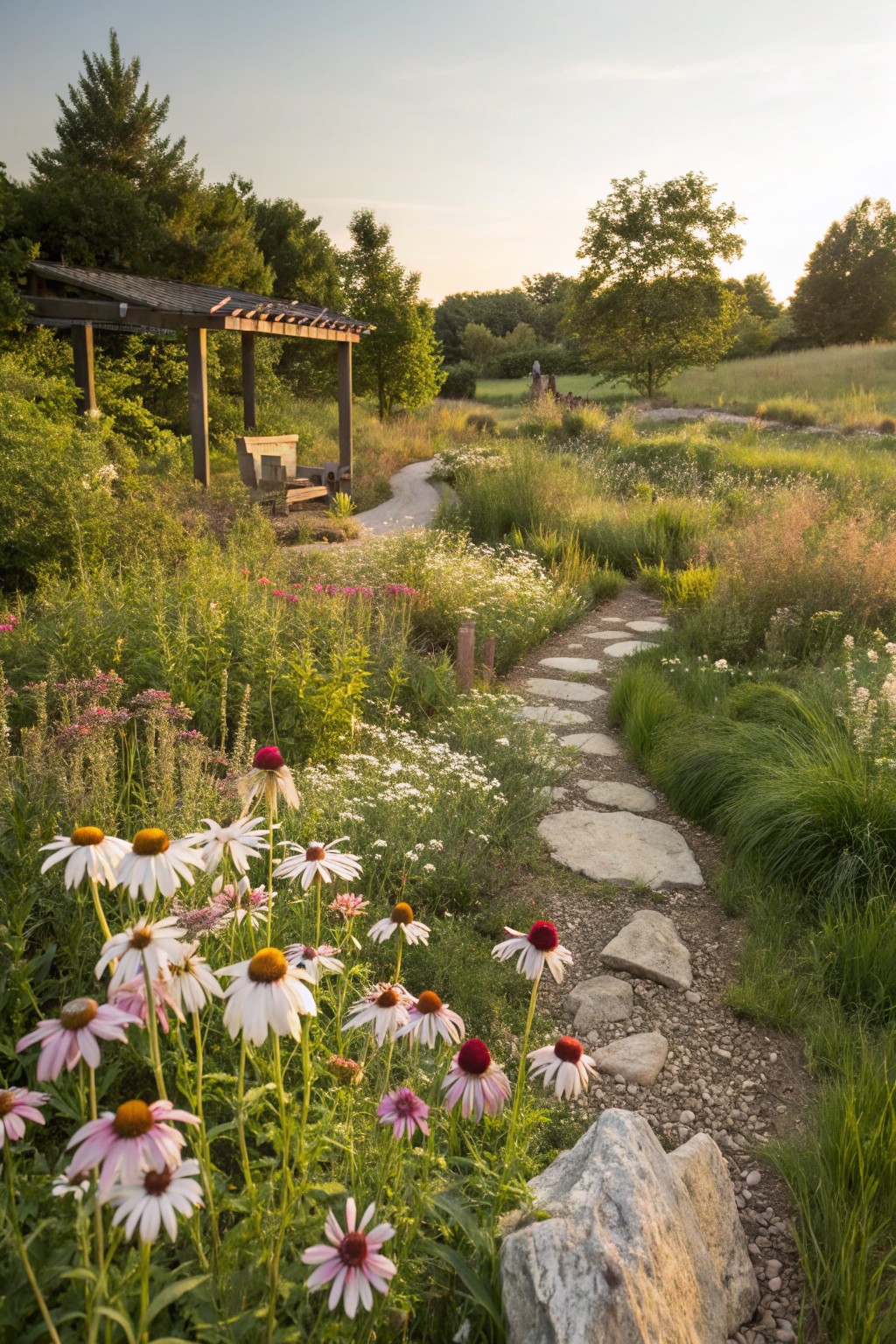
One easy way to tie a garden together is with a simple stone path that winds right through tall coneflowers and prairie plants. It gives you a spot to walk without compacting the soil, and those big Echinacea blooms along the edges draw in bees all summer. The path feels natural, like it’s always been there.
Set these flat stones into gravel or mulch, spacing them so your feet land comfortably. It works great in cottage yards or meadow edges, leading to a bench or seating area. Keep the coneflowers massed thick for that full look, but thin them every few years to stay healthy.
Coneflowers in Long Planters Along Pathways
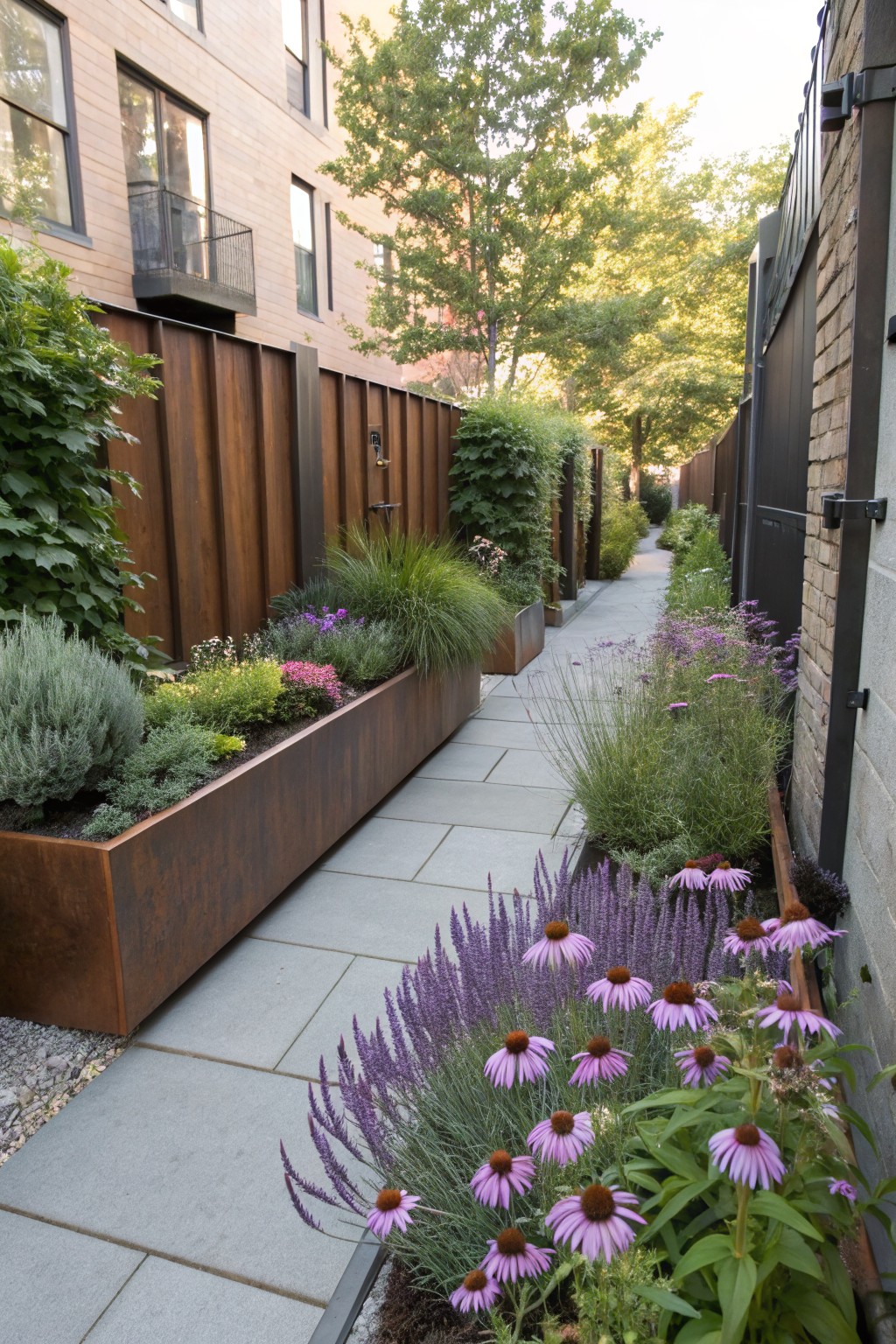
Long metal planters like these make great use of narrow spaces between buildings or fences. Packed with coneflowers, lavender spikes, and wispy grasses, they create a simple walkway that draws in bees all summer. The rusty corten steel ages nicely and holds soil without leaking, plus it keeps plants up off the ground for easier care.
This works best in tight urban yards or side paths where you want color without taking up room. Plant Echinacea varieties for those big pink blooms, then tuck in drought-tough companions. Just make sure the path gets some sun… bees will find it quick. Suits modern homes or rentals with not much land.
Coneflowers Lining a Stone Path
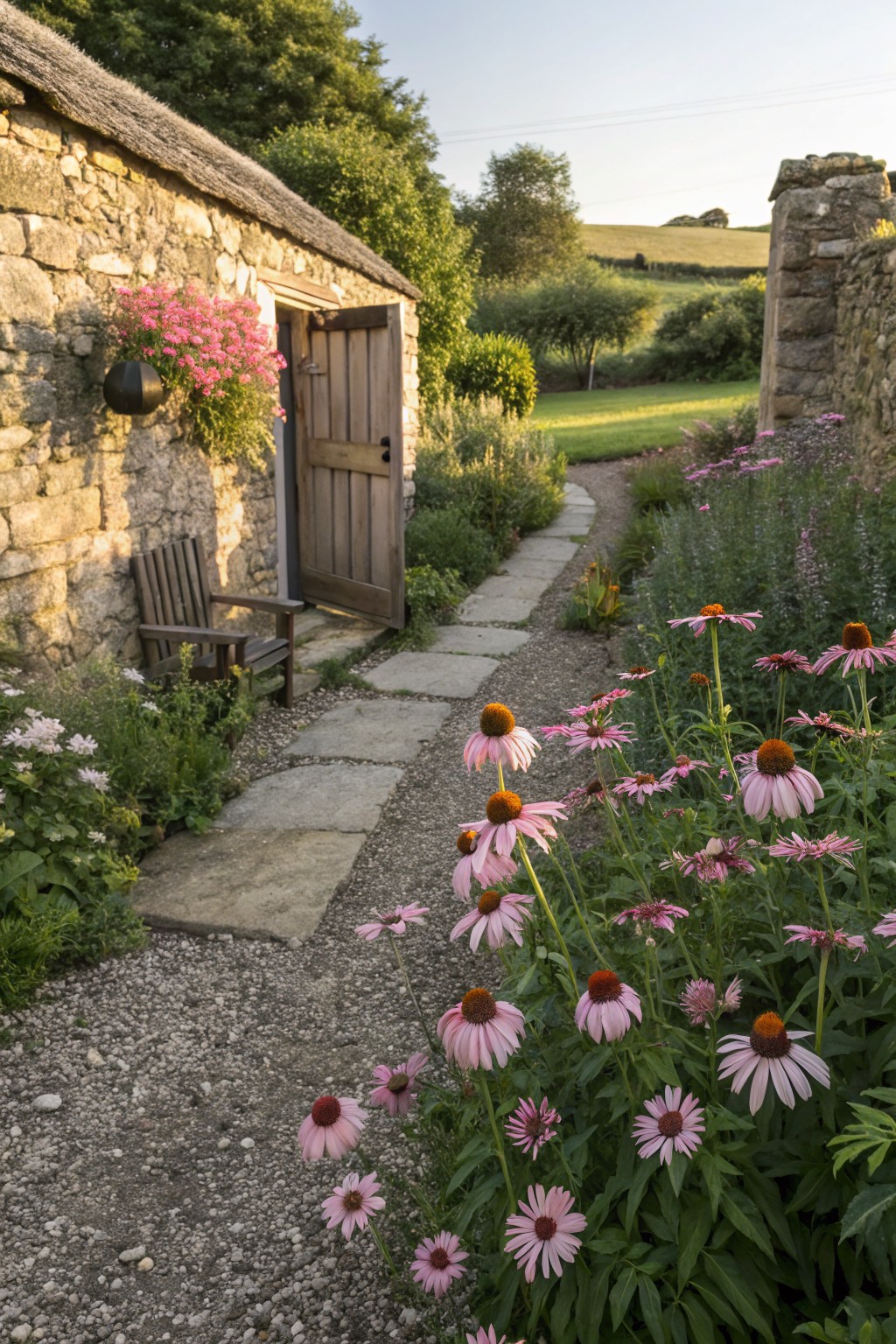
One easy way to make a garden path feel more alive is to plant coneflowers right along the edges. Here, masses of pink echinacea hug both sides of the flagstone walkway, leading straight to a rustic shed door. The flowers add color without overpowering the simple stone and gravel ground. And those big central cones? Bees can’t resist them.
Put this idea to work on paths to outbuildings or side yards. It suits cottage-style homes or any sunny, open spot with decent drainage. Just space the plants so they fill in over time… no need for fancy edging. Keep the path narrow to let the blooms take center stage.
Gravel Path Edged with Coneflowers
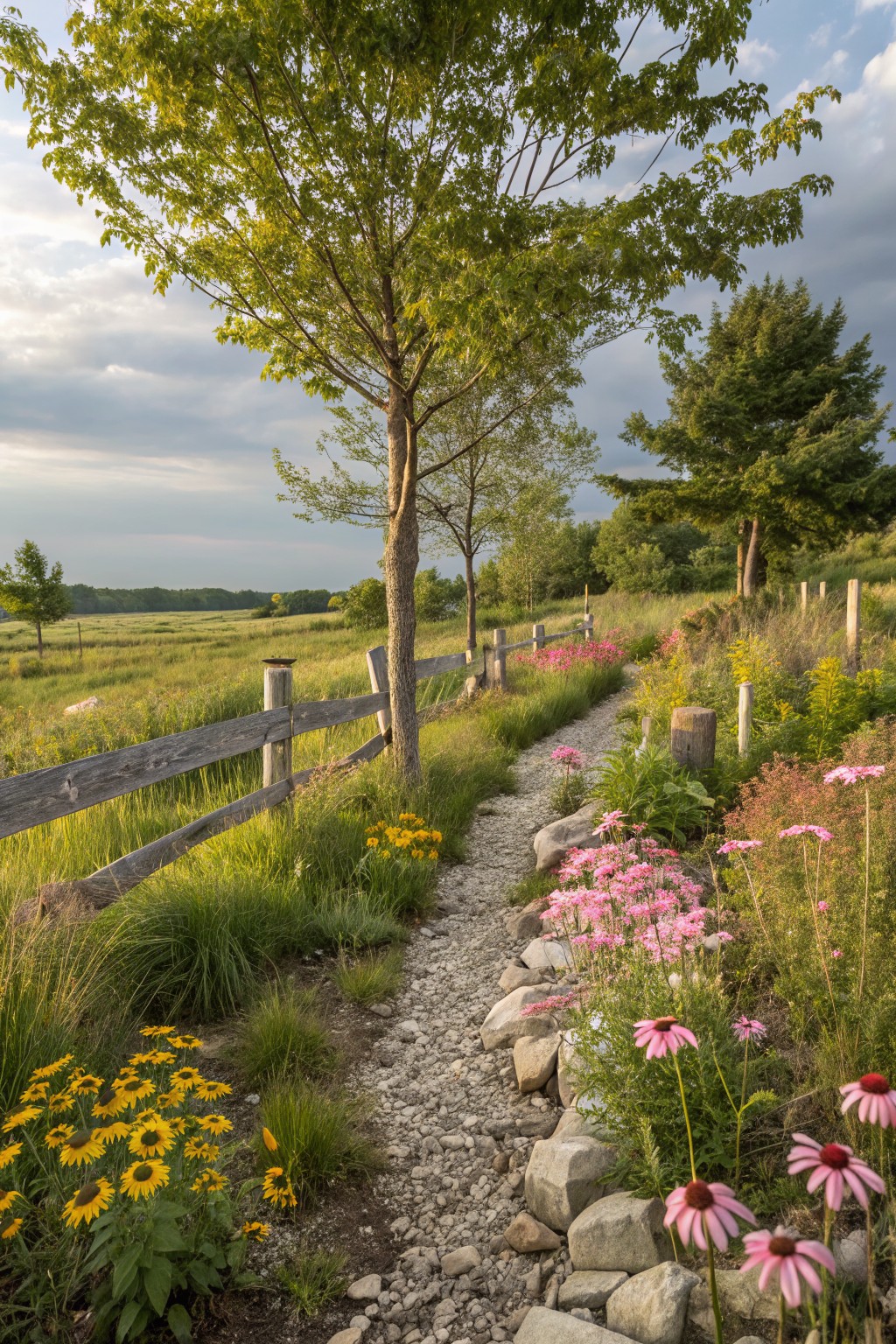
A gravel path like this makes for an easy walk through the garden. It’s lined with pink coneflowers and a few black-eyed Susans right along the edge, next to a simple wooden fence. The flowers pop against the stones and keep bees buzzing around without much upkeep. Folks like how it feels casual and ties into the meadow beyond.
You can set this up in a backyard border or along a property line where space opens up. Pick a sunny spot for the coneflowers since they love it there. Keep the gravel loose for drainage, and plant in drifts so it looks full and natural. Works best on bigger lots… smaller spots might feel crowded.
Raised Planters Edge a Curved Entry Path
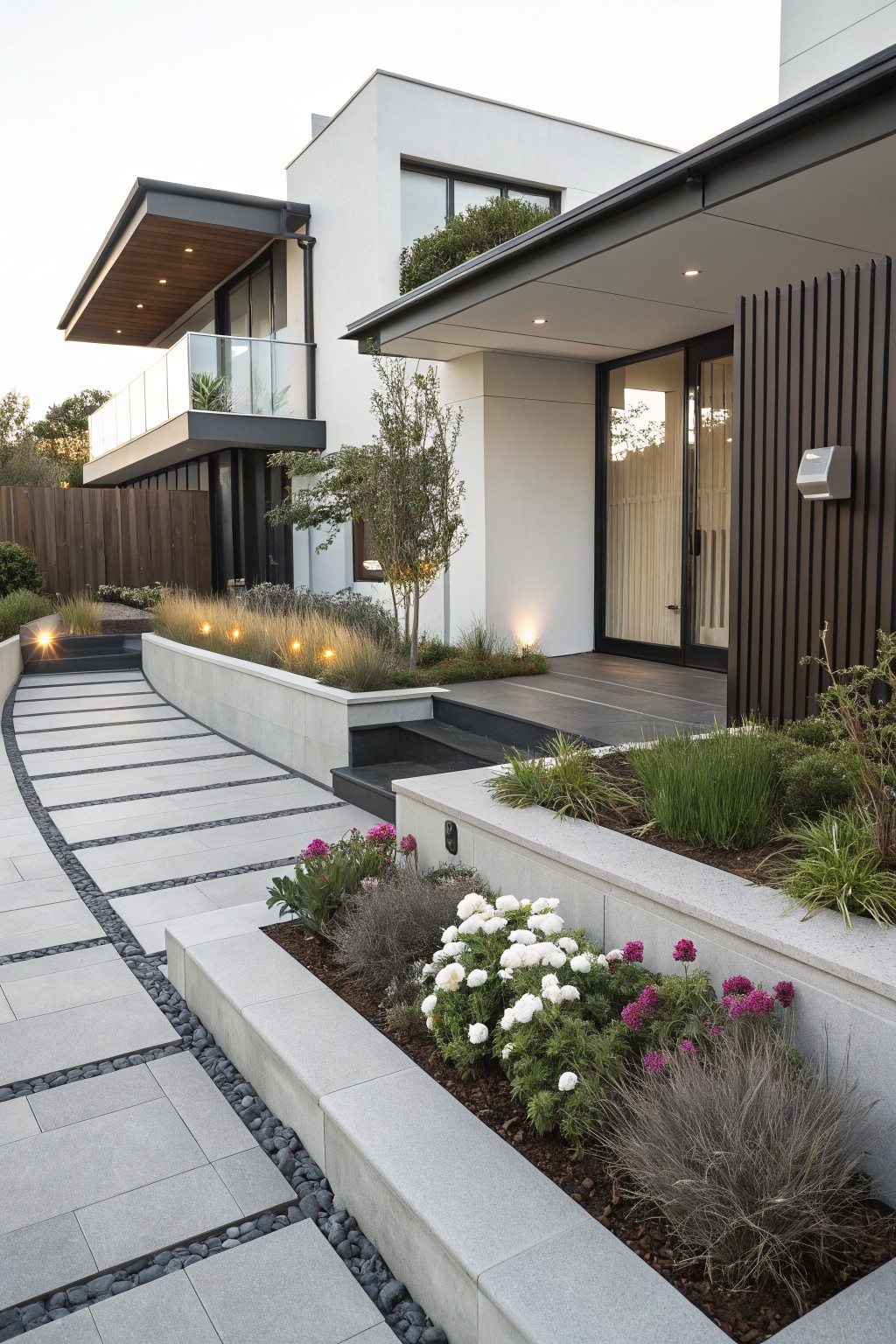
One nice touch here is the raised concrete planters built right along the curving stone path to the door. They hold grasses and flowers like those white clusters and pink blooms that draw bees right in. The setup softens the modern house lines without getting messy. Those little uplights tucked in make it practical too, lighting the way at dusk.
You can pull this off in front of any house with a straight-up entry spot. Go for tough plants like echinacea in the beds. It works best where space is tight. Keeps everything neat, cuts down on weeding. Just make sure the beds drain well so roots don’t drown.
Stream Bed Lined with Coneflowers
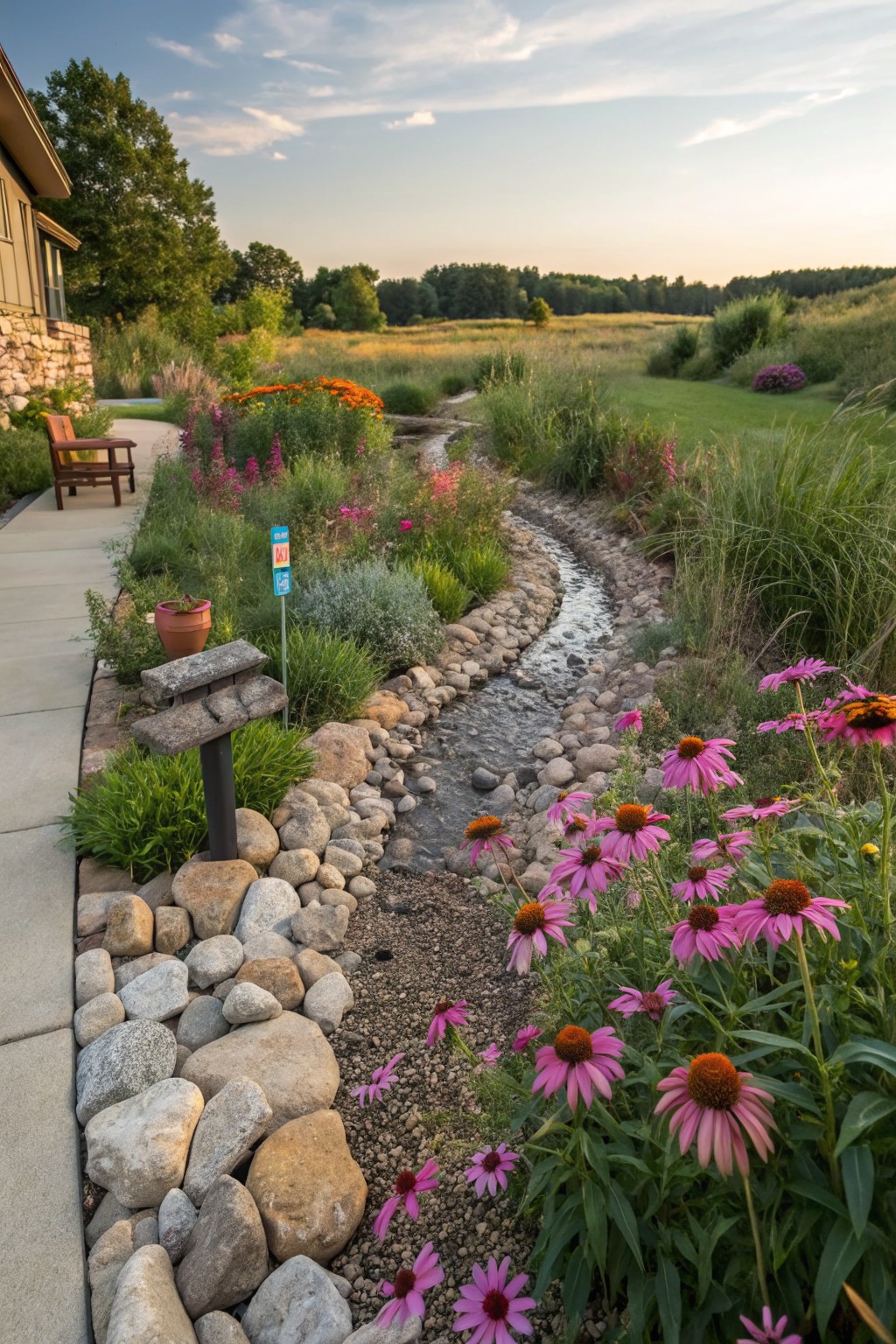
A simple way to work coneflowers into your yard is along a winding stream bed like this one. The rocks form a natural channel that looks like it’s always been there, and the pink echinacea blooms right along the edges. Bees love it. That setup pulls pollinators close without much fuss, and it softens things up next to the house.
Put this in a side yard or where water runs off sometimes. It suits homes with a bit of slope or open land around. Go for rounded river rocks and plant the coneflowers thick so they spill over. Skip fancy edging. Just let it flow natural.
Coneflowers Along a Pond Path
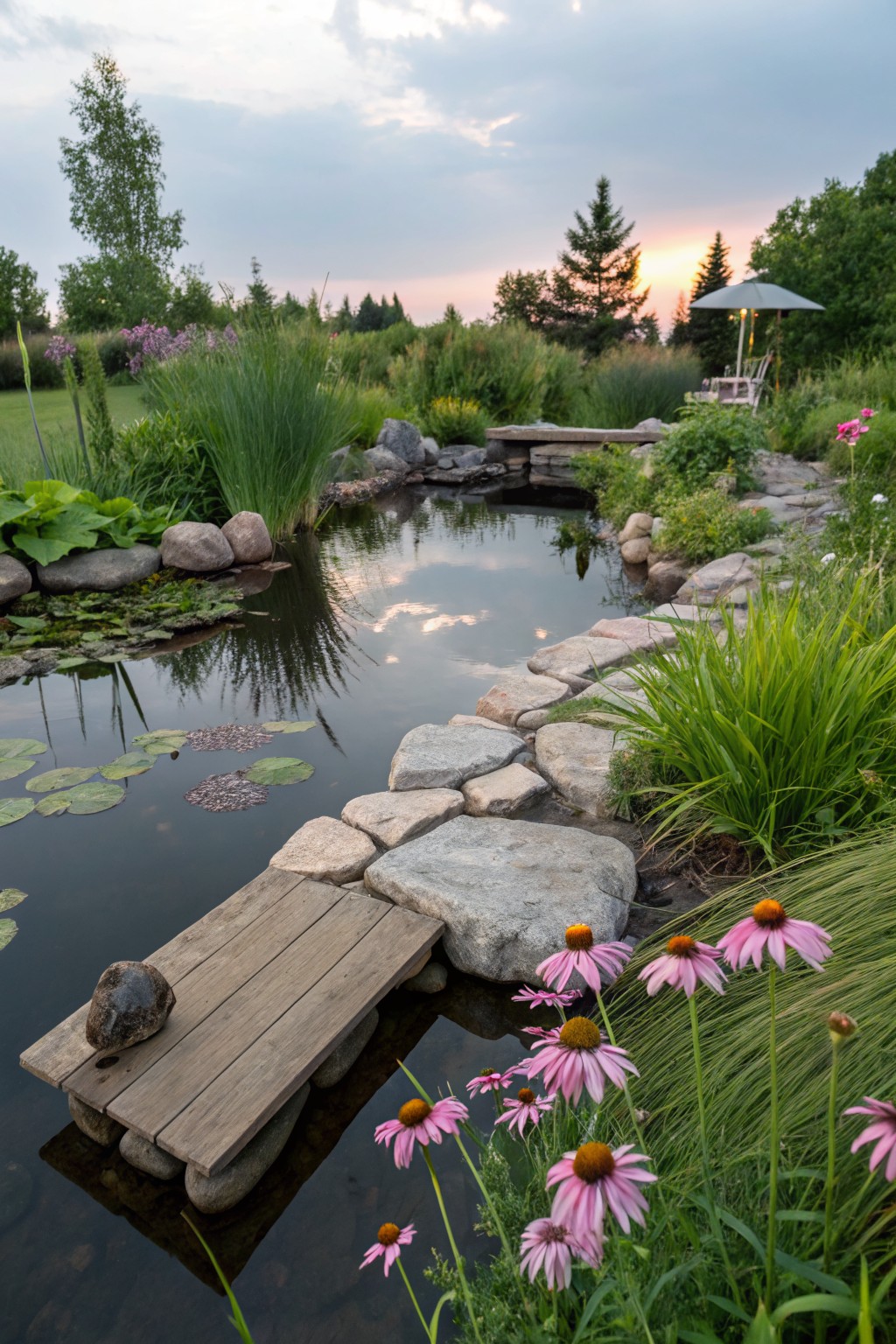
One straightforward way to work coneflowers into your yard is planting them right beside a pond path. The pink blooms stand out against the water and stones, and they pull in bees without much fuss. Paired with grasses and a simple wooden dock, it keeps the whole area feeling natural and easy on the eyes.
This setup fits best in a backyard water garden where you want some color near the pond. Use flat stepping stones for the path so it’s practical to walk, and tuck the coneflowers in along the edges. They handle moist spots okay, but watch for too much shade from overhanging plants.
Stone Edging for Coneflower Beds
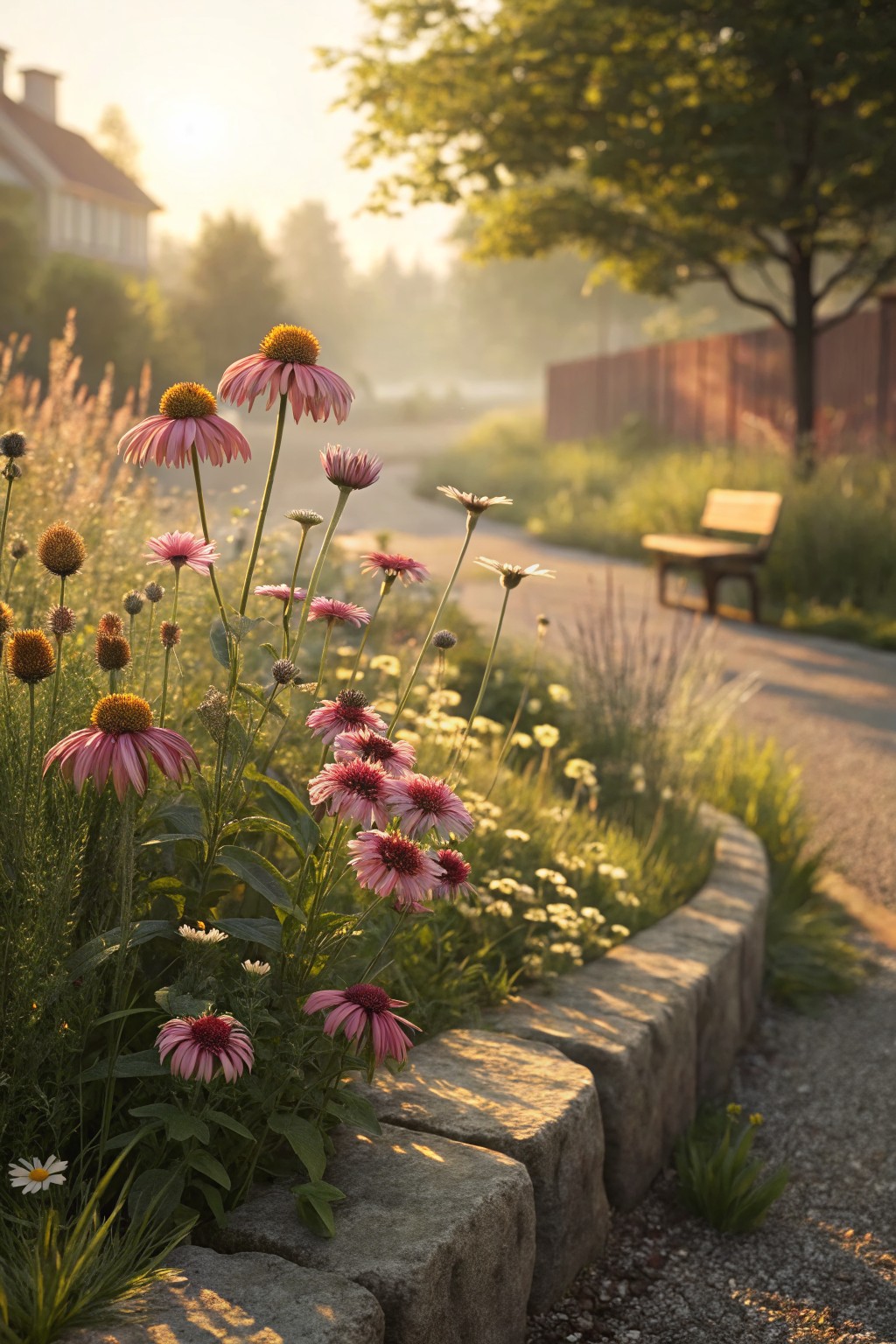
A low wall of rugged stones makes a perfect edge for beds packed with coneflowers. Here the pink and orange blooms tumble over the blocks, mixed with daisies and tall grasses. It keeps the planting neat but lets it feel wild and full, which pulls in bees all summer long.
This works best along gravel paths leading to a bench or backyard door. Pick stones that match your area for an easy fit. Plant the coneflowers in loose groups so they spread naturally. Just trim back once a year to keep the path clear.
Echinacea in Raised Garden Beds
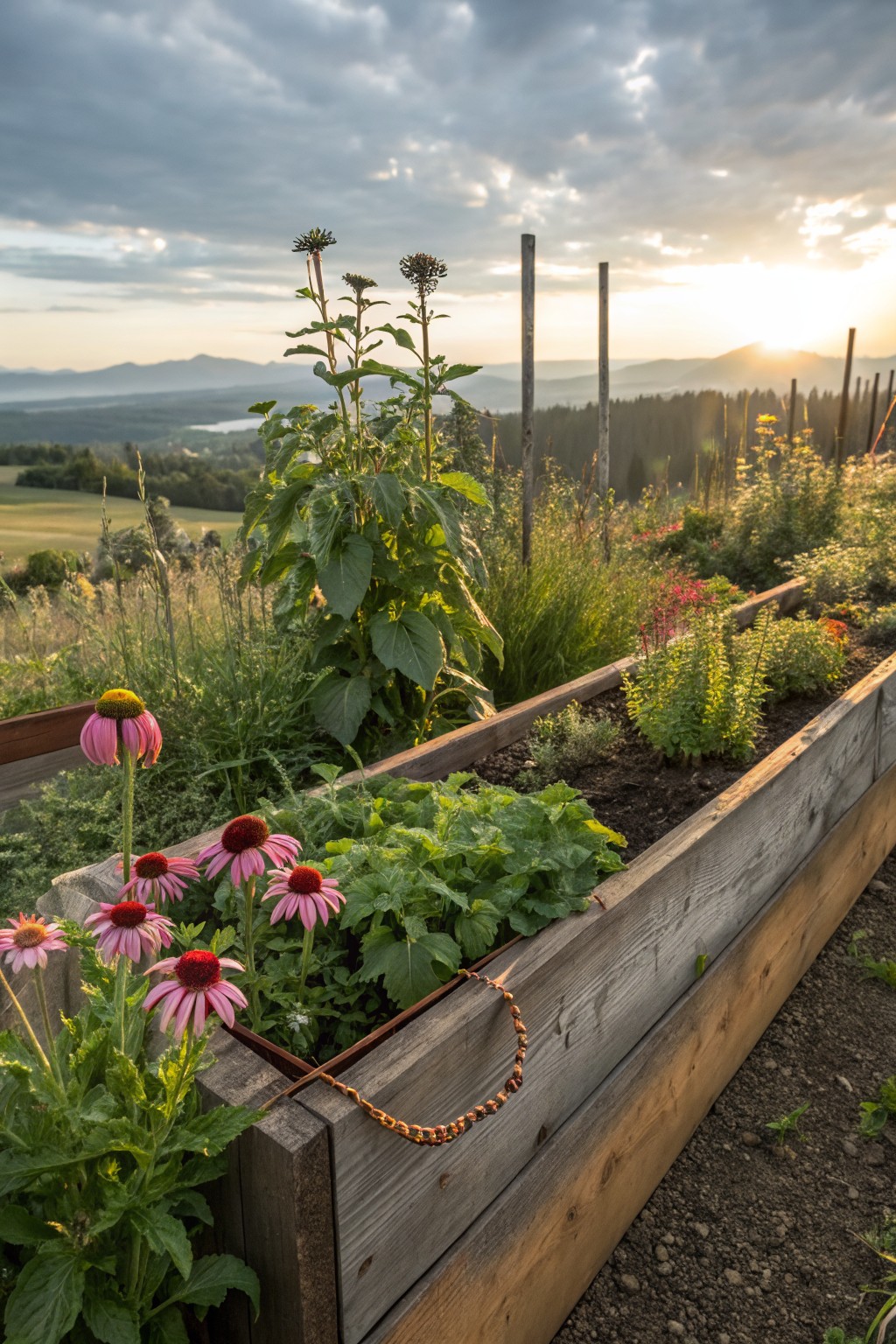
Raised garden beds like these make it straightforward to grow coneflowers where you want them. The wooden frames keep soil in place on a slope, and they lift the plants up for better visibility and airflow. Pink echinacea blooms stand out against the green herbs and leaves, drawing bees right in without much fuss.
These beds work well in backyard spots with a view, like hillsides or open lots. Fill them with a mix of echinacea, basil, and other pollinator plants for color through summer. Just make sure the wood is untreated to avoid chemicals around the bees… and keep the beds about knee-high for easy tending.
Coneflowers Edging Stone Paths
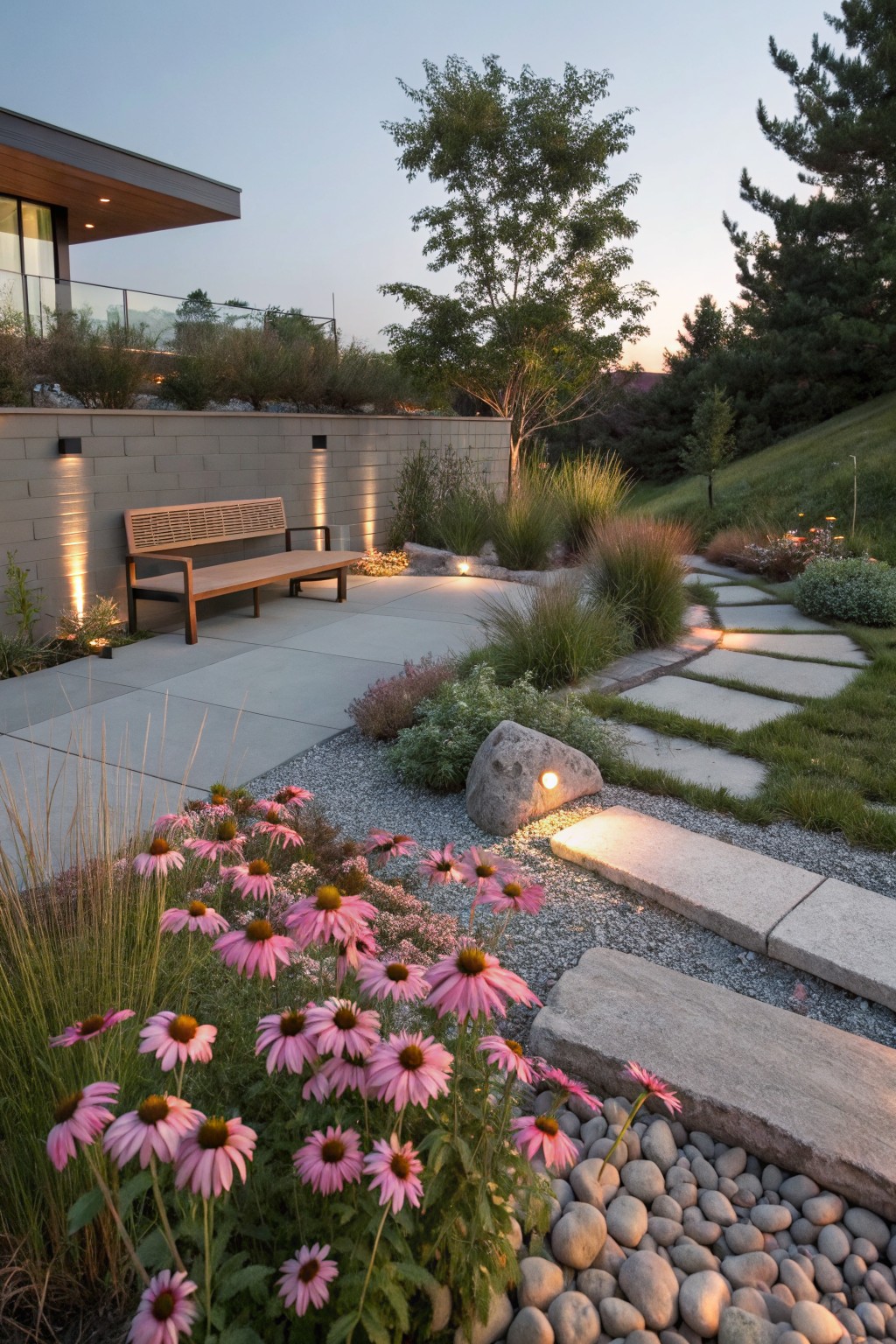
Planting coneflowers right along stone path edges, tucked into gravel mulch, gives a clean natural border that pulls in bees without much fuss. Here the pink blooms sit low next to wide concrete pavers and rugged steps, mixing soft flowers with hard edges in a way that feels easy and pretty at dusk. It’s a simple repeat pattern that keeps the garden looking full through summer.
This works best in sunny spots near patios or side entries, especially around modern homes with clean lines. Space the plants about 18 inches apart in gravel over soil, and pair with tough grasses for movement. Skip it in shady areas though, since coneflowers need full sun to thrive.
Frequently Asked Questions
Q: How much sun do coneflowers need to thrive and draw in bees?
A: Plant them in full sun, at least six hours a day. They bloom best there and bees love the open flowers. Shade makes them leggy and fewer pollinators show up.
Q: Can I grow Echinacea in containers on my patio?
A: Sure, pick a pot at least 12 inches wide with good drainage. Mix in some compost for nutrients. They’ll attract bees right to your seating area.
Q: When do I cut back coneflowers after they bloom?
A: Leave the seed heads through winter. Birds snack on them, and bees nest in the stems. Snip them to the ground in early spring for fresh growth.
Q: Will coneflowers spread too much in my garden?
A: They form clumps that slowly expand, but they stay tidy. Divide every three or four years if you want more plants elsewhere. Bees appreciate the steady supply.
