

I have noticed that front yards tend to look a bit neglected when the beds stay uneven and the lawn edges grow ragged over the seasons.
Clearing debris and adding simple borders like mulch lines or low plants often brings back a sense of order without much expense.
I would test edging and basic pruning first in my own yard because those steps usually show the biggest shift in how the space reads from the street.
Once the layout feels more deliberate the whole front area starts to look intentional rather than forgotten.
It is satisfying to see the difference.
Define The Front Yard With Simple Garden Beds

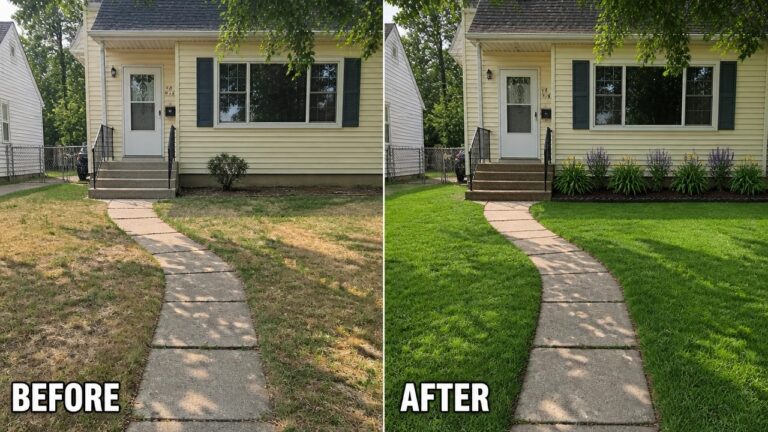
The patchy lawn and uneven grass made the front of the house look neglected. Adding one long, narrow garden bed along the foundation with a clean edge and repeating plants instantly gave the yard a more finished shape while keeping the open lawn in the center.
This idea works best on modest front yards where you want the house to feel connected to the landscape without crowding the space. Start with basic edging and fresh mulch, then choose a handful of low plants that repeat across the bed so the look stays simple and easy to maintain.
Clear Overgrown Foundation Plantings First
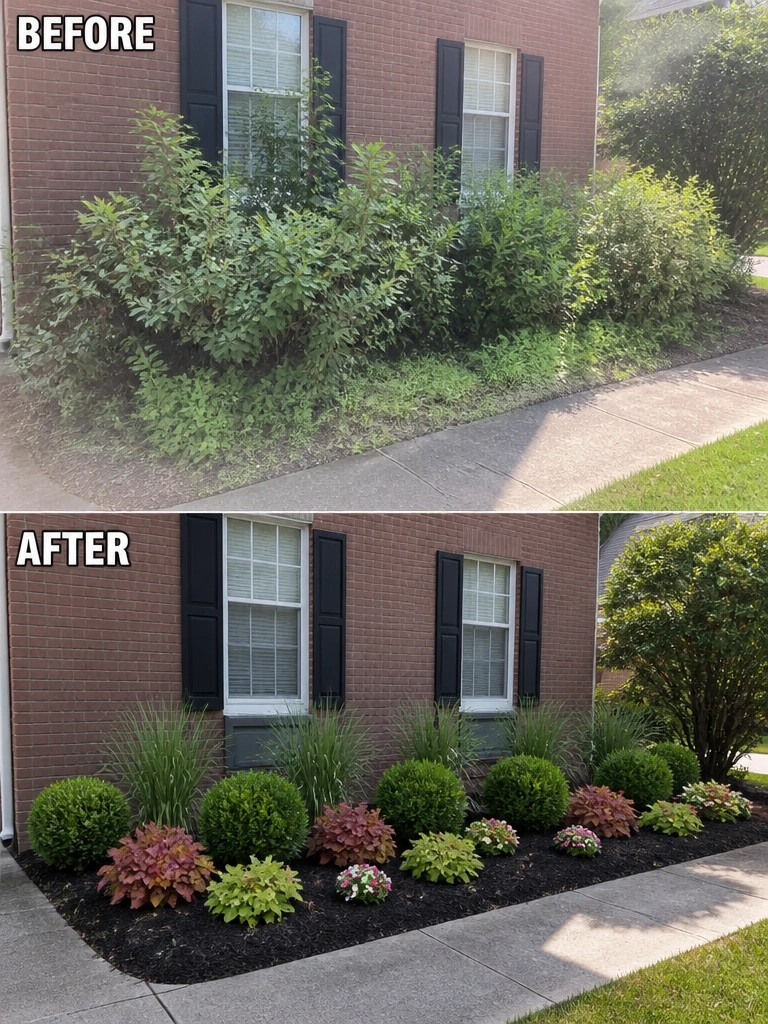
Overgrown shrubs often hide windows and make a house look smaller than it is. Removing the tall, messy growth and replacing it with low shrubs, grasses, and a few colorful plants opens up the front and lets the brickwork show again.
This works best on homes where the foundation sits close to the sidewalk or driveway. Mulch the beds after planting so the area stays neat and weeds stay down. Keep the new plants under window height so you do not have to prune constantly later.
Replace A Cracked Walkway With Pavers
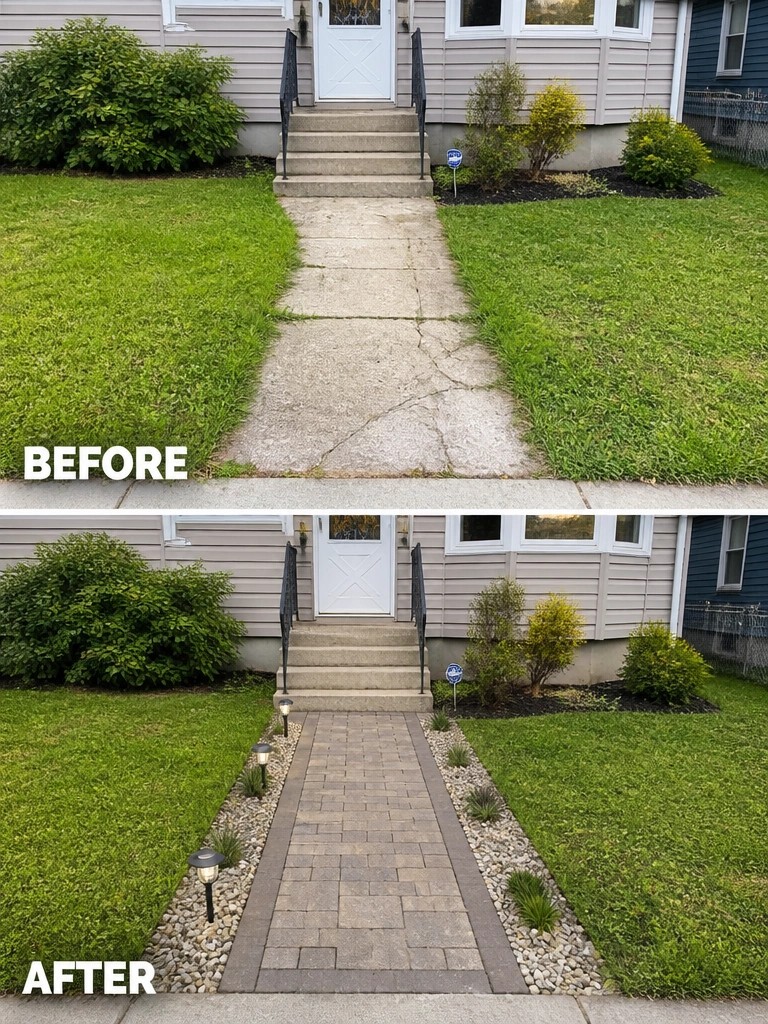
A plain concrete path often looks tired once it starts cracking, and it does little to connect the house to the yard. Switching to pavers creates a cleaner line and gives the whole front area a more finished feel without major construction.
This approach works best on smaller lots where the walkway is a main visual feature. Keep the new path the same width as the old one so it still feels natural, then add a simple gravel border on each side to hold the pavers in place and make mowing easier.
Add Structure To A Plain Front Yard
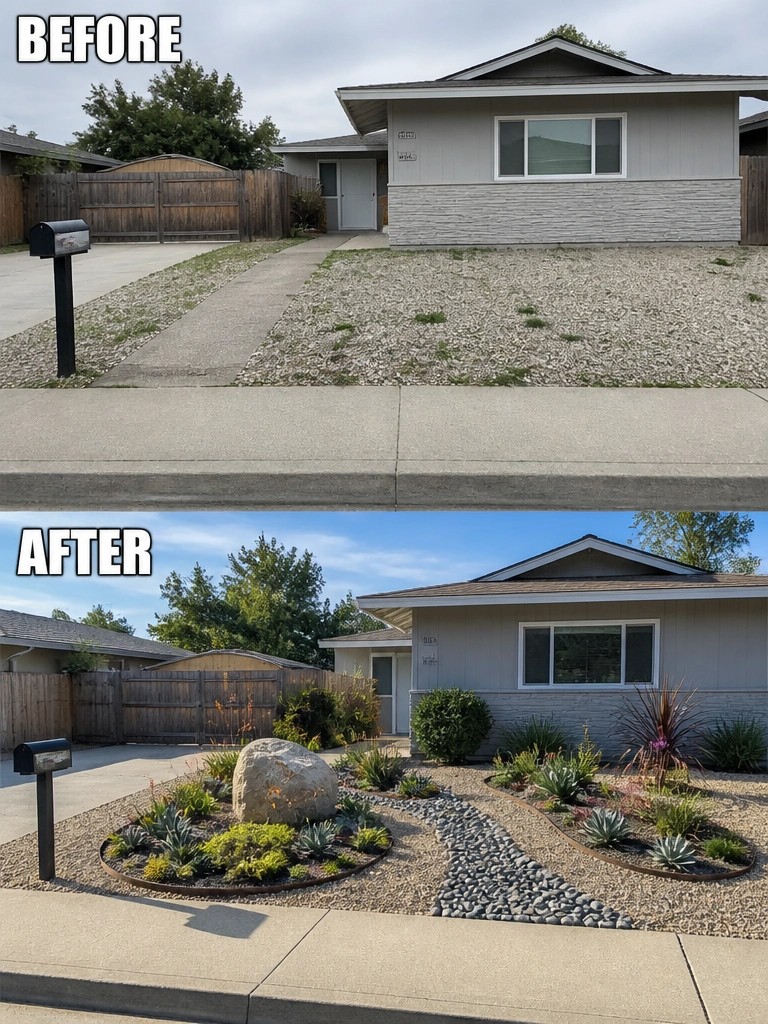
A flat gravel yard often looks unfinished because nothing divides the space or gives it shape. In this case the simple addition of curved metal edging created separate planting zones, and one large boulder became a natural focal point that pulls the whole area together.
This approach works well on homes with wide gravel or mulch front yards that feel empty. Start with the beds and edging first, then add plants in groups rather than scattering them. Keep the layout simple so the yard still has room to breathe and does not require constant upkeep.
Paint The Front Door A Dark Color And Add Planters
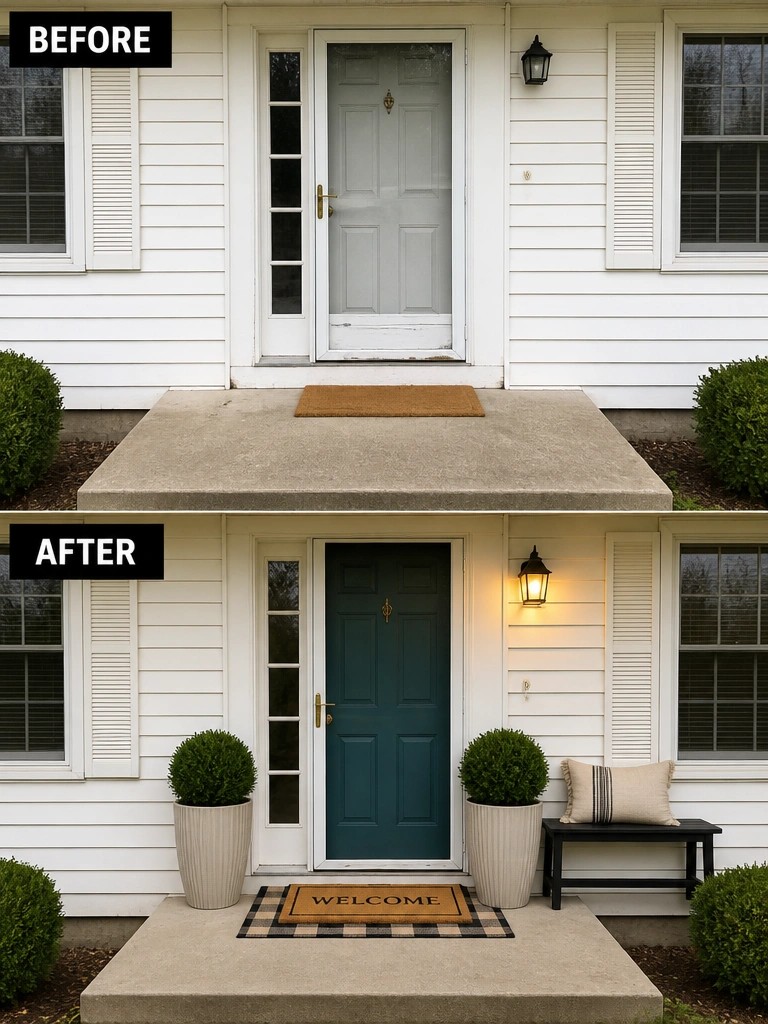
A dark door color instantly changes how the whole front of the house feels. In this case the light gray door was swapped for a deep teal, and two matching planters were placed on either side to create balance. The simple addition of a rug and a bench keeps the space from looking empty without crowding the small concrete pad.
This approach works well on houses with a straightforward facade where you want to improve the entry without major construction. Choose a door color that contrasts with the siding, then repeat that color or a similar tone in the planters so the eye stays on the door. Keep the rest of the styling minimal so the change stays affordable and easy to maintain.
Add Window Boxes To Give A Plain Exterior More Interest
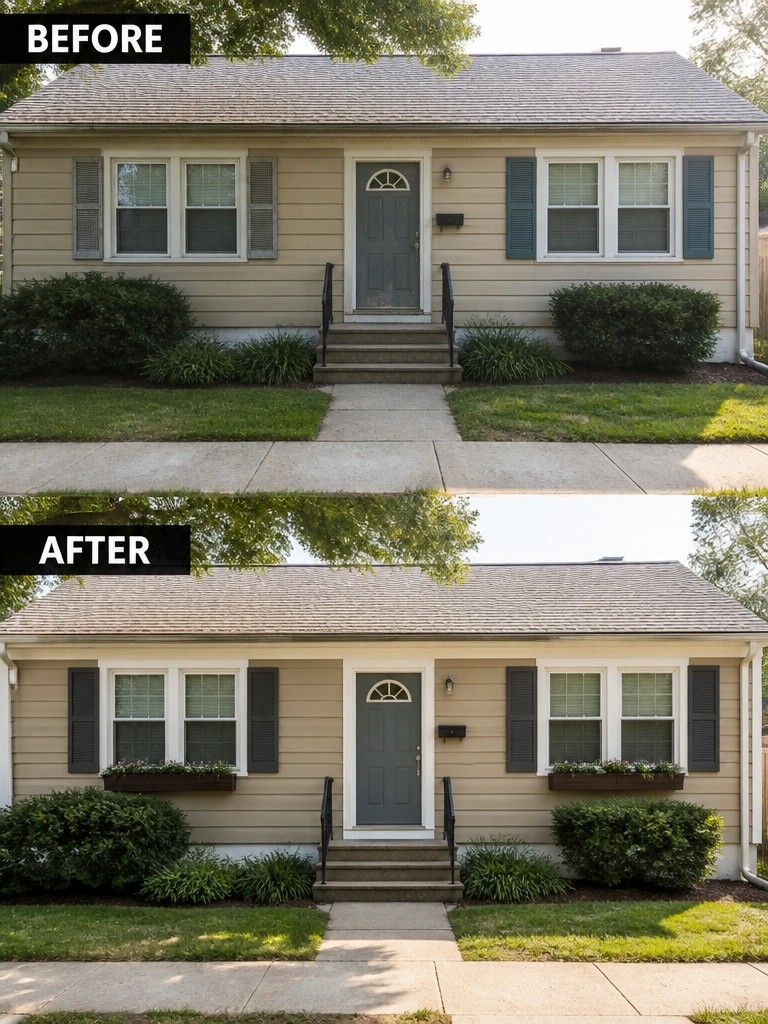
A simple house front often looks flat because the windows have nothing to break up the wall space. Adding window boxes under the windows and updating the shutters to a darker shade gave this front a clearer structure and made the whole facade feel more put together.
This idea works best on modest homes with a row of front windows. Keep the boxes the same width as the windows and choose a color that matches the trim so the change reads as intentional rather than busy. Focus on one or two repeating elements like this before adding anything else to the yard.
Add Edging To Shape Up A Mailbox Area
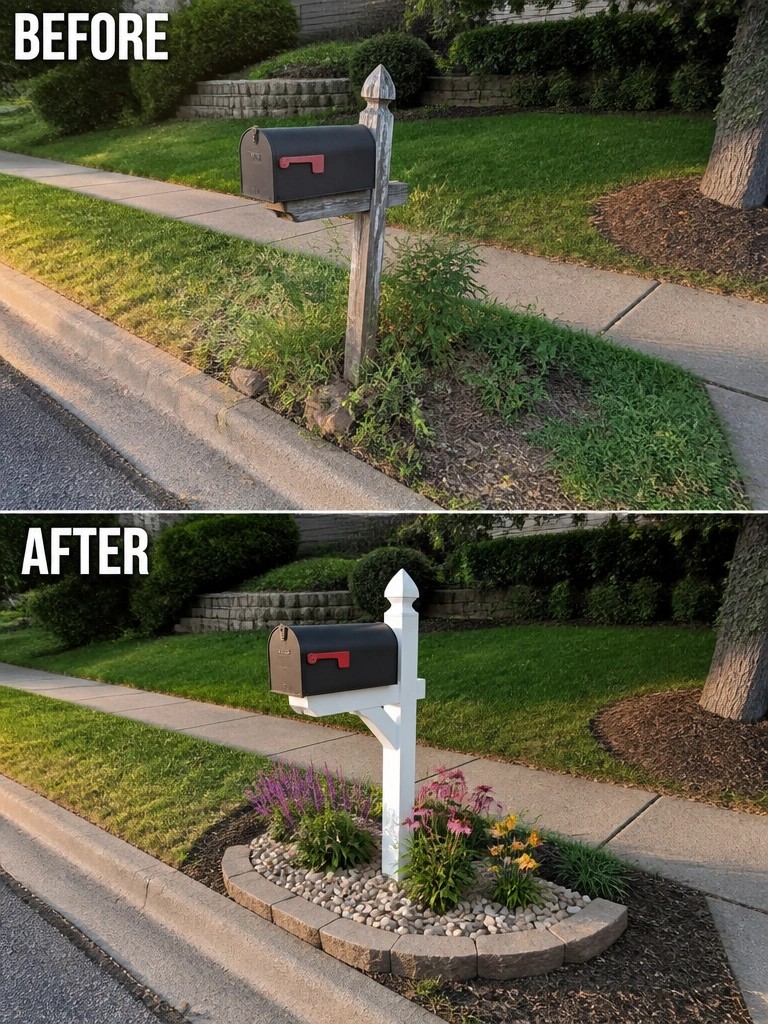
The main change here is the addition of a low stone border that turns a weedy patch into a contained garden bed. Once the edge was in place, a few plants and fresh mulch were enough to make the whole spot look planned instead of neglected.
This approach works well on small front-yard spots where you want structure without a big project. Start with the edging first, then fill in with easy plants that can handle the sun exposure in that location. Keep the bed narrow enough that it does not interfere with mowing or walking paths.
Refresh The Front Entry With New Steps And Planters

Replacing old concrete steps with wooden ones makes the whole front of the house feel more welcoming. The simple addition of matching planters on either side also helps tie the entry together and gives it a finished look without a lot of extra work.
This idea works well on homes where the steps are the main thing people notice first. Focus on getting the stairs solid and safe before worrying about decorations, and choose planters that are large enough to make an impact but still leave room to walk.
Add Structure With Defined Garden Beds

A plain strip of dirt along the house often looks unfinished even when shrubs are already in place. Adding a clear edge, mulch, and a few stepping stones turns the same area into a proper garden bed. The change makes the front look intentional instead of leftover space.
This approach works well on narrow strips between the house and the sidewalk. Start with a simple border and mulch first, then add a mix of low plants and a few taller ones for interest. Keep the path width comfortable so the beds do not feel crowded.
Add Outdoor Lighting To Highlight The Front Of The House

The main change here is the addition of low landscape lights along the foundation and walkway edges. This single update makes the house feel more finished at night and draws attention to the planting without any major construction.
This approach works well on houses with simple facades where you want to improve the look after dark. Place lights to graze shrubs and the base of the house, keep the fixtures low so they do not glare, and match the spacing to the width of your beds so the effect stays even.
Add Lighting And Planters To A Plain Entry
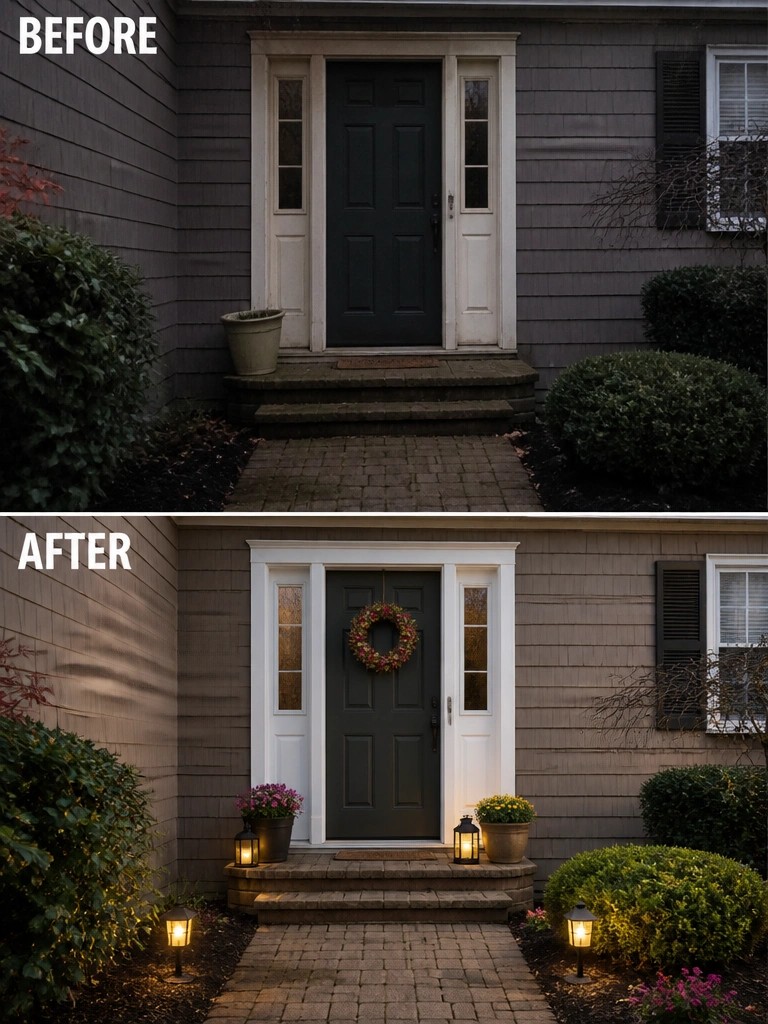
A front door with little around it often feels unfinished. Adding a few lanterns along the walkway and some potted plants on the steps gives the entry more presence and makes it easier to navigate after dark.
This idea works on many homes that already have a basic stoop or short path. Place the lights where they actually guide feet and keep the planters simple so the walkway stays clear.
Define Garden Beds For A Neater Front Yard
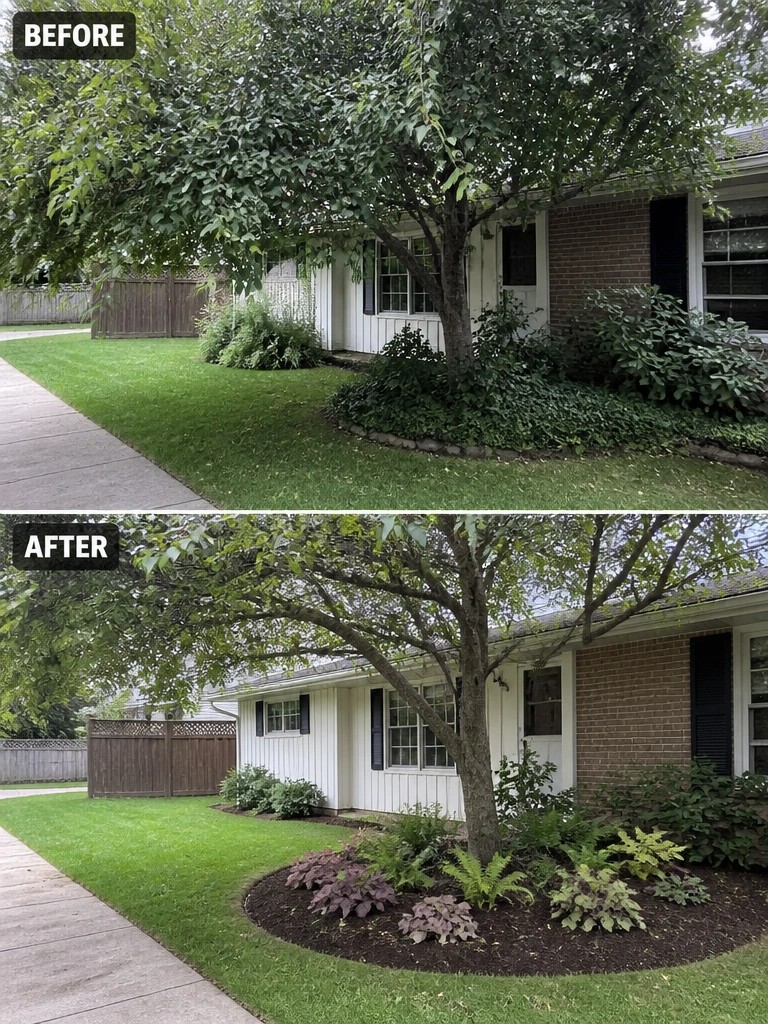
The main change here is turning a messy mix of ivy and sprawling plants into a clear, mulched bed with a simple planting layout. The defined edge and fresh mulch make the whole front area look intentional instead of neglected.
This approach works well in small front yards where the tree base tends to get messy. Start by clearing the old growth, then add a clean border and mulch before choosing a few plants that fill the space without crowding. It keeps the area looking maintained with very little ongoing work.
Define The Lawn Edge With A Gravel Border

A ragged line where the grass meets the driveway often makes the whole front yard look unfinished. Adding a narrow gravel strip with a row of shrubs creates a clear boundary that keeps the lawn contained and stops soil from washing onto the concrete.
This idea works best on homes where the yard already has a decent lawn but needs a bit more order along hard edges. Keep the bed narrow so it does not eat into usable grass space, and choose shrubs that stay small and need little trimming. The result feels tidy without requiring a complete landscape overhaul.
Fill Out Bare Garden Beds With Layered Planting

A sparse bed edged with rocks often looks unfinished even when the hardscaping is already in place. Adding layers of plants in different heights and colors turns the same area into a full border that feels intentional and cared for. The before photo shows mostly open soil and a few small grasses, while the after shows dense planting that covers the ground and adds height without crowding the walkway.
This approach works best along house foundations or side yards where you already have edging. Start with taller plants at the back, mid-height flowers in the middle, and low growers or ground cover near the front. Choose plants that match your light conditions and repeat a few colors so the bed looks planned rather than scattered.
Add Mounted Planters To A Fence For Vertical Interest

A weathered fence with plants growing wild at the base can look messy fast. Painting the fence a solid color and mounting a few trough planters directly on it gives the same area structure and color without letting growth sprawl everywhere.
This approach works well along side yards or driveways where ground space is limited. Choose sturdy planters that can handle weather, keep the planting simple, and make sure the fence itself is sound before you attach anything to it.
Define A Bare Curb Strip With Pots And Mulch
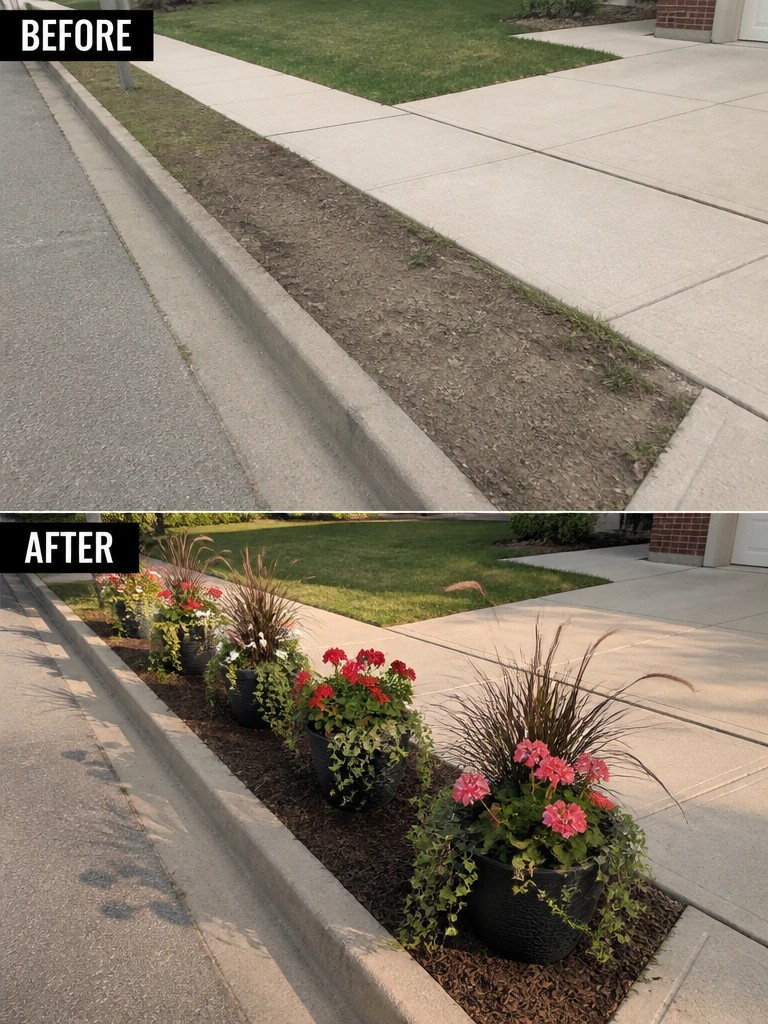
A strip of dirt along the curb usually looks like leftover space rather than part of the yard. Adding mulch and a line of pots turns that narrow edge into a clear border that makes the whole front feel finished.
This idea works best on streetside strips where permanent planting is difficult. Keep the pots similar in color and size so the line reads as one feature, and use mulch to hold the look together between them.
Define Foundation Beds With Gravel And A Trellis

The bare dirt strip along the side of the house looked unfinished and weedy. Adding a gravel bed with a clear edge and placing a trellis against the wall gave the area a simple structure that makes the whole side feel more intentional.
This approach works best on houses with plain siding where the foundation line needs something to break up the flat wall. Start by laying out the bed shape and gravel first, then add one vertical piece like a trellis for the vines. Keep the planting low and repeated so it stays easy to maintain.
Define Planting Areas To Give The Yard Structure

A patchy front lawn often looks unfinished because nothing separates the grass from the house or the walkway. Adding low shrubs along the foundation and a simple ring of mulch around the tree creates clear zones that make the whole space feel planned.
This idea works best on modest lots where you want the yard to look cared for without adding much hardscaping. Outline the beds first, keep the plant choices simple and repeat them on both sides, then use mulch to hold the look in place.
Refresh The Front Porch With Paint And Planters
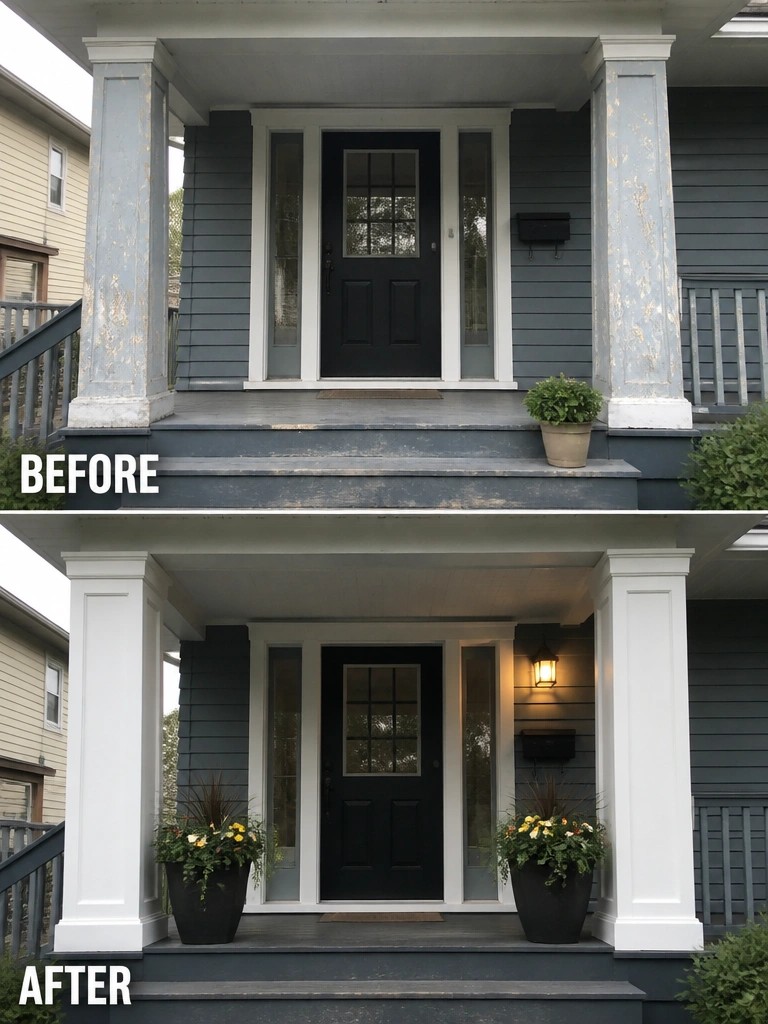
Painting tired columns and trim a clean white instantly brightens the whole entry. Adding two matching planters on either side of the door then gives the porch a finished, balanced look without much extra effort.
This approach works well on older homes where the porch structure is still solid but the paint has worn. Focus on the columns and trim first, then choose planters in a similar size and color so they frame the door rather than compete with it.
Define A Front Yard With Planted Beds And Stepping Stones
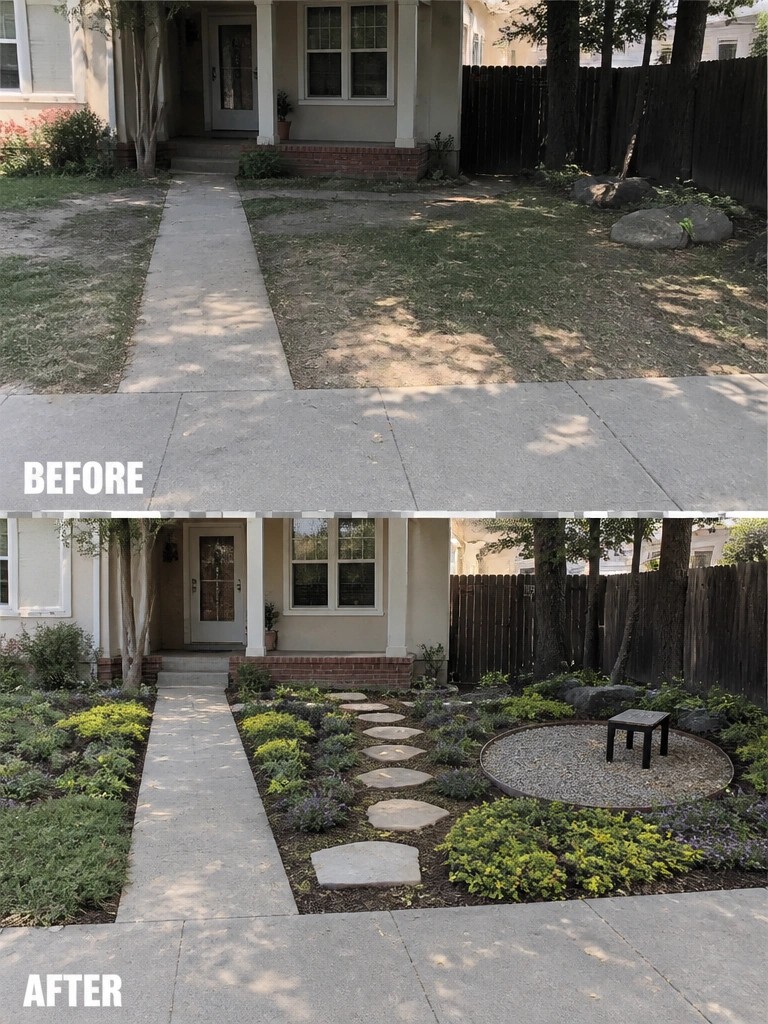
A bare strip of lawn next to a plain walkway often feels unfinished. Adding low planting beds on both sides of the path and laying a few stepping stones through them gives the space clear shape and makes the whole front yard look more intentional.
This approach works well on narrow lots or simple ranch-style homes where the main goal is to soften a wide concrete path without major construction. Start with cleanup and basic edging, then choose a few repeating plants in different heights so the beds look full but stay easy to maintain.
Define Garden Beds With Layered Planting
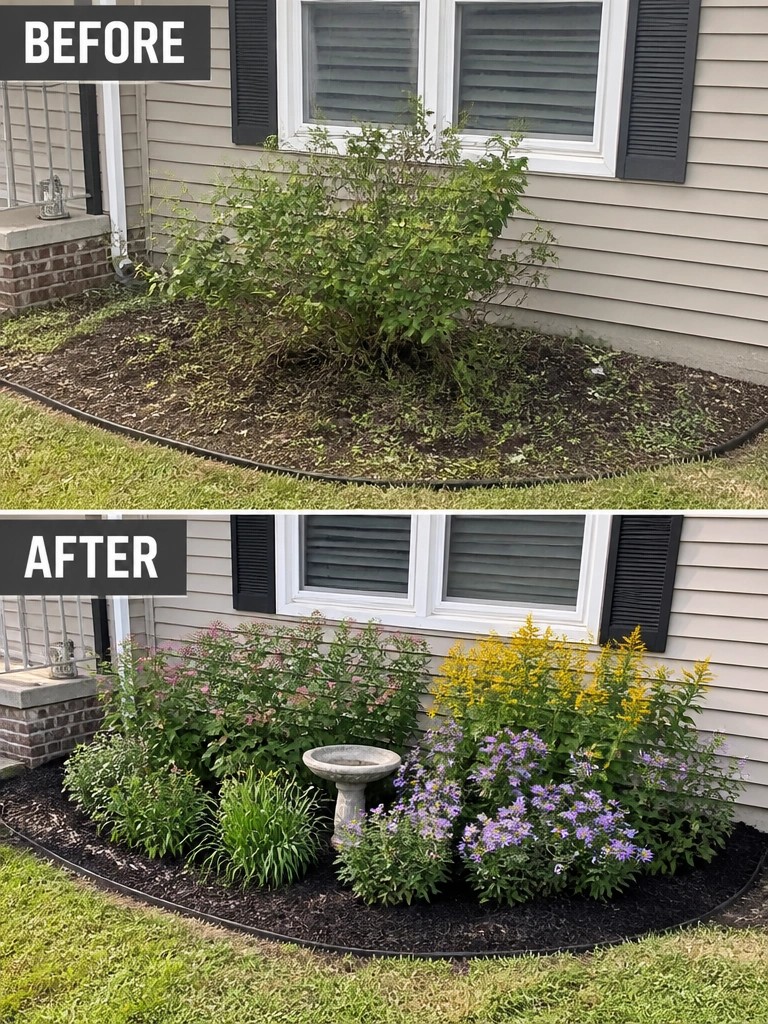
Clearing out one big messy shrub made room for a much cleaner layout. The new bed uses shorter plants along the front edge, medium ones in the middle, and taller ones toward the back, with a simple birdbath as the center point. Fresh mulch pulls the whole area together and keeps it looking neat.
This approach works well along the front of a house where the bed is visible from the street. Start by removing whatever is overgrown, then choose plants in three different heights rather than one large bush. Keep the shapes simple and repeat a few colors so the bed feels planned without looking crowded.
Frequently Asked Questions
Q: Which plants hold up best if my front yard gets full sun all day?
A: Go with tough choices like lavender or fountain grass that handle heat without much water. They grow full and neat on their own once settled in.
Q: How do I keep the new look from getting messy after a few months?
A: Add a layer of mulch right after planting to block weeds and hold moisture. Trim things back every couple weeks so edges stay clean and sharp.
Q: What if my budget only covers one or two changes from the ideas?
A: Start with edging and fresh mulch along the walkway. Those steps alone pull the whole front together fast.
