

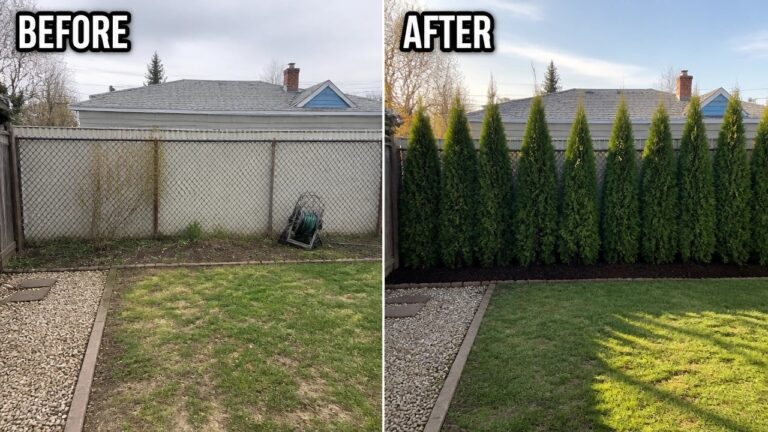
I have always noticed that fence lines tend to look unfinished when they are left as plain boundaries, especially once the rest of the yard starts to fill in.
Layering a few plants or low structures along them often softens the view and cuts down on how exposed the space feels from the outside.
It is one of those updates that does not require redoing the whole yard but still changes how private the area feels day to day.
Some ideas work better on wood while others suit chain link or vinyl.
I would test the lower maintenance options first to see how they settle in over a season.
Plant Tall Shrubs For Privacy Along The Fence
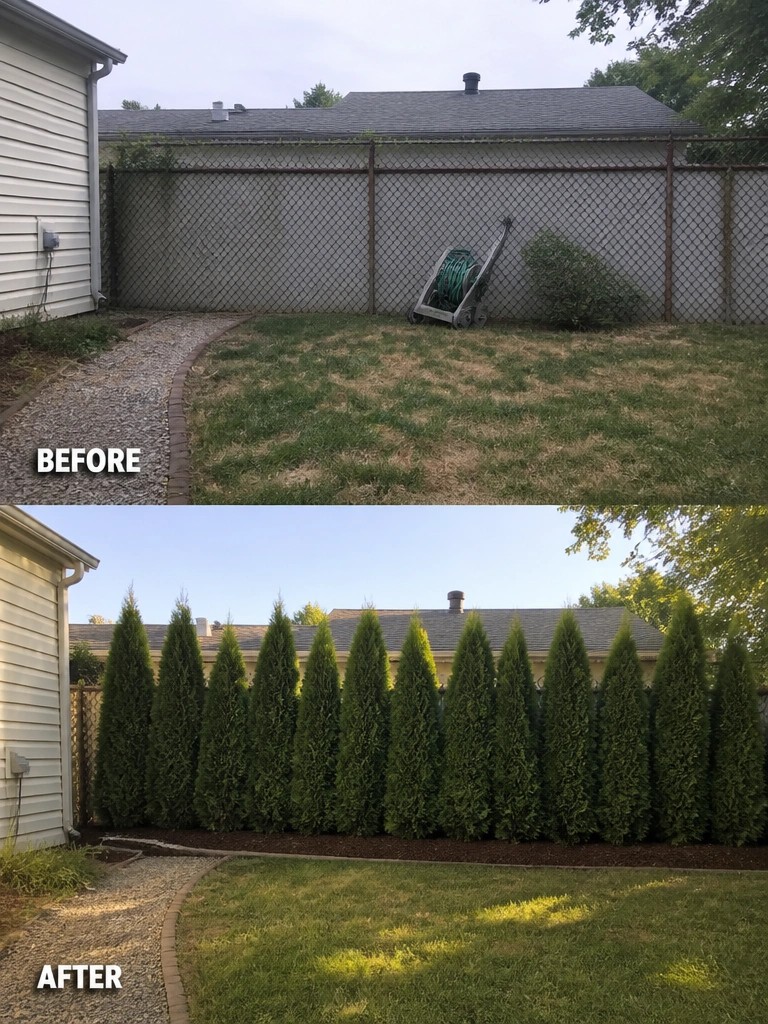
A simple row of tall evergreens planted right along the fence can turn an open backyard into a much more private space. The chain link fence once left the yard feeling exposed, but the new shrubs create a solid green wall that blocks the view while keeping the lawn open and usable.
This idea works best in smaller yards where a full fence replacement feels like too much. Space the plants evenly, give them room to fill in, and stick with one variety so the line stays clean. Start with good soil and mulch to help them establish faster.
Create Privacy With Horizontal Fencing And Simple Plantings
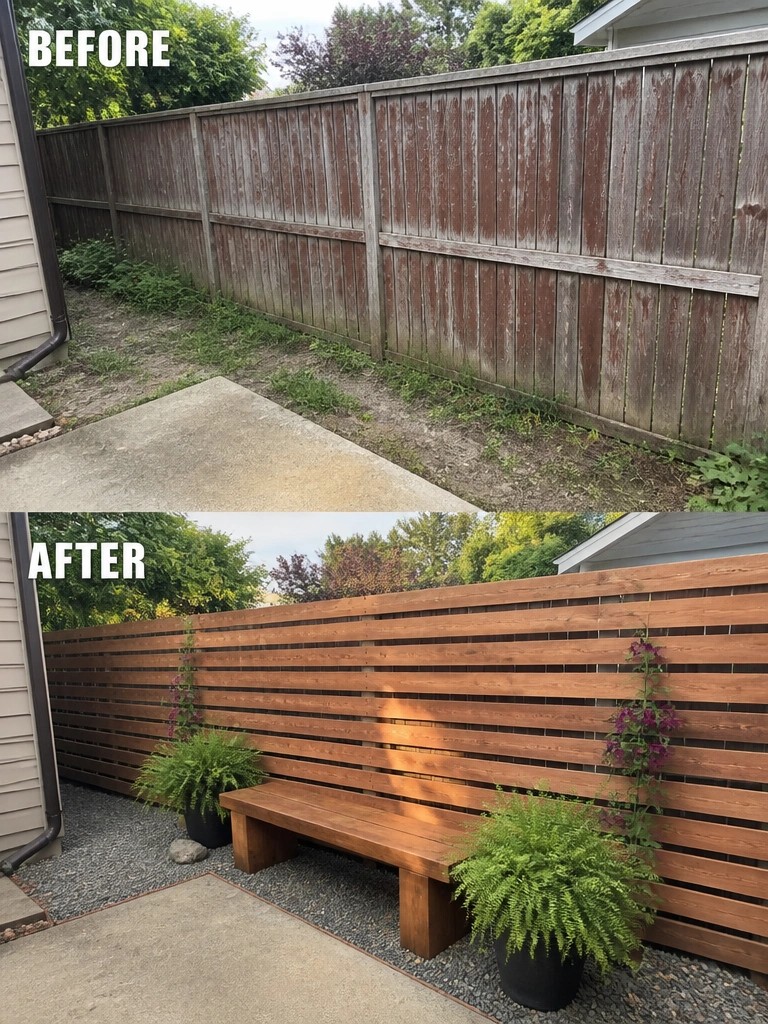
A tired vertical fence often leaves a yard feeling exposed. Switching to a horizontal design with tighter spacing blocks more sightlines while giving the space a cleaner look. Adding a built-in bench and a few large pots of ferns turns the fence line into a usable spot instead of just a boundary.
This approach works well on narrow side yards or back lines where you want privacy without losing every bit of open feel. Keep the plantings in movable pots at first so you can adjust them, and make sure the bench is deep enough for real seating. Gravel underfoot keeps the area dry and low-maintenance.
Add Trellises Along The Fence For Better Privacy
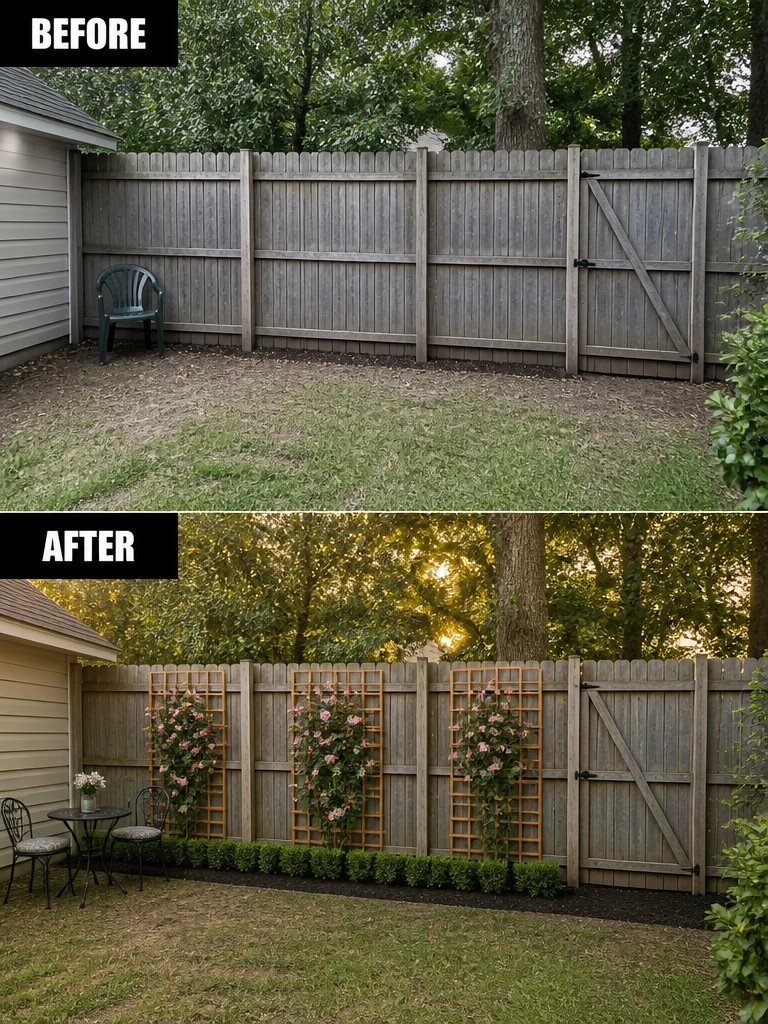
Attaching trellises to a plain fence and letting climbing plants grow up them gives you privacy without needing a taller structure. The before photo shows a basic fence with nothing but open space below it. In the after, the trellises break up the flat surface and the roses fill in the gaps over time.
This idea works best in backyards where the fence already exists but feels too exposed. Use wood trellises that match the fence, space them evenly, and plant something vigorous like roses or another climber. A low row of shrubs along the bottom helps tie everything together and keeps the look neat.
Add Tall Plants Along The Fence For Privacy
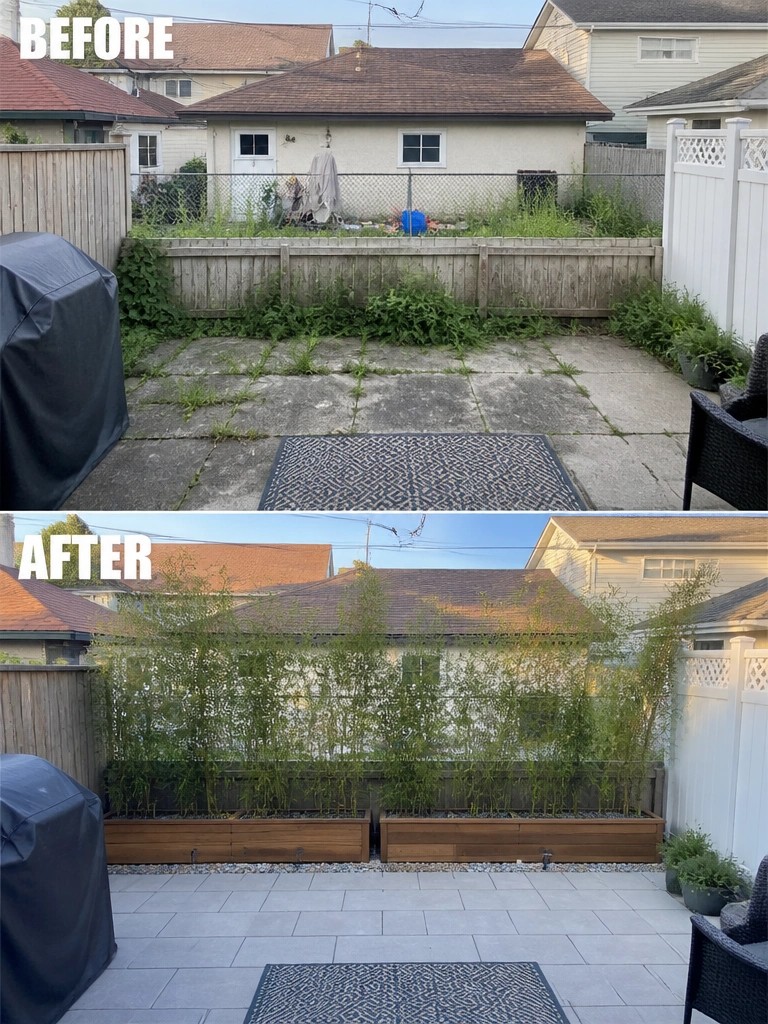
The main change here is swapping a weedy strip along the fence for a row of tall plants set in simple wooden planters. This creates a living screen that blocks the view from behind without making the yard feel closed in.
This idea works best in smaller yards where you want quick privacy but do not want to raise the fence height. Raised planters keep the plants contained, make watering easier, and let you choose fast-growing varieties that reach the right height in a season or two. Leave a little space between the planters and the seating area so the plants can fill out without taking over the patio.
Create Privacy With Vertical Planters On A Fence
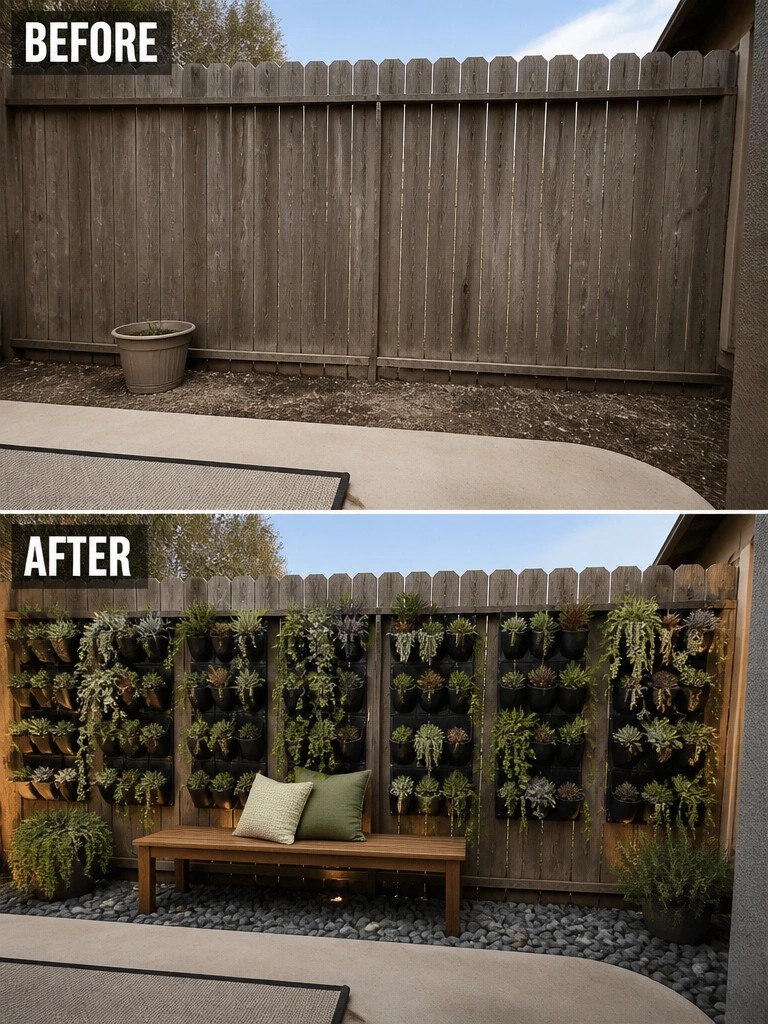
A bare fence often leaves a yard feeling open and flat. Vertical planters attached straight to the fence add layers of greenery that block views and soften the look without needing wide garden beds. The bench placed below turns the same strip of ground into a place to sit.
This approach works best along side or back fences where space is tight. Use a simple pocket system that hangs or screws into the wood, pick hardy plants that match your sun and water conditions, and keep the ground cover low like gravel so the focus stays on the green wall. It adds privacy while keeping the yard easy to maintain.
Add Layered Planting Along The Fence For Privacy
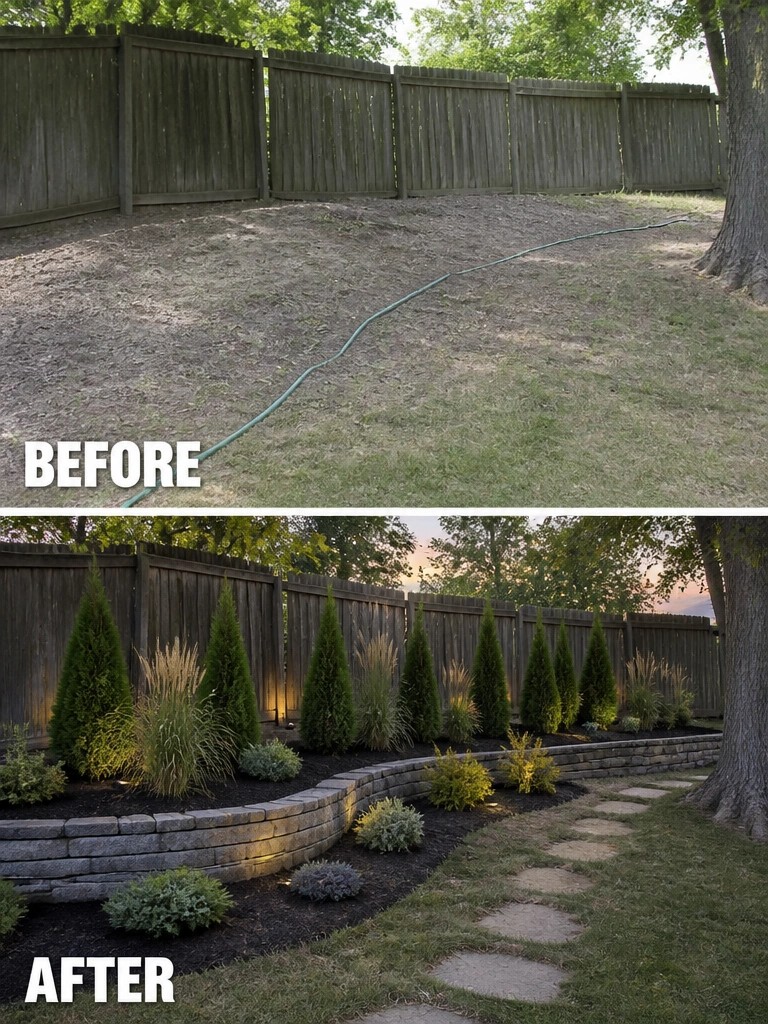
A bare fence line often leaves the yard feeling open and exposed. In this case, the fix was straightforward. A row of tall evergreens was planted right along the fence, with smaller grasses and shrubs layered in front. The low stone wall added a clean edge and kept the beds in place.
This approach works best when you already have a solid fence but need more height and coverage. Start with a few taller evergreens spaced evenly, then fill in with lower plants that add texture without blocking light. Keep the beds narrow enough to leave room for the lawn or a simple path.
Plant Along The Fence To Add Privacy
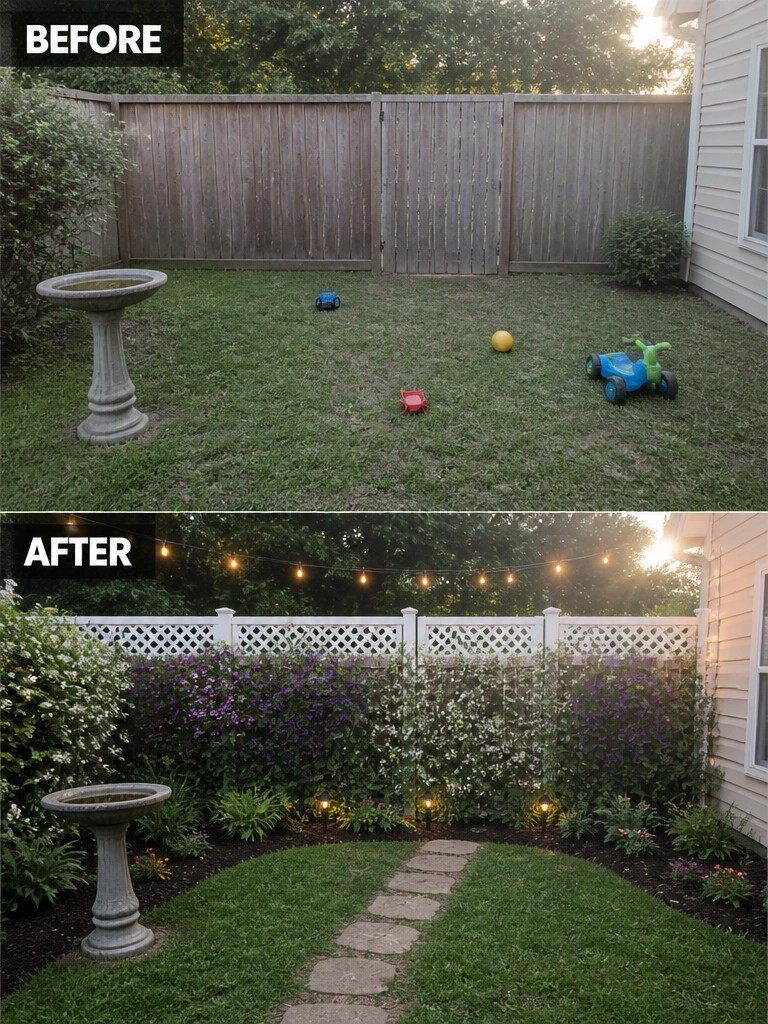
A backyard fence can feel exposed when it is just a plain wall of wood with open grass in front of it. Adding a border of shrubs and flowers right along the fence changes that quickly. The planting softens the fence and blocks the view from outside without needing a taller structure.
This idea works best in average-sized yards where full privacy is hard to achieve with fencing alone. Use a mix of taller evergreens at the back and lower flowering plants in front so the bed has depth. Keep the lawn edge clean so the planted border stays defined and easy to maintain.
Add Privacy Screens To An Overgrown Fence Line
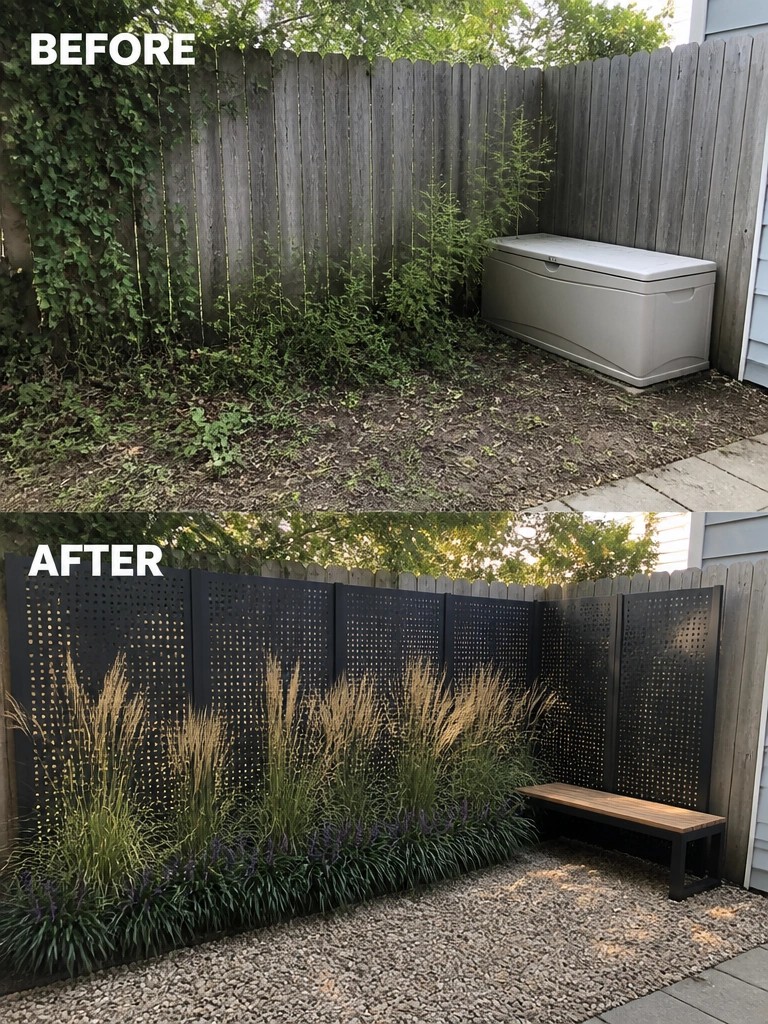
A plain fence with weeds and ivy creeping up the boards often feels more like a problem than a boundary. Adding a row of perforated privacy screens gives instant structure and blocks the view without making the space feel closed in. Planting a line of tall grasses in front and switching to gravel keeps the ground tidy and low maintenance.
This idea works best in narrow side yards or small back corners where you want privacy but still need light and air to move through. Clean up the overgrowth first so the new screens sit flat, then choose grasses that stay upright through the seasons. The bench in the after photo shows how the space can now hold simple seating once the planting is in place.
Add A Planting Border Along The Fence For Privacy
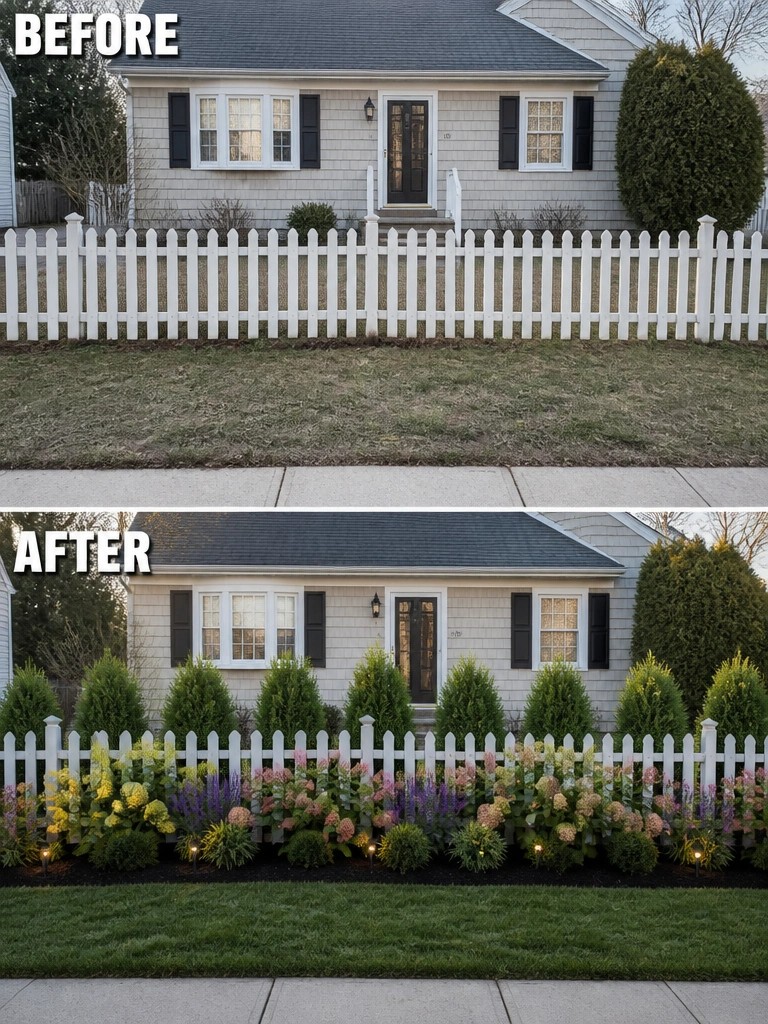
A simple way to gain privacy is to build a planting bed right in front of the fence instead of leaving the lawn open to the sidewalk. The before photo shows a basic stretch of grass with nothing to block the view. In the after photo, a row of shrubs and flowers fills that space and creates a soft screen that still lets the fence show through.
This idea works best along a front or side fence where you want separation without adding height. Keep the bed a couple of feet deep so the plants have room to fill in, and choose a mix of evergreens and lower flowers so the border stays full through the seasons. Start with cleanup and good soil before you plant.
Add Raised Beds Along The Fence For Privacy
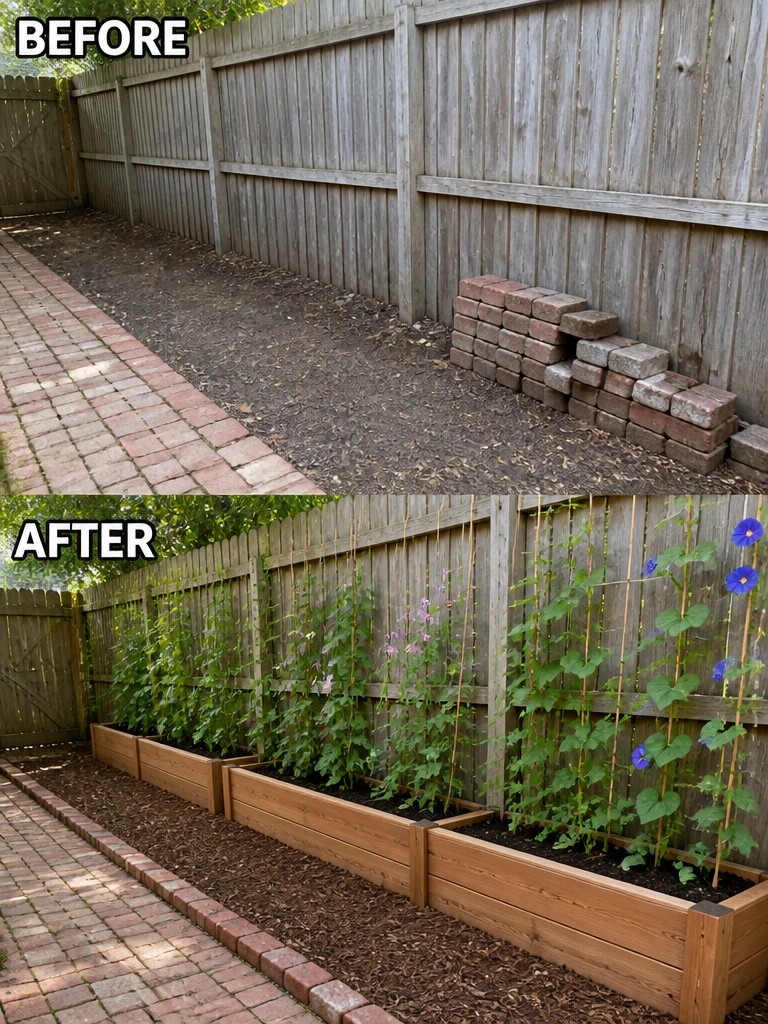
A simple way to improve a bare fence line is to install raised garden beds and let plants grow upward. The open dirt and scattered bricks give way to long wooden planters filled with soil, mulch, and vines that cover the fence and create a living screen.
This approach works best in narrow yards where you want structure without losing walkway space. Choose planters deep enough for good root growth, keep the beds narrow so they do not crowd the path, and pick climbing plants that can be trained on simple stakes or wires.
Add Privacy Planting Along The Fence Line
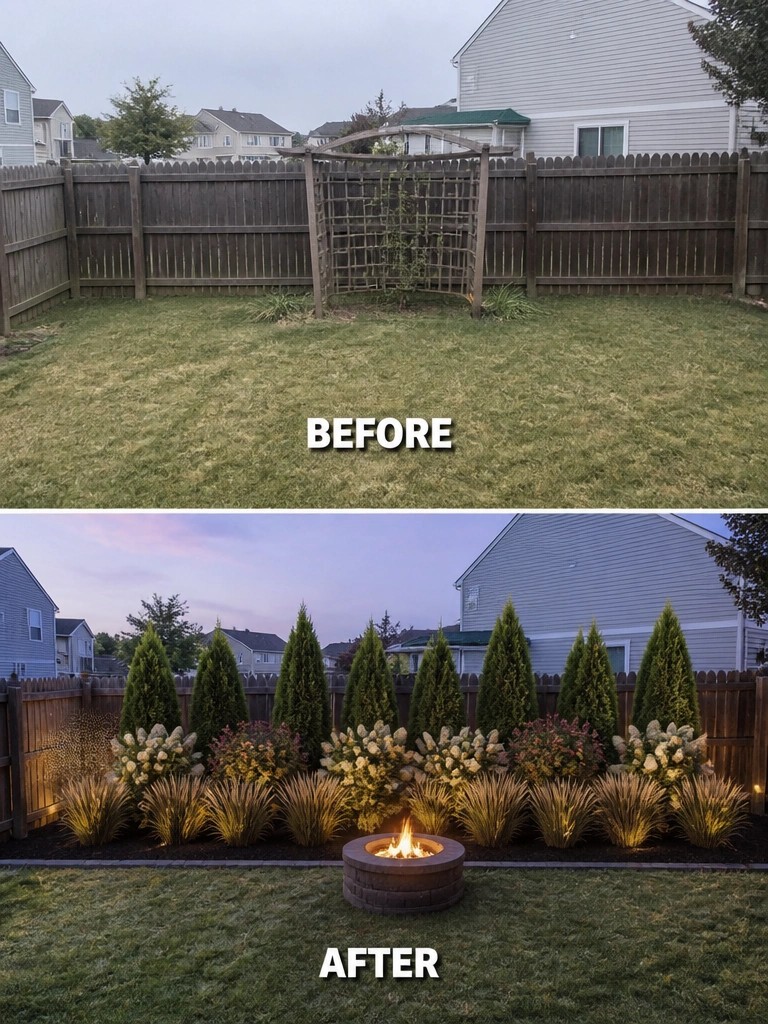
One simple way to gain privacy in a backyard is to plant a row of tall evergreens right along the fence. The before photo shows a plain fence with nothing but grass below it. After the change, the same fence line now has a solid row of trees backed by lower shrubs and grasses that block the view from both sides.
This approach works best in suburban yards where houses sit close together. Use evergreens for the height you need, then add a mix of flowering shrubs and ornamental grasses in front to soften the look. Place a focal point like a fire pit inside the new bed so the planting feels purposeful instead of just a screen.
Add Privacy Planting Along The Fence Line
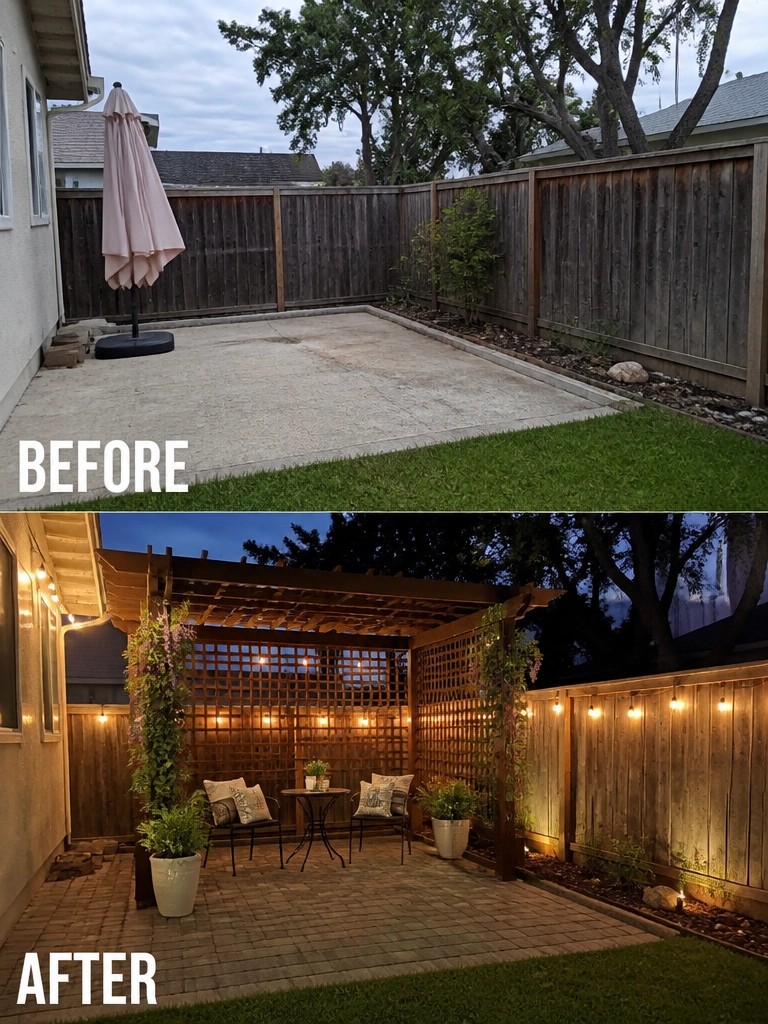
A plain fence often leaves the whole backyard feeling open and exposed. Adding a pergola frame with climbing plants along one side creates a living screen that blocks views while still letting in light and air.
This approach works well on smaller lots where you want a clear seating area without losing too much open space. Keep the planting strip narrow, choose vines that grow quickly on a simple trellis, and add a few lights so the spot stays usable into the evening.
Add Privacy With Raised Planters Along A Fence
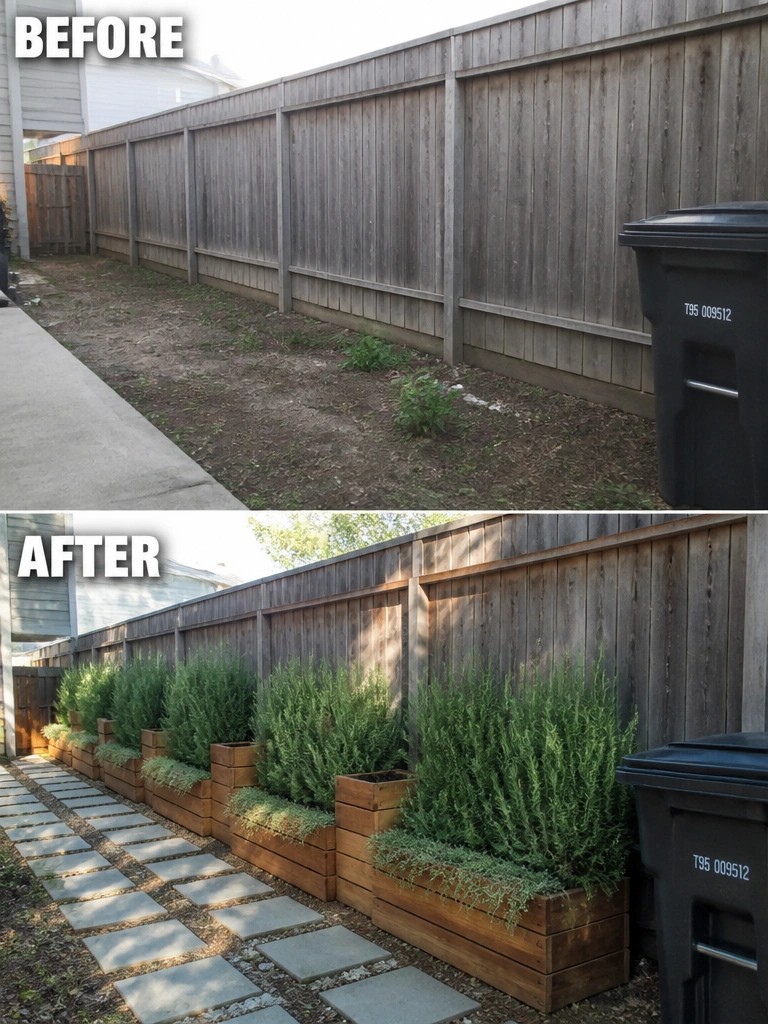
A bare fence line often leaves a yard feeling exposed. Placing a row of simple wooden planters filled with tall evergreens gives you quick screening and turns the fence into a planted backdrop instead of a plain wall. The change from open dirt to a solid line of green makes the space feel more enclosed and finished.
This idea works best in narrow side yards or along back fences where you want privacy without adding height to the fence itself. Use sturdy planters that can handle weather, pick plants that stay dense year round, and leave enough room between boxes for growth. It keeps the look clean while giving you control over how much coverage you get.
Add Planter Boxes Along The Fence For Privacy
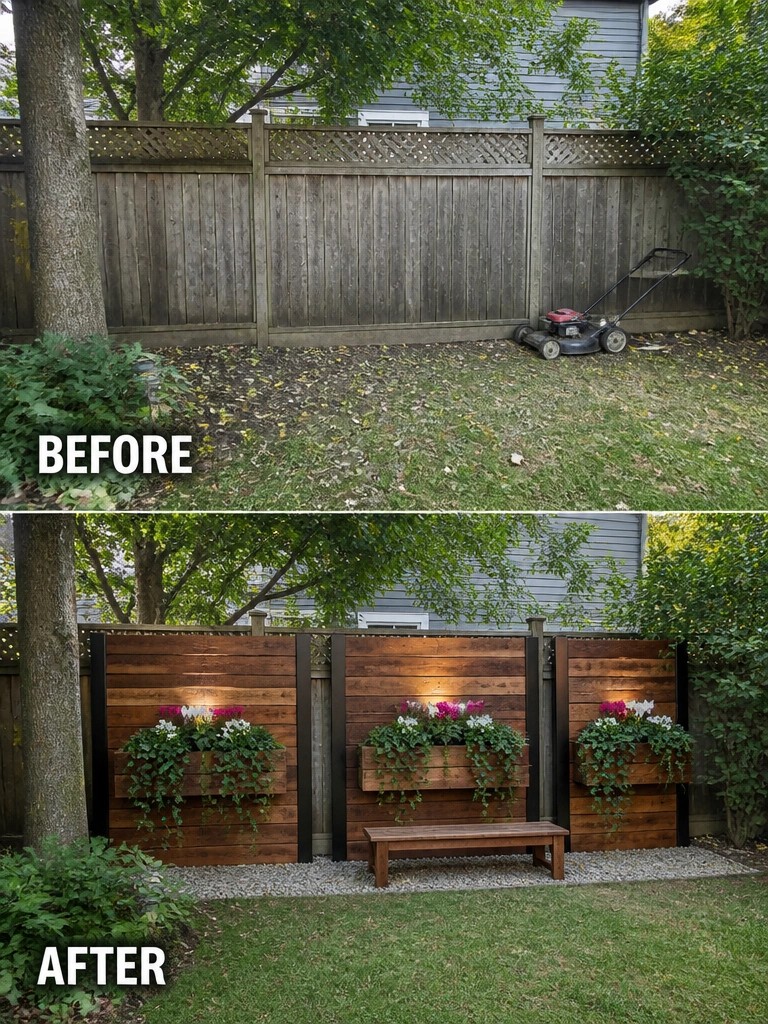
A plain fence with weedy grass in front rarely feels private or finished. Adding built-in planter boxes turns the fence into a defined boundary that blocks views and gives the yard a clear edge. The horizontal wood and simple lighting in the after photo show how small changes along the fence line can make the whole space feel more intentional.
This idea works best on straight fence runs where you can repeat the same planter size and plant mix. Keep the bed narrow so you still have room to mow or walk behind it, and choose plants that spill over the edge without needing constant trimming. Gravel under the planters helps keep the area tidy and prevents mud from splashing onto the wood.
Plant A Layered Border Along The Fence
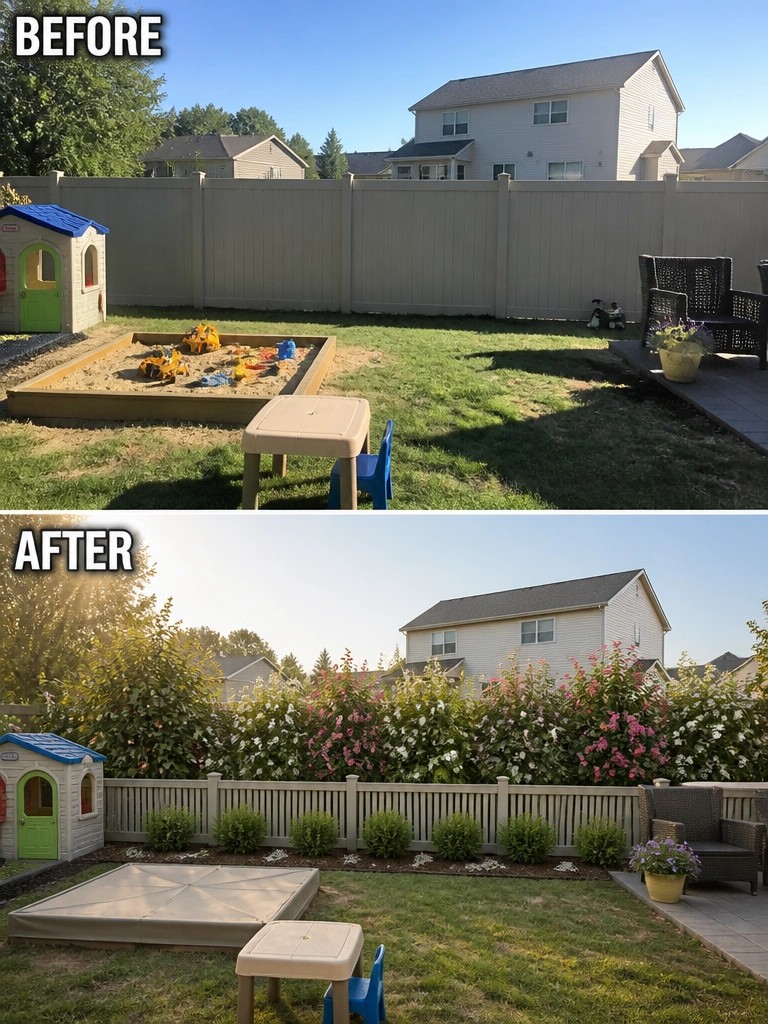
A bare fence often leaves a backyard feeling exposed. Adding a row of shrubs and flowering plants right in front of it softens the line and creates privacy without needing a taller structure.
This works best in average-sized yards where you want screening but still want to keep the existing fence. Mix a few evergreen shrubs for winter coverage with taller flowering varieties that add color in summer. Give the plants room to spread so the border fills in naturally over a couple of seasons.
Add Defined Planting Beds Along The Fence
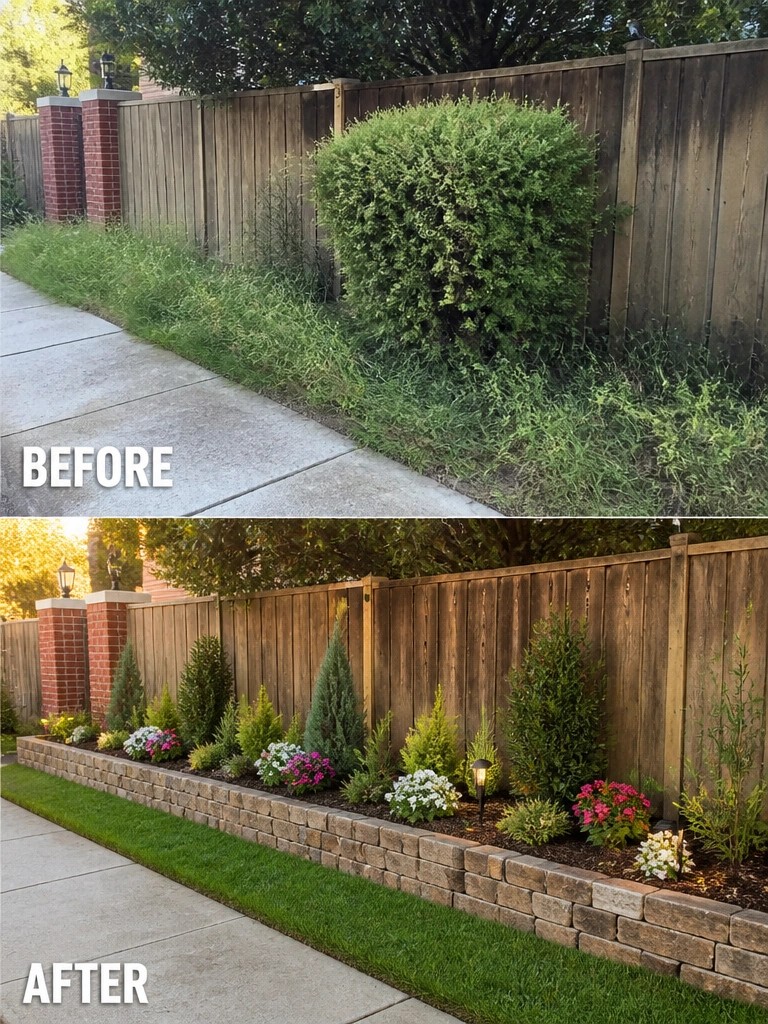
Clearing out the tall weeds and adding a low stone border makes the space along the fence feel intentional instead of forgotten. The new beds hold a simple mix of shrubs and flowers that fill in quickly and block the view from the sidewalk without taking over the whole yard.
This idea works best on narrow strips where you need both order and privacy. Keep the bed depth modest so the lawn stays usable, and choose plants that stay mostly evergreen so the fence line looks finished all year.
Create Privacy With Woven Fencing And Border Planting
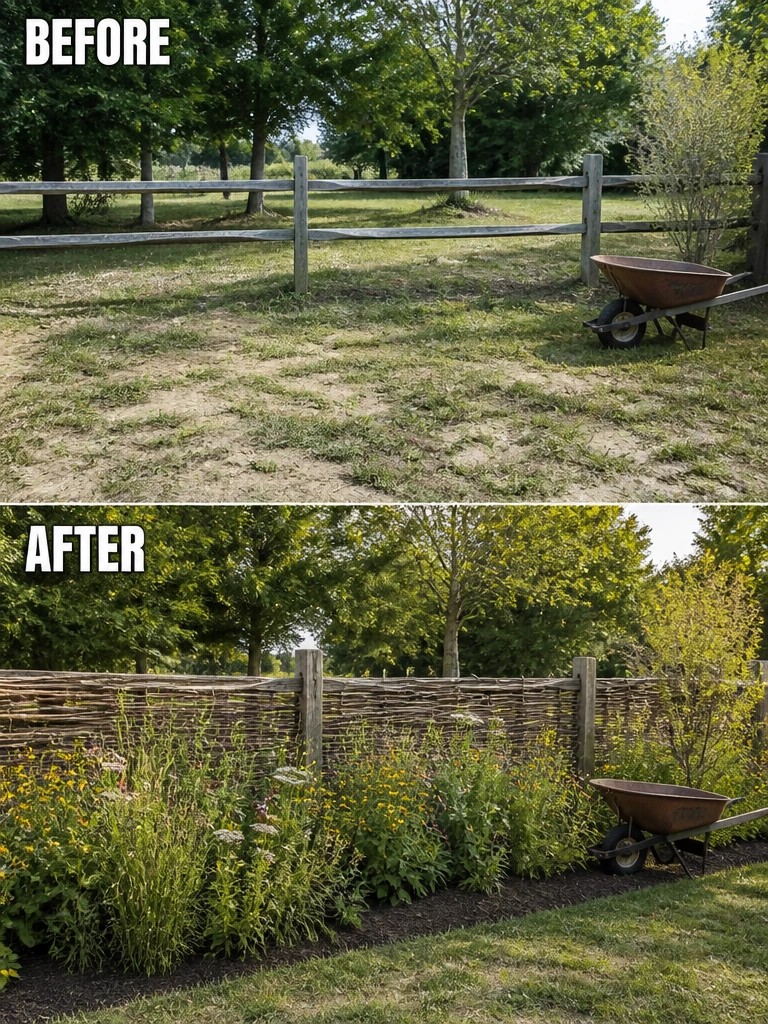
An open rail fence leaves the whole yard exposed. Replacing the middle section with woven branches and planting a thick row of flowers and shrubs right along the base turns the same fence line into a solid screen that blocks the view while still looking natural.
This idea works best on straight property edges where you want privacy without adding trees. Use simple woven panels between the existing posts, then choose a mix of mid-height plants that fill in quickly so the screen feels complete from the ground up.
Add Privacy With Raised Planters Along The Fence
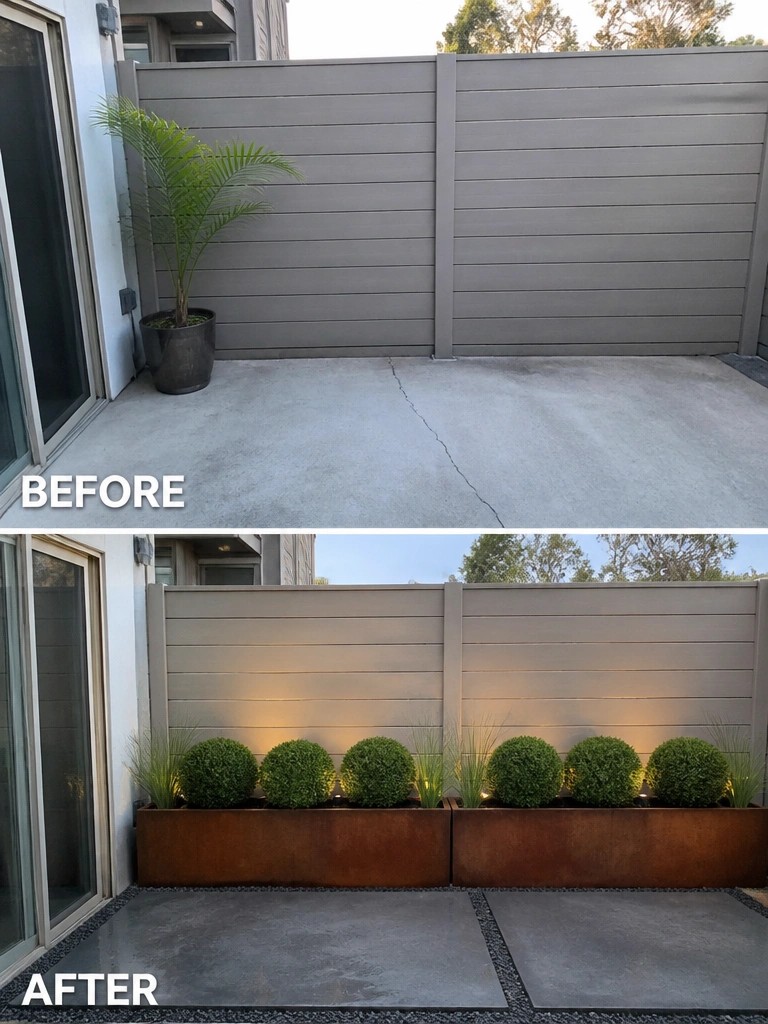
A bare fence next to plain concrete often leaves the whole area feeling exposed. Adding raised planters with dense shrubs and grasses creates a living screen that blocks views while softening the hard surfaces.
This idea suits small yards or patios where building a taller fence is not practical. Use metal or wood planters that can handle weather, fill them with evergreens for steady coverage, and mix in a few taller grasses for depth. Keep the beds narrow enough to leave walking space open.
Create Privacy With Layered Planting Along The Fence
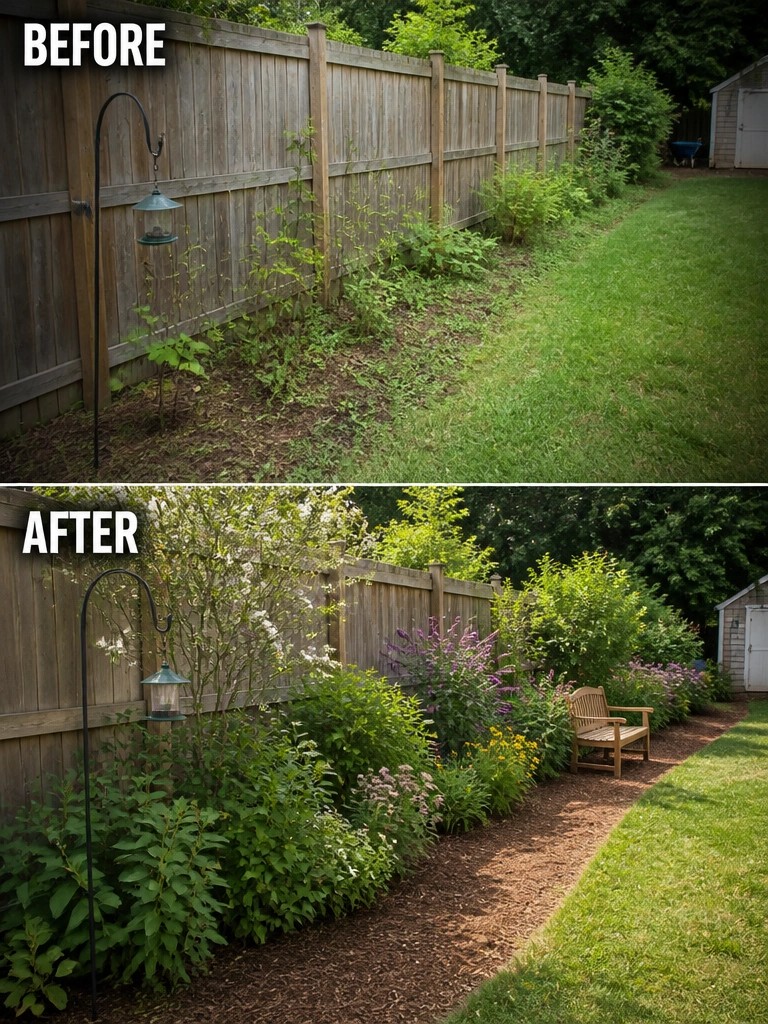
An overgrown strip along a fence often feels messy and leaves the yard open. Clearing the weeds first and putting in a defined bed with mulch and a mix of shrubs and flowers turns the same space into a living screen that softens the fence and blocks the view from outside.
This works best in narrow side yards or along back fences where you want natural screening. Edge the bed, add mulch to hold down weeds, and plant in layers so the border stays full from top to bottom. A simple bench can be added later once the plants have room to grow.
Train Fruit Trees Along The Fence For Privacy
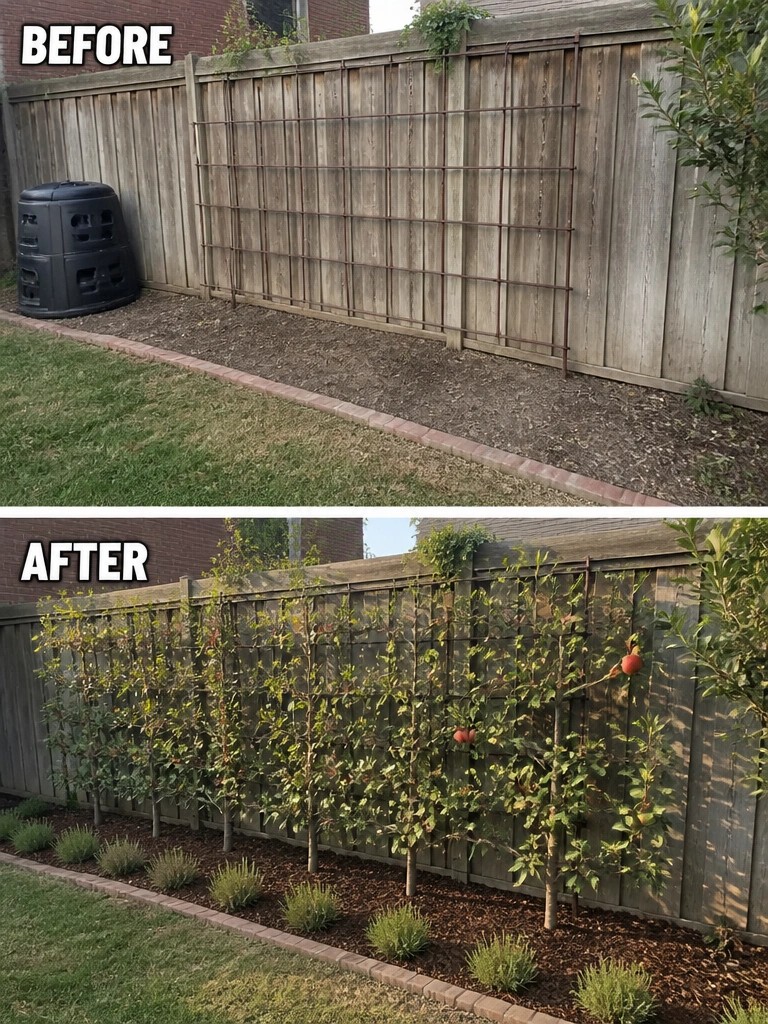
The change here turns a bare fence line into a living screen by training young fruit trees flat against it. The trees add height and greenery without spreading far into the yard, and the mulch and low border plants keep the base tidy.
This idea works best in narrow side yards or back fences where space is limited. Choose varieties that handle pruning well, set up a simple support grid early, and keep the trees watered and trimmed so they stay flat. It gives privacy while also producing fruit in a small area.
Frequently Asked Questions
Q: How tall should the plants be to block views from my neighbor’s second floor? A: Go for shrubs or grasses that reach at least eight feet once mature. Plant them right against the fence so they fill in the gaps quickly and create a solid screen without extra supports.
Q: Will roots from new shrubs push against or crack my fence boards over time? A: Choose varieties with contained root systems like certain hollies or bamboo in containers. Set the plants a foot away from the fence base and check them each spring to keep growth in check.
Q: What’s the quickest way to get decent privacy this season instead of waiting years? A: Start with a row of fast-growing evergreens spaced close together along the fence. Water them well the first month and they will thicken up enough to cut sight lines by fall.
Q: Can I combine tall plants with lower ground cover in the same strip? A: Layer a mix of mid-height bushes in back and shorter ferns or hostas in front. This setup adds depth while keeping everything along the fence line easy to water at once.
