

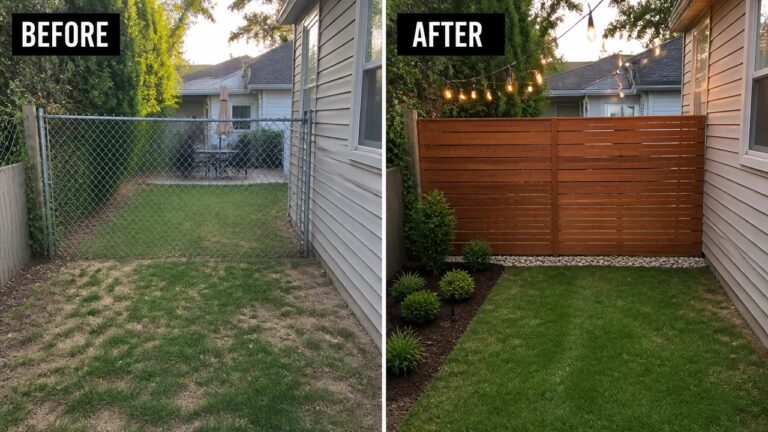
When the yard feels exposed it is easy to skip going outside even on nice days.
Adding privacy often starts with figuring out the main sight lines from windows or neighboring yards.
That step changes everything.
I have found that mixing quick fixes like fabric screens with longer term plantings gives the best results without a big upfront cost.
It is satisfying to watch the space become somewhere I choose to linger rather than just mow and leave.
Add A Privacy Fence To Your Backyard
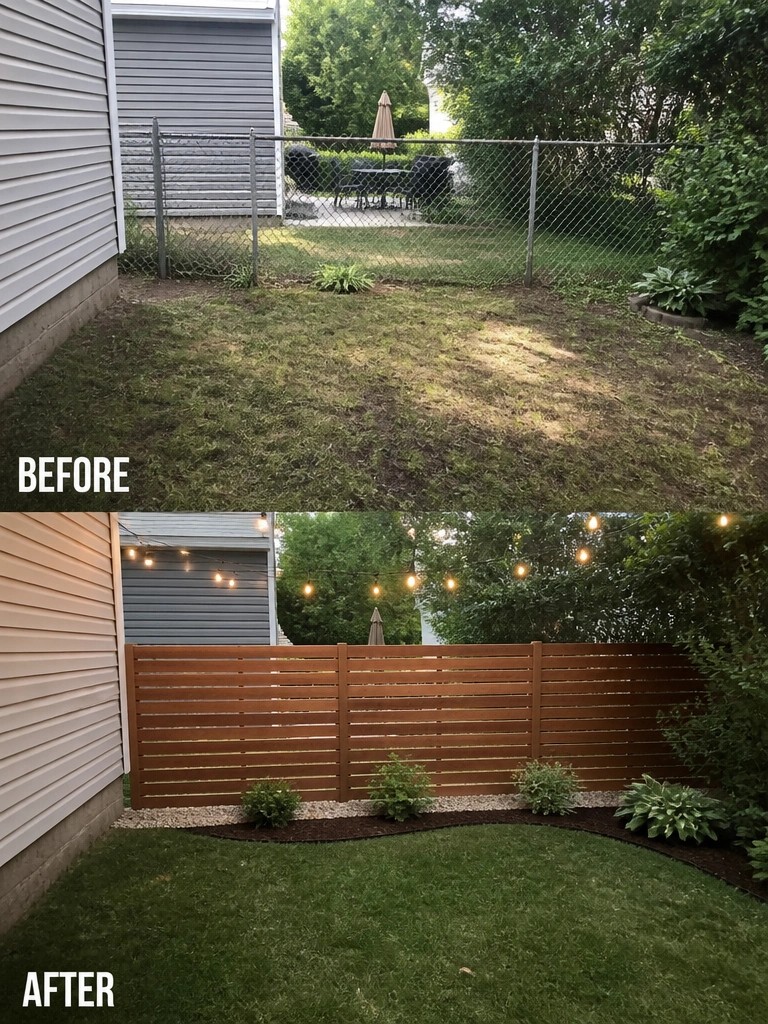
Swapping an open chain link fence for a solid wood one makes a big difference in how a backyard feels. The new fence blocks the view from neighboring yards and creates a clear boundary without making the space feel closed in.
This approach works best in smaller lots where houses sit close together. Put up the fence first if privacy is the main concern, then add a simple bed of mulch and low plants along the base to keep the look clean and finished.
Use A Hedge To Add Privacy Along A Fence
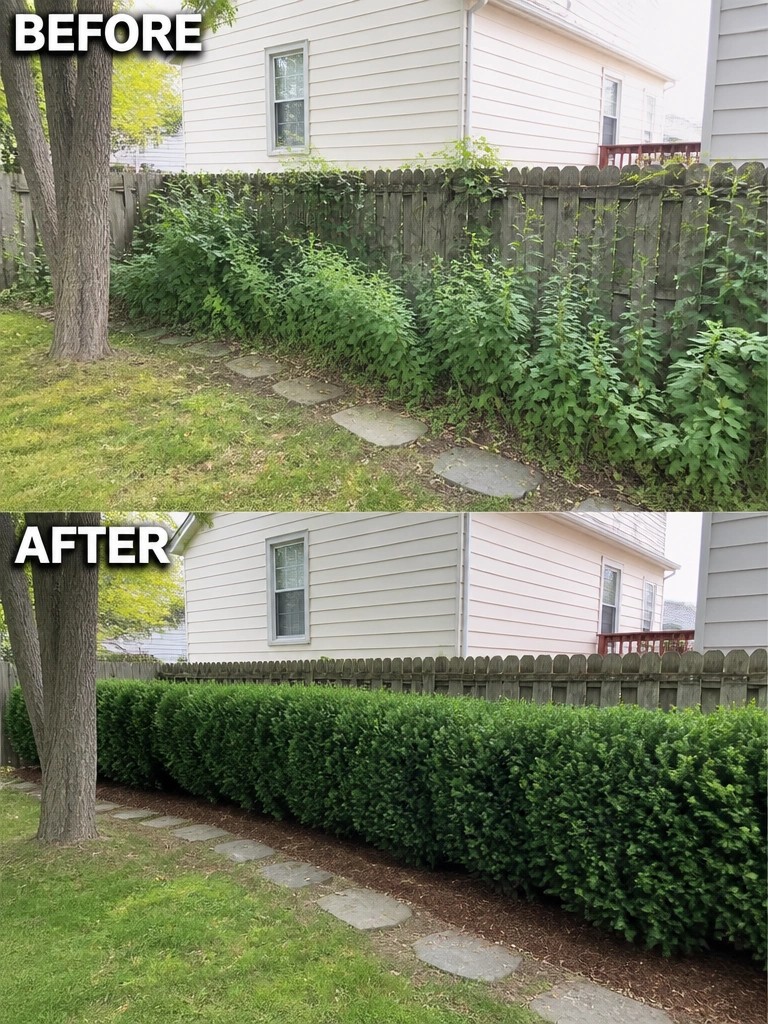
A messy strip of weeds and tall plants along a fence does little for privacy and makes the yard feel neglected. Replacing that overgrowth with a dense, trimmed hedge creates a solid green wall that blocks the view while keeping the space feeling open and cared for.
This approach works well in narrow side yards or backyards where you want screening without building a taller fence. Start by clearing the old growth completely, then plant a row of shrubs that can be sheared to a consistent height. Mulch the bed to keep weeds down and give the area a finished look right away.
Add Lattice And Climbing Plants For Yard Privacy
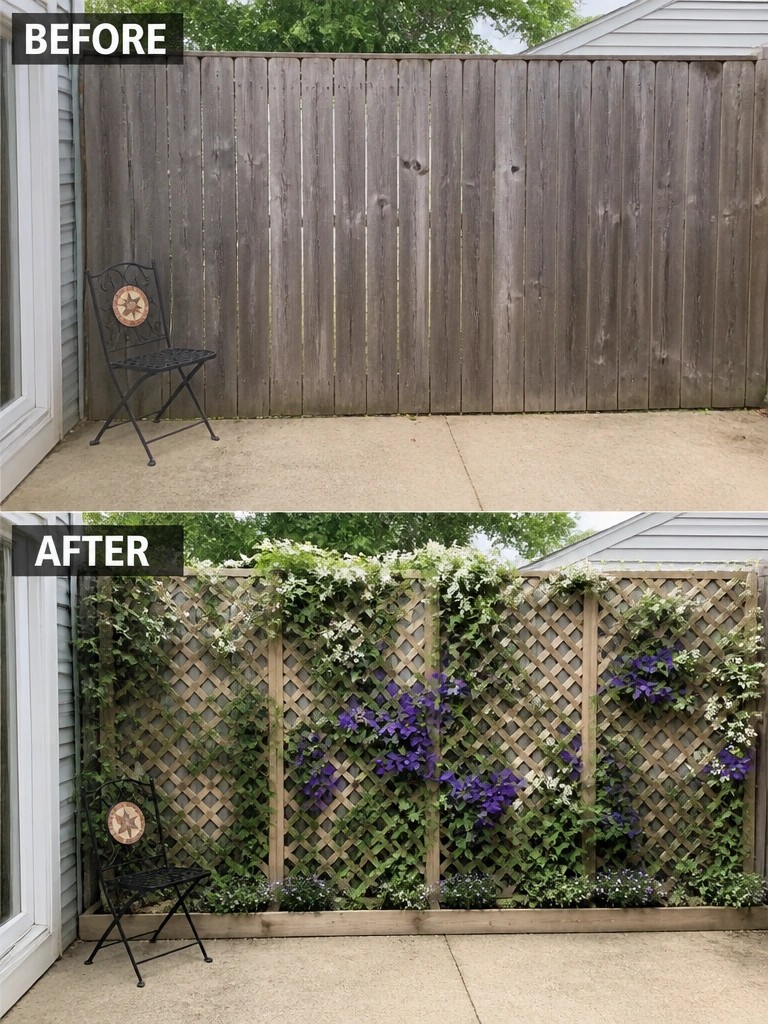
A plain fence next to a patio can leave the space feeling exposed. Adding a few lattice panels and letting vines grow up them turns the fence into a living screen that blocks views while still letting in light and air. The change is simple but makes the whole yard feel more private and finished.
This idea works best along property lines or beside seating areas where you want coverage without building a solid wall. Start with sturdy lattice attached to the fence, then choose fast-growing vines that suit your climate. Keep the base planting simple so the screen stays manageable over time.
Add A Reed Screen For Quick Privacy
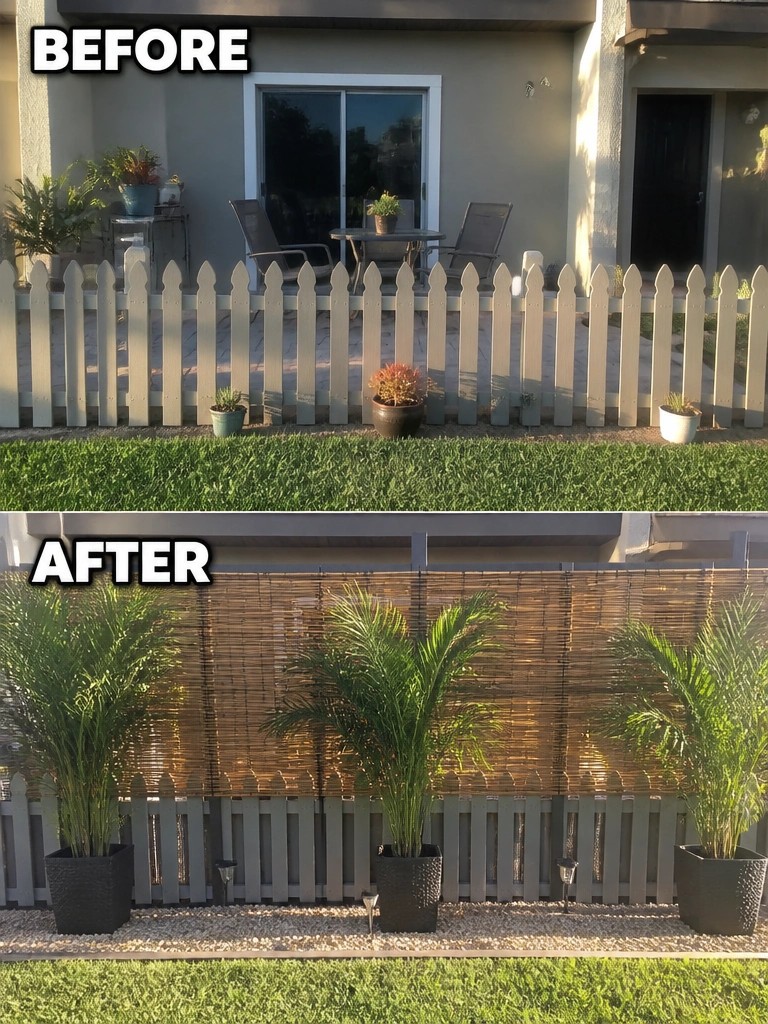
A basic white fence often leaves the yard feeling exposed, especially when neighbors or the street can see straight through. Adding a woven reed screen behind the fence creates an immediate barrier without replacing the whole structure. The after photo shows how the screen softens the view while the larger potted palms add height and further blocking.
This approach works well along side or back fences where you need coverage fast. Start with a roll-up screen that attaches directly to the existing fence, then place a few tall plants in front to hide the bottom edge. It stays affordable, takes little time, and can be removed later if your needs change.
Add Vertical Plants To Create Privacy
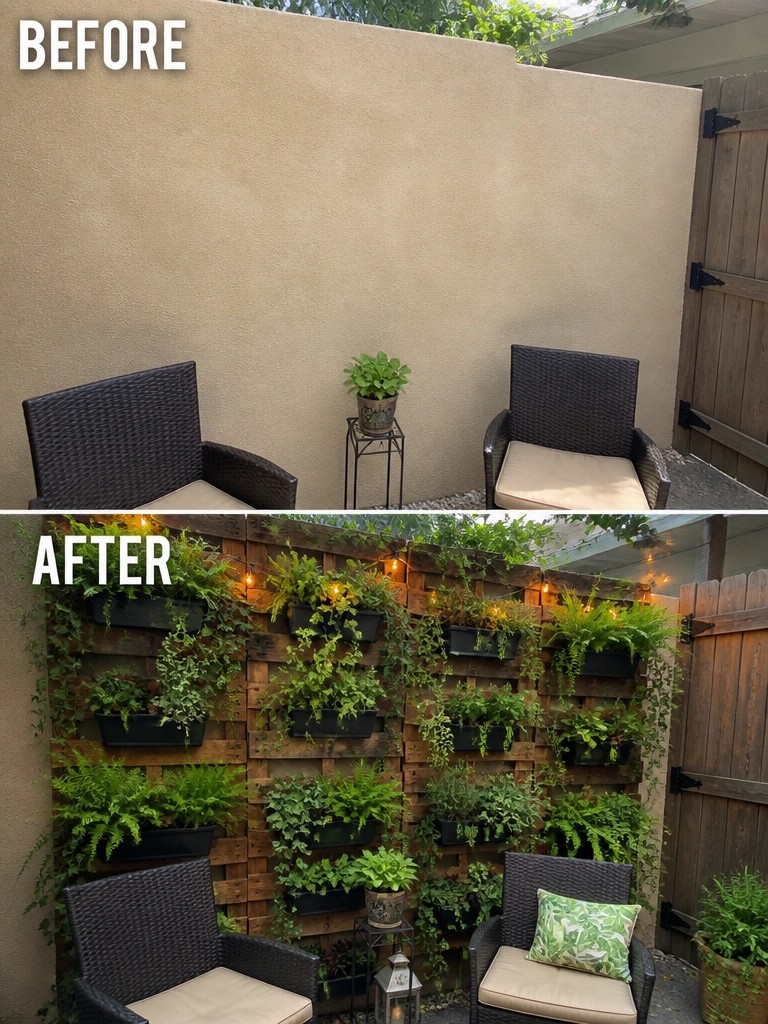
A blank wall behind an outdoor seating spot can leave the area feeling exposed. Adding a simple vertical garden structure covered in planters turns that same wall into a living screen that blocks the view while still letting in light and air.
This approach works well on small patios or side yards where there is little room for deep beds or tall hedges. Start with a basic wood frame or ready-made panels, then choose hardy ferns and trailing plants that can handle your local conditions. String lights woven through the plants add a bit of warmth for evening use without needing much extra wiring.
Add Privacy Panels To An Open Patio
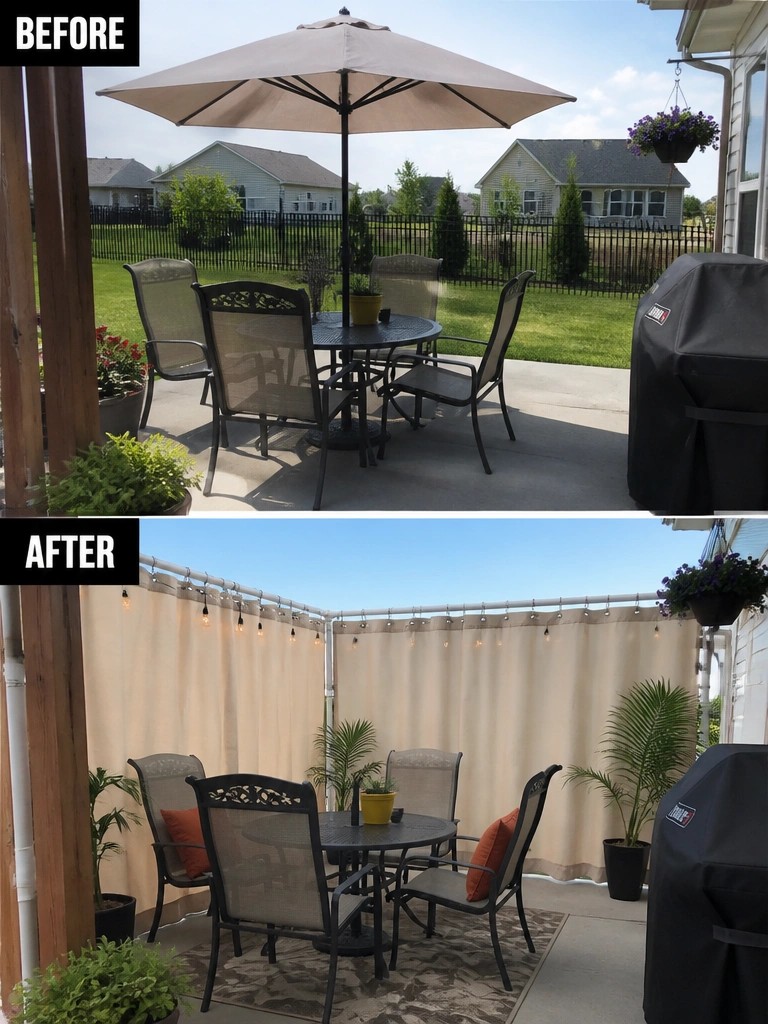
An open patio often feels too exposed, especially when neighbors or roads sit close by. Adding simple fabric panels around the edges turns the space into something more enclosed and comfortable without any major construction.
This idea works best on concrete patios or decks that already have a basic structure. Hang the panels on a tension rod or cable system so they can be pulled back on nice days, and pick outdoor fabric that holds up to sun and rain.
Add A Pergola For Privacy On An Open Deck
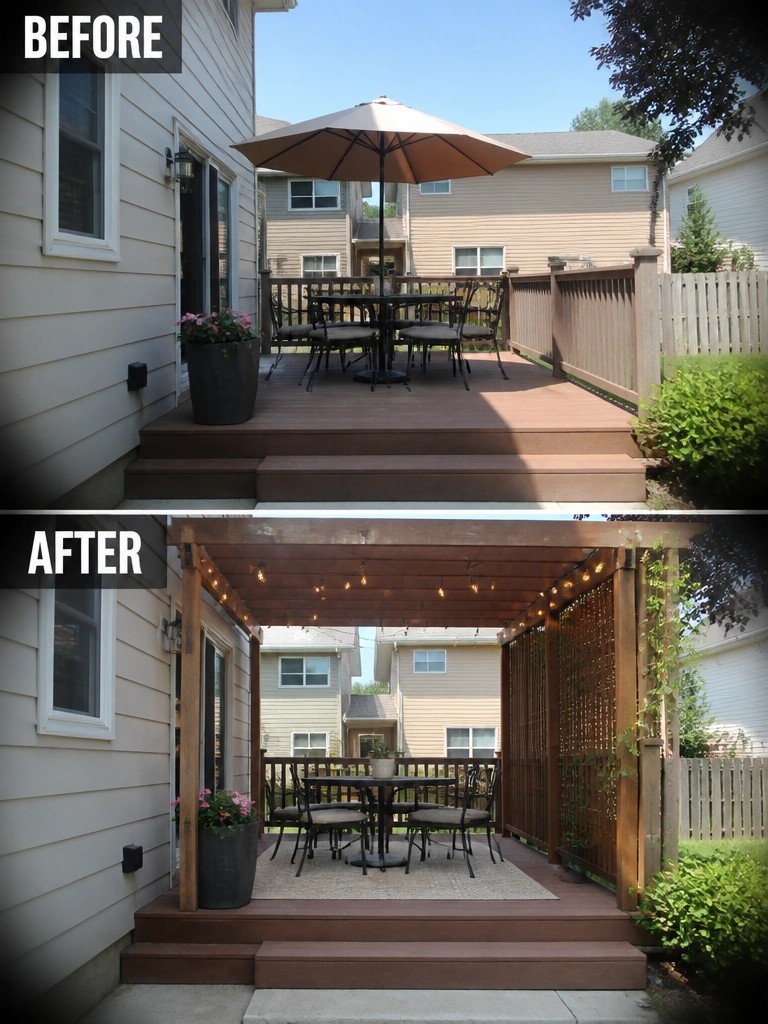
An open deck often feels too exposed when houses sit close by. Adding a pergola with lattice panels on the sides creates a simple screen that blocks the view without making the space feel closed in. String lights across the beams add a bit of warmth for evenings.
This idea works best on decks that already have a table and chairs but lack any sense of separation. Keep the structure basic and focus on the sides that need the most screening. An outdoor rug can help define the seating zone once the frame is up.
Use Raised Beds To Add Privacy Along A Fence
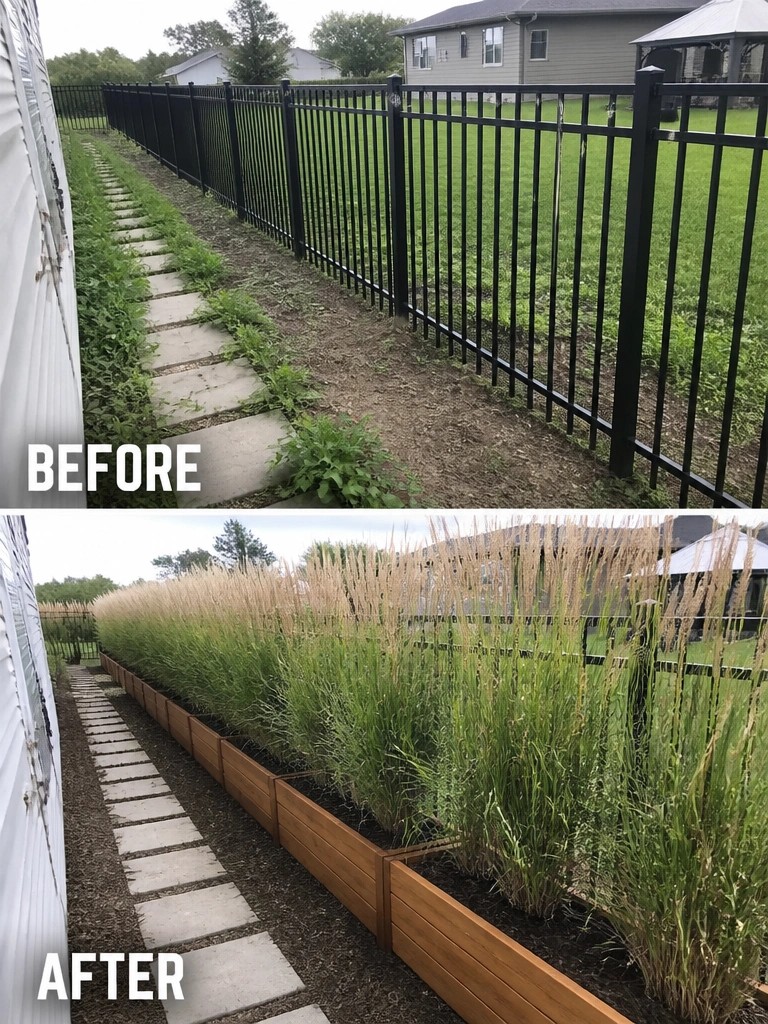
One simple way to gain privacy is to add raised beds with tall grasses right along the fence line. The open dirt strip next to the black fence became a row of wooden planters filled with feathery grasses that block the view without crowding the path.
This idea works best in narrow side yards where you need height but do not have much ground space. Use basic cedar boxes, pick fast-growing ornamental grasses, and keep the beds mulched so the planting stays tidy with little upkeep.
Create Privacy With Climbing Plants On A Fence
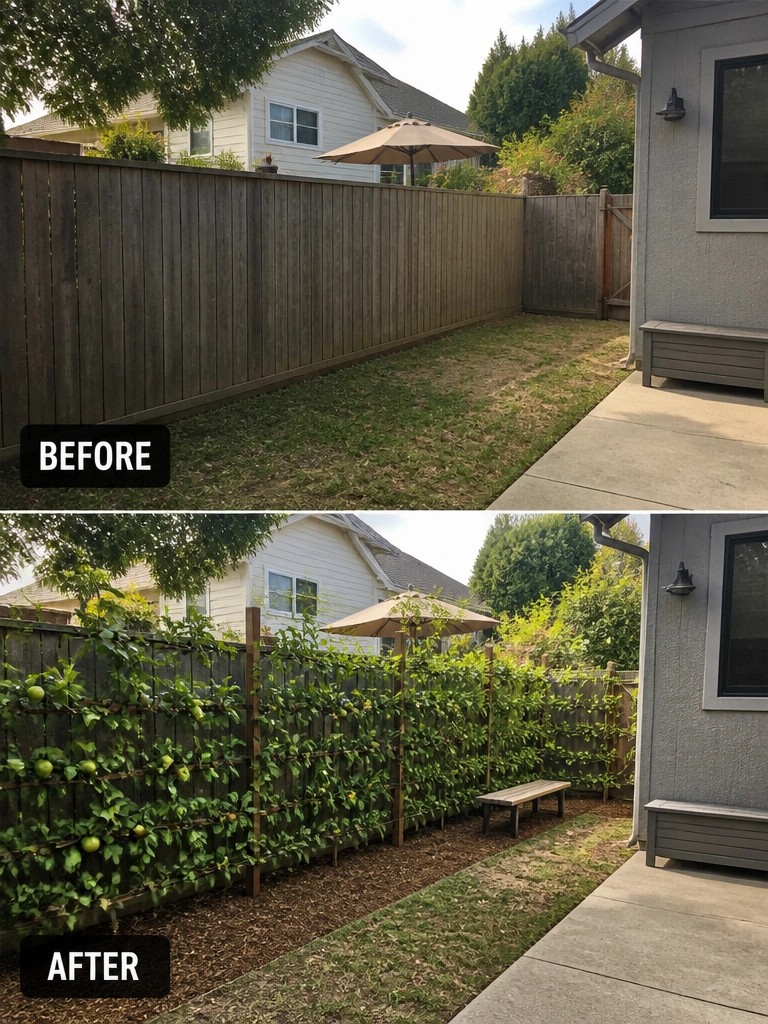
A plain fence can leave a yard feeling exposed. Adding a basic trellis system and planting vines turns that fence into a living screen that adds both privacy and greenery. The change from bare wood to a wall of leaves and fruit makes the space feel more enclosed without needing a taller structure.
This idea works best along property lines where you already have a fence in place. Choose vines that grow well in your area, space the supports so the plants can spread evenly, and keep the base mulched to control weeds. It suits smaller yards that need coverage without losing light or taking up extra ground space.
Add Decorative Panels To A Fence For More Privacy
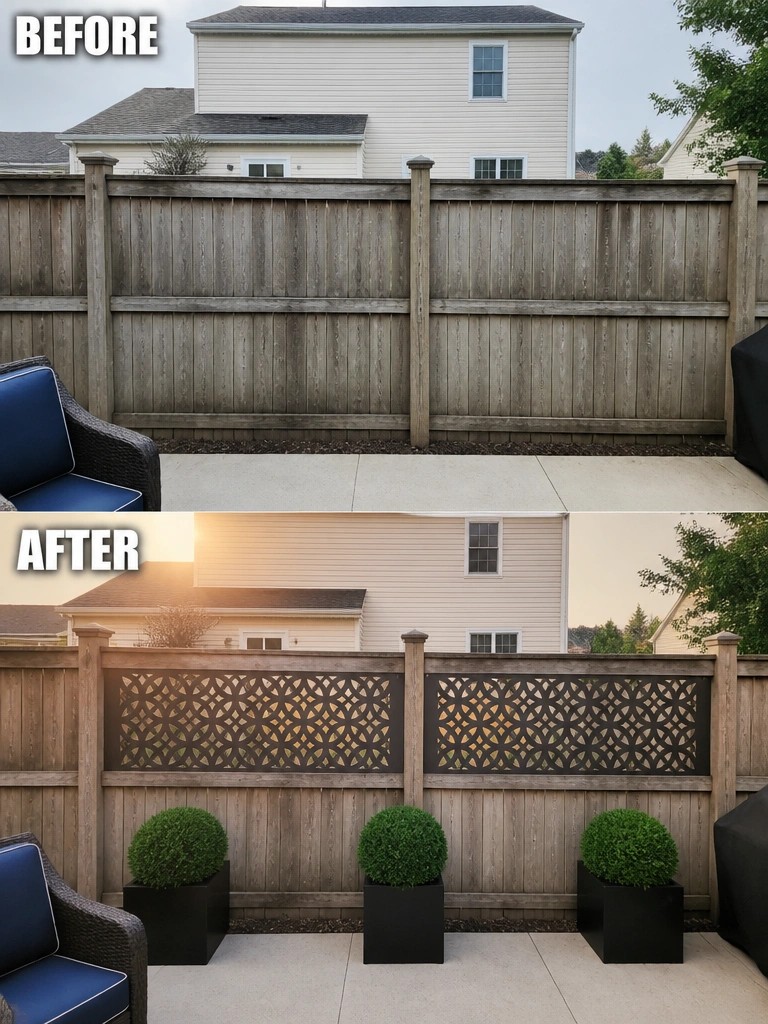
A basic fence often blocks the view but still leaves parts of the yard feeling open. Adding a few patterned panels creates extra screening in the spots that matter most while keeping the rest of the fence simple and affordable.
This idea works on any fence that already has solid posts and rails. Focus the panels on the sections facing neighbors or busy areas, then add a couple of planters along the base to soften the line. The rest of the fence stays untouched, so the project stays small.
Add Privacy With A Solid Fence Replacement
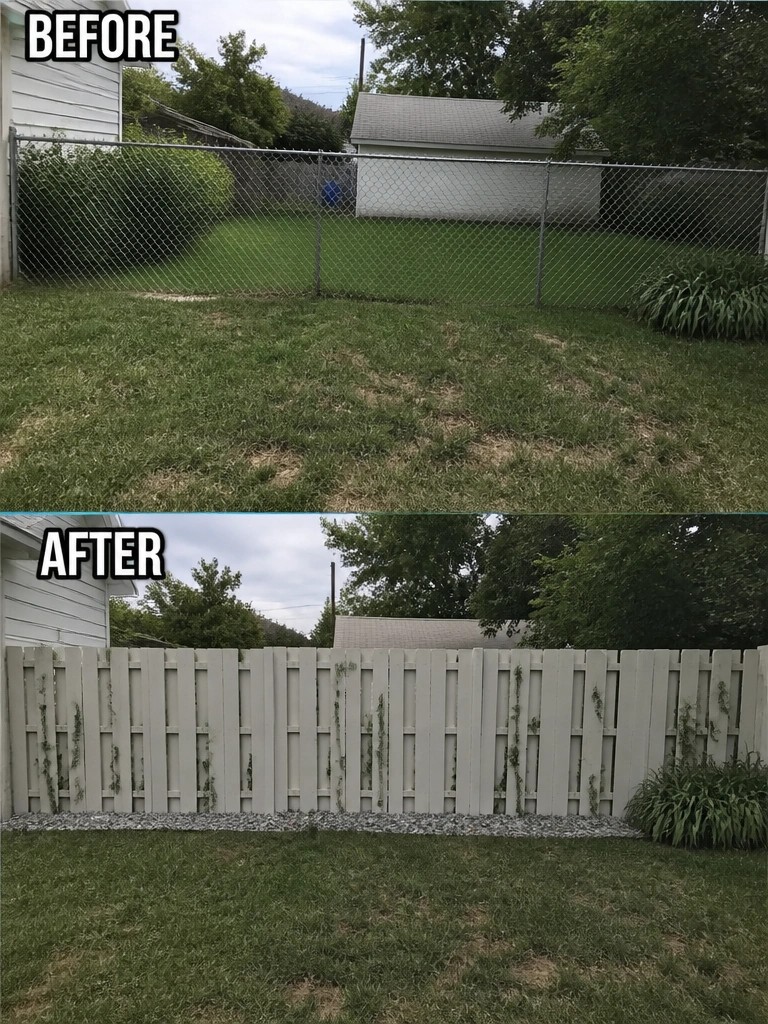
A chain link fence leaves the whole yard open to view, which can make the space feel exposed. Replacing it with a solid fence creates a clear boundary that blocks sight lines and makes the yard feel more private right away.
This works best in backyards that sit close to other homes or streets. Choose a simple wood or vinyl style on a gravel base to keep the project affordable and easy to maintain over time.
Add A Planting Border For Privacy
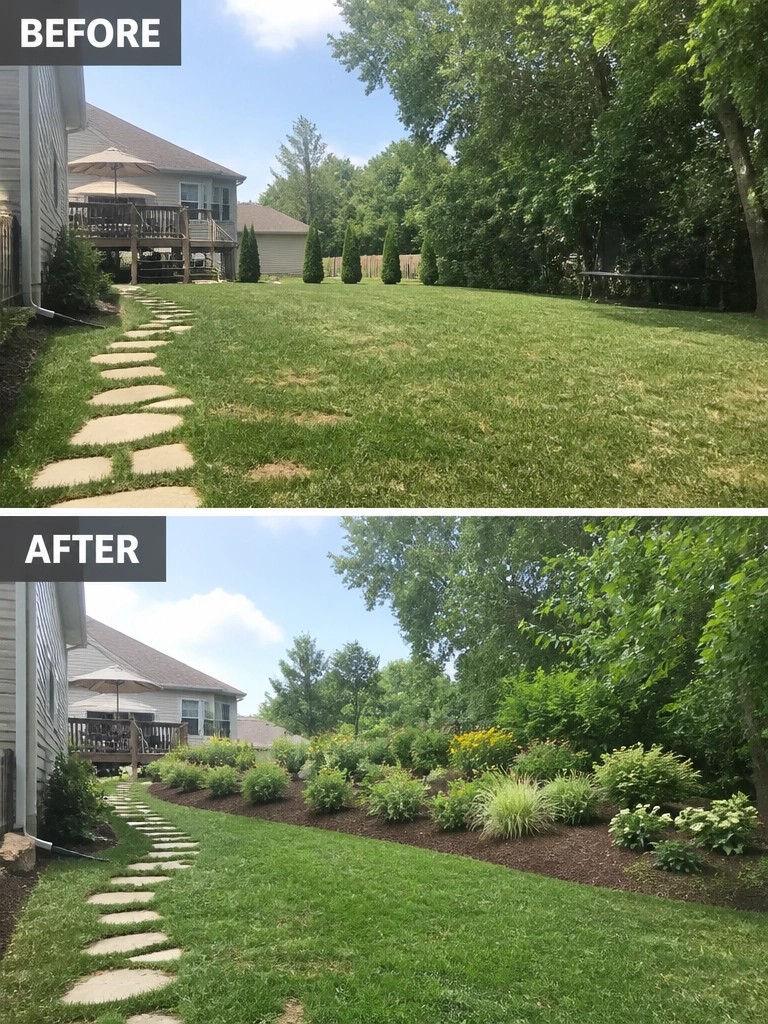
An open lawn can feel exposed, especially when trees and neighbors sit close by. Adding a curved planting bed with shrubs and flowers gives the yard a clear edge and softens the view without blocking light or airflow.
This approach works best along the sides or back of a yard where you want screening but still need to keep the lawn usable. Start with the bed shape and soil first, then choose a mix of evergreen shrubs and a few taller perennials so the border fills in over a season or two.
Add Privacy With Potted Bamboo Along The Fence
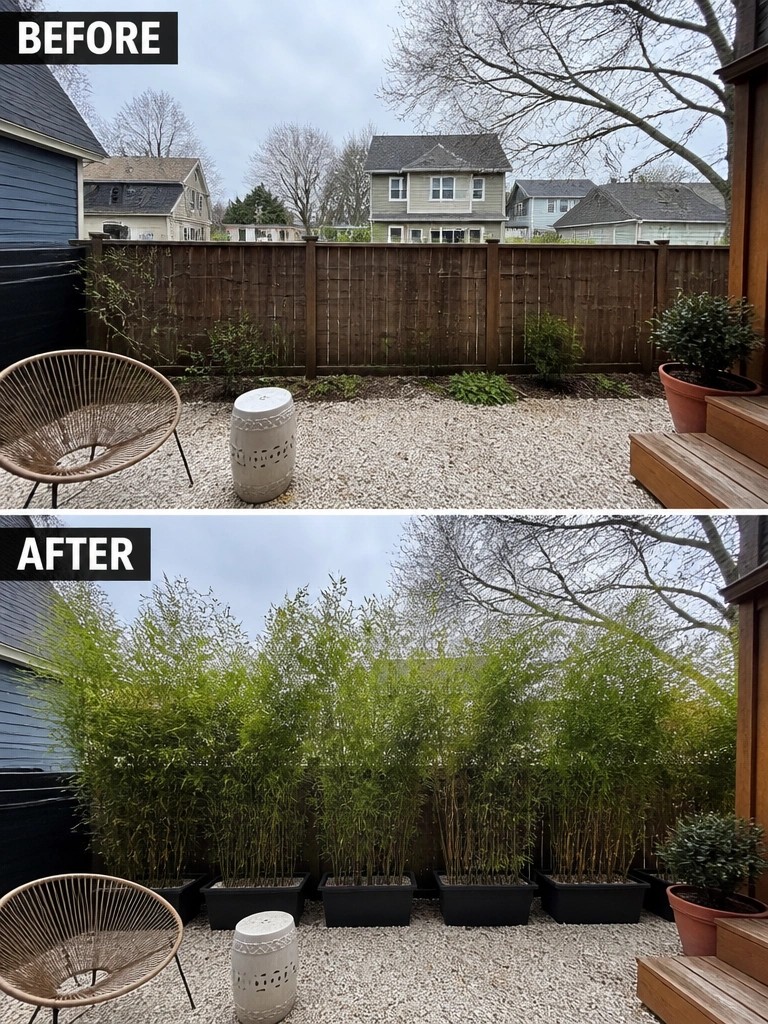
A bare fence often leaves a yard feeling exposed. Here the fix was simple. A row of tall bamboo planted in matching black pots was placed right along the fence line. The plants block the view to the houses behind without any permanent digging or construction.
This approach works well in small yards or gravel spaces where in-ground planting is not practical. The pots keep things contained and allow the screen to be adjusted later if needed. It also gives height and greenery quickly while still leaving the rest of the yard open for seating and movement.
Line Your Deck Railing With Tall Planters For Privacy
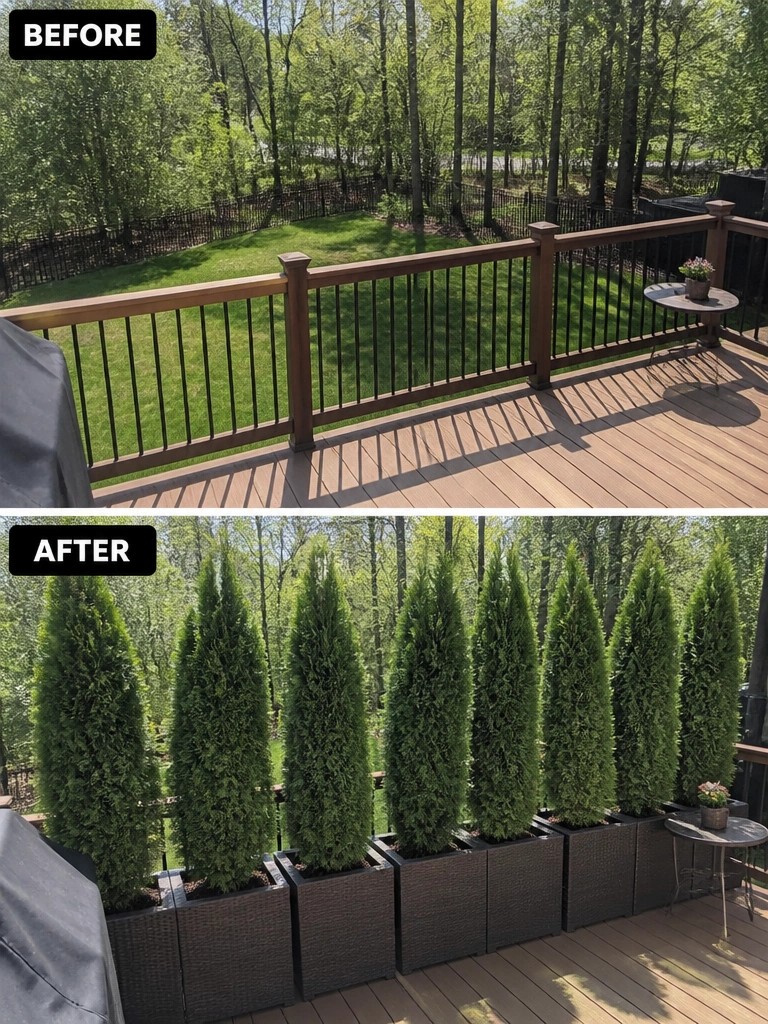
One straightforward way to gain privacy on a deck is to place a row of tall evergreens in matching planters right along the railing. The open view through the balusters is now blocked by a continuous green screen that feels solid without any new construction.
This idea suits decks that already have a good floor and railing but need screening from the yard below. Choose large weatherproof containers with drainage, pick evergreens that hold their shape, and keep the spacing even so the line stays clean and the deck still feels open enough to use.
Add Fabric Panels For Quick Fence Privacy
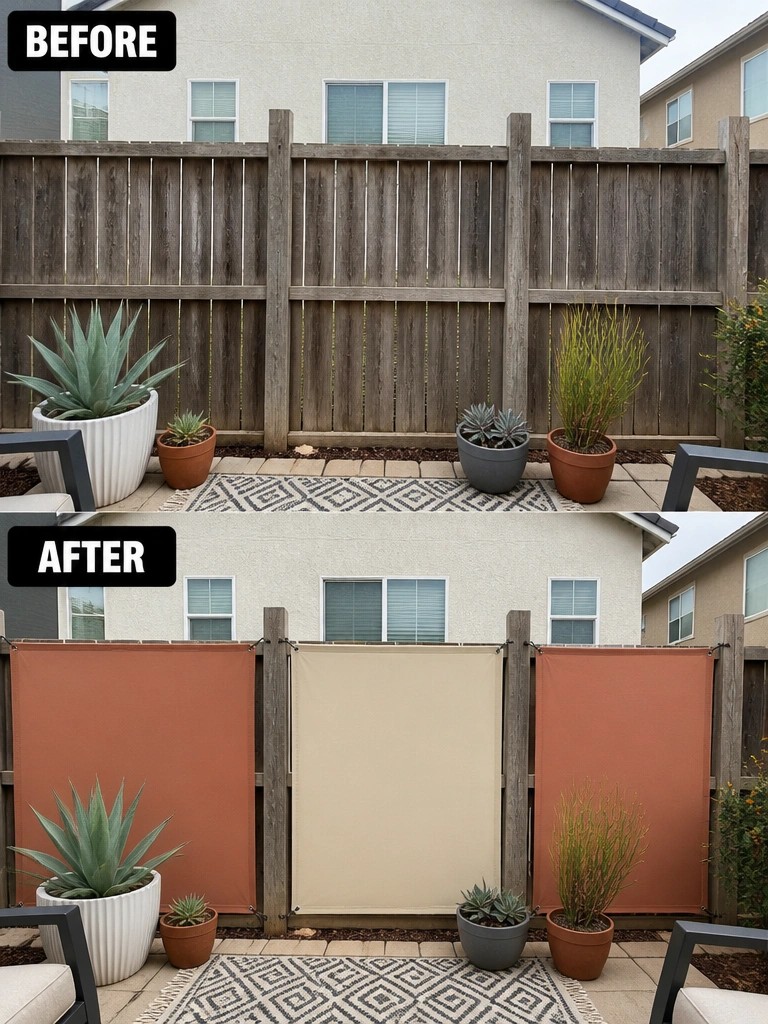
One simple way to gain privacy without replacing an entire fence is to stretch fabric panels between the existing posts. The open wood fence in the before photo leaves the yard exposed. In the after photo, the same fence now has solid fabric sections that block the view while keeping the original posts and structure in place.
This idea works best on fences that are already in good shape but lack screening. It suits small backyards and patios where a full enclosure would feel too heavy. Use outdoor-rated fabric, keep the panels taut, and choose colors that match nearby pots or furniture so the change feels intentional rather than temporary.
Add Privacy With Trellis Planters
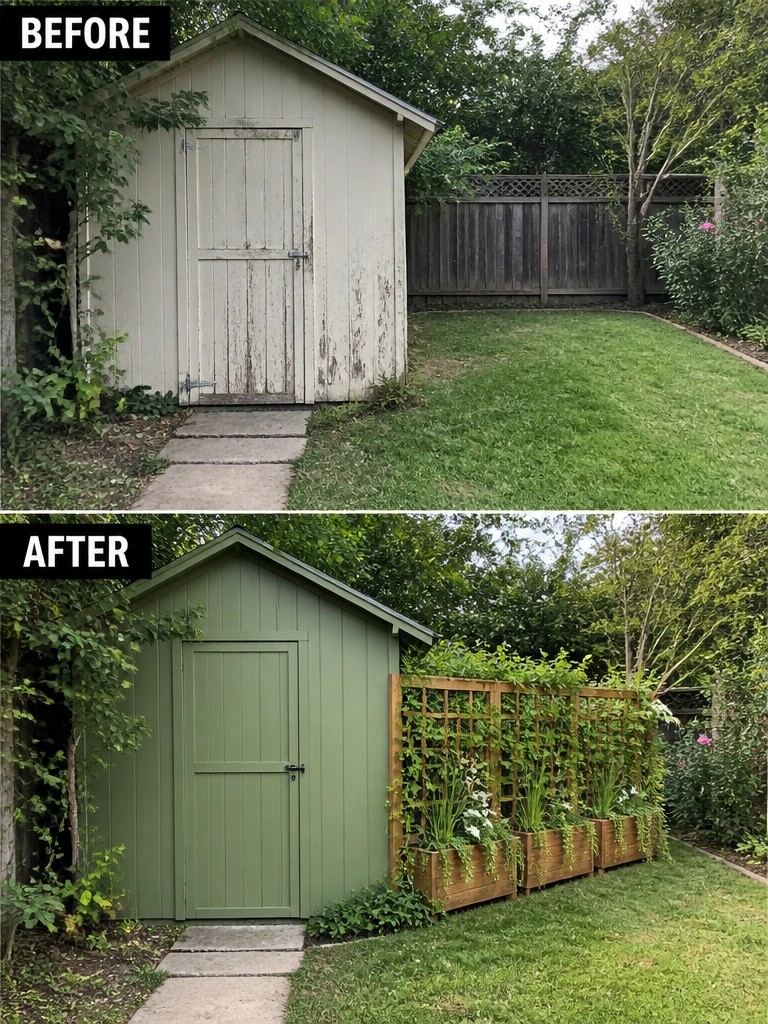
A plain shed wall next to an open yard can leave the space feeling exposed. Adding a simple wooden trellis with built-in planters changes that quickly. The structure supports climbing plants that fill in over time and create a living screen without needing a tall fence.
This idea works well along the side of a shed, garage, or property line where you want some separation but still like an open feel. Keep the planters narrow so they do not take up much lawn space, and choose vines that grow fast in your climate. Start with one section and add more later if you want more coverage.
Add Privacy With Stacked Planters
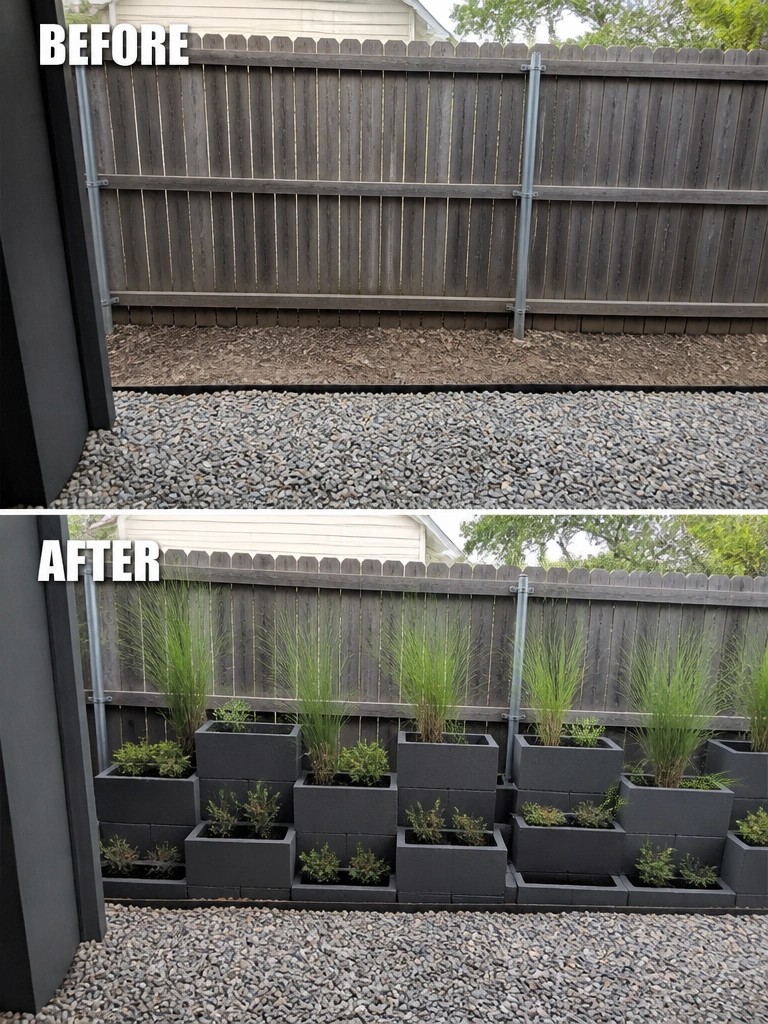
A bare fence line next to gravel often leaves a yard feeling exposed. Stacking simple block planters along the base of the fence and filling them with a mix of tall grasses and lower shrubs adds height and screening without major construction.
This approach works well in narrow side yards or along property edges where you need coverage but still want to keep the ground clear. Start with a few rows of matching blocks, choose plants that grow upright rather than spread out, and repeat the same planter style to keep the look tidy.
Use Climbing Plants To Create Privacy On A Fence
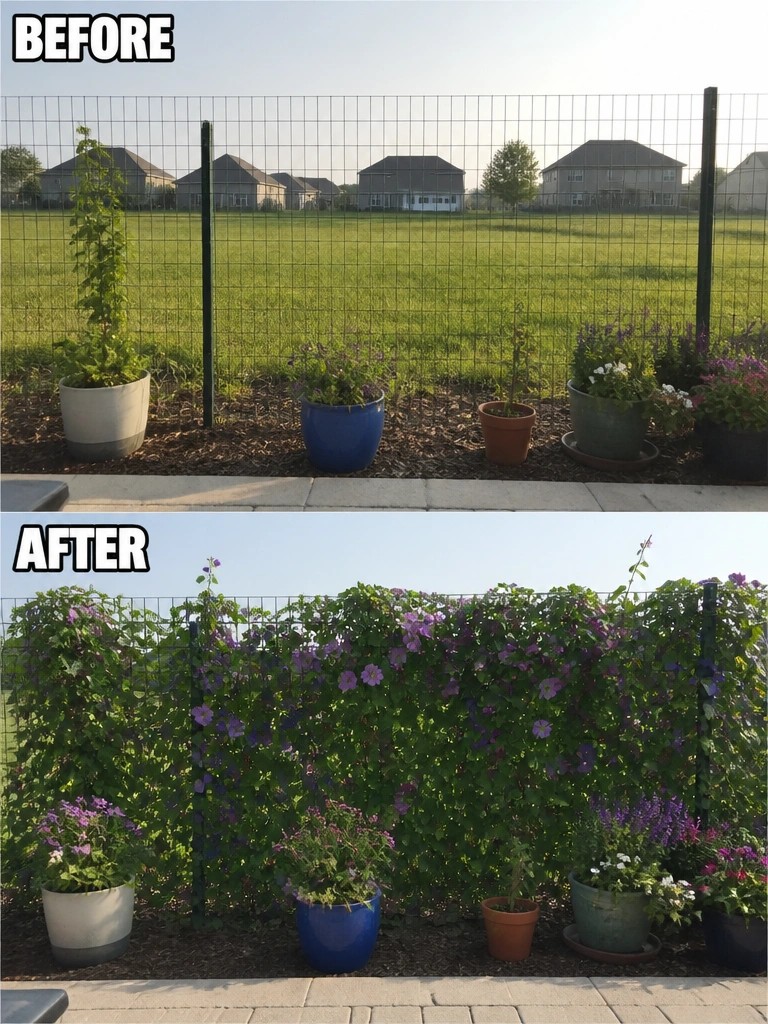
A chain link fence offers little privacy on its own, but adding climbing plants changes that quickly. In this case, a few pots along the base grew into a thick screen of vines and flowers that cover most of the fence and soften the whole view. The plants fill in the gaps and turn an open boundary into something that feels more enclosed without any new structure.
This approach works well in side yards or back fences where you want coverage without spending on solid panels. Start with pots or a narrow bed at the base, choose fast-growing vines suited to your climate, and give them something to climb on. Keep the number of pots modest so the plants have room to spread, and water consistently until they take hold.
Frequently Asked Questions
Q: How can I make sure the privacy screen lasts through winter storms? A: Choose sturdy materials like treated wood or thick fabric from the start. Anchor everything well with ground stakes or weights. Check ties and posts once a month to catch any wear early.
Q: Will these changes attract more bugs to my yard? A: Some plants might draw pollinators but you can swap them for less appealing types if needed. Keep water features covered to avoid mosquitoes.
Q: What works best if my yard slopes downhill? A: Build stepped planters or use angled trellises to follow the slope. This keeps the privacy even across the whole length without gaps.
Q: How do I blend new privacy ideas with what I already have out there? A: Start by matching colors or textures to your current fence or furniture. Add one new element at a time and see how it fits before adding more.
