

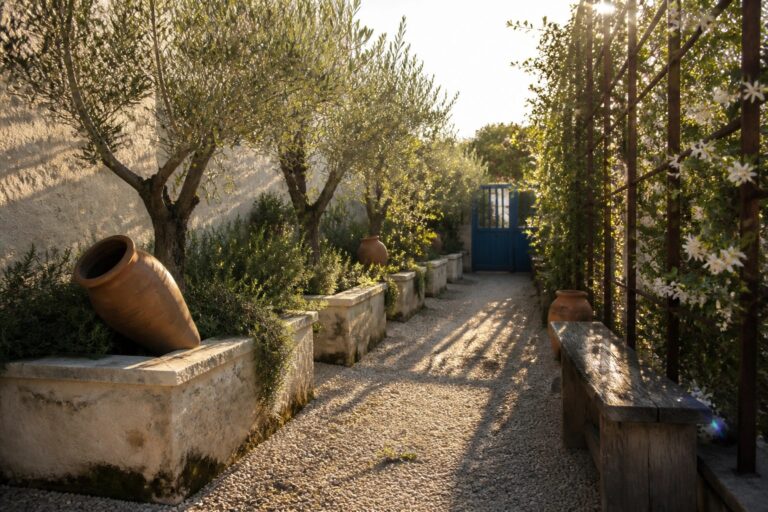
I often walk my yard in the evening and notice how much difference the placement of taller plants makes when trying to keep things private without losing the open feel.
The best results come from thinking about how the space will grow rather than how it looks on day one, since shrubs and trees fill in over time in ways that change everything.
When I plan new beds I always leave some gaps on purpose so the yard does not start to feel closed off from the inside.
Testing a few ideas with potted plants first has saved me from mistakes that would have been hard to fix later.
Some plant choices simply work better for this than others.
Raised Planters With Trees Create Subtle Privacy
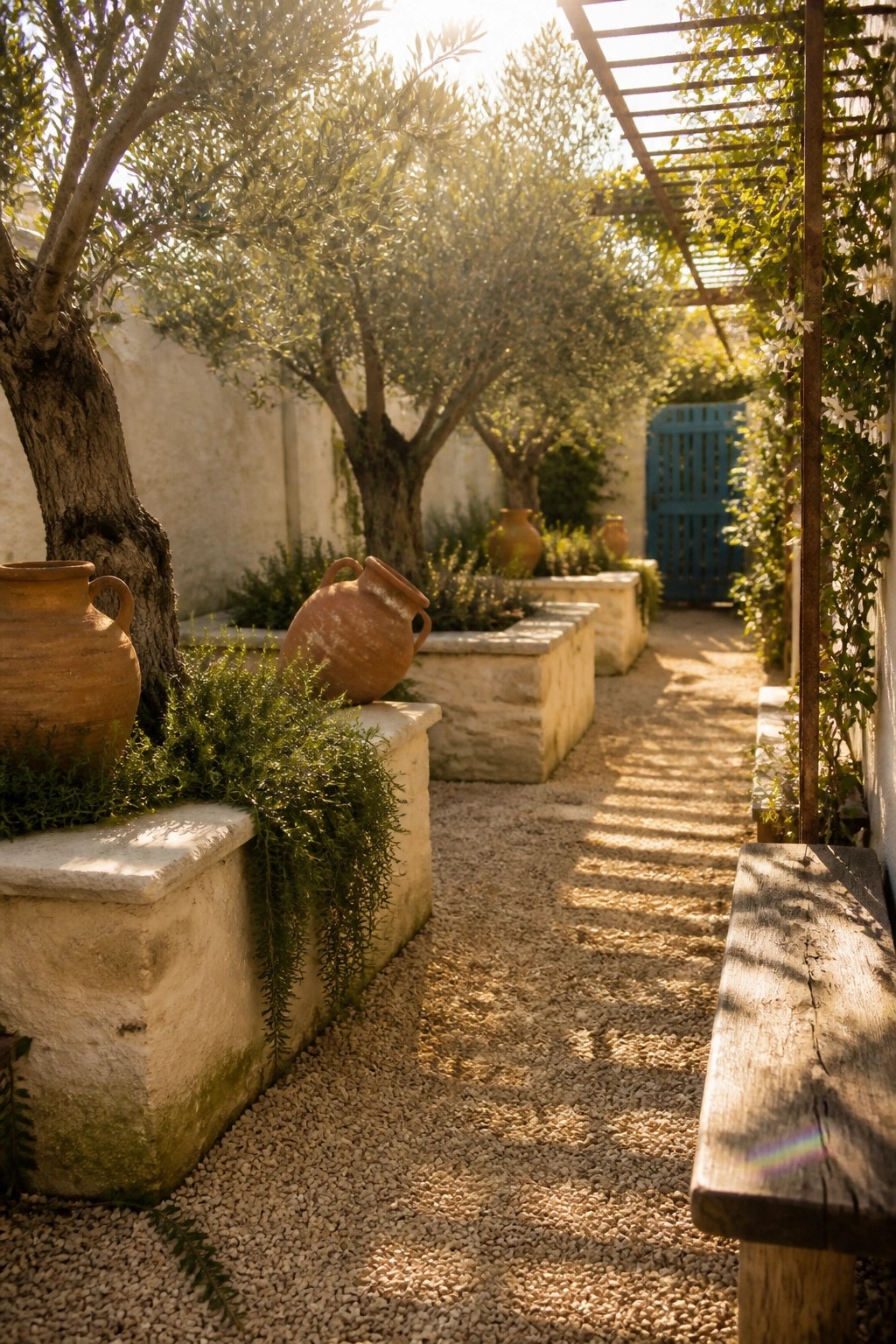
Raised stone planters let you add height without building solid walls. Trees and large pots placed along the edges give just enough screening to block views from outside while the gravel path stays open and easy to walk through.
This setup works well in narrow side yards or long garden corridors where you want some separation but still need light and air. Keep the beds low enough to see over and space the trees so the path never feels boxed in.
Tall Planters for Quick Privacy Screens
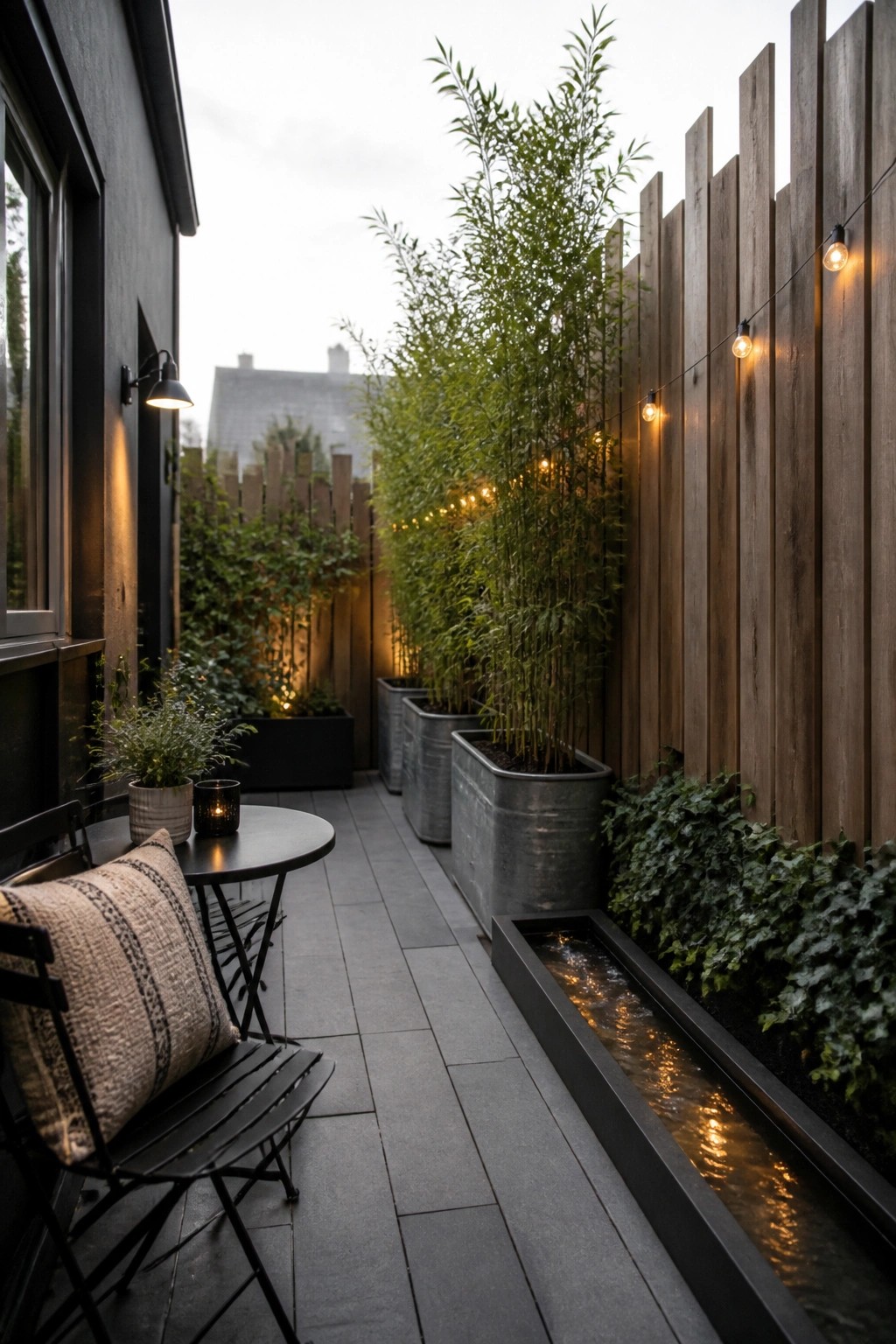
Tall planters filled with upright plants give you a fast way to block sight lines without putting up a solid fence or wall. The metal tubs hold larger root balls so the greenery reaches a useful height in just a season or two, and the open gaps between the containers keep the yard from feeling boxed in.
Set them along the property edge where neighbors can see in, spacing them so air still moves through. This works especially well in narrow side yards or townhouse patios where a full hedge would take up too much ground space.
Plant Tall Grasses Behind a Low Stone Wall
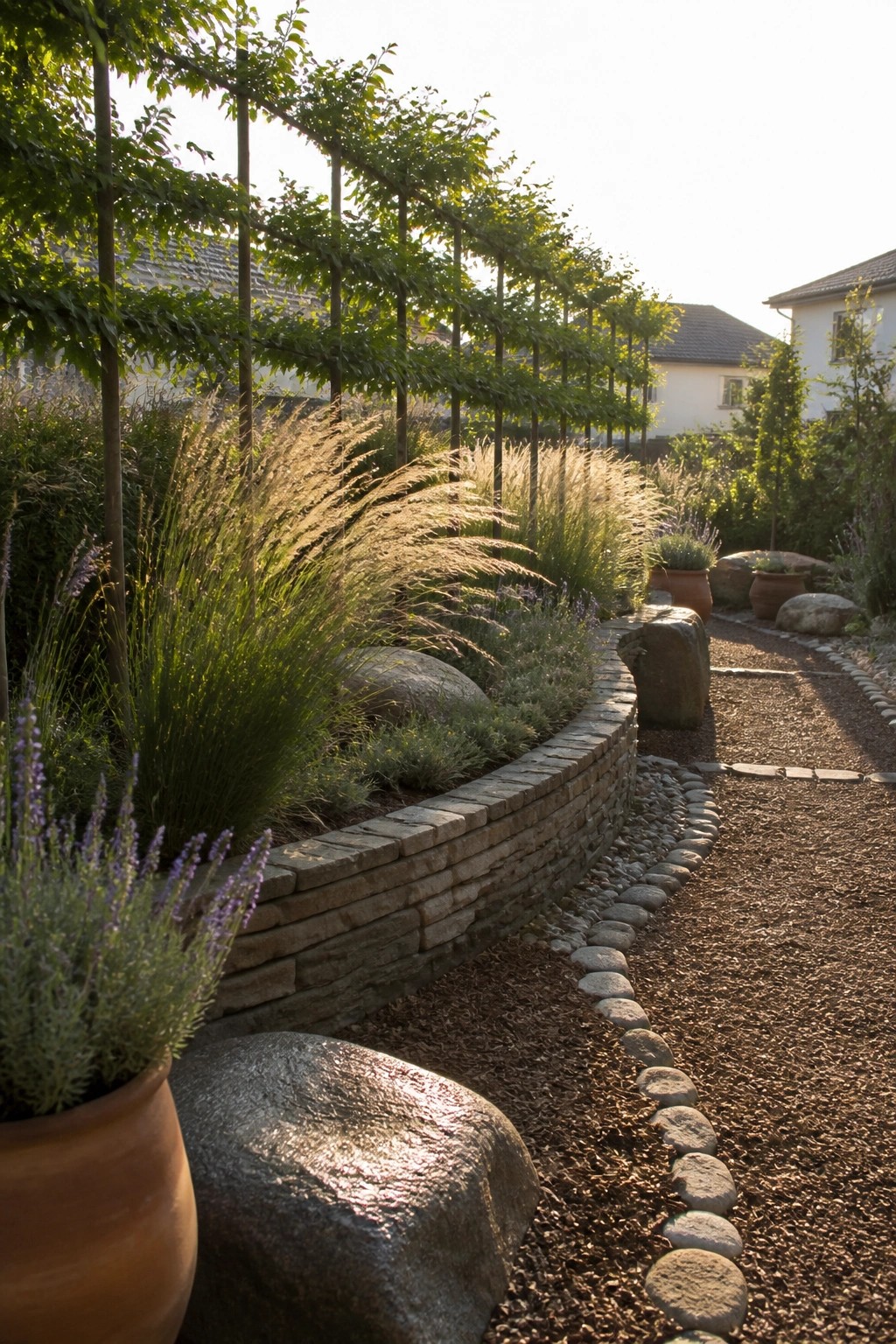
A low stone wall gives the garden a clear edge while still letting the space feel open. When you add tall grasses and layered plants behind it, the combination blocks views from the side without creating a heavy barrier that closes everything in.
This setup works best along a side path or property line where you need screening but want to keep light and airflow. Keep the wall height modest and let the plants do most of the work so the yard still feels connected rather than divided.
Use Tall Narrow Trees for Privacy Screening
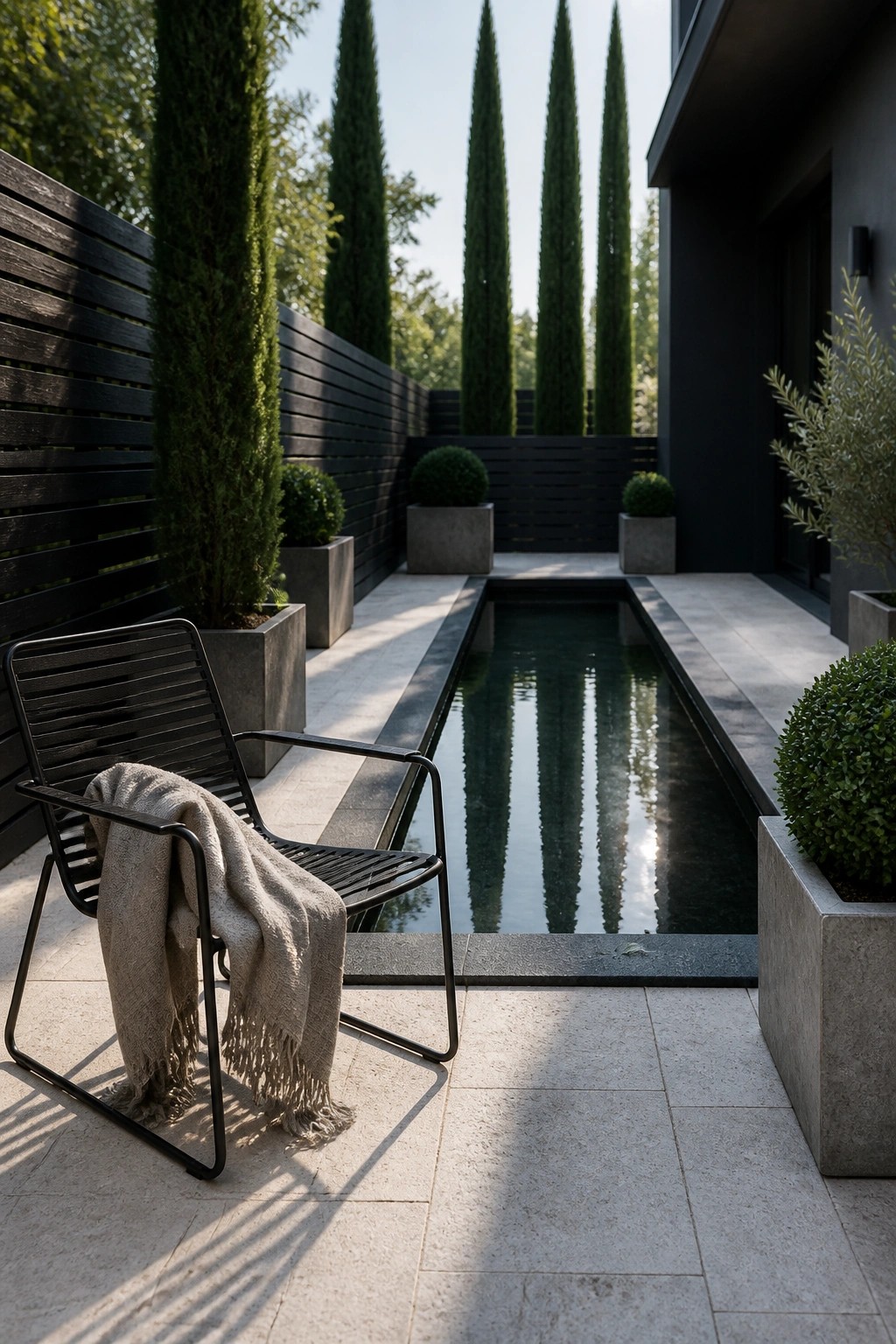
Planting a row of tall, slender trees is one of the simplest ways to block views from neighboring properties. The trees create a living screen that feels lighter than a solid fence or wall, and they let light and air move through the space.
This approach works best along the side or back edge of a yard where you need height without bulk. Choose evergreens that stay narrow as they mature, space them evenly, and keep the lower area open so the garden does not feel closed off.
Grow Climbing Roses Along a Fence Line

Letting roses climb a simple fence gives you privacy without turning the yard into a closed-off space. The plants add height and coverage while still letting some light and air through, so the boundary feels softer than a solid wall or hedge.
This approach works best in narrower side yards or along the back edge where you want to block a neighbor’s view but keep the garden feeling open. Plant a few taller perennials in front of the fence to add more layers and keep the roses from looking too bare at the base.
Bamboo Fencing For Side Privacy
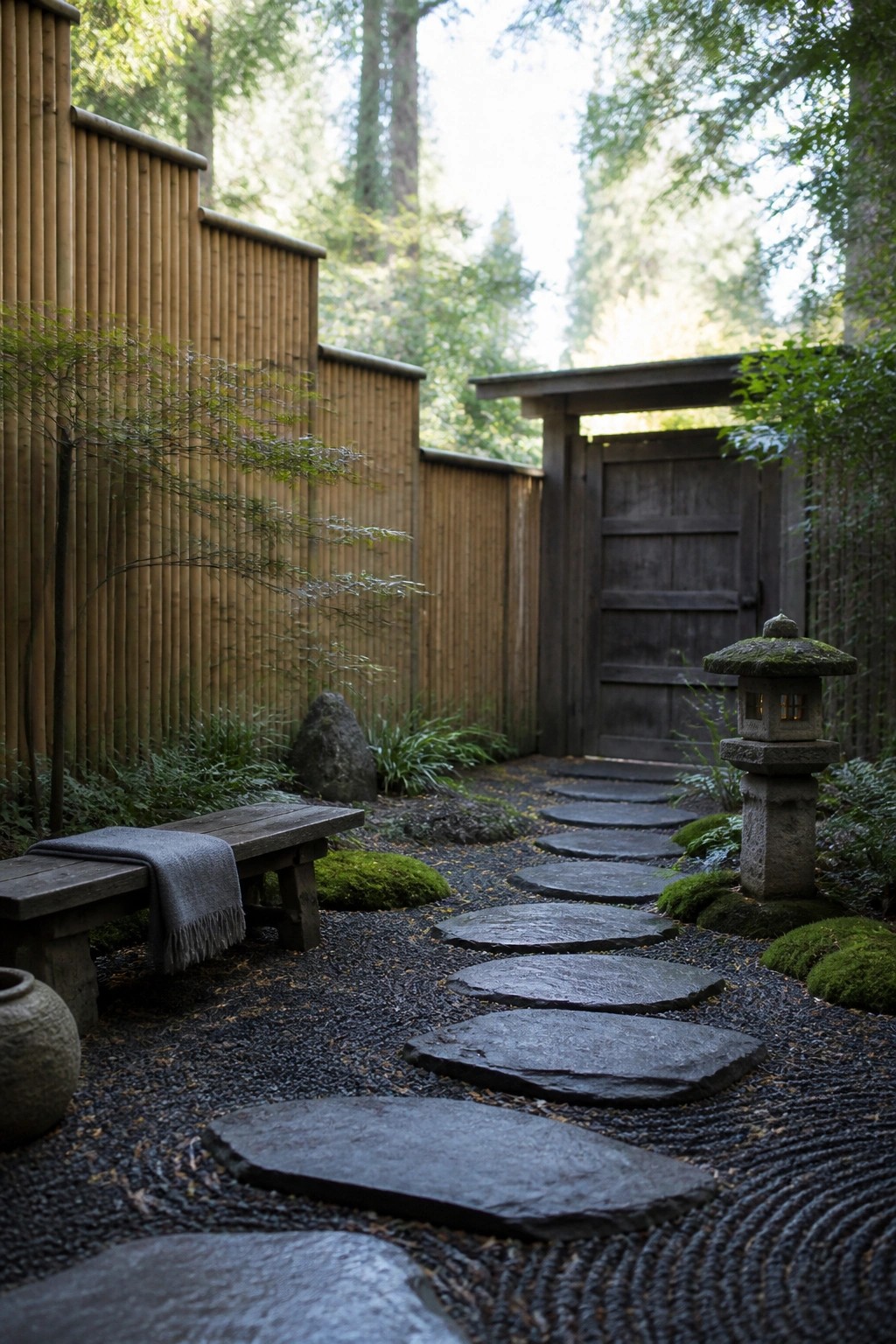
Bamboo fencing gives solid coverage without the heavy look of wood panels or masonry. The vertical lines let some light and air pass through, so the garden still feels connected to what lies beyond rather than shut off.
Set the fence along one property line where you need the most screening, then keep the rest of the space open with gravel and stepping stones. It works best in smaller yards that sit close to other homes, since the material feels lighter than a full wall while still blocking the main sight lines.
Mix Fencing With Layered Planting

A low wooden fence paired with taller grasses and shrubs gives privacy without making the yard feel boxed in. The fence sets a clear boundary while the plants soften the look and fill in any gaps, so the space still feels connected to what lies beyond.
This approach works well on decks or patios that sit near a street, path, or neighboring property. Keep the fence height modest and choose plants that grow tall enough to block the main sight lines but leave some open space above. Check how the plants will look in winter before planting so the screen stays useful all year.
Let Vines Cover a Pergola for Privacy
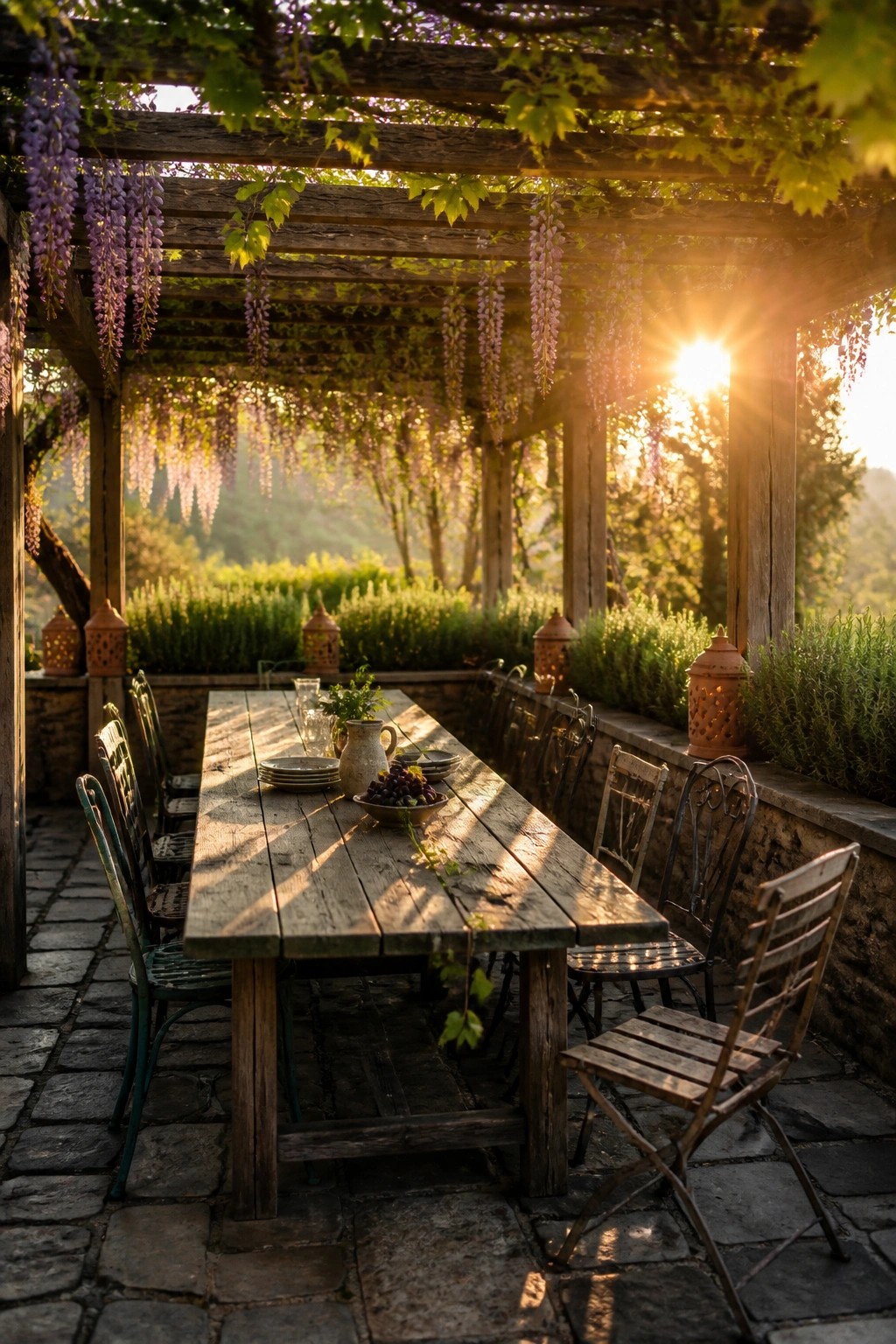
A pergola draped in climbing vines gives you shade and a bit of screening without putting up solid walls or fences. The open structure keeps the space from feeling boxed in while the leaves and flowers block some of the view from outside. It works especially well over a dining table or seating area where you want to feel a little more tucked away.
This setup suits yards that already have some existing structure or a stone wall to build against. Plant fast-growing vines like wisteria or grapes and let them fill in over a season or two. Just watch how much sun the spot gets so the plants stay healthy and the coverage stays even.
Tall Planters For Natural Privacy Screening
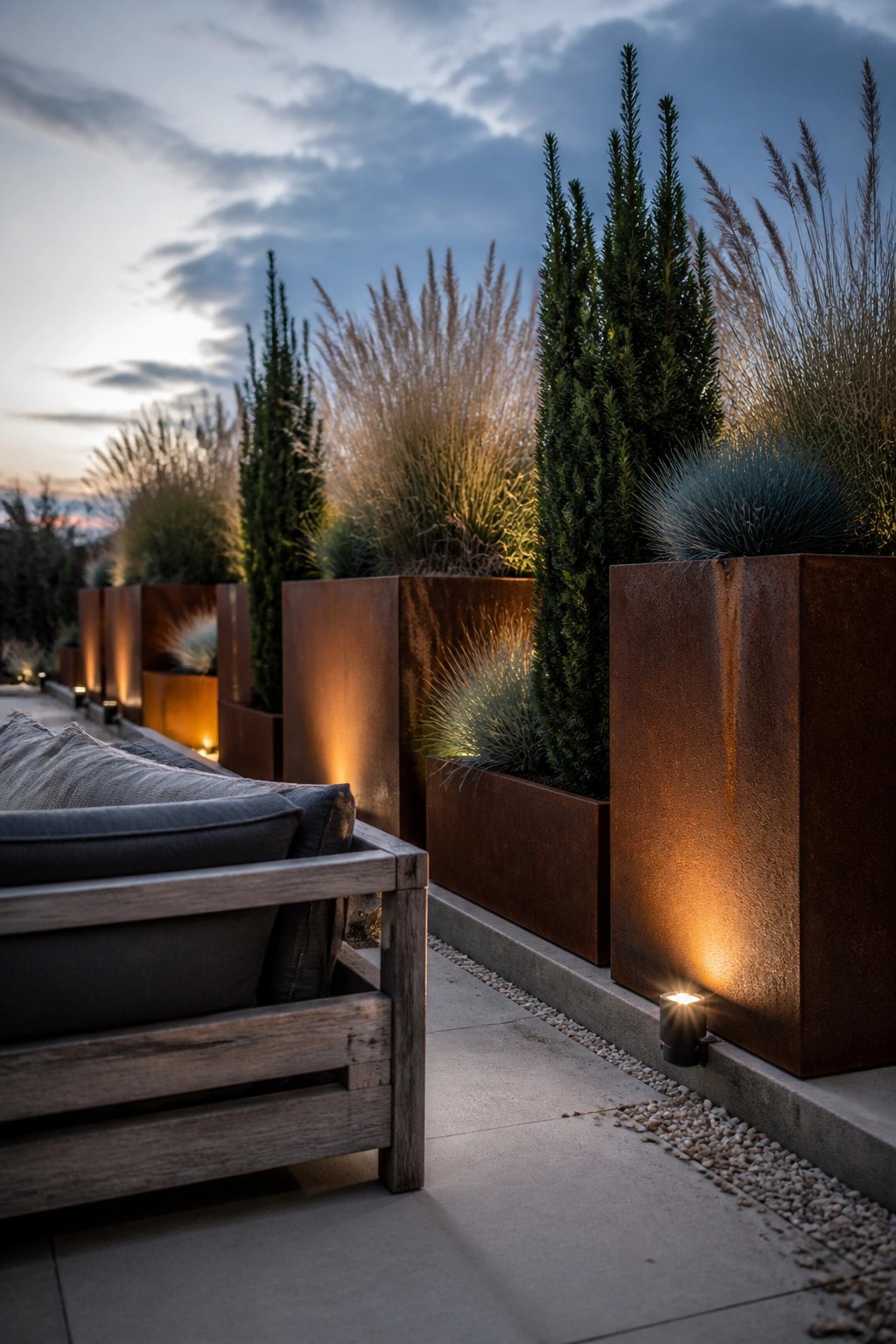
Large planters give you a way to add height and screening without putting up a solid wall. They let you place taller plants right where you need them, and the gaps between the boxes keep the yard from feeling boxed in.
This approach works best along a patio edge or side boundary where you want some separation but still like the open feel of the space. Mix upright evergreens with softer grasses so the planting has weight without looking too heavy, and use containers that can handle weather so the look lasts.
Espalier Trees Along Walls for Privacy

Training trees flat against a wall gives you height and coverage without eating up ground space. The branches spread out in a controlled pattern, so you get a solid green screen that still lets some light through and keeps the garden from feeling boxed in.
This works best in narrow side yards or along property lines where a full hedge would crowd the path. Use sturdy wires or a simple frame, pick trees that tolerate pruning, and keep the lower plantings light so the whole strip stays open and easy to walk through.
Use Perforated Metal Screens For Privacy
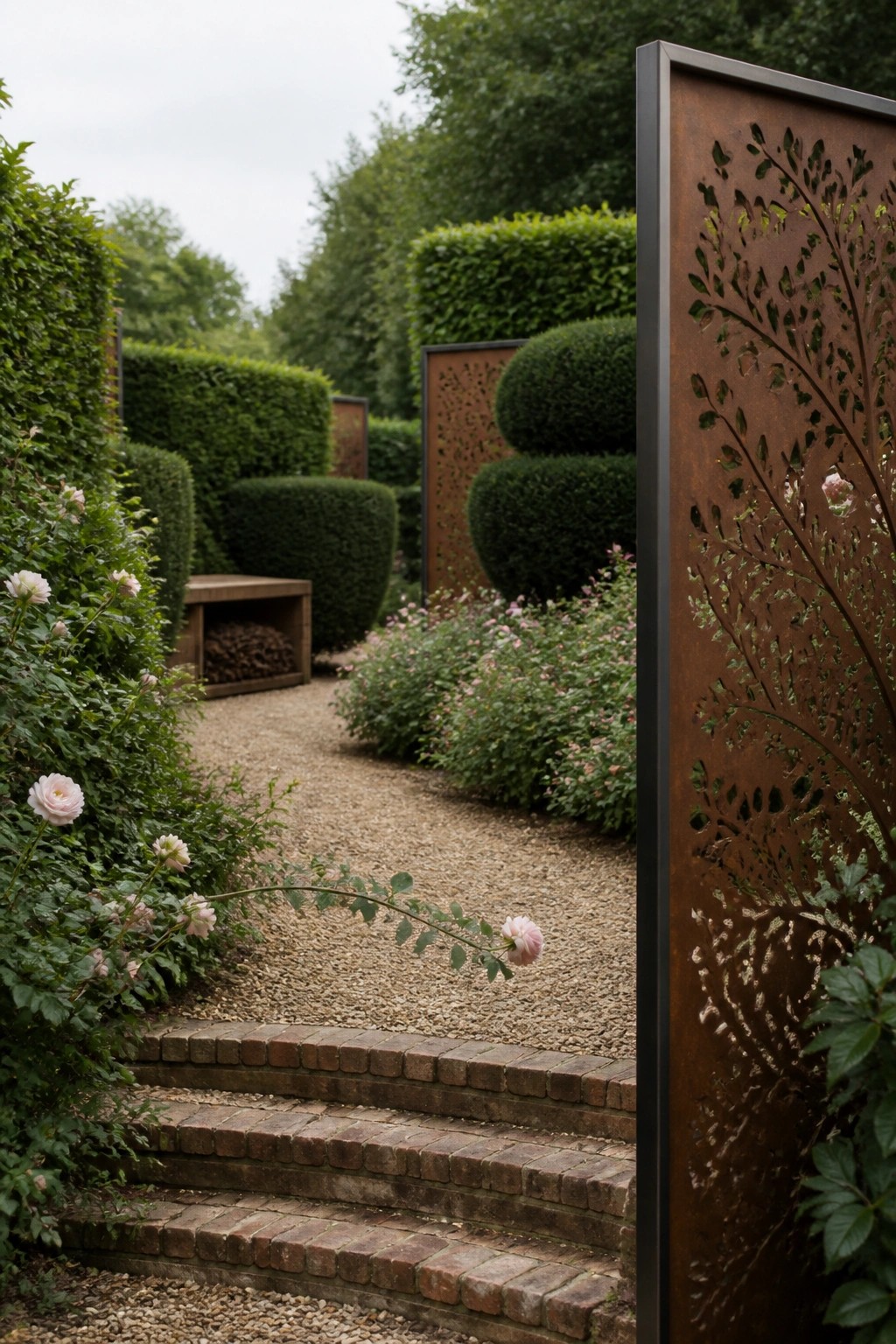
A metal screen with a cutout pattern gives you privacy without turning the garden into a solid wall. It blocks the direct line of sight while still letting light and air move through, so the space stays open and connected to the rest of the yard.
This works well along paths or between seating areas where you want separation but not full enclosure. Place it where the pattern can catch some light and cast interesting shadows on the ground. It suits smaller gardens especially, since it takes up little space and blends with planting on either side.
Screens And Planters For Selective Privacy

Screens combined with tall planters give you privacy without turning an outdoor space into a closed room. The open patterns let light and air through while cutting off the main sight lines from outside.
This setup suits rooftops, side decks, or small yards where full fencing would feel too heavy. Position the screens to cover the most exposed angles and add planters in front or beside them so the plants soften the look and add height over time.
Plant Tall Narrow Trees for Side Screening
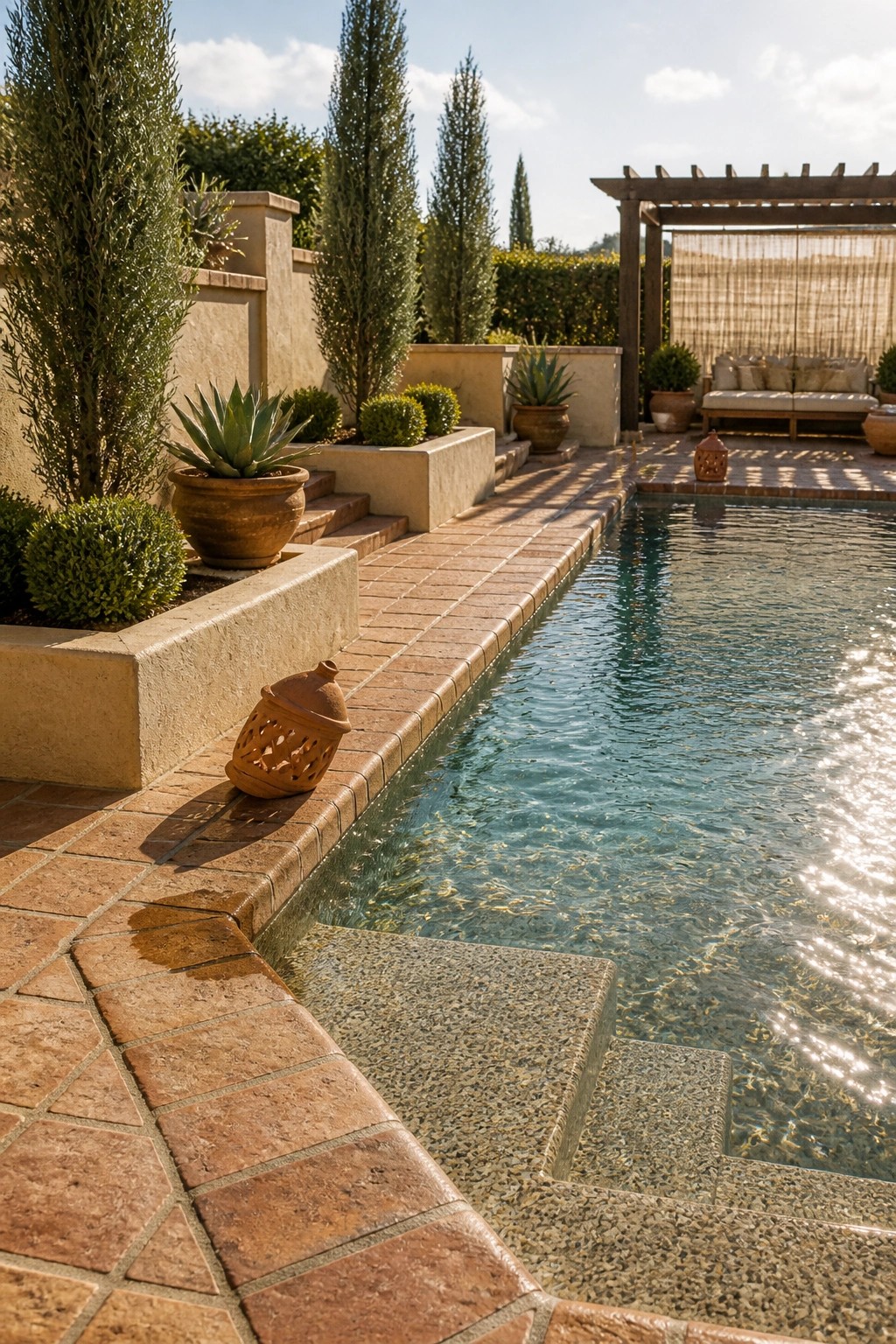
Tall narrow trees like cypress work well when you need privacy along the edges of a yard. They block the view from neighboring properties without taking up much ground space or making the area feel boxed in.
Place them in a loose row where screening matters most and keep lower plantings in front so the space stays open at eye level. This approach suits smaller yards or pool areas where a solid fence would feel too heavy.
Use a Patterned Metal Gate for Privacy
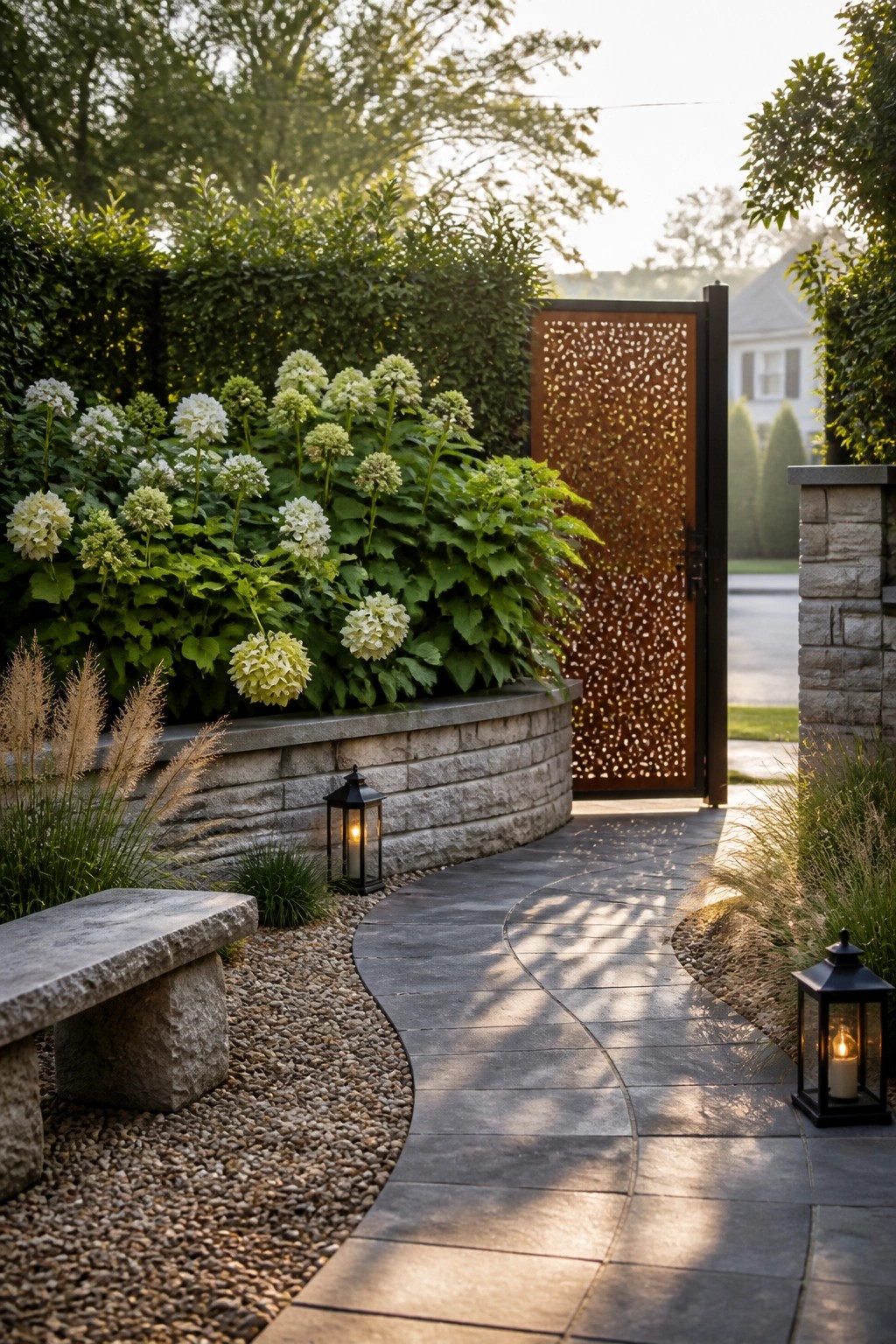
A patterned metal gate set into a wall or hedge gives you privacy without making the yard feel boxed in. The open design lets light and air move through while softening direct sight lines from outside. It works especially well when paired with dense plantings that fill in around the edges.
This approach suits homes where you want some separation from the street or neighbors but still like an open garden feel. Keep the gate simple in color and pattern so it blends with the planting rather than standing out as the main feature.
Layer Fencing and Plants for Side Privacy

Horizontal slat fencing works well when you want privacy without making the yard feel boxed in. The gaps let in light and air, while the plants behind the fence add a softer screen that blocks views from neighbors. This setup keeps the space open and connected to the rest of the garden.
It works best along side boundaries or back edges where you need coverage but still want some openness. Choose fencing that matches your house style and add a mix of evergreens and taller shrubs so the screen stays full through the seasons. Avoid planting too close to the fence or the roots may cause problems later.
Hang Plants Along Fences for Natural Screening

Hanging planters on a fence give you privacy without building a solid wall that closes everything in. The plants soften the view from outside while still letting light and air through, and they turn a basic fence into something that feels more like part of the garden.
This works especially well on side or back fences where you want some cover but not total seclusion. Use a mix of hanging and potted plants so the screening looks full but not heavy, and choose pots that match the style of your seating area. It suits smaller yards best, where a tall solid fence might feel too closed off.
Use Trellises And Tall Plants For Side Privacy
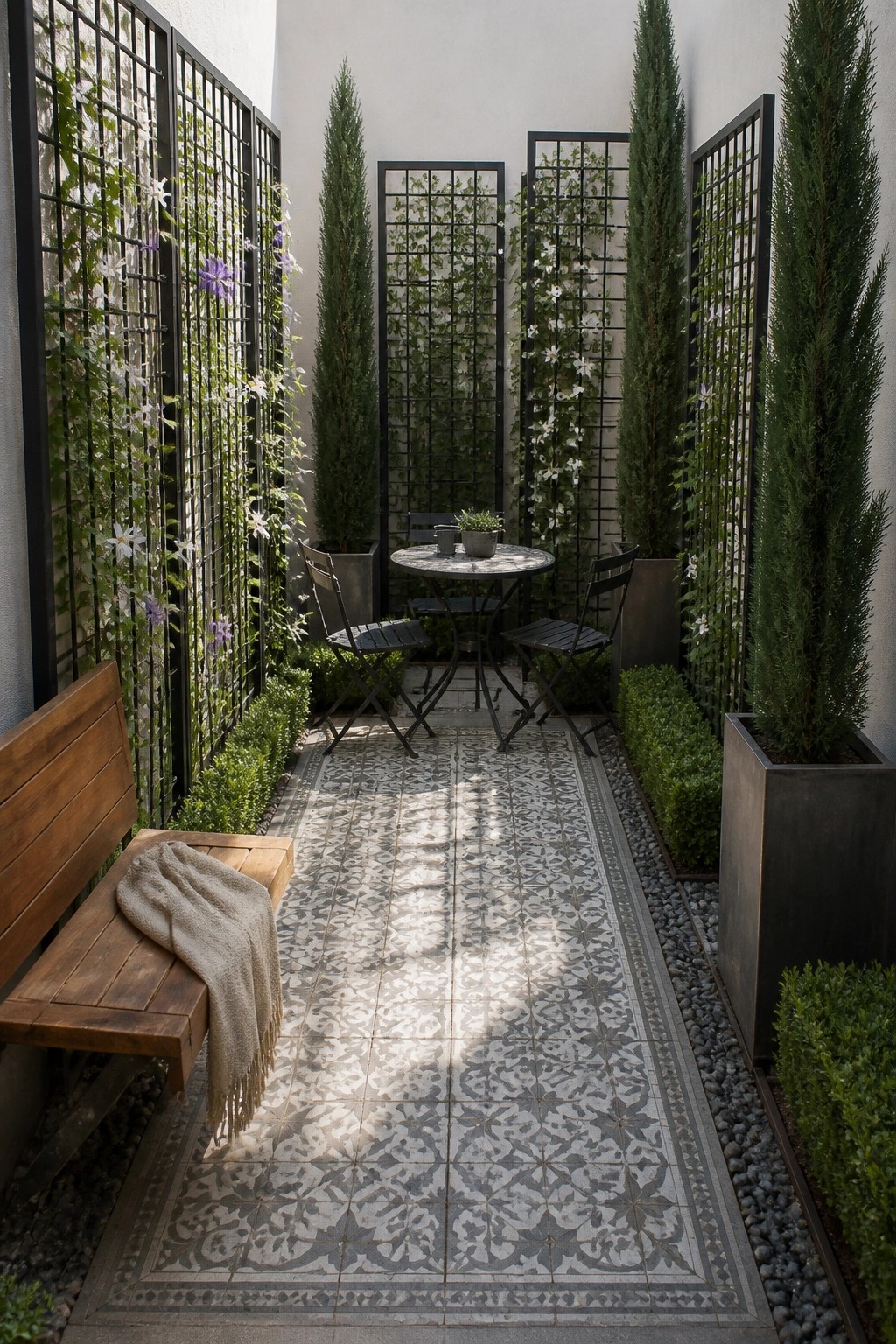
Trellises paired with tall narrow trees work well when you want to block side views but still keep the space feeling open. The open grid lets some light through and gives vines room to grow, while the trees add height without taking up much width. This approach suits narrow yards or side patios where a solid fence would feel too closed in.
Place the panels and pots along the property line or against a wall, then fill in with climbing plants that suit your climate. It works best in small urban gardens or townhouse courtyards where you need screening but want to avoid a heavy wall. Check how much sun the spot gets so the plants stay healthy.
Terracing A Slope For Layered Privacy
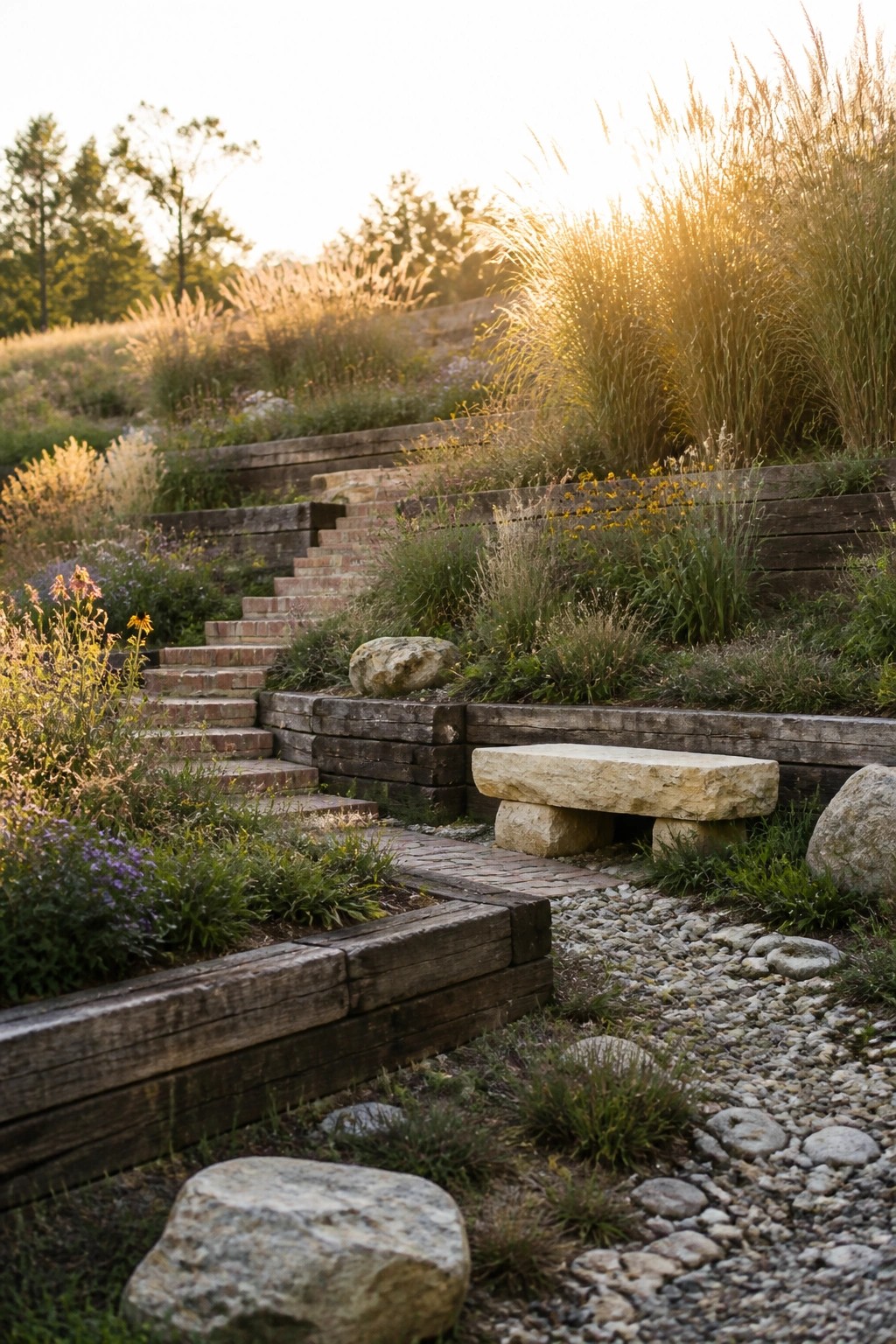
Terracing a sloped yard with retaining walls gives you height for planting without putting up solid barriers. The different levels let taller grasses and shrubs sit above lower beds, which blocks views from outside while the garden still feels open and connected.
This approach works best on properties that already have a noticeable drop or rise. Reclaimed wood walls hold the soil and give the beds a settled look, and mixing in plants of varying heights fills in the sight lines over time without crowding the space.
Use a Slatted Fence with Planters for Privacy

A fence made of spaced horizontal slats blocks the view from the street or neighbors while still letting light and air through. The planters mounted along the top add a layer of greenery that softens the look and makes the screen feel less like a hard barrier.
This approach works best along the back or side of a patio where you need separation but do not want a solid wall. It suits smaller yards especially well because the plants take up little ground space and the open slats keep the area from feeling closed off.
Train Climbing Plants Along Walls for Natural Screening

Climbing plants turn existing walls into a living privacy layer that blocks views from the sides without making the space feel boxed in. They soften hard surfaces and create depth, so the area still feels like part of the larger yard.
This approach works best in narrow passages or side gardens where you already have some structure in place. Choose vigorous vines suited to your climate and give them a simple trellis or wires to follow so they fill in evenly over a season or two.
Gabion Walls With Built-In Planting

Gabion walls offer a solid way to block views along the side of a yard without putting up a tall fence that closes everything in. The wire cages filled with stone create a firm base, while pockets of soil let grasses and shrubs grow right out of the structure. This mix keeps the boundary feeling natural instead of heavy.
The approach works well in narrow side yards or along paths where you need screening but still want light and air to move through. Keep the planting loose so it softens the stone over time, and match the wall height to what you actually need to hide. It suits homes with modern or simple garden layouts and holds up with very little upkeep.
Frequently Asked Questions
Q: How tall do the plants really need to get before they start blocking the view from next door?
A: Go for a mix that tops out around eye level or just above. Cluster a few taller ones together and leave gaps so the yard still feels open on your side. This setup hides what you want without turning the space into a wall.
Q: My side yard is narrow and I cannot fit big beds along the fence. A: Lean on slim vertical options like a row of tall grasses in narrow planters. They take up little ground space yet grow upward fast. Move them if needed until you like the coverage.
Q: Will these ideas still work once the leaves drop in fall?
A: Mix in some evergreens as your main layer so the screen holds through winter. The bare branches from other plants add a bit of texture without full exposure. You end up with privacy that shifts but never disappears.
Q: What if the neighbor’s deck sits higher than my fence line?
A: Stack a couple of quick growing vines on a simple trellis right behind the fence. They climb fast and fill the extra height without much width. Check the growth each spring and trim back anything that starts to lean over.
