

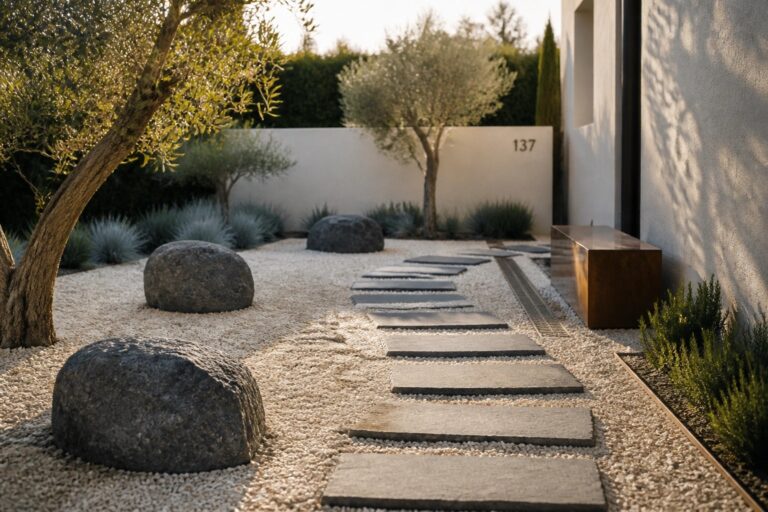
Gardens built around gravel and stone tend to hold their shape better when the planting follows clear lines rather than scattered clusters.
I have found that sculptural plants need room to read against the hard surfaces, otherwise the whole layout starts to blur after a season or two.
Paths and edges matter more than most people expect.
Once the gravel settles and the larger plants fill in, small decisions about spacing and drainage show up in daily use rather than just in photos.
Trying one section with a new combination of stone and foliage usually reveals what will hold up without constant fixing.
Gravel Paths With Stepping Stones
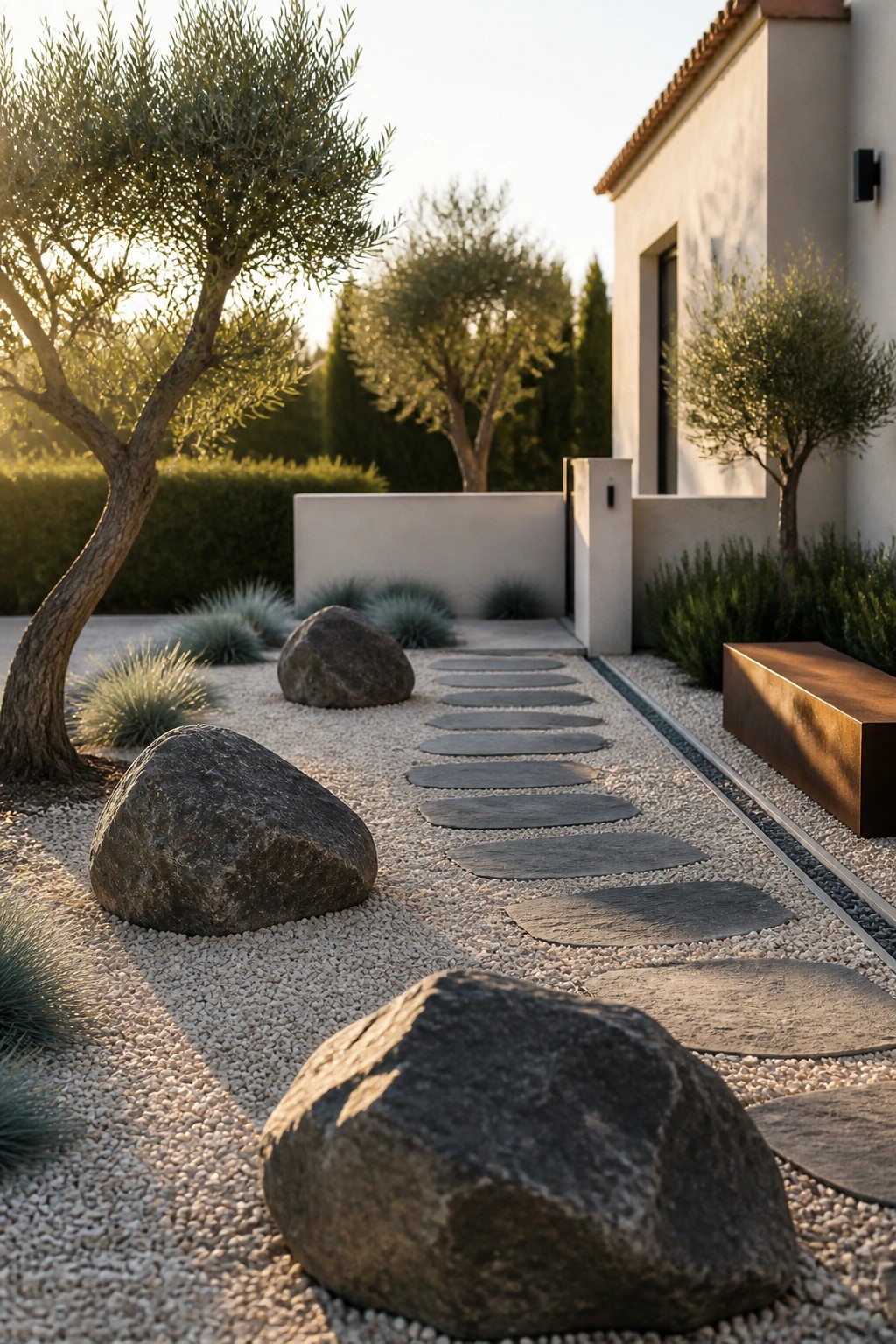
Gravel makes a good base for paths because it drains well and stays neat with very little work. Laying flat stones across it creates a simple route that feels intentional without looking too formal.
This setup works best in front or side gardens near modern houses. Keep the stones fairly consistent in size and spacing so the path stays easy to walk on, and let a few larger rocks sit along the edges to give the whole area more structure.
Vertical Stone Slabs For Narrow Beds
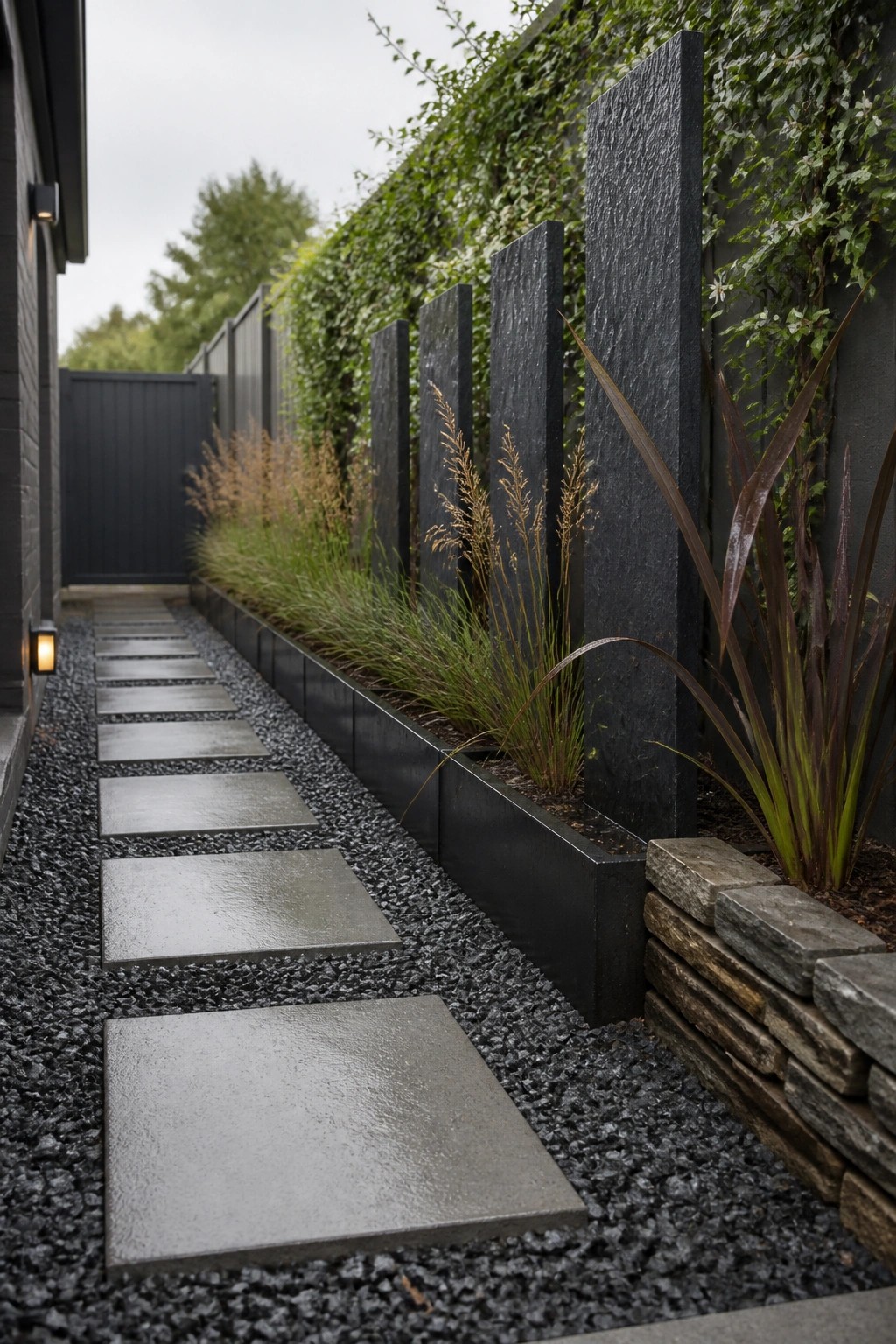
Tall vertical stone slabs work well when you need height and structure in a tight planting area without crowding the plants. They break up the length of a bed and give the garden a steadier rhythm, especially when the bed runs alongside a path.
This approach suits narrow side yards or modern layouts where you want clean lines but still need space for grasses and taller plants. Keep the slabs spaced evenly and use a simple gravel base so the whole area stays low maintenance.
Raked Gravel With Container Plants
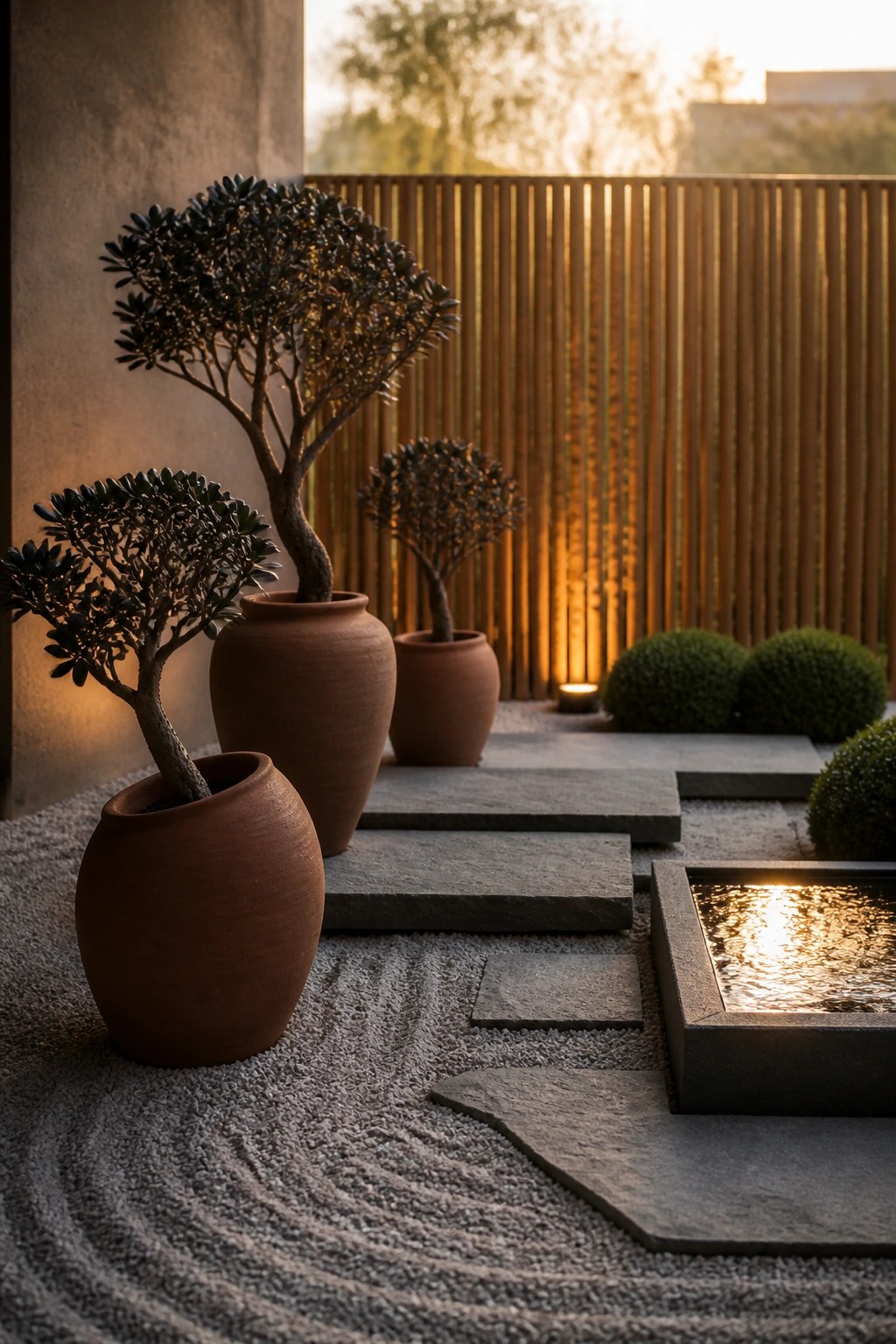
Raked gravel gives a garden a calm, orderly base that lets sculptural plants stand out without extra clutter. It works well when you want something low maintenance that still feels intentional and structured. The pots add height and shape while the gravel keeps the ground simple and easy to care for.
This approach suits small modern gardens or courtyard spaces where you need clear lines and minimal upkeep. Place the pots in groups of different sizes, rake the gravel in gentle curves around them, and add a few stone steps for access. It stays neat even in dry climates and helps control weeds without much effort.
Stepping Stones Through Gravel
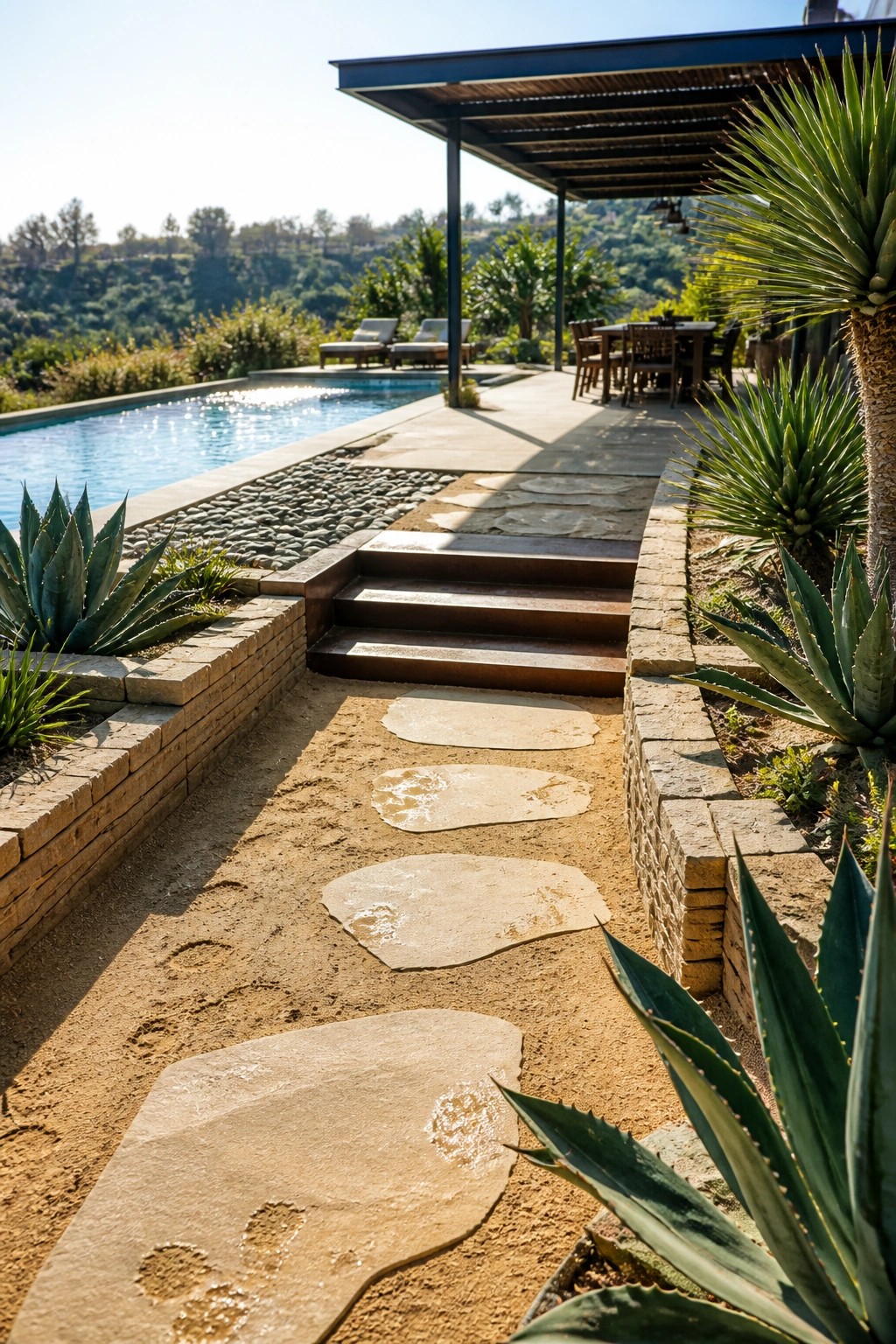
A path made of large irregular stones set into gravel or sand gives a garden an easy rhythm without looking too formal. It keeps the surface simple and practical while letting the surrounding plants stand out. The stones create clear footing and the gravel fills in around them to handle drainage and weeds.
This approach works well in dry climates or on sloped sites where you want low maintenance. Keep the stones fairly large and space them for a natural walking stride. Brick or stone edging along the sides helps hold the gravel in place and gives the path a finished look.
Stepping Stones In Gravel Make Simple Modern Paths
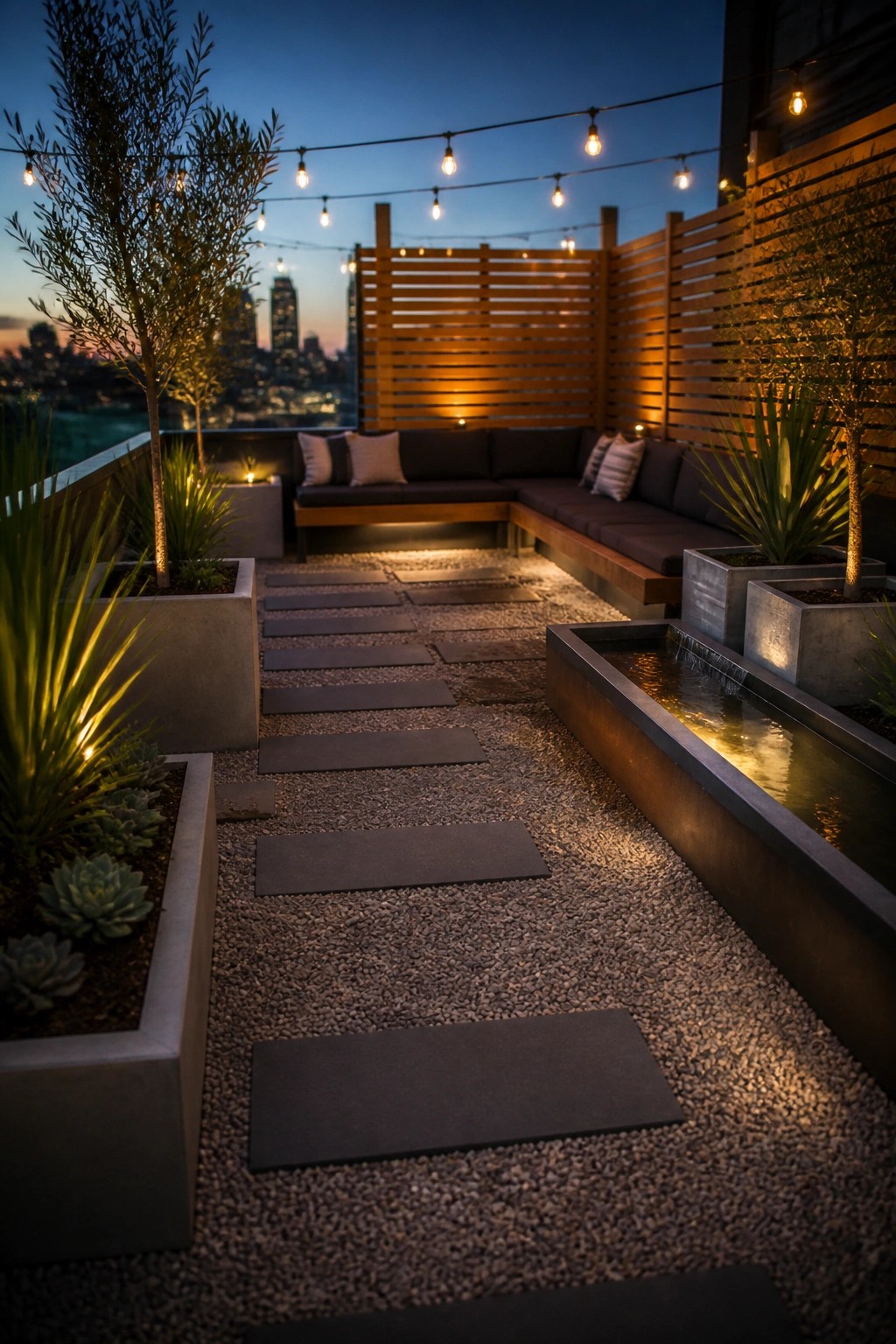
A path made from rectangular stepping stones set into gravel gives a garden a clean layout without a lot of extra work. The stones create solid footing while the gravel handles drainage and keeps the surface looking neat over time. This setup pairs well with bold plants in large planters because it leaves plenty of open ground for the greenery to stand out.
It works best on rooftops, small terraces, or side yards where you want the planting to feel structured but not overcrowded. Keep the stones evenly spaced and choose a gravel color that blends with your planters so the whole area feels pulled together.
Geometric Stone And Gravel Layouts
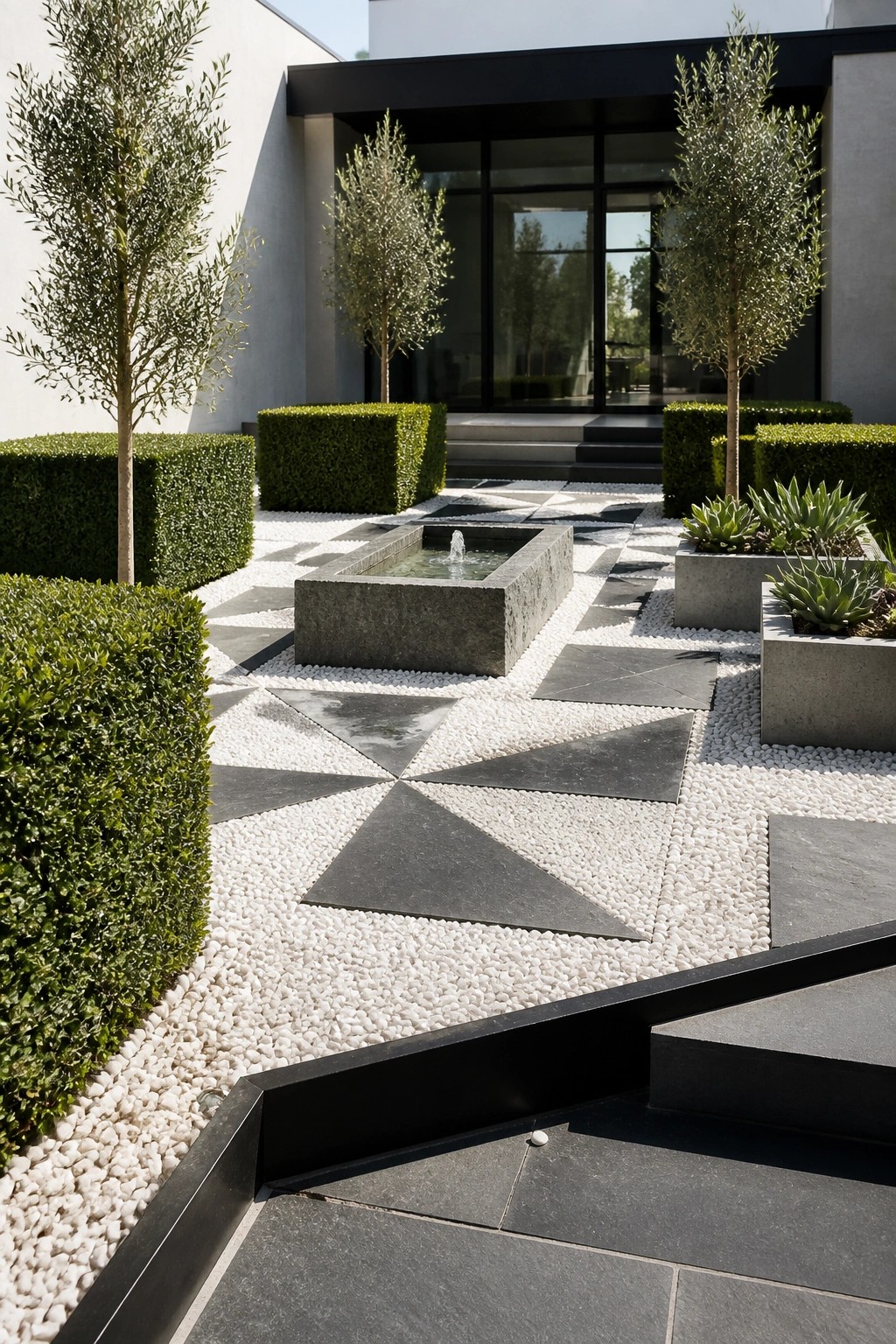
One of the simplest ways to get a modern garden feel is to lay large dark stone slabs in bold shapes and fill the spaces with white gravel. The contrast makes the pattern stand out without needing lots of plants or extra decoration.
This works best in smaller courtyards or front gardens where you want structure but still need easy upkeep. Keep the surrounding plants clipped and low so the stone and gravel pattern stays clear and does not get lost.
Stone Walls With Gravel Paths
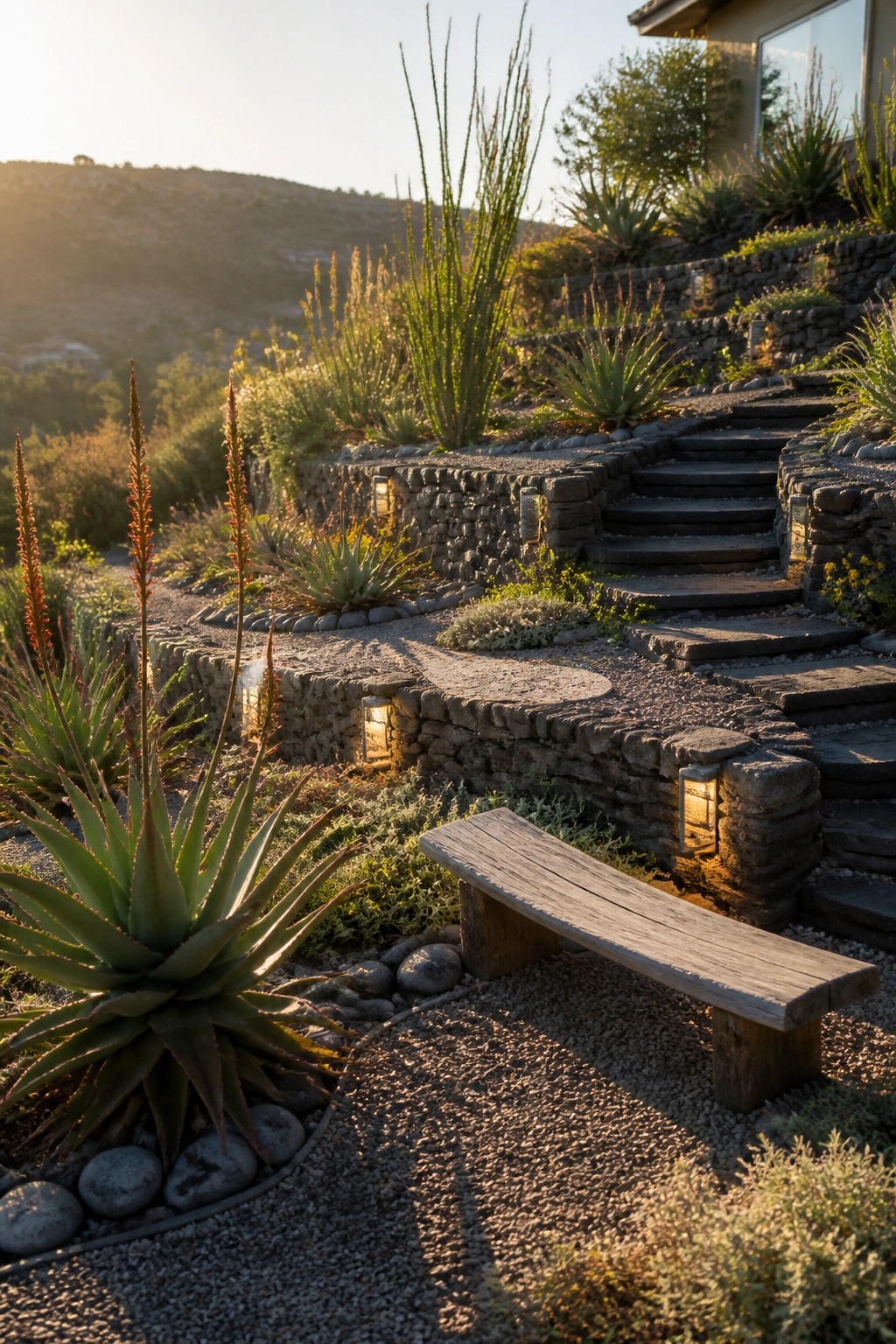
Stone walls work well for creating terraces on a slope, and gravel fills in the paths between them without needing much upkeep. The combination keeps the garden looking structured while letting the plants stand out. It works especially well in dry climates where you want to cut back on watering and mowing.
This setup suits homes with uneven lots or anyone looking for a low-maintenance garden that still feels intentional. Keep the gravel layer fairly thin so it does not shift too much underfoot, and choose plants that can handle the reflected heat from the stone.
Stone And Gravel Around A Fire Pit
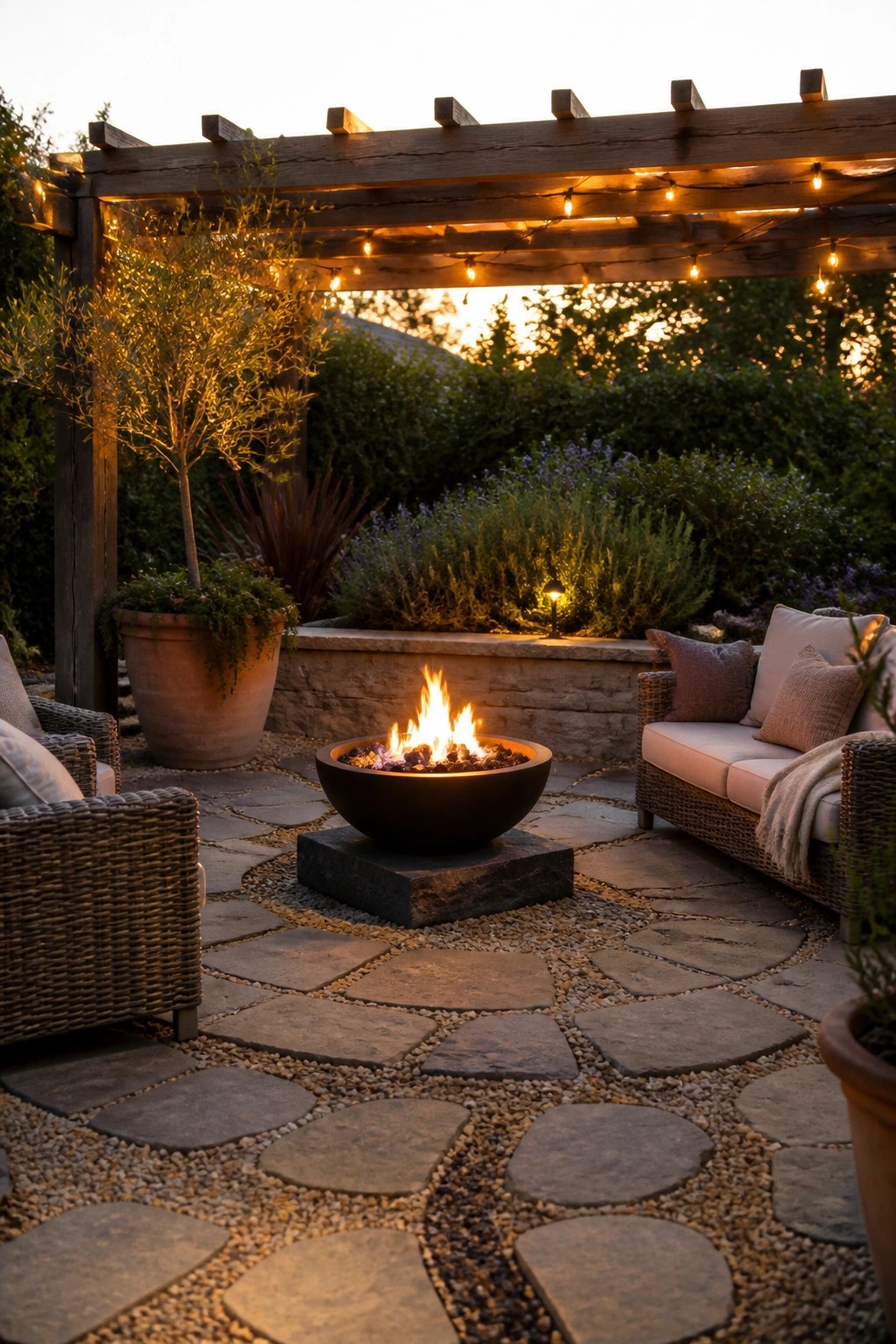
A fire pit placed on a stone base in the middle of a gravel and flagstone patio gives the space a clear center without much extra work. The mix of materials keeps the area feeling open and easy to walk around while still looking structured.
This setup works best in backyards that already have some planting around the edges. Keep the gravel layer thin near the beds so it stays put and does not mix into the soil.
Gravel Paths With Stone Pavers
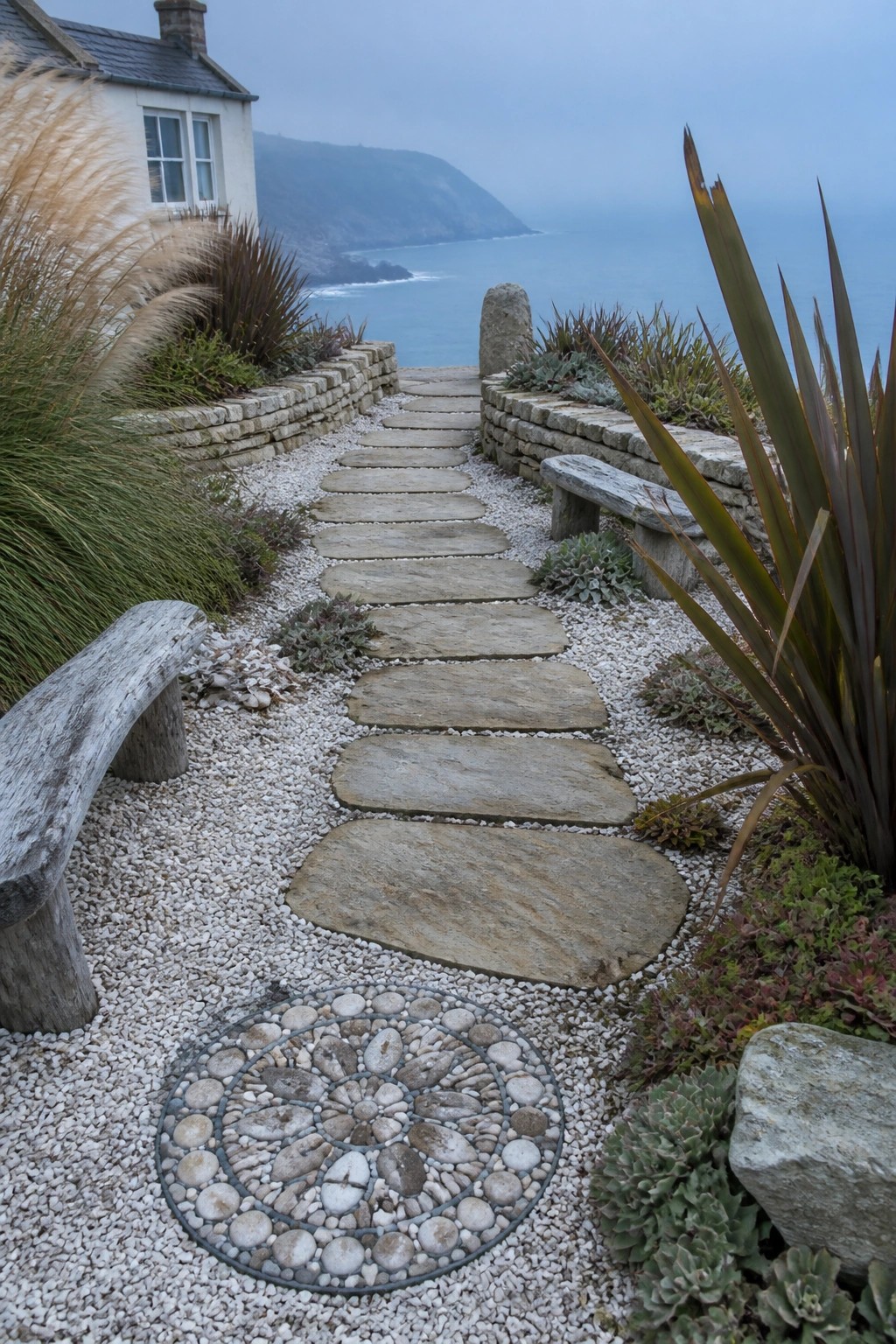
Stone slabs set into gravel make a path that feels simple and practical at the same time. The gravel handles drainage and keeps the surface from looking too formal, while the larger stones give you solid footing and a clear route through the garden beds.
This layout works best on gentle slopes or open sites where you want low upkeep. Use a light gravel color so the stones stand out, and add a few bold plants along the edges to give the path some shape without crowding it.
Mix Stone Pavers With Gravel For Garden Paths
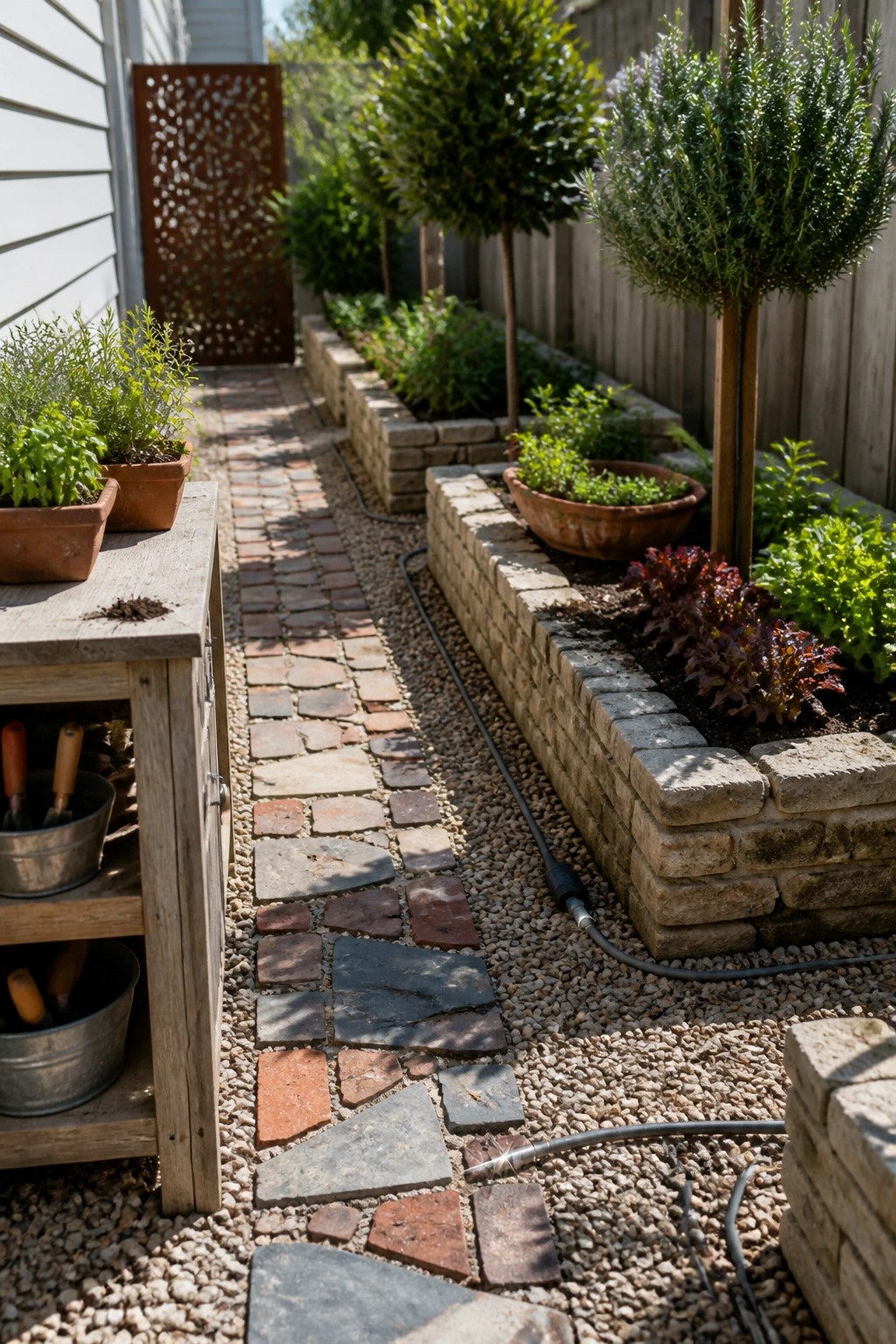
A simple path made from irregular stone pavers set into gravel gives a garden clear direction without looking too formal. It handles foot traffic well and lets water drain through instead of pooling on the surface.
This works best in narrow spaces between raised beds or along the side of a house. Keep the pavers varied in shape and leave plenty of gravel showing so the path feels connected to the rest of the garden rather than sitting on top of it.
Gravel Beds With Sculptural Plants
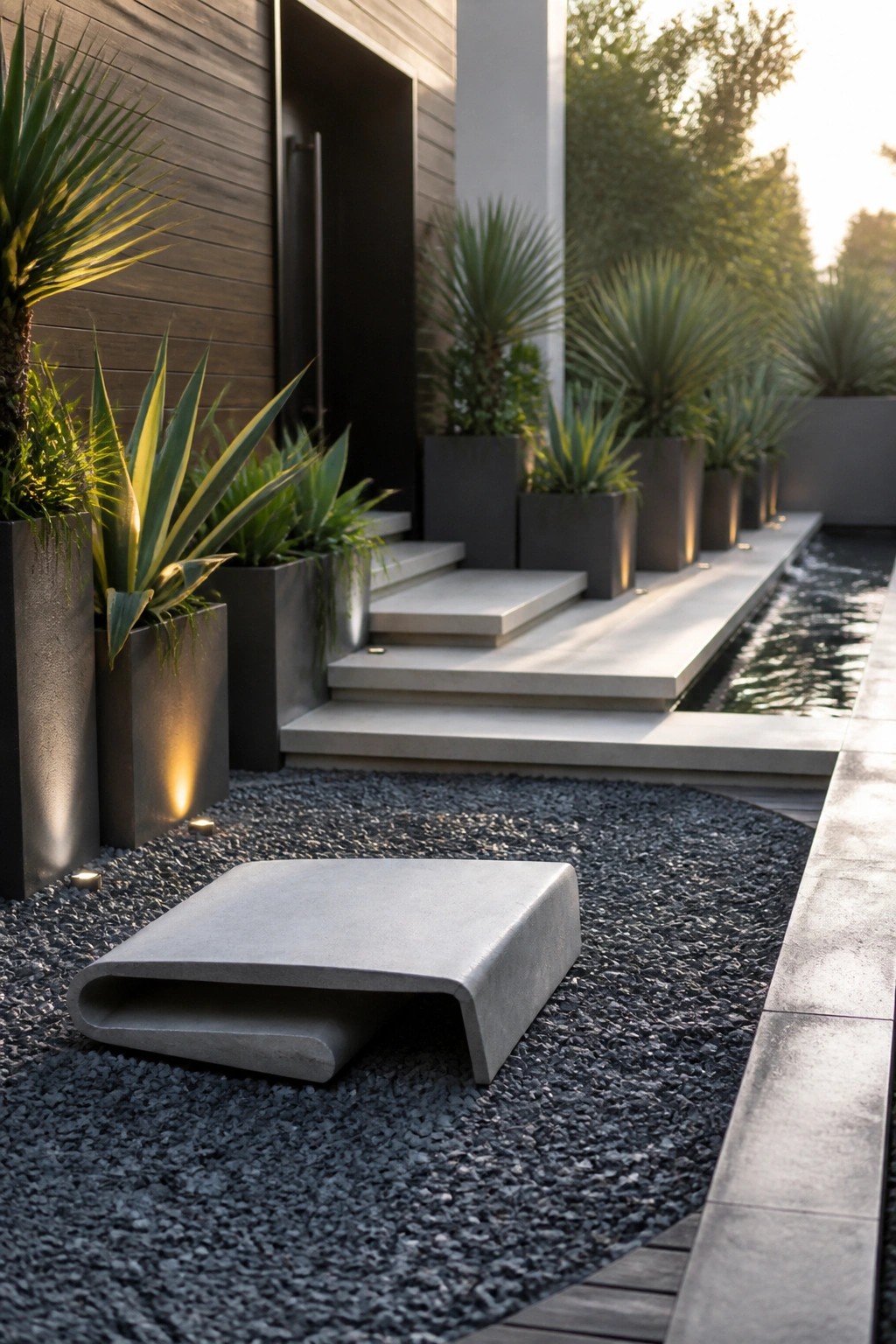
Gravel gives a garden a clean, simple base that stays looking tidy with almost no work. It works especially well when paired with large architectural plants that keep their shape all year and stand out against the dark stones.
This style suits modern homes with straight lines and simple materials. Keep the gravel area fairly open and let the plants do most of the visual work in big concrete containers.
Gravel Paths With Stepping Stones
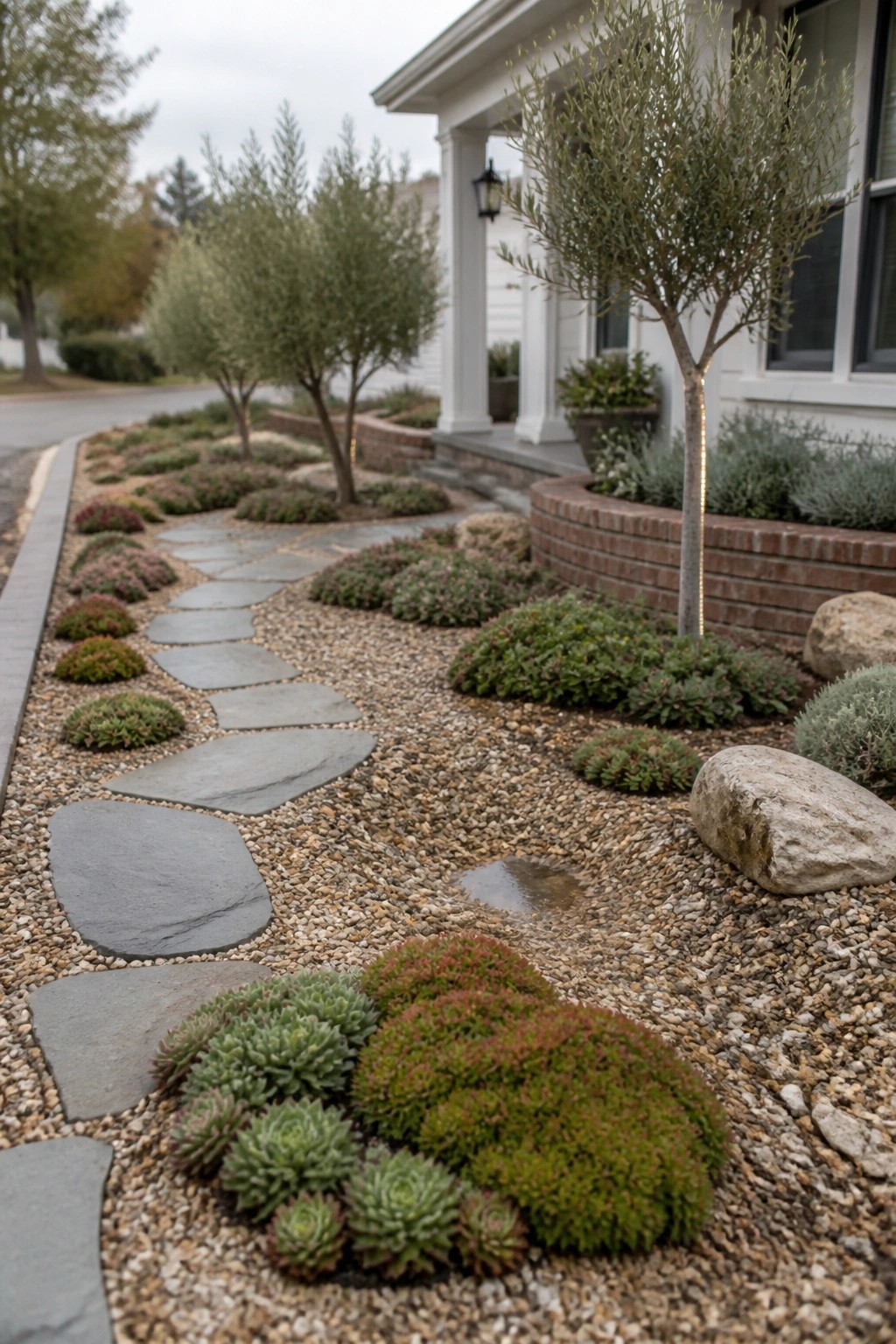
Gravel paths with stepping stones give a garden a relaxed but orderly feel. The loose gravel handles drainage easily and stays low maintenance, while the stones create a clear walking route without needing a full paved surface.
This approach works well along the front or side of a house where you want something simple that still looks intentional. Set the stones at a natural stride apart and keep nearby plants low and structured so the path stays easy to follow.
Gravel And Stone Paths For Modern Gardens
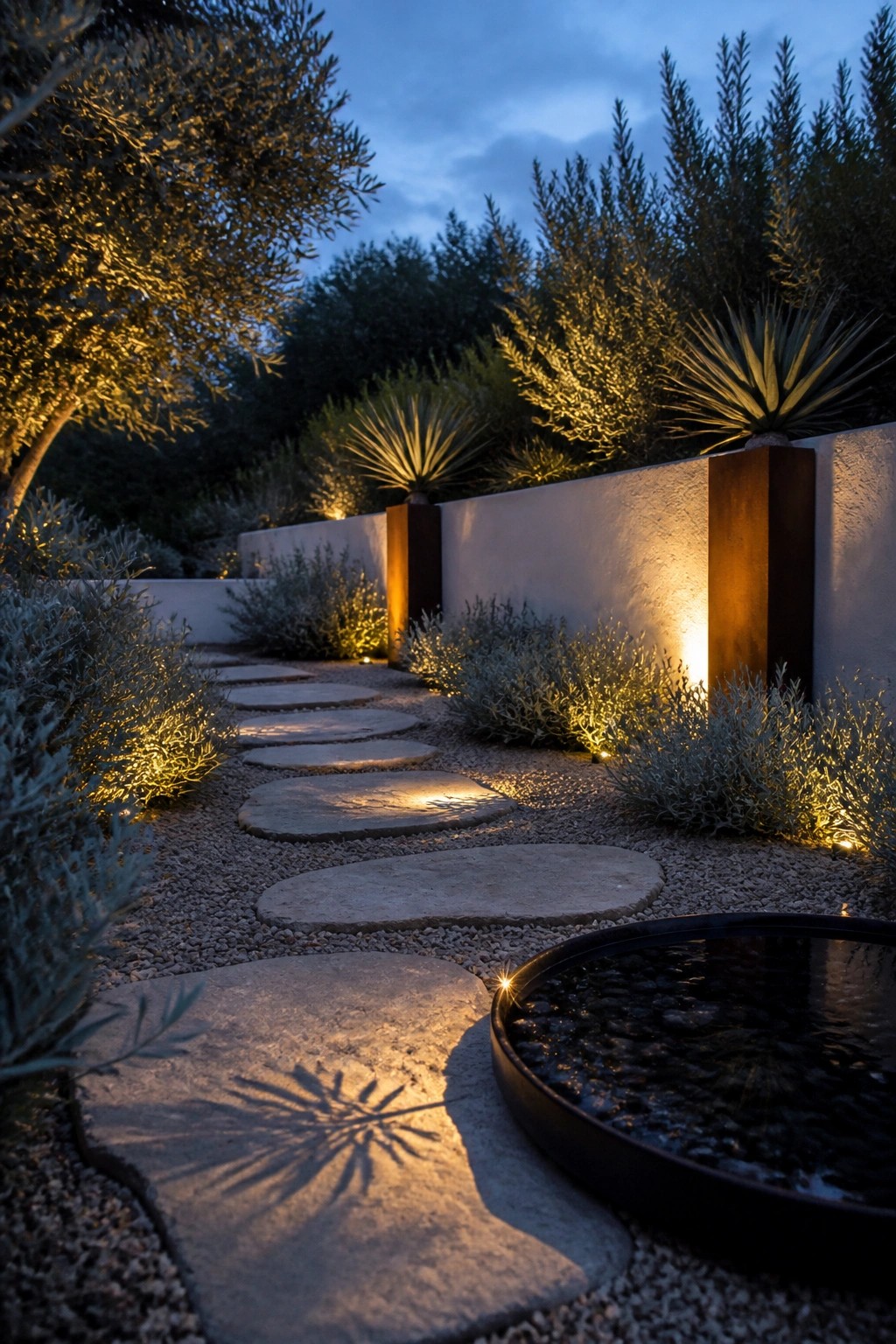
Gravel makes a good base for garden paths because it drains well and stays looking neat with very little work. Setting large flat stones into the gravel gives you a clear route while keeping the surface simple and low key.
This layout suits side yards or smaller gardens where you want to move through planted areas without adding a solid walkway. Space the stones so they feel comfortable to walk on and let low plants spill along the edges to soften the look.
Gravel With Circular Planting Beds
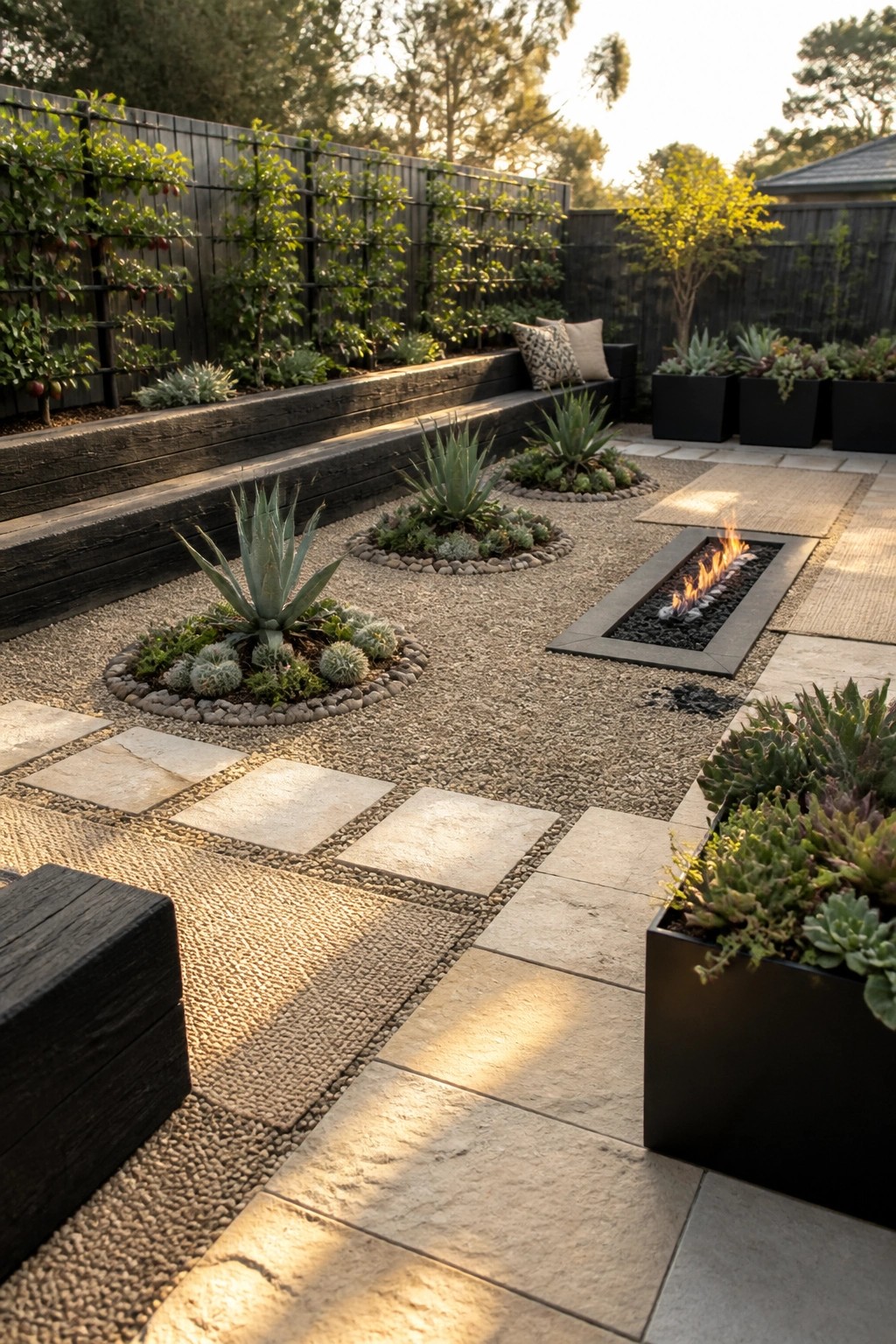
Gravel makes a good base for a garden because it handles drainage and keeps the ground looking neat with almost no work. The round beds give the bigger plants a clear spot to stand out instead of getting lost in a flat surface.
This layout suits dry or sunny yards where grass is hard to keep up. Keep the beds edged with stones so the gravel stays put and the plants have room to spread without looking messy.
Terracing Slopes With Stone And Gravel
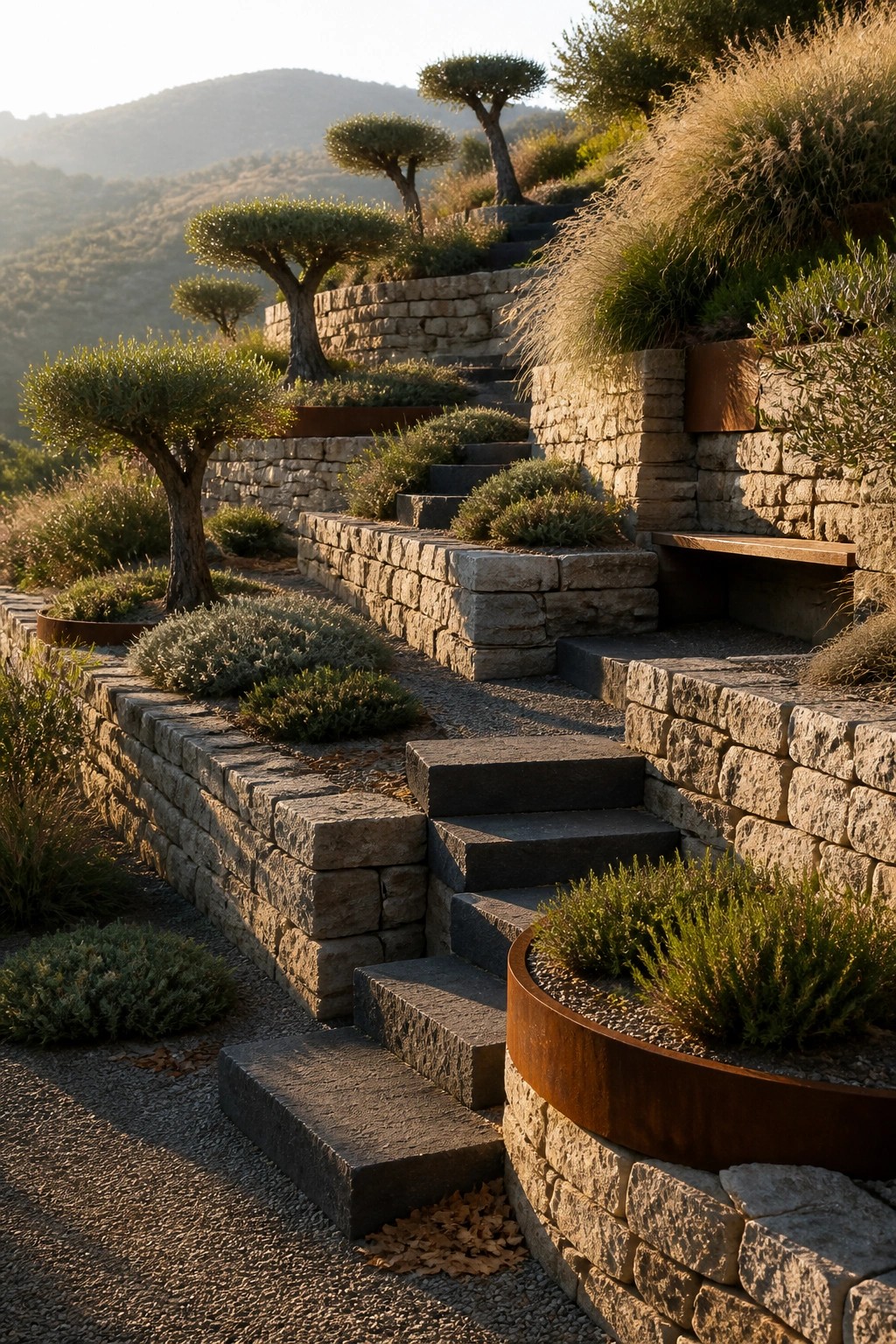
Stone terracing turns a sloped yard into a series of flat, usable beds without losing the natural flow of the land. The walls keep soil stable while gravel paths handle drainage and make walking easy between levels.
This works best on hillsides where you want low maintenance and a clean look. Repeat the same stone and gravel throughout so the terraces feel connected rather than chopped up.
Combine Stone Pavers With Gravel On Outdoor Floors
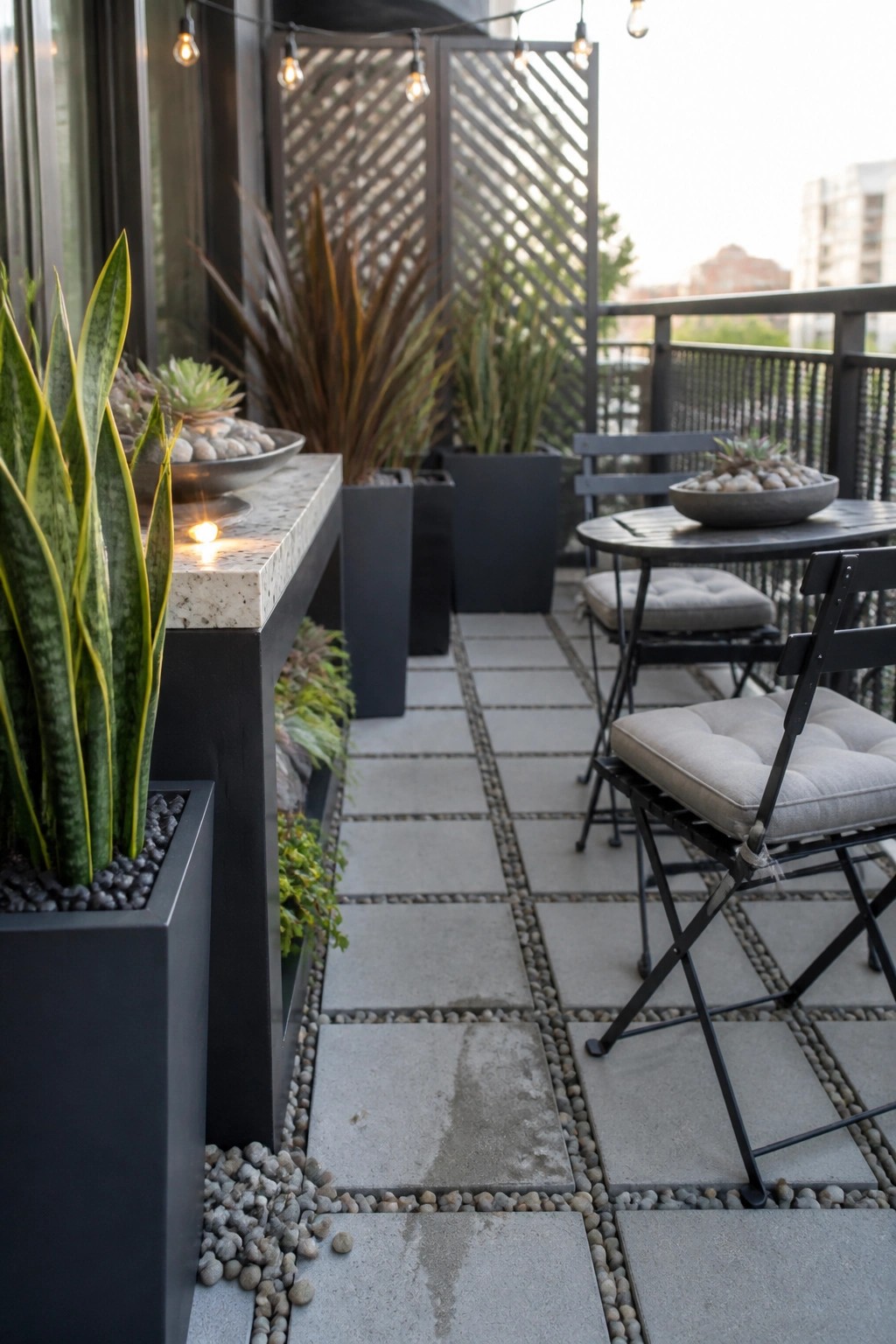
This mix works well on balconies and patios because the large stone slabs give a solid walking surface while the gravel handles drainage and fills the edges. It keeps the area from feeling too heavy or closed in, and it holds up to weather without much work.
The approach suits small urban terraces or rooftops where you need something practical but still simple. Keep the gravel in check with a border so it does not scatter, and use bigger pavers to make the space feel more open.
Gravel Beds With Sculptural Plants
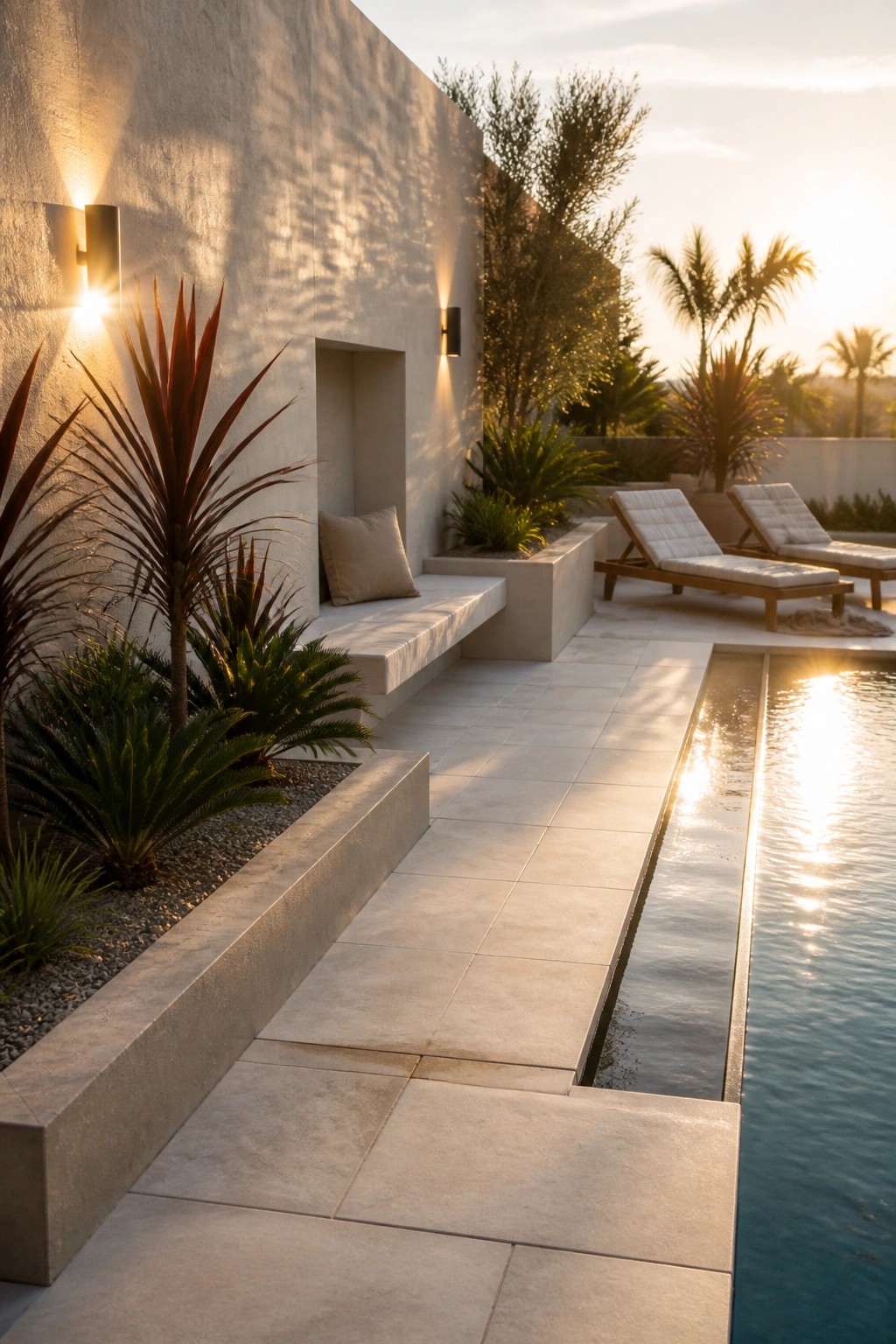
Gravel works well in modern gardens because it keeps the planting areas looking tidy without much effort. The contrast between the loose stone and the sharp shapes of the plants gives the whole space a clean structure that holds up over time.
This approach suits homes with paved patios or pool decks where you want planting to feel intentional rather than scattered. Keep the beds narrow, use a few strong plants per section, and let the gravel handle the rest so the look stays simple.
Gravel Paths With Stepping Stones
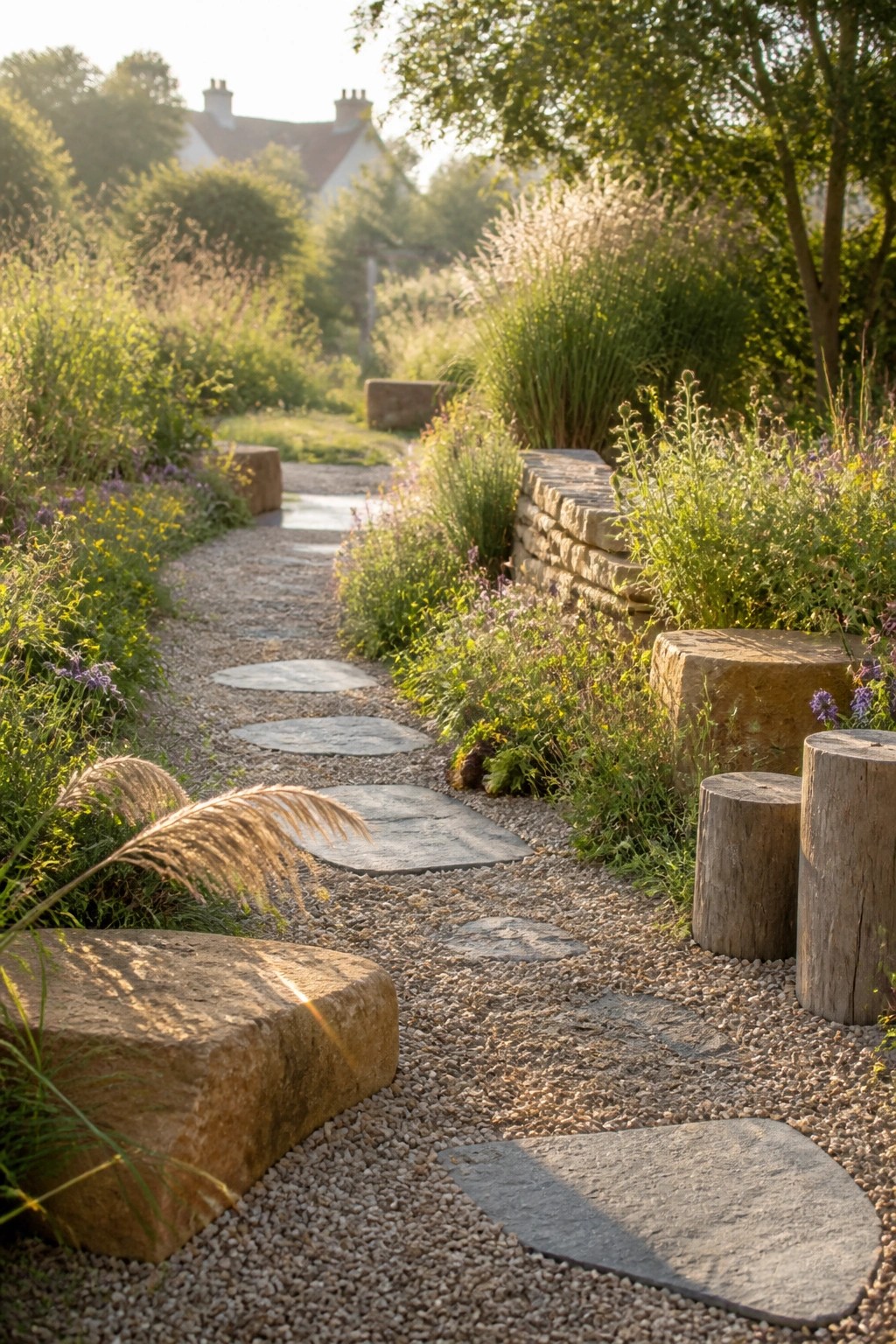
Gravel works well for paths because it drains easily and feels relaxed in a garden setting. Adding flat stepping stones makes the surface more practical to walk on without making the whole path feel too rigid.
This approach suits larger yards where you want a clear route between beds or seating areas. Place bigger rocks or simple wood pieces along the edges to keep the gravel contained and give the path a bit more shape.
Concentric Gravel Rings Around a Central Stone
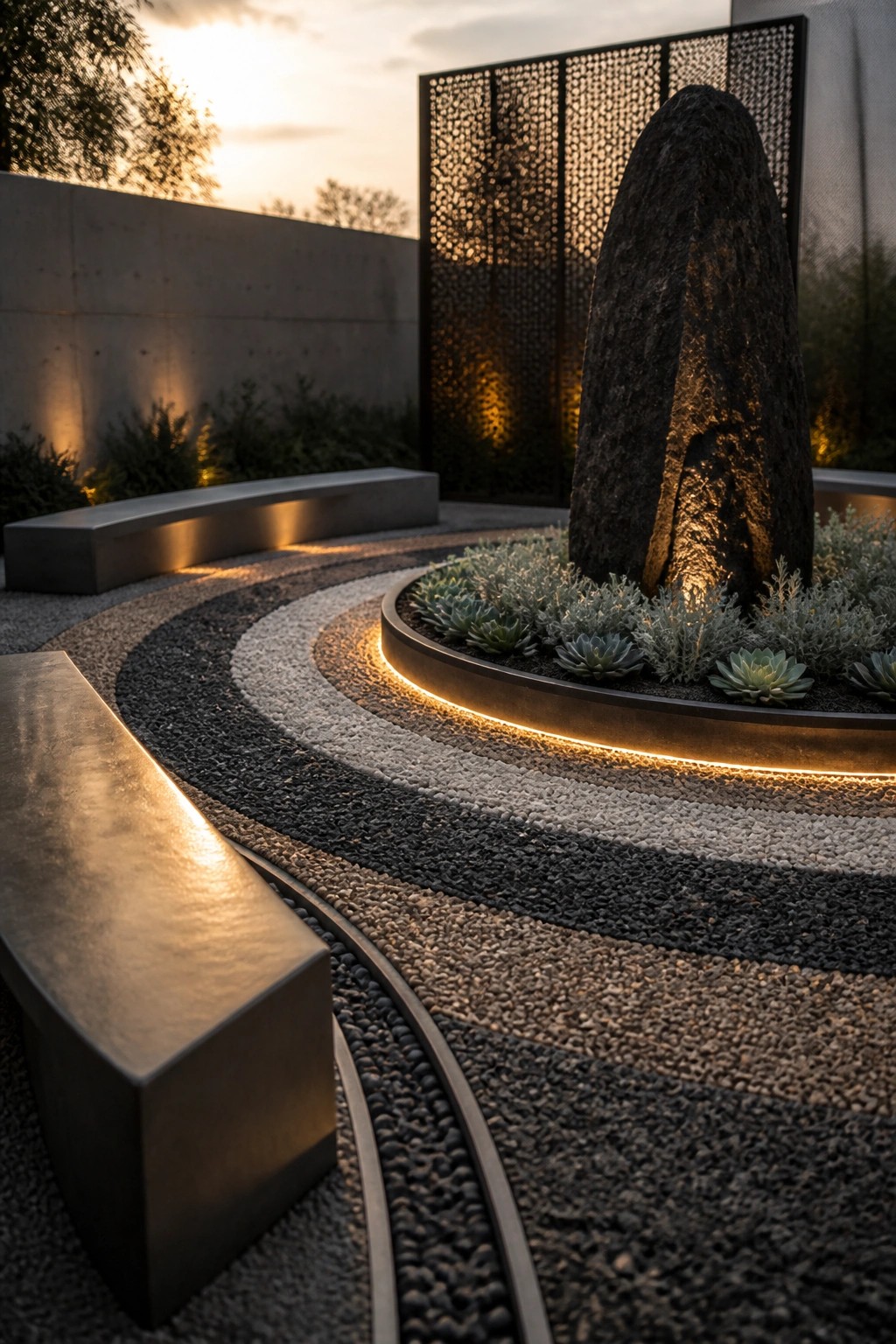
Laying gravel in curved concentric bands gives a garden a clear focal point without needing lots of plants. The rings lead the eye inward and make a single large stone feel more intentional.
This layout works best in smaller spaces or modern courtyards where you want low maintenance and clean lines. Use two or three gravel sizes or colors and keep the bands fairly narrow so the pattern stays easy to see after a season or two.
Mix Gravel Colors to Define Garden Paths
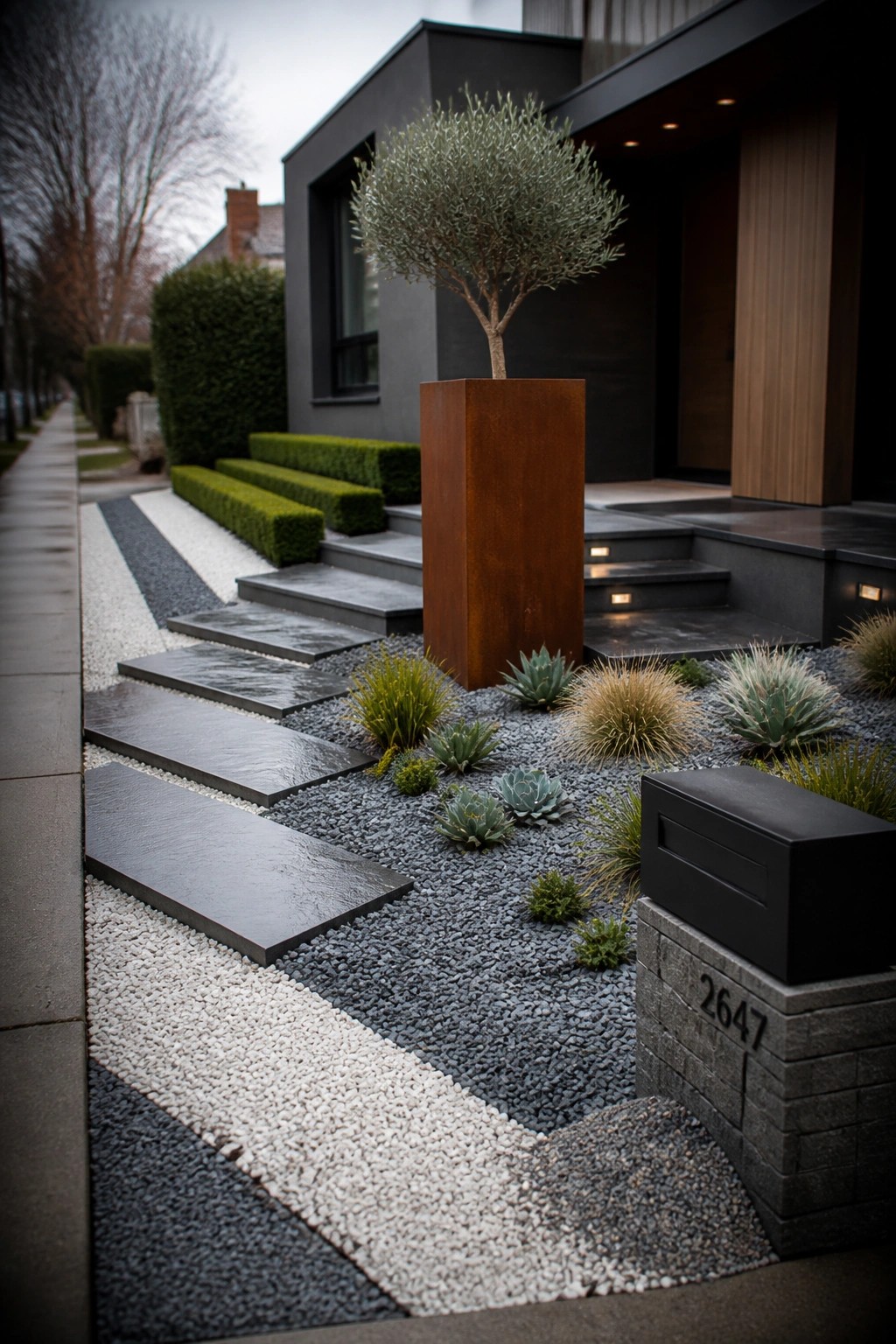
One simple way to add structure to a modern garden is to use two or more gravel colors side by side. The contrast makes paths easy to follow and gives the beds a clean, intentional shape without extra edging.
This works best on flat or gently sloped front yards where you want low maintenance and clear walking routes. Keep the gravel beds at least a few feet wide so the pattern reads well from the street, and place larger stone slabs where foot traffic is heaviest.
Stone And Gravel For Outdoor Dining Areas
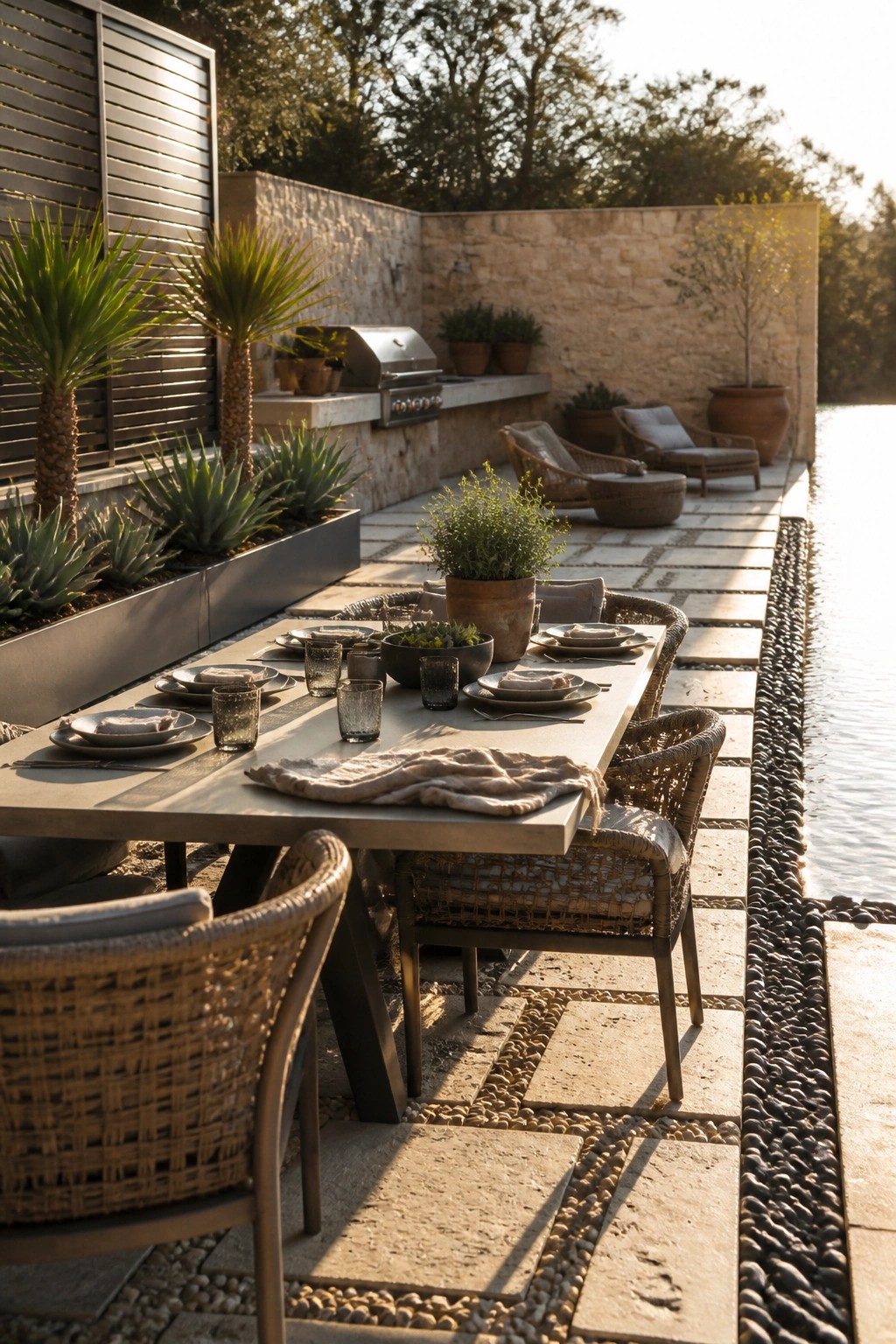
Mixing large stone pavers with gravel borders gives an outdoor dining area a solid base that still feels relaxed. The stone handles the weight of tables and chairs without shifting, while the gravel keeps the edges neat and stops grass or soil from creeping in.
This setup suits smaller yards or modern homes that want low upkeep. Place sculptural plants in pots along the gravel line to add height and shape without extra planting beds. Keep the gravel layer thin so it stays comfortable underfoot.
Raised Stone Beds With Gravel Paths
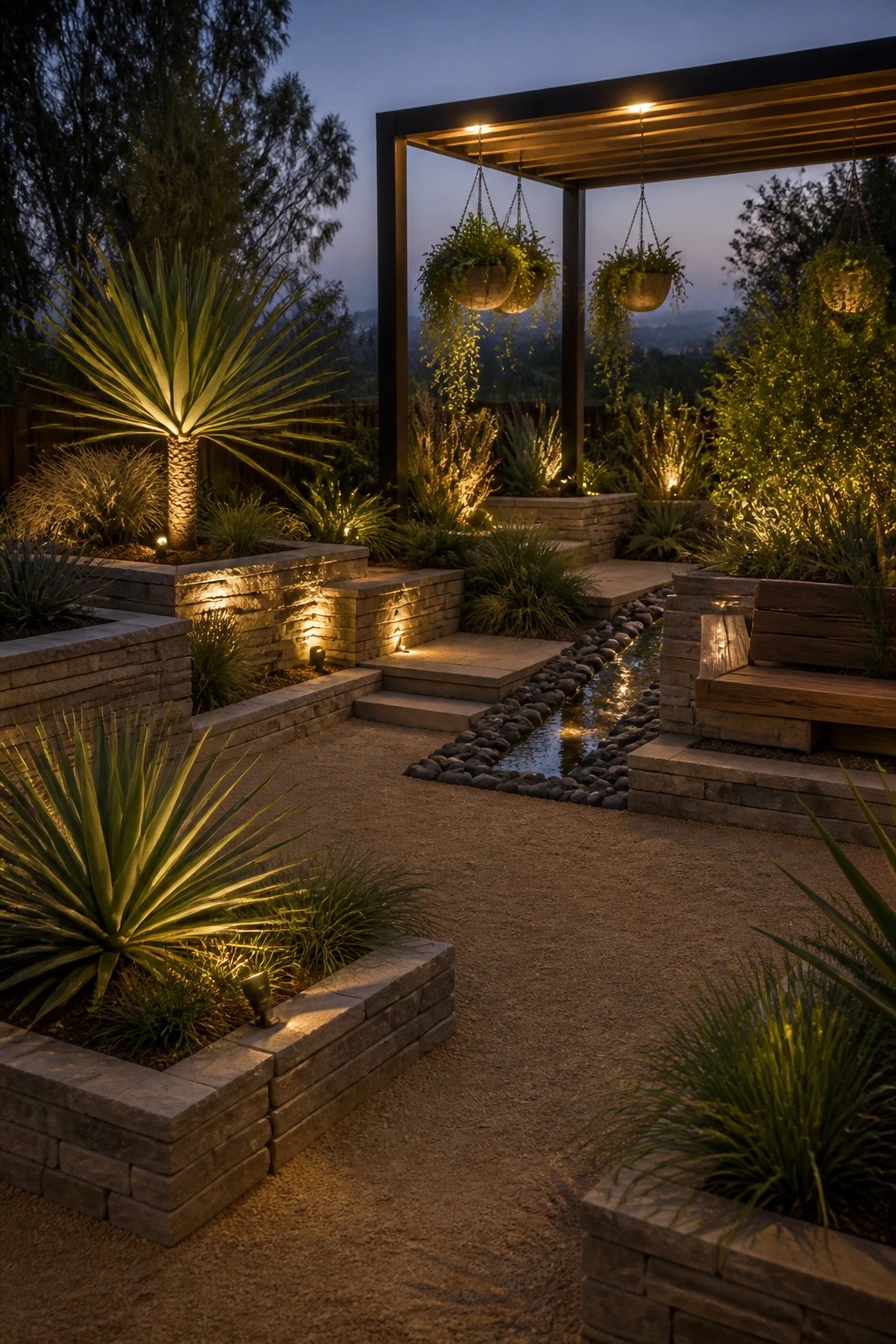
Raised stone beds give a garden clear structure while letting bold plants take center stage. The stone holds everything in place, improves drainage, and creates a simple frame that works especially well with spiky or sculptural plants.
This setup suits modern yards that need low maintenance but still want visual interest. Use the same stone height throughout and keep the gravel paths wide enough for easy walking so the beds feel intentional rather than scattered.
Frequently Asked Questions
Q: How do I stop weeds from poking through the gravel over time?
A: Spread a thick layer of landscape fabric before adding the gravel. Pull any sprouts by hand as soon as you spot them. This keeps the surface clean without much effort.
Q: What kind of stone works best next to sculptural plants? A: Choose smooth river rocks or angular gravel in neutral tones. They highlight the plants without competing for attention.
Q: Is drainage an issue with all this gravel and stone? A: Gravel actually helps water flow away from plant roots. Make sure the ground slopes slightly away from the house before you start. Test the area after a rain to see if puddles form.
