

When I look at a tight yard the first issue that usually appears is how the paths and beds connect without leaving wasted scraps of ground.
Over the years I have found that awkward corners often stay empty unless the layout gives them a clear purpose like a narrow bed or a turning point for movement.
Some layouts just do not translate from drawings.
I usually walk the space a few times to check where feet naturally go before I commit to any edging or planting lines.
A couple of the ideas here strike me as worth marking down so I can try them once the weather settles.
Mount Planters On Fences In Narrow Yards
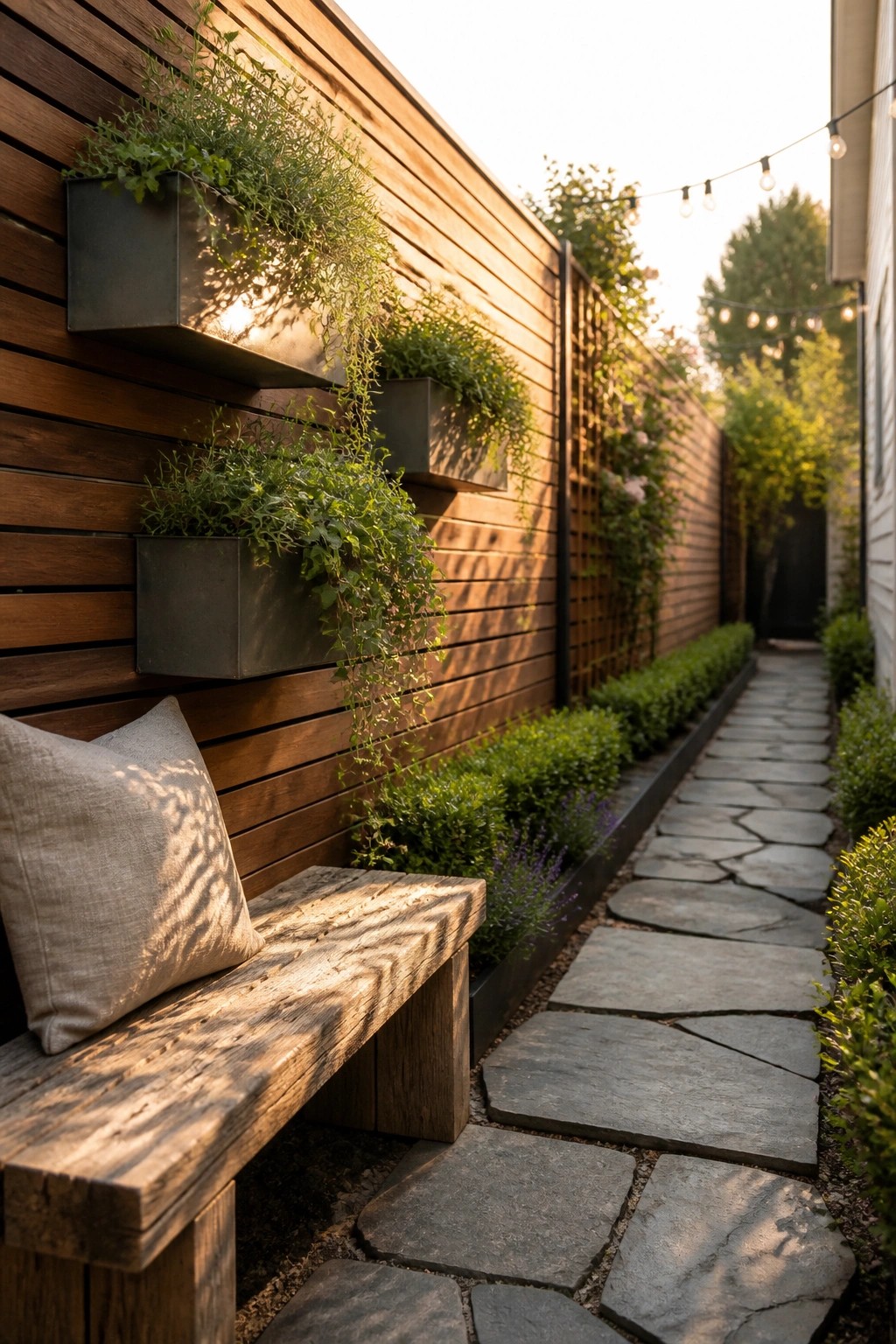
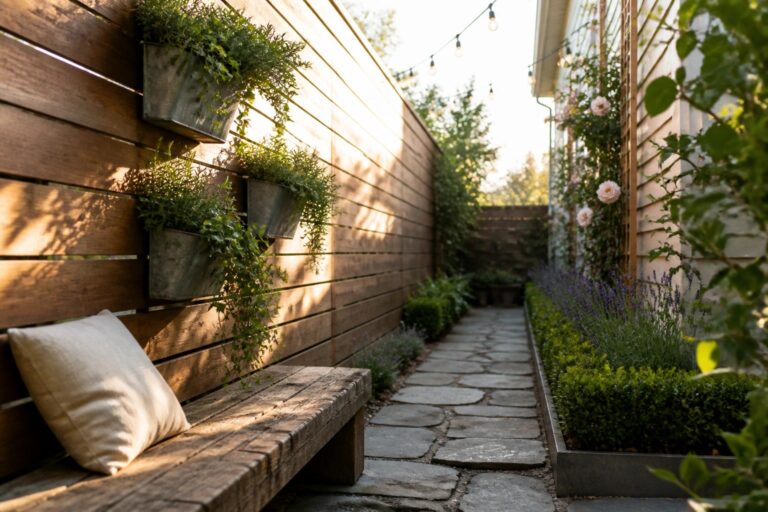
Mounting planters straight onto a fence keeps the ground open in tight spaces. This approach adds plants without crowding a narrow path or blocking movement through the yard.
It works best along side passages or back corners where space is limited. Keep the planters at a workable height and pair them with a simple path and low border plants so the area stays easy to maintain.
Gravel Defines a Simple Corner Patio
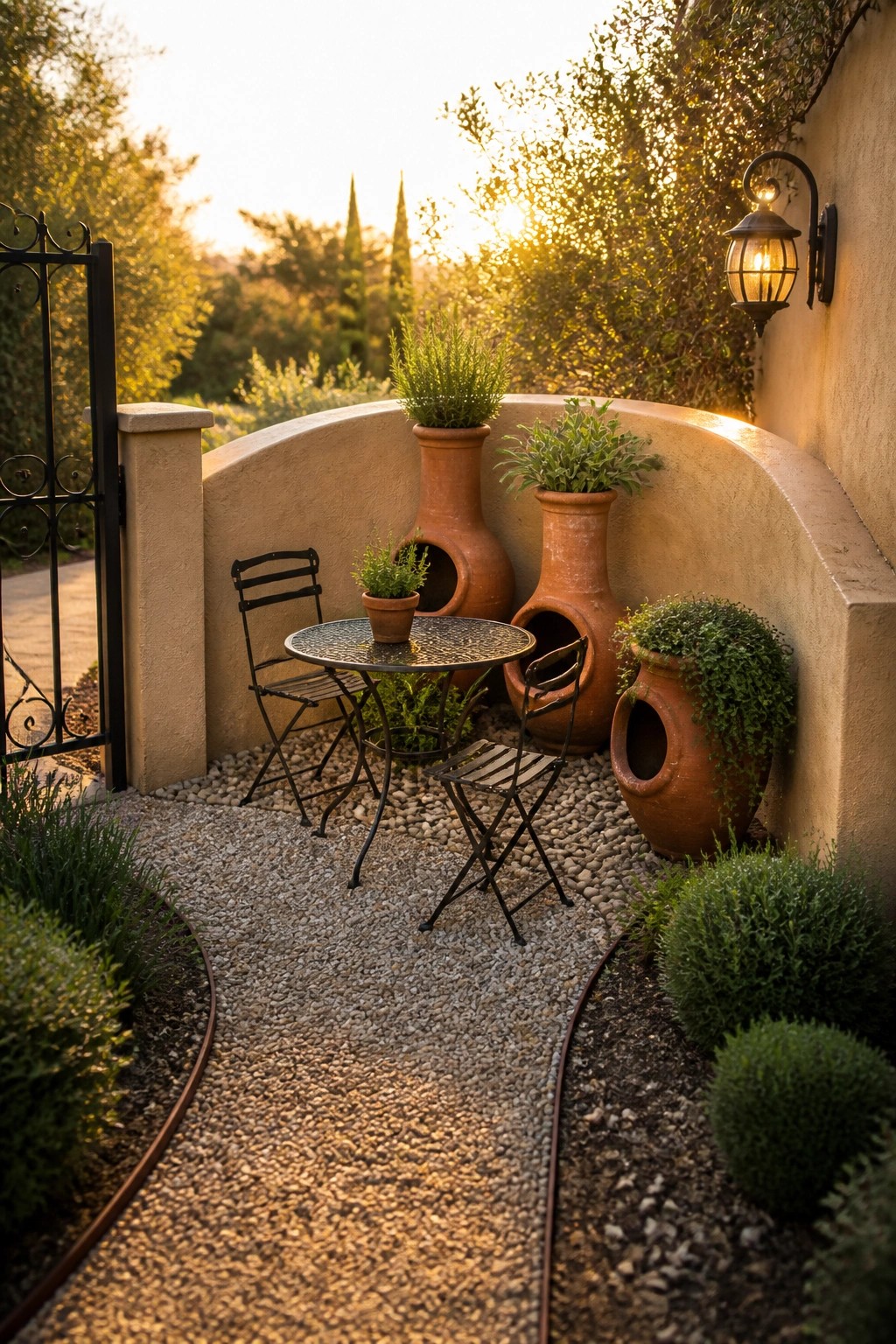
Gravel gives you an easy way to mark off a small seating spot without major construction. It drains well, settles into uneven ground, and works in corners where a poured patio would feel too heavy or expensive.
Place a couple of folding chairs and a small table on the gravel and let large pots do the rest of the framing. This setup suits narrow side yards or leftover spaces next to a wall, and it stays low maintenance as long as you keep the gravel raked and edged.
Add Vertical Gardens In Narrow Yards
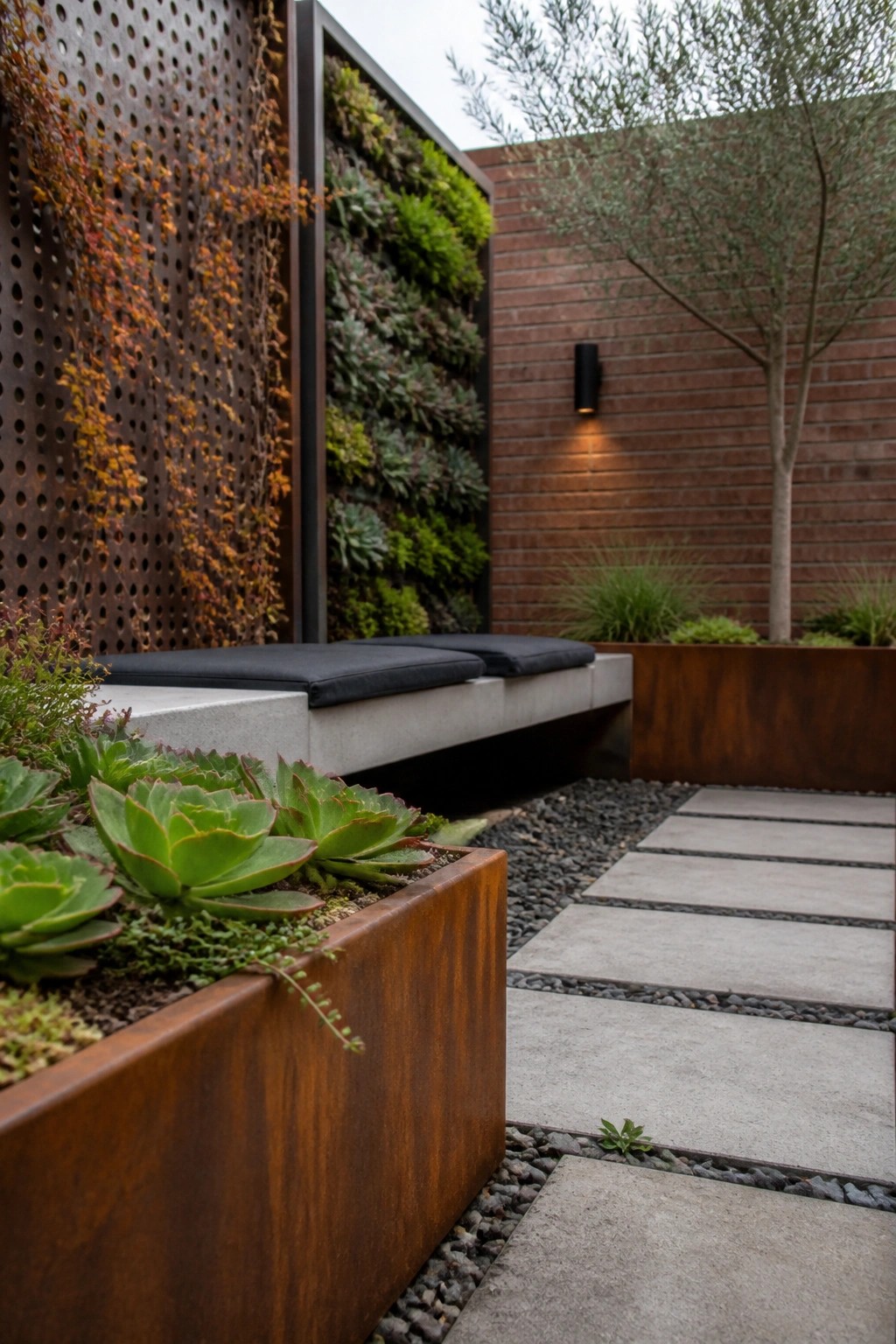
A vertical garden wall works well when you have limited ground space but still want plenty of plants. It turns an empty wall into a growing surface and keeps the lower area open for paths or seating. The mix of succulents and trailing plants adds texture without crowding the walkway.
This setup suits side yards or tight corners between buildings. Keep the wall simple with one main plant type and add a few low planters at the base for balance. Watch the watering system so it does not drip onto the path below.
Build A Curved Bench Into A Tight Corner
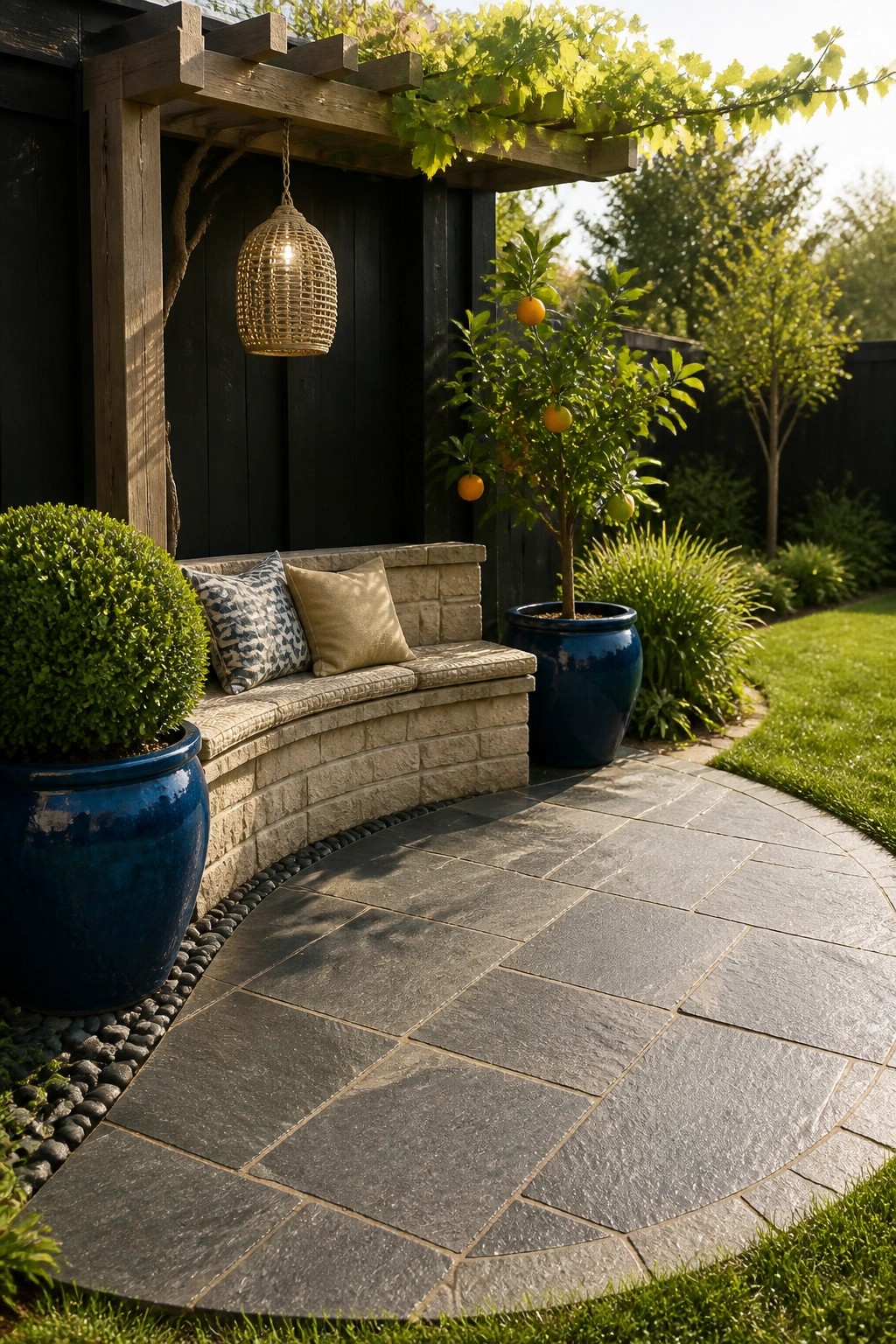
A curved bench can turn an awkward spot into usable seating without taking up much room. It follows the natural shape of the space and leaves more open ground around it than a straight bench would.
This works best in small yards where corners often get ignored. Use simple materials like stone or block and keep nearby planting low so the seat stays the main feature.
Wooden Crate Planters For Small Balconies
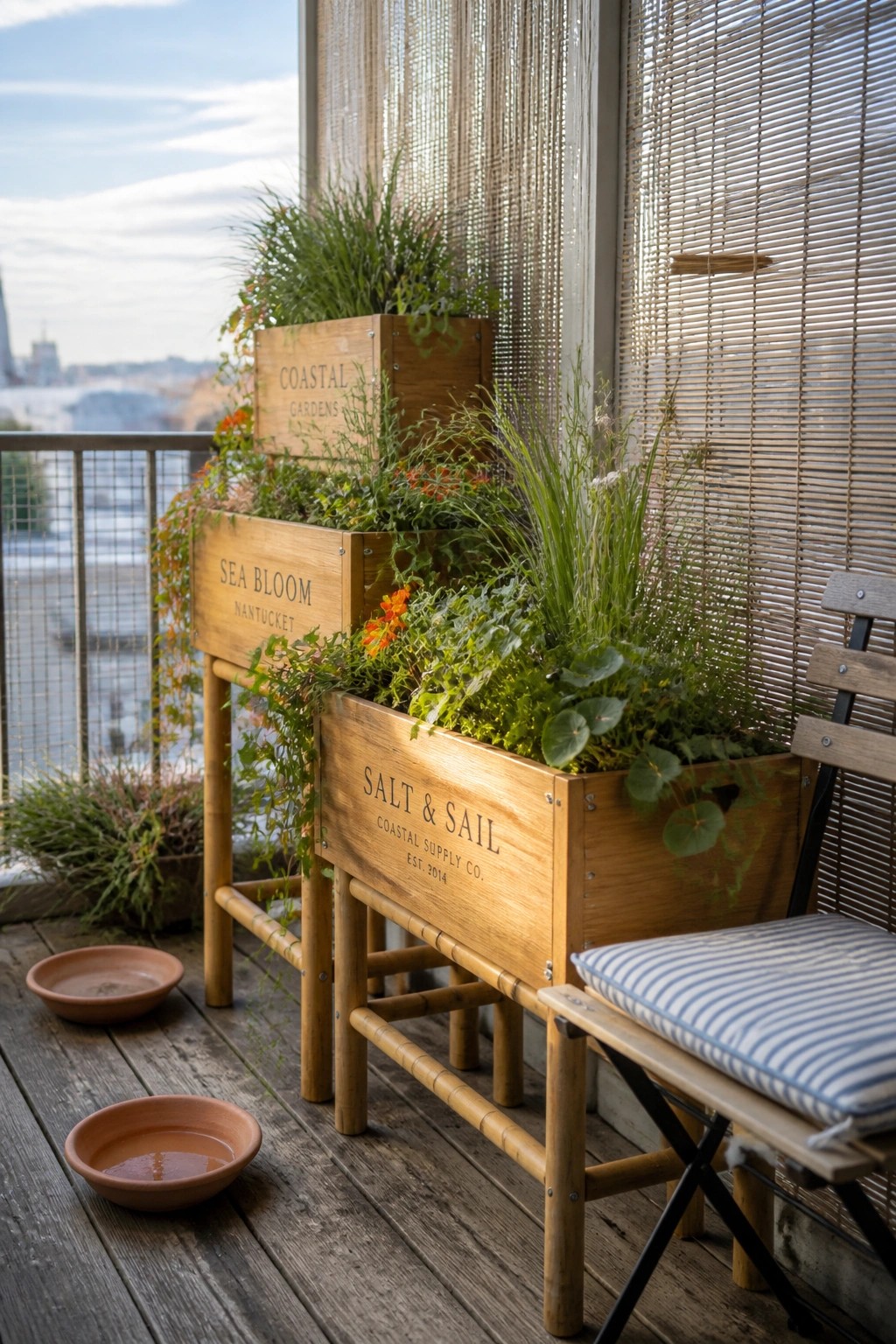
Wooden crates make a straightforward planter choice when floor space is tight. They sit up on legs so plants stay off the deck boards and you can still move around the area without stepping over pots.
This approach suits apartment balconies and narrow decks where a full garden bed is not possible. Arrange a few crates at different heights and fill them with herbs or flowers that can trail over the sides.
Circular Raised Beds Help With Small Garden Layouts
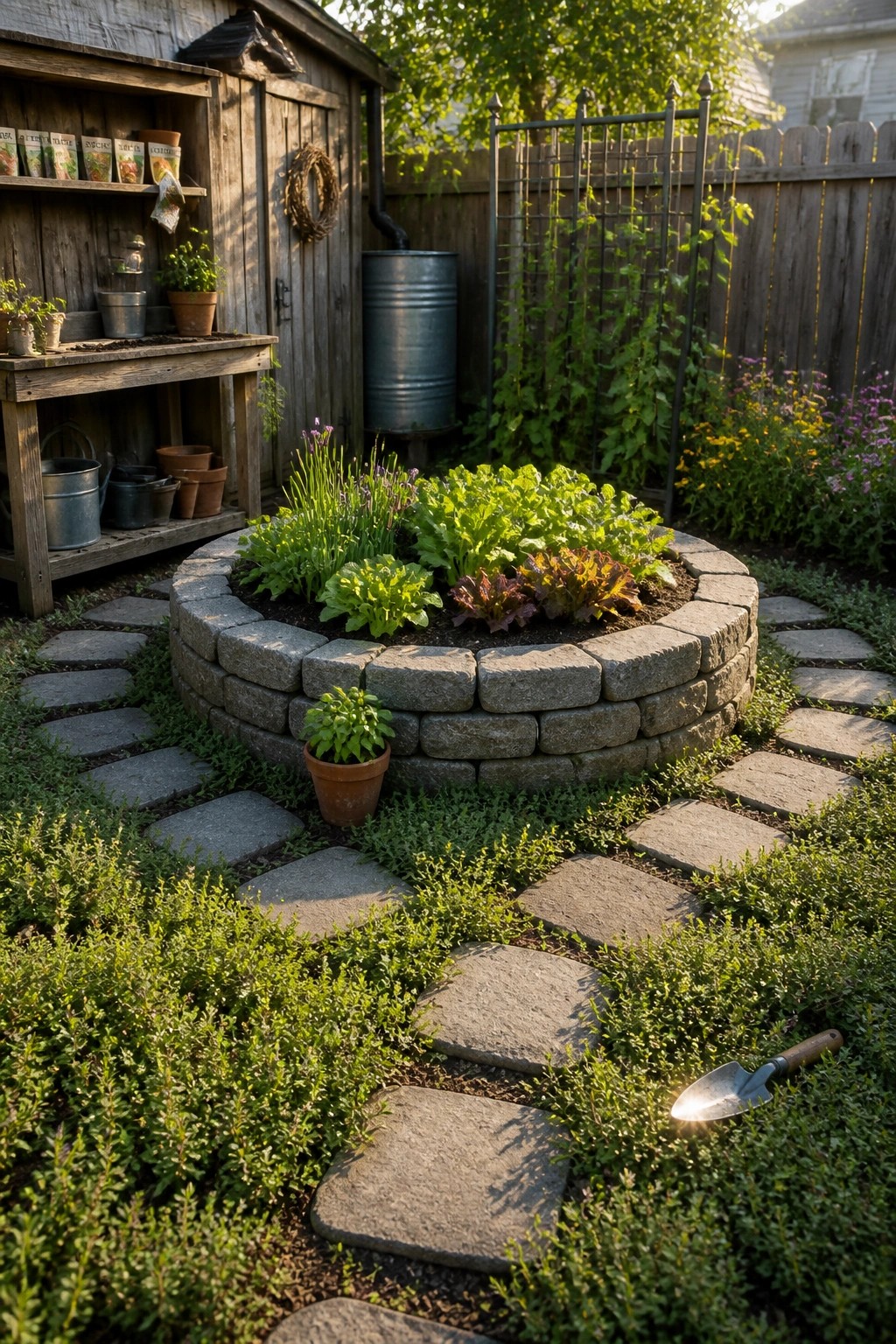
A round raised bed gives you a clear planting zone that fits neatly into tight spots. The shape makes it easy to reach everything from the path without stepping on soil, which helps in smaller yards where every inch counts.
Stone borders keep the bed tidy and hold the soil in place over time. This works especially well next to a shed or fence where a square shape might crowd the space or block access.
Edge a Narrow Path with a Low Retaining Wall
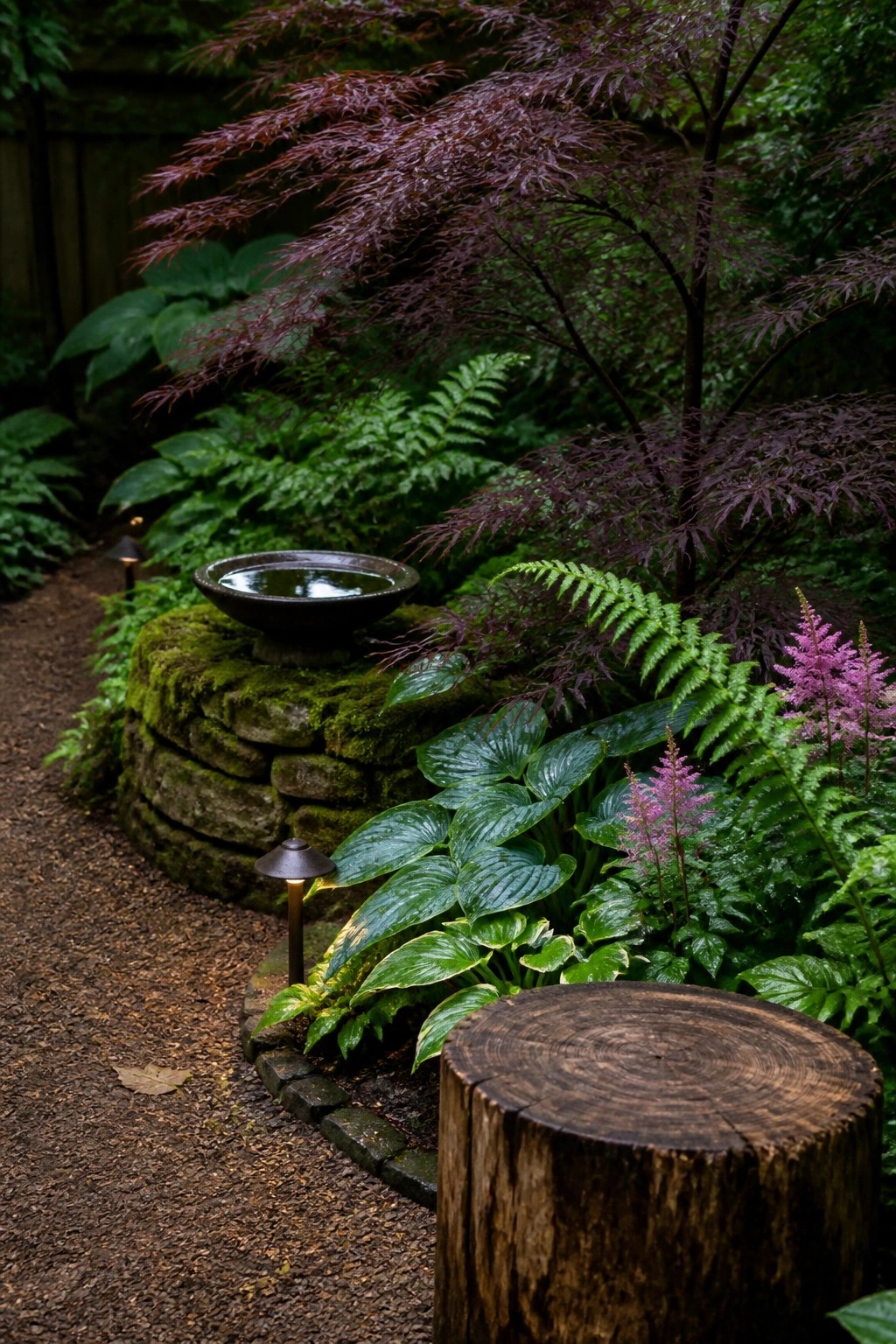
A low stone retaining wall gives a narrow side garden clear shape without taking up much room. It turns an awkward strip of ground into a defined route that feels intentional instead of leftover space.
This works well in tight yards where you need both planting room and a walking path. Keep the wall low, let moss soften the stone over time, and layer ferns and hostas along the top so the planting feels full but not crowded.
Mount Wall Planters To Gain Space In Tight Corners
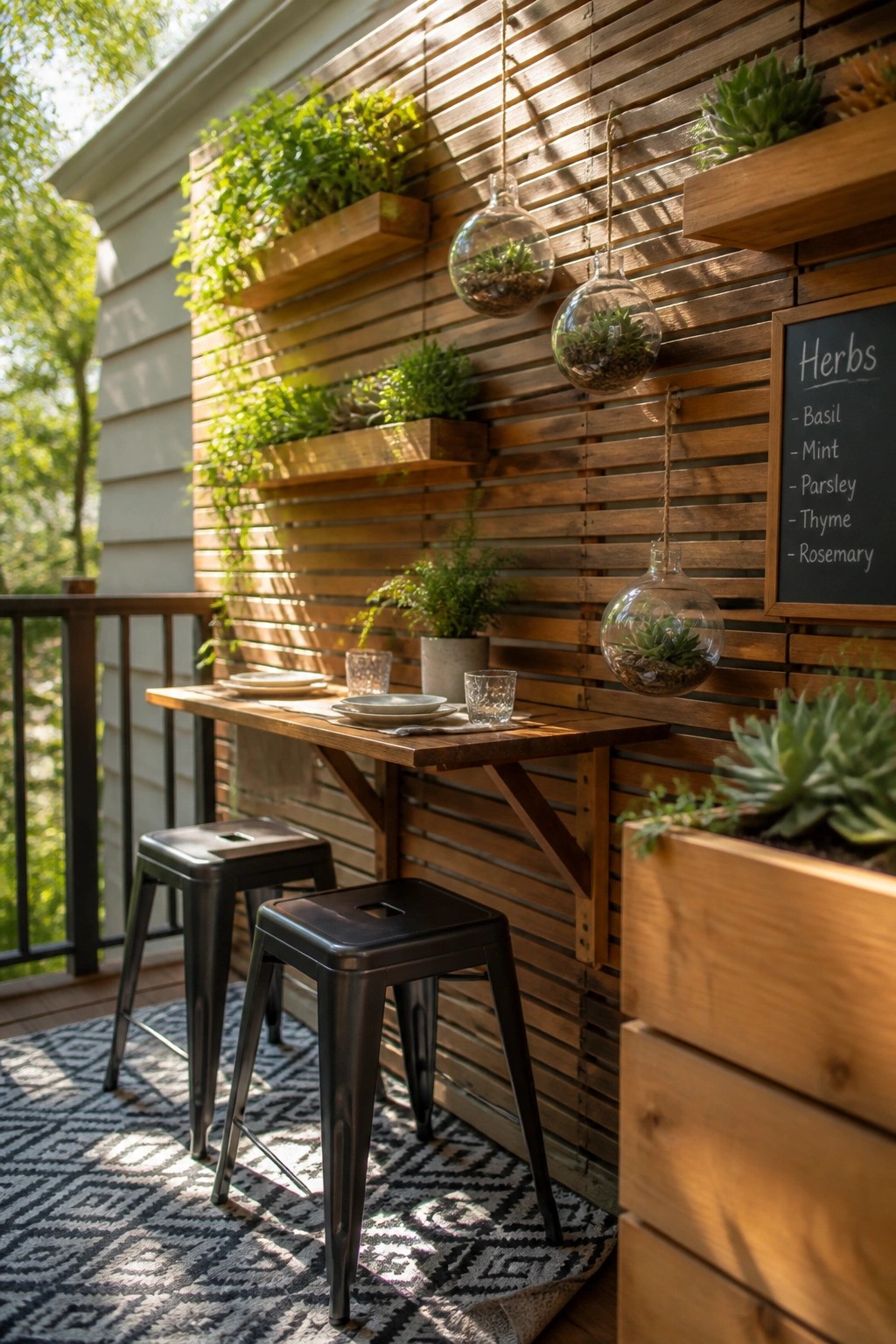
A wall full of wooden boxes and hanging glass globes lets you add plenty of plants without losing floor room. This setup works well on balconies or side yards where every square foot counts and you still want a place to sit.
Build or buy simple boxes that screw straight into the siding or a slatted screen, then mix in a few hanging pieces for height. It suits homes with narrow decks or awkward side returns, and the plants stay easy to water if you keep them at a reachable level.
Curved Brick Edging For Small Garden Beds
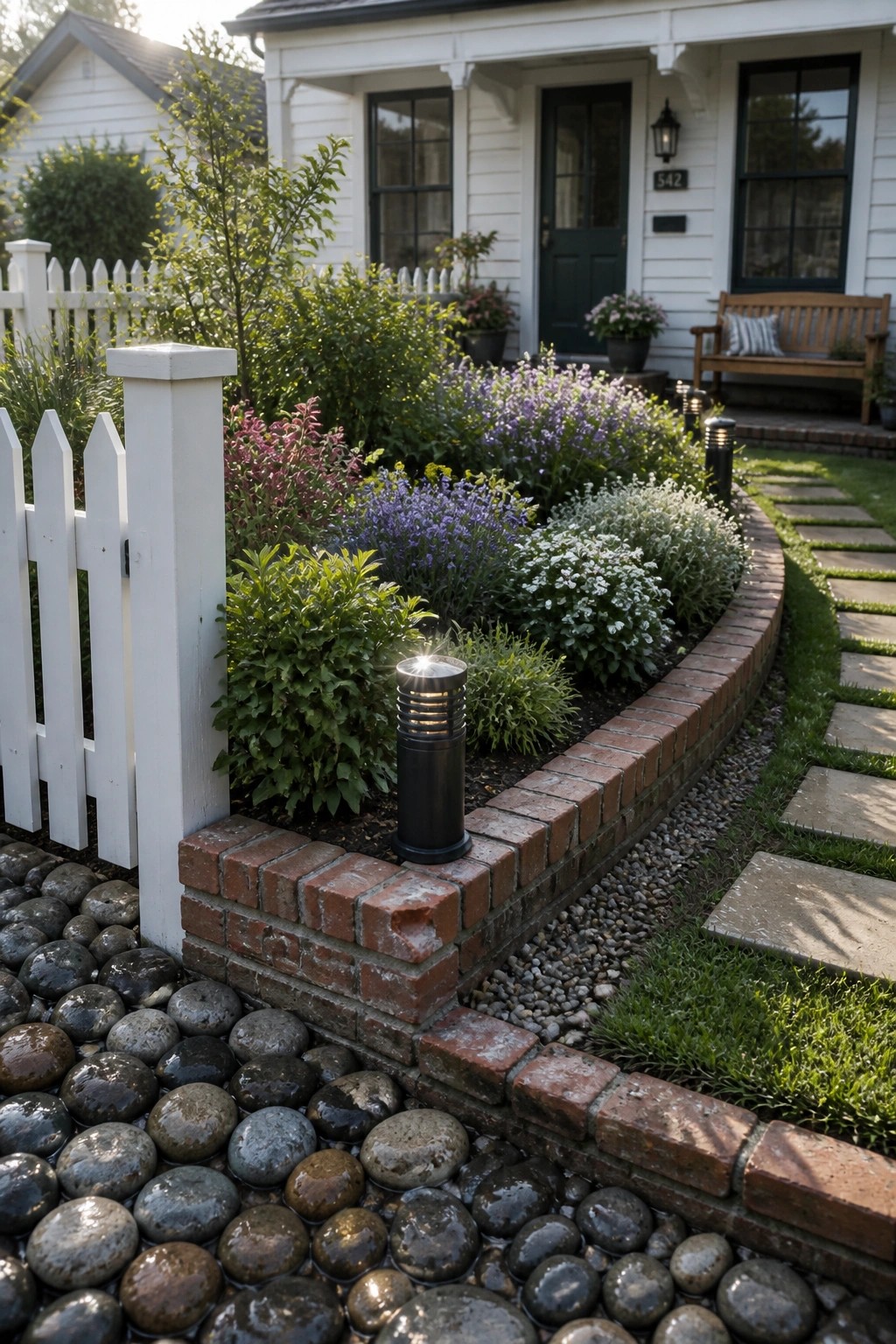
A low brick border with a gentle curve gives garden beds clear shape without taking up much room. It keeps soil and mulch in place while letting plants spill over naturally, which helps the whole bed look fuller even in a tight spot.
This works best along fences or paths where straight lines would feel stiff. Set the bricks on a simple gravel base so they stay level and water can drain away from the house.
Built-In Bench Seating for Narrow Yards
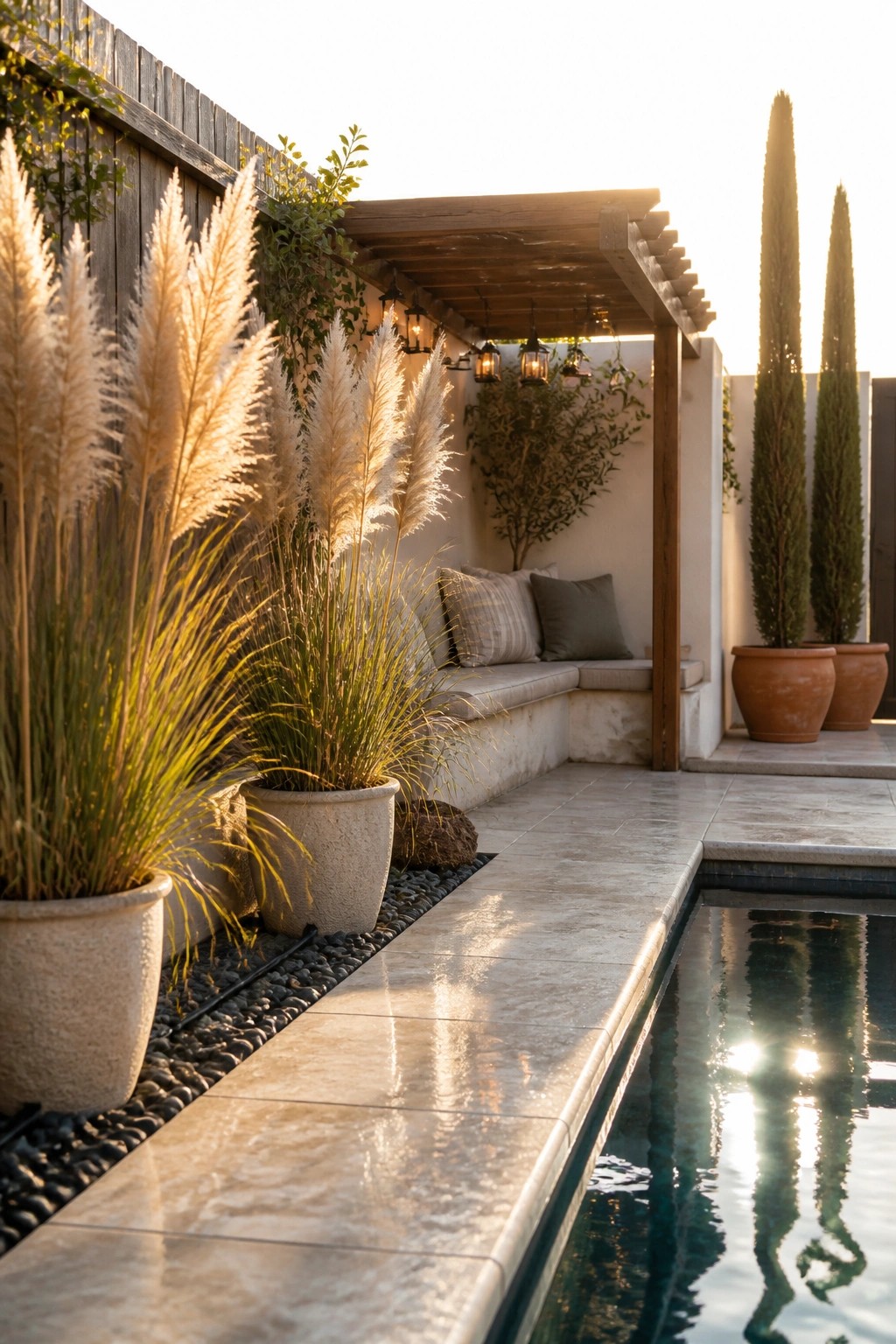
A built-in bench tucked under a simple pergola makes good use of a narrow strip beside a pool or fence. It turns leftover space into a place to sit without adding bulky furniture that would crowd the area.
This works best in tight side yards or corners where freestanding chairs would block the path. Keep the bench low and plain, then add a few tall grasses in pots to soften the edges and give a bit of privacy.
Mix Pavers With Gravel For Simple Paths
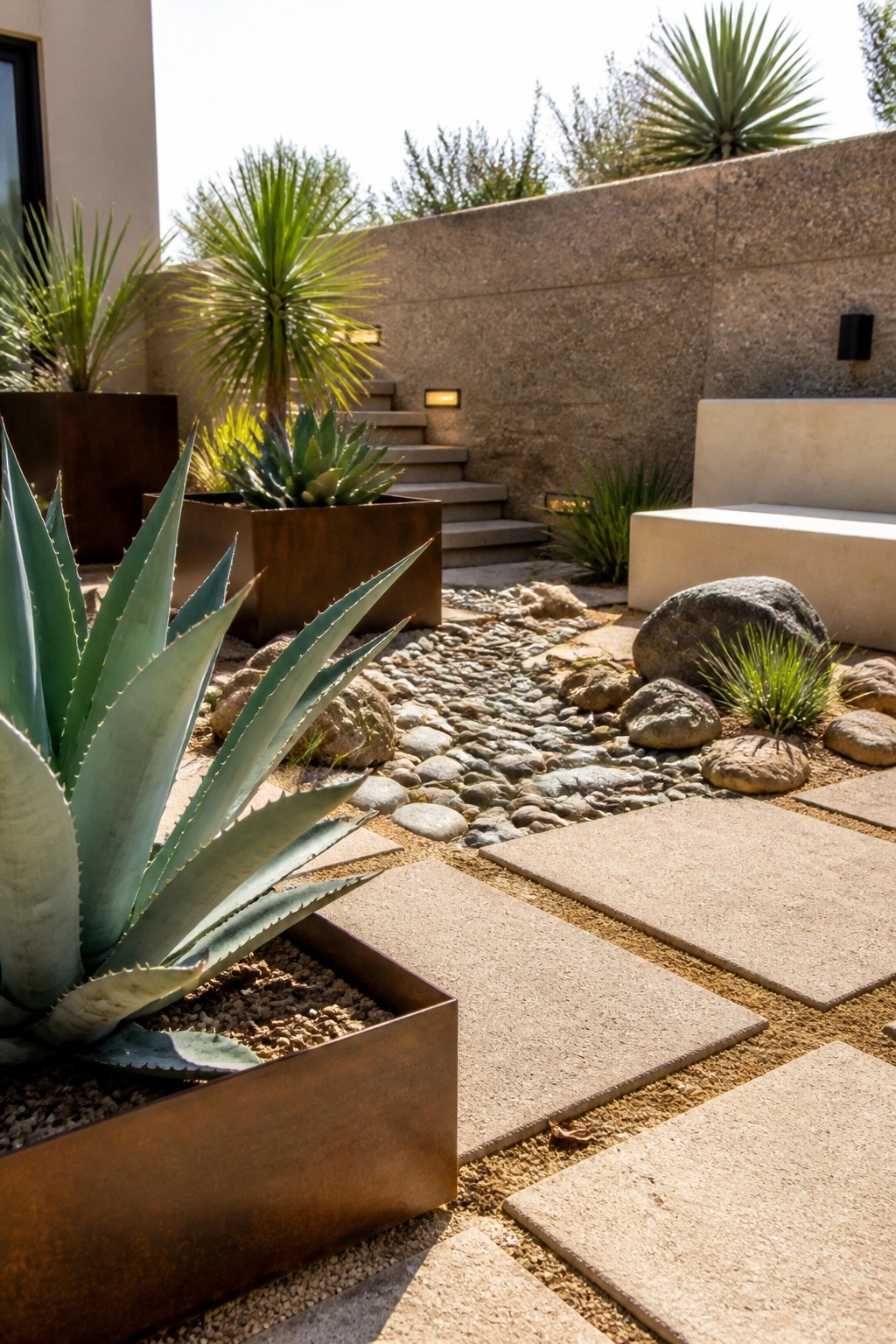
A path made from large pavers set into gravel gives you a clear route without covering the whole area in solid stone. It keeps the space feeling open and lets water drain easily, which matters in small gardens where every inch counts.
This layout works best in tight yards or awkward corners where a full patio would feel too heavy. Use the bigger pavers for the main walking line and let the gravel fill in around them so plants in containers can sit right at the edge without crowding the path.
Stepping Stones Open Up Narrow Beds
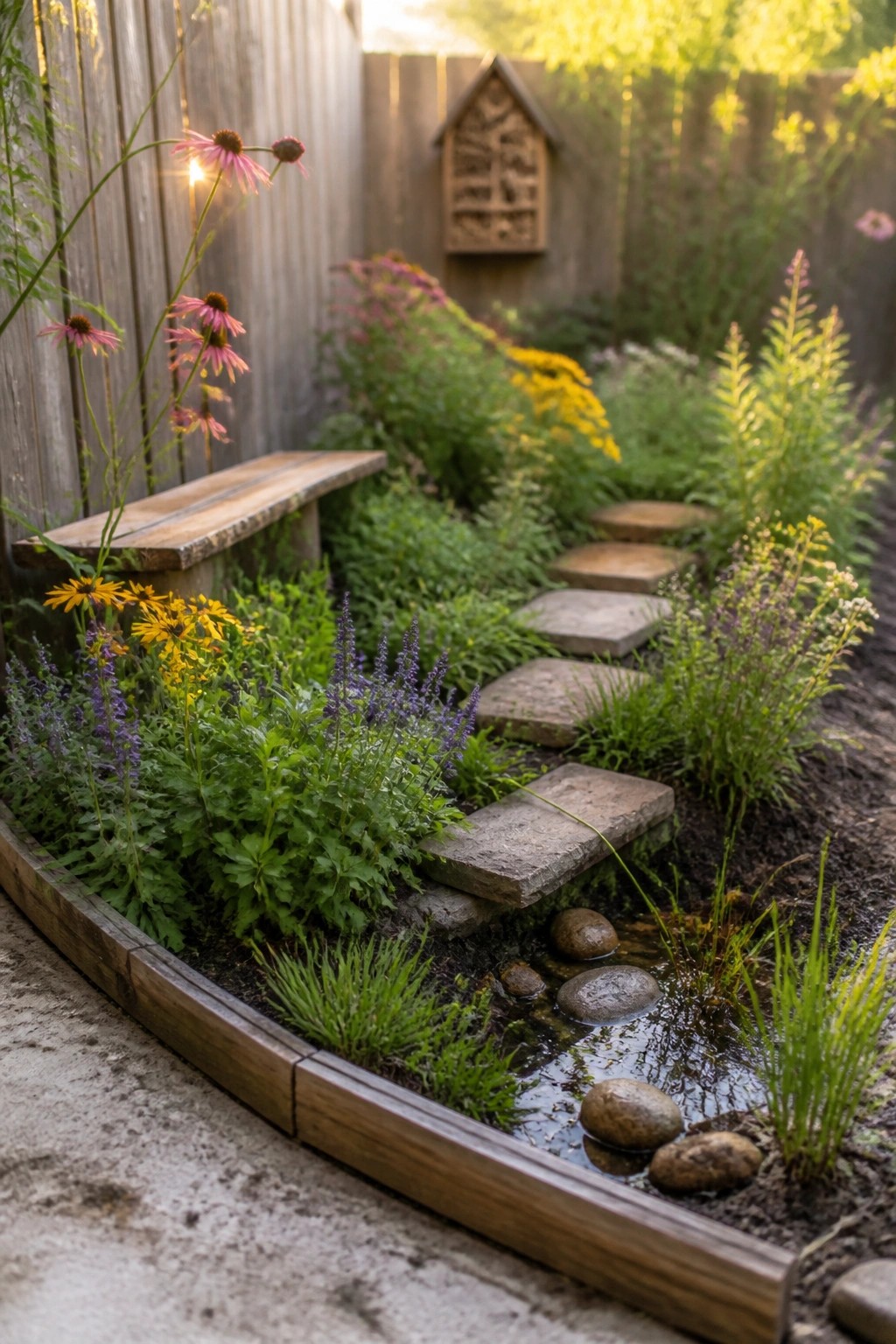
Stepping stones give you a way to walk through a tight border without stepping on plants or compacting the soil. They turn an awkward strip along a fence into something you can actually reach and enjoy.
Place them a comfortable stride apart and let the plants grow around the edges. This layout suits small yards where every inch counts and works especially well when the bed is long and thin.
Raised Beds Along Narrow Passages
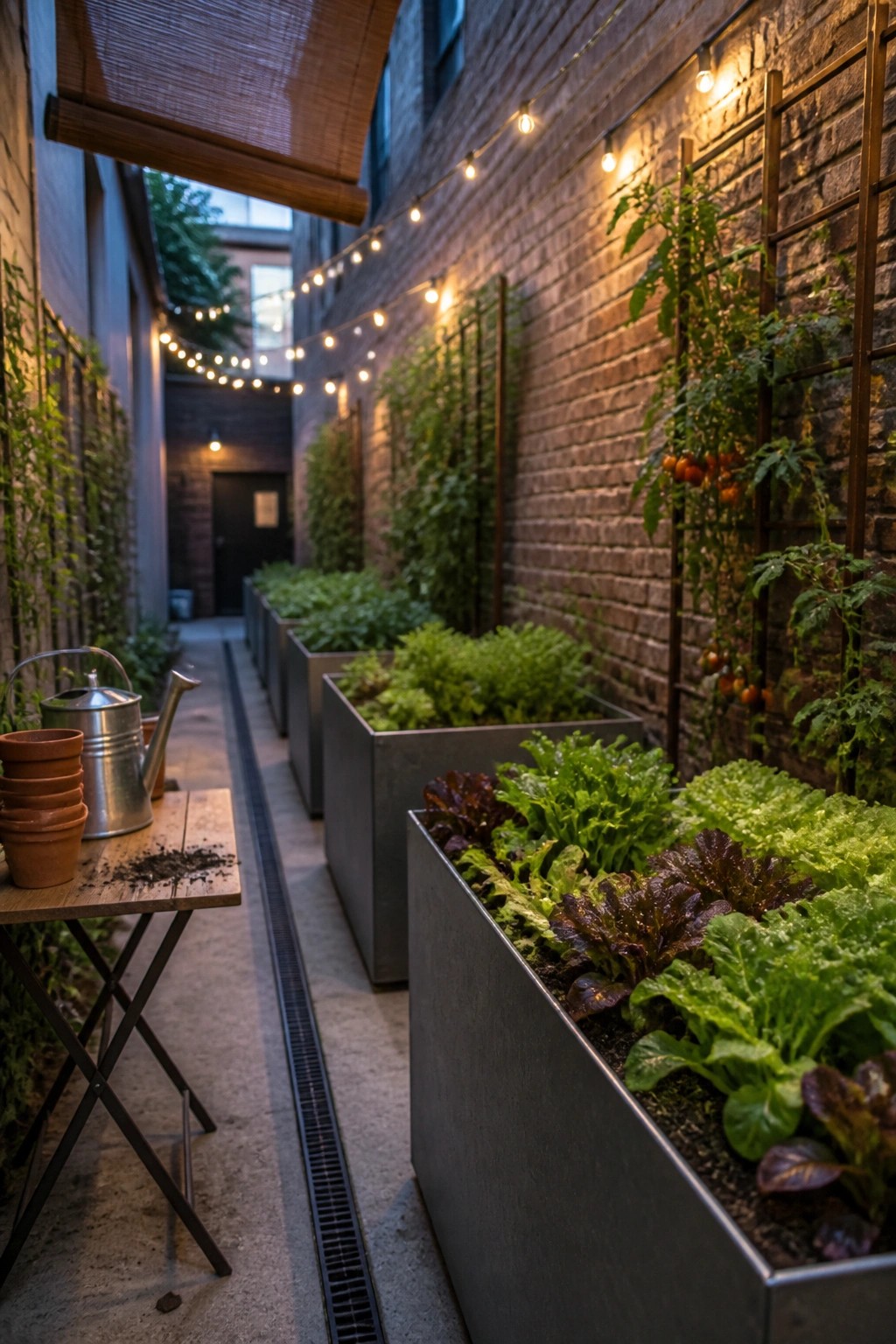
Raised beds work well when the only available space is a long narrow strip between buildings. They keep the soil in place, make planting and harvesting easier, and turn an awkward corner into something productive without taking over the walkway.
This setup suits older homes or urban lots where side yards are tight. Keep the beds a consistent width so there is still room to move through, and add simple vertical supports if you want to grow tomatoes or beans upward.
Define a Small Patio With an Outdoor Rug
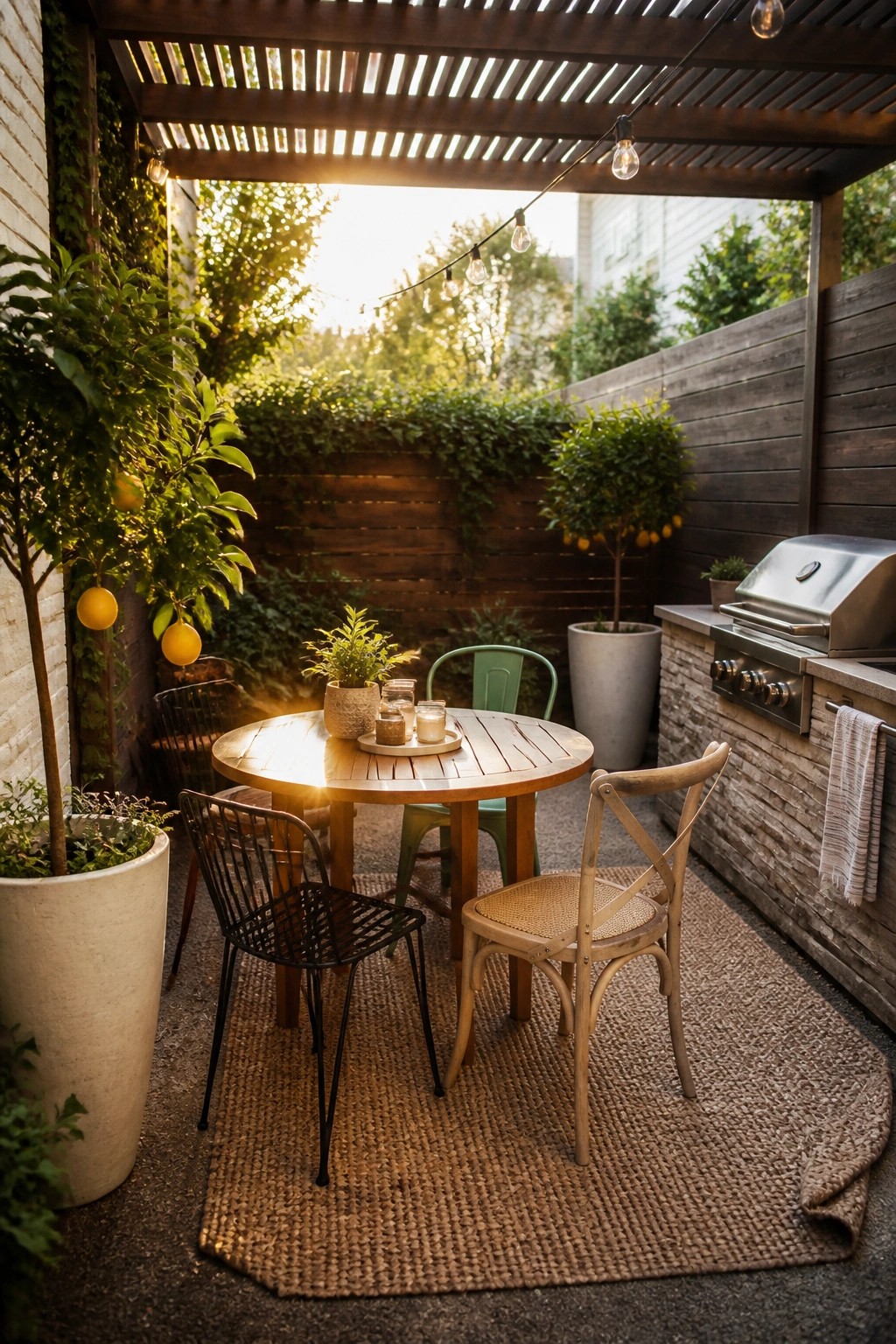
A large rug can turn an awkward corner or narrow strip of yard into a real seating area. It marks the space clearly, keeps furniture from sinking into gravel or dirt, and makes the whole setup feel more like a room than a leftover spot.
This works best in tight yards where you need to fit dining and lounging without crowding the rest of the garden. Place a round table and a few mismatched chairs on the rug, add a couple of big pots nearby, and keep the surrounding paving or ground simple so the rug does the main job of zoning.
Low Stone Walls Shape Curved Garden Beds
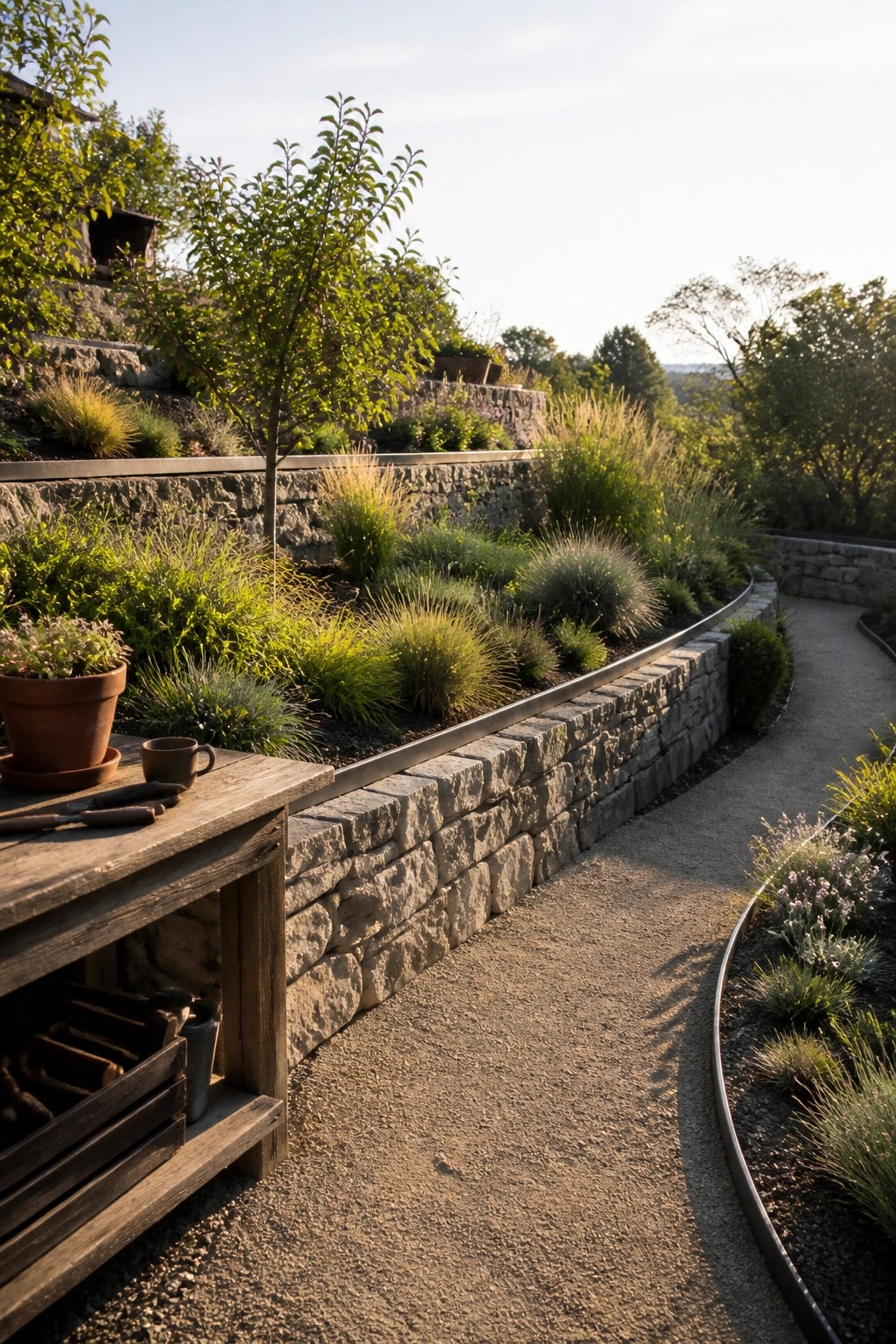
Low stone walls work well when you need to hold soil and create planting beds that follow the curve of a path. They turn a sloped or narrow spot into something more usable without taking up much room.
This layout suits tight yards or corners where a straight edge would feel too stiff. Keep the walls low, use stone that matches the area, and let the plants spill over the edges a bit so the whole thing feels settled.
Stepping Stones Over Water Open Up Tight Garden Spots
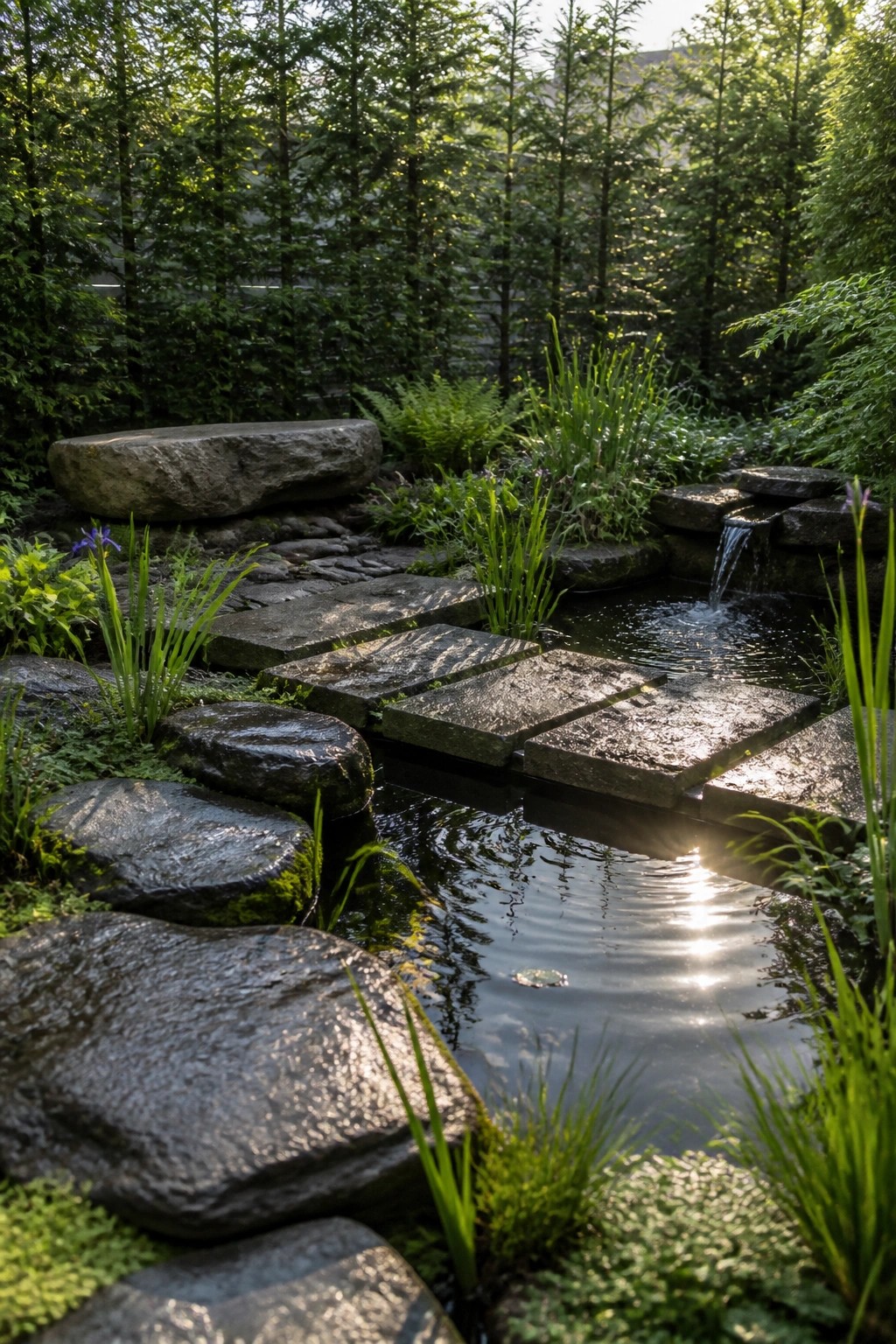
Many small gardens run into trouble when a path needs to cross a wet or low spot. Flat stones set right across a shallow pond give you a direct route without eating up extra ground or adding big structures.
This works best in corners where space is limited and you already have or can add a bit of water. Keep the stones large and steady, space them for natural steps, and let the surrounding plants fill in around the edges so the path feels like part of the garden instead of something added on.
Raised Beds Along One Wall Open Up Tight Yards
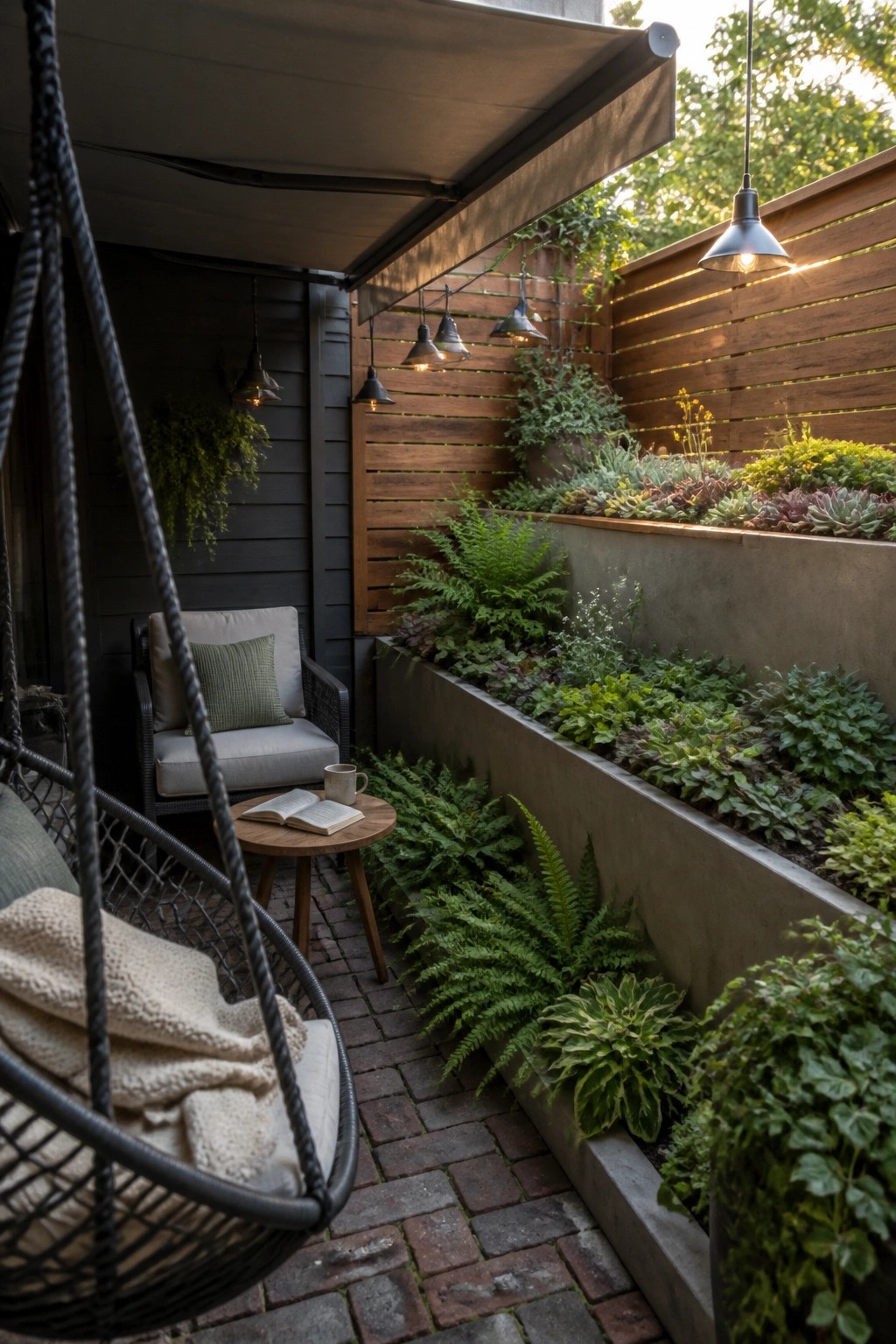
A long raised planter takes the pressure off a narrow patio by moving most of the greenery up and out of the walking area. The bed gives you room for layers of ferns, succulents, and taller plants without eating into floor space, so the path stays clear and the whole spot feels less cramped.
This works best in side yards or small back corners where ground room is limited. Keep the bed width modest, choose plants that handle the light you have, and add a couple of simple seats right beside it so the planting feels like part of the living space rather than something separate.
Raised Beds In Tight Side Yards
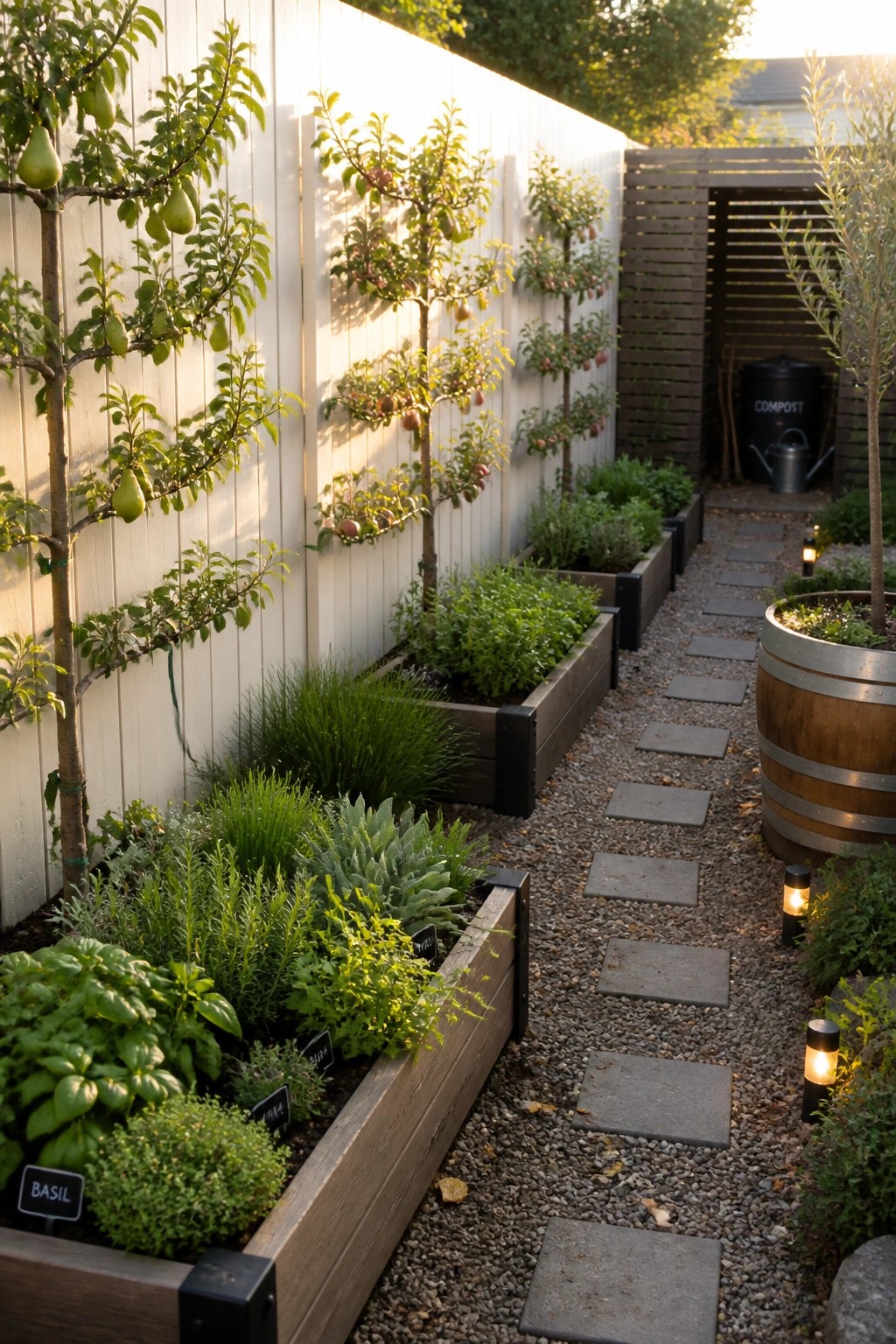
Raised beds give you a simple way to add planting space along a narrow side yard without losing the path. They keep the soil neat, make watering easier, and let you grow more in a spot that would otherwise feel too cramped for a regular bed.
You can also train small trees flat against the fence to add height without eating into the walkway. This works best in long thin yards where you still need room to walk through. Just keep the beds narrow enough that you can reach across them from one side.
Frequently Asked Questions
Q: How do I pick which layout works for my narrow side yard?
A: Measure the width first and focus on ideas that use vertical space. Narrow spots shine with tall planters along one wall.
Q: What plants actually thrive in those tight corners?
A: Go for ferns or hostas if it’s shady. They fill in fast without needing much room to spread.
Q: Is it worth adding seating to such a small area?
A: Yes if you have room for a single chair. It turns the spot into a quiet getaway you will actually use.
