

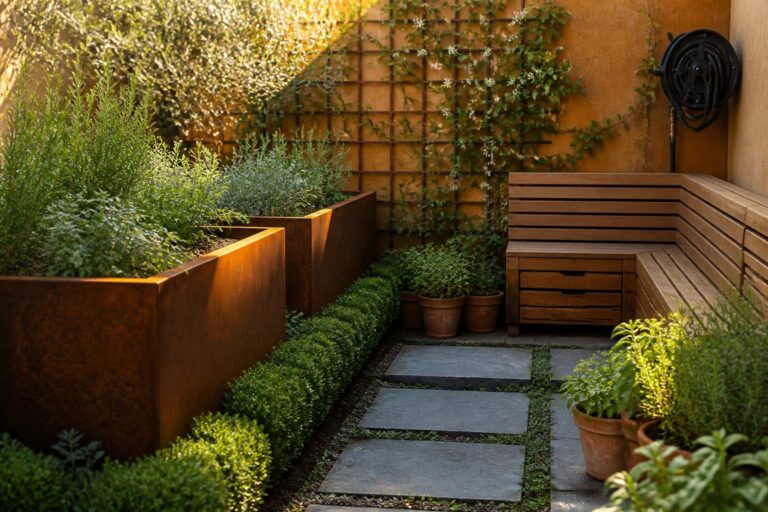
Over the years I have noticed that compact gardens often fail when the beds, storage spots, and walkways compete for the same limited space instead of supporting each other.
A path that is easy to maintain and wide enough for a wheelbarrow changes how often I actually spend time out there tending things.
Storage tucked along the edges can keep tools handy without breaking up the planting areas, but only if the scale feels right from the beginning.
I test ideas in sections first.
Small adjustments to the layout tend to make the whole space feel more settled after a season or two.
Raised Planters Define Compact Garden Walkways
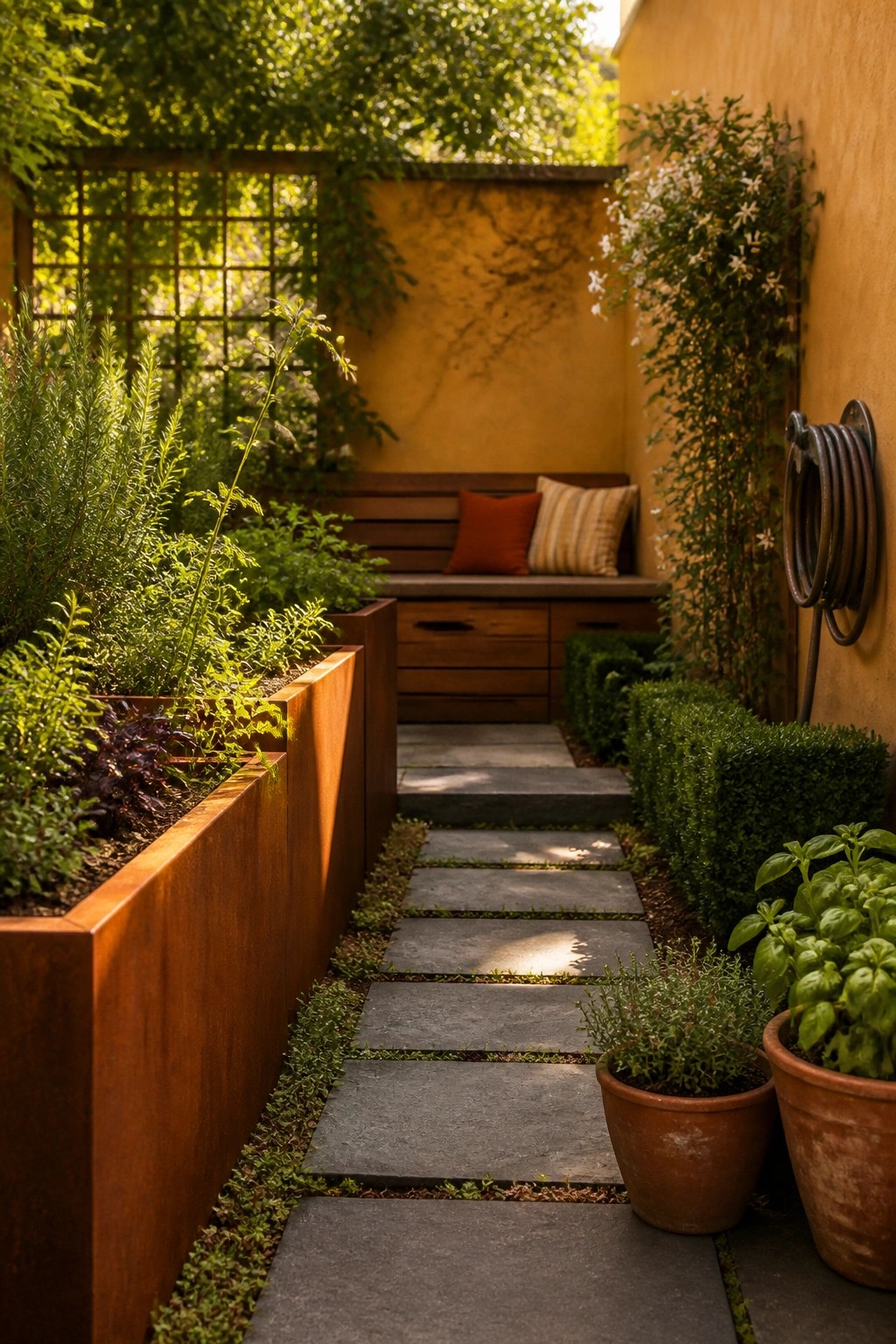
Raised planters work well for narrow gardens because they keep plants contained while creating clear edges for the path. This setup makes it easier to walk through without stepping on beds, and the metal sides add a simple structure that holds up over time.
Try this in a side yard or small backyard where space is tight. Place the beds along one side of the path and add a bench with drawers underneath for tools or cushions. Keep the path made of simple slabs so water drains and weeds stay low.
Stepping Stones Over Gravel In Narrow Yards
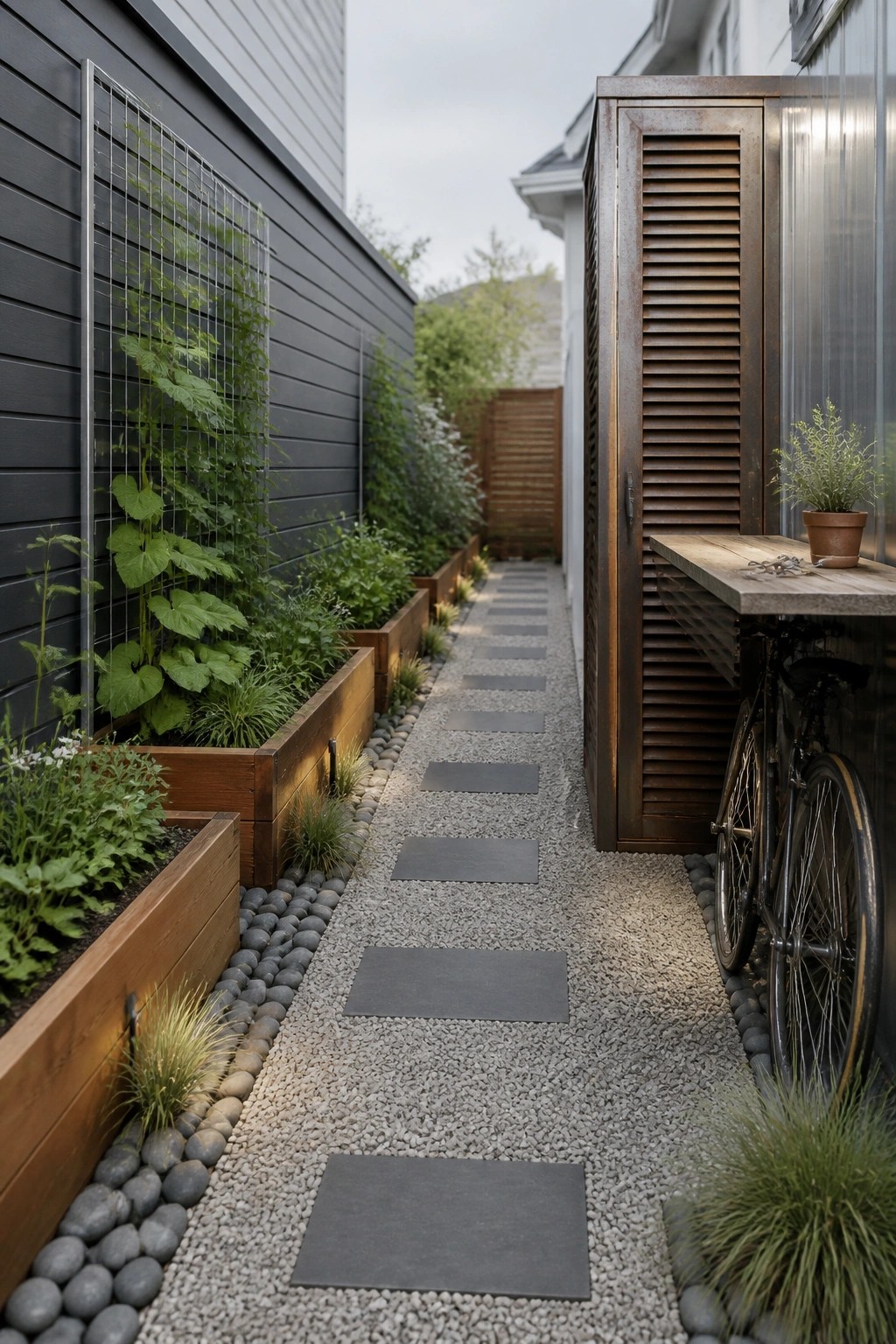
A gravel path with stepping stones works well in tight side yards because it keeps the walkway clear and easy to use without eating into planting space. The stones give solid footing while the gravel fills in around them and helps with drainage.
This setup suits homes with long narrow strips between the house and fence or neighboring property. Keep the beds raised along the edges so plants stay contained and the path stays functional even after rain.
Tuck Storage Along Narrow Garden Paths
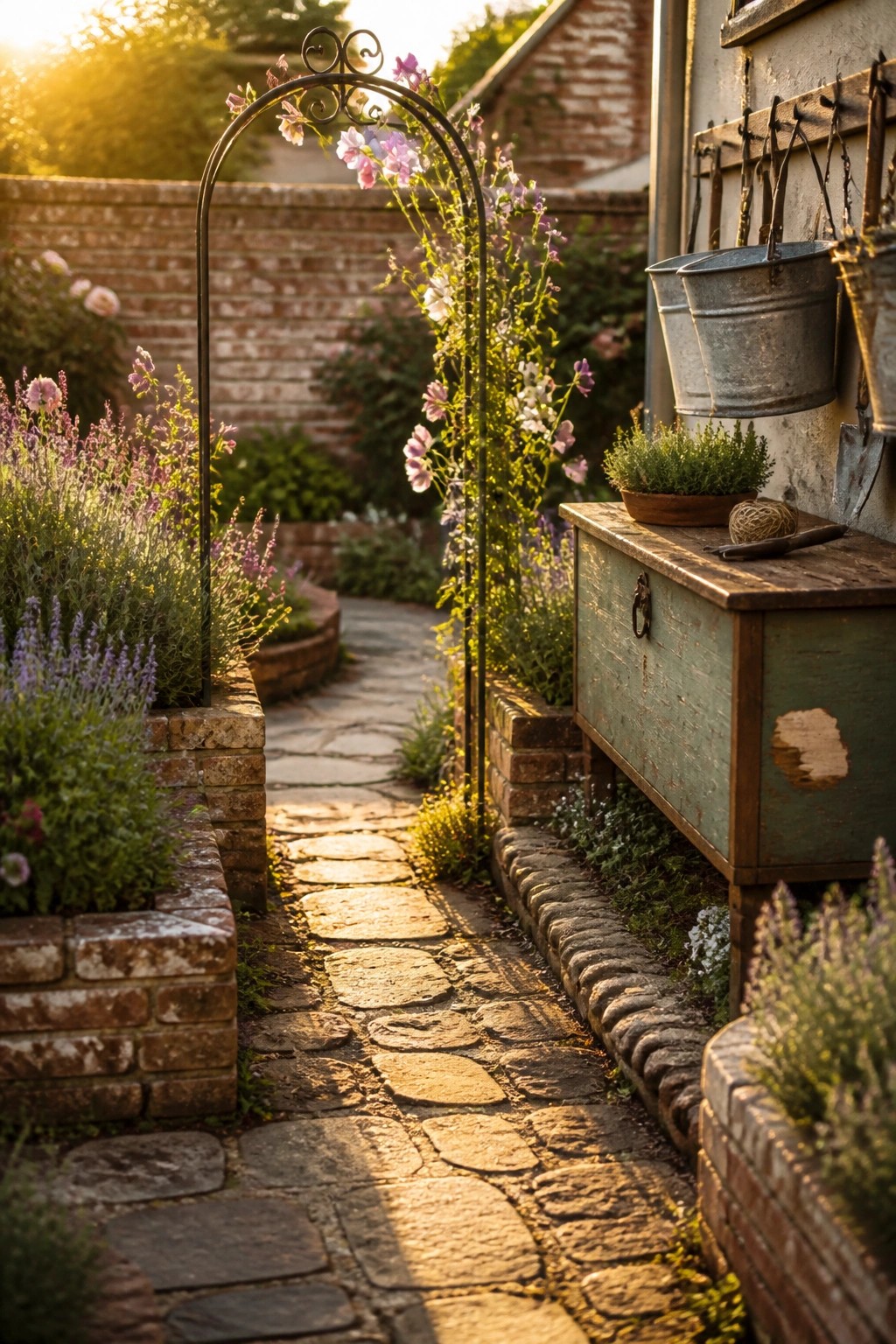
Placing a sturdy old cabinet right beside a slim walkway keeps tools and supplies close without crowding the space. The brick edging helps hold everything in place and stops soil from spilling onto the stones, so the path stays easy to walk even in a tight garden.
This setup works best in smaller yards where every inch counts. Try a piece that can handle weather, set it on a level spot, and keep the path width consistent so it does not feel blocked.
Stepping Stones In Moss For Compact Paths
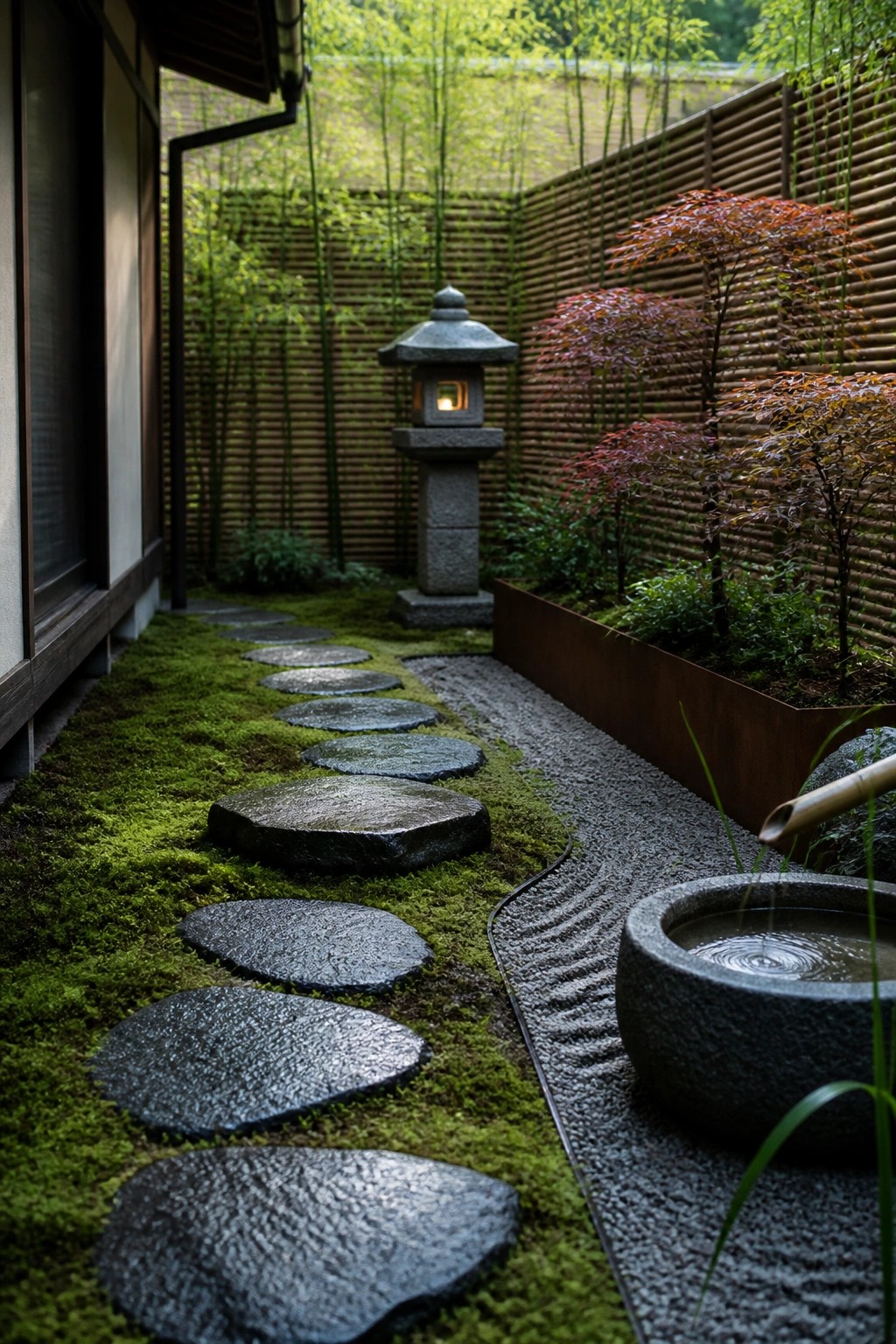
Stepping stones placed right into a bed of moss give you a clear walkway without eating up much room in a small garden. The moss softens the look and keeps the path from feeling too hard or formal, while the stones stay dry and easy to step on even after rain.
This setup works best in narrow side yards or tight back gardens where you still need to reach a bench or back door. Space the stones so your normal stride lands comfortably, and keep the surrounding moss trimmed so it does not creep over the walking surface.
Add a Narrow Rill Along Garden Paths
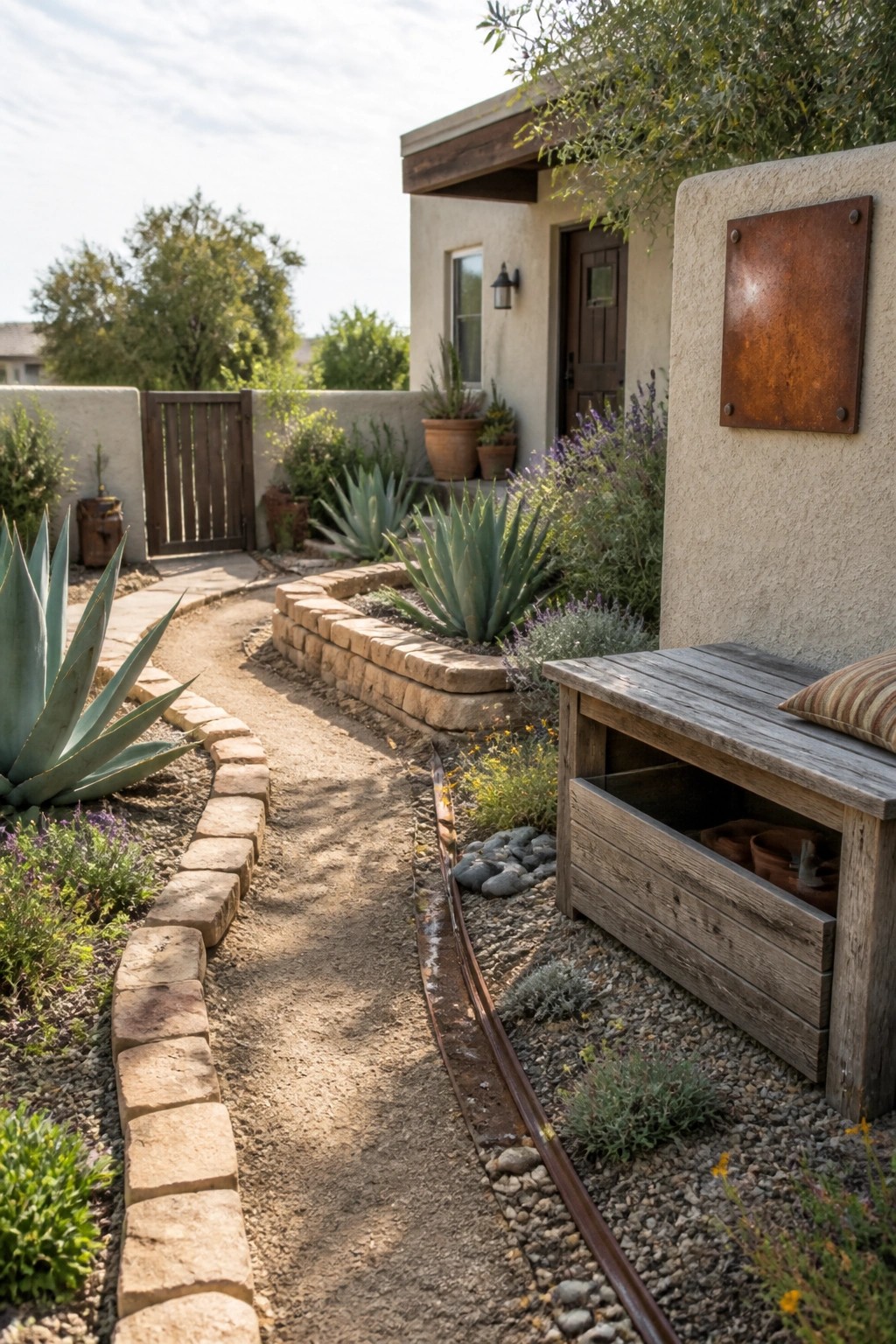
A narrow rill set into gravel gives a path both drainage and a clean edge without eating into bed space. It keeps the walkway usable after rain and adds a simple line that guides the eye through the garden.
This works best in compact yards where beds sit close to the walking area. Keep the channel shallow and pair it with low stone borders so the layout stays practical and easy to maintain over time.
Wall Planters Keep Small Balconies Green Without Clutter
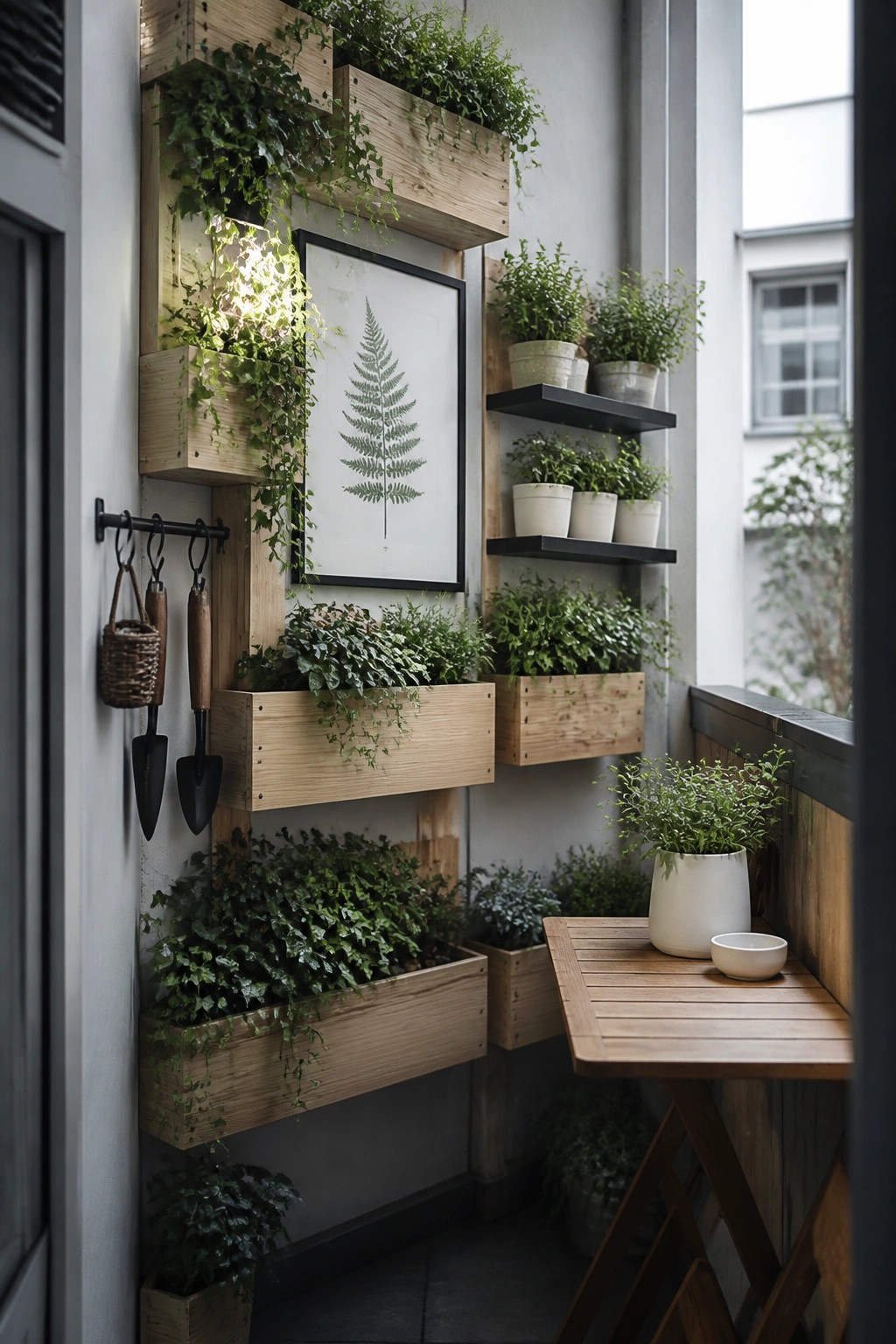
Many balconies and patios lose floor space fast once you add chairs or a table. Mounting wooden planters straight onto the wall gives you plenty of room for herbs, ferns, and trailing plants while the ground stays open for walking or seating.
This approach works best on narrow outdoor spots where every inch counts. Hang the boxes at staggered heights so plants get good light, and keep a few lower ones handy for tools or extra pots if storage starts to run low.
Gravel Paths With Stepping Stones
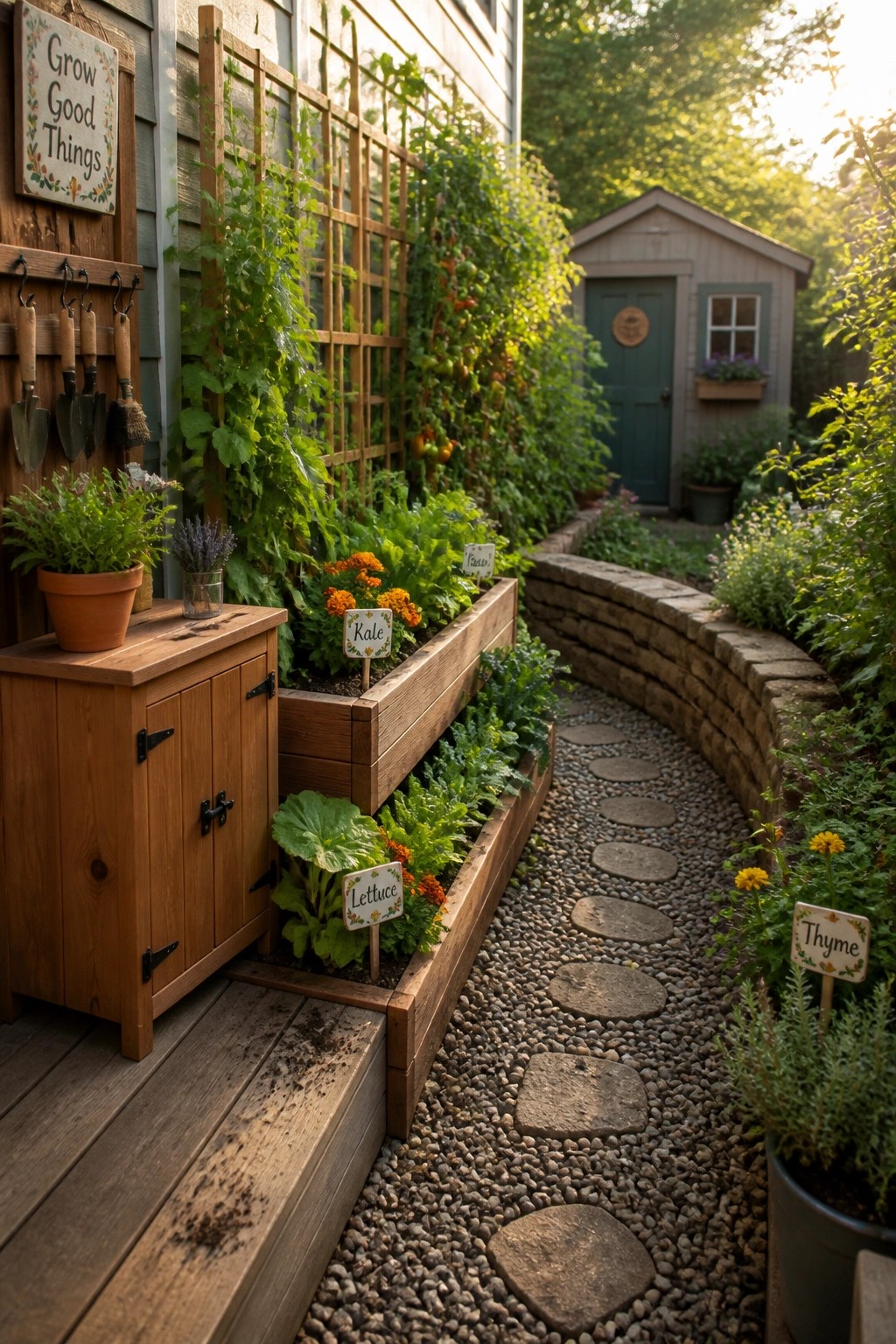
A gravel path lined with large stepping stones works well in a compact garden because it stays simple and keeps the walkway usable even when space is tight. The stones give you solid footing while the gravel fills in around them, so you do not need wide paving or fancy materials.
This setup fits best along the side of a house or between raised beds where you still need to reach the plants. Just make sure the stones sit level and leave enough room on either side for the beds to stay accessible.
Mount Planters Along the Railing
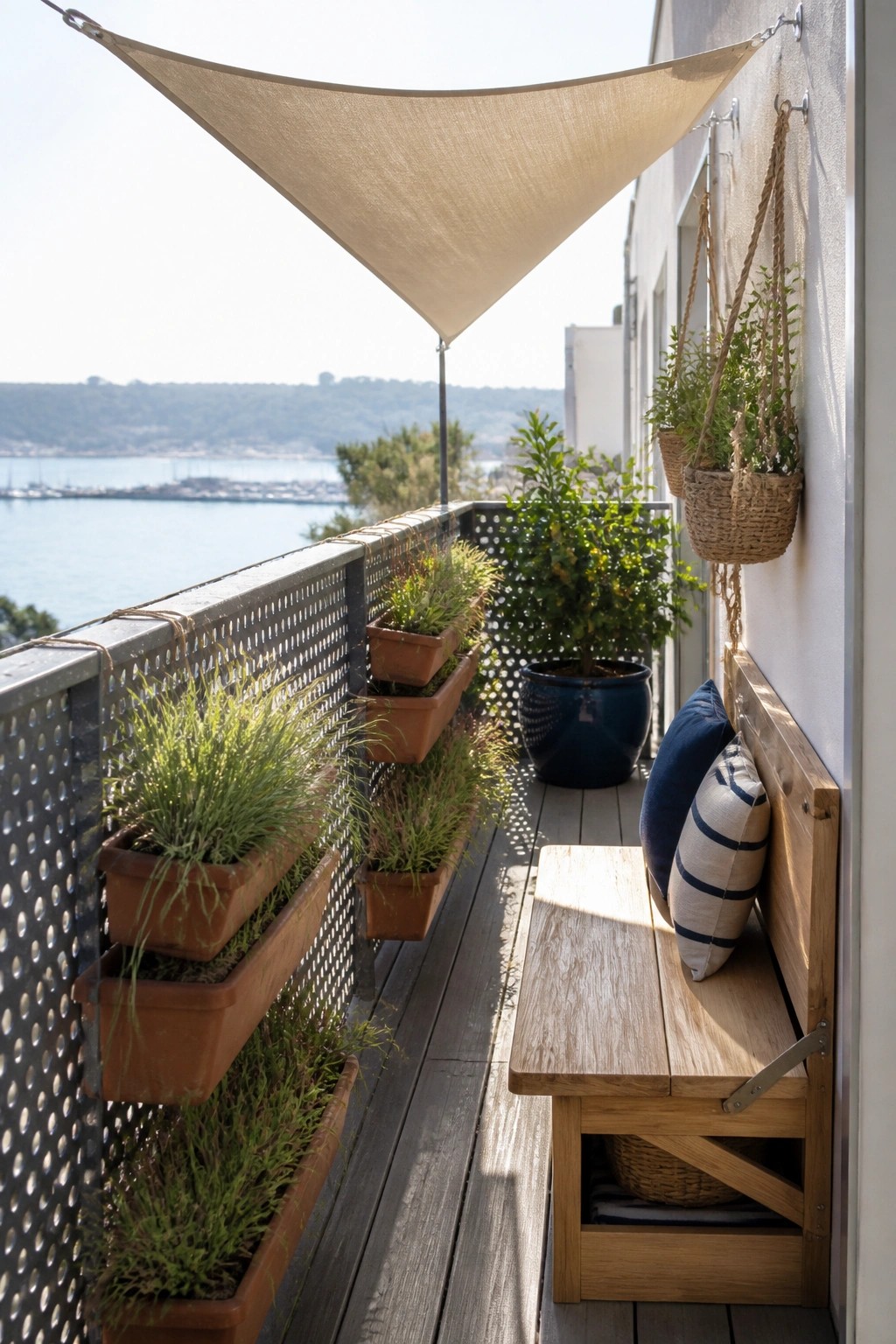
Mounting planters right on the railing keeps the walkway open and makes a narrow balcony feel much bigger. The plants stay at a good height for watering and viewing without taking up floor space that could be used for seating or storage.
This setup works well on apartments or small decks where you need to keep things functional. Use sturdy brackets to hold the pots and add a couple of hanging baskets on the wall if you want more growing room without crowding the path.
Built-In Storage Keeps Tools Close At Hand
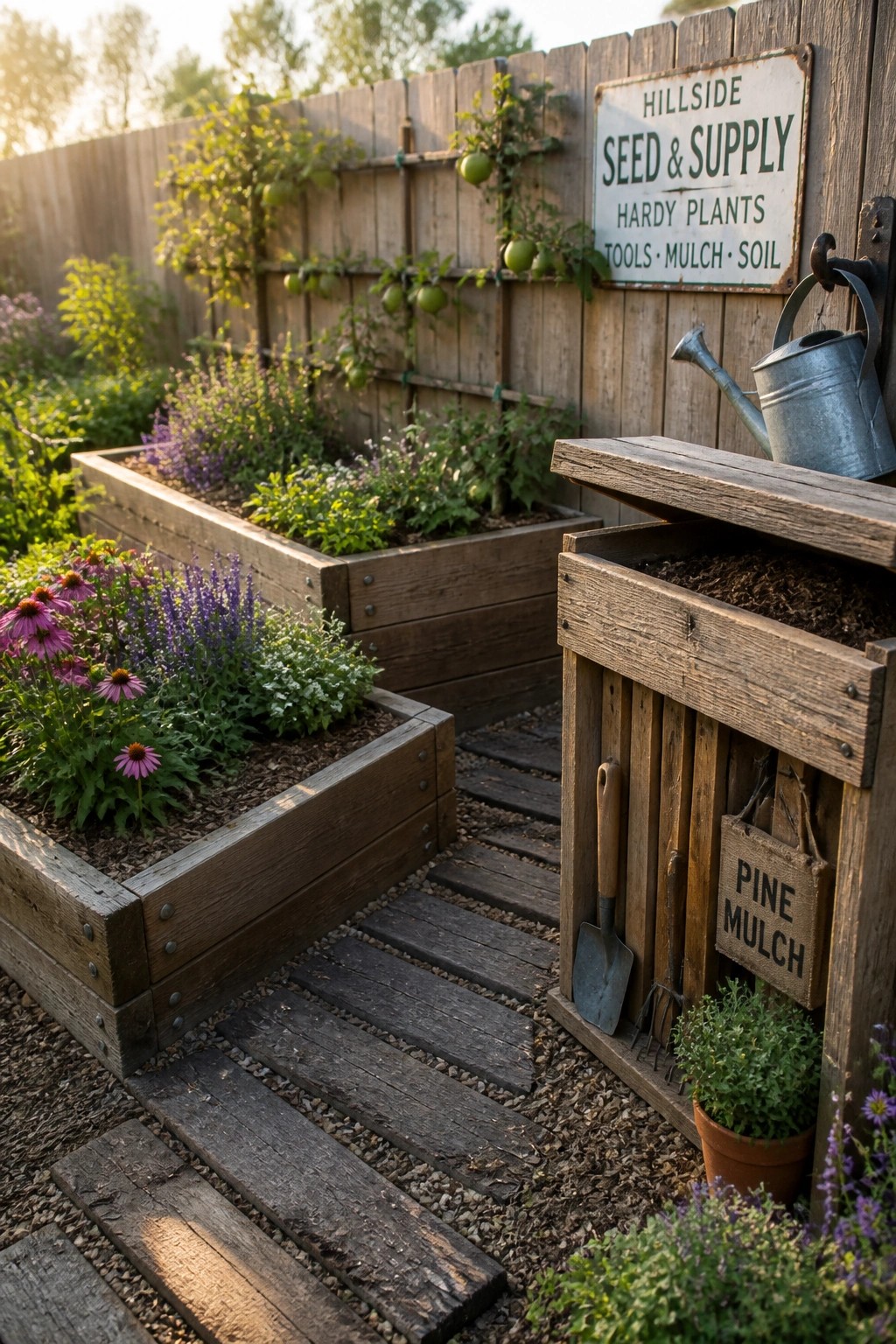
Many compact gardens lose space to scattered tools and bags of mulch. A simple wooden bin placed right beside the beds solves that by holding supplies while also giving a spot to hang small tools on the front.
This works best in tight yards where every foot counts. Position the bin near a main path so you can grab what you need without walking back to the shed, and choose a weathered wood finish that blends with the beds rather than standing out.
Run a Narrow Water Channel Down the Path
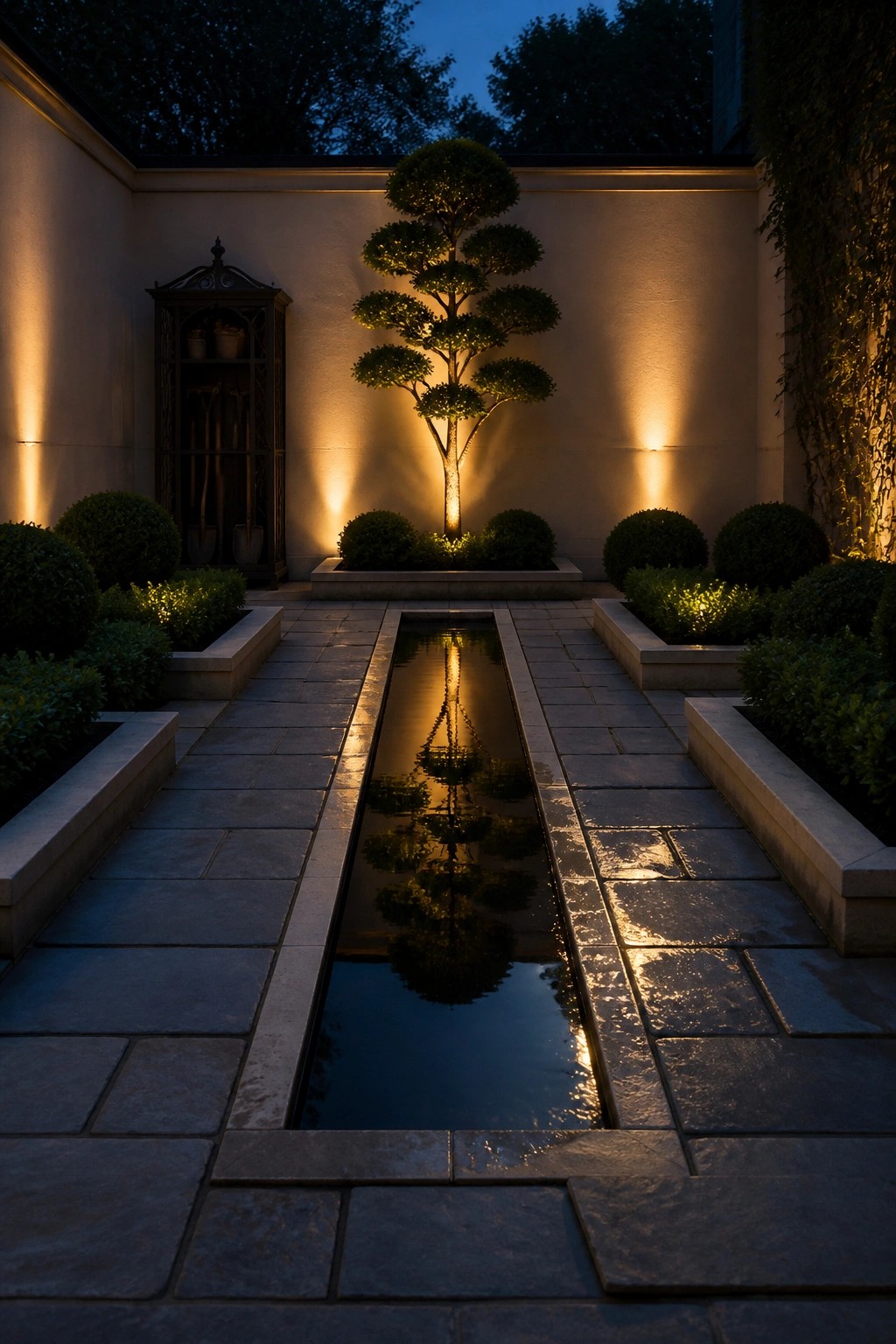
A long water channel set right into the walkway can give a small garden more presence without crowding the space. The water stays narrow and contained, so the beds on either side stay usable and the path itself remains easy to walk.
This setup suits compact urban gardens or side yards where you need both a clear route and some planting room. Keep the edges simple with stone or concrete so the water does not spill over, and place low lighting along the sides if you want the reflection to show up after dark.
A Central Raised Bed Keeps Small Gardens Functional
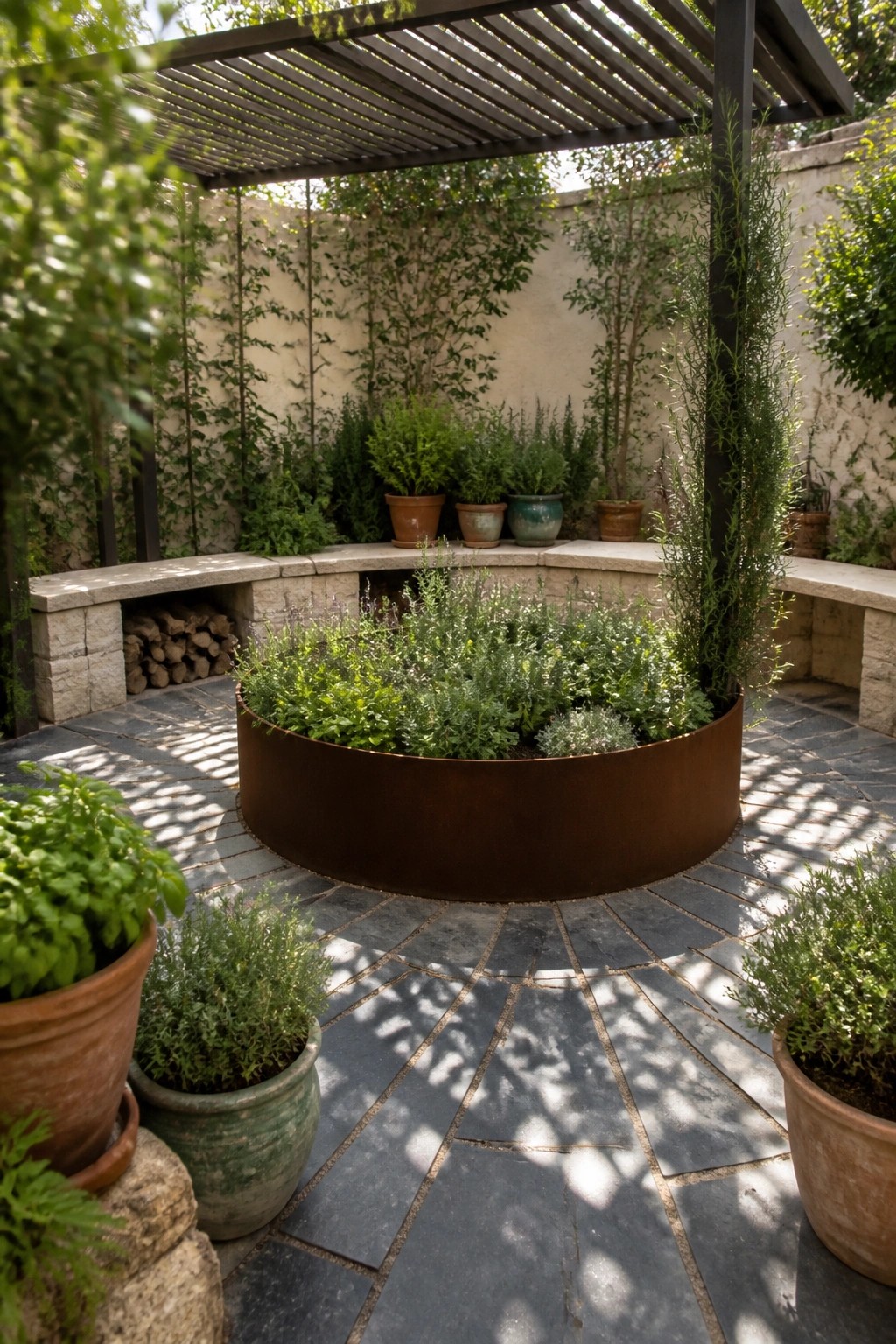
A raised circular bed gives a compact garden a clear center without crowding the rest of the space. It leaves room for walkways, seating, and storage around the edges while keeping the planting area contained and easy to reach.
This setup works well in small courtyards or backyards where you need beds, paths, and practical features in one area. The metal edging holds everything neatly, and the surrounding paving makes it simple to move around the plants or add bench seating with hidden storage underneath.
Stepping Stones With Gravel For Better Drainage
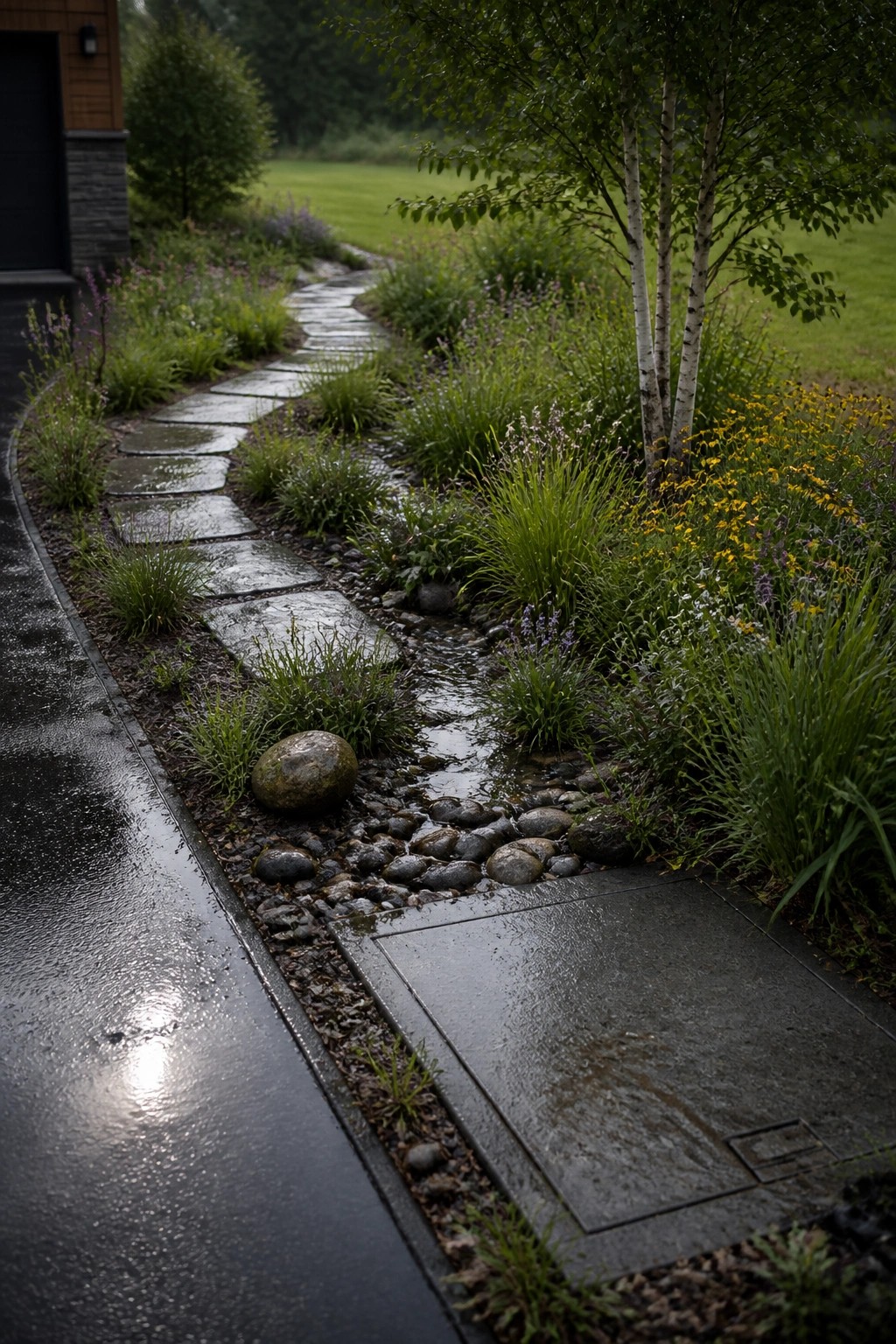
Many small gardens need paths that stay practical when it rains. Placing larger stepping stones next to a narrow gravel or pebble channel lets water move through instead of sitting on the surface.
This setup works best along the edge of a house or between tight planting beds. Use the stones for solid footing and let the gravel handle the runoff so the whole walkway stays usable without extra work.
Bench Seating With Built In Storage
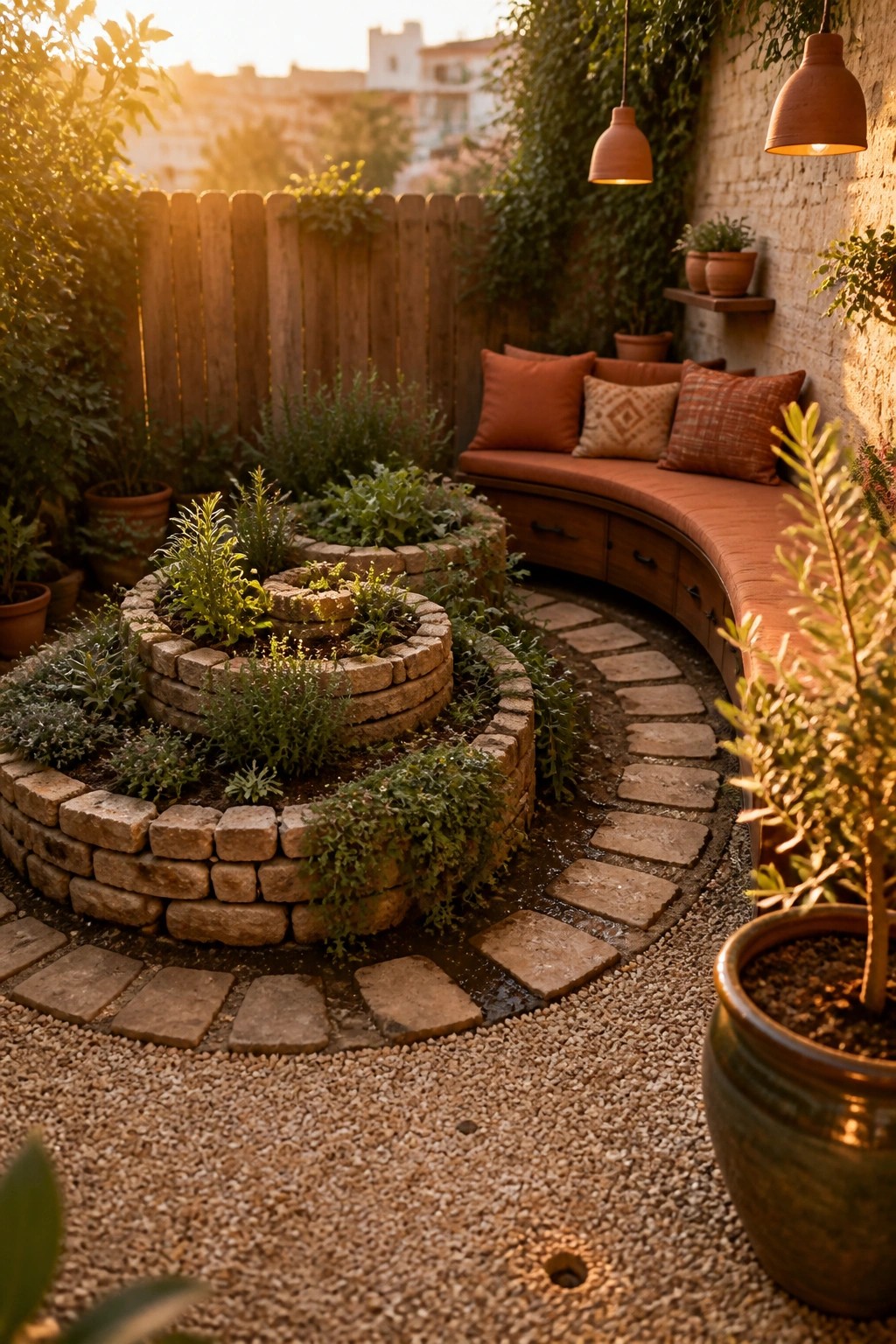
A curved bench that hides storage underneath works well in small gardens where every bit of space needs to count. It keeps cushions and tools out of sight while still giving you a place to sit without adding extra furniture that would crowd the walkway.
This setup fits best along the edge of a patio or garden bed where you already have a natural curve. Use it in townhomes or small yards where you want the seating to double as a boundary. Just make sure the drawers or doors face inward so they stay easy to reach without stepping on plants.
Mount Storage and Planters on One Wall
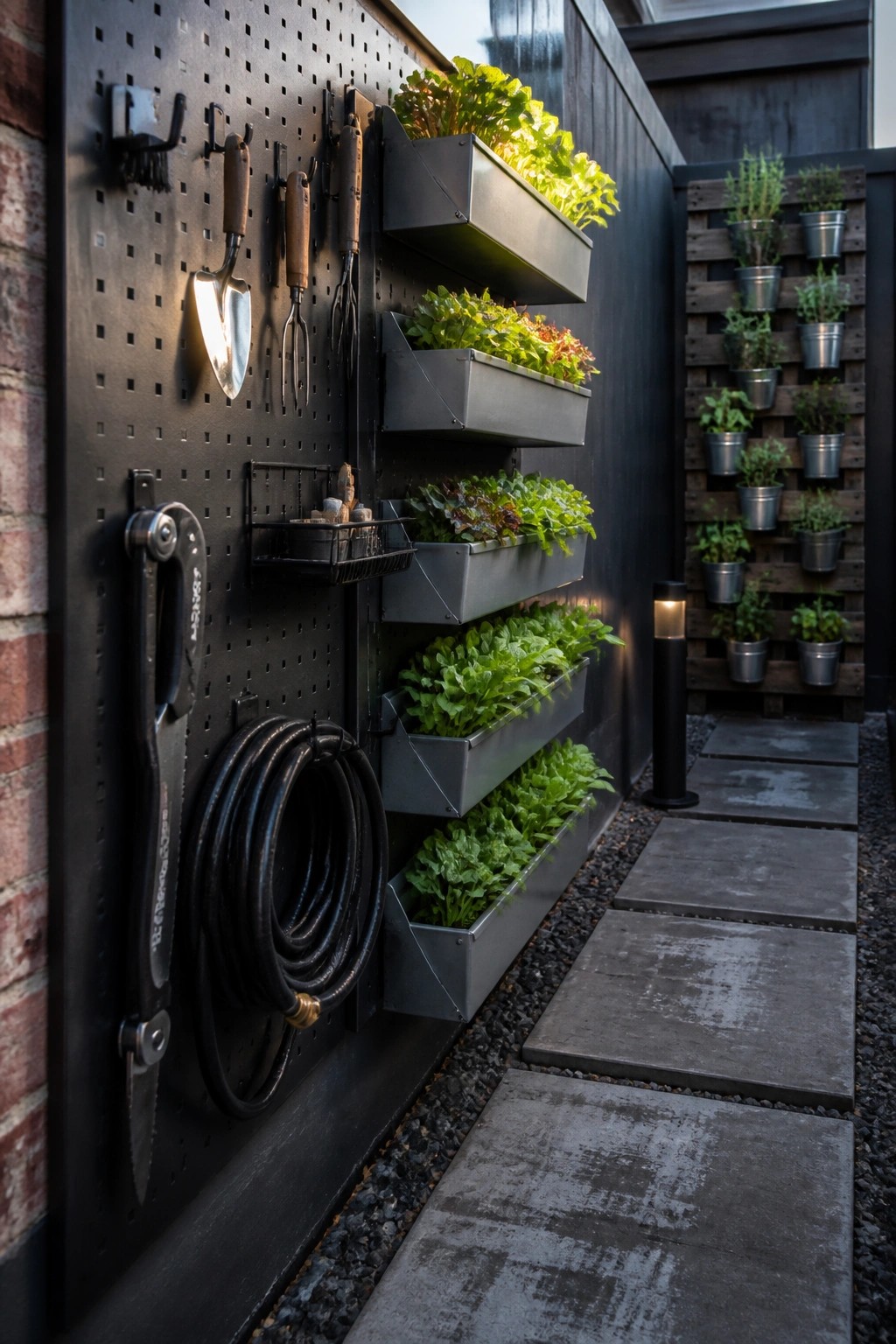
Small gardens often lose floor space to paths and beds, so moving both tools and plants onto a wall can free up the ground. A single sturdy panel keeps everything organized in one spot and still leaves room for a walkway.
This approach suits narrow side yards or tight back corners where ground beds would crowd the path. Use a grid or board that can handle hooks for tools and brackets for planters, and check that the wall gets enough light for what you plan to grow.
Bench Storage Works Well In Small Gardens
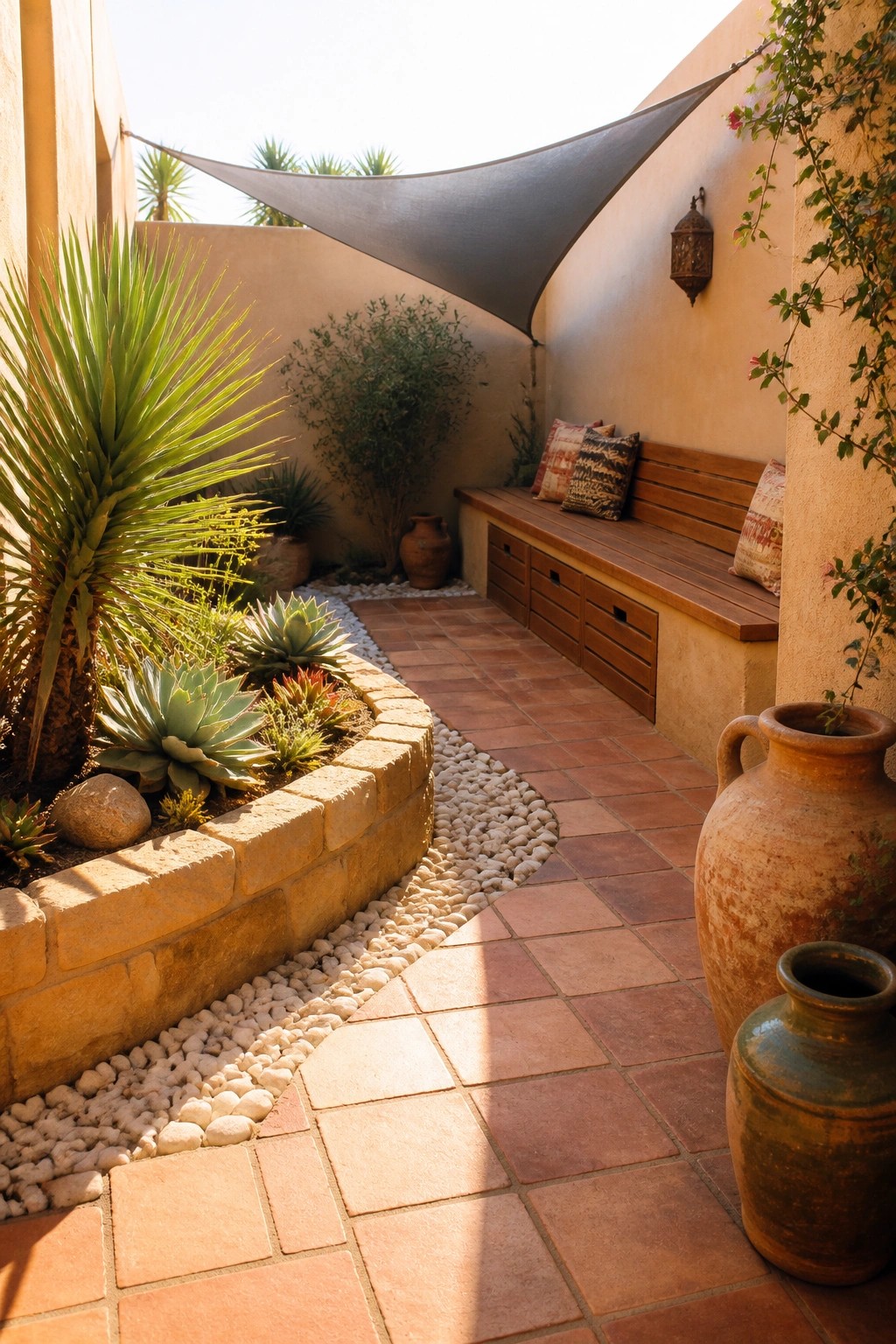
Many compact gardens gain a lot from seating that also hides storage. A bench with drawers underneath keeps cushions or small tools handy while leaving the walkway clear and open.
This approach fits best along a narrow path or next to a raised bed. It works in small yards where freestanding furniture would crowd the space, and the bench can double as extra seating when needed.
Plank Paths Work Well In Tight Gardens
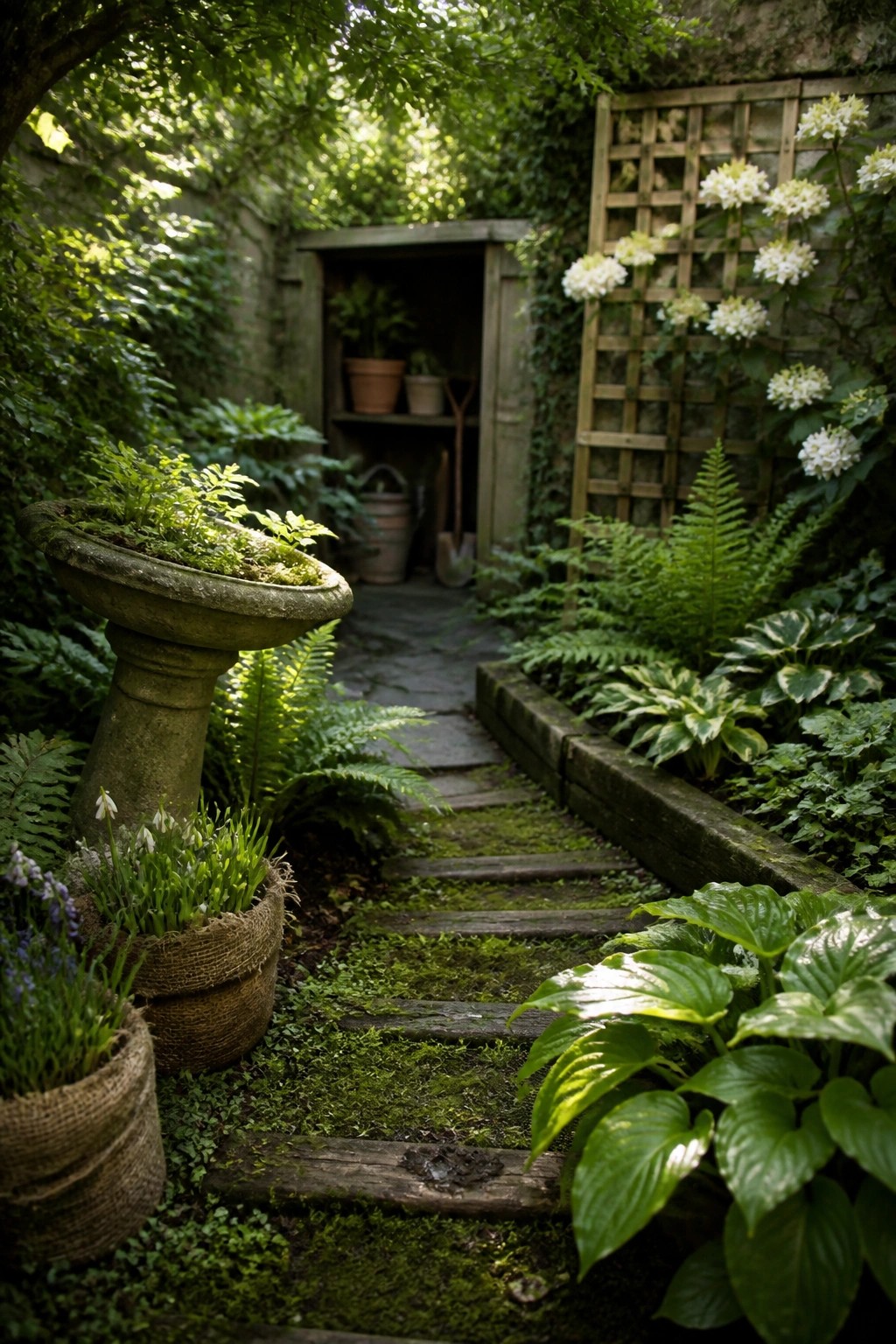
A wooden plank path lets you move through a small garden without wasting space on wide paving. The boards sit low and follow the ground, so you can keep planting beds close on both sides and still reach every part of the yard.
This layout suits older homes or narrow side gardens where a full stone path would feel too heavy. Lay the planks over landscape fabric to slow weeds, and let moss grow between them for a softer look. Just check the wood every couple of years so it does not get slippery.
Side Storage Cabinets Keep Narrow Decks Clear
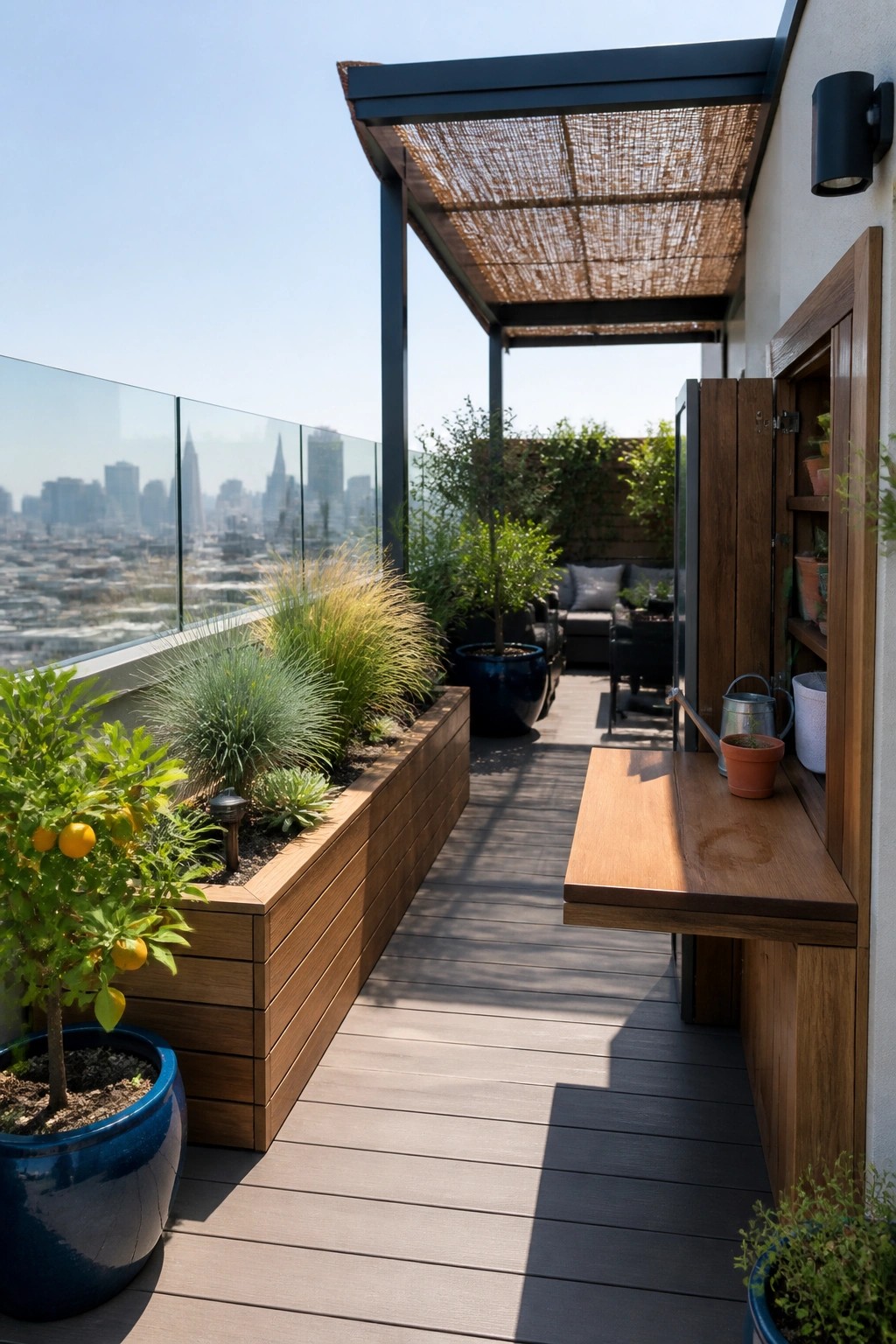
A cabinet built along one wall gives you a place to store tools, pots, and supplies without crowding the floor. In small outdoor spaces this keeps the walkway open while still giving you room to work.
It suits balconies and compact decks where every inch matters. Mount the cabinet at a comfortable height and add a hinged table that folds down only when needed.
Add Storage Under Outdoor Seating
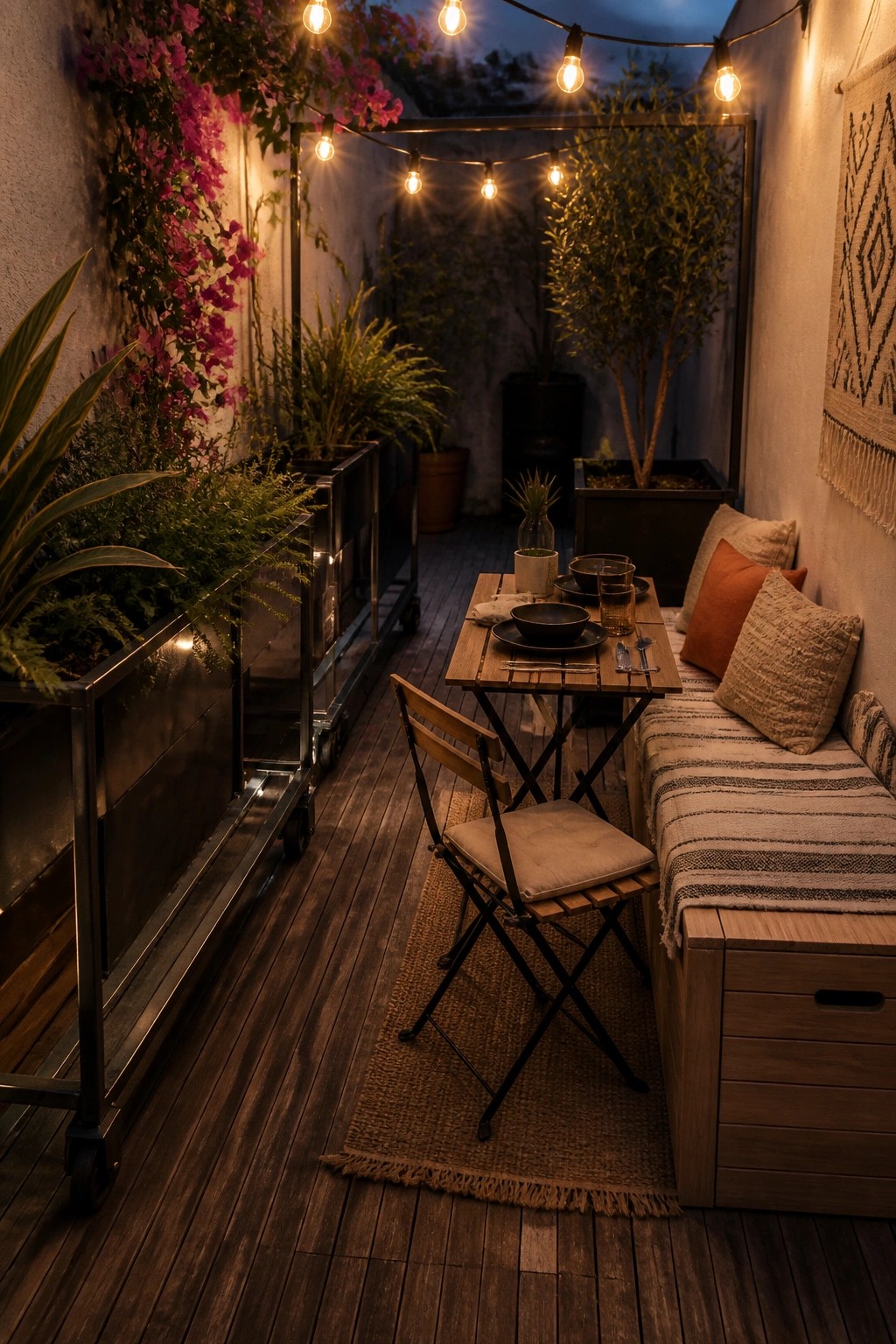
One way to keep a narrow patio workable is to choose seating that also stores things. A bench with built-in drawers or a lift-up lid holds cushions, small tools, or table items so they do not pile up on the floor or block the path.
This setup suits tight side yards or small decks where you still want room to sit and eat. Keep the bench against one wall, use a compact table that can fold, and the walkway stays clear for daily use.
Narrow Mosaic Paths For Compact Gardens
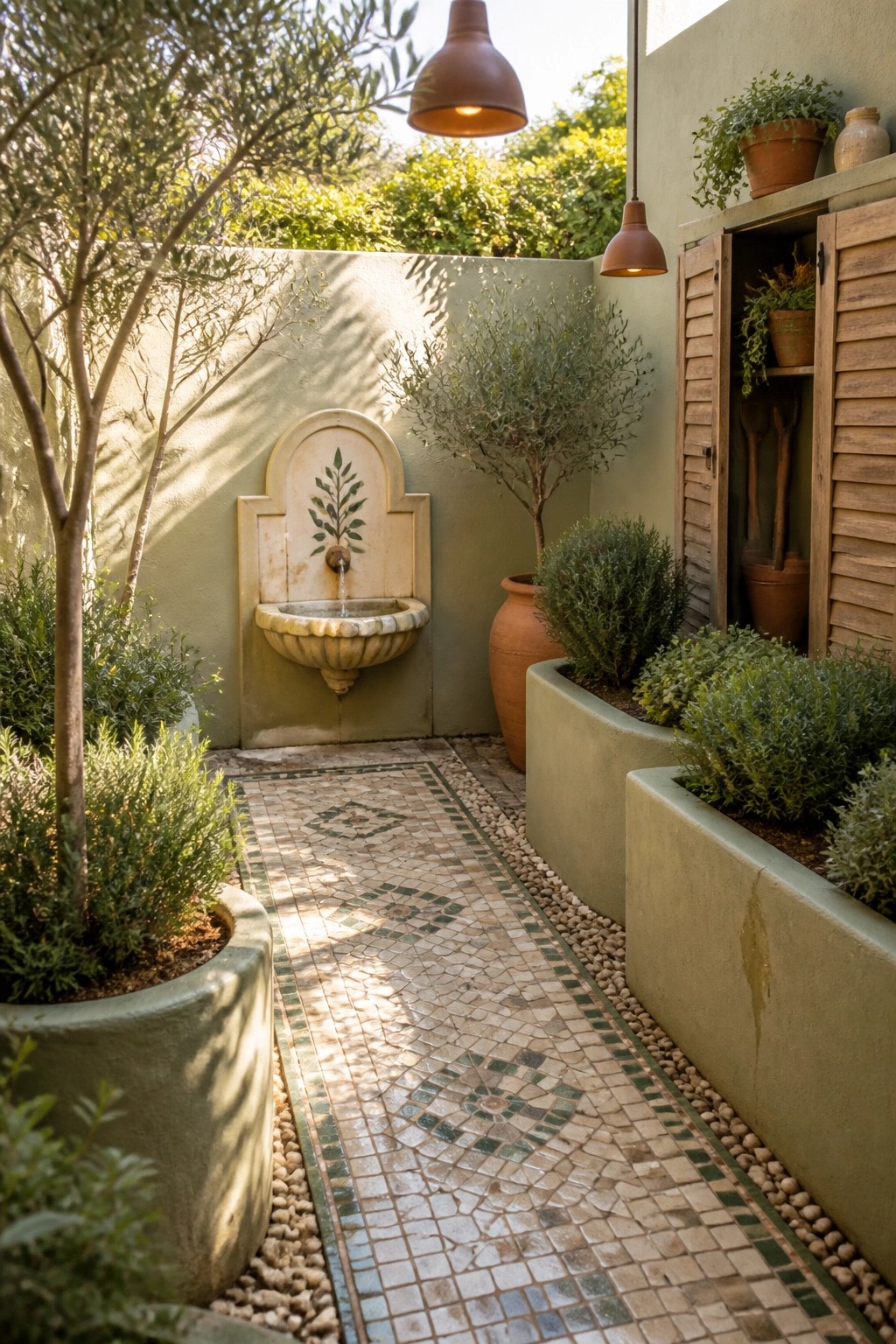
A narrow mosaic path gives you a clear walkway through a small garden while leaving room for planting beds on both sides. The pattern adds interest underfoot without needing extra width, which helps when space is tight.
This layout suits side yards or enclosed courtyards where you still need daily access. Keep the edging simple with pebbles or gravel so the path stays practical and does not compete with the surrounding plants.
Frequently Asked Questions
Q: How do I fit raised beds into a tiny yard without crowding the paths?
A: Place narrow beds along the edges and keep a straight central strip clear for walking. This leaves room to reach every plant from the path while you still grow plenty.
Q: Where should I put storage in a garden this small?
A: Build a low bench with lift-up seats right beside one bed. It holds tools and pots without blocking any walkway or growing area.
Q: What works for walkways that stay functional year round?
A: Use stepping stones set in a simple curve that follows the bed borders. They give solid footing and let water drain away so you skip the mud.
