

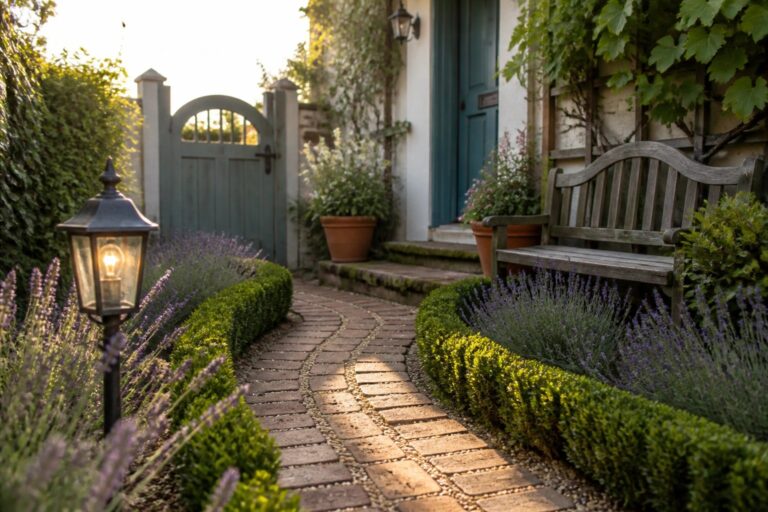
When I think about small front gardens the layout of borders and paths tends to shape how the space actually works day to day rather than just how it looks in a photo.
A path that feels natural underfoot can keep people from cutting across the grass and it often makes the whole approach to the door feel more settled.
Some setups handle that better than others.
I would test the edging ideas first in my own yard since they seem to control how plants spread without constant trimming.
Those small decisions end up deciding whether the garden stays tidy through the seasons or starts to look overgrown by late summer.
Brick Paths With Border Planting
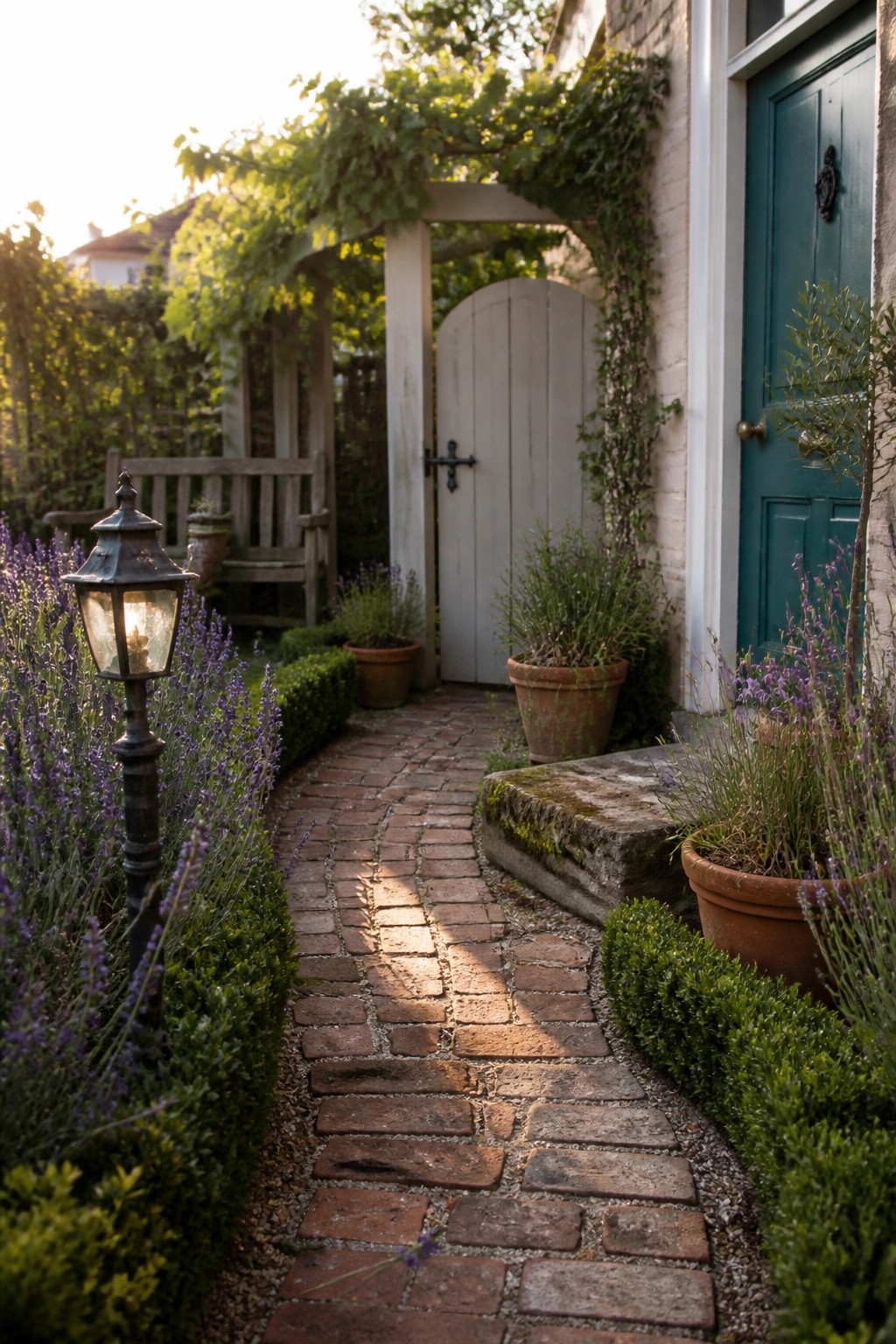
A brick path edged with flowering plants gives a small front garden a clear sense of direction. It turns what could be a plain strip of ground into something that feels intentional and easy to follow.
This works especially well in compact spaces where you want to lead visitors straight to the door without crowding the area. Keep the plants along the edges fairly low so the path stays visible and the whole setup feels open rather than overgrown.
Log Borders For Winding Front Paths
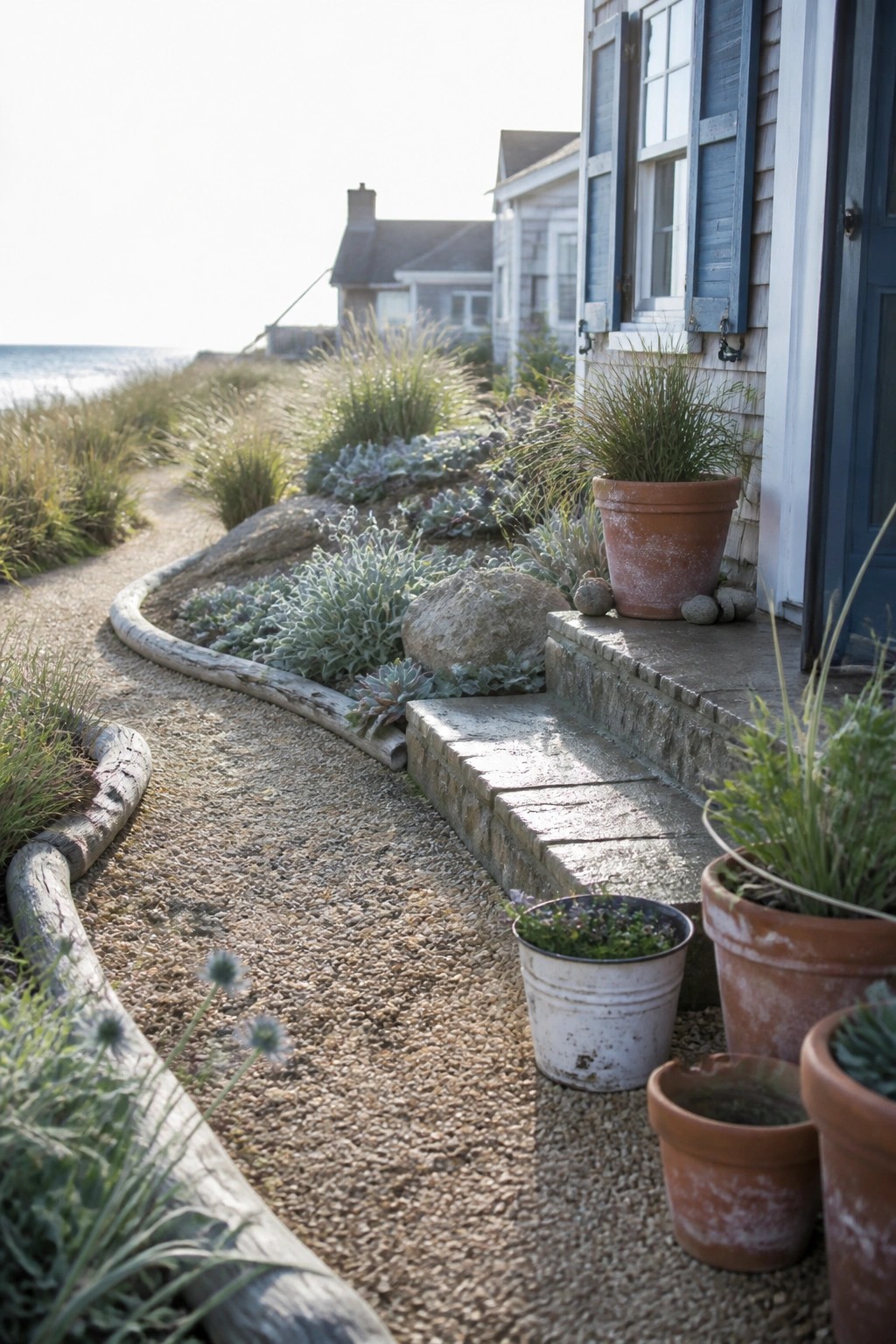
Log borders work well when you want a path that feels natural instead of rigid. They let the walkway curve gently around plantings and keep gravel or dirt in place without needing fancy materials. The rough wood also softens the look next to a house and gives the front yard a relaxed, lived-in feel.
This approach suits small yards near the coast or in casual neighborhoods where you want low cost and easy upkeep. Lay the logs along the edge of the path, tuck plants behind them, and add a few pots near the door if space is tight. Just make sure the wood is thick enough to stay put once the ground settles.
Define Narrow Paths With Stone Borders
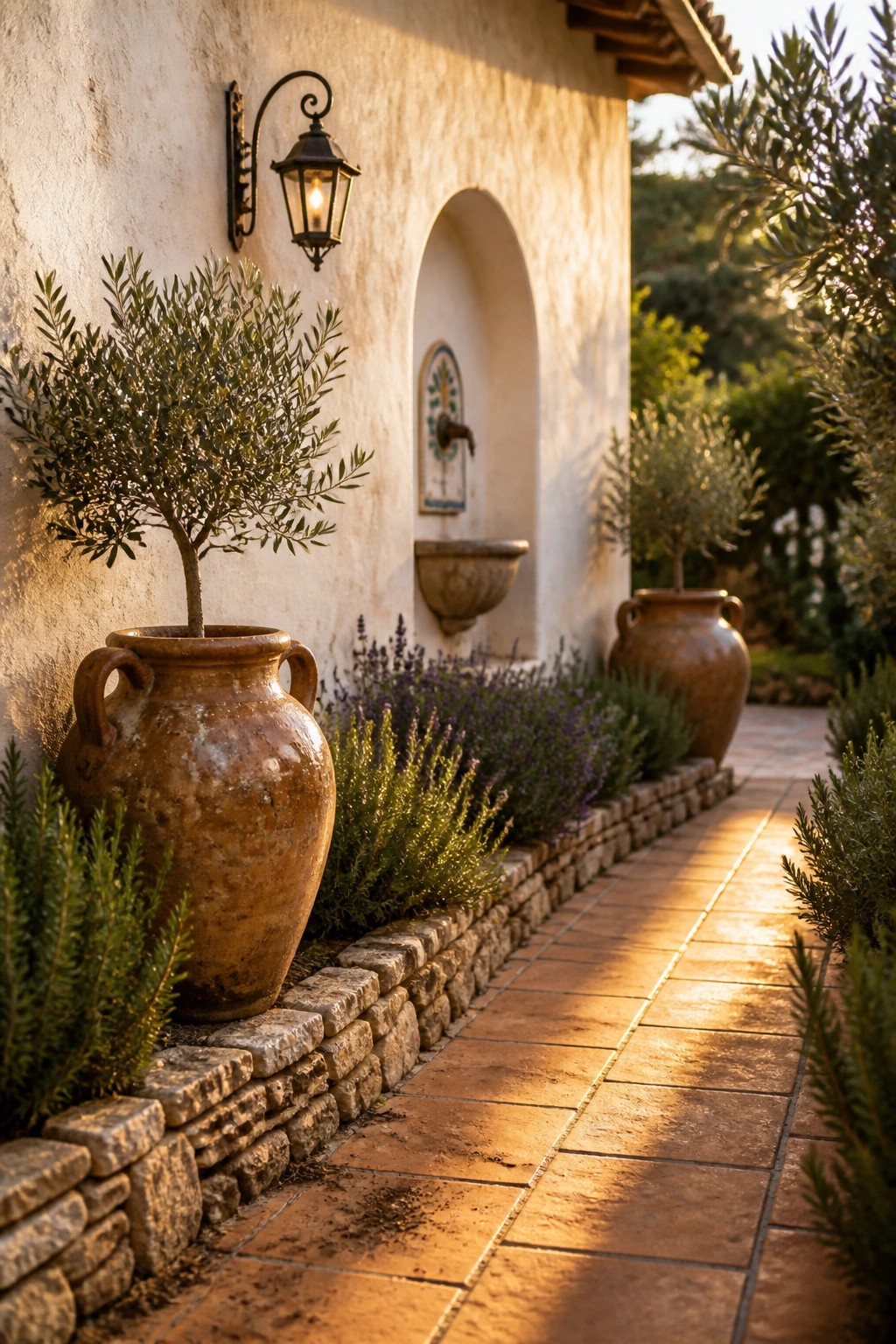
Stone borders give a small front garden a neat frame without crowding the space. They keep the planting beds in place and make the path feel more intentional, especially when the garden sits right against the house.
This approach suits homes with limited frontage where a simple walkway needs structure. Stack the stones low, keep the path material consistent, and add a couple of larger pots at intervals so the eye follows the route rather than the whole bed at once.
Stepping Stones Through Ground Cover
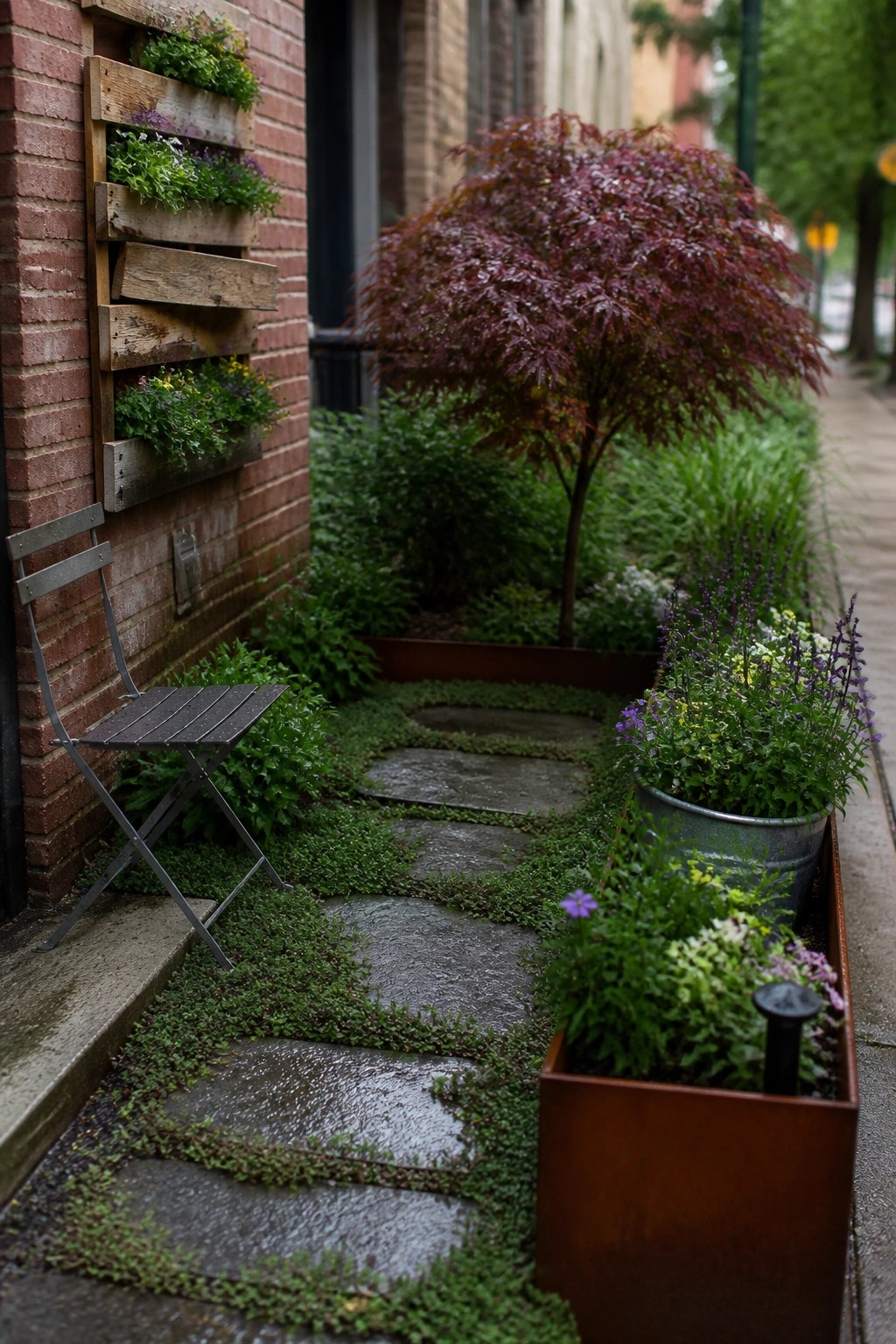
Stepping stones set into low ground cover give a small front garden a clear path without taking up much space. The stones stay level with the planting, so the whole area feels connected rather than divided into separate beds and lawn.
This approach works best in narrow side yards or tight front spaces where a full walkway would feel too wide. Space the stones so they feel comfortable to walk on, and pick a ground cover that tolerates light foot traffic. It keeps maintenance low while still giving visitors an easy route to the door.
Gravel Paths With Hedge Borders Work Well In Small Gardens
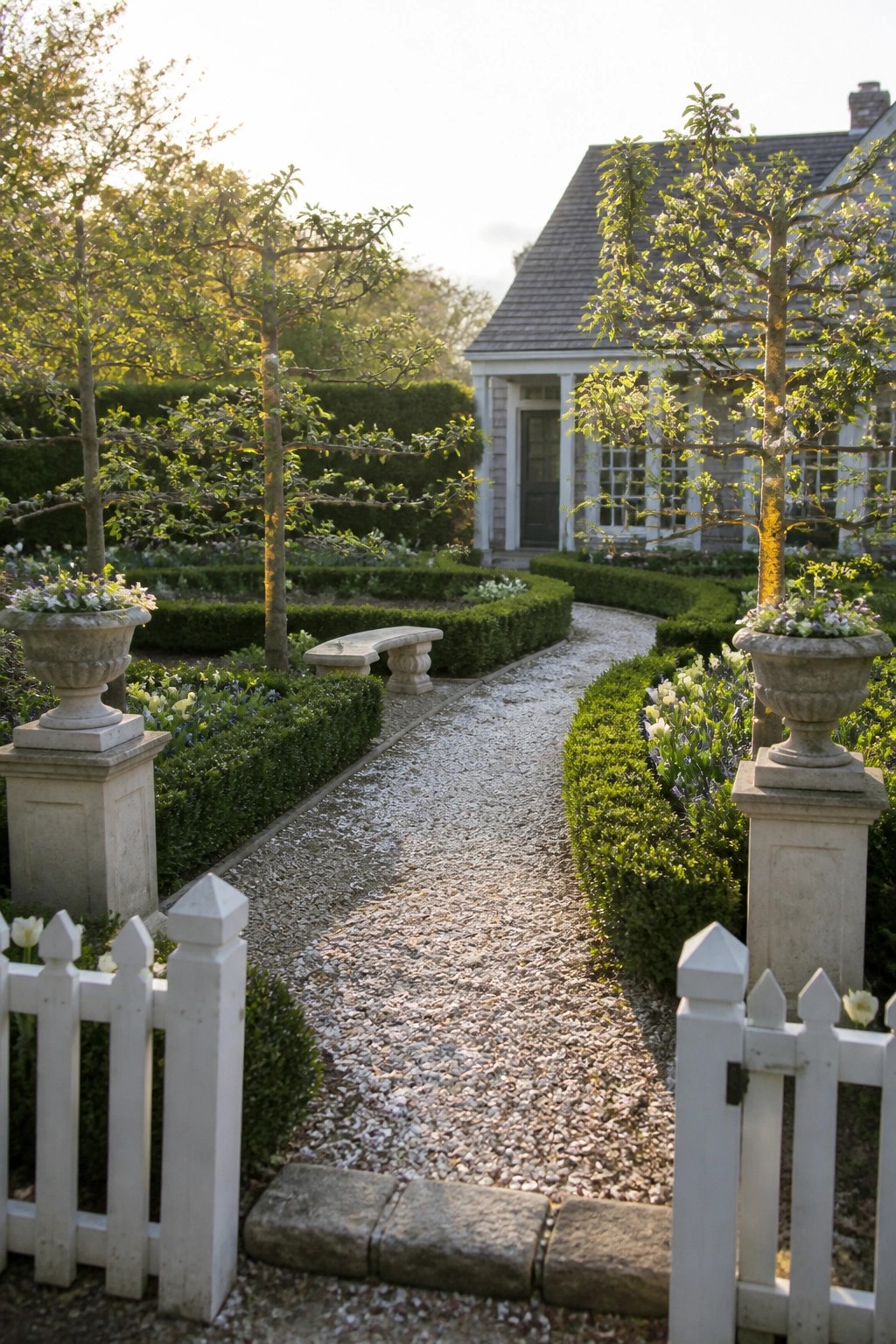
A gravel path edged by low hedges gives a small front garden a clear structure without crowding it. The path leads visitors straight to the door while the hedges keep the beds tidy and contained on either side.
This setup suits cottages and older homes where you want a bit of traditional charm. Keep the hedges low so they do not block views, and choose gravel that drains well if the area gets heavy rain.
Create Definition With A Paver Path And Gravel Borders
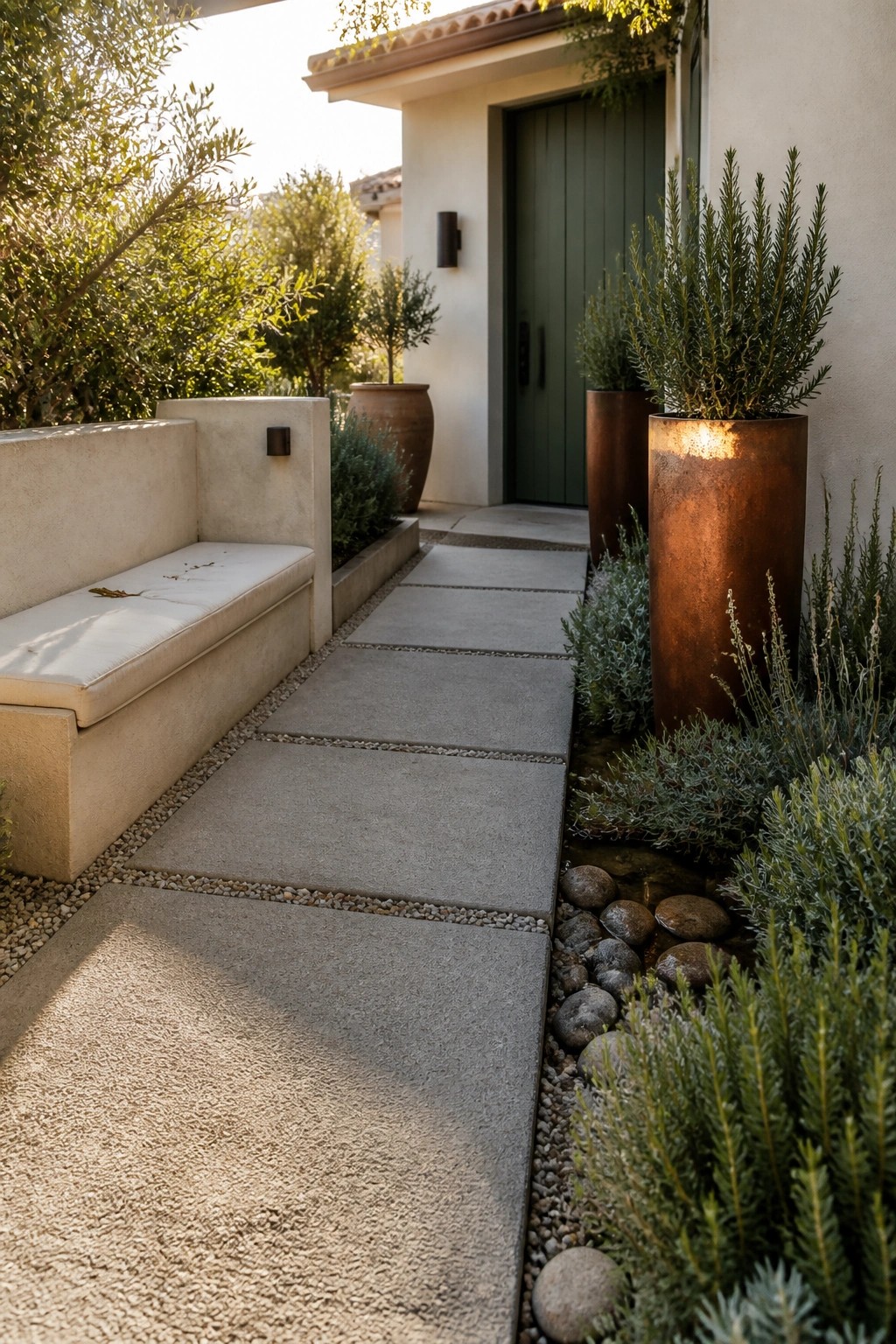
A simple path of large concrete pavers set in gravel gives a small front garden clear direction without crowding the space. The gravel edges keep the pavers in place, improve drainage, and add texture that feels natural next to plants.
This layout works best in narrow entries or compact front yards where you need a straightforward route to the door. Keep the planting low along the sides so the path stays the main feature and the whole area feels open rather than cluttered.
Mixing Grass And Stone In A Checkered Path
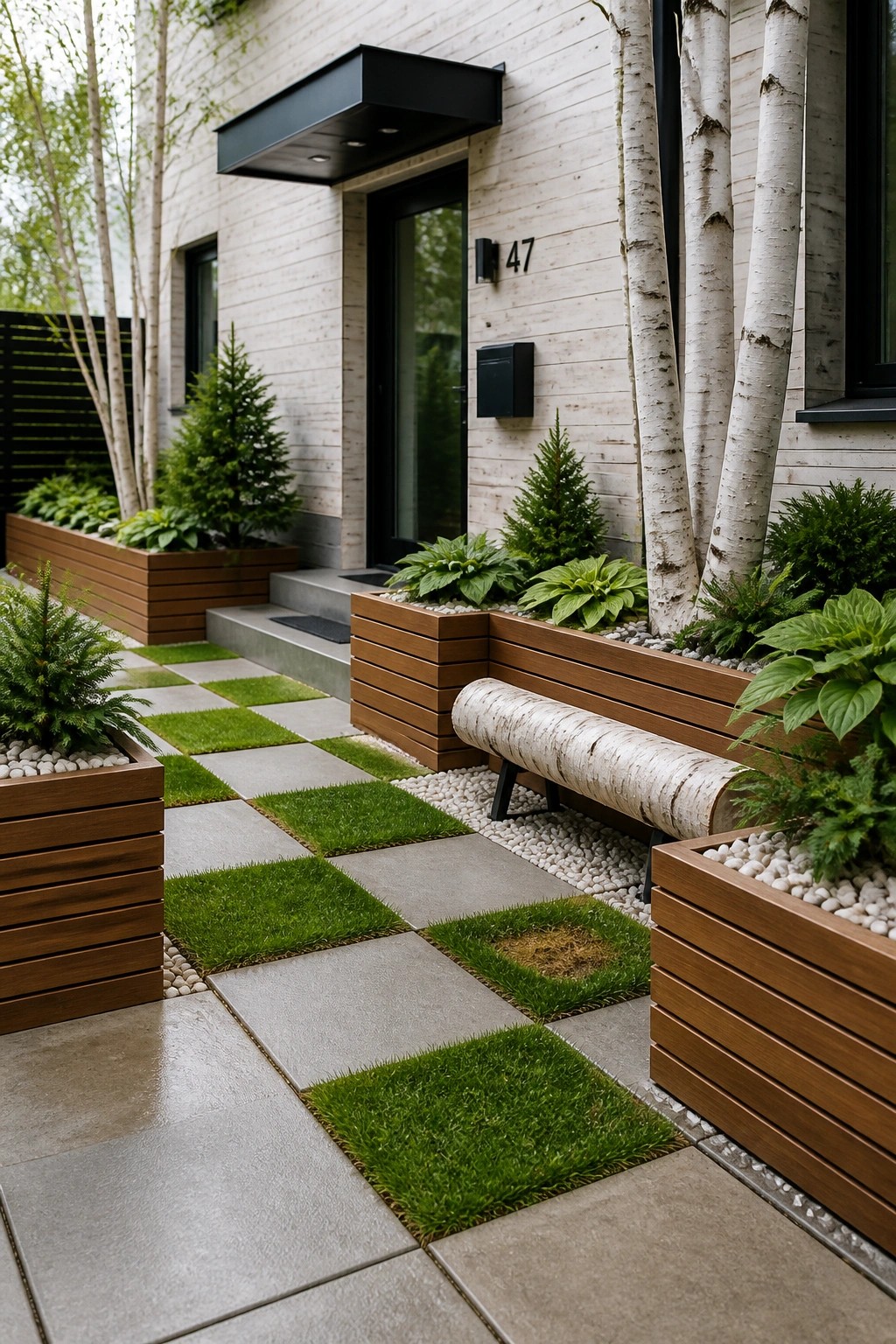
A checkered path like this keeps a small front garden from feeling too hard or too plain. The alternating squares of grass and stone add some softness underfoot while still giving a clear way to walk up to the door.
This layout works best on fairly flat ground where you can keep the grass trimmed neatly. It suits compact yards that already have raised beds or planters along the edges, and it helps the space feel bigger without adding more paving.
Frame the Path with a Rose Arch
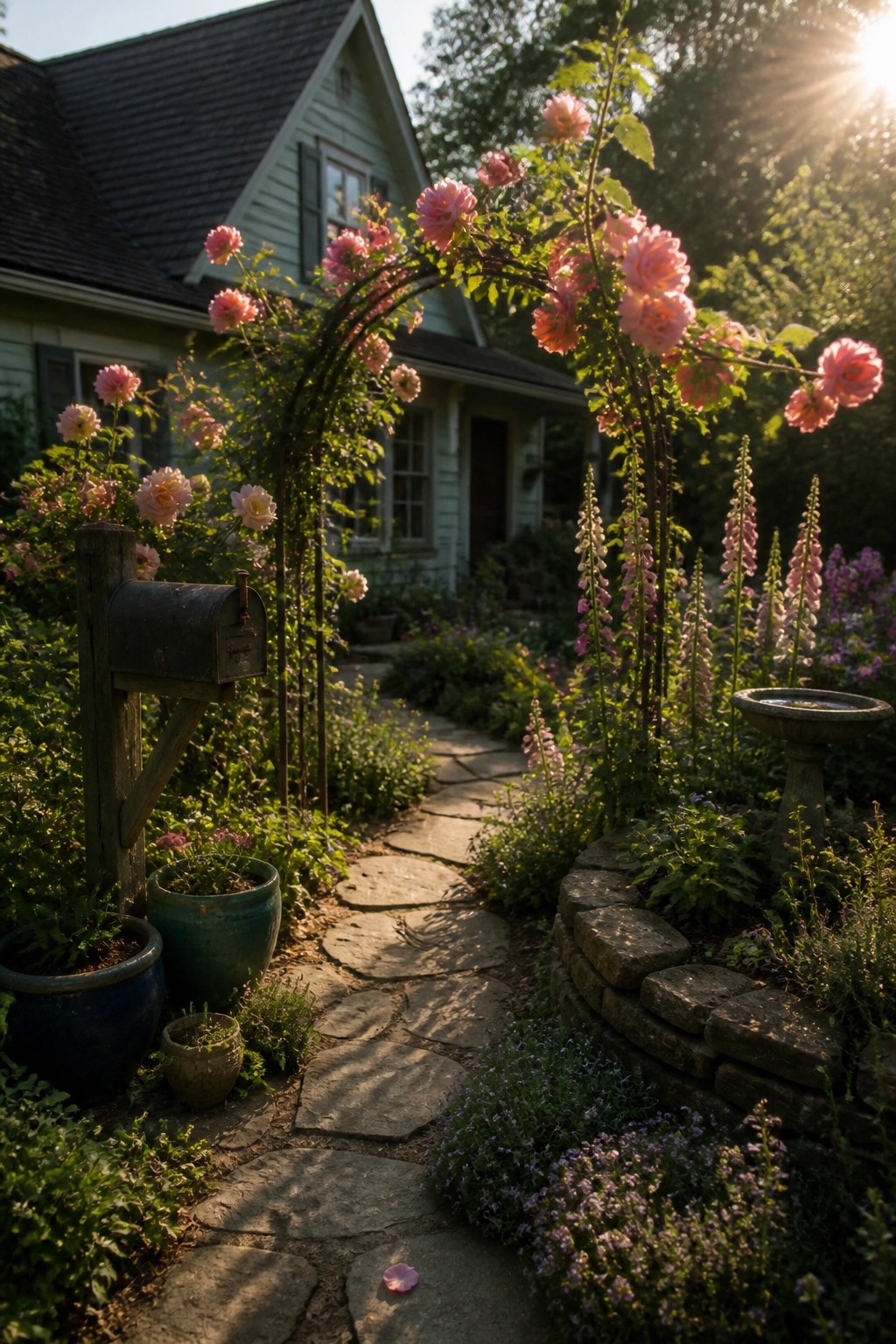
A rose-covered arch over a stone path gives a small front garden a clear sense of entry without taking up much space. It turns a simple walkway into something more inviting and helps direct people toward the door while adding height and color.
This works well on narrow lots where you want structure but still need room for planting on either side. Keep the arch narrow so it does not crowd the path, and choose climbers that bloom over a long season. Stone or gravel underfoot keeps the look casual and easy to maintain.
Curved Paths With Planted Borders
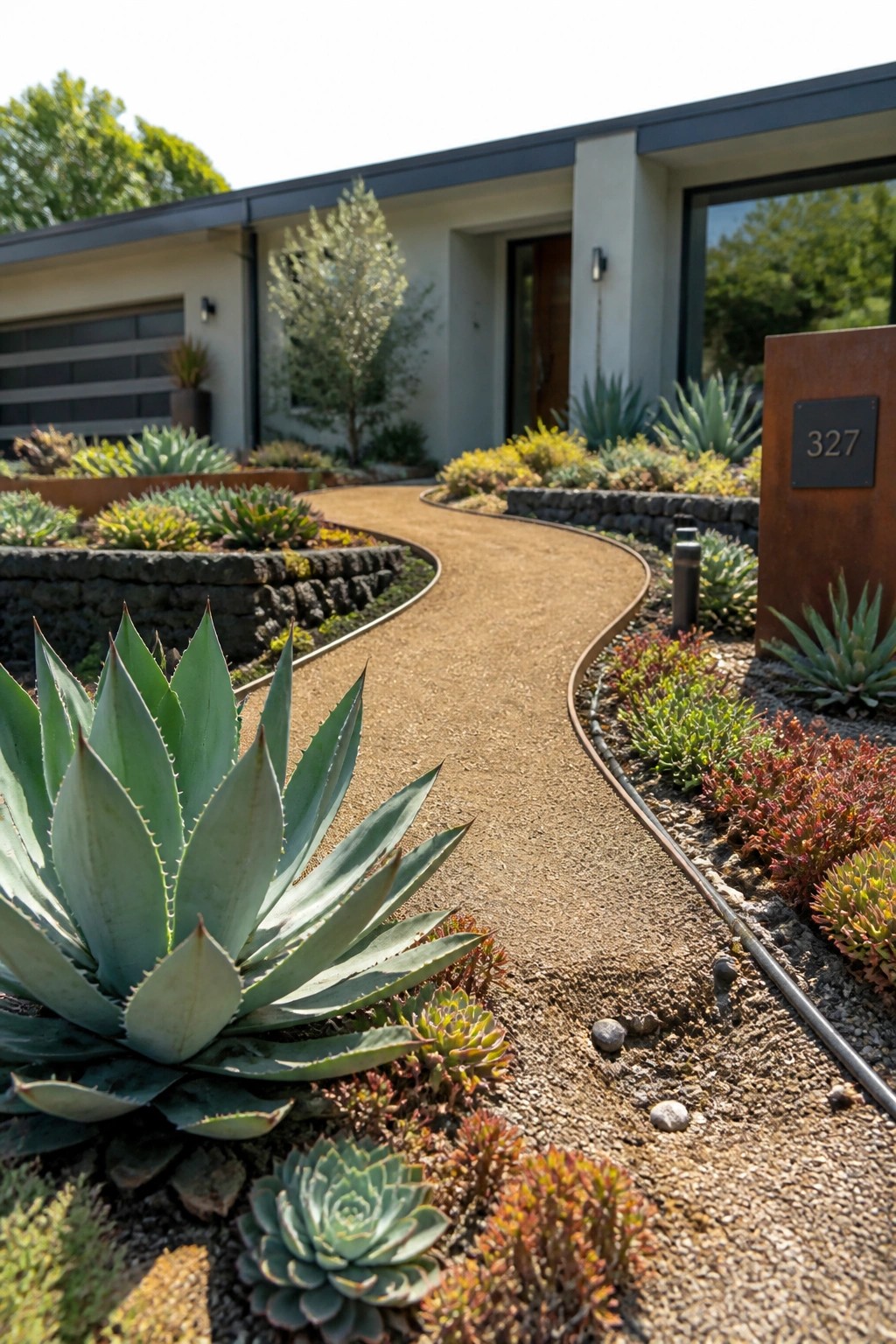
A gentle curve in the front path adds movement to a small yard and keeps the space from feeling like a straight shot to the door. Low succulents and stone edging along the sides give the path a clear shape while keeping the planting simple and easy to maintain.
This layout works best on narrow lots or homes with a short setback from the street. Keep the beds fairly narrow so the path stays the main feature and does not crowd the walkway.
Curve a Brick Path With Bordered Edges
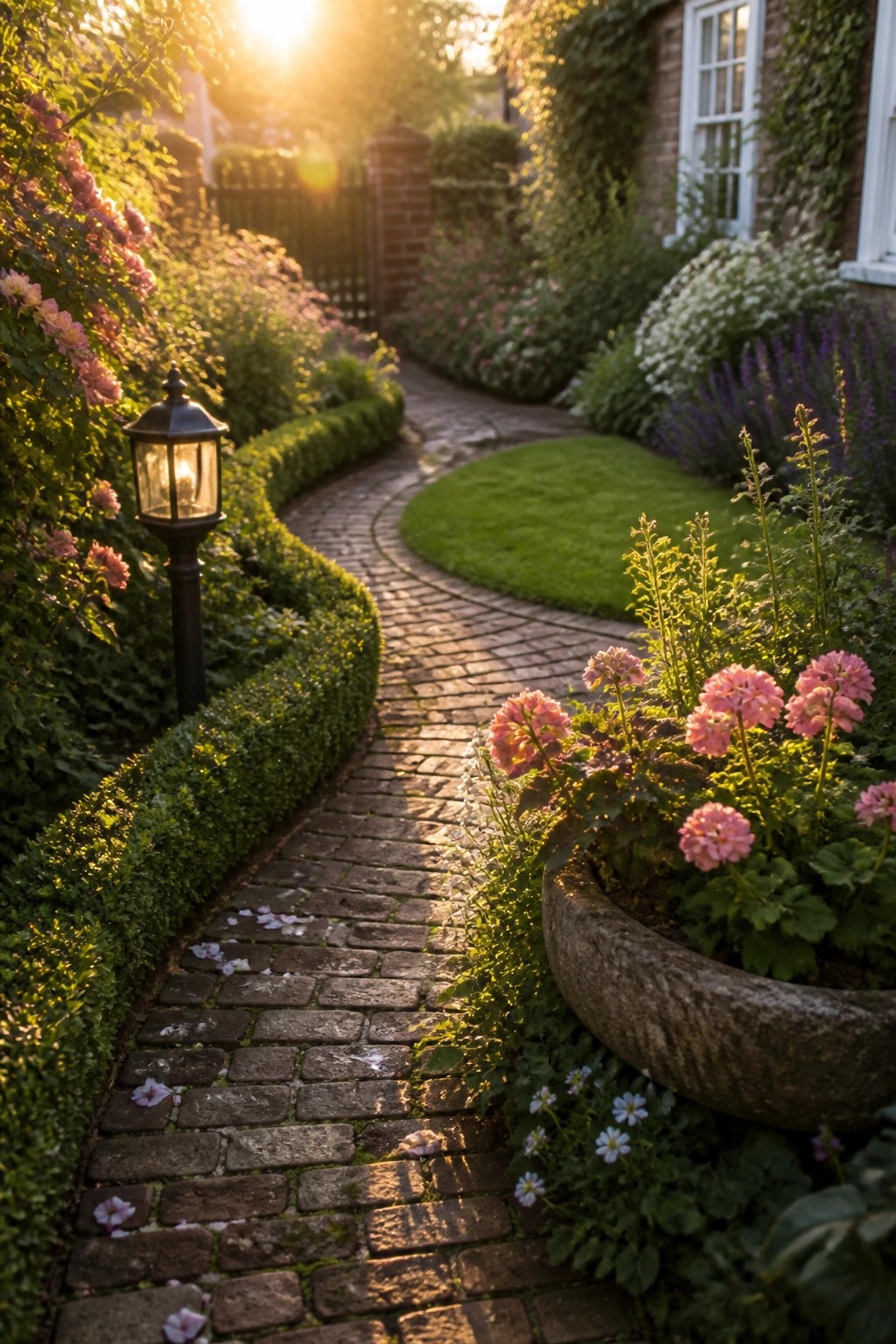
A curving brick path adds movement to a small front garden and keeps the space from feeling like a straight shot to the door. The low hedges along the edges help frame the walk and give it a settled look even in a compact area.
This setup suits narrow yards or side entries where you need both function and some planting room. Use the same brick for any small landing near the gate so the whole path reads as one piece rather than separate sections.
Line a Path with a Narrow Water Channel
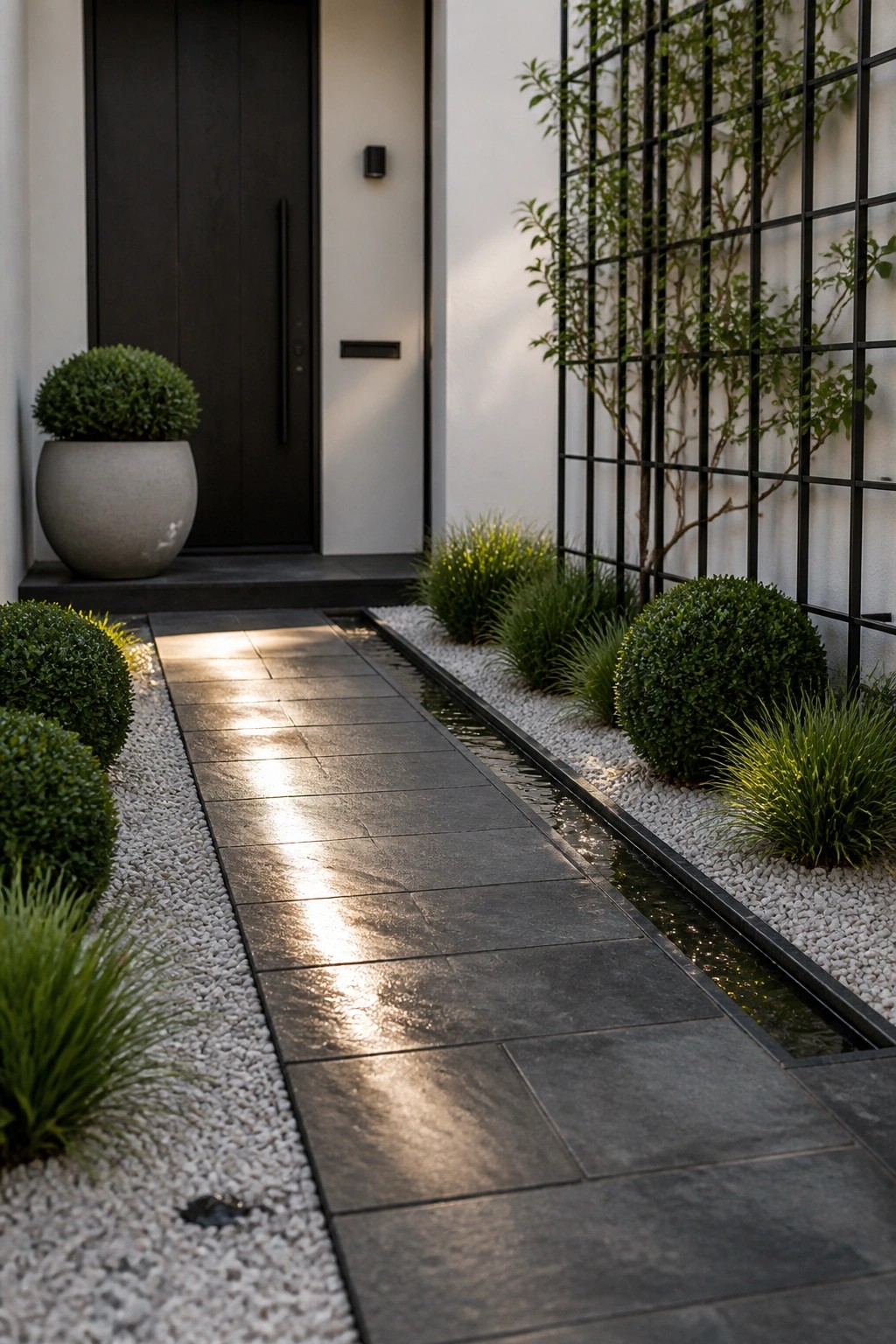
A narrow water channel running right beside the path gives a small front garden a clean sense of direction. It adds a bit of movement and light without crowding the space or needing lots of plants to make an impact.
This works best on compact modern entries where you want structure but still need room to walk. Keep the channel shallow, add a simple pump or good drainage, and let the surrounding gravel and low shrubs do the rest of the work.
Stone Paths for Compact Front Gardens
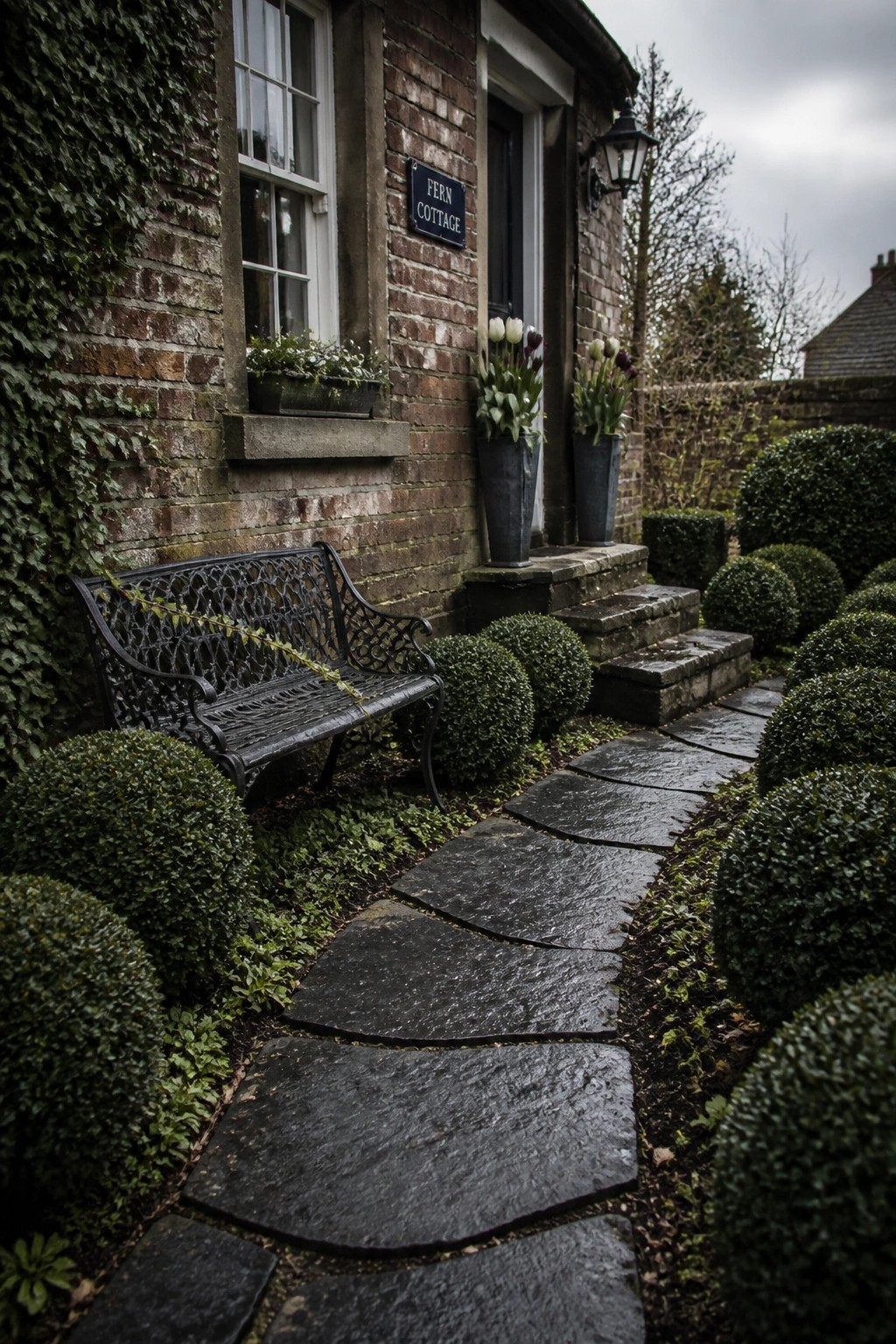
A path made of large, irregular stone slabs gives structure to a small front garden without crowding it. The uneven shape keeps the look relaxed and helps the space feel bigger than it really is.
This works well on narrow plots where a straight paved walkway would feel too stiff. Use dark stone that blends with the soil and add low borders on each side to hold the shape.
Winding Paths Work Well In Small Gardens
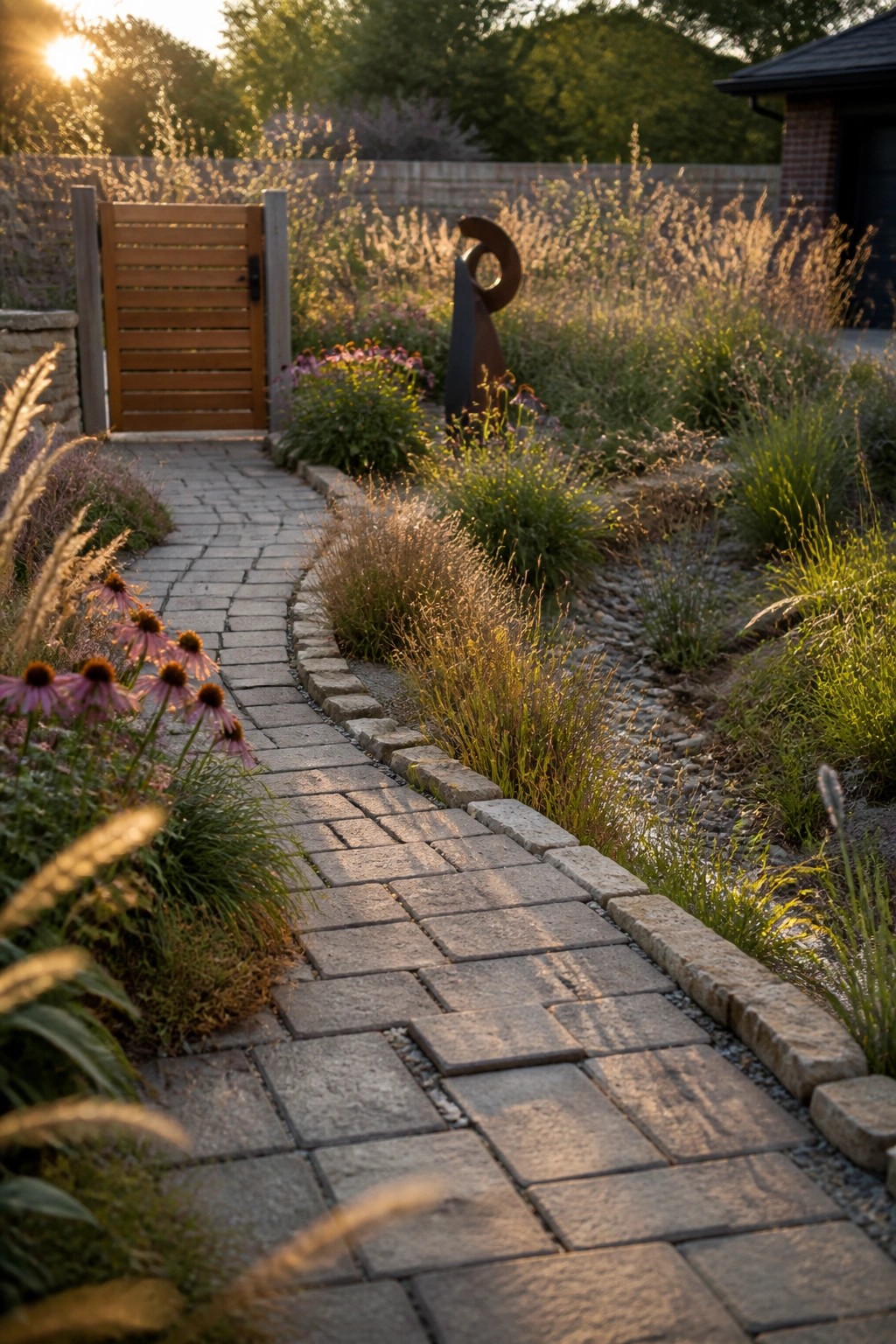
A winding path made from pavers gives a small front garden more depth without needing much space. The stone edging keeps the edges tidy and stops the planting from spilling onto the walkway.
This approach suits narrow lots or homes where the garden sits right against the street. Keep the path narrow and let the borders do most of the work with low grasses and a few taller flowers mixed in.
Raised Beds Along a Narrow Path
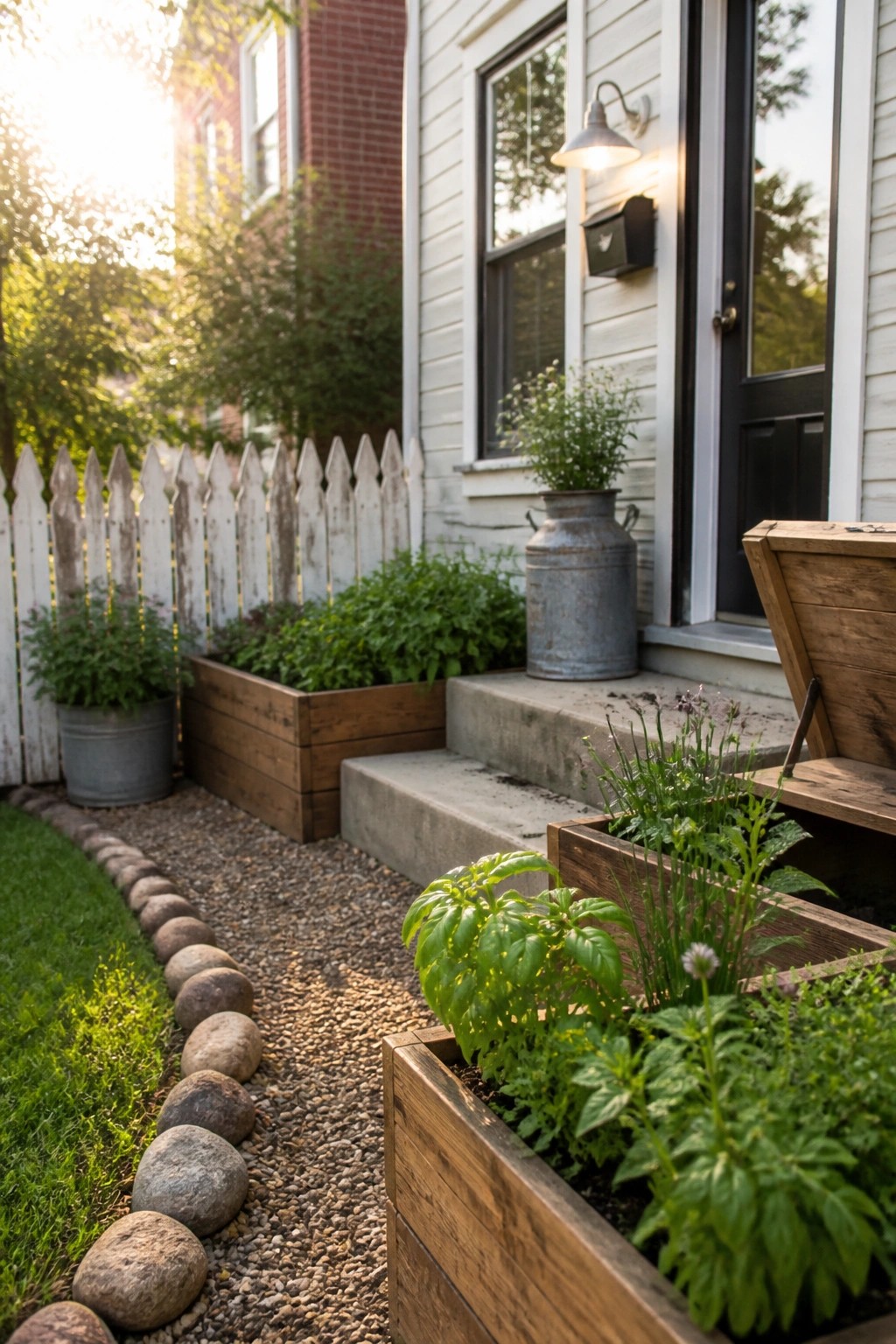
Raised beds work well in small front gardens because they add height and keep the planting contained without eating into the lawn or walkway. They also make it simple to switch out plants each season while giving the space a tidy, structured look.
Place them along the house or path edge like this, and use a gravel surface with a simple border to finish the area. This setup suits older homes with limited space between the sidewalk and the front door, and it keeps maintenance low.
Try A Winding Path With Stepping Stones
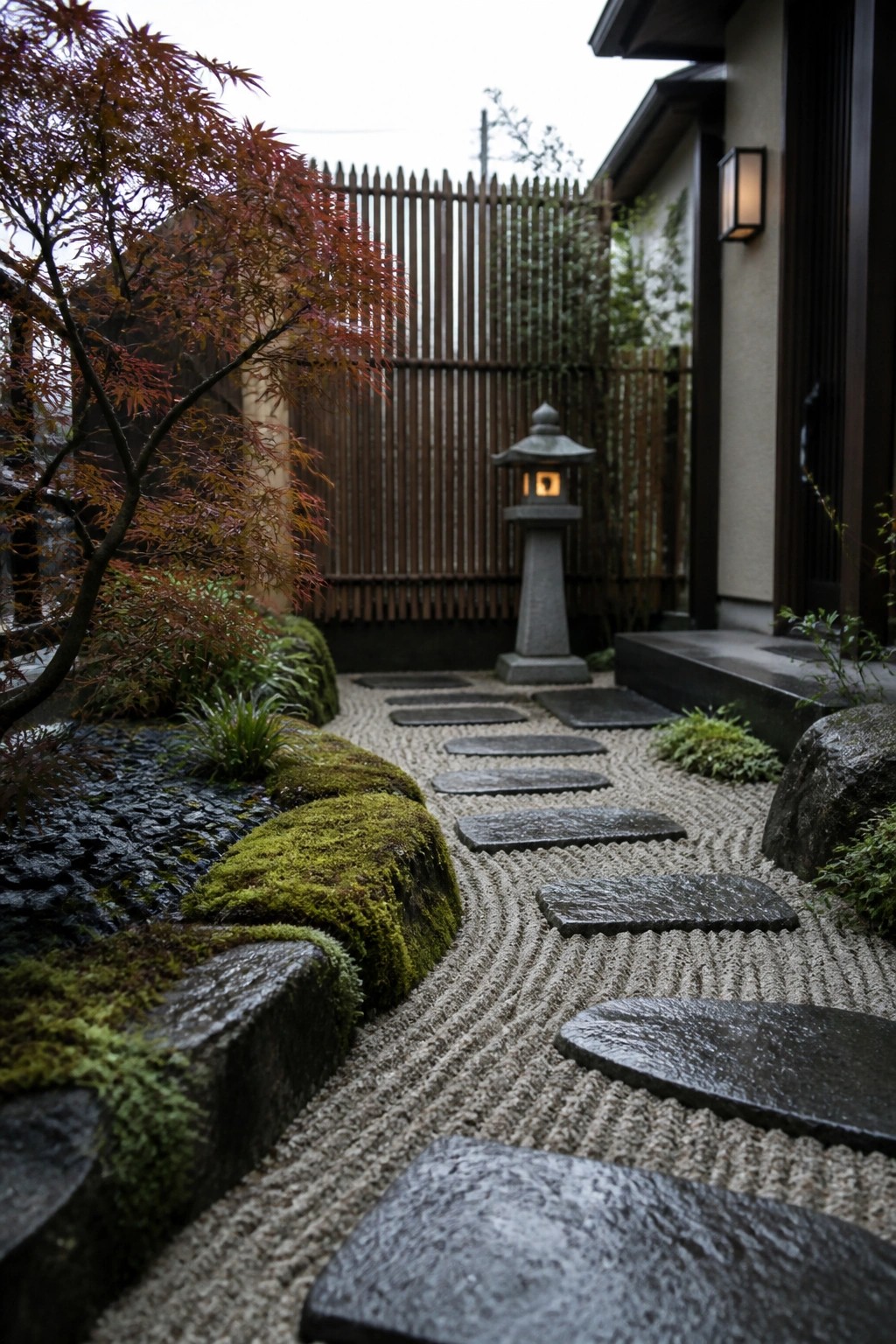
A path made from flat stones set into raked gravel gives a small front garden a clear sense of direction. It keeps the space from feeling cramped while still leaving room for planting along the edges.
This works best on narrow lots or tight entry areas. Keep the stones simple and let moss or low ground cover soften the borders so the path feels like it belongs rather than just sitting on top of the ground.
A Pebbled Path with Tiled Steps
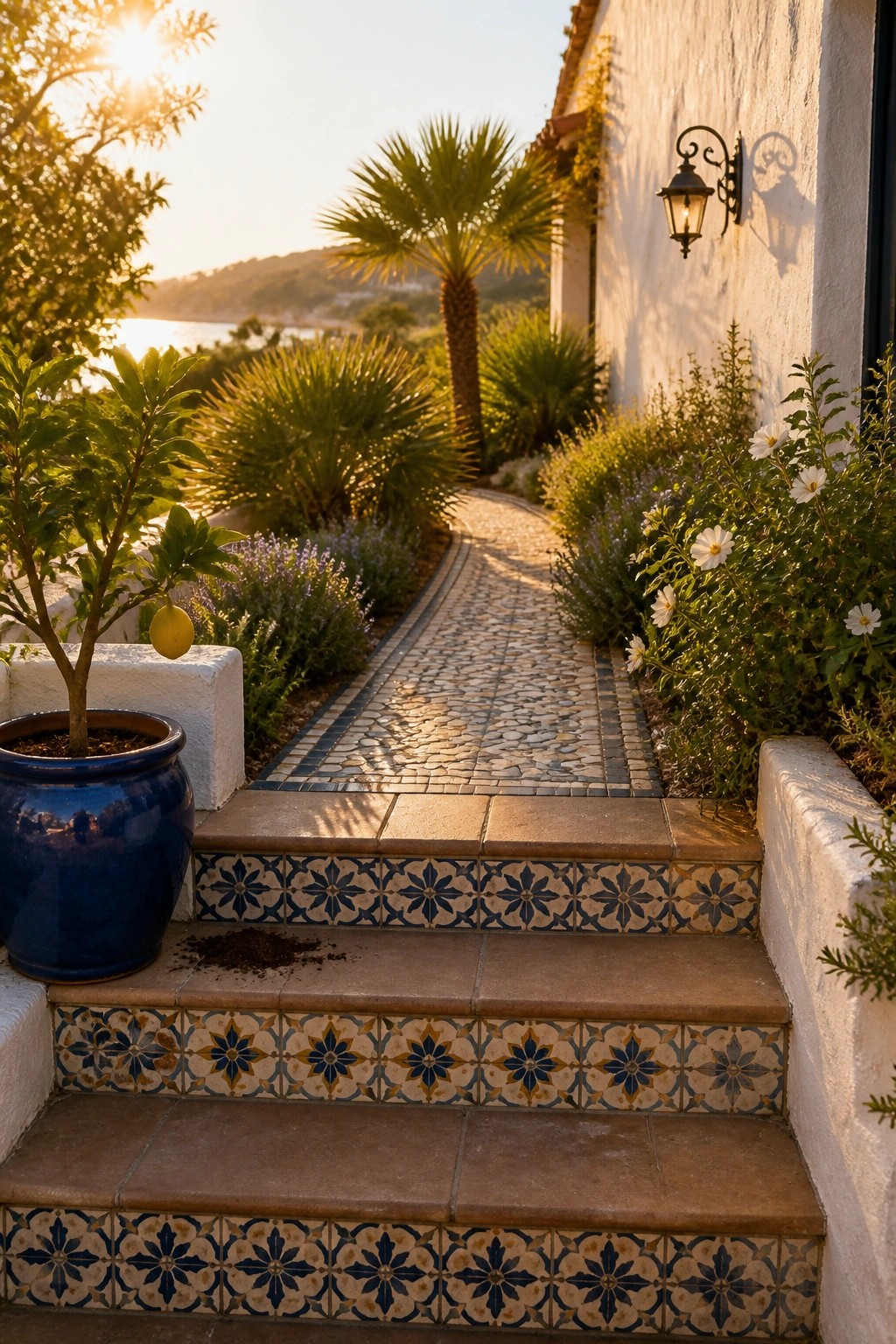
A simple path made of small stones can guide people through a tight front garden without taking up much space. The tiles along the edges and on the steps add a bit of pattern that keeps the whole thing from looking plain. This approach works especially well when the garden sits on a slight slope.
It suits older homes or cottages where you want something that feels established rather than too neat. Keep the planting low along the sides so the path stays the main feature. Watch the slope on your steps so they stay easy to walk on.
Curved Stone Paths Open Up Narrow Gardens
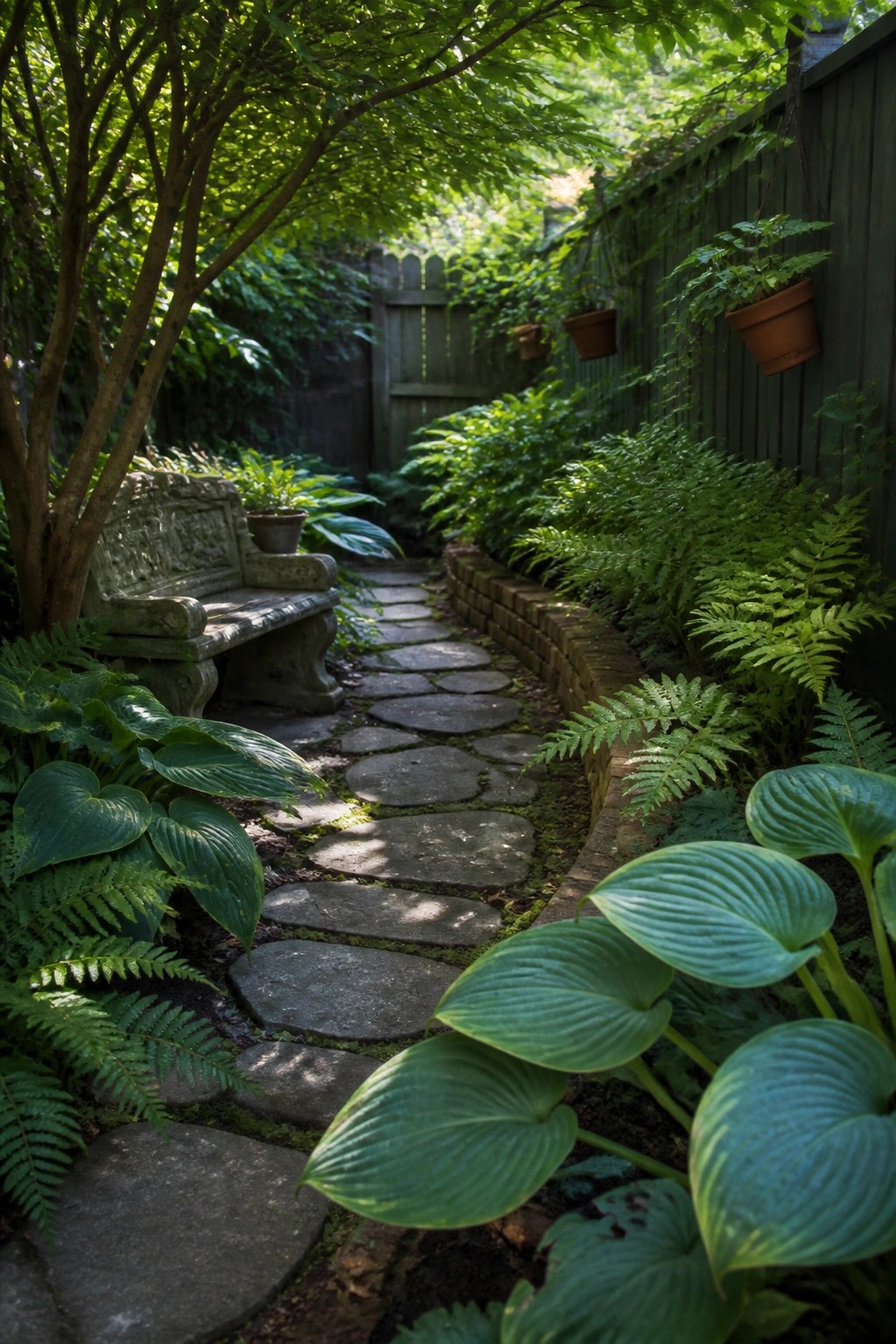
A curved path made from irregular stones gives a small front garden more depth without needing extra width. It breaks up the straight lines of a fence or house wall and lets the planting beds feel more natural on both sides.
This works best in side yards or slim front spaces where a straight walk would feel too formal. Use the same stones throughout and let ferns or hostas soften the edges so the path blends into the garden instead of cutting through it.
Curved Paths Work Well In Tight Spaces
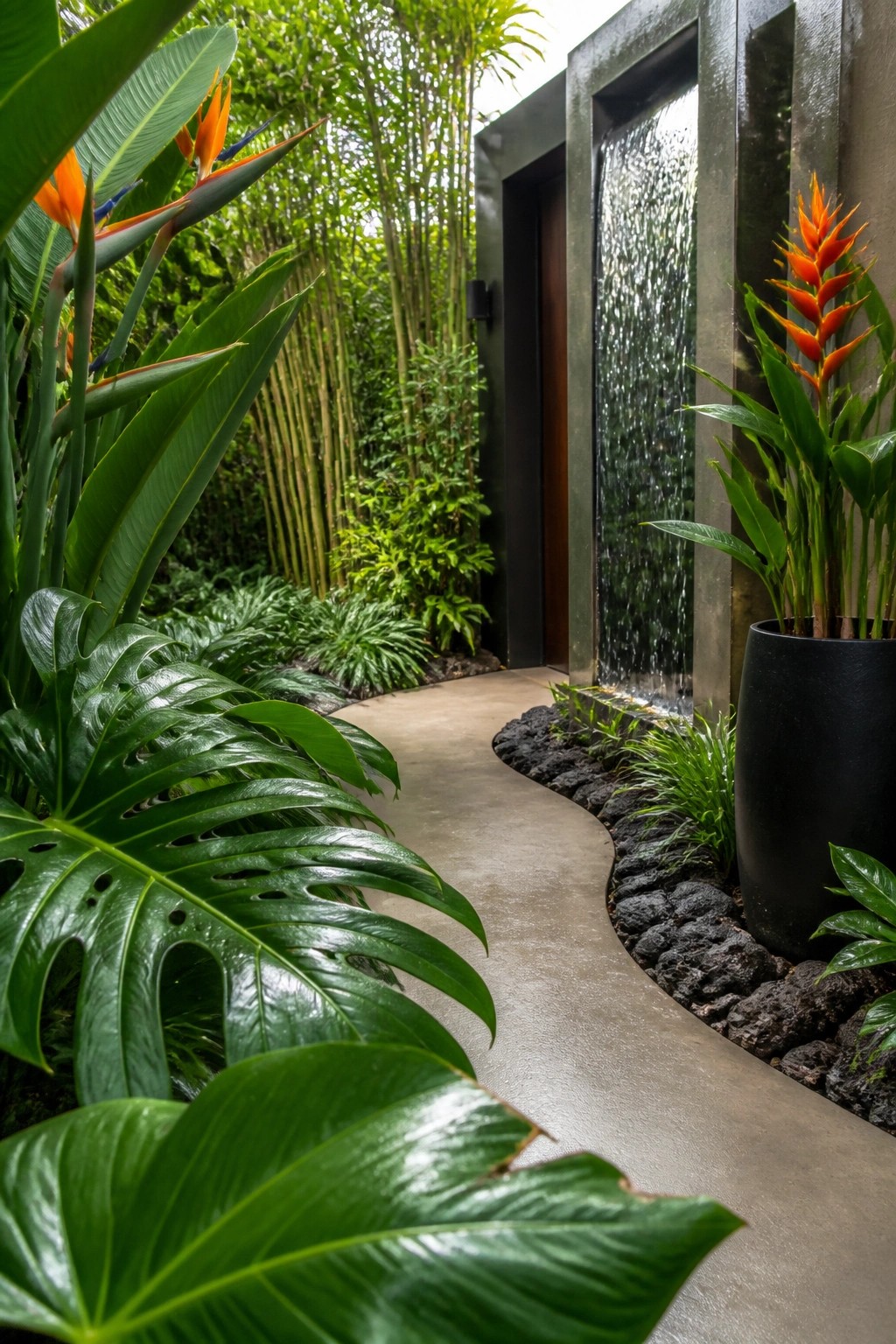
A gentle curve in a garden path helps a narrow front yard feel less like a straight shot to the door. It adds a bit of movement and gives the planting beds on either side more room to show off without looking cramped.
This layout suits small side entrances or slim front gardens where a straight path would feel too abrupt. Keep the edging low and simple so the curve stays easy to follow and the space does not get crowded.
Cobblestone Paths With Wood Edging
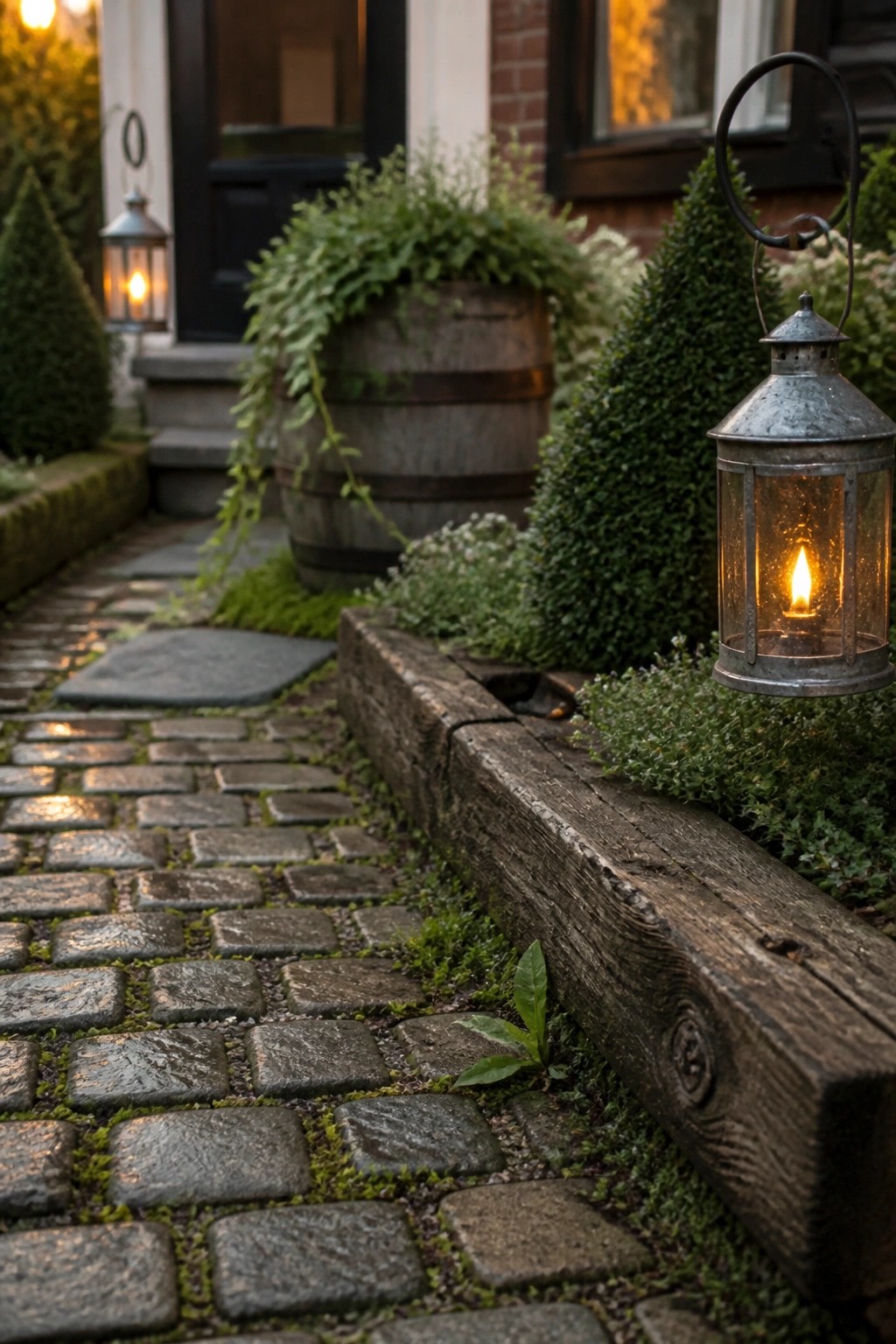
A narrow cobblestone path lined with old wood gives a small front garden real structure. It keeps the space feeling organized while still looking relaxed and lived in.
This works well on tight lots where you need a clear route to the door without crowding the planting beds. Use reclaimed timber for the edge so it weathers naturally and lets low plants spill over the sides.
Stepping Stone Paths In Gravel
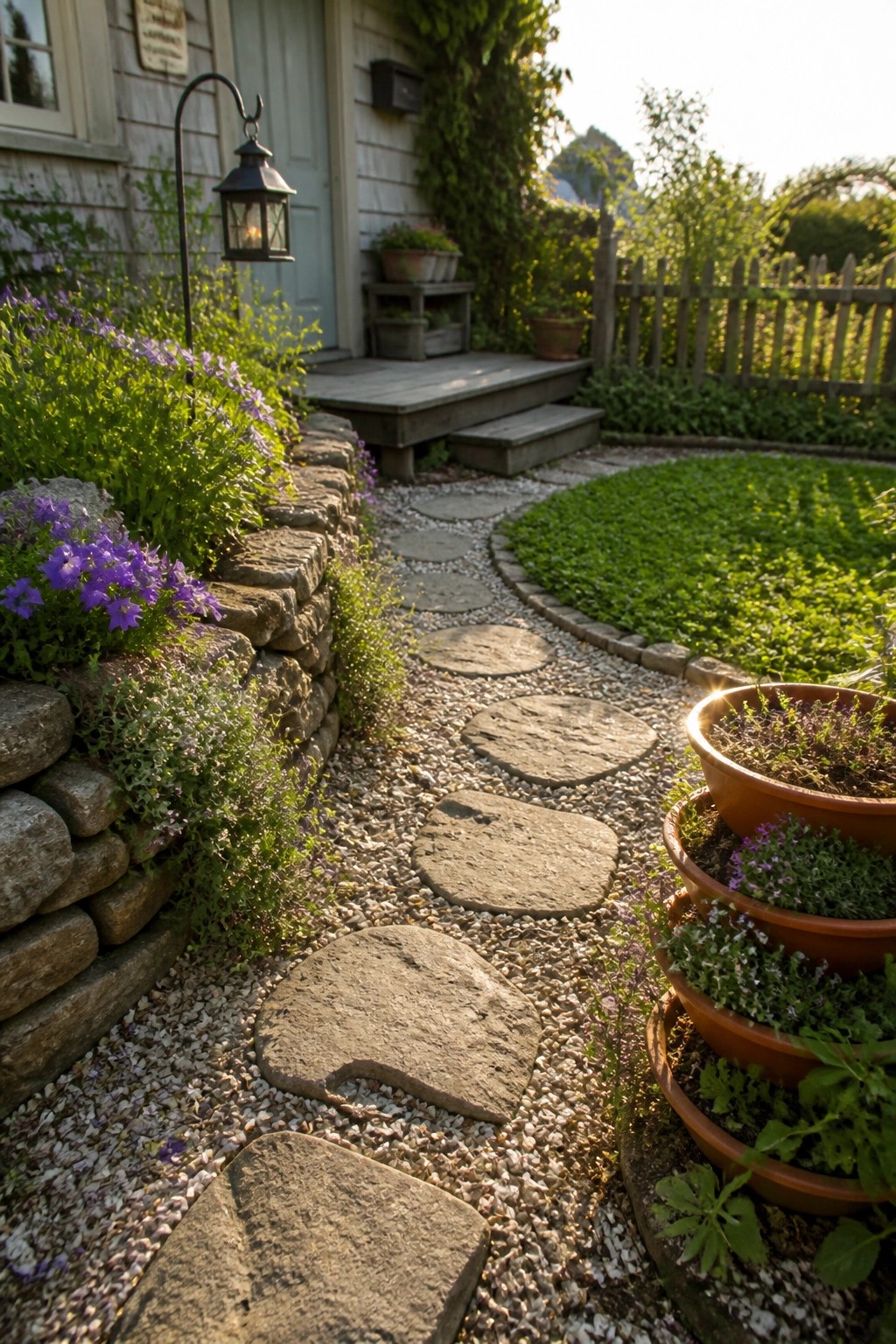
A gravel path with stepping stones keeps a small front garden feeling open while still guiding visitors to the door. The loose surface adds texture without crowding the space, and the stones make walking easy even after rain.
This layout works best along a narrow side or straight to the entry of a cottage or older home. Keep the border low so plants can spill over naturally, and use the same gravel in nearby beds to tie everything together.
Frequently Asked Questions
Q: What plants work best for borders in a small shaded garden?
A: Pick ferns and hostas since they thrive without much sun. Space them a bit apart so they fill in nicely over time. Water them regularly at first until they settle in.
Q: How do I lay out a path that still leaves room for plants?
A: Start with a narrow gravel path that curves gently. Place low growing flowers along the sides.
Q: Can I use old bricks for borders on a tight budget?
A: Yes dig them in along the edges to create a clean line. Stack a couple high if you want more definition. They add charm without costing much.
Q: What is one simple thing to do for better curb appeal?
A: Add a small bench near the path entrance. It invites people in and makes the space feel cared for. Keep it compact so it fits right in.
