

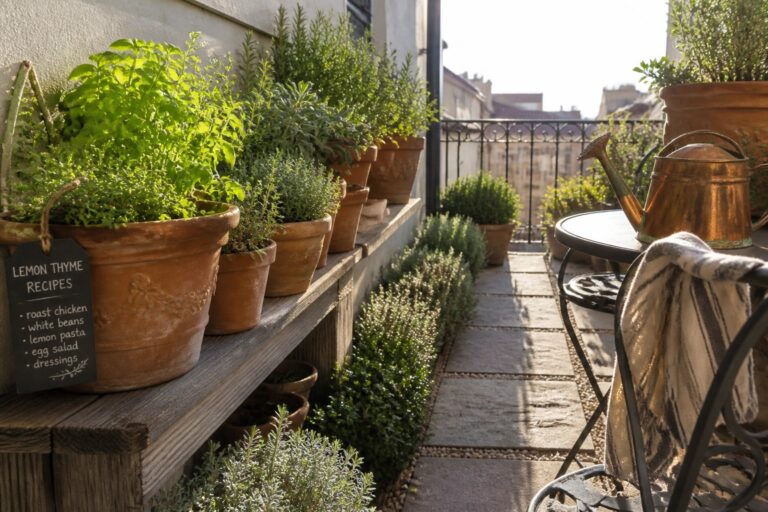
I have found that small herb gardens succeed when the edging creates clear boundaries and the pots stay close enough to the kitchen for daily use.
The fragrance builds gradually as the plants settle in, and it becomes part of the routine when you step outside to grab what you need for a meal.
I usually test any new layout by placing just three or four pots first to see whether the arrangement actually gets used or ends up ignored after the first week.
Over time the edging also helps keep the soil contained so the garden stays neat without constant tidying, which matters when space is limited.
Pots and edging together make the biggest practical difference.
Line Herb Pots Along a Bench
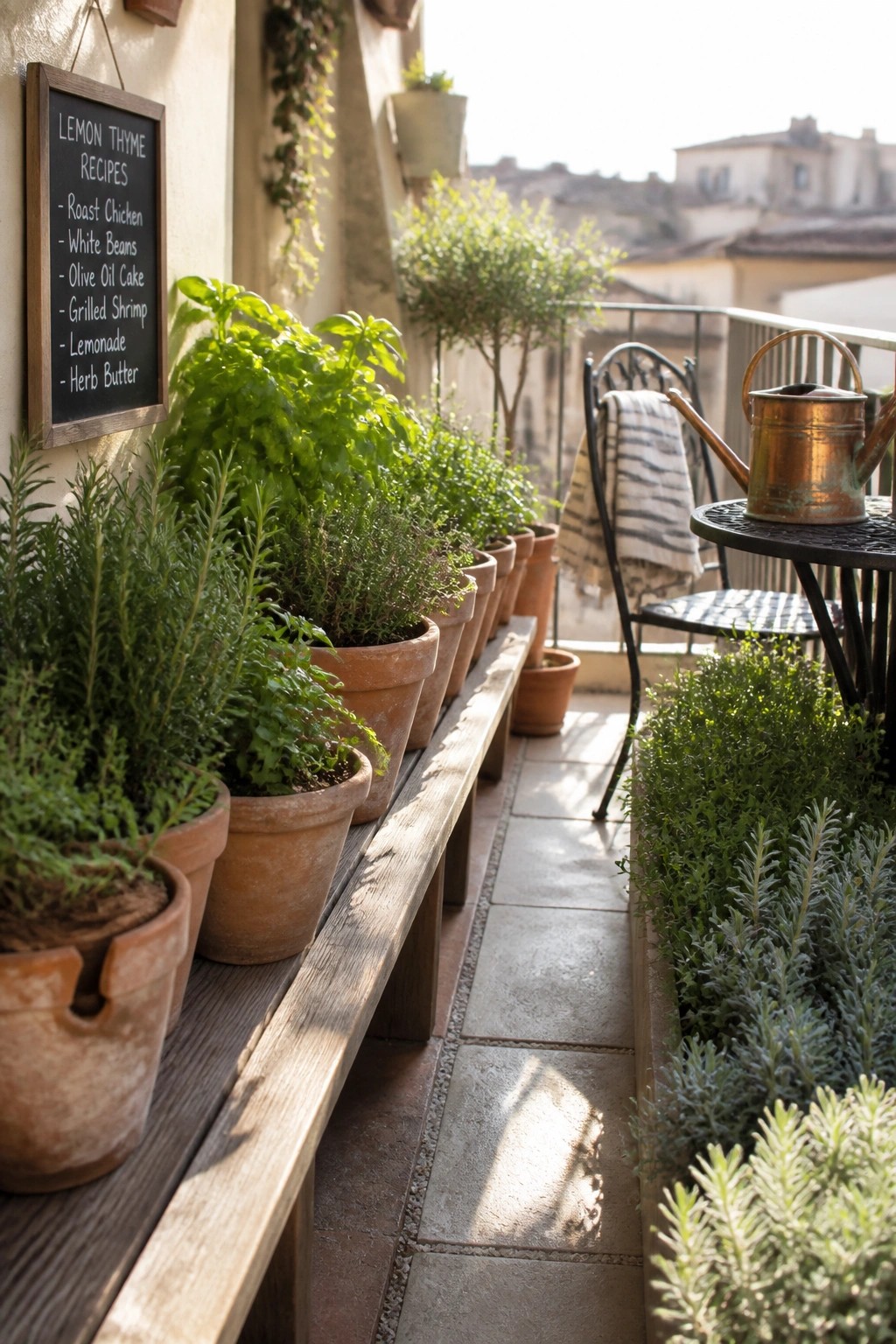
A bench set against the edge of a balcony or patio gives herb pots a steady home without crowding the floor. The row keeps different varieties together, so you can reach what you need while cooking and still enjoy the scent when you sit nearby.
This setup works best on narrow outdoor spaces where a full bed would not fit. Use matching pots and check that the bench can hold the weight once the soil is added. A simple chalkboard nearby can list a few recipes that use what is growing right there.
Grow Herbs Right by the Outdoor Grill
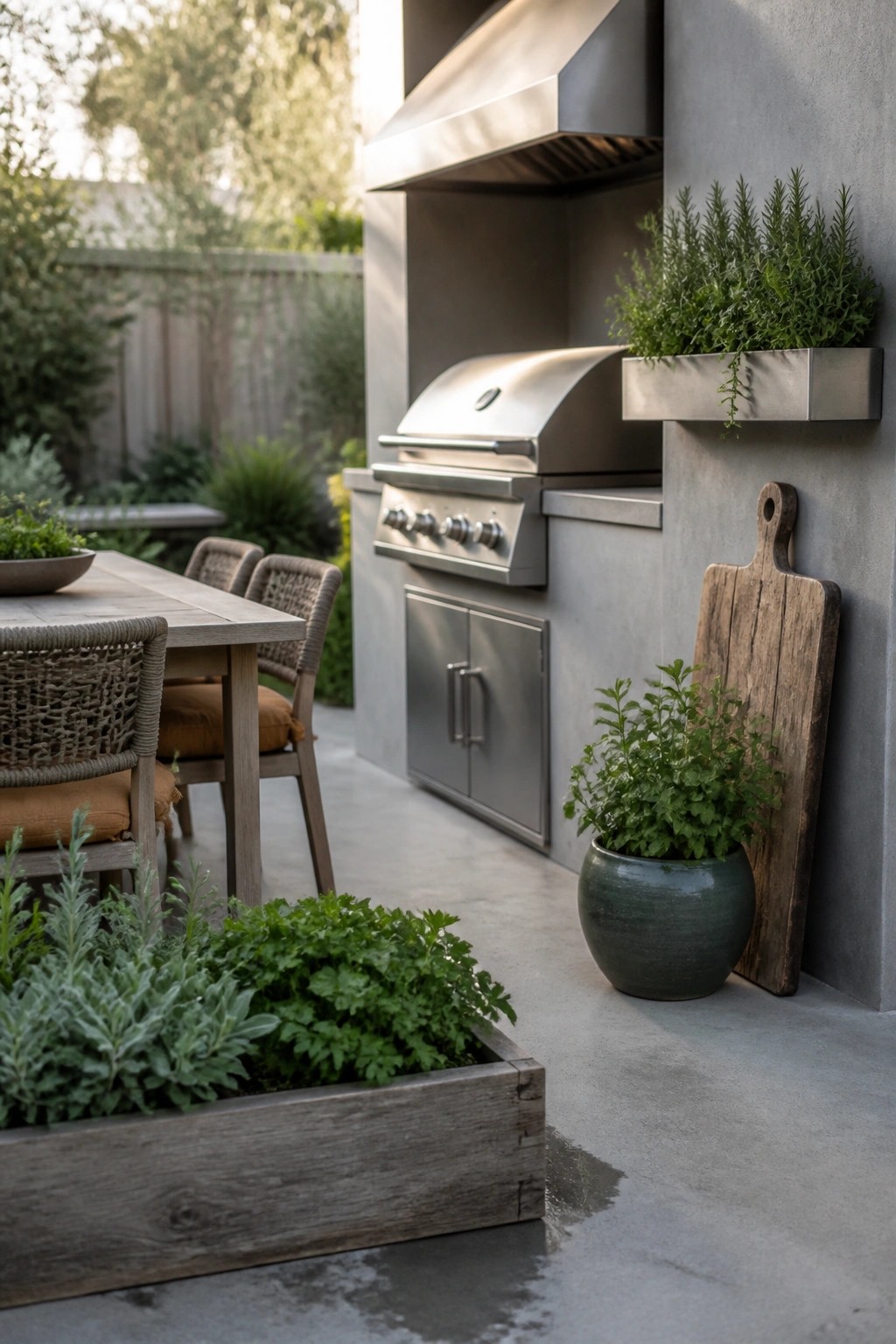
Many people find it useful to keep a few herb plants close to the grill so they can grab what they need while cooking. A low wooden planter along the edge of the patio and a pot or two nearby make that easy without taking up much space.
This works best on patios or decks that already have an outdoor cooking area. Choose containers that hold up to weather and place them where they will not get in the way of foot traffic.
Labeled Pots on a Bench for Quick Access
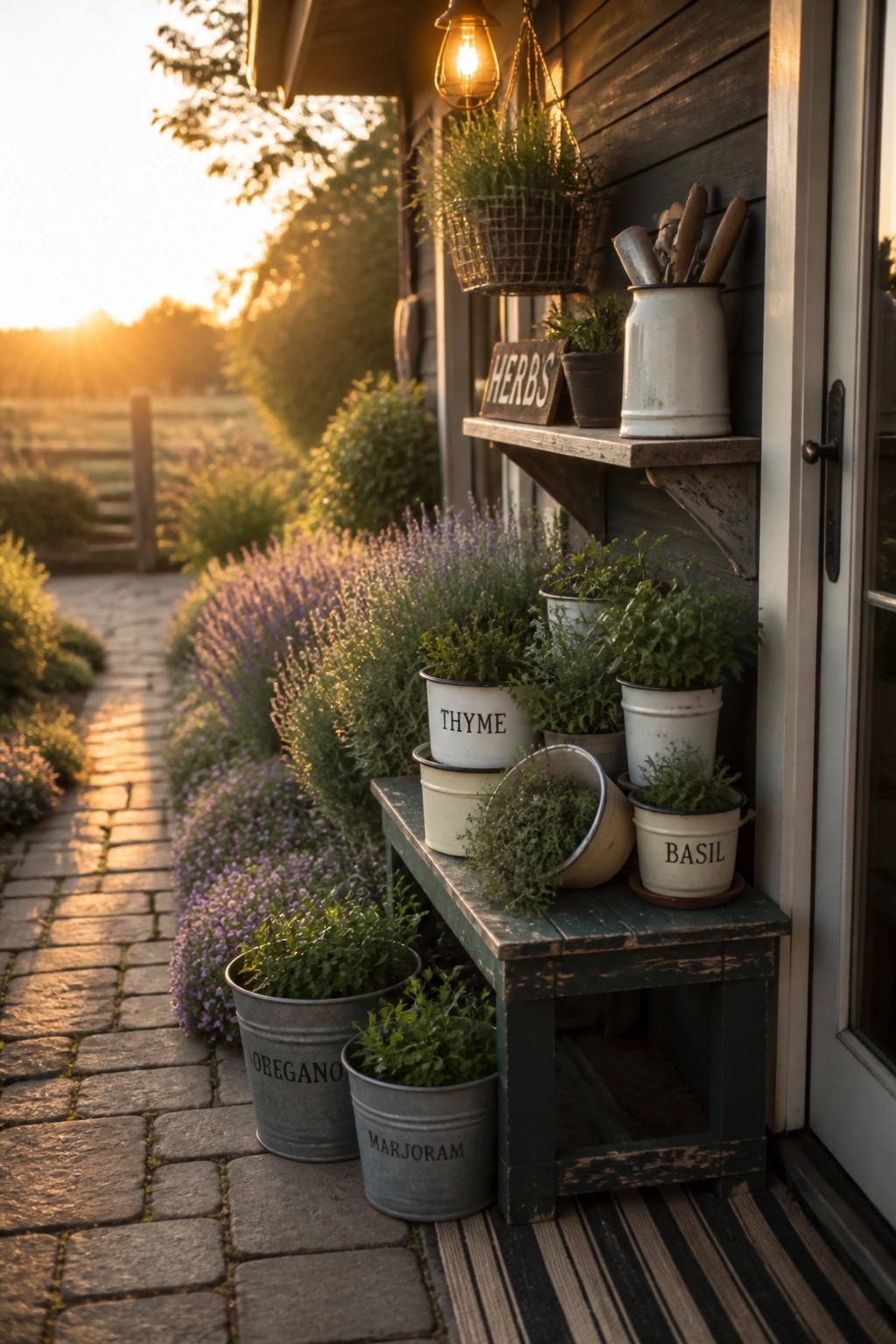
Placing herb pots on a bench right by the door keeps them close for cooking. The labels on each pot make it easy to grab the right one without guessing, and the simple arrangement turns a basic spot into a working herb station.
This approach suits homes with limited ground space or anyone who wants herbs within reach during meal prep. Keep the bench against an exterior wall so the pots stay protected, and use sturdy containers that can handle daily handling.
Keep Herb Pots Close to the Outdoor Counter
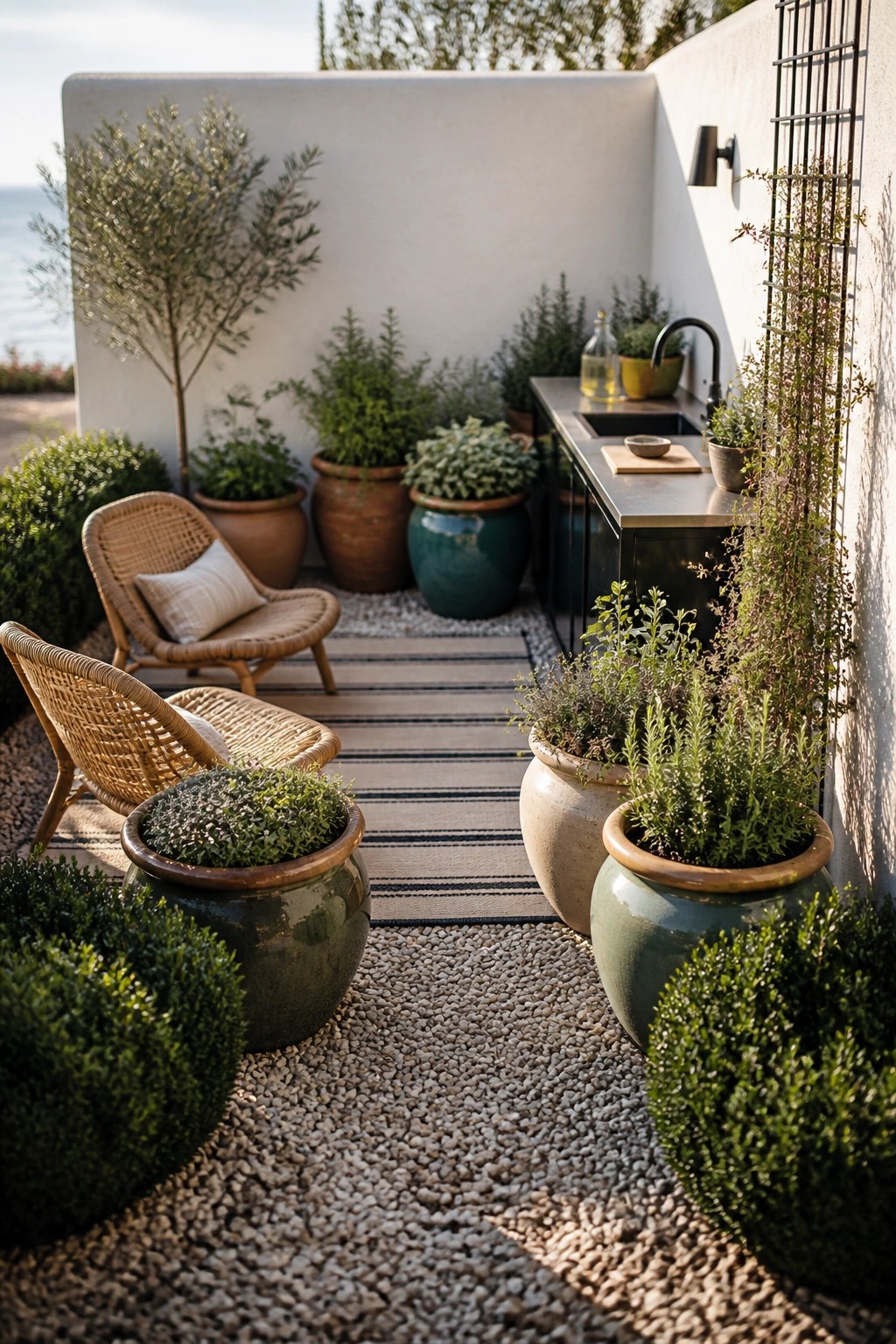
One simple way to use herbs more often is to keep a few pots right next to the sink and counter. You can reach for rosemary or thyme without leaving the cooking spot, and the plants get watered when you rinse dishes.
This setup works well on a small patio or terrace where everything has to stay within a few steps. Place the pots along the edge so they stay out of the main path but remain easy to reach when you cook.
Herb Pots Along A Bench For Easy Access
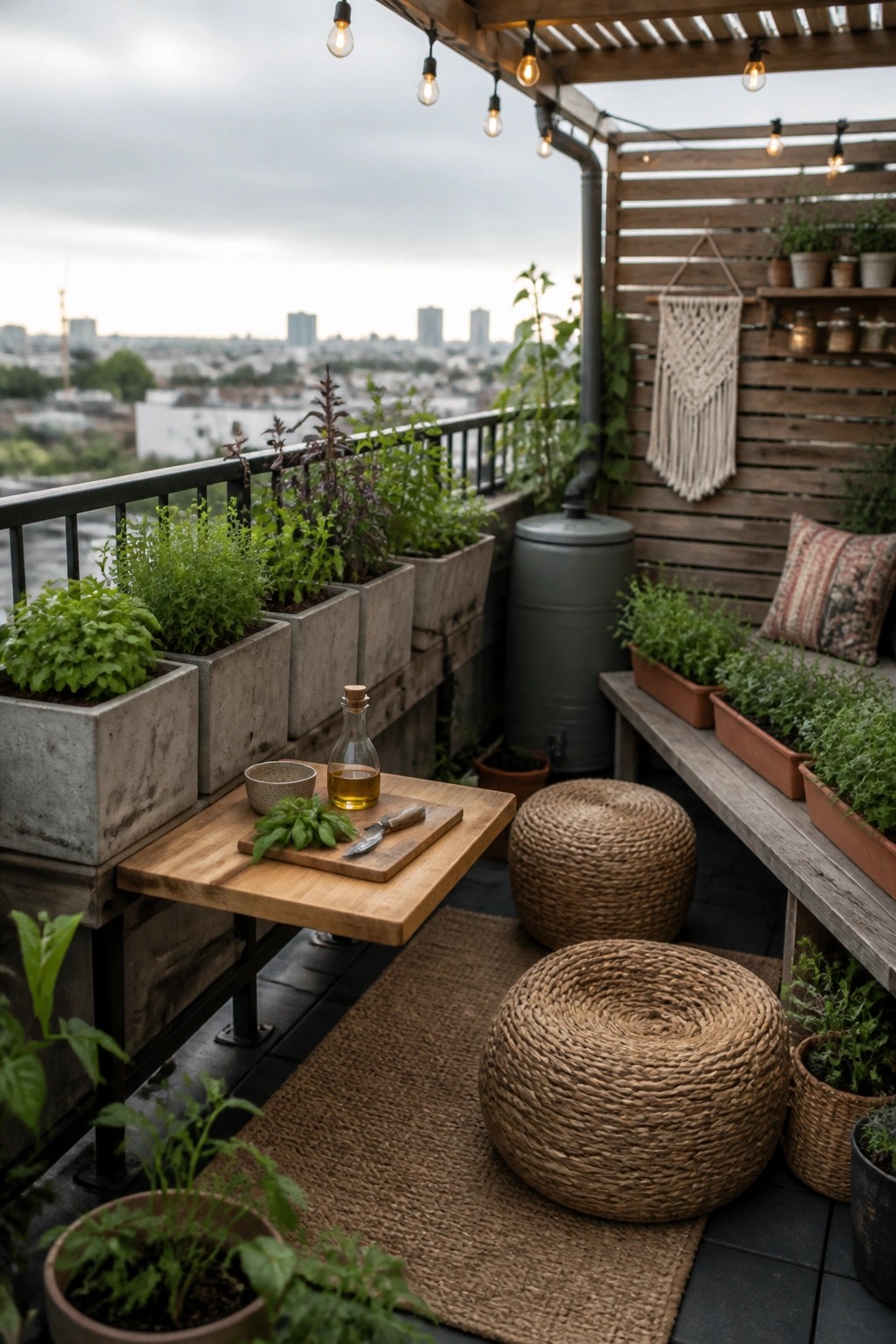
Many people like lining herb pots right along an outdoor bench. It keeps the plants close at hand for cooking without needing a separate garden bed or extra space.
This works well on balconies and decks where every bit of room counts. Choose pots that match the bench height and stick to herbs you reach for often so the setup stays practical day to day.
Stepping Stone Paths Edged with Herbs
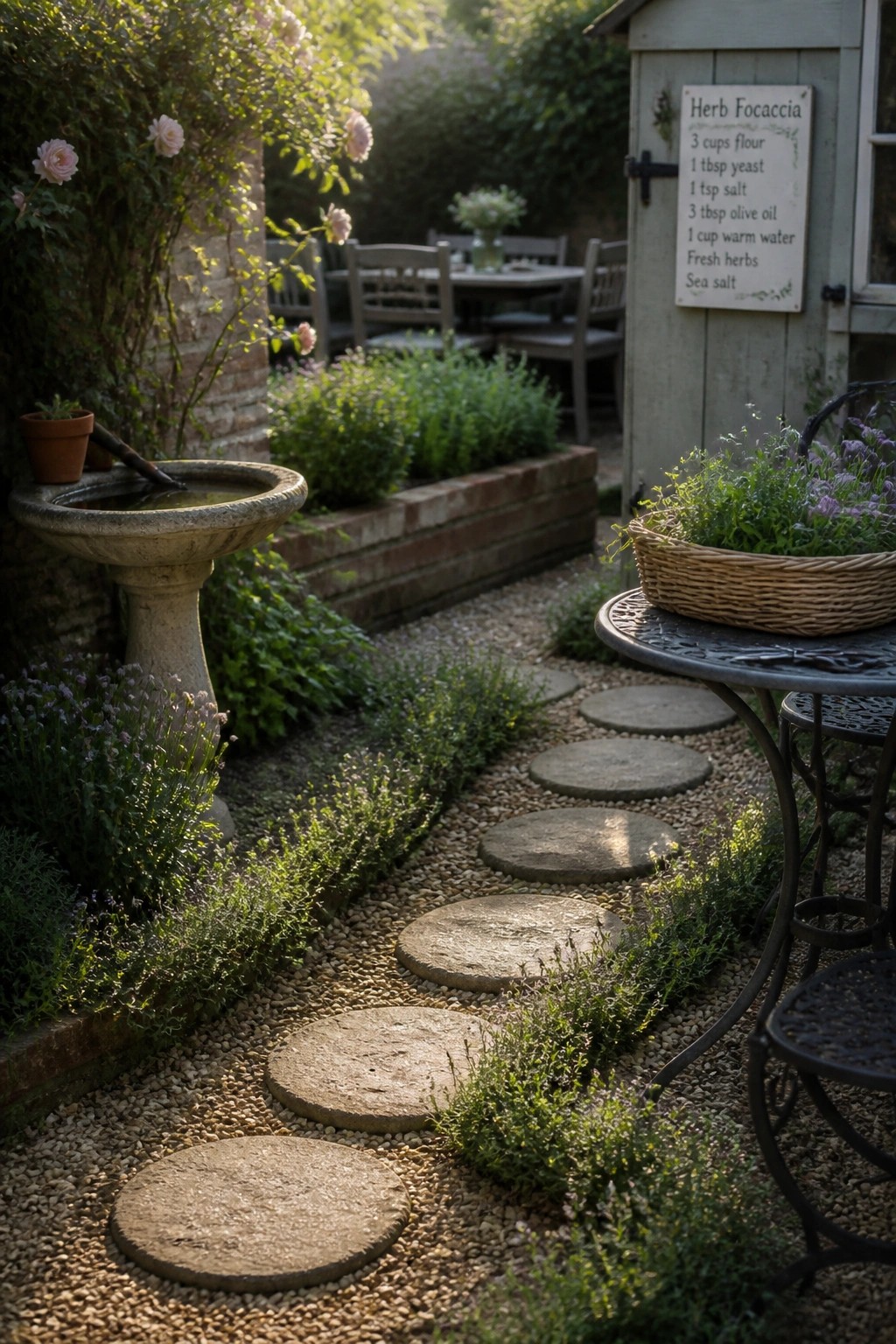
Stepping stones set into gravel make a simple path that lets you reach herbs without compacting the soil. The stones sit low so mowing or weeding stays easy, and the gravel keeps the beds defined even in a narrow side garden.
This layout suits a small yard where you want quick access for cooking. Place the stones about a step apart, line them with low-growing herbs, and keep taller plants farther back so the path stays open.
Tiered Concrete Planters For Kitchen Herbs
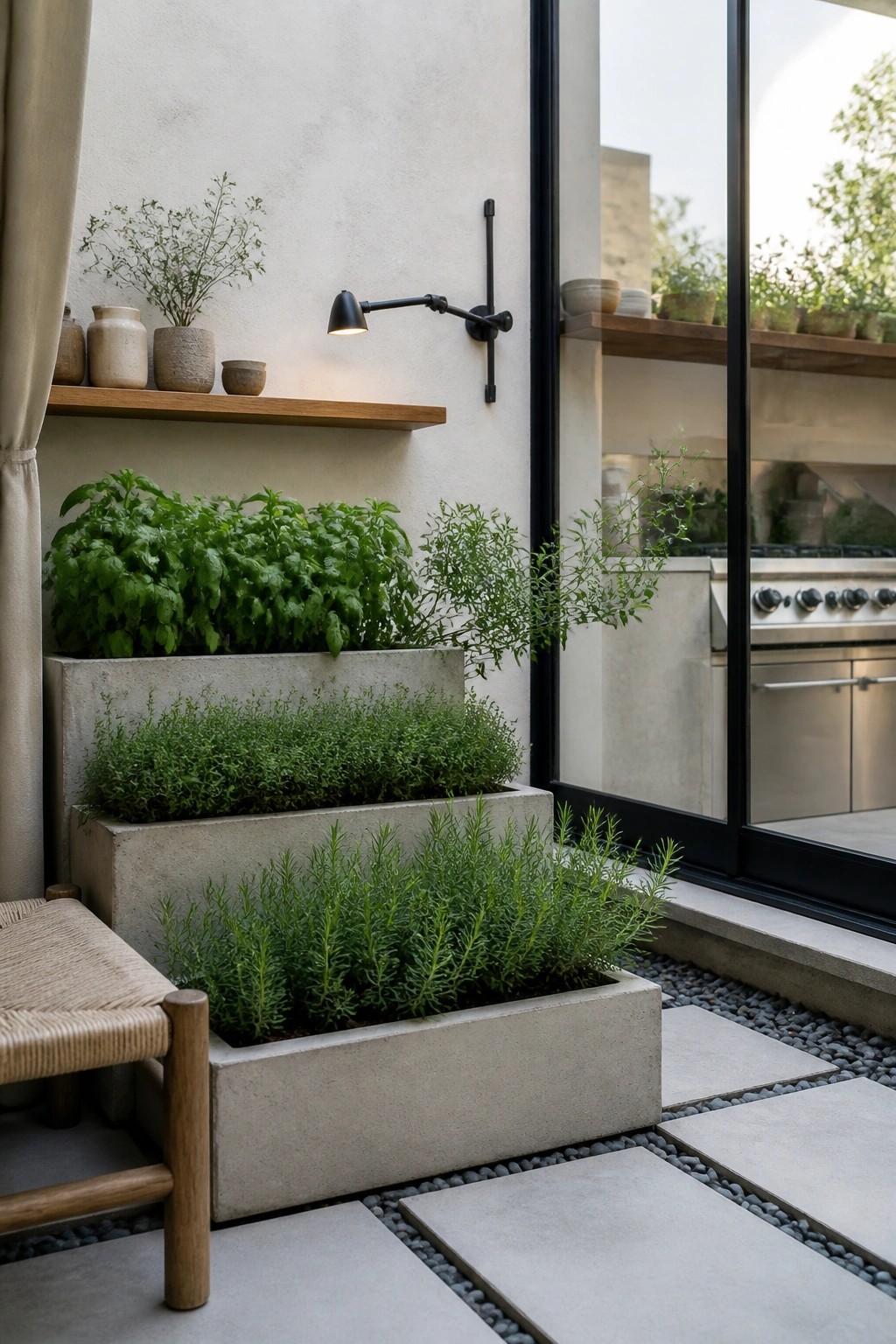
Tiered concrete planters give you room to grow several herbs in a small footprint without crowding them together. The stepped design keeps shorter plants from getting shaded and makes harvesting simpler since everything stays within reach.
This approach works best along a kitchen wall or near an outdoor cooking area where you can step out and grab what you need. It suits homes with limited ground space but still wants a steady supply of fresh herbs without extra pots scattered around.
Using Crates To Edge Herb Beds
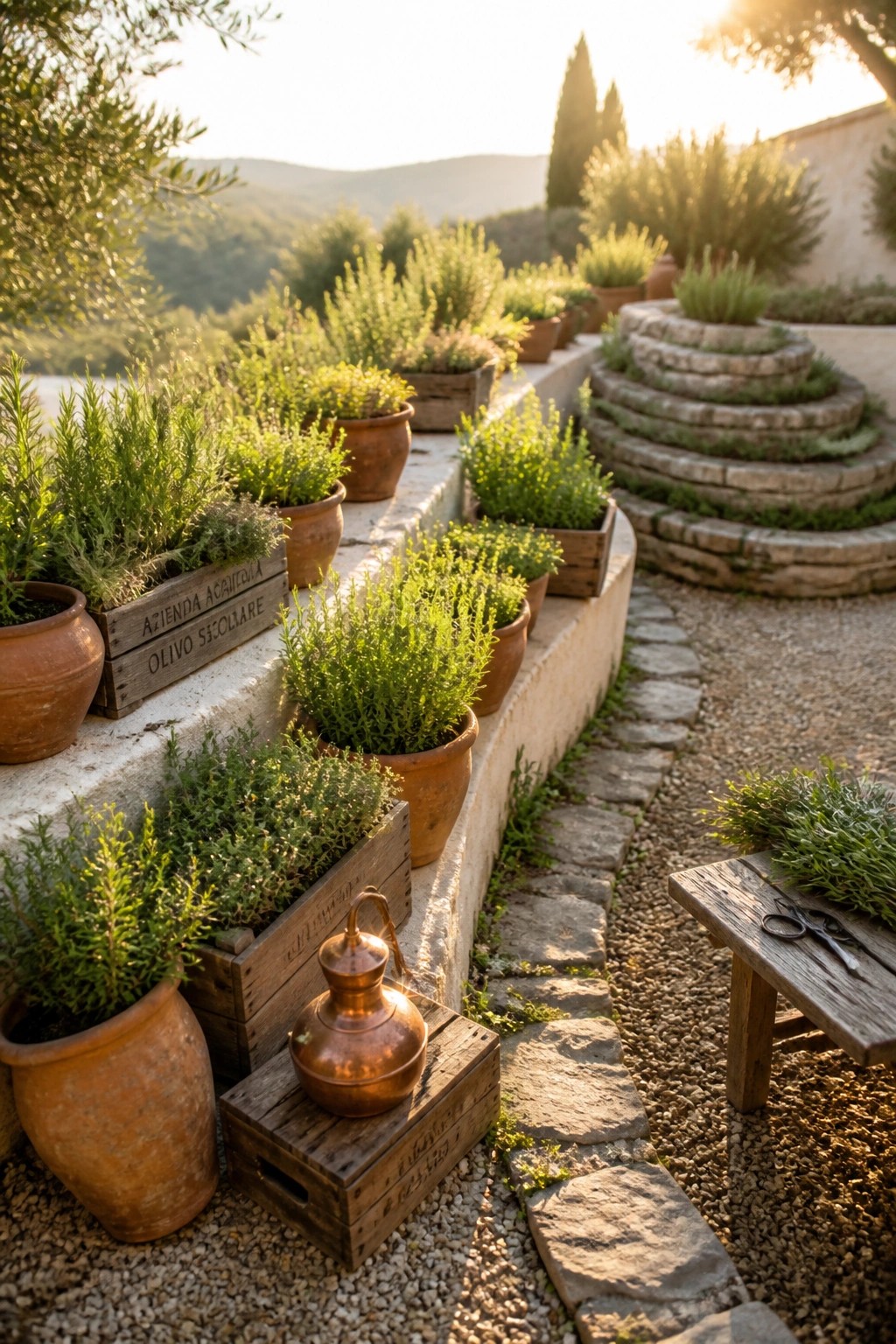
Old wooden crates paired with terracotta pots make a simple border that keeps herbs close at hand. The mix feels practical and lets you move things around when a plant needs more sun or a quick harvest.
This setup works best along a low wall or path edge in a small yard. Fill the crates with rosemary or thyme and tuck smaller pots in between so everything stays within reach for cooking.
Stone Troughs Along A Gravel Path
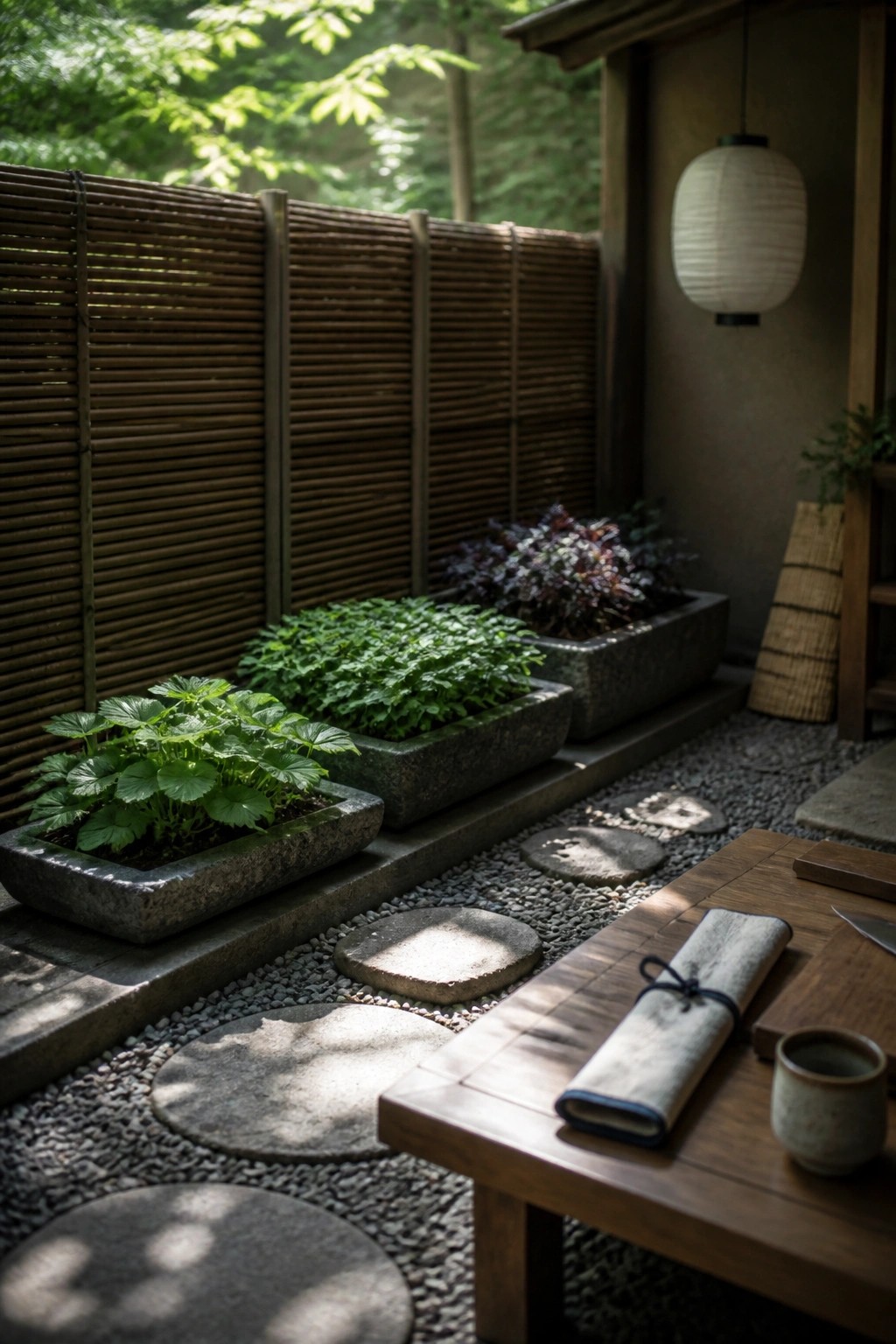
Stone troughs work well for small herb gardens because they keep plants contained and easy to reach without taking up much ground space. The troughs sit right beside the path so you can step out, pick what you need, and head back inside without tracking dirt everywhere.
This setup suits compact yards or side areas where you want fresh herbs close to the kitchen. Use a simple gravel base with a few stepping stones to keep the path dry and low maintenance. Just make sure the troughs get enough sun and have decent drainage so the herbs stay healthy through the season.
Raised Planters Along Outdoor Cooking Areas
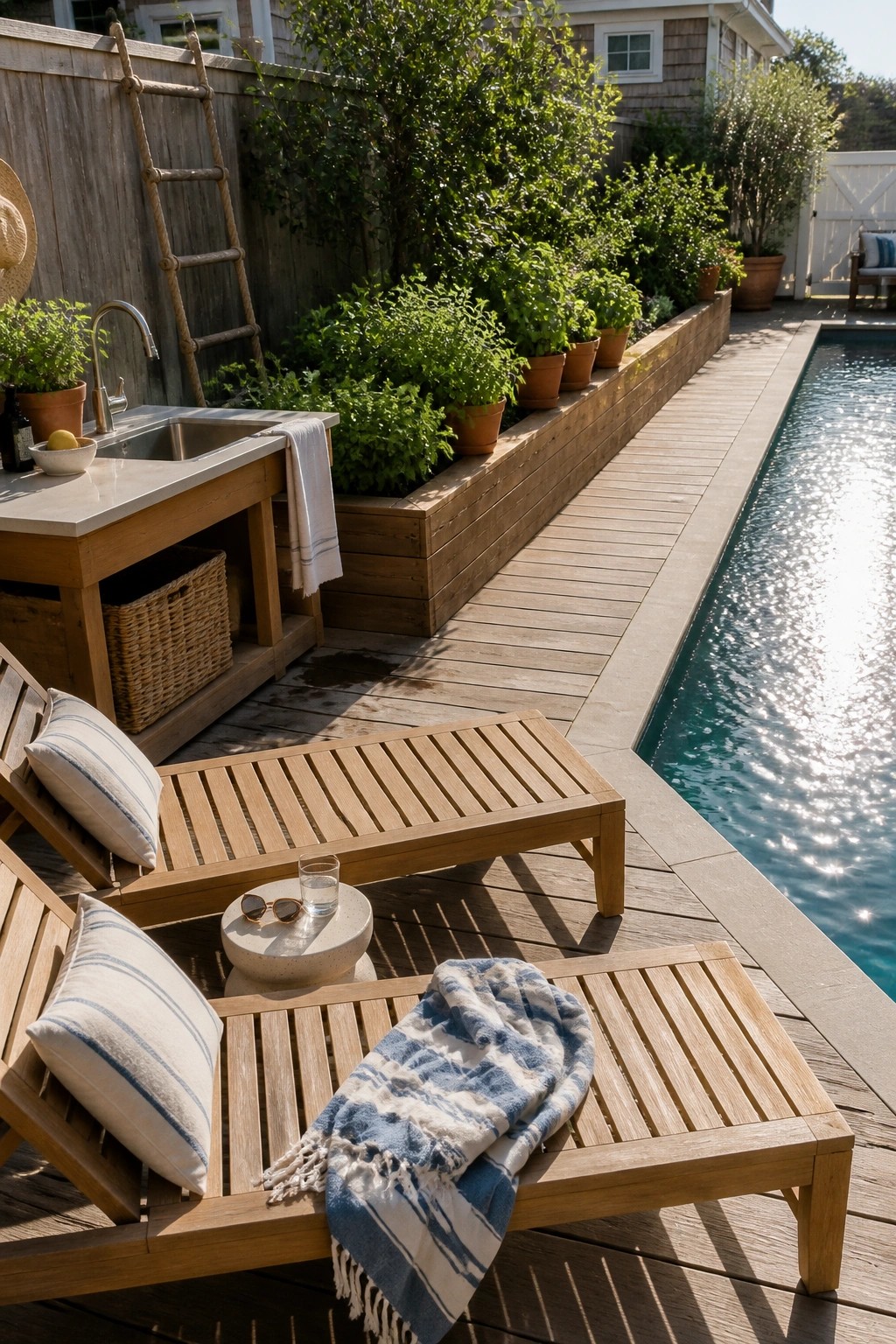
A raised wooden planter works well when you want herbs close to where you actually cook. Placing pots inside the box keeps them organized and at a good height for picking while the wood edge defines the space without taking up much room on the deck.
This setup suits homes with a patio or pool deck that already has a sink or counter nearby. Keep the planter narrow so it does not crowd the walkway, and choose herbs that get enough sun in that spot. The wood can be stained to match the deck or left natural.
Herb Troughs Along An Outdoor Cooking Spot
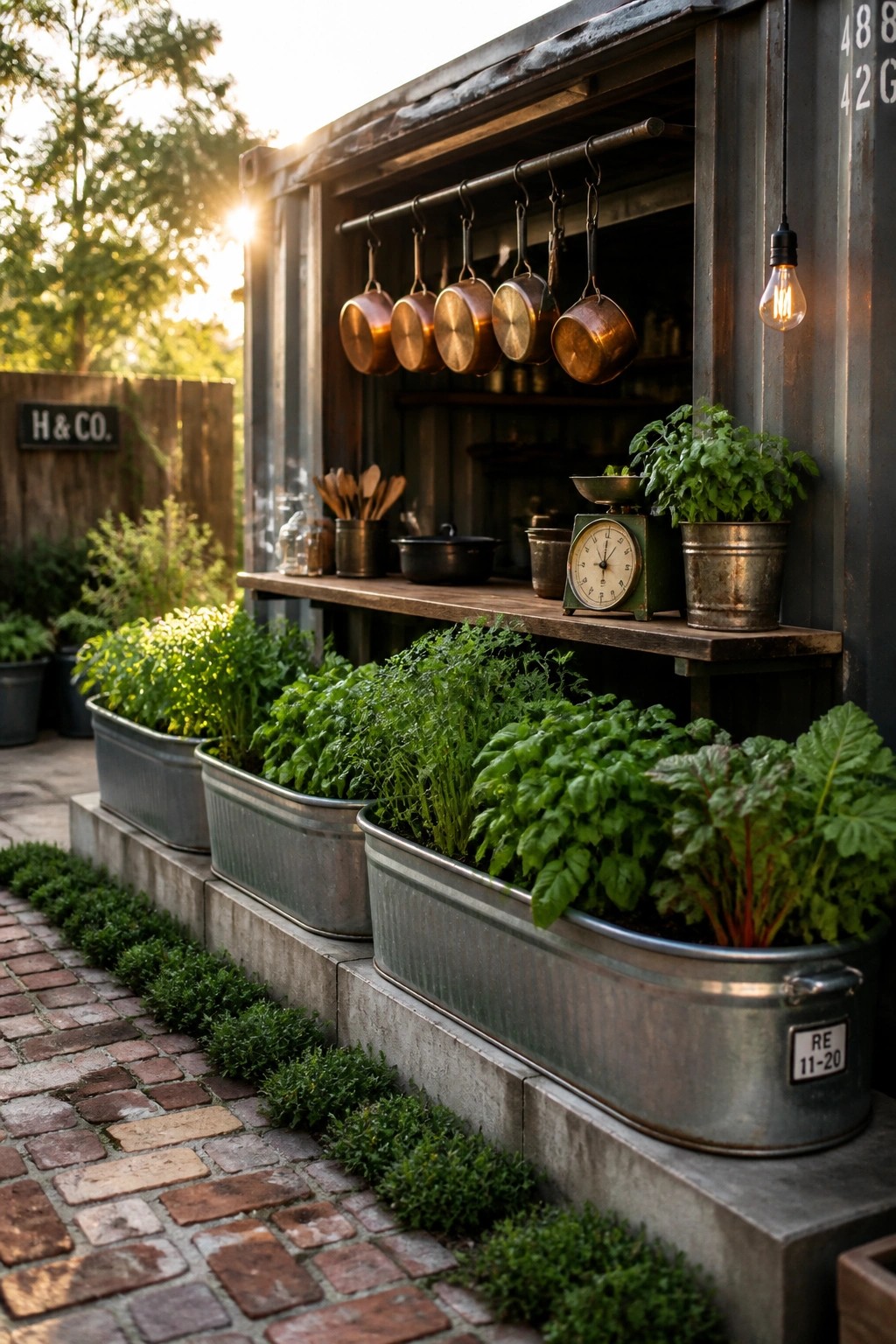
Keeping herbs right where you cook makes daily use much easier. Long metal troughs placed along the base of a prep counter give you a steady supply of fresh leaves without needing extra space or trips to a separate garden bed.
This setup suits small yards or paved areas where you want the plants close at hand. Choose a sunny spot, keep the soil well drained, and pick troughs that sit level so watering stays simple.
Line Up Potted Herbs on a Kitchen Ledge
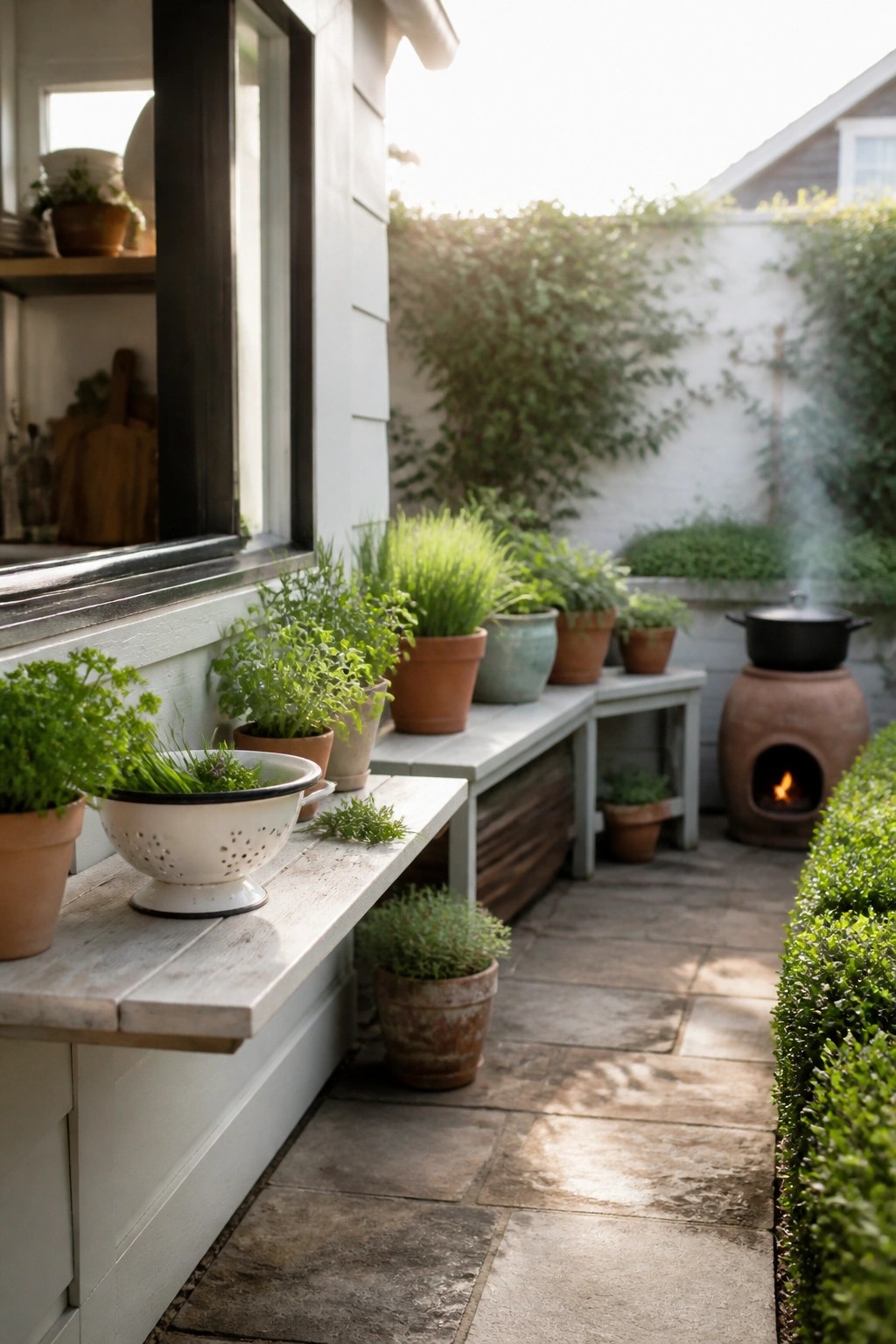
Growing herbs in pots right outside the kitchen window keeps them close when you need a few sprigs for cooking. The simple ledge setup turns a narrow outdoor spot into a handy spot for daily use without needing a full garden bed.
This works best on homes where the kitchen opens to a small patio or path. Use a mix of terracotta and ceramic pots so the plants stay easy to move and water, and pick herbs often to keep them from getting leggy.
Brick Edging For Herb Beds
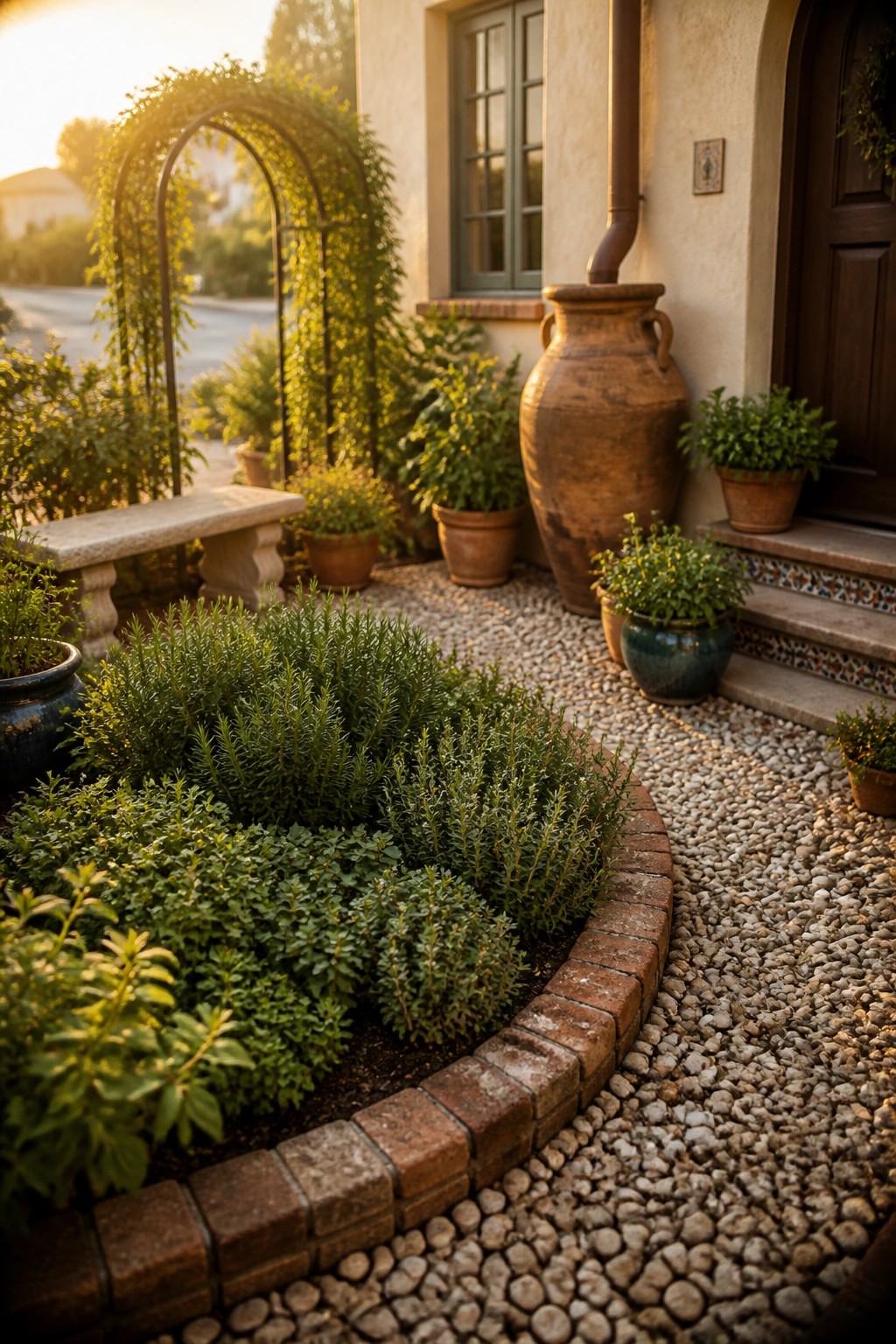
Brick edging gives herb beds a clean border that stays put even when the rest of the yard is gravel or loose stone. It keeps the soil contained, stops the plants from spilling onto the path, and makes the whole area look more settled without extra work.
This setup works best along a walkway or near an entry where you want easy access for picking. Use a gentle curve rather than straight lines, and choose herbs like rosemary or thyme that stay fairly low so the edging stays visible.
Herb Pots Right on the Outdoor Table
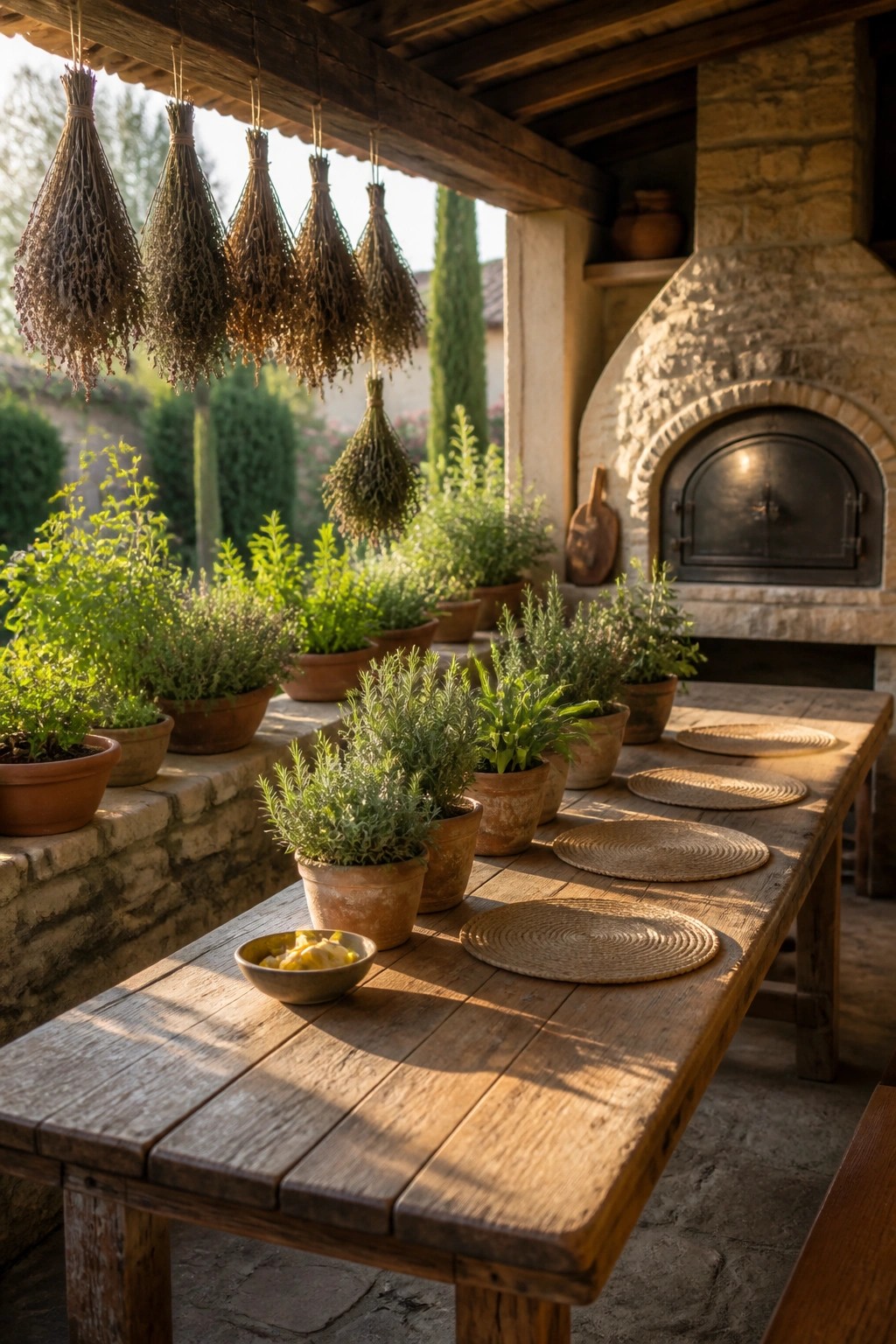
Placing herb pots directly on the table makes them easy to reach while you cook or eat outside. It turns the surface into a working herb station instead of just a place to set plates. People like the convenience, especially when meals are simple and made with whatever is fresh that day.
This setup works best on a covered patio or porch next to an outdoor oven or grill. Choose smaller pots so they do not crowd the space, and keep a few backups on a nearby ledge for when you need to rotate them out.
Wall Mounted Wood Planters For Fresh Herbs
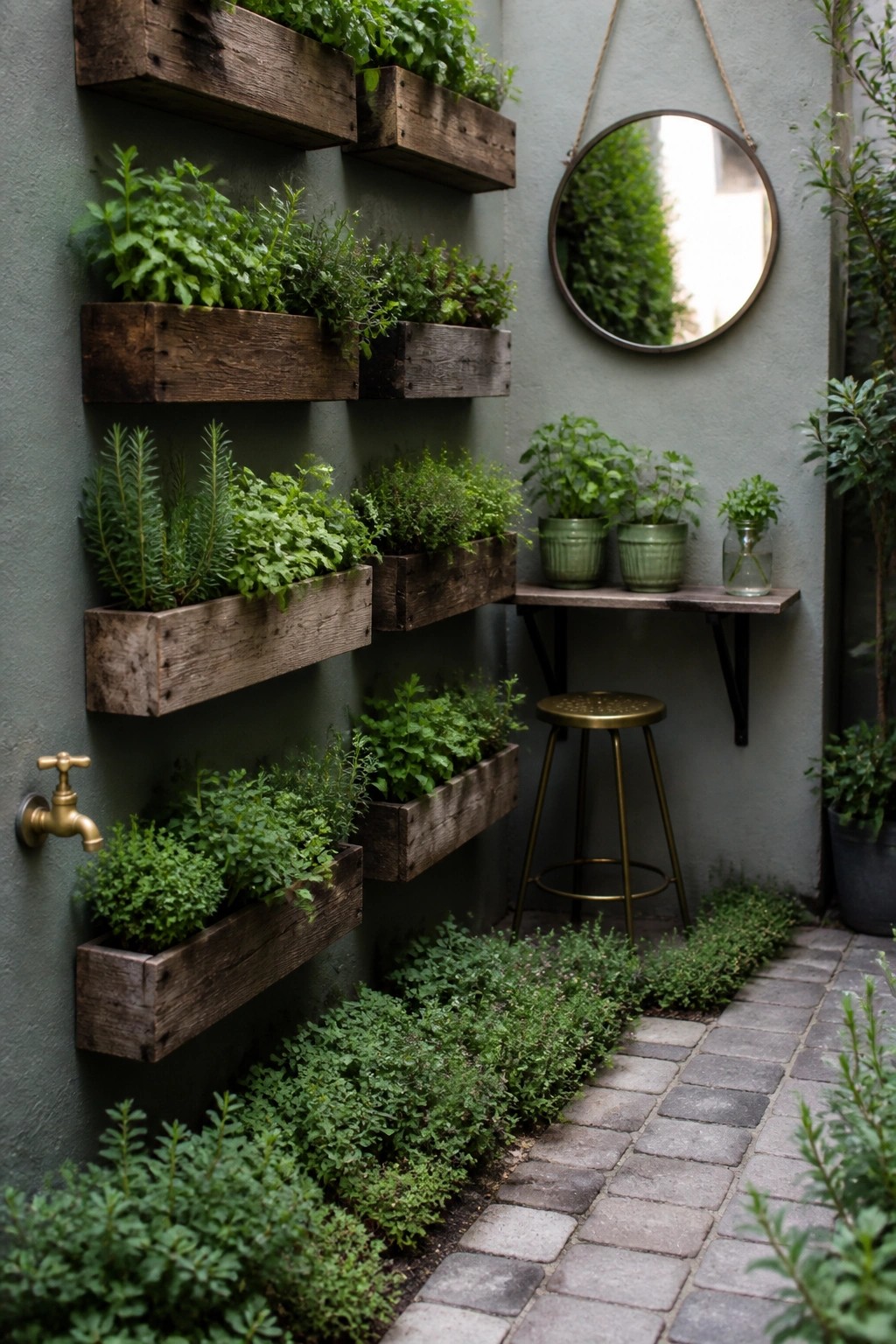
Mounting wooden boxes directly on a wall lets you grow a lot of herbs without taking up floor space. The boxes keep everything at picking height and work well when ground room is limited to a narrow strip beside a path.
This setup suits small side yards or tight outdoor corners where a full bed would feel cramped. Use the same wood tone throughout so the wall looks intentional rather than crowded, and choose herbs that stay compact enough not to spill over the edges.
Tiled Herb Prep Counters
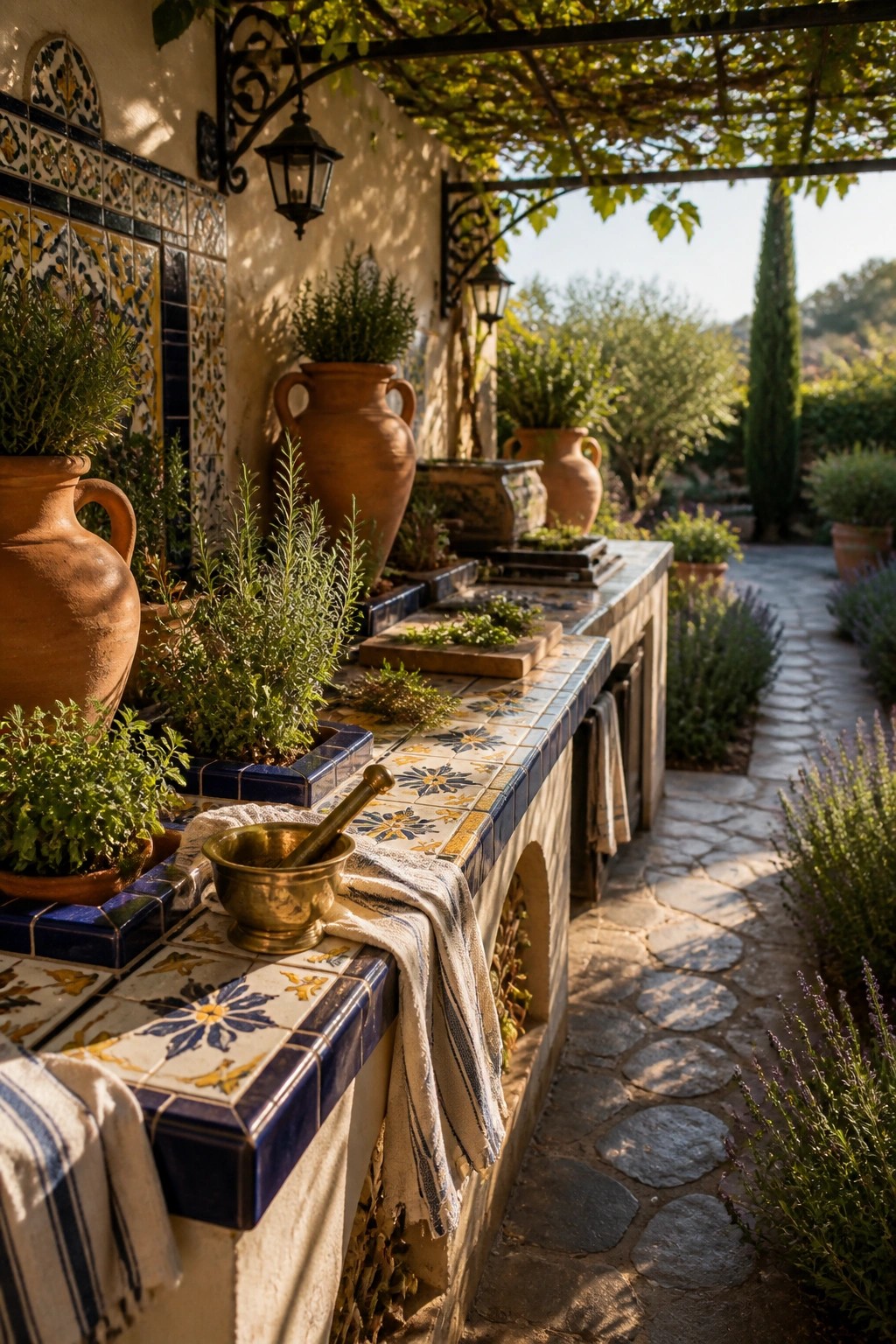
A tiled counter set along the edge of the garden gives you a steady place to trim, sort, and work with herbs without heading back inside. It keeps the plants close at hand and turns a simple row of pots into something more useful for daily cooking.
This setup works best in smaller yards or along a path where you already grow herbs in containers. Keep the surface clear enough for a cutting board and mortar, and choose pots that match the scale so the whole area stays easy to reach and maintain.
Tall Metal Planters for Balcony Herbs
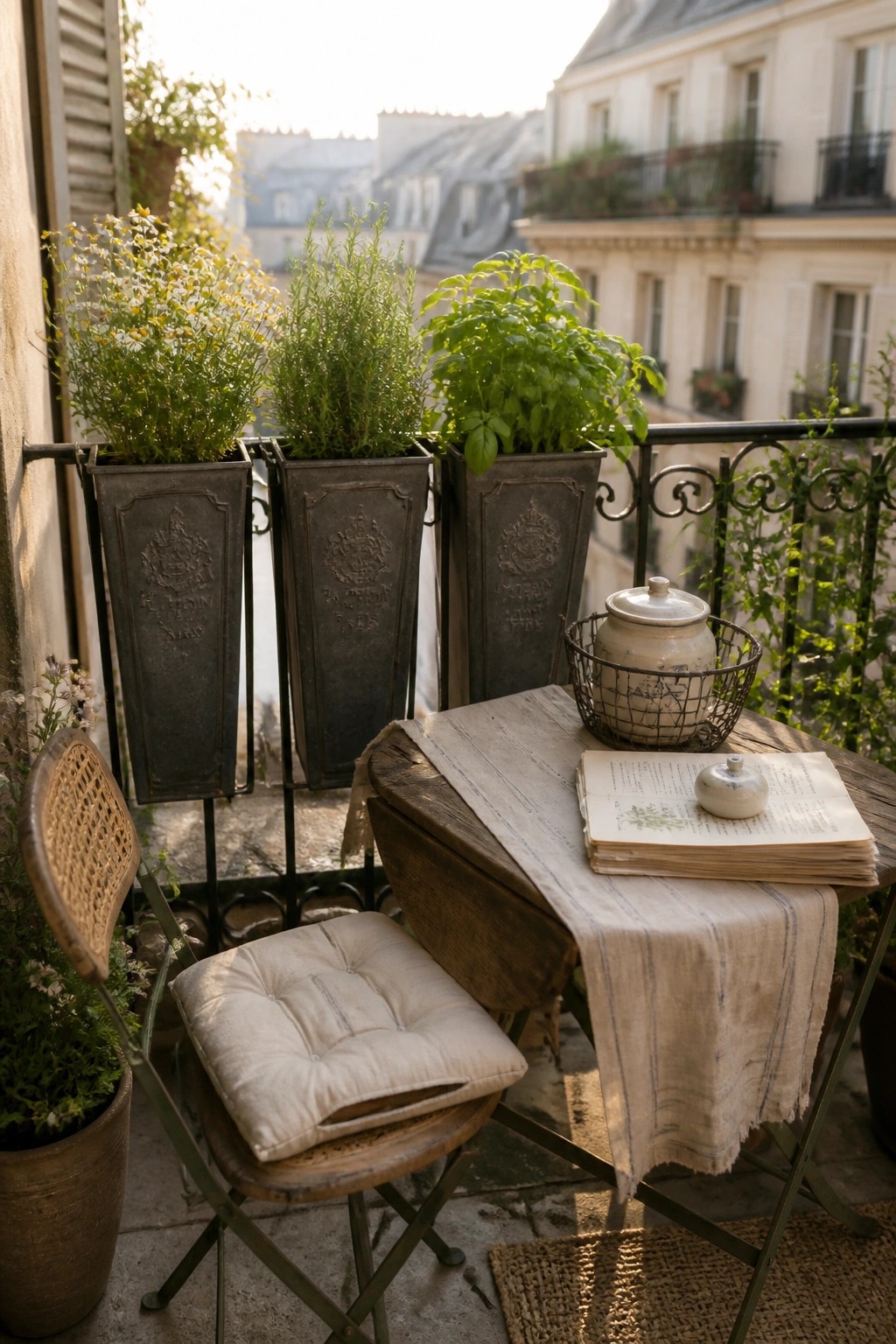
Many people turn to tall metal planters when space is tight but they still want fresh herbs close at hand. The height keeps the plants off the floor, improves drainage, and makes watering and harvesting simpler without bending down.
This setup suits small balconies or terraces that get decent sun. Group herbs with similar needs together, and place the planters where you can reach them easily from a chair or table while cooking.
Stone Edging To Group Herb Pots
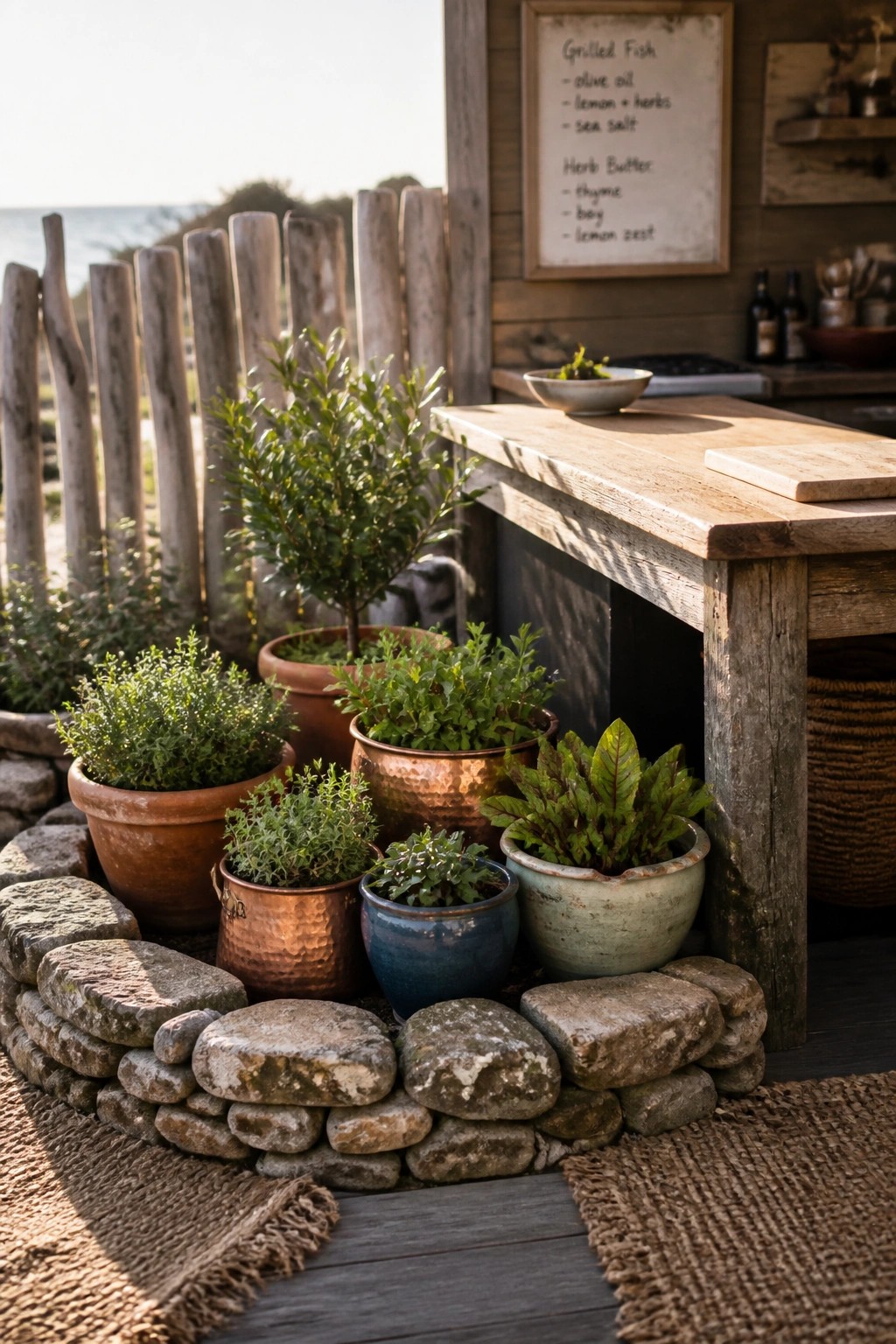
A low stone border makes a simple way to pull several herb pots into one spot. It keeps them from looking scattered and gives the plants a clear home right where you cook.
This setup works best on a deck or patio near an outdoor prep table. Use whatever stones you have on hand and arrange them in a loose curve so the pots stay contained but still easy to move when needed.
Curved Raised Beds Along Stairs
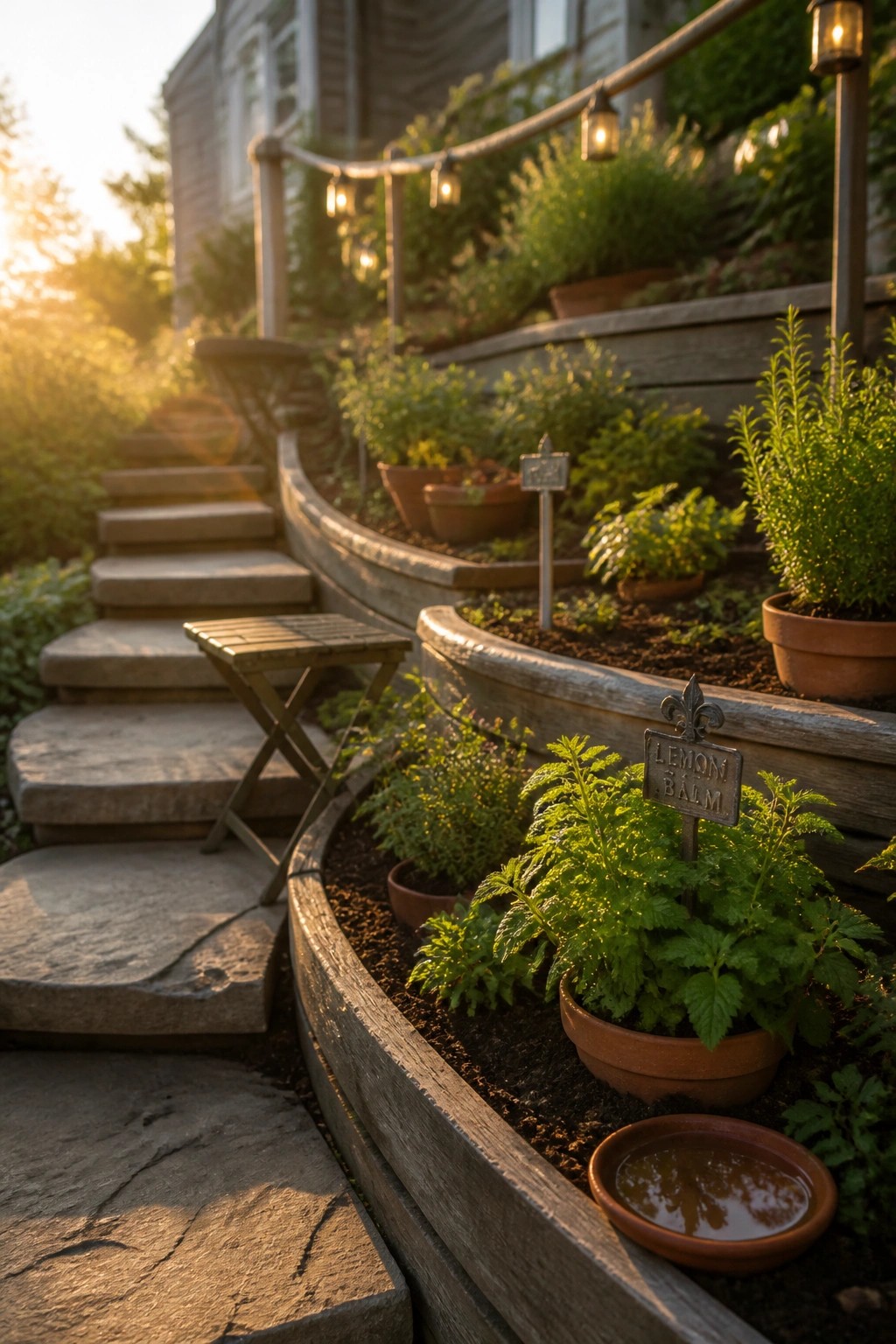
A curved wooden raised bed can make good use of a sloped spot that would otherwise be hard to plant. It follows the line of the stairs so the herbs stay within reach without needing extra terracing or retaining walls.
This setup works best in smaller yards where beds need to fit around existing paths and steps. Place a few pots inside the curve for different herbs and keep the edging low enough that it does not block the walkway.
Frequently Asked Questions
Q: Which herbs give off the strongest scent when grown in small pots?
A: Rosemary and lavender release plenty of fragrance from just a few leaves in a pot. You can rub them lightly while cooking to enjoy the aroma up close.
Q: What’s a simple way to edge my herb area using everyday items?
A: Line up some old bricks or river rocks around the pots. They hold everything neat and prevent soil from spilling onto your patio.
Q: How do I keep the herbs ready for daily cooking without much fuss?
A: Water the pots when the top soil feels dry and trim often to encourage new growth. This way you always have fresh sprigs handy for meals.
