

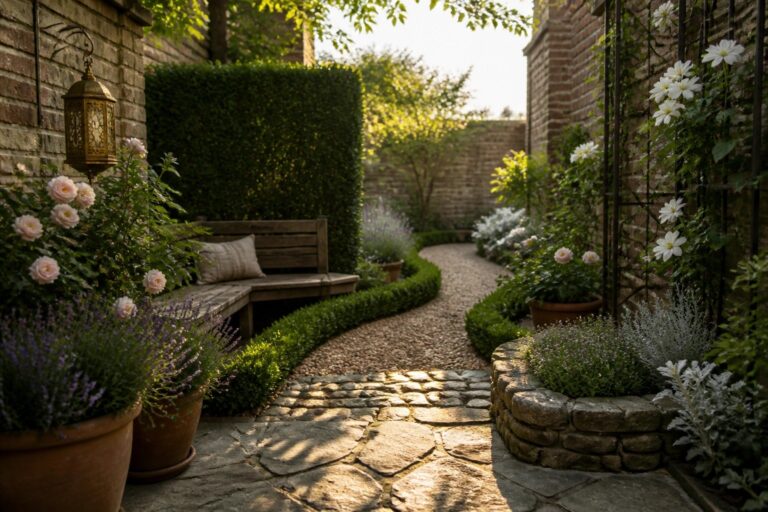
I have found that tiny gardens come together best when the planting has a chance to grow around the seating instead of the other way around.
Hidden spots for a chair or bench keep the focus on the soft cottage style without making the space feel chopped up.
Once the main layout feels right the smaller choices about flowers and foliage start to make more sense in the overall picture.
Scale matters most.
I usually try out a few plant placements in one corner of my yard first to see how they fill in before deciding on the rest.
Tuck a Bench Against a Living Hedge
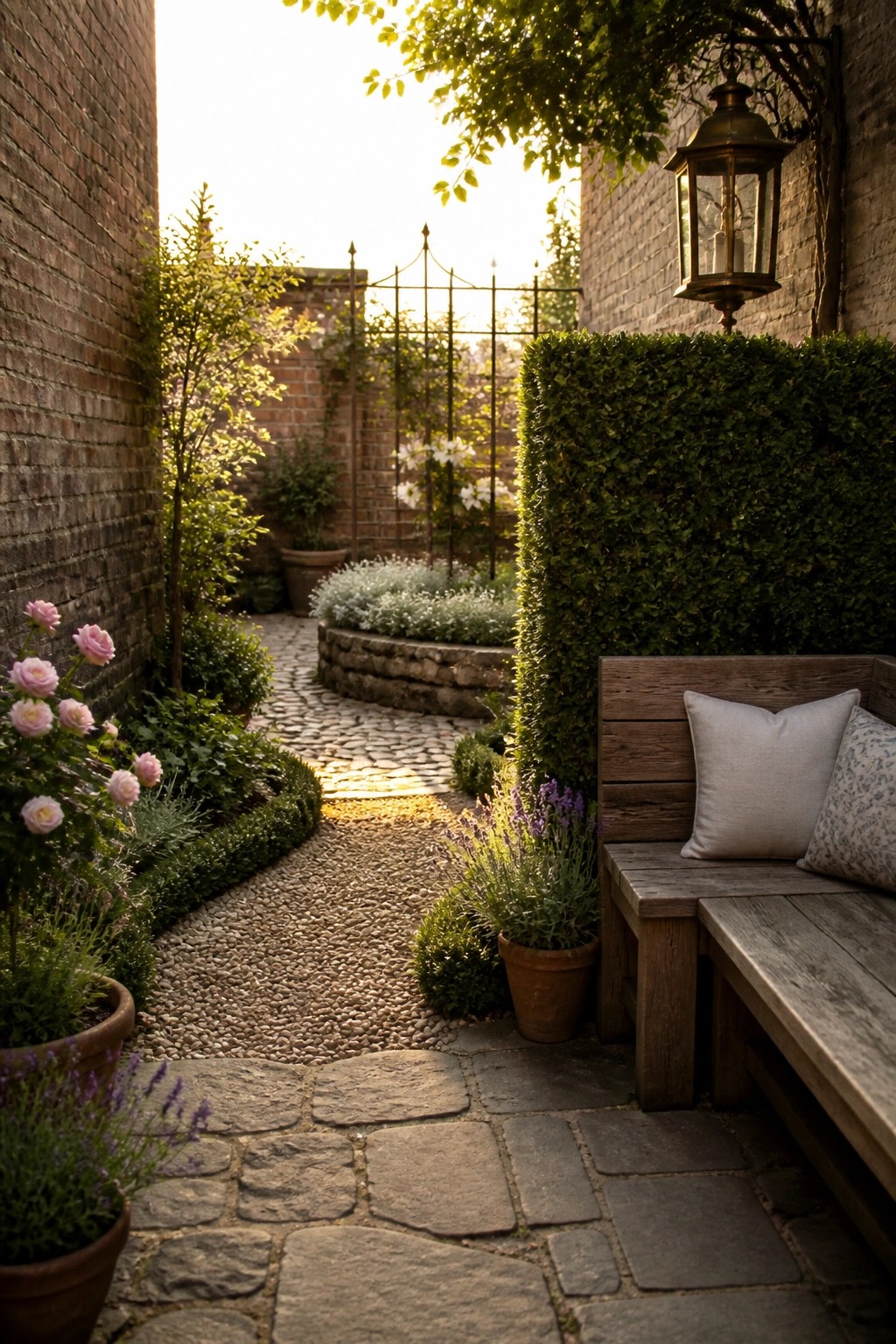
A bench placed right up against a tall hedge gives a small garden a private spot without taking up extra space. The planting does most of the work by creating a soft wall that makes the seat feel tucked away.
This works best along a narrow path or in a side garden where you can keep the bench simple and let the surrounding plants, such as roses and lavender, soften the edges. Just make sure the hedge is dense enough to block the view from the main walkway.
Build a Bench Into the Garden Wall
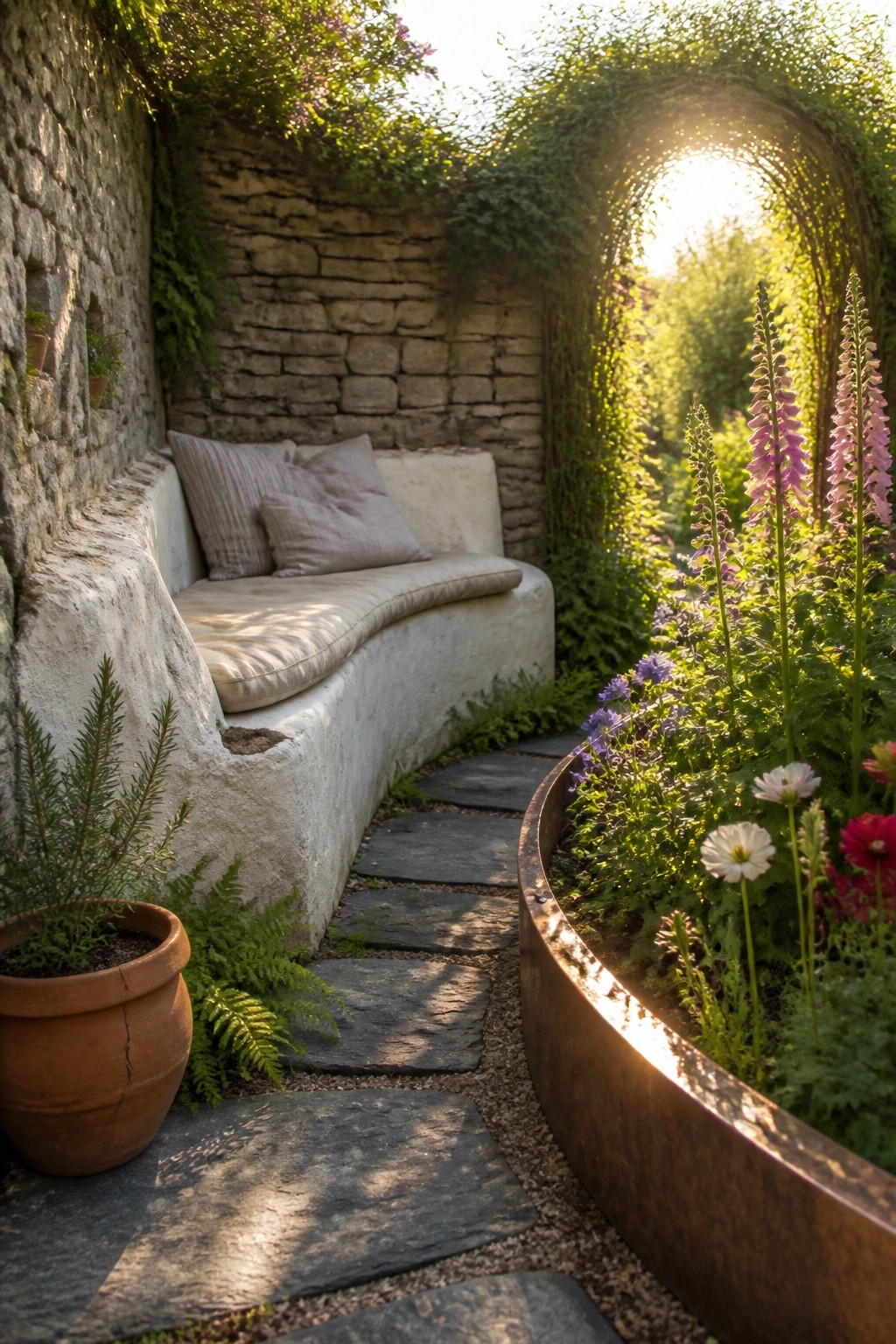
One simple way to add seating in a small garden is to build the bench right into an existing wall. This approach keeps the space open and lets the seat feel like part of the garden rather than something added on top of it.
The bench works best along a side path or in a narrow bed where you already have a solid wall. It suits cottage gardens especially well because the planting can grow right up around it and soften the edges without crowding the seat.
Bench Seating Along Narrow Garden Paths
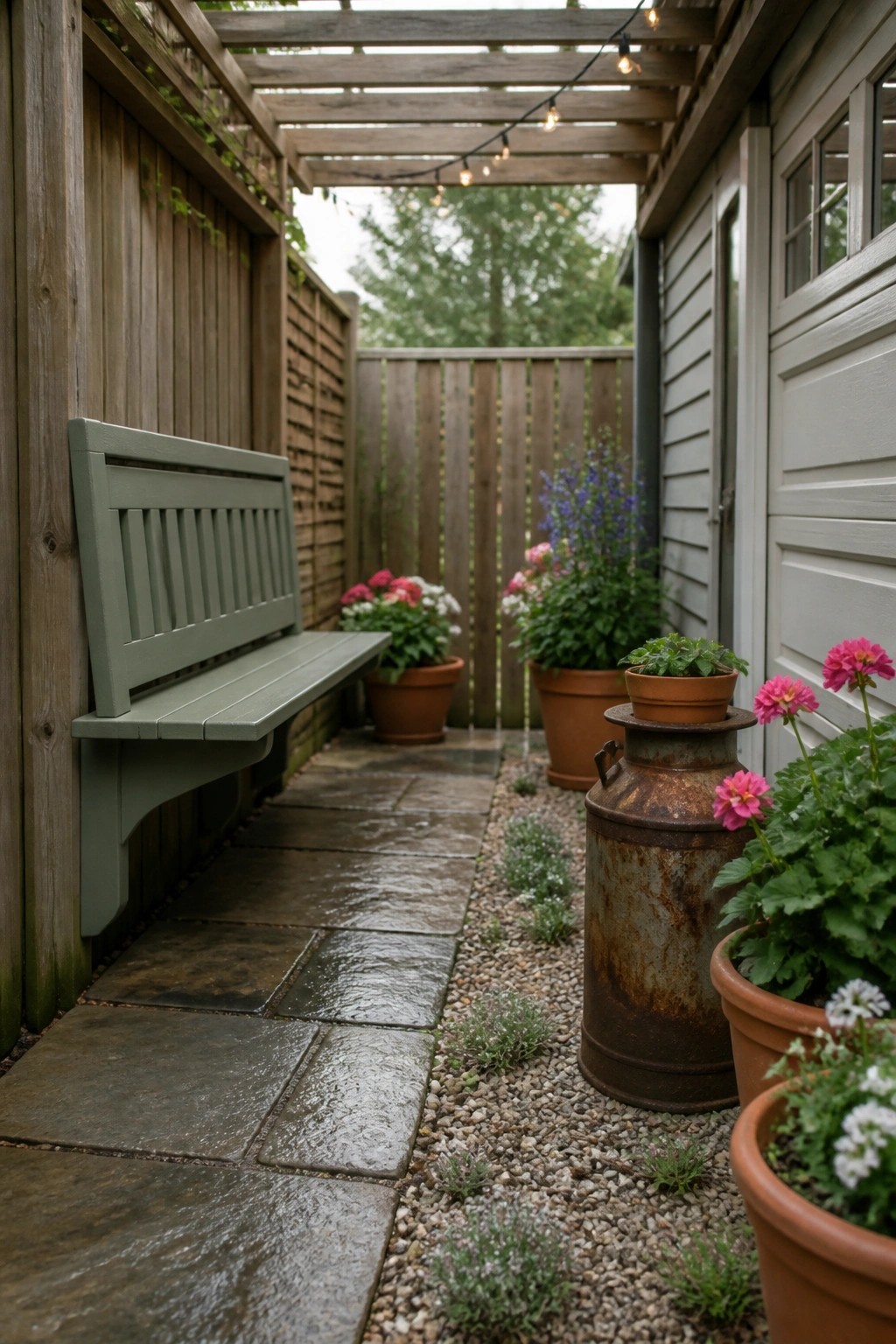
Mounting a bench directly to a fence or wall turns a slim side passage into a usable seat without eating into the walkway. It keeps the space open while giving you a quiet place to pause among the plants.
This setup suits long narrow gardens or areas between a house and boundary fence. Keep the bench simple, match the color to the woodwork, and let pots of flowers and herbs soften the edges so the whole stretch feels like part of the garden rather than just a route through it.
Tuck Seating Into Cottage Borders
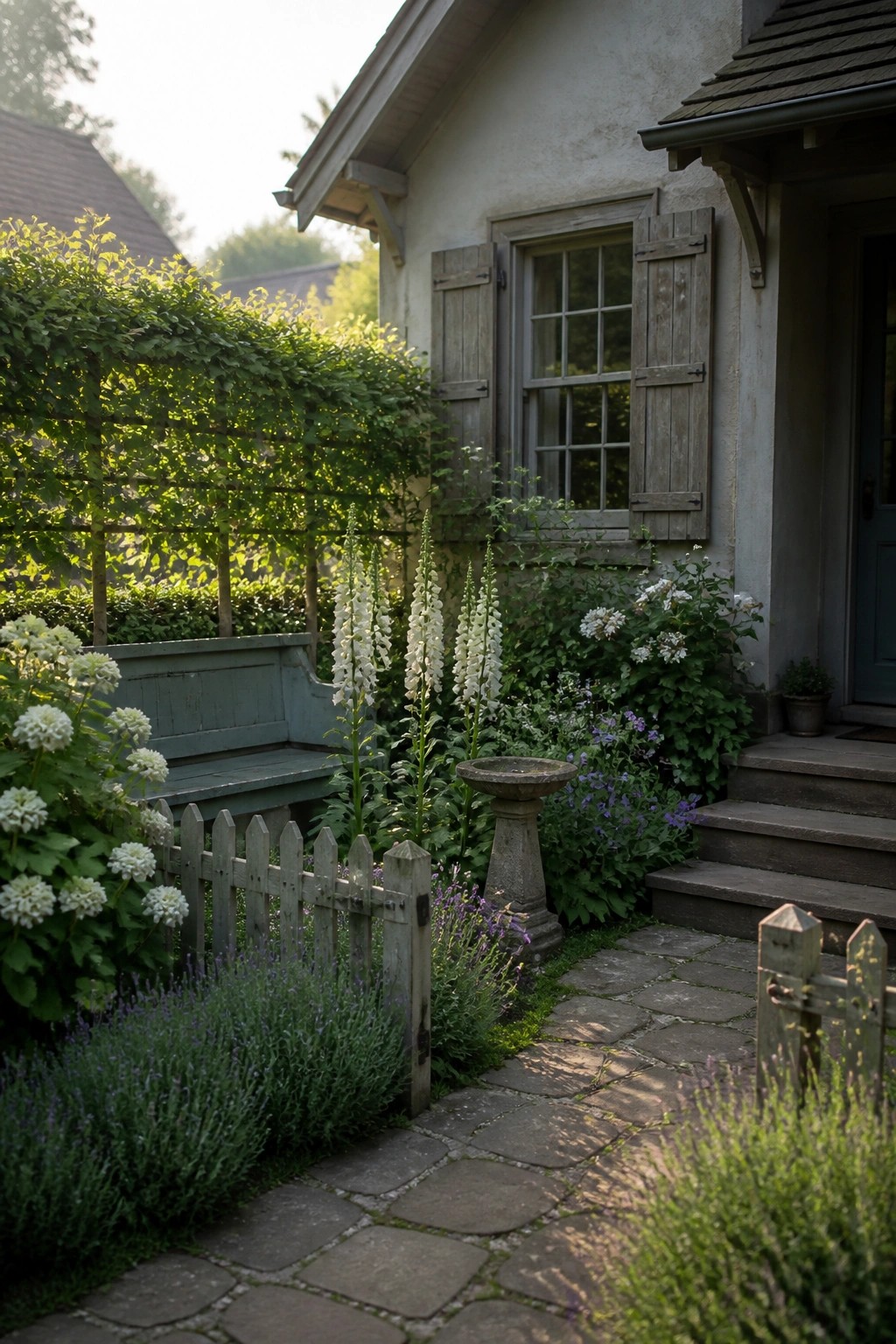
Placing a bench right behind the planting gives a small garden a quiet corner without taking up extra space. The flowers grow tall enough to screen the seat from the path while still letting you enjoy the view from inside.
This approach works best with a narrow stone walkway and mixed heights in the border. Keep the tallest stems toward the back and use lower plants along the front edge so the bench stays partly hidden but still easy to reach.
Tuck a Stone Bench into the Border
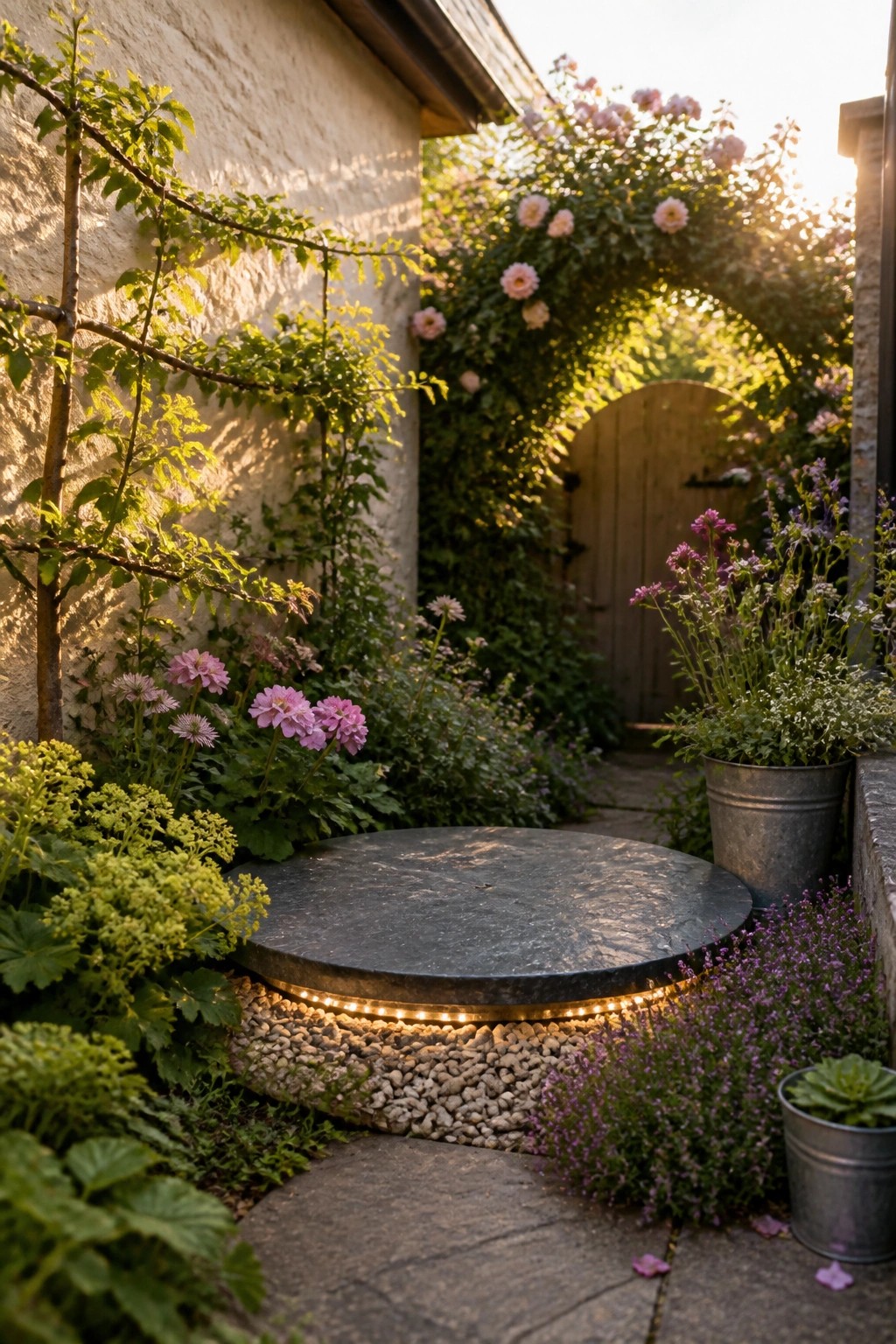
A low round bench set right into the planting gives a small garden a quiet place to stop without crowding the space. It blends into the beds instead of sitting apart from them, which keeps the cottage feel intact even on a narrow path.
This works best in a side garden or along a walkway where you want seating that feels tucked away. Use soft layered plants around the edges so the bench disappears a little when you are not using it.
Nest a Bench in the Corner for Hidden Seating

A corner bench makes a small garden feel more private without adding much furniture. It turns leftover space along the edge into a place to sit quietly, and the surrounding plants do most of the work of screening the spot.
This works best in tiny yards when you keep the bench low and simple, then let climbers and border plants grow up around it. The setup suits older homes or cottage gardens where you want the seating to feel like part of the planting rather than the main feature.
Tuck A Bench Into Cottage Planting
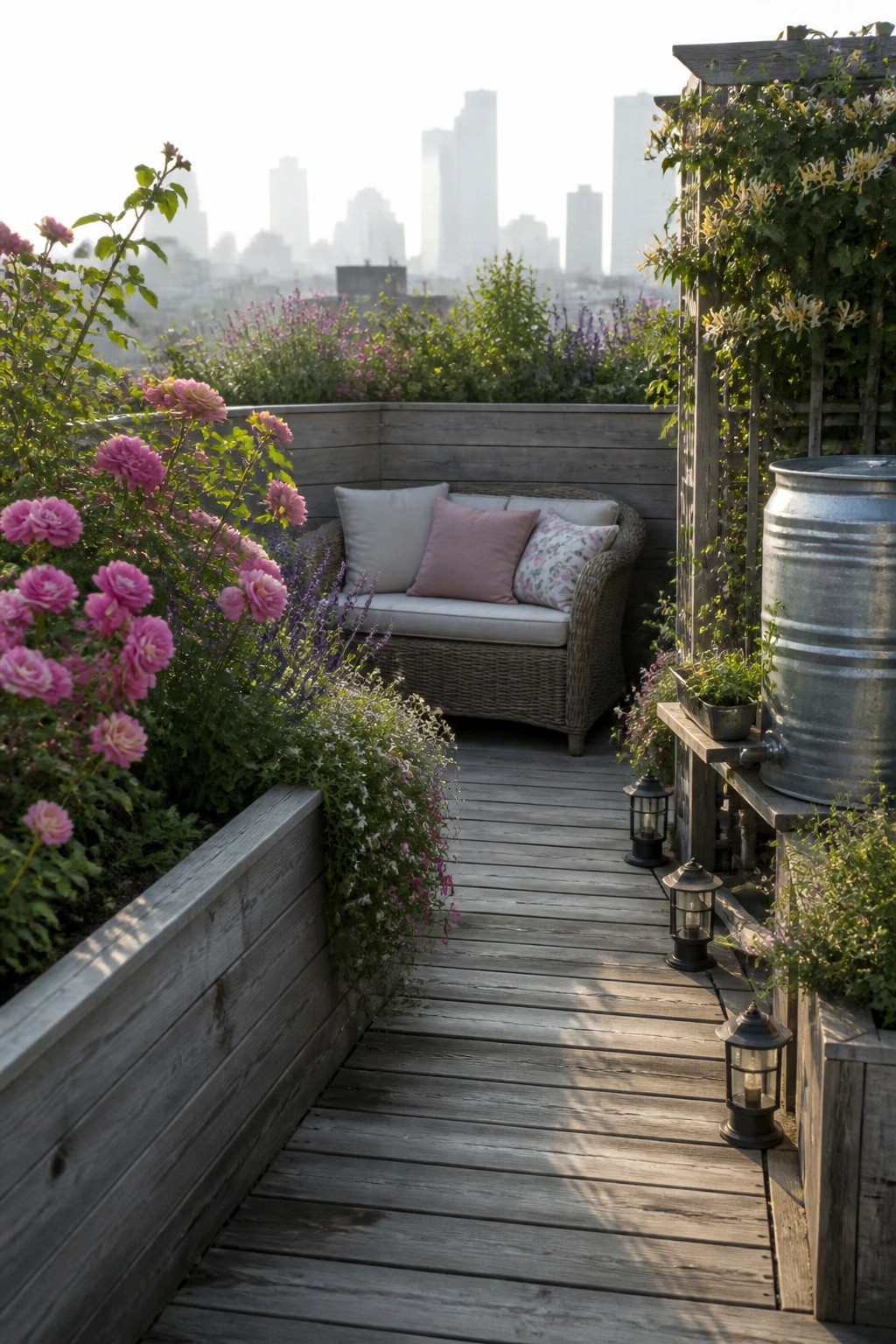
One easy way to give a small deck or balcony more charm is to set a simple bench right into the planting. Raised wooden boxes on both sides let the flowers and foliage wrap around the seat so it feels sheltered without needing walls or screens.
This setup works best when the planters match the decking and the flowers stay soft and full rather than sparse. Stick with roses, lavender, and a few trailing plants so the whole corner feels like a tiny garden room instead of just furniture on a platform.
Stepping Stone Paths With Brick Edging
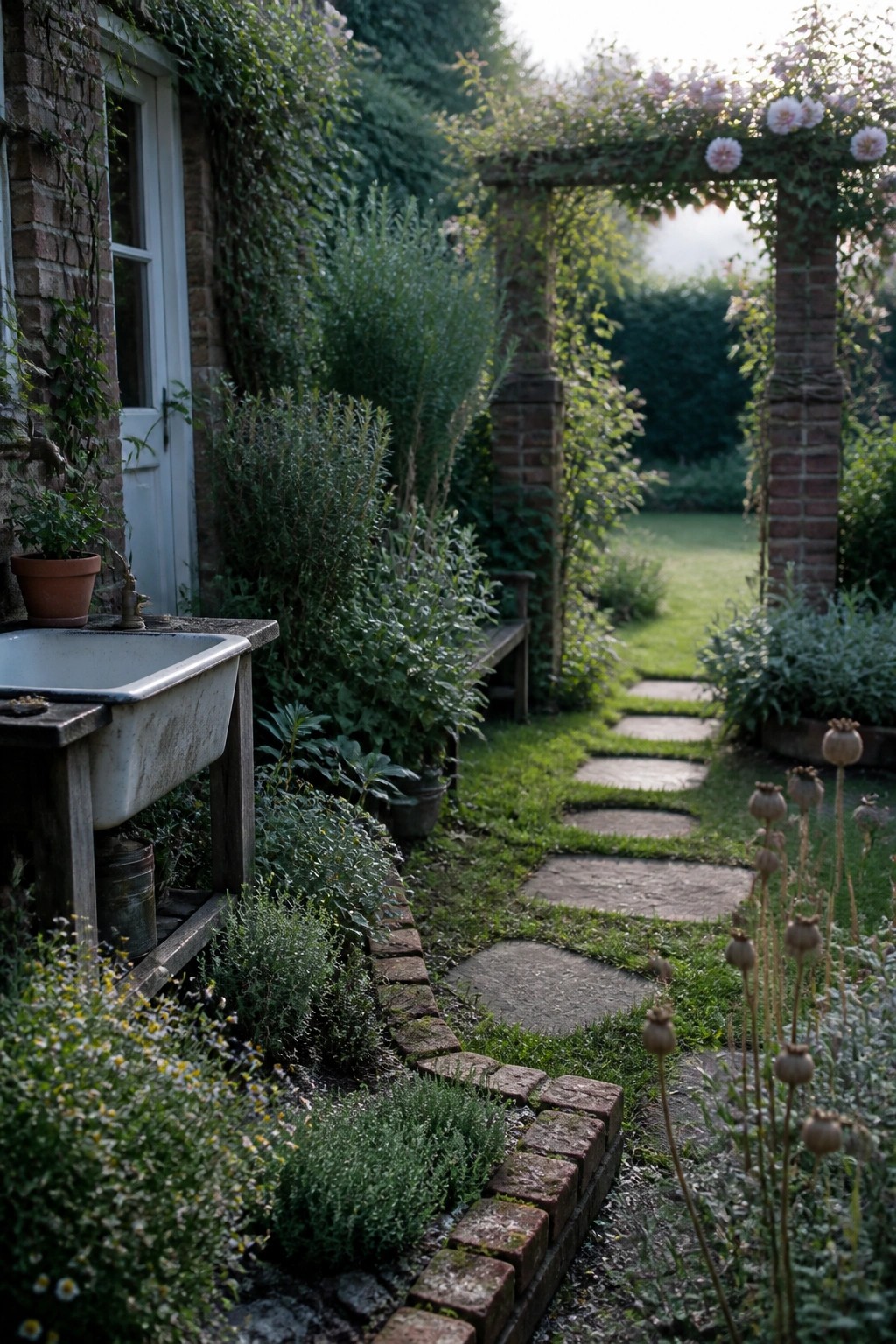
A stepping stone path edged in old bricks gives a garden a relaxed, settled look without needing much space. The uneven stones let plants spill over naturally, and the brick border keeps everything tidy while still feeling soft. It works especially well in small gardens where a full walkway would feel too heavy.
This layout suits cottage style planting because it leaves room for layers of flowers and foliage right along the route. Use reclaimed bricks if you can, and keep the stones slightly irregular so the path does not look too planned. It also helps direct foot traffic without blocking the view of the beds.
Tuck Seating into a Garden Wall
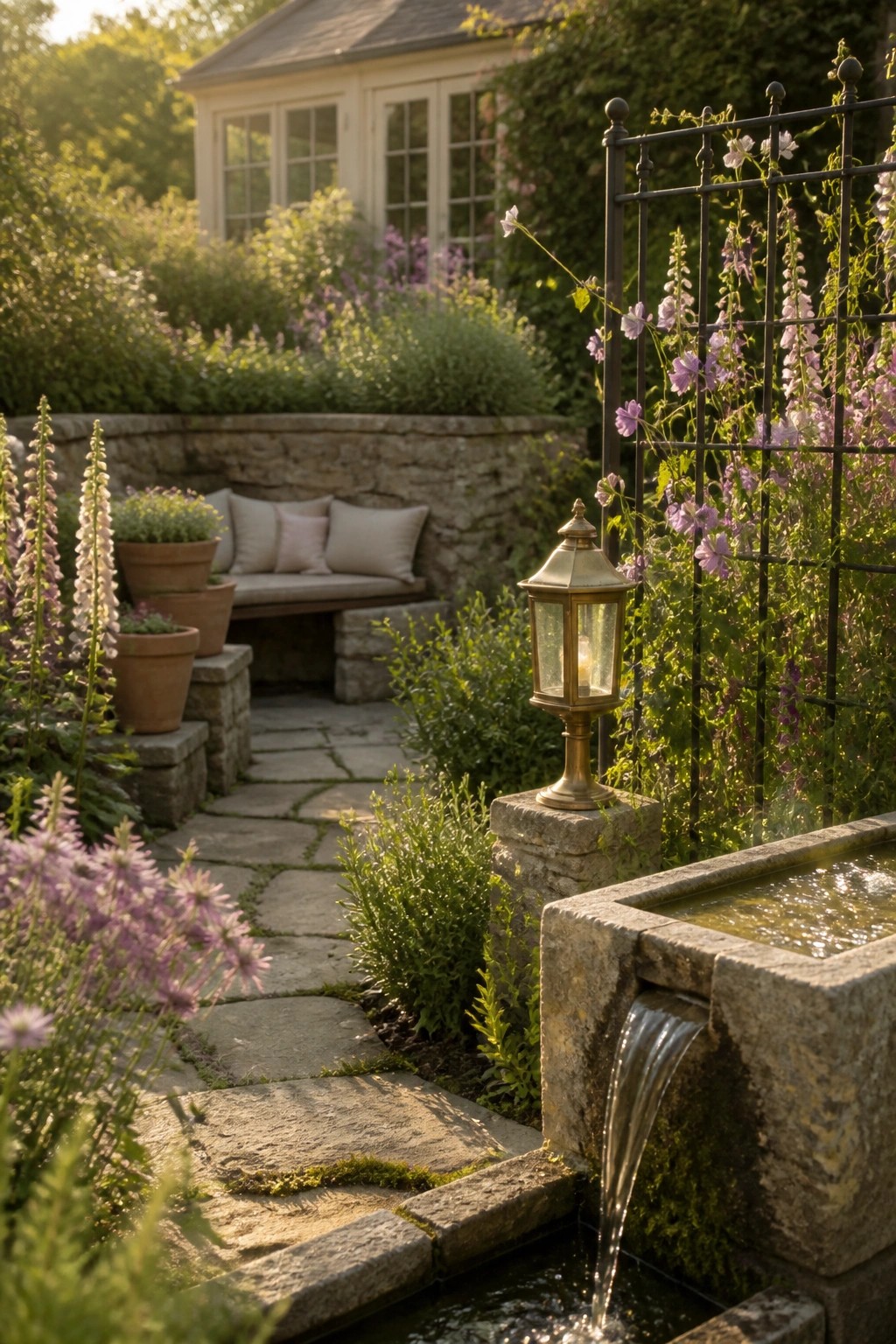
A low stone wall can do more than hold back soil. When you build a simple bench right into it, the seating feels like part of the garden instead of something added later.
This works well in small yards where you want a quiet spot without losing planting space. Keep the wall height low enough for comfortable sitting and let the surrounding flowers grow tall so the bench stays partly hidden.
Tuck Seating Along a Curved Path
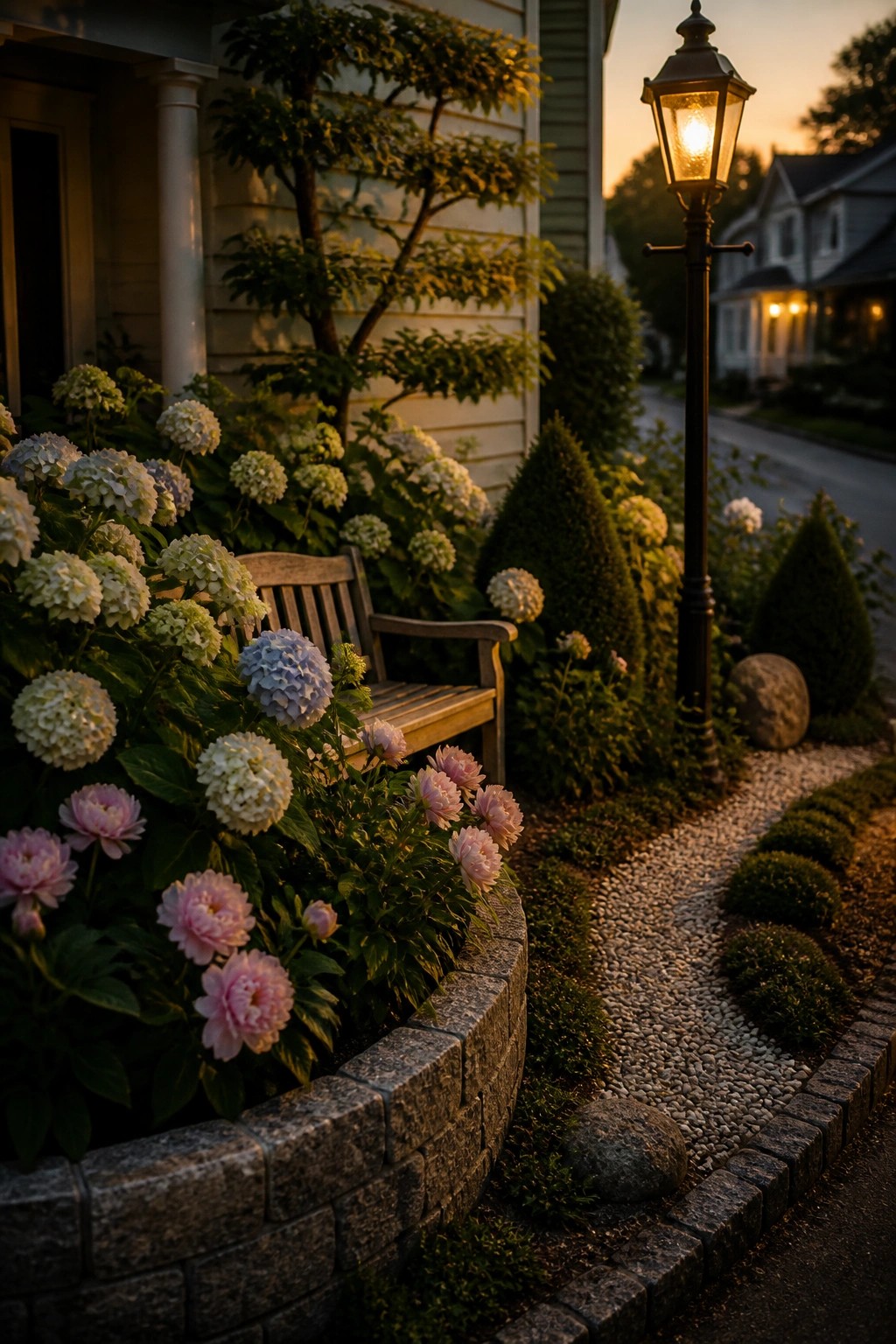
A gentle curve in the path can turn an ordinary strip of garden into a spot that feels tucked away. The bench sits just off the main line of sight, framed by layered flowers that soften the edges and make the seat feel like a small discovery rather than a planned feature.
This works well in narrow side yards or front gardens where space is tight. Keep the path narrow and use low edging so the planting can spill over naturally without crowding the walkway. Choose flowers in soft whites and pinks if you want the same cottage look shown here.
Stone Paths That Curve Toward a Hidden Seat
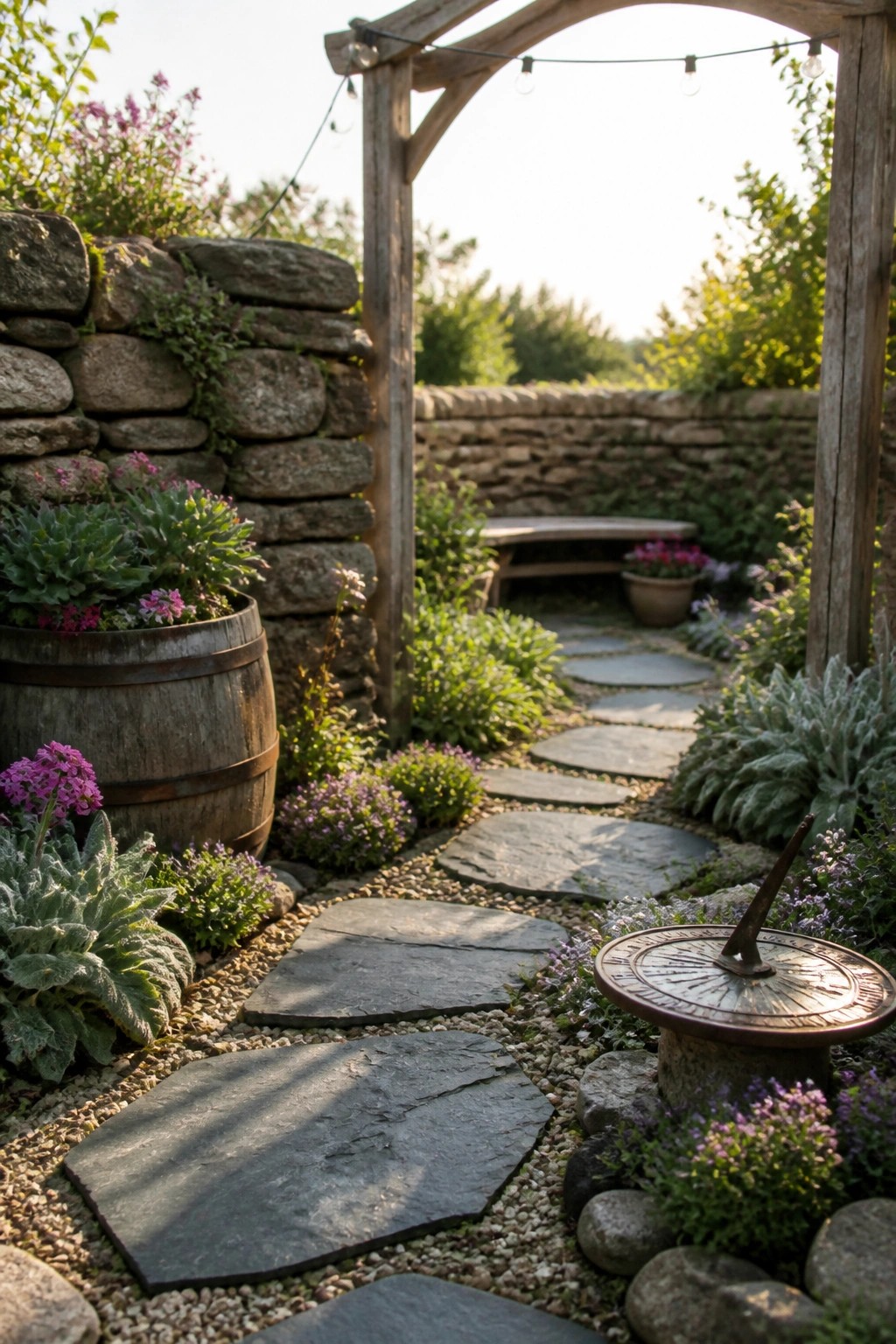
A path of irregular stones set in gravel gives a small garden a gentle sense of movement. It leads the eye forward and makes the space feel a little larger than it really is.
Set the path so it bends slightly before reaching a bench or chair. Let plants grow close on either side so the seat stays partly out of view until you arrive.
Stone Paths With Grass In The Joints
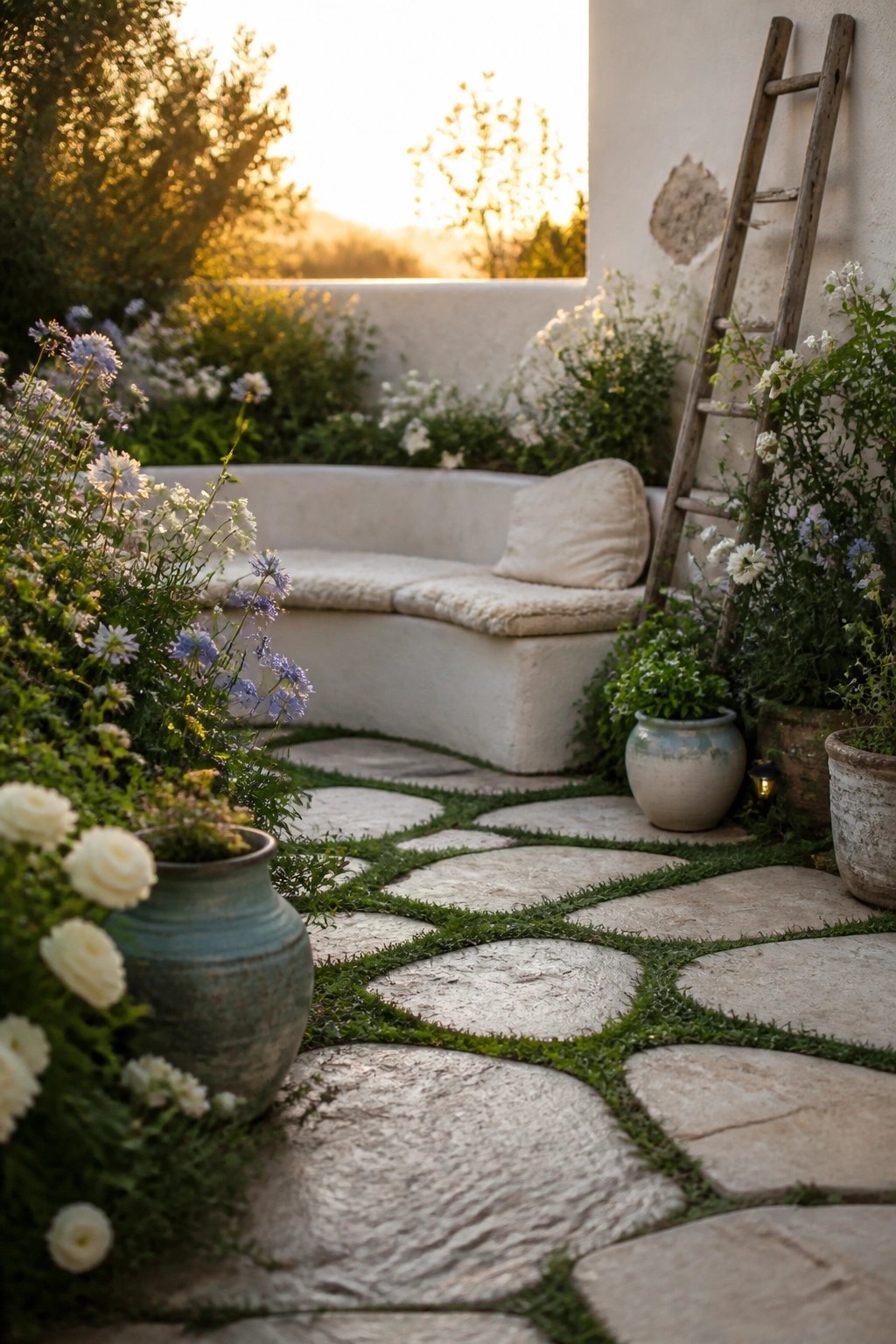
A simple path made of irregular stones with grass tucked into the spaces between them can make a small garden feel much softer. The grass breaks up the hard surface and lets the planting flow right up to the walkway without looking too formal or rigid.
This works well in tiny gardens where you want the path to feel like part of the landscape rather than a separate feature. Keep the stones large and slightly uneven so the grass has room to settle in, and let the surrounding flowers spill over the edges. It suits cottage-style planting and needs very little maintenance once the grass fills in.
Frame a Path to a Secluded Bench
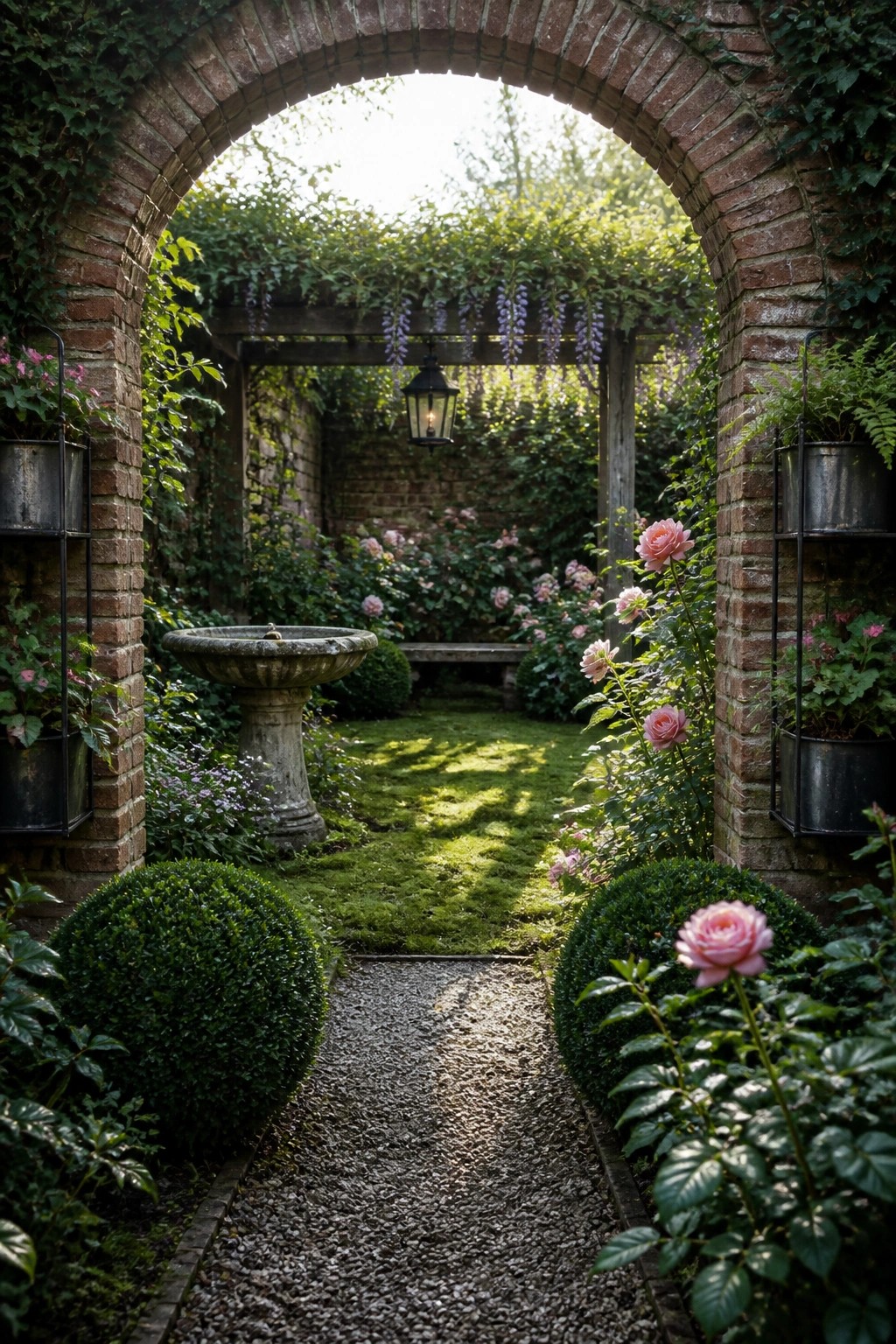
A simple arch over a narrow path gives the garden a sense of going somewhere. It turns an open space into a small sequence of rooms and makes the bench at the end feel more private even when the whole garden is tiny.
This idea works best in a compact backyard where you want one clear destination rather than scattered seats. Keep the path gravel or stone, let plants grow close on either side, and place the bench just beyond the arch so it stays partly hidden from the main view.
Build Seating Into the Edge of the Beds
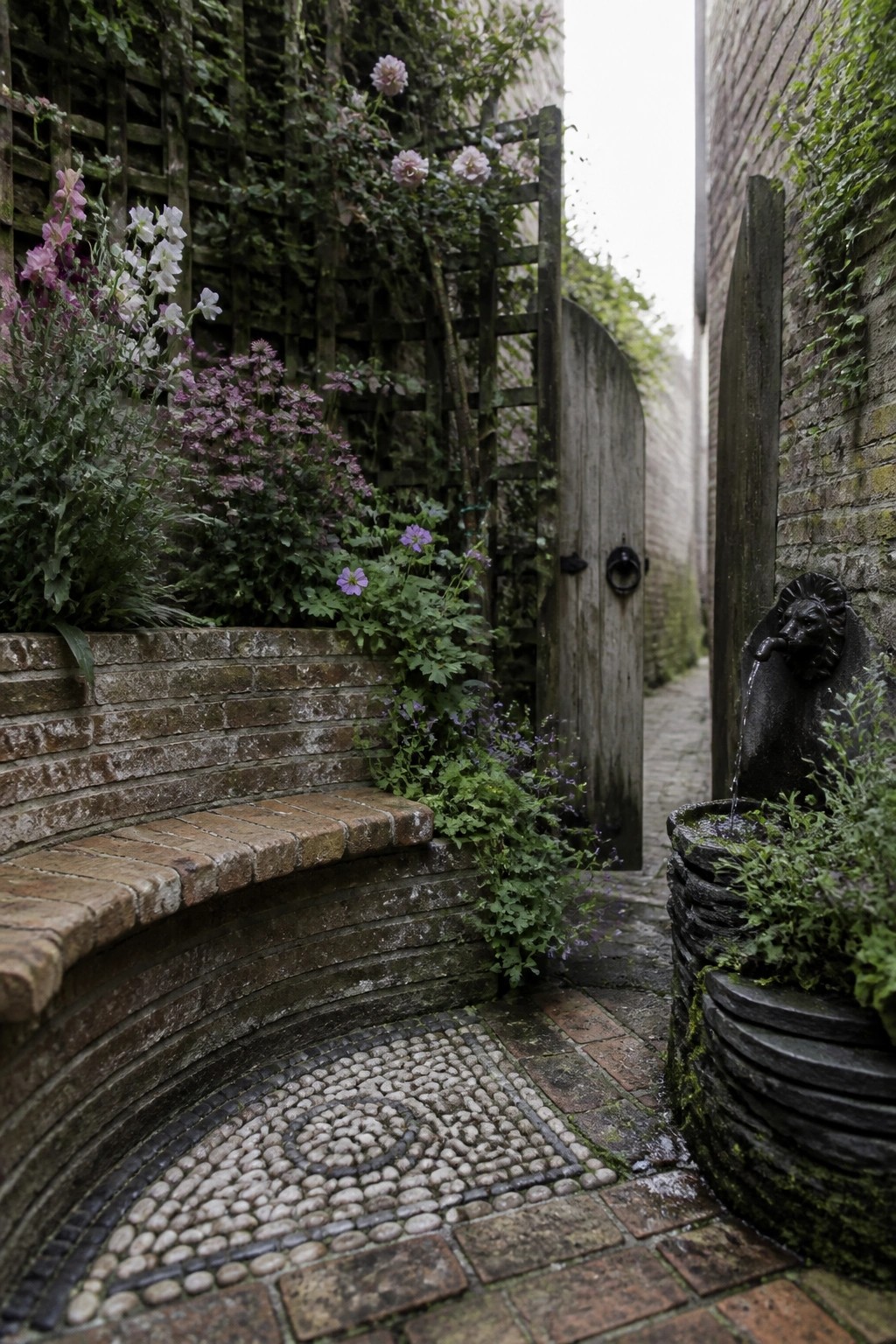
One simple way to add a quiet spot in a small garden is to build the seating right into the planting beds. A low brick curve gives you a place to sit while letting the flowers and foliage do most of the work around you.
This approach suits narrow side yards or small courtyards where space is tight. Use soft cottage-style plants that spill over the edge so the bench feels like part of the garden instead of a separate piece of furniture.
Metal Planters To Define Garden Paths
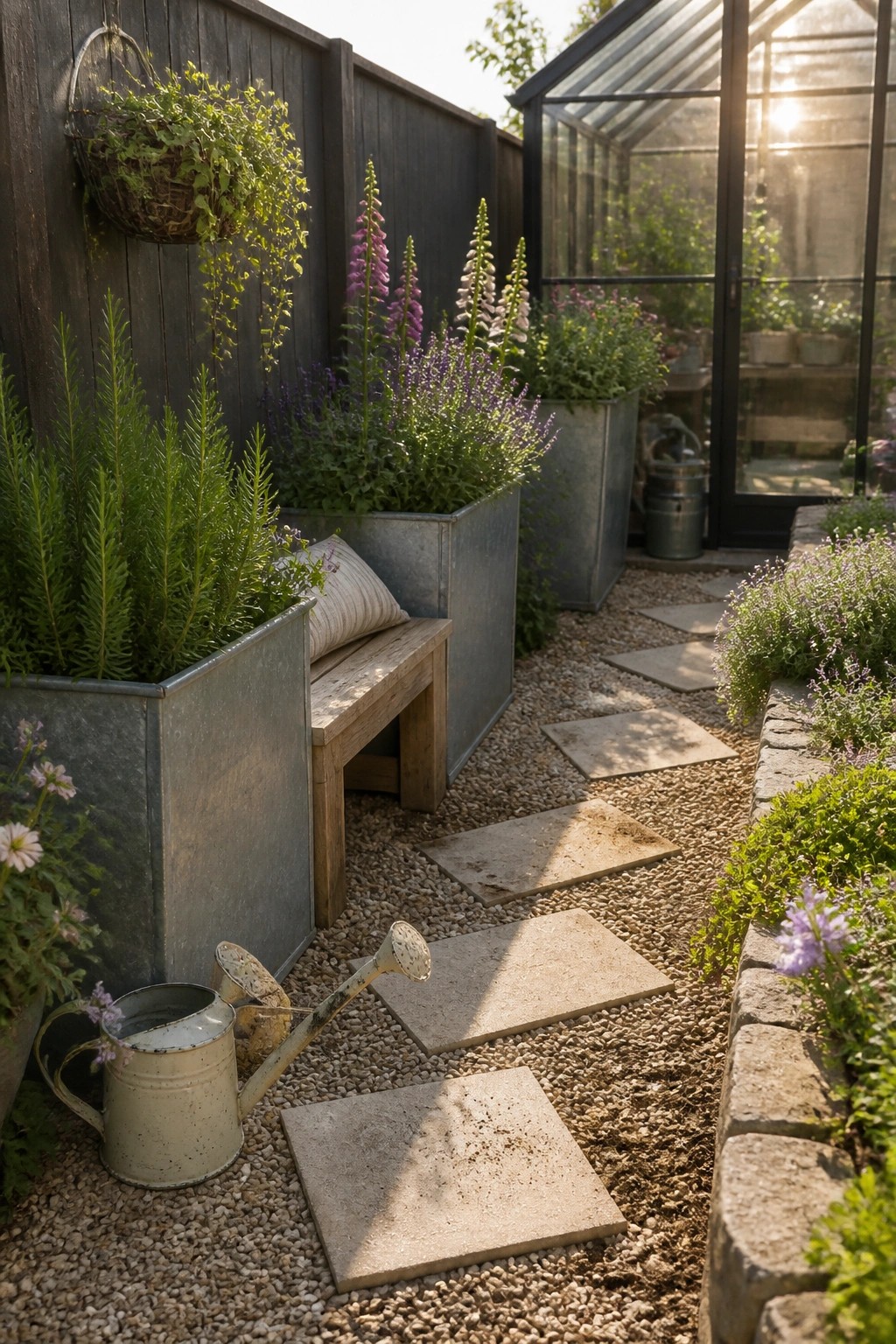
Large metal planters work well along a gravel path because they give the space clear edges without needing permanent walls or fences. The containers hold a mix of taller flowers and softer foliage, which helps the path feel enclosed and a little private even in a small yard.
This setup suits narrow side gardens or tiny back plots where you want both planting and a place to sit. Set the planters in pairs with a simple bench between them so the seating stays partly hidden by the greenery. Keep the path material loose and the containers weathered for a relaxed cottage look.
Curved Edging for Small Garden Beds
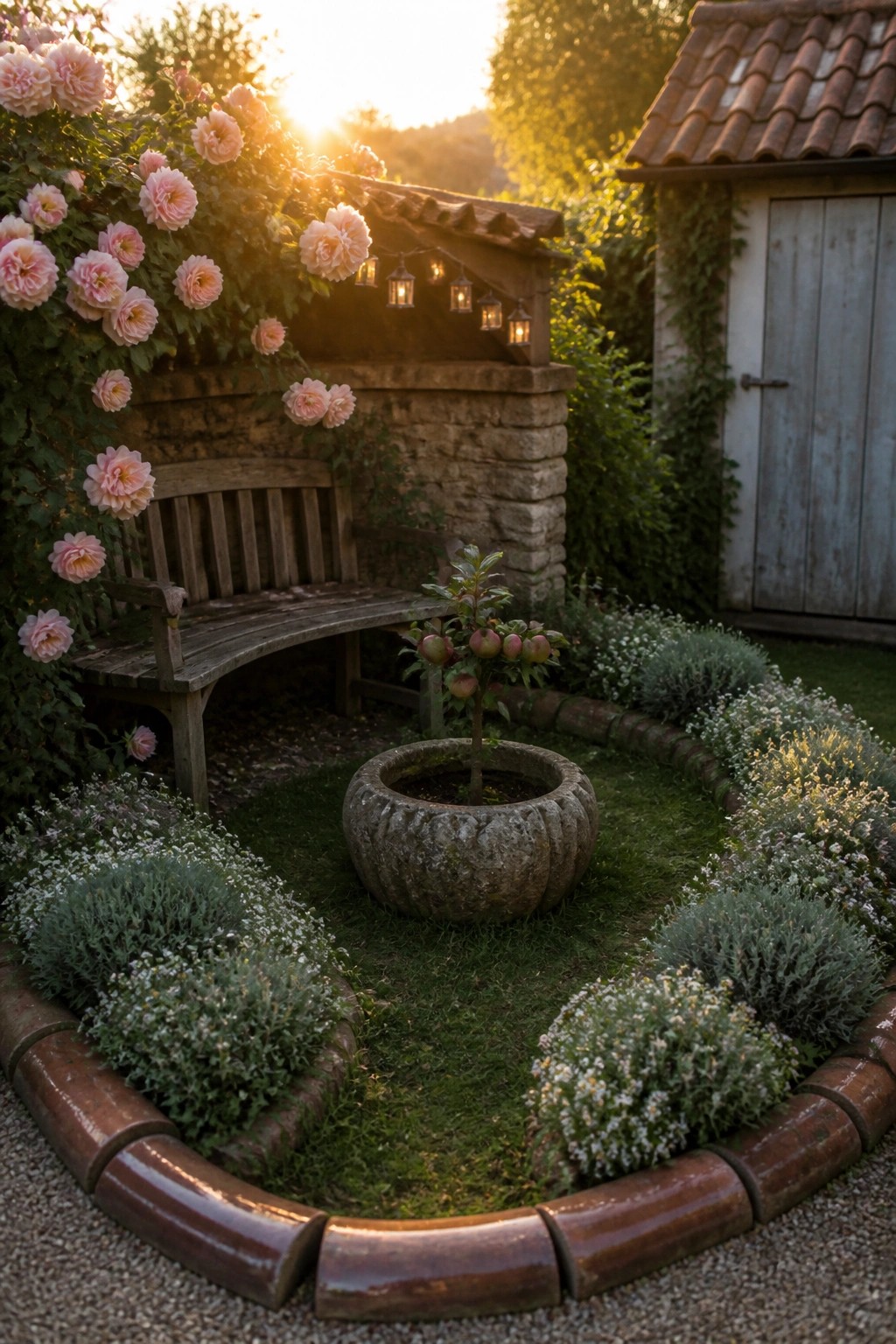
A low border of curved terracotta tiles gives a tiny garden a clear shape without taking up space. It turns an open patch of grass into a contained planting area that feels settled and intentional, especially when the bed wraps around a simple seat.
This works well in small yards where you want planting to feel structured but still soft. Keep the edging low so the flowers spill over naturally, and use it to frame one central feature like a small tree or pot. It suits older homes and cottage-style gardens where the goal is a quiet corner rather than a big layout.
Tuck a Bench into Layered Planting
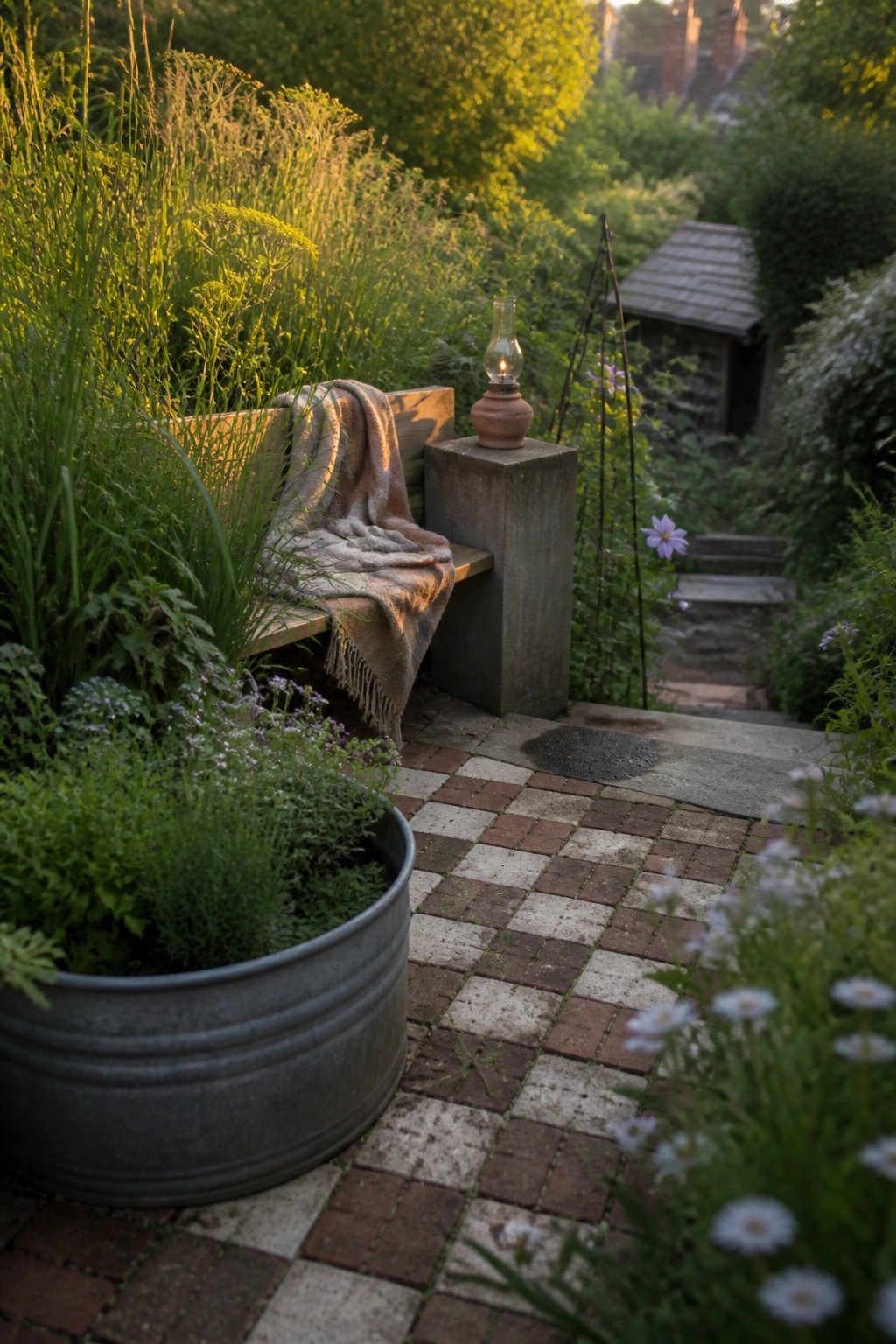
A bench feels more like part of the garden when you let the planting grow around it instead of leaving it out in the open. Tall grasses and soft perennials create a loose screen that gives a bit of privacy while still letting light through.
This approach suits tiny gardens that already have mixed borders. Keep the bench simple and set it close to the path so it does not interrupt the flow, then fill in with plants of different heights to keep the space feeling enclosed without looking crowded.
Gravel Paths That Hide A Seat
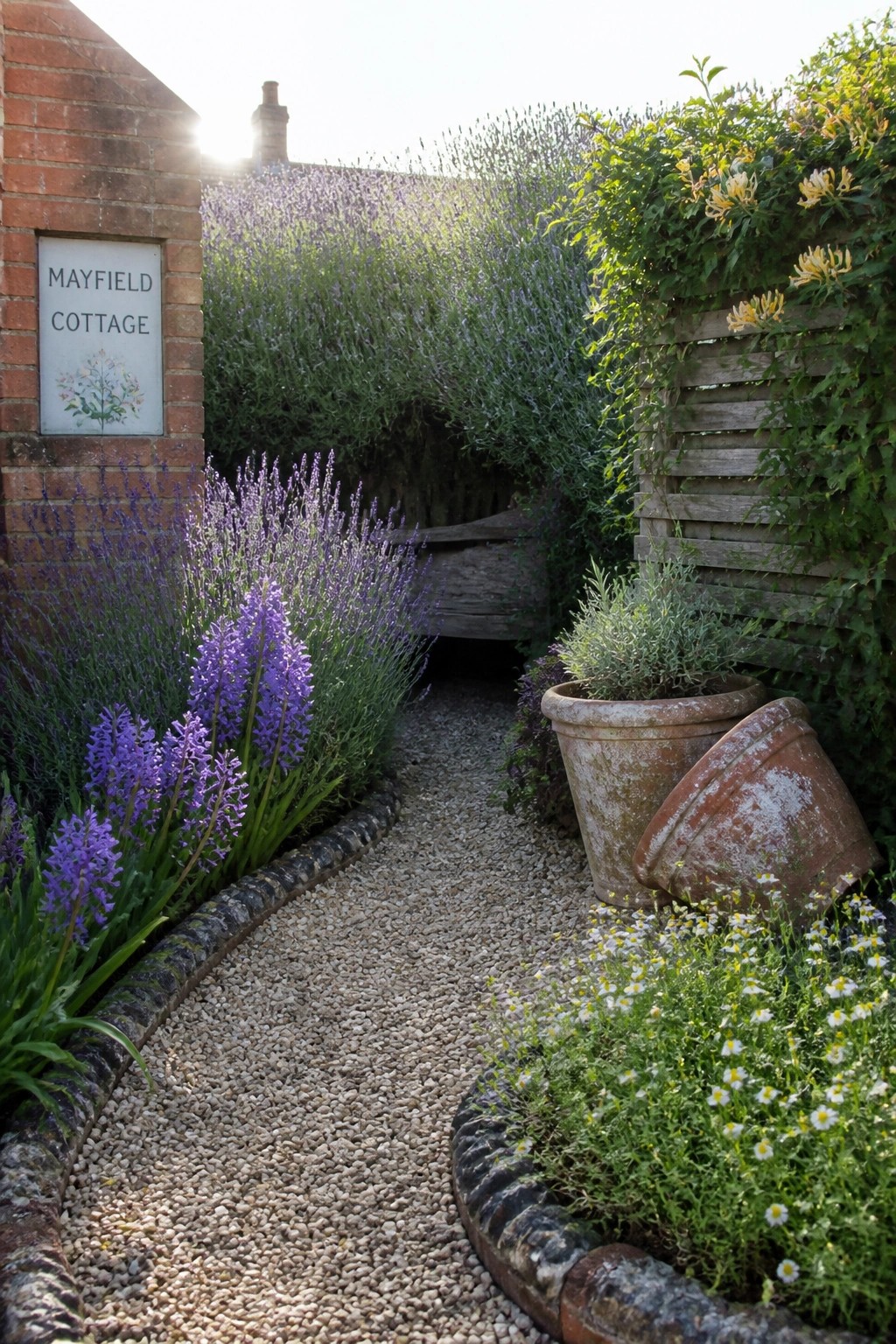
A narrow gravel path edged with old bricks or tiles lets you tuck a small bench or chair deeper into the garden without clearing much space. The planting on both sides does most of the work, softening the edges and making the seat feel private once you reach it.
This layout works especially well in long, thin gardens or along the side of a house. Keep the path no wider than needed for one person and let the lavender and other cottage plants grow close so the route feels enclosed rather than open.
Hang a Swing in Dense Planting
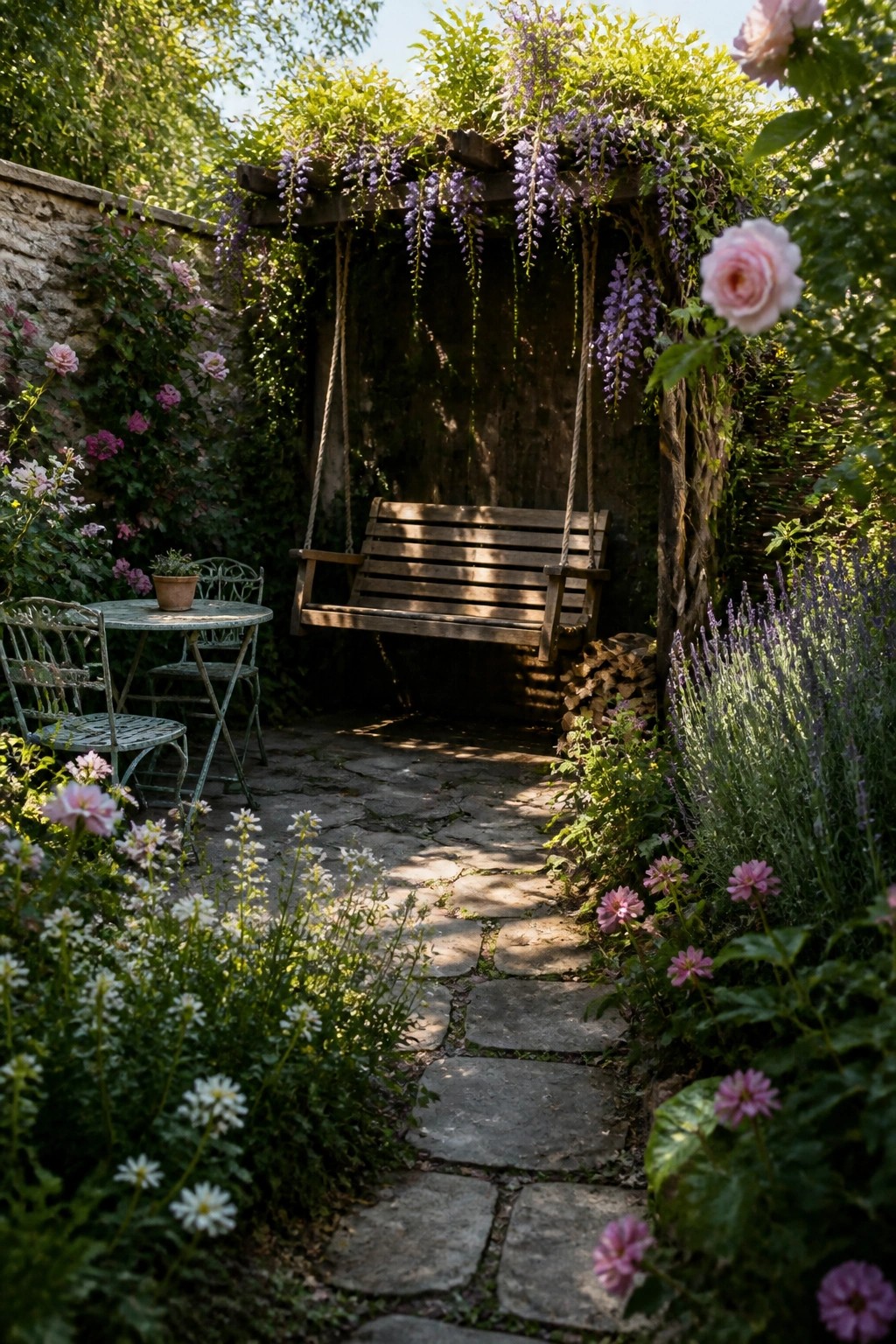
One simple way to add hidden seating in a small garden is to hang a swing right among the plants instead of setting it out in the open. The swing blends into the flowers and vines, so it feels tucked away rather than like a separate feature.
This works best along a path where you can walk past beds of climbers and perennials. Keep the structure basic and let the planting grow up around it so the seat stays partly shaded and private.
Stone Paths With Cottage Borders
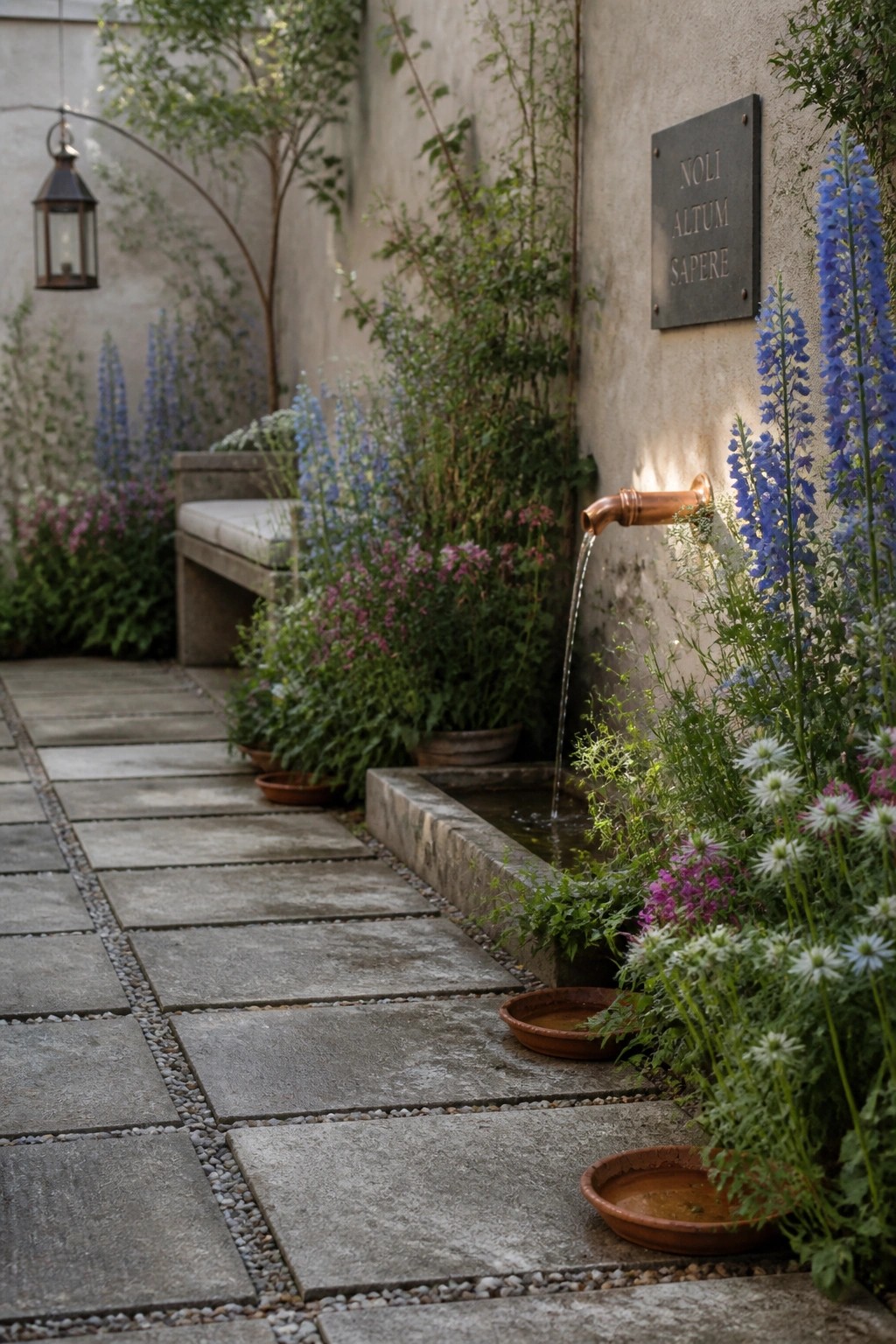
A straight stone path edged in gravel gives a tiny garden clear structure while letting the planting spill over on both sides. The mix of tall spires, low mounds, and soft foliage makes the walkway feel enclosed without shrinking the space.
This layout works best in narrow side yards or small walled gardens where you want to lead the eye toward a bench or water feature. Keep the beds deep enough for layering and choose plants that tolerate some foot traffic so the edges stay full.
Tuck a Bench and Fire Pit Into a Corner
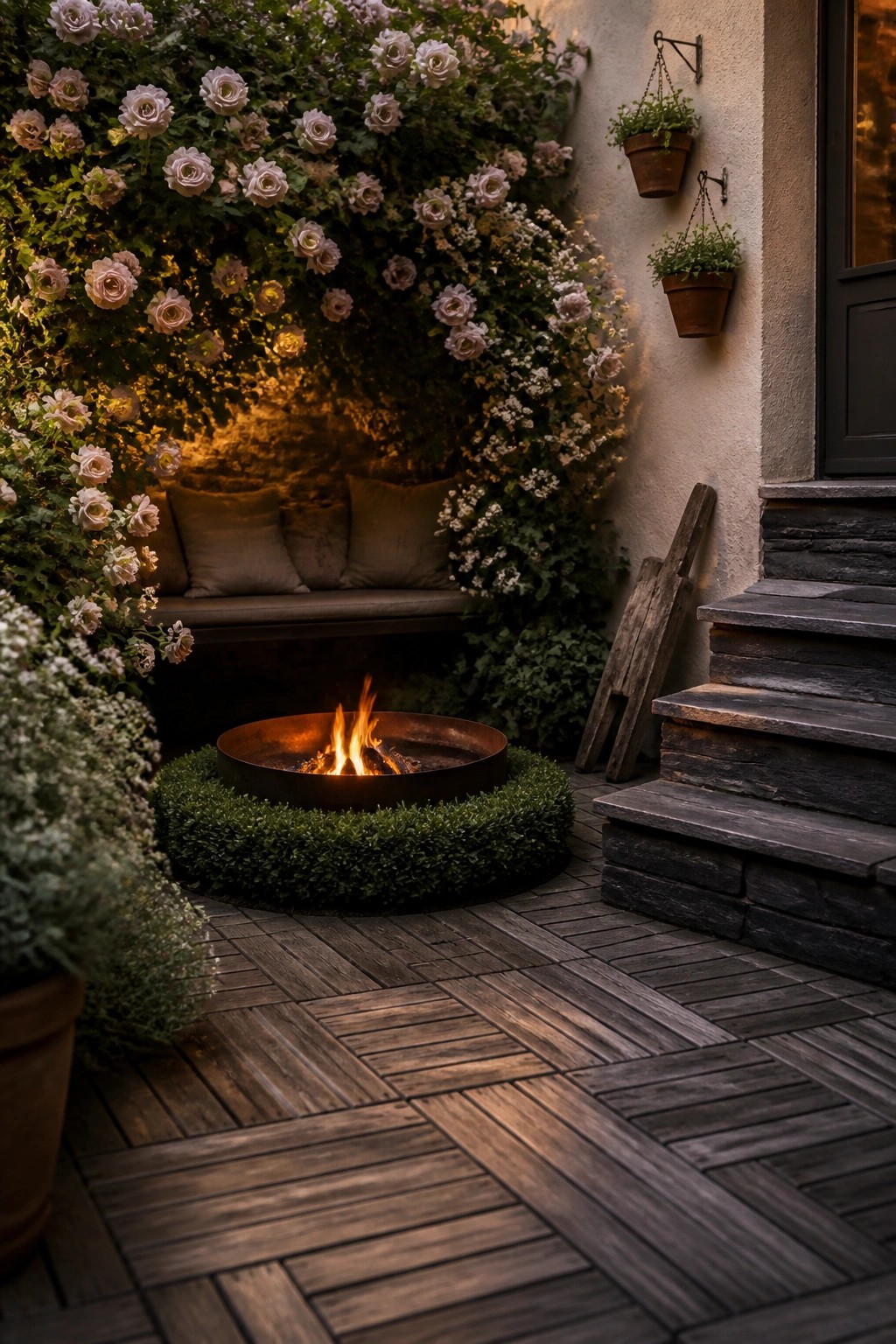
A small corner can work well as a seating spot when you add a low bench against the wall and place a fire pit right in front of it. The surrounding plants help close off the space without making it feel boxed in, which suits tiny gardens that need both function and softness.
This setup works best on a simple deck or paved area where you can keep the planting dense on one or two sides. Use climbing roses or similar vines on the wall to soften the edges, and choose a fire pit that sits low so the seating stays the focus. It suits older homes or cottage style gardens where you want the space to feel tucked away rather than open.
Line a Path with Layered Cottage Plantings
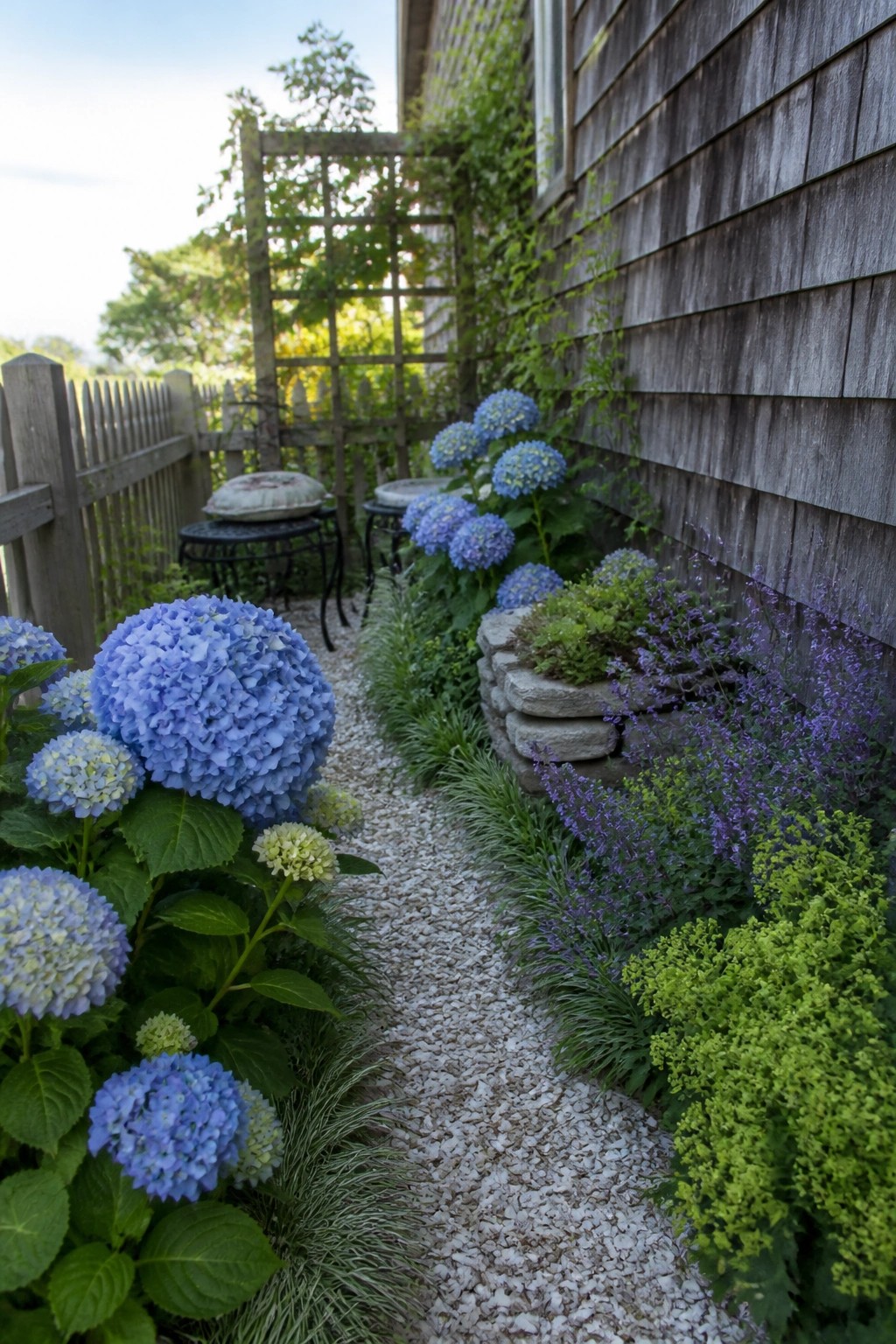
A gravel path feels more welcoming when it is lined with full, overlapping layers of flowers and greenery. The mix of big blooms and lower foliage creates a soft edge that makes the walkway feel like its own small garden rather than just a route from one spot to another.
This approach works especially well in narrow side yards or along the base of a house. Keep the path itself simple and let the plants spill in slightly so the space feels enclosed and a little private. It suits older homes or any spot where you want the garden to feel relaxed rather than too planned.
A Garden Path That Leads To A Secluded Bench
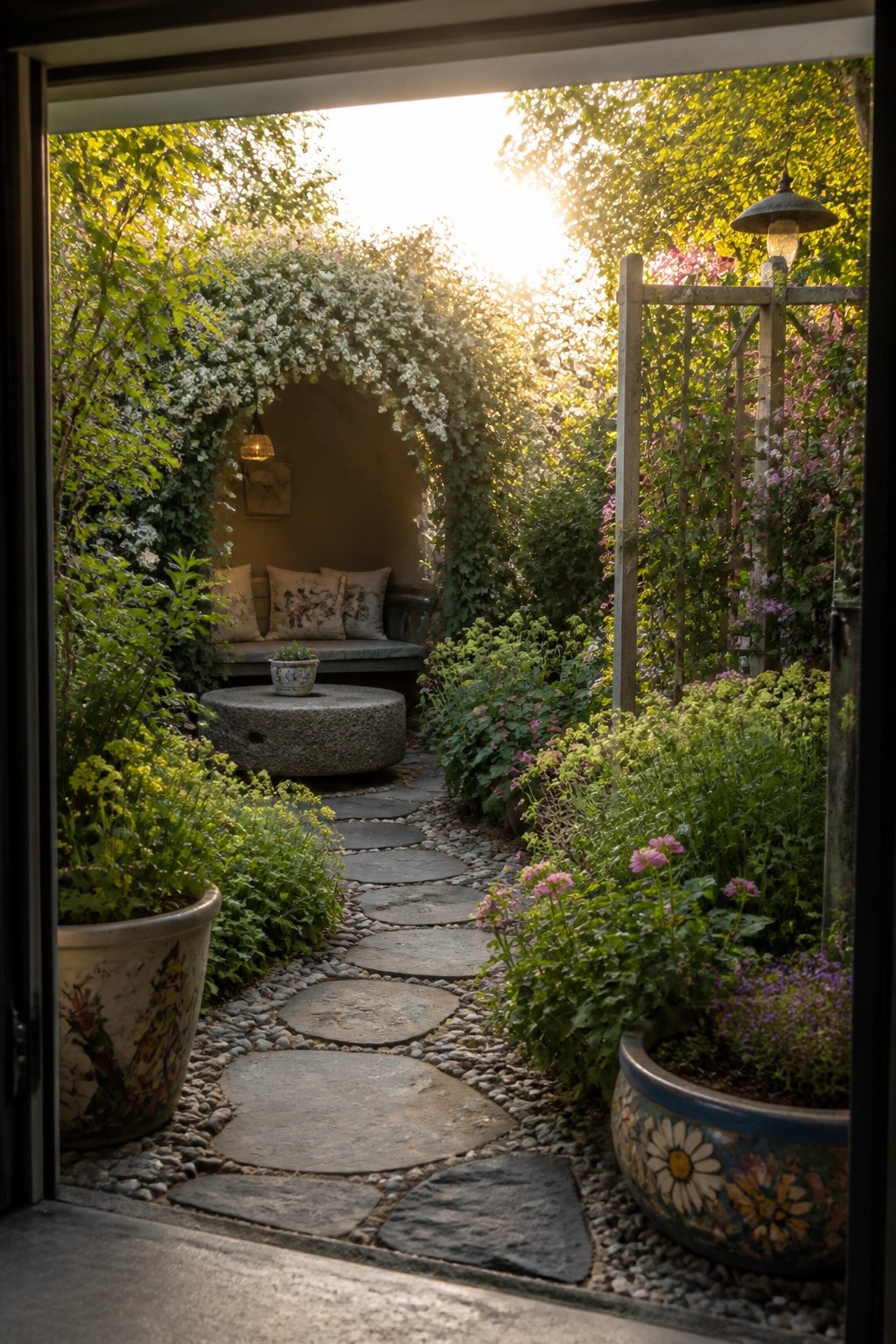
A narrow path made of stepping stones works well when you want to tuck seating out of sight. It pulls people forward through the planting instead of revealing the bench right away. In a small garden this creates a bit of distance and makes the seat feel more private without needing walls or screens.
Stone or gravel paths suit cottage style because they let the borders spill over naturally. Keep the planting soft and a little overgrown on both sides so the bench stays half hidden until you reach it. This works best in side yards or corners where you already have room for a simple walkway.
Wrap a Bench Around a Tree
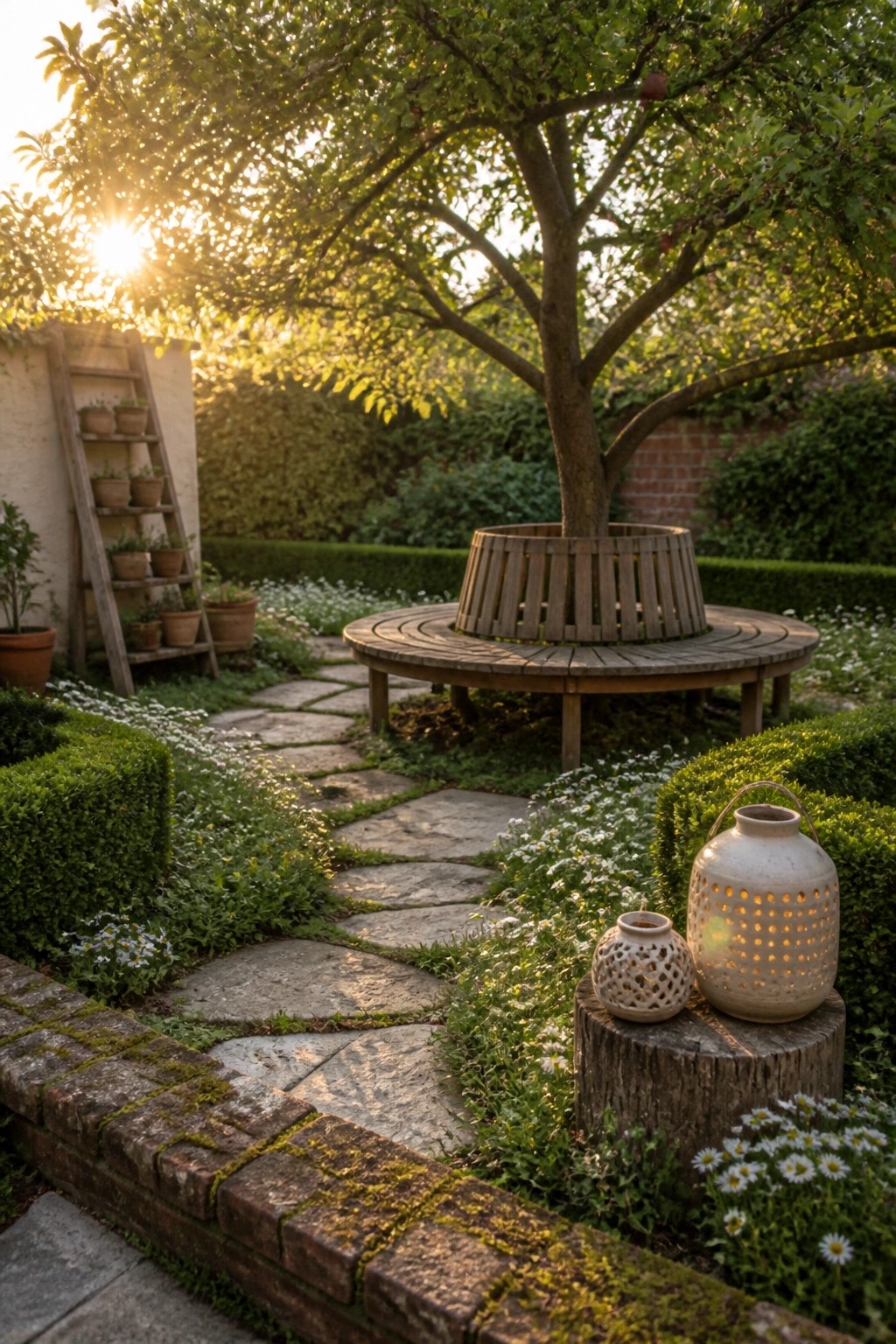
A bench that follows the shape of a tree trunk gives you seating without taking up extra space in a small garden. It turns the tree into the main feature instead of leaving an empty patch of ground underneath. The planting around it can stay soft and full, so the seat feels tucked away rather than placed in the middle of the lawn.
This works best in gardens that already have one good-sized tree and narrow paths winding through the beds. Keep the bench simple in wood so it blends with the planting, and let flowers and low shrubs grow right up to the edge. Just make sure the seat height stays comfortable once the surrounding growth fills in.
Frame Paths with Trough Planters
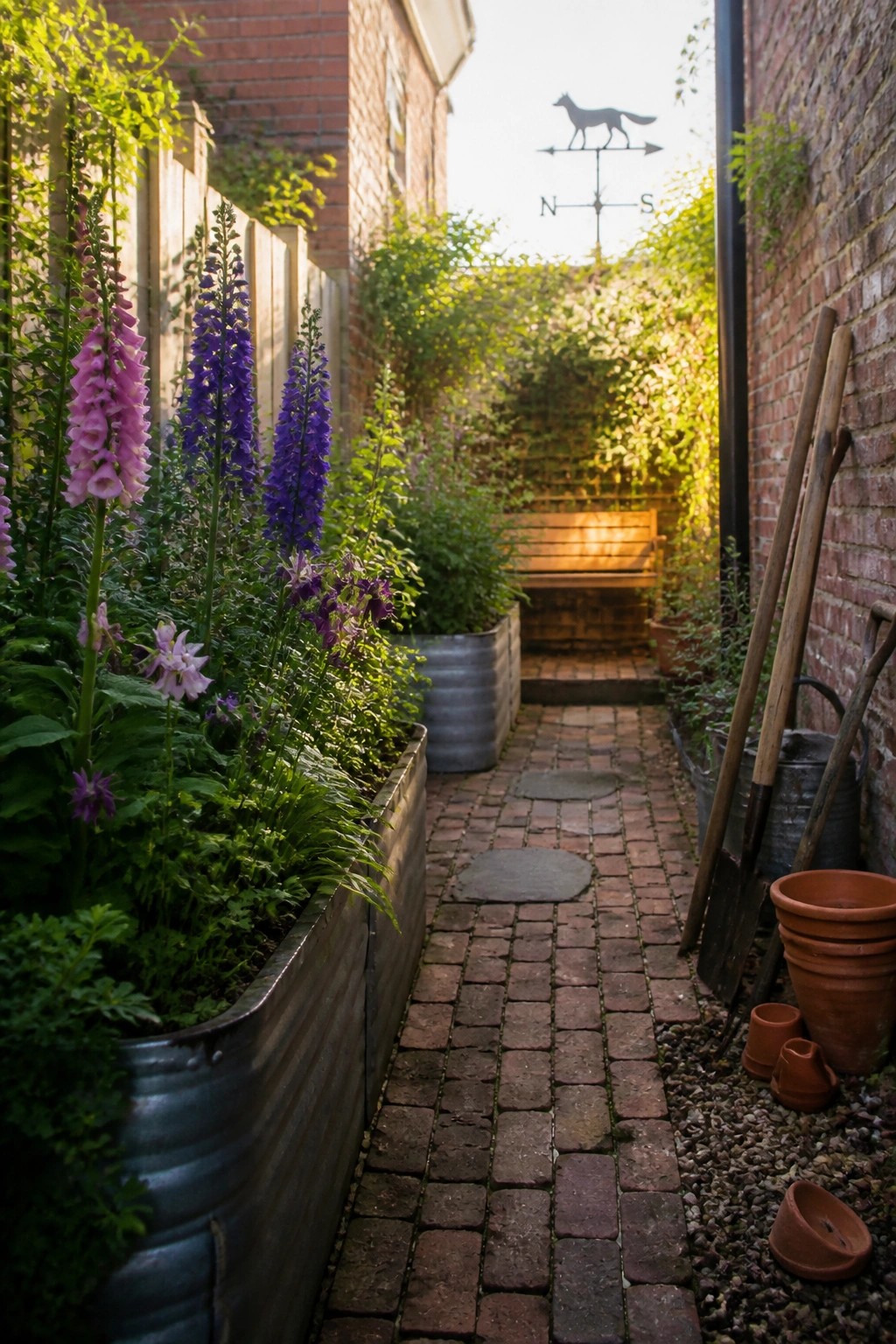
Long metal troughs work well for edging a narrow path because they keep the planting contained while still letting flowers spill over the sides. This setup turns a simple walkway into something that feels more like a garden room, especially when the flowers are tall and a little loose.
It suits small side yards or tight back gardens where space is limited but you still want a clear route through. Stick with one or two plant varieties that reach different heights, and make sure the troughs sit right against the path so the whole thing stays neat without needing constant trimming.
Frequently Asked Questions
Q: How do I tuck seating into a tiny garden so it feels hidden rather than stuck in the middle? A: Push a small bench right up against a fence or wall and let soft foliage drape over the edges. Low plants in front will screen the seat while still leaving room to walk past.
Q: Which plants keep that loose cottage look without swallowing the whole space? A: Go for a few tall stems like foxgloves in the back and shorter blooms such as violets or thyme spilling around the seat. They layer gently and invite you to brush past them when you sit down.
Q: What if the only spot for a chair is next to a path? A: Set the chair at an angle so it faces the plants instead of the walkway. A single climbing vine on a narrow stake behind it adds softness without taking extra ground.
