

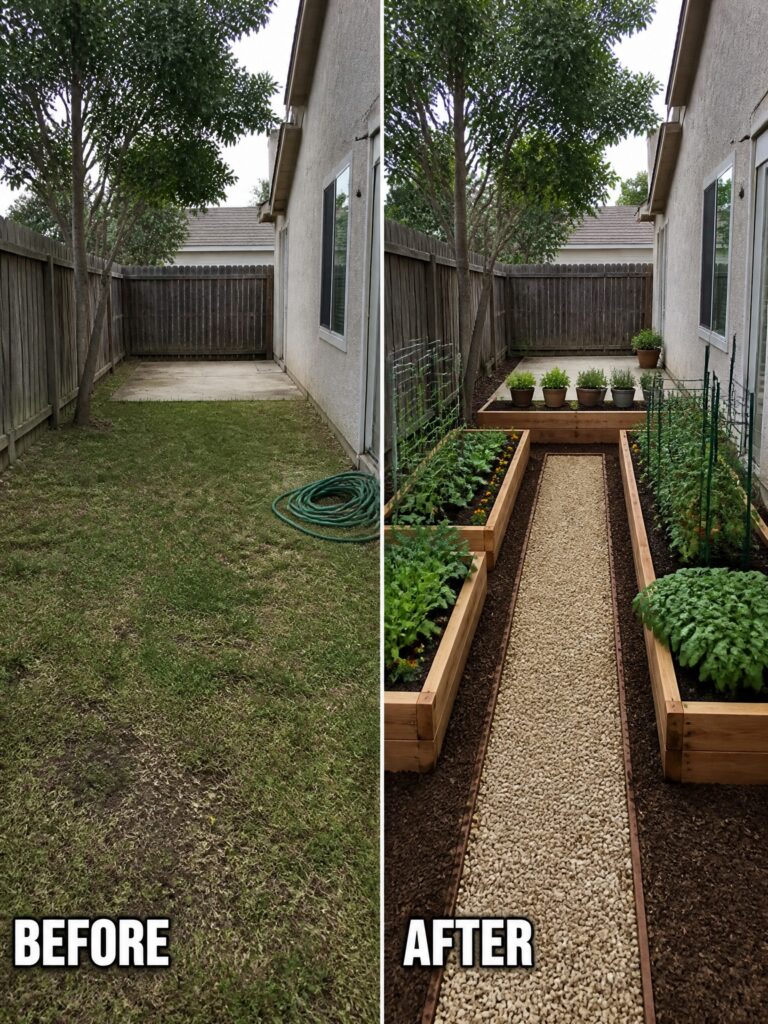
A plain backyard often feels overlooked because it lacks the basic structure of defined beds and a few layers of planting that pull everything together.
I have found that focusing first on cleanup and edging usually creates a stronger foundation than adding decorative items right away.
That order matters more than most people expect.
From there it becomes easier to test small additions like a narrow path or a cluster of shrubs that actually suit the space.
Watching the yard settle into something more usable over a season or two shows how these steady adjustments add up without requiring a big budget.
Add Raised Beds To Give A Plain Yard Structure
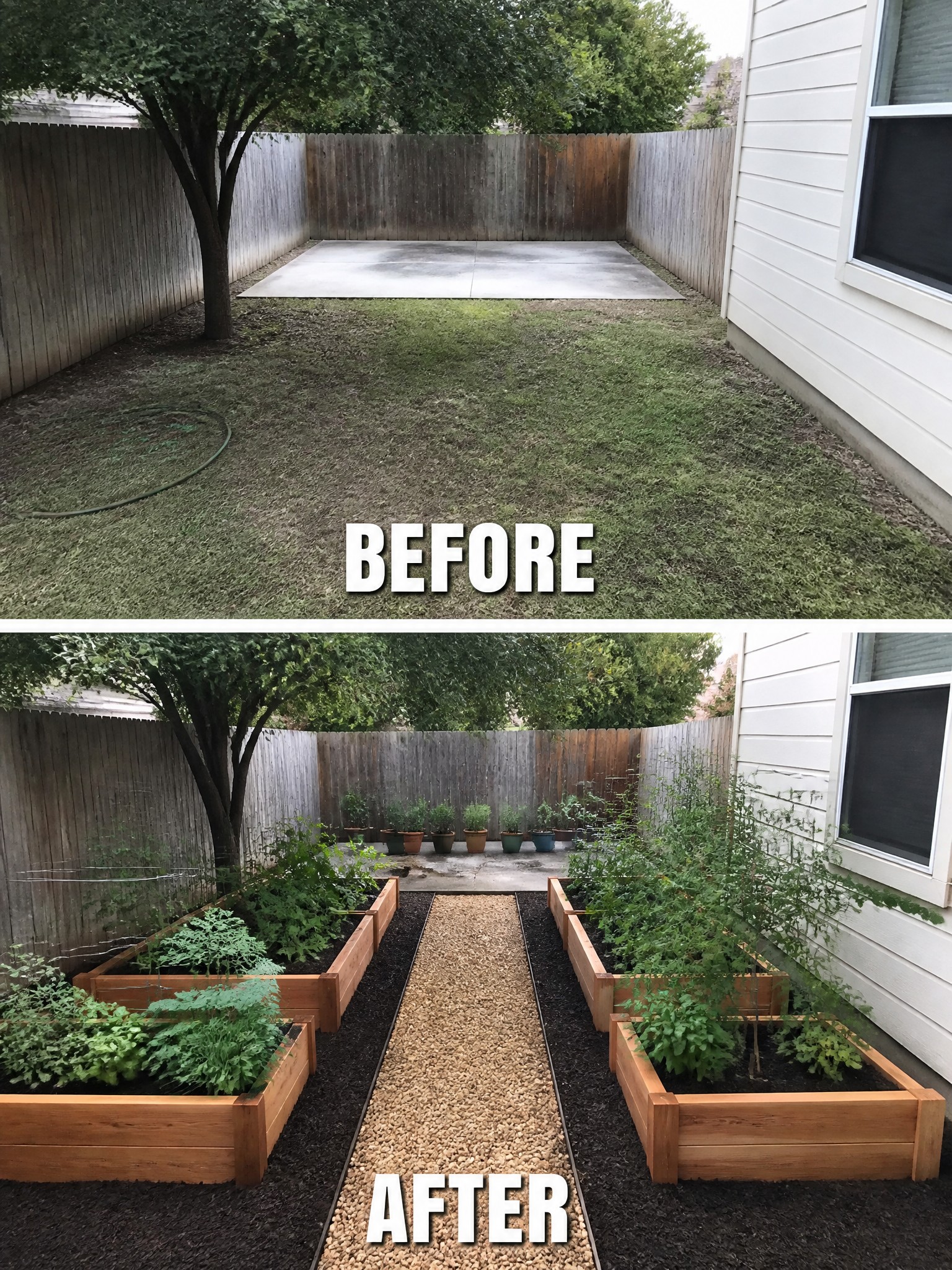
A bare backyard with just grass and a concrete slab feels unfinished and hard to use. Adding a few raised beds with a simple gravel path between them turns the space into something you can actually work with. The beds create clear zones for planting while the path keeps things easy to walk through and maintain.
This approach works well in small or medium yards where you want to grow vegetables or herbs without digging up the whole lawn. Start with the beds and path first, then fill them in over time. Keep the beds a consistent size and material so the layout feels planned rather than scattered.
Add Structure To An Overgrown Backyard
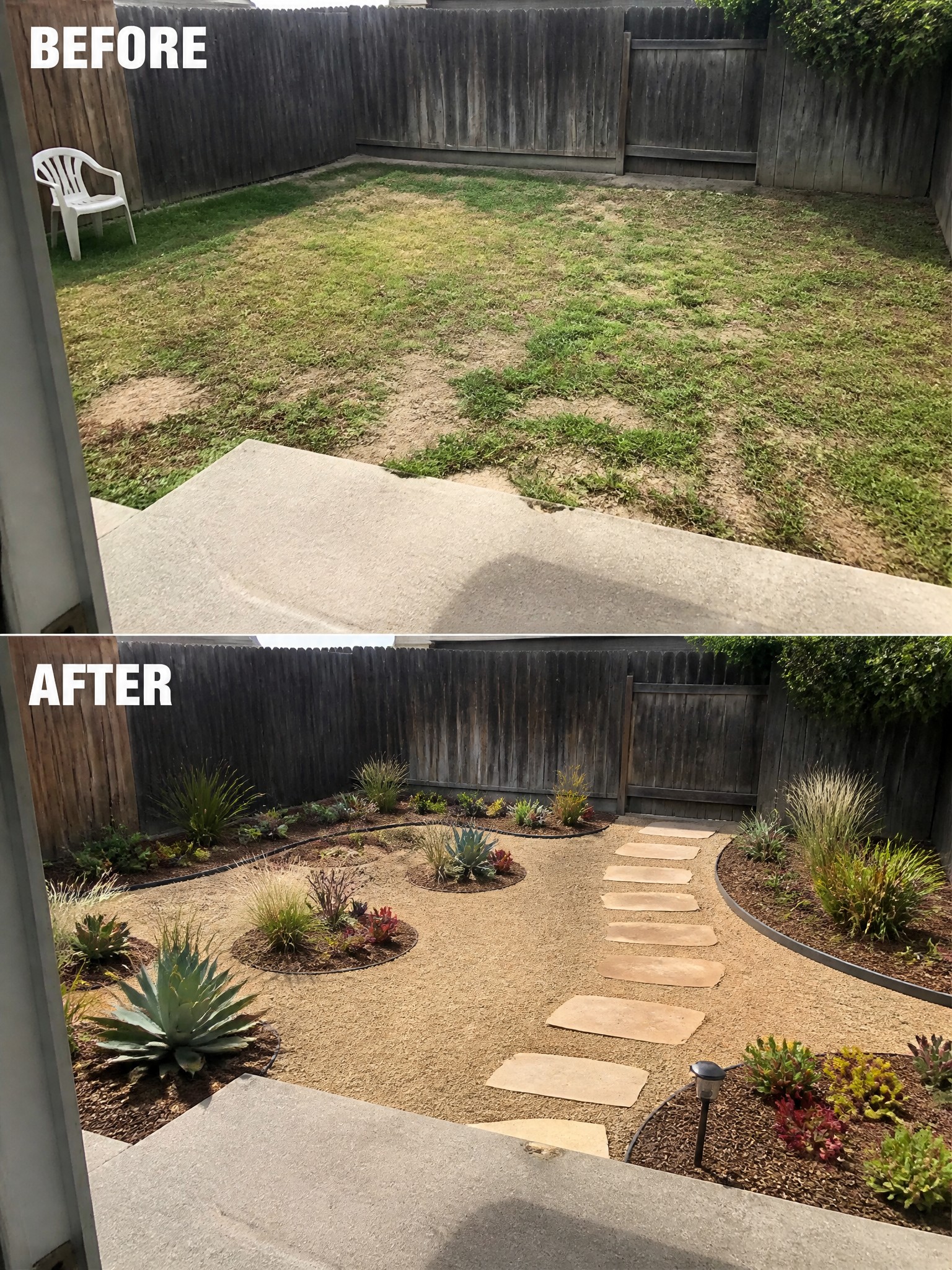
Many plain backyards start as just uneven grass and bare dirt with no clear layout. Adding curved garden beds with simple edging and filling them with plants creates defined zones, while gravel and stepping stones turn the open space into usable paths.
This idea works best in smaller yards where you want to break up the flat look without major construction. Start by clearing the old grass first, then lay out the beds and paths so the design stays practical and leaves room to move around the space.
Turn A Bare Concrete Patio Into A Seating Area
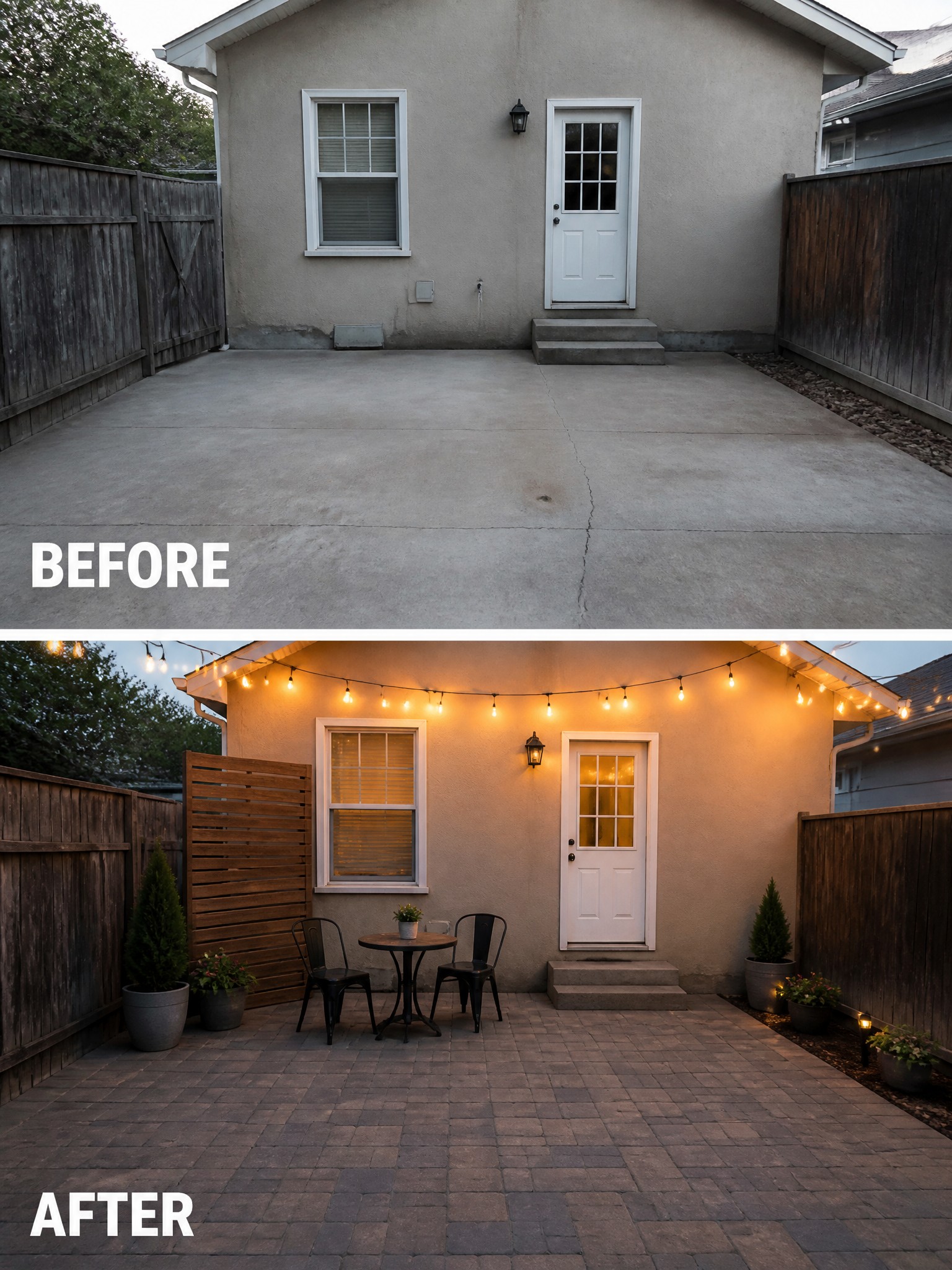
Many backyards begin as just a flat slab of concrete that sits unused because it offers no reason to linger. Switching to pavers and placing a small table with chairs creates a defined spot that actually invites people outside.
This idea suits homes with limited yard space or tight budgets. Start with the hard surface and seating first, then add string lights and a few potted plants so the area feels complete without needing a full overhaul.
Paint A Plain Fence To Add Garden Interest
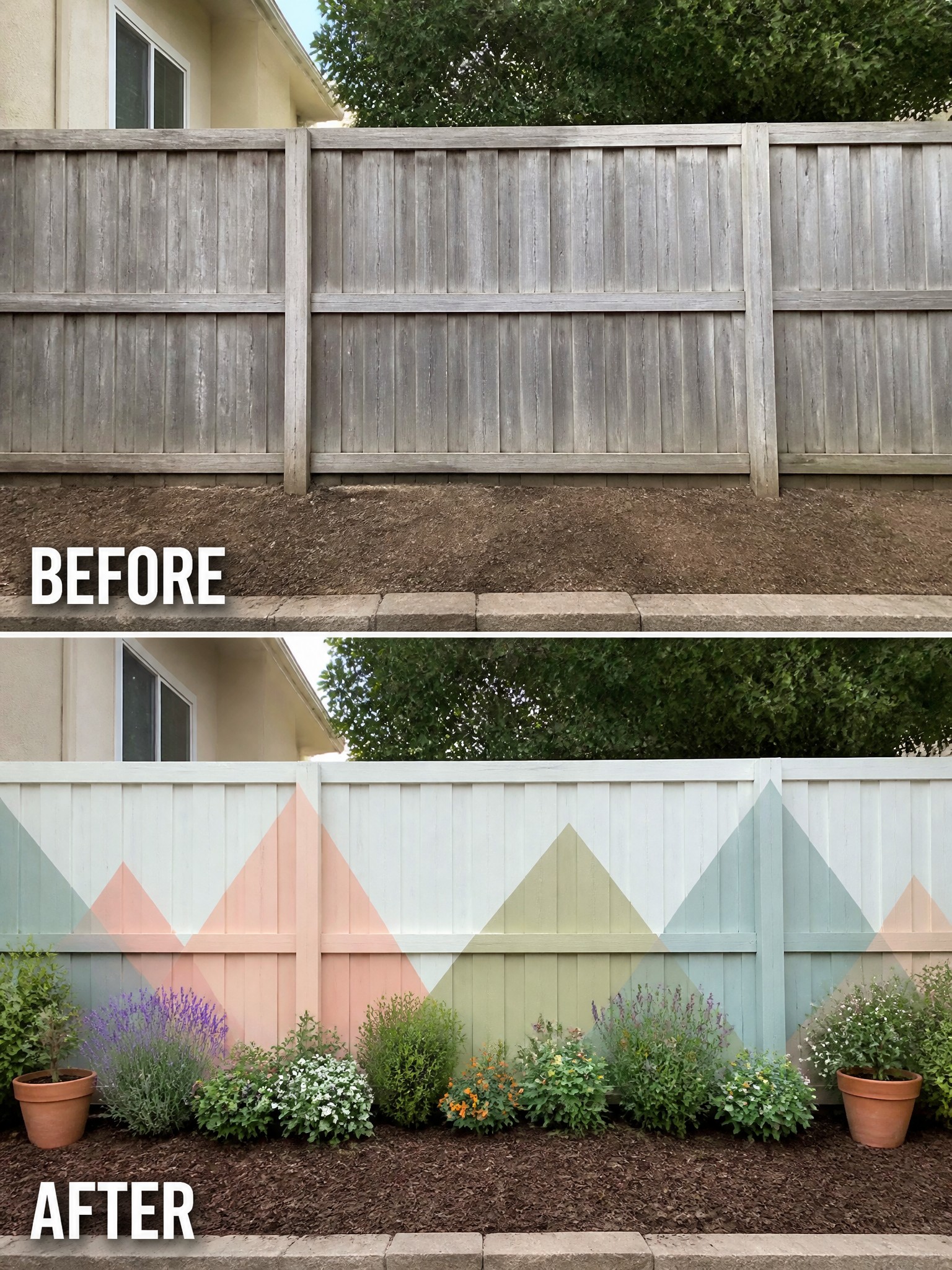
A plain fence next to bare dirt often makes a backyard feel unfinished. Painting the fence with a simple repeating pattern and adding planted beds along the base turns the same space into something much more intentional. The color blocks give the eye something to follow while the new planting strip creates a clear edge between the fence and the yard.
This approach works well on any long fence that faces a sitting area or main view from the house. Start with a good cleaning and a couple of coats of exterior paint in a few soft shades, then mulch the soil and add a row of low plants. The pattern does not need to be complicated, and the beds can stay narrow if space is tight.
Add A Path And Planting Beds To Shape A Plain Backyard
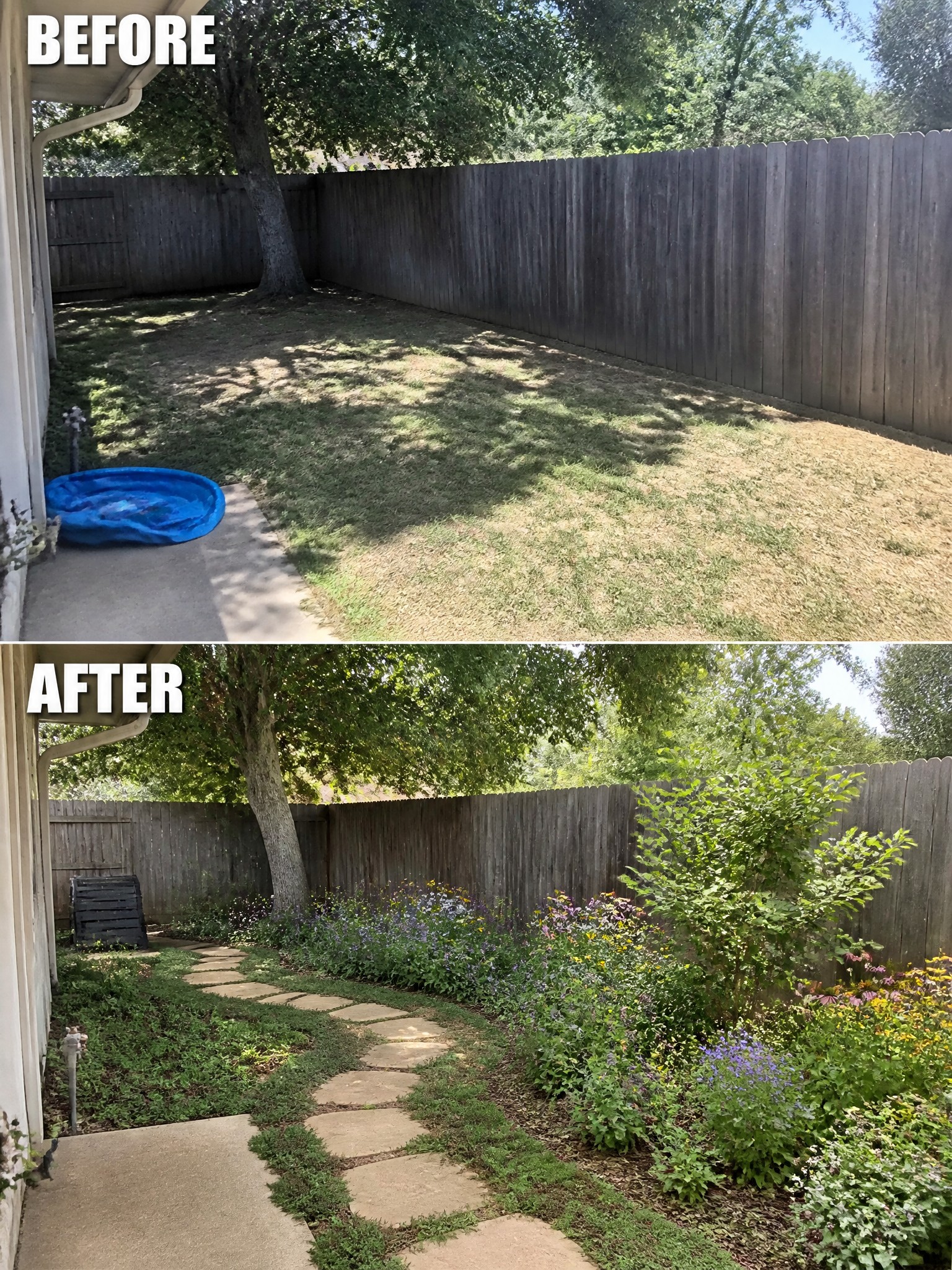
A bare backyard with just grass and a fence often feels unfinished and hard to use. Adding a simple stone path that curves through the space and lining it with planted borders gives the yard clear structure. The path leads the eye forward and turns empty lawn into a garden that feels intentional instead of leftover.
This idea works well in small to medium backyards where you want to create walking space without losing the lawn. Start with the path to set the layout, then fill the beds with a mix of shrubs and perennials that can handle your climate. Keep the plantings a few feet deep so the beds feel full without crowding the walking area.
Turn An Empty Patio Into A Seating Area
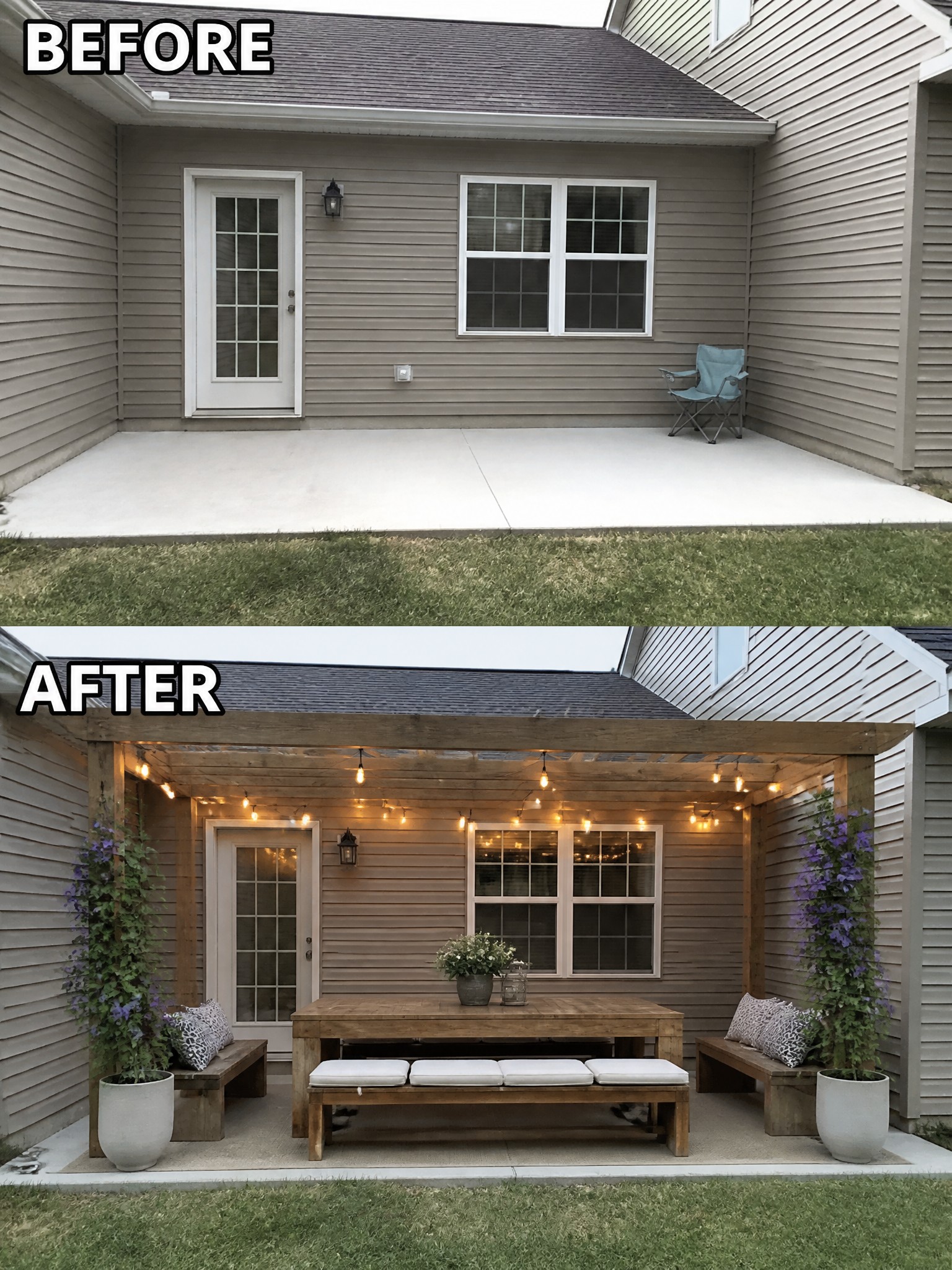
A bare concrete slab often sits unused because it has no clear purpose or shelter. Adding a simple pergola overhead with string lights and a large table with benches gives the space a reason to be used and makes it feel like an extension of the house rather than leftover ground.
This approach works best on homes with a flat back wall and enough room for seating without blocking paths. Focus first on the overhead structure for shade and definition, then choose furniture that matches the scale of the patio so the area stays comfortable to move through.
Turn A Bare Backyard Corner Into A Simple Seating Area
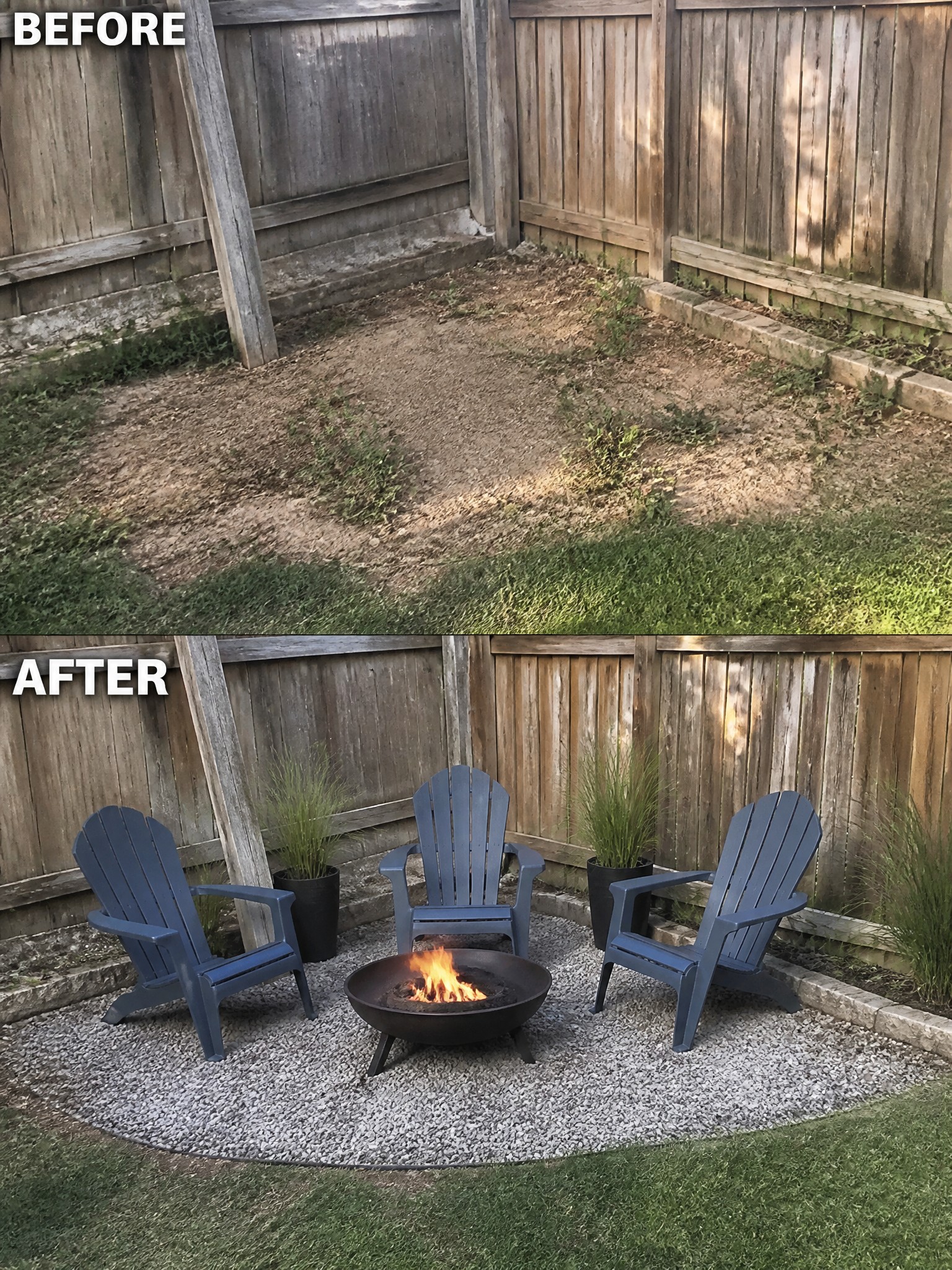
A flat patch of dirt next to the fence does not invite anyone to stay outside. Adding a round gravel base with a fire pit in the center and two chairs gives the space a clear purpose and makes it feel finished.
This approach works best in small or narrow yards where you want one usable spot rather than trying to fill the whole area. Keep the circle modest in size, choose weatherproof furniture, and leave enough open gravel around the fire pit so people can walk around it comfortably.
Add Structure To An Overgrown Backyard Border
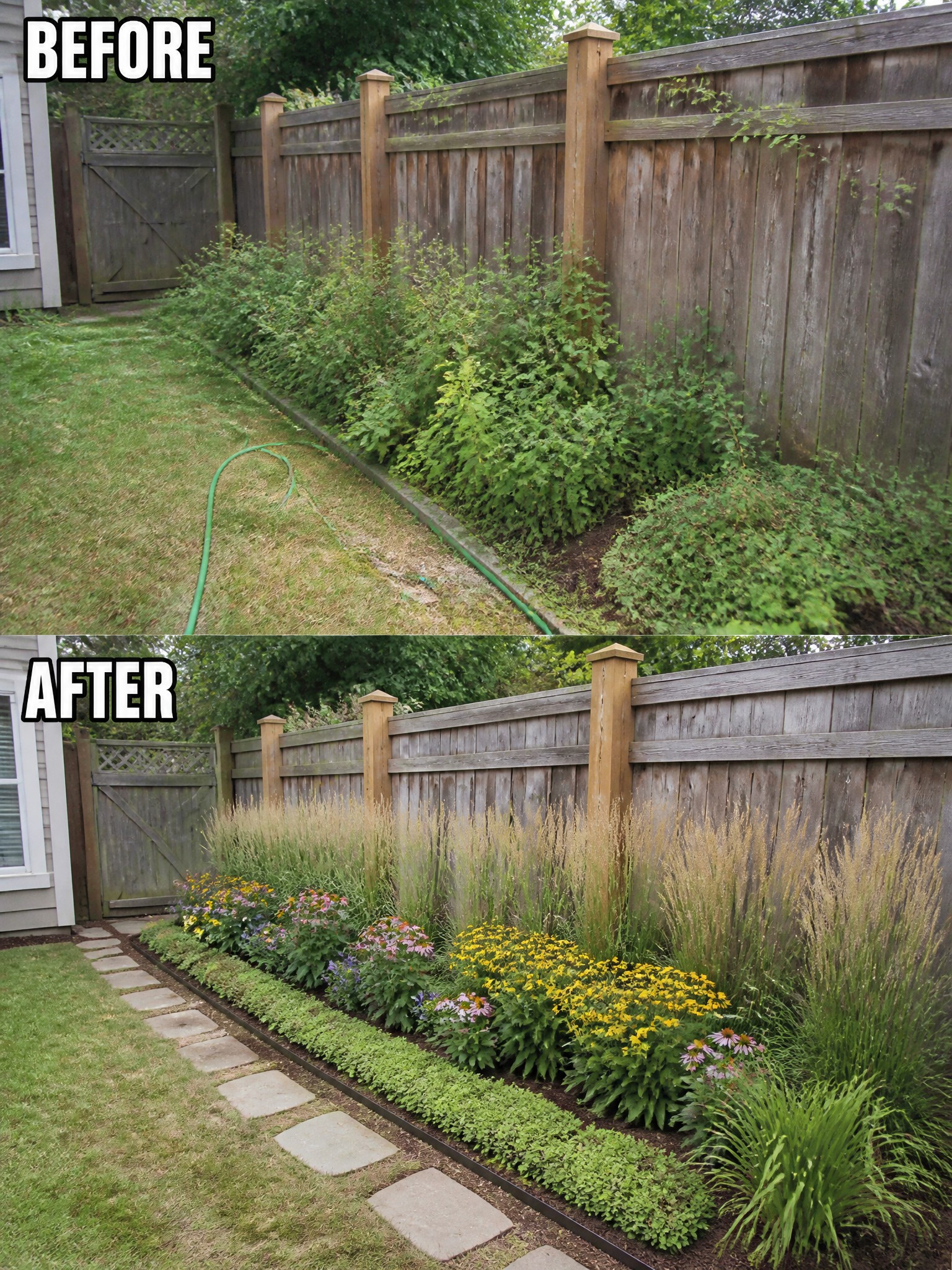
Clearing out the wild growth along a fence and replacing it with a simple layered bed makes the whole side of the yard look intentional. The before photo shows a messy strip of weeds and shrubs with no clear edge. In the after photo, low ground cover sits at the front, mid-height flowers fill the middle, and tall grasses stand at the back against the fence, all held in place by a clean border.
This approach works well in narrow side yards or along property lines where you want order without losing softness. Start by removing the old growth and adding a simple edging material, then plant in three heights so nothing looks scattered. It suits most homes with a basic fence and gives the backyard a finished look even if the rest of the space stays simple.
Add Defined Planting Beds To A Plain Backyard
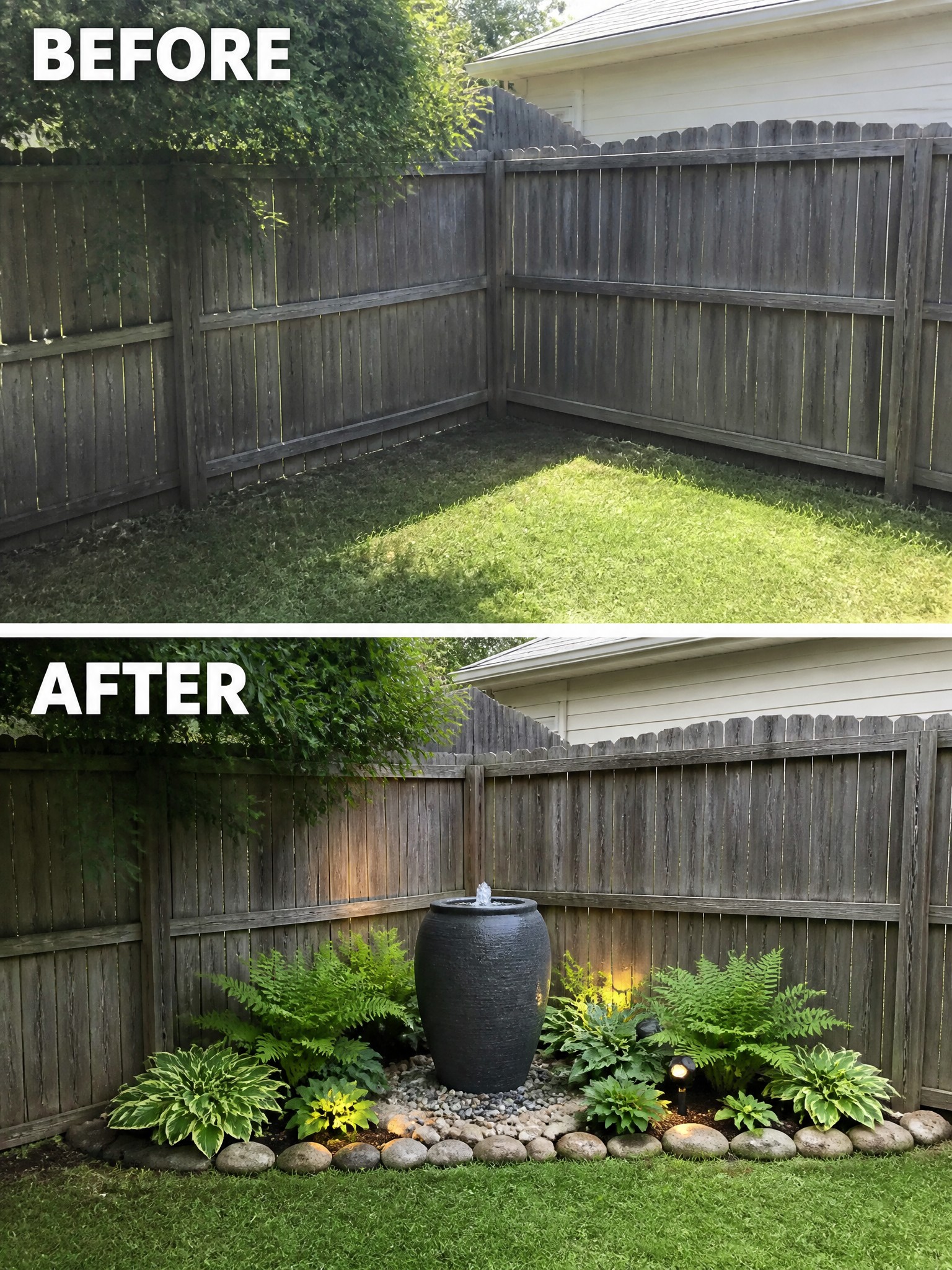
A bare backyard often feels unfinished when it is just a stretch of grass against a fence. Adding a simple planting bed creates clear structure and gives the space a purpose without needing a full redesign. Here the empty corner gained a gravel bed edged with stones, a central water feature, and a mix of ferns and hostas that soften the fence line.
This idea suits smaller yards or shaded corners where you want interest without crowding the lawn. Outline the bed first, place one strong focal point like a fountain, and fill in with shade-tolerant plants that stay low. Keep the edging simple so the bed looks intentional rather than scattered.
Add Vertical Planters To A Narrow Side Yard
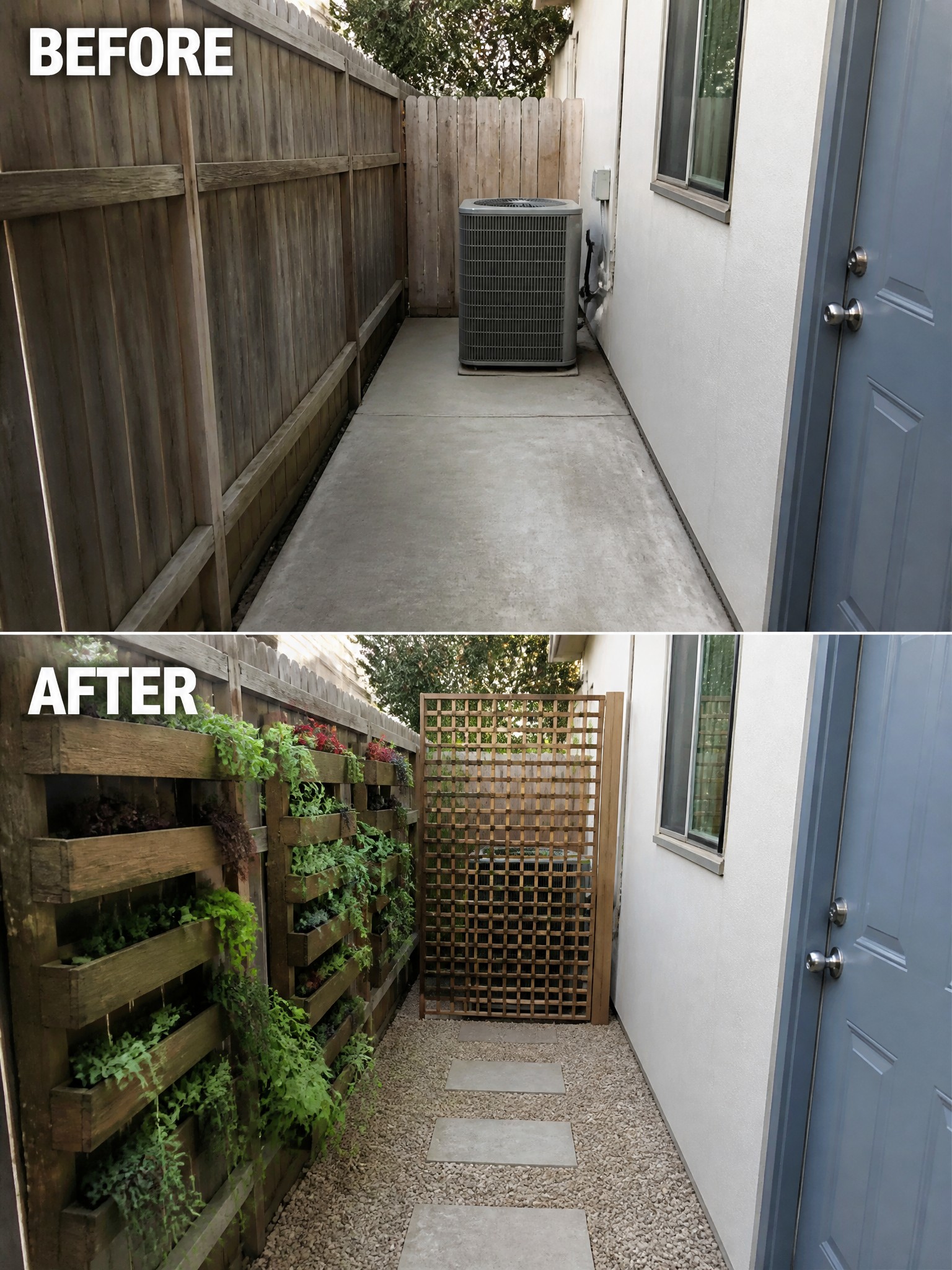
A narrow side yard next to the house often stays plain because there is no room for wide beds or big features. Placing vertical wooden planters along the fence and adding a lattice screen around the air conditioner changes the whole feel. The gravel and stepping stones replace bare concrete and give the space a simple path that feels more finished.
This idea works best on long, tight passages where you need height instead of width. Focus on the fence first for planting pockets, pick a screen that hides equipment but still allows airflow, and keep the ground cover simple. It suits homes where the side yard connects the front and back but gets ignored.
Replace A Patchy Lawn With Artificial Turf
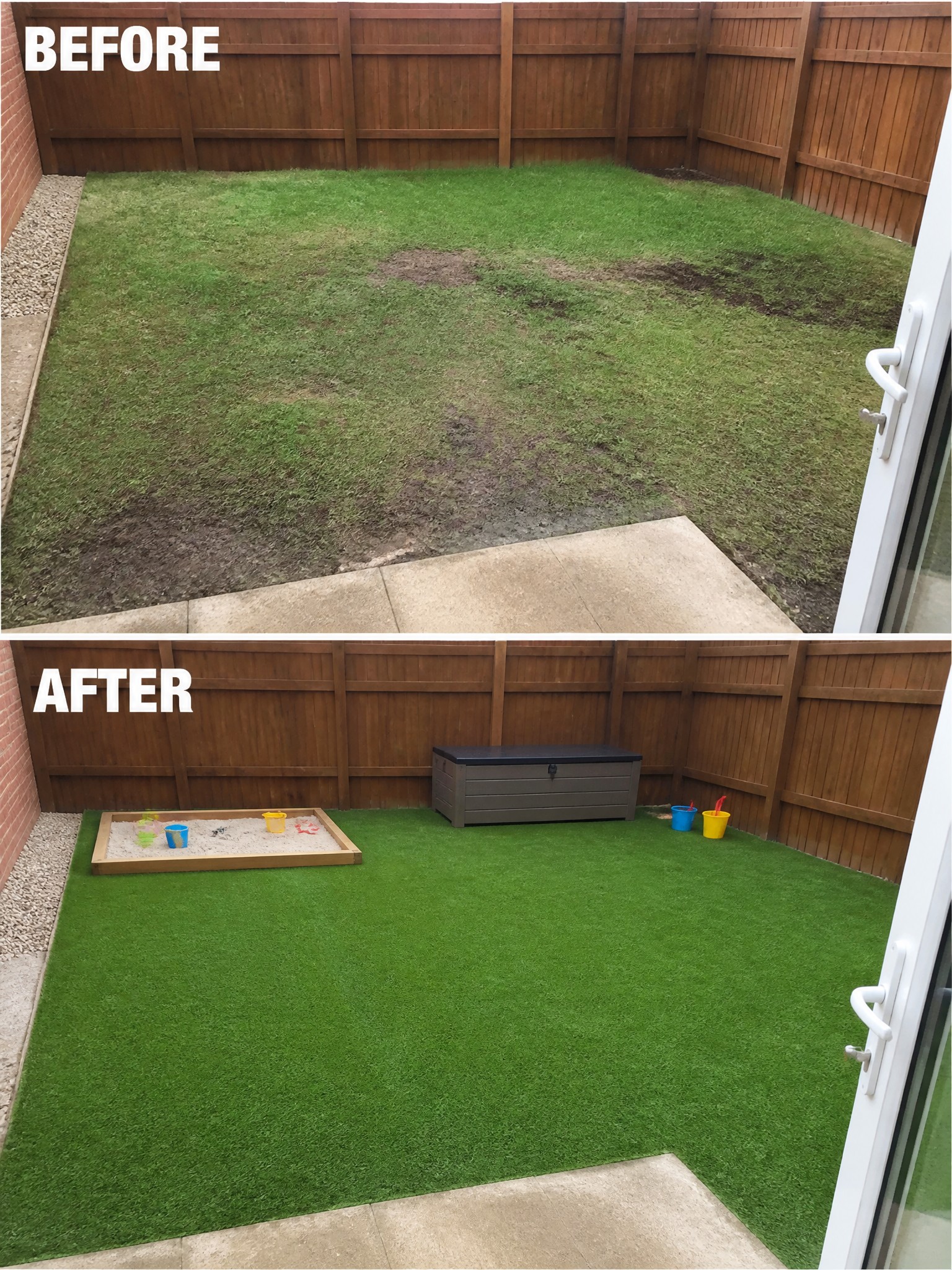
A patchy, muddy lawn is hard to keep looking decent and even harder to play on. Switching to artificial turf gives the whole yard a clean, even surface that stays green with almost no upkeep. The before photo shows worn grass and bare spots, while the after shows a flat green area that actually works for daily use.
This idea works well in small backyards or homes where real grass struggles with shade, heavy use, or poor drainage. Lay the turf over a proper base so it stays level, then add simple features like a sandbox or storage box if you need play space. Keep the rest of the yard simple so the new surface has room to breathe.
Add Defined Garden Beds To A Plain Backyard
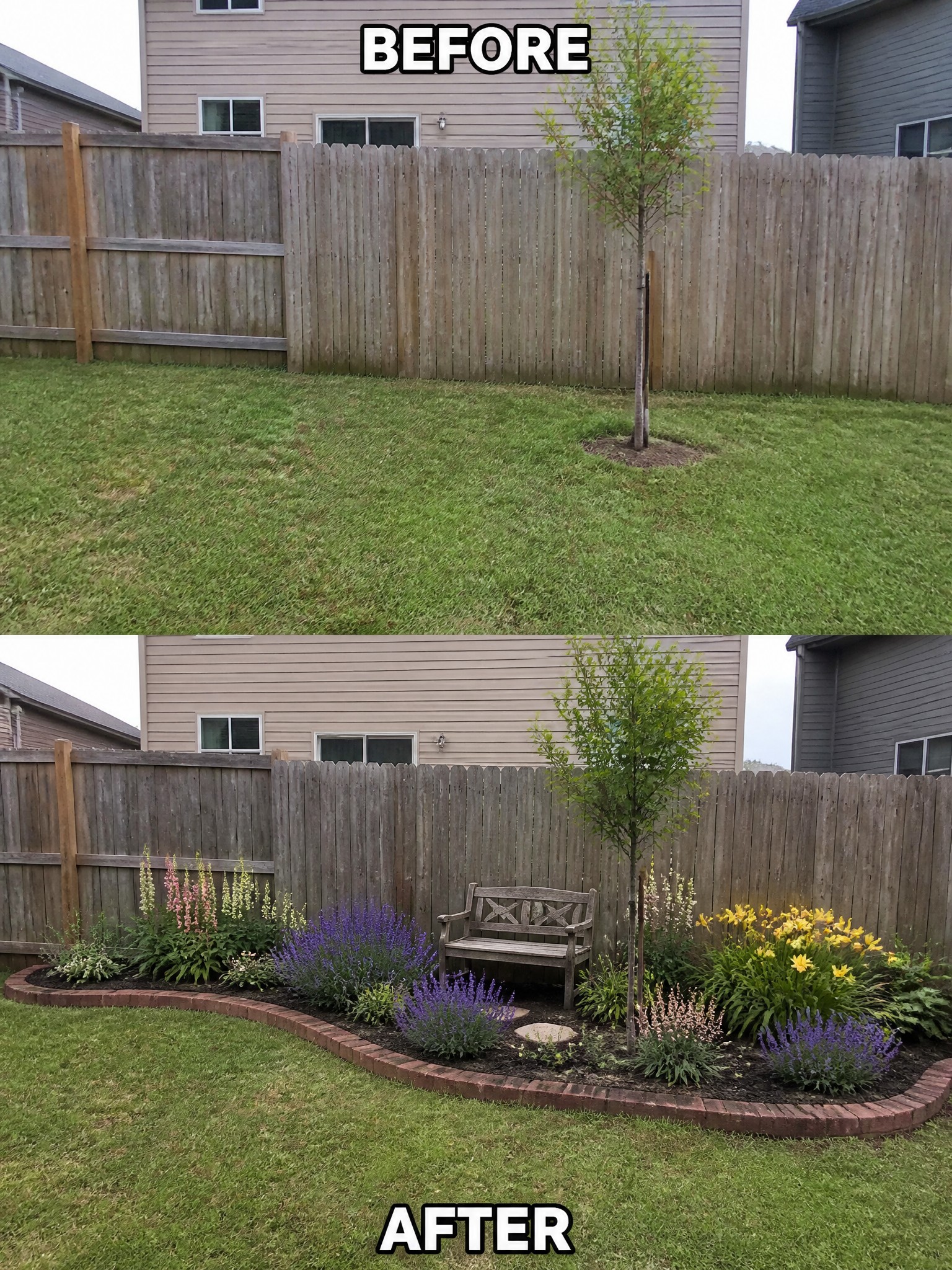
A flat lawn next to a fence often looks unfinished even when the grass is healthy. Adding a curved brick edge creates a clear planting area that turns the same space into something more structured and useful without losing the open feel of the yard.
This approach works best along property lines or near the house where you want some color and texture but still need room to walk or mow. Lay out the border first so the shape feels natural, then fill it with a mix of taller flowers in the back and lower plants in front. Keep the bed a consistent width so it stays easy to maintain.
Create Structure In A Sloped Backyard With Raised Beds
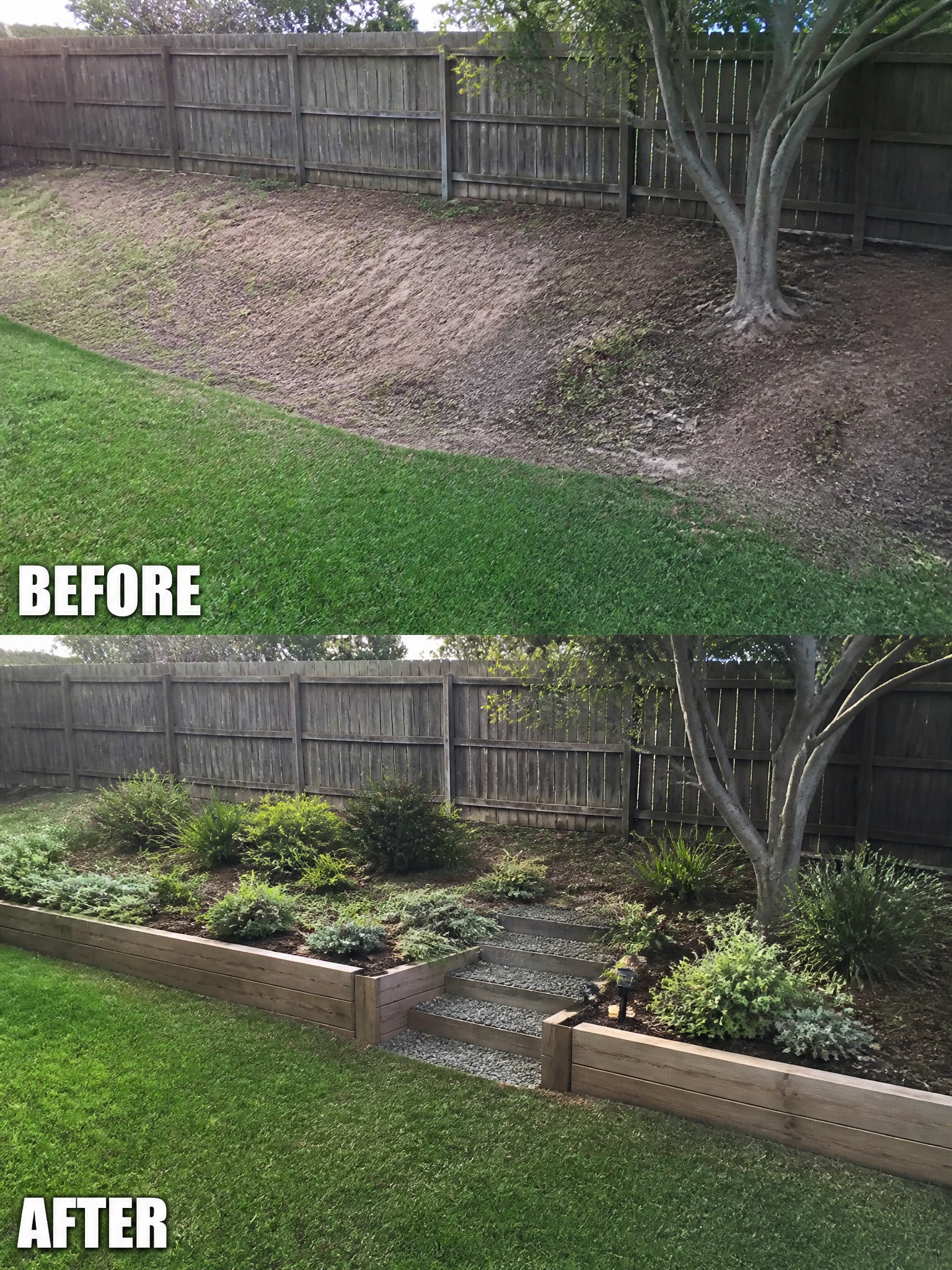
A bare slope often stays unused because it feels hard to plant or walk on. Adding raised beds gives the area clear levels and turns the dirt into actual garden space. The wooden planters and gravel steps in the after photo show how simple borders can make the slope feel intentional instead of neglected.
This idea works well in backyards with a noticeable drop or uneven ground. Start with the beds first so the layout stays practical, then fill in plants. It keeps the lawn separate and gives you room to add soil without fighting the slope every season.
Turn An Empty Corner Into An Outdoor Seating Area

A plain concrete slab often sits unused until something gives it purpose. Adding a bench as the main piece, then laying gravel around it, turns the corner into a spot that actually invites sitting.
This idea works best in small side yards or back corners where space is limited. Keep the furniture simple and let repeated pots of plants fill the edges so the area feels settled without looking crowded.
Add A Defined Path To Shape A Plain Backyard
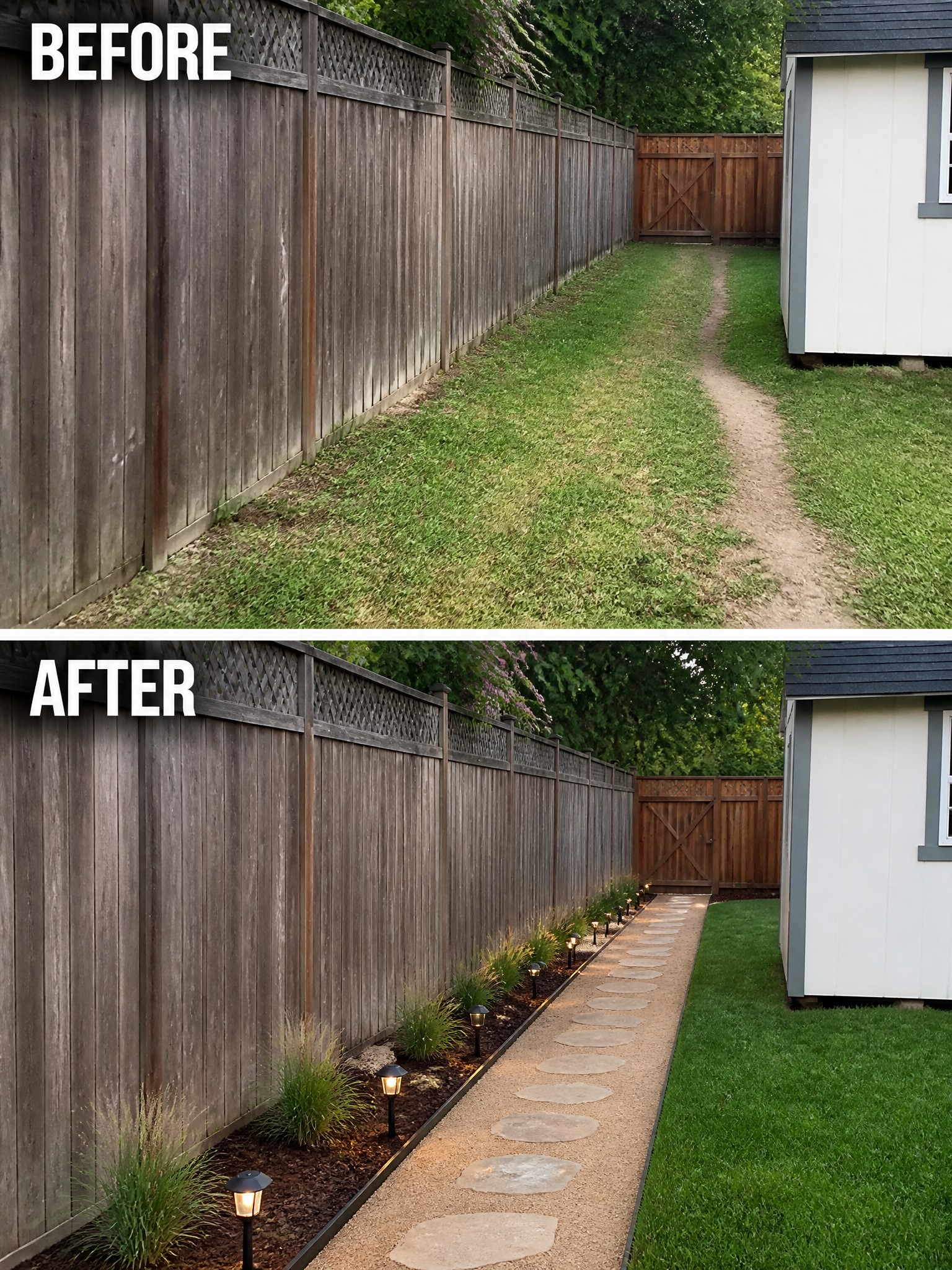
A long narrow strip of grass next to a fence often feels like wasted space until you give it a clear path. Laying down a gravel walkway with stepping stones and a row of low lights instantly turns the area into something you can actually use and walk through without getting muddy or stepping on uneven ground.
This approach works well in side yards or along property lines where grass alone does not hold up to foot traffic. Keep the planting simple with a few clumps of ornamental grass and mulch, and focus first on the path itself so the space feels planned instead of leftover.
Turn A Bare Patio Into An Outdoor Seating Area
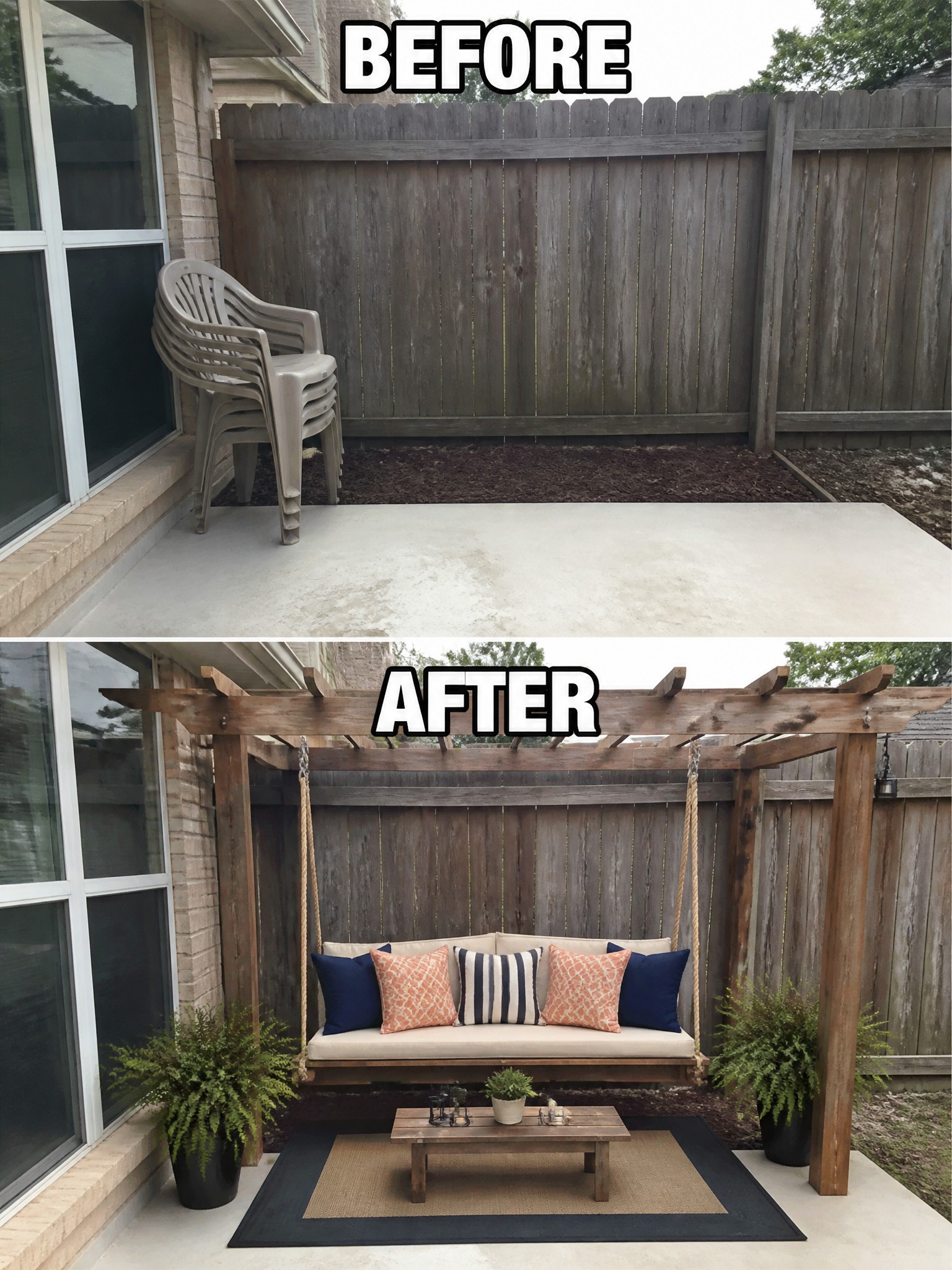
A plain concrete slab often sits unused because it lacks any sense of purpose or comfort. Adding a pergola with a hanging bench gives the space a clear focal point and turns it into a spot where people actually want to sit.
This approach works best on flat patios that back up to a fence or wall. Keep the structure simple, choose weather-resistant pieces, and add a rug underneath to mark the seating zone without crowding the area. Leave enough open space around the edges so the patio still feels open rather than packed.
Use Outdoor Lighting To Make A Backyard Usable After Dark
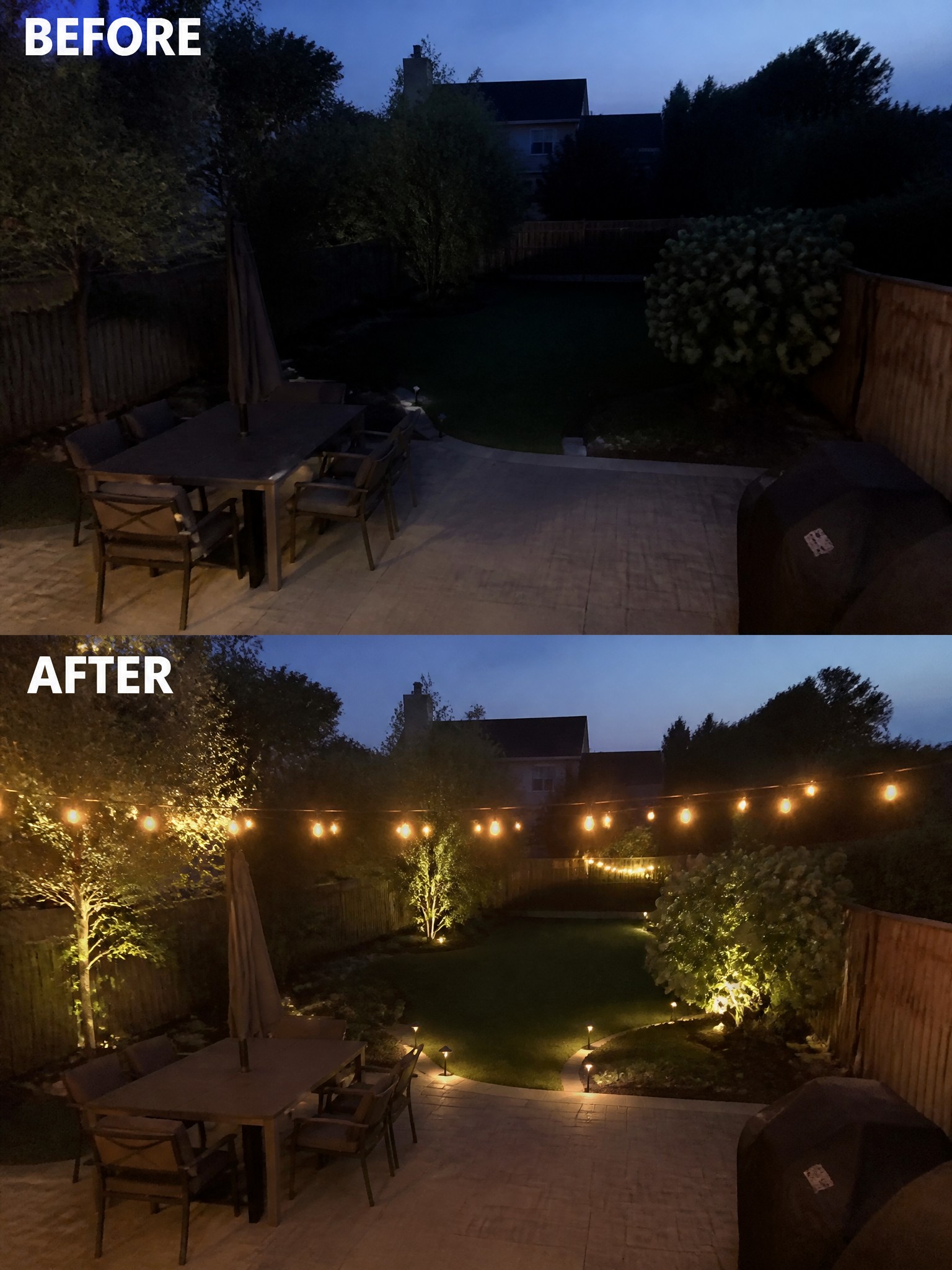
A backyard that looks fine during the day can still feel unfinished once the sun goes down. Adding string lights overhead and a few low lights along the ground and trees turns the same space into one people actually want to sit in at night. The main change here was running lights across the seating area and uplighting a couple of trees and shrubs, which made the whole yard feel more open and welcoming without needing a full redesign.
This works best in yards that already have a patio or table and chairs in place. Run one or two strings of lights from the house or a tree to a post on the far side, then add a few path lights or small uplights where you want to highlight a plant or mark a walkway. Warm bulbs keep the light soft, and starting small lets you test what feels right before adding more.
Add Structure To An Overgrown Backyard
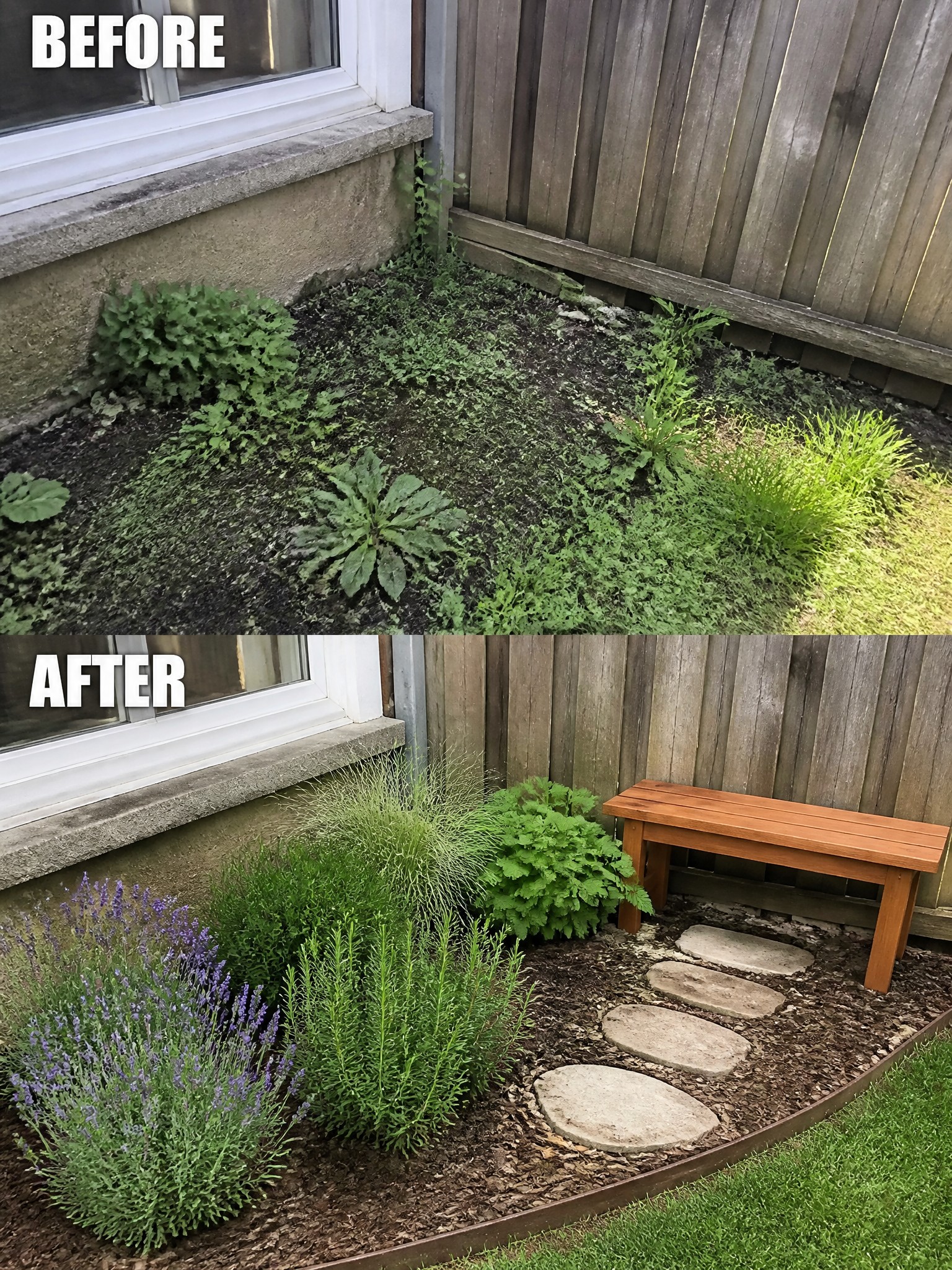
A messy corner full of weeds and random plants can make the whole yard feel neglected. Clearing the area first, then laying down mulch and adding a simple path of stepping stones gives the space a clear purpose. The bench at the end turns it into a spot people might actually use instead of just walking past.
This approach works well in narrow side yards or awkward corners near the house. Start with a thorough cleanup, keep the planting simple with a few repeating shapes, and use the mulch to separate the beds from the lawn. The result feels planned without needing a big budget or lots of new features.
Turn A Bare Patio Into An Outdoor Living Area
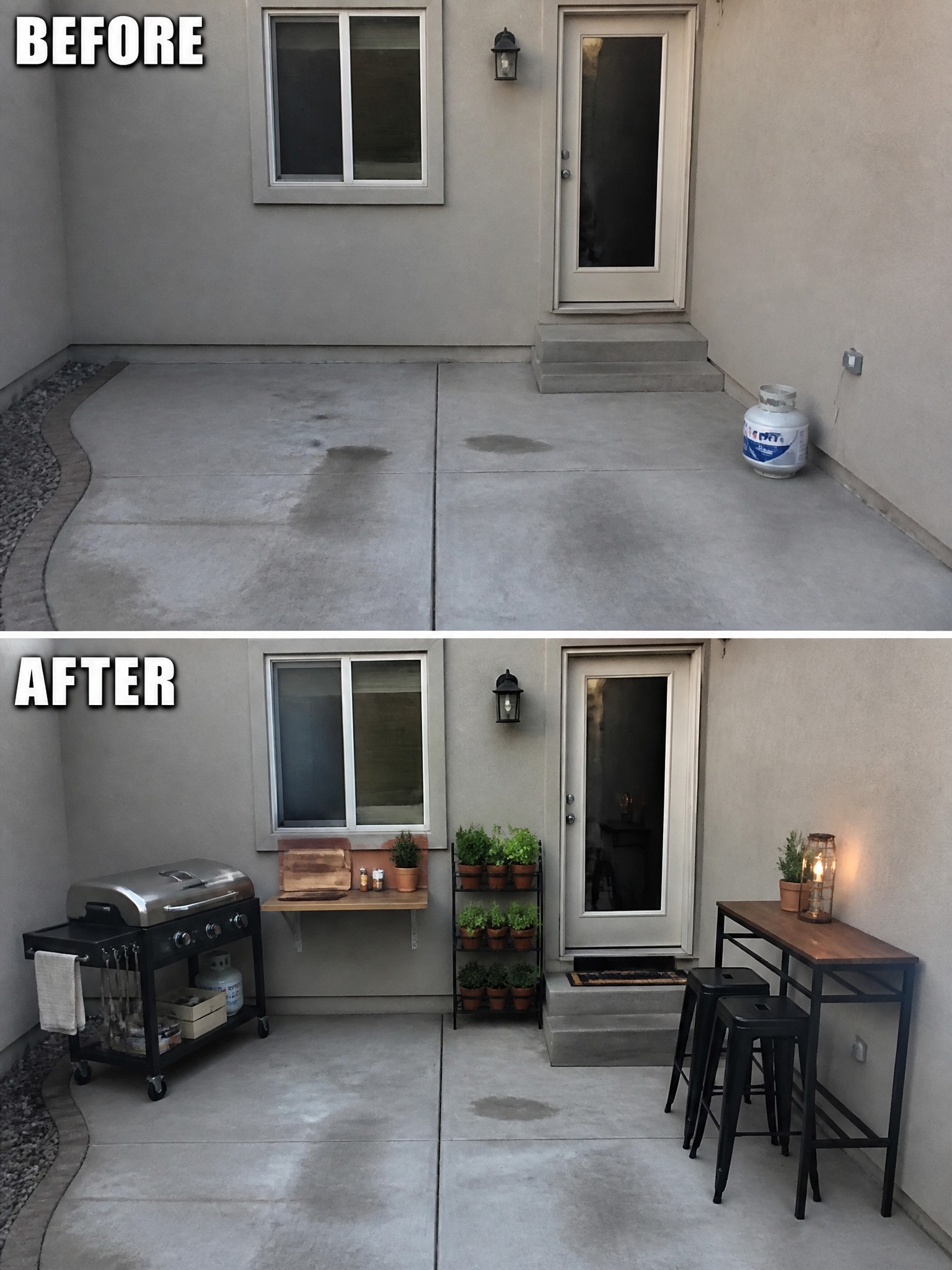
A plain concrete slab often sits empty because it has no clear purpose. Adding a grill cart on one side and a narrow table with stools on the other creates two simple zones that make the space feel usable right away.
This idea works best on small or narrow patios where you do not want to block movement. Keep the center open, choose pieces that can stay outside, and add a few potted plants so the area feels finished without crowding it.
Add A Garden Bed To Give A Plain Yard More Shape

A large empty lawn can feel unfinished even when the grass looks fine. Placing a wide flower bed in the middle of the open space adds color, breaks up the flat look, and gives the yard a clear sense of purpose without filling it with structures or furniture.
This idea suits medium or bigger backyards where the lawn dominates. Mark a simple curved shape, edge it cleanly, and use a mix of easy flowers and ground cover. Keep the bed wide enough to make an impact but leave plenty of grass around it so the space still feels open and easy to walk through.
Turn A Plain Wall Into Outdoor Seating
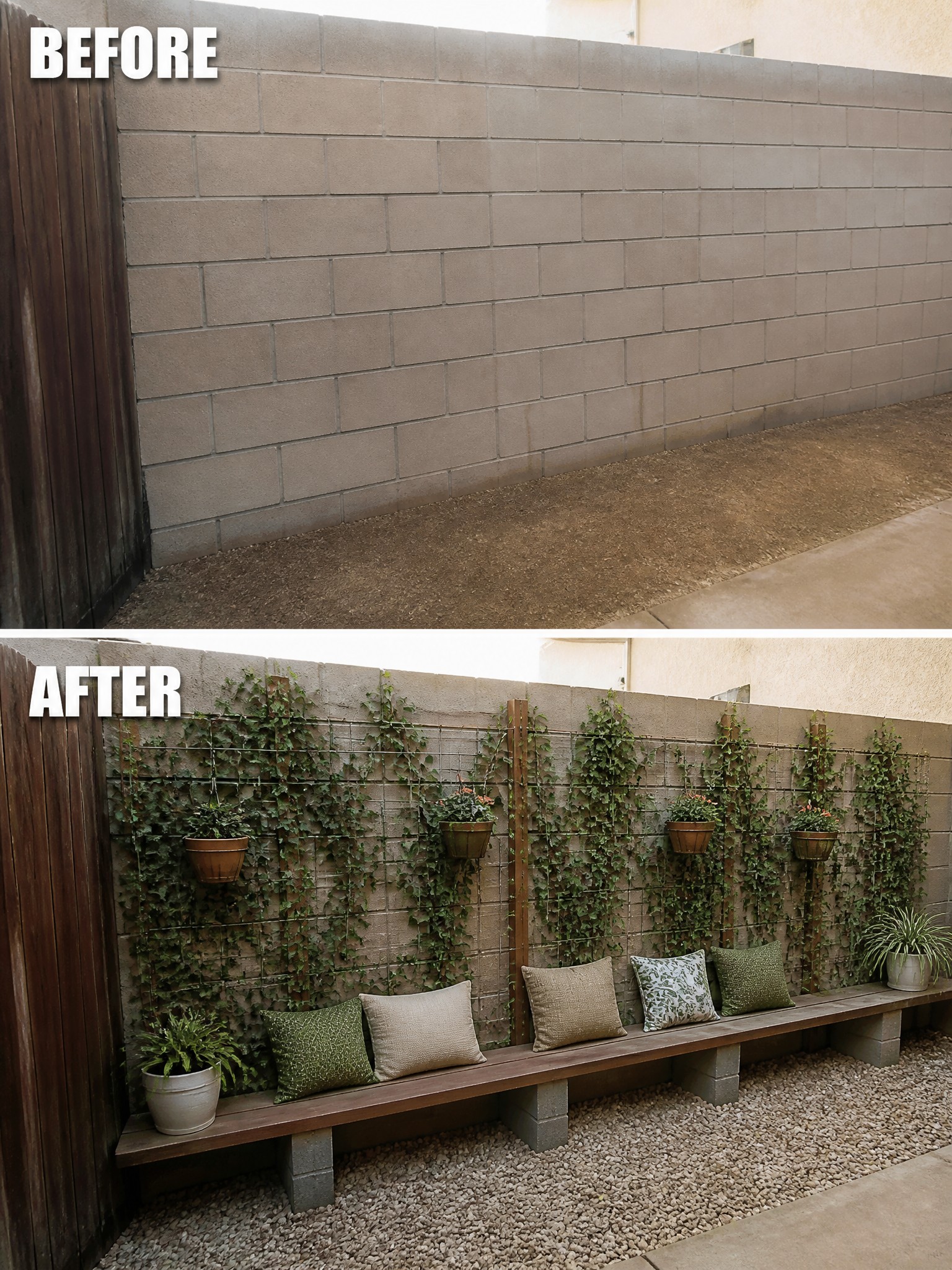
A blank wall with nothing but dirt below it often gets ignored in a backyard. Placing a long bench along the base and adding a simple trellis for vines turns that same stretch into a usable spot to sit without taking up much floor space.
This idea works best in narrow yards or along side fences where a full patio would not fit. Keep the bench low and anchored so it stays stable, and let the vines fill in gradually rather than trying to cover everything at once. Leave room to walk in front so the seating feels inviting instead of cramped.
Add Structure To A Narrow Side Yard
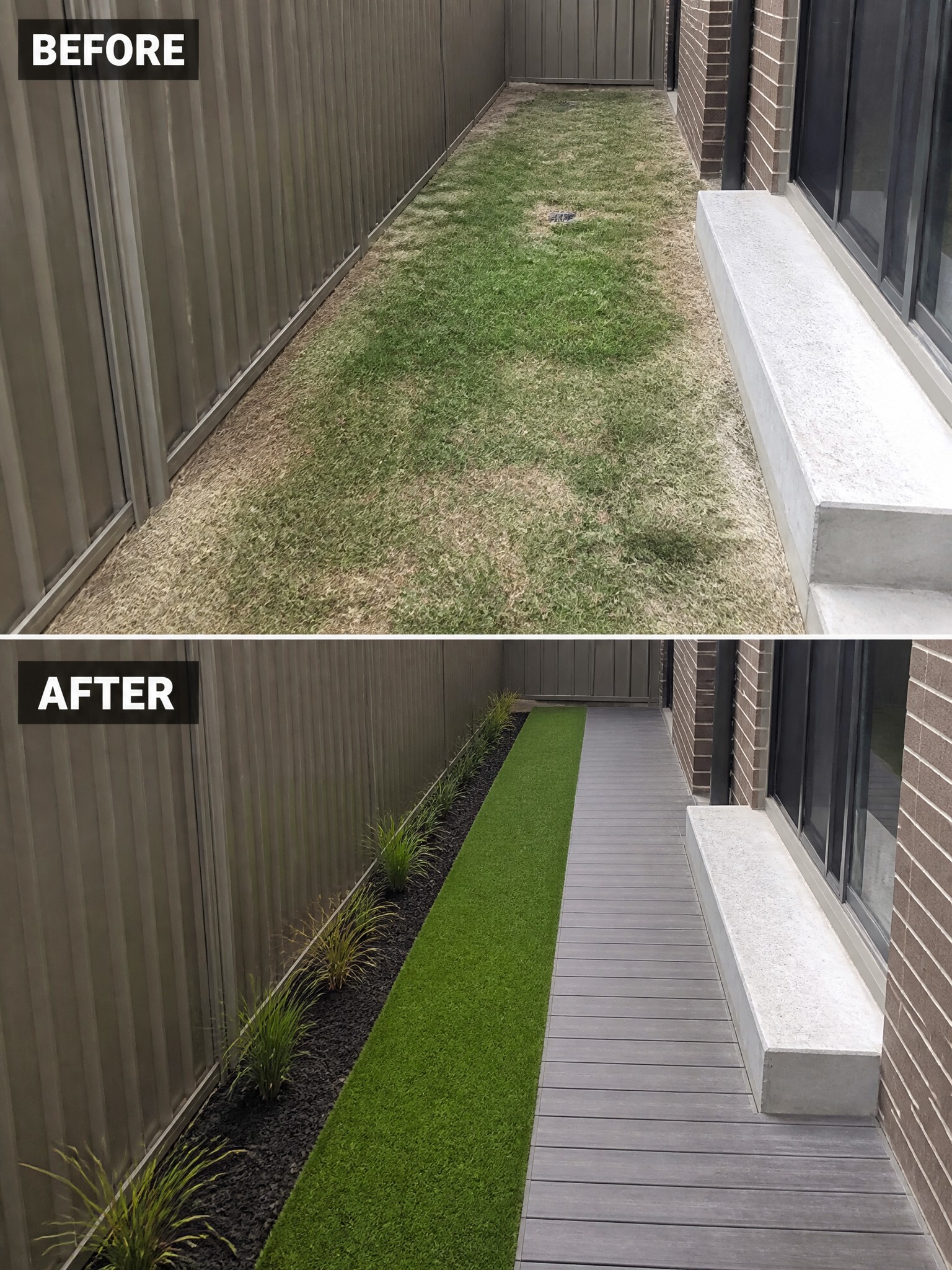
A long, narrow strip between the house and fence often ends up as patchy grass that is hard to mow and never looks tidy. The simplest fix is to stop fighting the grass and instead lay out one clean planted bed along the fence, then use decking or pavers to create a proper walking path. That single change turns the space from wasted ground into something you can actually walk through without getting your shoes wet.
This approach works best on tight side yards or townhouse backyards where there is little room for curves or big features. Keep the planting simple, use mulch to hold the bed edges, and choose a path material that handles regular foot traffic. Once the basic lines are in place you can add a few plants without the whole area looking crowded.
Create Defined Garden Beds Along The Foundation
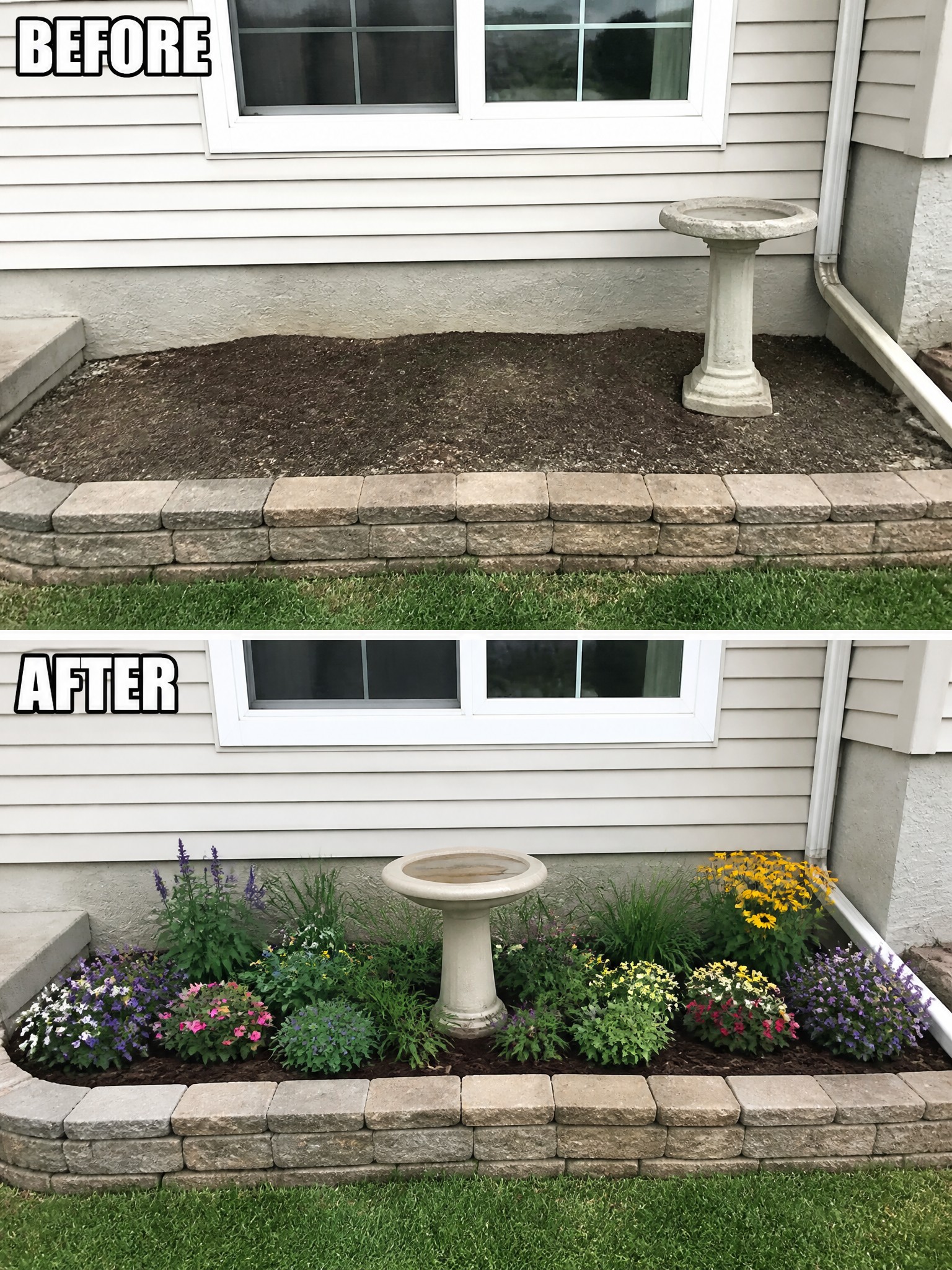
A bare strip of dirt right next to the house often looks unfinished even when it is tidy. Adding a simple border of plants turns that empty space into a real garden bed and gives the whole side of the house a more settled look. The birdbath stays in the same spot but now sits inside a ring of color instead of sitting alone in mulch.
This idea works best on narrow beds where you want structure without crowding the walkway. Start with a few taller plants toward the back, fill in with shorter flowers in front, and repeat a couple of colors so the bed feels planned rather than scattered. Keep the planting simple and leave room to walk around the birdbath or any other focal point you already have.
Use String Lights To Turn A Bare Backyard Into An Outdoor Room
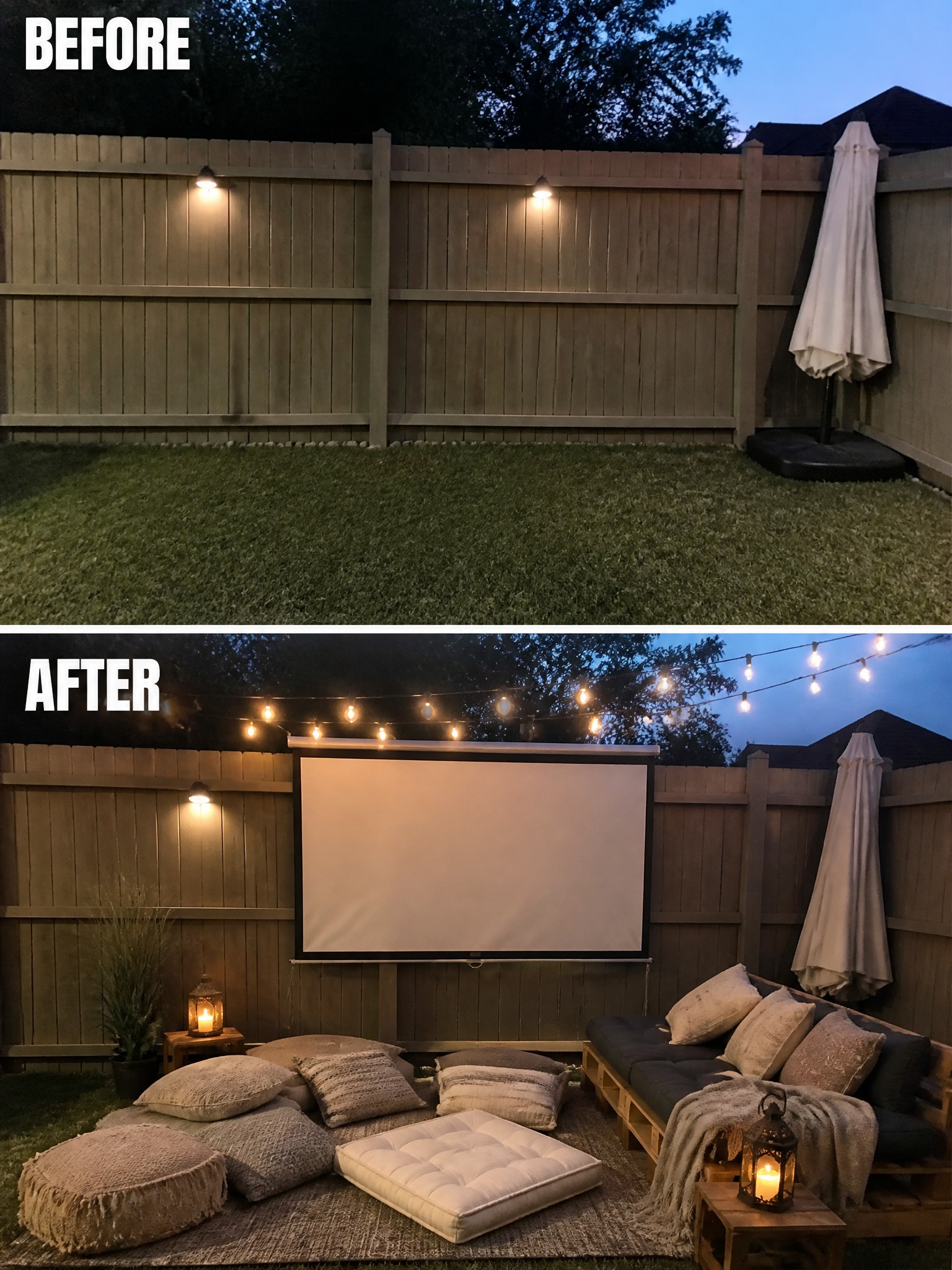
A plain backyard with just grass and a fence can feel empty at night. String lights add height and a sense of enclosure, while a simple screen gives the space a clear purpose for evening use.
This idea works best in smaller yards where you want one main gathering spot. Hang the lights first to mark the area, then add low seating and a rug so the zone feels defined without crowding the lawn.
Frequently Asked Questions
Q: Where should I begin if my budget is really tight this month? A: Pick one idea that uses what you already have on hand. Rearrange existing pots or add a coat of paint to old furniture first. Then add a couple of cheap plants to finish the look.
Q: My soil stays wet all the time. Which transformations hold up best? A: Build raised beds with cheap lumber to lift plants out of the damp ground. Add gravel paths so you can walk through without sinking. Stick to moisture loving plants like irises near the wet areas.
Q: How do I make sure the whole yard feels pulled together after picking a few ideas? A: Repeat one or two colors across the projects. Keep pathways simple and consistent. That ties everything without extra spending.
