

Garden beds that have been left alone for a while often end up crowded with weeds and missing any clear shape.
Working on the edges and adding a layer of mulch can help define the space and give plants room to grow properly.
I have noticed that starting with basic cleanup usually shows the biggest difference before anything else gets added.
Over the seasons these small steps add up and make the area feel like part of the yard again instead of something overlooked.
Testing one or two at a time works well in most gardens.
Add Simple Edging To Clean Up Messy Beds
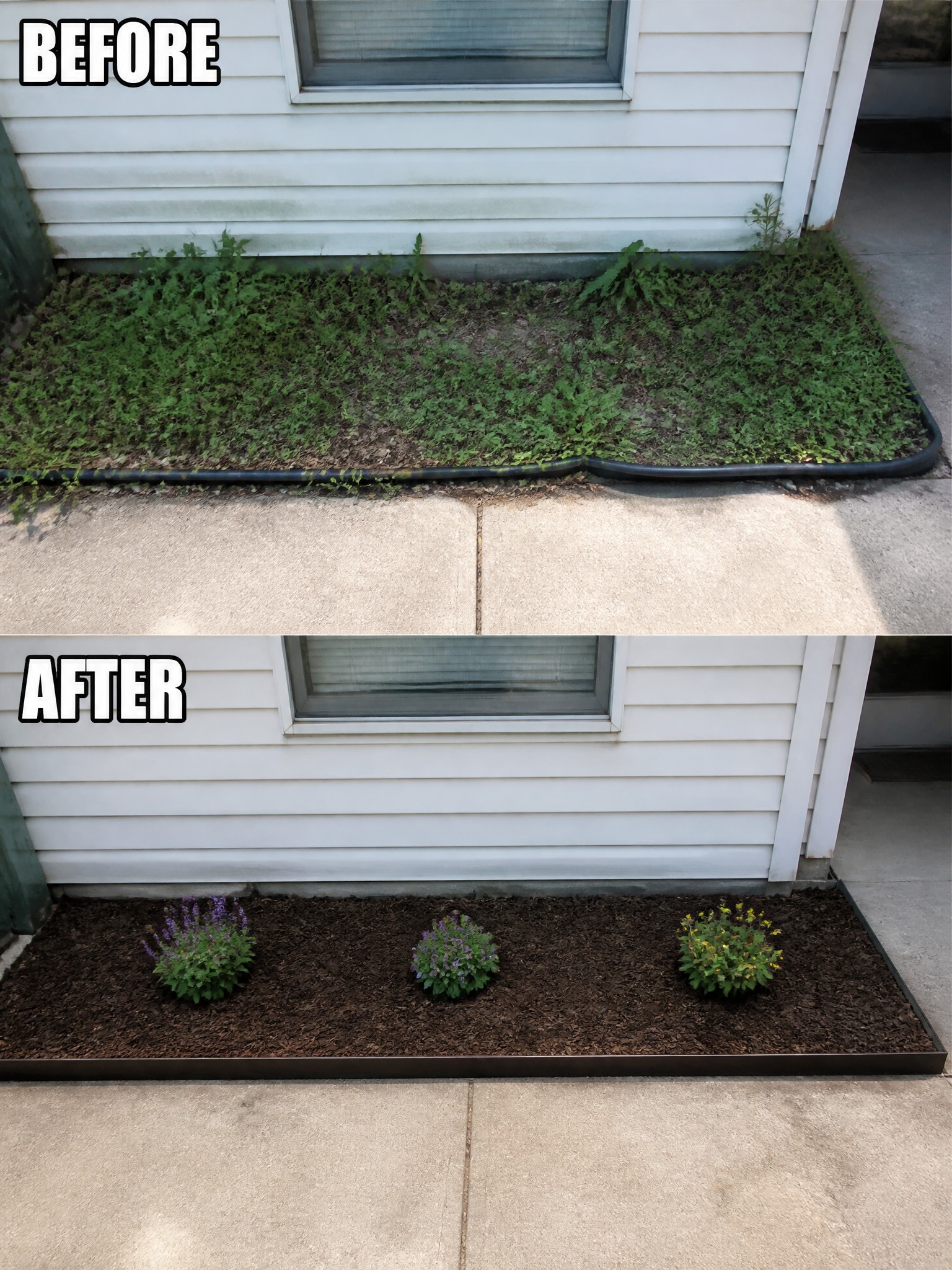
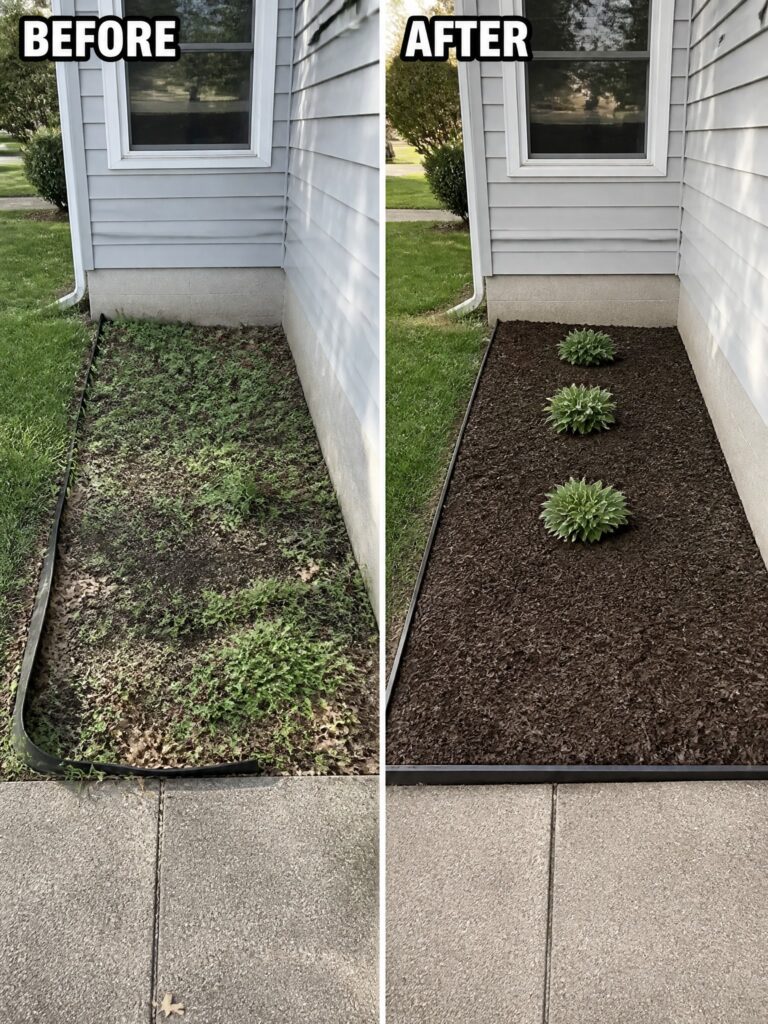
Overgrown weeds along a house foundation always look worse than they are. Adding a clean edge and a layer of mulch turns the same strip into something that looks intentional instead of forgotten. The black metal border keeps the mulch in place and stops the grass from creeping back in right away.
This approach works best on narrow beds next to the house or along a walkway. Remove the worst of the weeds first, set the edging so it sits level with the pavement, then spread mulch thick enough to cover the soil. A few small plants are enough once the bed has shape.
Edge Overgrown Strips To Create Defined Beds
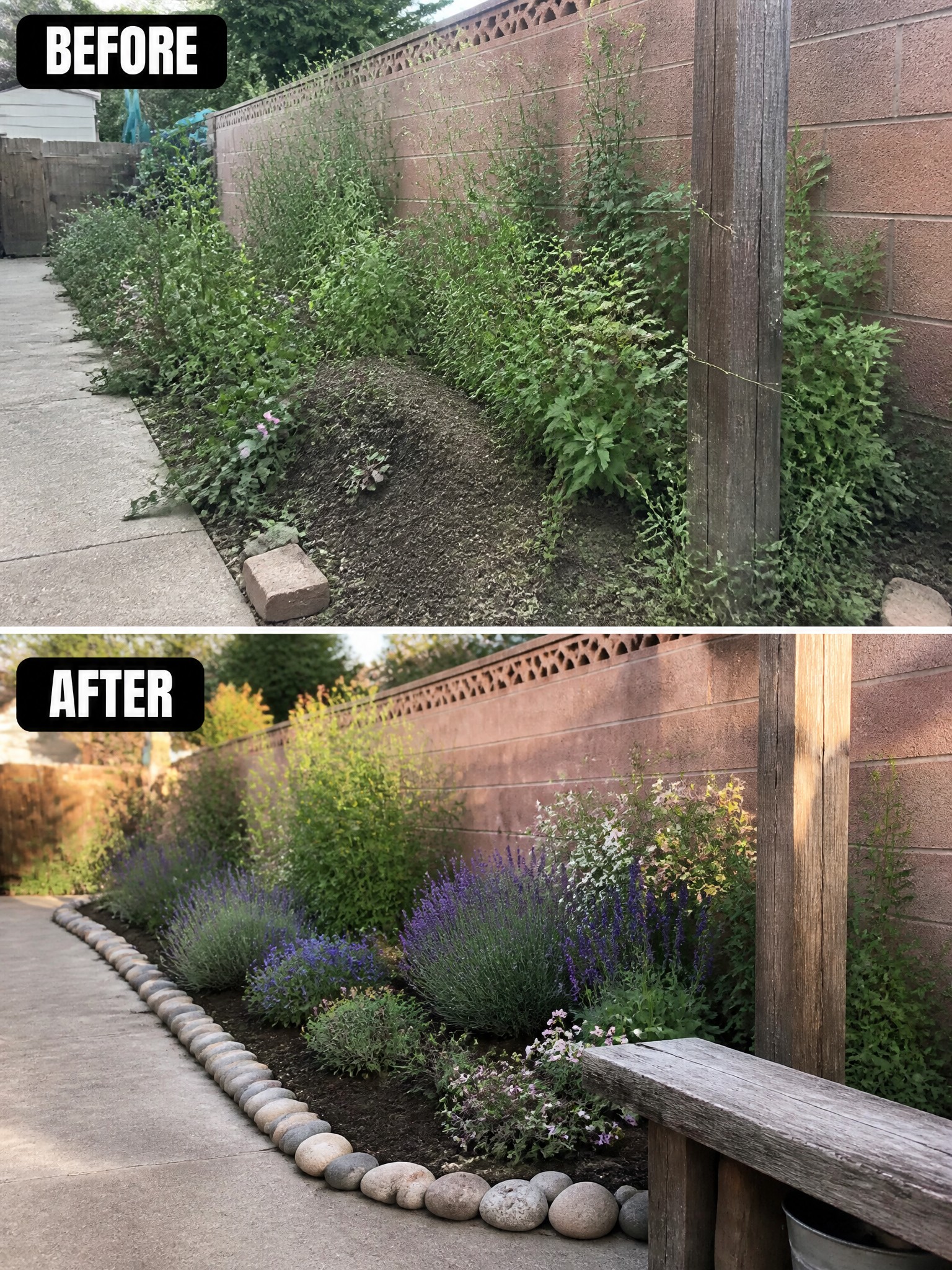
A long strip of weeds along a wall or fence usually looks messy because it has no clear edge. Adding a simple border of stones or bricks and filling it with low plants turns the same space into a real garden bed that feels planned instead of forgotten.
This approach works best on narrow strips next to paths or fences where you do not have room for big changes. Clear the weeds first, lay whatever edging you have on hand, then plant a few reliable perennials that will fill in without much fuss.
Create Defined Garden Beds In Neglected Areas
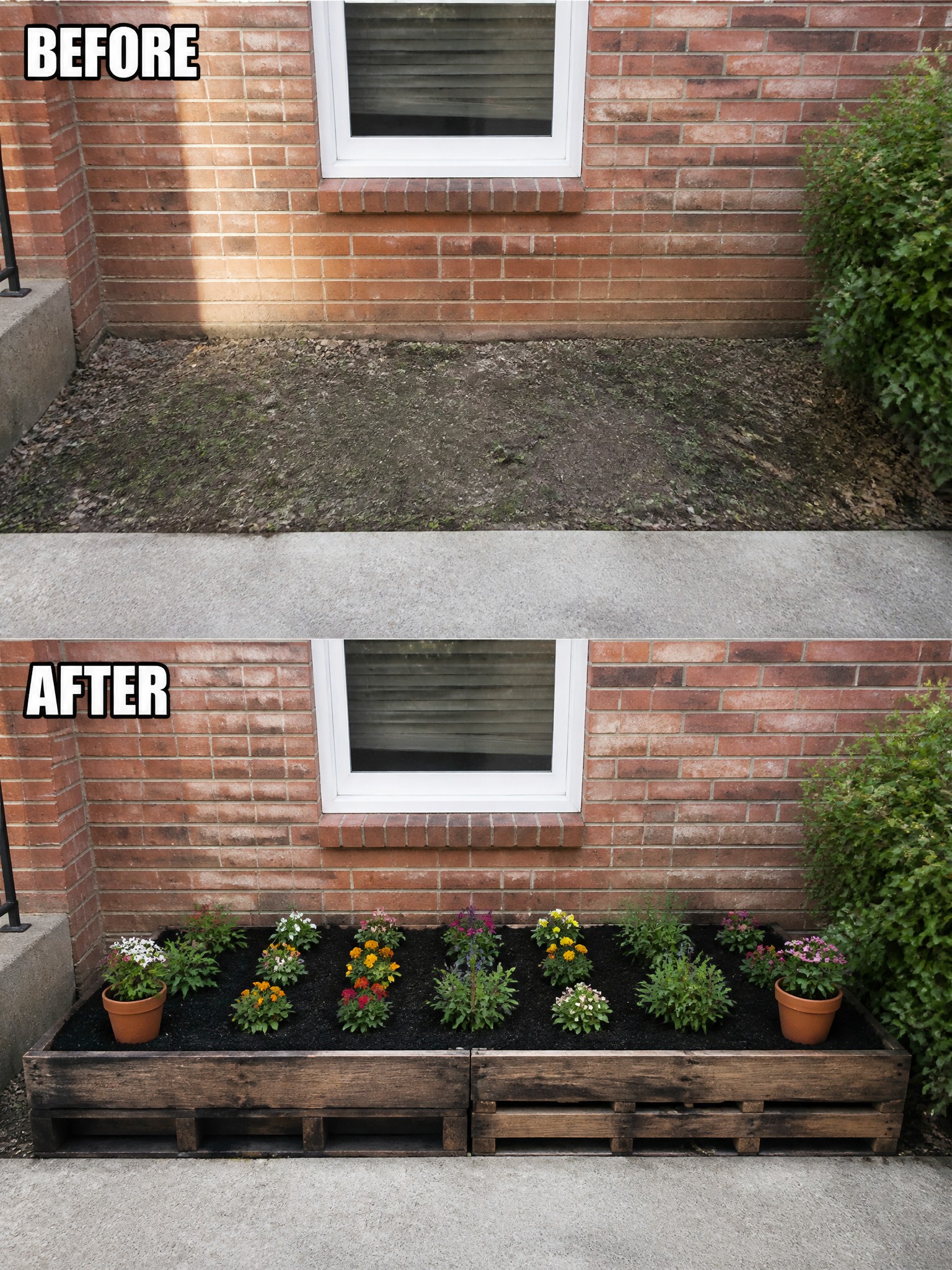
A bare patch of dirt next to the house often stays that way because it lacks any real edges. Adding a simple raised bed gives the space a clear shape and keeps the soil contained so plants can actually take hold. The change from loose ground to a framed bed makes the area look intentional instead of forgotten.
This idea works best along house walls or under windows where space is tight. Use old pallets or basic lumber to build the frame, then fill it with soil and add a mix of plants that suit the light. It suits small yards or side yards that need structure without a big budget or major digging.
Add Structure To Neglected Garden Beds

The main change here is turning a weedy, uneven strip along the fence into a clean gravel bed with a stepping stone path. Clearing the overgrowth first and then adding gravel gives the space clear edges and makes the plants stand out instead of getting lost in the mess.
This approach works best in narrow side yards or along fences where you want something simple and low maintenance. Edge the bed, add gravel over fabric, and place a few stepping stones to create a path. Keep the planting light so the bed stays easy to walk around and does not feel crowded.
Define A Neglected Bed With A Simple Frame

A messy strip of ground along the foundation is hard to keep tidy when the edging is broken and weeds spread freely. Adding a basic raised frame gives the bed clear boundaries, holds the soil in place, and makes regular planting and weeding much easier.
This approach works well along house walls or walkways where you want a low, finished look without major construction. Use straight lumber, seal or paint it for weather protection, and keep the planting simple so the frame stays visible.
Clear Overgrowth Before Planting New Beds
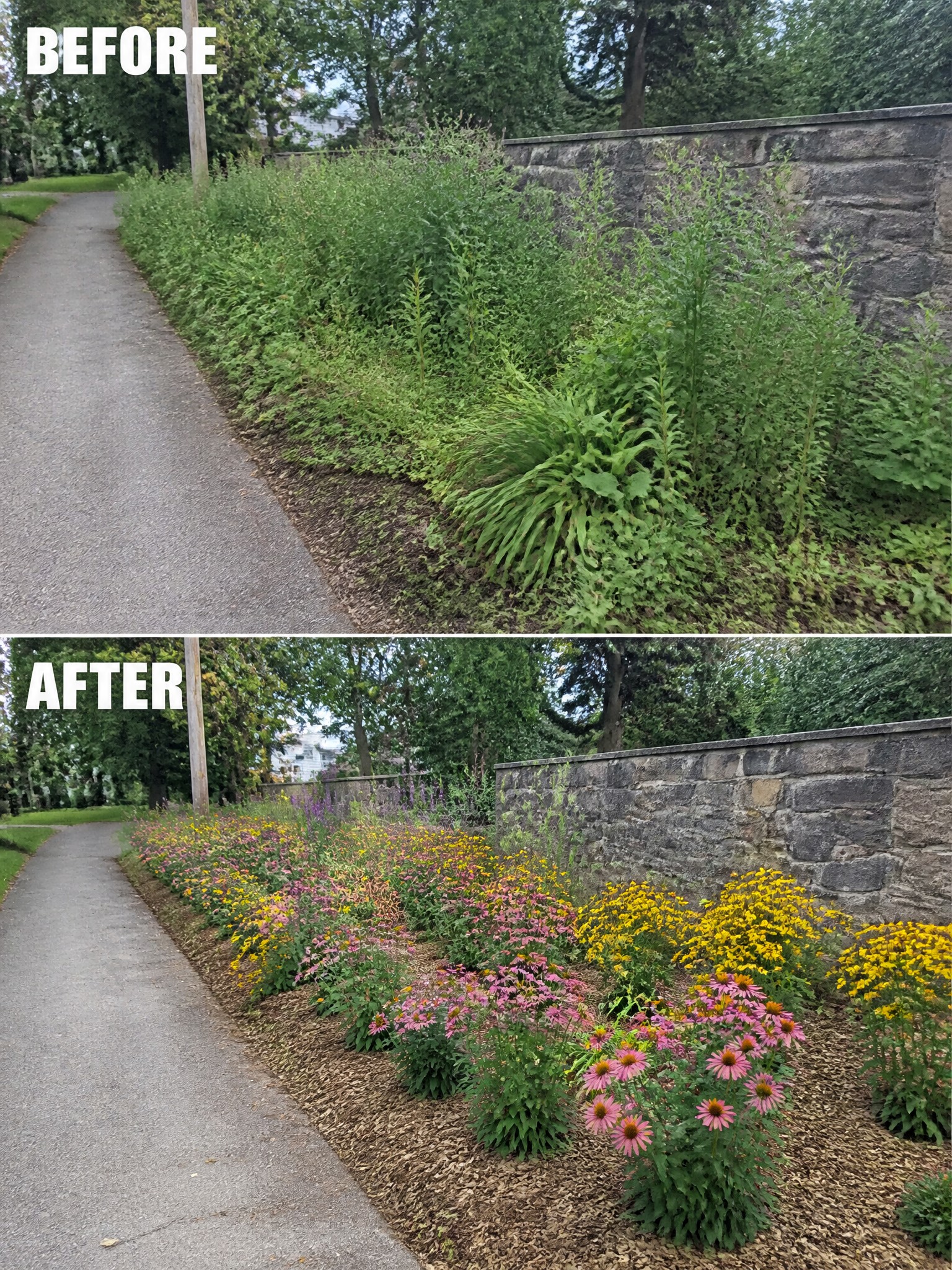
Many neglected beds get ignored because the weeds and tall growth make the whole area look hopeless. Clearing that first reveals the actual shape of the space and lets you start fresh without fighting through old growth.
After the cleanup, a simple layer of mulch and a few groups of sturdy perennials keep the bed looking neat along the path. This works well for long borders next to walls or walkways where you want color without constant weeding.
Layer Plants To Fill A Neglected Garden Bed
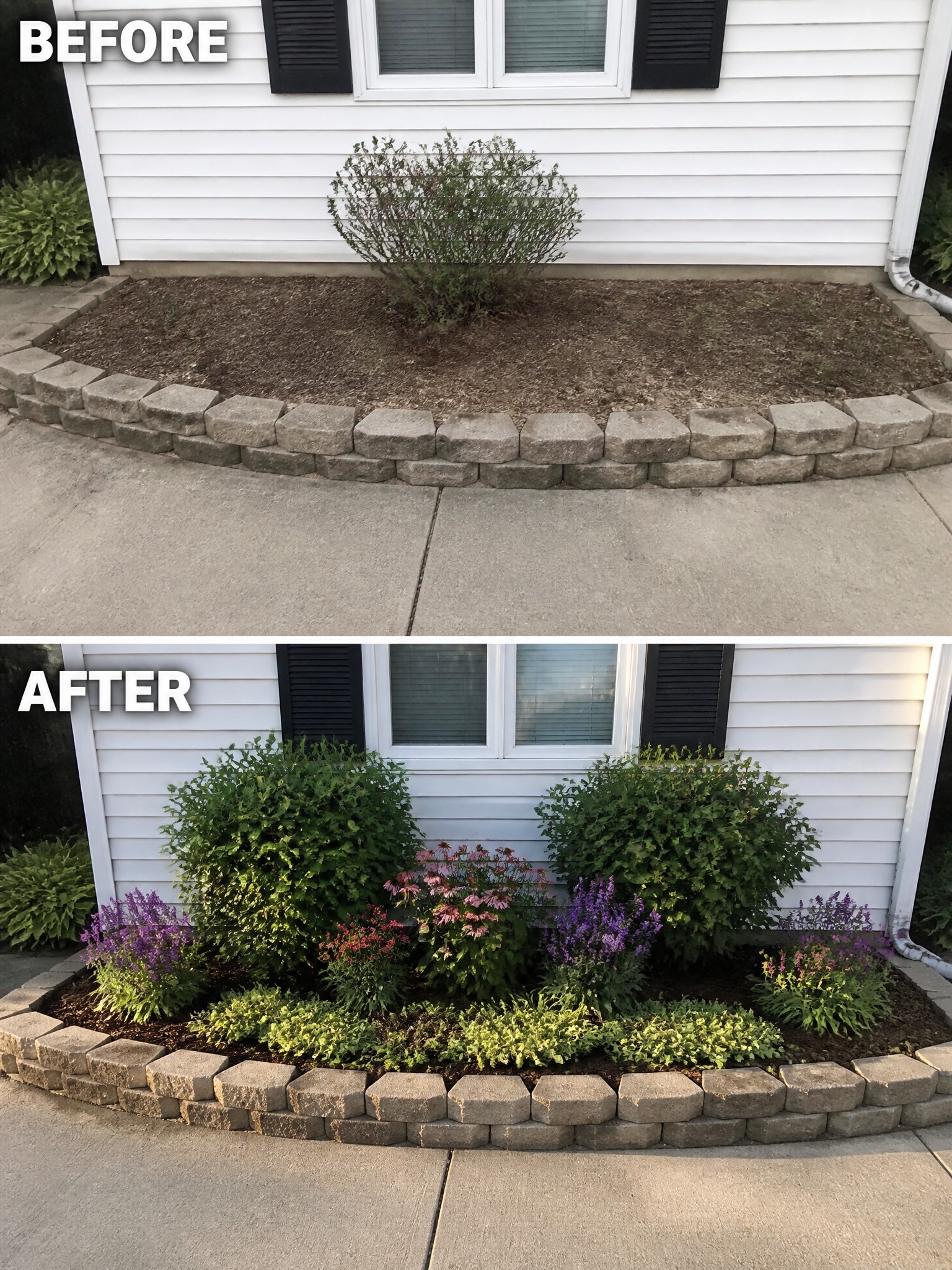
A bare bed with one small shrub looks unfinished next to the house. Adding a few taller shrubs in the back, some mid-height flowering plants, and low ground covers in front creates a simple layered look that makes the whole area feel intentional.
This works best along a foundation where you want year-round structure without a big budget. Place the largest shrubs first for height, then add perennials and spreading plants to cover the soil. The result stays low maintenance once everything fills in.
Fill A Bare Bed With Large Pots For Quick Color

A neglected strip of dirt next to the house can look finished fast when you set down a few large pots. The change here comes from adding several terracotta containers planted with flowers and trailing vines, plus a bit of gravel around the base. This gives the bed height and color without needing to dig up the whole area.
Large pots suit spots where the soil stays poor or where you want the option to move things later. Group three or four containers of different sizes, keep the plants simple, and let the pots do the main work. The result feels planned even on a small budget.
Refresh Neglected Beds With Gravel And Edging
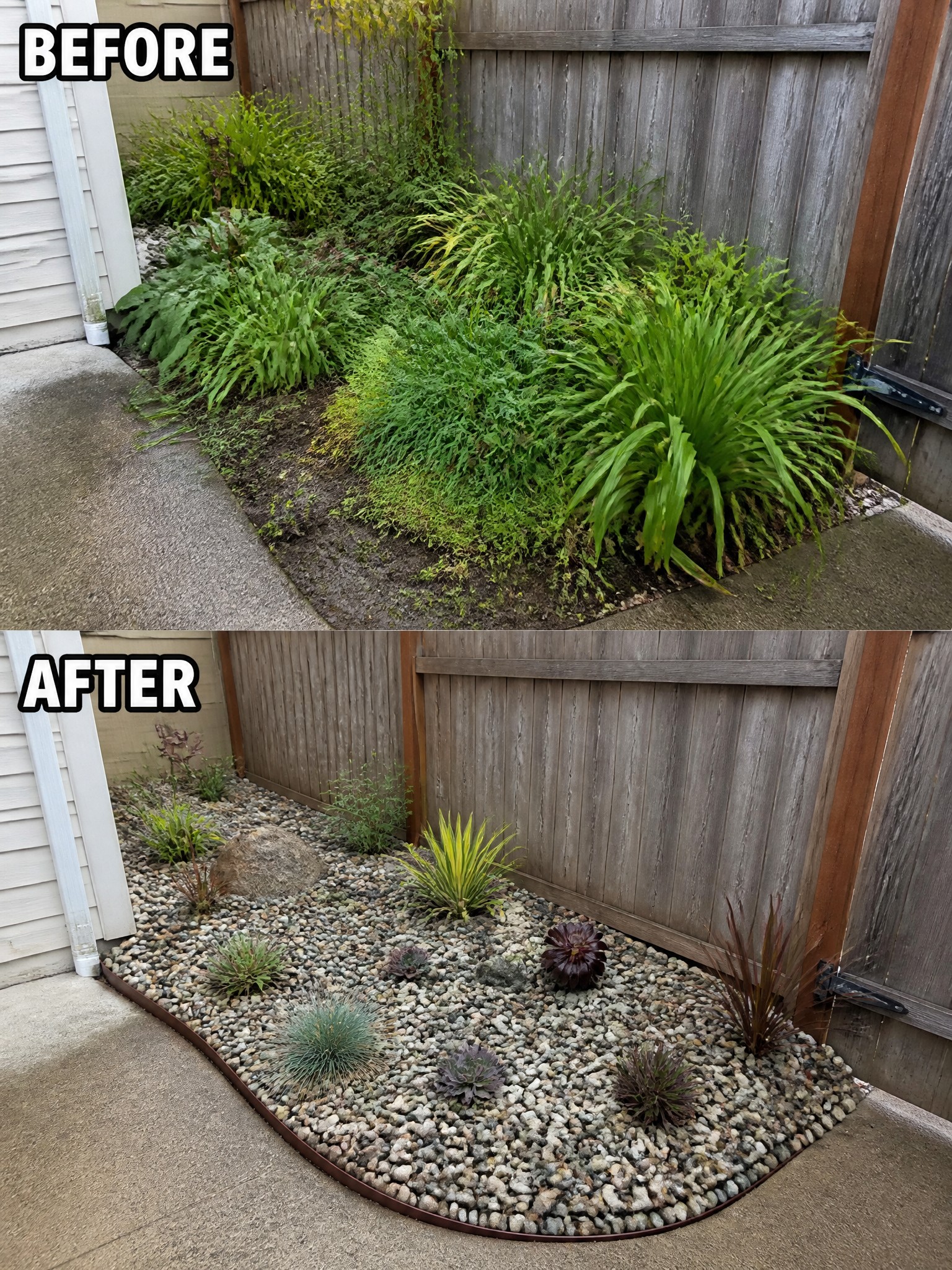
Clearing out the thick, tangled growth first makes the biggest difference. Adding a layer of gravel and a simple metal edge turns the same narrow strip into something neat and much easier to keep under control.
This idea suits small side yards or foundation beds where heavy planting quickly gets out of hand. Keep the new plants spaced out so the gravel stays visible, and choose tough varieties that will not need constant trimming.
Add Structure To An Overgrown Fence Line
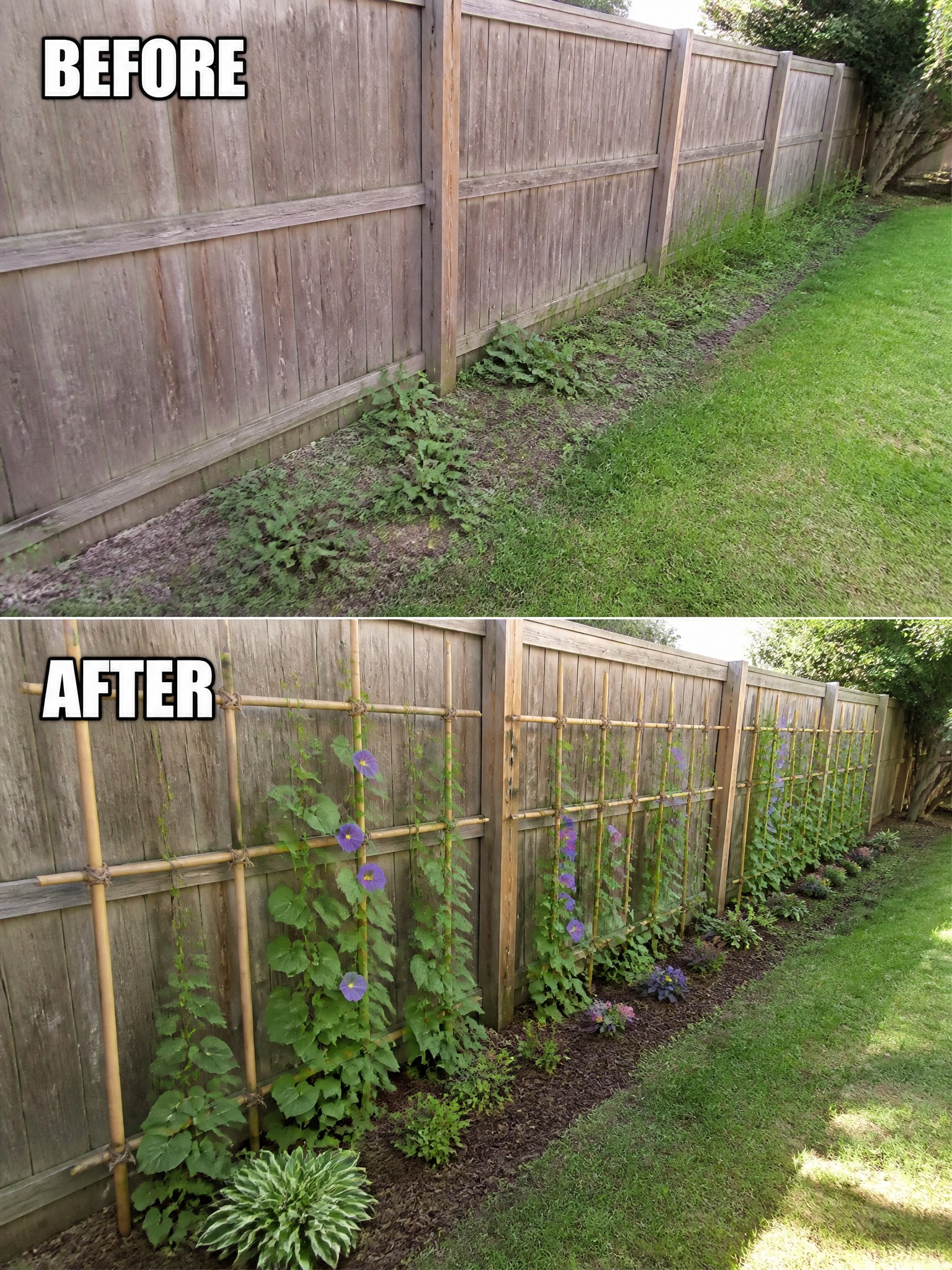
A messy strip of weeds along a fence is a common problem in older yards. Adding a simple bamboo trellis gives the area height and turns the border into something more organized. The climbing vines fill in quickly and keep the look from feeling flat.
This approach suits long, narrow beds where you want vertical interest without crowding the ground. Secure the trellis to the fence first, then plant climbers at the base and add a layer of mulch to hold everything in place. It works best on basic wood fences and keeps the project small and affordable.
Add Solar Lights Along Neglected Beds
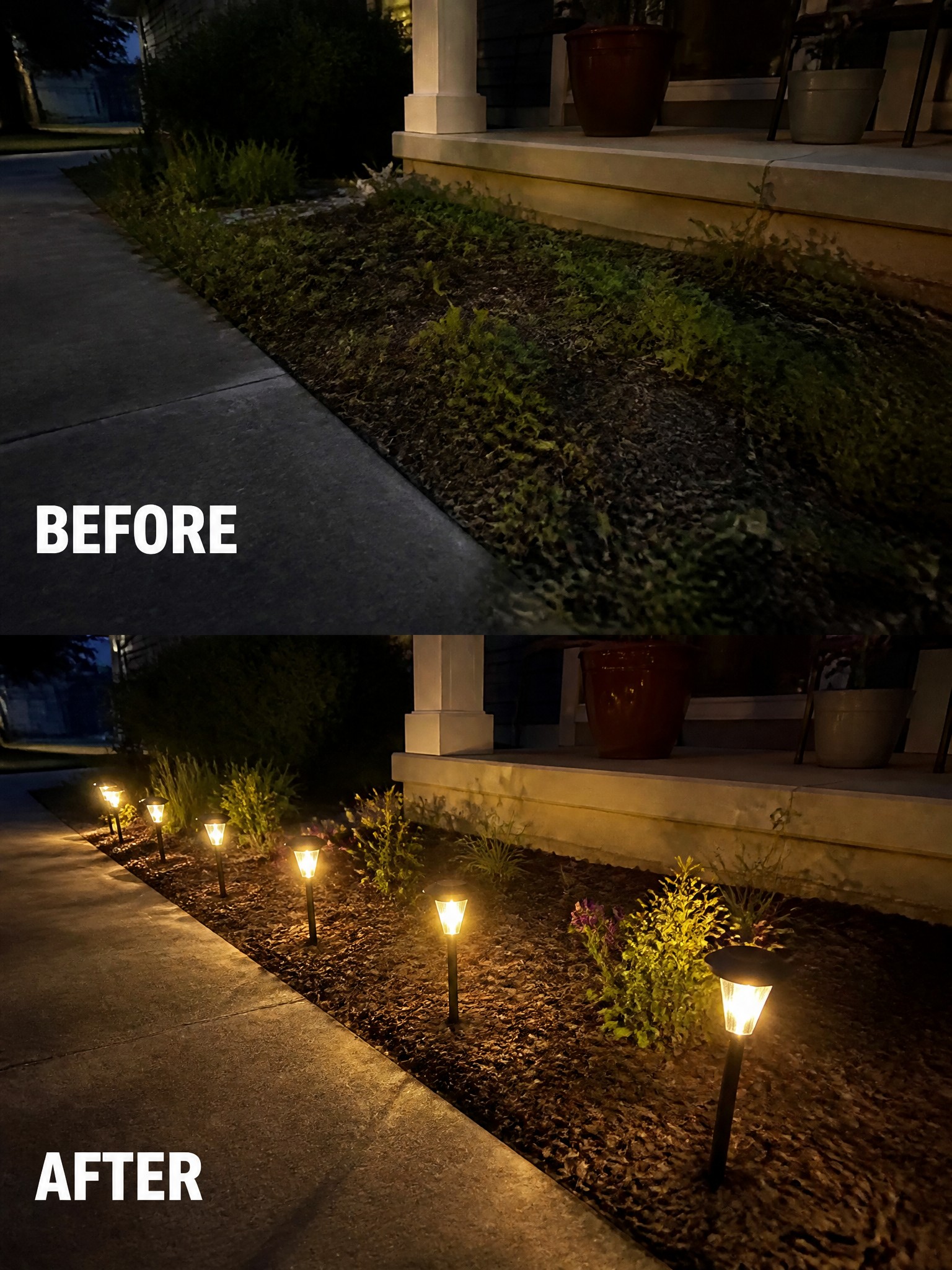
One easy way to improve a neglected garden bed is to add simple lighting. Here the main change was placing a row of solar lights along the front edge of the bed next to the path. The lights make the area easier to use after dark and give the planting a clearer shape without any wiring or big expense.
Solar lights suit most homes because they can be moved if needed and require almost no upkeep. Put them where they get sun during the day and keep the spacing even so the light stays balanced. This works especially well on beds that run along a walkway or near an entry.
Mulch Neglected Beds For A Neat And Manageable Garden
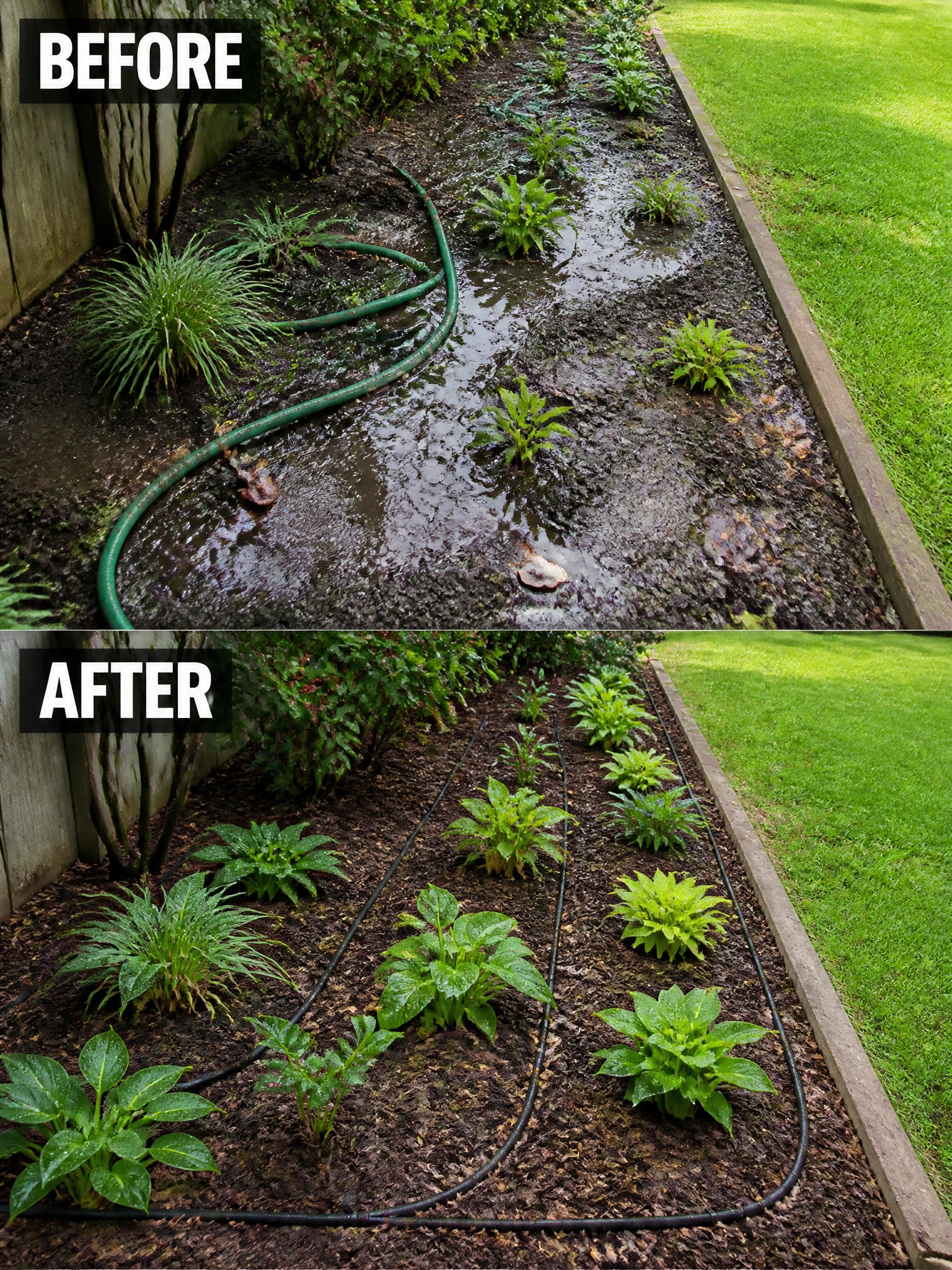
A simple way to fix a messy garden bed is to clear the surface and add mulch. The before photo shows standing water and bare soil that looks neglected, while the after shows dark mulch covering the ground with irrigation lines keeping the plants watered and the beds looking tidy.
This idea works best in long narrow beds along fences or property lines. Start by removing weeds and leveling the soil, then lay mulch and run basic drip lines before planting. It keeps maintenance low and gives the whole area a finished look without spending much.
Fill Neglected Beds With Ground Cover
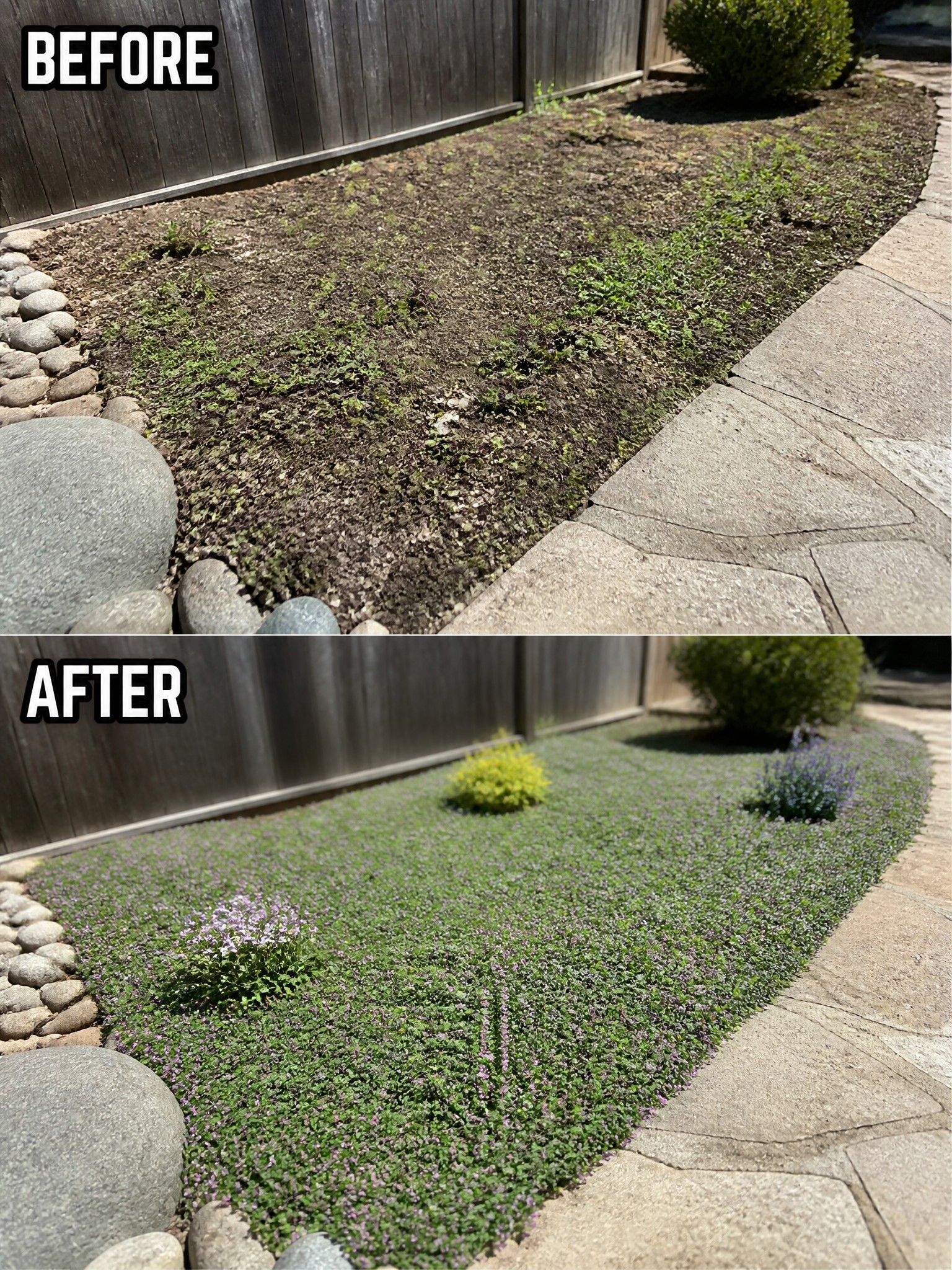
A weedy strip along a fence or path often looks worse the longer it sits. The simplest fix is to clear the worst of it and plant a fast-spreading ground cover that fills the space without constant weeding. The change from patchy dirt and random sprouts to a low, even green layer shows how much difference one plant choice can make.
This idea works best in long, narrow beds where you want coverage without tall plants blocking a path or fence. Start with a thorough cleanup, then space a few starter plants and let them knit together. It keeps the bed looking intentional while staying cheap and low maintenance.
Define A Slope With Simple Edging

A bare, eroded slope next to a path looks messy and unfinished because there is no clear edge. Adding a low block border holds the soil in place, lets you add mulch, and turns the area into an actual garden bed instead of just a weedy bank.
This approach works well on narrow side yards or front slopes where you want low maintenance. Start by cleaning out the weeds and leveling the base, then set the blocks level with the path. Mulch afterward so the bed stays neat and the plants have room to fill in.
Edge Neglected Beds With Recycled Bottles

One of the simplest ways to fix a neglected garden bed is to add a clear edge before planting anything new. In this case the bed went from a weedy strip along the house to a tidy border once the old growth was cleared and a line of glass bottles was set into the soil. The bottles keep the grass from creeping back in and give the eye a place to stop, which makes the flowers look more intentional even with basic plant choices.
This idea works well along house foundations or side yards where beds tend to blur into the lawn. Start by pulling out the worst of the weeds and leveling the soil, then sink the bottles neck down while the ground is still soft. Group plants in small clusters rather than scattering them, and the edge will do most of the work of making the bed look finished.
Plant Seasonal Bulbs In A Bare Garden Bed

A simple way to fix an empty garden bed is to fill it with seasonal bulbs. The before photo shows just bare soil inside a stone border. The after shows the same space packed with tulips and daffodils that give it color and structure right away.
This works best in round or clearly edged beds where you want one strong focal point. Start by adding fresh mulch after planting, then choose bulbs that bloom together for the biggest impact. It keeps the bed looking neat without needing lots of different plants or fancy features.
Add Structure To An Overgrown Shade Bed

The main change here is clearing out the weeds and loose mulch first, then planting a mix of hostas, ferns, and heucheras in a clean, edged bed. That simple step turns a scattered patch under the tree into something that looks intentional instead of neglected.
This works best in shady spots where grass struggles anyway. Start by defining the edge with a simple border, add a few inches of fresh mulch, and group plants by height and color. It keeps the bed from looking messy again in a single season and gives you room to add more later if you want.
Define Neglected Beds With Mulch And Stepping Stones
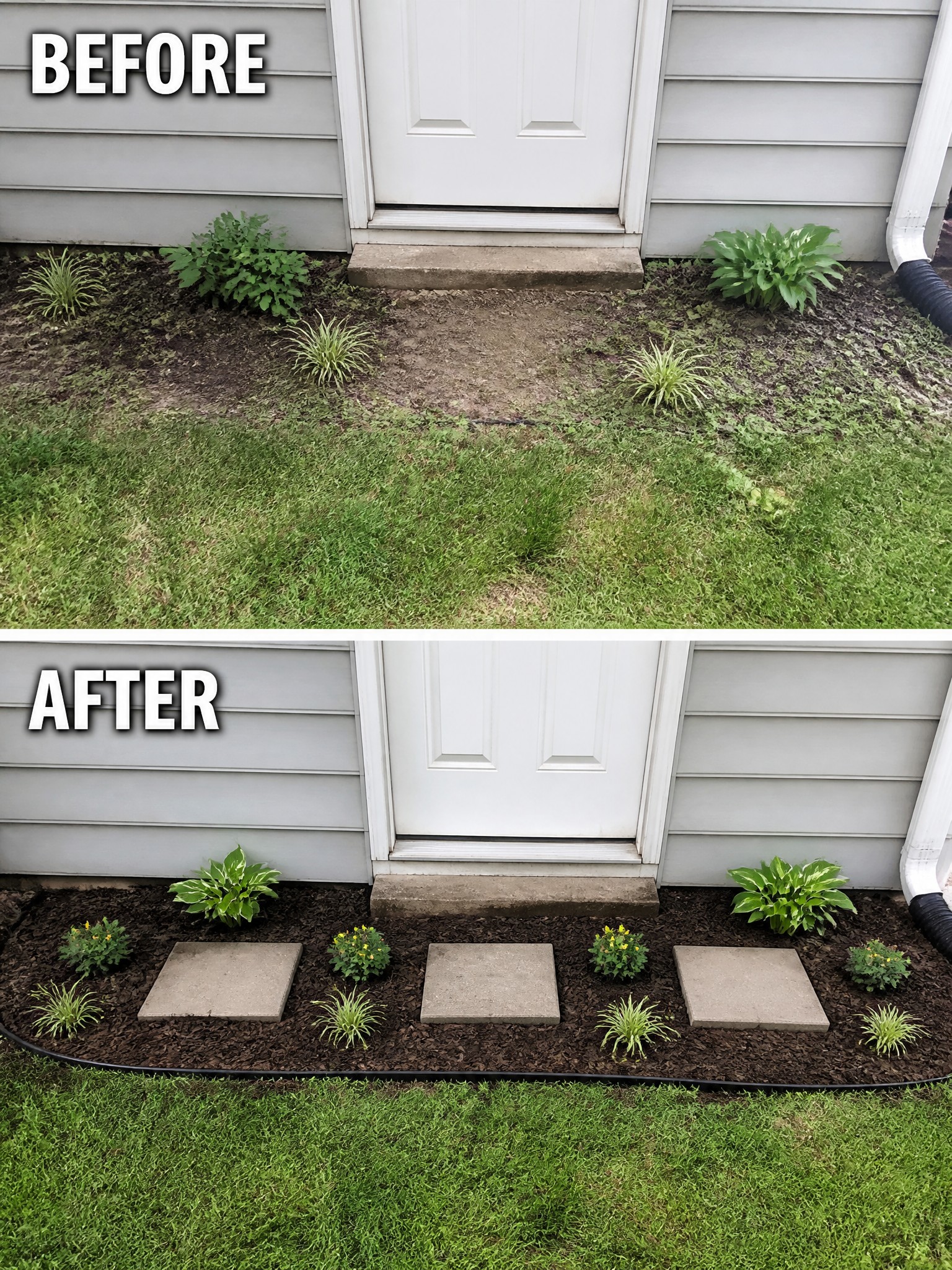
The before photo shows a patchy strip of weeds and dirt right along the foundation with no clear edge or plan. The after shows the same spot turned into a clean bed edged with a simple border, covered in dark mulch, and broken up with a few flat pavers that keep the walkway clear while adding order.
This approach works well on any narrow strip beside a house where the ground looks messy but you do not want a big project. Start by pulling the worst weeds, lay down a basic border if the lawn creeps in, spread mulch to cover the soil, and add a few pavers or stepping stones so the area feels intentional instead of leftover. It keeps the bed looking tidy through the seasons without needing constant weeding.
Add Defined Edges To Neglected Garden Beds
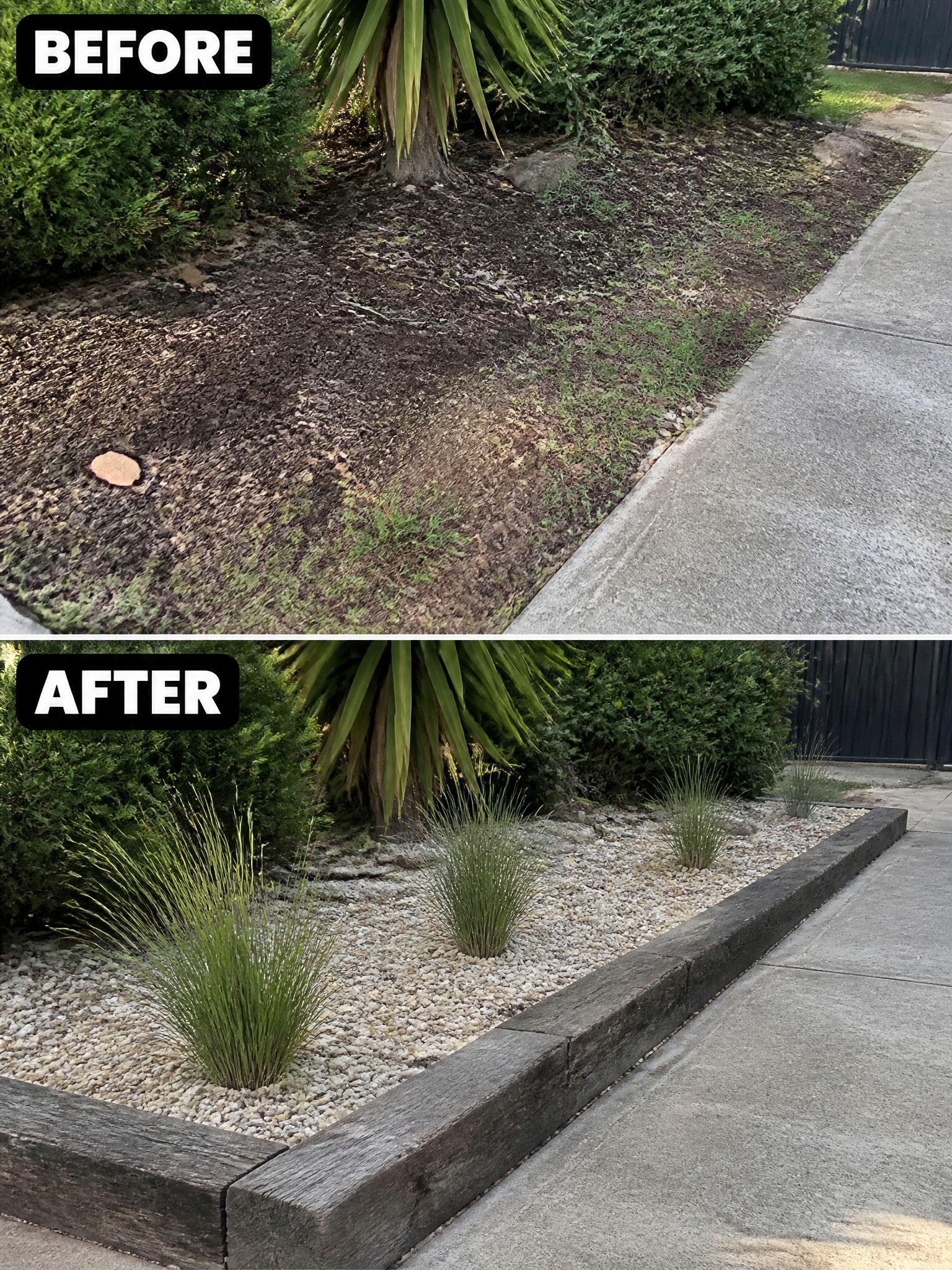
One simple way to fix a messy garden spot is to give it a clear border. The before image shows bare soil and scattered mulch with no real shape. Adding a low wood edge and filling the bed with gravel turns the same area into something that looks planned and easy to maintain.
This idea suits narrow beds along paths or next to the house where you want the planting to feel intentional. Clear out old weeds and mulch first, then install the edging and gravel before adding just a few plants. The result stays tidy even while the plants fill in over time.
Define A Bare Fence Line With Mulch And Plants

A long empty strip next to a fence often looks unfinished because there is no clear edge or planting. Adding mulch across the whole bed and placing a row of shrubs and flowers creates a simple border that feels intentional and keeps weeds down at the same time.
This idea works best on narrow side yards or property lines where you want low effort rather than a full garden. Repeat the same few plants along the length so the bed looks planned even when the plants are still small, and keep the width narrow enough that you can reach everything from the lawn side.
Frequently Asked Questions
Q: What if my beds have a ton of weeds already?
A: Pull them by hand first thing in the morning when the ground is soft. Then cover the soil right away with cardboard scraps and leaves from your yard. This stops most from sprouting again without buying extra stuff.
Q: Can I really do this with no money?
A: Yes, start by moving plants around from other spots in your garden. Use kitchen scraps like coffee grounds to feed the soil. You end up with beds that look cared for just from what you have.
Q: How often will I need to water after these changes?
A: Check the soil with your finger every few days at first. Most of these ideas work better if you water deeply but less often once things settle in. Mulch helps hold moisture so you skip extra trips with the hose.
Q: Will these beds need constant weeding later?
A: Lay down newspaper or cardboard under the mulch to block weeds from coming back. Spend a little time now and you cut down on future work. A quick check every couple weeks keeps things tidy without turning into a chore.
