

I often notice that a yard starts to feel forgotten once the edges blur and the planting lacks any real order.
Focusing first on layout and a few hardy plants tends to bring more lasting order than scattering new features around.
Cleanup comes before anything else.
In my own space I would test edging and simple pathways early because those steps make the rest of the work feel manageable.
Watching the yard settle into something that needs less effort each season gives a steady sense of progress.
Add Structure To An Overgrown Backyard
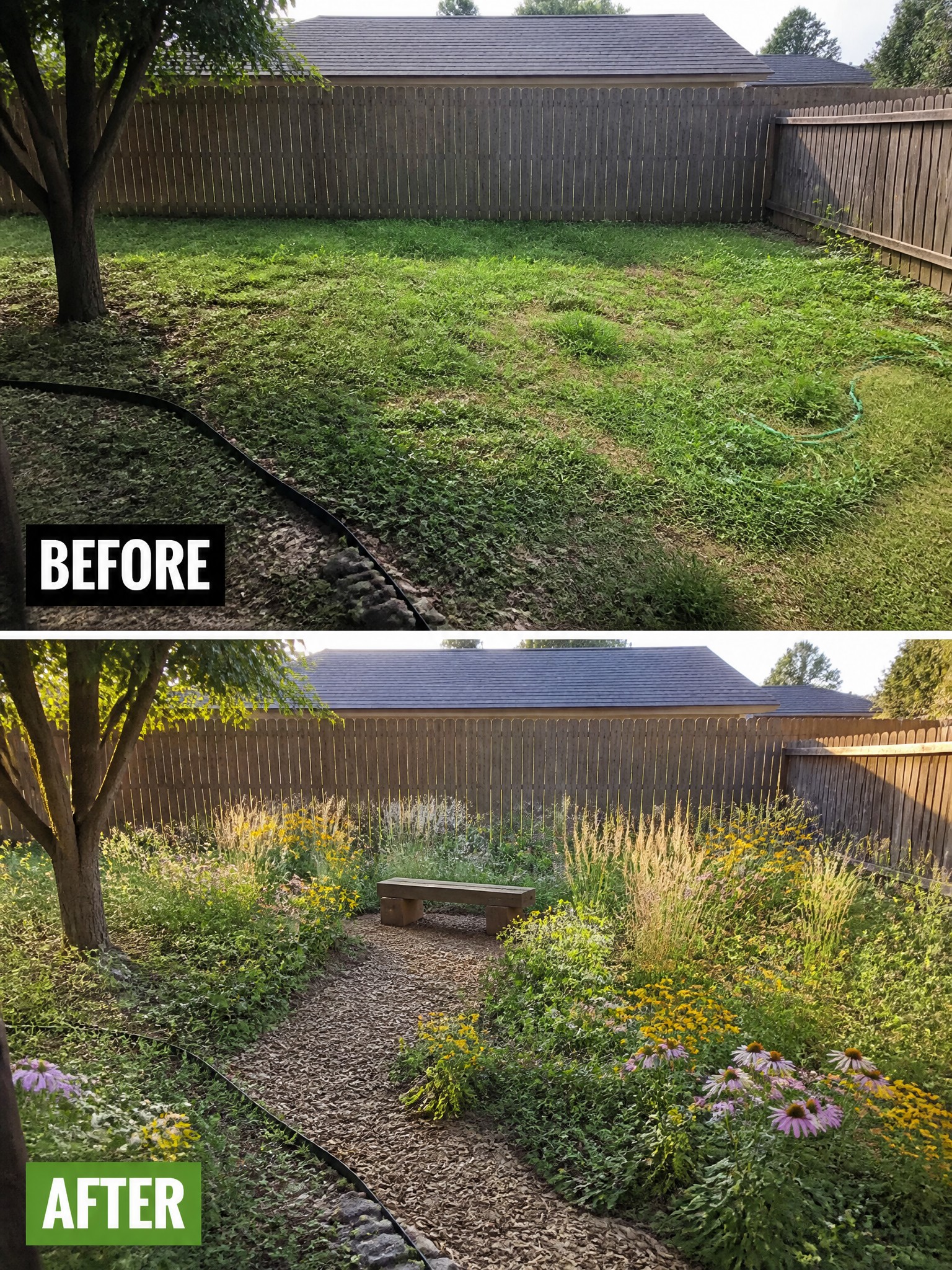
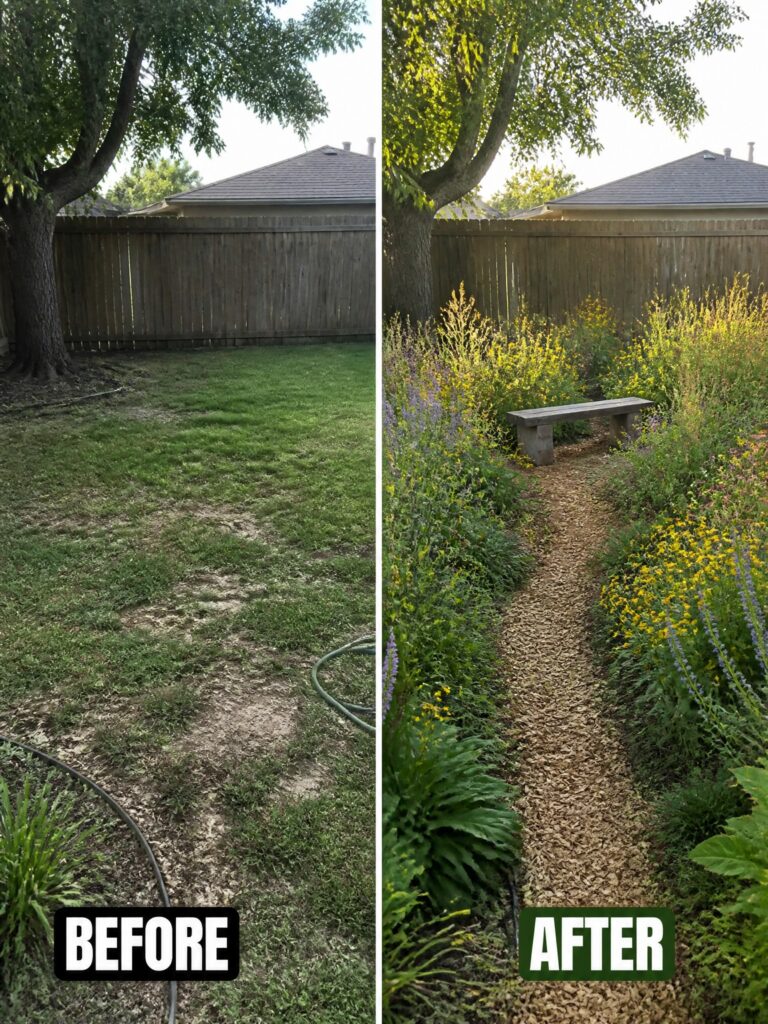
A yard that is just lawn often feels unfinished because there is nothing to guide the eye or create usable space. Defining beds along the edges and adding a gravel path through the middle gives the area clear shape and turns empty grass into something that feels planned.
This idea works best in smaller or average backyards where you want low maintenance without losing the garden feel. Keep the beds simple, use mulch or gravel to hold the lines, and place one focal point like a bench where the path ends. That keeps the space open while still making it feel like a real garden.
Add Stepping Stones To Give A Bare Yard Some Structure
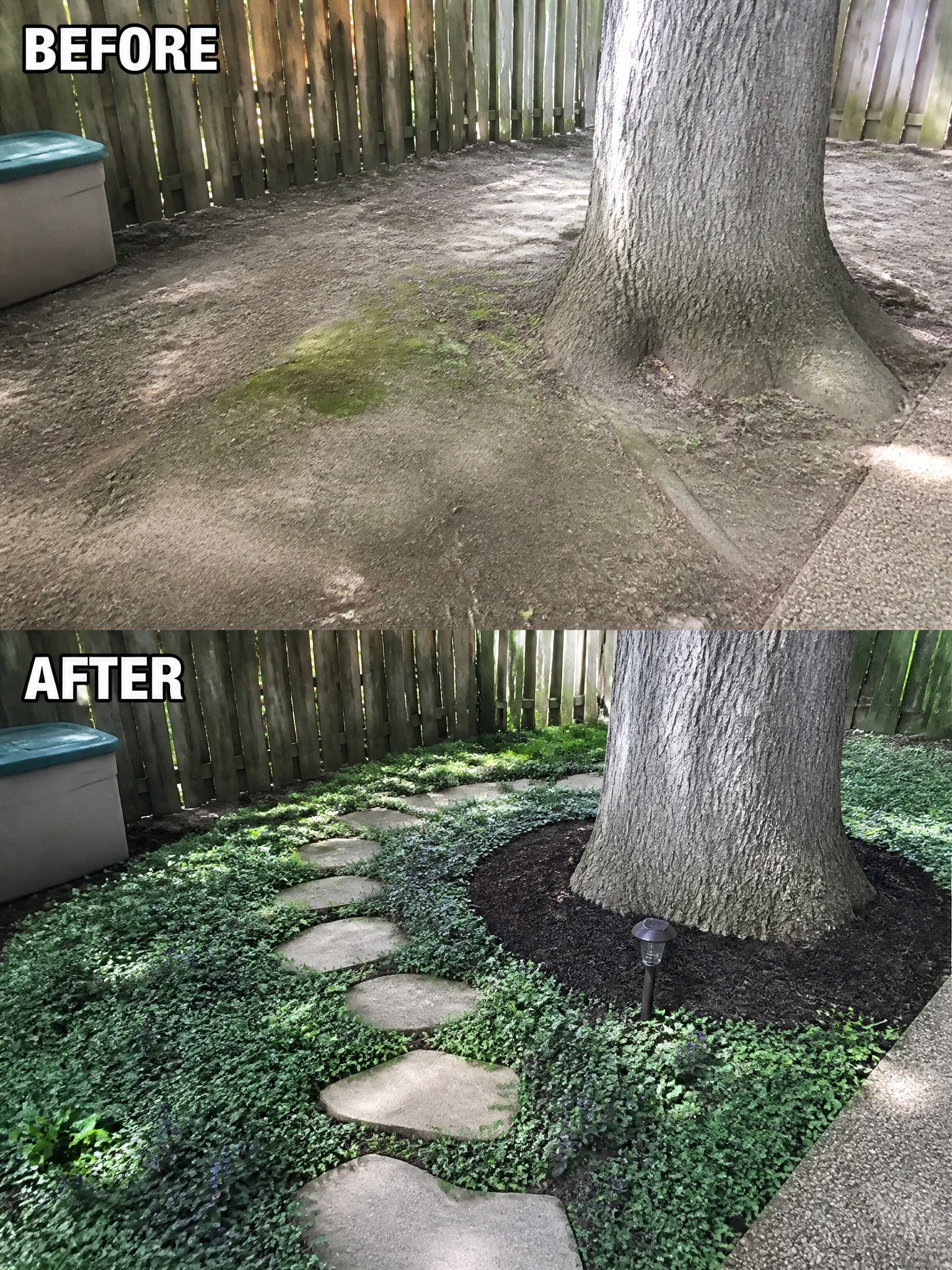
A bare patch of dirt around a tree often stays that way because it feels like too much work to fix. Adding a few stepping stones and low ground cover turns the same spot into something you can actually walk through. The stones create a clear route while the planting fills in the rest and keeps the ground from looking messy.
This idea suits shady side yards or areas where grass struggles. Lay the stones first along the path people already use, then plant something tough like ivy or vinca between them. Mulch the area right around the tree trunk so the bed stays neat and the roots stay protected.
Add A Raised Planter Box To Organize A Small Backyard
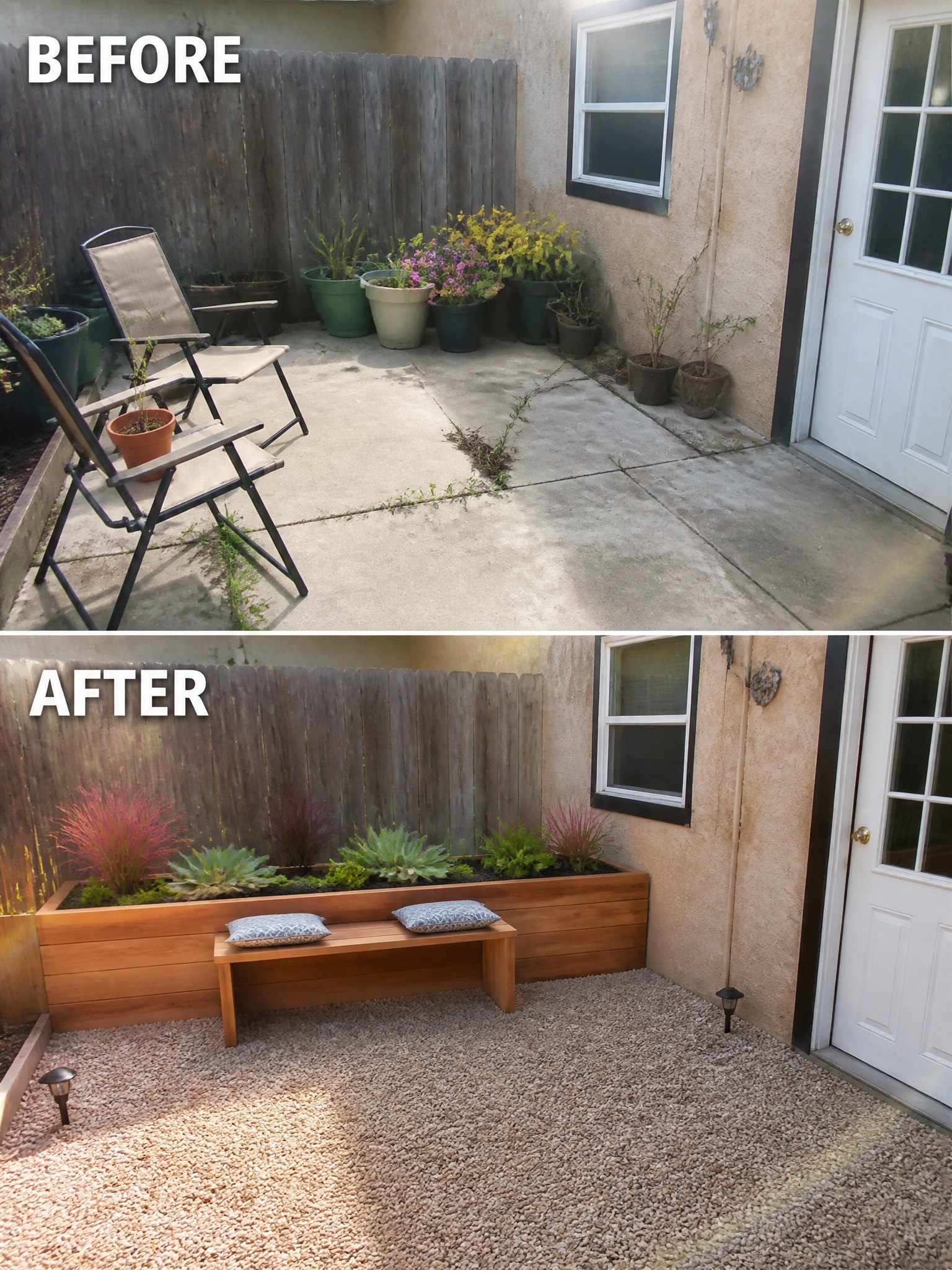
A bare concrete slab with a few scattered pots often feels unfinished and hard to keep tidy. Building one long planter box along the fence and covering the rest of the area with gravel gives the space clear boundaries and cuts down on weeding and sweeping.
This approach works well in small side yards or back corners where you want low maintenance without losing all the planting. Keep the box simple, fill it with easy-care plants, and let the gravel handle the rest of the ground. The bench can stay modest since the planter already provides the main structure.
Add Edging To Create Defined Garden Beds
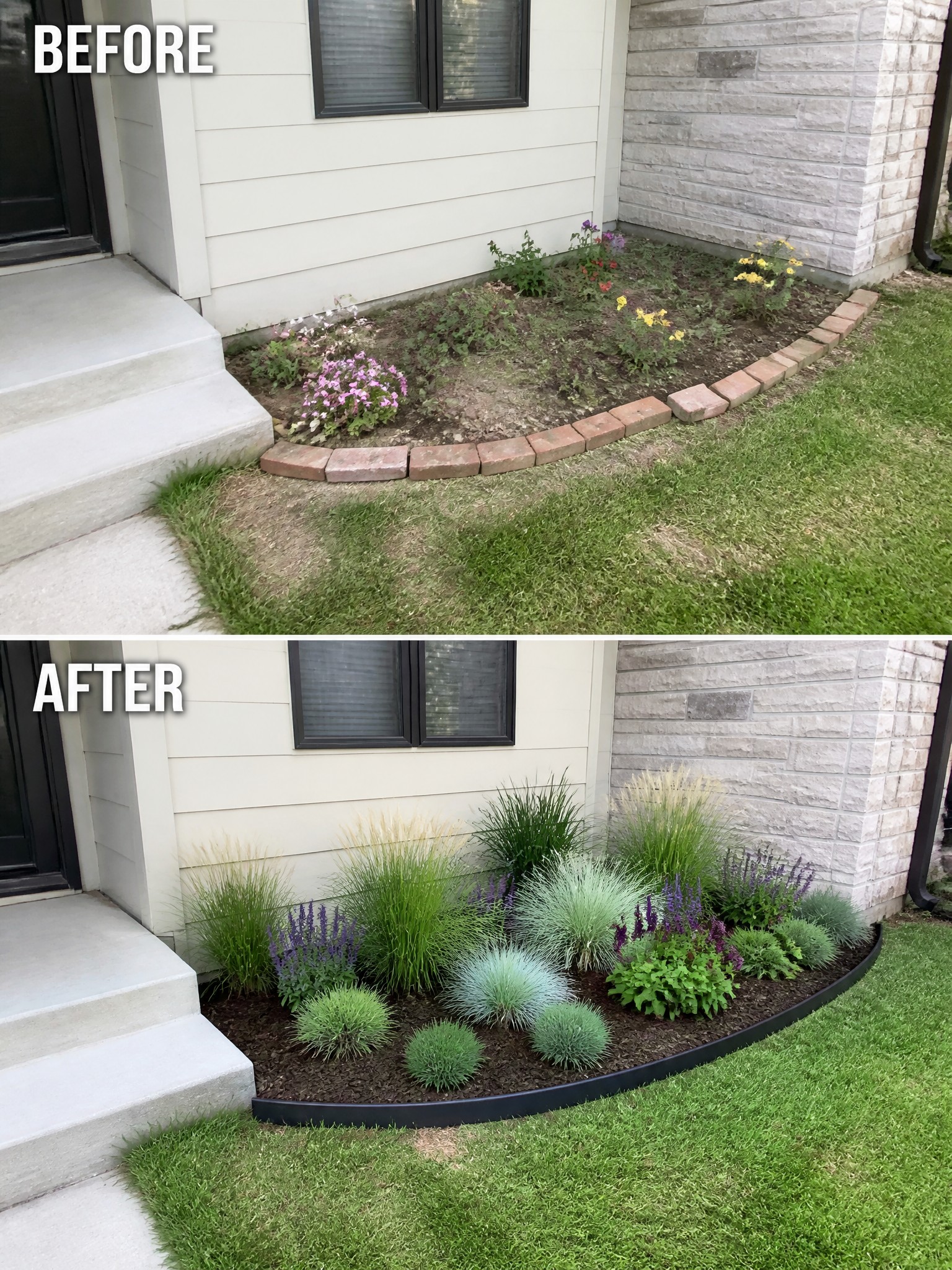
The before shows a loose brick curve that failed to contain the weeds and scattered plants, letting the bed blend into the grass. The after uses a simple black edge and fresh mulch to keep everything in place and looking intentional.
This idea suits small side yards or front beds where you want less ongoing cleanup. Lay out the shape first, install the edging, then mulch and plant in groups so the bed stays low maintenance over time.
Clear Overgrowth First Before Adding Planting Structure
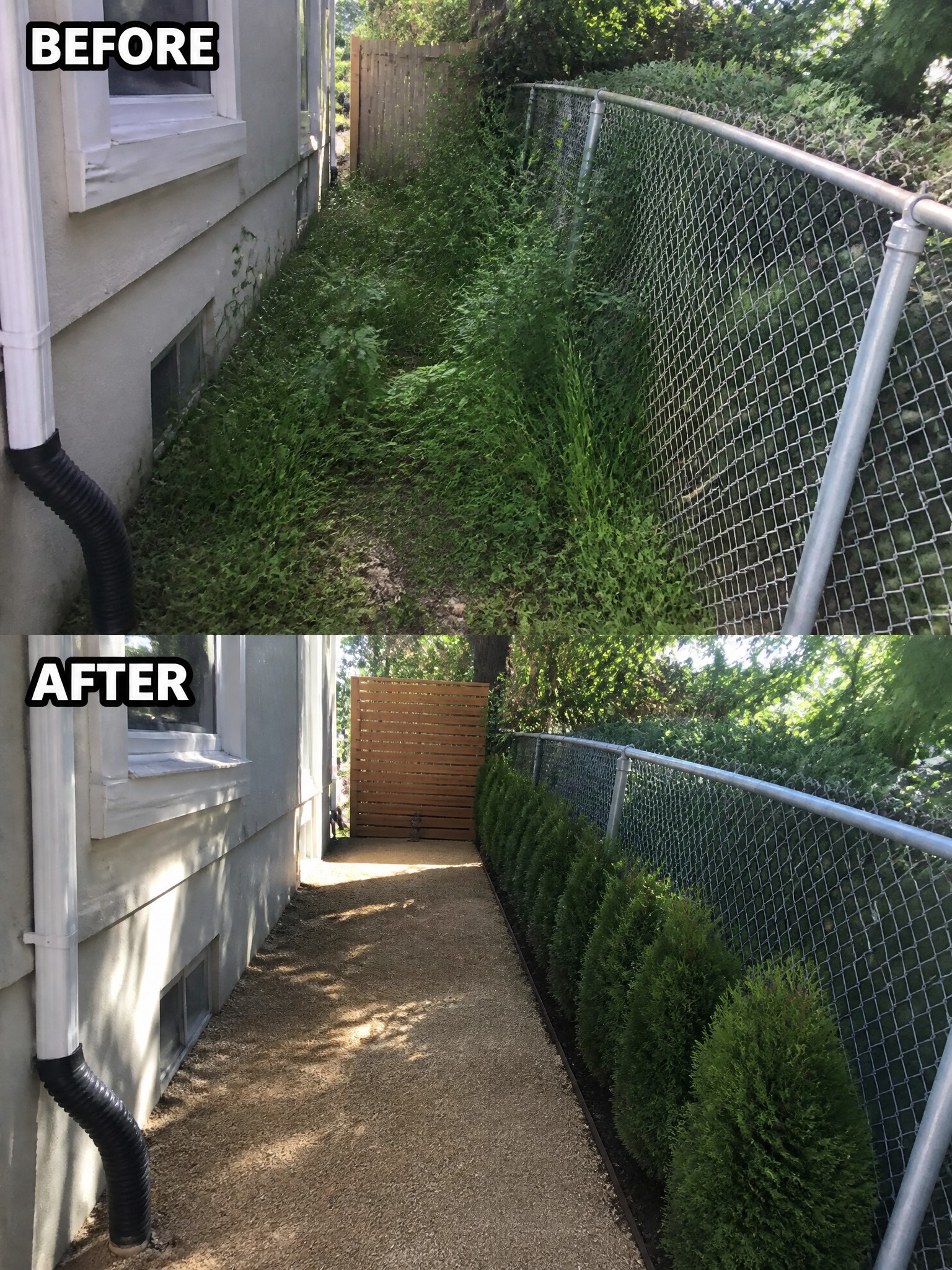
The side yard was basically a narrow strip of weeds and tall grass that made the space feel neglected and hard to walk through. Once the overgrowth was removed, a simple gravel path and a straight line of shrubs gave the area a clear purpose and made it much easier to maintain.
This approach works well in tight spaces between houses and fences where you need access but do not want constant weeding. Start by cutting everything back so you can see the actual shape of the yard, then add edging and a few repeated plants rather than filling the space with lots of different varieties. Gravel or mulch keeps the ground covered and reduces future growth, and a simple row of shrubs creates a neat border without blocking light.
Replace Dead Grass With Artificial Turf For Easy Upkeep
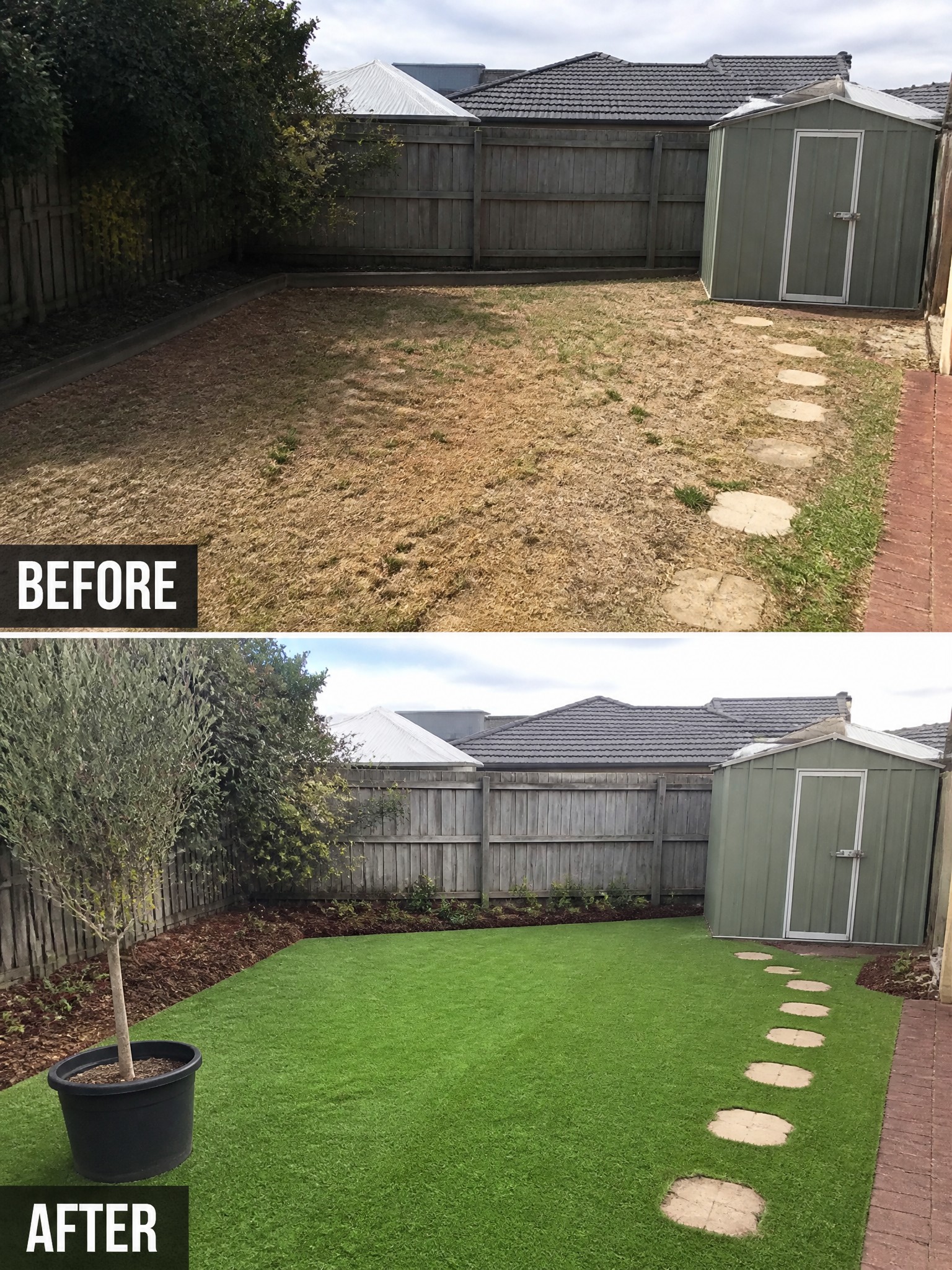
A dry, patchy backyard like the one in the before photo often feels unusable until the lawn is fixed. Laying artificial turf over the bare ground instantly creates a clean, green surface that stays that way with almost no watering or mowing.
This approach works well in hot or dry areas where real grass struggles. Focus first on clearing the old surface and leveling the ground, then add simple borders or a potted tree only after the turf is down so the space stays open and practical.
Build Retaining Walls To Terrace A Slope
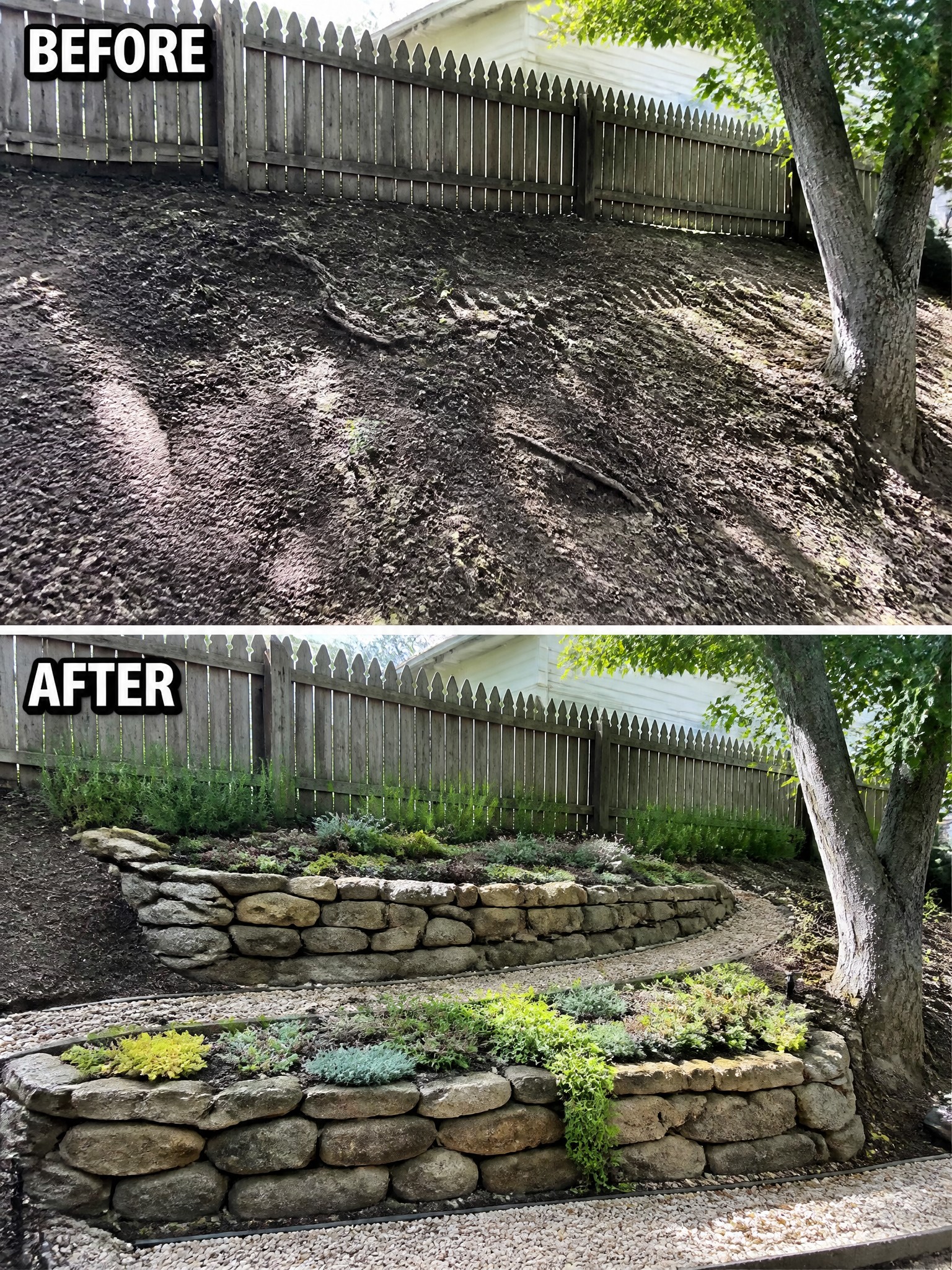
A steep bare slope is hard to use and often ends up as just dirt and weeds. Adding low stone retaining walls creates flat planting areas that hold soil in place and make the space much easier to work with.
This approach works well on yards with any noticeable drop. Start by marking out simple curves that follow the natural grade, then stack the walls in short sections so they stay stable without heavy equipment. The result is a garden that feels planned instead of neglected.
Replace A Cracked Walkway With Stepping Stones
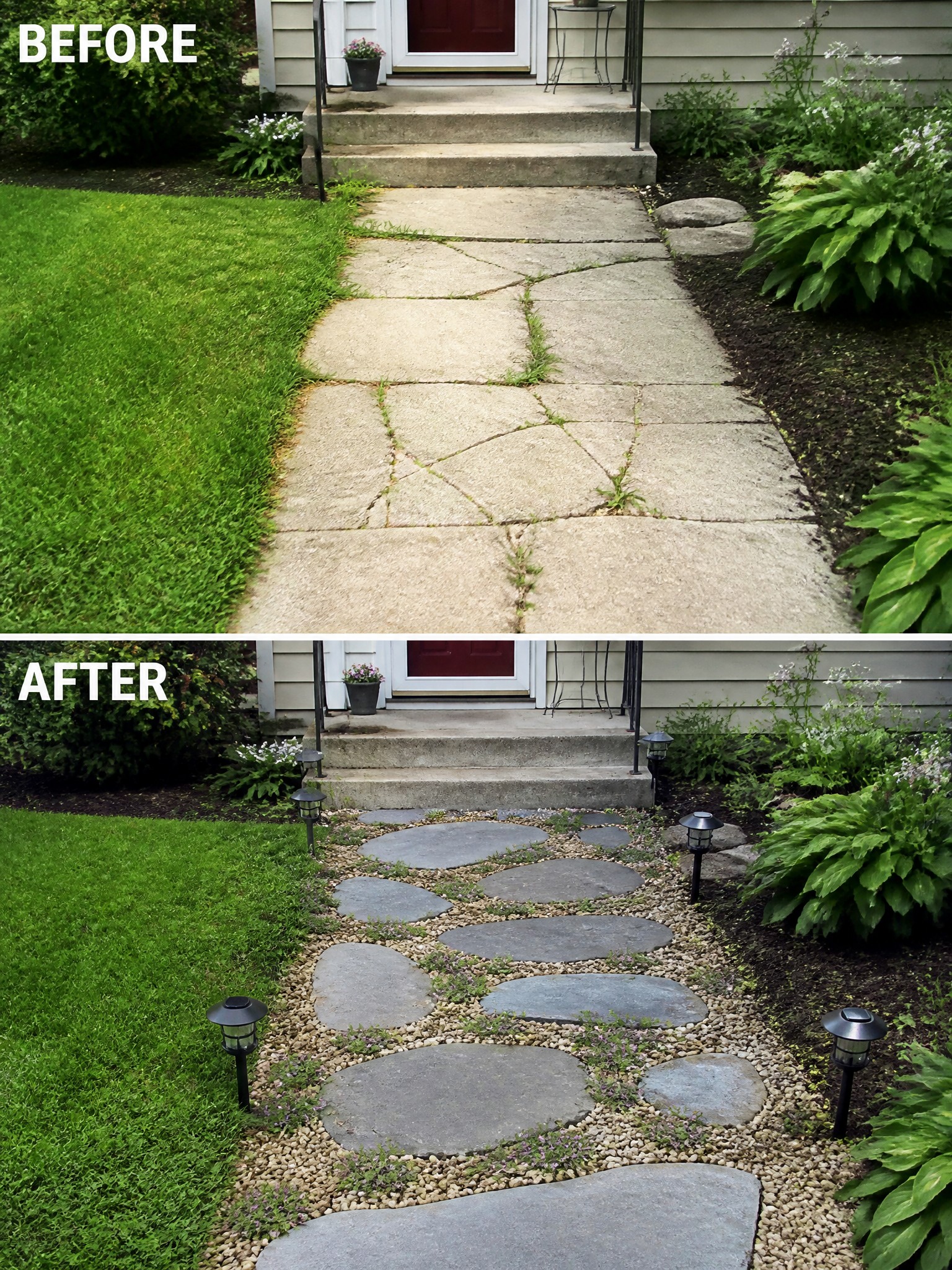
The old concrete path had cracked badly and weeds were growing right through the joints. Switching to stepping stones set in gravel creates a softer line that blends better with the lawn and garden beds while making future repairs much simpler.
This idea suits homes with narrow side paths or front walks that get light use. Remove the old surface first, add a gravel base for drainage, and space the stones so they feel comfortable to walk on. Keep the surrounding planting low so the path stays easy to maintain over time.
Add A Wire Trellis To Train Vines Along A Fence
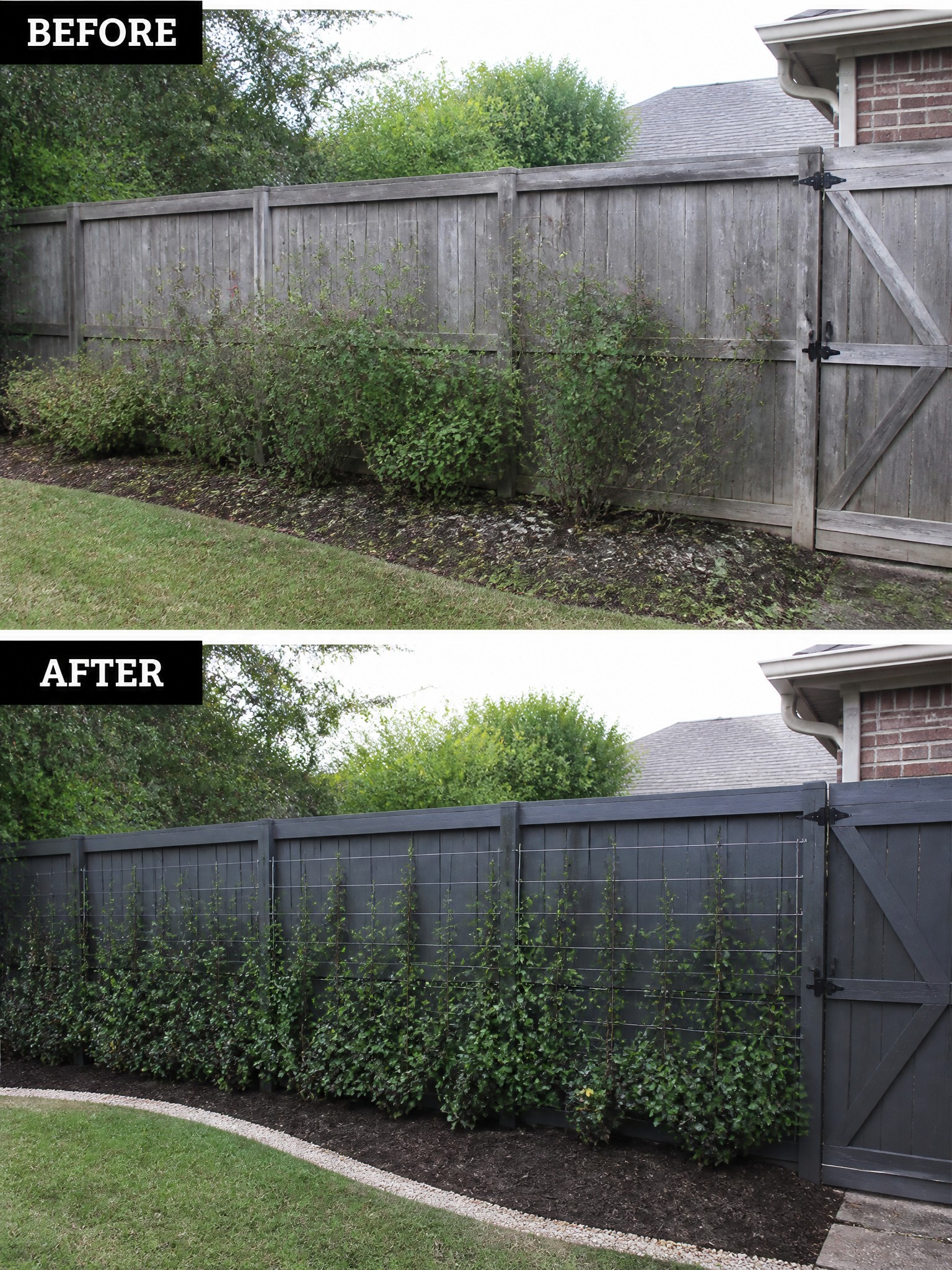
A plain fence with plants growing wild often ends up looking messy after a season or two. Adding a simple grid of horizontal wires gives the vines a place to climb in straight lines, which keeps the growth even and stops the plants from flopping over the bed or blocking the fence boards.
This works best along long fence lines where you want some greenery but need it to stay controlled. Paint the fence first so the wires show up clearly, then space the lines about eight to ten inches apart. The result is a green wall that still leaves room for the grass and mulch to stay neat underneath.
Create A Simple Fire Pit Area In An Empty Backyard
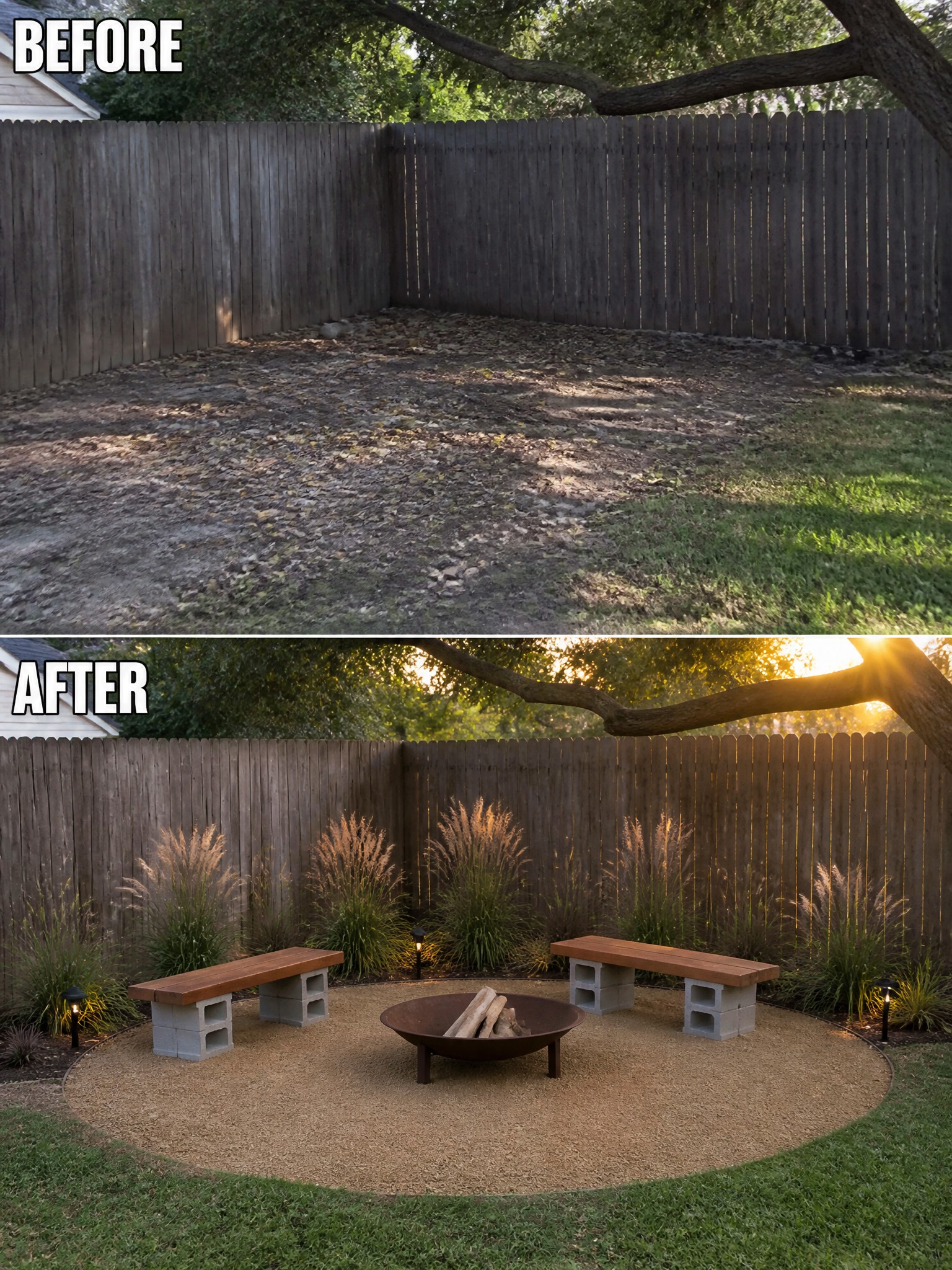
An empty stretch of dirt next to the fence rarely gets used. Adding a gravel circle with a fire pit and a pair of low benches gives the space a clear purpose and turns it into a place where people actually sit.
This idea works best in small or awkward backyard corners. Keep the base simple with gravel or mulch, choose weatherproof seating, and add just a few plants around the edge. The goal is a usable spot without filling the whole yard.
Add Raised Beds To Organize An Overgrown Yard
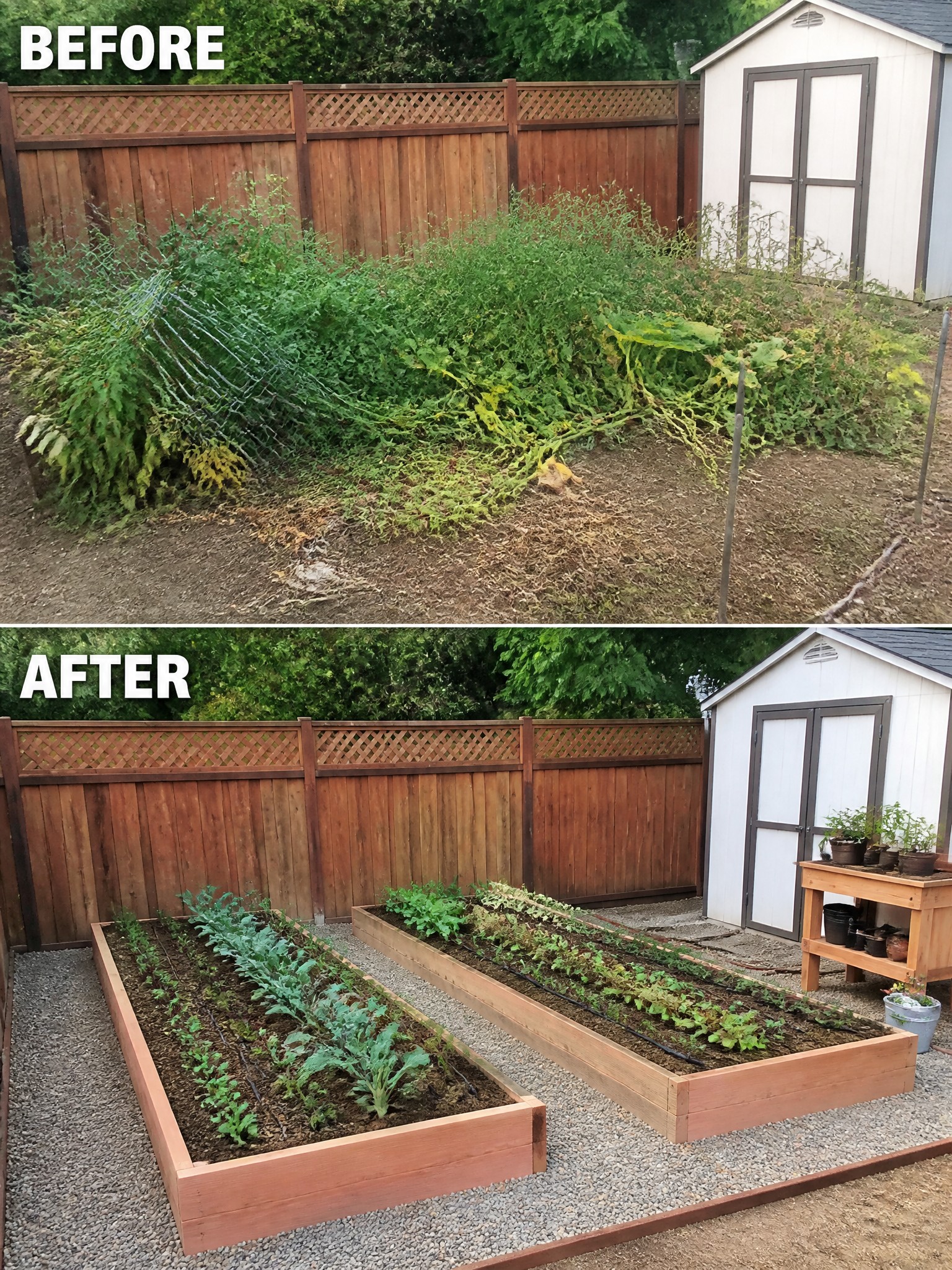
Clearing out a messy patch of ground and adding raised beds is one of the simplest ways to turn wasted space into something useful. The before photo shows a tangle of collapsed plants and weeds against the fence, while the after shows clean wooden frames filled with neat rows and gravel underfoot. The beds give the area clear boundaries so plants stay contained and watering becomes much easier with the drip lines already in place.
This approach works best in small yards where the soil is poor or the ground slopes. Build the frames first, then fill them with decent soil rather than trying to fix the native dirt. Keep the layout simple with two or three beds max so there is still room to walk and work around them.
Define Narrow Beds With Gravel And Edging
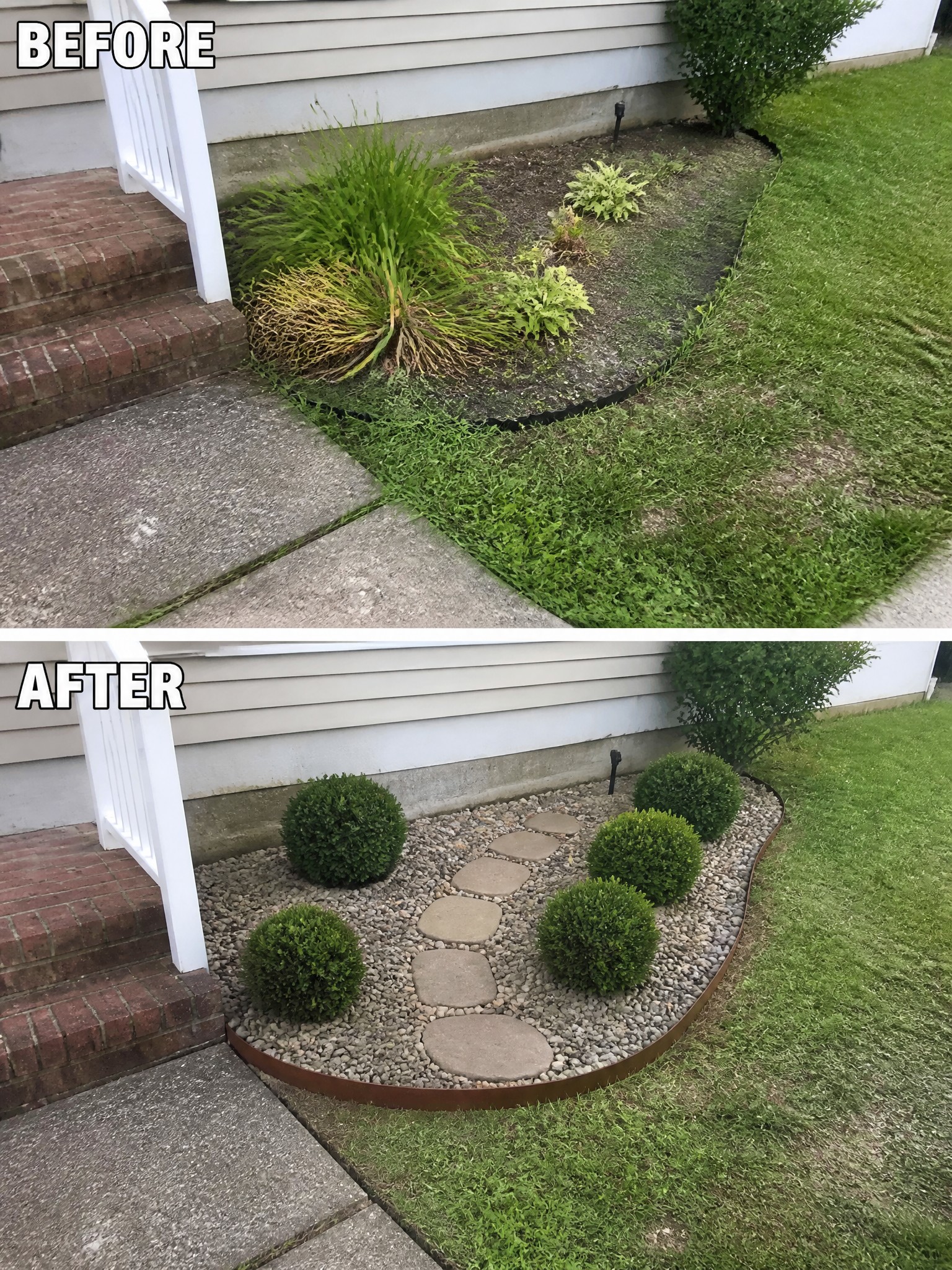
A messy strip of weeds and uneven plants along the house can make the whole side of the yard feel neglected. Switching to a layer of gravel with a clean metal edge gives the bed a clear shape, keeps weeds down, and makes the area look intentional without needing constant work.
This approach works well along foundations or beside walks where space is tight. Start by removing the old growth and laying down a simple border, then fill with gravel and add a few rounded shrubs. The stepping stones keep the bed accessible for watering or trimming without compacting the surface.
Add Stepping Stones To Bring Order To A Messy Yard
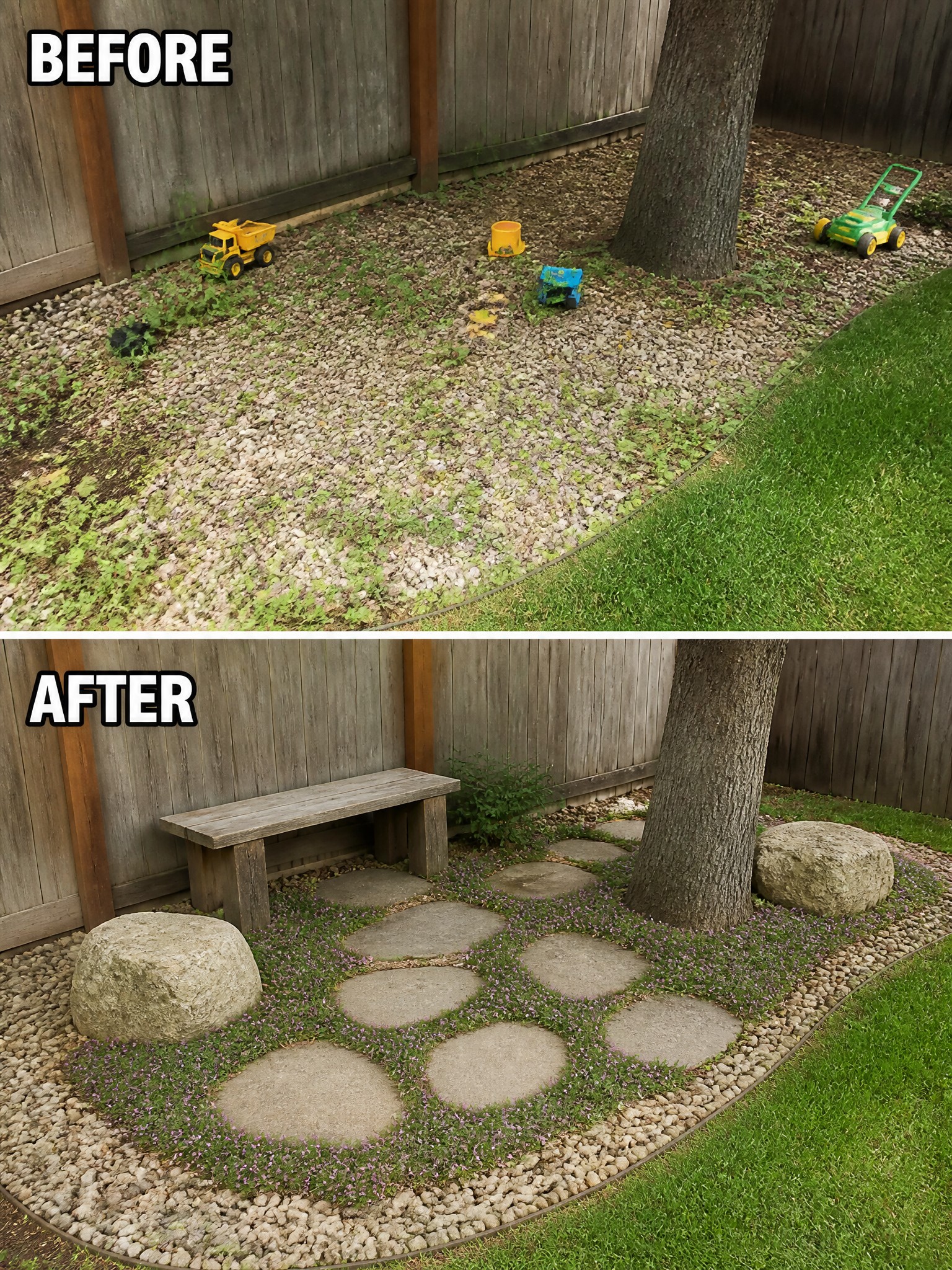
Many yards have awkward gravel patches that fill with weeds and never feel finished. Placing stepping stones in a loose path and adding low ground cover around them gives the area a clear shape while keeping maintenance low.
This approach works best in small side yards or corners next to fences and trees. Use a few large stones to mark the main route, then plant something that spreads between them. The big rocks help contain the gravel and keep the look simple.
Add Structure To A Plain Front Yard
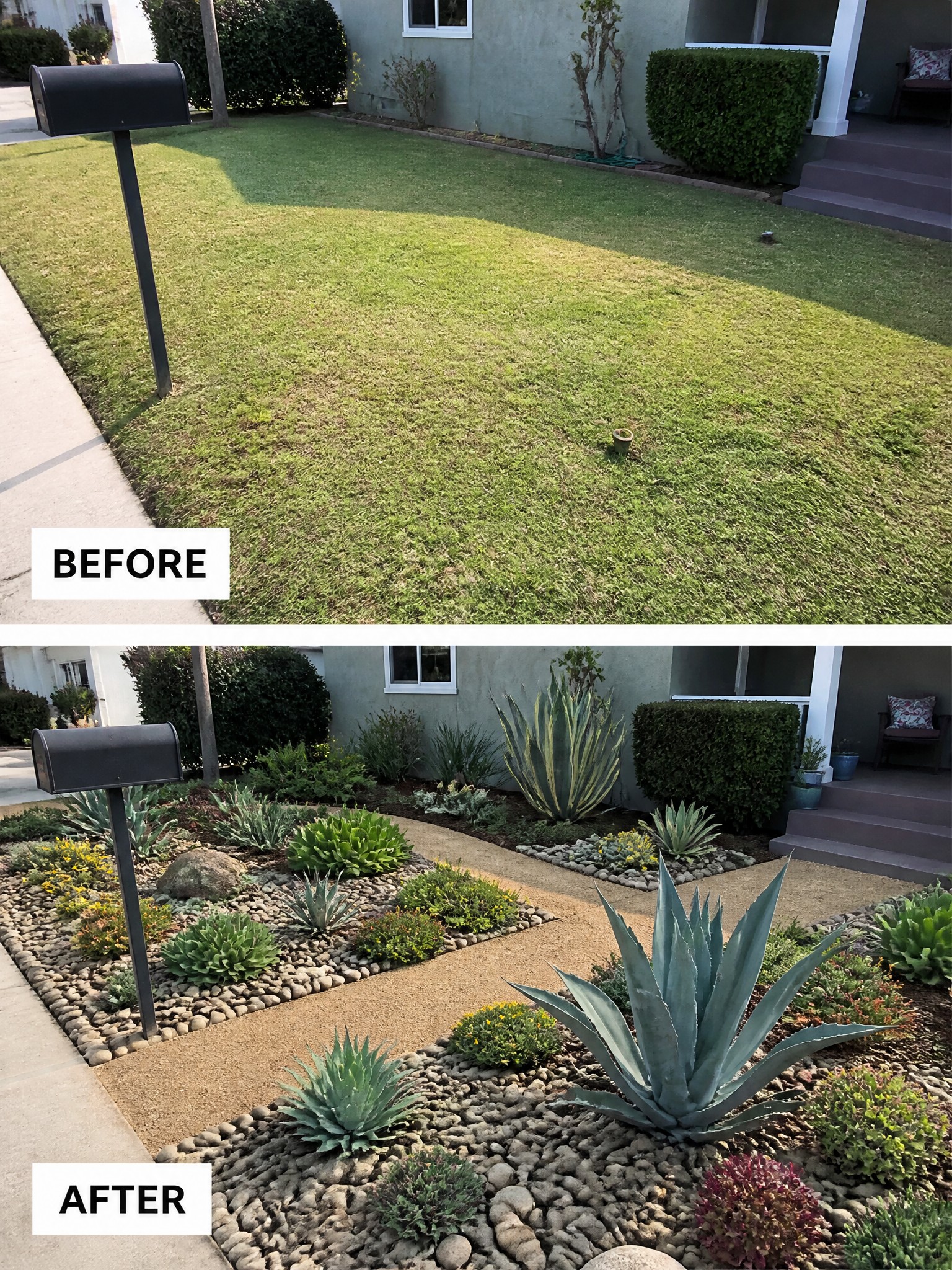
A flat lawn often feels unfinished because it lacks any clear shape or purpose. Adding defined beds with gravel paths and rock borders gives the space lines and direction while keeping the overall look simple.
This approach works best in small front yards or along the side of a house where you want low maintenance. Mark out the beds first with a hose or string, then use gravel or rocks to hold the shape. Stick to hardy plants suited to your area so the beds stay neat without constant work.
Turn A Concrete Patio Into A Usable Outdoor Room
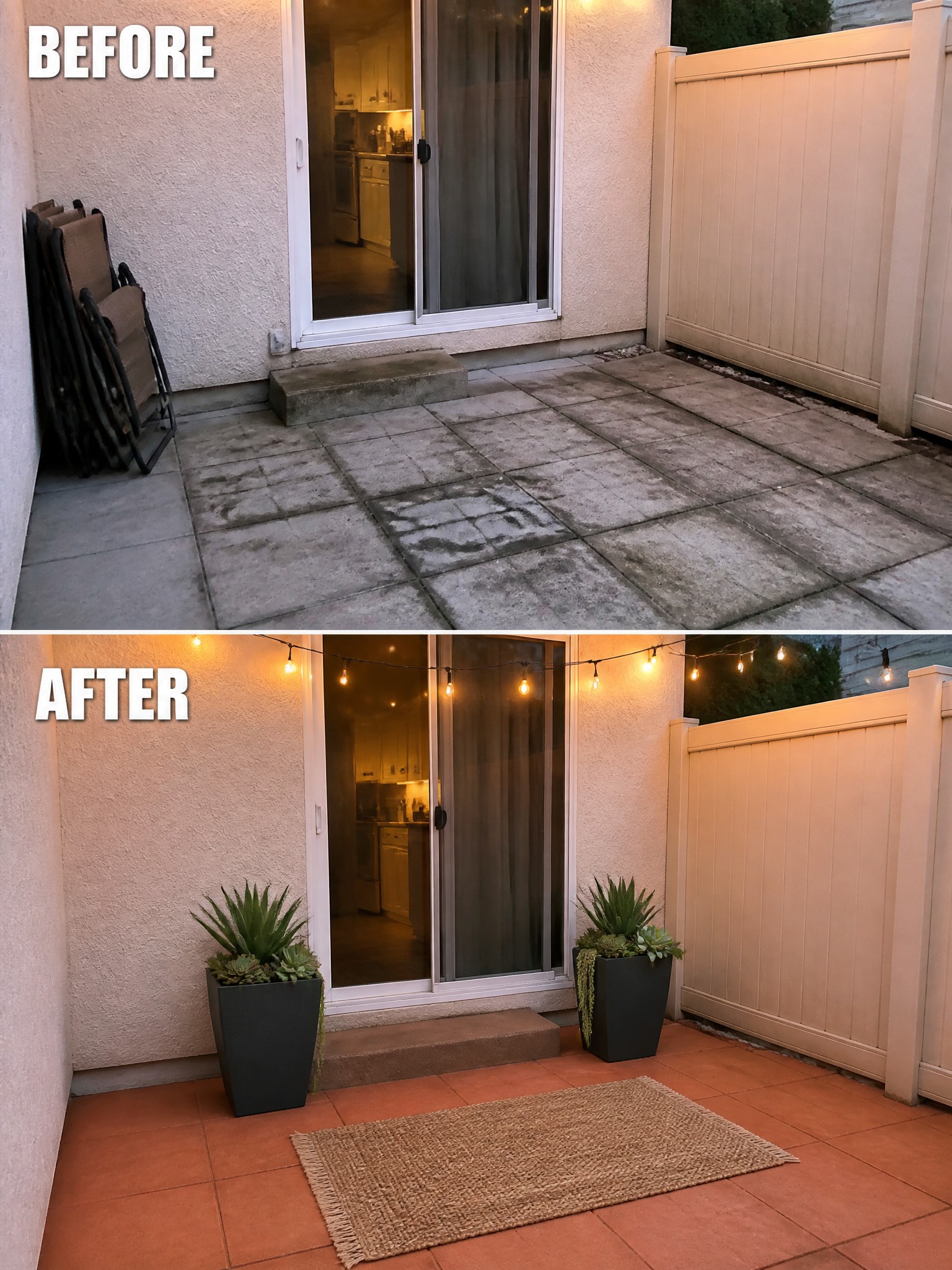
A stained concrete slab often sits unused because it feels unfinished and hard to clean. Switching to simple terracotta tiles and adding string lights overhead immediately makes the space feel like an extension of the house rather than leftover ground. Two large planters and a woven rug finish the job without crowding the area.
This approach works best on small side or back patios where full landscaping is not practical. Start with the flooring to handle weather and foot traffic, then add one string of lights and a couple of low-care pots. Keep the rest of the yard simple so the new surface stays the main feature.
Add Structure To An Overgrown Front Yard
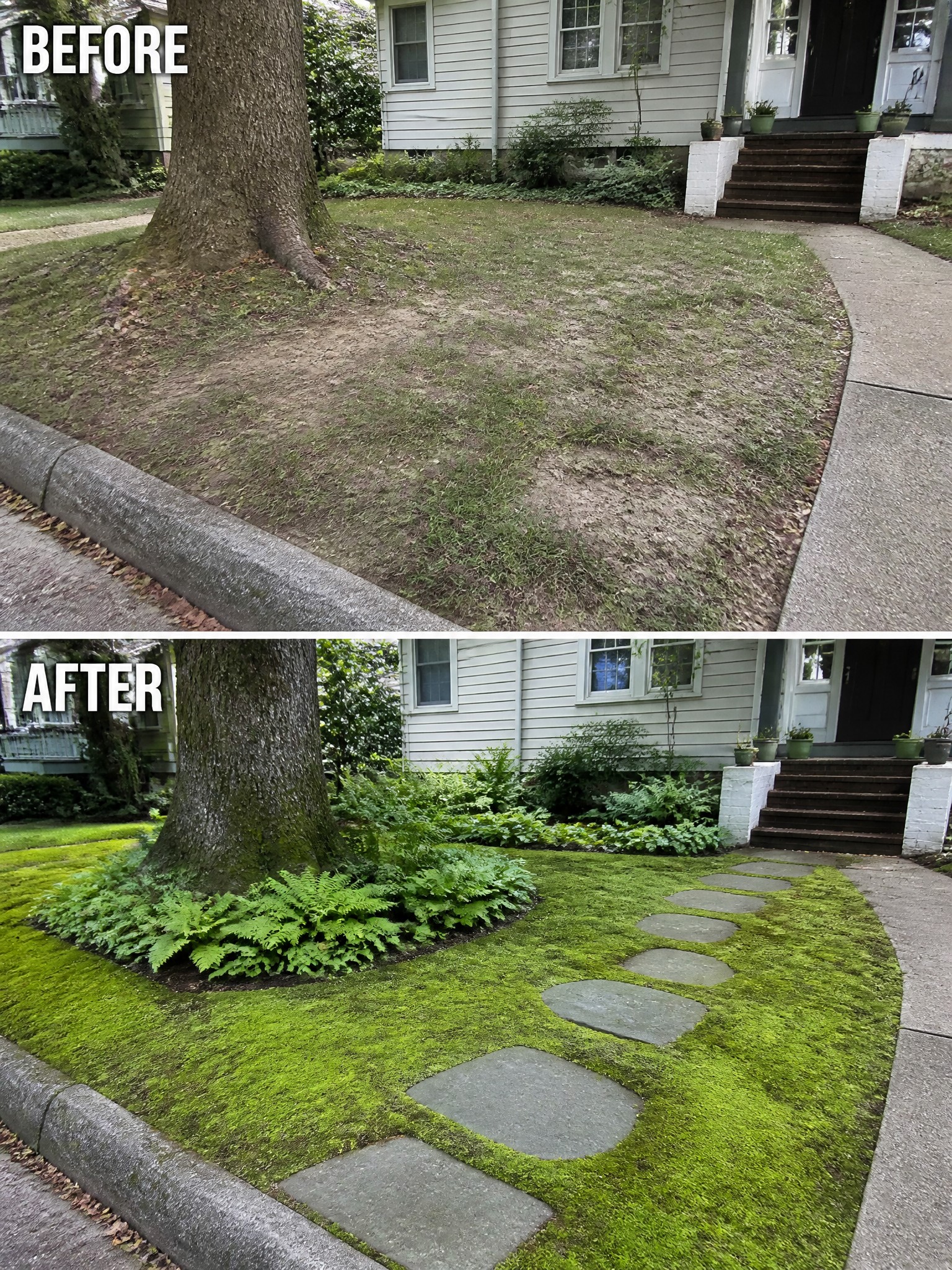
A patchy lawn often looks worse the more you try to fix it with seed or fertilizer. In this case the fix was simpler. The owners cleared the weeds and put down a thick layer of moss that stays green even in shade, then added a ring of ferns around the tree base and laid stepping stones to make a clear path to the door.
This approach works best on small front areas where grass struggles. Start by removing the worst of the weeds and any old thatch, then choose one ground cover that suits the light and soil. Keep the new beds narrow so they stay easy to maintain and leave enough open space for walking.
Define Lawn Edges With A Planted Border
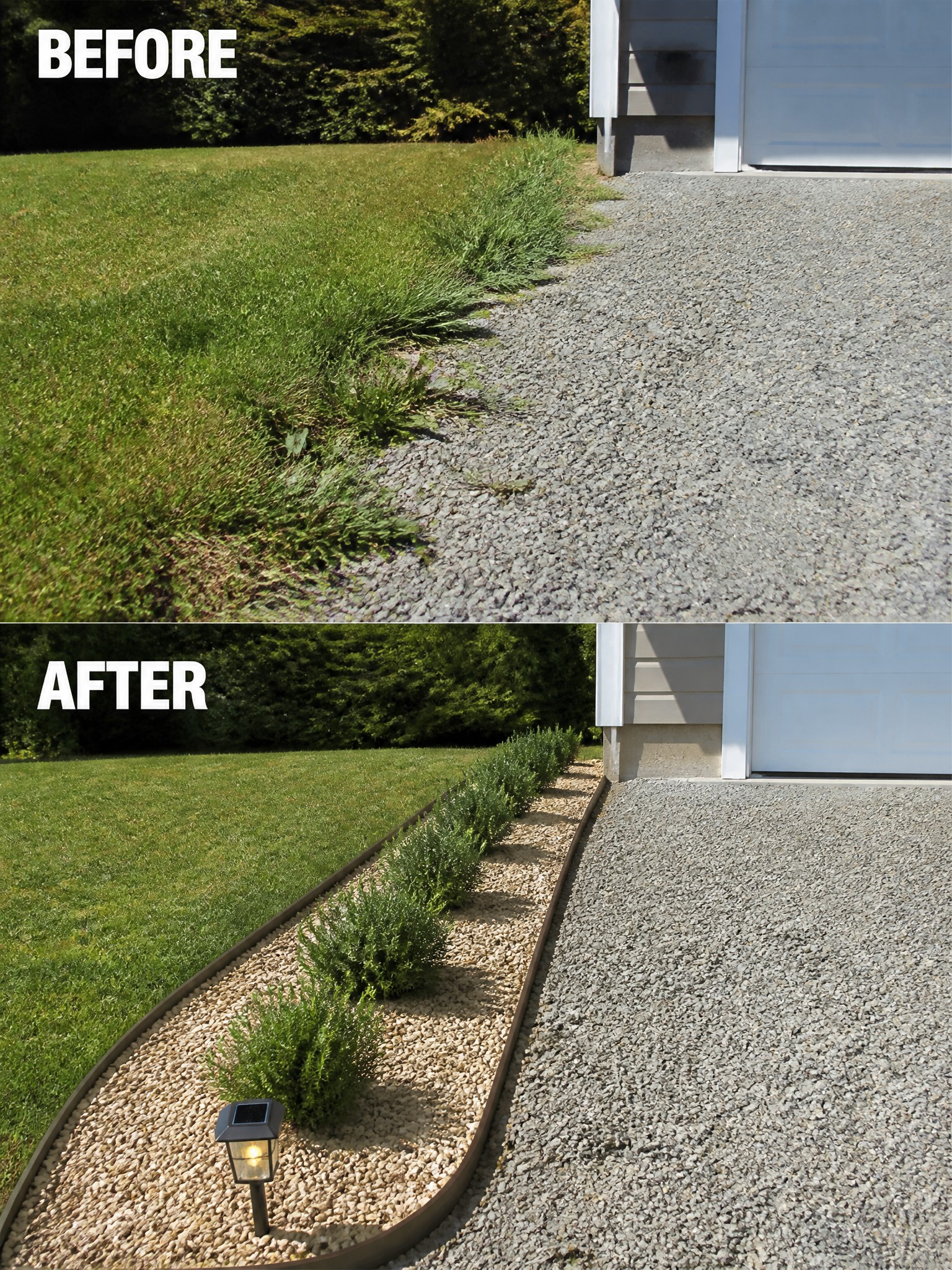
A messy transition between lawn and gravel often makes the whole yard feel neglected. Adding a simple planted bed with edging turns that rough line into a clear boundary, and the low shrubs keep the look tidy without much work.
This approach works well along driveways or paths where grass tends to creep. Start by laying down edging to hold the shape, then fill the bed with gravel or mulch and choose compact plants that stay low. The result keeps the area looking intentional while leaving plenty of room for the lawn to stay open.
Replace Lawn With Wildflower Planting
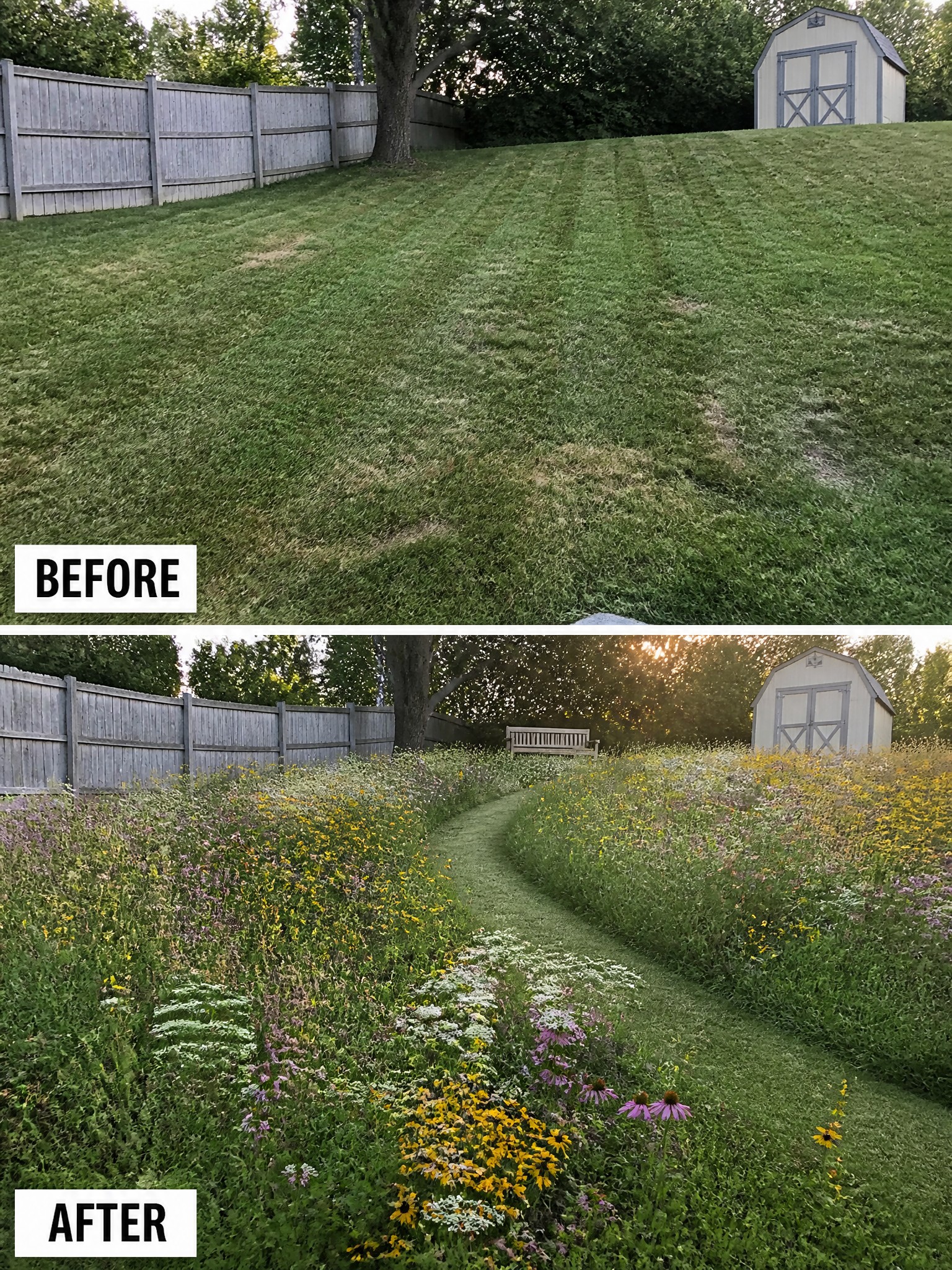
A large grassy slope needs regular mowing to stay tidy, and that work adds up fast. Here the owner stopped cutting most of the lawn and let flowers fill in instead, leaving only a narrow mown path through the middle. The result looks fuller and needs far less upkeep once the plants are established.
This idea suits bigger yards where you want to cut down on weekly chores. Begin by letting the grass grow for one full season to see what comes up on its own, then add a few seed mixes if you want more color. Keep the paths wide enough for easy walking and mow them every couple of weeks so the meadow stays usable.
Define Tree Areas With Gravel Circles
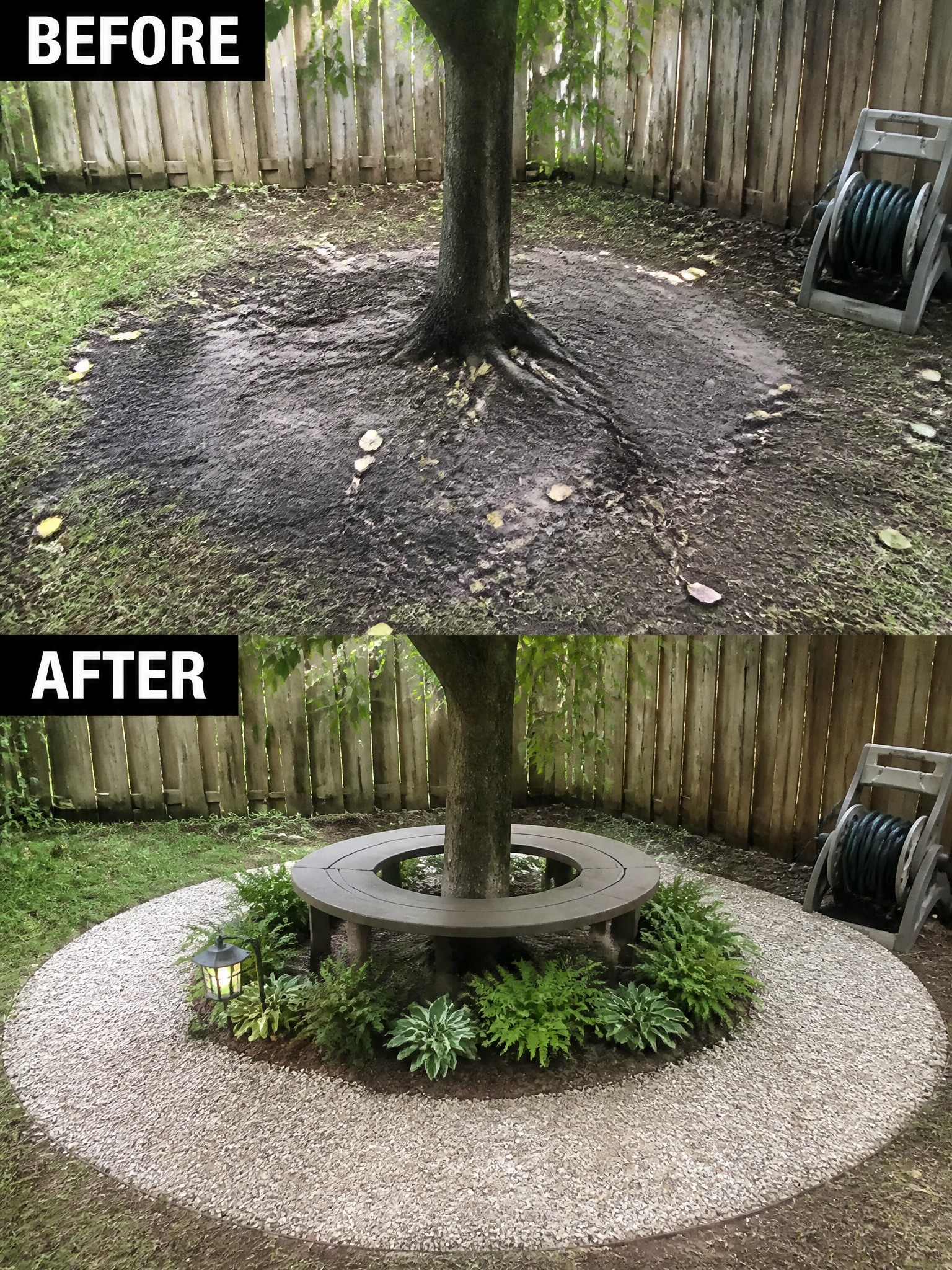
The bare dirt around the tree made the whole yard feel unfinished and messy. Adding a clean gravel circle with a bench and a few plants gave the tree a clear purpose and turned an empty spot into something useful.
This idea works best in small backyards where you want low maintenance without losing the natural feel. Use landscape fabric under the gravel to control weeds, choose plants that handle shade, and keep the circle wide enough for easy mowing around the edge.
Add Structure To An Overgrown Fence Line
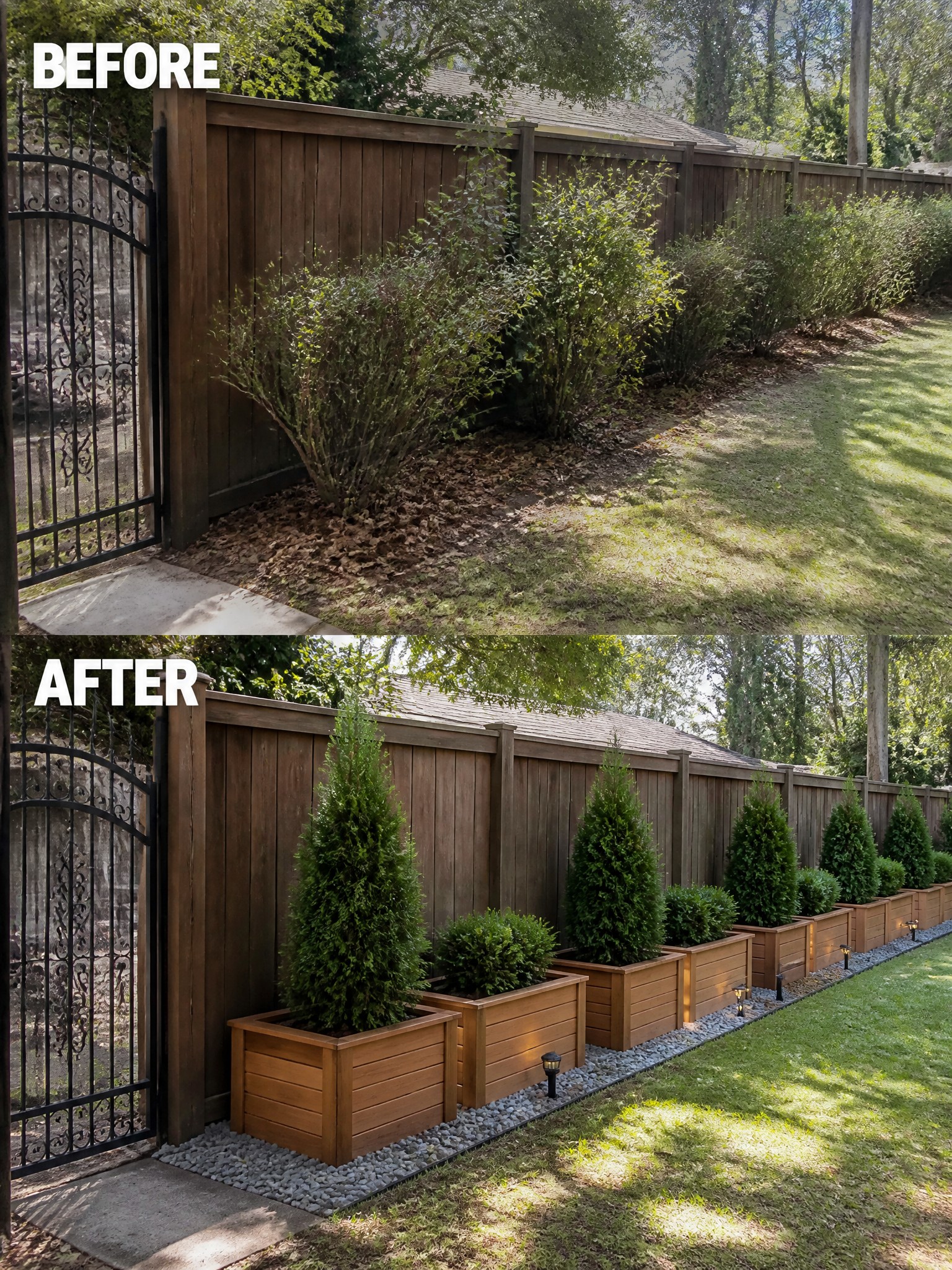
A long fence with wild shrubs often looks messy because the plants grow at different rates and the ground stays bare. Raised planters solve this by giving the space clear edges and letting you pick plants that stay the same size.
This approach works best on narrow strips where full garden beds would take up too much lawn. Use the same planter style and repeat one or two evergreen varieties so the row stays simple to care for. Gravel along the base cuts down on weeds and keeps the look tidy year round.
Add Defined Garden Beds To Give A Small Yard Structure
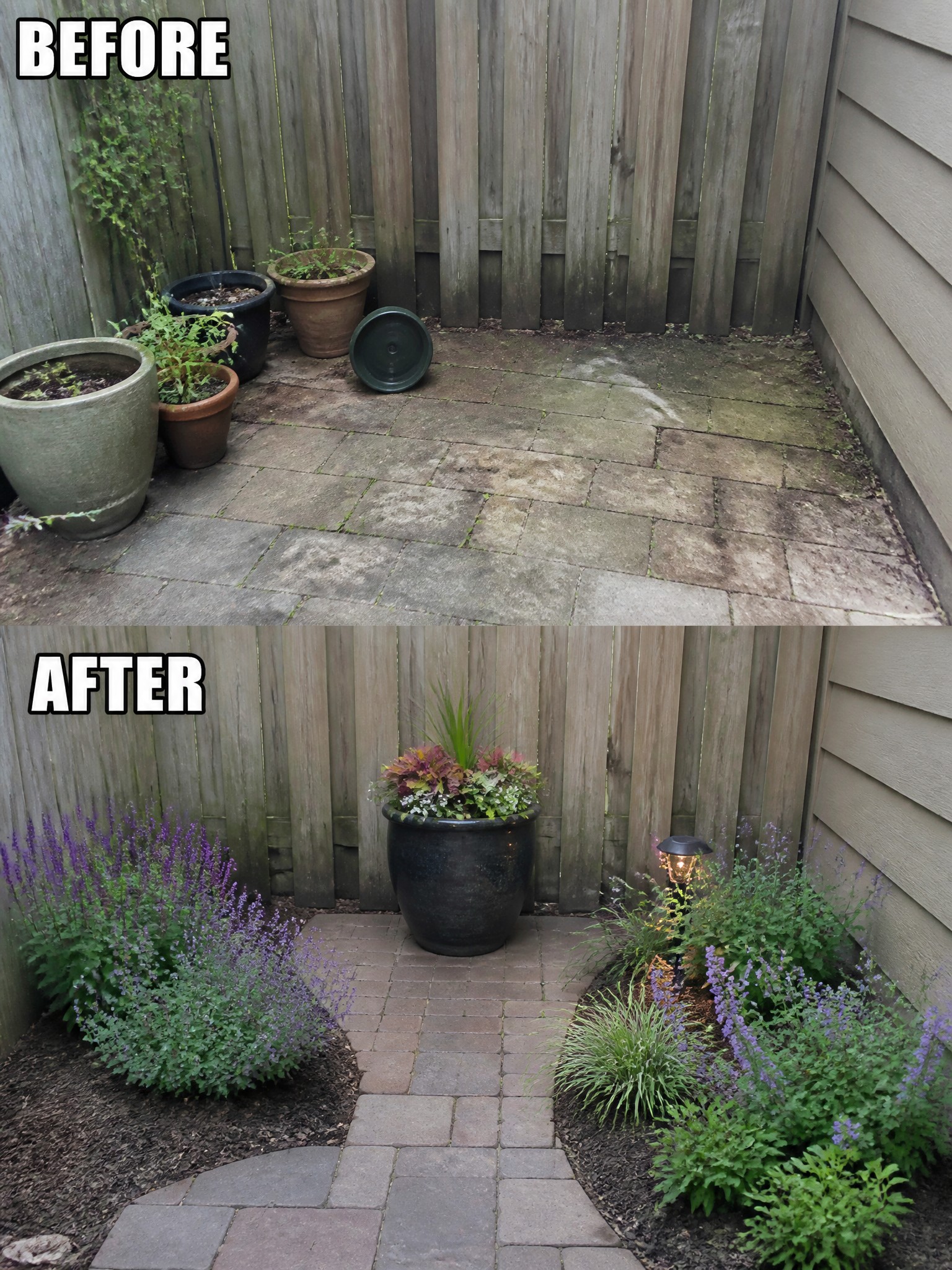
One of the easiest ways to improve a plain paved backyard is to add clear garden beds along the edges. The before photo shows a scattered collection of pots sitting directly on the pavers with no real layout. Once the beds were added the space gained shape and the plants had room to grow without looking messy.
This idea works best in small yards where you still want to keep most of the paving. Outline the beds with a gentle curve, lay down mulch, and use a few larger plants or a single focal pot to anchor the design. It keeps the area open while making it feel planned and much simpler to care for over time.
Frequently Asked Questions
Q: How do I pick plants that survive with almost no extra water? A: Focus on tough natives or proven low water options like sedum and yarrow that fit your climate. Plant them in groups so they shade the soil and cut down on evaporation. A thick layer of mulch around the base locks in what rain does fall.
Q: What if my yard has heavy clay that nothing seems to grow in? A: Mix in some cheap compost or aged manure to loosen it up before you plant. Raised beds or simple mounds give you fresh soil to work with right away. Start small in one spot so you see what takes hold without overhauling the whole yard.
Q: Can these changes really stay low maintenance after the first year? A: Yes, once the plants fill in they crowd out most weeds on their own. Trim back dead growth once in spring and let the rest handle itself. The before and after photos in the article show yards that settled into this pattern without constant fuss.
Q: How do I handle a shady spot that gets almost no sun? A: Go with ferns or hostas that thrive in low light and spread over time. Keep the area clear of heavy debris so air moves through and mold stays away.
