

Gardens often look unfinished when plants spill over with no clear lines to hold them in place or guide how the space is used.
Adding borders and flowers can bring order to those loose areas while working within a tight budget and building on what is already there.
In my yard I usually test edging ideas first because they make the rest of the plantings feel more intentional without needing a full overhaul.
Flowers then add layers of color and texture once the basic shape is set and the whole garden starts to feel more cohesive over time.
A few of these approaches are simple enough to adapt this season.
Add Brick Borders To Frame A Simple Path
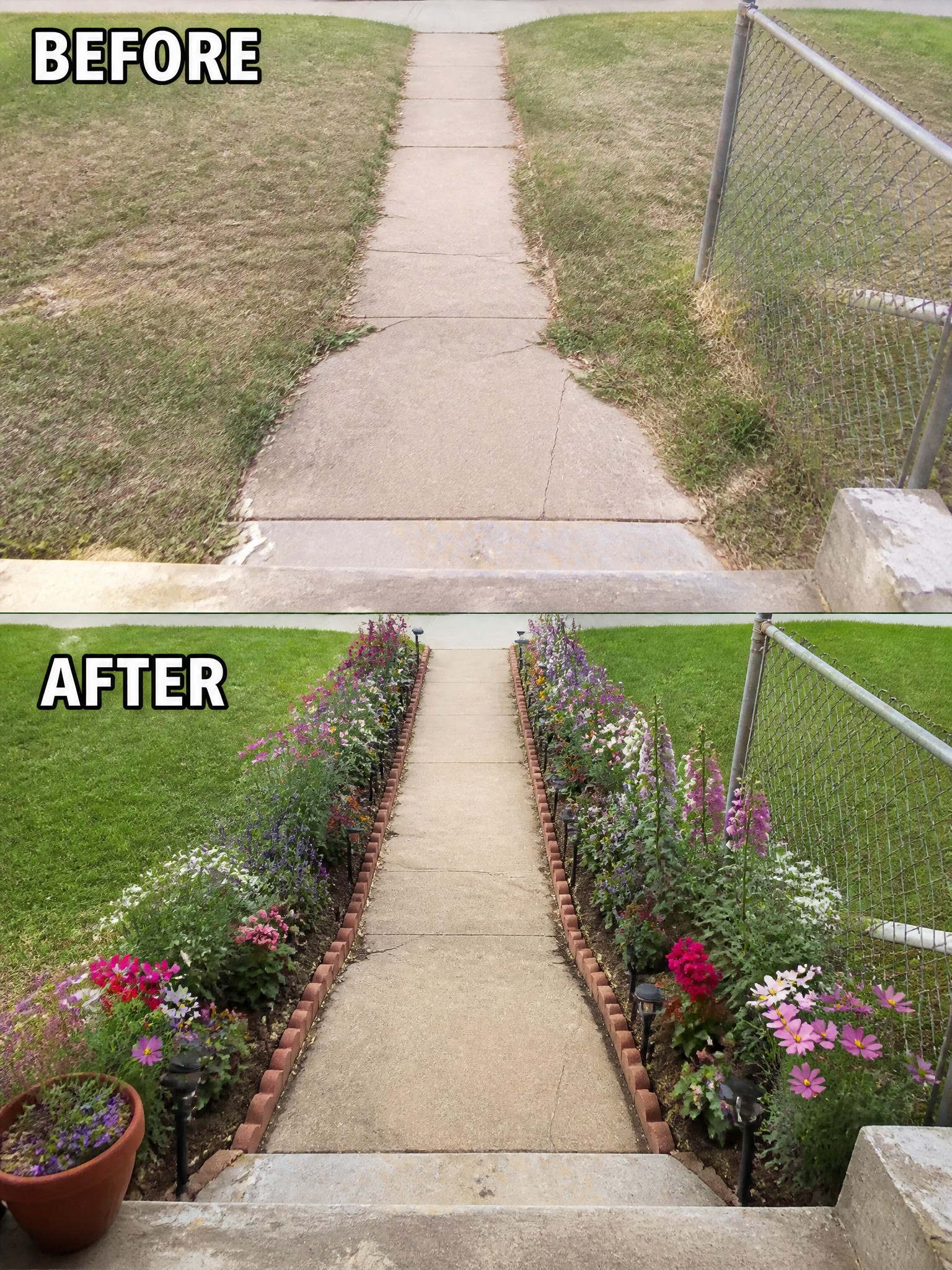
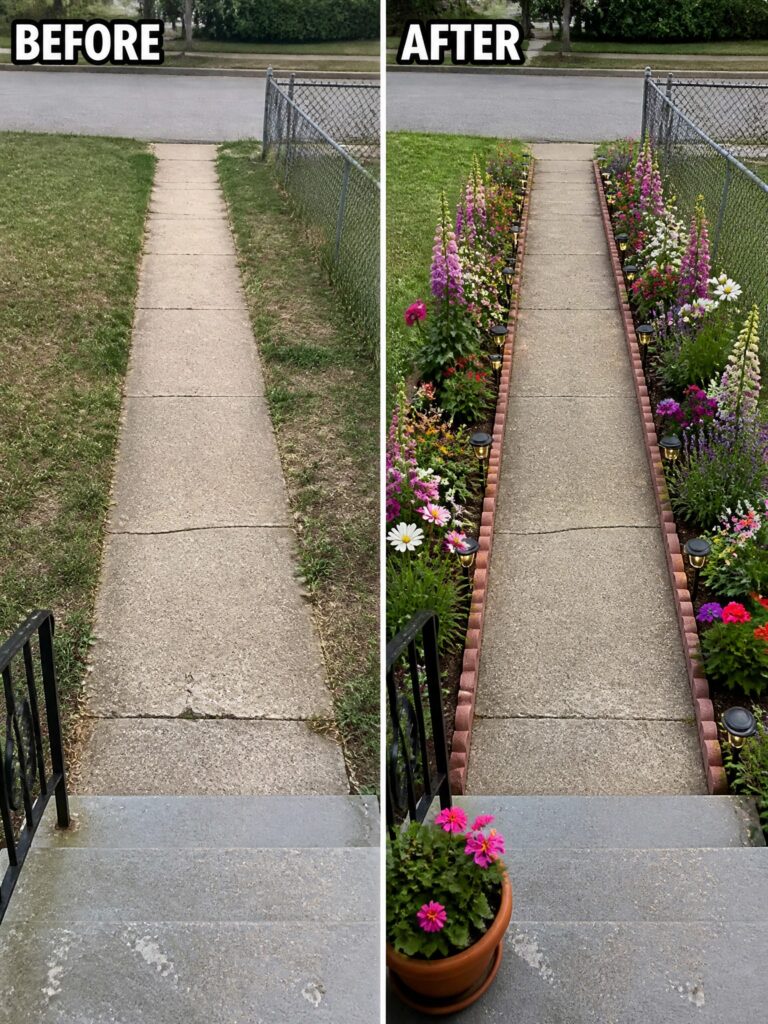
A plain concrete walkway often looks unfinished when grass grows right up to the edges. Adding low brick borders on both sides creates clean lines and gives you space to plant flowers without the beds looking scattered. The change turns an ordinary path into something that feels planned rather than leftover.
This idea works well in front yards or side entrances where you want structure without spending much. Keep the beds narrow so they do not crowd the walkway, and choose plants that stay mostly within the border height. Start with the edging first, then fill in the flowers once the shape is set.
Add Structure To An Overgrown Side Yard
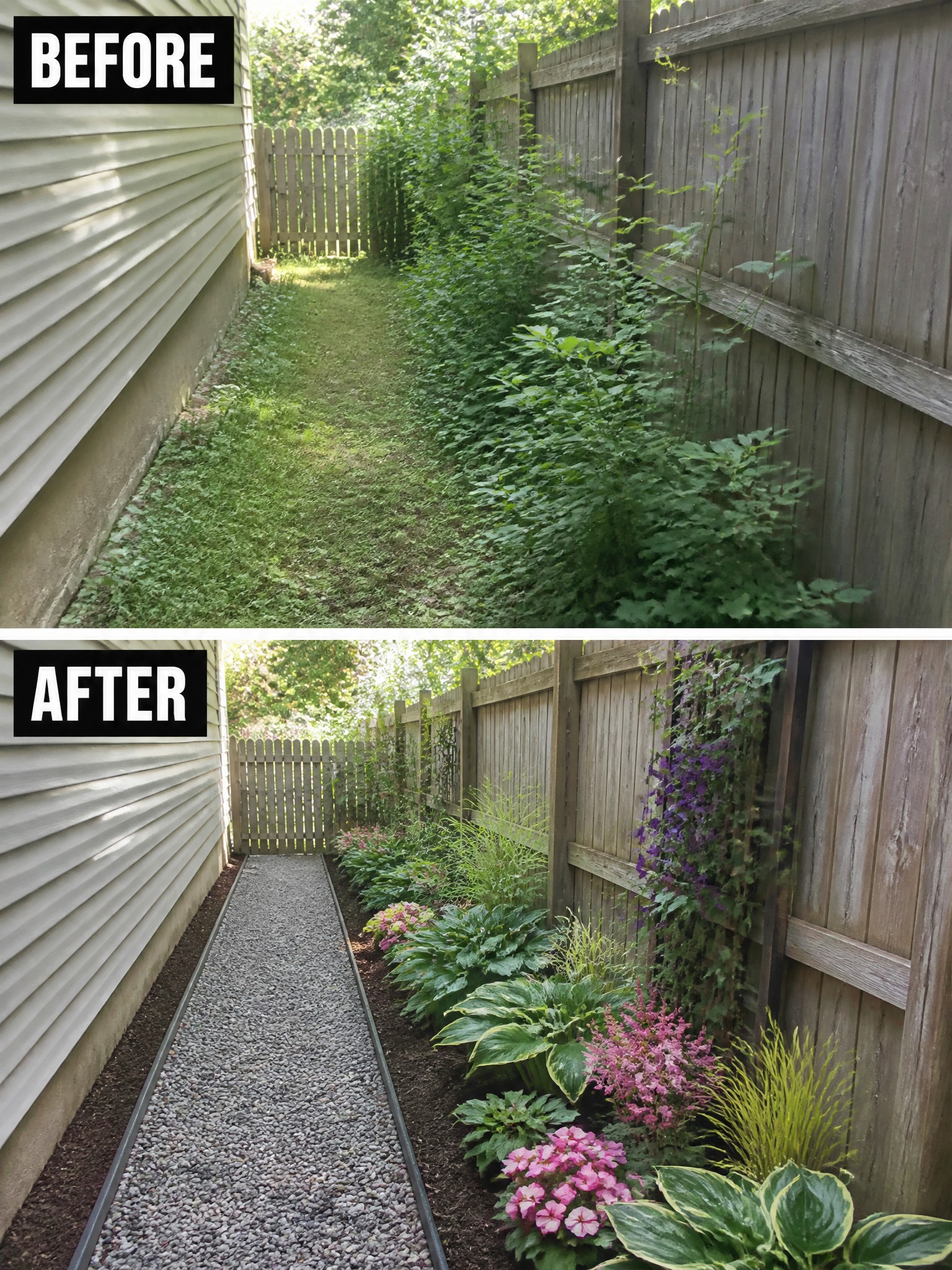
A narrow side yard often gets ignored until the plants take over completely. Clearing the weeds and tall growth first makes room for a simple gravel path and mulched beds along the fence. The change turns a messy strip into something you can actually walk through without getting tangled.
This idea suits homes with tight spaces between the house and fence line. Start with a solid edging to keep the gravel in place, then fill the beds with shade plants that spread on their own. The result feels planned without needing a big budget or constant upkeep.
Turn An Empty Patio Into A Seating Area

An empty concrete patio often sits unused until you give it a clear purpose. Adding string lights, a rug, and a small table with chairs turns the space into somewhere you can actually sit and spend time.
This idea works best on small side yards or narrow patios where the goal is to create a defined zone without crowding the floor. Keep the furniture light and weatherproof, and use the rug to mark the seating area so the rest of the space still feels open.
Create Defined Garden Beds With Simple Edging
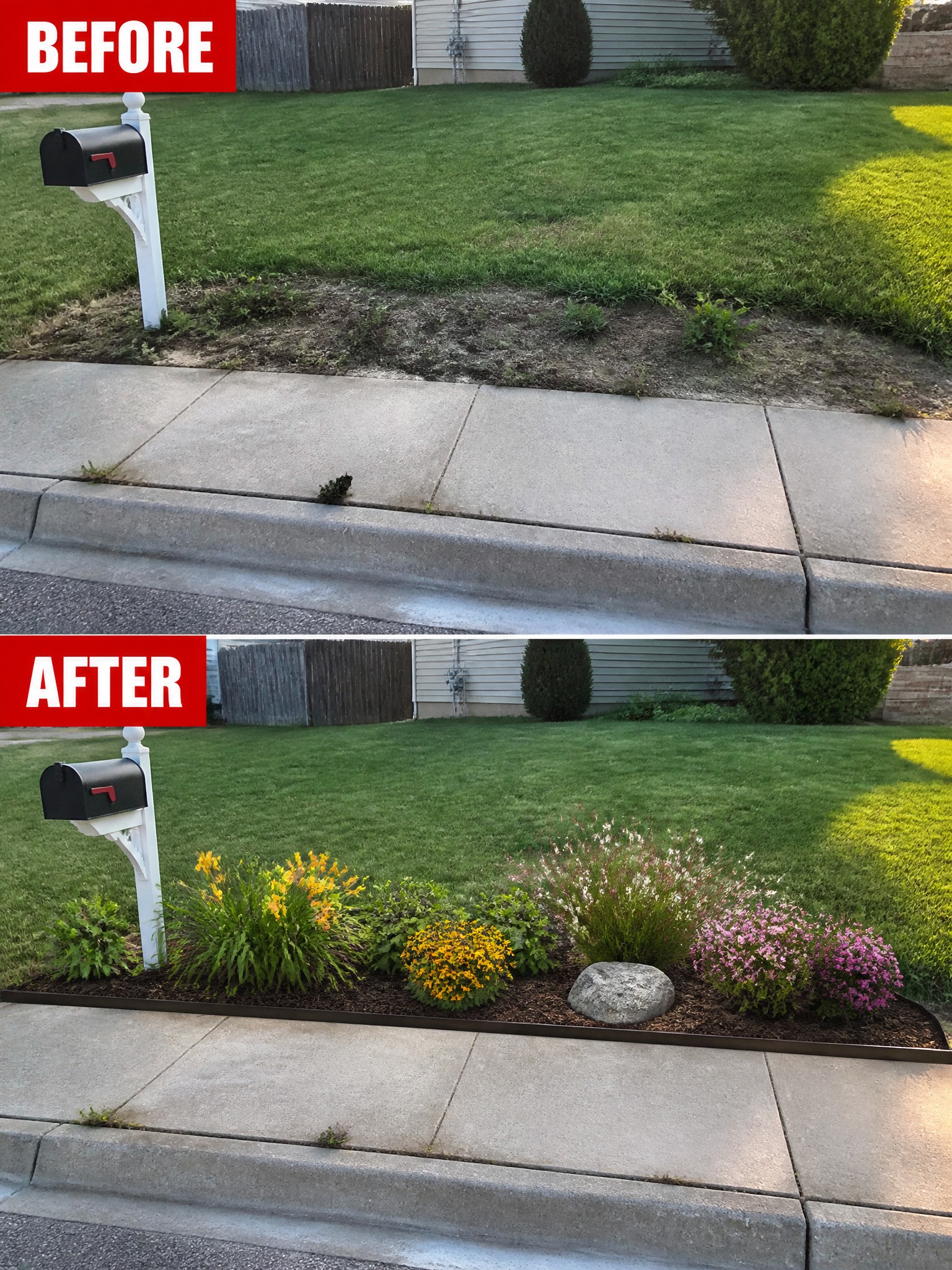
A bare strip of dirt and weeds along the sidewalk can make the whole front yard feel unfinished. Adding a low metal edge and filling the space with mulch and a few plants turns that neglected area into a clear garden bed that looks intentional and keeps the lawn from creeping over the curb.
This approach works well on any narrow strip where grass meets pavement. Start by laying down edging to hold the shape, then add mulch to block weeds and give the plants a neat background. It keeps the bed looking tidy with very little ongoing work.
Define The Edge Of A Side Yard With A Hedge
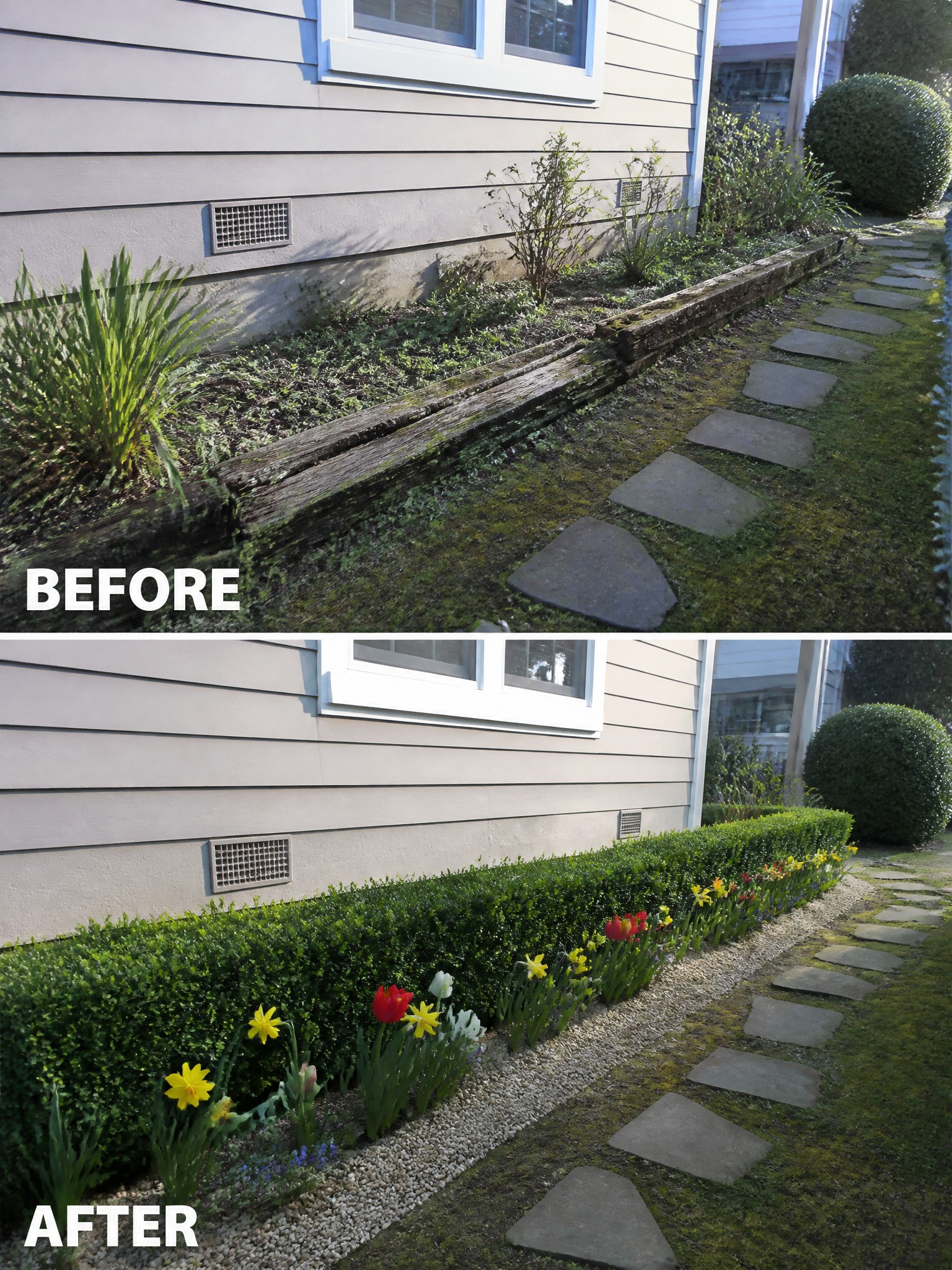
A narrow strip beside the house often ends up looking messy when left to its own devices. The old timbers and scattered growth were replaced with a straight hedge that gives the space a clear boundary and lets the flowers sit neatly in front of it.
This idea works best on long, thin areas where you want structure without crowding the path. Remove the old debris first, plant a dense evergreen hedge, and add a simple gravel strip to keep the bed looking tidy year-round. It keeps the focus on the planting instead of the weeds.
Add Borders To Shape A Sloped Yard
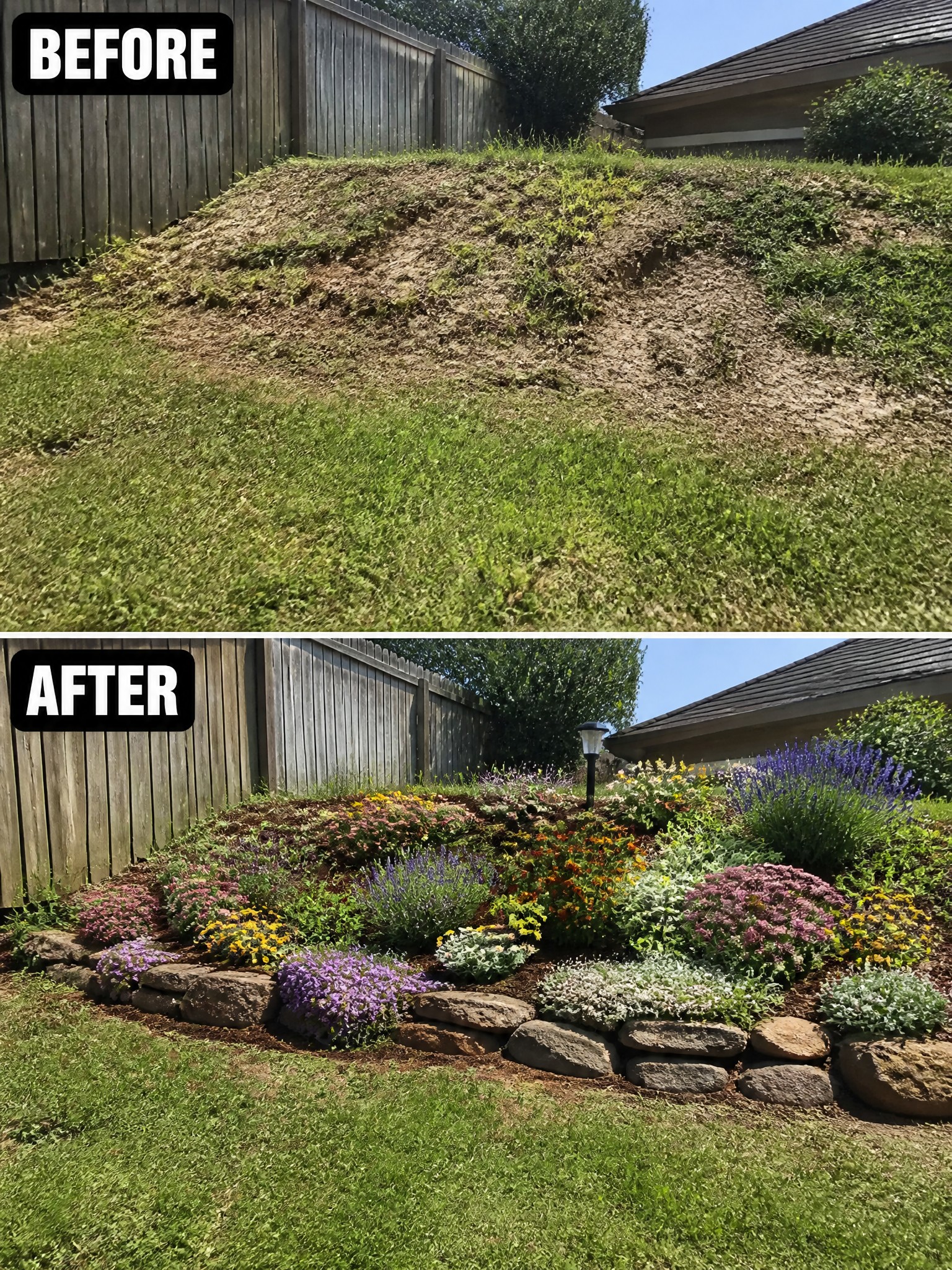
A bare or patchy slope tends to look unfinished because nothing holds the eye or the soil in place. A simple stone border at the base combined with mulch and layered planting gives the area a clear edge and turns the slope into a proper garden bed instead of just leftover grass.
This idea suits homes with gentle slopes where the lawn already works but needs more structure. Clean up the existing growth first, set the border low so it follows the hill, and keep the planting dense enough to cover the soil without crowding the walkway below.
Add String Lights And Potted Flowers To A Bare Porch
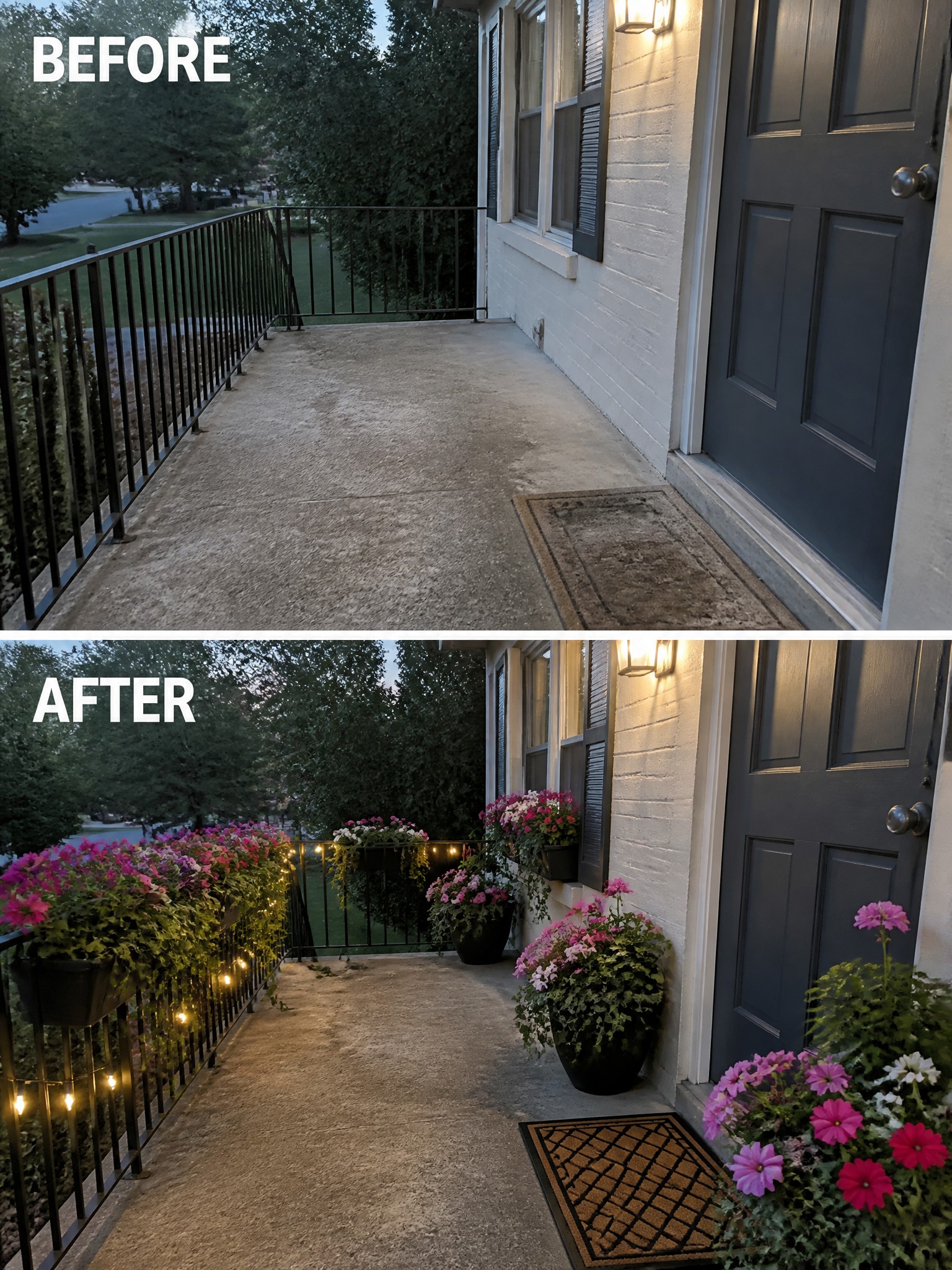
A plain concrete porch can feel cold and unused when it has nothing on it. Adding a row of flower-filled planters along the railing and a simple string of lights turns the space into something you actually want to walk out to at the end of the day. The lights create a soft glow once it gets dark, while the flowers add color and life right at eye level.
This idea works best on porches or small decks that already have a railing to hang lights from. Start with a few large pots rather than many small ones so the area does not feel crowded, and choose flowers that can handle your local weather. It is an easy way to make the entry feel cared for without major construction.
Add Edging To Create Defined Garden Borders
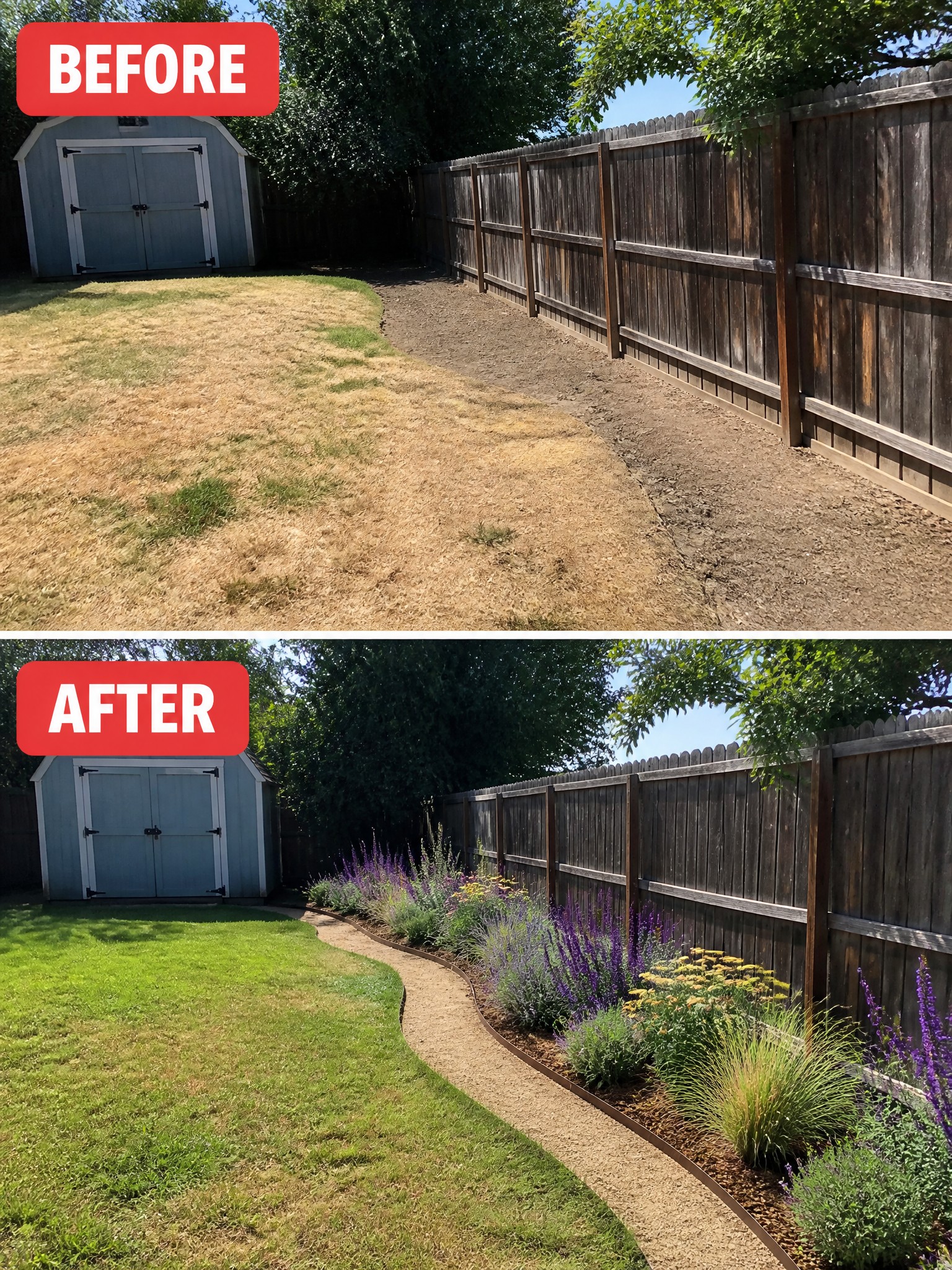
A long fence line next to patchy grass and a bare dirt path can make a backyard feel unfinished. Adding a simple metal edge creates a clean curve that separates the lawn from a new planting bed. The bed gets filled with mulch and a mix of taller and lower perennials, which gives the whole side of the yard a clear purpose without needing a big budget.
This approach works well along fences or property lines where the space feels open and undefined. Start with the edging and a gravel or mulch path first, then add plants that can handle your local conditions. Keep the bed width reasonable so you can still mow easily and reach everything for watering.
Add Simple Borders To Define Your Garden Beds
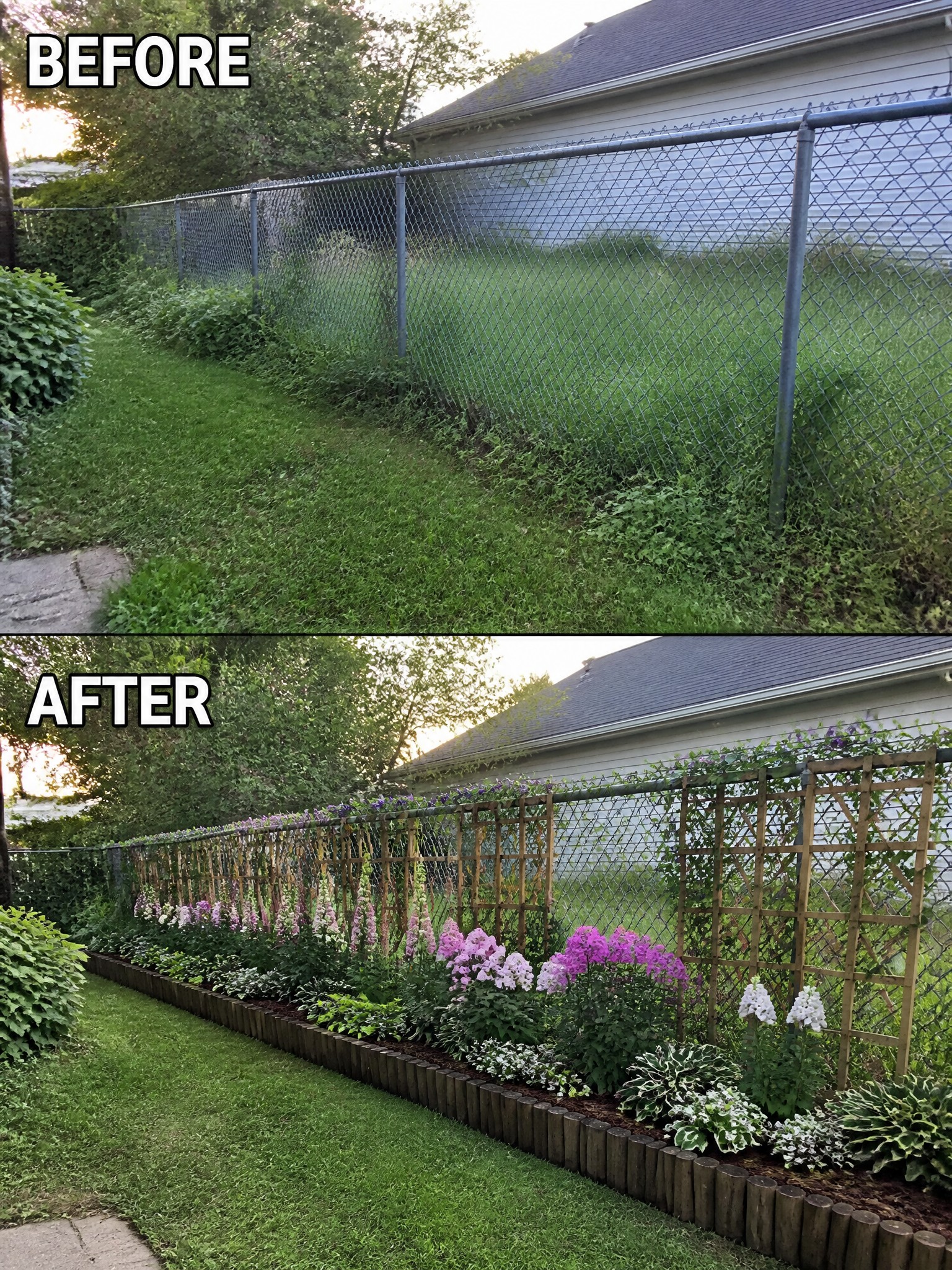
An overgrown strip of grass along a fence often looks messy because there is no clear edge. Adding a low wooden border and filling the new bed with plants turns that same area into something that feels intentional. The before photo shows tall weeds and nothing to separate the lawn from the fence, while the after shows a neat line of edging that keeps everything in place.
This idea works best along property lines or side yards where you want a bit of color without blocking views. Start by cleaning up the grass and setting the border first, then fill in with a mix of taller flowers toward the back and shorter plants in front. It keeps the space from looking random and makes mowing easier too.
Add A Defined Flower Border Along The Driveway
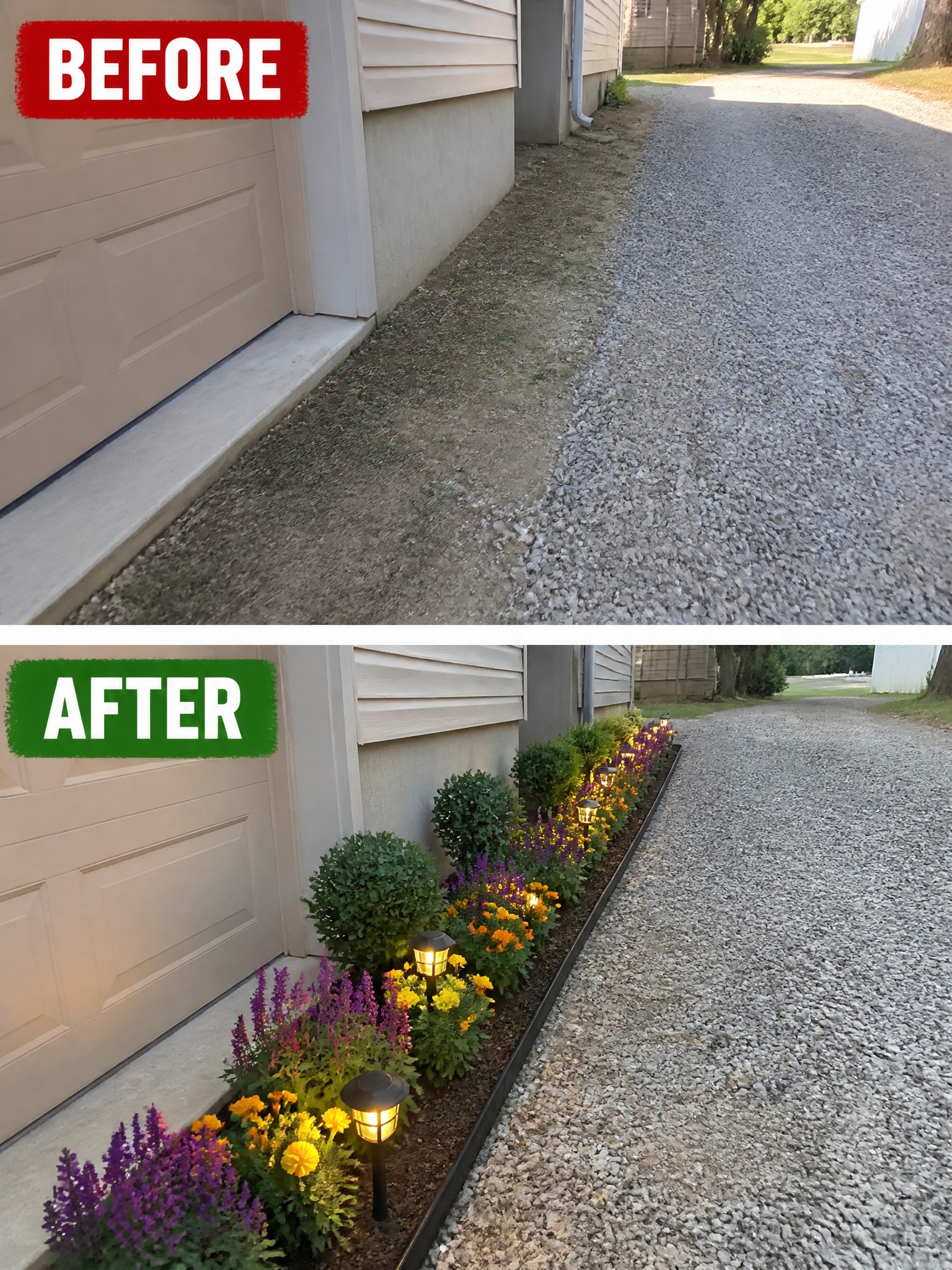
A bare strip of dirt next to a garage often looks unfinished next to a gravel driveway. Adding a straight edged bed with mulch, a few shrubs, and colorful flowers gives the side of the house a much cleaner and more intentional look.
This idea works well on homes where the driveway runs close to the foundation. Use a simple border material to keep the gravel from spilling into the bed, then plant a mix of low shrubs for year-round shape and bright flowers for seasonal color. Solar lights placed along the bed are an easy way to add evening interest without running any wires.
Add Simple Edging To Define Garden Beds
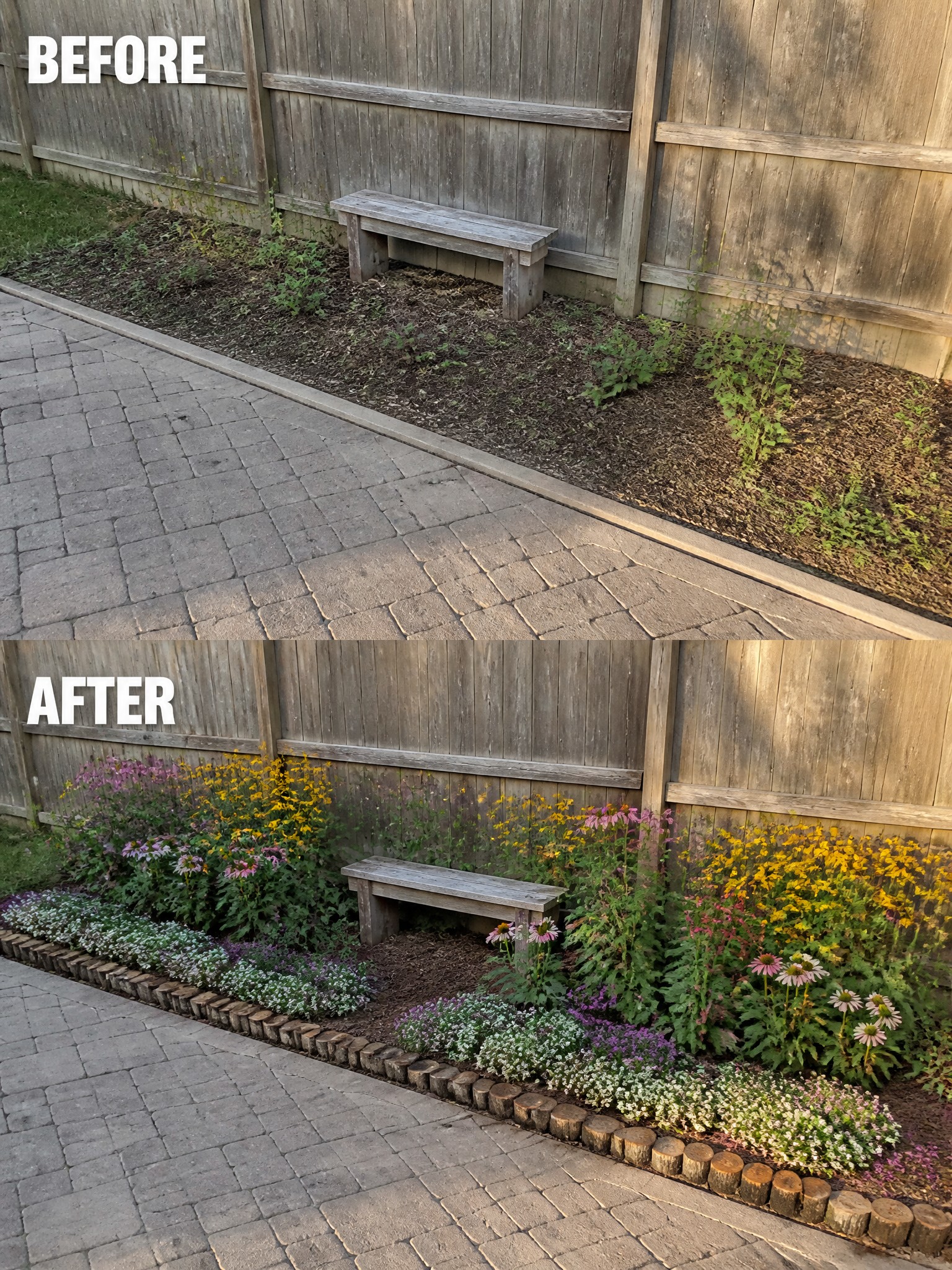
A bare strip of soil next to a fence often looks messy because nothing holds the space together. Adding a low log border turns that same area into separate beds that feel planned and easier to maintain. Mulch inside the edges keeps the soil tidy while giving flowers room to stand out.
This idea suits narrow side yards or fence lines where the ground runs together with the lawn or path. Lay the edging first so you have a clear shape, then add plants in groups rather than scattering them. It works on most budgets and makes future weeding and watering much simpler.
Add Window Boxes And A Defined Foundation Border
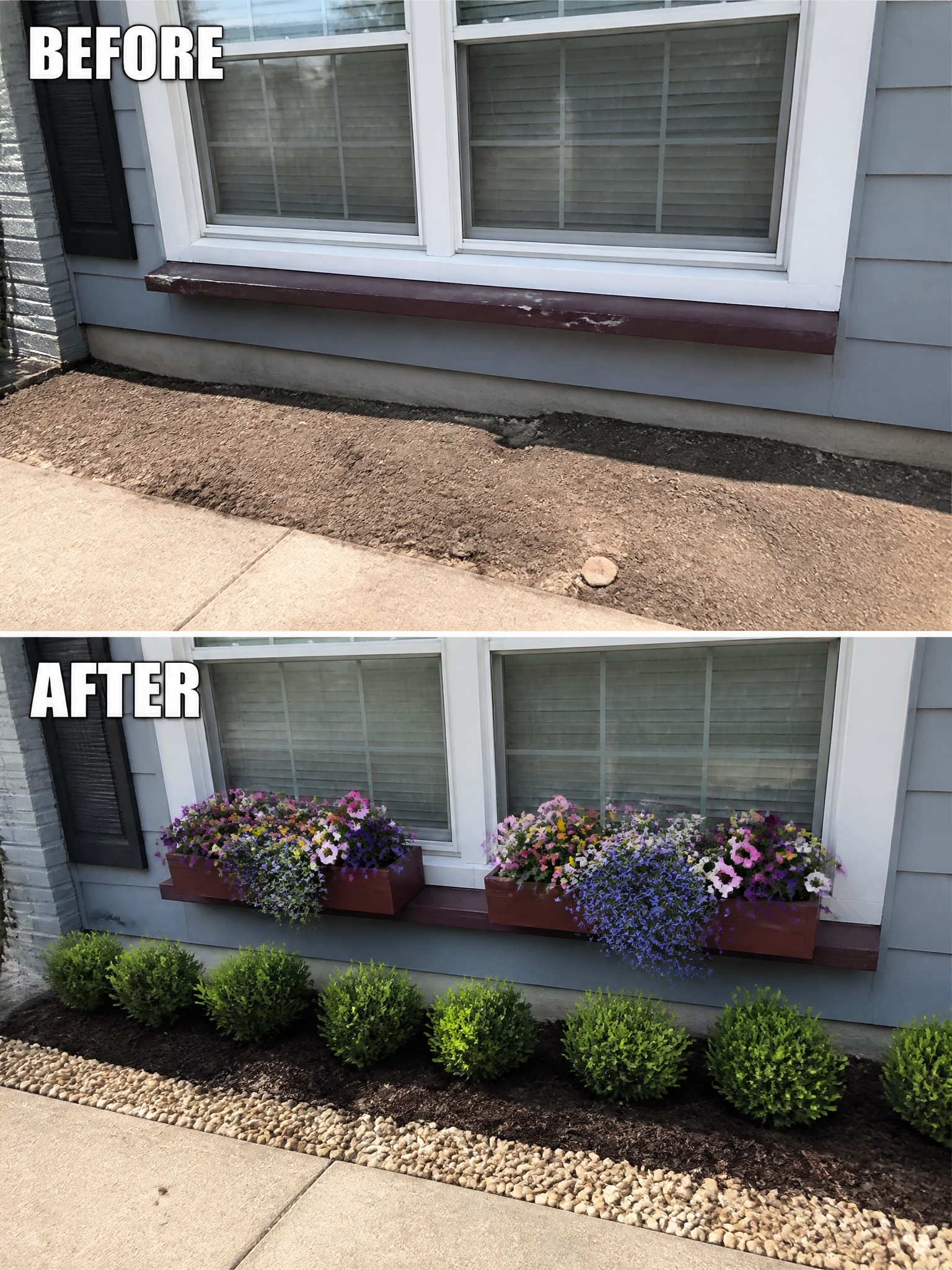
A bare dirt strip along the house can make the whole exterior feel unfinished. Adding a clean border with mulch, low shrubs, and gravel edging gives the area structure right away, while window boxes bring color up to eye level where it shows most.
This idea works well on any home with a plain foundation and works best when you keep the planting simple. Choose one or two types of shrubs for the bed, repeat the same box style under each window, and use gravel or mulch to hold the line between the bed and the walkway.
Add Structure To An Overgrown Backyard
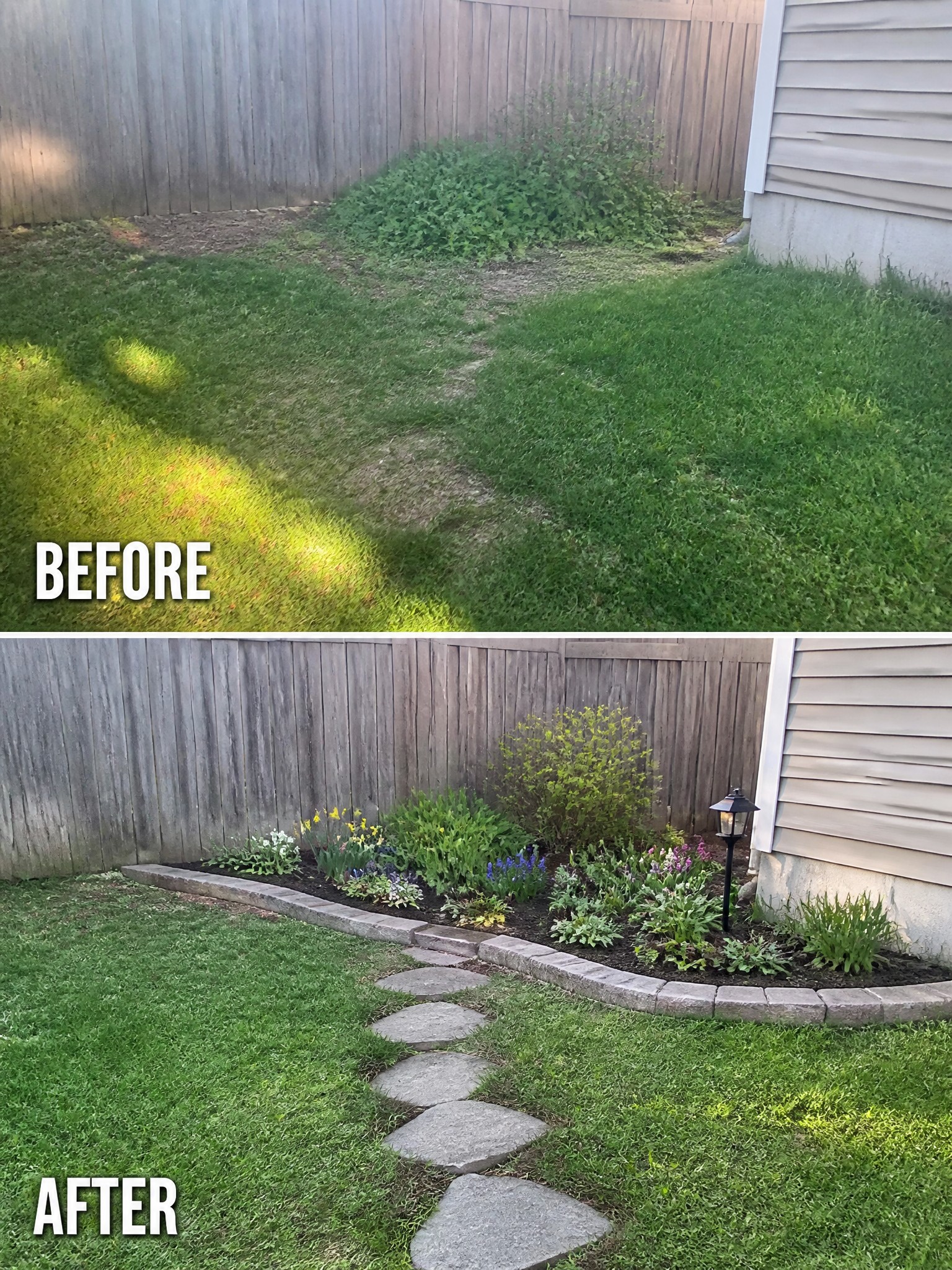
A patchy lawn that runs straight to the fence often feels unfinished and hard to maintain. Adding a low stone border creates a clear planting area, and a few stepping stones give the space a simple path so the yard feels more organized.
This idea works best in smaller yards where you want planting without losing too much lawn space. Clean up the edges first, then add the border and path before choosing plants, so the layout stays practical and easy to care for.
Create Defined Garden Beds Along The Foundation

Overgrown shrubs can make the front of a house look messy even when the building itself is in good shape. In this case the change came from clearing out the old bushes and putting in a simple brick edge that runs the full length of the bed. Once the edge was in place, the new plants could be arranged in layers instead of growing into one big tangle.
This approach works well on narrow strips between a house and a sidewalk. Start with the edging so the bed has a clear shape, then fill it with a mix of low shrubs, mid-height perennials, and a few taller flowers. The result is a planting that stays neat with regular trimming and gives the house a finished look without needing a full landscape overhaul.
Fill A Balcony With Potted Flowers For Quick Color
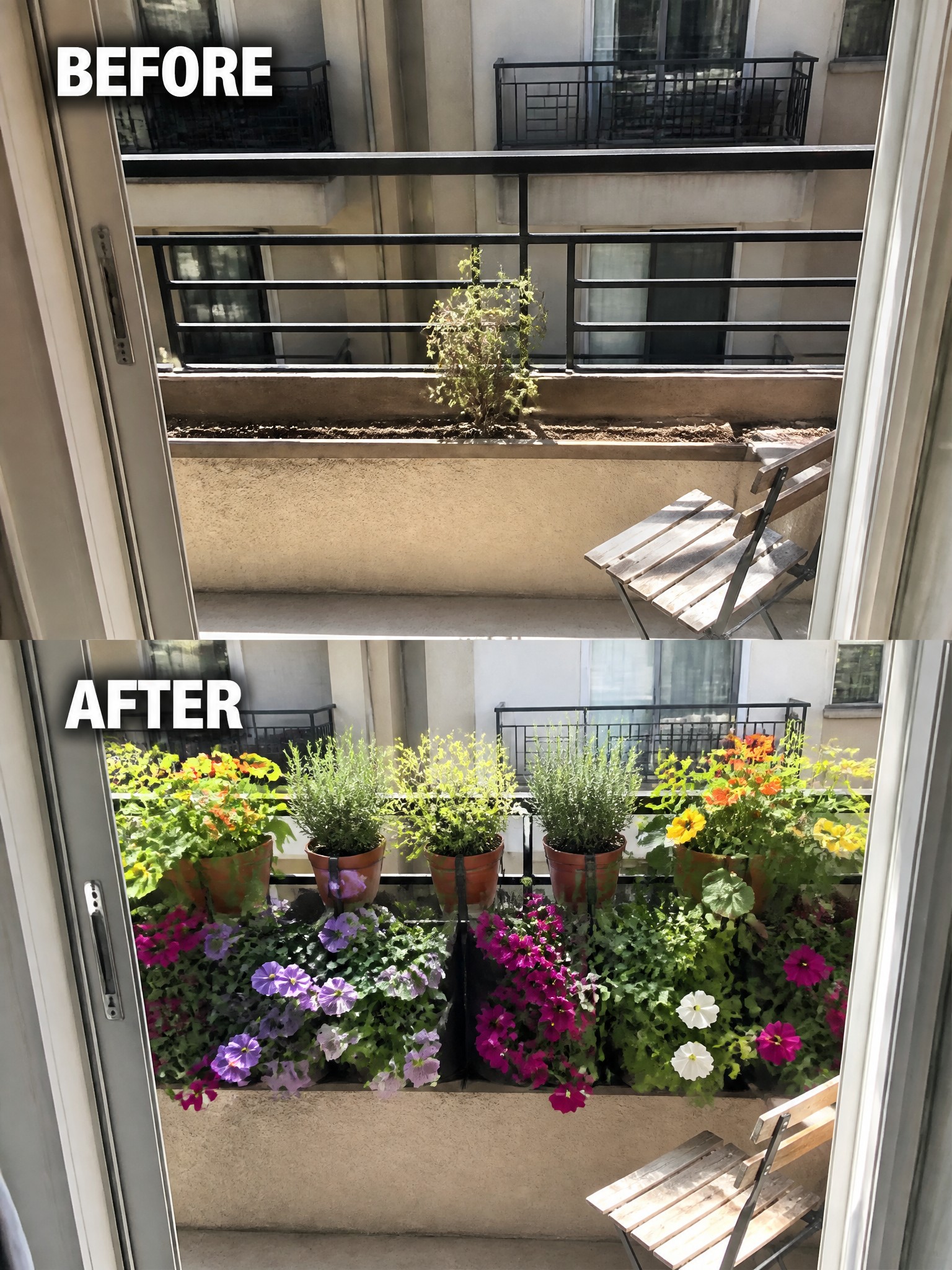
A bare balcony with just one struggling plant in the planter can feel empty and uninviting. Adding rows of colorful potted flowers and herbs changes that fast. The after view shows how simple containers turn the same space into something you actually want to sit in.
This works well on small balconies or patios where digging beds is not an option. Start with a few large pots of the same type of flower for impact, then mix in different heights and colors. Keep the bench or seating clear so there is still room to move around.
Define A Path With Flower Borders
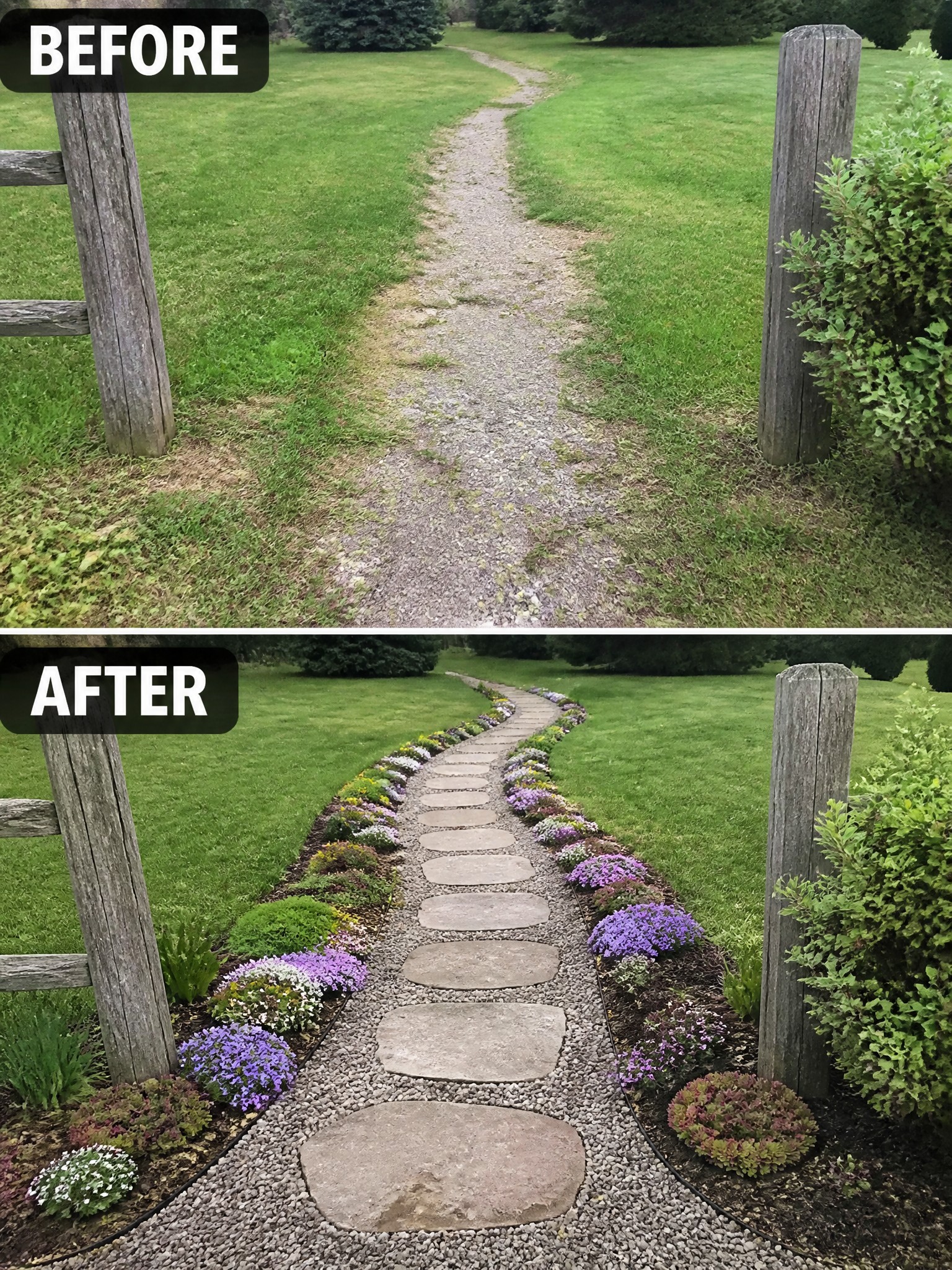
A plain gravel path often looks unfinished until you add borders on each side. The change here comes from placing low flowers and mulch along the edges, which turns a loose strip into something that feels planned and kept.
This idea suits any yard with a main walkway. Lay simple edging first, then fill the beds with compact perennials that handle sun or shade. Keep the planting narrow so the path stays easy to walk and mow around.
Add Defined Garden Beds Along A Fence
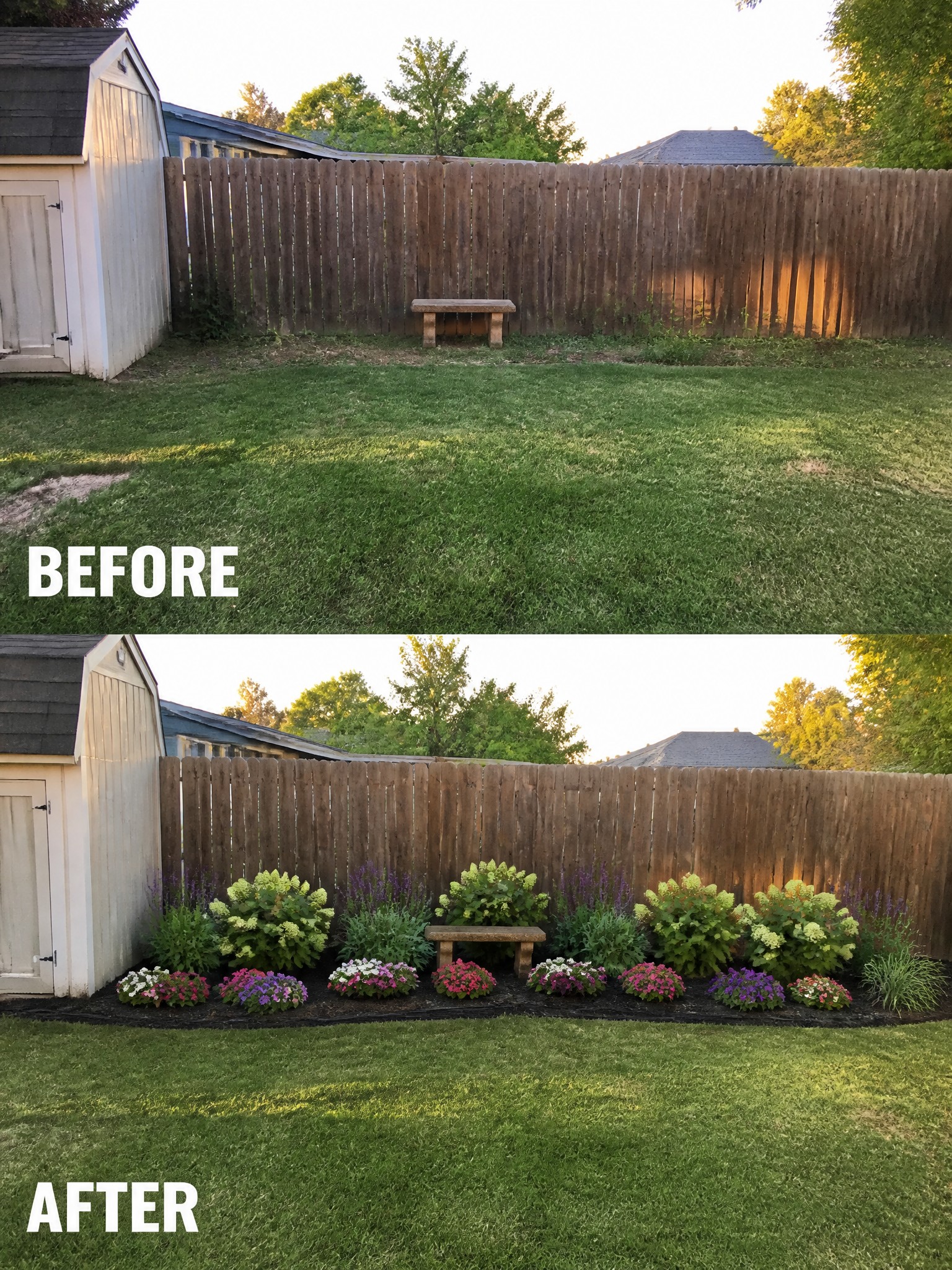
One simple way to make a backyard feel more finished is to add a row of garden beds right along the fence. The before photo shows a wide open lawn with nothing to break up the space, while the after shows how a single planted border turns the same area into something that feels planned and cared for.
This idea works best along property lines or at the back of a yard where you want a bit of color and structure without losing open lawn space. Keep the bed narrow enough to mow around easily, mix a few shrubs with lower flowers, and use mulch to hold the look together through the seasons.
Add Defined Borders To A Plain Front Yard
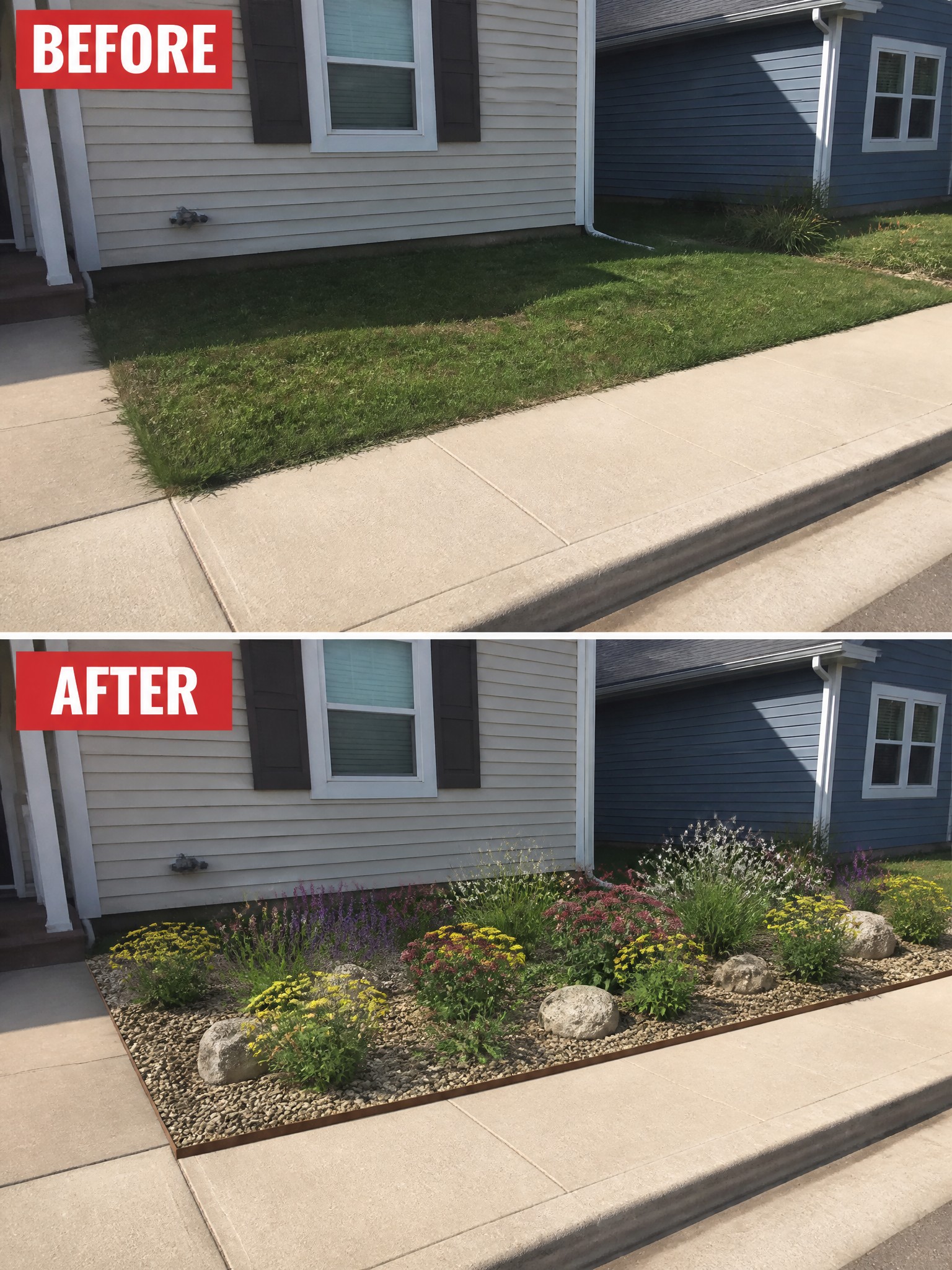
A simple way to improve a basic front strip is to replace the plain grass with a clear garden bed. Adding a metal edge, gravel, and a row of low plants creates structure and keeps the area from looking unfinished. The change turns an empty space next to the sidewalk into something that feels intentional.
This approach works best along house foundations or walkways where grass tends to look patchy. Use sturdy edging first to hold the shape, then add gravel or mulch and a few groups of flowering plants. It suits modest yards that need curb appeal without major lawn work, and it leaves room to walk along the path.
Add Raised Beds To Border A Small Courtyard
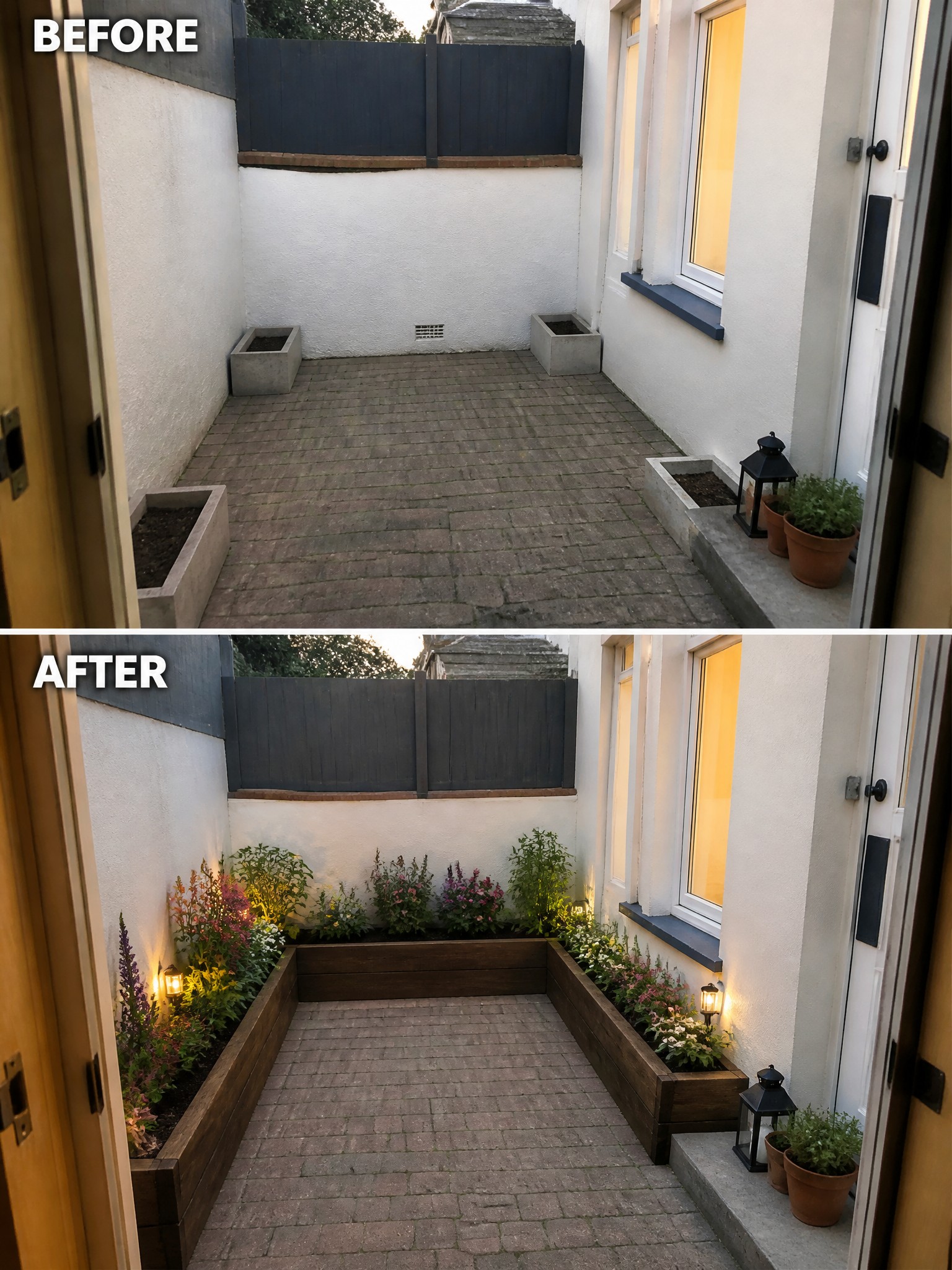
A bare paved yard often looks unfinished when the only planting sits in a few scattered pots. Building a run of raised wooden beds along the walls brings the planting up to a usable height and gives the space clear edges without eating into the walking area.
This approach suits narrow side returns or small backyards where you need structure but still want room to move around. Keep the beds simple in timber that matches the house, then plant a mix of taller flowers at the back and lower ones near the front so the color shows from inside.
Define Narrow Spaces With Simple Garden Edging
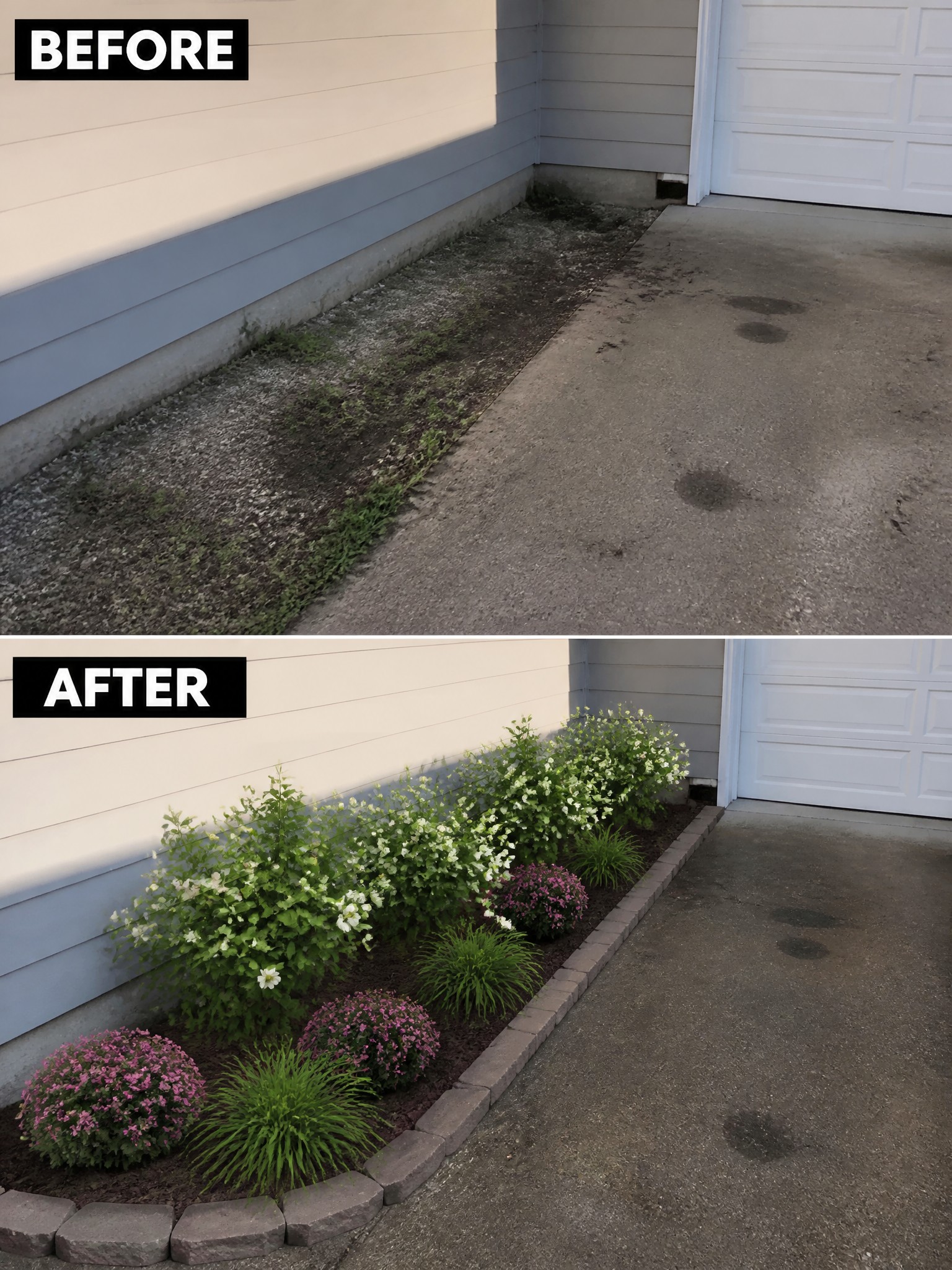
A thin strip of dirt and weeds along the house often stays bare because it feels too awkward to plant. Adding a low border gives the space a clear shape so plants can stay in place and the area looks intentional instead of forgotten.
This idea works best along foundations or driveways where you want structure without losing walking room. Put the edging in first, then add a few shrubs and flowers that stay low and repeat the same border material for a tidy look that holds up over time.
Add A Simple Border Around Trees
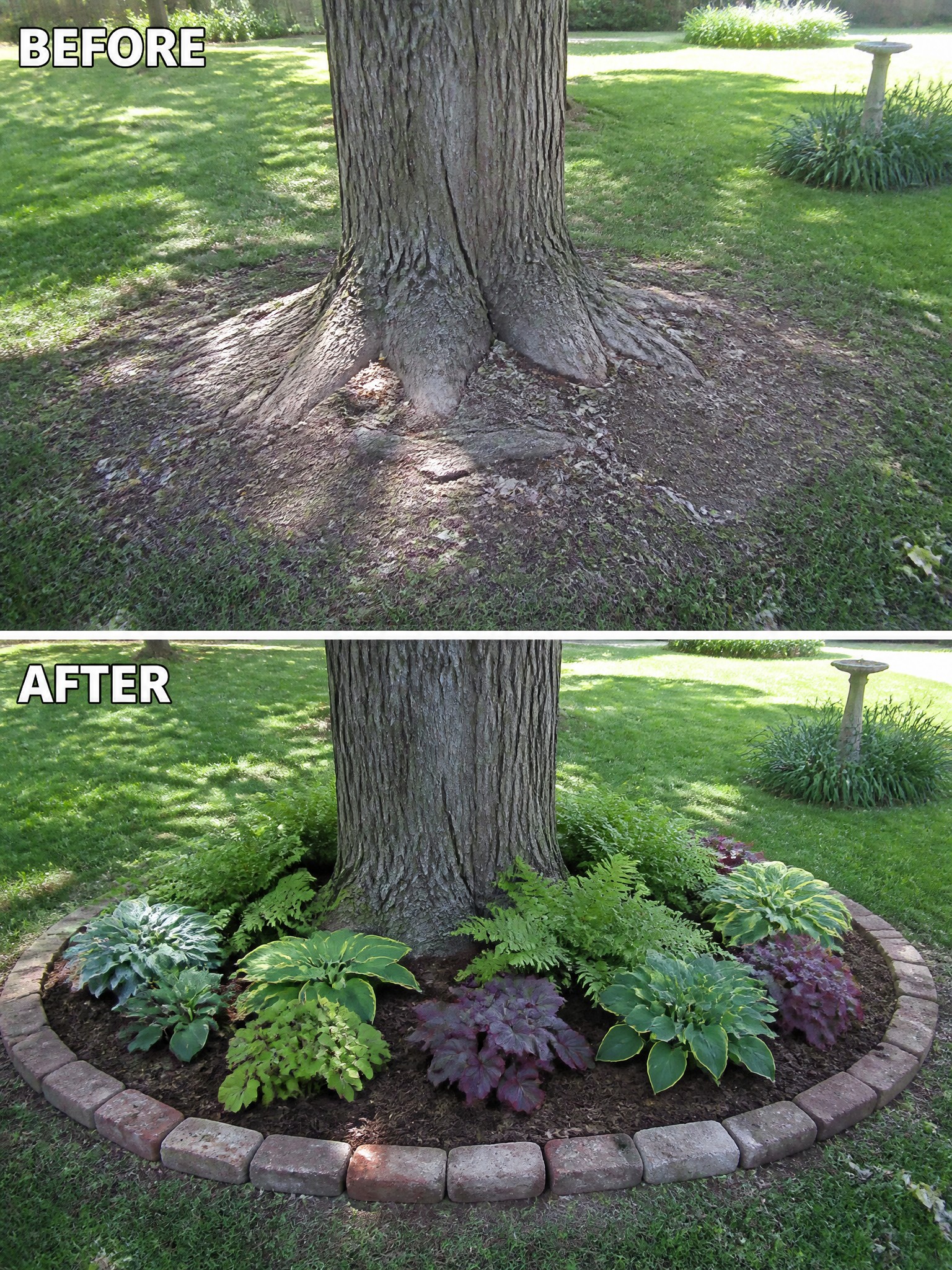
Many yards leave the ground right up to a big tree looking unfinished, with roots exposed and grass struggling to grow. Adding a low brick border and filling the circle with shade plants turns that spot into a clear garden bed that feels intentional instead of neglected.
This works especially well under mature trees where grass is thin. Choose plants that handle shade and dry soil, keep the bed mulched, and make the border wide enough for easy mowing around the outside. The same idea can tidy up several trees without much cost.
Fill Concrete Planter Beds With Flowers And Edging
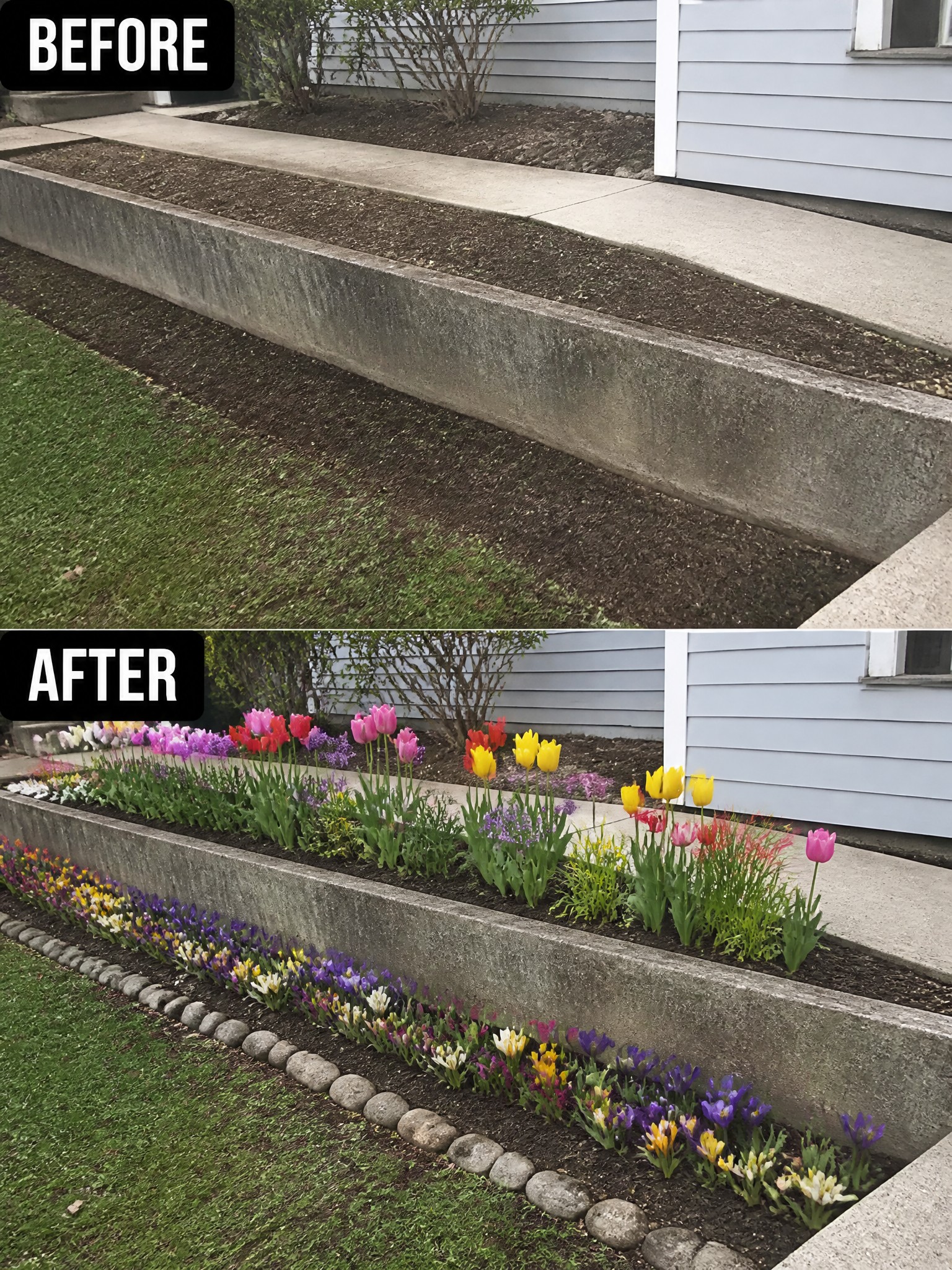
Many homes have long concrete planter beds along the house that sit empty or covered only in mulch. Adding a mix of spring bulbs and a simple stone edge turns the same space into a clear garden border without needing new construction.
This approach works well on houses with existing concrete structures where you want low-cost color. Choose bulbs that come back each year and keep the edging low so mowing stays easy and the bed does not crowd the walkway.
Add Planted Borders To Frame A Front Walk
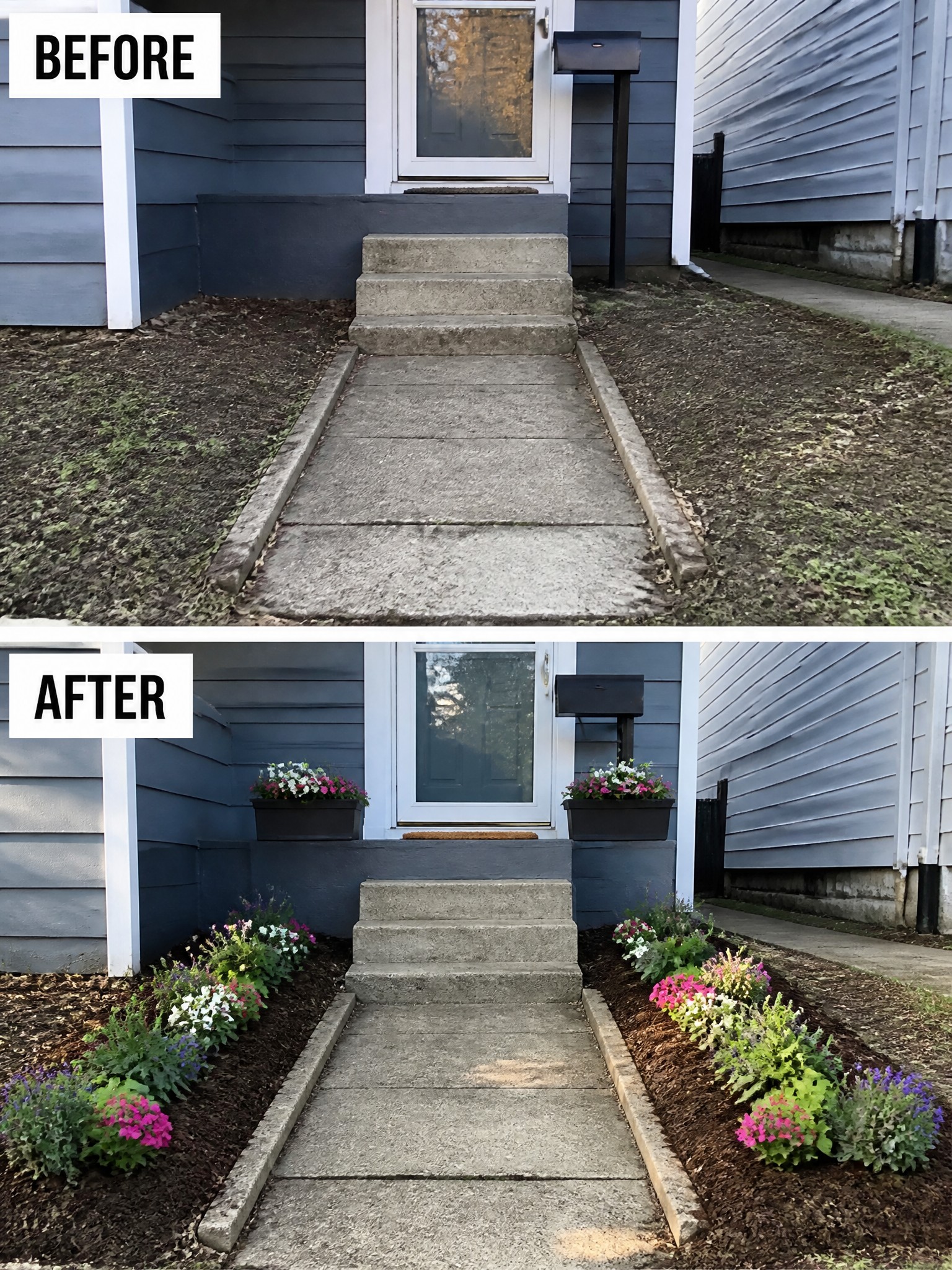
A simple way to improve a plain entry is to give the walkway clear borders instead of leaving the sides as bare dirt. The before photo shows weedy ground running right up to the concrete, while the after adds neat beds on both sides plus window boxes above the steps. The planting makes the path feel intentional and draws attention to the door without any big construction.
This works well on homes with a straight front walk like this one. Clean the edges first, lay down mulch, and fill the beds with a mix of flowers and low plants that can handle sun or shade. Keep the beds fairly narrow so the walkway stays easy to use.
Frequently Asked Questions
Q: Which flowers give the most color for the least money in a border?
A: Buy packs of seeds for quick growers like cosmos and zinnias. They fill spaces fast and bloom all summer. Mix in a few hardy perennials to cut down on replanting each year.
Q: How do I keep the edges of my flower borders straight without spending extra?
A: Dig a shallow trench with a regular shovel along the lawn line. Fill it with gravel or wood chips to hold the shape. Check it every few weeks and tidy up as needed.
Q: How often should I water new flower borders to save on bills?
A: Water deeply but only once or twice a week. This encourages strong roots without wasting water.
