

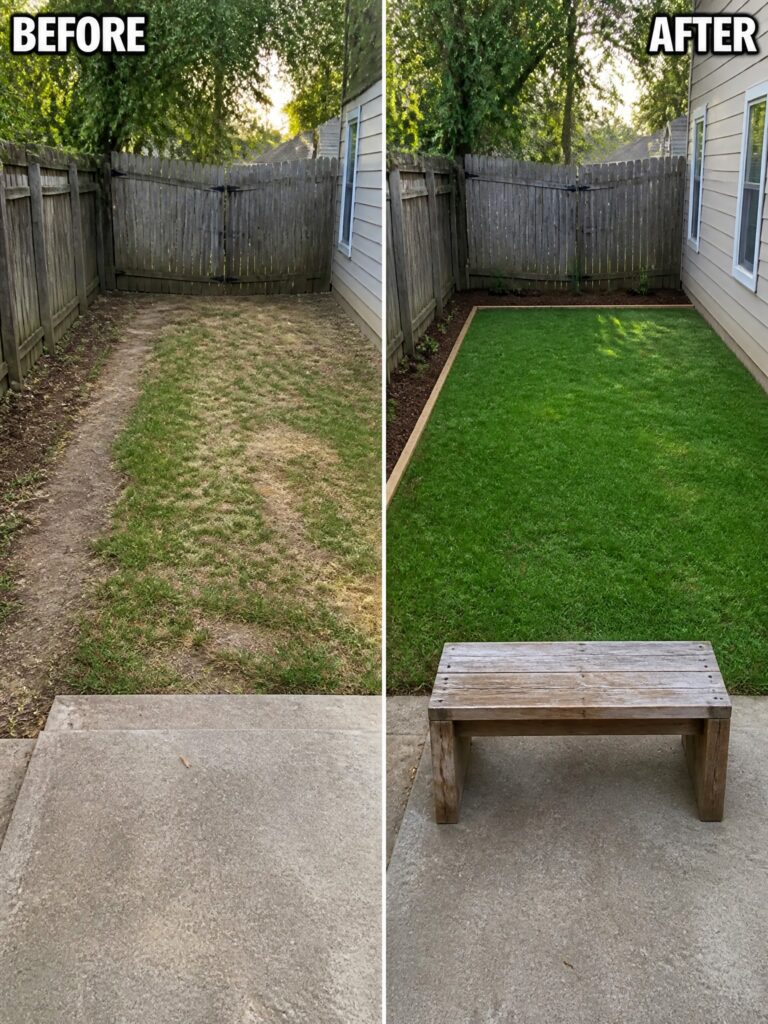
Gardens often end up looking a bit neglected when the planting areas have no real shape and everything just spreads out over the seasons.
I usually start by figuring out the main paths and bed edges because those decisions give the space a sense of order right away.
Small groups of plants make a bigger difference than scattering singles everywhere.
Once the basic layout feels settled I find it easier to add color and texture without things looking random.
Trying one or two of these approaches at a time has helped me see real progress in my own yard without spending much.
Add Simple Borders To Structure A Small Backyard
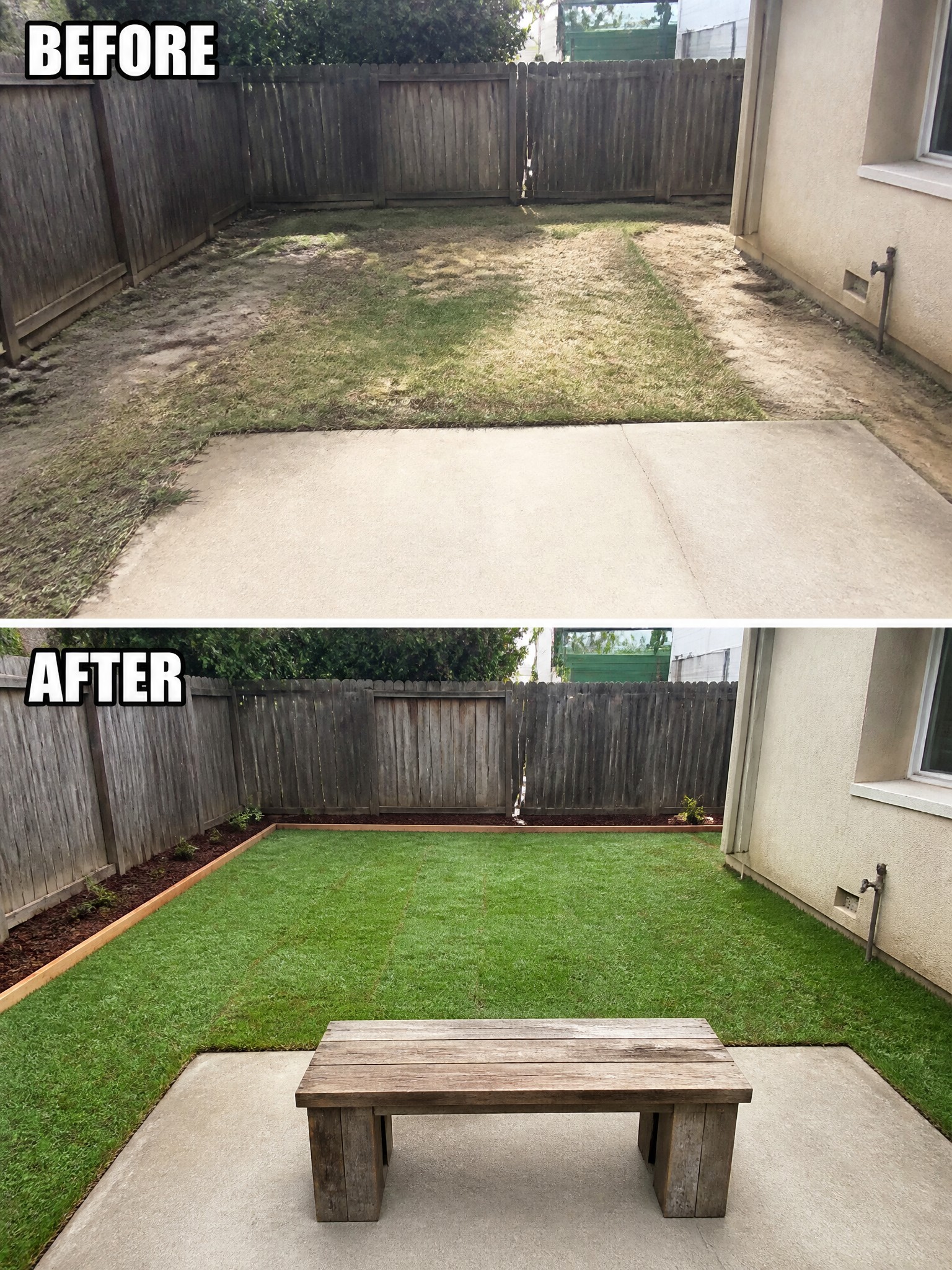
A bare backyard with patchy grass and dirt often feels unfinished and hard to use. Adding wooden edging along the fence line with mulch and a few plants creates clear borders that make the space look planned and much easier to maintain. The switch to a clean lawn surface pulls everything together without needing major construction.
This approach works well in small yards where you want to keep things open but still give the area some shape. Start with the borders first before adding any furniture, since the structure makes it obvious where to place seating or leave open space. Stick to low plants along the edges so the yard stays usable for walking or playing.
Give Overgrown Foundation Beds A Clear Structure
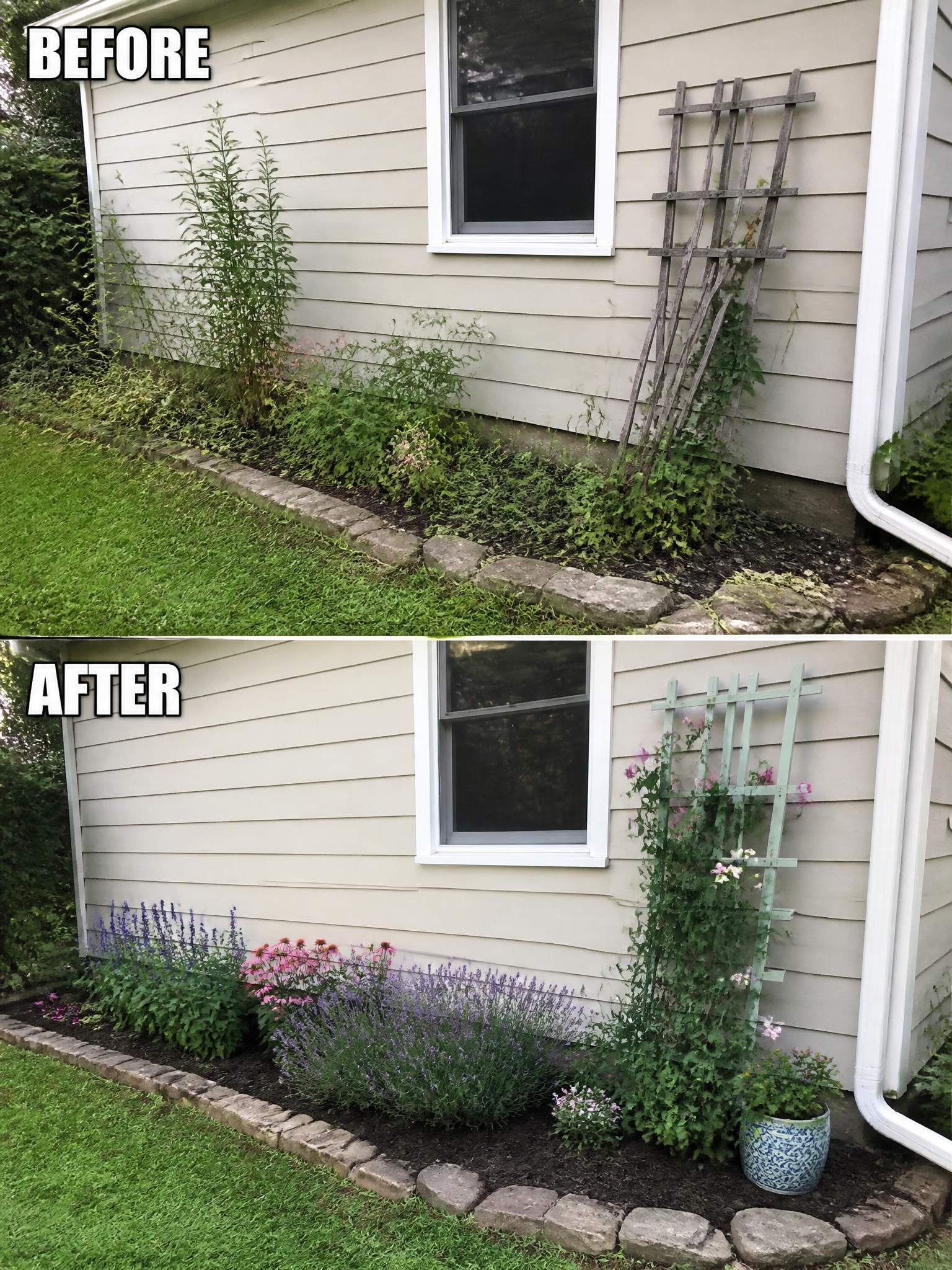
The main change here is simple. The before photo shows a messy strip of weeds and volunteer plants along the house wall with a leaning trellis. In the after photo the bed has been cleared and replanted with low lavender in front, taller flowers behind, and the trellis straightened and painted so the vines can climb neatly.
This approach works well on any narrow strip next to siding where plants tend to sprawl. Start by pulling everything out and edging the bed so it has a clean line. Then plant in layers, keeping taller items toward the back and repeating one or two colors so the bed looks planned instead of random. The result is easier to maintain and keeps water from splashing directly on the house.
Turn A Bare Patio Into A Cozy Outdoor Room
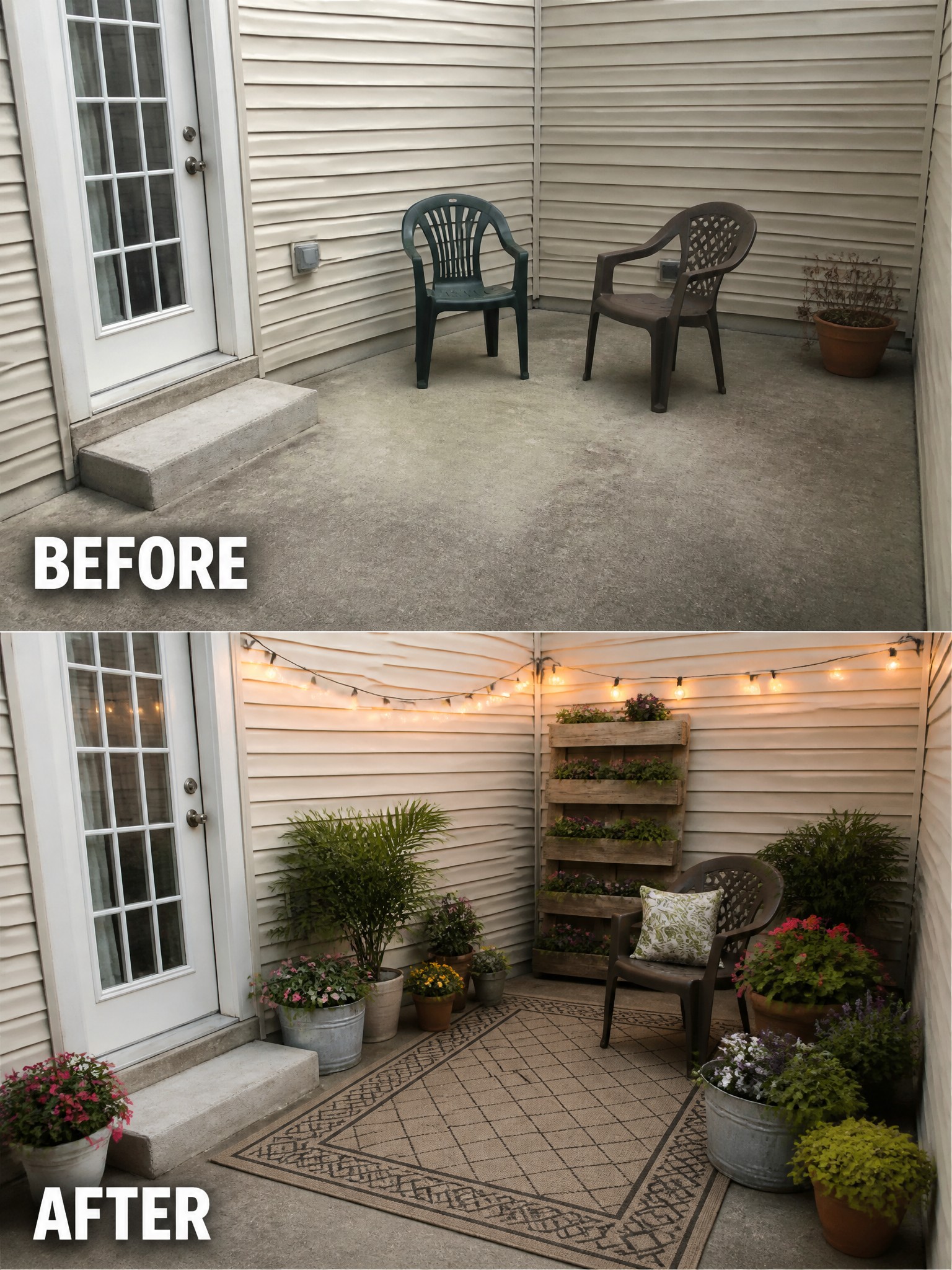
An empty concrete patio often feels like dead space until you give it a clear purpose. Adding string lights overhead and a rug on the floor turns the area into a spot where people actually want to sit.
This idea works best on small side yards or back patios attached to the house. Use a few weatherproof chairs, some potted plants, and one or two vertical planters to keep the floor clear while still making the space feel full.
Define A Narrow Side Path With Gravel And Lights
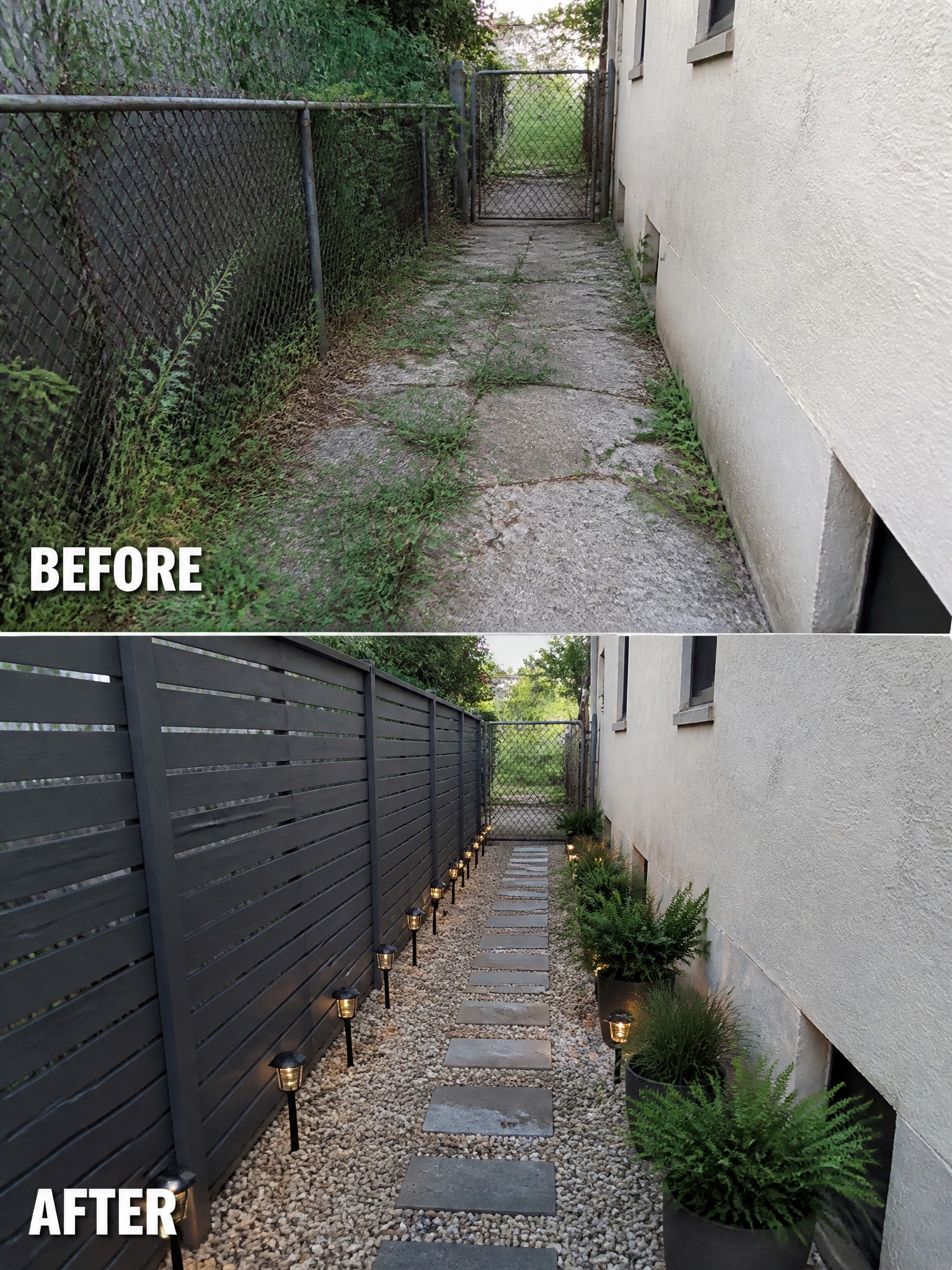
A narrow side path often gets ignored until it turns into a weedy mess. Replacing the broken concrete with gravel and adding a few stepping stones gives the space a clear shape, while a row of solar lights makes it feel finished instead of forgotten.
This approach works well on long, skinny side yards where you need something simple that still looks intentional. Clear the overgrowth first, then lay landscape fabric under the gravel so weeds stay down. Low lights along the edge help at night without needing wiring, and a few potted plants soften the fence line.
Add A Planted Border Along A Fence
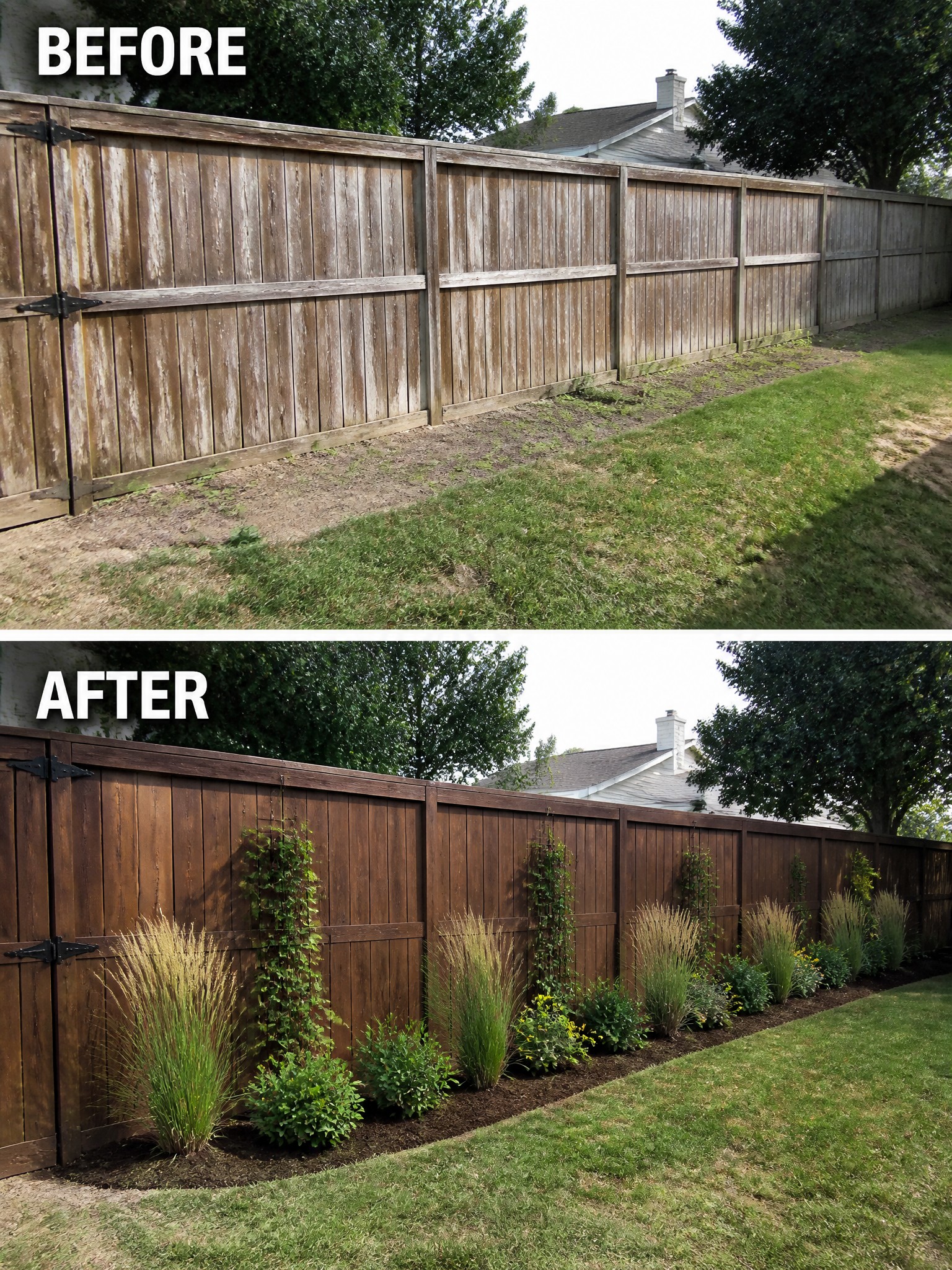
A bare strip of dirt next to a fence often looks unfinished even when the fence itself is in decent shape. Staining the wood a darker color and adding a simple mulched bed with layered plants gives the whole edge a much cleaner, more intentional look. The plants break up the long vertical lines of the fence and make the yard feel more complete without needing a lot of hardscaping.
This approach works well along side or back fences where you want structure but do not need a seating area. Start with mulch and a few taller grasses or shrubs spaced out, then fill in with lower plants. Keep the bed narrow enough that it does not crowd the lawn or walkway, and choose plants that can handle the light conditions along your fence.
Add Structure To An Overgrown Garden Bed
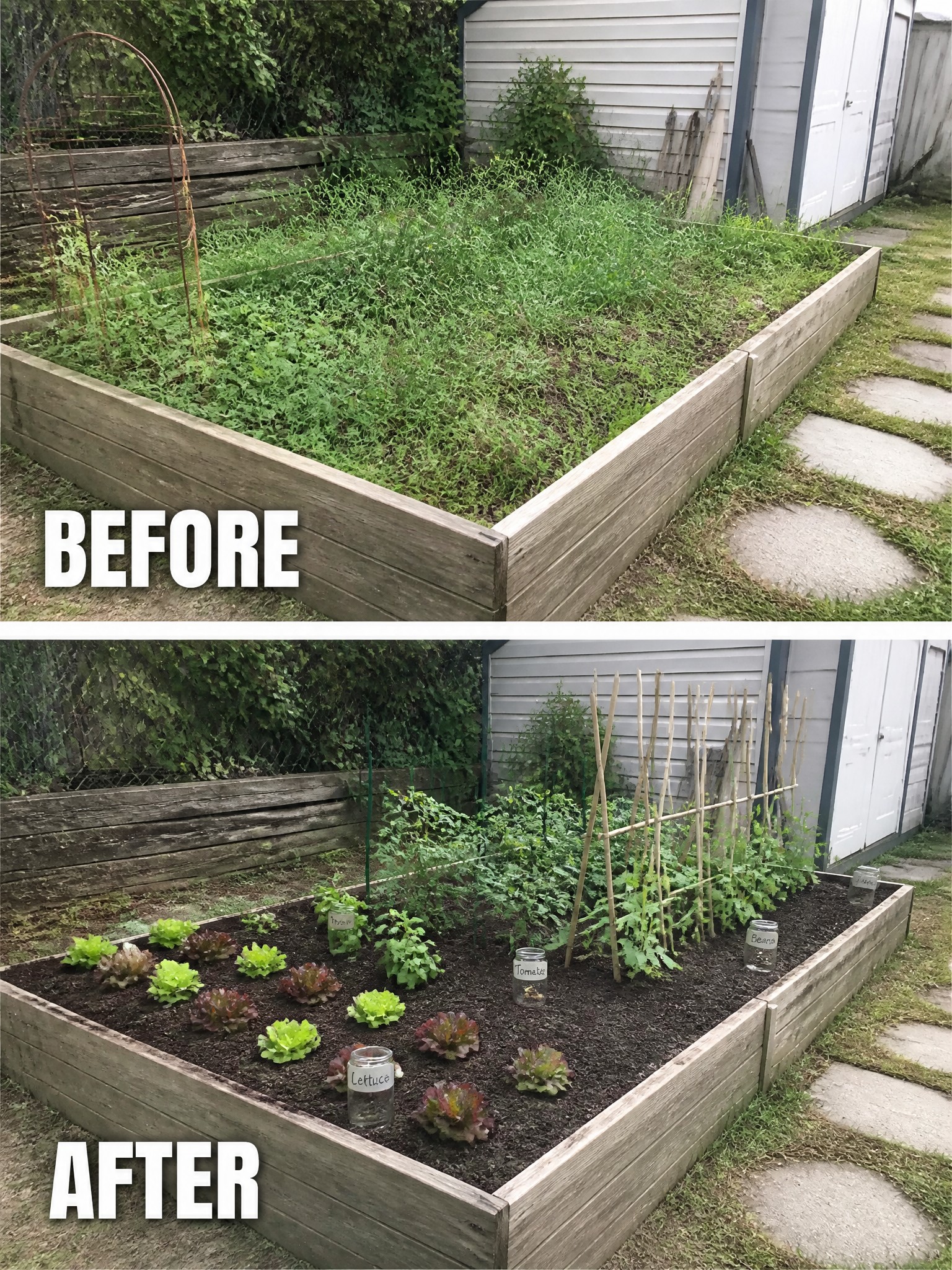
An overgrown raised bed full of weeds can feel like too much work to fix. Clearing everything out first makes room for a simple layout with rows of plants and basic supports. The after photo shows how adding a few trellises and keeping plantings spaced out turns the same bed into something that actually produces vegetables.
This approach works well in small yards where space is limited. Start by pulling the weeds and turning the soil, then decide where taller plants need support so they do not shade everything else. Keep the design simple with one or two materials for the trellises so the bed stays easy to maintain.
Turn A Bare Gravel Courtyard Into A Planted Seating Area
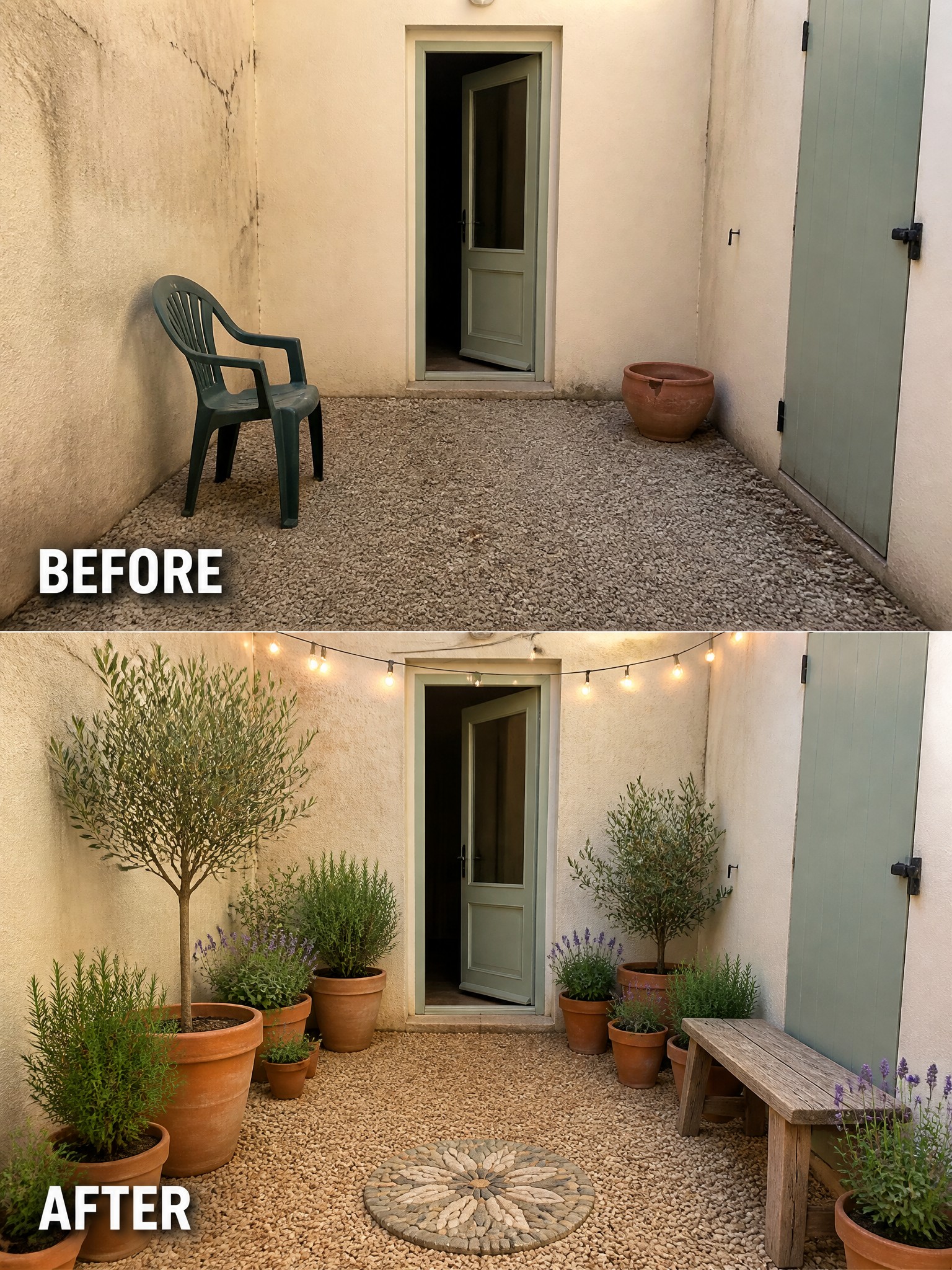
A plain gravel courtyard can feel like wasted space when it has nothing but a lone chair and an empty pot. Adding a few large terracotta pots with trees and shrubs, plus a simple string of lights overhead, turns the same area into a spot that actually invites you to sit and stay awhile. The change comes mostly from the planting and the lighting, which give the space height and a sense of enclosure without any major construction.
This idea works well in small side yards or back courtyards where the ground is already gravel or concrete. Start with a few big pots placed near the walls to create a loose border, then add one or two pieces of simple outdoor seating. Keep the number of plants modest so there is still room to walk through, and choose lights that are easy to hang from existing walls or hooks.
Add Edging To Create Defined Garden Beds
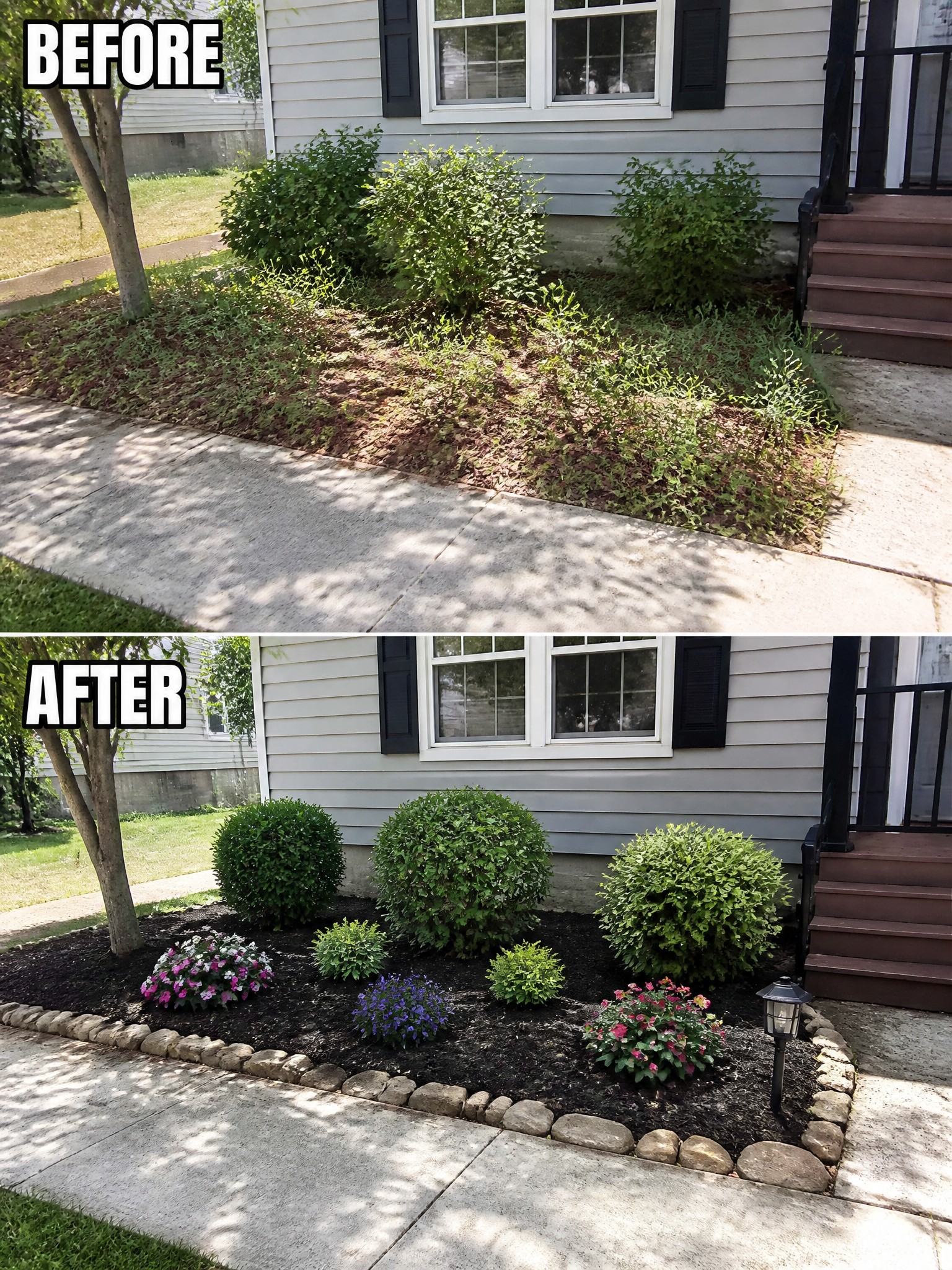
The main change here is the shift from a loose strip of weeds and scattered plants to a bordered bed with fresh mulch and a clear edge. That simple line makes the whole front of the house look intentional instead of neglected.
Use this idea on any narrow bed along the house or walkway. Start by clearing the overgrowth, then add a low stone or brick border to hold the mulch in place. Fill with a mix of evergreen shrubs for year-round shape and a few seasonal flowers for color. It works well on small lots where you want the yard to look cared for without a lot of extra work.
Turn A Bare Patio Into A Seating Area
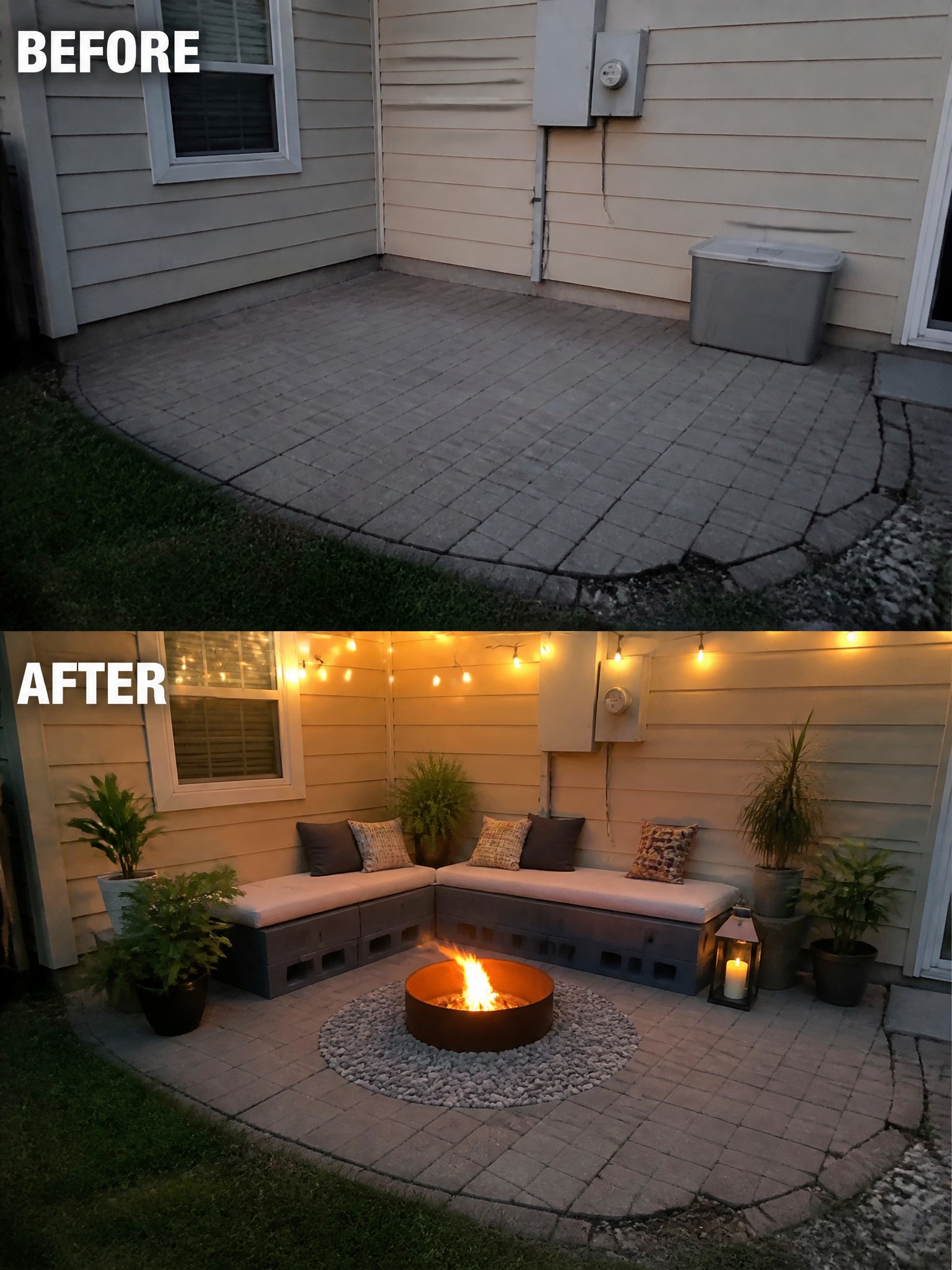
An empty stretch of patio often sits unused because it has no clear purpose. Adding a fire pit in the center with built-in seating wrapped around it gives the space a reason to be there. The lights strung along the wall help tie everything together so the area feels ready for evening use.
This idea works best on small or medium patios where one main feature can anchor the whole layout. Keep the seating low and simple so it does not crowd the walking space, and choose pieces that handle weather without extra work. Start with the fire pit and seating first, then add plants and lights once the main shape is set.
Turn A Blank Wall Into A Vertical Herb Garden
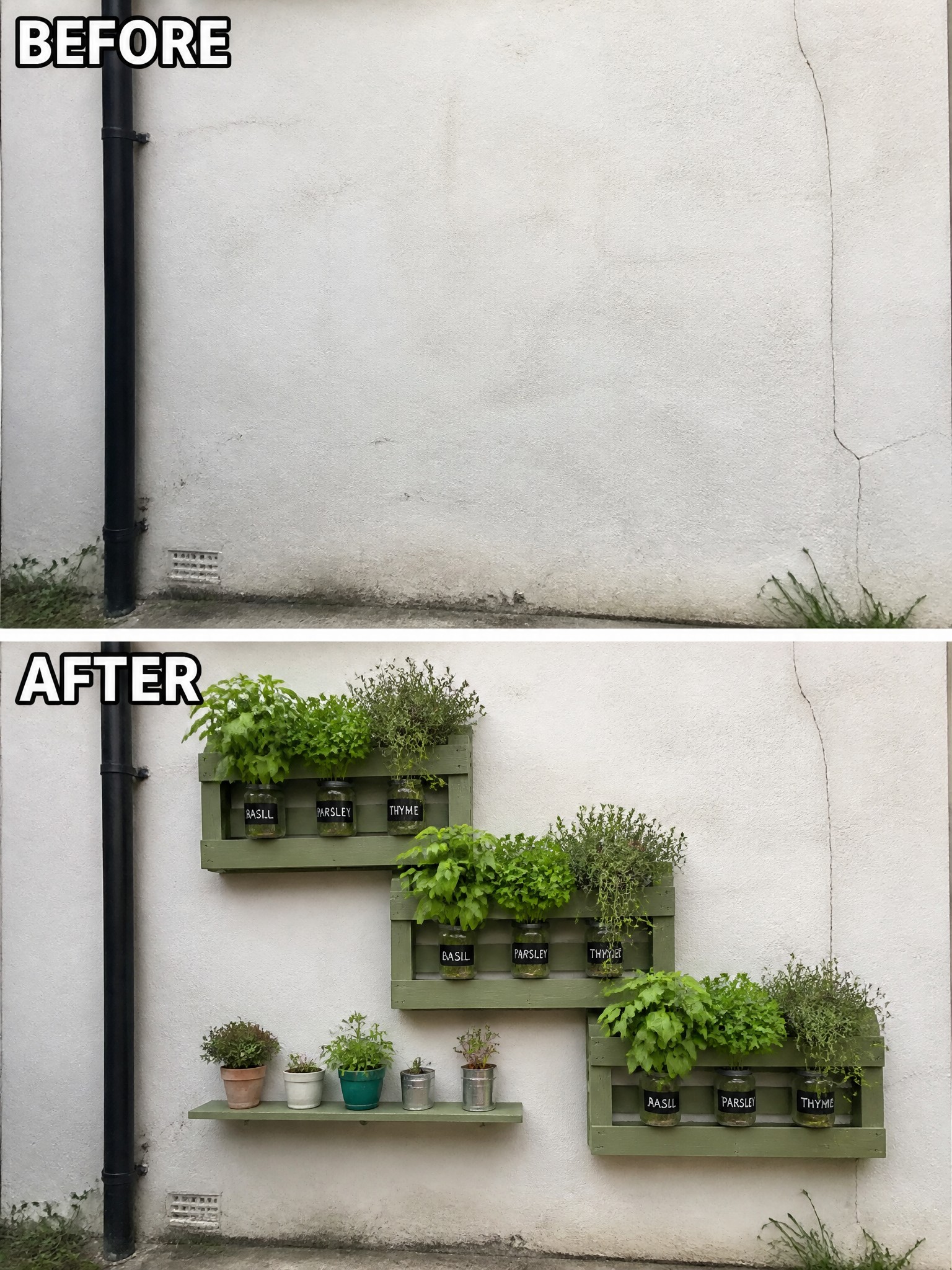
A plain exterior wall often sits unused when there is no room or desire for ground beds. Mounting a few wooden crates in a staggered layout and filling them with herb jars gives the wall a clear purpose while keeping the plants off the ground and easy to reach. The simple arrangement adds growing space without cluttering the area below.
This works best on a sunny wall close to the house, such as near a back door or kitchen. Use sturdy fixings, choose crates that can handle weather, and start with just a few so the display stays balanced. It is an easy way to grow what you need without a full garden overhaul.
Define The Edge Of Your Yard With A Simple Garden Bed
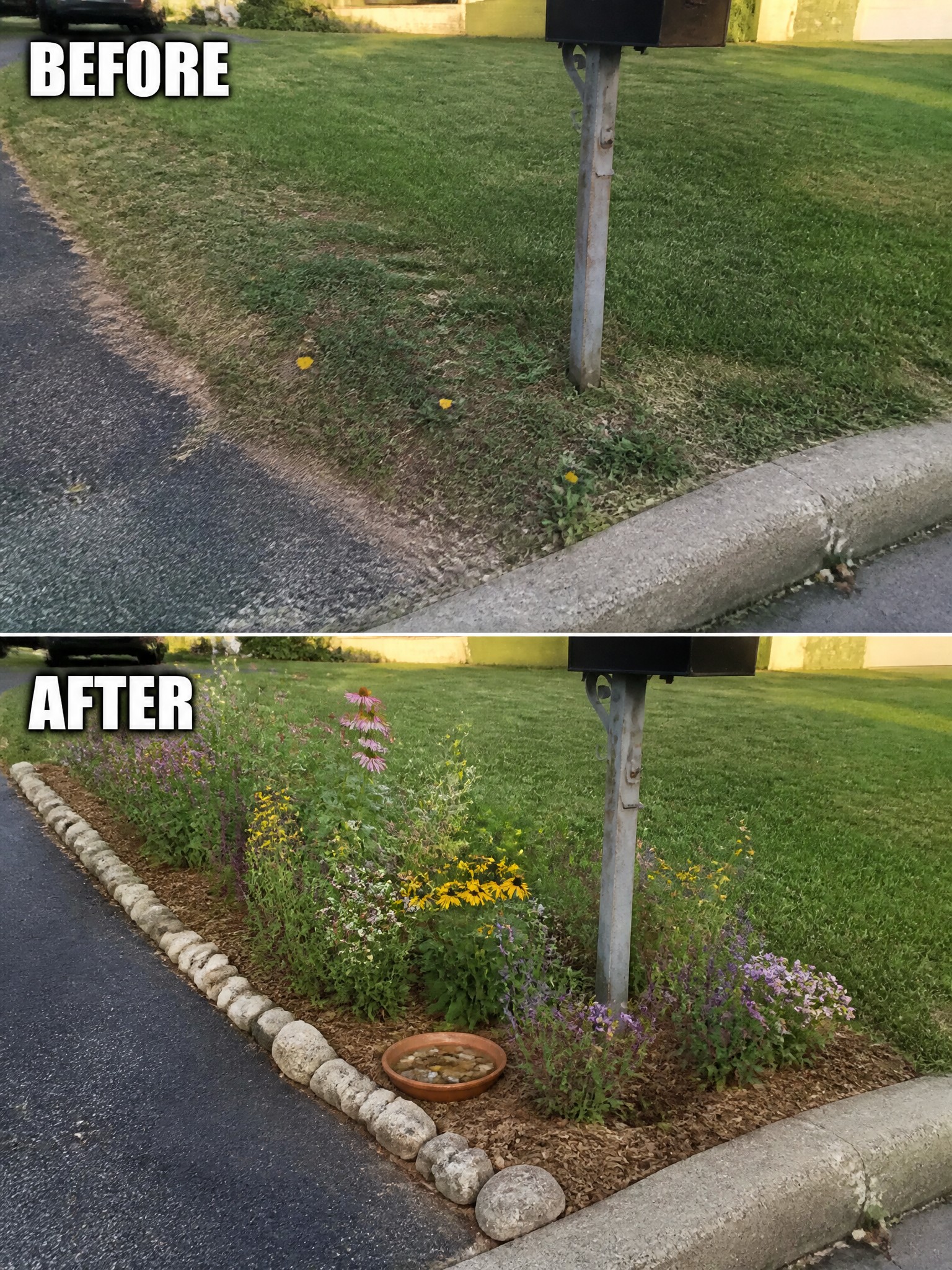
A narrow strip of grass along the road or driveway often ends up as the messiest part of a yard. Turning that weedy patch into a defined garden bed with edging and mulch gives the whole front a much cleaner look. The simple border and fresh planting make the area feel intentional instead of forgotten.
This works best on small roadside strips where you want low maintenance. Lay out a basic stone edge first, spread mulch to control weeds, and add a few reliable perennials. It keeps the space looking neat without blocking the sidewalk or driveway.
Make A Plain Entry Feel More Welcoming
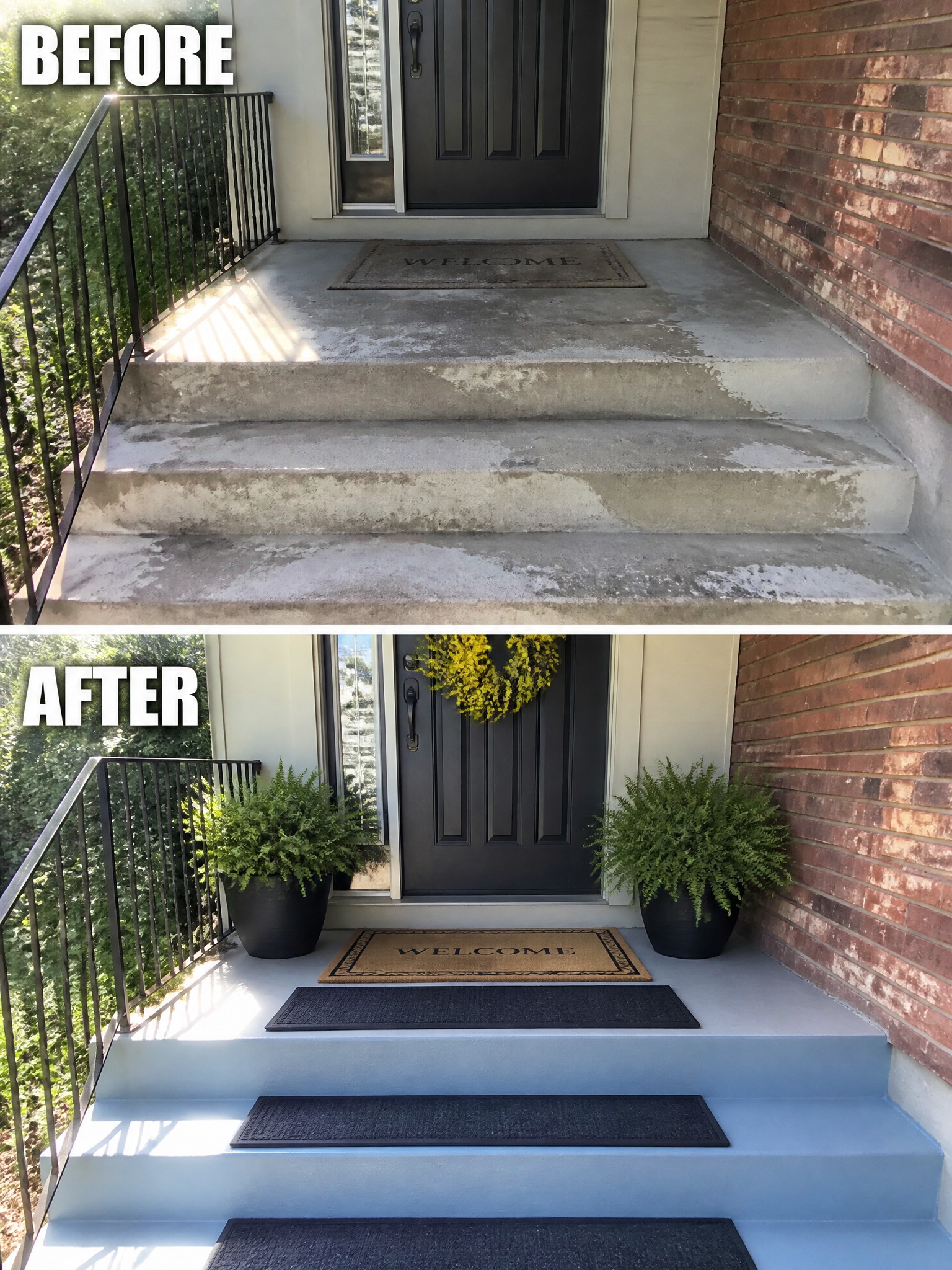
Painting the concrete steps a soft blue and adding two large planters beside the door turns a tired front entry into something much friendlier. The new color hides the old stains and wear, while the ferns bring life to what used to be just bare concrete and a single mat.
This approach works well on any small porch or set of steps where you want quick results without major construction. Start with a good exterior paint made for concrete, then choose pots that match your door color so the whole area feels pulled together. Keep the planting simple so the space stays easy to maintain.
Turn A Cluttered Garden Corner Into A Usable Potting Station
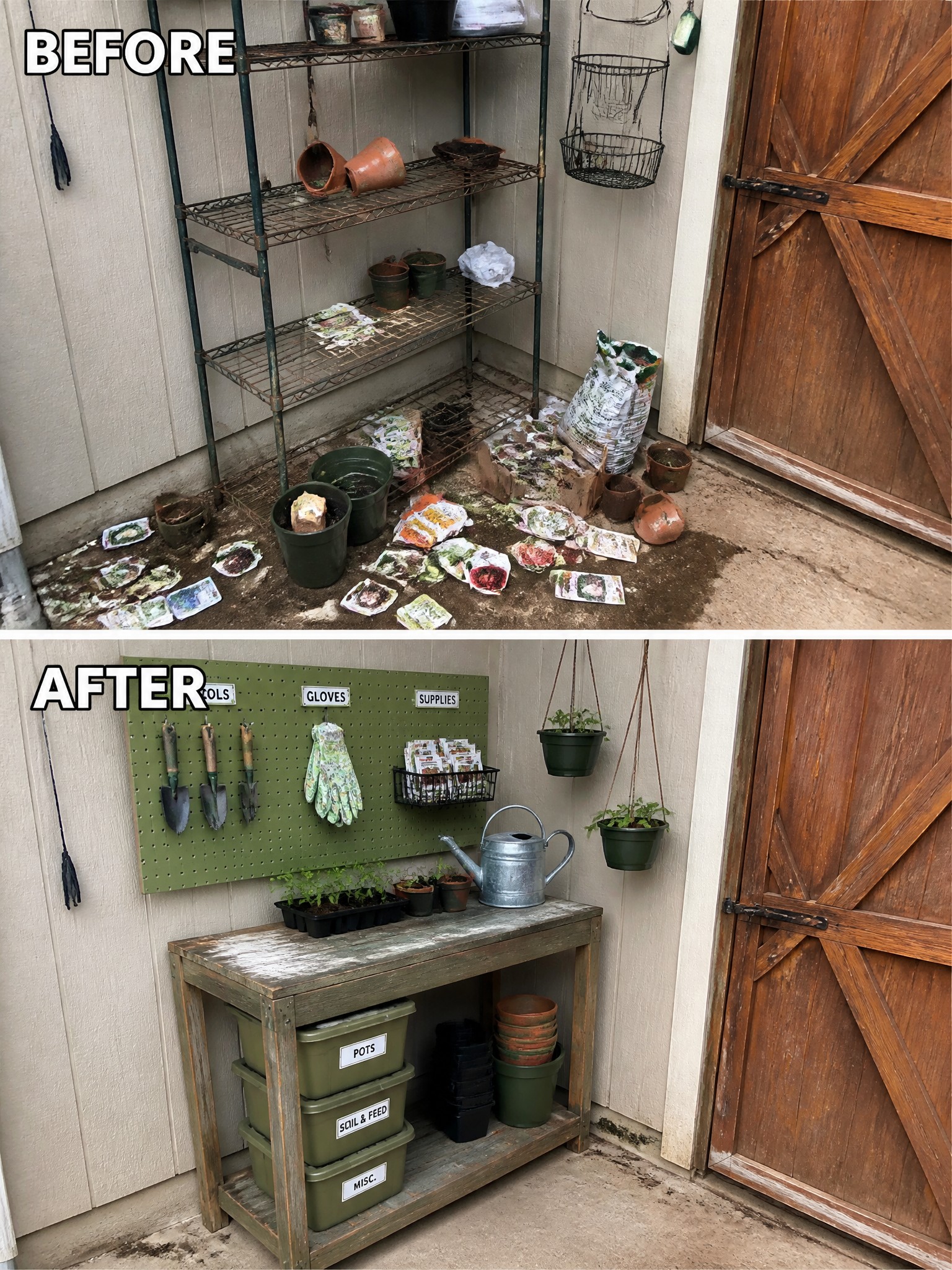
A messy outdoor storage spot often stays that way because there is no clear place to work or put things back. Adding a simple wooden bench gives you a flat surface for potting, while a pegboard above it keeps tools off the floor and within reach. Labeled bins underneath hold soil, pots, and supplies so nothing gets scattered again.
This setup works well in small sheds, along a garage wall, or in any corner that gets regular garden use. Start with a sturdy secondhand table or build a basic bench, then add hooks and bins as you need them. Keep the layout open enough to move around easily when you are carrying trays or watering cans.
Add Edging To Define A Garden Path
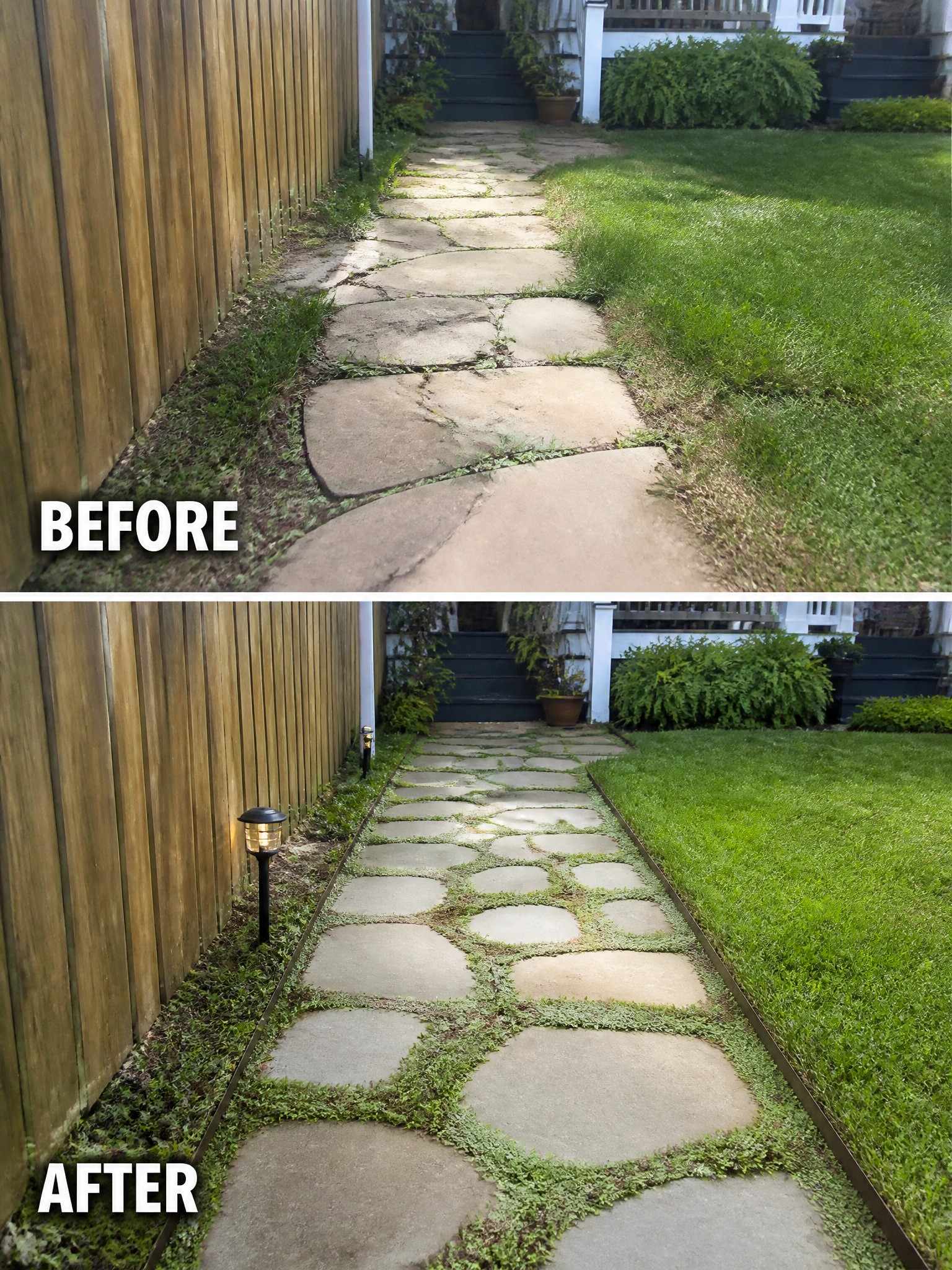
A stone path often loses its shape when grass and weeds start creeping over the edges. Adding a simple metal border on both sides creates a clear line that keeps the lawn separate and makes the path look more finished.
This idea works best along fences or narrow side yards where the ground tends to blur together. Clean the edges first, then install the edging to hold the shape. Low solar lights can be added afterward if you want the path to feel safer at night.
Turn A Bare Porch Into A Welcoming Entry
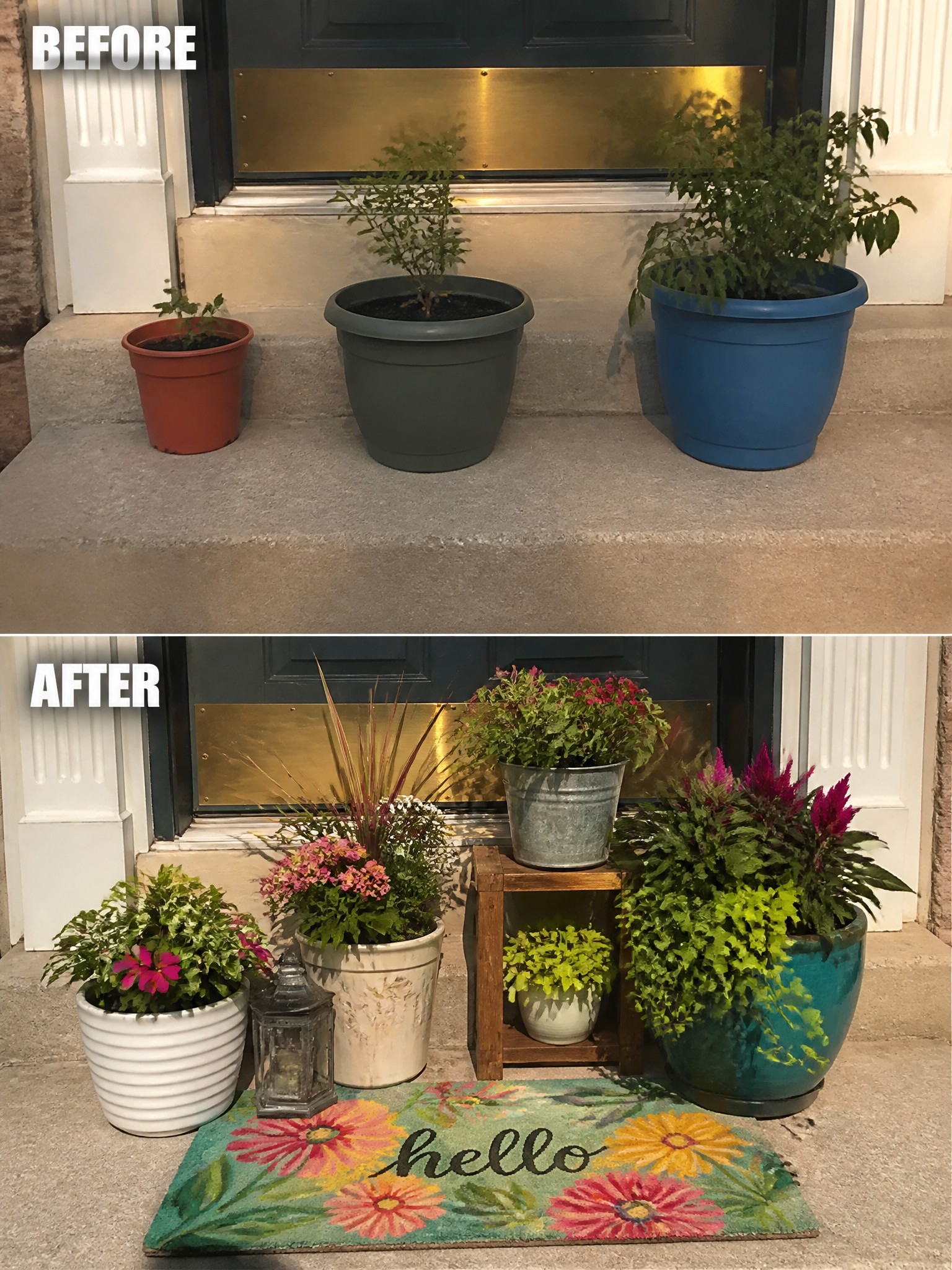
A few scattered pots on bare steps can leave an entry feeling unfinished. Adding a rug and grouping planters together at different heights turns the same space into something that feels intentional and much more inviting.
This approach works on small porches or front steps where space is limited. Use one rug to mark the area, then layer a few larger pots with smaller ones on a simple stand or crate so the display stays balanced and easy to move around.
Add A Pergola To Create A Defined Outdoor Seating Area
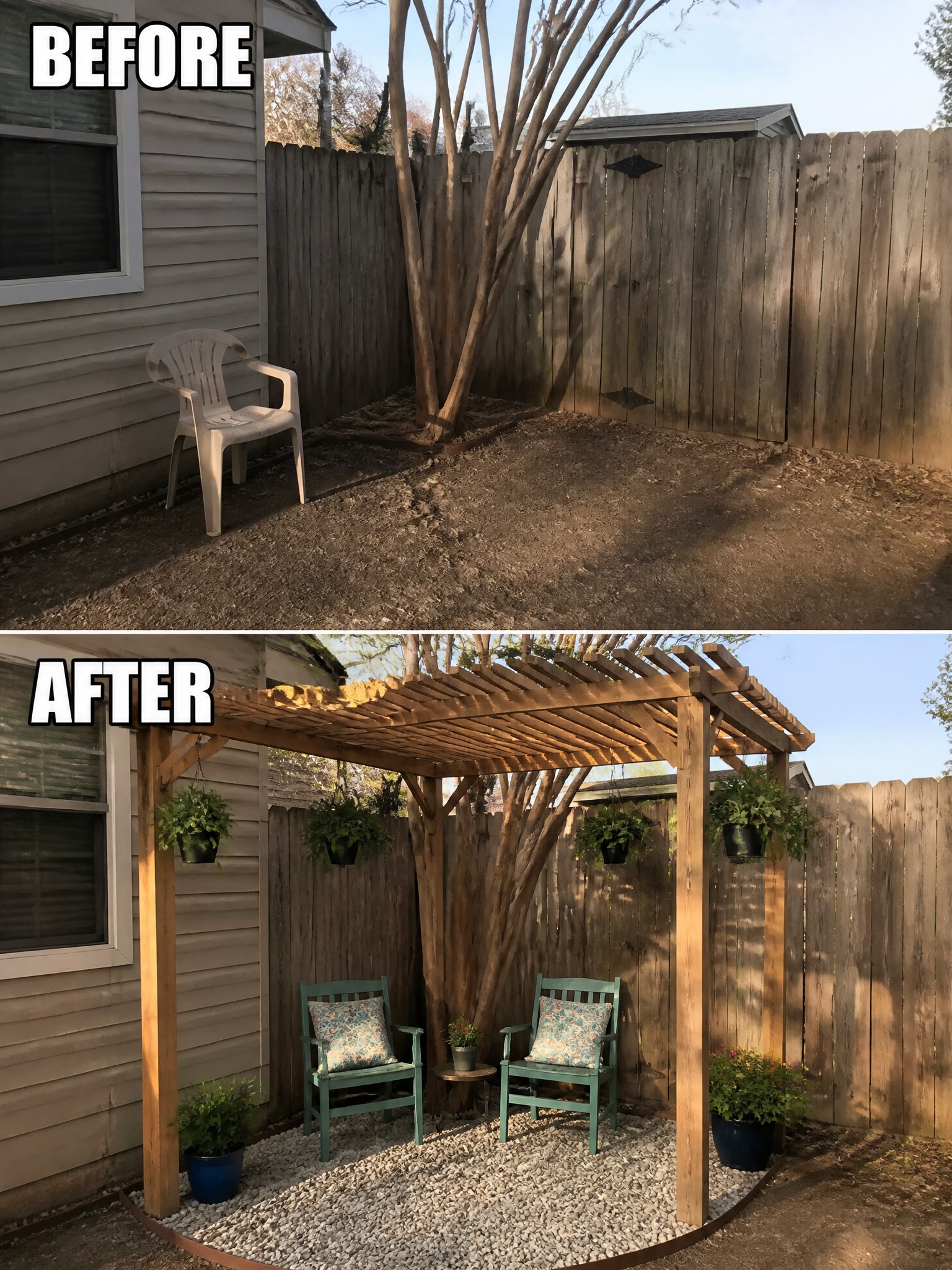
A pergola gives an empty backyard corner a clear purpose. The before photo shows just bare dirt and one lone chair. Once the structure goes in, the space feels like a real room outdoors with shade and a place to sit.
This works best in small yards where you want one usable spot without paving the whole area. Put the pergola up first, then add gravel or pavers underneath and a couple of weatherproof chairs. Keep the size modest so there is still room to move around it.
Add Terraces To Give A Sloped Yard Clear Structure
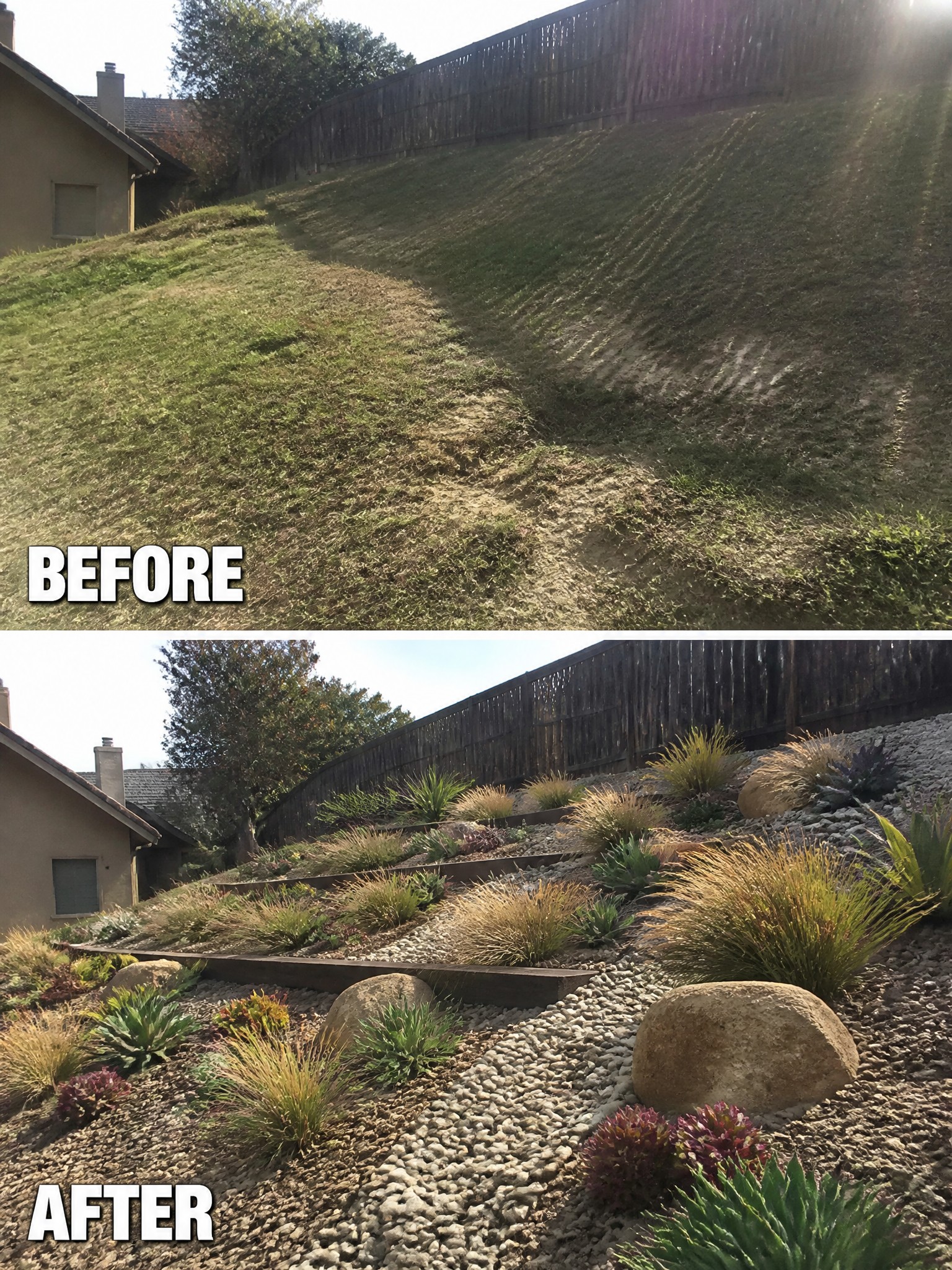
A steep, overgrown slope can feel like wasted space because grass is hard to maintain and nothing stays in place. Adding simple wooden terraces breaks the hill into manageable levels, adds gravel for drainage, and creates flat planting areas that stay neat with far less effort.
This approach works well on any noticeable slope where mowing is a chore. Start with the retaining edges first, then fill the beds with a mix of grasses and low shrubs that can handle the sun. Keep the gravel paths wide enough to walk through so the space stays usable instead of just decorative.
Use String Lights To Make A Patio Feel Cozy
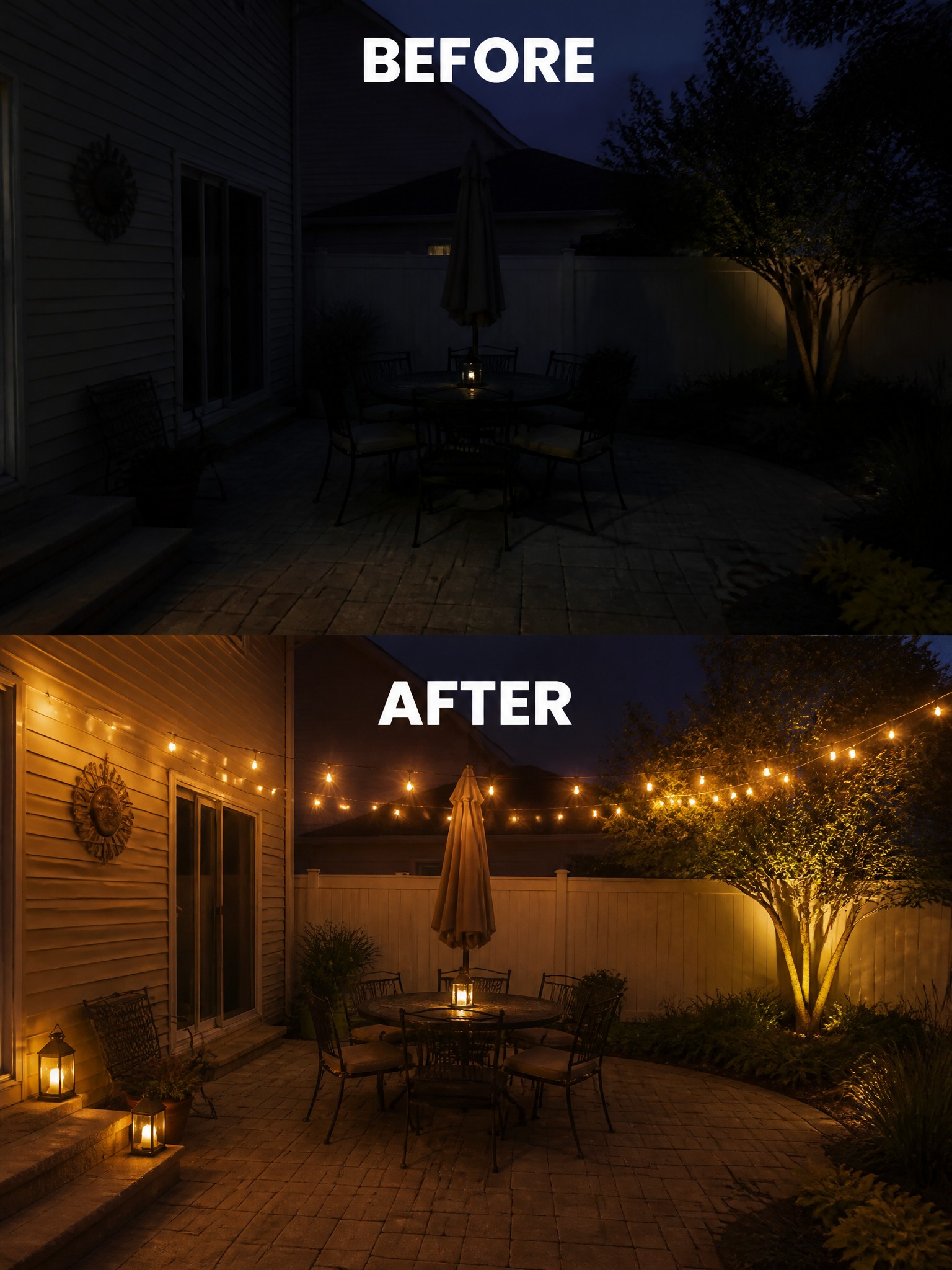
The main change here is adding layers of warm lighting to a patio that felt empty and dark at night. String lights stretched across the space, plus a few lanterns near the house, turn the same table and chairs into a spot that actually gets used after sunset.
This idea works well on any patio or deck that already has seating but feels unused once the sun goes down. Start with one or two strands of weatherproof lights hung at a comfortable height, then add a couple of lanterns or path lights near seating areas so people can see without harsh glare. Keep the rest of the space simple so the lights remain the main feature.
Refresh An Old Shed With Paint And Simple Storage
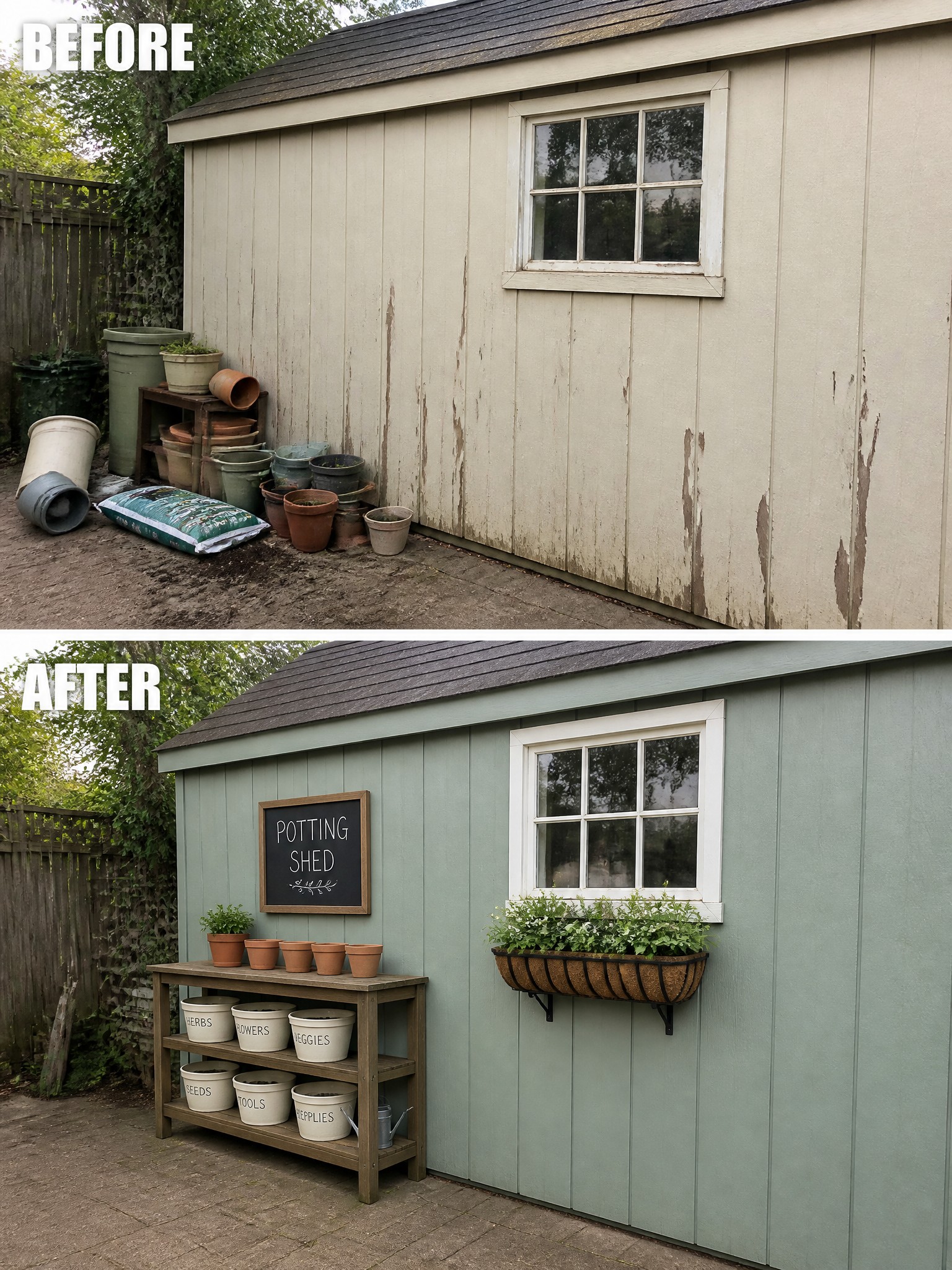
A neglected garden shed often ends up as a dumping ground for pots and tools. A fresh coat of paint instantly changes the look, while adding a low bench and a few labeled bins turns the space into something you actually want to use. The shift from peeling walls and scattered clutter to a clean, painted surface with organized shelves makes the whole area feel intentional instead of forgotten.
This approach works well on any small outbuilding that has good bones but needs attention. Start with a thorough cleaning and one solid exterior color, then bring in weatherproof storage that matches the scale of the shed. Keep the number of items low so the space stays easy to move around in and simple to maintain.
Add Structure To An Overgrown Planting Bed
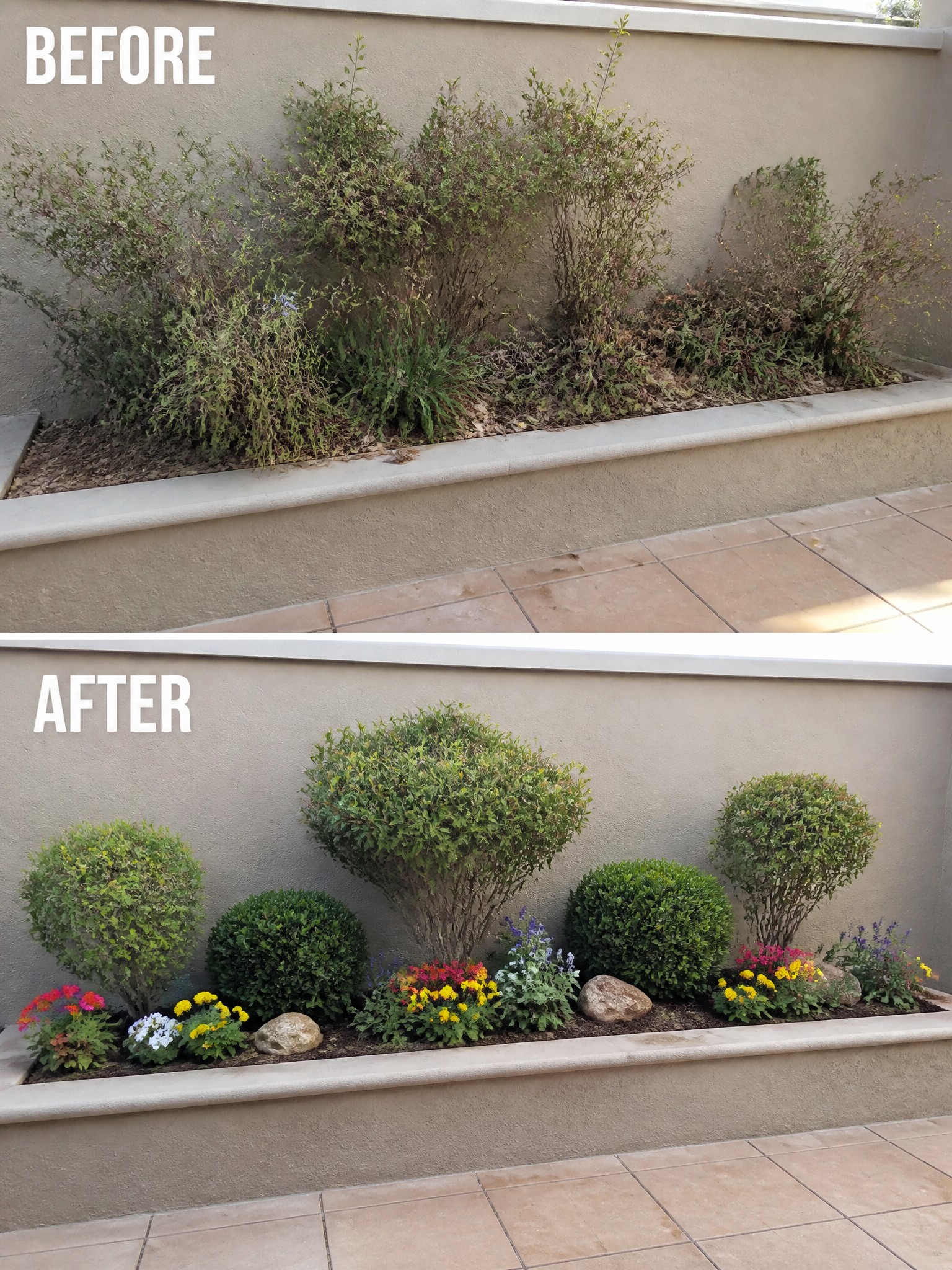
An overgrown bed often looks worse than a bare one because the plants fight for space and lose any sense of order. In this case the fix was straightforward. The tall messy shrubs were cut back into rounded shapes and a simple layer of low flowers was added along the front edge.
This approach works well along walls or fences where you want height without blocking the view. Start by removing the worst of the old growth, then decide on a few main shapes that repeat. Once the structure is in place you can tuck in seasonal color without the whole bed feeling crowded.
Create Clean Garden Borders With Gravel
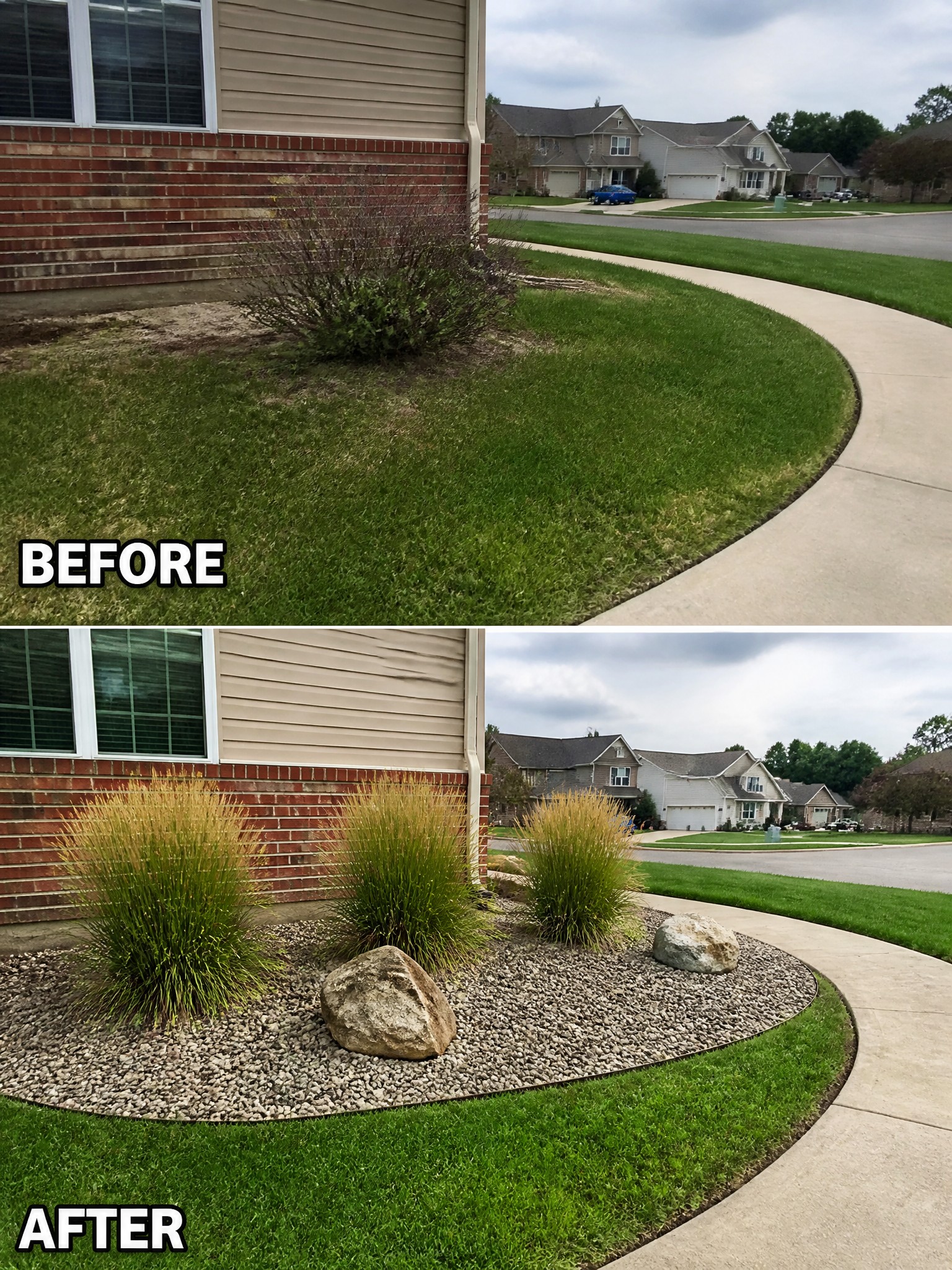
One simple way to improve a yard is to replace an uneven grass edge with a defined gravel bed. The before photo shows grass running right up to the house with bare spots and a small bush. The after shows a neat gravel area held in place by edging and planted with tall grasses plus a few rocks.
This idea works best along the side of a house or next to a driveway. It cuts down on mowing close to the siding and gives you room for low-maintenance plants that stay tidy. Use a solid edging strip and keep the gravel layer thin so water can still drain properly.
Turn A Bare Balcony Into A Seating Area
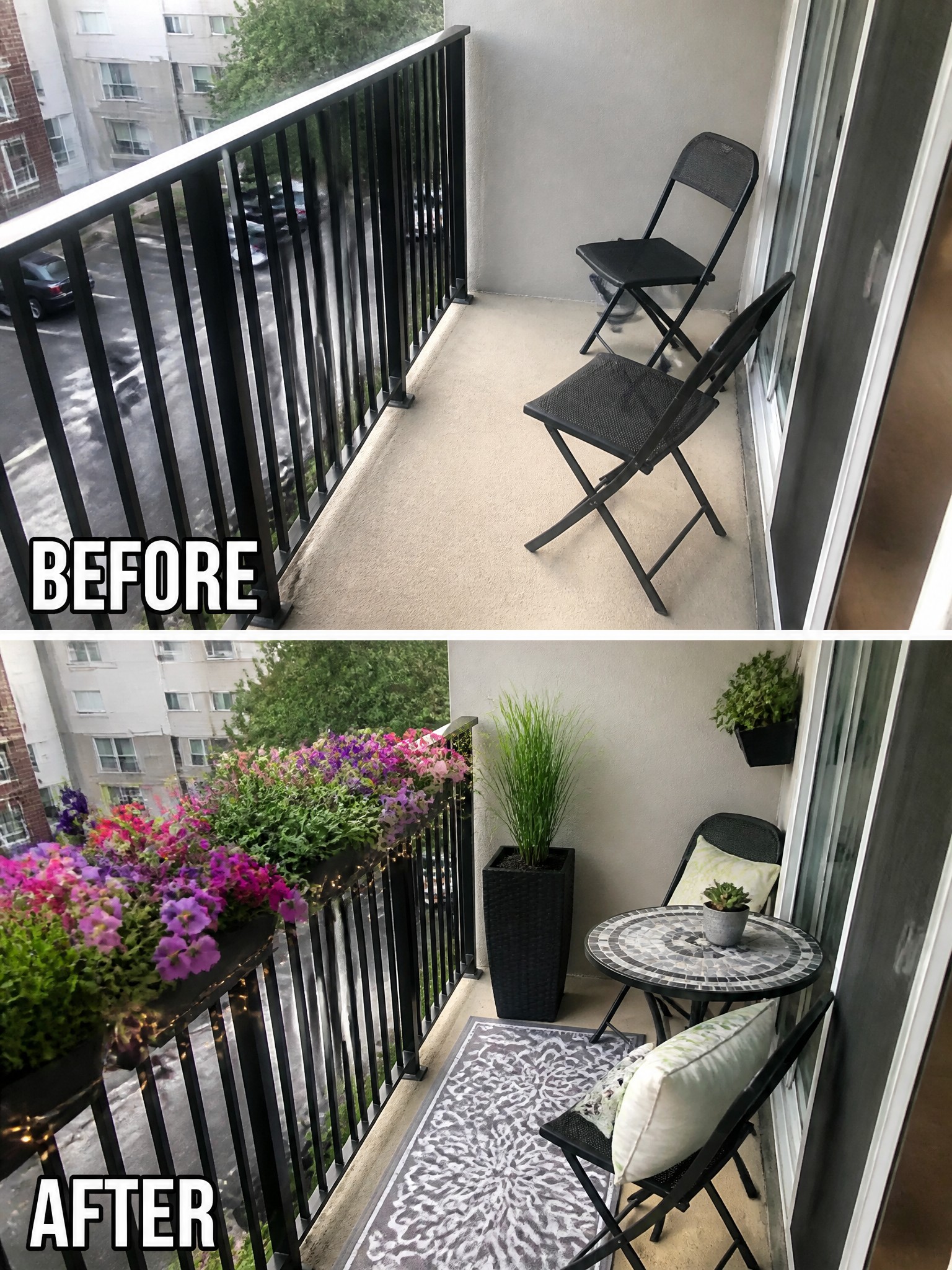
A small balcony often stays empty because it feels too plain to use. Adding a rug and a few potted plants gives the space a clear purpose so it becomes somewhere you can actually sit.
This approach works well on narrow balconies or small patios. Keep the furniture light and weatherproof, and use one large planter plus a couple of smaller pots so the area stays open enough to move around.
Create Defined Zones In A Blank Backyard
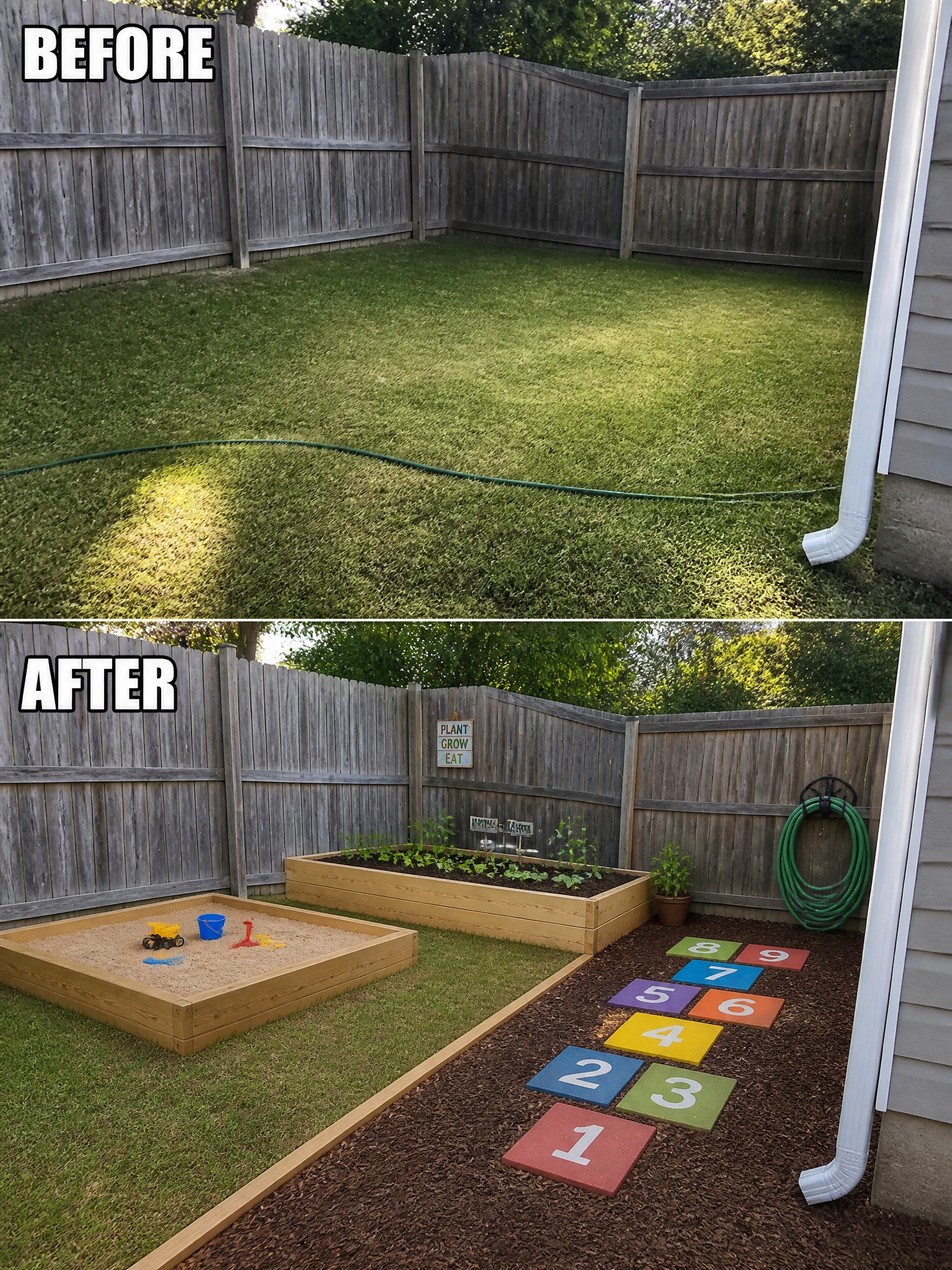
An empty lawn often feels unfinished because there is no clear purpose for different parts of the space. Adding a few simple zones changes that quickly. The yard now has a sandbox for play on one side and a raised garden bed with a stepping stone path on the other, which gives the whole area a planned feel without crowding it.
This idea works best in small to medium backyards where you want both kids and plants to have room. Mark out the zones first with wood borders or mulch, then keep the rest of the lawn open for movement. It keeps the space practical and easy to maintain over time.
Frequently Asked Questions
Q: My garden gets full sun all day. Which ideas hold up without constant watering? A: Choose drought tolerant plants like lavender or succulents from the list. Add a layer of mulch to lock in moisture. You will water less and still get that fresh look.
Q: How can I reuse old items I already have instead of buying new ones? A: Turn cracked pots into planters for herbs. Paint old chairs and set them as accents. This saves money and gives everything a personal touch.
Q: What if the makeover takes longer than a weekend to finish? A: Break the project into small steps over a few weeks. You avoid burnout and end up with better results.
