

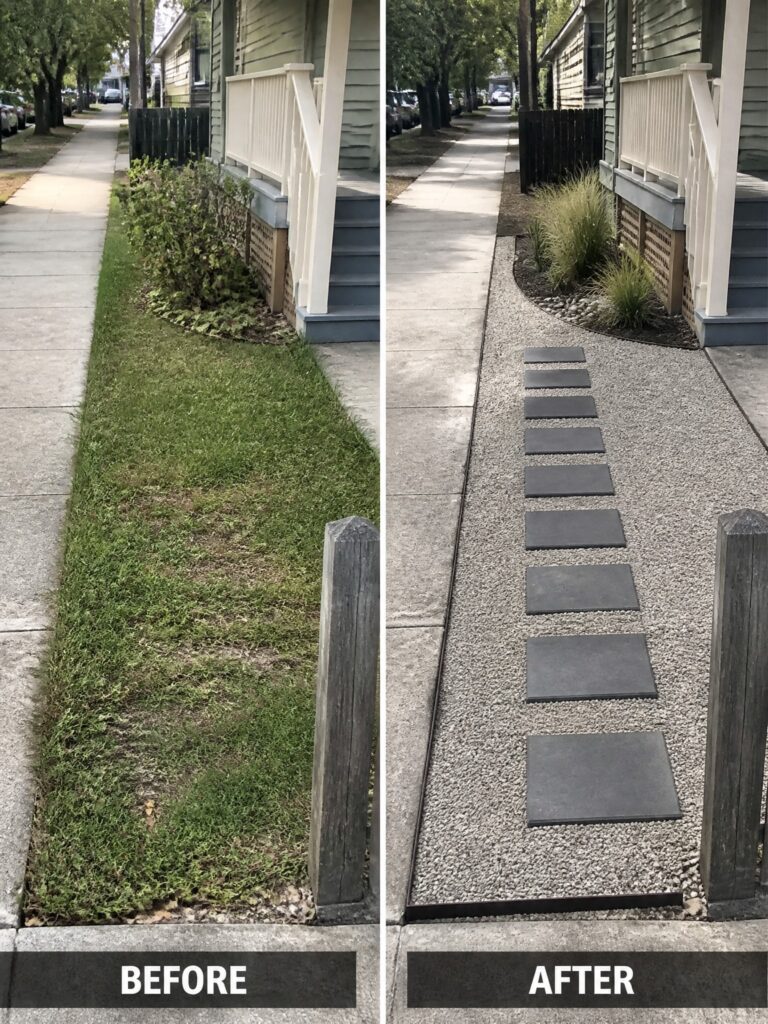
I have noticed that lawns often lose their shape when edges soften and stray growth creeps in over time.
Clearing the clutter first and then working on a steadier layout tends to make the rest of the yard feel more settled.
Simple borders help.
I usually try basic edging and a few structural plants before adding anything else because those steps create a base that lasts.
Watching the space settle into something cleaner reminds me that steady upkeep matters more than chasing quick fixes.
Add Structure To A Narrow Side Yard
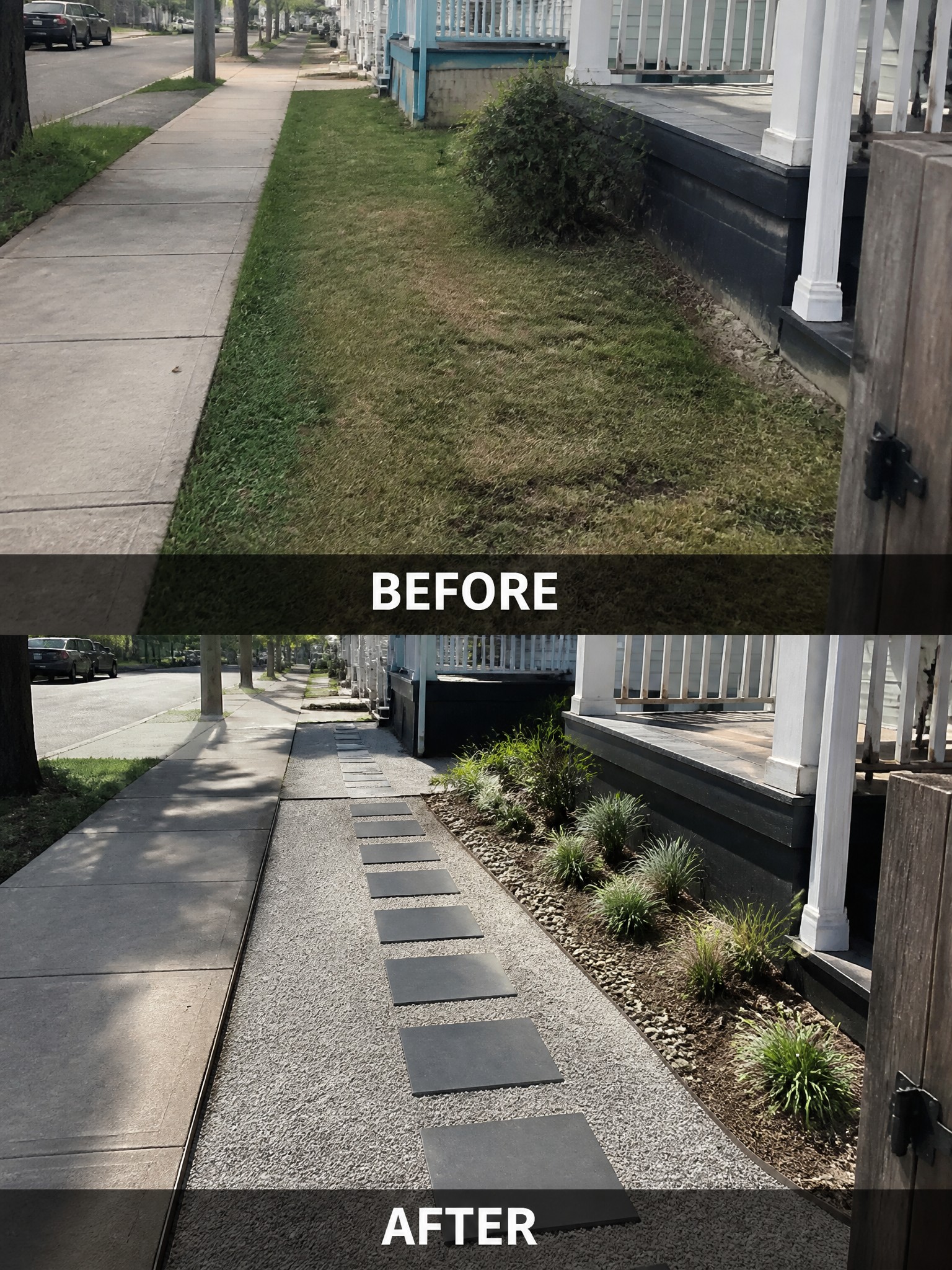
A narrow strip of lawn next to the house often turns into the messiest part of the yard because it is hard to mow and easy to ignore. Replacing the uneven grass with a gravel base and a line of stepping stones gives the space a clear purpose and makes it much simpler to keep clean.
This idea works best on long, tight areas between a sidewalk and the foundation where regular lawn care feels awkward. Lay the path first so it follows the natural walking line, then fill the edges with gravel and low plants. The result is a side yard that looks finished without needing constant trimming.
Add Structure To An Overgrown Backyard
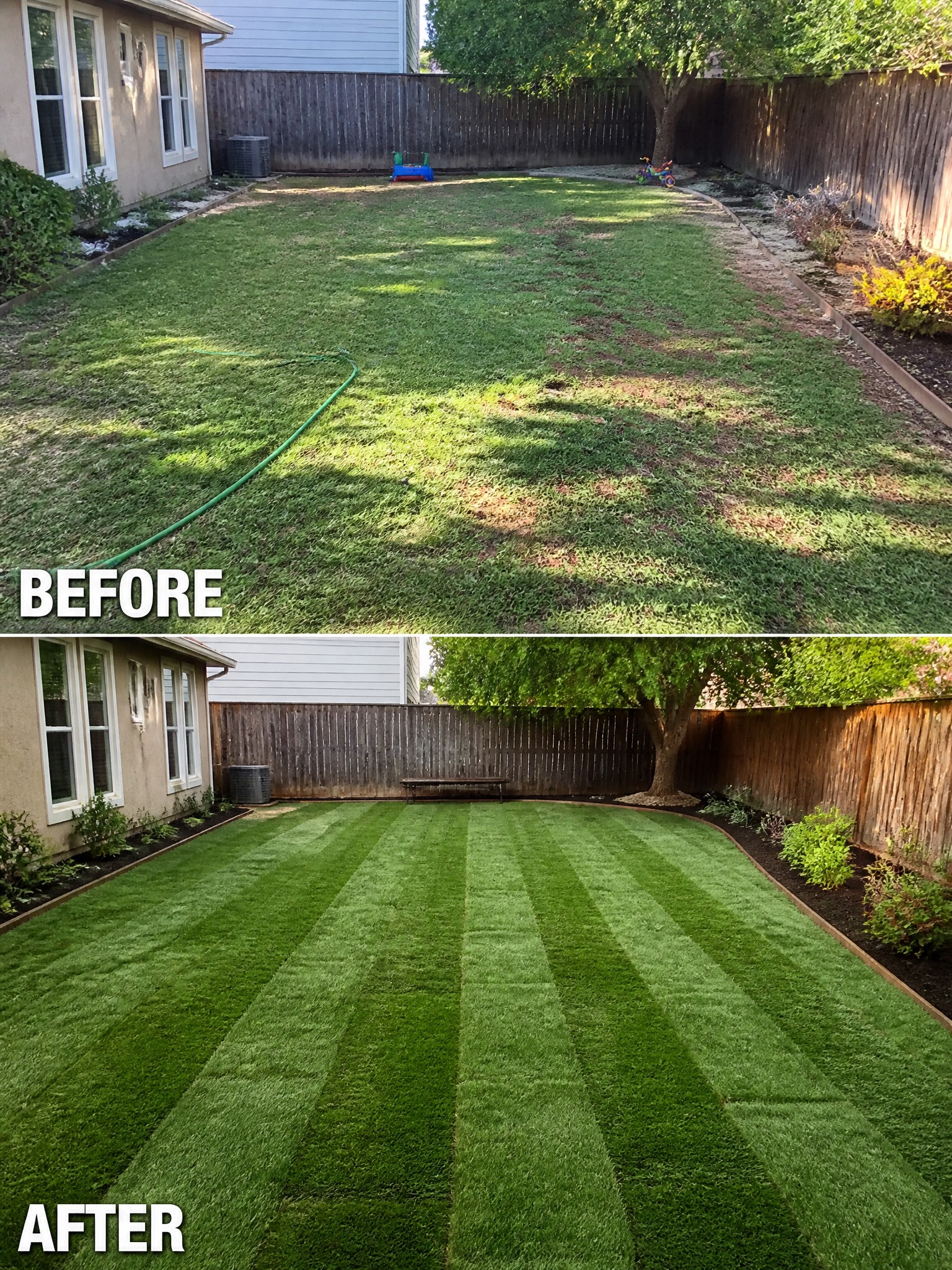
The main improvement comes from giving the lawn clean edges and a consistent surface. The patchy grass and wandering hose are gone, replaced by straight borders and a striped lawn that makes the whole yard feel planned instead of neglected.
This idea works best in backyards that already have fences and trees but lack clear lines. Start by edging the lawn and adding mulch to the beds, then keep up with regular mowing to hold the pattern. It suits suburban homes where the goal is a tidy look without new hardscaping or furniture.
Add Defined Garden Beds To Shape Up A Plain Front Yard

A dry, patchy lawn often makes the whole front of a house feel unfinished. Replacing large sections of grass with mulched beds and simple plant groupings gives the space clear edges and a much tidier look without needing a full redesign.
This approach works well on smaller or average-sized lots where you want structure but still need room to walk and mow. Start by outlining the beds along the path, add a few larger rocks or shrubs for weight, then fill in with lower plants and fresh mulch. The result feels planned even if you keep the planting fairly simple.
Turn A Sloped Yard Into Usable Levels With Steps

A steep or uneven backyard often ends up as wasted space because water runs off and walking feels awkward. Adding a few levels with retaining walls and steps gives the yard a clear shape and makes it much easier to walk across or mow. The before photo shows a worn dirt path cutting through grass on a slope, while the after shows wide concrete steps and flat lawn sections that actually invite use.
This approach works best on properties where the ground drops away from the house. Start by figuring out where people naturally walk, then build the steps and walls first before adding grass or plants. Keep the new surfaces simple so they do not fight the existing fence or trees.
Add Pavers To Structure The Front Lawn
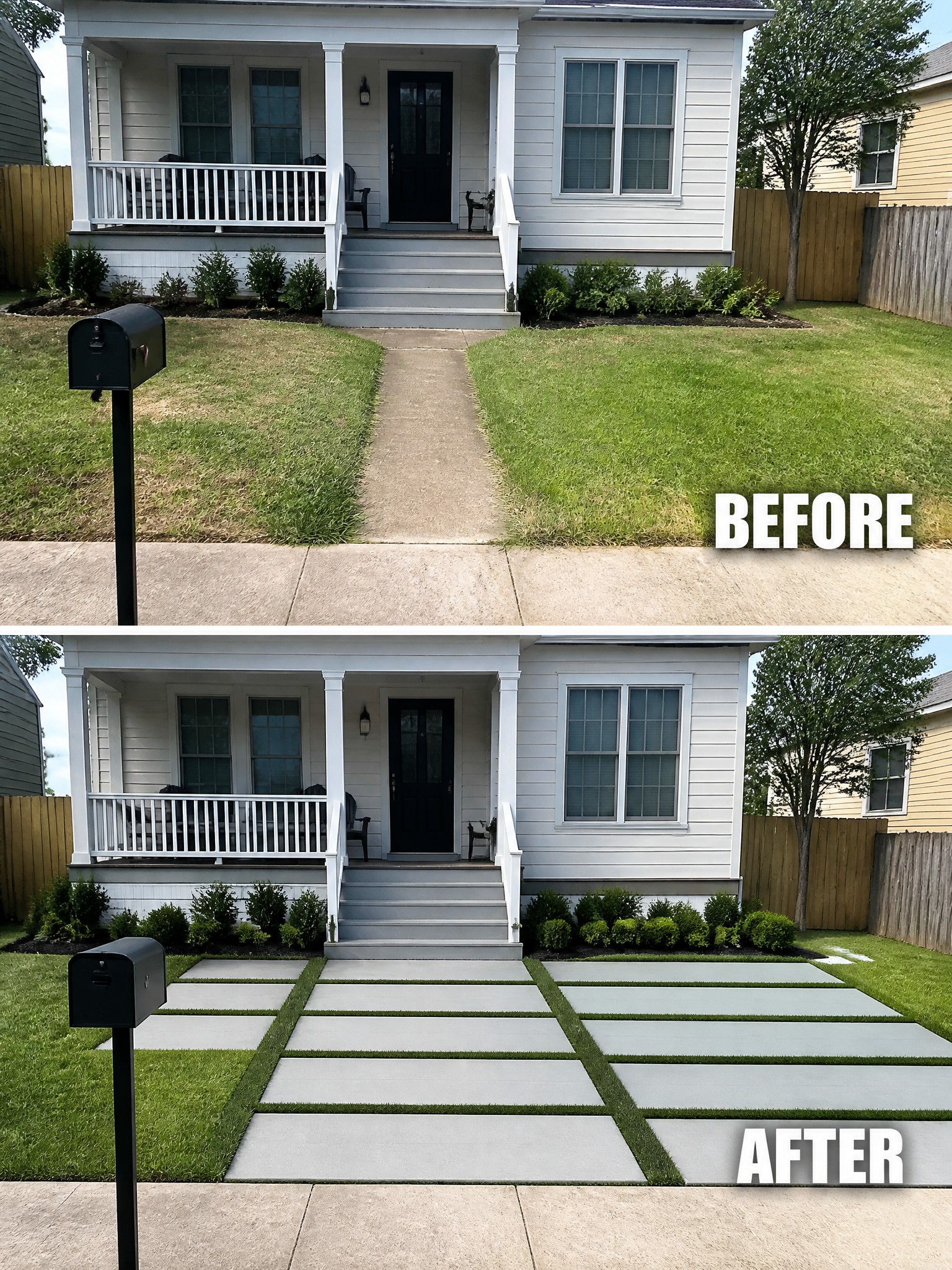
A basic concrete path and patchy grass often leave the front yard feeling unfinished. Replacing that simple walkway with a grid of pavers and narrow grass strips creates clear lines and makes the space look more intentional right away.
This idea suits homes with a modest front yard where you want order without covering everything in concrete. Plan the paver layout so the path stays wide enough for comfortable walking, then keep the grass sections narrow enough to mow easily.
Add Edging To Create Clean Garden Borders
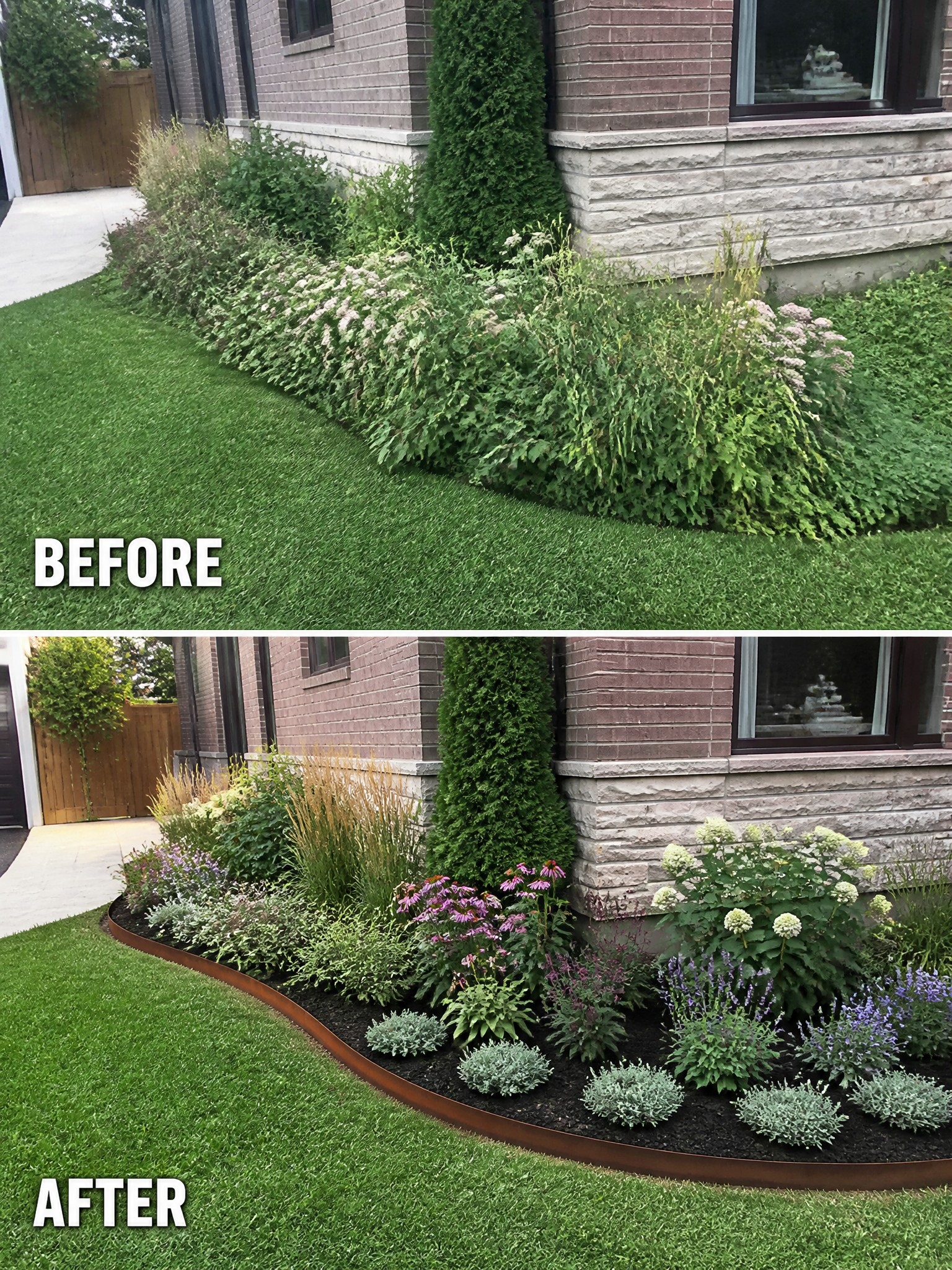
Many yards end up with plants spilling onto the grass because there is no clear line between the lawn and the beds. Adding a simple metal edge keeps everything in place and gives the whole side of the house a tidy look instead of a messy one.
This approach works well along the front or side of a house where beds run next to the lawn. Start by cutting back the overgrowth, then install the edging before planting or mulching so the new plants have room to fill in without taking over the grass.
Replace Patchy Grass With Artificial Turf
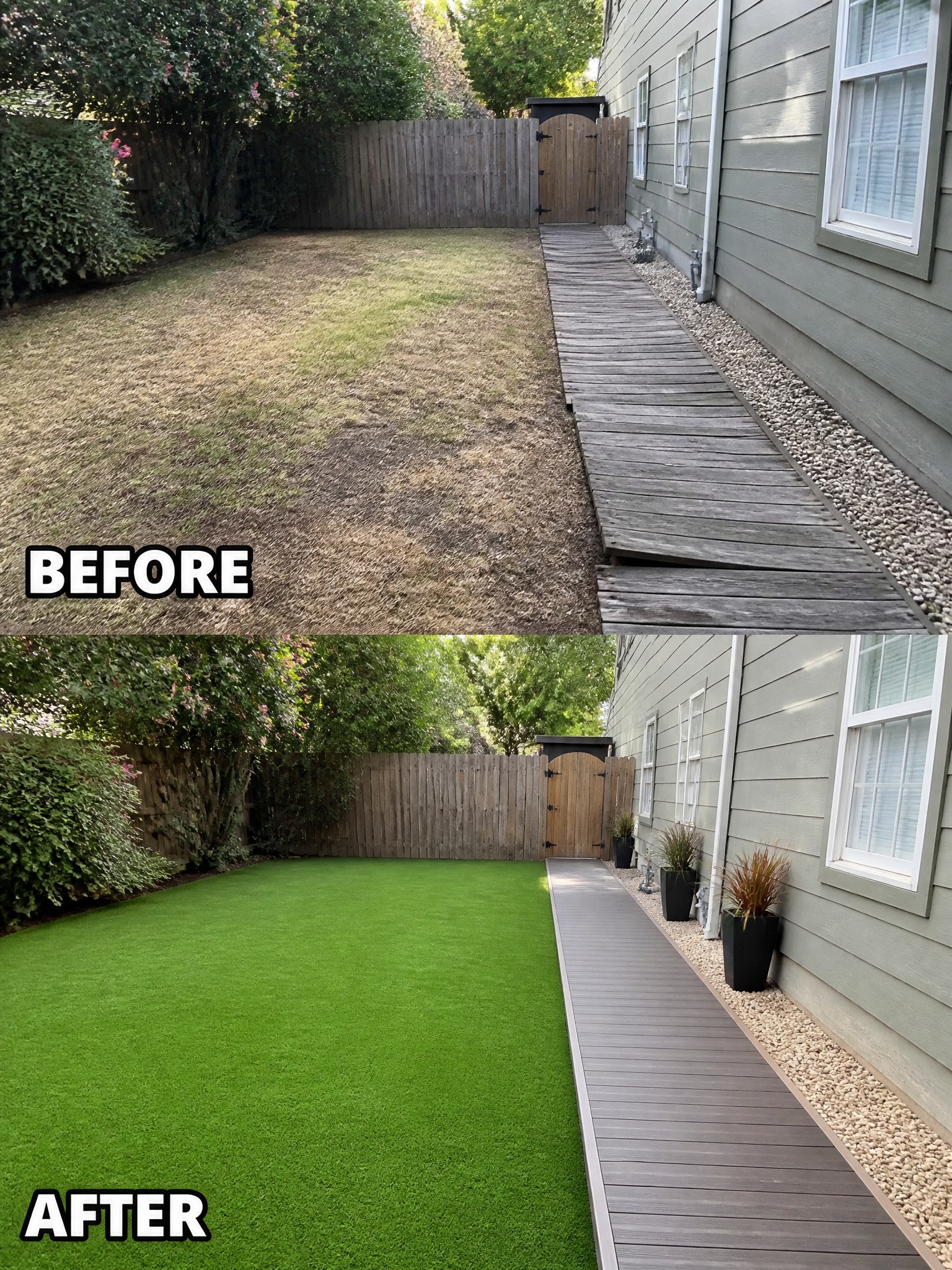
A dry and uneven lawn can make the whole backyard feel neglected even when the rest of the space is in decent shape. Switching to artificial turf gives the yard a consistent green surface right away and removes the constant battle with dead spots and weeds.
This approach works well in small to medium yards where real grass struggles or where people want less weekend upkeep. Focus first on good ground prep and proper edging so the turf sits flat and drains well. Adding a few large planters along the house helps frame the new lawn without crowding the space.
Add Hedges To Give The Front Yard Structure
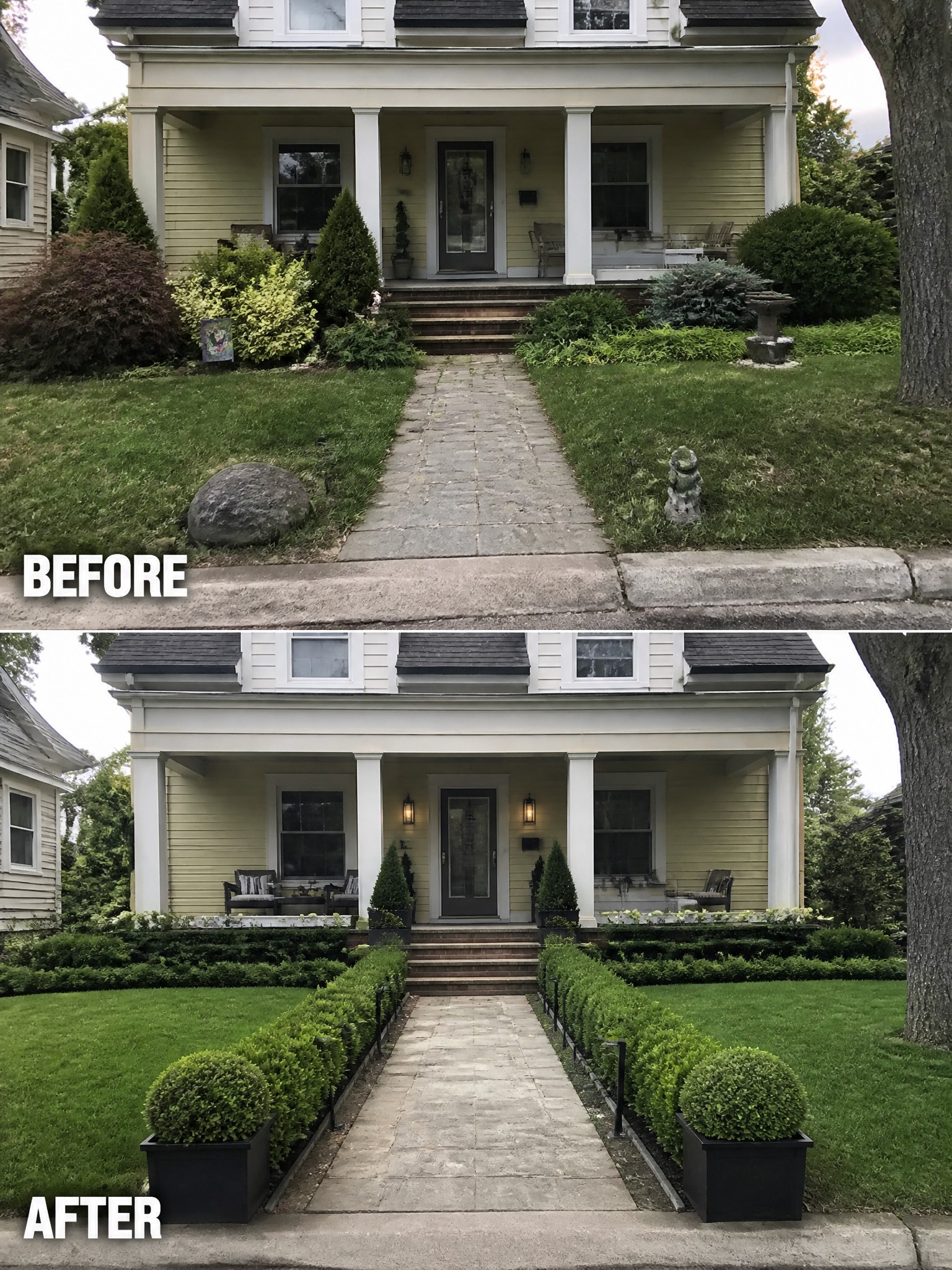
The front yard looked scattered before, with random plants and no clear edge along the walk. Adding straight rows of hedges on both sides of the path pulled everything together and made the entry feel planned instead of accidental.
This idea works best on older homes where the lawn has lost its shape. Clear the edges first, then plant a simple line of boxwood or similar shrubs close to the path. Keep the beds narrow so they do not block movement, and stick to one main plant type for a calm result.
Replace Patchy Grass With Gravel And Planting Beds
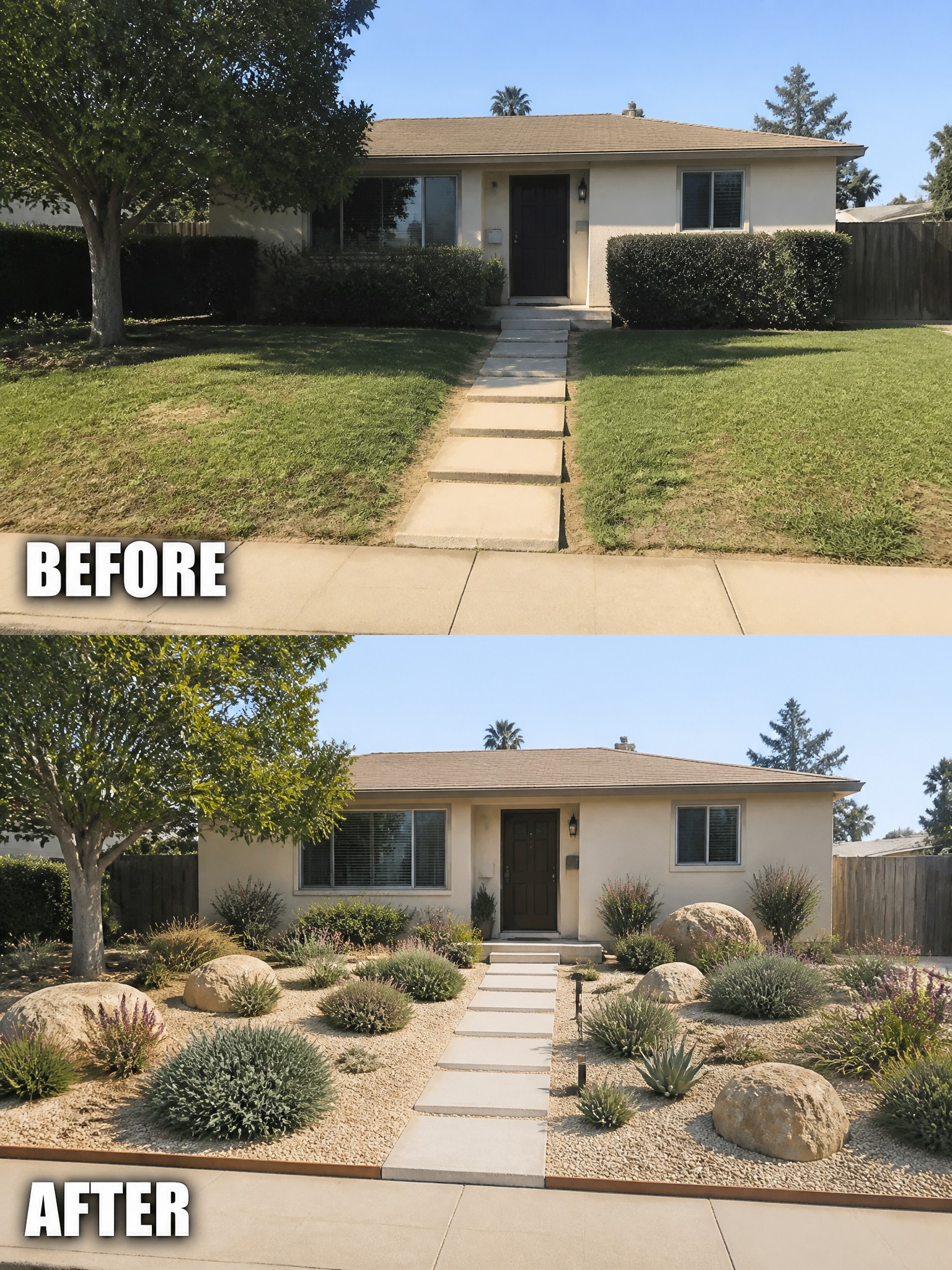
A patchy lawn often looks worse the longer it stays, especially when the grass thins out along the edges and around the walkway. Switching to gravel and defined beds removes that problem at once and gives the front yard a cleaner shape without needing constant mowing or watering.
This approach works well on small front yards or homes in drier climates where grass struggles. Clear the old lawn first, lay down a solid border, then add gravel and group plants in simple clusters rather than spreading them out. The result stays neat with far less upkeep.
Add Structure To A Narrow Side Yard

A narrow side yard often turns into an overgrown strip that no one uses. Placing a straight line of stepping stones with gravel borders and low edging plants gives the space a clear path and stops the weeds from taking over.
This idea suits homes with tight passages between fences and walls. Clear the area first, then keep the materials simple so the walkway stays practical and easy to maintain.
Turn A Bare Lawn Into A Backyard Putting Green
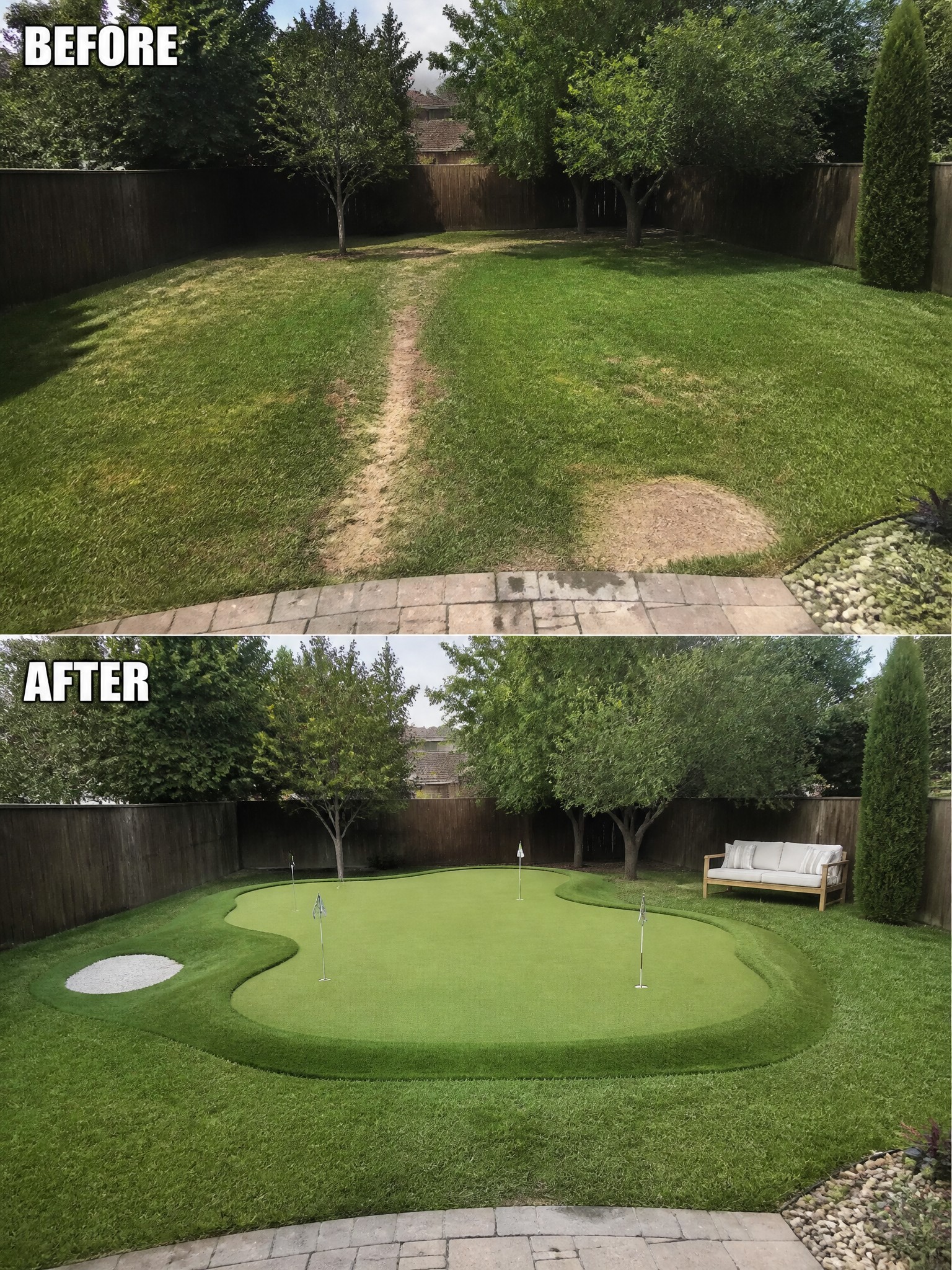
A flat lawn with no clear purpose tends to get walked across but not really used. Adding a putting green gives the space a single job that makes the whole yard feel more planned and worth spending time in.
This idea works best in backyards that already have decent size and a fairly level area. Keep the surrounding grass simple and mow it cleanly so the green stands out without extra planting or furniture crowding the edges.
Refresh Patchy Grass For A Cleaner Yard
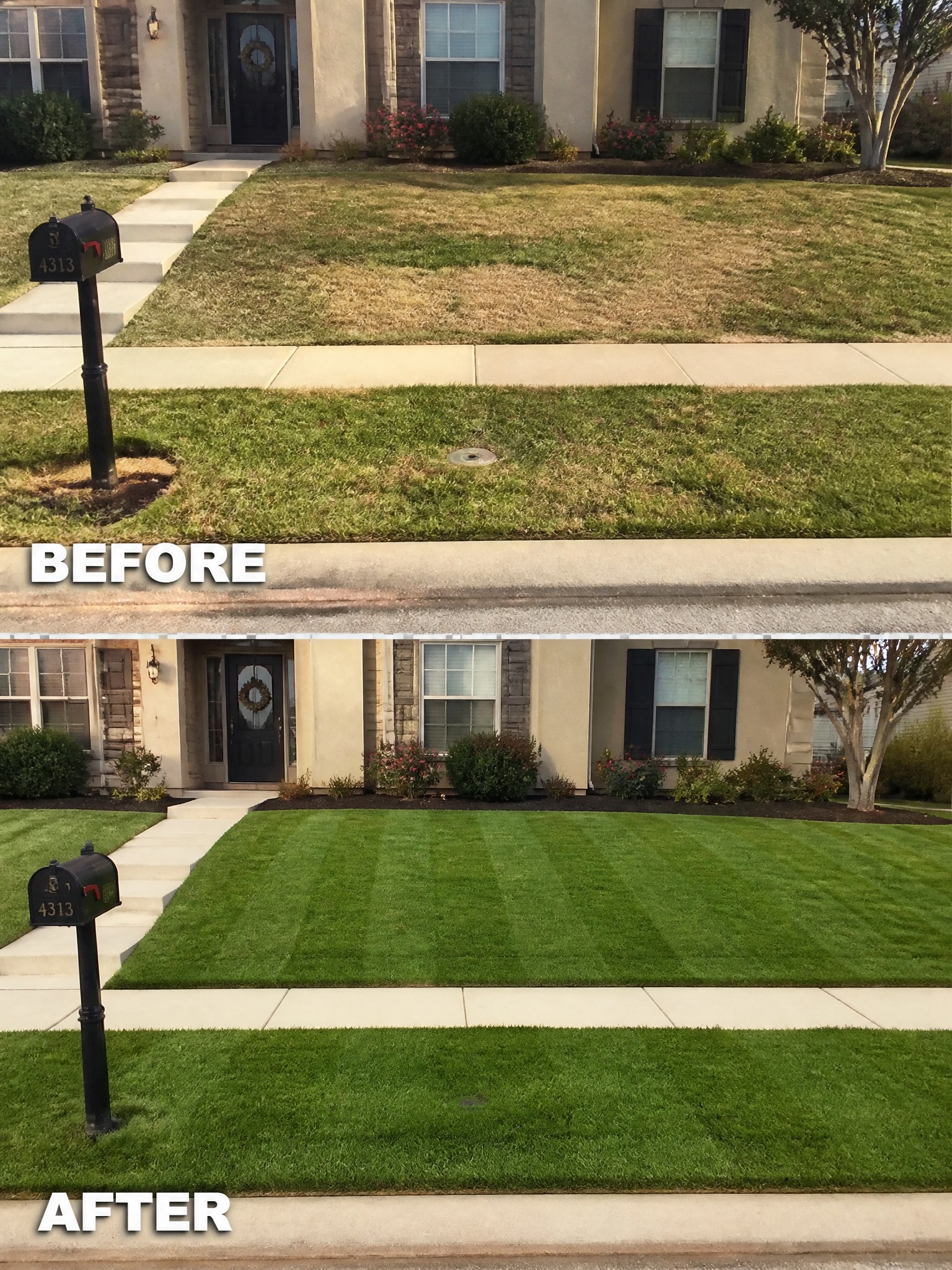
The main change here is replacing the thin, uneven grass with a thick, even lawn that has clear stripes. That single step gives the whole front area a finished look without adding plants, furniture, or other features.
This idea works best when the lawn is the main visible surface from the street. Start with soil leveling and good grass type for your area, then keep up with mowing and watering so the clean lines stay consistent through the season.
Define Garden Beds To Give The Front Yard Structure
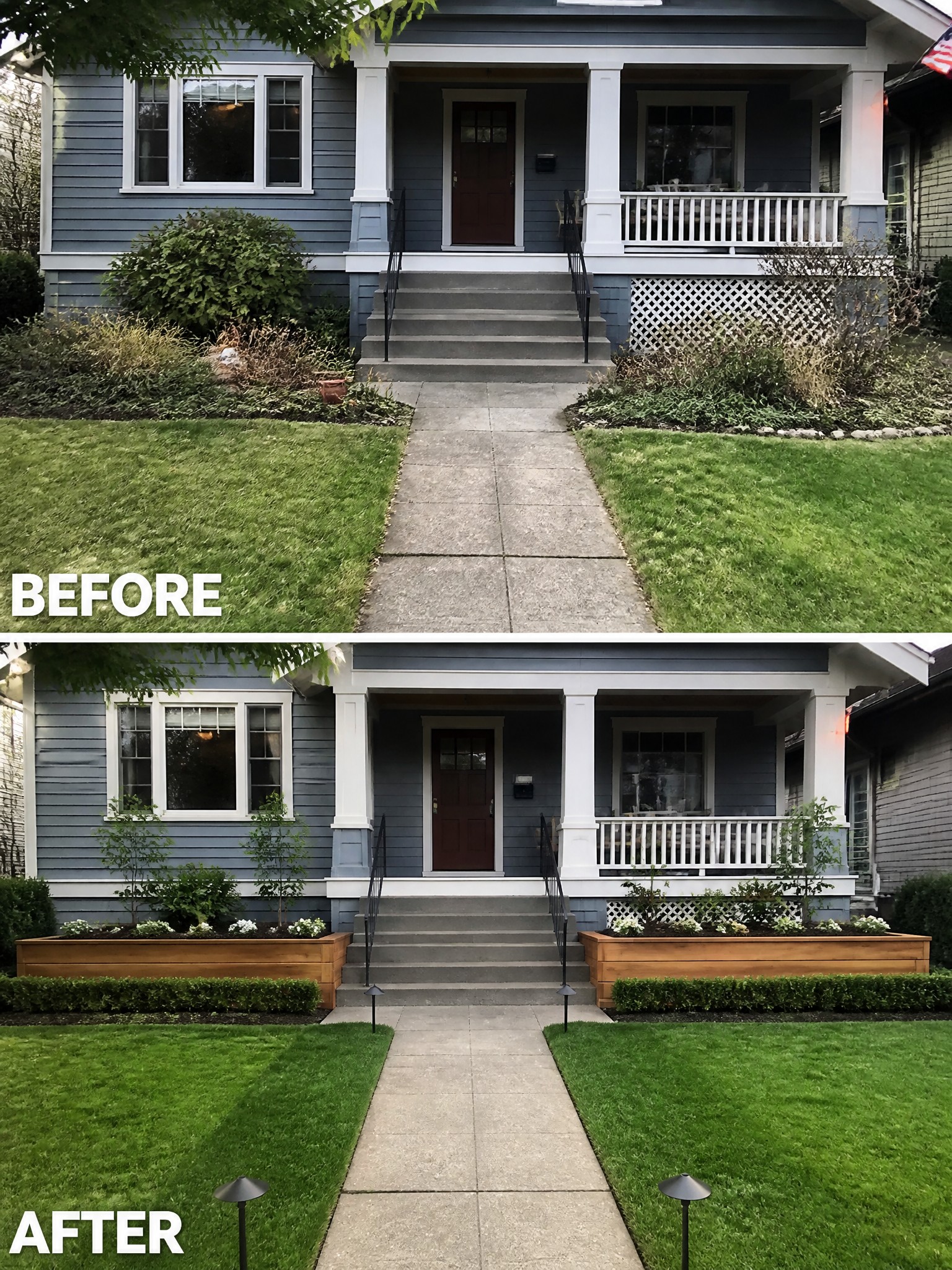
Adding clear garden beds and borders can turn a scattered front yard into something that feels planned and easy to maintain. In this case, the change comes from installing raised wooden planters along the sides of the walkway and using low hedges to create straight edges instead of letting plants sprawl.
This idea works best on modest lots where the lawn meets the house directly. Clear the old growth first, then place beds or planters that follow the path or porch line. Stick to a few repeated plants and keep the height low so the walkway stays open and the house still shows.
Add Structure To An Overgrown Backyard

Many yards start with a fence line that gets out of hand fast. The thick tangle of vines and shrubs makes the whole space feel smaller and harder to maintain. Clearing that growth first and adding a straight mulch bed with a row of shrubs brings back a sense of order without needing a full redesign.
This approach works well along property lines where you want low upkeep. Start with a simple edge and mulch to keep weeds down, then choose a few repeating shrubs that stay in scale with the fence. Leave enough open lawn so the border feels intentional instead of crowded.
Add Stone Edging To Define The Lawn

The before photo shows a lawn edge that just trails off into the sidewalk with no clear line. Adding a low stone border creates a sharp, finished separation and gives the grass a neat frame. The lights placed along the new edge make the border easy to see at night and keep the whole front look pulled together.
This approach works best on homes where the lawn meets a walkway or driveway. Focus on the edging first before adding plants or other features. Stone borders hold up well over time and make mowing easier since the grass stays contained.
Use Pavers And Raised Planters To Organize A Small Yard

One simple way to fix a narrow side yard is to replace the grass and stepping stones with pavers and add raised planters along the edges. This gives the space a flat, stable surface and keeps plants contained instead of letting them spread across the ground.
The idea works best in tight passages or courtyards where you need easy movement and low upkeep. Lay pavers on a solid base first, then build basic concrete planters and fill them with gravel and compact shrubs. Keep the center open so a small table and chairs can fit without crowding the walkway.
Add A Meadow Border To Your Lawn Edge

A wide open lawn next to a tree line can feel unfinished even when the grass looks healthy. Adding a strip of meadow-style planting along the edge gives the space a clear boundary and brings in color without filling the whole yard. The before photo shows just grass running straight into the trees, while the after shows how a band of wildflowers and grasses creates a gentle transition that feels more intentional.
This idea works well on larger properties where you want some variety but do not want to add structures or hardscaping. Start with a simple mowed edge to keep the border looking neat, then choose native perennials that can handle the light conditions under the trees. Keep the planted area narrow at first so it stays easy to maintain and does not take over the open lawn space.
Fix Worn Lawn Spots With A Gravel Bed

A patchy or soggy area in the lawn often stays that way no matter how much seed you add. Outlining the spot with a clean edge and filling it with gravel creates a stable surface that stops the damage from spreading while giving you room to add plants.
This approach works best along driveways or near walkways where grass has trouble taking hold. Keep the bed narrow enough to mow around easily and choose a few shrubs that stay low so the bed does not block the view of the rest of the yard.
Create A Grid Pattern In Your Lawn
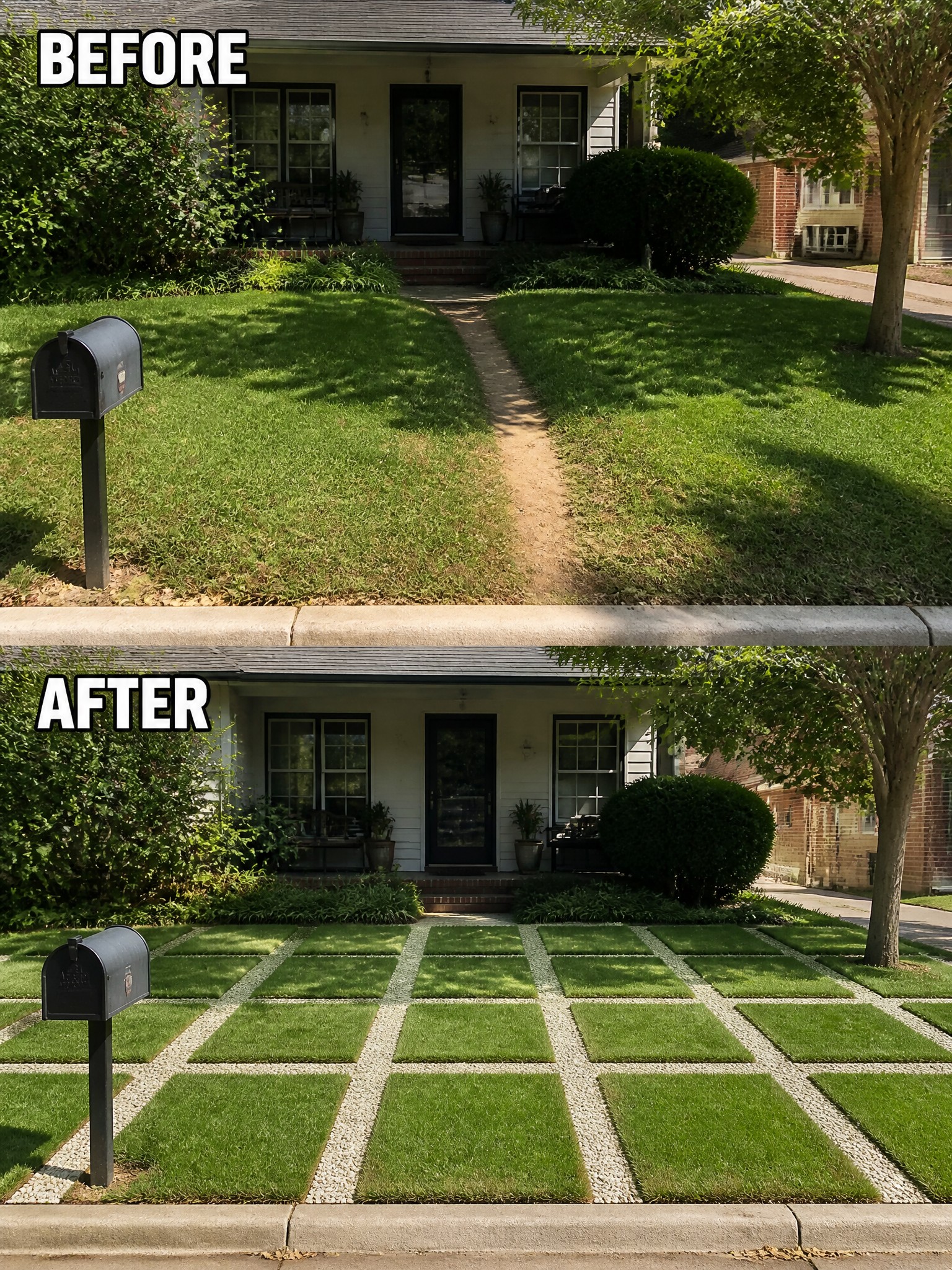
One straightforward way to update a plain front yard is to divide the lawn into squares with gravel lines. The original dirt path disappears and straight gravel strips take its place, turning the open grass into a series of clean, repeating sections. The result feels more organized and keeps the yard looking neat with very little extra planting.
This idea works best on flat, simple lots where you want structure without adding beds or shrubs. Mark the grid on the ground first, then lay the gravel between the squares so the mower can still pass over the grass easily. It gives the lawn a finished look while keeping maintenance low.
Clean Up The Yard Before Adding Decor
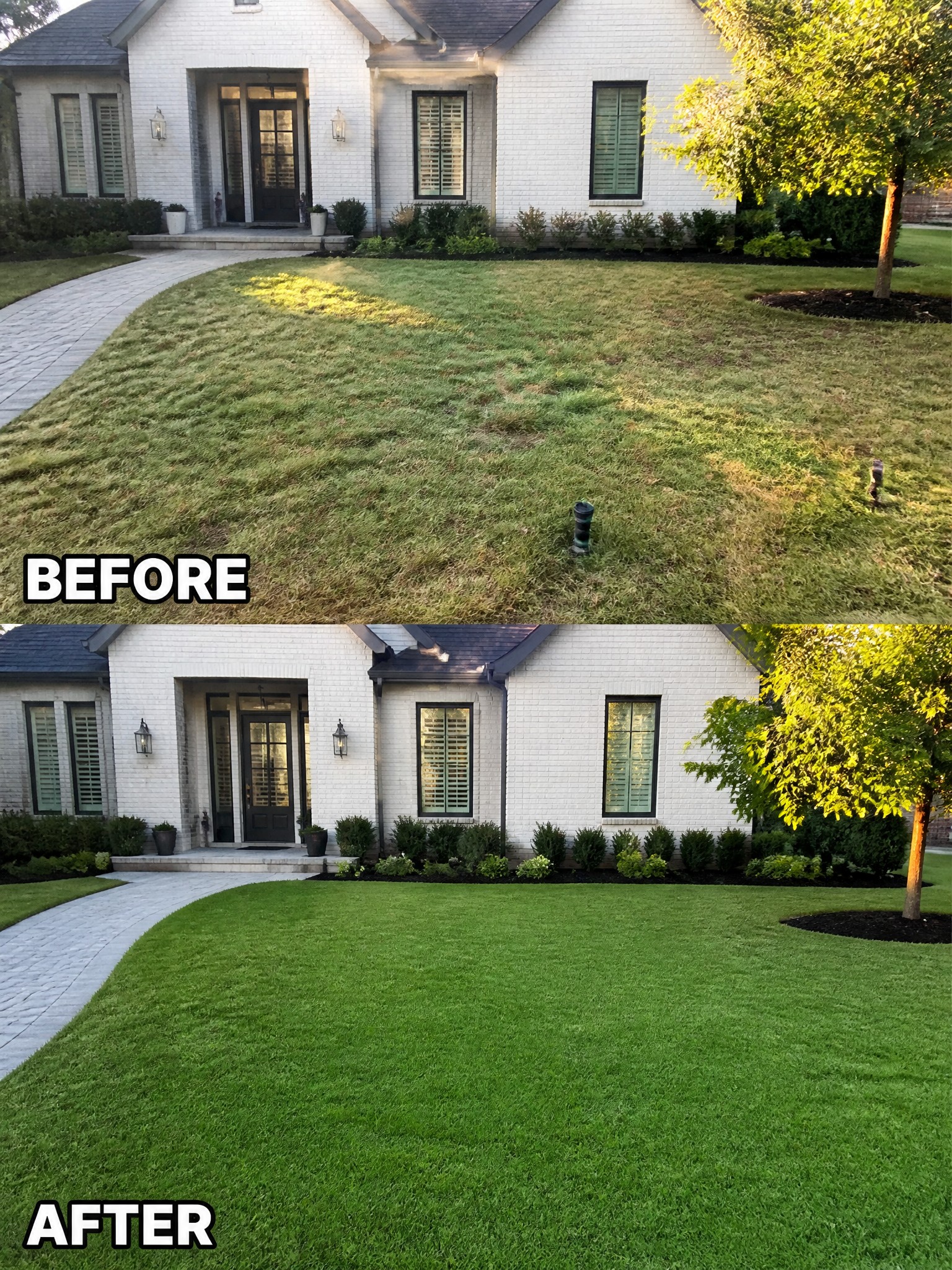
An overgrown lawn often makes the whole yard look neglected even when the house itself is in good shape. The main change here was clearing the patchy grass and weeds first, then creating a smooth even lawn with a clean edge along the beds. That single step made the front yard feel much larger and more cared for without any new structures or big plantings.
This approach works best when you want a simple update that does not require a full redesign. Focus on mowing, edging, and filling thin spots before you add anything else. It suits homes with basic front lawns where the grass itself has become the main problem.
Turn A Plain Patio Into A Shaded Seating Area
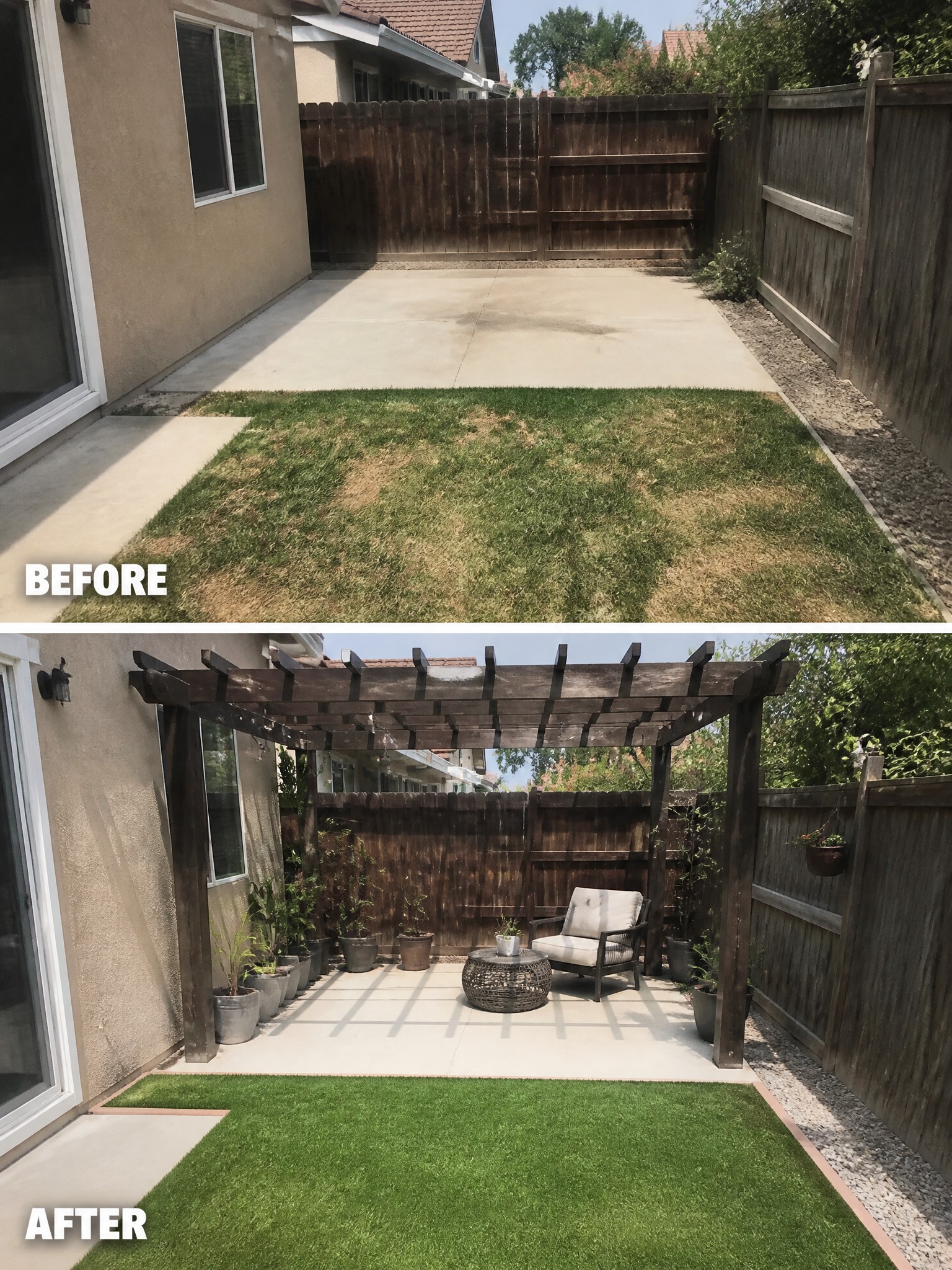
A large empty concrete slab next to the house often sits unused because it feels exposed and unfinished. Adding a simple pergola over part of the space gives it clear purpose and creates a comfortable spot to sit without needing a full renovation.
This approach works best on homes with existing patios or side yards that get some sun. Start with the structure first, then add a couple of weatherproof chairs and a small table so the area feels intentional rather than crowded. Keep the surrounding lawn or turf clean and low-maintenance so the seating zone stands out as the main feature.
Add Defined Garden Beds Along The Driveway Edge

One easy way to improve the front of a house is to replace a ragged strip of grass with a simple mulched bed. The messy lawn next to the driveway and sidewalk becomes a clean border that keeps the whole area looking neat instead of half-wild. Mulch and low shrubs stop the grass from creeping in and make mowing much easier.
This idea works best on narrow strips where the lawn always looks uneven. Use a row of rounded shrubs for structure, add a few taller grasses for height, and keep the bed narrow enough that it does not block movement. Start with a clean cut edge and repeat the same plants so the bed looks intentional rather than scattered.
Frequently Asked Questions
Q: My yard stays shady most of the day. Which ideas fit best? A: Go for shade tolerant grass mixes or ground covers that thrive without much sun. Add some pavers to create a clean path through the darker areas. Trim trees lightly if possible to let in more light.
Q: How do I keep the lawn looking clean after the makeover? A: Mow regularly at the right height. Edge along sidewalks every other week.
Q: What if I rent and cannot change the lawn much? A: Focus on movable items like potted plants and outdoor rugs. These add a fresh look without permanent changes. Take them with you when you move.
