

I have noticed that lawns often end up looking scattered when the grass runs right into the flower beds without any clear separation.
Adding garden borders helps define the space so the lawn keeps its shape and the plants stay where they belong.
Borders make a real difference.
In my yard I usually begin by sorting out the edges before adding anything new since that step alone gives the whole area more structure.
Over time those defined lines keep the space looking tended without needing constant extra work.
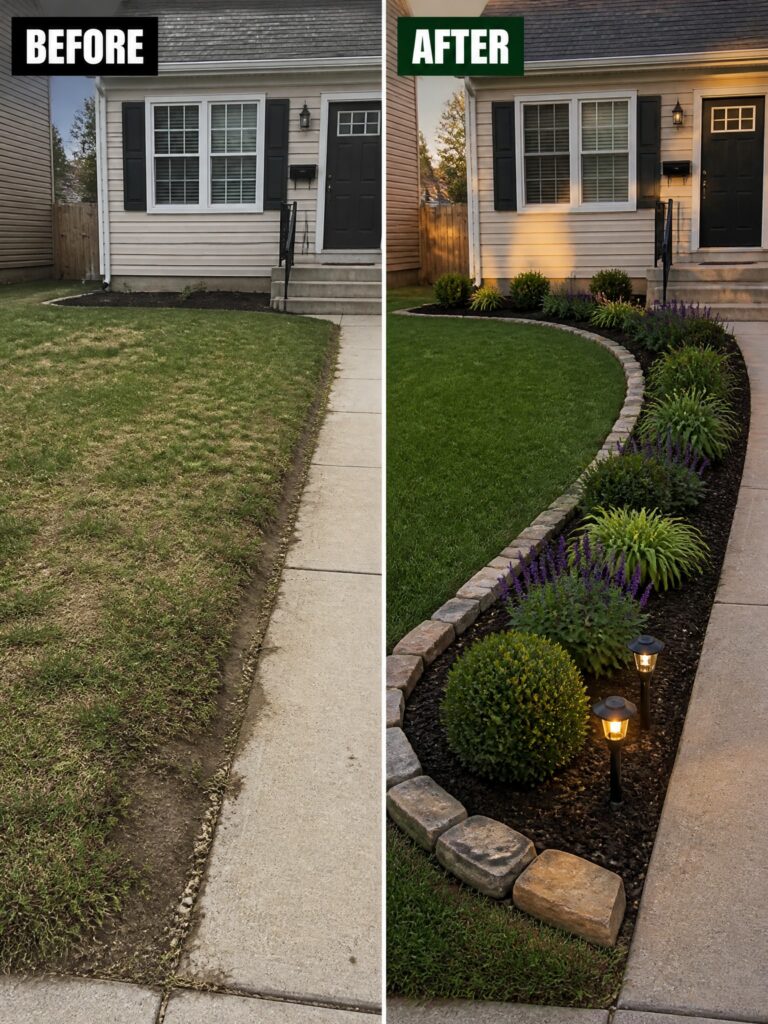
Add Defined Garden Borders To Clean Up The Lawn

A patchy lawn with uneven edges can make the whole front yard feel neglected. Adding a simple stone border along the lawn creates a clear line that separates the grass from the planting area. In this case, the change from rough grass to a curved stone edge with mulch and shrubs makes the space look planned instead of overgrown.
This idea works well on small to medium yards where the lawn meets the sidewalk or driveway. Start by marking a smooth curve with a hose, then set the border stones level with the ground so mowing stays easy. Keep the planting inside the border simple with a few shrubs and ground cover rather than filling every inch.
Add Structure To An Overgrown Backyard

One simple way to fix a messy backyard is to add a clear garden border. The before photo shows grass running right up to the fence with no edge and plenty of bare spots. After the change a low brick border creates a planting bed that holds mulch and a row of shrubs and flowers.
This idea works best once you clean up the lawn first. Mark the bed line with a hose so the shape feels natural then install edging and mulch before planting. The border keeps grass from creeping in and gives the plants a defined space without crowding the yard.
Add A Raised Garden Bed To Frame The Front Walk

A bare dirt strip along the sidewalk often ends up weedy and hard to keep neat. Building a long raised wooden bed gives that space clear edges and turns it into a planted border that separates the lawn from the house without taking up much room.
This idea works best on narrow front strips where in-ground planting tends to sprawl. Keep the bed height low so it does not block the view from the street, fill it with a mix of shrubs and grasses that stay compact, and leave enough space between the bed and the path for easy walking.
Add Retaining Walls To Shape A Sloped Yard
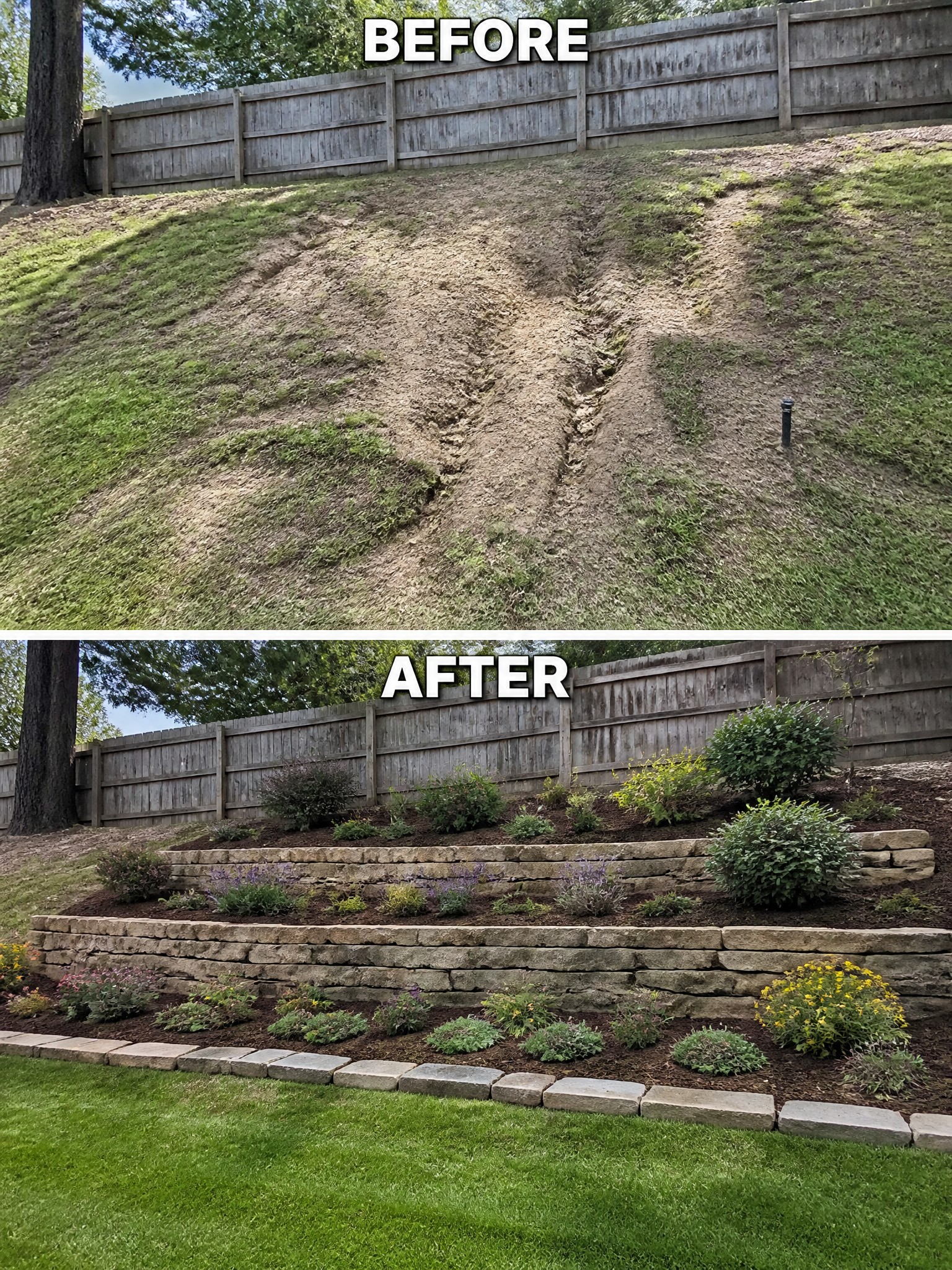
A bare slope often ends up with thin grass and runoff because nothing holds the soil in place. Adding stone retaining walls breaks the hill into flat beds that stay put and give you actual space to plant.
This works best on yards where the lawn thins out on an incline. Build the walls first to create the levels, then fill the beds with mulch and simple plantings so the edge stays neat and the grass below stays easy to mow.
Add Defined Garden Beds Along Your Fence
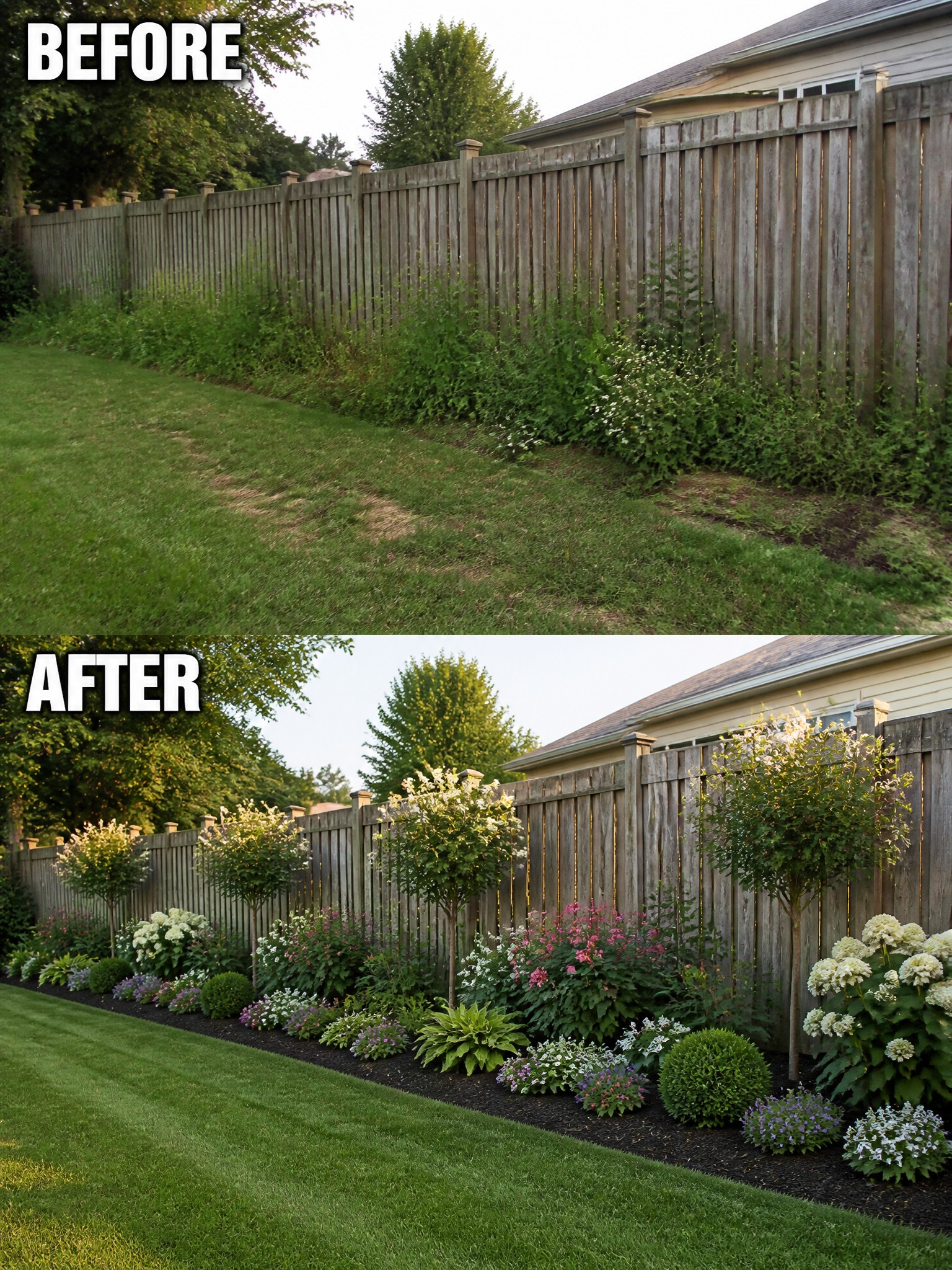
A messy fence line often drags down the whole yard. Clearing the weeds and adding a simple mulched bed with layered plants turns that same stretch into something neat and purposeful.
This approach suits long fence lines or side yards where the grass meets the boundary. Start by removing the overgrowth, then lay mulch to hold the soil and define the edge. Mix low ground cover with a few taller shrubs so the bed feels full but still leaves room for the lawn.
Add Defined Borders Around Trees
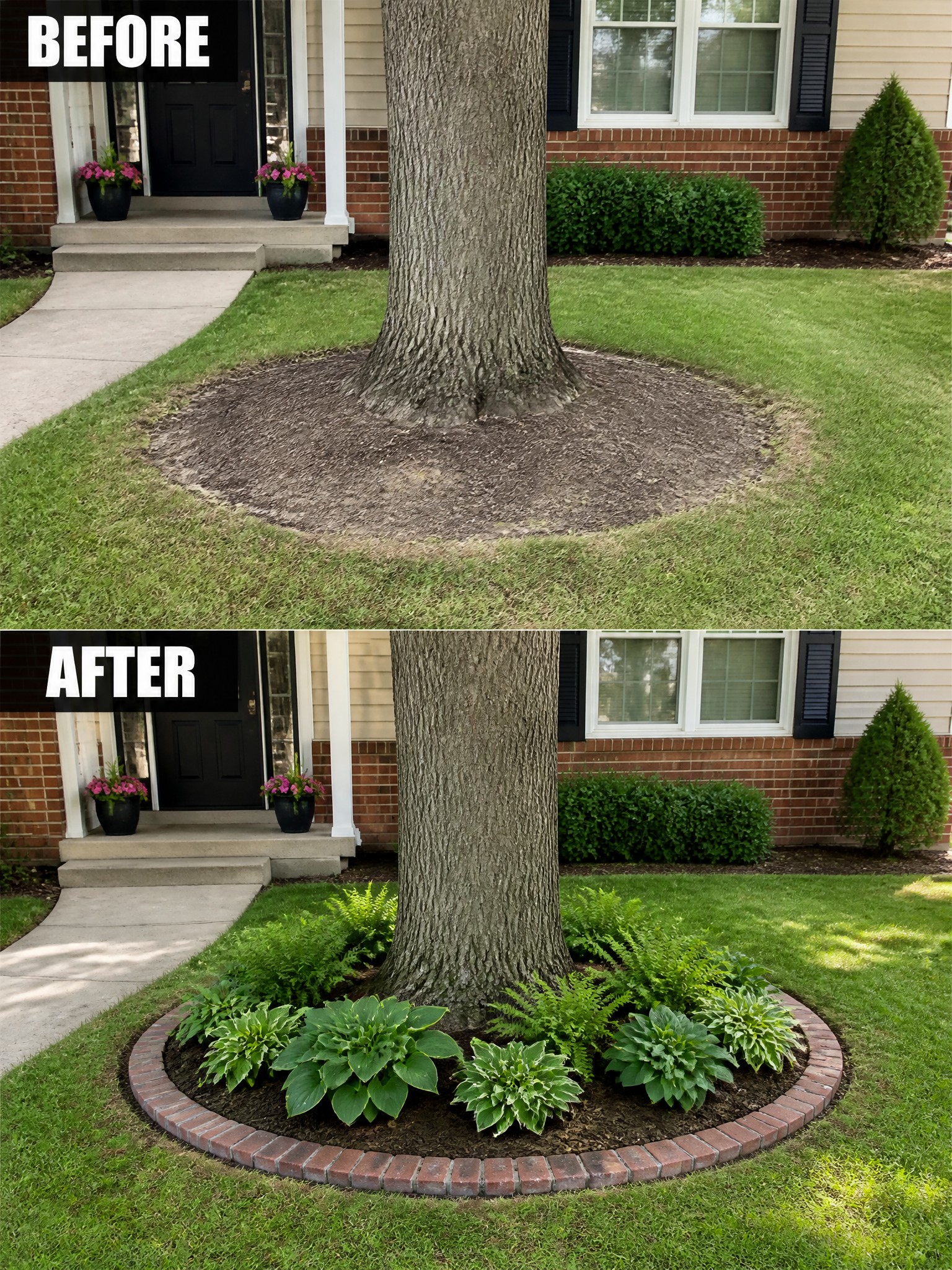
A bare mulch ring around a large tree often looks unfinished in the middle of a lawn. Adding a simple brick border turns that spot into a real planting bed, which makes the whole yard feel more structured and intentional. The after photo shows how hostas and ferns fill the space nicely without competing with the tree roots.
This approach works well in front yards where the tree sits close to the house or walkway. Start with a clean edge, then choose shade plants that can handle the conditions. Keep the bed narrow enough to mow around easily and avoid crowding the trunk.
Add Defined Borders Along A Front Walkway
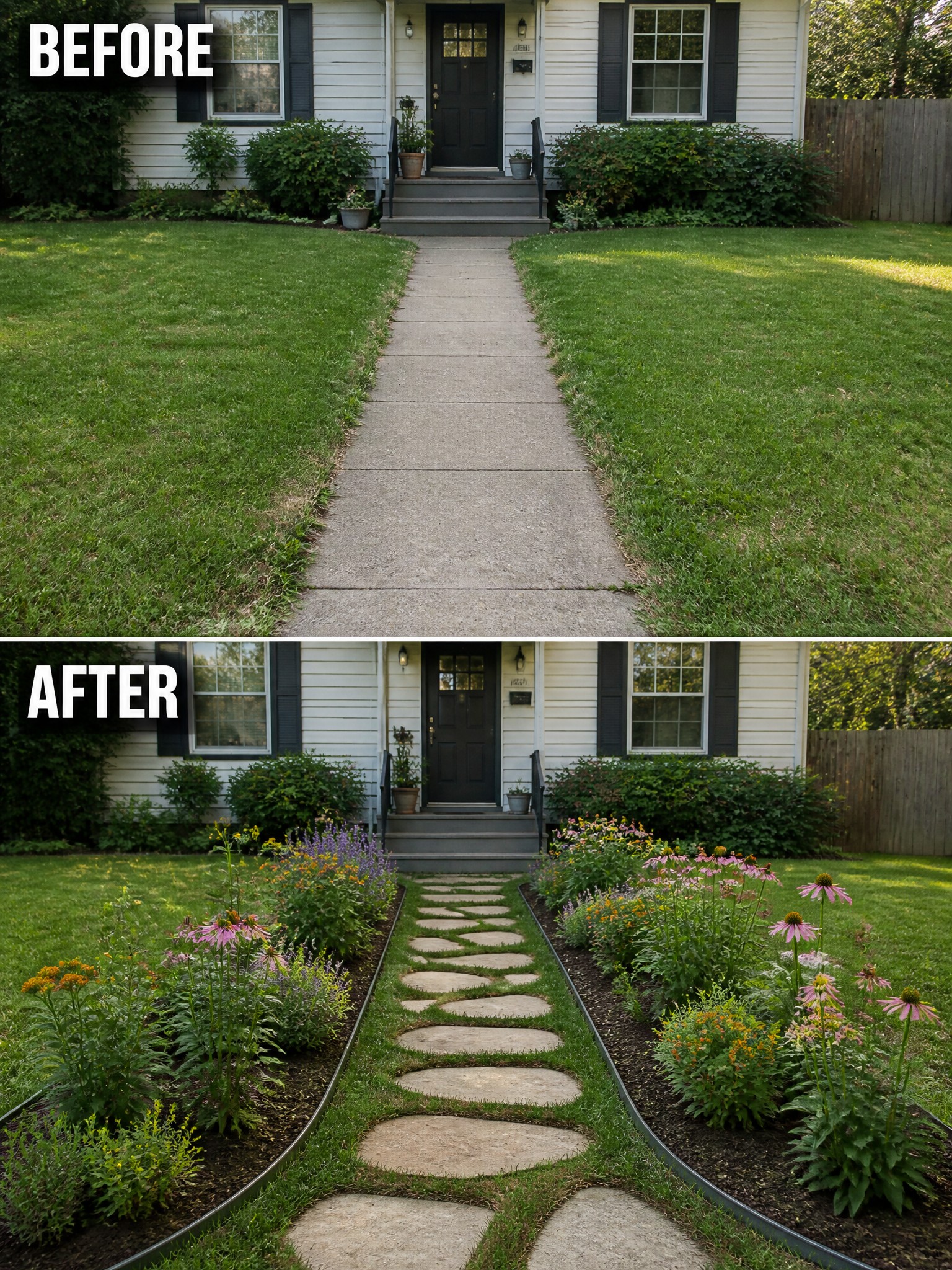
A straight concrete path through a plain lawn can feel unfinished. Adding raised garden borders on both sides and switching to stepping stones gives the walkway a clear shape and makes the front yard feel more planned without needing major construction.
This approach works well on narrow lots or homes with a simple entry path. Start by marking the edges, add edging material to keep the beds in place, then fill with a mix of low perennials and ground cover. Keep the center path wide enough for easy walking and use stepping stones that sit level with the grass so mowing stays simple.
Define Lawn Edges With Gravel Borders
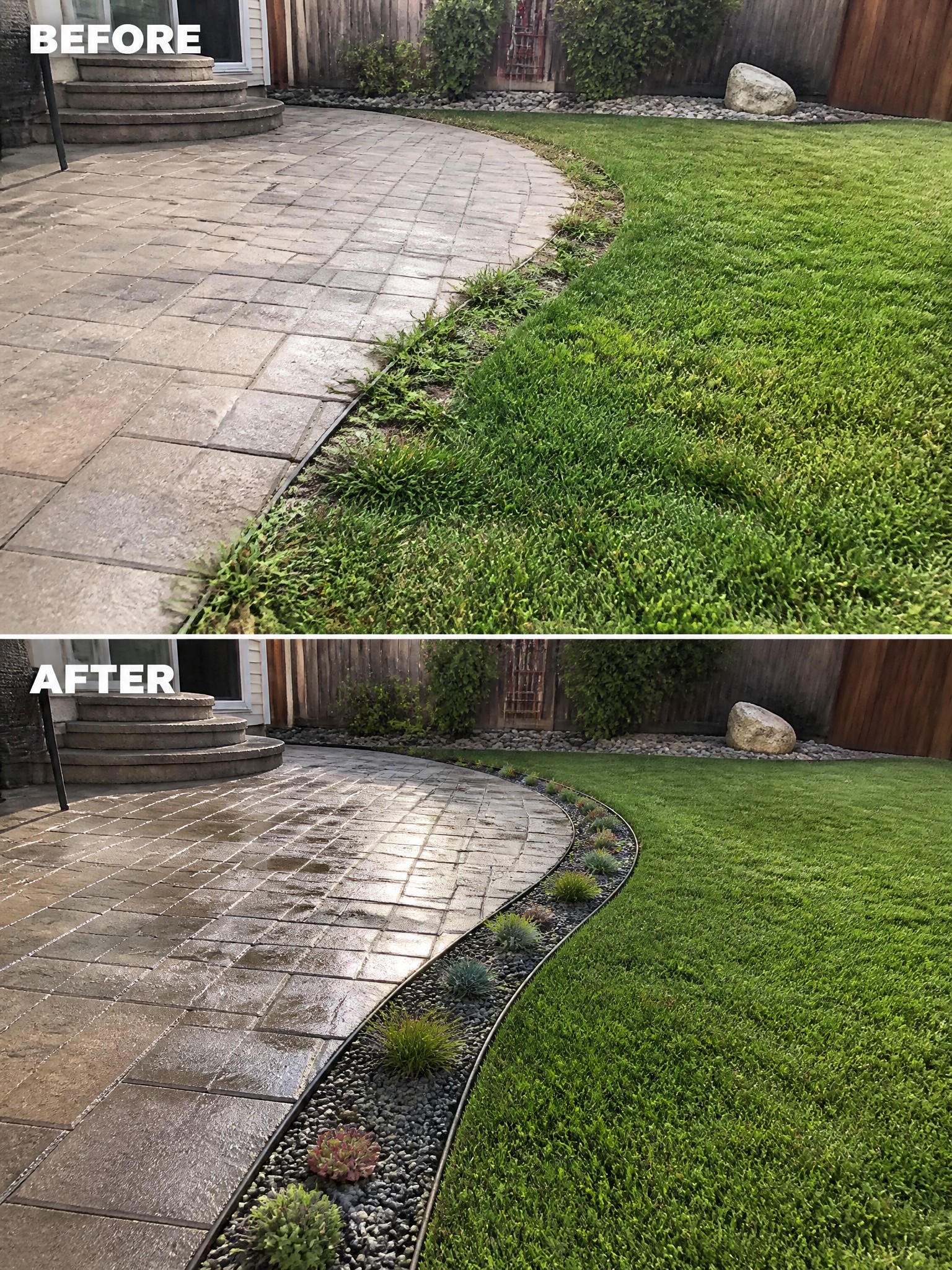
A messy lawn edge next to a patio often makes the whole yard feel unfinished. Adding a narrow gravel strip with a few small plants creates a clear line that keeps grass from creeping onto the pavers and gives the space a tidy look without much effort.
This works well in backyards where the lawn meets hardscaping. Start by cleaning up the overgrown grass, then lay down a simple edging material and fill it with gravel. Keep the planting light so the border stays low and easy to maintain.
Add A Flower Border In Front Of Existing Shrubs
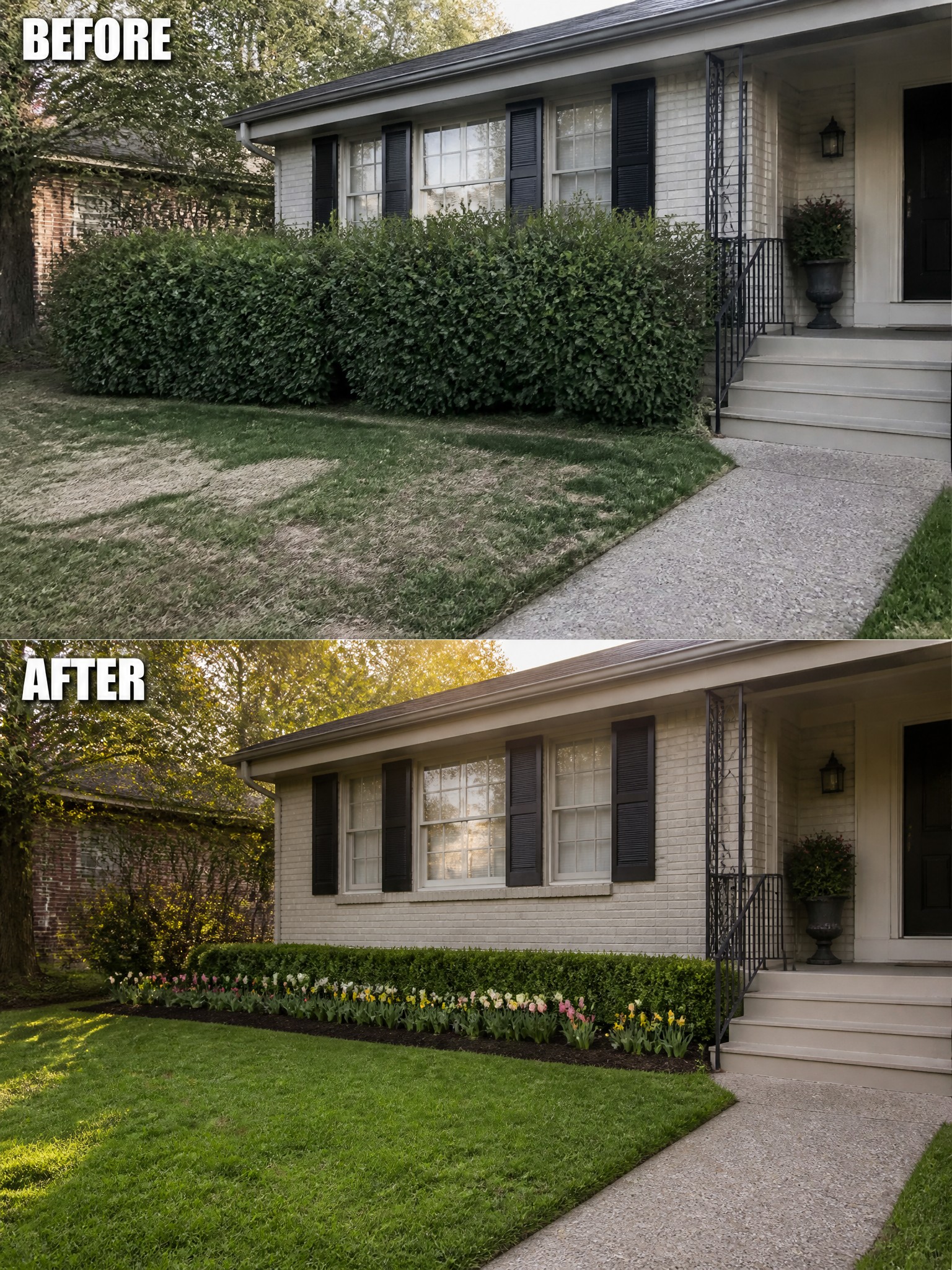
One easy way to give a front yard more structure is to add a narrow flower border right in front of the shrubs. The before photo shows a large, untrimmed hedge sitting directly against patchy grass with no clear edge. In the after photo, the hedge is kept but a low flower bed creates a clean line that separates the lawn from the planting.
This approach suits homes that already have foundation shrubs and just need better definition. Trim the shrubs first to keep them from overwhelming the space, then lay down mulch and plant flowers that bloom at different times. It adds color and shape without requiring a full landscape overhaul.
Give Your Lawn A Clean Edge With Garden Borders
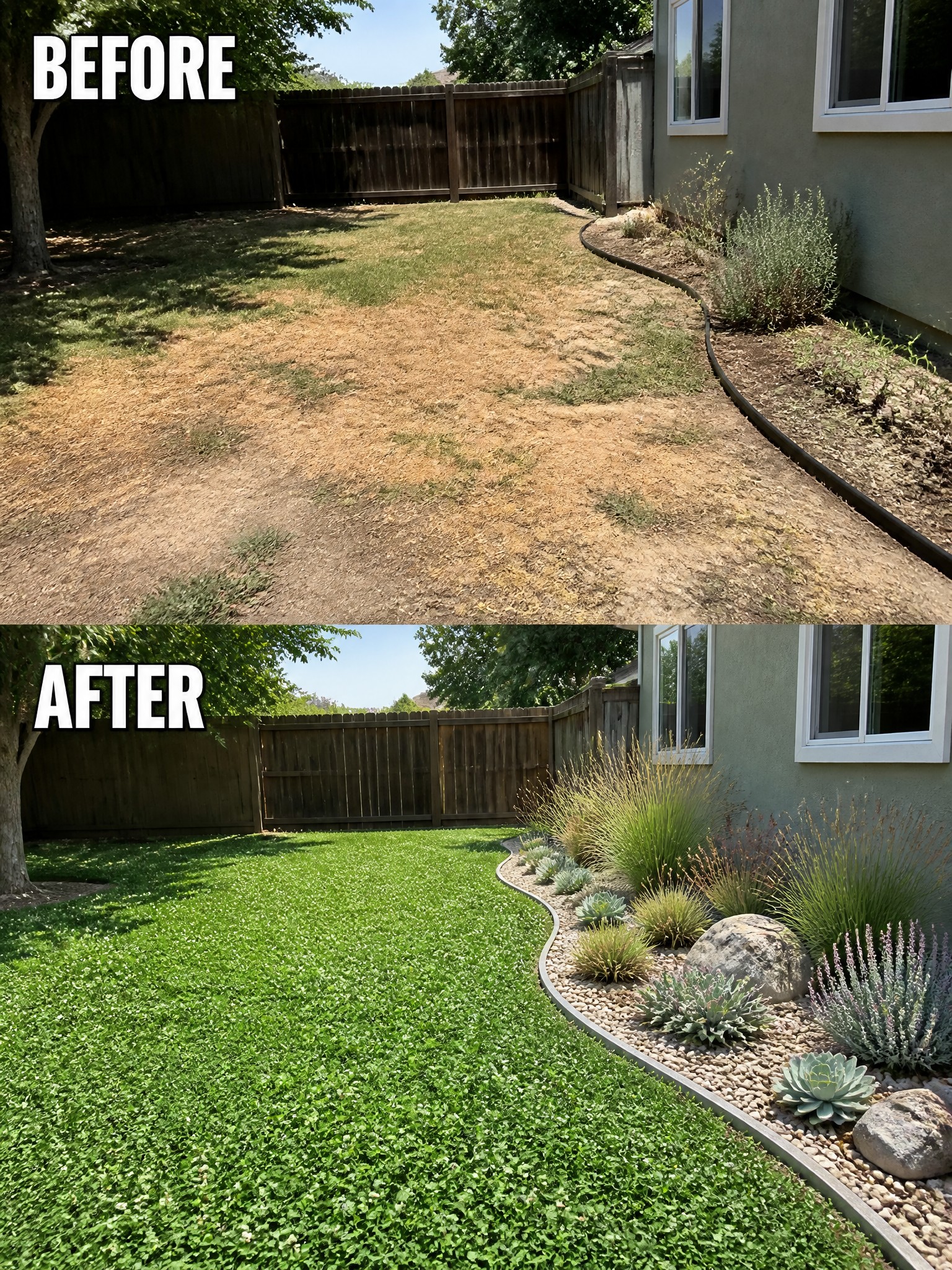
A patchy lawn that runs straight into the house wall often looks unfinished. Adding a simple curved border with gravel and low plants creates a clear line that makes the grass area feel more intentional and easier to maintain.
This approach works best along the side or back of the house where you want some planting without losing open lawn space. Lay out the curve first with edging, then fill the bed with gravel and tough plants that handle sun. The result keeps the yard usable while stopping the lawn from looking like it just fades away.
Define A Bare Strip With Gravel And Simple Edging

A dirt strip next to the driveway often ends up looking messy and unfinished. Adding a gravel bed with black edging and a row of small shrubs turns that same narrow space into something that looks planned and stays tidy with very little work.
This approach suits homes where the driveway runs close to the house and there is not much room for full garden beds. Keep the plants small and evenly spaced, use a solid edge to hold the gravel, and stick to one or two materials so the border stays simple rather than crowded.
Add A Border To Create A Defined Garden Bed Around A Tree
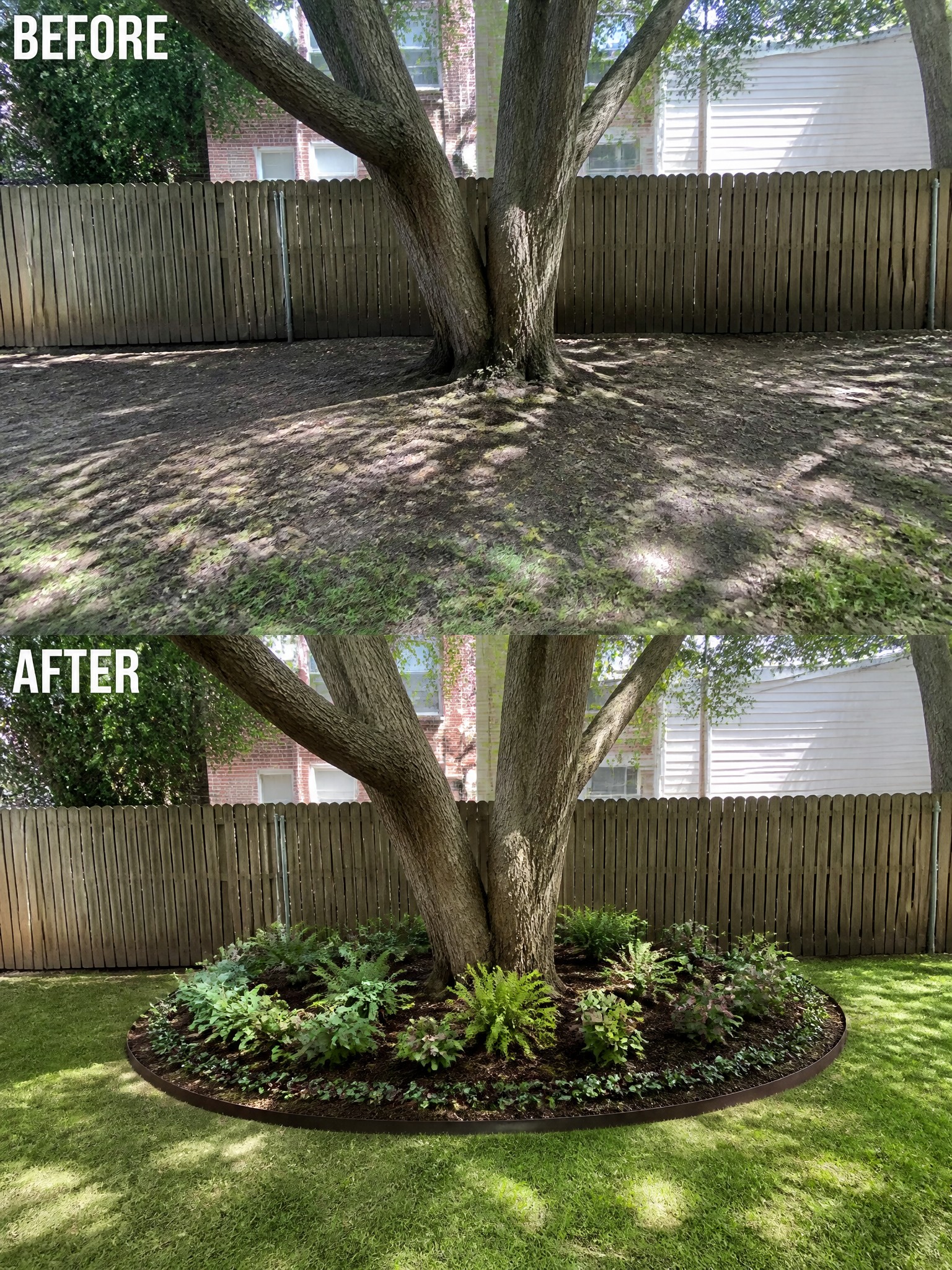
A large tree often leaves a messy patch of bare soil or mulch that spreads into the lawn. Adding a simple metal border around the base turns that area into a contained garden bed. The change gives the yard a finished look and keeps the planting from creeping outward.
This idea works well in smaller yards where you want structure without adding hardscaping. Start with a clean edge first, then fill the bed with shade-tolerant plants that can handle the tree roots. Keep the border low so it stays easy to mow around.
Define Garden Beds With Simple Edging
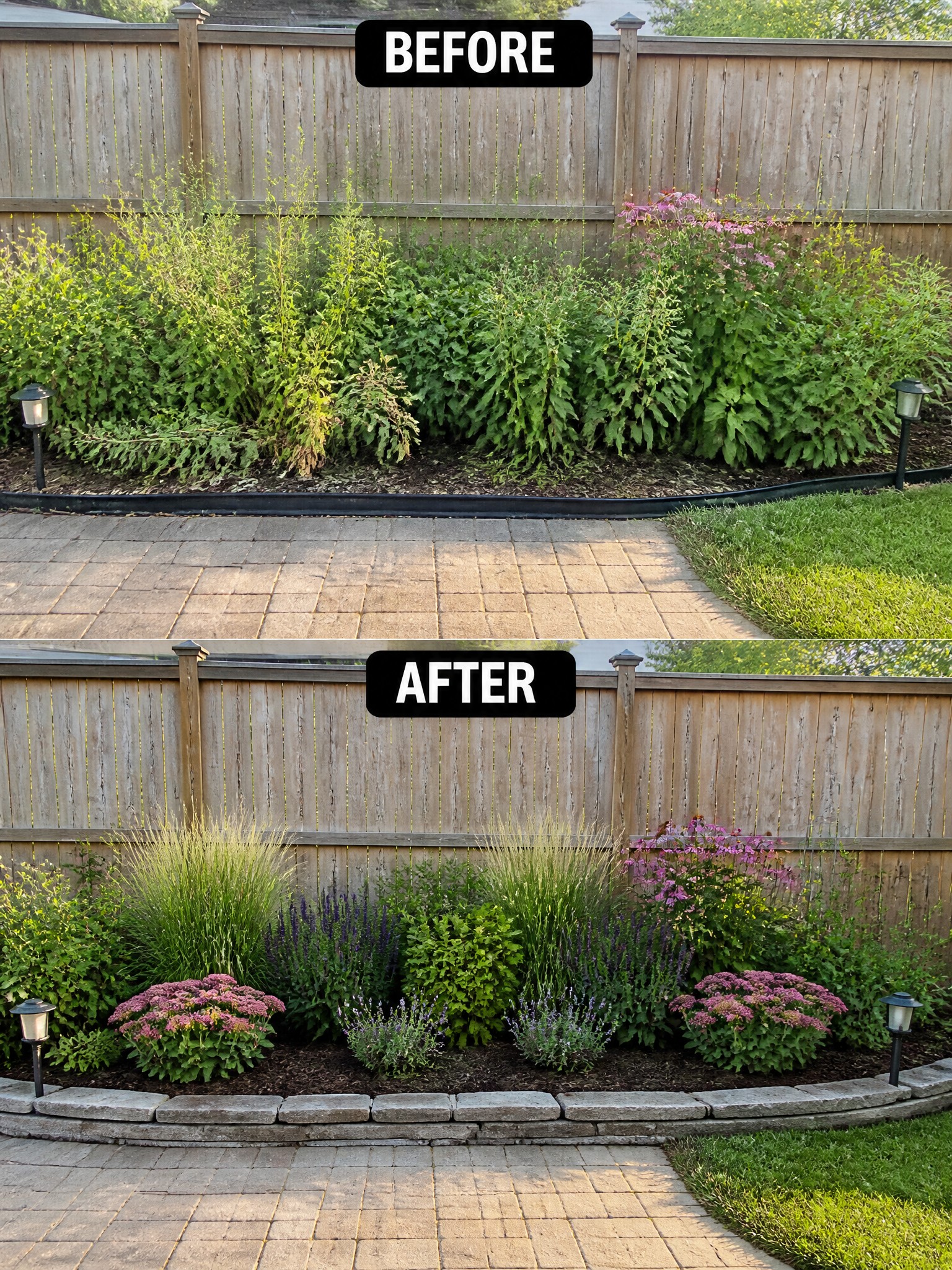
Adding a stone border turned a messy strip of plants into something that actually looks intentional. The before photo shows everything spilling out with no clear line, while the after uses edging to hold the beds in place and keep the mulch from drifting onto the pavers.
This idea works best along fences or the edge of a lawn where things tend to look neglected. Clean up the area first, lay the edging in a gentle curve, then plant in layers so nothing feels scattered. It keeps the space looking cared for without needing constant trimming.
Add A Garden Border To Frame The Front Lawn
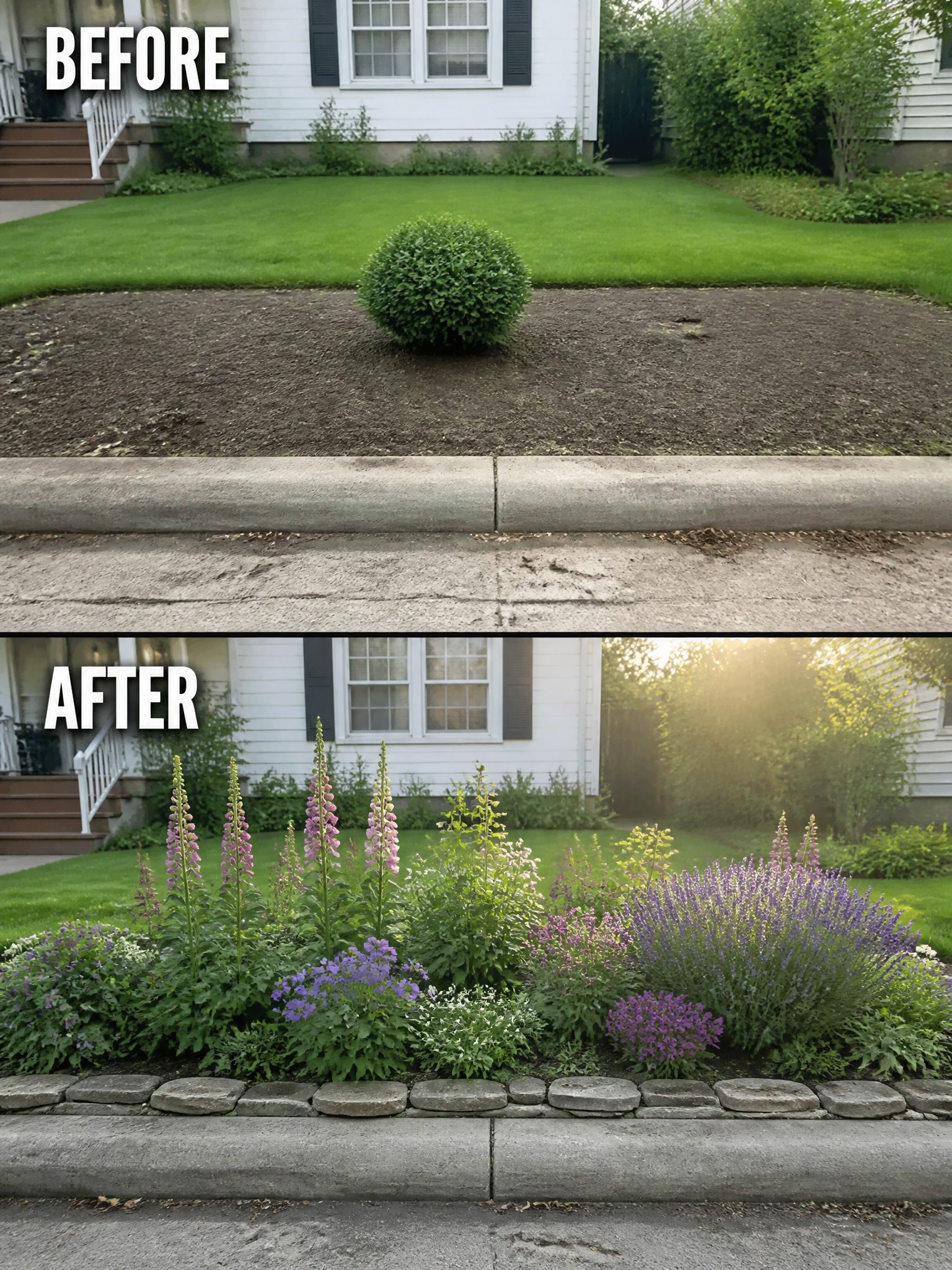
A bare strip of mulch along the sidewalk often makes the front yard look unfinished. Adding a defined garden bed with edging stones and layered plants gives the lawn a clear edge and turns that empty space into something more structured.
This idea works best on smaller front yards where the lawn runs straight to the curb. Lay the edging first to set the shape, then fill in with a mix of heights so nothing blocks the view from the street. Keep the bed narrow enough to mow around easily.
Add Raised Beds To Organize A Narrow Side Yard

A long, narrow side yard often ends up as wasted space because it feels awkward to plant or maintain. In this case the before photo shows bare dirt and scattered equipment along the house wall. The after shows how raised wooden beds with trellises create a clear planting zone while the path of pavers and gravel keeps the walkway practical.
This approach works well on homes where the side yard is the only flat area left for growing. Keep the beds narrow enough to reach across and choose one or two repeating materials so the space stays orderly instead of crowded.
Add Curved Borders To Shape Your Lawn
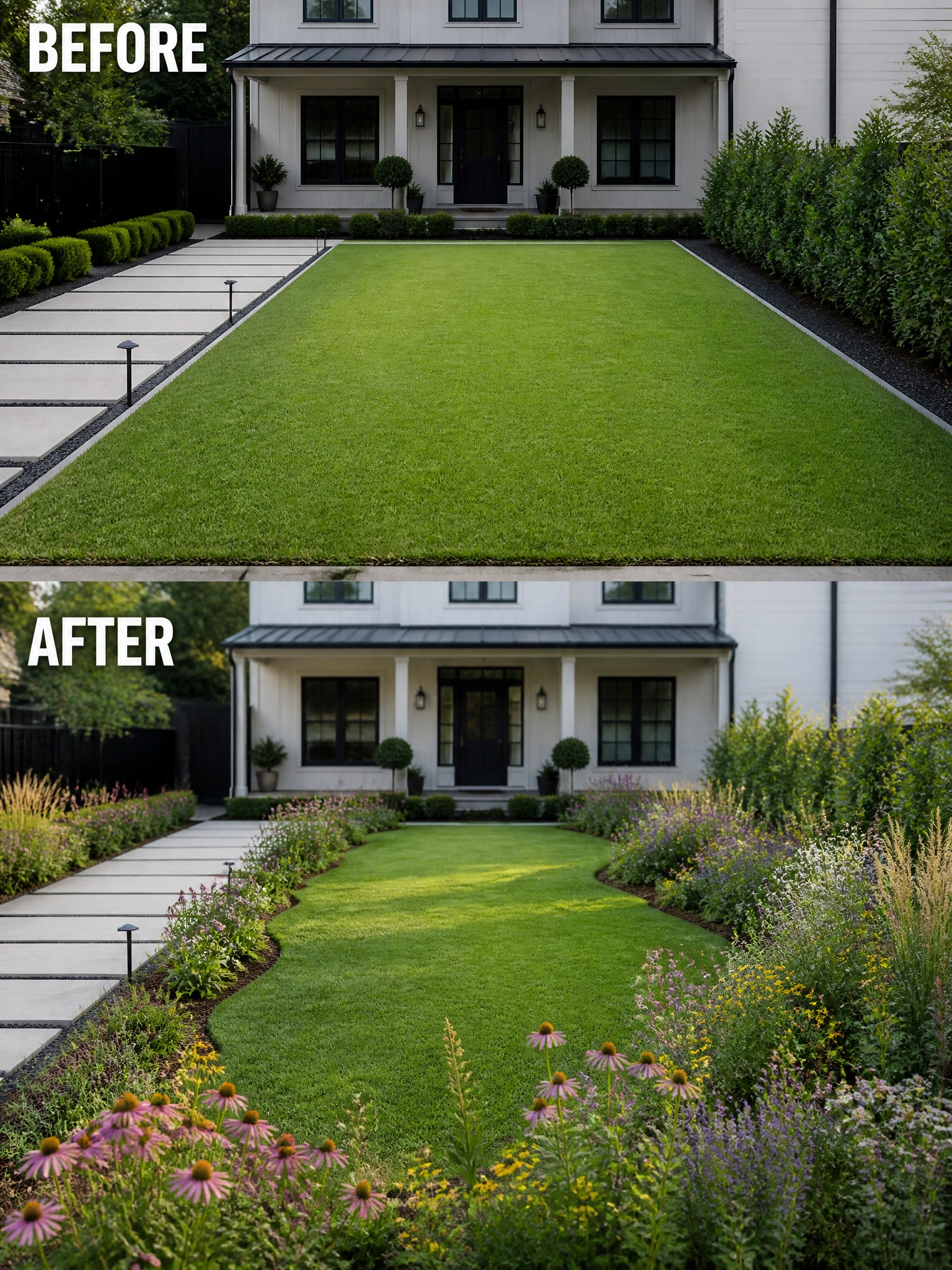
A straight rectangular lawn can look flat even when it is well kept. In this case the change came from softening the edges and adding planted borders that follow a gentle curve. The new shape makes the lawn feel more intentional and gives the whole front yard better flow.
This approach works best on a fairly open lawn where you can redraw the edge without losing too much grass. Start by marking a simple curve with a hose, then cut the new border and add a mix of perennials and grasses along the outside. The planting softens the line and brings color without crowding the space.
Add Stone Edging To Define The Pool Edge
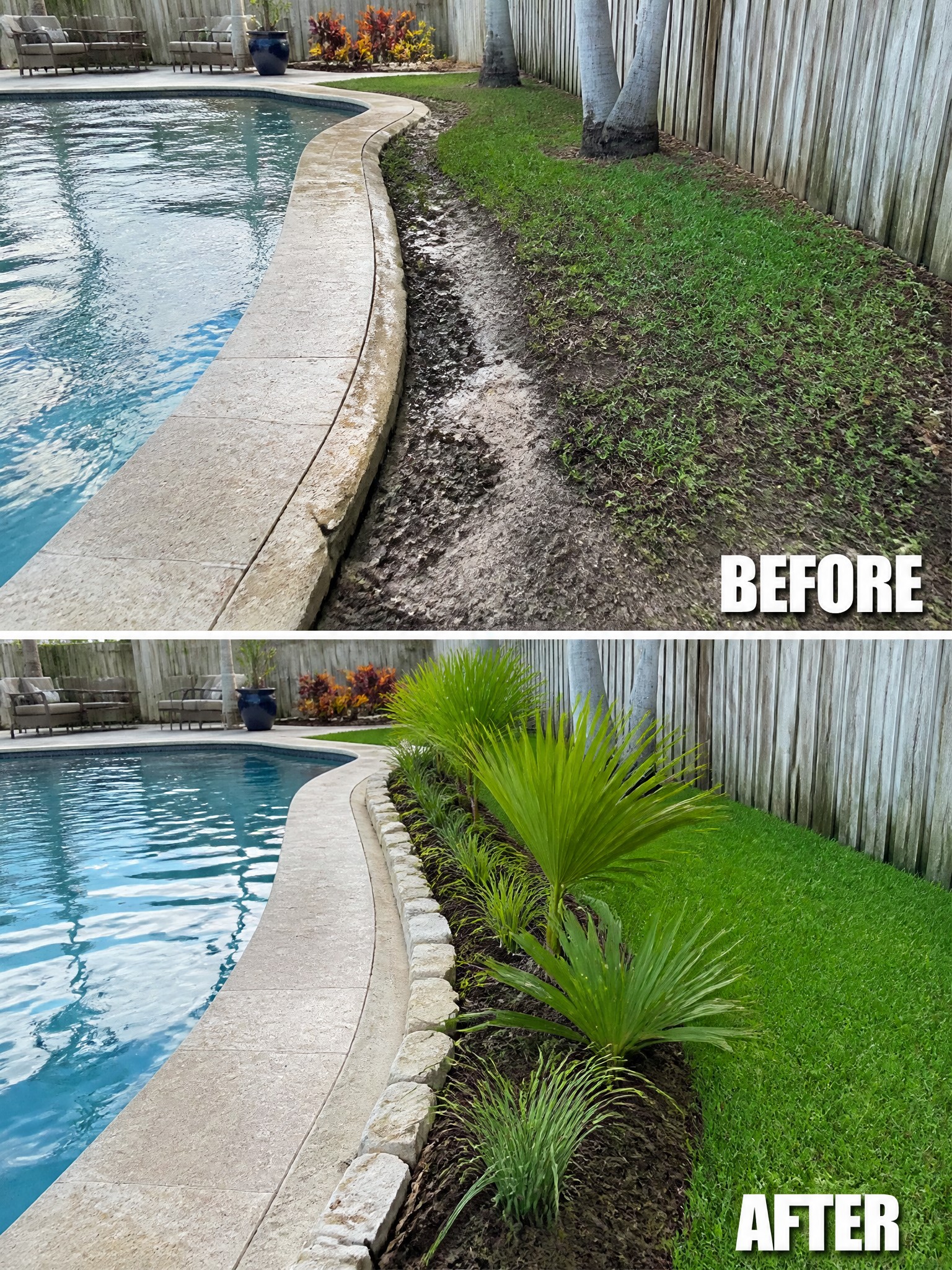
A simple stone border turns a messy strip of dirt and grass into a clear planting bed. The edge keeps the lawn from spilling onto the pool deck and gives the plants a set place to grow without looking scattered.
This approach suits pool areas or any spot where lawn meets hard surfaces. Lay the stones first to mark the line, then fill the bed with a few taller plants and lower grasses. It stays practical because it controls the edge without requiring a full yard overhaul.
Add Garden Borders Along A Walkway
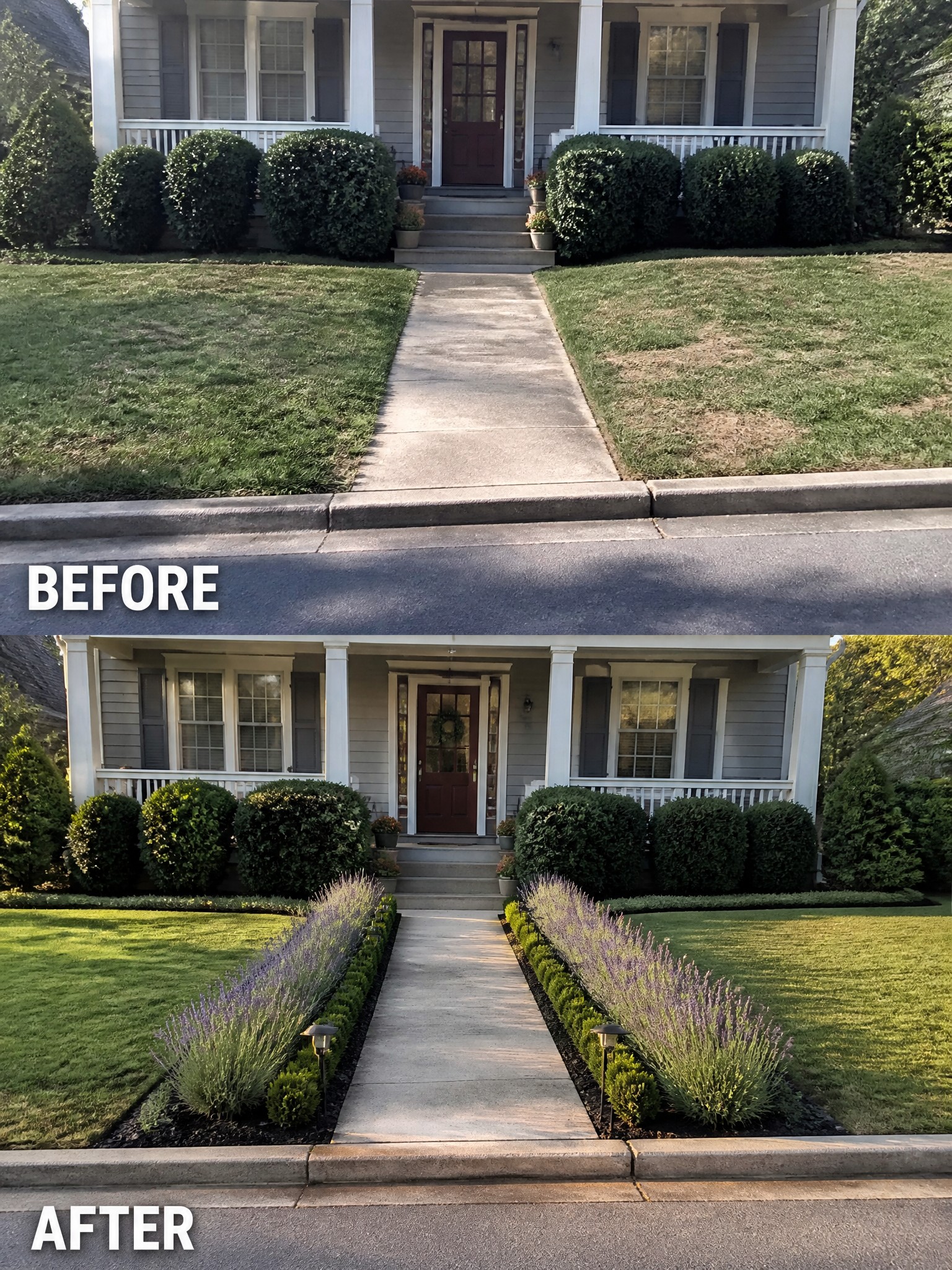
Adding planted borders on either side of a front path gives the lawn a clearer shape and stops the grass from running right up to the concrete. In the before photo the walkway sat in the middle of an open lawn, but the after version uses two narrow beds filled with lavender and low shrubs to frame the route from the street to the door.
This idea works best on modest front yards where you want some planting without losing open lawn space. Keep the beds narrow, choose plants that stay under knee height, and use mulch to hold the look together. The result feels finished even if the rest of the yard stays simple.
Add Raised Garden Beds To Give A Backyard Clear Structure

A bare backyard often feels unfinished when it is just grass meeting a fence. Raised garden beds add simple lines and planting space that make the area feel more planned and useful. Here the beds run along the fence and hold vegetables and herbs, while mulch keeps the edges clean and separates the lawn from the growing area.
This idea suits smaller yards where you want growing space without losing open lawn. Use basic wood frames, keep the beds narrow enough to reach across, and leave room to walk and mow around them. The beds do the main work of organizing the space.
Define Garden Beds With Edging And Gravel
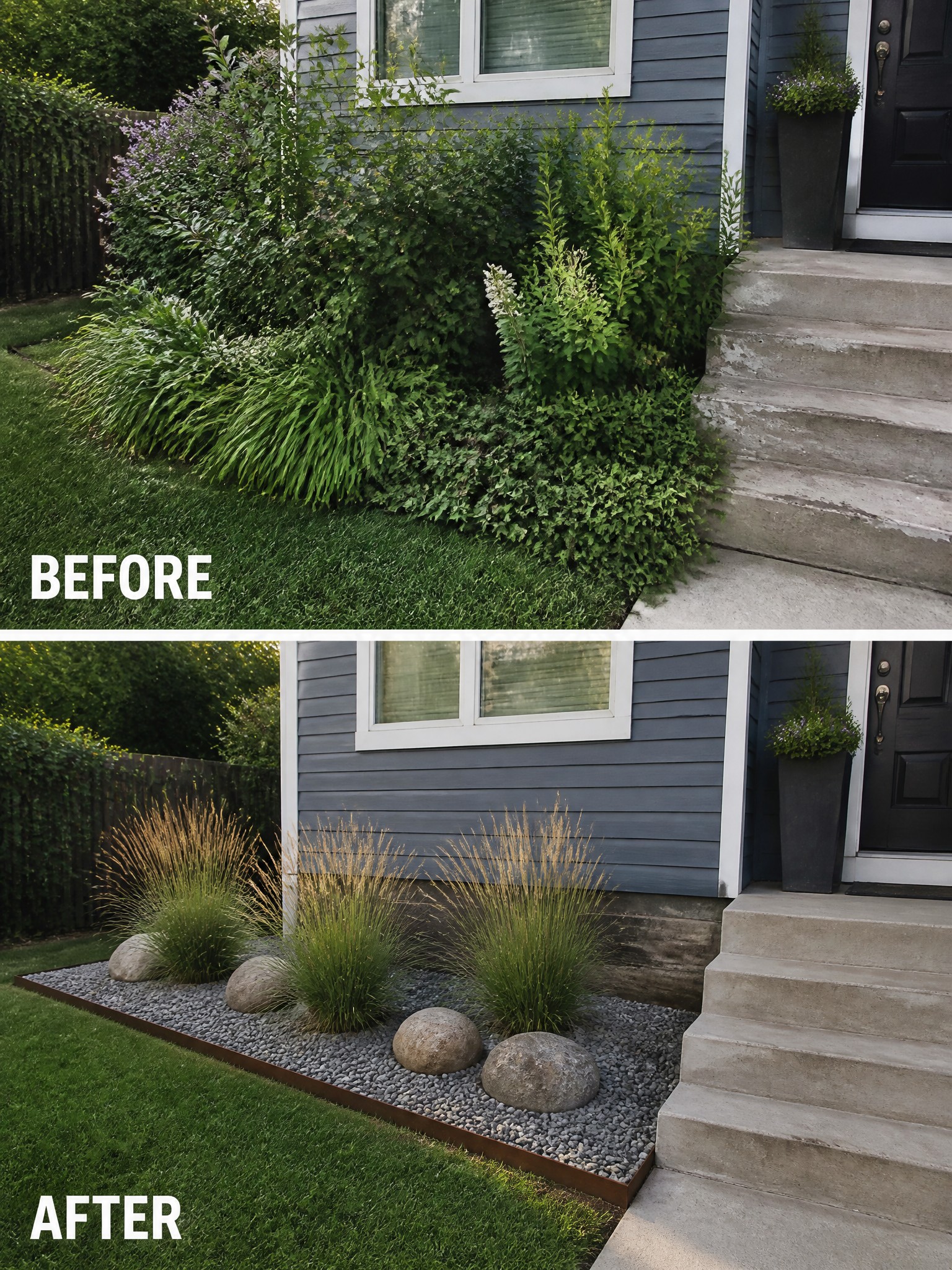
Overgrown shrubs right against the house can make the whole side look neglected. Adding a clean metal edge and filling the bed with gravel creates a sharp line that stops the plants from creeping into the lawn and gives the area a finished look.
This approach suits narrow strips along foundations where you want low upkeep. Use a few larger rocks and simple grasses that stay in place. The edging also helps keep the gravel from scattering onto the grass over time.
Define The Lawn Edge With A Garden Border
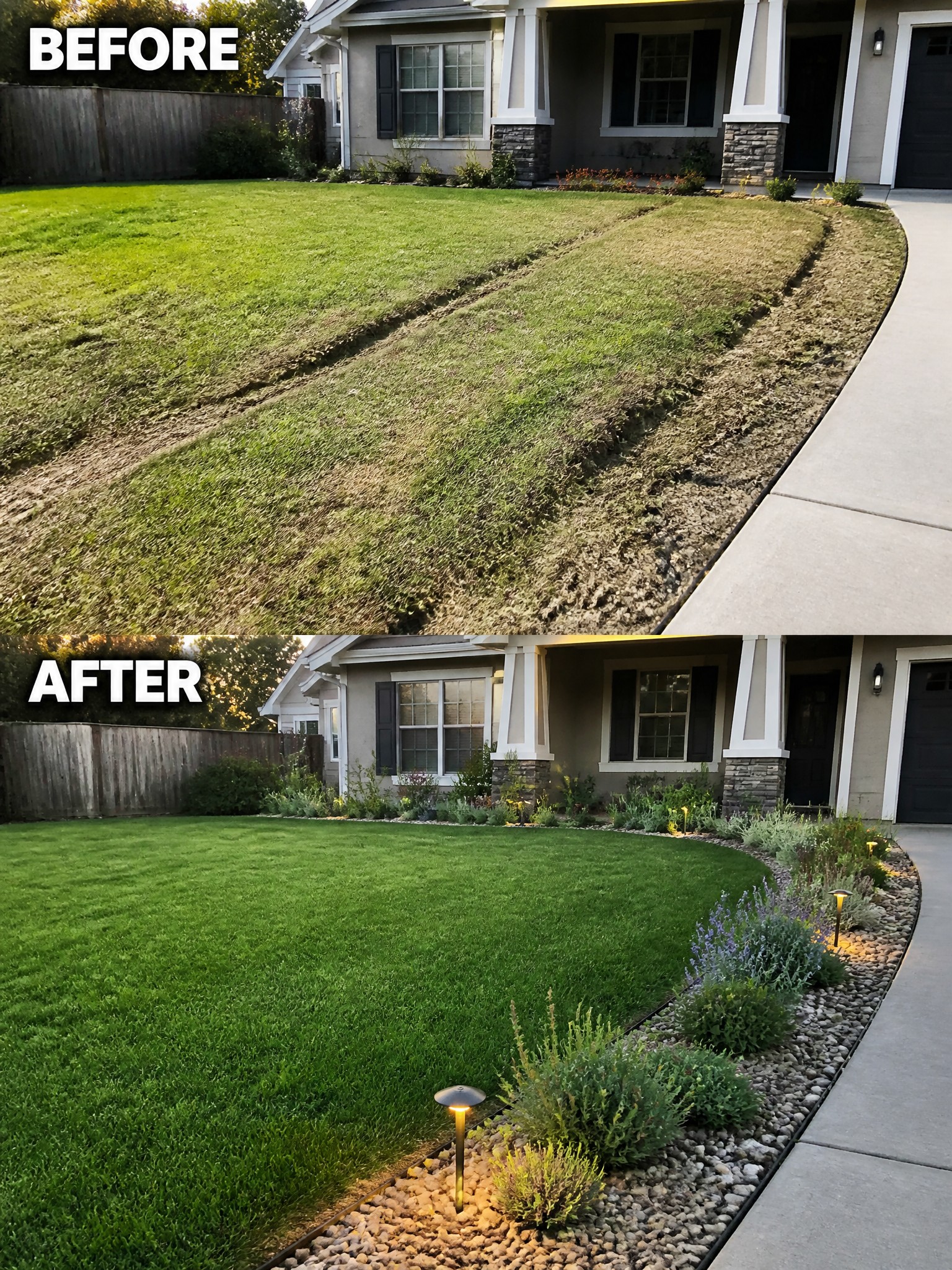
Adding a clear border along the lawn makes the whole yard feel more finished. The before photo shows grass running straight into the driveway with no separation and some worn patches, while the after adds a simple rock edge filled with plants that gives the space a tidy line.
This works best along driveways or house foundations where the lawn tends to look unfinished. Lay out the curve first, then add edging and gravel or rocks to hold everything in place. It stops grass from spreading into the beds and makes mowing much easier.
Frequently Asked Questions
Q: Can I put garden borders in myself if I have never done yard work before? A: Yes, most borders go in with just a spade and some string to mark the line. Dig a shallow trench along the edge and press the material in so it sits flush with the grass. Work in small sections so you can fix any wobbles right away.
Q: What happens if my lawn has a few low spots where water sits? A: Raise those spots with a bit of soil before you set the border so water flows away from the house. The border itself can act as a small dam if you slope the ground slightly toward the lawn. Check after the first rain and add or remove soil as needed.
Q: How do I stop the grass from creeping over the new border every summer? A: Run the mower wheel along the inside edge each time you cut. A quick pass with a string trimmer once a month keeps the line clean without chemicals.
