


I have noticed that a lawn often ends up looking patchy or overgrown when it demands regular mowing and watering just to stay presentable.
Over time I have learned that reshaping the grass area and mixing in sturdier borders can reduce the weekly work while still keeping the yard looking intentional.
I usually try simple edging adjustments first because they create clearer lines without needing new plants right away.
Those early tweaks tend to make the rest of the space feel more settled as other low care elements settle in around them.
Some of the smaller layout shifts end up saving the most time in the long run.
Add Defined Garden Beds For A Cleaner Front Yard
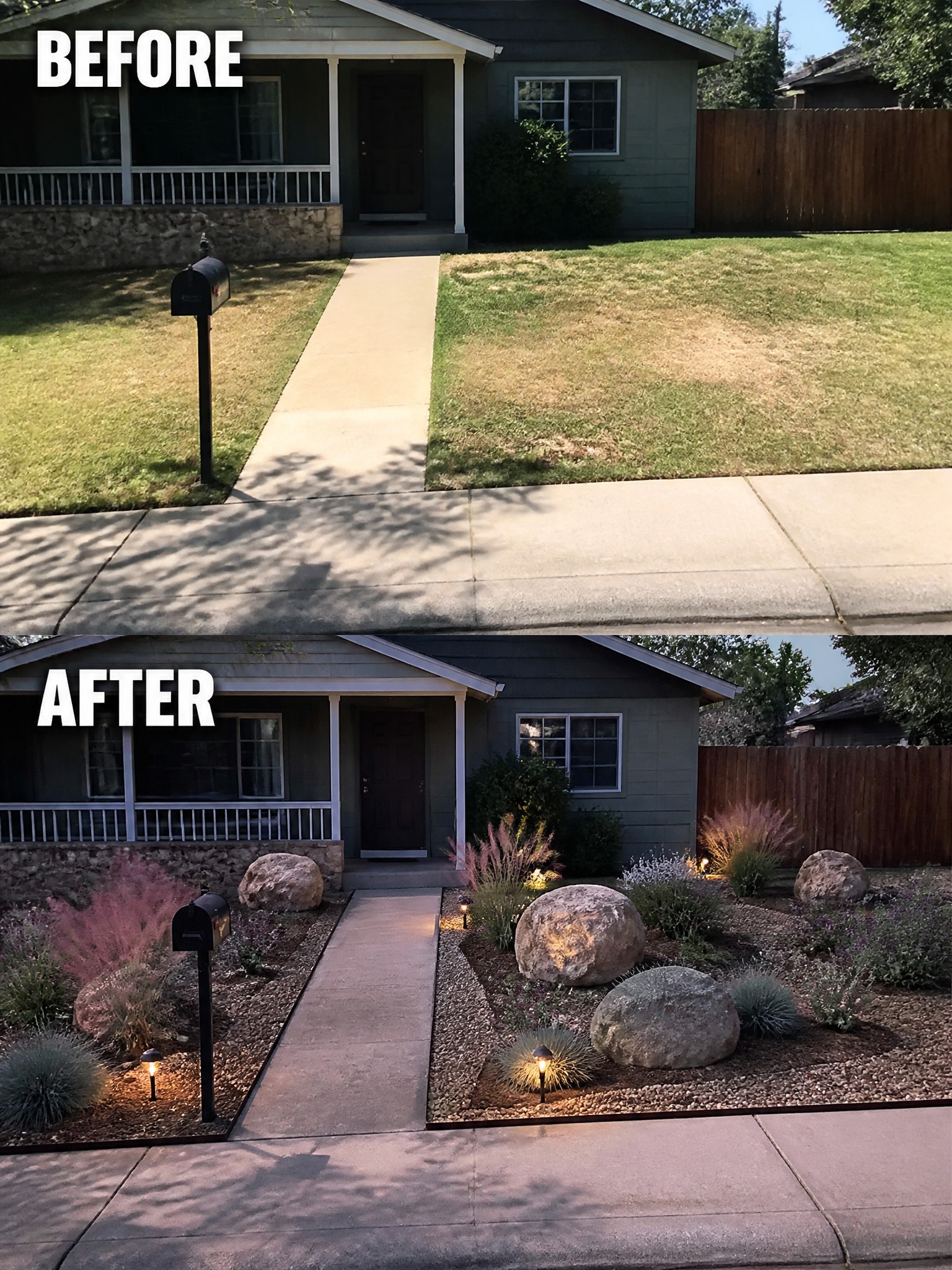
The main change here is swapping patchy grass right along the walk for mulched beds edged with rocks. That single step gives the whole front a finished look without adding much to mow or water.
This works well on small front yards where the lawn never looked great anyway. Keep the beds narrow, use a few larger rocks for weight, and stick to low-water plants so the area stays neat with very little upkeep.
Define A Basic Backyard With Lighting And Borders
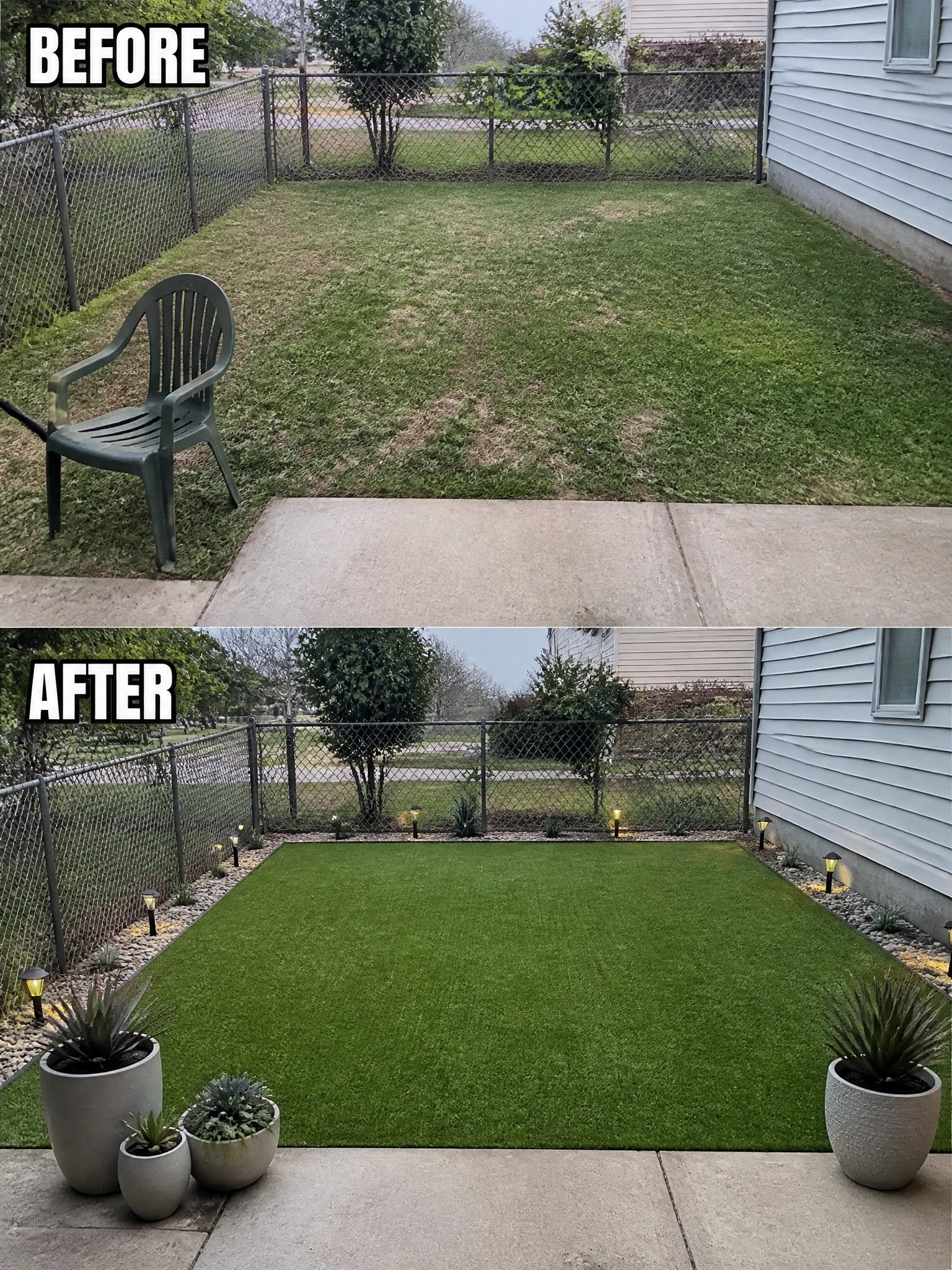
A patchy lawn and plain chain link fence can make a small yard feel unfinished. Switching to a clean turf surface and adding a gravel edge with low solar lights along the fence gives the space clear shape and makes it feel intentional without much ongoing work.
This approach works well for busy homeowners who want a tidy backyard without weekly mowing or heavy planting. Keep the lights spaced evenly, repeat the same border material on all sides, and add just a few larger pots near the house so the area stays open and easy to maintain.
Add Edging To Give An Overgrown Yard Clear Shape
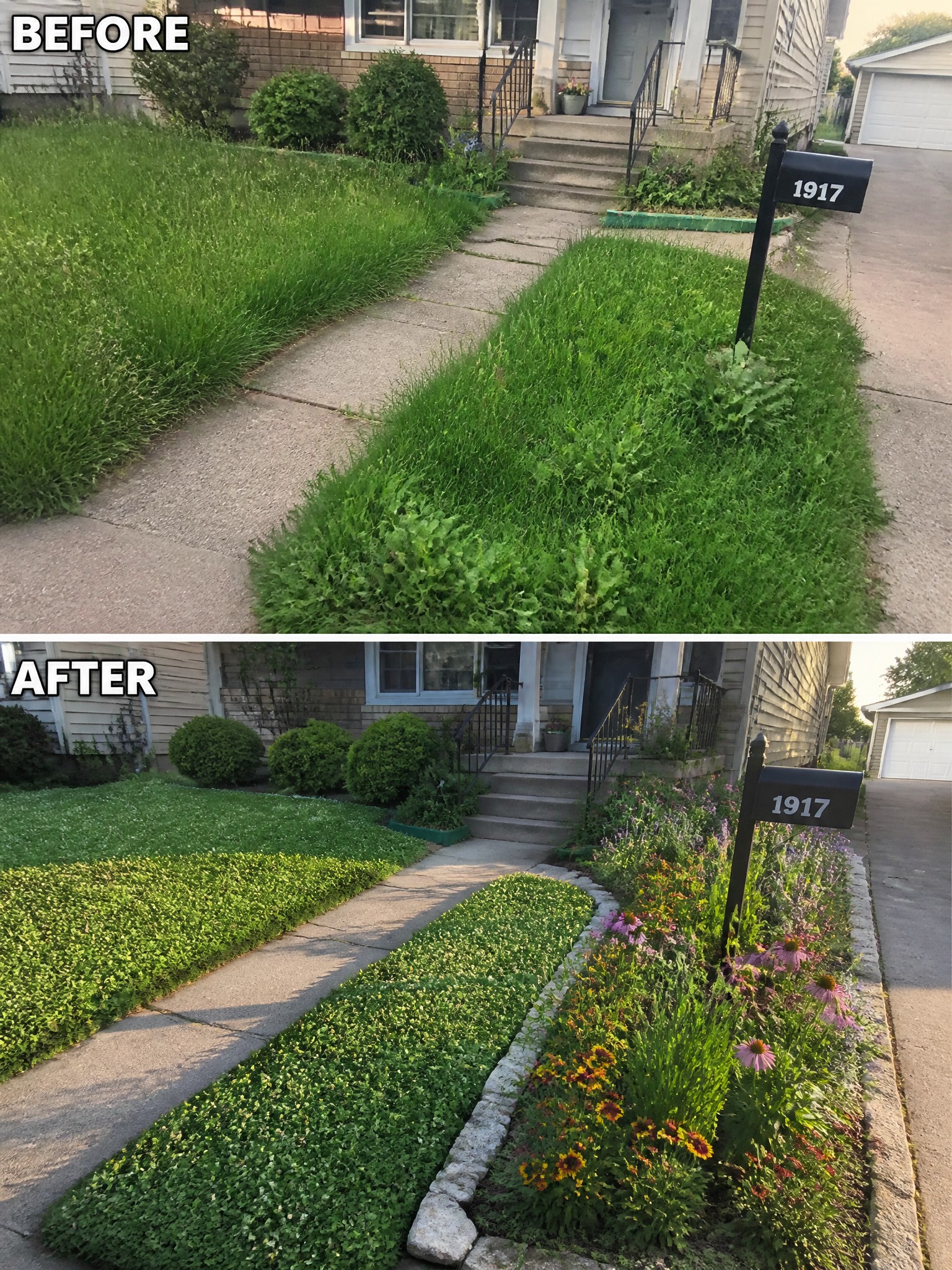
Many front yards end up with grass and weeds running together along the path because there is no clear line between lawn and beds. Adding a simple stone border pulls everything into shape and keeps the lawn from creeping into the planting areas.
This idea works best on small yards where you want order without a full overhaul. Clean up the worst overgrowth first, then lay edging that follows the curve of the walk. Plant the new beds with low-care flowers and keep the lawn sections narrow enough to mow easily.
Terrace A Steep Slope Into Garden Beds

A steep slope often leads to erosion and difficult mowing. Terracing breaks the hill into flat sections held by retaining walls, which makes the space easier to plant and maintain over time. Here the loose dirt and patchy grass became a series of low wooden beds filled with mulch and simple plants, along with a gravel path for access.
This idea fits homes with hilly yards where grass is hard to keep. Build the walls first to hold the soil, then choose low-care plants and mulch to reduce weeding. It works best when you keep the beds modest in height and leave enough room to walk between them.
Add A Path To Give Shape To A Big Backyard
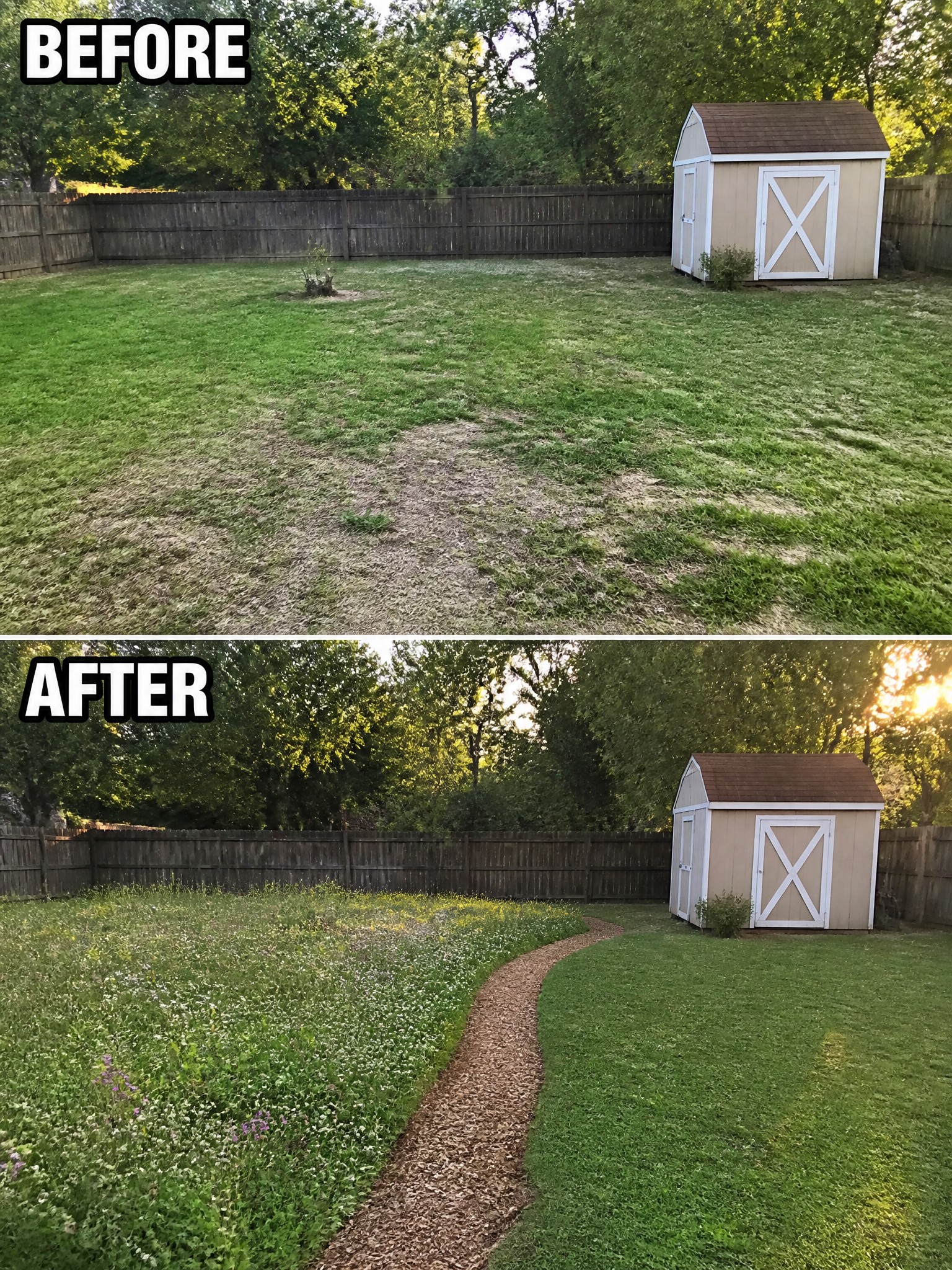
A large backyard often feels unfinished when the grass grows in patches and nothing guides where to walk. Adding a simple gravel path creates a clear route through the space and lets one side stay more natural while the other stays open and mowed.
This idea suits bigger yards that need some structure without losing their open feel. Keep the path narrow so it does not take over the lawn, and let the planting beside it stay low and easy to maintain.
Add Structure To An Overgrown Side Yard
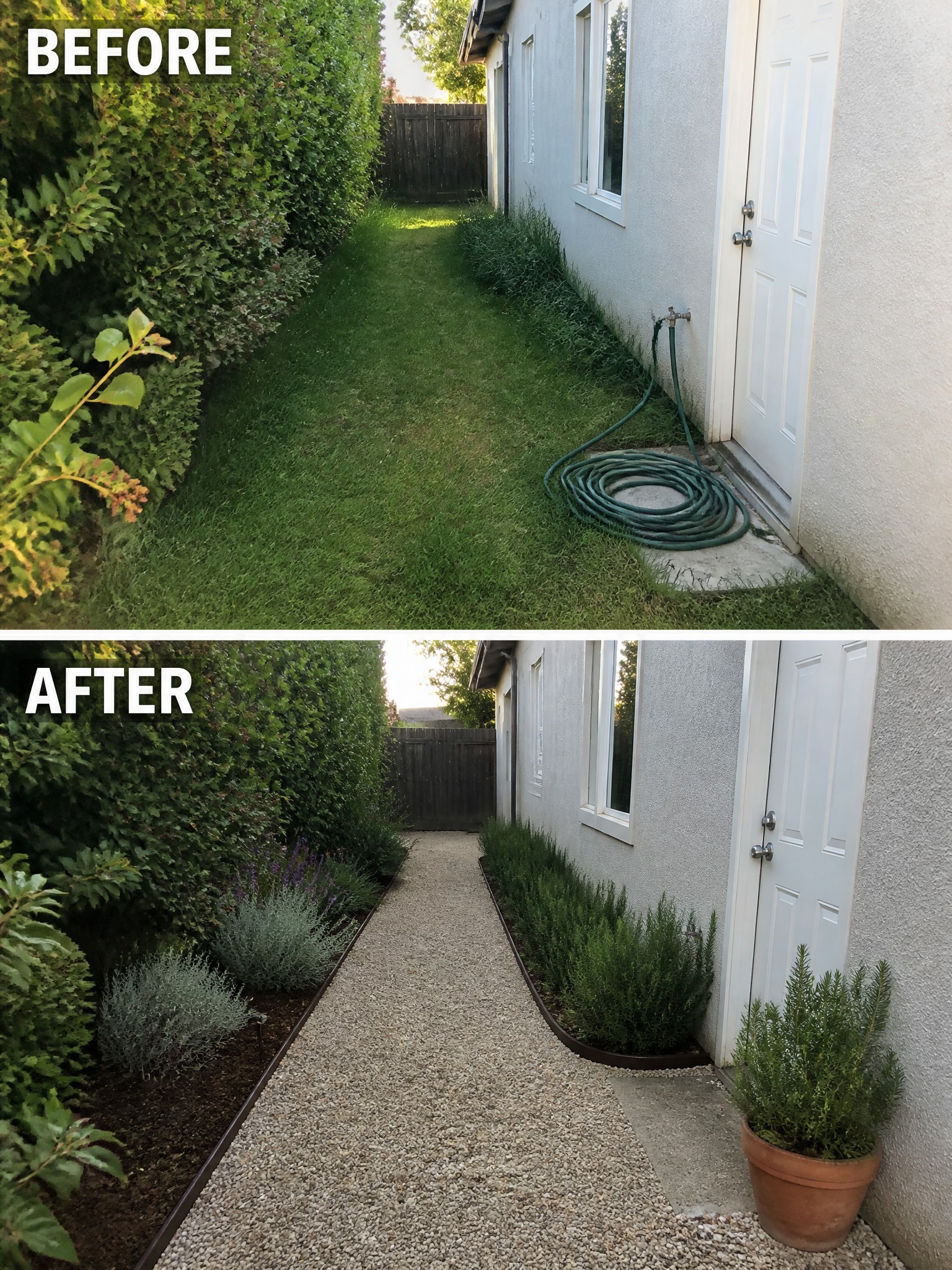
A narrow strip of grass next to the house often turns into a maintenance headache because it is hard to mow and easy to ignore. Replacing the uneven lawn with a gravel path and adding simple edging creates a clean line that separates the walkway from the planting areas. The result feels intentional instead of leftover space.
This approach works well in tight side yards where regular grass is more trouble than it is worth. Lay down solid edging first, then fill the path with gravel and mulch the beds so weeds stay down. Choose a few low shrubs that can handle the shade from the house and you will cut mowing time without losing the green view.
Add Structure To A Neglected Backyard
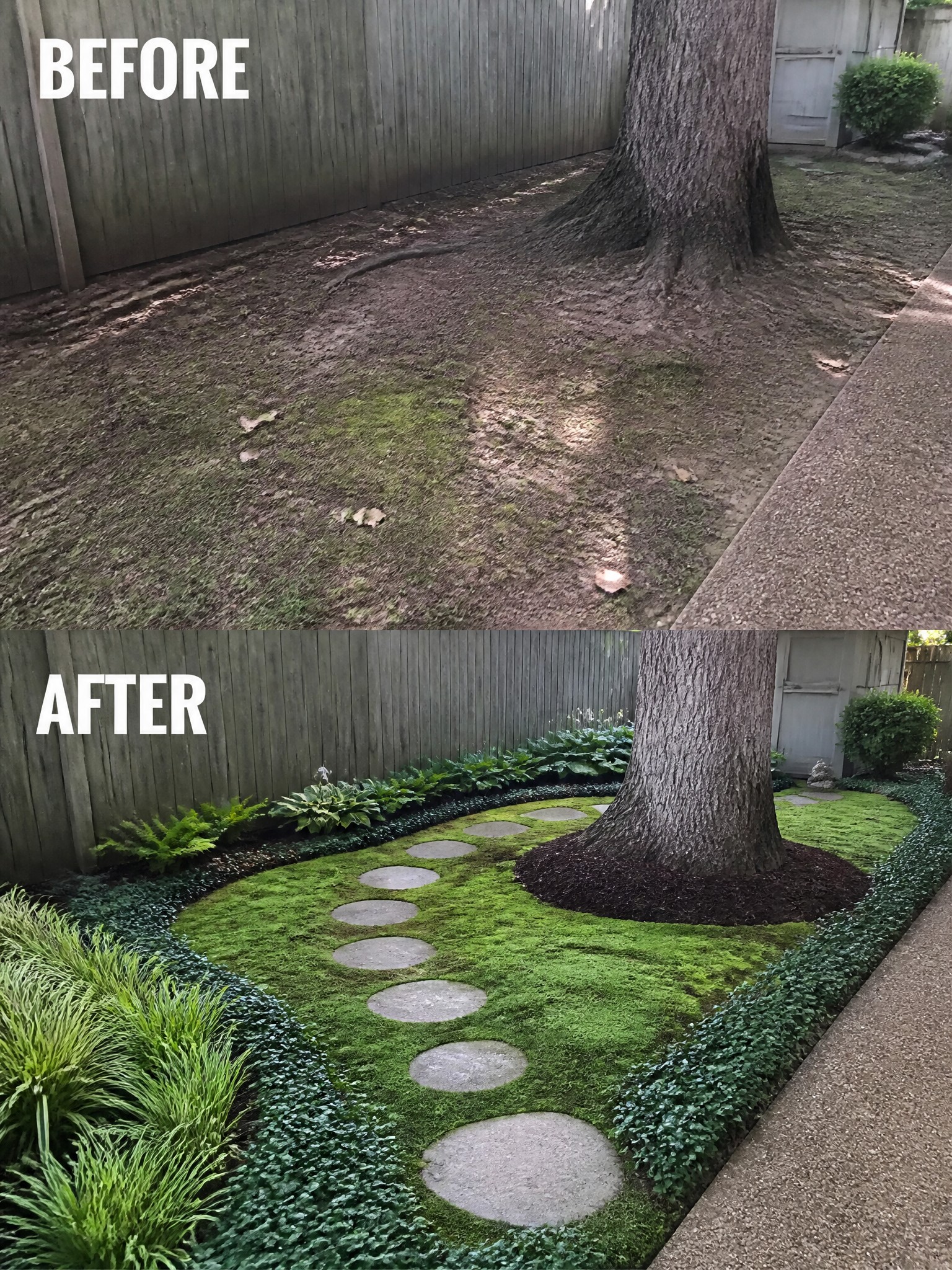
A bare patch of dirt around a big tree can look unfinished and hard to use. Laying down a low ground cover and adding a line of stepping stones gives the space a clear shape and makes it feel more like a finished garden instead of leftover ground.
This idea works well in shady backyards where grass is difficult to keep. Clear the area first, then choose a ground cover that spreads on its own and set stones in a simple path that curves around the tree. Keep the edges neat with a border plant so the whole section stays easy to maintain.
Add Defined Garden Beds To A Plain Front Lawn
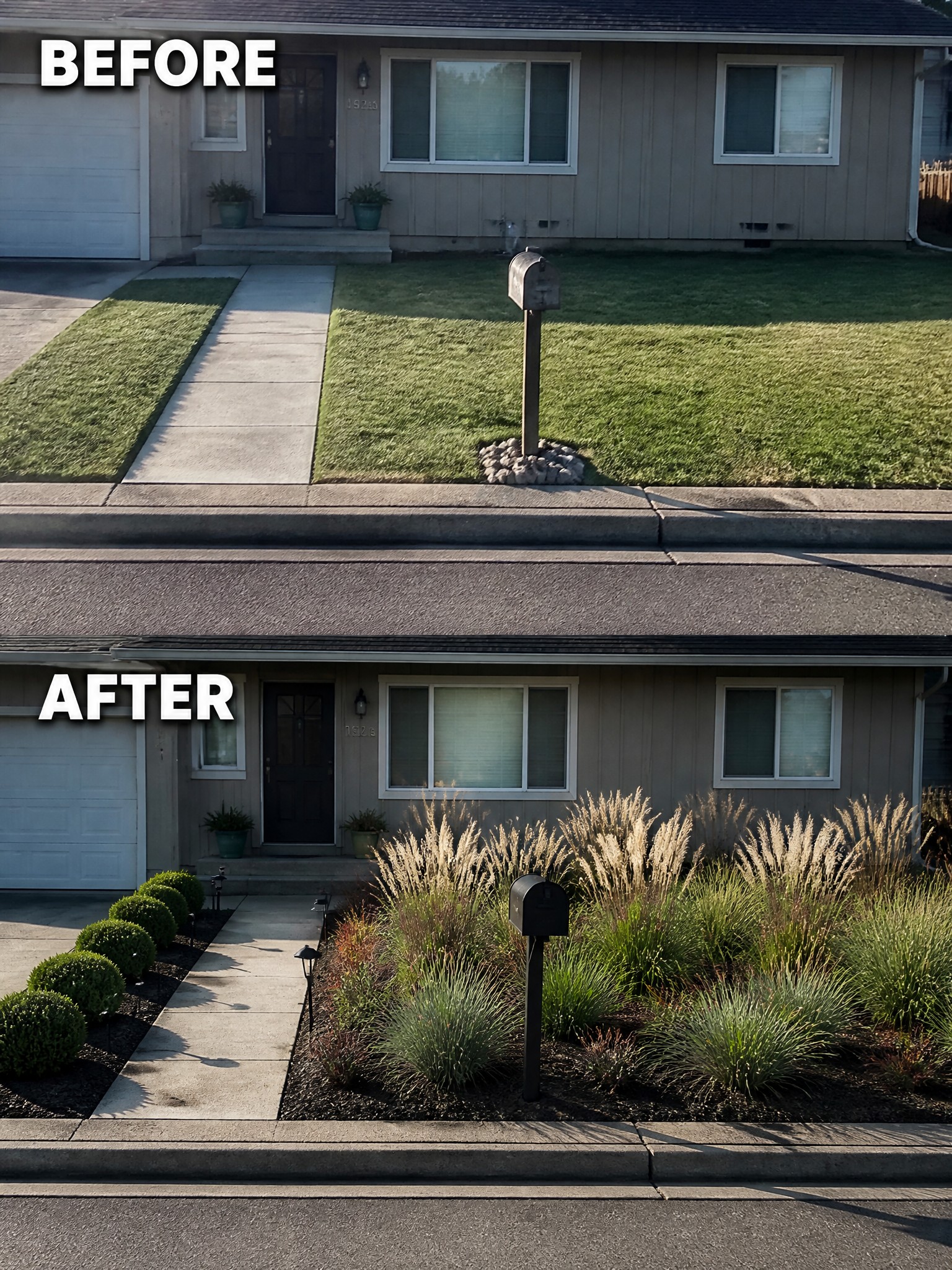
A simple strip of lawn often leaves the front of a house feeling flat. Adding a few mulched beds with shrubs and grasses creates clear lines, frames the walkway, and gives the mailbox area purpose without adding much work.
This approach suits busy homeowners who want structure without constant upkeep. Keep the beds narrow, repeat the same plants for easy care, and leave the rest of the lawn open so mowing stays simple.
Use Pavers To Replace Lawn For Easier Upkeep

A large lawn often means more mowing and watering than many homeowners want to handle. Here the open grass was replaced with a paver patio that creates a flat, usable surface while cutting back on the area that needs regular care.
This idea suits smaller yards where you still want room to sit outside without constant upkeep. Lay the pavers first to define the main space, then add a border of low shrubs so the edges stay tidy with little extra work.
Swap Patchy Grass For Gravel

A messy lawn with bare spots and scattered clutter makes a backyard feel neglected and hard to keep up. Replacing the grass with a layer of gravel creates a flat, tidy surface that needs almost no mowing or watering. The change also lets you place large pots exactly where you want them and run a simple string of lights along the fence for evening use.
This approach works well in small city yards or side areas where grass struggles. Start by clearing the old lawn and adding a weed barrier before the gravel so the surface stays clean longer. Keep the plantings in pots so you can move them easily and avoid permanent beds that need constant trimming.
Add A Path To Give Your Yard Better Structure
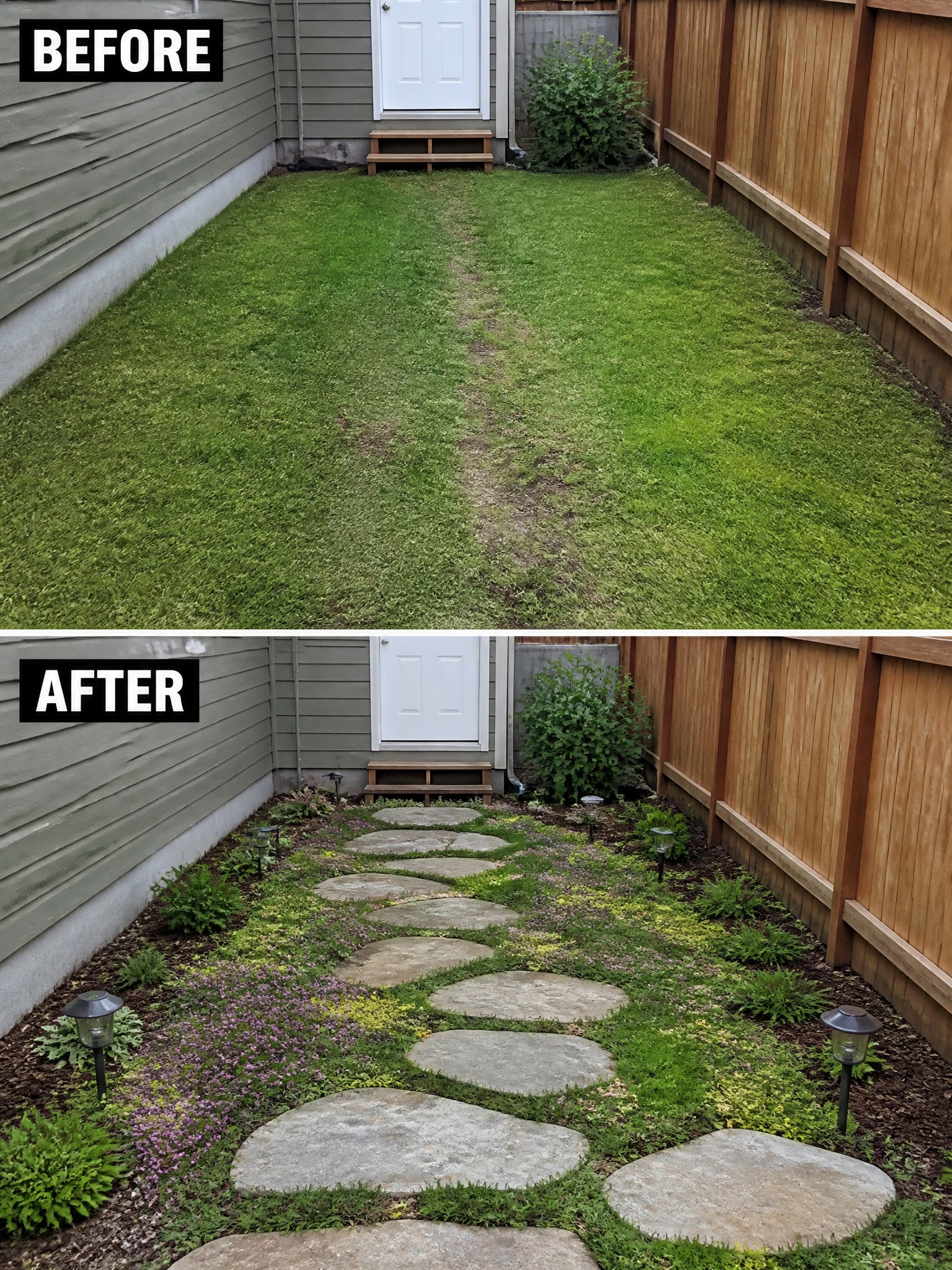
A worn path through the middle of the lawn makes a small yard feel messy and unfinished. Replacing that trampled grass with stepping stones creates a clear route and stops further damage while giving the space a more planned look.
This approach works well in narrow side yards or back areas where you want access without paving everything over. Start by laying out the stones along the natural walking line, then add mulch and simple plantings along the edges so the path feels like part of the landscape instead of an afterthought.
Add Defined Garden Beds For A Cleaner Yard

A flat stretch of grass right up to the house often looks unfinished and needs constant mowing. Adding curved garden beds with a simple rock edge and a mix of low plants gives the front a clear shape and cuts down on the area you have to maintain.
This approach works well on small to medium lots where you want less lawn but still need an easy care solution. Start by marking out beds that follow the natural line of the house and sidewalk, then fill them with hardy perennials and ground cover. The result feels planned without requiring daily work.
Add Structure To A Plain Backyard Lawn
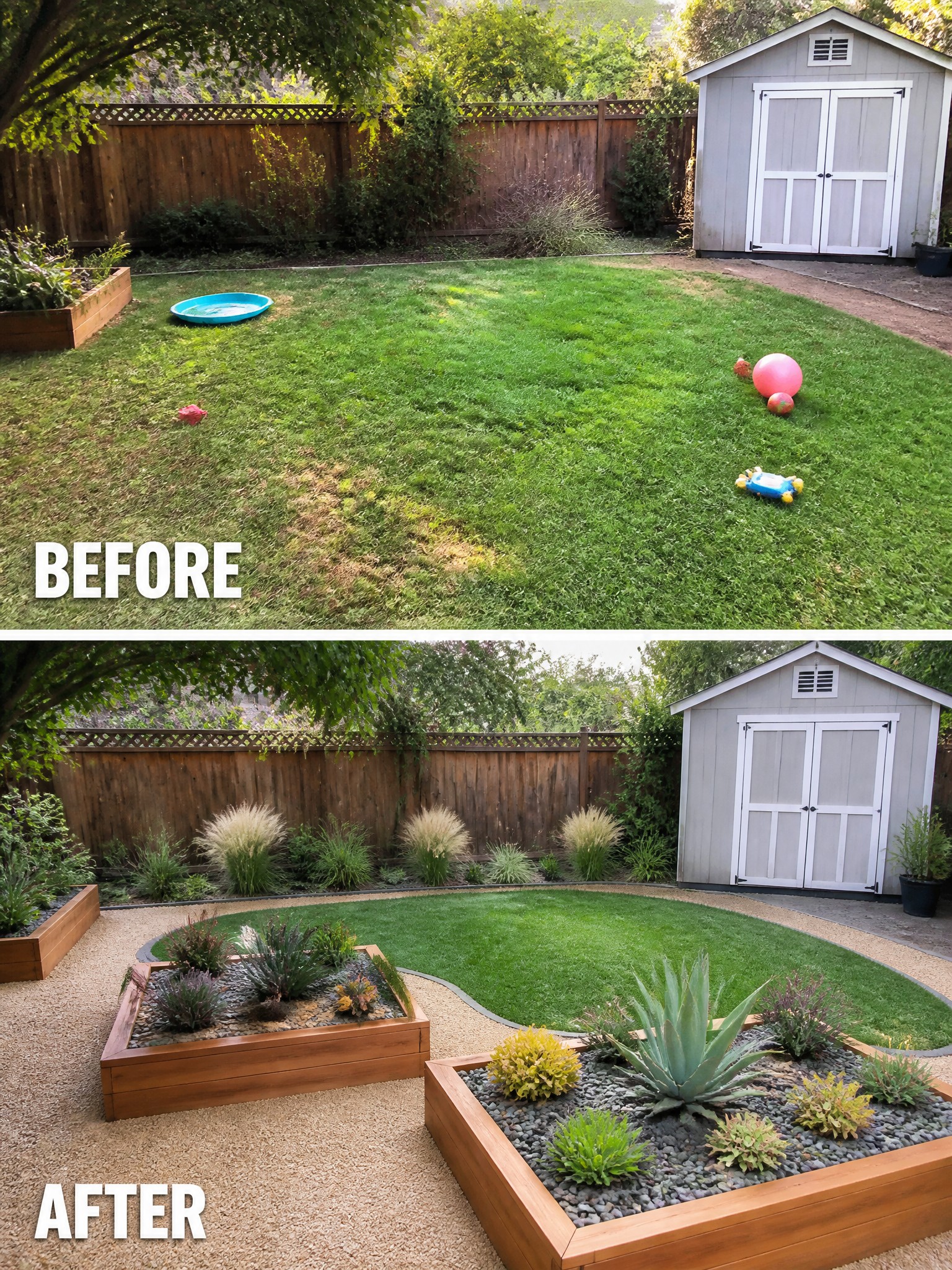
A large open lawn often looks unfinished and takes more upkeep than it seems worth. Here the grass was cut back into a simple oval shape, then edged with gravel and framed by raised wooden beds. The beds give the space clear boundaries and reduce the amount of lawn that needs regular care.
This idea suits busy homeowners who want a yard that feels planned but stays low maintenance. Start by marking out the lawn area you actually use, then add a border material like gravel to separate it from planting zones. Raised beds let you group plants that need similar water and make future changes easier without disturbing the whole yard.
Add Defined Garden Beds To A Plain Front Lawn
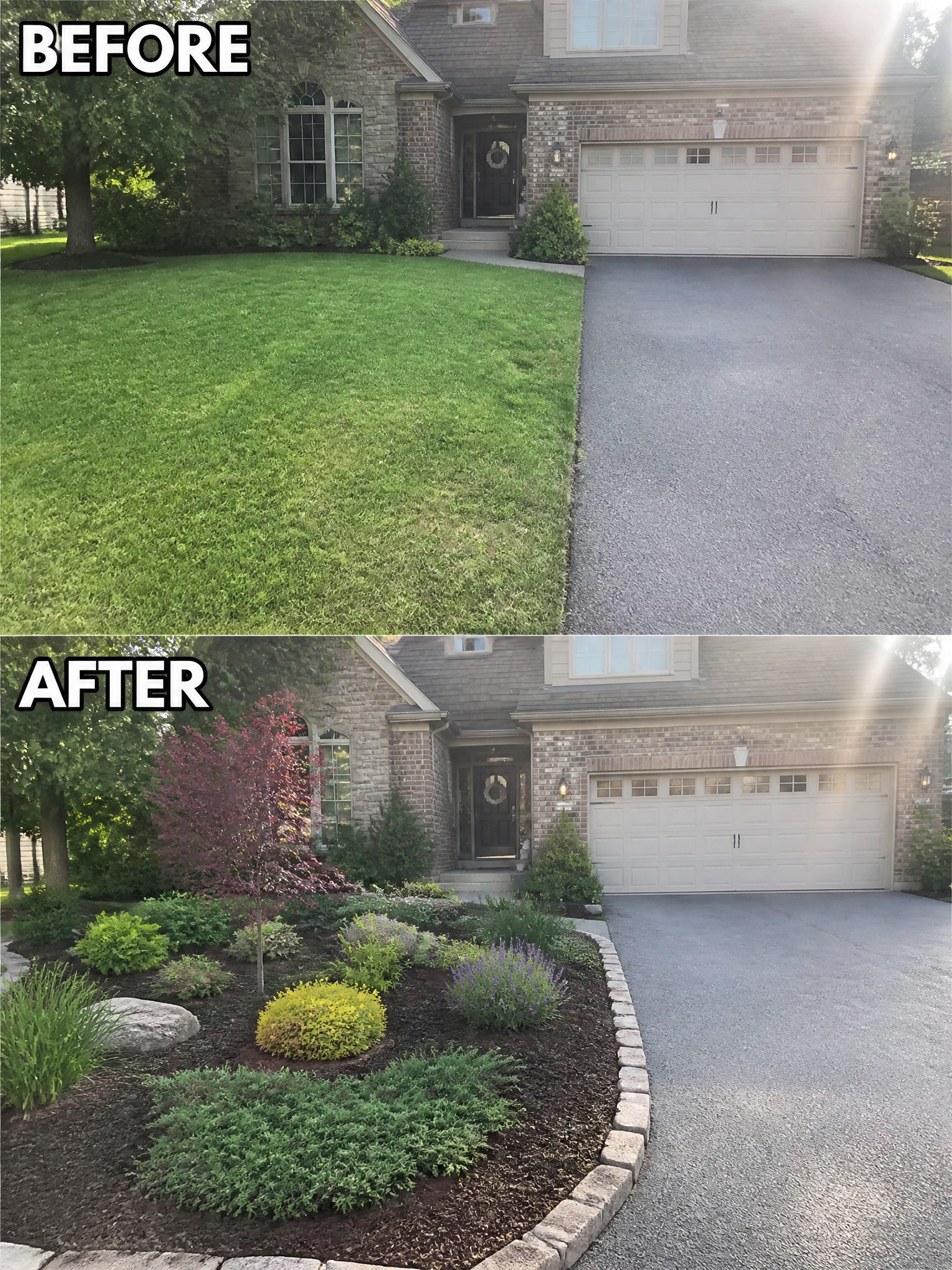
A wide stretch of grass next to the driveway often looks unfinished, even when the lawn itself is healthy. Adding a curved bed edged with stone, filled with mulch, and planted with a few shrubs and a small tree gives the space clear shape and breaks up the flat look without adding much to weekly chores.
This approach suits homes where time is short because the hard edge keeps grass from creeping in and the mulch helps hold moisture. Start small along the driveway or near the front walk, choose plants suited to your light, and keep the bed depth under four feet so mowing stays simple.
Add Structure To An Overgrown Yard Corner
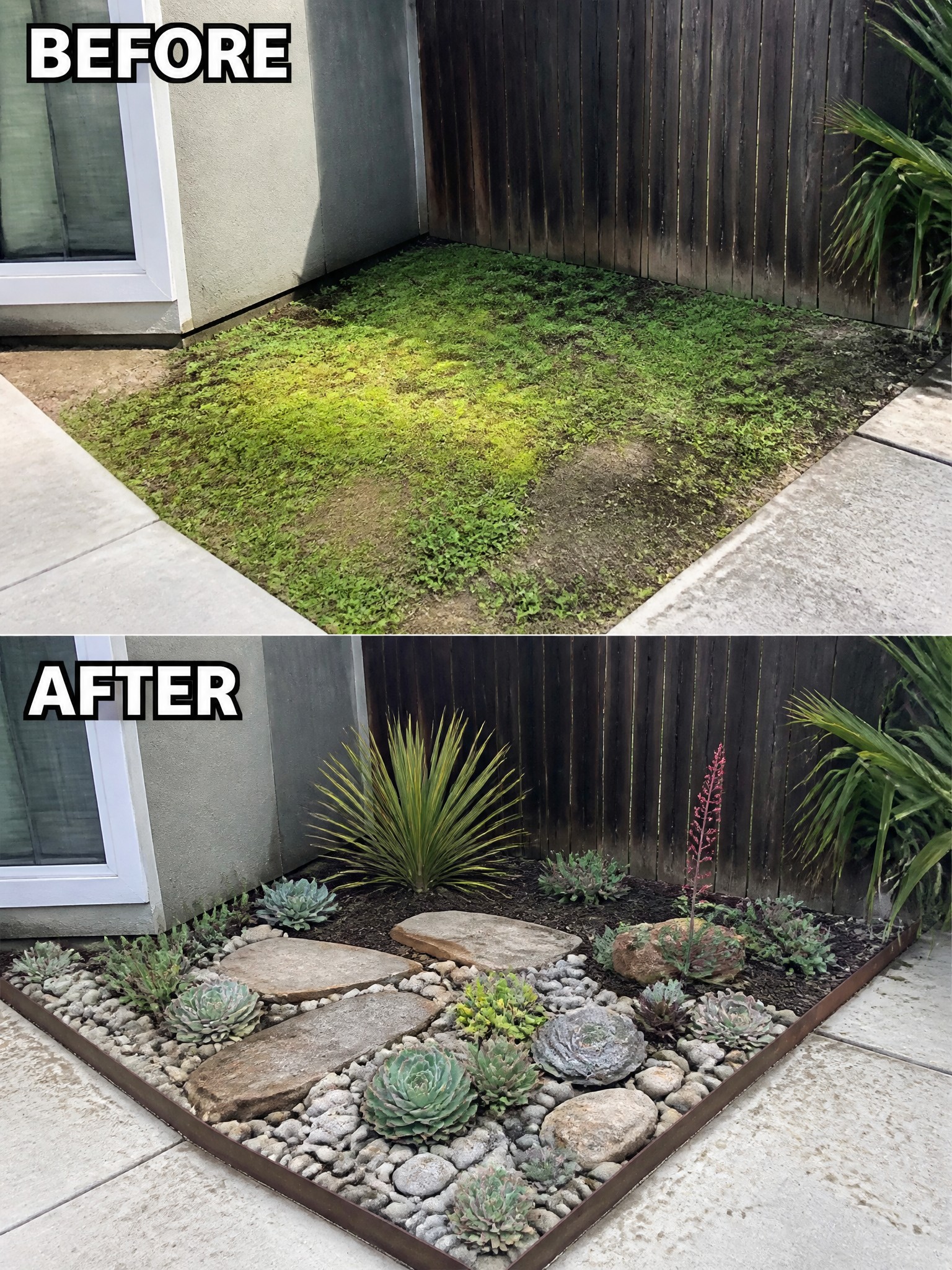
A weedy patch next to the house can feel like wasted space until you give it clear edges. Adding a simple metal border, mulch, and a few stepping stones turns the area into a planted bed that looks intentional instead of neglected. The succulents and gravel fill the space without needing constant mowing or trimming.
This approach works well in small side yards or corners where grass struggles. Start with the edging and a base layer of mulch or gravel before adding plants. It keeps the area looking tidy with minimal weekly work and stops weeds from spreading into the rest of the yard.
Replace Patchy Lawn With Gravel Beds
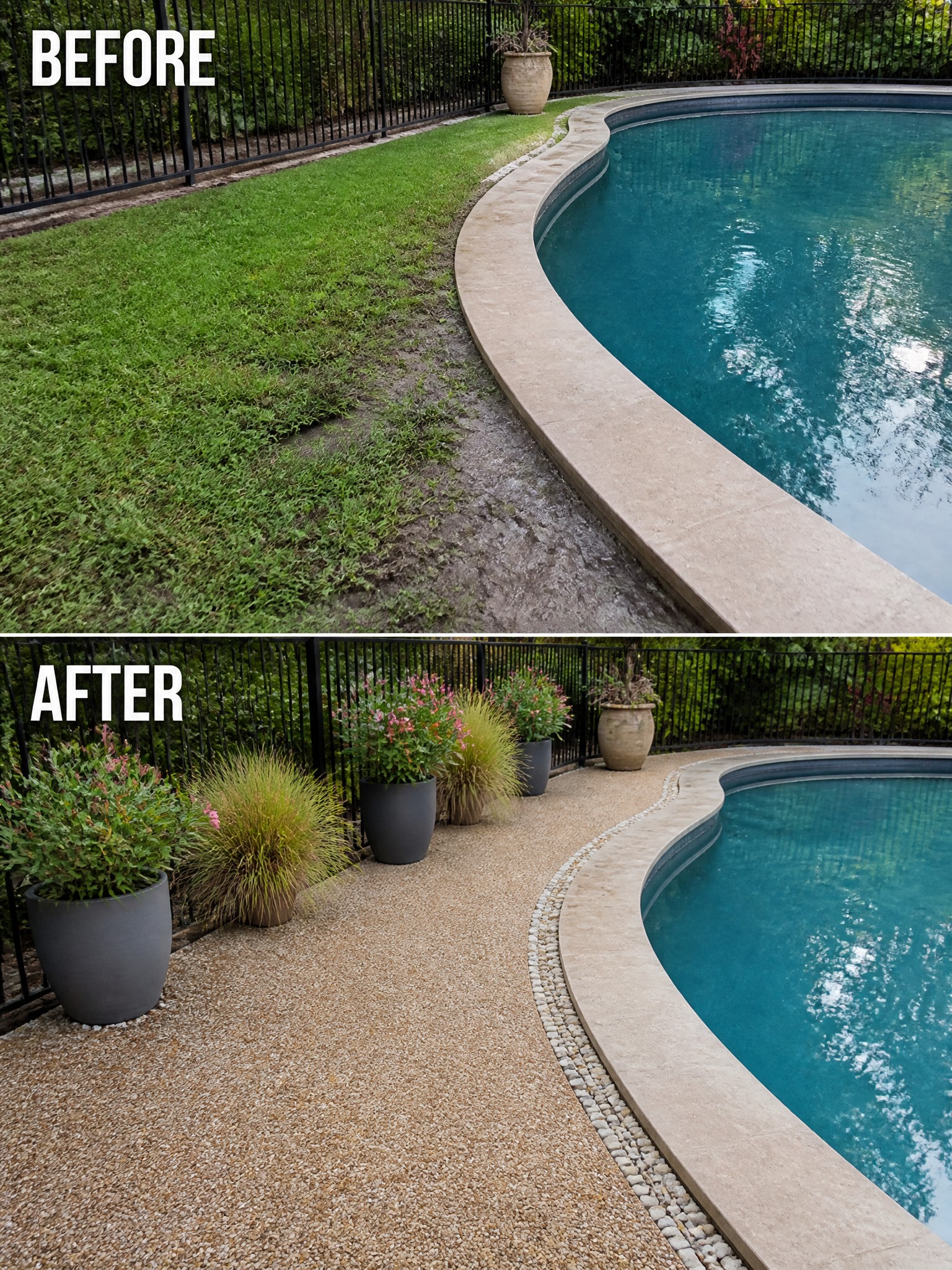
The strip of grass right next to this pool was thin, muddy in spots, and hard to mow without getting too close to the water. Switching that area to gravel created a clean edge that stays neat without regular watering or trimming. A few large pots along the fence add some planting without needing new garden beds dug in.
This approach works well around pools or other spots where grass struggles to grow evenly. It keeps the space looking finished while cutting down on weekly yard work. Busy homeowners can start with just the problem areas instead of redoing the whole lawn at once.
Define Lawn Edges With Gravel Beds

A ragged grass edge next to a driveway quickly looks unkempt and is hard to mow cleanly. Adding a simple gravel bed with metal edging creates a clear border that stays neat with very little work.
This idea suits homes where the lawn meets concrete and the goal is low maintenance. Start with the edging and gravel first, then add a few low shrubs and easy perennials so the bed looks intentional without needing frequent care.
Define An Empty Backyard With A Gravel Fire Pit Circle
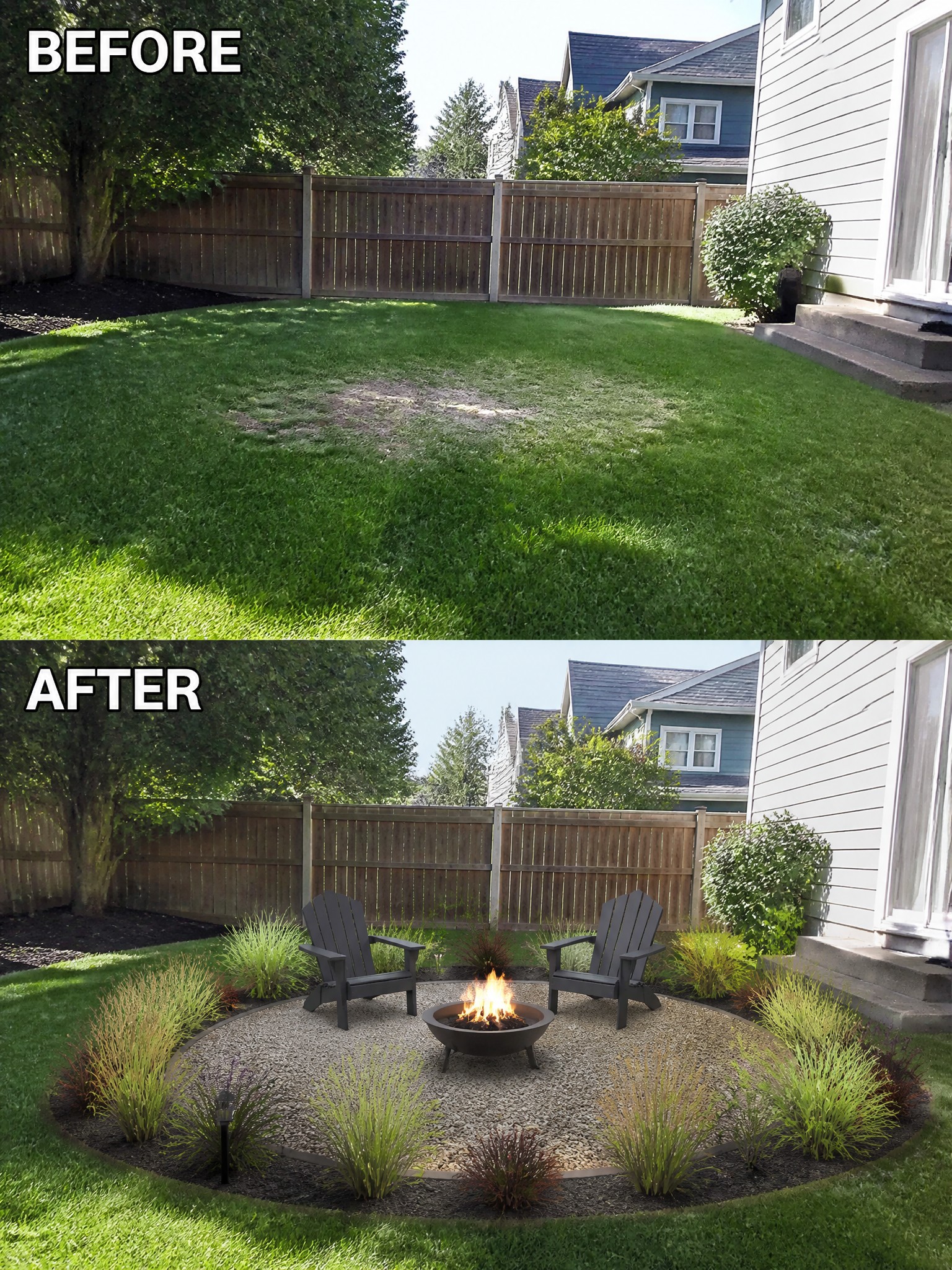
A flat lawn often feels like wasted space once the grass is cut. Adding a simple gravel circle with a fire pit and a ring of low plants gives the yard one clear spot to use. The change turns open grass into a destination without needing new hardscaping across the whole yard.
This works best in medium backyards where you want one main gathering area rather than multiple zones. Keep the circle size realistic so two or three chairs fit with room to walk around the pit. Choose tough grasses and shrubs that stay neat with little trimming, and edge the gravel so it stays contained.
Define A Narrow Side Yard With A Paver Path

A narrow side yard often ends up as an afterthought, with patchy grass and loose gravel making it feel unfinished. Laying down concrete pavers in a straight line, bordered by narrow strips of turf and surrounded by gravel, gives the space clear purpose and makes it much easier to walk through without tracking in mud.
This approach works well in tight areas where a full lawn is hard to maintain. Focus first on leveling the ground and setting a solid base for the pavers so they stay even over time. Keep the rest of the borders simple with gravel or low edging to reduce weeding and mowing.
Define Front Yard Edges With Planting Beds
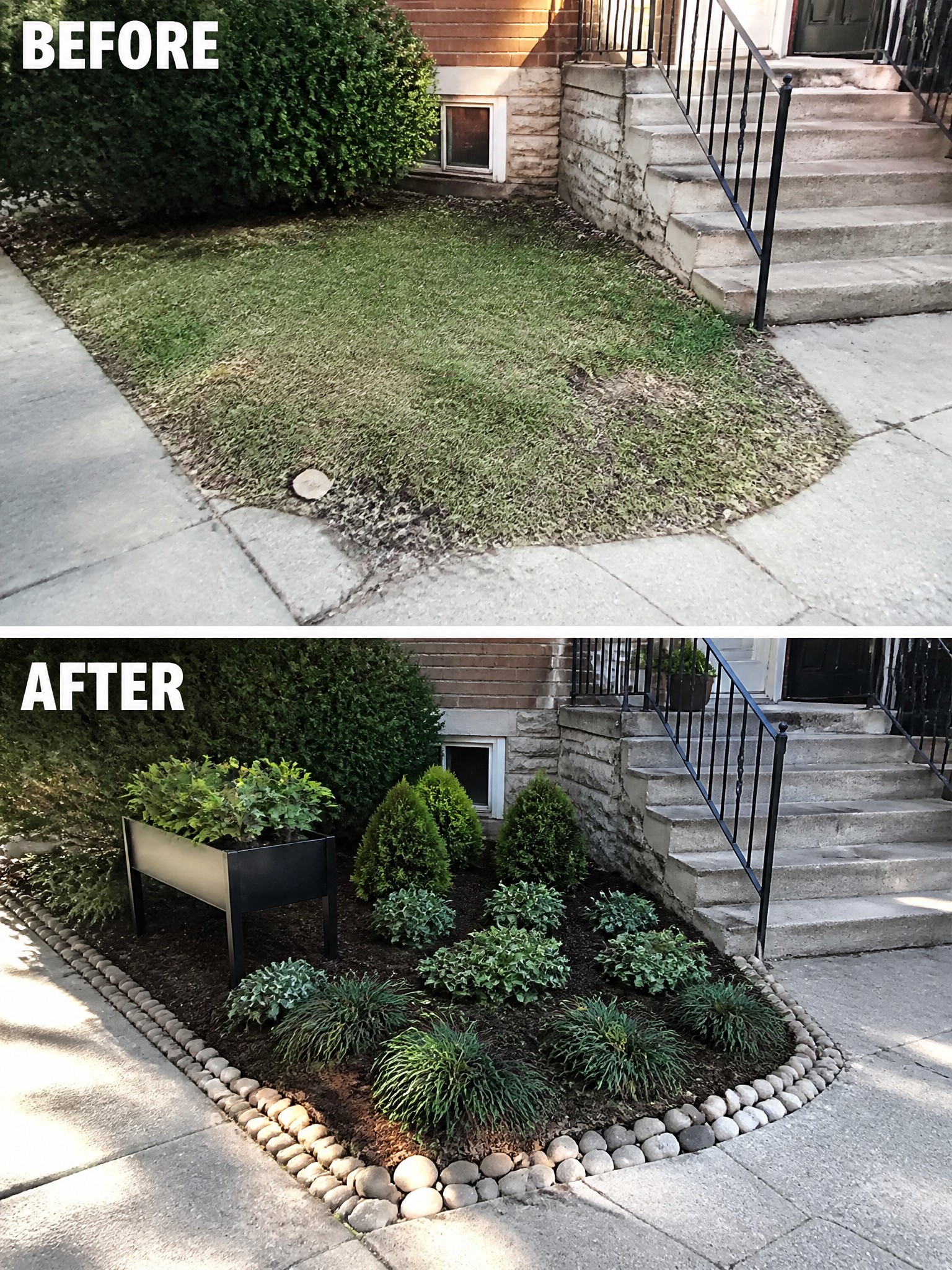
A narrow strip of patchy grass right next to the steps is tough to mow and always looks a little messy. Replacing it with a mulched bed, a few low plants, and a simple raised planter gives the area clean lines and removes the need for constant trimming.
This idea suits small front yards or side entries where grass never grows well. Lay down a basic stone border first, spread mulch to keep weeds down, and stick with compact evergreens and ground covers that need little watering once established. The raised planter adds height without taking up much space.
Add Defined Garden Beds To A Simple Front Yard

A plain front lawn often looks unfinished next to the house. Here the open grass was replaced with clear planting areas edged in gravel and mulch, which gives the whole yard a planned look while cutting down on bare space that needs regular mowing.
This idea works best on smaller or narrow front yards where you want low effort. Mark out beds along the sidewalk and driveway first, then use gravel to separate the planted zones from the remaining lawn. Choose tough shrubs and ground covers so the beds stay neat with only occasional trimming.
Frequently Asked Questions
Q: Where should I begin if I only have a weekend to get something done? A: Pick one simple change like laying down mulch in problem spots. This cuts down on weeding right away and looks neat without much effort. You can build from there once you see what works.
Q: Will these ideas hold up if my dog runs around the yard a lot? A: Go for hardy ground covers that bounce back from traffic. They need less repair than regular grass after play sessions. Test a corner first to match your dog’s habits.
Q: How do these changes look in winter when everything goes dormant? A: Many options like rocks or evergreen shrubs keep the space interesting year round. You avoid the brown patches that grass often shows. Focus on structure over color for those months.
