

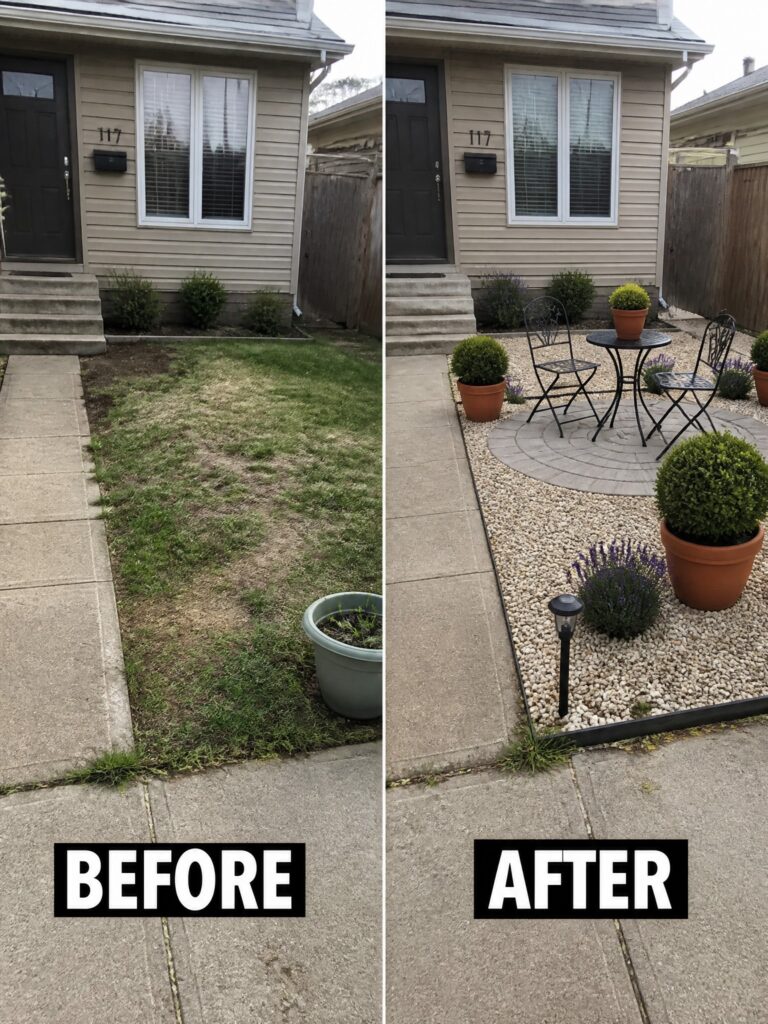
Small yards with limited lawn space can easily start to look patchy or forgotten when daily life takes over.
I have found that focusing on the shape of the grass and a few clear edges often makes the biggest difference in how the whole area feels.
Adding structure through simple plantings or pathways tends to create usable spots without crowding everything in.
In my own experience I would test edging and a bit of reseeding first before trying anything more involved.
Some of these approaches show how even compact lawns respond well when the changes build gradually over a season or two.
Define A Small Yard With Gravel And Pavers
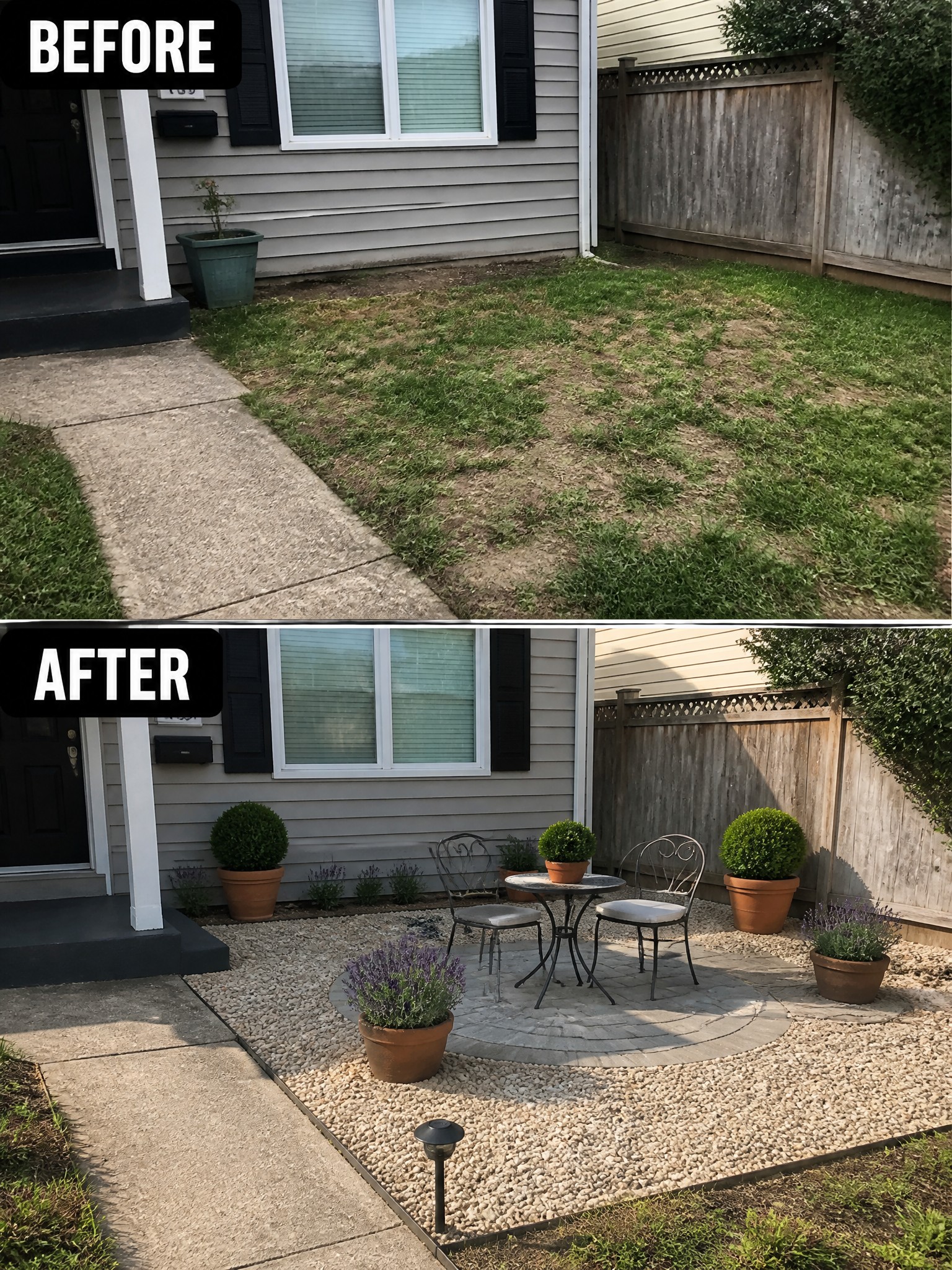
A patchy lawn often leaves a small backyard feeling unfinished and hard to use. Laying down gravel over the bare spots creates a clean, level surface right away, while a simple circle of pavers gives one clear spot for a table and chairs. The change turns wasted space into something that actually works for sitting outside.
This approach suits compact yards where grass struggles to grow evenly. Keep the gravel contained with edging so it stays neat, and use pots for plants so you can move them as needed. Start with the hard surface before adding too many extras, and leave enough open gravel so the area does not feel crowded.
Define A Narrow Side Yard With Raised Beds
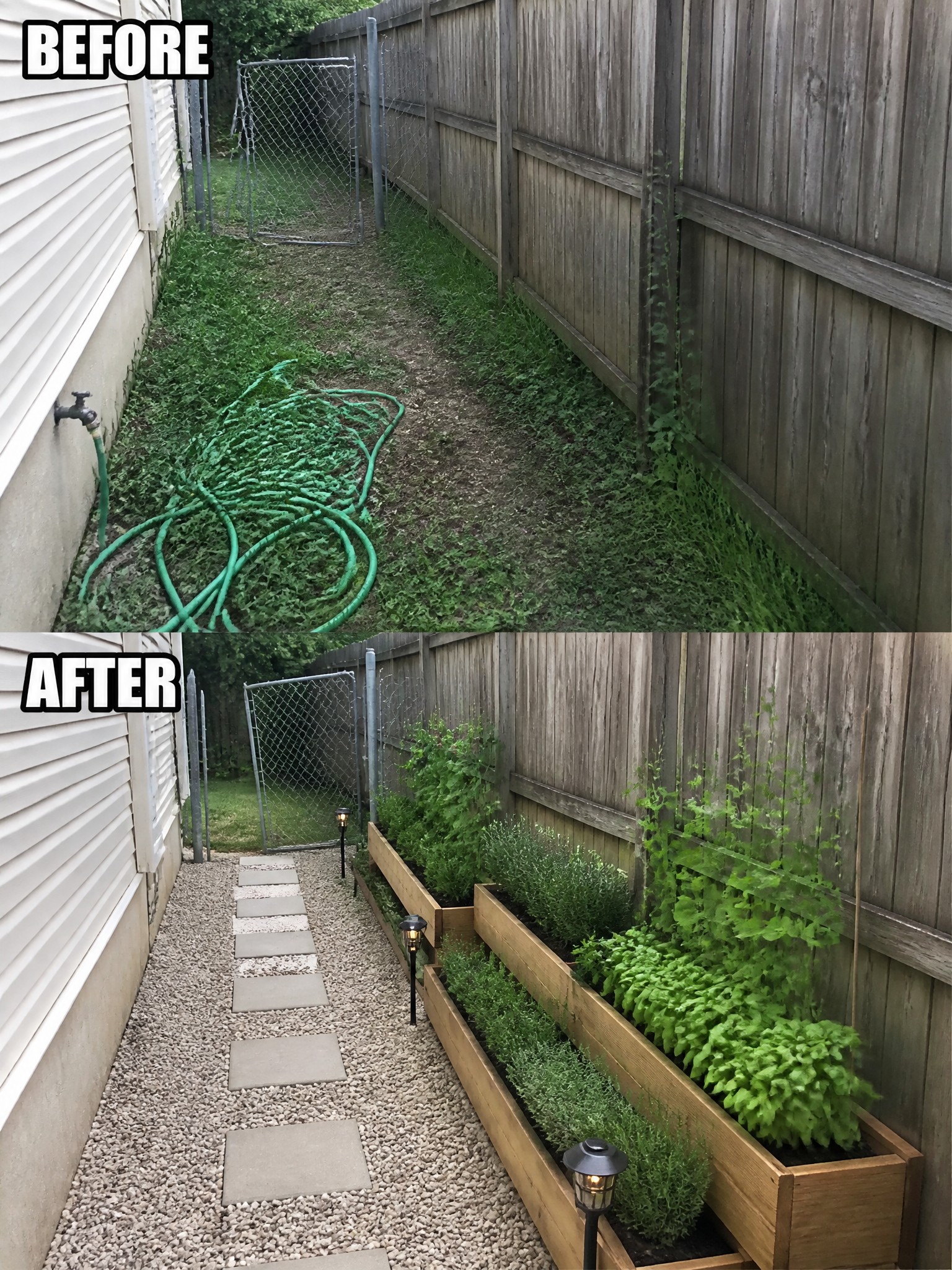
A narrow side yard often turns into an overgrown strip that feels more like a problem than usable space. Adding raised garden beds along the fence creates clear structure and gives the area a purpose without needing a lot of width.
This idea suits compact yards especially well because the beds keep plants contained and the gravel path with stepping stones keeps the walkway practical. Focus on one side of the fence first so the space stays open enough to walk through easily.
Frame A Small Yard With Raised Garden Beds
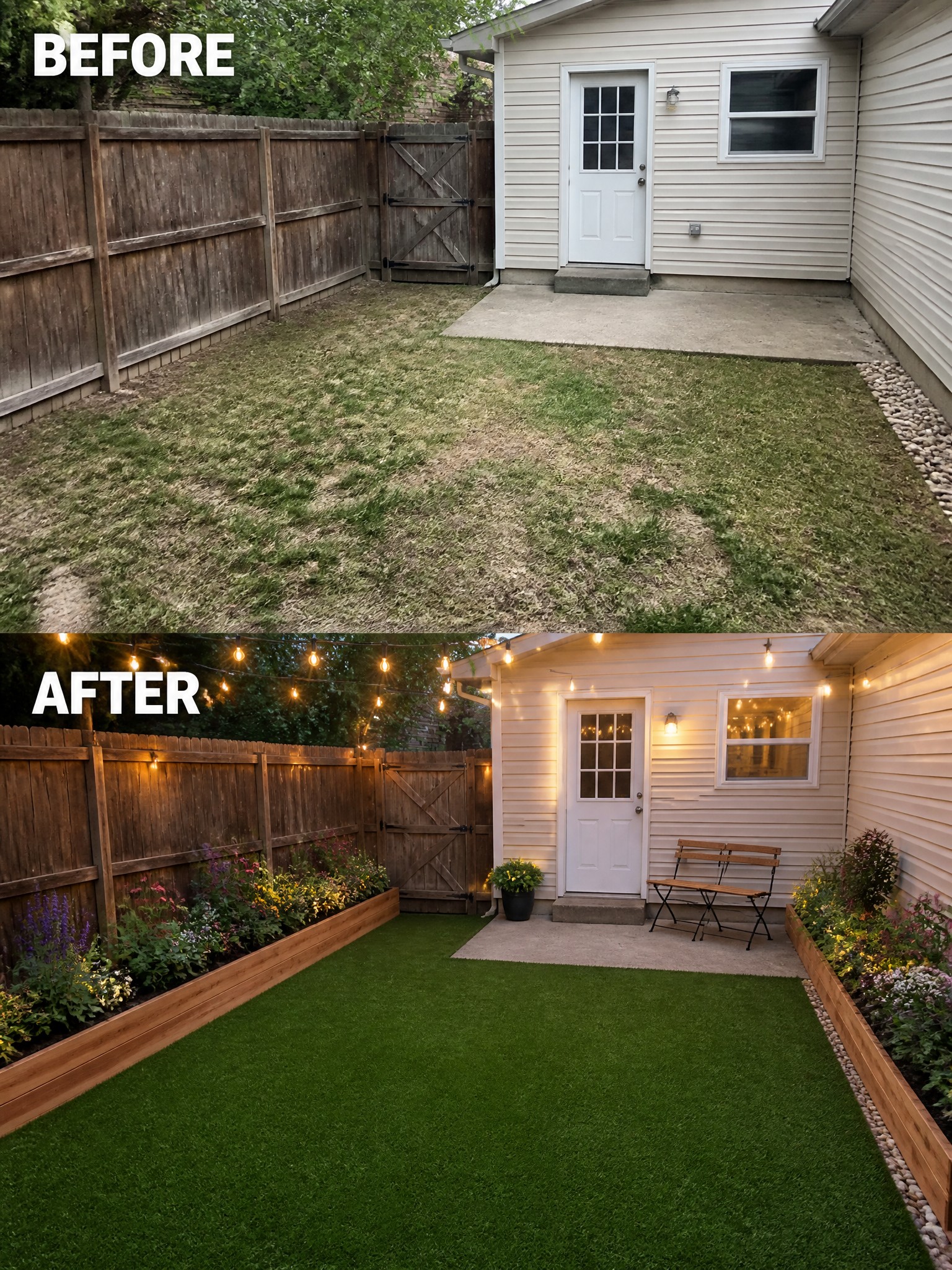
One simple way to improve a small backyard is to add raised garden beds along the edges. The patchy grass was replaced with turf and the beds gave the space clear boundaries without taking over the open area.
This works best in compact yards where you want planting but still need room to walk and use the lawn. Keep the beds low and fairly narrow so the space stays open and easy to maintain.
Turn A Bare Backyard Into A Simple Seating Area
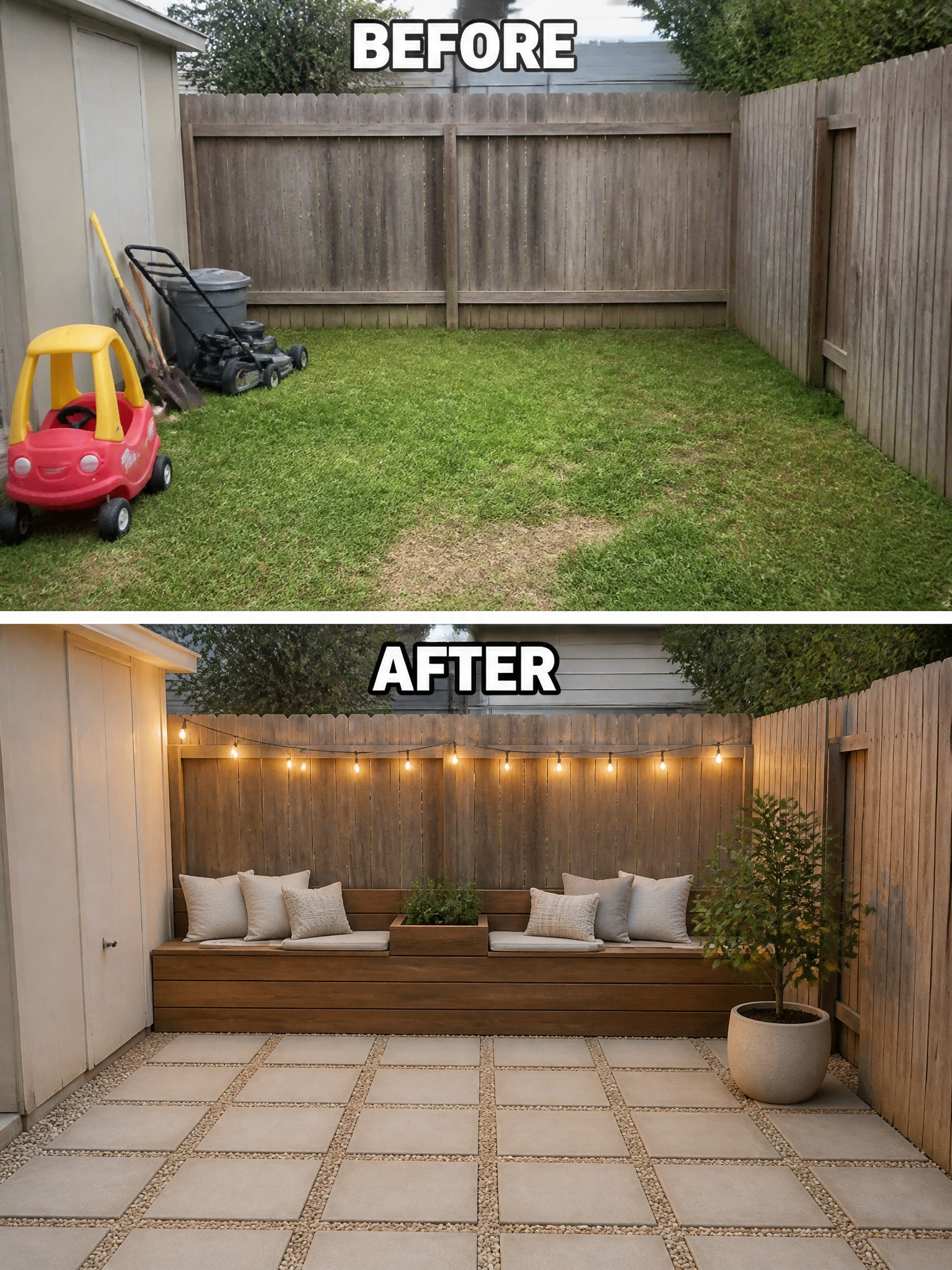
A small yard often stays unused when it is just grass with no clear spot to sit. In this case the open lawn was replaced with pavers that form a level patio, and a long wooden bench was added along the fence to give people a place to rest. String lights above the bench make the space feel finished and ready for evening use.
This approach works well in compact yards where every square foot counts. Start with the hard surface and one main seating piece before adding plants or extras. Keep the bench low and built-in so it does not crowd the space, and leave enough open paving for chairs or a small table if needed.
Add Structure To An Overgrown Backyard
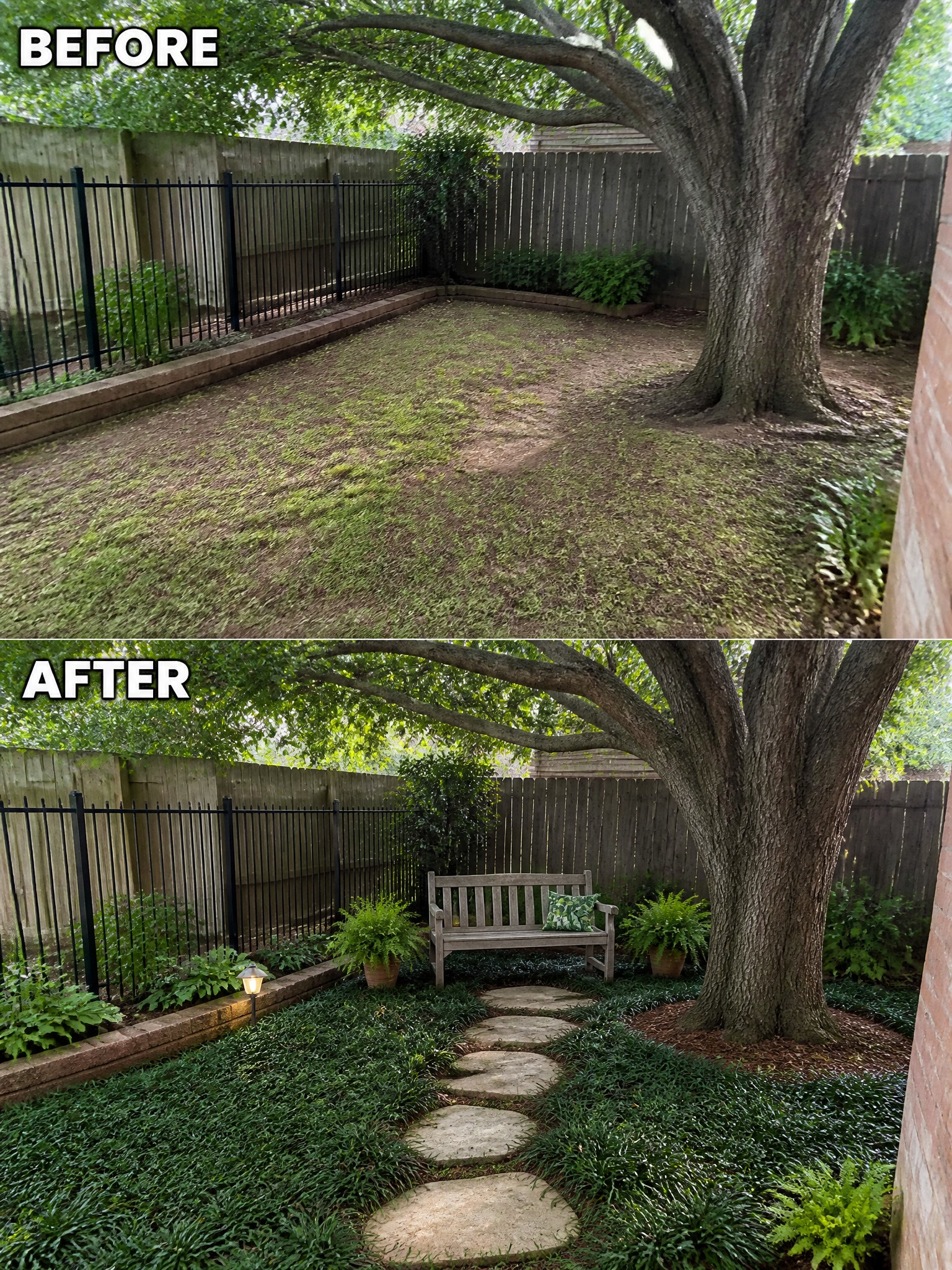
Many small yards end up looking like open patches of weeds because there is no clear edge or layout. Adding defined beds along the fence and laying a simple stone path gives the space shape and makes it feel like an actual garden instead of leftover ground.
This idea works best in compact yards where you want usable space without crowding it. Start with the borders and mulch first, then add a path that leads to one focal point like a bench. Keep the plantings simple so the structure stays the main feature.
Add Defined Garden Beds To A Compact Front Yard
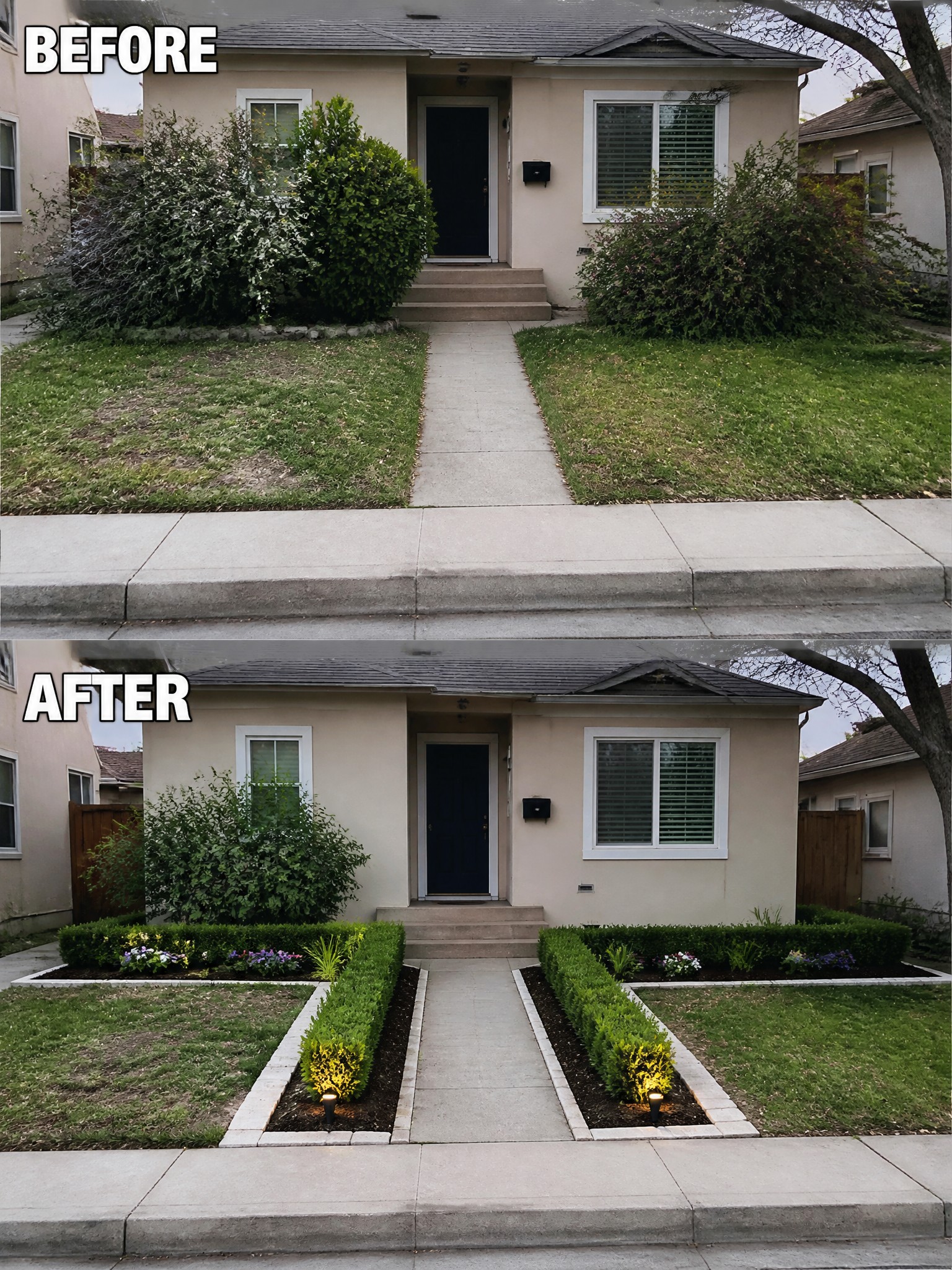
The biggest shift here came from replacing the messy, overgrown shrubs with straight-edged garden beds that run along both sides of the walkway. Low hedges, a few flowers, and simple solar lights now give the space clear lines and make the whole front feel intentional instead of neglected.
This approach works well on small lots where you want structure without crowding the lawn. Start by laying out simple borders with pavers or stone, then fill the beds with a mix of evergreen shrubs and seasonal color. Keep the center lawn open so the yard still feels usable and easy to mow.
Swap A Solid Walkway For Stepping Stones And Borders
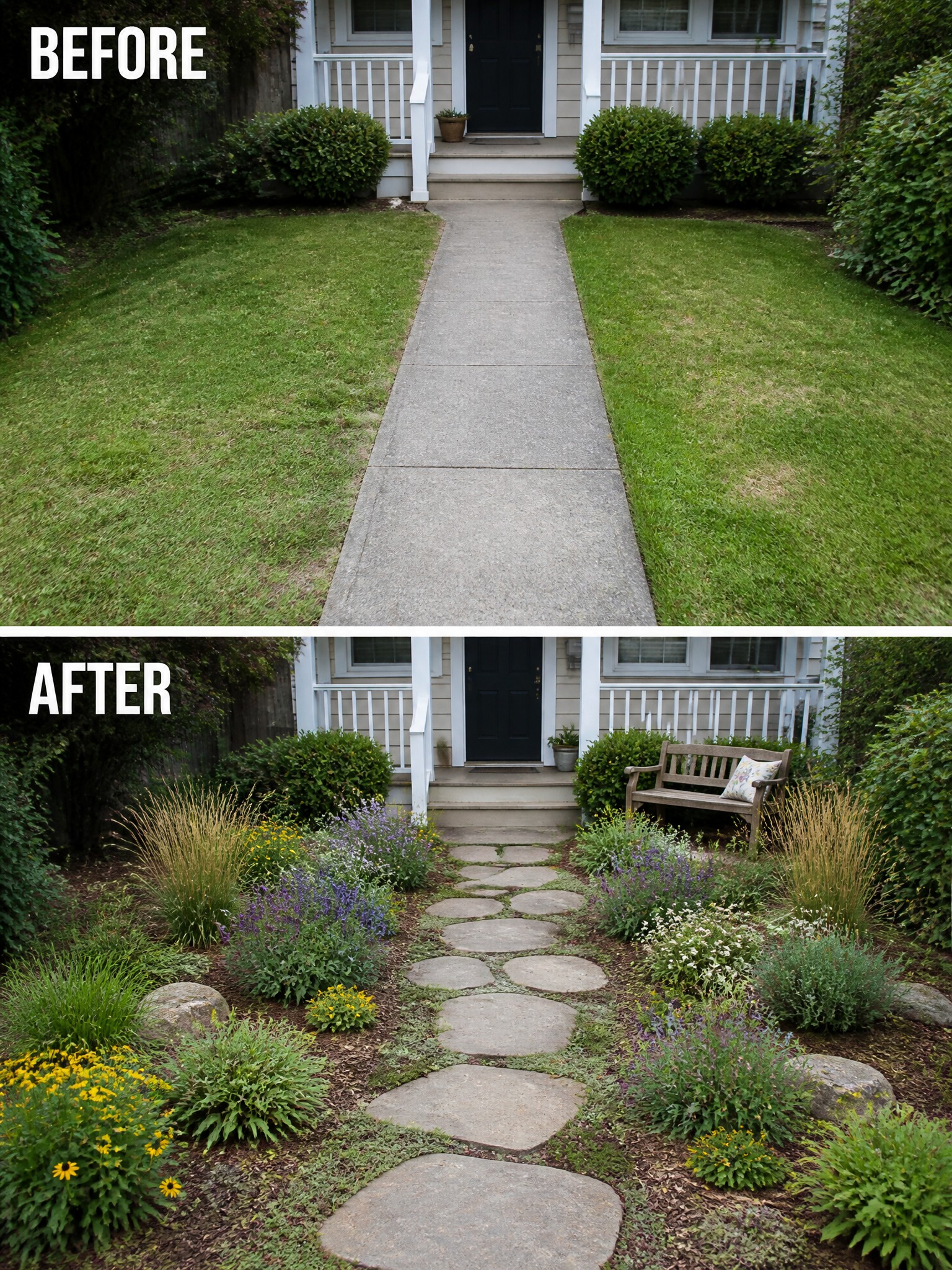
A straight concrete path tends to make a small front yard feel more cramped than it needs to. Switching to stepping stones opens up space on both sides for planting, which breaks up the long line and makes the approach feel softer and more intentional.
This works especially well in narrow yards where you still need a clear route to the door. Lay the stones with gaps wide enough for low plants to grow between them, and keep the beds simple with a mix of grasses and perennials so the look stays easy to maintain.
Add Raised Garden Beds To A Small Backyard
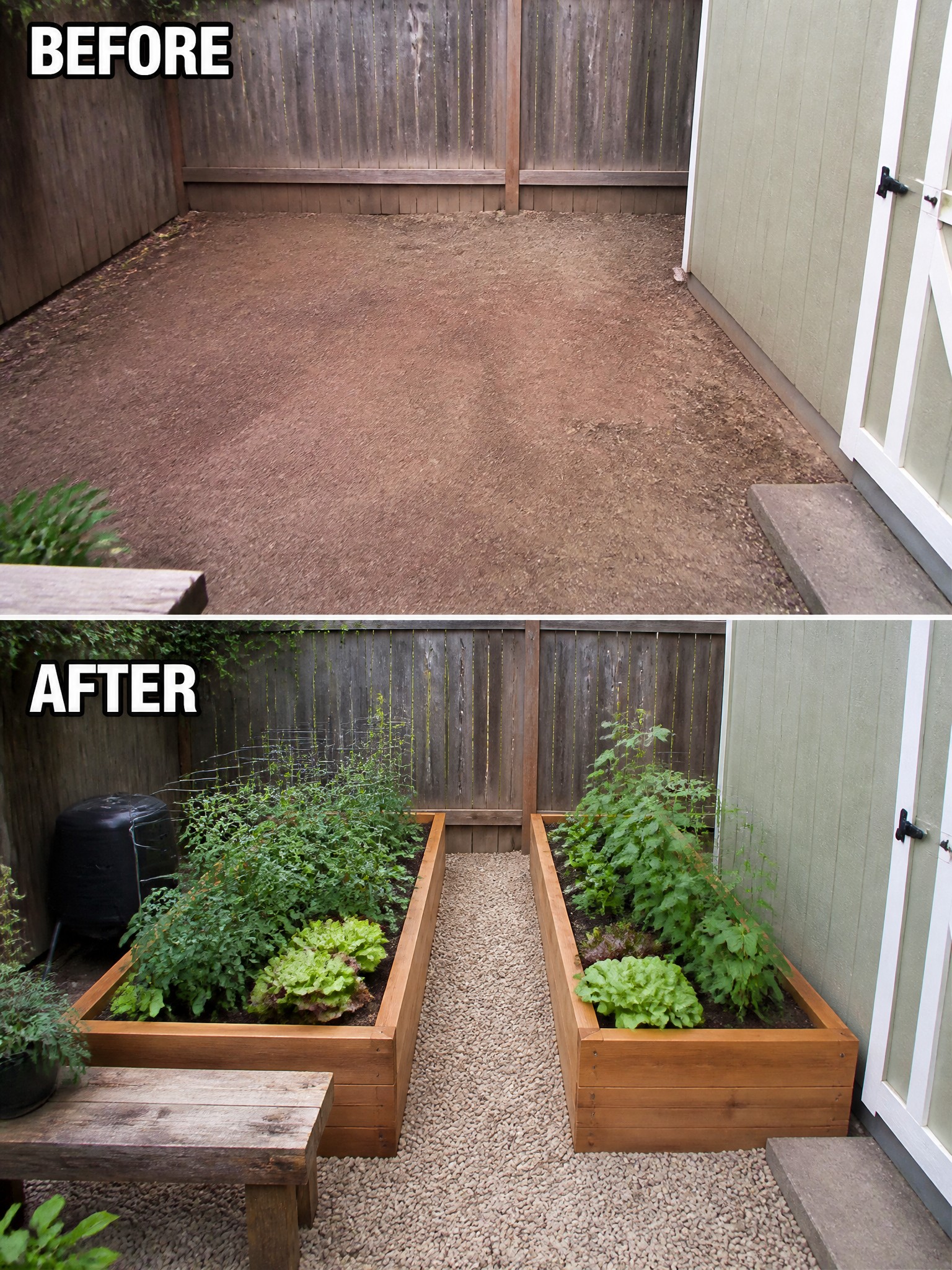
A bare dirt yard offers little to work with, but two simple raised beds can turn it into a space that actually produces something. The wooden boxes create clear boundaries, hold the soil in place, and keep plants organized without needing a full redesign of the whole area.
This approach works well in compact yards where space is tight and the ground may not be ideal for planting. Start with a couple of beds placed along one side or with a path between them, then fill them with soil and easy crops. The beds also make watering and weeding more manageable over time.
Turn A Bare Patio Into A Seating Area
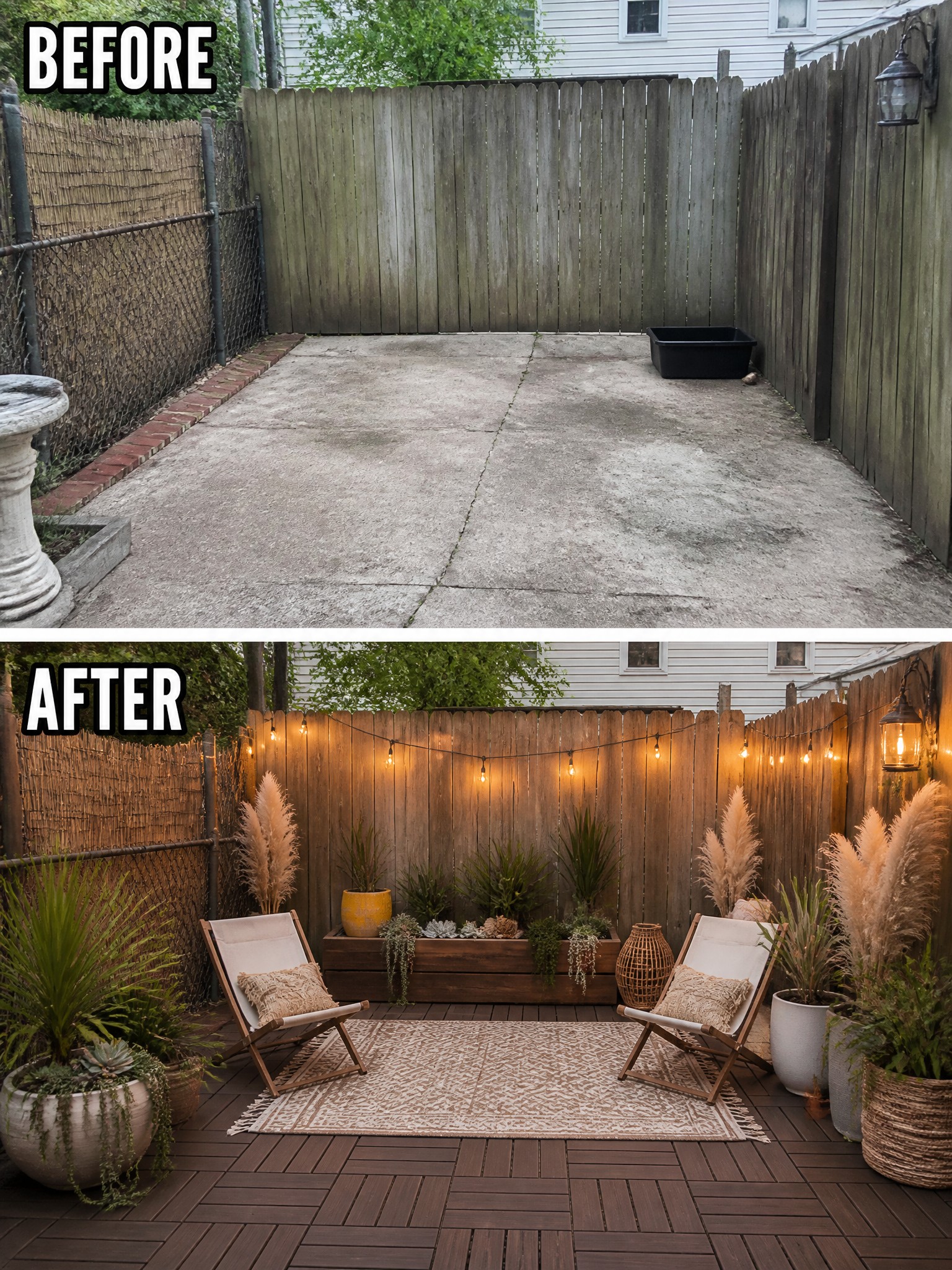
An empty concrete slab often sits unused because it feels unfinished and uninviting. Adding a simple deck creates a clear floor, and placing two chairs with a rug between them gives the space a purpose right away. String lights add the final layer that makes people want to sit outside after dark.
This idea works best in small yards where you need one defined spot rather than trying to fill the whole area. Keep the furniture light and weatherproof, and use the lights to mark where people will actually sit so the space feels intentional instead of scattered.
Terrace A Sloped Yard To Create Usable Garden Beds
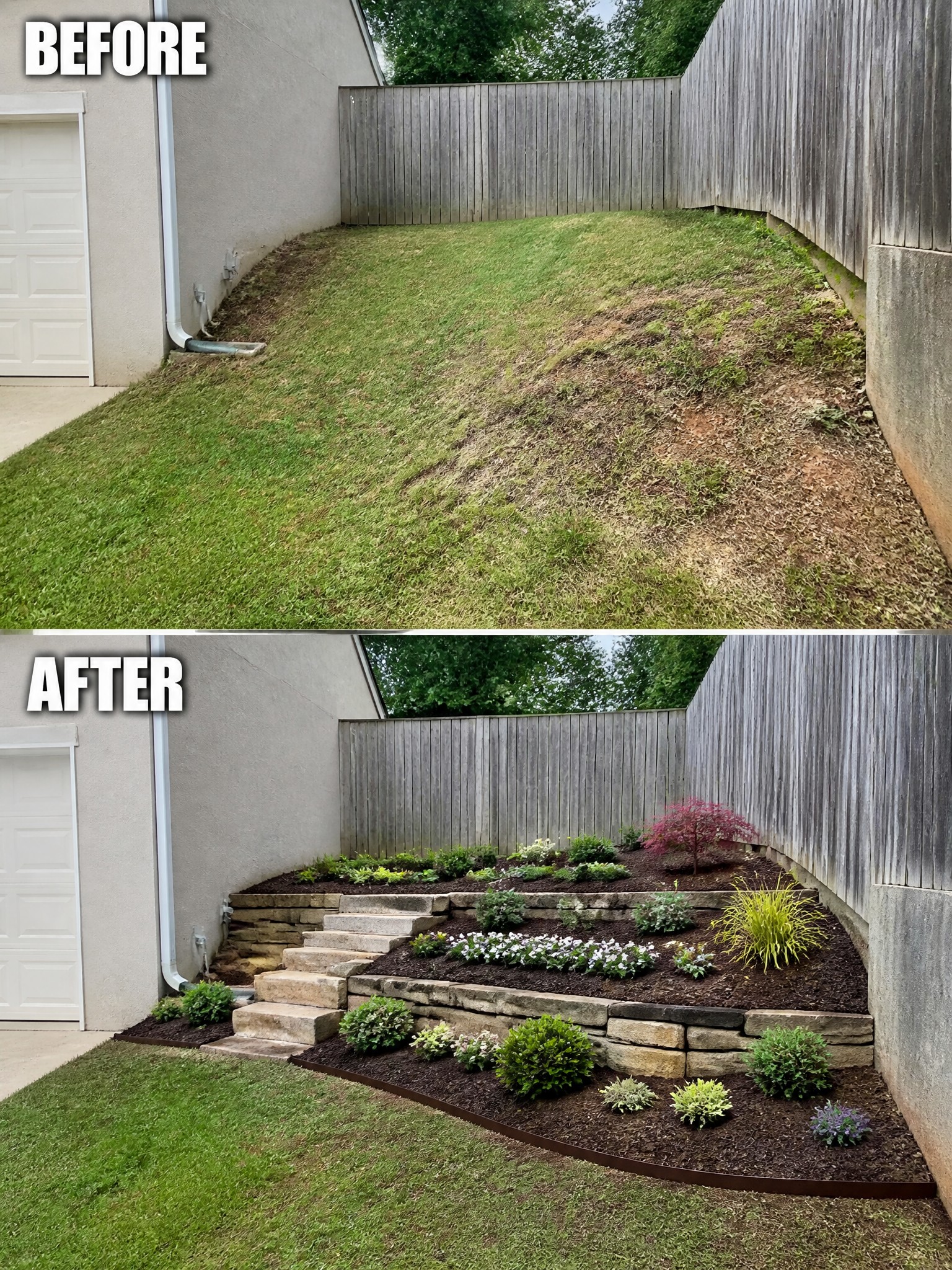
A sloped lawn often stays bare because mowing and planting are difficult on the angle. Low retaining walls fix this by turning the slope into a series of flat beds that hold soil in place and give the yard clear shape.
This idea suits compact yards with any kind of grade change. Use simple stone blocks or landscape timbers to build the terraces, then add mulch and a mix of shrubs and ground cover. Keep the lowest level as lawn so the space still feels open rather than crowded.
Add Structure To A Narrow Lawn Strip

The patchy grass along the curb had no clear edge and looked messy next to the sidewalk. Switching to a repeating layout of pavers with narrow grass and gravel strips gave the whole verge a simple, repeating pattern that stays neat.
This idea suits homes where the lawn runs right up to the street and space is limited. Lay the pavers first to set the shape, then add low grasses and gravel between them. The result keeps the area looking planned without crowding the walkway.
Add A Pergola And Tall Planters For Privacy In A Small Yard
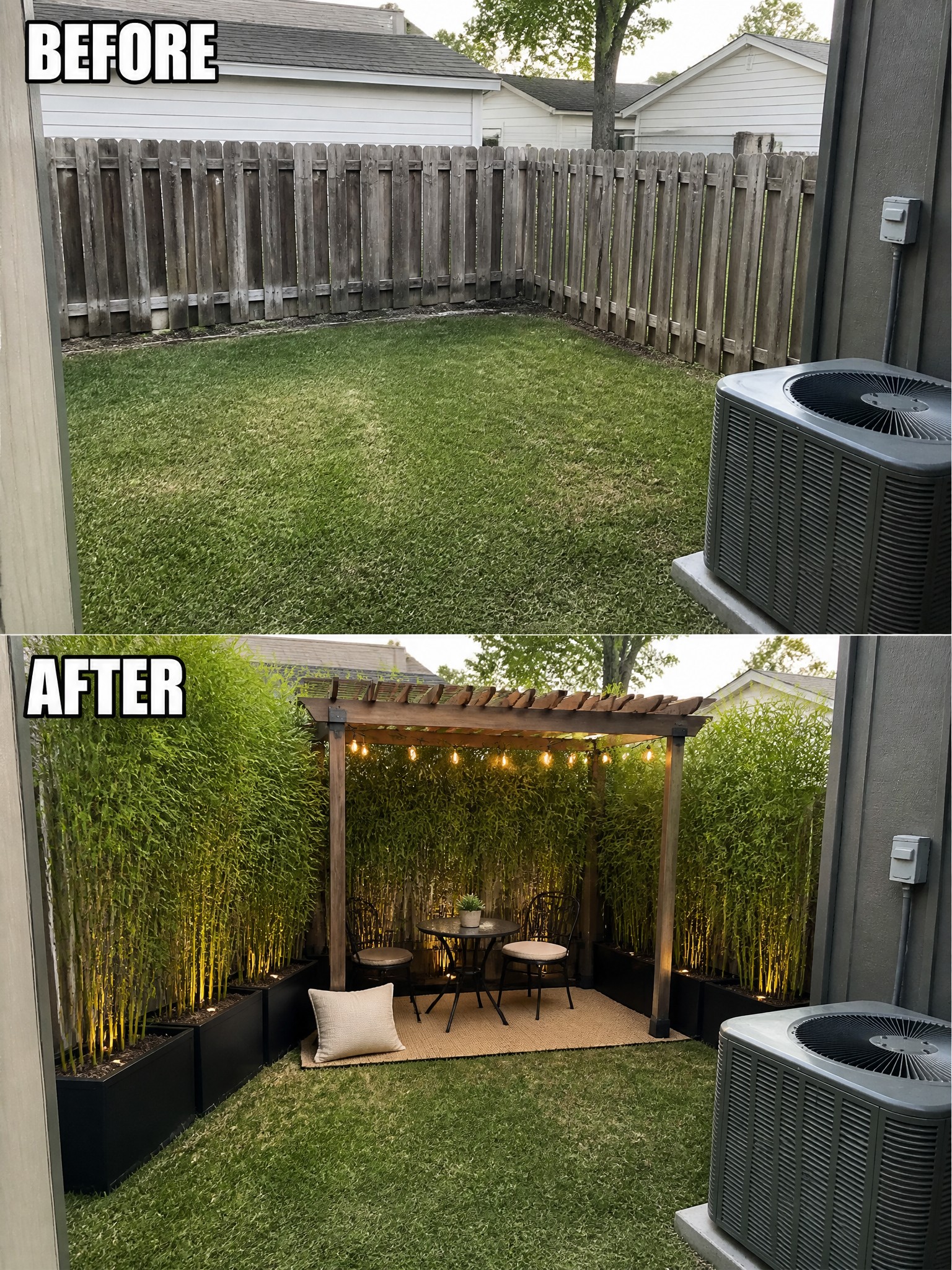
An open lawn often feels exposed and hard to use. Adding a simple pergola gives the space a clear center, while tall planters filled with screening plants create walls without building anything permanent. The result turns a plain patch of grass into a spot that feels set apart from the rest of the yard.
This approach works well in compact backyards where you need both shade and privacy but do not want to lose lawn space. Keep the furniture light and the planters in a single line so the area stays open enough to walk around. String lights can be added later once the main structure is in place.
Turn A Narrow Grass Strip Into A Defined Garden Bed
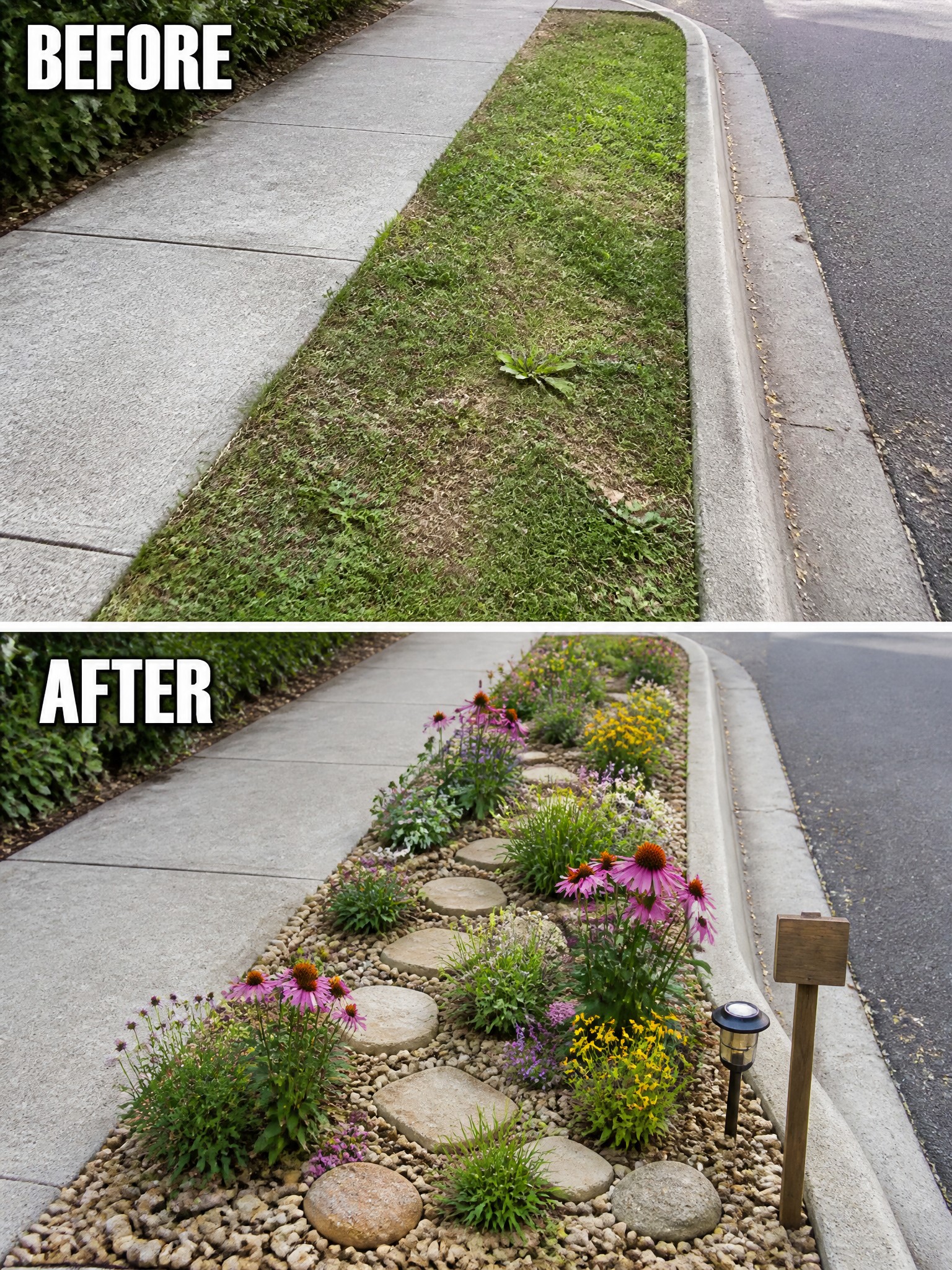
Replacing a patchy strip of grass with gravel and a row of stepping stones gives the edge along the sidewalk a much cleaner, more intentional look. The plants then fill in around the stones to create color and softness without needing constant mowing or edging.
This idea works especially well on small frontages or along busy curbs where grass struggles. Clear the old turf first, add a layer of gravel for drainage and weed control, then place a few flat stones to create a simple path through the bed. Choose tough perennials that can handle reflected heat and occasional foot traffic.
Add Vertical Planters To A Fence In A Small Yard
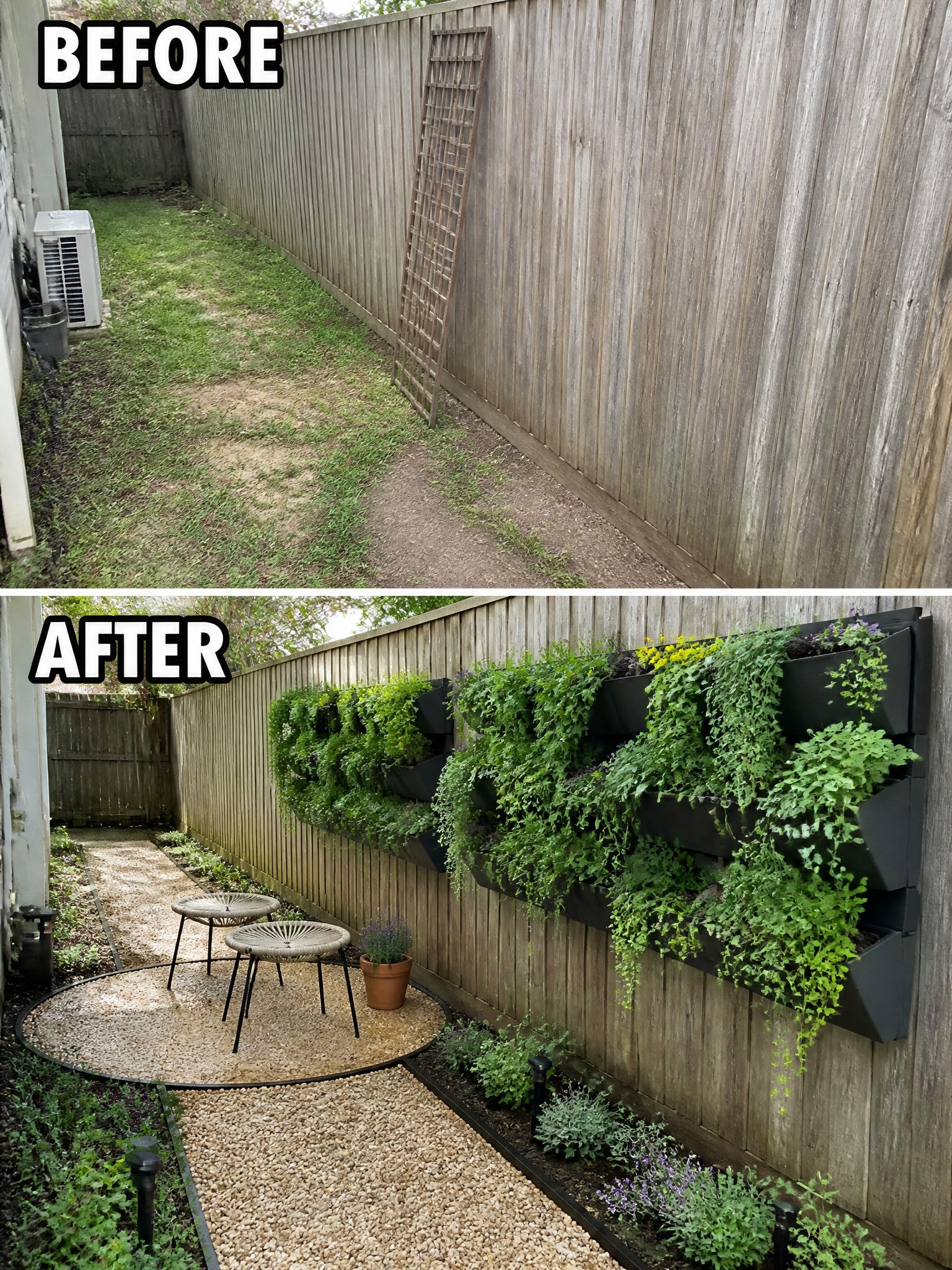
A blank fence can eat up a lot of visual space in a compact yard. Mounting rows of planters directly on it turns that surface into usable growing area and adds height without taking up floor space. The before photo shows a weedy strip of grass along plain boards. The after shows the same fence lined with staggered black planters that hold trailing greens and herbs, while gravel paths and a small seating circle pull the ground level together.
This approach works best in narrow side yards or townhouse backyards where ground beds are limited. Start with sturdy brackets rated for the weight of wet soil, then choose a mix of upright and trailing plants so the wall fills in evenly. Keep the lower section open for movement and add a simple path material like gravel so the area feels intentional rather than crowded.
Add Defined Garden Beds To Organize A Small Lawn
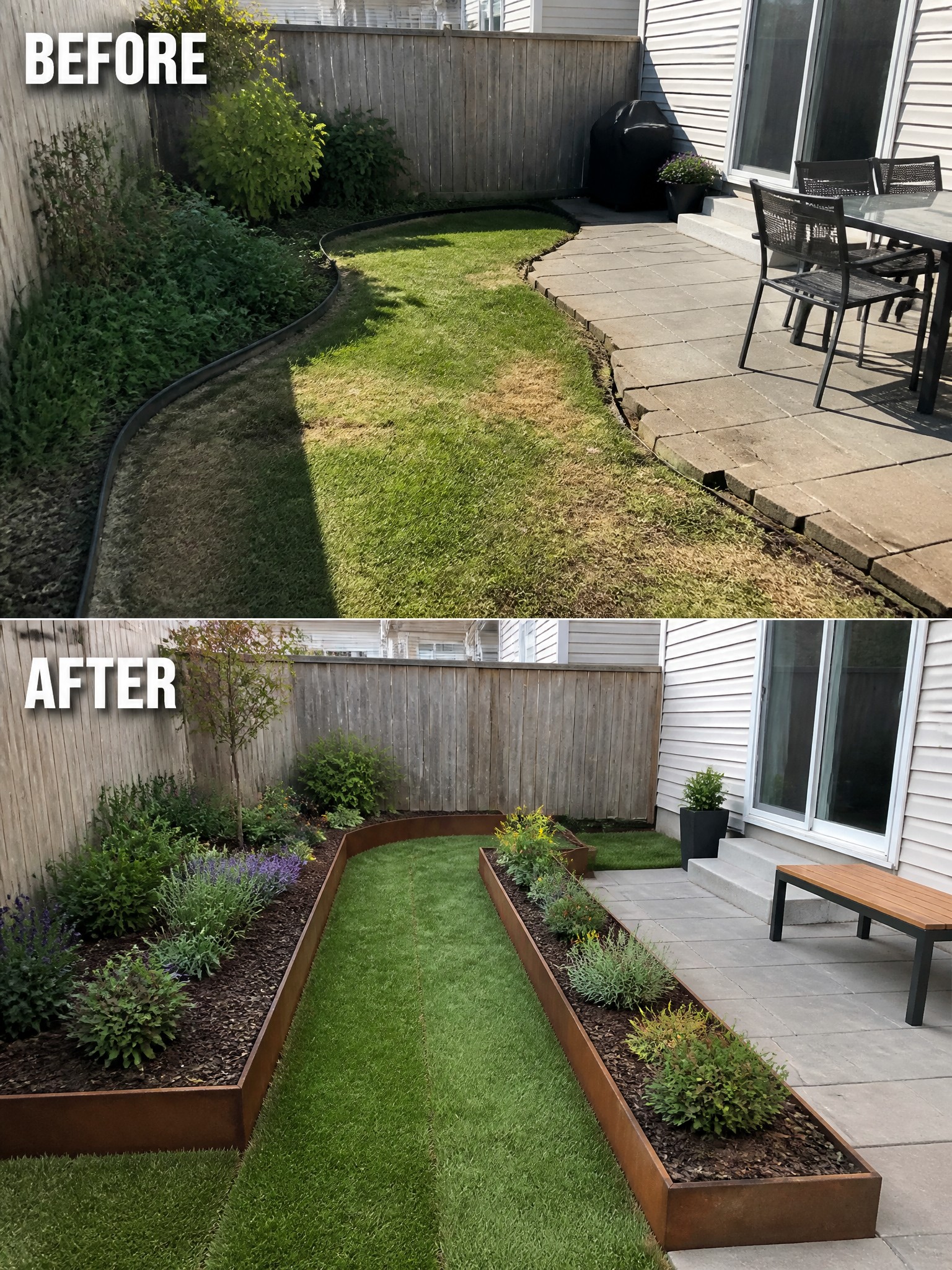
The main change here is how the lawn went from a loose, patchy shape with messy borders to a clean, narrow strip held in place by raised beds. Those beds create clear edges, keep the grass looking intentional, and give the planting areas something to sit inside instead of spilling out.
This approach works well in compact yards where you still want some open grass but need to control the rest of the space. Start with simple edging or raised beds along the sides, keep the lawn width easy to mow, and fill the beds with a mix of shrubs and perennials so the whole area feels planned without crowding the middle.
Turn A Bare Balcony Into A Small Seating Area
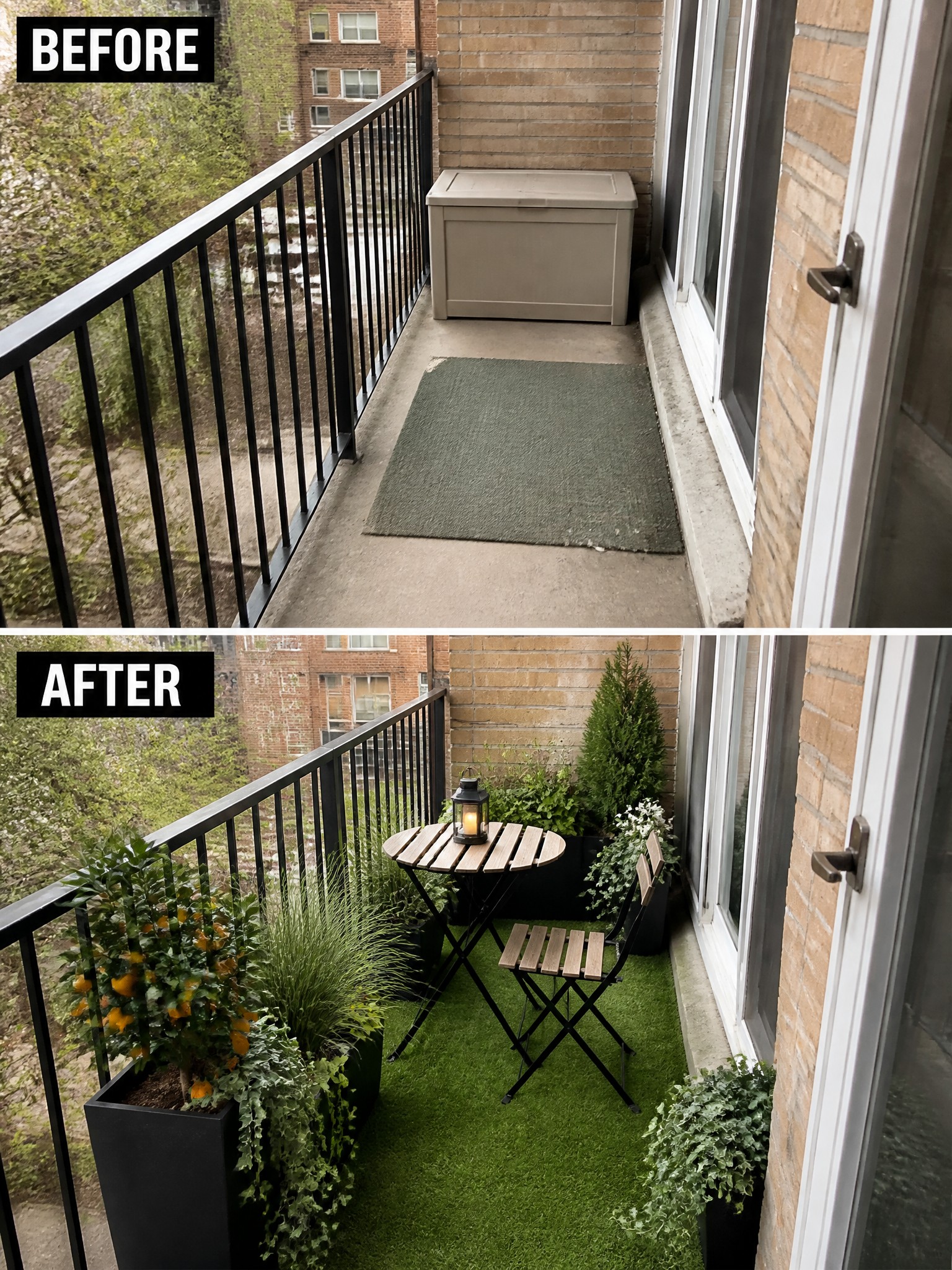
A narrow balcony often sits empty because it feels too tight for anything useful. Covering the concrete with turf and adding a compact table and chair set gives the space a clear purpose without crowding it. The change turns a spot people mostly walked across into a place where someone can actually sit.
This idea works best on apartments or small homes where outdoor space is limited. Stick with lightweight, foldable furniture that can be moved aside when needed, and keep plants in a few large pots rather than spreading them everywhere. The goal is to leave enough room to walk while still making the area feel intentional.
Create Defined Garden Beds In A Small Yard
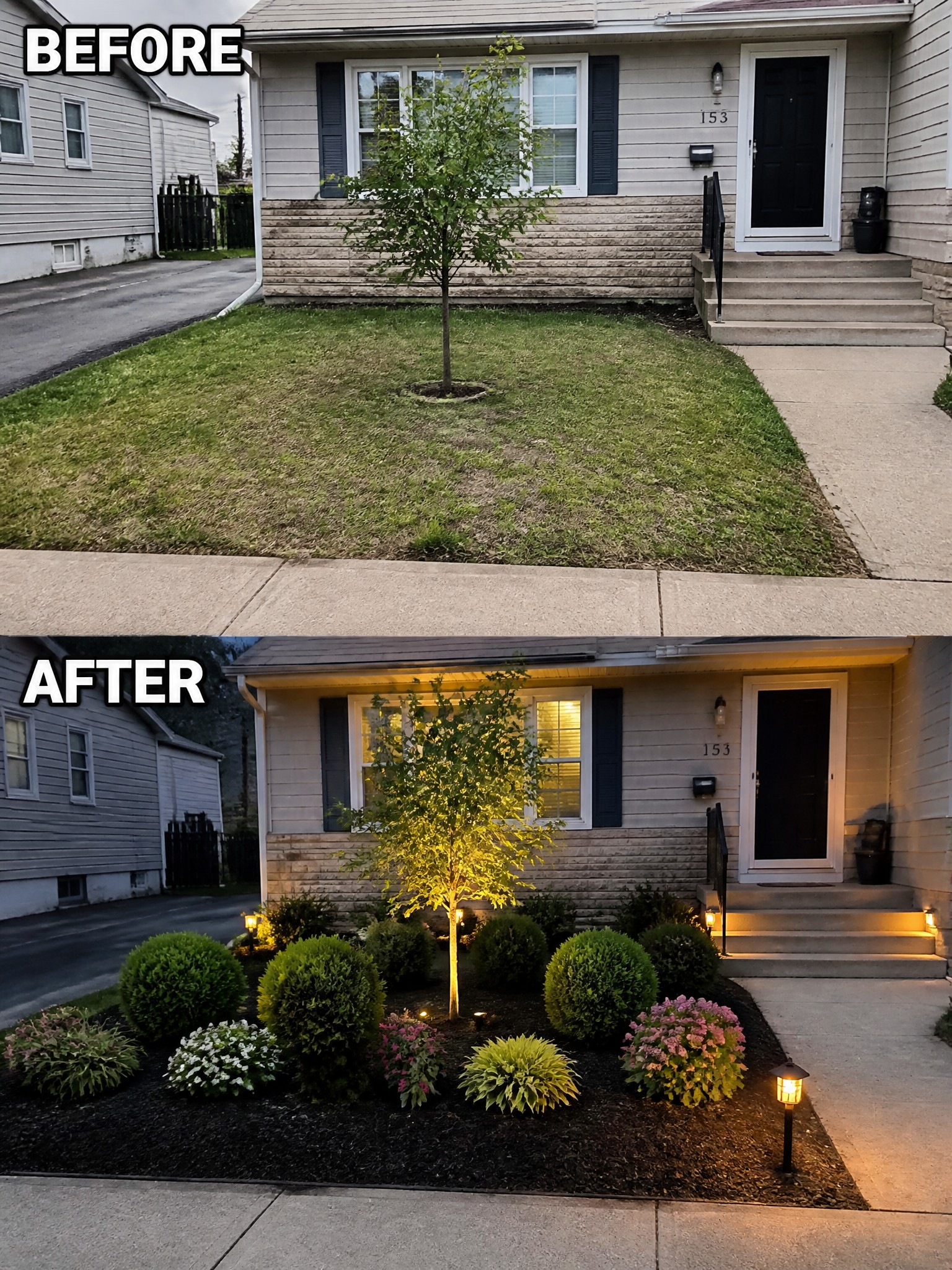
A small lawn often looks unfinished when it is just grass and a single tree. Adding a simple bed of mulch around the tree with a few shrubs and flowers gives the space clear shape and makes the whole front look more planned.
This idea works best in compact yards where you want some planting without taking over the open lawn. Keep the beds fairly narrow so there is still room to walk, and choose rounded shrubs that stay low. Mulch helps tie everything together and cuts down on weeding.
Turn An Empty Backyard Into A Fire Pit Patio
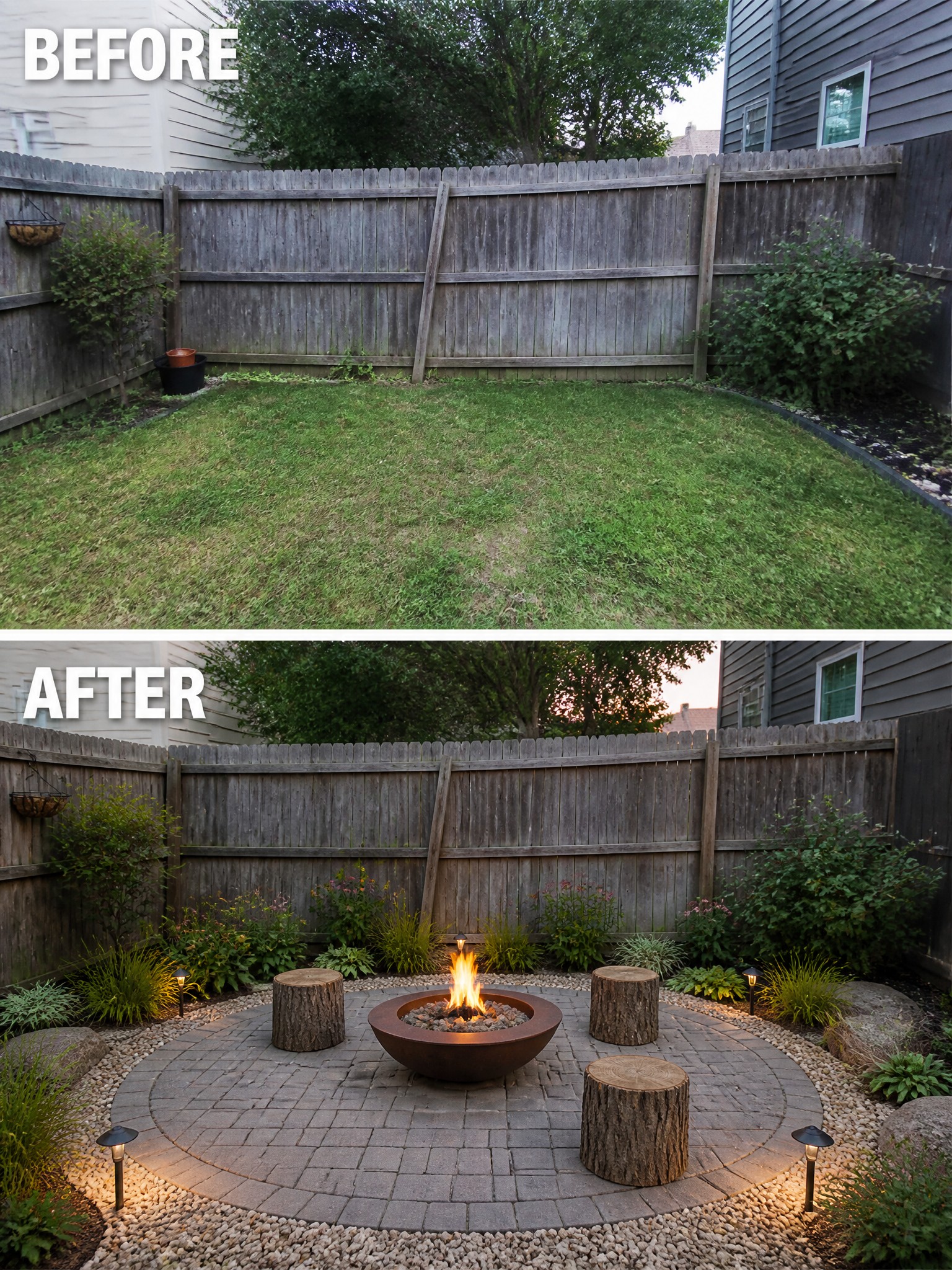
A flat lawn often feels like wasted space because there is no clear spot to sit or gather. Adding a paved circle with a fire pit gives the yard one defined area that actually invites people to use it.
This idea works best in small yards where you need to keep the layout simple. Place the patio away from the house edges so there is still room to walk around it, and use low planting along the border to soften the hard edges without crowding the seating.
Add A Path To Give A Small Lawn Structure
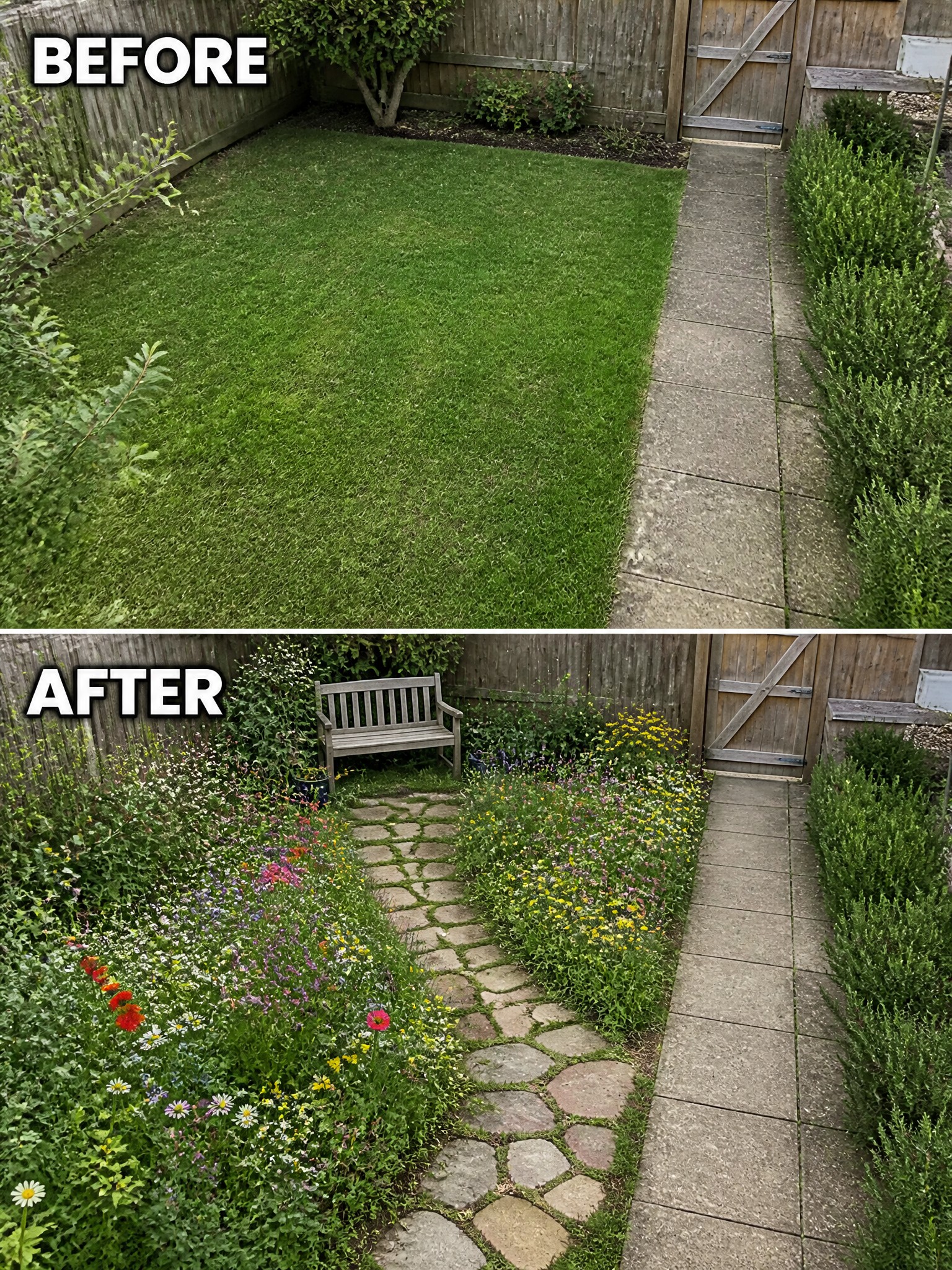
A flat lawn can feel empty even when it is neat. Adding a simple stone path through the middle and planting beds along the edges turns the space into something you can actually walk through and enjoy. The path gives the yard a clear direction, while the flowers and shrubs create borders that make the area feel more finished.
This approach works well in compact yards where you still want some open grass but need more interest. Start with the path to set the layout, then fill in the beds with easy plants that match your climate. Keep the edges clean so the lawn stays easy to mow around.
Add A Path To Give Structure To A Small Yard
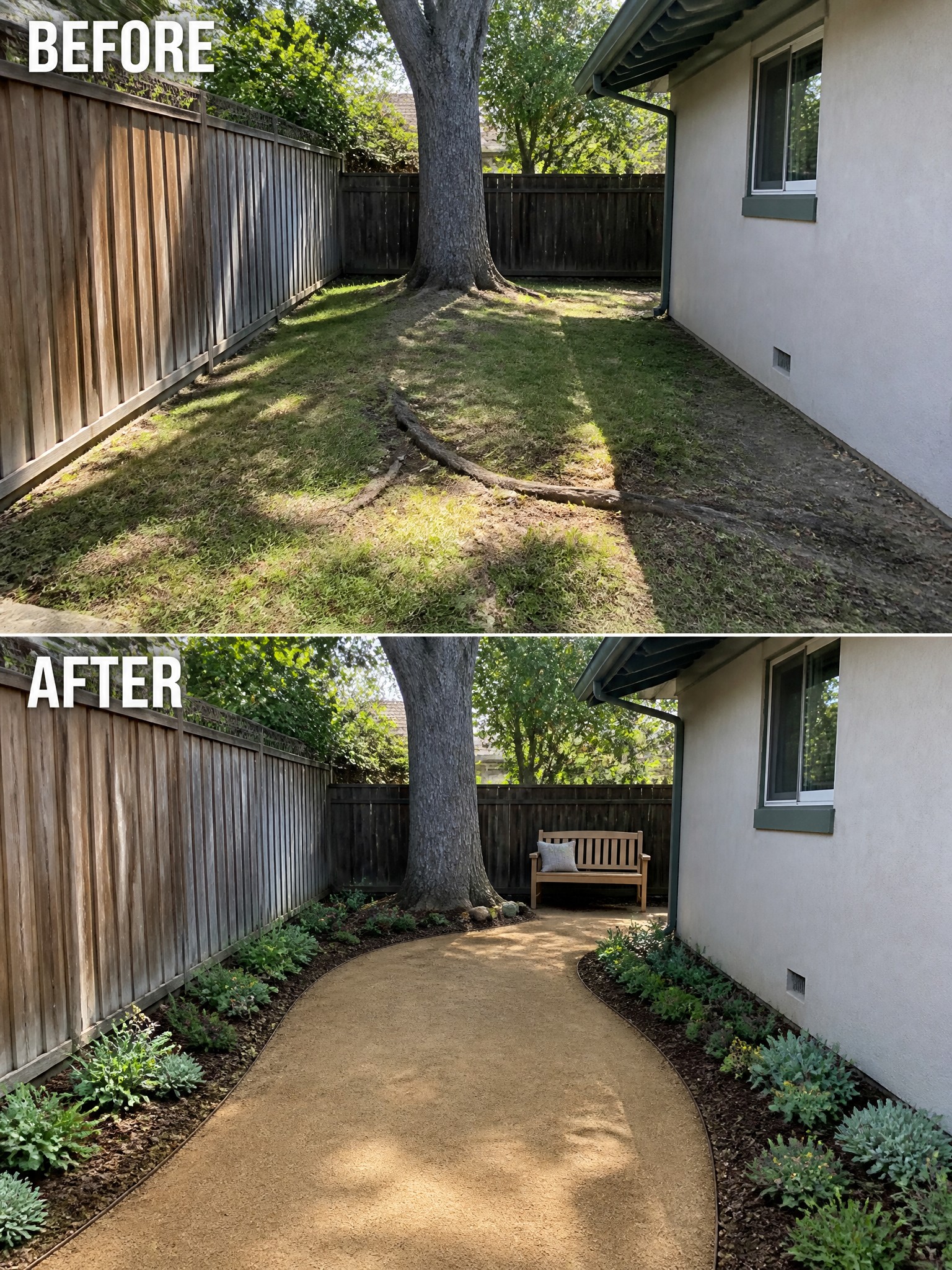
A patchy lawn with exposed roots often feels like wasted space because there is no clear route or purpose. Laying a curving gravel path through the middle instantly organizes the yard and turns the open grass into something you can walk through comfortably.
This approach works well in small yards because the path defines movement and leaves narrow strips along the edges for planting without taking over the whole area. Keep the path width modest so the space still feels open, and use simple edging to keep the gravel in place over time.
Frequently Asked Questions
Q: How do I pick plants that will actually thrive in my tiny yard without crowding everything?
A: Look at how much sun hits different spots throughout the day. Then choose low-growing options that match those conditions. This keeps the space open while the plants fill in nicely over time.
Q: What if my small lawn has bare patches that never seem to recover?
A: Rake out the dead grass and loosen the soil a bit. Mix in some fresh seed suited to your area and keep it damp until it sprouts. A quick fix like this often blends right into the rest of the yard.
Q: Can I add seating without losing all my open space?
A: Tuck a bench or two along the fence line instead of centering them. Leave the middle clear for movement or play. That setup gives you places to sit while the yard still feels bigger.
