

My yard always felt like one wide empty stretch until paths and beds started to carve out some shape.
Adding a few defined beds along the edges gave the lawn a clearer structure that held up through the seasons.
Paths came first for me.
Seating zones then turned leftover grass into spots that actually get used instead of just mowed around.
Over time those layers make the whole space feel less forgotten without needing a complete overhaul.
Add Structure With Garden Beds And A Path
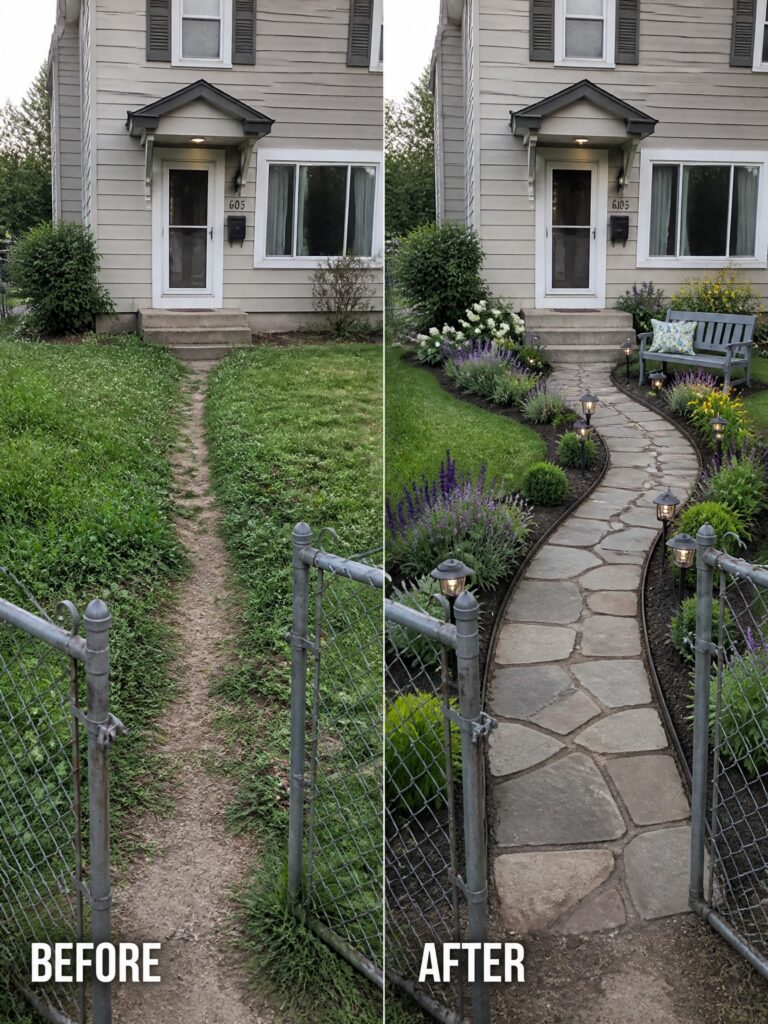
A plain front yard often feels unfinished when the lawn runs straight to the house with only a narrow dirt path. Adding curved garden beds along the edges and laying a proper stone path gives the space clear shape and makes the walk to the door feel more welcoming.
This approach works best on smaller lots where you want to keep most of the grass but still create interest. Mark gentle curves for the beds first, install simple edging, and fill them with a mix of shrubs and perennials. Use mulch to keep weeds down and leave enough room on either side of the path for easy movement.
Add Raised Beds And A Path To Give Shape To A Lawn

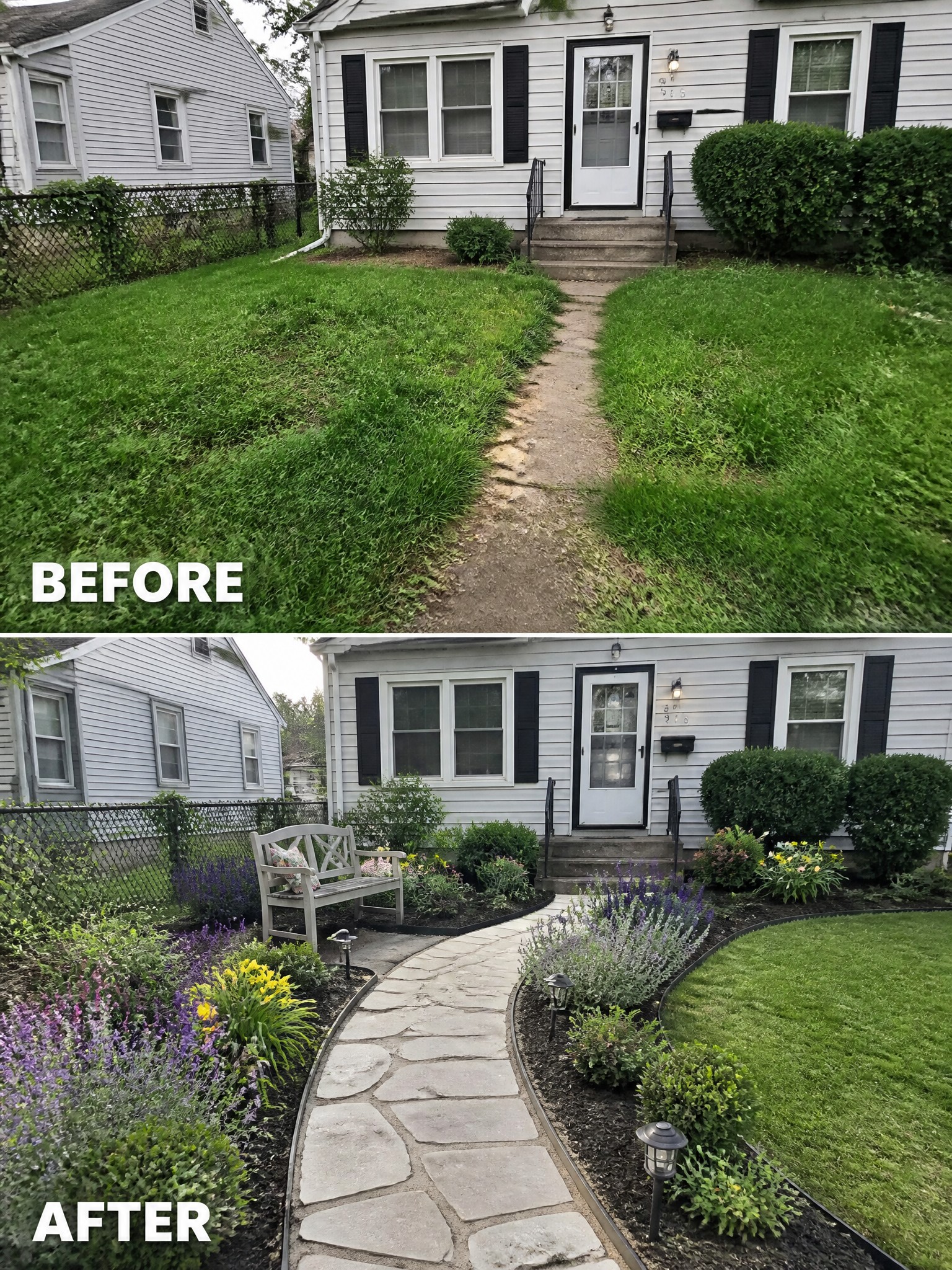
A flat lawn with a worn dirt path down the middle often feels unfinished and hard to use. Adding raised beds along both sides with a clean central path creates clear structure and turns the space into something you can actually walk through and enjoy.
This idea works best in smaller backyards where you want planting space without losing the open lawn. Build simple beds first, line the path with gravel or mulch, and keep the seating modest so the area stays easy to move around. It gives the yard purpose without requiring a complete overhaul.
Add A Path And Beds To Organize An Overgrown Strip

A long narrow space next to a fence often ends up as nothing more than weedy grass. Laying a simple stone path through the middle and planting beds on both sides gives the area a clear purpose and makes it feel like part of the yard instead of leftover ground.
This approach works best in side yards or along house foundations where you need a walkway but do not want to lose the lawn. Keep the beds fairly narrow so the path stays the main feature, and choose plants that fill in without constant trimming.
Define The Front Path With Gravel And Edging

A straight concrete walk often leaves the front yard feeling flat and unfinished. Switching to a gravel path held in place by simple metal edging gives the space clear lines while the new border beds filled with rounded shrubs add shape along both sides.
This approach works best on modest front yards where you want the entry to feel planned without adding a lot of hardscape. Lay the edging first so the gravel stays contained, then keep the beds narrow enough that mowing stays easy.
Add Pavers And Planted Borders To Shape A Plain Yard
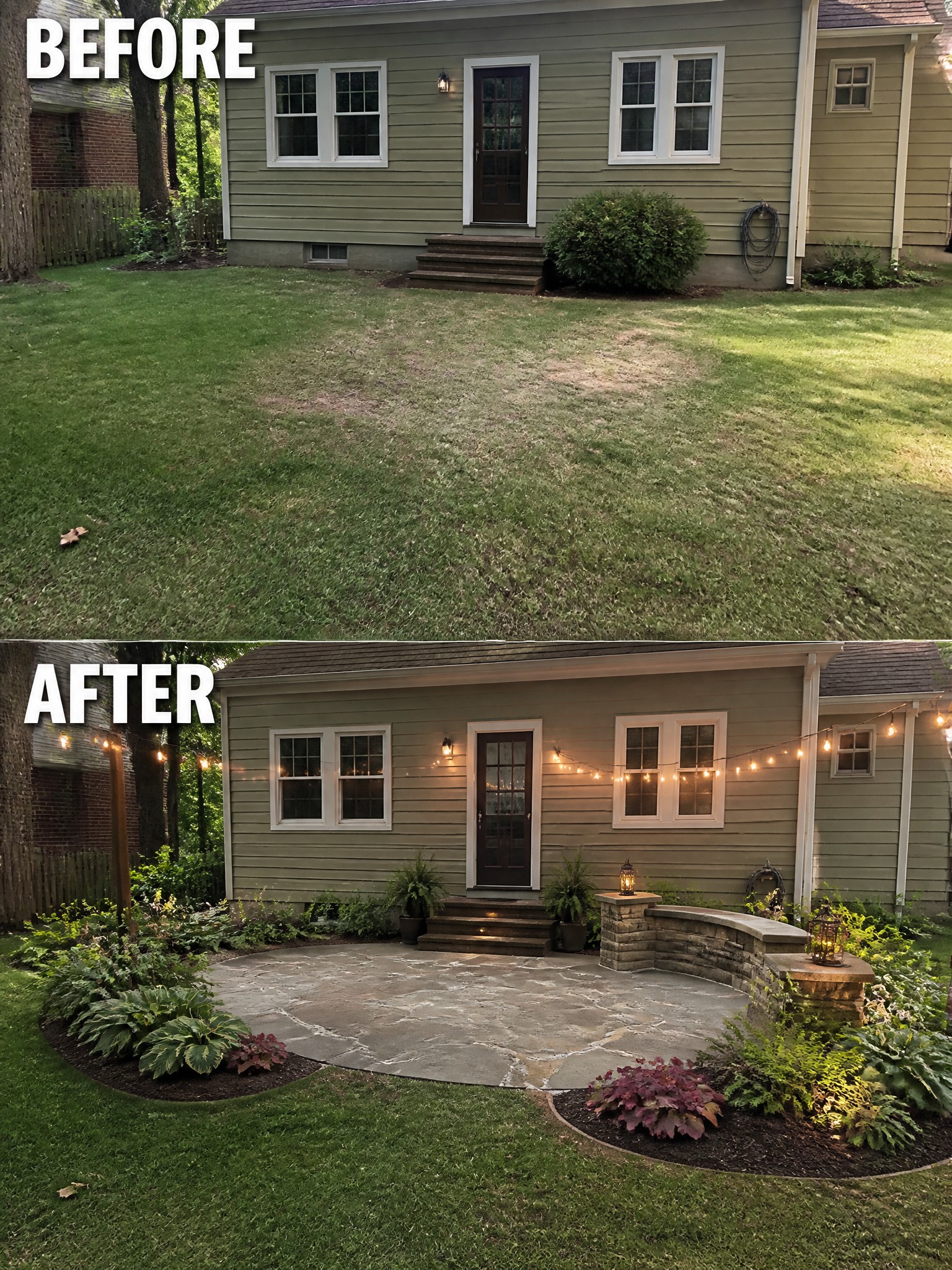
A flat lawn with no clear purpose often feels unfinished next to a house. Adding a stone patio with curved edges and mulch beds on both sides gives the space a simple layout that actually invites use. The pavers create a solid center while the planted borders keep the lawn from running right up to the foundation.
This approach suits smaller yards where you want one usable spot without filling the whole area. Keep the beds narrow enough to maintain grass around them, and choose plants that stay in scale with the house. Focus first on the shape of the patio and beds before adding lights or extra decor.
Add A Defined Path And Garden Beds To Shape The Yard
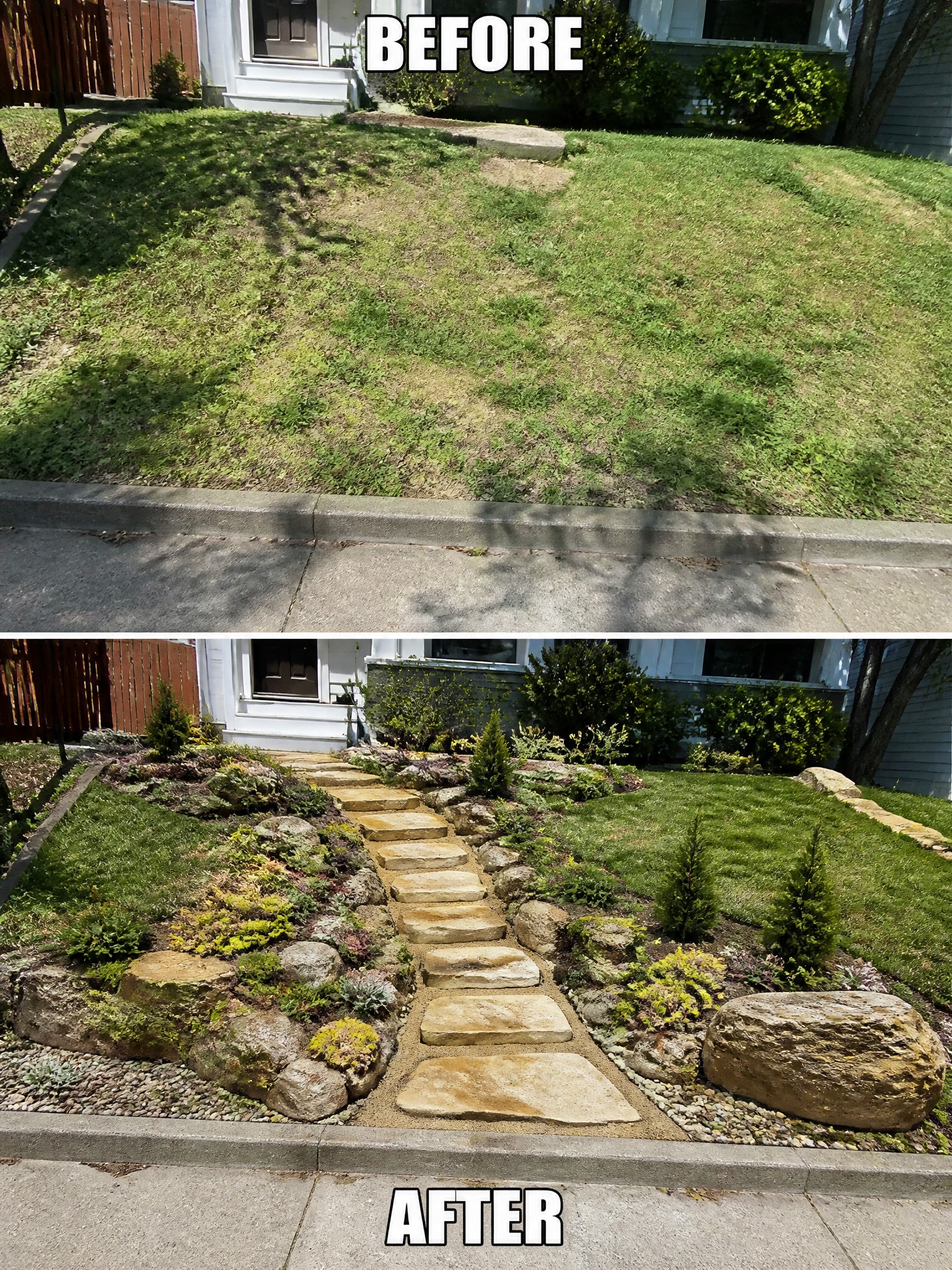
A sloped front yard with just grass and a faint dirt trail can feel unfinished and hard to maintain. Adding a clear stepping stone path with rock-edged beds on both sides gives the space structure right away. The lawn stays open on one side while the planting areas create visual order without needing a full redesign.
This approach works well on small to medium yards where you want better access and easier mowing. Start by laying out the path to follow the natural route to the door, then build simple borders with local stone or gravel to hold the beds in place. Keep the plant choices low and varied so the beds look full without constant upkeep.
Use Pavers To Create A Defined Seating Zone In The Yard
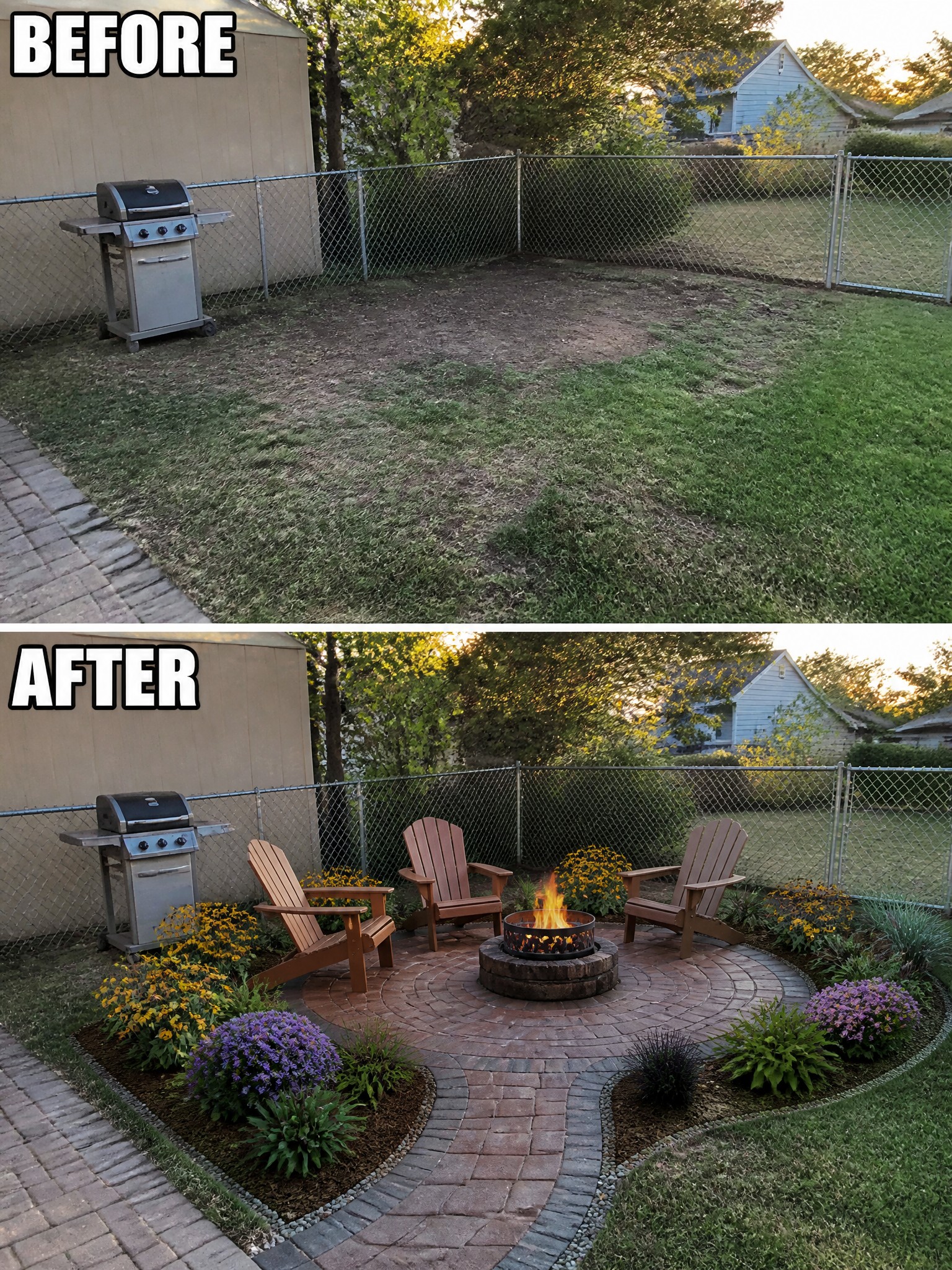
A flat, open backyard often feels unfinished because there is no clear spot to gather. Adding a simple paver circle gives the space a focal point and makes the area feel intentional instead of leftover. The change from bare ground to a brick patio with a fire pit and surrounding beds turns the yard into a place people actually use.
This idea works best in smaller or average backyards where you want one main spot for seating without crowding the lawn. Start with the hard surface first so the beds and paths can fit around it naturally. Keep the planting simple and repeat a few colors so the beds frame the patio instead of competing with it.
Add Structure To An Overgrown Backyard
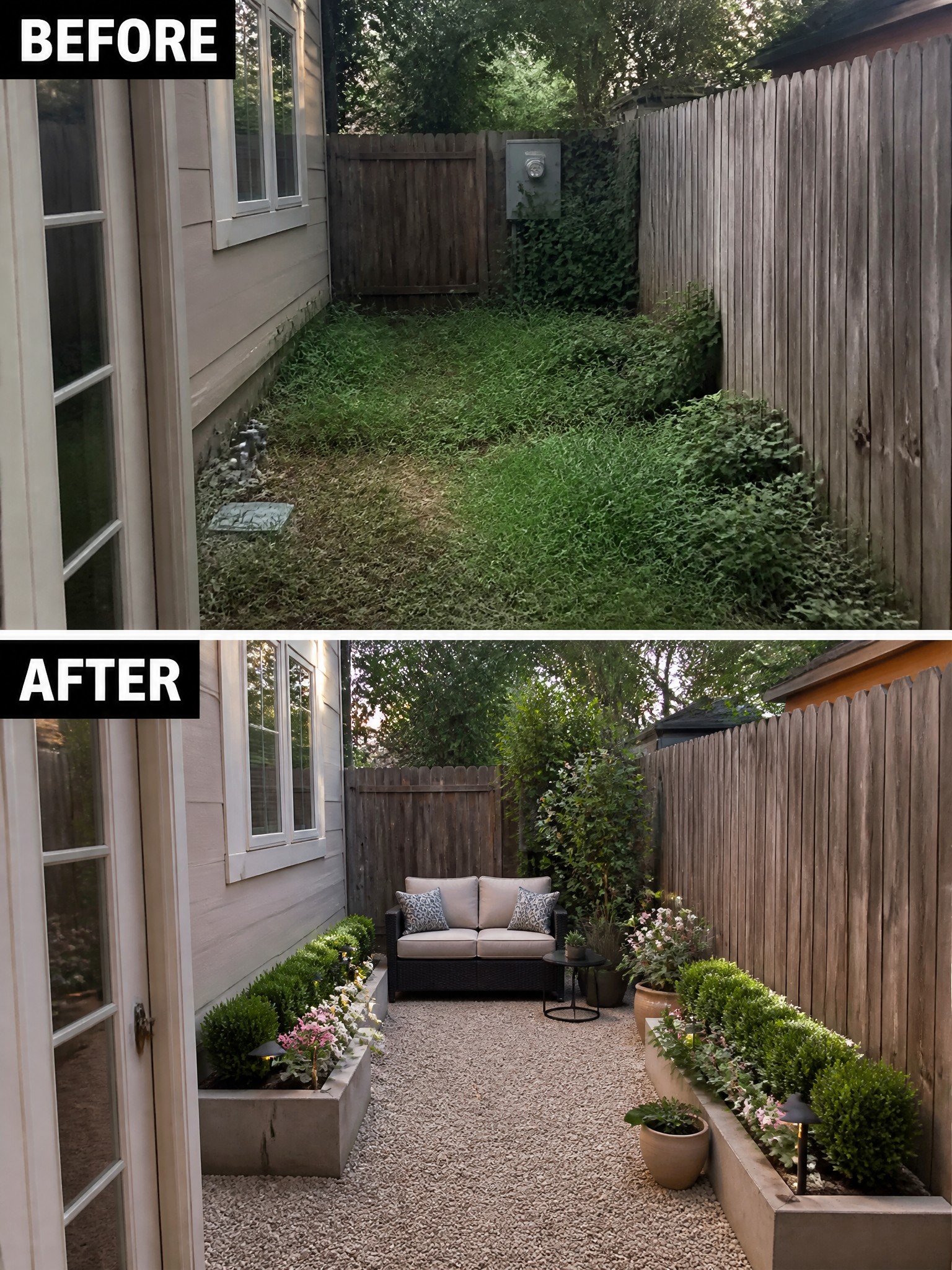
Clearing overgrowth first makes the biggest difference when a yard feels unusable. The before photo shows a narrow space lost to tall weeds and uneven grass. Once the area was cleaned up, simple raised beds and a gravel path gave it clear shape and turned the leftover ground into a walkable space with room for seating.
This approach works best in small or awkward yards where you need to create order before adding anything decorative. Keep the beds narrow enough to leave walking room, and use gravel or pavers so the path stays low-maintenance. Focus on the layout first, then add plants and furniture once the structure is in place.
Add A Path And Border Beds To Shape A Plain Yard
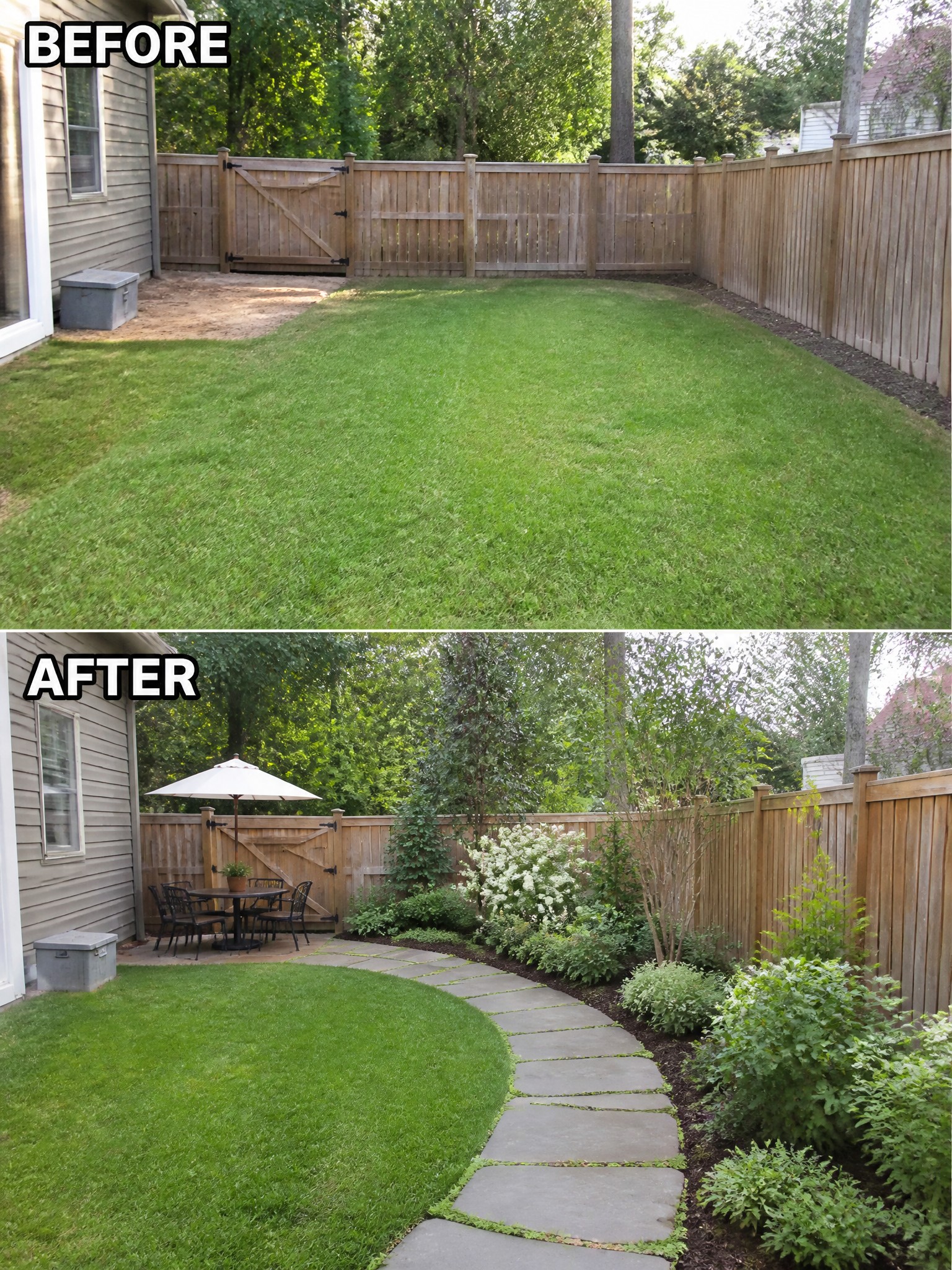
A flat lawn often feels unfinished until you add clear lines and planted edges. The stone path curves through the grass to connect the house side to the back fence while the beds run along the perimeter and fill in with shrubs and flowers. These two changes give the yard direction without covering the whole lawn.
This approach suits yards that already have a decent lawn but lack any structure. Start by laying out the path so it links the main door or patio to a seating spot or gate, then plant the beds with a mix of heights that stay low enough not to block the fence. Keep the lawn edge crisp so the new elements stand out and the open grass still feels usable.
Add A Path To Organize A Wet Backyard
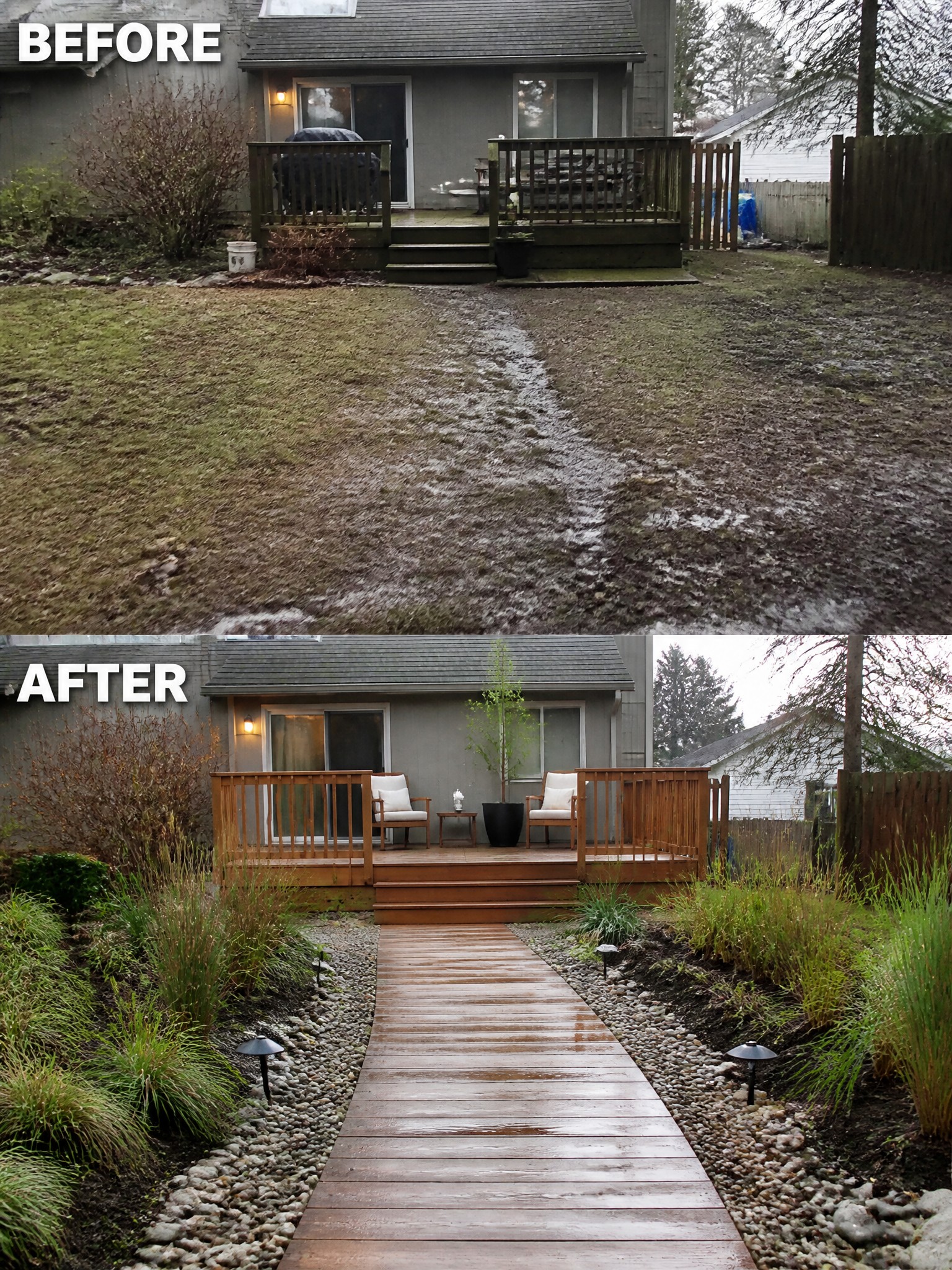
A muddy lawn with a worn trail through the middle makes the whole yard feel unfinished and hard to use. Adding a straight wooden walkway with gravel on both sides gives the space clear lines and stops the ground from turning into a mess every time it rains.
This approach works well in smaller backyards where the lawn gets heavy foot traffic. Lay the path along the route people already take, then add simple planted borders on the sides. It keeps the yard looking planned without needing a full redesign.
Add Structure To A Sloping Front Yard
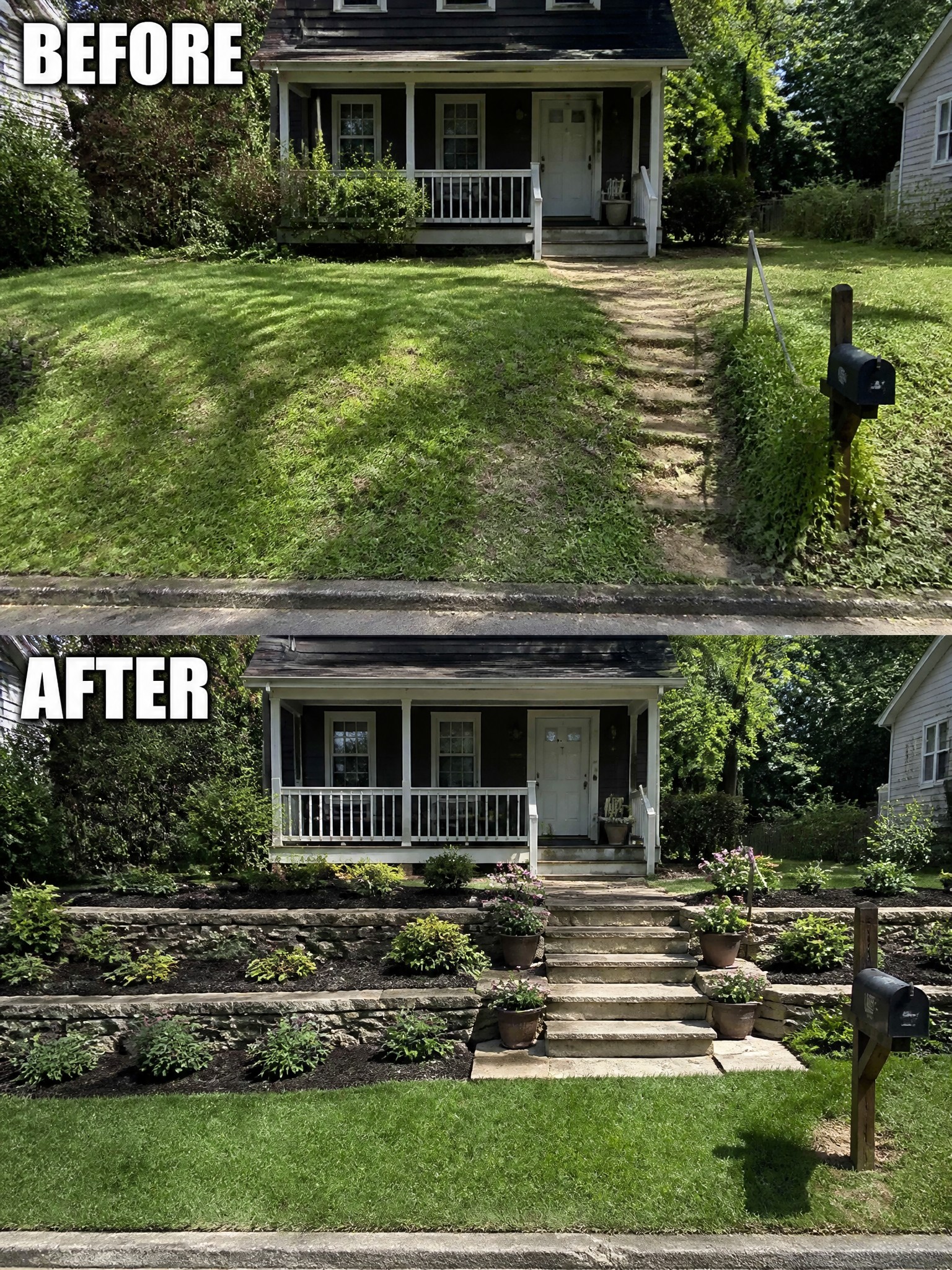
A sloped lawn often looks fine until you notice how the path wears out and the grass just runs into the street with no clear edge. Adding low stone retaining walls turns that slope into a few flat beds that hold mulch and plants without sliding down. The steps also get a cleaner look once the beds frame them on both sides.
This approach works well on older homes where the front yard drops toward the road. Start with the walls and basic grading first, then fill the beds with shrubs and a few pots near the steps. It keeps the yard looking planned even if you add more plants later.
Add Raised Beds To Organize An Overgrown Yard
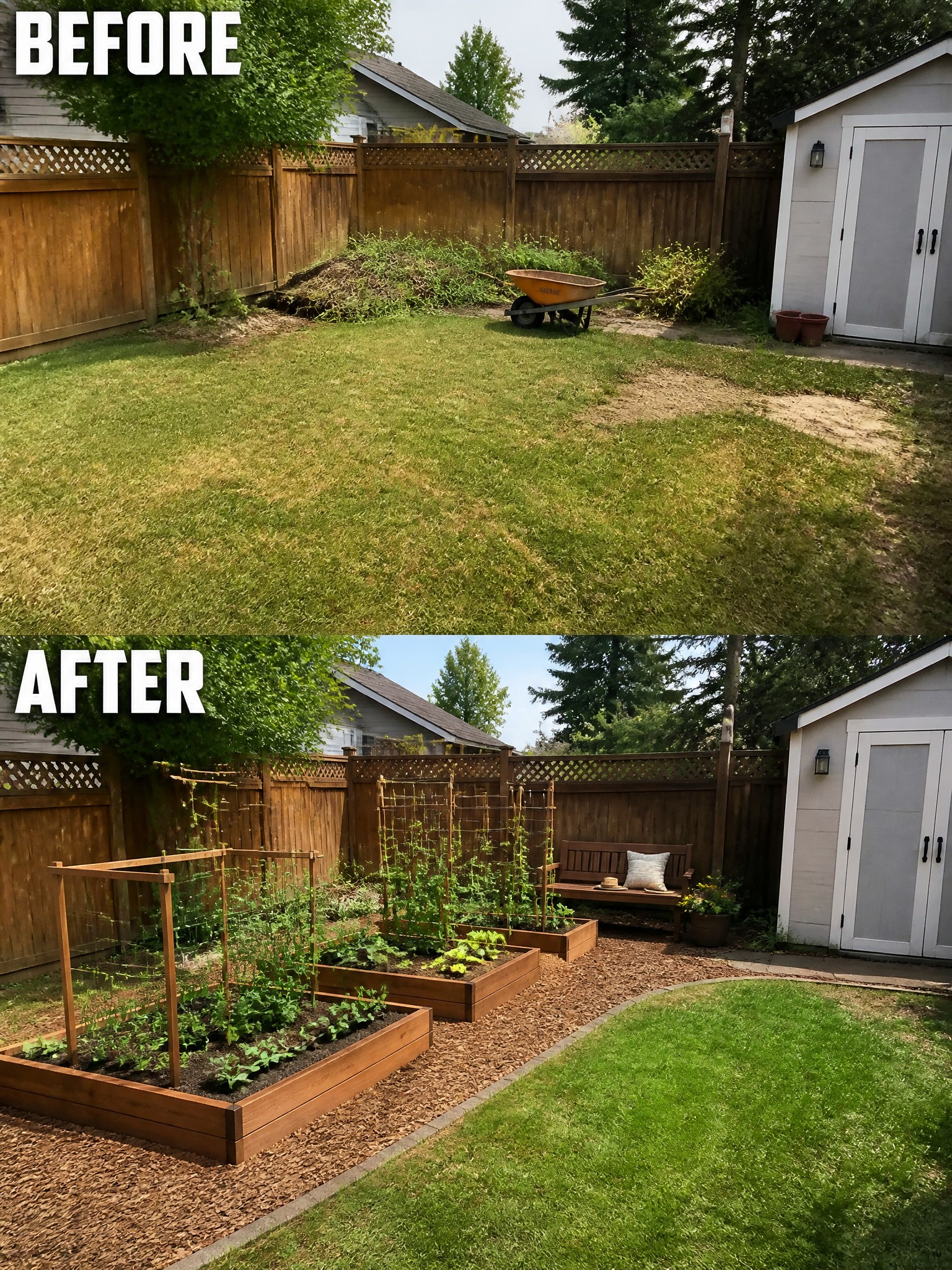
Many backyards start out as just a stretch of grass with no real plan. The before photo shows exactly that, with uneven ground and random growth along the fence. Adding raised beds gives the space clear zones for planting while keeping the lawn open for walking and mowing.
Raised beds work well in smaller yards because they keep soil contained and make it easier to reach plants without compacting the ground. Use wood that holds up to weather, set the beds in straight rows, and fill the space between them with mulch. This keeps the layout simple and makes the whole yard feel more intentional without needing a full redesign.
Add Pavers And Raised Beds To Frame A Side Path
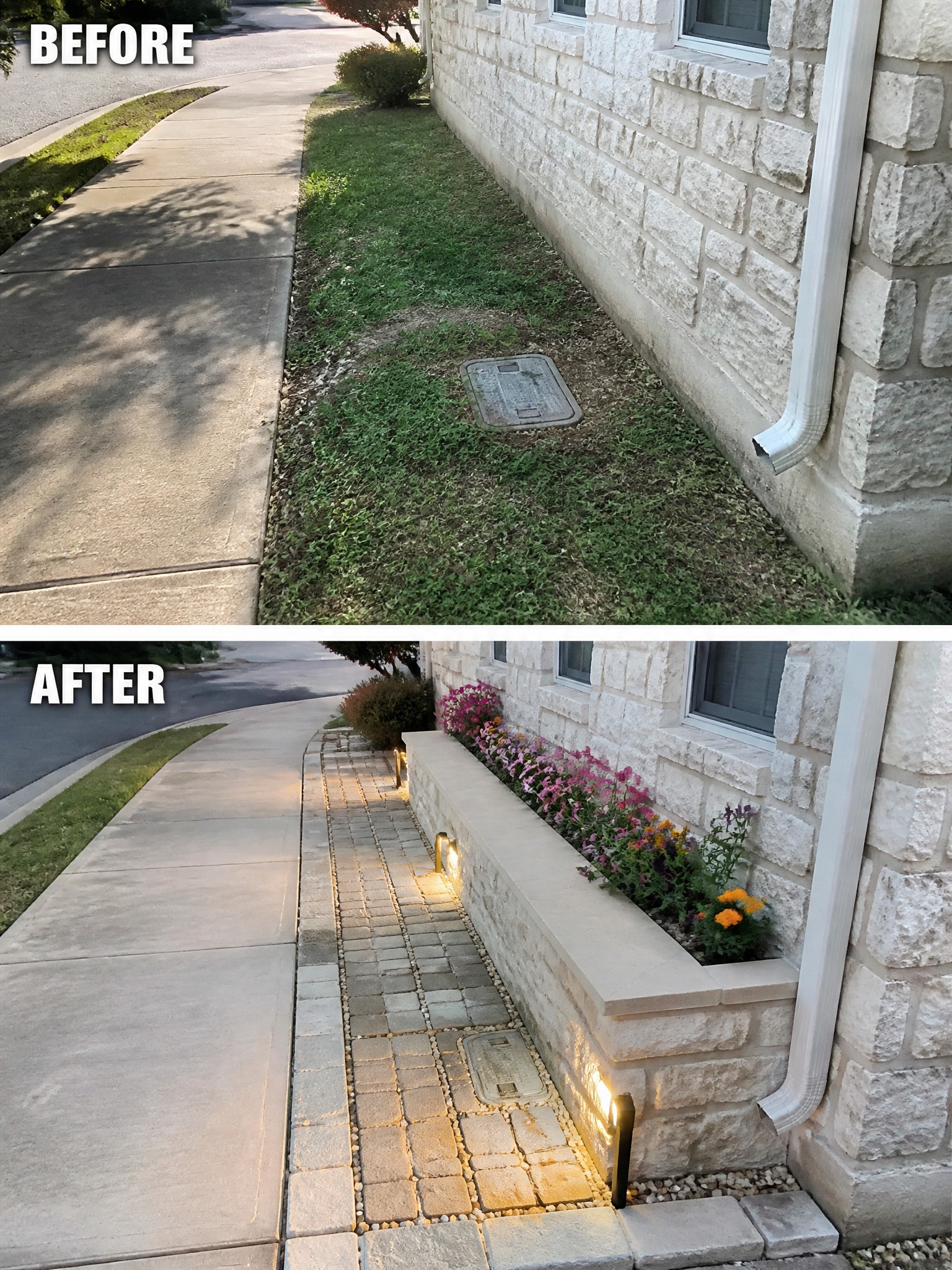
A narrow strip of grass next to the house often ends up looking messy and unused. Laying a simple paver path and adding low stone beds turns that space into something that feels intentional and easy to walk along. The change gives the side of the house a clear edge and keeps the utility cover accessible without drawing attention to it.
This approach works best on long, tight areas where a full lawn is hard to maintain. Keep the beds low so they do not block windows, and choose plants that stay tidy. The path itself can be made from basic pavers as long as it stays level and leaves enough room to move past the house comfortably.
Add Defined Beds And A Seating Zone To A Plain Backyard
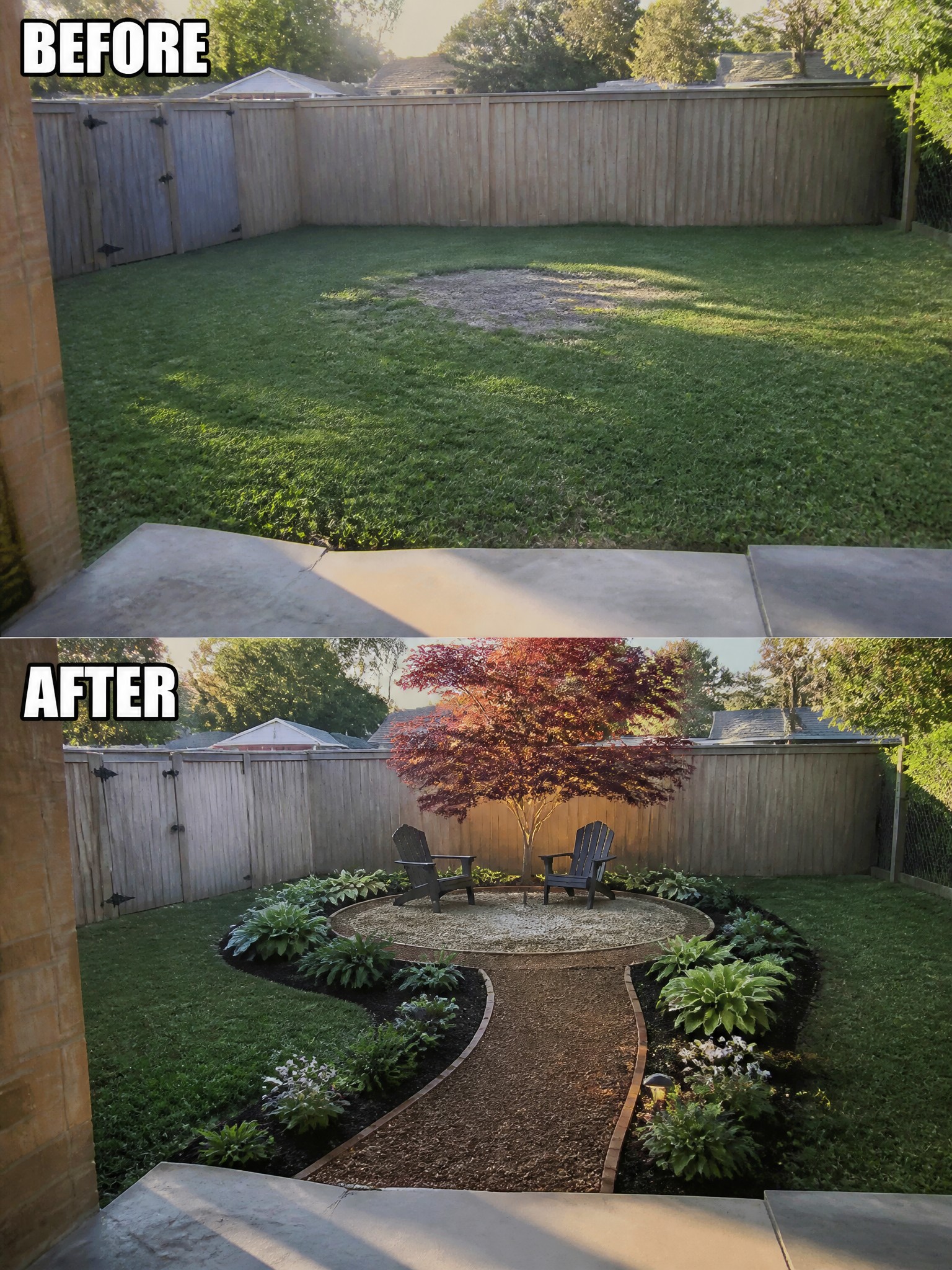
A flat lawn with nothing but grass often feels unfinished. The simple fix here was to cut in curved beds along the edges, add a gravel circle in the middle, and plant a small tree as the anchor for two chairs. That single move turned empty space into something you can actually use.
This approach works well in backyards that still need room to walk or play. Keep the beds narrow enough to mow around easily, use mulch to hold the shape, and place the seating where it gets some shade from the new tree. Start with the layout before you buy too many plants.
Add Structure To The Front Yard With A Path And Beds
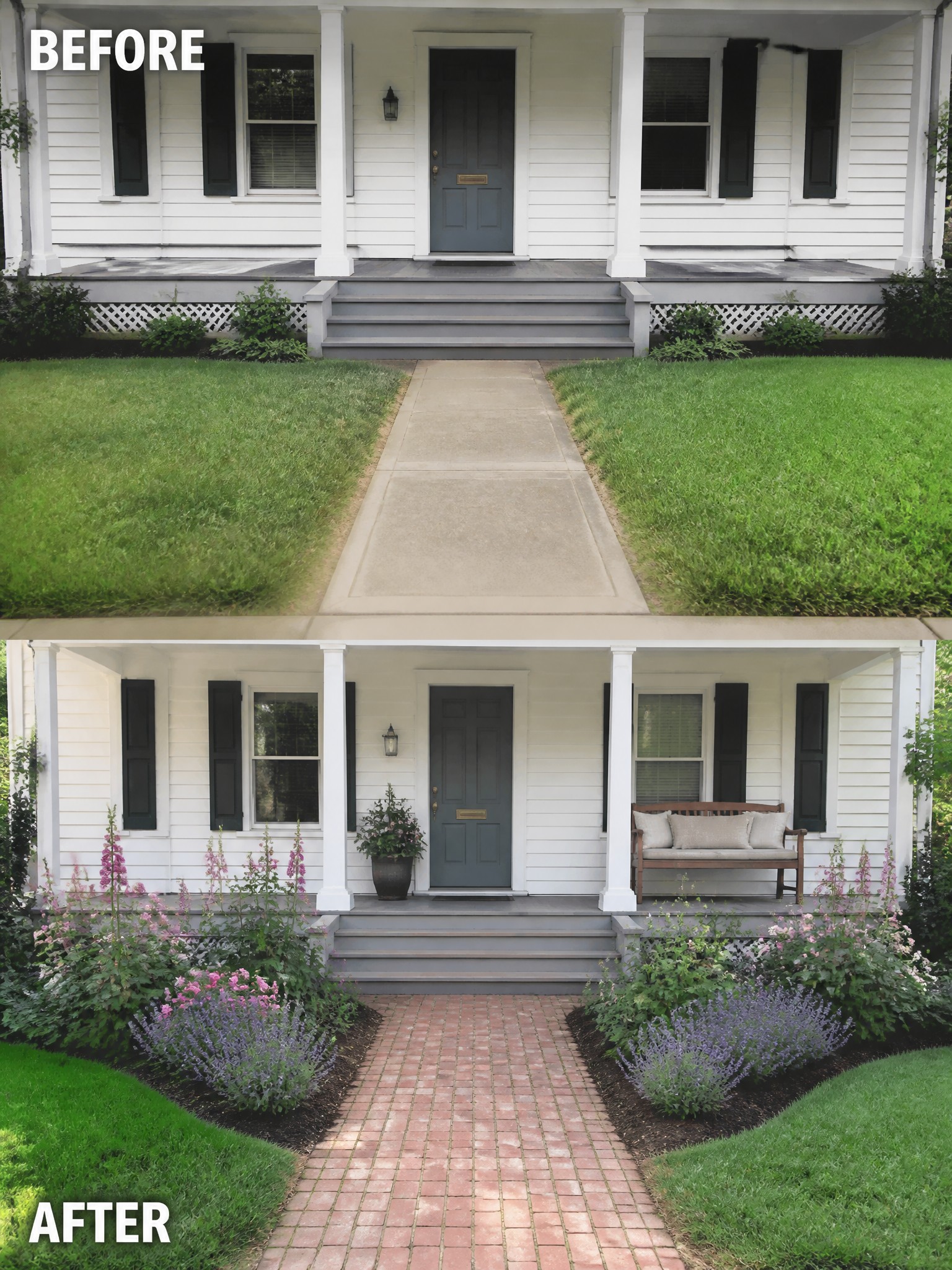
A simple concrete walkway often leaves the front yard feeling flat and unfinished. Replacing it with a brick path and adding planted borders on both sides gives the space clear lines and makes the whole front feel more intentional. The new beds keep the lawn edges neat and give the house a stronger connection to the yard.
This approach works well on smaller front lawns where you want the space to feel planned without adding too much. Start with the path to set the main shape, then build the beds along it using the same edging material. Keep the planting simple at first so the structure stays visible.
Add Structure With Gravel And A Stepping Stone Path
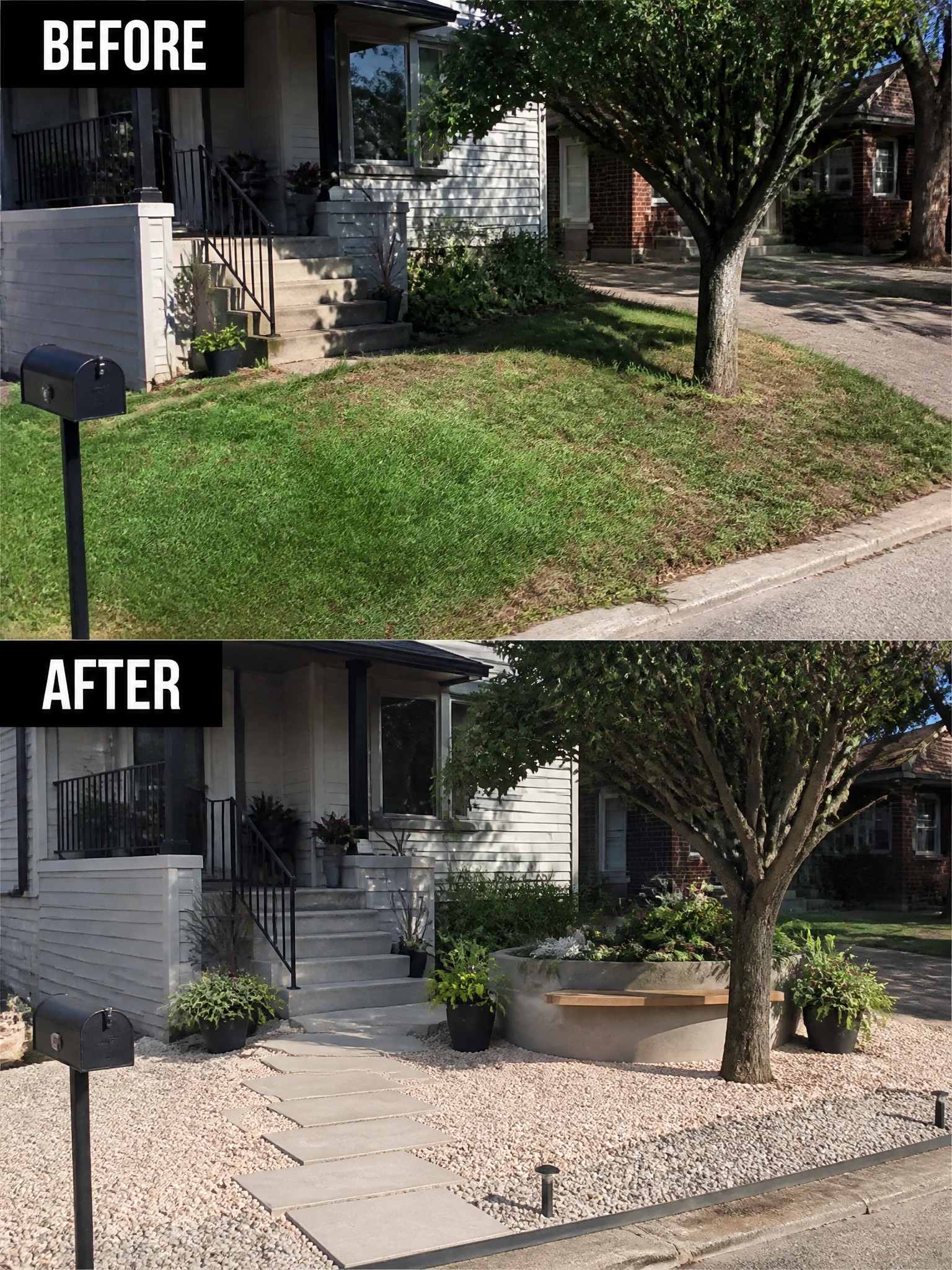
A sloping lawn that runs straight to the curb often feels unfinished and hard to maintain. Adding a gravel base with concrete stepping stones creates a clear path from the sidewalk to the front steps while giving the whole area better shape. The same gravel also forms a simple planting zone around the existing tree, turning an empty stretch of grass into something that feels more intentional.
This approach works well on small to medium front yards where you want to reduce mowing and add some visual order without major construction. Keep the gravel contained with edging so it stays neat over time, and choose pavers that are wide enough to walk on comfortably. Start with the path layout first, then fill in the beds with easy plants that can handle the sun exposure.
Define A Seating Zone With Pavers In A Plain Backyard
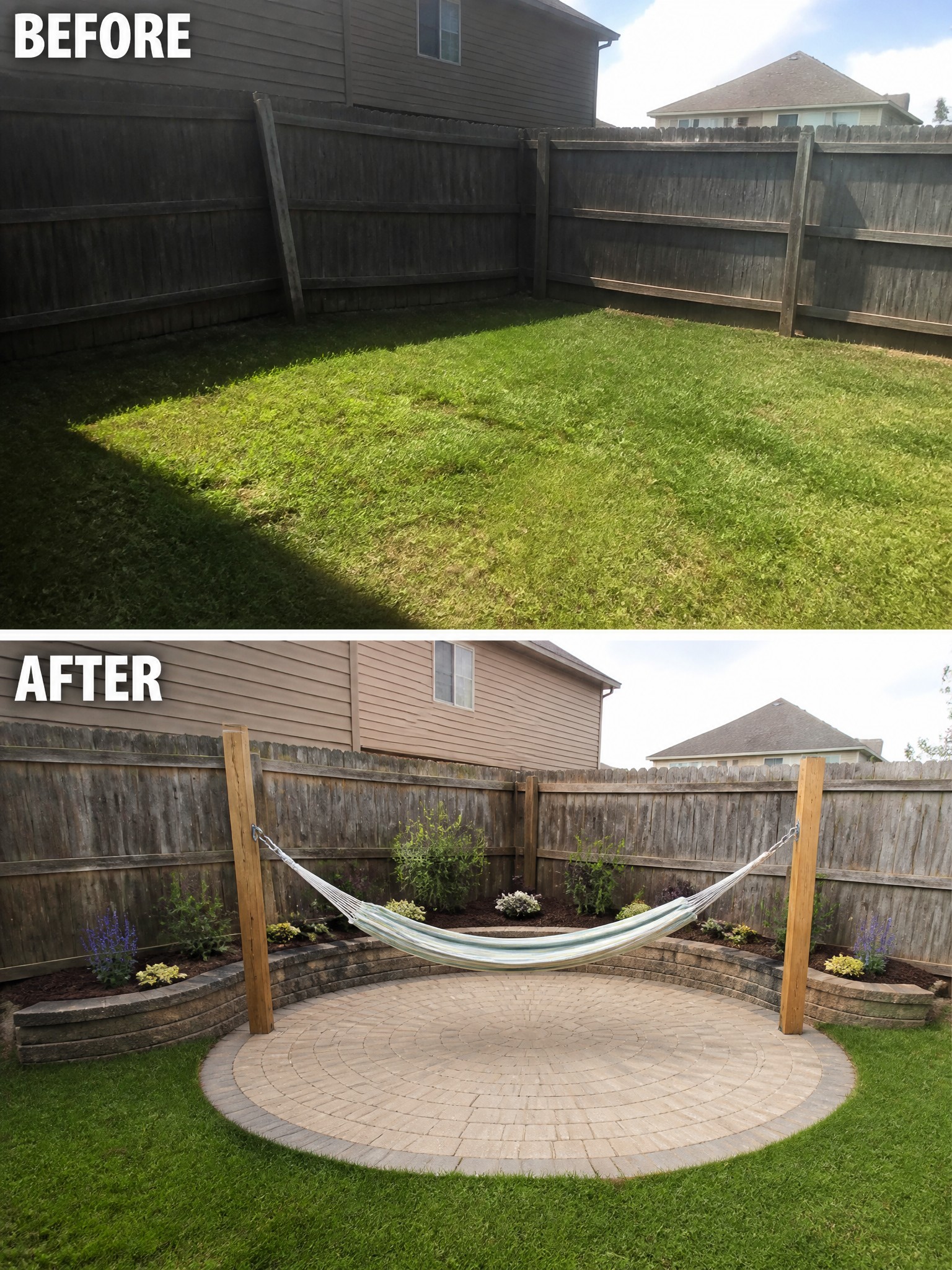
Many backyards start as nothing more than open grass against a fence. Adding a simple circular paver patio gives the space a clear center and turns it into a spot people actually want to use.
This approach works best in average-sized yards where you still want to keep some lawn. Keep the patio size modest so it does not take over the whole area, then add low edging and a few garden beds around the edges. The key is making sure the new surface sits level and leaves enough room to walk around it comfortably.
Frequently Asked Questions
Q: Which path material holds up best in rainy areas?
A: Choose crushed stone over mulch because it won’t wash away during storms. It stays put and still looks good after a few seasons.
Q: Can I add a seating zone without removing too much grass?
A: Tuck a small patio into a corner using pavers set right into the lawn. Keep the rest of the yard open for mowing.
Q: What plants work best in those new beds along the paths?
A: Go with perennials that come back every year like daylilies or hostas. They fill in fast and need less work than annuals.
